Dr. Iman M. Fawzy; MD. PhD.
Mansoura, Egypt
Urinalysis
COMPONENTS OF THE URINE
DIPSTICK
• Color:pale yellow to amber
• Specific gravity: 1.015–1.025
• pH: 4.5–8.0
• Protein: negative
• Glucose: negative
• Ketone: negative
• Bilirubin: negative
• Urobilinogen: 0.2–1.0
• Blood: negative
• Nitrite: negative
• Leukocytes (esterase): negative
COMPONENTS OF THE URINE
DIPSTICK
Microscopic Examination of Urine Sediment
Increased WBCs are seen in
Urinary tract disease (eg, cystitis, prostatitis)
Chronic pyelonephritis
Tuberculosis
Viral infection
Interstitial nephritis
Glomerulonephritis
WBC casts
Pyelonephritis (most common cause)
Acute glomerulonephritis
Interstitial nephritis
Lupus nephritis
URINE WHITE BLOOD CELLS
Normal Values: WBCs: 0–4/hpf
Microscopic Examination of Urine Sediment
Increased numbers of RBCs occur in
• Contamination during Menstrual cycle
• Glomeulo and Pyelonephritis
• Renal stones
• Cystitis (acute or chronic)
• Prostatitis
• Genitourinary tract malignancies
• Bleeding disorders
• Trauma
• Anticoagulant therapy overdose
RBC casts in
• Glomerulonephritis (acute and chronic)
• Renal infarction
• Severe pyelonephritis
• Congestive heart failure
• Renal vein thrombosis
URINE RED BLOOD CELLS
Normal Values: RBCs: 0–3/HPF
Microscopic Examination of Urine Sediment
GRANULAR CASTS
Acute tubular necrosis
Advanced glomerulonephritis
Pyelonephritis
Malignant nephrosclerosis
Fever (dehydration)
Hyaline casts
Glomerulonephritis, pyelonephritis
Malignant hypertension
Chronic renal disease
Diabetic nephropathy
Fever (dehydration)
Emotional stress
Strenuous exercise
WAXY CASTS
Chronic renal disease
Nephrotic syndrome
Localized nephron obstruction
Fatty casts
lipiduria e.g. nephrotic syndrome
Urinary sediment crystals
Acidic urine
• Uric acid crystal
• Amorphous urates
• Cholesterol crystals
Alkaline urine
• Triple phosphate
crystals
• Calcium phosphate
• Amorphous phosphates
ACID, NEUTRAL, OR SLIGHTLY ALKALINE URINE
Calcium oxalate
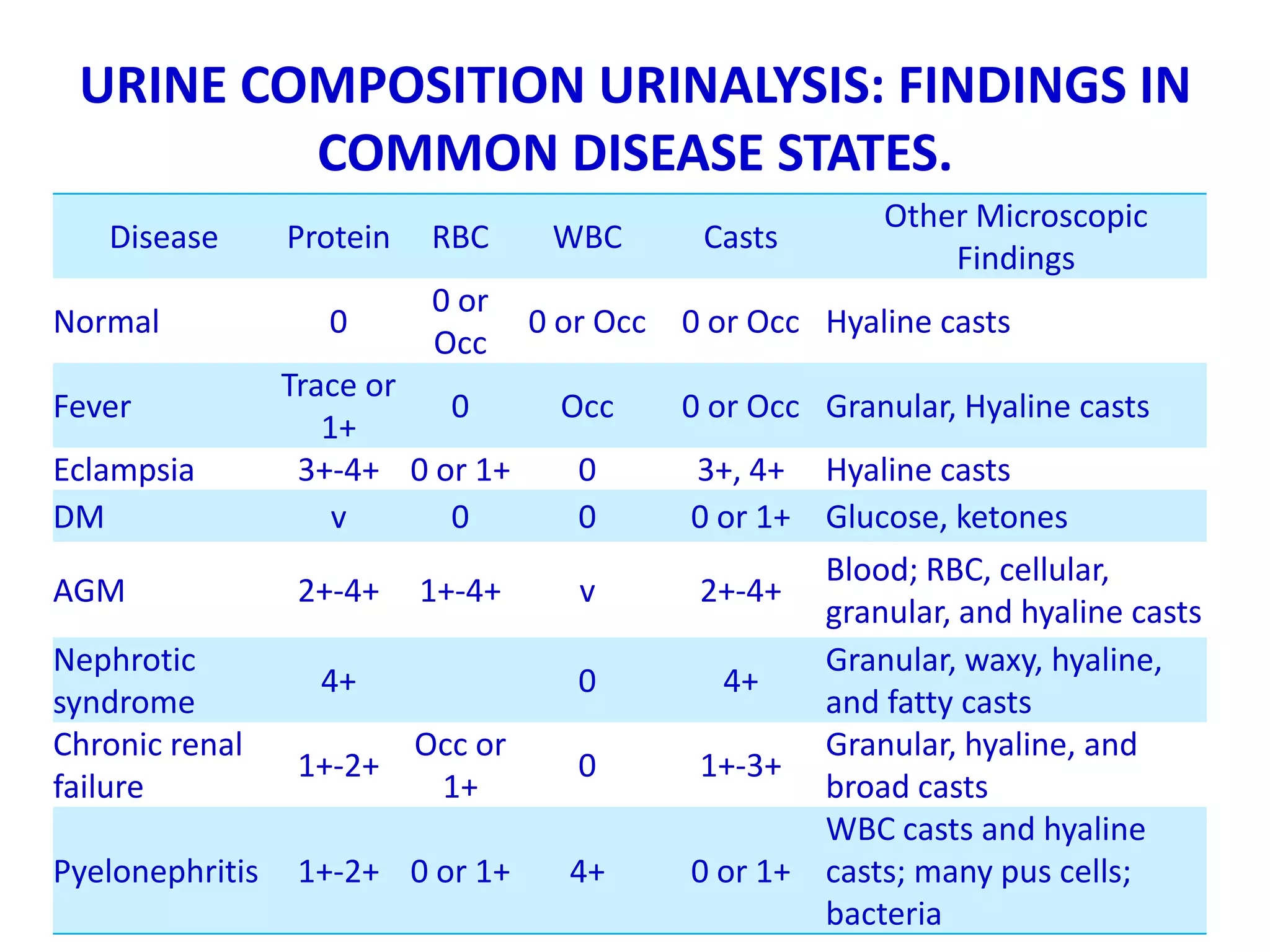
URINE COMPOSITION URINALYSIS: FINDINGS IN
COMMON DISEASE STATES.
Disease Protein RBC WBC Casts
Other Microscopic
Findings
Normal 0
0 or
Occ
0 or Occ 0 or Occ Hyaline casts
Fever
Trace or
1+
0 Occ 0 or Occ Granular, Hyaline casts
Eclampsia 3+-4+ 0 or 1+ 0 3+, 4+ Hyaline casts
DM v 0 0 0 or 1+ Glucose, ketones
AGM 2+-4+ 1+-4+ v 2+-4+
Blood; RBC, cellular,
granular, and hyaline casts
Nephrotic
syndrome
4+ 0 4+
Granular, waxy, hyaline,
and fatty casts
Chronic renal
failure
1+-2+
Occ or
1+
0 1+-3+
Granular, hyaline, and
broad casts
Pyelonephritis 1+-2+ 0 or 1+ 4+ 0 or 1+
WBC casts and hyaline
casts; many pus cells;
bacteria
Clinical Microbiology
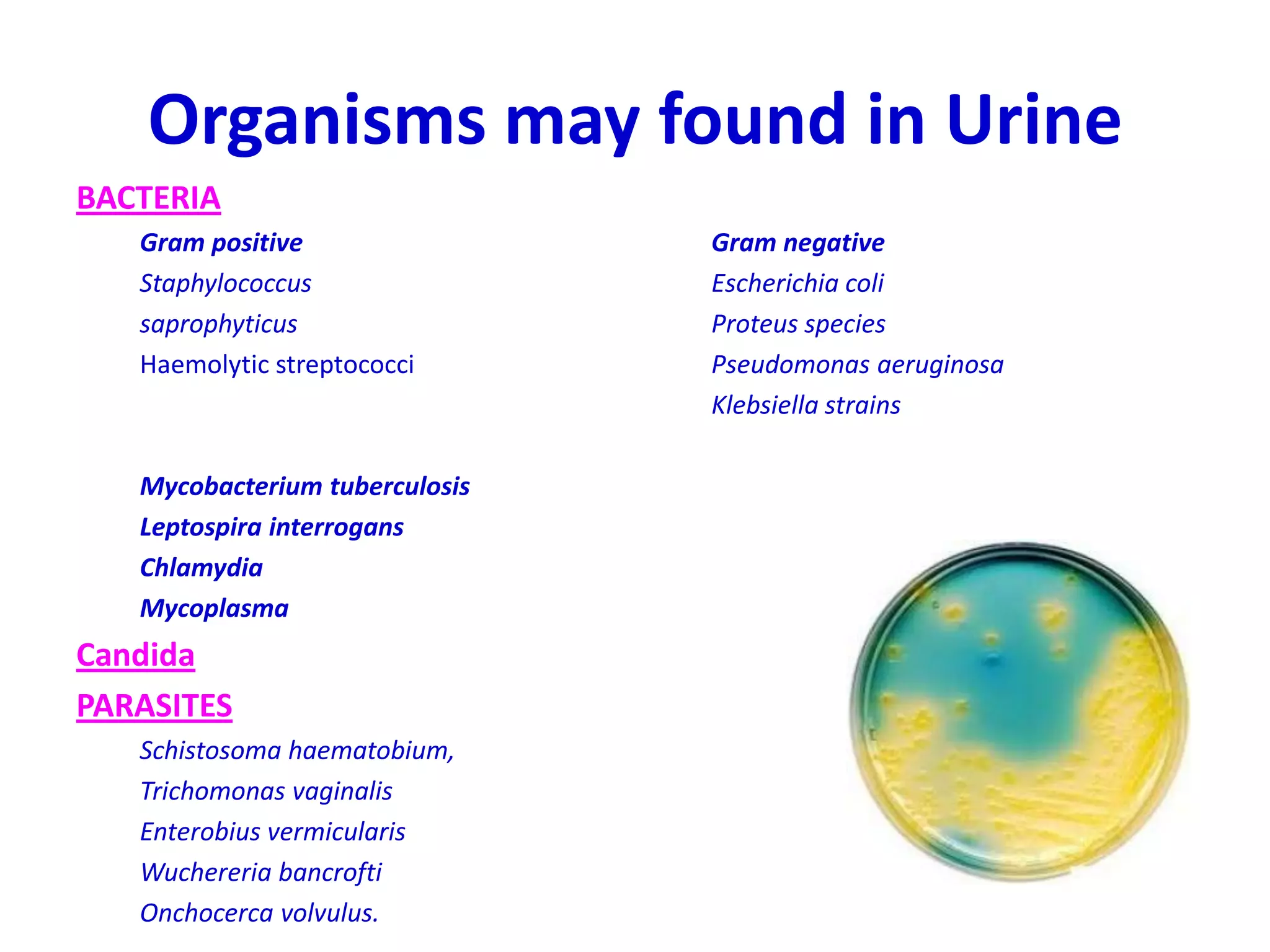
Organisms may found in Urine
BACTERIA
Gram positive Gram negative
Staphylococcus Escherichia coli
saprophyticus Proteus species
Haemolytic streptococci Pseudomonas aeruginosa
Klebsiella strains
Mycobacterium tuberculosis
Leptospira interrogans
Chlamydia
Mycoplasma
Candida
PARASITES
Schistosoma haematobium,
Trichomonas vaginalis
Enterobius vermicularis
Wuchereria bancrofti
Onchocerca volvulus.
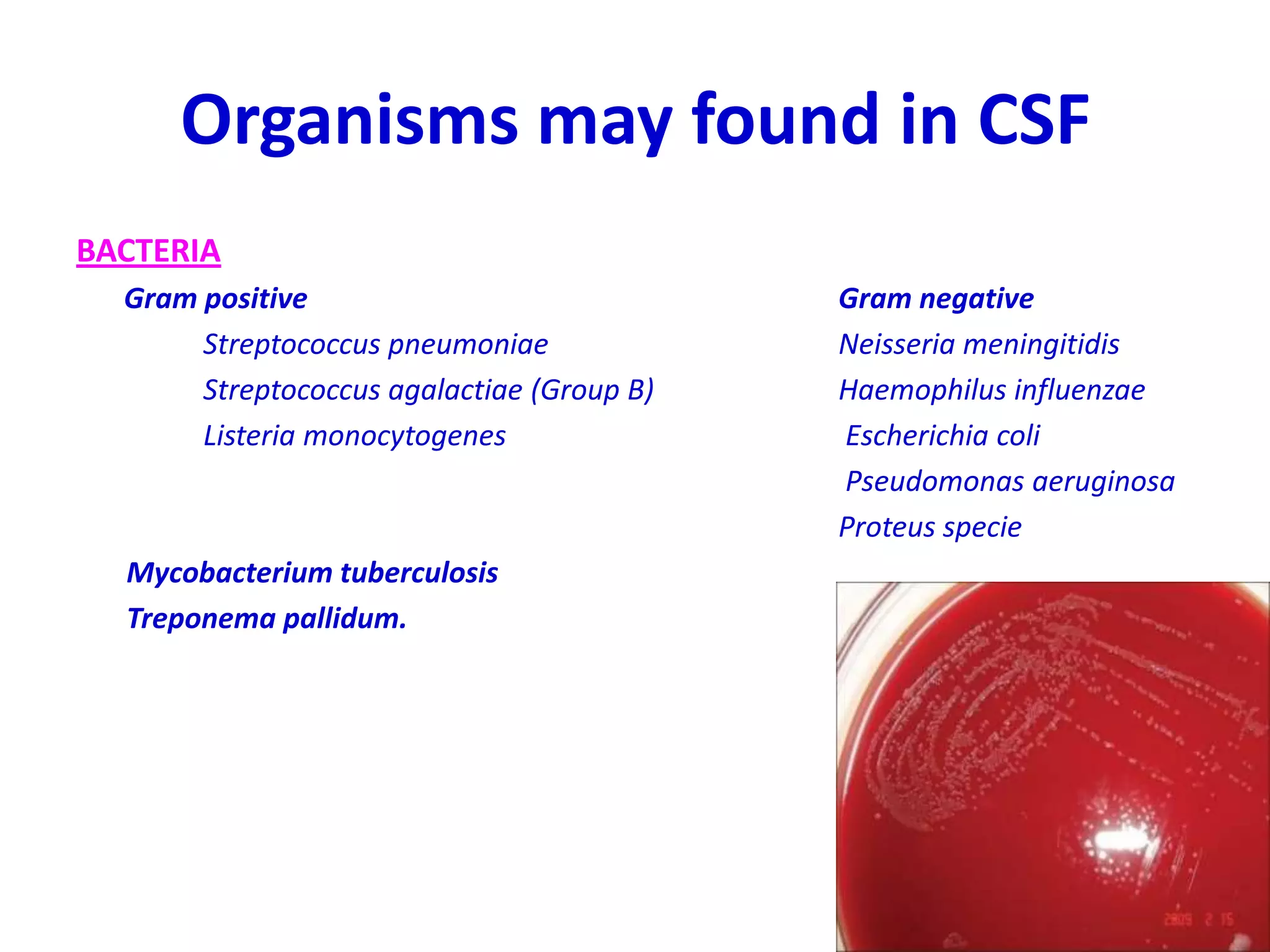
Organisms may found in CSF
BACTERIA
Gram positive Gram negative
Streptococcus pneumoniae Neisseria meningitidis
Streptococcus agalactiae (Group B) Haemophilus influenzae
Listeria monocytogenes Escherichia coli
Pseudomonas aeruginosa
Proteus specie
Mycobacterium tuberculosis
Treponema pallidum.
Organisms may found in CSF
VIRUSES
Coxsackieviruses
Echovirus
arboviruses.
herpes simplex 2 virus
varicella zoster virus
FUNGI
Cryptococcus neoformans (mainly in AIDS patients)
Aspergillus species.
PARASITES
Trypanosoma species and Naegleria fowleri
Toxoplasma gondii (mainly in AIDS patients).
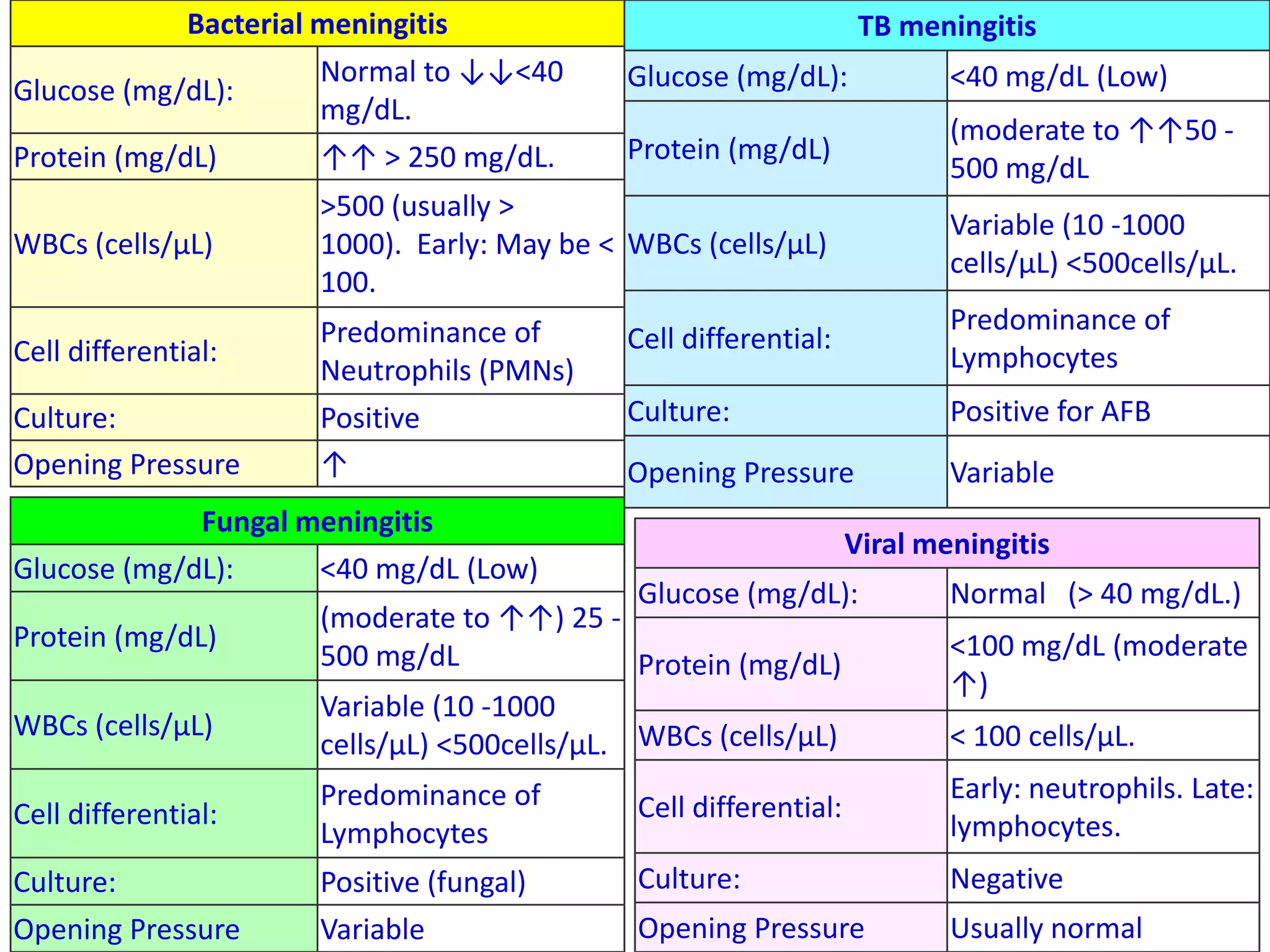
Bacterial meningitis
Glucose (mg/dL):
Normal to ↓↓<40
mg/dL.
Protein (mg/dL) ↑↑ > 250 mg/dL.
WBCs (cells/µL)
>500 (usually >
1000). Early: May be <
100.
Cell differential:
Predominance of
Neutrophils (PMNs)
Culture: Positive
Opening Pressure ↑
Fungal meningitis
Glucose (mg/dL): <40 mg/dL (Low)
Protein (mg/dL)
(moderate to ↑↑) 25 -
500 mg/dL
WBCs (cells/µL)
Variable (10 -1000
cells/µL) <500cells/µL.
Cell differential:
Predominance of
Lymphocytes
Culture: Positive (fungal)
Opening Pressure Variable
TB meningitis
Glucose (mg/dL): <40 mg/dL (Low)
Protein (mg/dL)
(moderate to ↑↑50 -
500 mg/dL
WBCs (cells/µL)
Variable (10 -1000
cells/µL) <500cells/µL.
Cell differential:
Predominance of
Lymphocytes
Culture: Positive for AFB
Opening Pressure Variable
Viral meningitis
Glucose (mg/dL): Normal (> 40 mg/dL.)
Protein (mg/dL)
<100 mg/dL (moderate
↑)
WBCs (cells/µL) < 100 cells/µL.
Cell differential:
Early: neutrophils. Late:
lymphocytes.
Culture: Negative
Opening Pressure Usually normal
Blood Cultures
BACTERIA
Gram positive Gram negative
Staphylococcus aureus Salmonella Typhi
Viridans streptococci Other Salmonella serovars
Streptococcus pneumoniae Brucella species
Streptococcus pyogenes Haemophilus influenzae
Enterococcus faecalis Pseudomonas aeruginosa
Clostridium perfringens Klebsiella strains
Anaerobic streptococci Escherichia coli
Proteus species
Bacteroides fragilis
Neisseria meningitidis
Yersinia pestis
Mycobacterium tuberculosis (HIV-associated tuberculosis),
Leptospira species,
Borrelia species,
rickettsiae,
Bartonella bacilliformis.
FUNGI
Candidaalbicansandother yeasts, e.g. Cryptococcus neoformans, and occasionally Histoplasma
capsulatum and other fungi that cause systemic mycoses.
Throat culture
BACTERIA
Gram positive Gram negative
Streptococcus pyogenes Vincent’s organisms
Corynebacterium diphtheriae
Corynebacterium ulcerans
VIRUSES
Respiratory viruses
enteroviruses and herpes simplex virus type 1
FUNGI
Candida albicans and other yeasts.
pus, ulcer material and skin culture
BACTERIA
Gram positive Gram negative
Staphylococcus aureus Pseudonomas aeruginosa
Streptococcus pyogenes Proteus species
Enterococcus species Escherichia coli
Anaerobic streptococci Bacteriodes species
Other streptococci Klebsiella species
Clostridium perfringens Pasteurella species
and other clostridia
Actinomycetes
Actinomyces israeli
Also Mycobacterium tuberculosis
FUNGI
Histoplasma c. duboisii
Candida albicans
Fungi that cause mycetoma
PARASITES
Entamoeba histolytica
Effusions culture
SYNOVIAL FLUID
Gram positive Gram negative
Staphylococcus aureus Neisseria gonorrhoeae
Streptococcus pyogenes Neisseria meningitidis
Streptococcus pneumoniae Haemophilus influenzae
Anaerobic streptococci Brucella species
Actinomycetes Salmonella serovars
Escherichia coli
Pseudomonas aeruginosa
Proteus
Bacteroides
Mycobacterium tuberculosis
Effusions culture
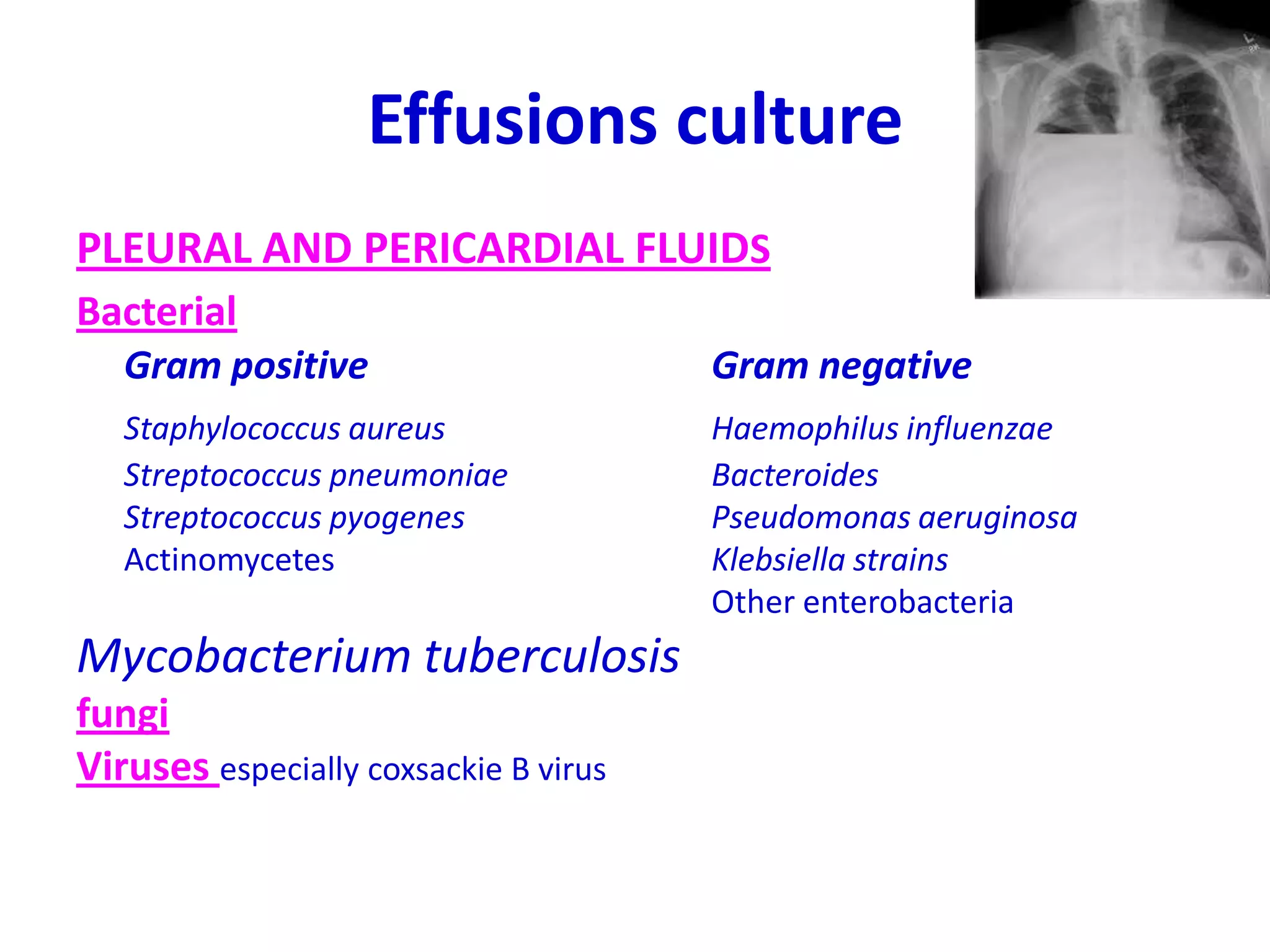
PLEURAL AND PERICARDIAL FLUIDS
Bacterial
Gram positive Gram negative
Staphylococcus aureus Haemophilus influenzae
Streptococcus pneumoniae Bacteroides
Streptococcus pyogenes Pseudomonas aeruginosa
Actinomycetes Klebsiella strains
Other enterobacteria
Mycobacterium tuberculosis
fungi
Viruses especially coxsackie B virus
Effusions culture
ASCITIC FLUID
Gram positive Gram negative
Enterococcus species Escherichia coli
Streptococcus pneumoniae Klebsiella strains
Staphylococcus aureus Other enterobacteria
Streptococcus pyogenes Pseudomonas aeruginosa
Streptococcus agalactiae Bacteroides
Viridans streptococci
Clostridium perfringens
Mycobacterium tuberculosis
Candida species
Urogenital culture
URETHRAL SWABS
Neisseria gonorrhoeae
Chlamydia trachomatis (serovars D-K)
Ureaplasma
Mycoplasma
Trichomonas vaginalis.
Urogenital culture
CERVICAL SWABS
From non-puerperal women:
Neisseria gonorrhoeae,
Chlamydia trachomatis (serovars D-K),
Streptococcus pyogenes,
herpes simplex virus.
From women with puerperal sepsis or septic abortion:
Streptococcus pyogenes, other betahaemolytic streptococci,
Staphylococcus aureus,
Enterococcus species,
anaerobic cocci,
Clostridium perfringens,
Bacteroides,
Proteus, Escherichia coli and other coliforms,
Listeria monocytogenes.
Urogenital culture
VAGINAL SWABS
Trichomonas vaginalis
Candida species
Gardnerella vaginalis
anaerobes
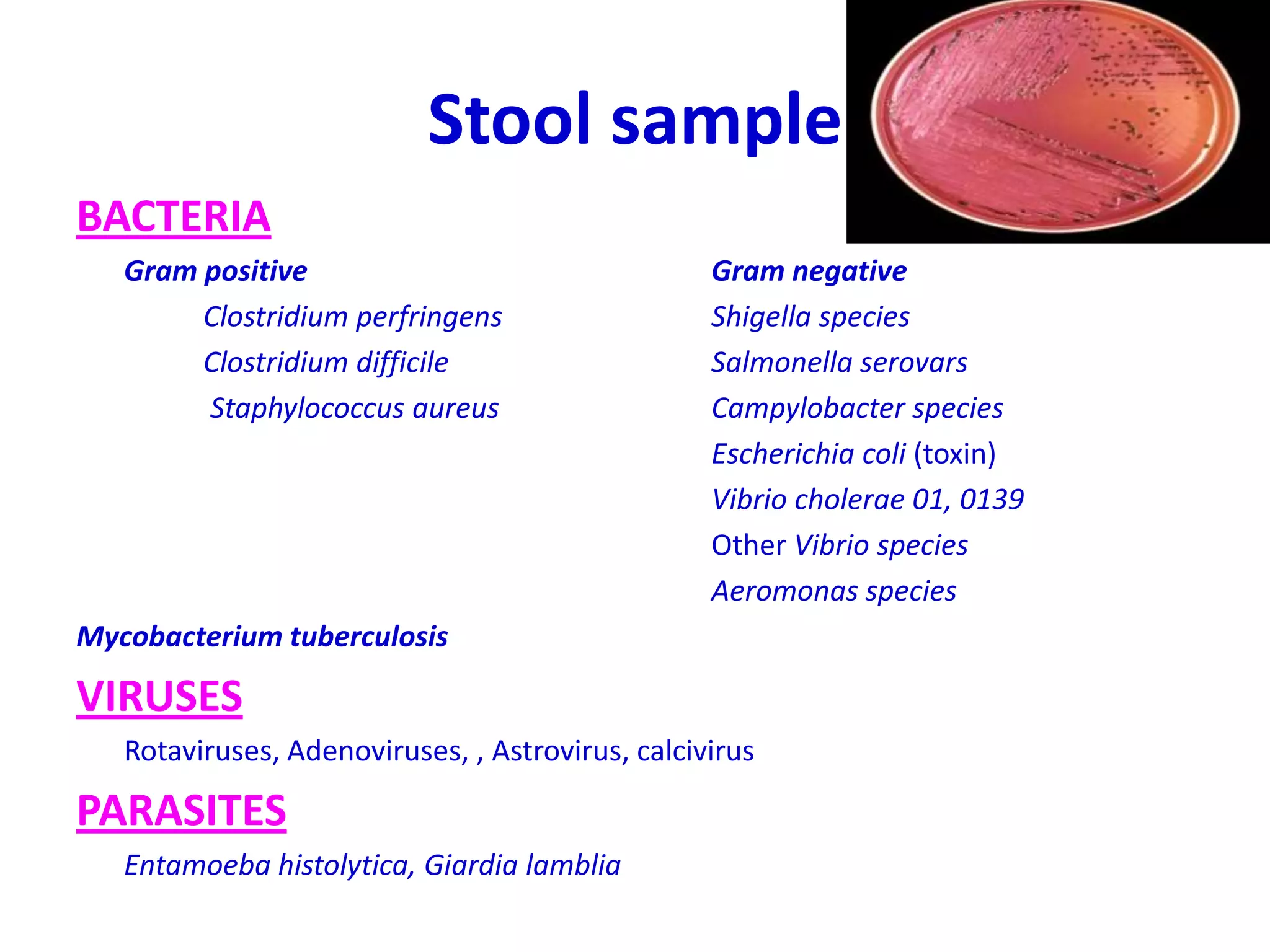
Stool sample
BACTERIA
Gram positive Gram negative
Clostridium perfringens Shigella species
Clostridium difficile Salmonella serovars
Staphylococcus aureus Campylobacter species
Escherichia coli (toxin)
Vibrio cholerae 01, 0139
Other Vibrio species
Aeromonas species
Mycobacterium tuberculosis
VIRUSES
Rotaviruses, Adenoviruses, , Astrovirus, calcivirus
PARASITES
Entamoeba histolytica, Giardia lamblia
Sputum
BACTERIA
Gram positive Gram negative
Streptococcus pneumoniae Haemophilus influenzae
Staphylococcus aureus Klebsiella pneumoniae
Streptococcus pyogenes Pseudomonas aeruginosa
Proteus species
Yersina pestis
Moraxella catarrhalis
Mycobacterium tuberculosis
Mycoplasma pneumoniae
Legionella pneumophila.
FUNGI AND ACTINOMYCETES
Pneumocystis jiroveci, Blastomyces dermatitidis, Histoplasma capsulatum, Aspergillus
species, Candida albicans, Cryptococcus neoformans, and Nocardia species.
PARASITES
Paragonimus species
Serology
Widal test
negative Widal
absence of infection
by S typhi and para typhi
False negative
• the carrier state
• early treatment
• hidden organism in bone or
joints
• Technical errors
positive Widal
Typhoid fever
False positive in:
• previous immunization with
Salmonella antigen.
• cross-reaction with non-
typhoidal Salmonella.
• infection with
malaria, Brucella, other
Enterobacteriaceae, dysentry,
pneumonia, dengue, immune
diseases
• Technical errors
O antigen: 4 fold ↑ if repeated
Or O antigen >1:160, H> 1: 320 in endemic areas
Brucella antibody
negative
absence of infection by
Brucella infection
False negative
• B canis infection
• Technical errors
positive
• Brucella infection (except B
canis)
False positive in:
• infections with Francisella
tularensis, Yersinia
enterocolitica, salmonella,
Rocky Mountain spotted
fever; vaccinations for
cholera
• Technical errors
Positive titer ≥1:80
↑≥ 4-fold in serum specimens obtained >2 weeks apart.
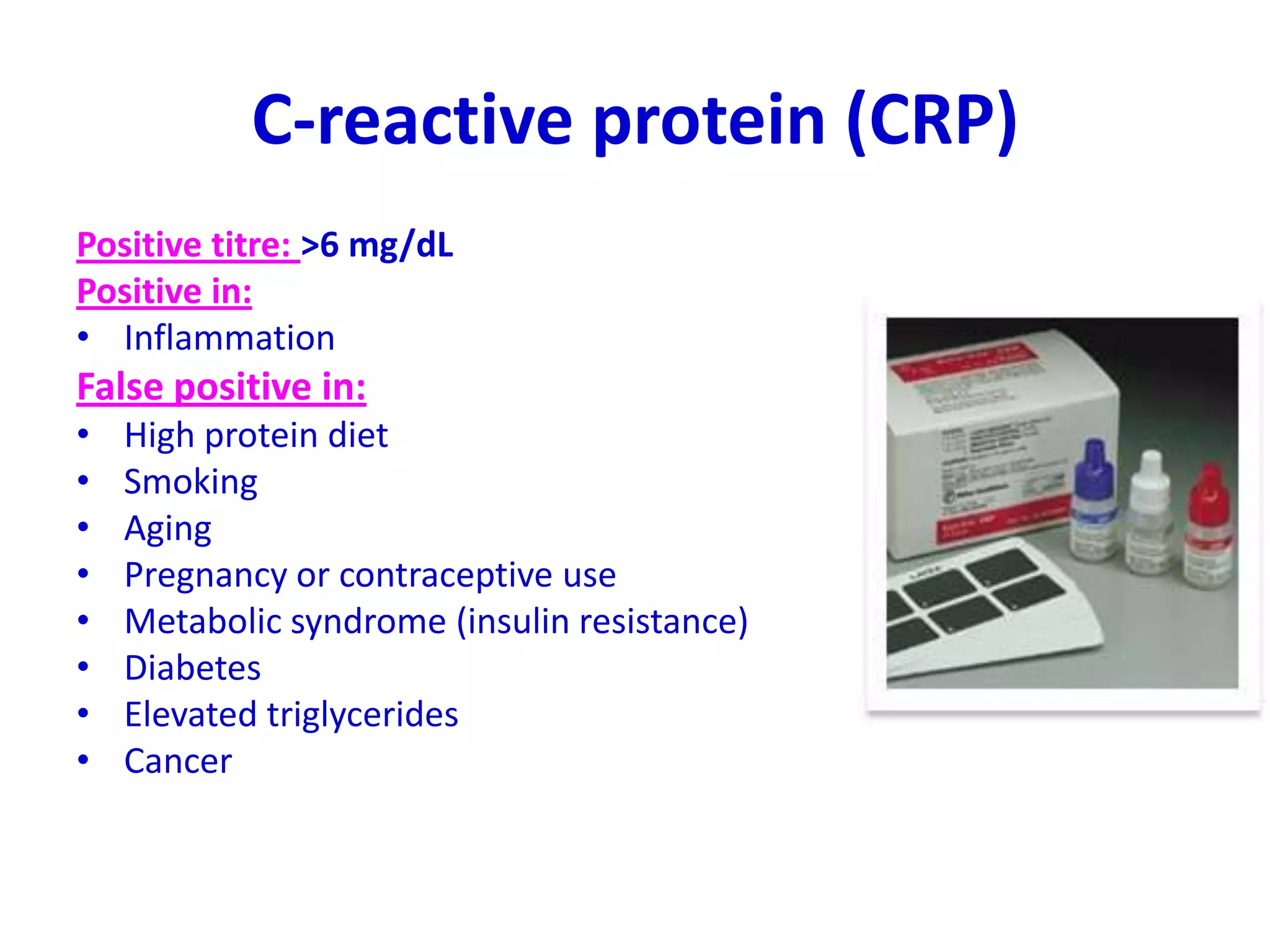
C-reactive protein (CRP)
Positive titre: >6 mg/dL
Positive in:
• Inflammation
False positive in:
• High protein diet
• Smoking
• Aging
• Pregnancy or contraceptive use
• Metabolic syndrome (insulin resistance)
• Diabetes
• Elevated triglycerides
• Cancer
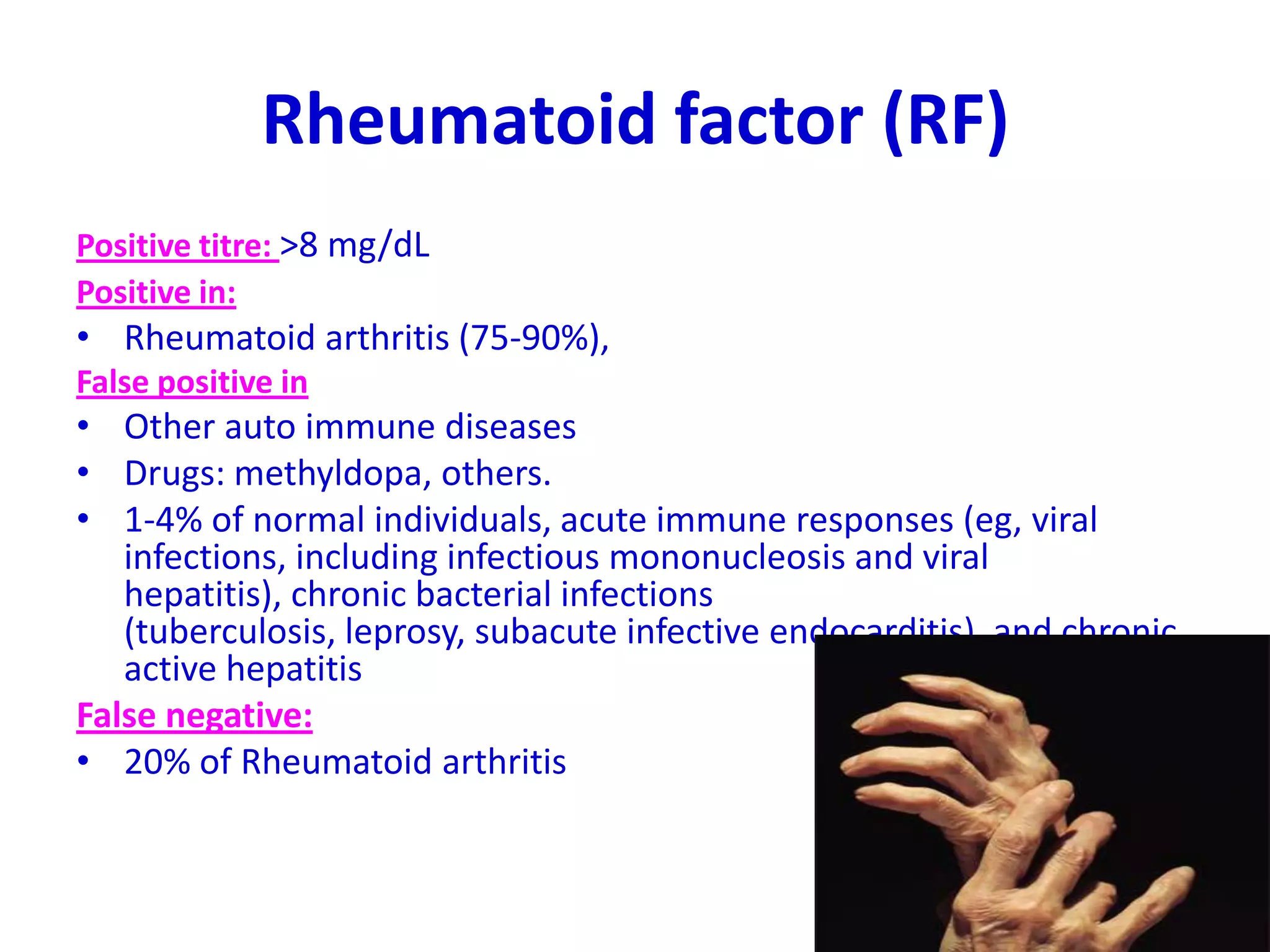
Rheumatoid factor (RF)
Positive titre: >8 mg/dL
Positive in:
• Rheumatoid arthritis (75-90%),
False positive in
• Other auto immune diseases
• Drugs: methyldopa, others.
• 1-4% of normal individuals, acute immune responses (eg, viral
infections, including infectious mononucleosis and viral
hepatitis), chronic bacterial infections
(tuberculosis, leprosy, subacute infective endocarditis), and chronic
active hepatitis
False negative:
• 20% of Rheumatoid arthritis
Antistreptolysin O titer (ASO)
Positive titre: >200 IU/mL
• Detects antibody to the antigen streptolysin O
produced by group A streptococci.
Titer rises to a peak at 4-6 weeks and may remain
elevated for 1 year.
Positive in:
• Streptococcal infection (eg, upper airway
infections, scarlet fever)
• post-streptococcal infection complication (eg,
glomerulonephritis and rheumatic fever).
False positive in
• Some bacterial infections.
Hepatitis A antibody (Anti-HAV)
Positive in:
• IgM: Acute hepatitis A
• IgG: convalescence from hepatitis A
IgM antibody is detectable within a week after
symptoms develop and persists for 6 months.
IgG appears 4 weeks later than IgM and persists
for years.
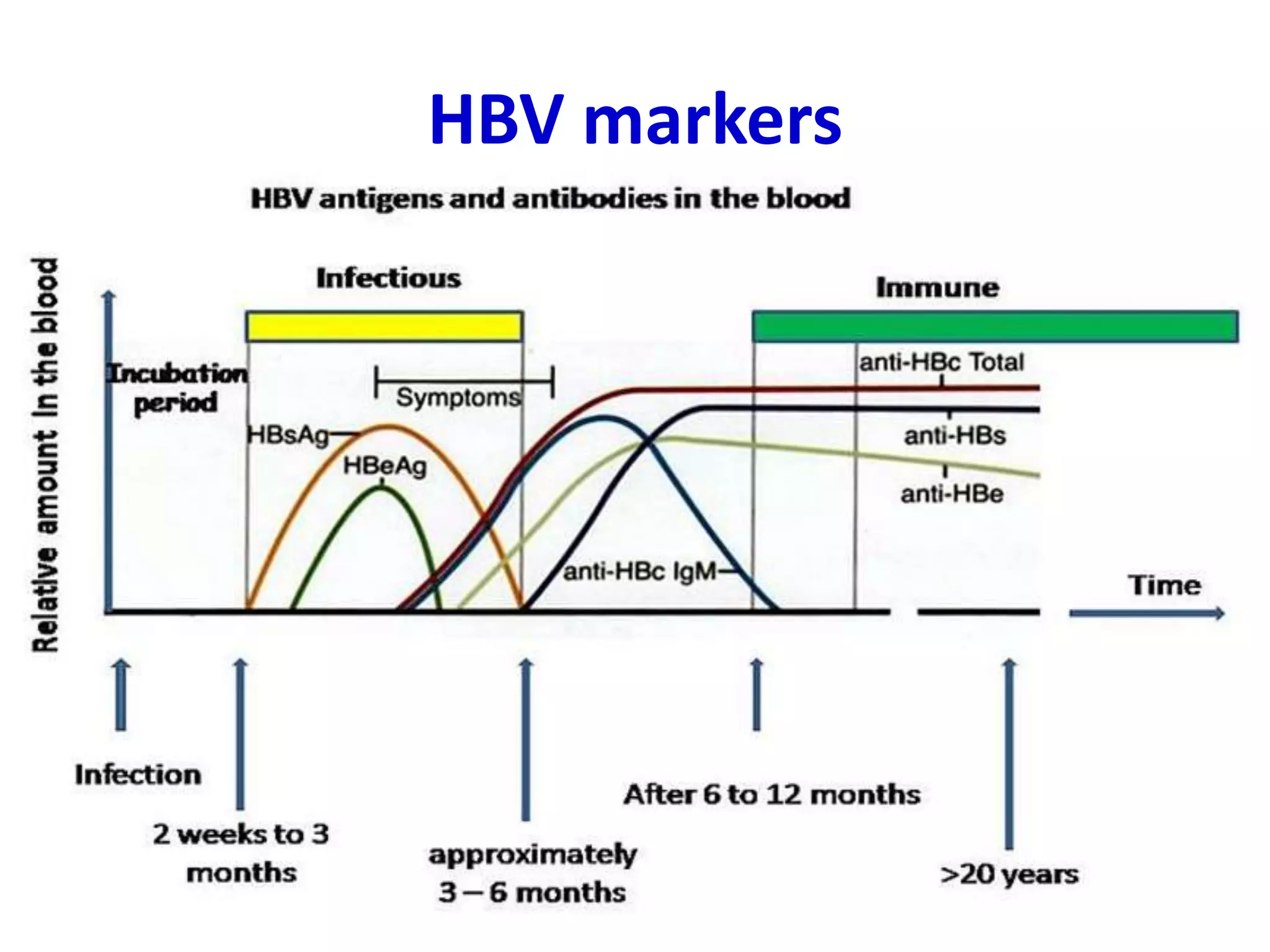
Hepatitis B surface antigen (HBsAg)
In hepatitis B virus infection
HBsAg is
• detectable 2-5 weeks before
onset of symptoms
• peaks at the time of onset of
clinical illness.
• persists for 1-5 months
• Declining with resolution of
clinical symptoms.
Positive in:
• Acute hepatitis B
• chronic hepatitis B (persistence
of HBsAg for >6 months, positive
HBcAb [total])
• HBsAg positive carriers.
.
HBV markers
Hepatitis B markers
Hepatitis C antibody (HCV-Ab)
Detects antibody to HCV
Positive in:
HCV infection
False positive:
autoimmune liver disease
Hypergammaglobulinemia
False negative:
immunosuppressed patients
long-term hemodialysis.
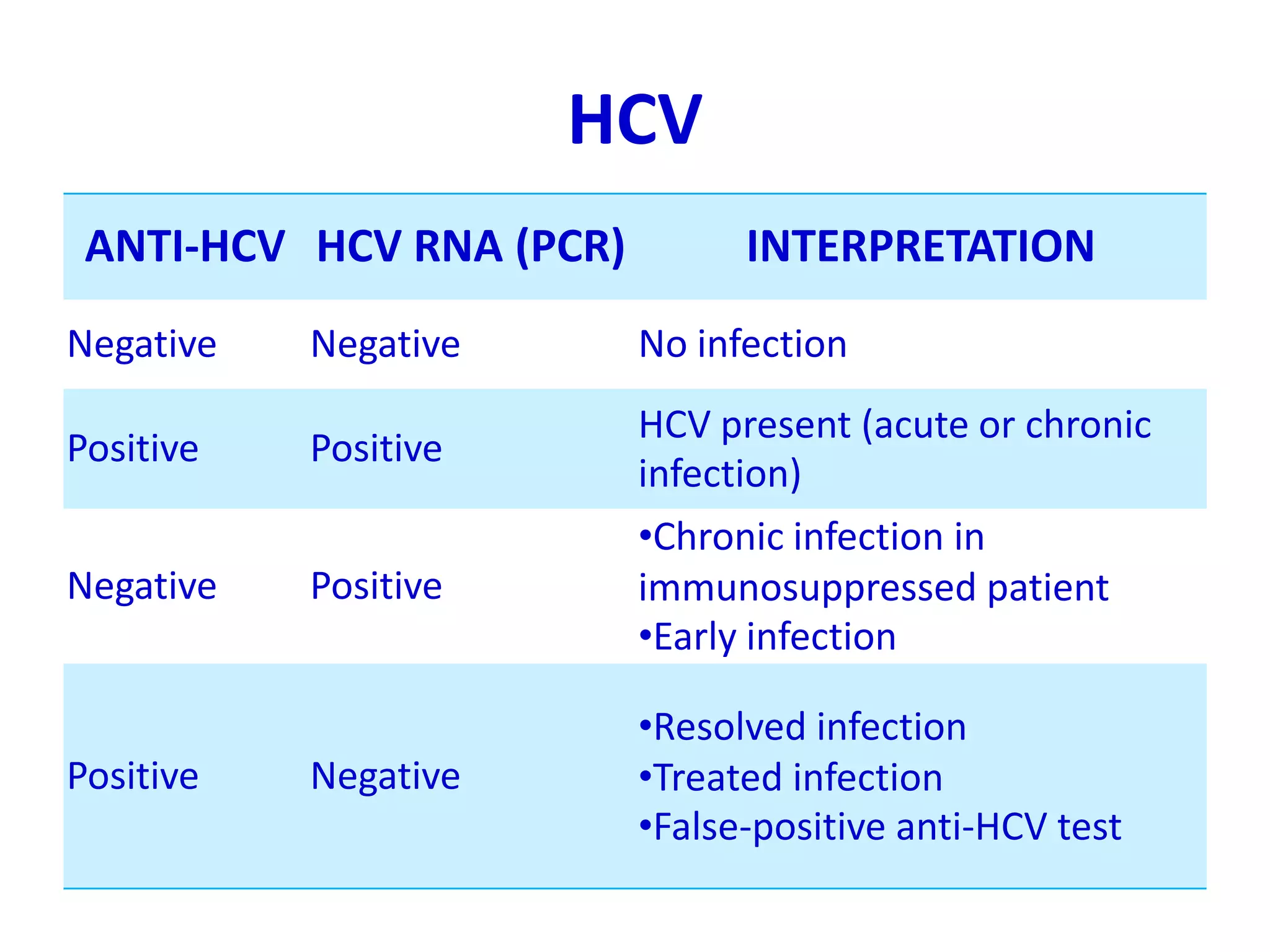
HCV
ANTI-HCV HCV RNA (PCR) INTERPRETATION
Negative Negative No infection
Positive Positive
HCV present (acute or chronic
infection)
Negative Positive
•Chronic infection in
immunosuppressed patient
•Early infection
Positive Negative
•Resolved infection
•Treated infection
•False-positive anti-HCV test
HIV antibody
• HIV antibody test is considered positive only
when confirmed by a Western blot analysis or
immunofluorescent antibody test (IFA).
Positive in:
• HIV infection
Toxoplasma antibodys
Toxo IgG
Toxo IgM
Positive in:
• IgM: Acute or congenital toxoplasmosis
• IgG: previous toxoplasma exposure
false-positive
• SLE, HIV infection, positive rheumatoid
factor, positive ANA.
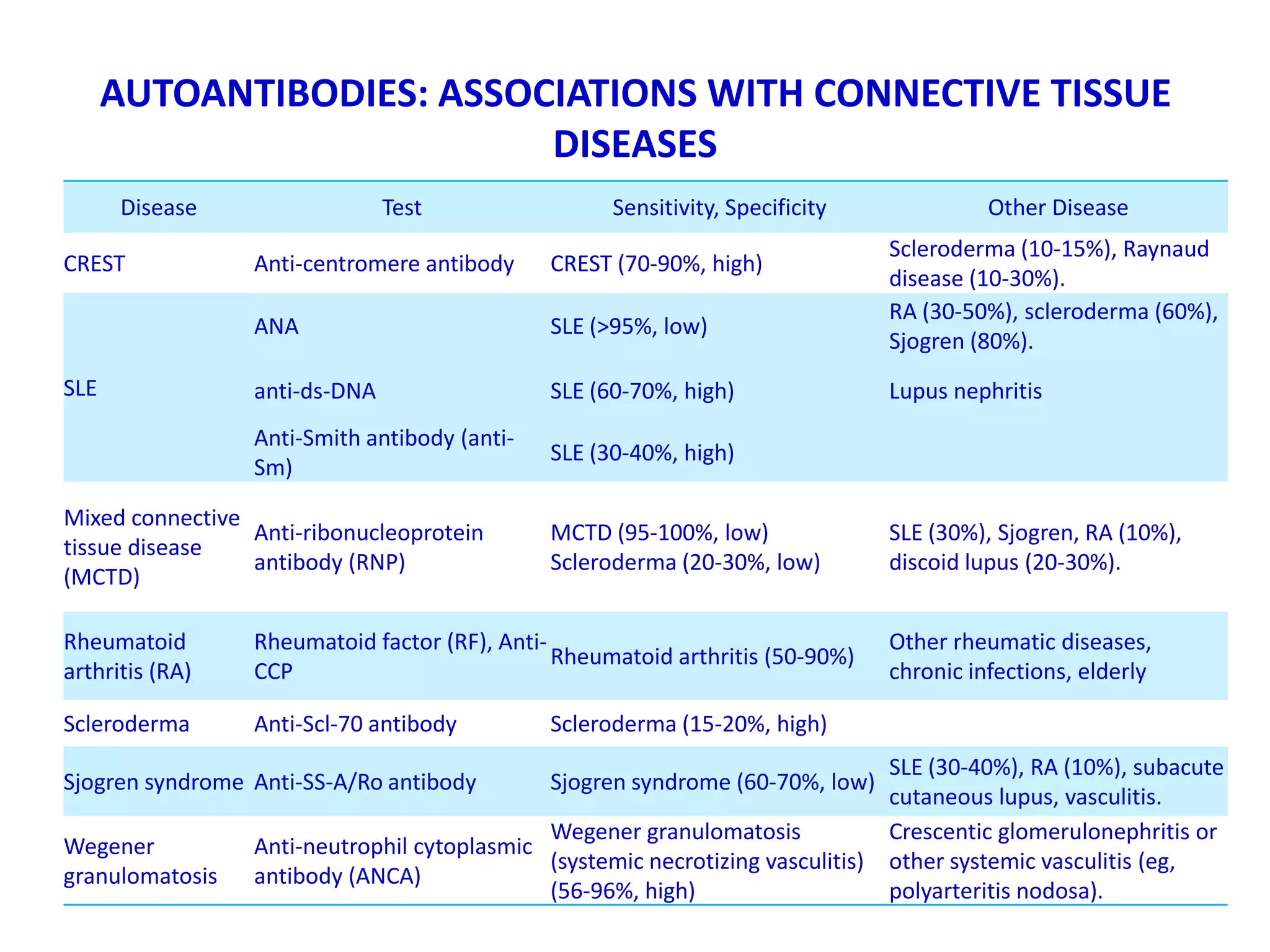
AUTOANTIBODIES: ASSOCIATIONS WITH CONNECTIVE TISSUE
DISEASES
Disease Test Sensitivity, Specificity Other Disease
CREST Anti-centromere antibody CREST (70-90%, high)
Scleroderma (10-15%), Raynaud
disease (10-30%).
SLE
ANA SLE (>95%, low)
RA (30-50%), scleroderma (60%),
Sjogren (80%).
anti-ds-DNA SLE (60-70%, high) Lupus nephritis
Anti-Smith antibody (anti-
Sm)
SLE (30-40%, high)
Mixed connective
tissue disease
(MCTD)
Anti-ribonucleoprotein
antibody (RNP)
MCTD (95-100%, low)
Scleroderma (20-30%, low)
SLE (30%), Sjogren, RA (10%),
discoid lupus (20-30%).
Rheumatoid
arthritis (RA)
Rheumatoid factor (RF), Anti-
CCP
Rheumatoid arthritis (50-90%)
Other rheumatic diseases,
chronic infections, elderly
Scleroderma Anti-Scl-70 antibody Scleroderma (15-20%, high)
Sjogren syndrome Anti-SS-A/Ro antibody Sjogren syndrome (60-70%, low)
SLE (30-40%), RA (10%), subacute
cutaneous lupus, vasculitis.
Wegener
granulomatosis
Anti-neutrophil cytoplasmic
antibody (ANCA)
Wegener granulomatosis
(systemic necrotizing vasculitis)
(56-96%, high)
Crescentic glomerulonephritis or
other systemic vasculitis (eg,
polyarteritis nodosa).
Clinical Chemistry
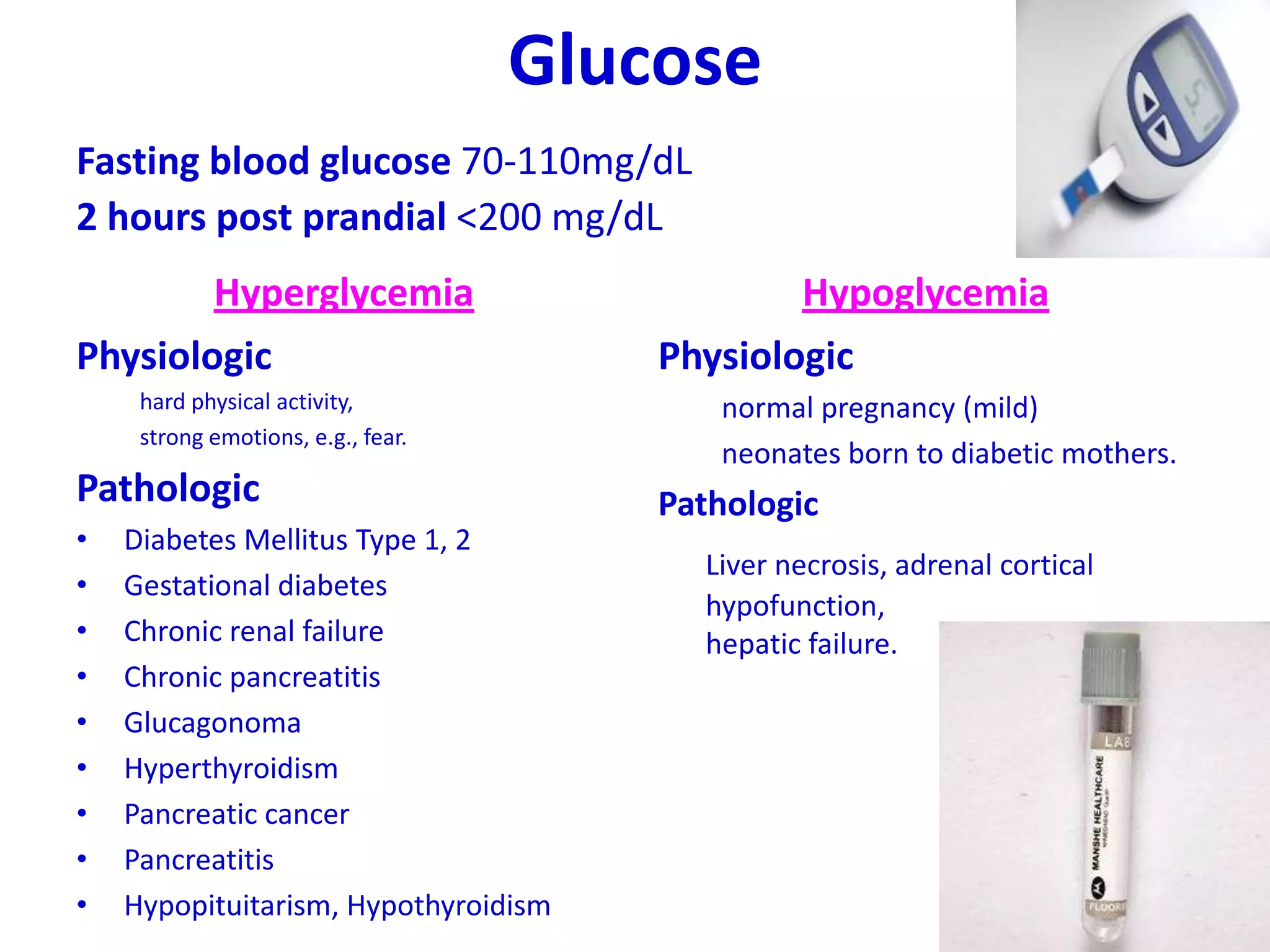
Glucose
Hyperglycemia
Physiologic
hard physical activity,
strong emotions, e.g., fear.
Pathologic
• Diabetes Mellitus Type 1, 2
• Gestational diabetes
• Chronic renal failure
• Chronic pancreatitis
• Glucagonoma
• Hyperthyroidism
• Pancreatic cancer
• Pancreatitis
• Hypopituitarism, Hypothyroidism
Hypoglycemia
Physiologic
normal pregnancy (mild)
neonates born to diabetic mothers.
Pathologic
Liver necrosis, adrenal cortical
hypofunction,
hepatic failure.
Fasting blood glucose 70-110mg/dL
2 hours post prandial <200 mg/dL
Alanine aminotransferase
(ALT, SGPT, GPT)
Reference range: 10 - 46 U/L
Increased in:
Acute viral hepatitis
biliary tract obstruction
Liver cirrhosis
Drugs
Aspartate aminotransferase
(AST, SGOT, GOT)
Reference range: 10 - 40 U/L
Increased in:
Acute viral hepatitis
biliary tract obstruction (cholangitis, stone)
cirrhosis
Acute myocardial infarction
Progressive muscle disease
Hemolytic anemia
Drugs
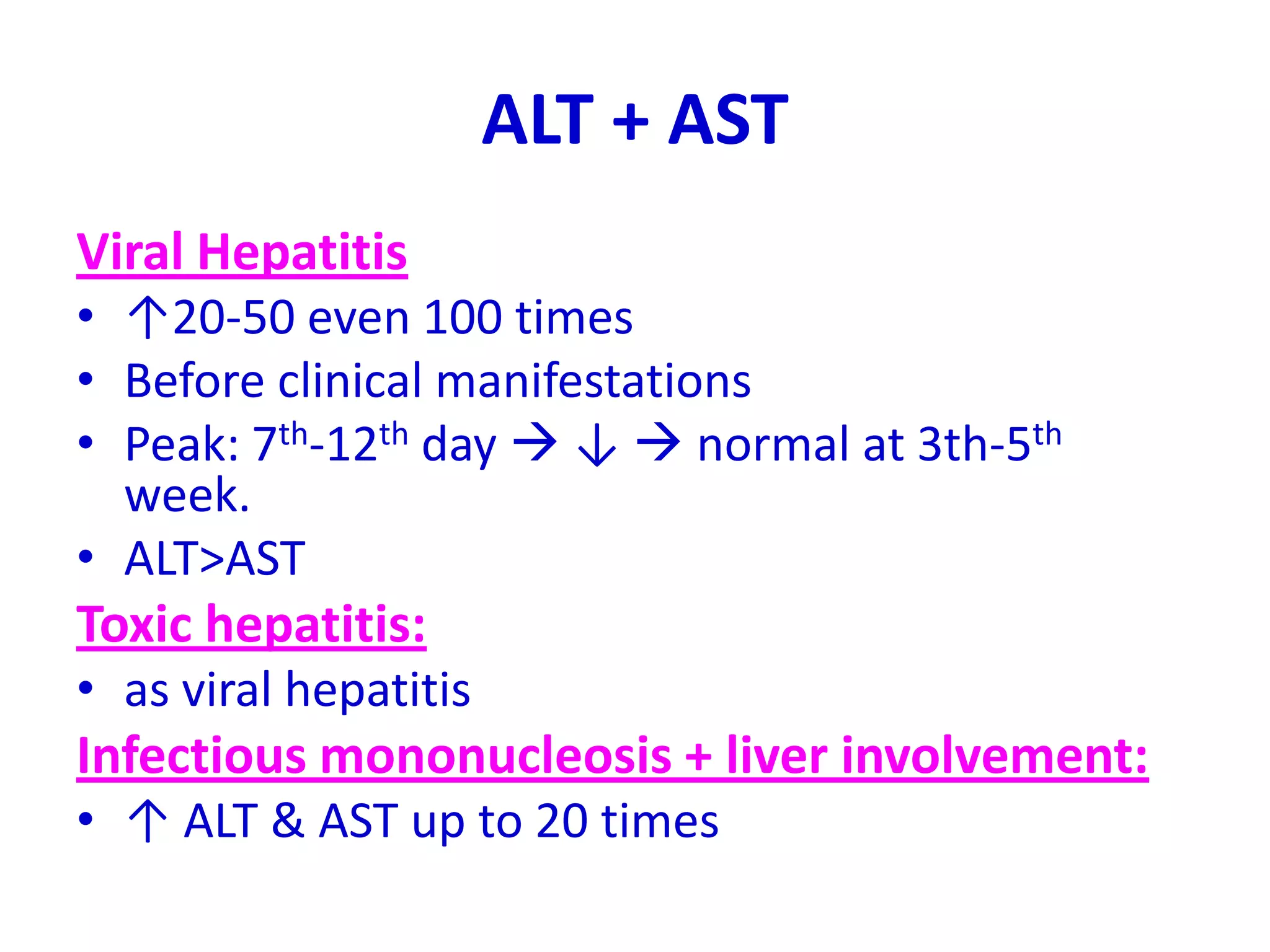
ALT + AST
Viral Hepatitis
• ↑20-50 even 100 times
• Before clinical manifestations
• Peak: 7th-12th day  ↓  normal at 3th-5th
week.
• ALT>AST
Toxic hepatitis:
• as viral hepatitis
Infectious mononucleosis + liver involvement:
• ↑ ALT & AST up to 20 times
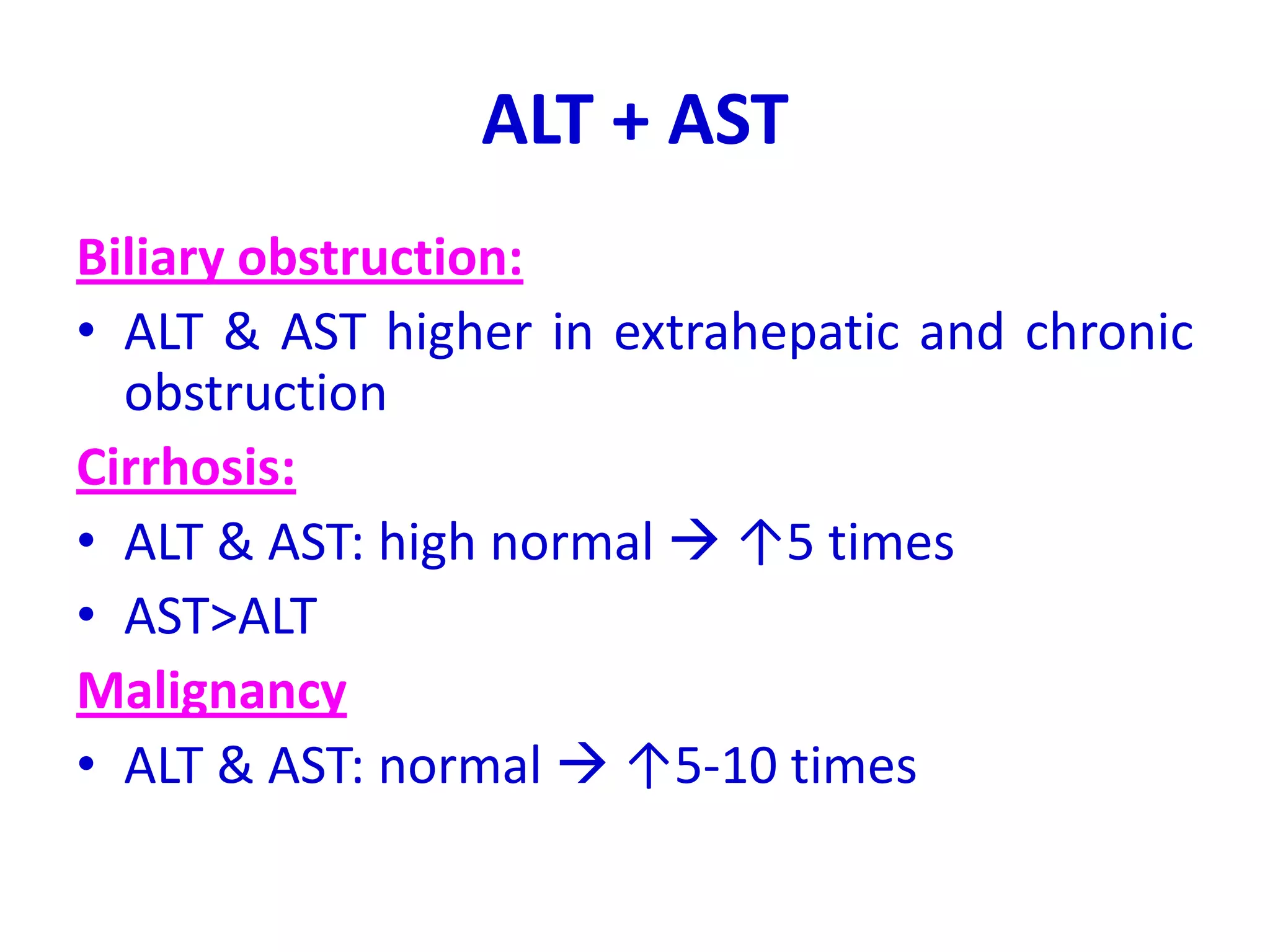
ALT + AST
Biliary obstruction:
• ALT & AST higher in extrahepatic and chronic
obstruction
Cirrhosis:
• ALT & AST: high normal  ↑5 times
• AST>ALT
Malignancy
• ALT & AST: normal  ↑5-10 times
Bilirubin
Dierct
RR: 0.1-0.3 mg/dL
Increased in:
Bile duct obstruction
Hepatitis
Cirrhosis
Intrahepatic cholestasis
Indirect
RR: 0.1-0.7 mg/dL
Increased in:
Crigler-Najjar syndrome
Gilbert's disease
Hemolytic anemia
Hemolytic disease of the
newborn
Hepatitis
Physiological jaundice
Transfusion reaction
Albumin
Reference range: 3.5-5.2g/dL
Increased in:
Dehydration
hemoconcentration.
Decreased in:
Decreased hepatic synthesis
chronic liver disease,
malnutrition,
malabsorption
Increased losses
nephrotic syndrome
burns
enteropathy
Total Protein
Reference range: 6.3 - 8.2 g/dl
Increased in:
marked dehydration.
Decreased in:
Protein-losing enteropathies
chronic liver disease
acute burns
nephrotic syndrome
severe dietary protein deficiency
malabsorption syndrome
Alkaline phosphatase
Reference range: 45 - 150 U/L
ALP is found in liver, bone, intestine, and placenta.
Liver
• bil obstruction
– extrahepatic : ↑↑ 3 times e.g. stone, cancer head of
pancreas)
– Intrahepatic ↑↑ < 3 times (drugs, invasion by cancer
tissue)
• Moderate ↑ to normal: parenchymal cells of
liver affected e.g. infectious hepatitis
Alkaline phosphatase
Bone
• Physiologic
– Children: growing bones
– Healing bone fracture
• ↑↑ 10-25 times: Paget
• Moderate ↑: Osteomalacia
• 2 times: Rickets
• Normal: Osteoporosis
Pregnancy: 3rd trimestre: 2-3 times
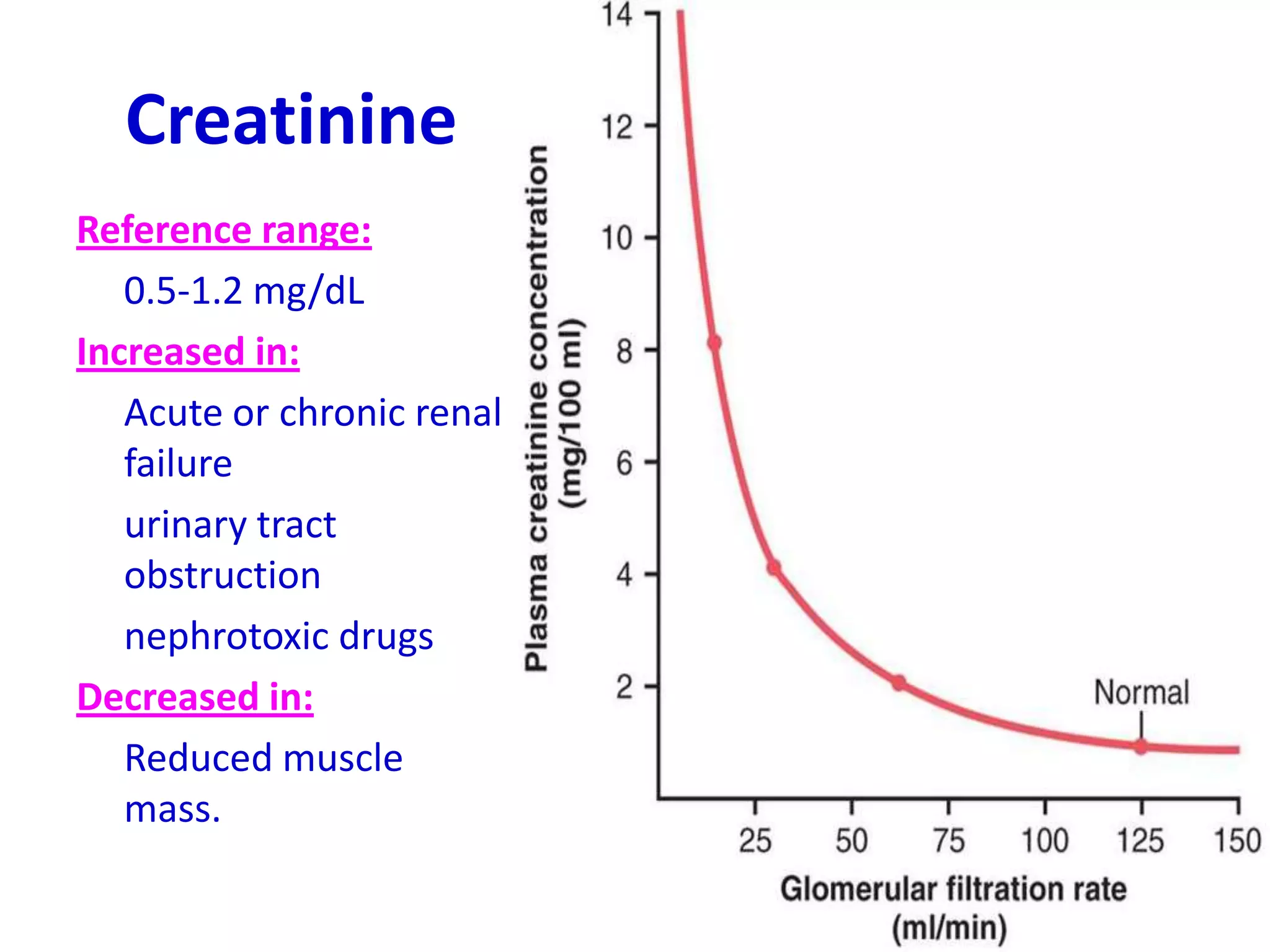
Creatinine
Reference range:
0.5-1.2 mg/dL
Increased in:
Acute or chronic renal
failure
urinary tract
obstruction
nephrotoxic drugs
Decreased in:
Reduced muscle
mass.
Creatinine clearance
Refernce range
• Men
– Range: 97-137 ml/min/1.73 m2
• Women
– Range: 88-128 ml/min/1.73 m2
Increased in:
High cardiac output
exercise
Decreased in:
Acute or chronic renal failure
decreased renal blood flow (shock, hemorrhage, dehydration, CHF).
Nephrotoxic drugs.
Uric acid
Increased in:
Decreased renal excretion of Uric Acid
Primary idiopathic Hyperuricemia
Chronic Renal Insufficiency
Dehydration or starvation ketosis
Drugs
Overproduction of Uric Acid
HGPRTase deficiency
Myeloproliferative disorder
Lymphoproliferative disorder
Chemotherapy
Decreased in:
Drugs
SIADH
Hemochromatosis
Protein or purine deficient diet
Reference Range:
Males: 3.4 to 7.0 mg/dL
Females 2.4–6.0 mg/dL
Urea
Reference Range: 20-40 mg/dl
Increased in:
intake of high-protein diet 12 hours before blood sampling
Renal failure (acute or chronic)
urinary tract obstruction
dehydration,
Nephrotoxic drugs (eg, gentamicin).
Decreased in:
Hepatic failure,
nephrotic syndrome,
Cachexia
Cholesterol
Reference Range:
Desirable: <200 mg/dL
Borderline: 200-239 mg/dL
High risk: >240 mg/dL
Increased in:
Primary hypercholesterolemia
Secondary disorders:
hypothyroidism, uncontrolled diabetes mellitus, nephrotic syndrome, biliary
obstruction, Drugs.
Decreased in:
Severe liver disease (acute hepatitis, cirrhosis)
malnutrition
malabsorption
familial (Gaucher disease, Tangier disease)
abetalipoproteinemia
Triglycerides
Reference Range:
Desirable: <150 mg/dL
Borderline: 150-199 mg/dL
High risk: 200-499 mg/dL
Very high risk: >500 mg/dL
Increased in:
Primary
DM
Hypothyroidism,
nephrotic syndrome
biliary tract obstruction
Drugs
Decreased in:
Tangier disease
Malabsorption
parenchymal liver disease
Drugs
Calcium
Reference Range: 8.5 - 10.3 mg/dL
Increased in:
Hyperparathyroidism,
malignancies secreting parathyroid hormone-related protein (PTHrP)
vitamin D excess,
Bone diseases
Familial
Drugs
Decreased in:
Hypoparathyroidism
vitamin D deficiency
Renal insufficiency
massive transfusion
hypoalbuminemia.
CSF glucose and protein
CSF glucose
Reference range: 50 - 80 mg/dL (or 60-70% of
the blood glucose).
CSF protein
Reference range: 15–45 mg/dL
Laboratory Hematology
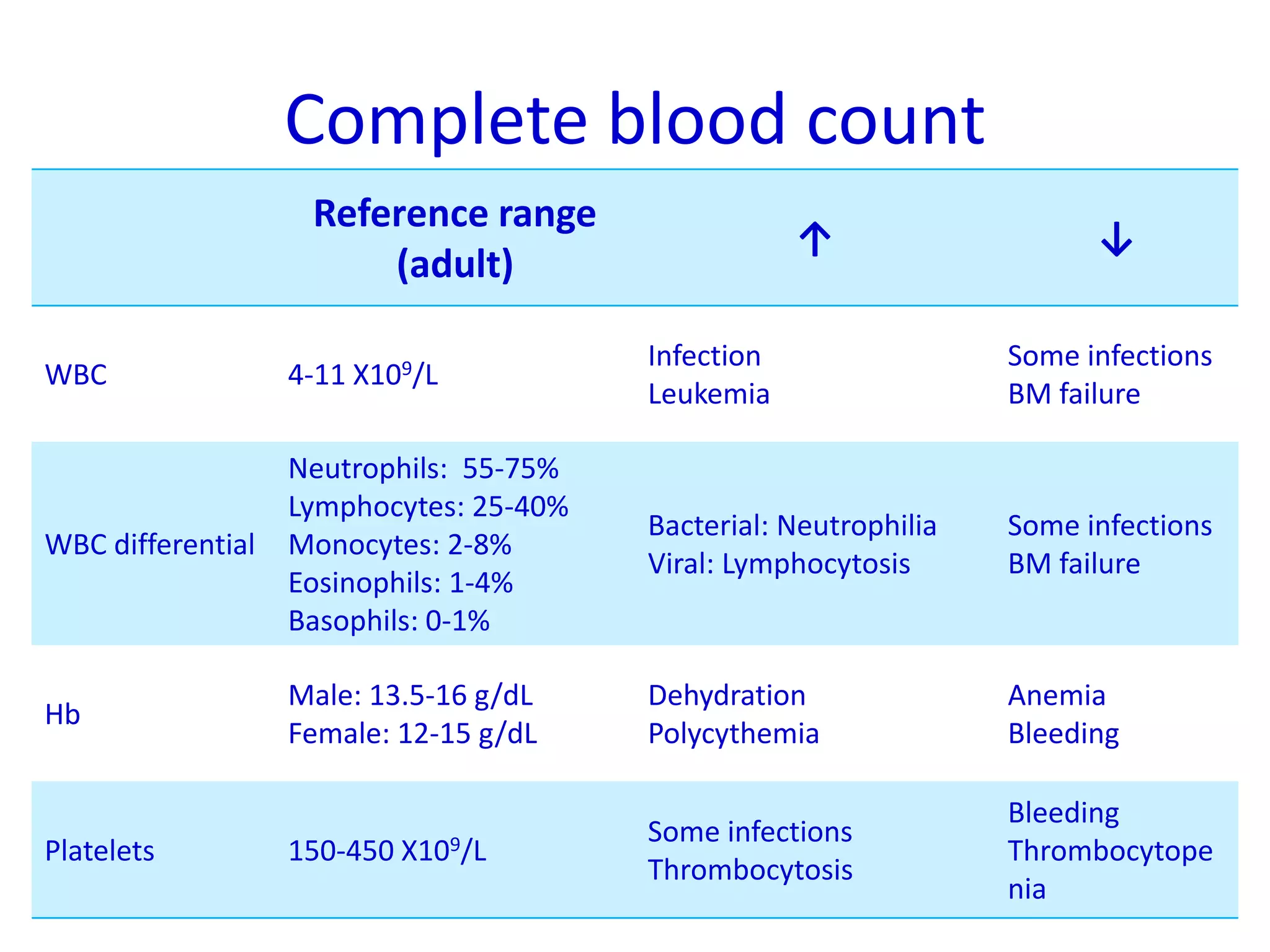
Complete blood count
Reference range
(adult)
↑ ↓
WBC 4-11 X109/L
Infection
Leukemia
Some infections
BM failure
WBC differential
Neutrophils: 55-75%
Lymphocytes: 25-40%
Monocytes: 2-8%
Eosinophils: 1-4%
Basophils: 0-1%
Bacterial: Neutrophilia
Viral: Lymphocytosis
Some infections
BM failure
Hb
Male: 13.5-16 g/dL
Female: 12-15 g/dL
Dehydration
Polycythemia
Anemia
Bleeding
Platelets 150-450 X109/L
Some infections
Thrombocytosis
Bleeding
Thrombocytope
nia
Erythrocyte sedimentation rate (ESR)
Reference range: Male: <10 Female: <15 mm/h
↑ ↓
Anemia
increased fibrinogen
Increased abnormal proteins
Inflammation
Infection
Marked ↑↑
Collagen diseases
Malignancy
TB
Polycythemia
abnormal red cells, eg
spherocytosis
sickle cells
Cryoglobulins
low fibrinogen
PT (INR) and APTT
PT APTT EXAMPLES
10 - 13.5 seconds,
or
INR of 0.8-1.1
30 to 45
seconds
Reference ranges
↑ Normal
Liver disease, ↓vitamin K, ↓factor
VII,anticoagulation drug therapy
Normal ↑ ↓factor VIII, IX, or XI, von Willebrand disease
↑ ↑ ↓ factor I, II, V or X, severe liver disease, DIC
THANK YOU

Lab investig

  • 1.
    Dr. Iman M.Fawzy; MD. PhD. Mansoura, Egypt
  • 2.
  • 3.
    COMPONENTS OF THEURINE DIPSTICK • Color:pale yellow to amber • Specific gravity: 1.015–1.025 • pH: 4.5–8.0 • Protein: negative • Glucose: negative • Ketone: negative • Bilirubin: negative • Urobilinogen: 0.2–1.0 • Blood: negative • Nitrite: negative • Leukocytes (esterase): negative
  • 4.
    COMPONENTS OF THEURINE DIPSTICK
  • 5.
    Microscopic Examination ofUrine Sediment Increased WBCs are seen in Urinary tract disease (eg, cystitis, prostatitis) Chronic pyelonephritis Tuberculosis Viral infection Interstitial nephritis Glomerulonephritis WBC casts Pyelonephritis (most common cause) Acute glomerulonephritis Interstitial nephritis Lupus nephritis URINE WHITE BLOOD CELLS Normal Values: WBCs: 0–4/hpf
  • 6.
    Microscopic Examination ofUrine Sediment Increased numbers of RBCs occur in • Contamination during Menstrual cycle • Glomeulo and Pyelonephritis • Renal stones • Cystitis (acute or chronic) • Prostatitis • Genitourinary tract malignancies • Bleeding disorders • Trauma • Anticoagulant therapy overdose RBC casts in • Glomerulonephritis (acute and chronic) • Renal infarction • Severe pyelonephritis • Congestive heart failure • Renal vein thrombosis URINE RED BLOOD CELLS Normal Values: RBCs: 0–3/HPF
  • 7.
    Microscopic Examination ofUrine Sediment GRANULAR CASTS Acute tubular necrosis Advanced glomerulonephritis Pyelonephritis Malignant nephrosclerosis Fever (dehydration) Hyaline casts Glomerulonephritis, pyelonephritis Malignant hypertension Chronic renal disease Diabetic nephropathy Fever (dehydration) Emotional stress Strenuous exercise WAXY CASTS Chronic renal disease Nephrotic syndrome Localized nephron obstruction Fatty casts lipiduria e.g. nephrotic syndrome
  • 8.
    Urinary sediment crystals Acidicurine • Uric acid crystal • Amorphous urates • Cholesterol crystals Alkaline urine • Triple phosphate crystals • Calcium phosphate • Amorphous phosphates ACID, NEUTRAL, OR SLIGHTLY ALKALINE URINE Calcium oxalate
  • 9.
    URINE COMPOSITION URINALYSIS:FINDINGS IN COMMON DISEASE STATES. Disease Protein RBC WBC Casts Other Microscopic Findings Normal 0 0 or Occ 0 or Occ 0 or Occ Hyaline casts Fever Trace or 1+ 0 Occ 0 or Occ Granular, Hyaline casts Eclampsia 3+-4+ 0 or 1+ 0 3+, 4+ Hyaline casts DM v 0 0 0 or 1+ Glucose, ketones AGM 2+-4+ 1+-4+ v 2+-4+ Blood; RBC, cellular, granular, and hyaline casts Nephrotic syndrome 4+ 0 4+ Granular, waxy, hyaline, and fatty casts Chronic renal failure 1+-2+ Occ or 1+ 0 1+-3+ Granular, hyaline, and broad casts Pyelonephritis 1+-2+ 0 or 1+ 4+ 0 or 1+ WBC casts and hyaline casts; many pus cells; bacteria
  • 10.
  • 11.
    Organisms may foundin Urine BACTERIA Gram positive Gram negative Staphylococcus Escherichia coli saprophyticus Proteus species Haemolytic streptococci Pseudomonas aeruginosa Klebsiella strains Mycobacterium tuberculosis Leptospira interrogans Chlamydia Mycoplasma Candida PARASITES Schistosoma haematobium, Trichomonas vaginalis Enterobius vermicularis Wuchereria bancrofti Onchocerca volvulus.
  • 12.
    Organisms may foundin CSF BACTERIA Gram positive Gram negative Streptococcus pneumoniae Neisseria meningitidis Streptococcus agalactiae (Group B) Haemophilus influenzae Listeria monocytogenes Escherichia coli Pseudomonas aeruginosa Proteus specie Mycobacterium tuberculosis Treponema pallidum.
  • 13.
    Organisms may foundin CSF VIRUSES Coxsackieviruses Echovirus arboviruses. herpes simplex 2 virus varicella zoster virus FUNGI Cryptococcus neoformans (mainly in AIDS patients) Aspergillus species. PARASITES Trypanosoma species and Naegleria fowleri Toxoplasma gondii (mainly in AIDS patients).
  • 14.
    Bacterial meningitis Glucose (mg/dL): Normalto ↓↓<40 mg/dL. Protein (mg/dL) ↑↑ > 250 mg/dL. WBCs (cells/µL) >500 (usually > 1000). Early: May be < 100. Cell differential: Predominance of Neutrophils (PMNs) Culture: Positive Opening Pressure ↑ Fungal meningitis Glucose (mg/dL): <40 mg/dL (Low) Protein (mg/dL) (moderate to ↑↑) 25 - 500 mg/dL WBCs (cells/µL) Variable (10 -1000 cells/µL) <500cells/µL. Cell differential: Predominance of Lymphocytes Culture: Positive (fungal) Opening Pressure Variable TB meningitis Glucose (mg/dL): <40 mg/dL (Low) Protein (mg/dL) (moderate to ↑↑50 - 500 mg/dL WBCs (cells/µL) Variable (10 -1000 cells/µL) <500cells/µL. Cell differential: Predominance of Lymphocytes Culture: Positive for AFB Opening Pressure Variable Viral meningitis Glucose (mg/dL): Normal (> 40 mg/dL.) Protein (mg/dL) <100 mg/dL (moderate ↑) WBCs (cells/µL) < 100 cells/µL. Cell differential: Early: neutrophils. Late: lymphocytes. Culture: Negative Opening Pressure Usually normal
  • 15.
    Blood Cultures BACTERIA Gram positiveGram negative Staphylococcus aureus Salmonella Typhi Viridans streptococci Other Salmonella serovars Streptococcus pneumoniae Brucella species Streptococcus pyogenes Haemophilus influenzae Enterococcus faecalis Pseudomonas aeruginosa Clostridium perfringens Klebsiella strains Anaerobic streptococci Escherichia coli Proteus species Bacteroides fragilis Neisseria meningitidis Yersinia pestis Mycobacterium tuberculosis (HIV-associated tuberculosis), Leptospira species, Borrelia species, rickettsiae, Bartonella bacilliformis. FUNGI Candidaalbicansandother yeasts, e.g. Cryptococcus neoformans, and occasionally Histoplasma capsulatum and other fungi that cause systemic mycoses.
  • 16.
    Throat culture BACTERIA Gram positiveGram negative Streptococcus pyogenes Vincent’s organisms Corynebacterium diphtheriae Corynebacterium ulcerans VIRUSES Respiratory viruses enteroviruses and herpes simplex virus type 1 FUNGI Candida albicans and other yeasts.
  • 17.
    pus, ulcer materialand skin culture BACTERIA Gram positive Gram negative Staphylococcus aureus Pseudonomas aeruginosa Streptococcus pyogenes Proteus species Enterococcus species Escherichia coli Anaerobic streptococci Bacteriodes species Other streptococci Klebsiella species Clostridium perfringens Pasteurella species and other clostridia Actinomycetes Actinomyces israeli Also Mycobacterium tuberculosis FUNGI Histoplasma c. duboisii Candida albicans Fungi that cause mycetoma PARASITES Entamoeba histolytica
  • 18.
    Effusions culture SYNOVIAL FLUID Grampositive Gram negative Staphylococcus aureus Neisseria gonorrhoeae Streptococcus pyogenes Neisseria meningitidis Streptococcus pneumoniae Haemophilus influenzae Anaerobic streptococci Brucella species Actinomycetes Salmonella serovars Escherichia coli Pseudomonas aeruginosa Proteus Bacteroides Mycobacterium tuberculosis
  • 19.
    Effusions culture PLEURAL ANDPERICARDIAL FLUIDS Bacterial Gram positive Gram negative Staphylococcus aureus Haemophilus influenzae Streptococcus pneumoniae Bacteroides Streptococcus pyogenes Pseudomonas aeruginosa Actinomycetes Klebsiella strains Other enterobacteria Mycobacterium tuberculosis fungi Viruses especially coxsackie B virus
  • 20.
    Effusions culture ASCITIC FLUID Grampositive Gram negative Enterococcus species Escherichia coli Streptococcus pneumoniae Klebsiella strains Staphylococcus aureus Other enterobacteria Streptococcus pyogenes Pseudomonas aeruginosa Streptococcus agalactiae Bacteroides Viridans streptococci Clostridium perfringens Mycobacterium tuberculosis Candida species
  • 21.
    Urogenital culture URETHRAL SWABS Neisseriagonorrhoeae Chlamydia trachomatis (serovars D-K) Ureaplasma Mycoplasma Trichomonas vaginalis.
  • 22.
    Urogenital culture CERVICAL SWABS Fromnon-puerperal women: Neisseria gonorrhoeae, Chlamydia trachomatis (serovars D-K), Streptococcus pyogenes, herpes simplex virus. From women with puerperal sepsis or septic abortion: Streptococcus pyogenes, other betahaemolytic streptococci, Staphylococcus aureus, Enterococcus species, anaerobic cocci, Clostridium perfringens, Bacteroides, Proteus, Escherichia coli and other coliforms, Listeria monocytogenes.
  • 23.
    Urogenital culture VAGINAL SWABS Trichomonasvaginalis Candida species Gardnerella vaginalis anaerobes
  • 24.
    Stool sample BACTERIA Gram positiveGram negative Clostridium perfringens Shigella species Clostridium difficile Salmonella serovars Staphylococcus aureus Campylobacter species Escherichia coli (toxin) Vibrio cholerae 01, 0139 Other Vibrio species Aeromonas species Mycobacterium tuberculosis VIRUSES Rotaviruses, Adenoviruses, , Astrovirus, calcivirus PARASITES Entamoeba histolytica, Giardia lamblia
  • 25.
    Sputum BACTERIA Gram positive Gramnegative Streptococcus pneumoniae Haemophilus influenzae Staphylococcus aureus Klebsiella pneumoniae Streptococcus pyogenes Pseudomonas aeruginosa Proteus species Yersina pestis Moraxella catarrhalis Mycobacterium tuberculosis Mycoplasma pneumoniae Legionella pneumophila. FUNGI AND ACTINOMYCETES Pneumocystis jiroveci, Blastomyces dermatitidis, Histoplasma capsulatum, Aspergillus species, Candida albicans, Cryptococcus neoformans, and Nocardia species. PARASITES Paragonimus species
  • 26.
  • 27.
    Widal test negative Widal absenceof infection by S typhi and para typhi False negative • the carrier state • early treatment • hidden organism in bone or joints • Technical errors positive Widal Typhoid fever False positive in: • previous immunization with Salmonella antigen. • cross-reaction with non- typhoidal Salmonella. • infection with malaria, Brucella, other Enterobacteriaceae, dysentry, pneumonia, dengue, immune diseases • Technical errors O antigen: 4 fold ↑ if repeated Or O antigen >1:160, H> 1: 320 in endemic areas
  • 28.
    Brucella antibody negative absence ofinfection by Brucella infection False negative • B canis infection • Technical errors positive • Brucella infection (except B canis) False positive in: • infections with Francisella tularensis, Yersinia enterocolitica, salmonella, Rocky Mountain spotted fever; vaccinations for cholera • Technical errors Positive titer ≥1:80 ↑≥ 4-fold in serum specimens obtained >2 weeks apart.
  • 29.
    C-reactive protein (CRP) Positivetitre: >6 mg/dL Positive in: • Inflammation False positive in: • High protein diet • Smoking • Aging • Pregnancy or contraceptive use • Metabolic syndrome (insulin resistance) • Diabetes • Elevated triglycerides • Cancer
  • 30.
    Rheumatoid factor (RF) Positivetitre: >8 mg/dL Positive in: • Rheumatoid arthritis (75-90%), False positive in • Other auto immune diseases • Drugs: methyldopa, others. • 1-4% of normal individuals, acute immune responses (eg, viral infections, including infectious mononucleosis and viral hepatitis), chronic bacterial infections (tuberculosis, leprosy, subacute infective endocarditis), and chronic active hepatitis False negative: • 20% of Rheumatoid arthritis
  • 31.
    Antistreptolysin O titer(ASO) Positive titre: >200 IU/mL • Detects antibody to the antigen streptolysin O produced by group A streptococci. Titer rises to a peak at 4-6 weeks and may remain elevated for 1 year. Positive in: • Streptococcal infection (eg, upper airway infections, scarlet fever) • post-streptococcal infection complication (eg, glomerulonephritis and rheumatic fever). False positive in • Some bacterial infections.
  • 32.
    Hepatitis A antibody(Anti-HAV) Positive in: • IgM: Acute hepatitis A • IgG: convalescence from hepatitis A IgM antibody is detectable within a week after symptoms develop and persists for 6 months. IgG appears 4 weeks later than IgM and persists for years.
  • 33.
    Hepatitis B surfaceantigen (HBsAg) In hepatitis B virus infection HBsAg is • detectable 2-5 weeks before onset of symptoms • peaks at the time of onset of clinical illness. • persists for 1-5 months • Declining with resolution of clinical symptoms. Positive in: • Acute hepatitis B • chronic hepatitis B (persistence of HBsAg for >6 months, positive HBcAb [total]) • HBsAg positive carriers. .
  • 34.
  • 35.
  • 36.
    Hepatitis C antibody(HCV-Ab) Detects antibody to HCV Positive in: HCV infection False positive: autoimmune liver disease Hypergammaglobulinemia False negative: immunosuppressed patients long-term hemodialysis.
  • 37.
    HCV ANTI-HCV HCV RNA(PCR) INTERPRETATION Negative Negative No infection Positive Positive HCV present (acute or chronic infection) Negative Positive •Chronic infection in immunosuppressed patient •Early infection Positive Negative •Resolved infection •Treated infection •False-positive anti-HCV test
  • 38.
    HIV antibody • HIVantibody test is considered positive only when confirmed by a Western blot analysis or immunofluorescent antibody test (IFA). Positive in: • HIV infection
  • 39.
    Toxoplasma antibodys Toxo IgG ToxoIgM Positive in: • IgM: Acute or congenital toxoplasmosis • IgG: previous toxoplasma exposure false-positive • SLE, HIV infection, positive rheumatoid factor, positive ANA.
  • 40.
    AUTOANTIBODIES: ASSOCIATIONS WITHCONNECTIVE TISSUE DISEASES Disease Test Sensitivity, Specificity Other Disease CREST Anti-centromere antibody CREST (70-90%, high) Scleroderma (10-15%), Raynaud disease (10-30%). SLE ANA SLE (>95%, low) RA (30-50%), scleroderma (60%), Sjogren (80%). anti-ds-DNA SLE (60-70%, high) Lupus nephritis Anti-Smith antibody (anti- Sm) SLE (30-40%, high) Mixed connective tissue disease (MCTD) Anti-ribonucleoprotein antibody (RNP) MCTD (95-100%, low) Scleroderma (20-30%, low) SLE (30%), Sjogren, RA (10%), discoid lupus (20-30%). Rheumatoid arthritis (RA) Rheumatoid factor (RF), Anti- CCP Rheumatoid arthritis (50-90%) Other rheumatic diseases, chronic infections, elderly Scleroderma Anti-Scl-70 antibody Scleroderma (15-20%, high) Sjogren syndrome Anti-SS-A/Ro antibody Sjogren syndrome (60-70%, low) SLE (30-40%), RA (10%), subacute cutaneous lupus, vasculitis. Wegener granulomatosis Anti-neutrophil cytoplasmic antibody (ANCA) Wegener granulomatosis (systemic necrotizing vasculitis) (56-96%, high) Crescentic glomerulonephritis or other systemic vasculitis (eg, polyarteritis nodosa).
  • 41.
  • 42.
    Glucose Hyperglycemia Physiologic hard physical activity, strongemotions, e.g., fear. Pathologic • Diabetes Mellitus Type 1, 2 • Gestational diabetes • Chronic renal failure • Chronic pancreatitis • Glucagonoma • Hyperthyroidism • Pancreatic cancer • Pancreatitis • Hypopituitarism, Hypothyroidism Hypoglycemia Physiologic normal pregnancy (mild) neonates born to diabetic mothers. Pathologic Liver necrosis, adrenal cortical hypofunction, hepatic failure. Fasting blood glucose 70-110mg/dL 2 hours post prandial <200 mg/dL
  • 43.
    Alanine aminotransferase (ALT, SGPT,GPT) Reference range: 10 - 46 U/L Increased in: Acute viral hepatitis biliary tract obstruction Liver cirrhosis Drugs
  • 44.
    Aspartate aminotransferase (AST, SGOT,GOT) Reference range: 10 - 40 U/L Increased in: Acute viral hepatitis biliary tract obstruction (cholangitis, stone) cirrhosis Acute myocardial infarction Progressive muscle disease Hemolytic anemia Drugs
  • 45.
    ALT + AST ViralHepatitis • ↑20-50 even 100 times • Before clinical manifestations • Peak: 7th-12th day  ↓  normal at 3th-5th week. • ALT>AST Toxic hepatitis: • as viral hepatitis Infectious mononucleosis + liver involvement: • ↑ ALT & AST up to 20 times
  • 46.
    ALT + AST Biliaryobstruction: • ALT & AST higher in extrahepatic and chronic obstruction Cirrhosis: • ALT & AST: high normal  ↑5 times • AST>ALT Malignancy • ALT & AST: normal  ↑5-10 times
  • 47.
    Bilirubin Dierct RR: 0.1-0.3 mg/dL Increasedin: Bile duct obstruction Hepatitis Cirrhosis Intrahepatic cholestasis Indirect RR: 0.1-0.7 mg/dL Increased in: Crigler-Najjar syndrome Gilbert's disease Hemolytic anemia Hemolytic disease of the newborn Hepatitis Physiological jaundice Transfusion reaction
  • 48.
    Albumin Reference range: 3.5-5.2g/dL Increasedin: Dehydration hemoconcentration. Decreased in: Decreased hepatic synthesis chronic liver disease, malnutrition, malabsorption Increased losses nephrotic syndrome burns enteropathy
  • 49.
    Total Protein Reference range:6.3 - 8.2 g/dl Increased in: marked dehydration. Decreased in: Protein-losing enteropathies chronic liver disease acute burns nephrotic syndrome severe dietary protein deficiency malabsorption syndrome
  • 50.
    Alkaline phosphatase Reference range:45 - 150 U/L ALP is found in liver, bone, intestine, and placenta. Liver • bil obstruction – extrahepatic : ↑↑ 3 times e.g. stone, cancer head of pancreas) – Intrahepatic ↑↑ < 3 times (drugs, invasion by cancer tissue) • Moderate ↑ to normal: parenchymal cells of liver affected e.g. infectious hepatitis
  • 51.
    Alkaline phosphatase Bone • Physiologic –Children: growing bones – Healing bone fracture • ↑↑ 10-25 times: Paget • Moderate ↑: Osteomalacia • 2 times: Rickets • Normal: Osteoporosis Pregnancy: 3rd trimestre: 2-3 times
  • 52.
    Creatinine Reference range: 0.5-1.2 mg/dL Increasedin: Acute or chronic renal failure urinary tract obstruction nephrotoxic drugs Decreased in: Reduced muscle mass.
  • 53.
    Creatinine clearance Refernce range •Men – Range: 97-137 ml/min/1.73 m2 • Women – Range: 88-128 ml/min/1.73 m2 Increased in: High cardiac output exercise Decreased in: Acute or chronic renal failure decreased renal blood flow (shock, hemorrhage, dehydration, CHF). Nephrotoxic drugs.
  • 54.
    Uric acid Increased in: Decreasedrenal excretion of Uric Acid Primary idiopathic Hyperuricemia Chronic Renal Insufficiency Dehydration or starvation ketosis Drugs Overproduction of Uric Acid HGPRTase deficiency Myeloproliferative disorder Lymphoproliferative disorder Chemotherapy Decreased in: Drugs SIADH Hemochromatosis Protein or purine deficient diet Reference Range: Males: 3.4 to 7.0 mg/dL Females 2.4–6.0 mg/dL
  • 55.
    Urea Reference Range: 20-40mg/dl Increased in: intake of high-protein diet 12 hours before blood sampling Renal failure (acute or chronic) urinary tract obstruction dehydration, Nephrotoxic drugs (eg, gentamicin). Decreased in: Hepatic failure, nephrotic syndrome, Cachexia
  • 56.
    Cholesterol Reference Range: Desirable: <200mg/dL Borderline: 200-239 mg/dL High risk: >240 mg/dL Increased in: Primary hypercholesterolemia Secondary disorders: hypothyroidism, uncontrolled diabetes mellitus, nephrotic syndrome, biliary obstruction, Drugs. Decreased in: Severe liver disease (acute hepatitis, cirrhosis) malnutrition malabsorption familial (Gaucher disease, Tangier disease) abetalipoproteinemia
  • 57.
    Triglycerides Reference Range: Desirable: <150mg/dL Borderline: 150-199 mg/dL High risk: 200-499 mg/dL Very high risk: >500 mg/dL Increased in: Primary DM Hypothyroidism, nephrotic syndrome biliary tract obstruction Drugs Decreased in: Tangier disease Malabsorption parenchymal liver disease Drugs
  • 58.
    Calcium Reference Range: 8.5- 10.3 mg/dL Increased in: Hyperparathyroidism, malignancies secreting parathyroid hormone-related protein (PTHrP) vitamin D excess, Bone diseases Familial Drugs Decreased in: Hypoparathyroidism vitamin D deficiency Renal insufficiency massive transfusion hypoalbuminemia.
  • 59.
    CSF glucose andprotein CSF glucose Reference range: 50 - 80 mg/dL (or 60-70% of the blood glucose). CSF protein Reference range: 15–45 mg/dL
  • 60.
  • 61.
    Complete blood count Referencerange (adult) ↑ ↓ WBC 4-11 X109/L Infection Leukemia Some infections BM failure WBC differential Neutrophils: 55-75% Lymphocytes: 25-40% Monocytes: 2-8% Eosinophils: 1-4% Basophils: 0-1% Bacterial: Neutrophilia Viral: Lymphocytosis Some infections BM failure Hb Male: 13.5-16 g/dL Female: 12-15 g/dL Dehydration Polycythemia Anemia Bleeding Platelets 150-450 X109/L Some infections Thrombocytosis Bleeding Thrombocytope nia
  • 62.
    Erythrocyte sedimentation rate(ESR) Reference range: Male: <10 Female: <15 mm/h ↑ ↓ Anemia increased fibrinogen Increased abnormal proteins Inflammation Infection Marked ↑↑ Collagen diseases Malignancy TB Polycythemia abnormal red cells, eg spherocytosis sickle cells Cryoglobulins low fibrinogen
  • 63.
    PT (INR) andAPTT PT APTT EXAMPLES 10 - 13.5 seconds, or INR of 0.8-1.1 30 to 45 seconds Reference ranges ↑ Normal Liver disease, ↓vitamin K, ↓factor VII,anticoagulation drug therapy Normal ↑ ↓factor VIII, IX, or XI, von Willebrand disease ↑ ↑ ↓ factor I, II, V or X, severe liver disease, DIC
  • 64.

Editor's Notes

  • #4 Bilirubin: sample: fresh &lt;20 minutes, avoid light exposureProteinuria may be present due to infection and inflammation due to exudate
  • #11 Request: specific culture must be requestedSample contaminationSample in outpatient clinic before starting antibioticReport: medical lab staff: sensitive and resistantMRSA, ESBLAntibiotic policy
  • #13 Time: 20 minutes between (sampling) and (culture and incubation)
  • #14 Time: 20 minutes between (sampling) and (culture and incubation)
  • #28 S. typhi O. S. typhi H. S. paratyphi ‘AH’. S. paratyphi ‘BHA Negative test does not necessarily mean the patient is not infected. Reaction occurs in infected patients about 50% during the 1st week, 80% in the 2nd week, 90-95% in the 3rd or 4th weekPositive O antigen earlier in the disease H antigen reactions may remain sometimes for years.Blood culture positive 1st wk in 90%2nd wk in 75%3rd wk in 60%4th wk in 25%Serum ab rise at 2nd or 3rd weekDetect IgM &amp; IgGSample for Widal: blood, bone marrow, stool2 serum samples with 7-10 days interval to detect rising titre
  • #29 Detection of specific IgM or IgGPositive in 97% within 3 weeks of illnessReported as positive, negative, or equivocal
  • #30 CRP increases sooner and then decreases more rapidly than the ESR.
  • #31 Anti- CCP
  • #32 Streptococcal antibodies appear about 2 weeks after infection.
  • #34 May be undetectable in acute hepatitis B infection. If clinical suspicion is high, HBcAb (IgM) test is then indicated
  • #37 A positive anti-HCV antibody test does not distinguish acute from chronic disease or active from past infection, nor is it a sign of immunity or protection.long-term hemodialysis. Measurement of ALT will not be useful because ALT levels are lower in patients with end-stage renal disease. HCV real-time PCRNegative: &lt;10 IU/mlPositive : &gt;10 IU/mlMild (10-105 IU/ml) Moderate (105-106 IU/ml) High (&gt;106 IU/ml)
  • #43 Fasting 8 hoursPp 2 hours start from eatingEating within 10 minutesFasting = No eating, No smoking, You can drink water
  • #51 Bil ↑ + ALP ↑  Bilobst  ALP&gt;3 times  extra hepatic, &lt; 3 times  intra hepaticBil n + ALP ↑  Bone or placentaBil ↑ + ALP n parenchymal liver diseasedifferential elevation of ALP relative to serum bilirubin provides an early indicator for obstructive or space-occupying conditions. Hepatic cell lesions are manifested by hyperbilirubinemia and dominant serum elevation of parenchymal enzymes, such as aminotransferases; ALP elevations may be only minimalDisproportionate elevation of lactic dehydrogenase (LDH) relative to transaminase usually suggests nonhepatobiliary or multiorgan system disease. The association of elevated LDH, hypercalcemia, and hyperuricemia suggests metastasticneoplastic disease.Measurement of other enzymes such as 5′-nucleotidase or gamma-glutamyltransferase may assist with identifying the hepatobiliary system as a source of elevated ALP since these enzymes are not significantly present in bone. 5′-Nucleotidase is a highly specific but less sensitive indicator of hepatobiliary disease. Gamma glutamyltransferase is more sensitive; however, with the exception of its absence in bone and placenta, it is a less specific indicator of hepatobiliary disease than ALP.ALP levels should always be measured after fasting because enzyme levels increase as much as 30 U/L after food ingestion. Patients with blood group O and B who are secretors can have increased ALP levels after eating a fatty meal because of the release of intestinal enzyme.Hy’s LawALT + bilirubin elevation with normal alkaline phosphatase = disaster!
  • #56 ur: crPre renal &gt;100:1Normal or post renal 40-100:1Renal &lt;40:1
  • #60 Glucose inCSF 60 + 100 bl - normalCSF 60 +600 bl  BactCSF 400 + 600 bl  67% = normal CSF glucose
  • #63 ESR: Affected by a variety of factors, including anemia and red blood cell size; not sensitive enough for screeningvery popular test to indicate the presence of inflammation and necrosisESR does not change as rapidly as does CRPCRP: Most rapid response to inflammationmuch better indicator of inflammation and necrosis than the ESR. not affected by anemia or abnormal serum proteins.