Some slides based on a presentation to a church-group Gateshead,  June 2008 by Ray Tolley
How do children learn?  Do they all have the same skills?  Do they all start from the same position? Do they all learn in the same order? …
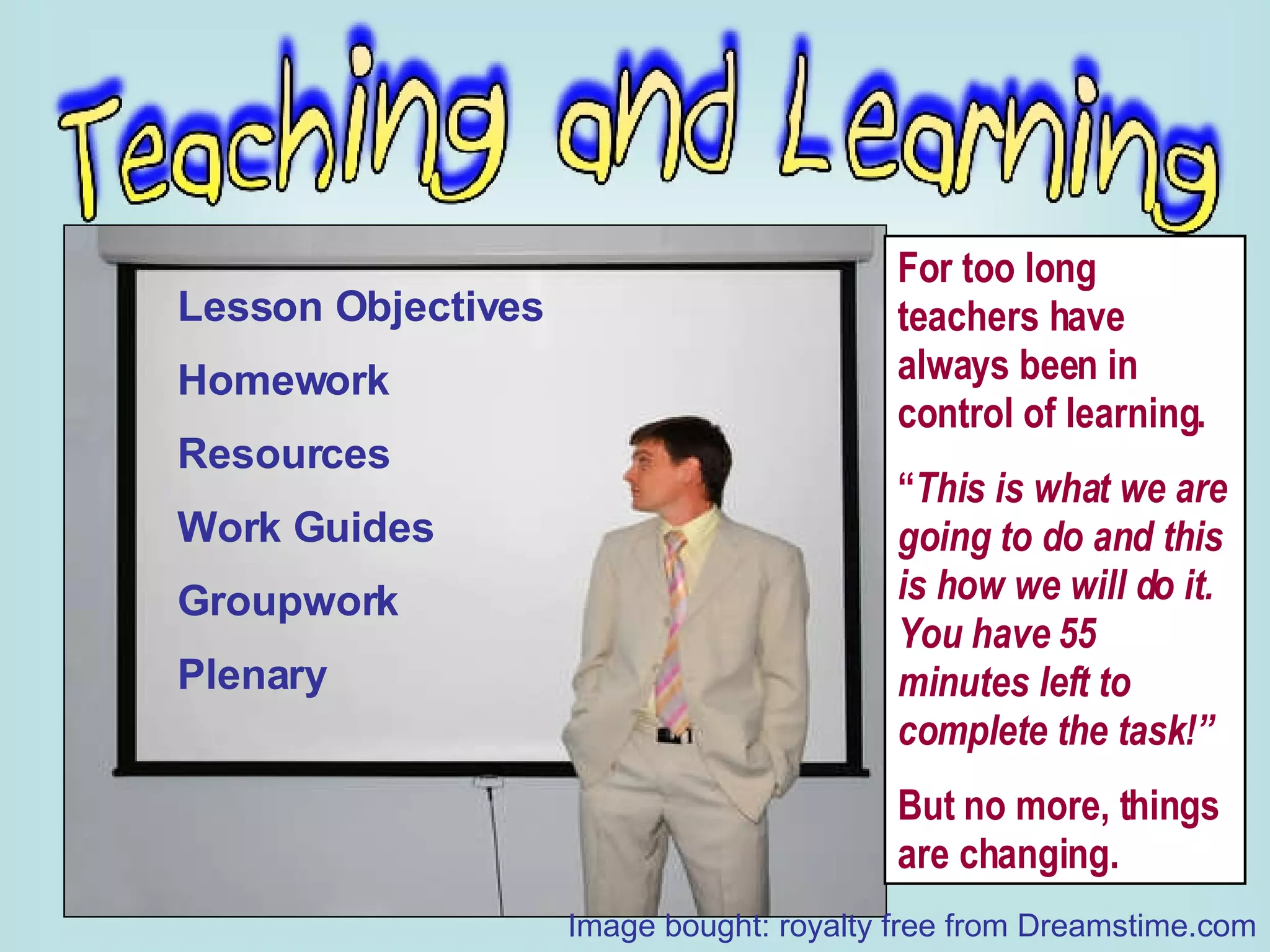
Lesson Objectives Homework Resources Work Guides Groupwork Plenary For too long teachers have always been in control of learning. “ This is what we are going to do and this is how we will do it.  You have 55 minutes left to complete the task!” But no more, things are changing. Image bought: royalty free from Dreamstime.com
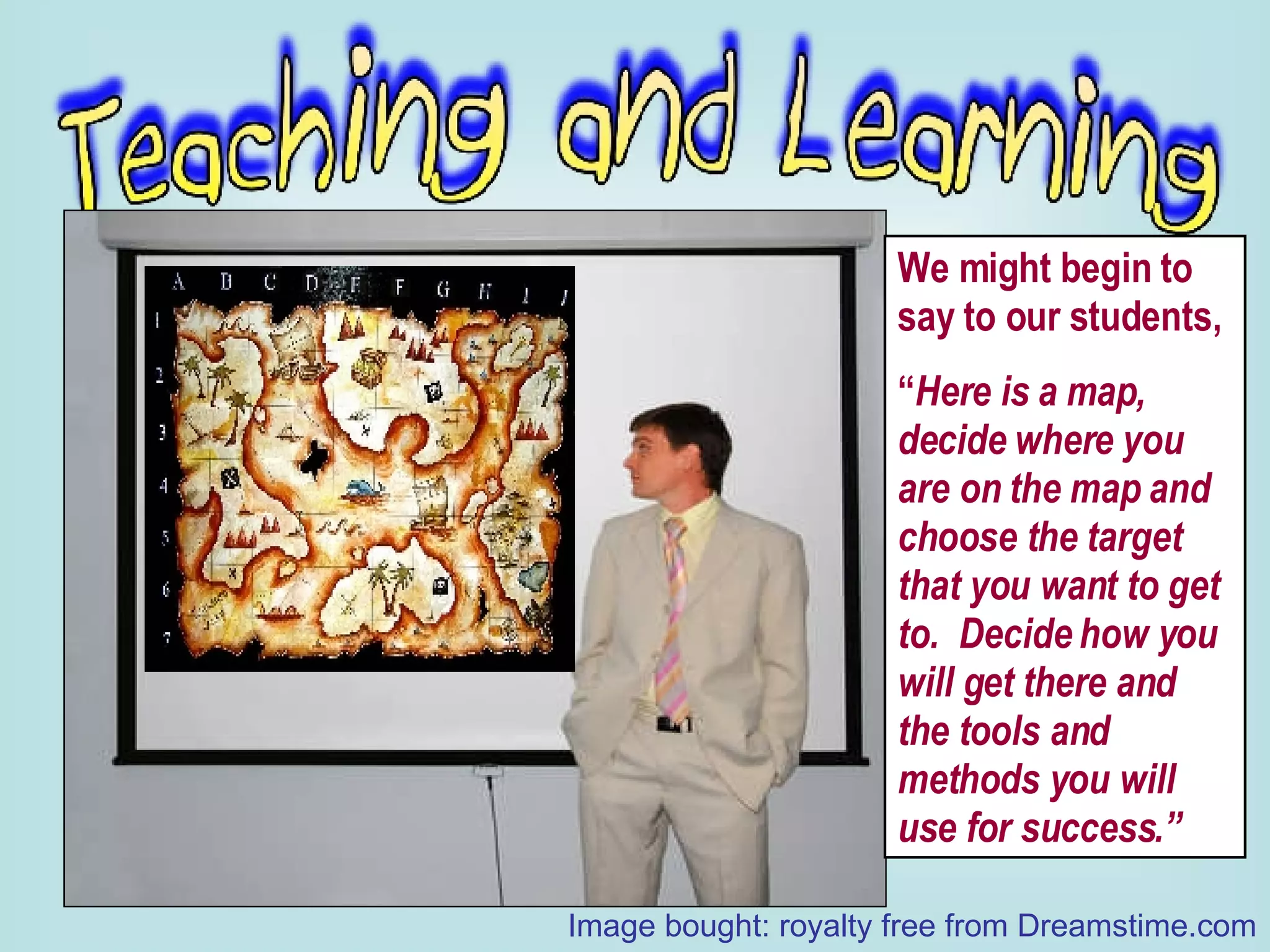
We might begin to say to our students, “ Here is a map, decide where you are on the map and choose the target that you want to get to.  Decide how you will get there and the tools and methods you will use for success.” Image bought: royalty free from Dreamstime.com
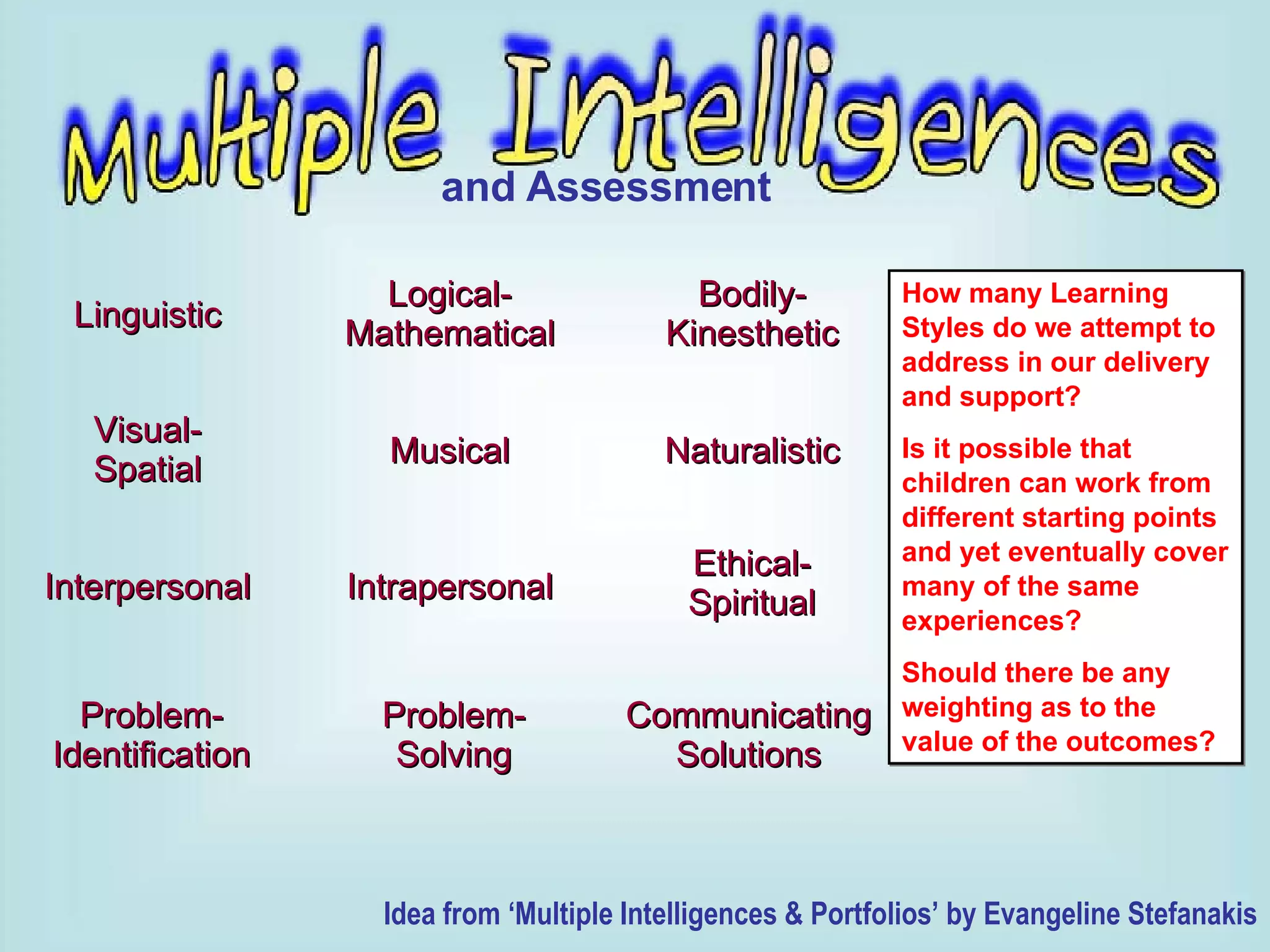
and Assessment Idea from ‘Multiple Intelligences & Portfolios’ by Evangeline Stefanakis How many Learning Styles do we attempt to address in our delivery and support? Is it possible that children can work from different starting points and yet eventually cover many of the same experiences? Should there be any weighting as to the value of the outcomes? Intrapersonal Interpersonal Naturalistic Musical Visual- Spatial Bodily- Kinesthetic Logical- Mathematical Linguistic Ethical- Spiritual Problem- Identification Problem- Solving Communicating Solutions
For too long we have expected the same standards of behaviour from everyone.  We have expected them all to work at the same speed, use the same resources and accept our opinions as the only opinions. Image bought: royalty free from Dreamstime.com
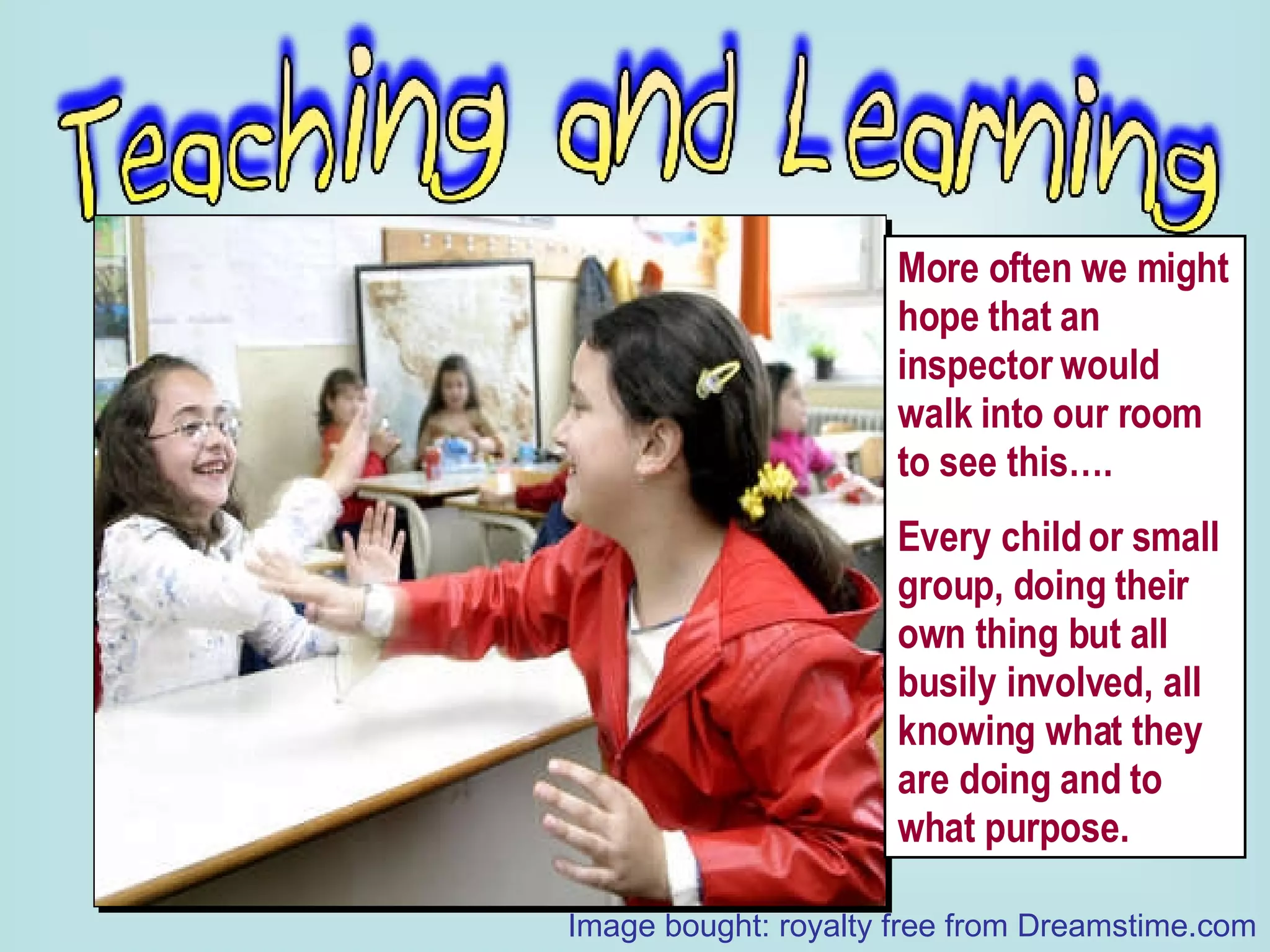
More often we might hope that an inspector would walk into our room to see this…. Every child or small group, doing their own thing but all busily involved, all knowing what they are doing and to what purpose. Image bought: royalty free from Dreamstime.com
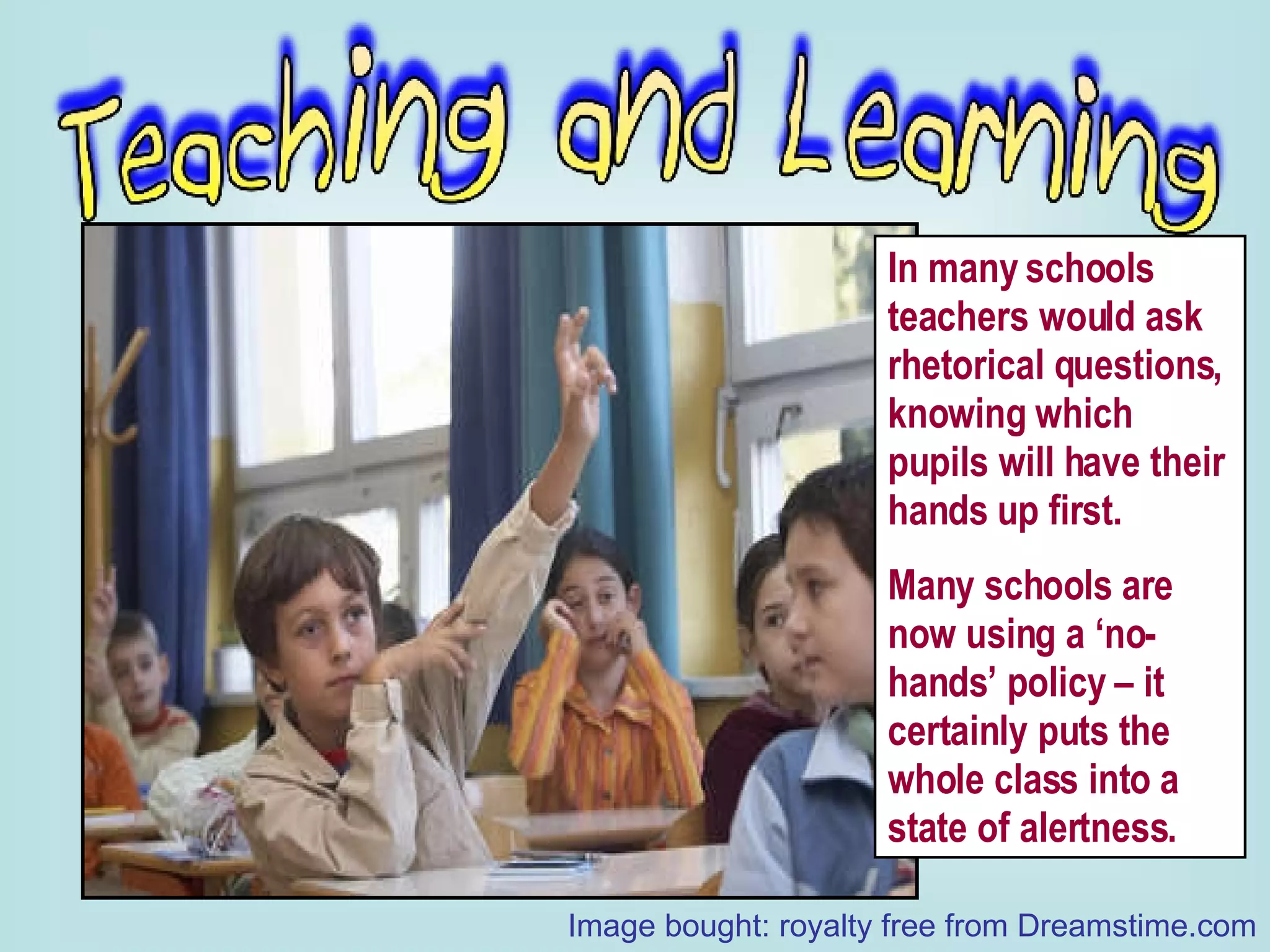
In many schools teachers would ask rhetorical questions, knowing which pupils will have their hands up first. Many schools are now using a ‘no-hands’ policy – it certainly puts the whole class into a state of alertness. Image bought: royalty free from Dreamstime.com
Not only teachers, but ‘Other Adults’ such as Learning Assistants, Librarians, Technicians, SEN staff, and visiting adults all have an input. Students, equally, have opportunity to pop out of lessons in order to see such staff or access resources not in their own classroom. Image bought: royalty free from Dreamstime.com
 

Planning my learning

  • 1.
    Some slides basedon a presentation to a church-group Gateshead, June 2008 by Ray Tolley
  • 2.
    How do childrenlearn? Do they all have the same skills? Do they all start from the same position? Do they all learn in the same order? …
  • 3.
    Lesson Objectives HomeworkResources Work Guides Groupwork Plenary For too long teachers have always been in control of learning. “ This is what we are going to do and this is how we will do it. You have 55 minutes left to complete the task!” But no more, things are changing. Image bought: royalty free from Dreamstime.com
  • 4.
    We might beginto say to our students, “ Here is a map, decide where you are on the map and choose the target that you want to get to. Decide how you will get there and the tools and methods you will use for success.” Image bought: royalty free from Dreamstime.com
  • 5.
    and Assessment Ideafrom ‘Multiple Intelligences & Portfolios’ by Evangeline Stefanakis How many Learning Styles do we attempt to address in our delivery and support? Is it possible that children can work from different starting points and yet eventually cover many of the same experiences? Should there be any weighting as to the value of the outcomes? Intrapersonal Interpersonal Naturalistic Musical Visual- Spatial Bodily- Kinesthetic Logical- Mathematical Linguistic Ethical- Spiritual Problem- Identification Problem- Solving Communicating Solutions
  • 6.
    For too longwe have expected the same standards of behaviour from everyone. We have expected them all to work at the same speed, use the same resources and accept our opinions as the only opinions. Image bought: royalty free from Dreamstime.com
  • 7.
    More often wemight hope that an inspector would walk into our room to see this…. Every child or small group, doing their own thing but all busily involved, all knowing what they are doing and to what purpose. Image bought: royalty free from Dreamstime.com
  • 8.
    In many schoolsteachers would ask rhetorical questions, knowing which pupils will have their hands up first. Many schools are now using a ‘no-hands’ policy – it certainly puts the whole class into a state of alertness. Image bought: royalty free from Dreamstime.com
  • 9.
    Not only teachers,but ‘Other Adults’ such as Learning Assistants, Librarians, Technicians, SEN staff, and visiting adults all have an input. Students, equally, have opportunity to pop out of lessons in order to see such staff or access resources not in their own classroom. Image bought: royalty free from Dreamstime.com
  • 10.