
Dr Julian Grenier
grenier@outlook.com
@juliangrenier
Celebrating young
children’s learning
Learning from the past - and shaping a
future beyond levels
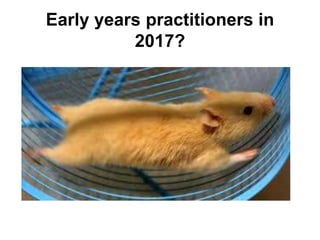
Early years practitioners in
2017?
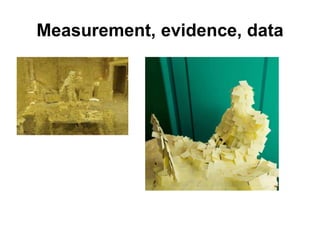
Measurement, evidence, data
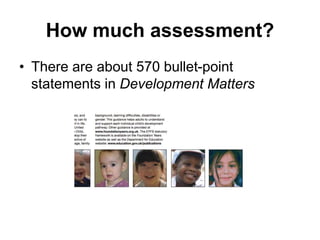
How much assessment?
• There are about 570 bullet-point
statements in Development Matters
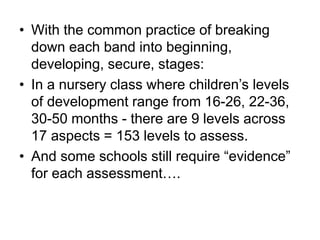
• With the common practice of breaking
down each band into beginning,
developing, secure, stages:
• In a nursery class where children’s levels
of development range from 16-26, 22-36,
30-50 months - there are 9 levels across
17 aspects = 153 levels to assess.
• And some schools still require “evidence”
for each assessment….
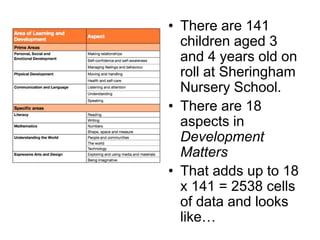
• There are 141
children aged 3
and 4 years old on
roll at Sheringham
Nursery School.
• There are 18
aspects in
Development
Matters
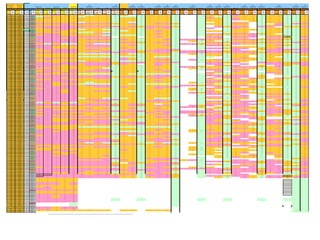
• That adds up to 18
x 141 = 2538 cells
of data and looks
like…
Chores
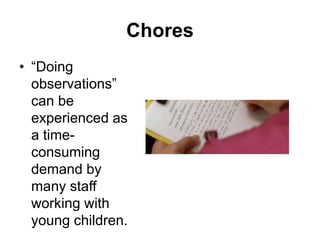
• “Doing
observations”
can be
experienced as
a time-
consuming
demand by
many staff
working with
young children.
• Jayne Osgood quotes Delia, one of the
practitioners in her study, discussing the
“stress of report writing, record keeping and
all those other chores”. Osgood comments
that “Delia’s reference to “other chores” is
indicative of the perceived laboriousness of
current expectations in nursery practice.”
Osgood, Negotiating Professionalism (2012,
p.127)
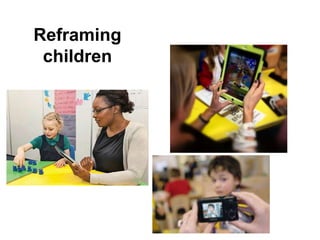
Reframing
children
And what about levels?
• Do we really want to find ourselves talking
to parents about children’s learning in
terms of ages?
• How might it feel as a parent of a four-
year-old to be told that your child’s
development is like a two-year-old’s (e.g.
“in the 22-36 month band”)?
“I am concerned that the tool intended to support
practitioners to understand and foster children’s
development is too often misused. When used as a
tick list of descriptors of what children must achieve,
it can sadly limit both children’s development and the
professional awareness and skills of practitioners.”
Nancy Stewart (2016)
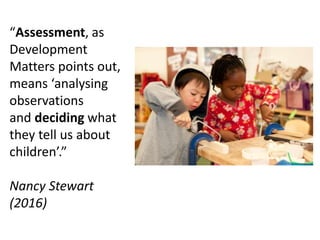
“Assessment, as
Development
Matters points out,
means ‘analysing
observations
and deciding what
they tell us about
children’.”
Nancy Stewart
(2016)
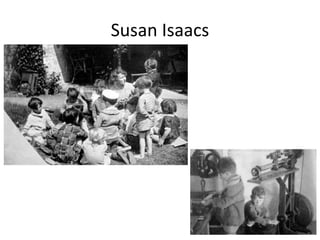
Susan Isaacs
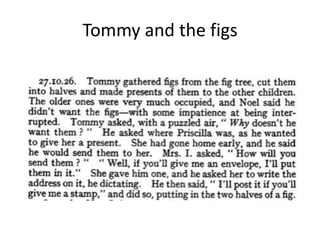
Tommy and the figs
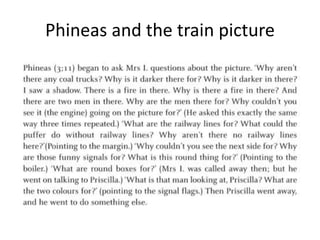
Phineas and the train picture
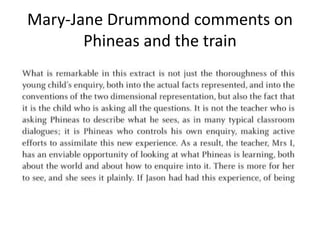
Mary-Jane Drummond comments on
Phineas and the train
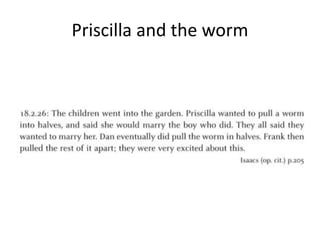
Priscilla and the worm
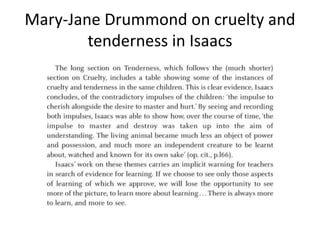
Mary-Jane Drummond on cruelty and
tenderness in Isaacs
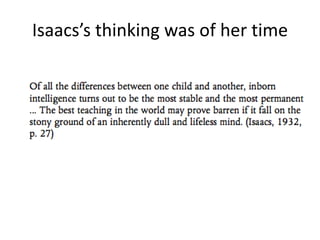
Isaacs’s thinking was of her time
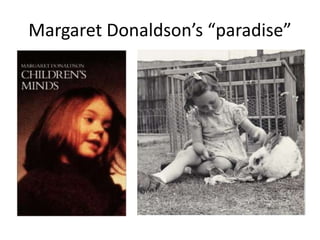
Margaret Donaldson’s “paradise”
Two things we need to get away from
• From metaphors of children’s development
and learning “unfolding”
• From talking about “tracking children’s
development”
What style of pedagogy?
• “a close and nurturing adult-child relationship
… is necessary for intersubjectivity, which
allows the caregiver to judge how much the
child already knows and understands, so that
she can provide appropriate scaffolding to
extend development.”
• Smith (1999, p.86)
Intersubjectivity
Intersubjective relationships depend on the child
having agency, and the adult’s commitment to
giving more agency to the child over time – as
opposed to models which only position the child
as the recipient of care.
• Smith (1999, p.87): “children’s ability to handle
intersubjective encounters depends on:
“reciprocal interaction with … more competent
members of the culture, adults treating the child
as an agent and bent on ‘teaching’ him to be
more so” (Bruner, 1995, p.6)”.
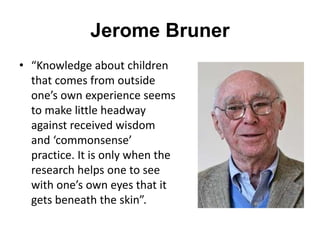
Jerome Bruner
• “Knowledge about children
that comes from outside
one’s own experience seems
to make little headway
against received wisdom
and ‘commonsense’
practice. It is only when the
research helps one to see
with one’s own eyes that it
gets beneath the skin”.
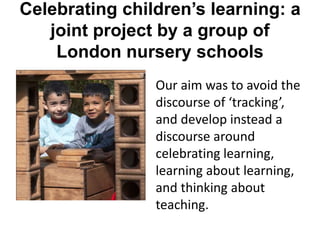
Celebrating children’s learning: a
joint project by a group of
London nursery schools
Our aim was to avoid the
discourse of ‘tracking’,
and develop instead a
discourse around
celebrating learning,
learning about learning,
and thinking about
teaching.
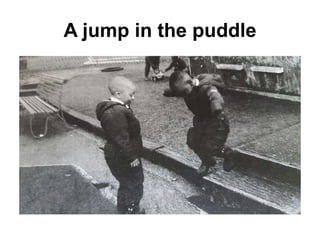
A jump in the puddle
Clinton and Jaden
Clinton said to Jaden “Jump!”
Jaden jumped and landed in the puddle
“I do it” said Clinton and he had a turn but missed the puddle.
Jaden said “Oh no, Clinton, you have to do it like this” He jumped again. “You look at the
puddle and jump on it”
Clinton says “OK, Jaden” He got on the step and had another go. “Look at the puddle
Clinton”, “Ready, Jump!” said Jaden.
This time Clinton landed in the puddle. He laughed.
L
To celebrate Queen Elizabeth's 90th birthday we printed
some photos of the queen, L was interested in the photo of
the queen at her Coronation sitting on her throne. "I want to
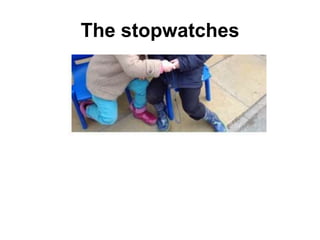
The stopwatches
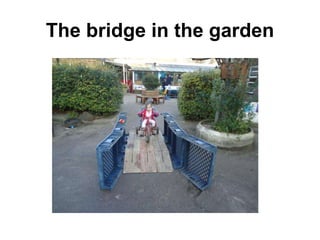
The bridge in the garden
the ramp so you took a long ‘run up’ and whizzed up the steep slope.
that if you weren’t to crash off the side of the bridge you needed to a
line. Excellent skills, Maria!
The bridge in the garden
the guttering leaning up against the edge of the sand pit. Then you poured the water down
the pipe and watched it flow along the pipe, gutter and then up the pipe leaning against the
side of the sand pit. We both watched it flow back down again. Then you collected some
sand and put it in the guttering – I asked you what you thought might happen, you told me
“It will block the water, maybe make another flood”. You watched the water flowing down
and saw it backing up behind the sand and flowing over. You let other children help with
putting water down the pipes.
Maria
Hi Maria, do you remember the day I made a bridge in the garden? I set all the children a
challenge – could they ride their bikes over the bridge without stalling or crashing? You had
to go quite fast in order to mount the up ramp, and if you weren’t careful it was easy to
crash off the sides of the bridge. Lots of children got stuck on the up ramp or ended in a
heap by the side of the b ridge, but you, Maria, managed the challenge with great skill. You
knew that you needed to build up your momentum if you were going to get to the top of
the ramp so you took a long ‘run up’ and whizzed up the steep slope. You also understood
that if you weren’t to crash off the side of the bridge you needed to approach it in a straight
line. Excellent skills, Maria!
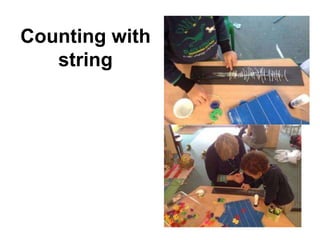
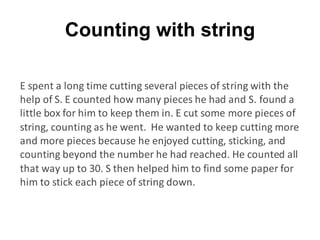
Counting with
string
Counting with string
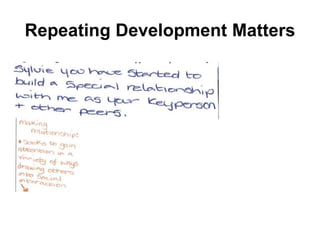
Repeating Development Matters
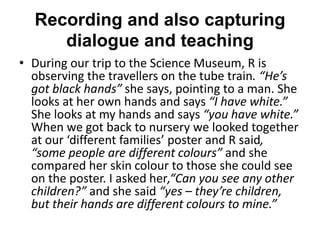
Recording and also capturing
dialogue and teaching
• During our trip to the Science Museum, R is
observing the travellers on the tube train. “He’s
got black hands” she says, pointing to a man. She
looks at her own hands and says “I have white.”
She looks at my hands and says “you have white.”
When we got back to nursery we looked together
at our ‘different families’ poster and R said,
“some people are different colours” and she
compared her skin colour to those she could see
on the poster. I asked her,“Can you see any other
children?” and she said “yes – they’re children,
but their hands are different colours to mine.”
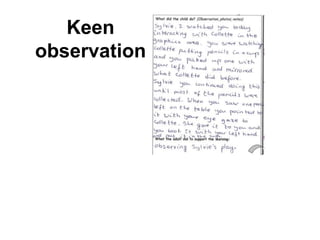
Keen
observation
Features of best practices
• you can hear the child’s
voice
• there is keen observation of
the child’s exploration, play
and thinking
• the practitioner has noticed
that the child is learning a
new skill, or is making new
links between aspects of
knowledge
• there are examples of
sustained conversation and
thinking, sometimes with
feelings of awe
www.eleysp.co.uk/celebrating-
childrens-learning/
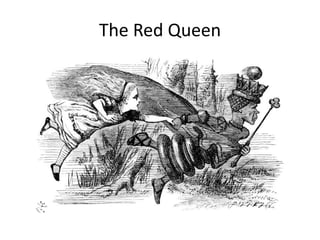
The Red Queen
Celebrating children's learning

Celebrating children's learning

  • 1.
    Dr Julian Grenier grenier@outlook.com @juliangrenier Celebratingyoung children’s learning Learning from the past - and shaping a future beyond levels
  • 2.
  • 3.
  • 4.
    How much assessment? •There are about 570 bullet-point statements in Development Matters
  • 5.
    • With thecommon practice of breaking down each band into beginning, developing, secure, stages: • In a nursery class where children’s levels of development range from 16-26, 22-36, 30-50 months - there are 9 levels across 17 aspects = 153 levels to assess. • And some schools still require “evidence” for each assessment….
  • 6.
    • There are141 children aged 3 and 4 years old on roll at Sheringham Nursery School. • There are 18 aspects in Development Matters • That adds up to 18 x 141 = 2538 cells of data and looks like…
  • 8.
    Chores • “Doing observations” can be experiencedas a time- consuming demand by many staff working with young children.
  • 9.
    • Jayne Osgoodquotes Delia, one of the practitioners in her study, discussing the “stress of report writing, record keeping and all those other chores”. Osgood comments that “Delia’s reference to “other chores” is indicative of the perceived laboriousness of current expectations in nursery practice.” Osgood, Negotiating Professionalism (2012, p.127)
  • 10.
  • 11.
    And what aboutlevels? • Do we really want to find ourselves talking to parents about children’s learning in terms of ages? • How might it feel as a parent of a four- year-old to be told that your child’s development is like a two-year-old’s (e.g. “in the 22-36 month band”)?
  • 12.
    “I am concernedthat the tool intended to support practitioners to understand and foster children’s development is too often misused. When used as a tick list of descriptors of what children must achieve, it can sadly limit both children’s development and the professional awareness and skills of practitioners.” Nancy Stewart (2016)
  • 13.
    “Assessment, as Development Matters pointsout, means ‘analysing observations and deciding what they tell us about children’.” Nancy Stewart (2016)
  • 14.
  • 15.
  • 16.
    Phineas and thetrain picture
  • 17.
    Mary-Jane Drummond commentson Phineas and the train
  • 18.
  • 19.
    Mary-Jane Drummond oncruelty and tenderness in Isaacs
  • 20.
  • 21.
  • 22.
    Two things weneed to get away from • From metaphors of children’s development and learning “unfolding” • From talking about “tracking children’s development”
  • 23.
    What style ofpedagogy? • “a close and nurturing adult-child relationship … is necessary for intersubjectivity, which allows the caregiver to judge how much the child already knows and understands, so that she can provide appropriate scaffolding to extend development.” • Smith (1999, p.86)
  • 24.
    Intersubjectivity Intersubjective relationships dependon the child having agency, and the adult’s commitment to giving more agency to the child over time – as opposed to models which only position the child as the recipient of care. • Smith (1999, p.87): “children’s ability to handle intersubjective encounters depends on: “reciprocal interaction with … more competent members of the culture, adults treating the child as an agent and bent on ‘teaching’ him to be more so” (Bruner, 1995, p.6)”.
  • 25.
    Jerome Bruner • “Knowledgeabout children that comes from outside one’s own experience seems to make little headway against received wisdom and ‘commonsense’ practice. It is only when the research helps one to see with one’s own eyes that it gets beneath the skin”.
  • 26.
    Celebrating children’s learning:a joint project by a group of London nursery schools Our aim was to avoid the discourse of ‘tracking’, and develop instead a discourse around celebrating learning, learning about learning, and thinking about teaching.
  • 27.
    A jump inthe puddle
  • 28.
    A jump inthe puddle Clinton and Jaden Clinton said to Jaden “Jump!” Jaden jumped and landed in the puddle “I do it” said Clinton and he had a turn but missed the puddle. Jaden said “Oh no, Clinton, you have to do it like this” He jumped again. “You look at the puddle and jump on it” Clinton says “OK, Jaden” He got on the step and had another go. “Look at the puddle Clinton”, “Ready, Jump!” said Jaden. This time Clinton landed in the puddle. He laughed. L To celebrate Queen Elizabeth's 90th birthday we printed some photos of the queen, L was interested in the photo of the queen at her Coronation sitting on her throne. "I want to
  • 29.
  • 30.
    The bridge inthe garden the ramp so you took a long ‘run up’ and whizzed up the steep slope. that if you weren’t to crash off the side of the bridge you needed to a line. Excellent skills, Maria!
  • 31.
    The bridge inthe garden the guttering leaning up against the edge of the sand pit. Then you poured the water down the pipe and watched it flow along the pipe, gutter and then up the pipe leaning against the side of the sand pit. We both watched it flow back down again. Then you collected some sand and put it in the guttering – I asked you what you thought might happen, you told me “It will block the water, maybe make another flood”. You watched the water flowing down and saw it backing up behind the sand and flowing over. You let other children help with putting water down the pipes. Maria Hi Maria, do you remember the day I made a bridge in the garden? I set all the children a challenge – could they ride their bikes over the bridge without stalling or crashing? You had to go quite fast in order to mount the up ramp, and if you weren’t careful it was easy to crash off the sides of the bridge. Lots of children got stuck on the up ramp or ended in a heap by the side of the b ridge, but you, Maria, managed the challenge with great skill. You knew that you needed to build up your momentum if you were going to get to the top of the ramp so you took a long ‘run up’ and whizzed up the steep slope. You also understood that if you weren’t to crash off the side of the bridge you needed to approach it in a straight line. Excellent skills, Maria!
  • 32.
  • 33.
  • 34.
  • 35.
    Recording and alsocapturing dialogue and teaching • During our trip to the Science Museum, R is observing the travellers on the tube train. “He’s got black hands” she says, pointing to a man. She looks at her own hands and says “I have white.” She looks at my hands and says “you have white.” When we got back to nursery we looked together at our ‘different families’ poster and R said, “some people are different colours” and she compared her skin colour to those she could see on the poster. I asked her,“Can you see any other children?” and she said “yes – they’re children, but their hands are different colours to mine.”
  • 36.
  • 37.
    Features of bestpractices • you can hear the child’s voice • there is keen observation of the child’s exploration, play and thinking • the practitioner has noticed that the child is learning a new skill, or is making new links between aspects of knowledge • there are examples of sustained conversation and thinking, sometimes with feelings of awe
  • 38.
  • 39.