Can an e-Portfolio make the difference? Part 2 Presentation to the EIfEL – NIACE Conference June 19-20, 2008 – at the City University, London by Ray Tolley
Work-based learner ICT and e-learning survey   This research was undertaken by Chris Cooper of The Mackinnon Partnership in partnership with ACT2 Research Comments on: ‘ A final report to the  Association of Learning Providers and the Learning and Skills Council  April 2007’
Work-based learner ICT and e-learning survey   This research was undertaken by Chris Cooper of The Mackinnon Partnership in partnership with ACT2 Research An analysis of some key findings In relation to the use of E-Portfolios
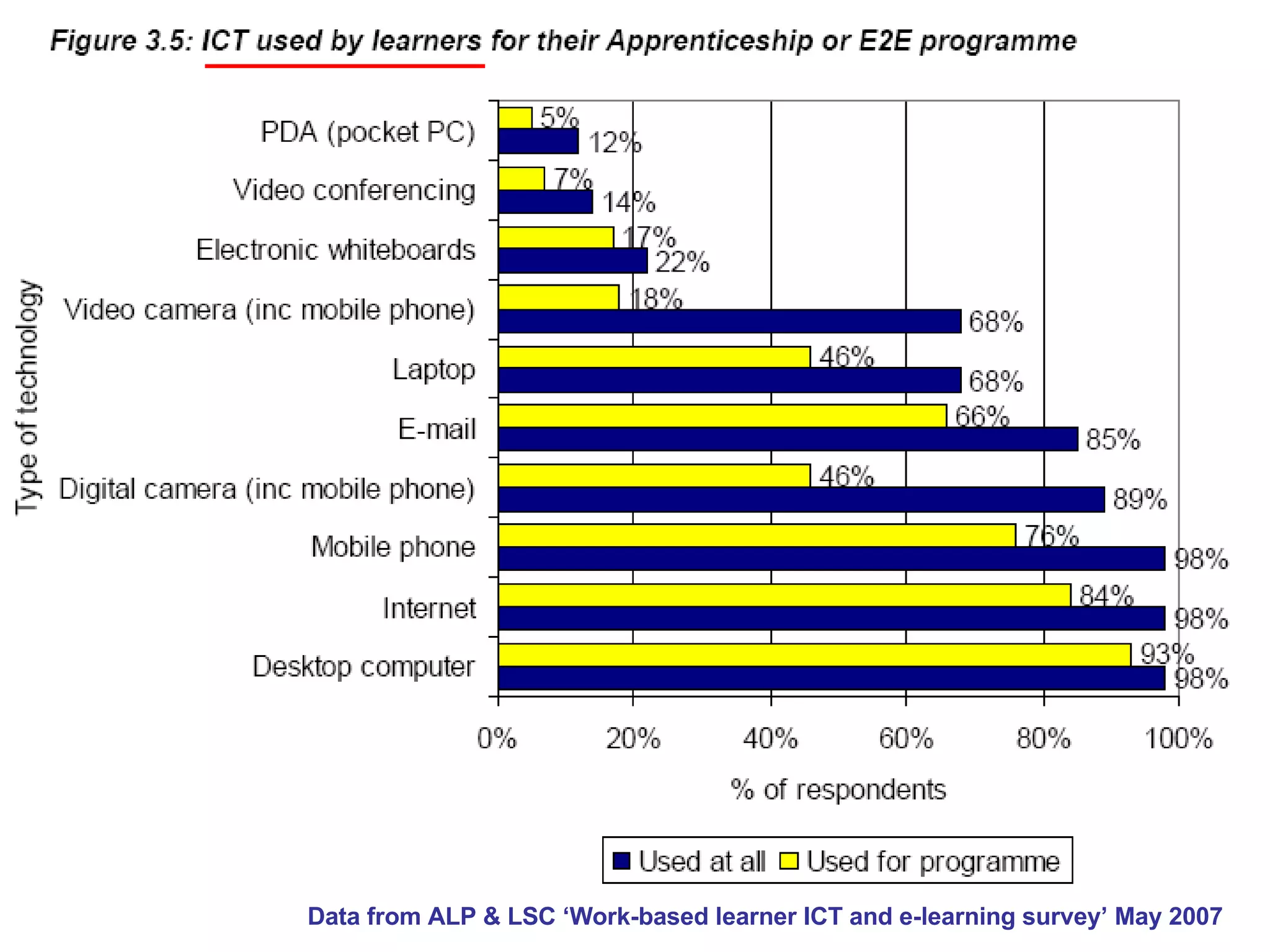
Data from ALP & LSC ‘Work-based learner ICT and e-learning survey’ May 2007
The two most significant differences are where technology can make the greatest impact on the recording skills and attitudes.  So why are these valuable tools not being used ?   Data from ALP & LSC ‘Work-based learner ICT and e-learning survey’ May 2007
Data from ALP & LSC ‘Work-based learner ICT and e-learning survey’ May 2007
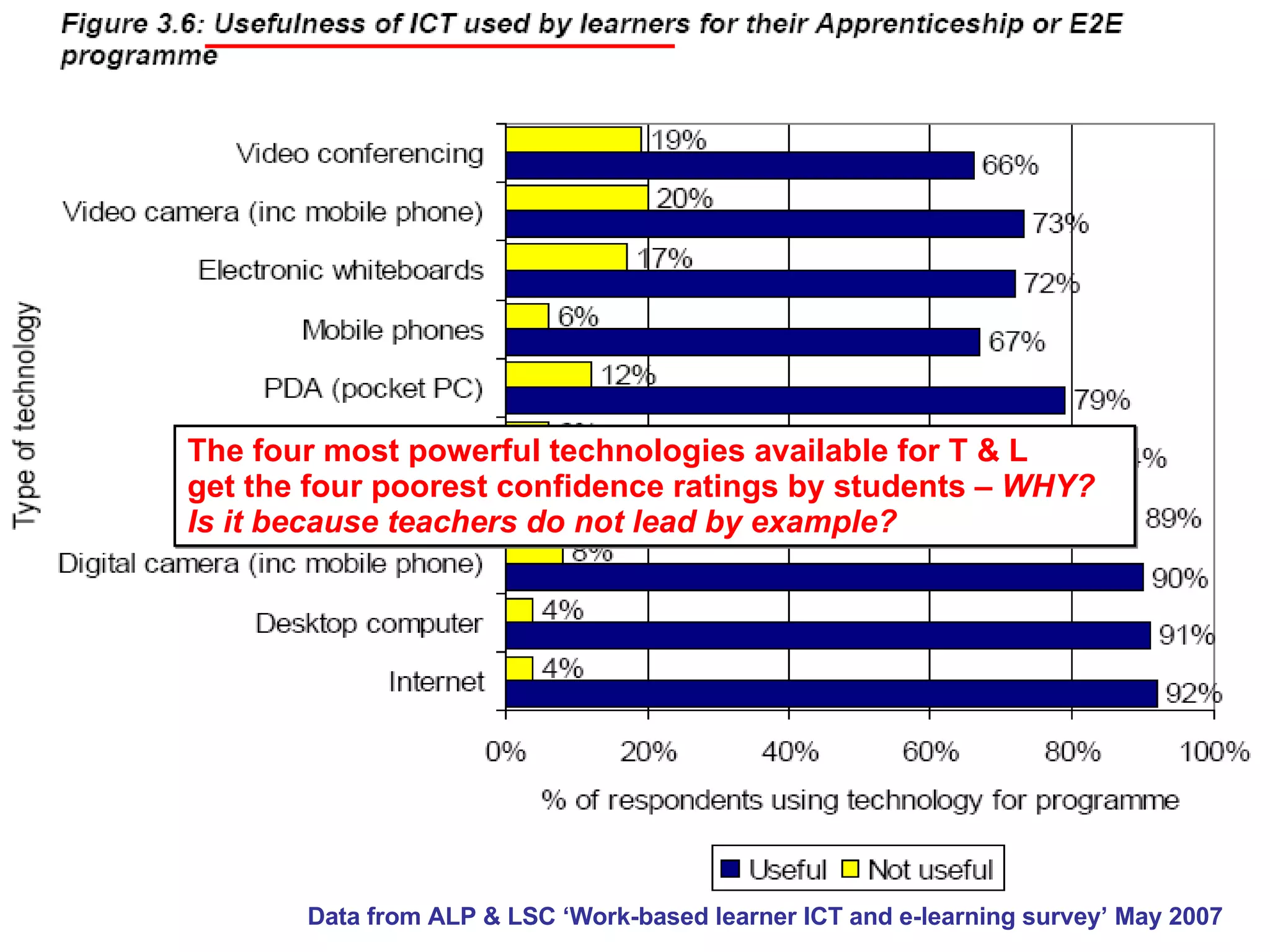
The four most powerful technologies available for T & L get the four poorest confidence ratings by students –  WHY? Is it because teachers do not lead by example?   Data from ALP & LSC ‘Work-based learner ICT and e-learning survey’ May 2007
Data from ALP & LSC ‘Work-based learner ICT and e-learning survey’ May 2007
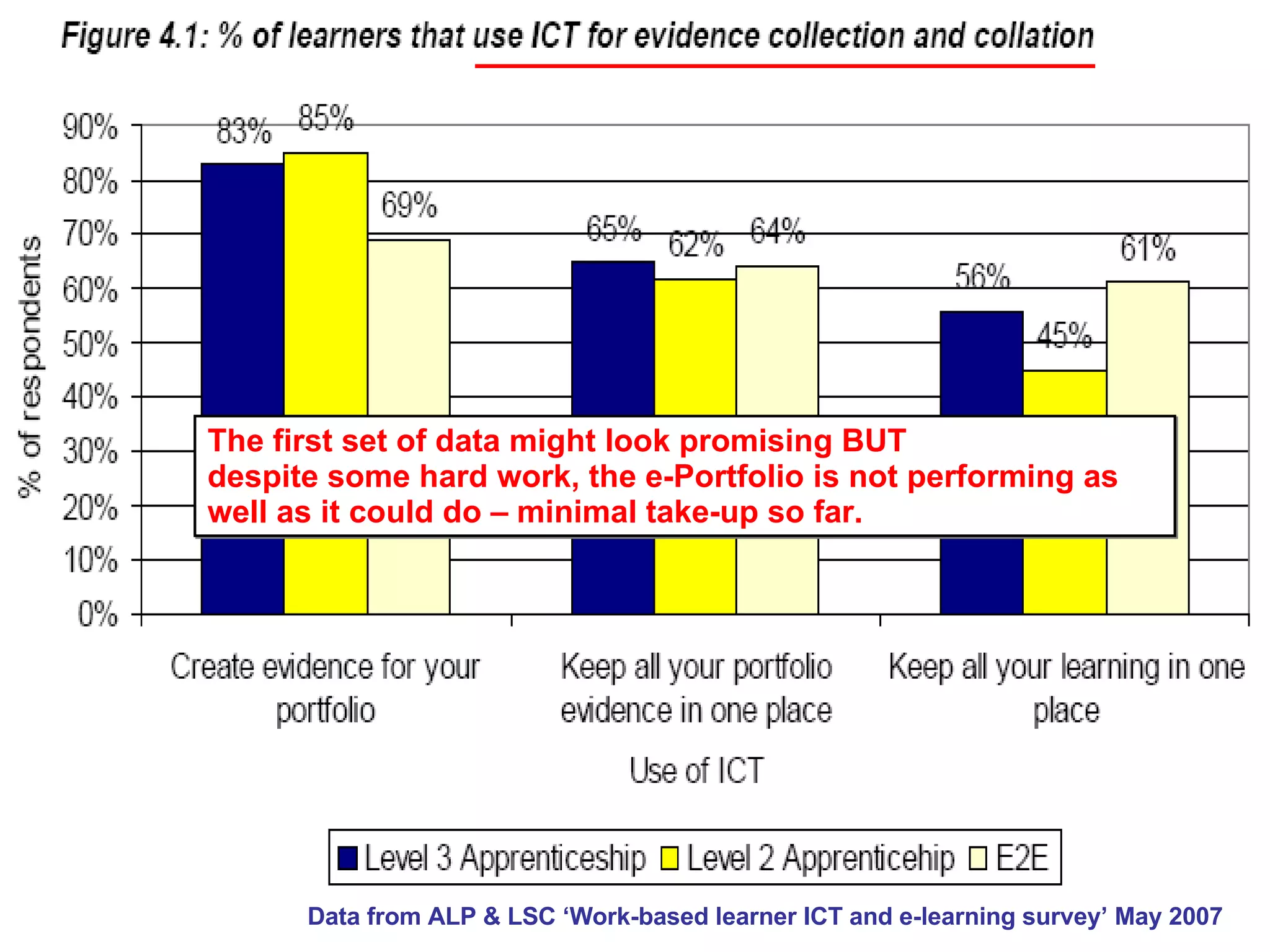
The first set of data might look promising BUT despite some hard work, the e-Portfolio is not performing as well as it could do – minimal take-up so far. Data from ALP & LSC ‘Work-based learner ICT and e-learning survey’ May 2007
Data from ALP & LSC ‘Work-based learner ICT and e-learning survey’ May 2007
Learners with disabilities and those learning in the workplace are less likely to complete on-line or on-screen tests. And these are the people who could benefit most! Data from ALP & LSC ‘Work-based learner ICT and e-learning survey’ May 2007
Data from ALP & LSC ‘Work-based learner ICT and e-learning survey’ May 2007
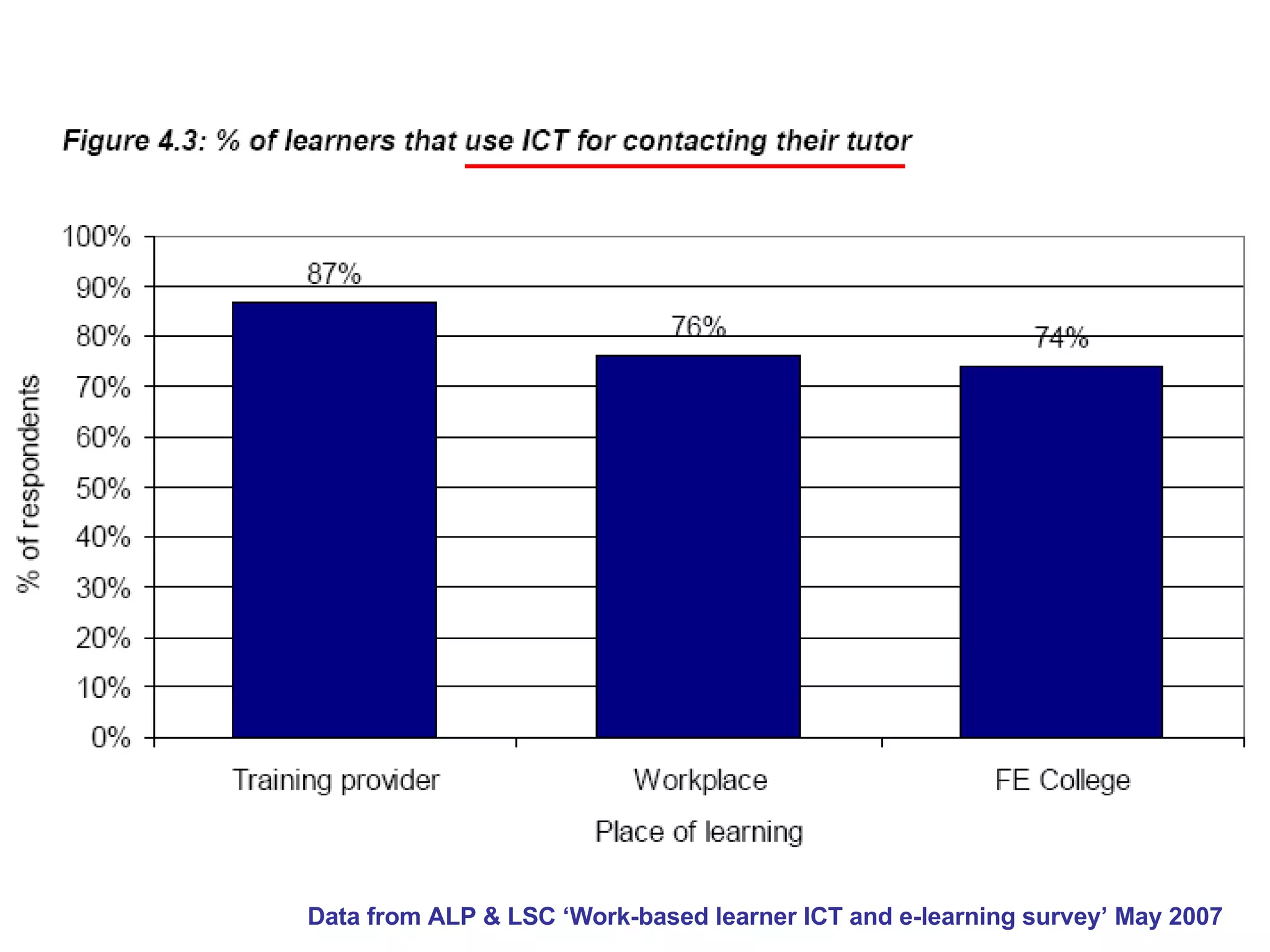
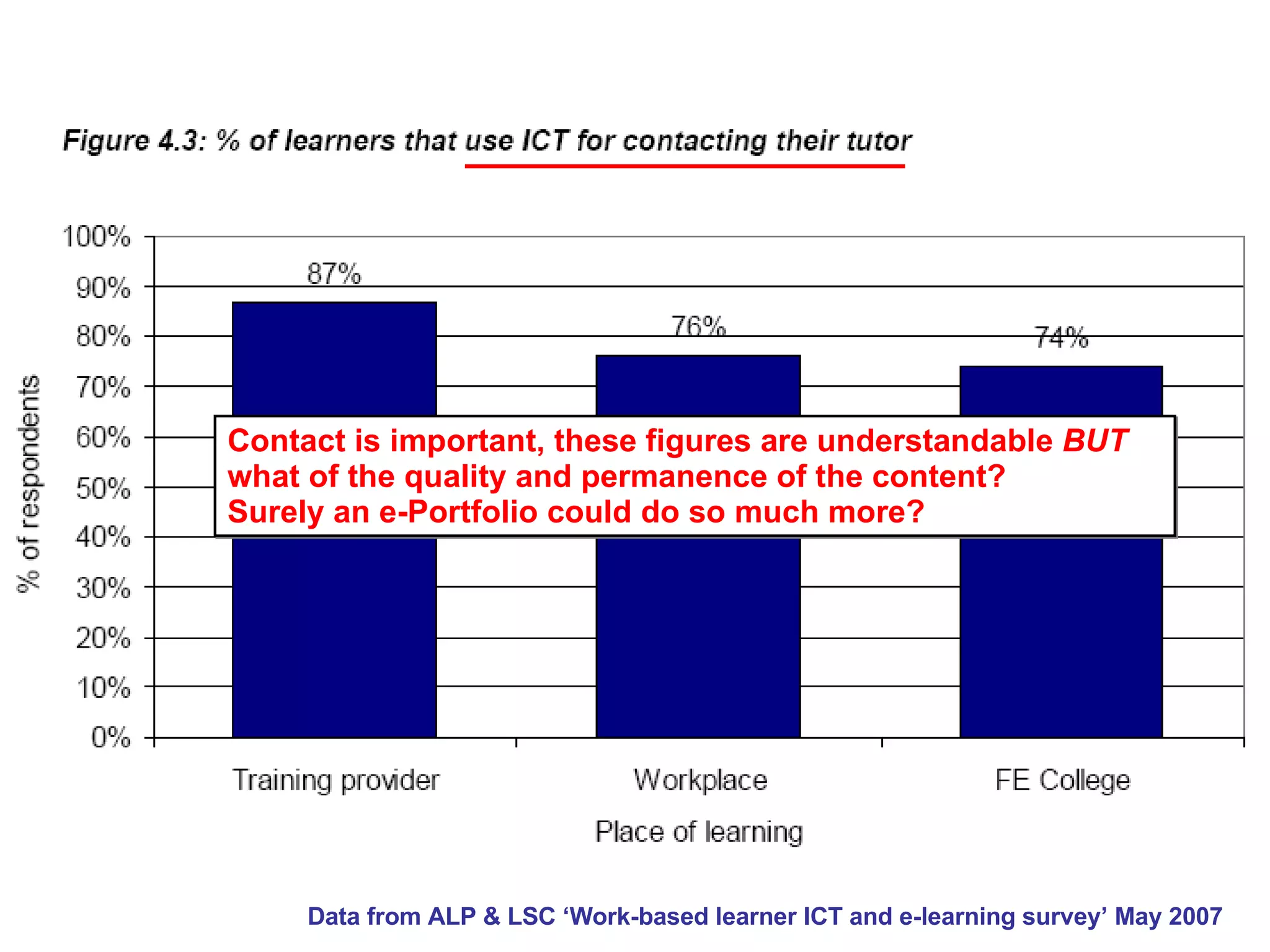
Contact is important, these figures are understandable  BUT what of the quality and permanence of the content? Surely an e-Portfolio could do so much more? Data from ALP & LSC ‘Work-based learner ICT and e-learning survey’ May 2007
Data from ALP & LSC ‘Work-based learner ICT and e-learning survey’ May 2007
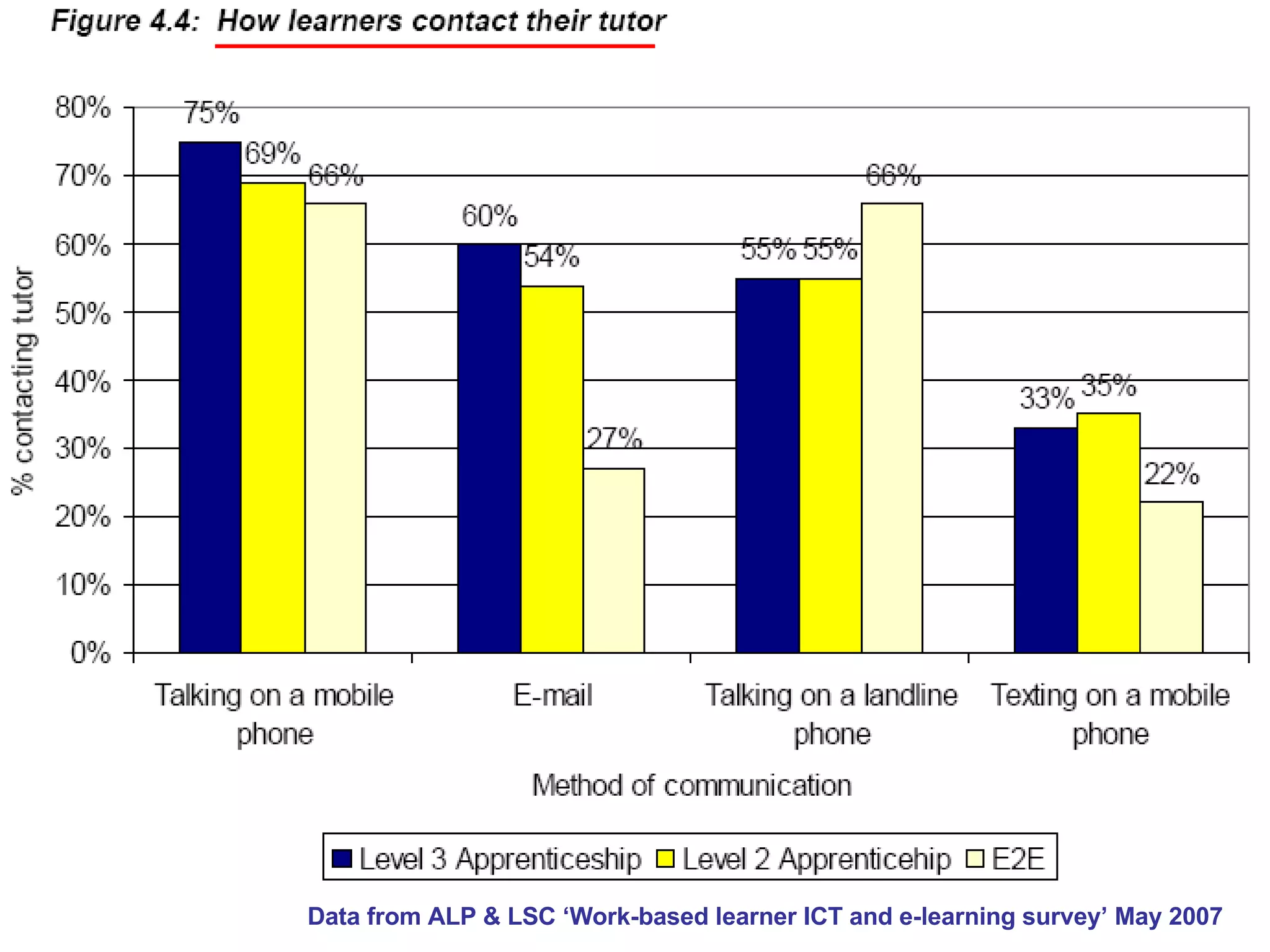
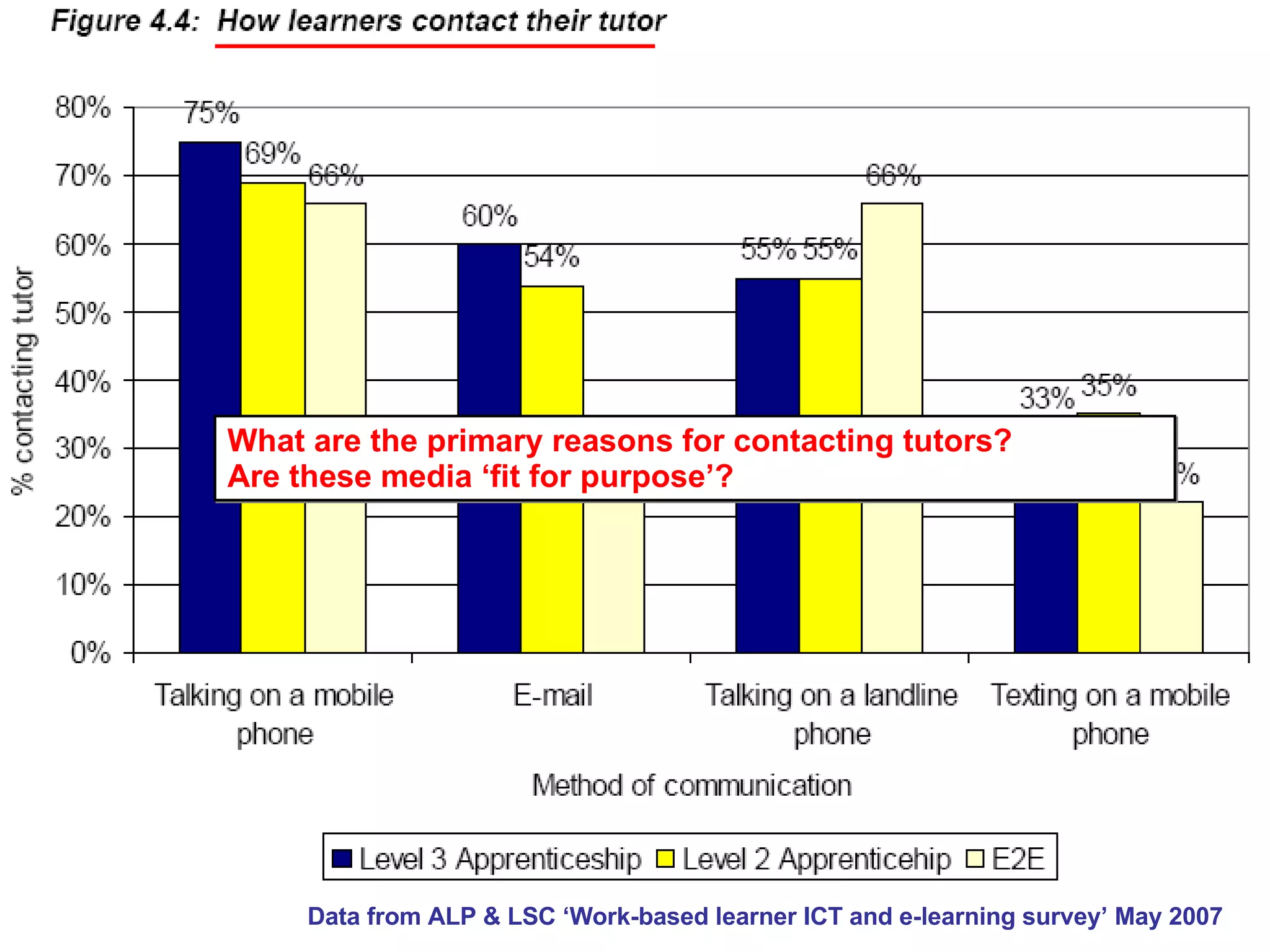
What are the primary reasons for contacting tutors? Are these media ‘fit for purpose’?   Data from ALP & LSC ‘Work-based learner ICT and e-learning survey’ May 2007
Data from ALP & LSC ‘Work-based learner ICT and e-learning survey’ May 2007
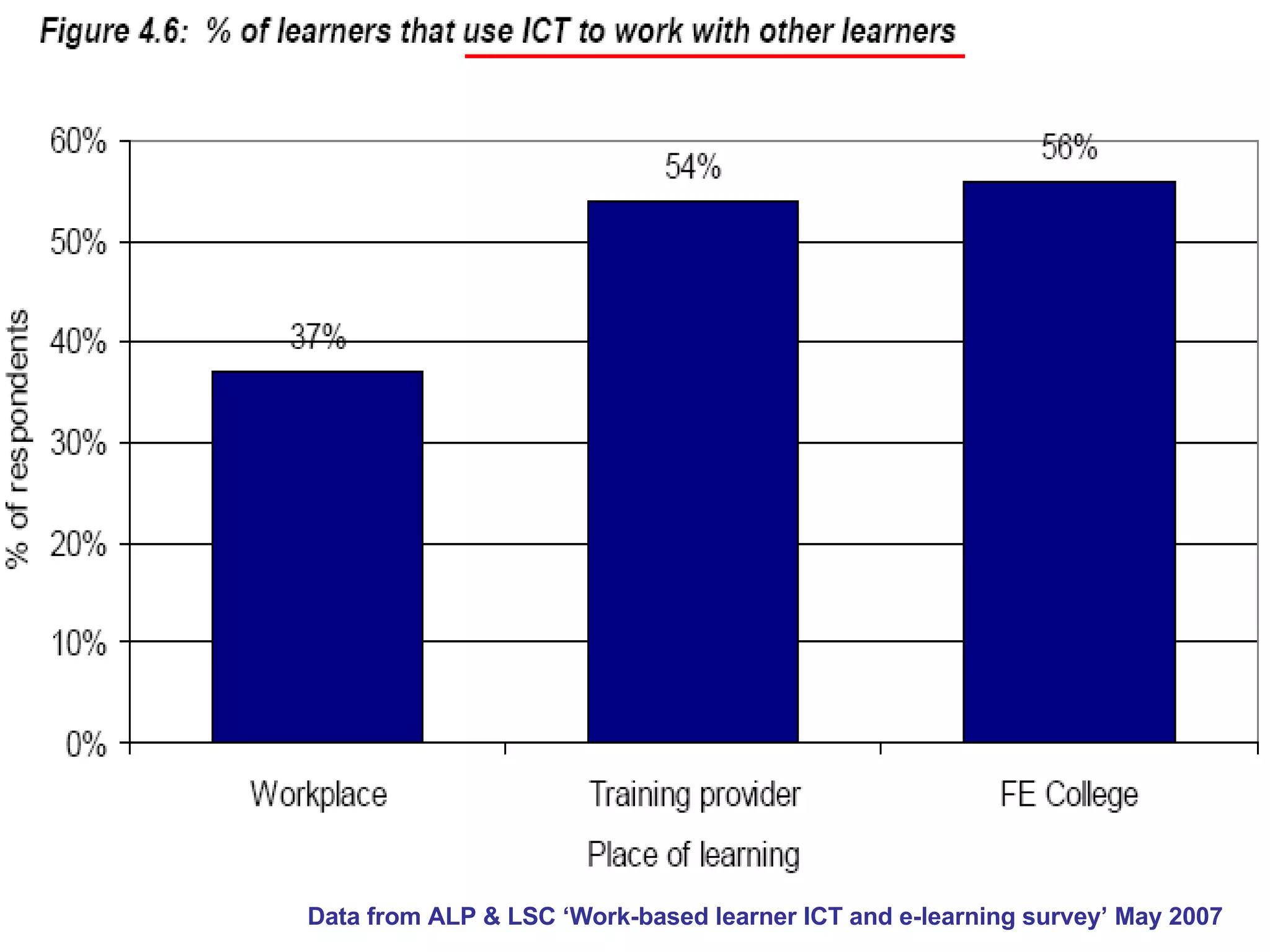
Not sure if this is for the purposes of study or work… But of 98% availability why only 50% used for collaboration? And then, have they been taught collaborative skills? Data from ALP & LSC ‘Work-based learner ICT and e-learning survey’ May 2007
Data from ALP & LSC ‘Work-based learner ICT and e-learning survey’ May 2007
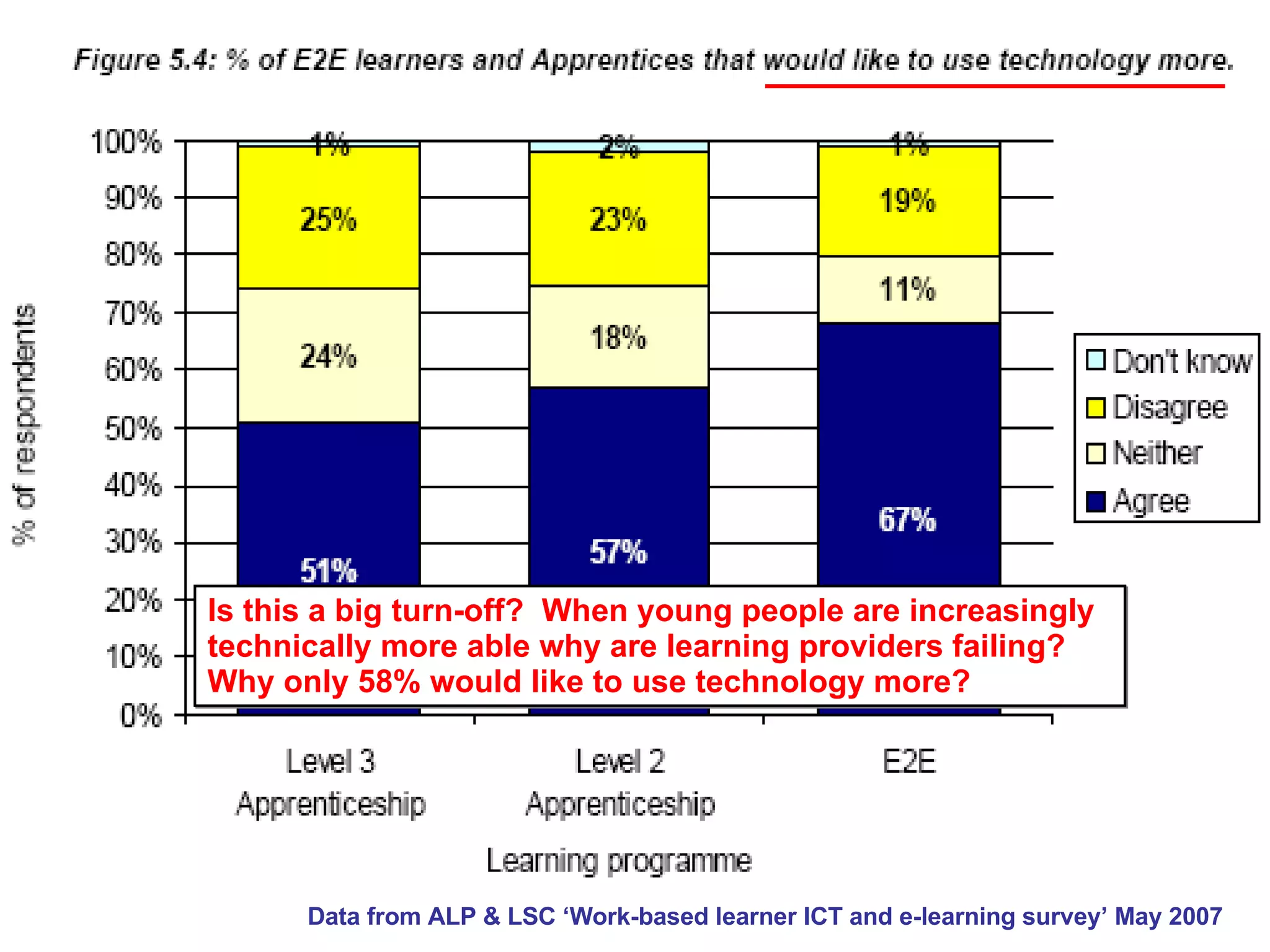
Is this a big turn-off?  When young people are increasingly technically more able why are learning providers failing? Why only 58% would like to use technology more?  Data from ALP & LSC ‘Work-based learner ICT and e-learning survey’ May 2007
Data from ALP & LSC ‘Work-based learner ICT and e-learning survey’ May 2007
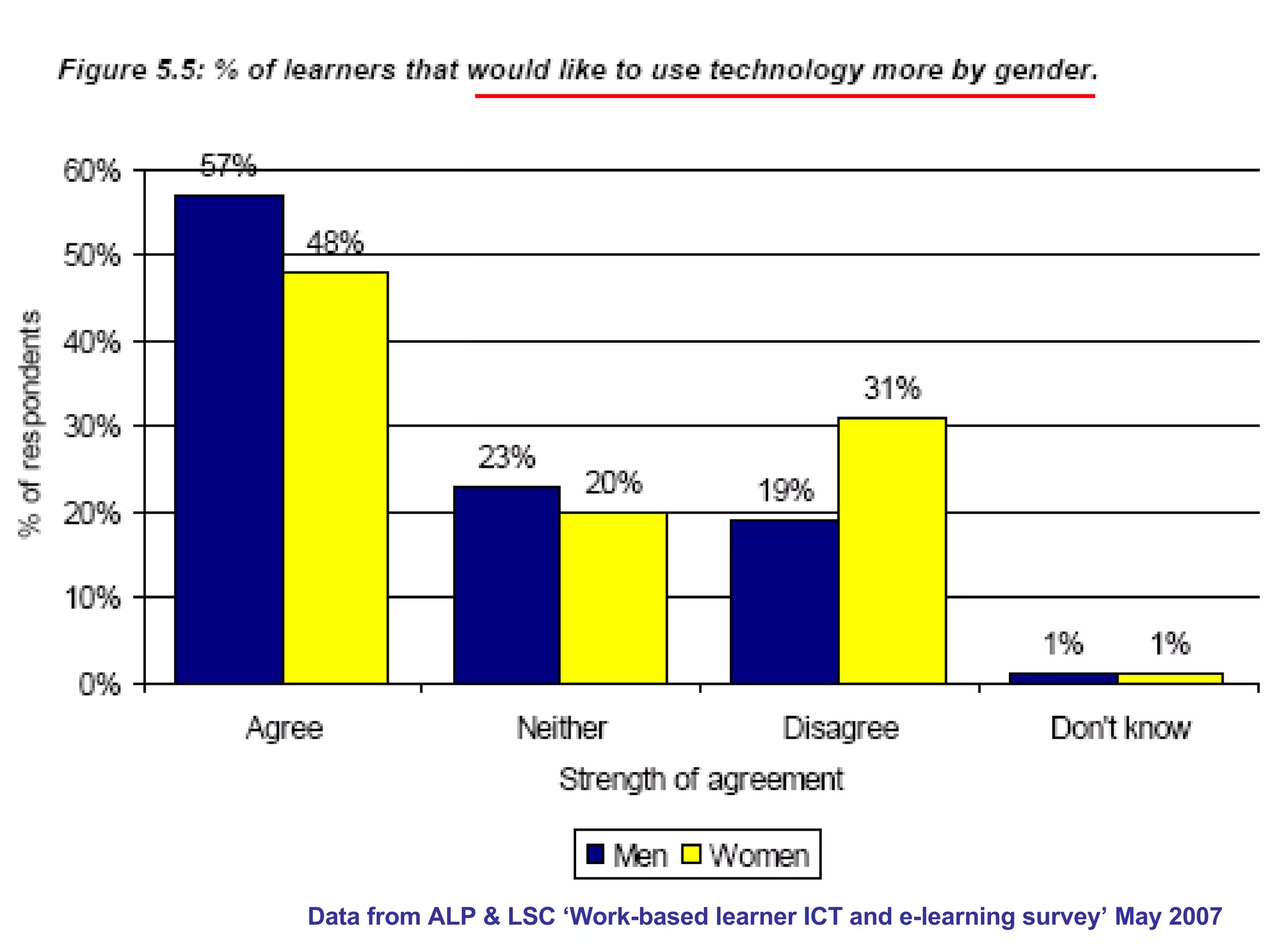
What is it that women expect from technology?  What is the big turn-off?  What issues are not being addressed? Data from ALP & LSC ‘Work-based learner ICT and e-learning survey’ May 2007
Data from ‘Shaping the Way Ahead’ NIACE June 2008
Data from ‘Shaping the Way Ahead’ NIACE June 2008 Is this just a problem of lack of funding? Or is there some ‘turn-off’ in that we are not meeting expectations?
Data from ‘Shaping the Way Ahead’ NIACE June 2008 When there is such a demand for Computer Skills why  are we failing to attract customers?
E:  [email_address]

Niace 2

  • 1.
    Can an e-Portfoliomake the difference? Part 2 Presentation to the EIfEL – NIACE Conference June 19-20, 2008 – at the City University, London by Ray Tolley
  • 2.
    Work-based learner ICTand e-learning survey This research was undertaken by Chris Cooper of The Mackinnon Partnership in partnership with ACT2 Research Comments on: ‘ A final report to the Association of Learning Providers and the Learning and Skills Council April 2007’
  • 3.
    Work-based learner ICTand e-learning survey This research was undertaken by Chris Cooper of The Mackinnon Partnership in partnership with ACT2 Research An analysis of some key findings In relation to the use of E-Portfolios
  • 4.
    Data from ALP& LSC ‘Work-based learner ICT and e-learning survey’ May 2007
  • 5.
    The two mostsignificant differences are where technology can make the greatest impact on the recording skills and attitudes. So why are these valuable tools not being used ? Data from ALP & LSC ‘Work-based learner ICT and e-learning survey’ May 2007
  • 6.
    Data from ALP& LSC ‘Work-based learner ICT and e-learning survey’ May 2007
  • 7.
    The four mostpowerful technologies available for T & L get the four poorest confidence ratings by students – WHY? Is it because teachers do not lead by example? Data from ALP & LSC ‘Work-based learner ICT and e-learning survey’ May 2007
  • 8.
    Data from ALP& LSC ‘Work-based learner ICT and e-learning survey’ May 2007
  • 9.
    The first setof data might look promising BUT despite some hard work, the e-Portfolio is not performing as well as it could do – minimal take-up so far. Data from ALP & LSC ‘Work-based learner ICT and e-learning survey’ May 2007
  • 10.
    Data from ALP& LSC ‘Work-based learner ICT and e-learning survey’ May 2007
  • 11.
    Learners with disabilitiesand those learning in the workplace are less likely to complete on-line or on-screen tests. And these are the people who could benefit most! Data from ALP & LSC ‘Work-based learner ICT and e-learning survey’ May 2007
  • 12.
    Data from ALP& LSC ‘Work-based learner ICT and e-learning survey’ May 2007
  • 13.
    Contact is important,these figures are understandable BUT what of the quality and permanence of the content? Surely an e-Portfolio could do so much more? Data from ALP & LSC ‘Work-based learner ICT and e-learning survey’ May 2007
  • 14.
    Data from ALP& LSC ‘Work-based learner ICT and e-learning survey’ May 2007
  • 15.
    What are theprimary reasons for contacting tutors? Are these media ‘fit for purpose’? Data from ALP & LSC ‘Work-based learner ICT and e-learning survey’ May 2007
  • 16.
    Data from ALP& LSC ‘Work-based learner ICT and e-learning survey’ May 2007
  • 17.
    Not sure ifthis is for the purposes of study or work… But of 98% availability why only 50% used for collaboration? And then, have they been taught collaborative skills? Data from ALP & LSC ‘Work-based learner ICT and e-learning survey’ May 2007
  • 18.
    Data from ALP& LSC ‘Work-based learner ICT and e-learning survey’ May 2007
  • 19.
    Is this abig turn-off? When young people are increasingly technically more able why are learning providers failing? Why only 58% would like to use technology more? Data from ALP & LSC ‘Work-based learner ICT and e-learning survey’ May 2007
  • 20.
    Data from ALP& LSC ‘Work-based learner ICT and e-learning survey’ May 2007
  • 21.
    What is itthat women expect from technology? What is the big turn-off? What issues are not being addressed? Data from ALP & LSC ‘Work-based learner ICT and e-learning survey’ May 2007
  • 22.
    Data from ‘Shapingthe Way Ahead’ NIACE June 2008
  • 23.
    Data from ‘Shapingthe Way Ahead’ NIACE June 2008 Is this just a problem of lack of funding? Or is there some ‘turn-off’ in that we are not meeting expectations?
  • 24.
    Data from ‘Shapingthe Way Ahead’ NIACE June 2008 When there is such a demand for Computer Skills why are we failing to attract customers?
  • 25.