Download to read offline
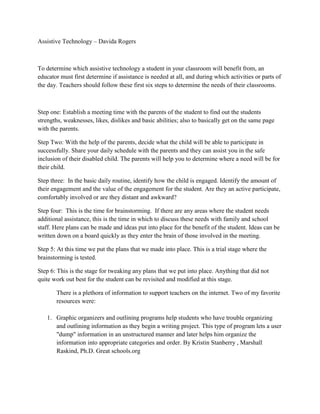


1. The document outlines six steps teachers should follow to determine what assistive technologies would benefit students with disabilities in their classroom. 2. The steps include establishing meetings with parents, identifying student strengths/weaknesses, observing student engagement, brainstorming potential assistive technologies, trial periods, and tweaking plans as needed. 3. The document provides examples of assistive technologies like graphic organizers, preferential seating, sound-reducing materials, calculators, magnifiers, word processors, computers, e-books, and specialized keyboards or keypads.


