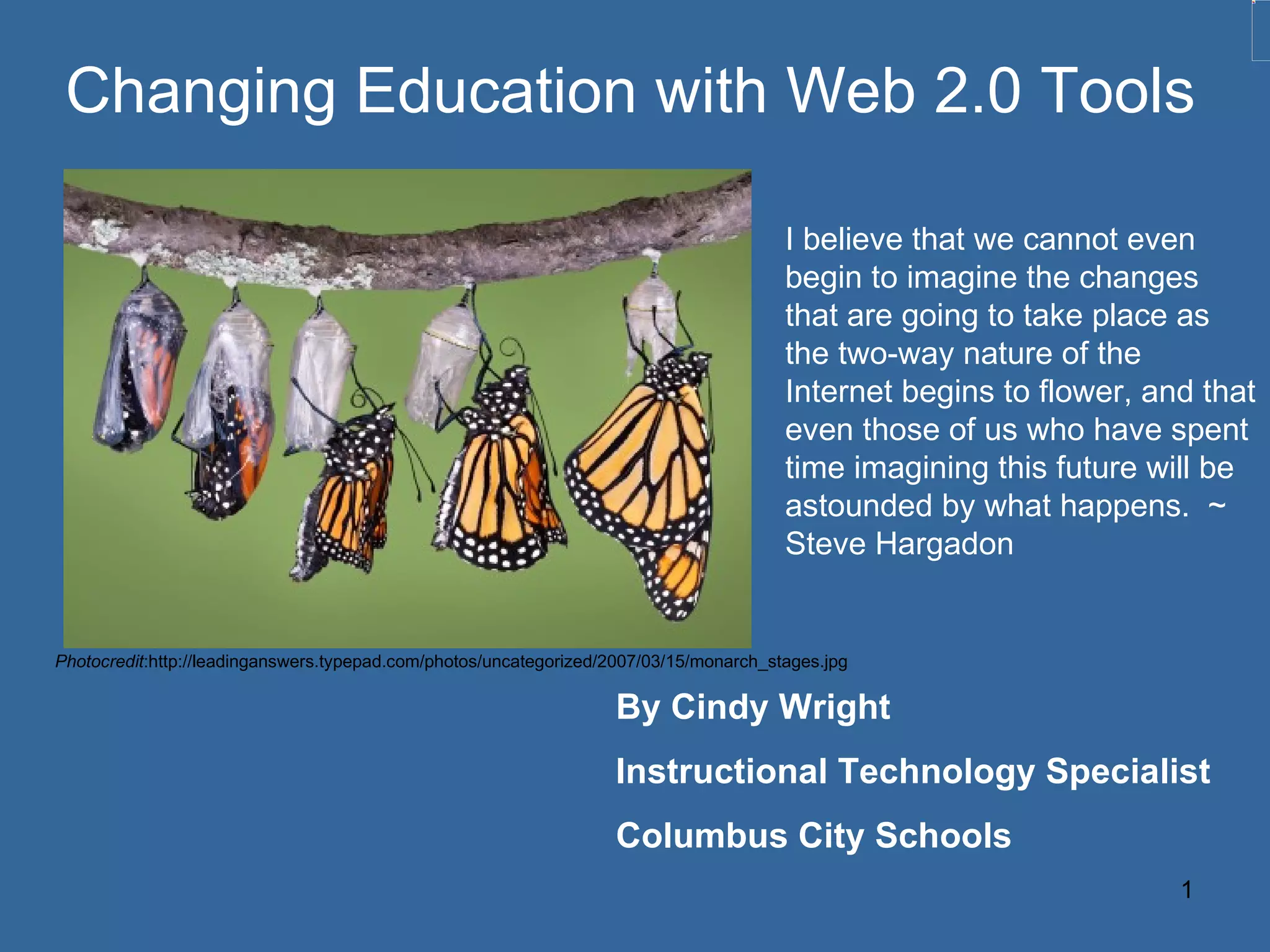
Changing Education with Web 2.0 Tools By Cindy Wright Instructional Technology Specialist Columbus City Schools I believe that we cannot even begin to imagine the changes that are going to take place as the two-way nature of the Internet begins to flower, and that even those of us who have spent time imagining this future will be astounded by what happens.  ~ Steve Hargadon Photocredit :http://leadinganswers.typepad.com/photos/uncategorized/2007/03/15/monarch_stages.jpg
Engaging today’s students means tapping into what is important to them.
We have a responsibility to prepare them for their future, not our past.
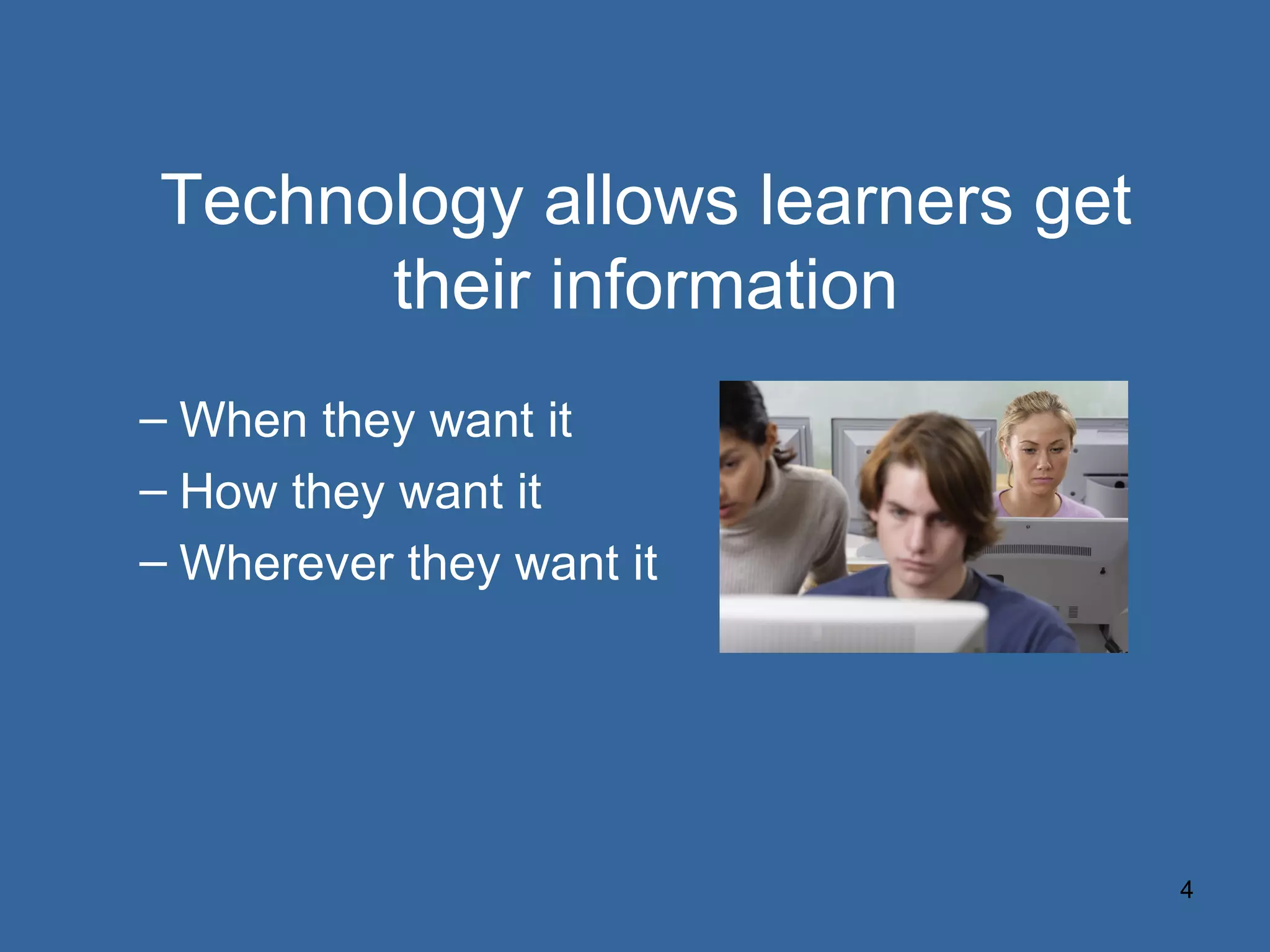
Technology allows learners get their information When they want it How they want it Wherever they want it
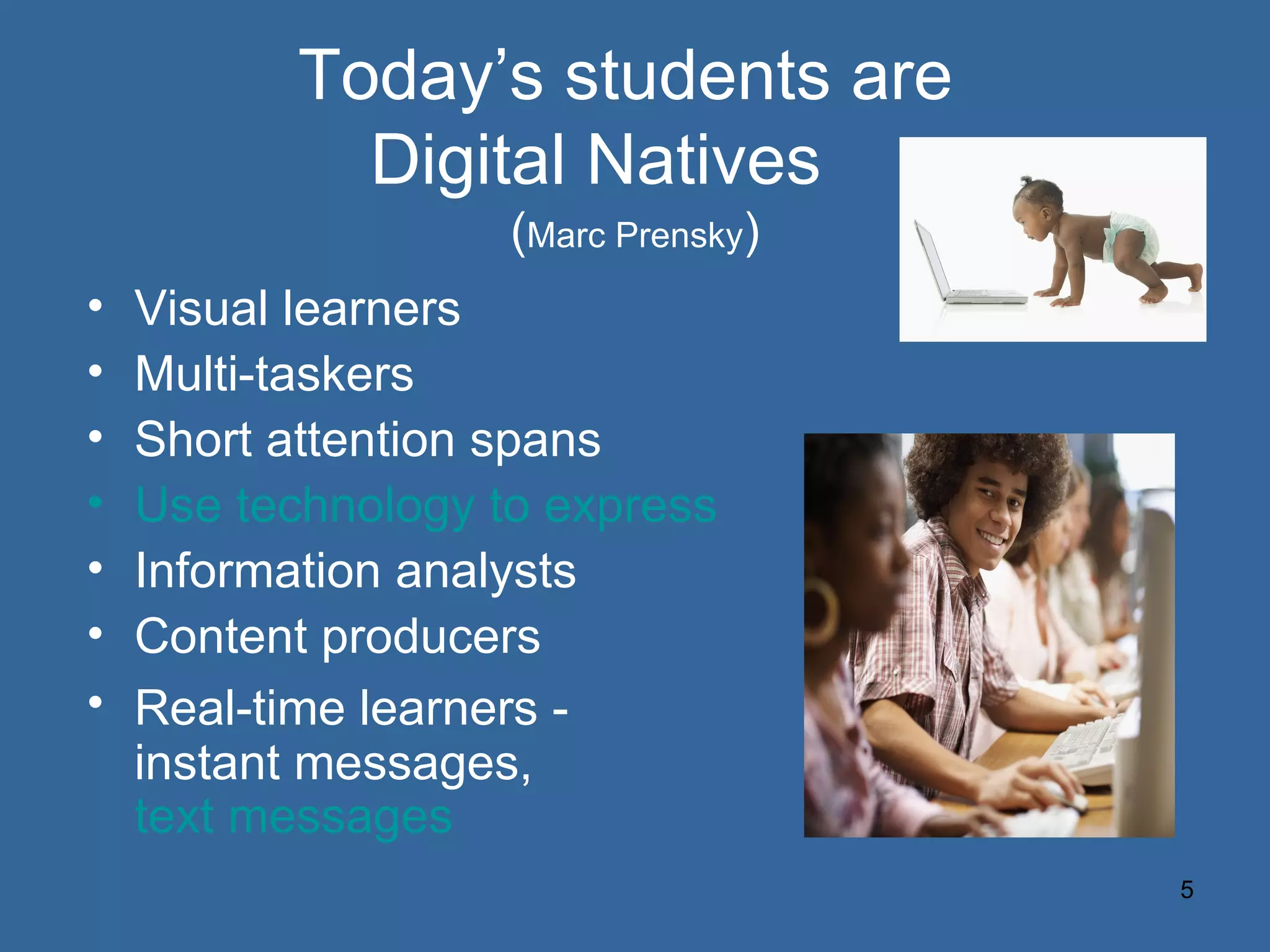
Today’s students are  Digital Natives  ( Marc Prensky ) Visual learners Multi-taskers Short attention spans Use technology to express themselves Information analysts Content producers Real-time learners -  instant messages,  text messages
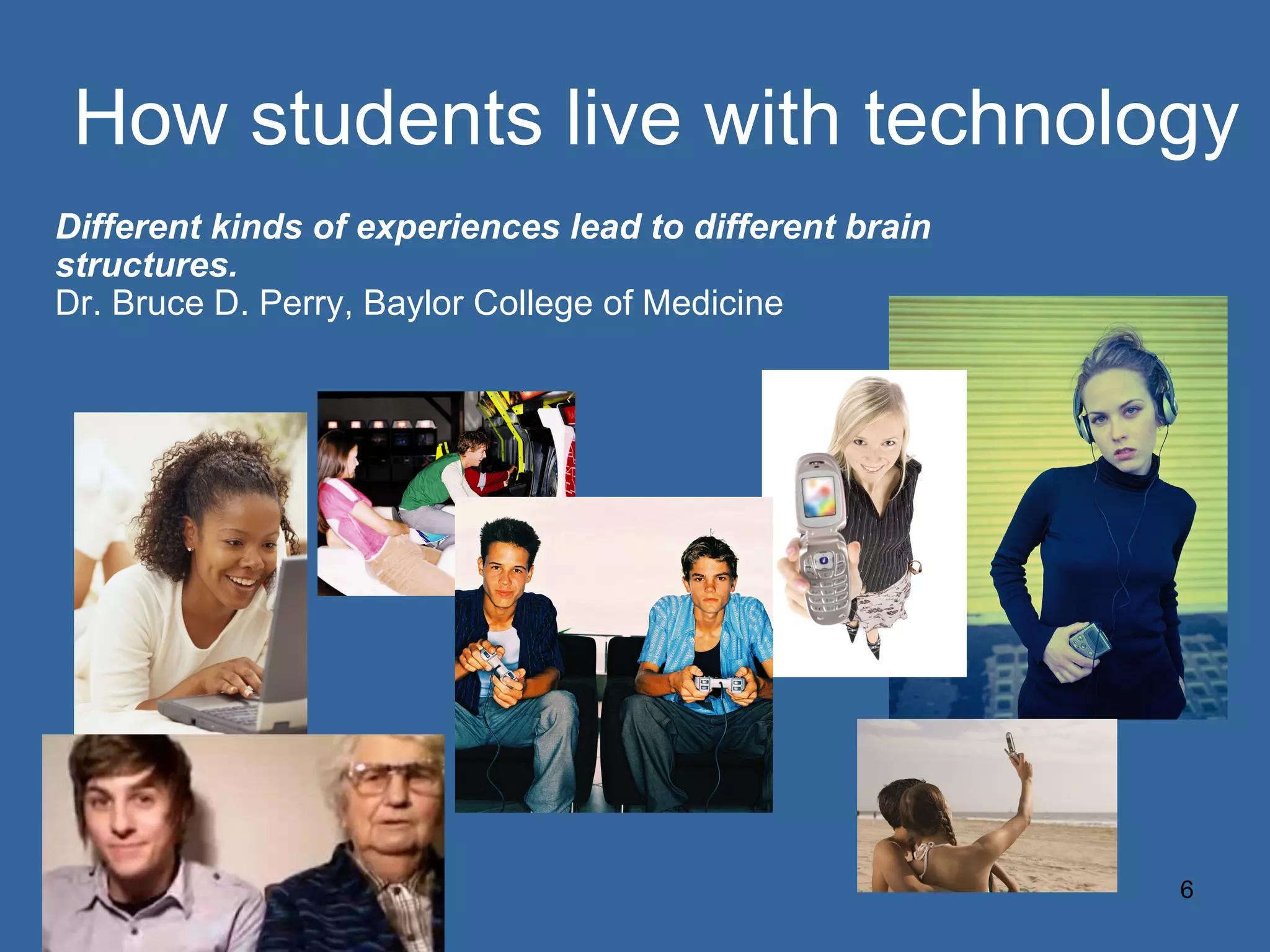
How students live with technology Different kinds of experiences lead to different brain structures.   Dr. Bruce D. Perry, Baylor College of Medicine
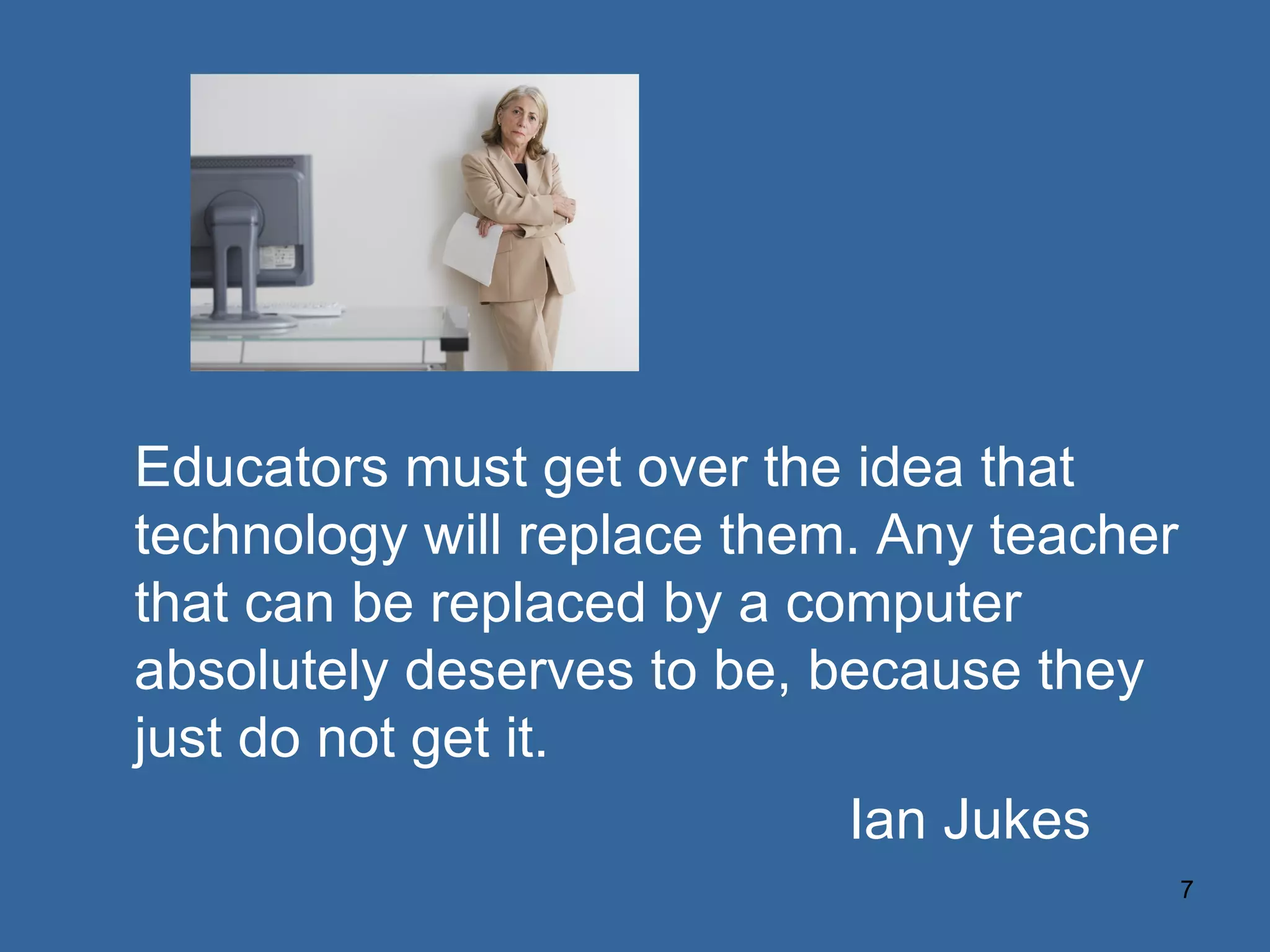
Educators must get over the idea that technology will replace them. Any teacher that can be replaced by a computer absolutely deserves to be, because they just do not get it. Ian Jukes
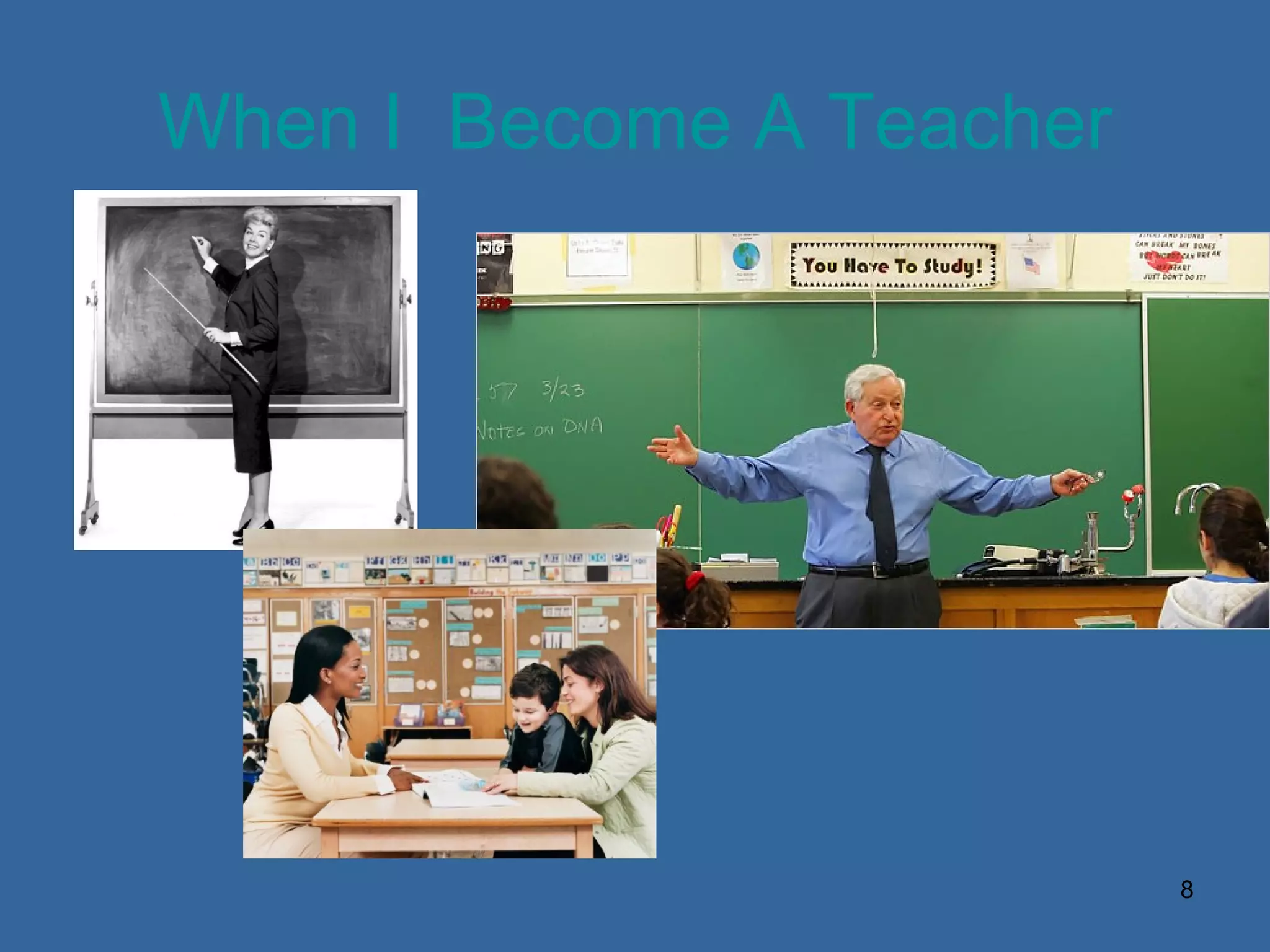
When I  Become A Teacher
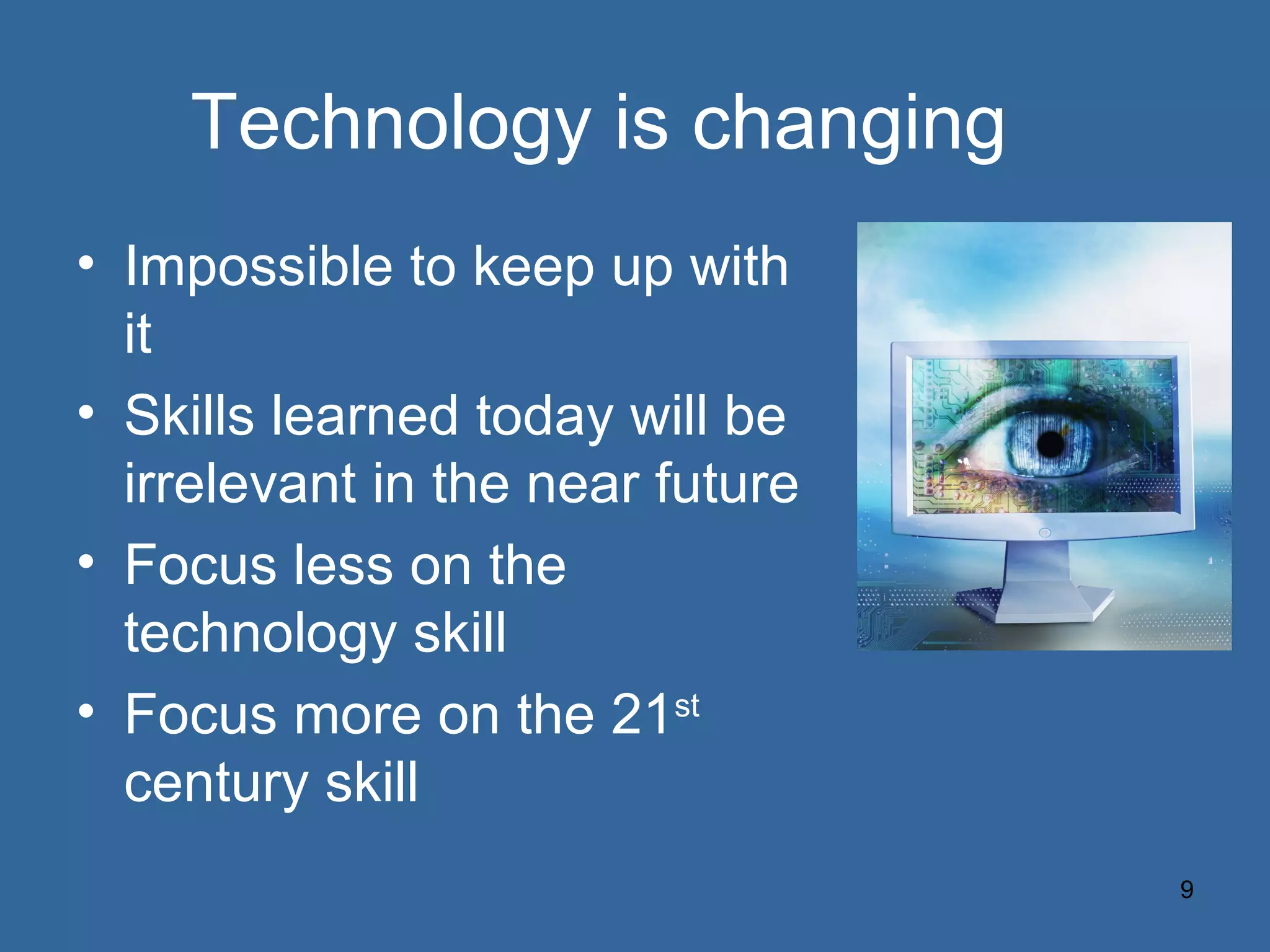
Technology is changing Impossible to keep up with it Skills learned today will be irrelevant in the near future Focus less on the technology skill Focus more on the 21 st  century skill
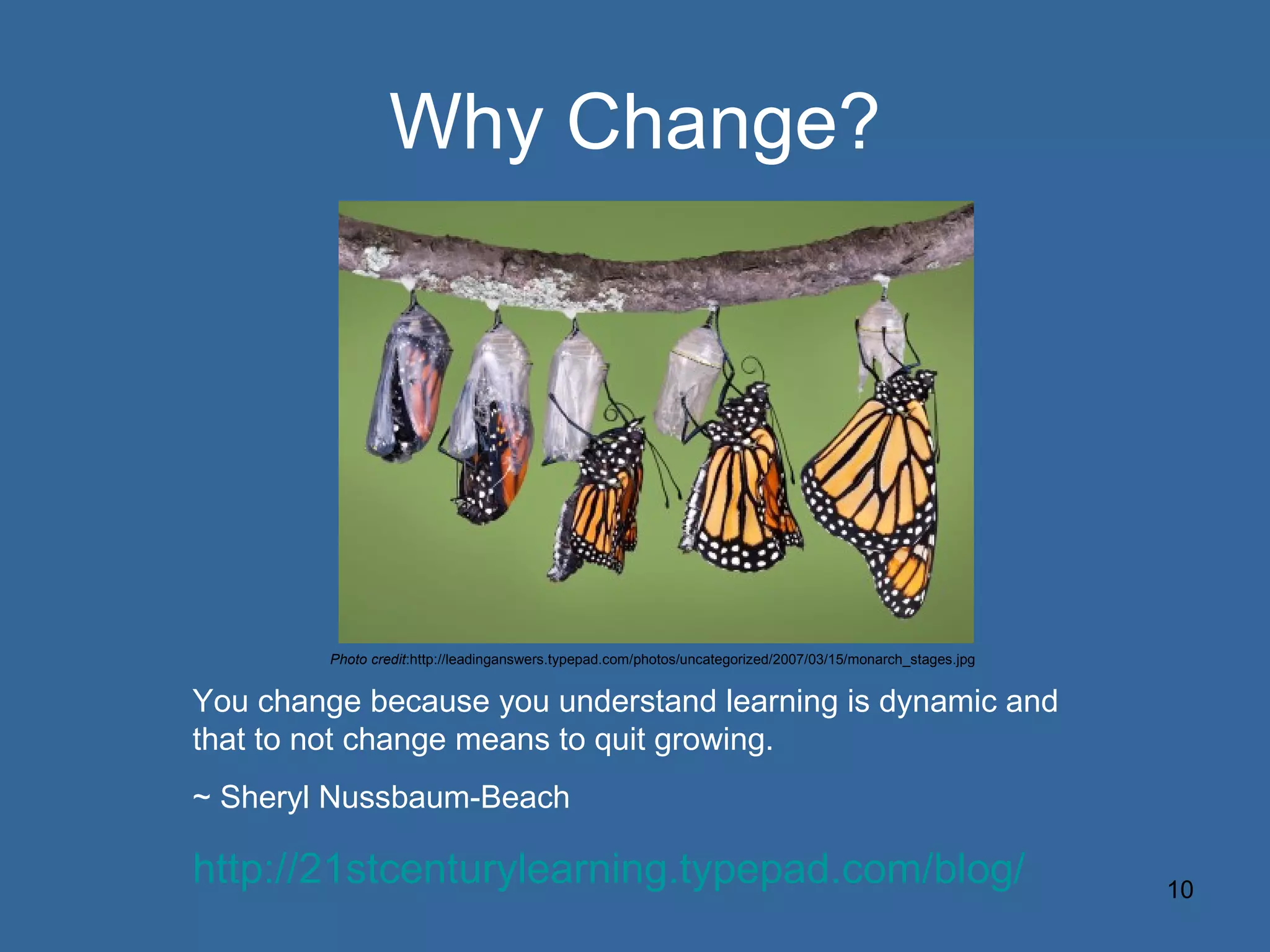
Why Change? You change because you understand learning is dynamic and that to not change means to quit growing.  ~ Sheryl Nussbaum-Beach http://21stcenturylearning.typepad.com/blog/ Photo credit :http://leadinganswers.typepad.com/photos/uncategorized/2007/03/15/monarch_stages.jpg
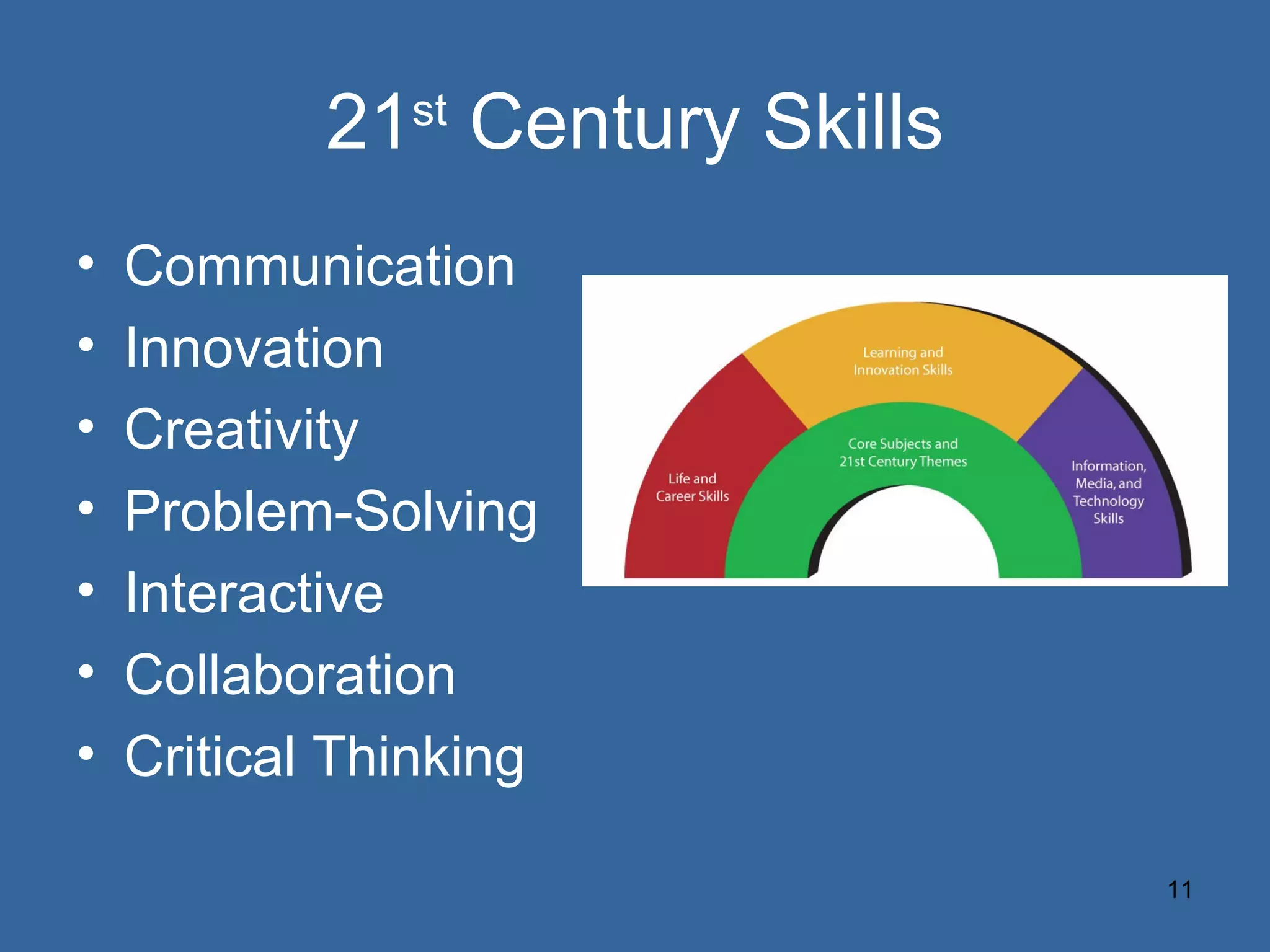
21 st  Century Skills Communication Innovation  Creativity Problem-Solving Interactive Collaboration Critical Thinking
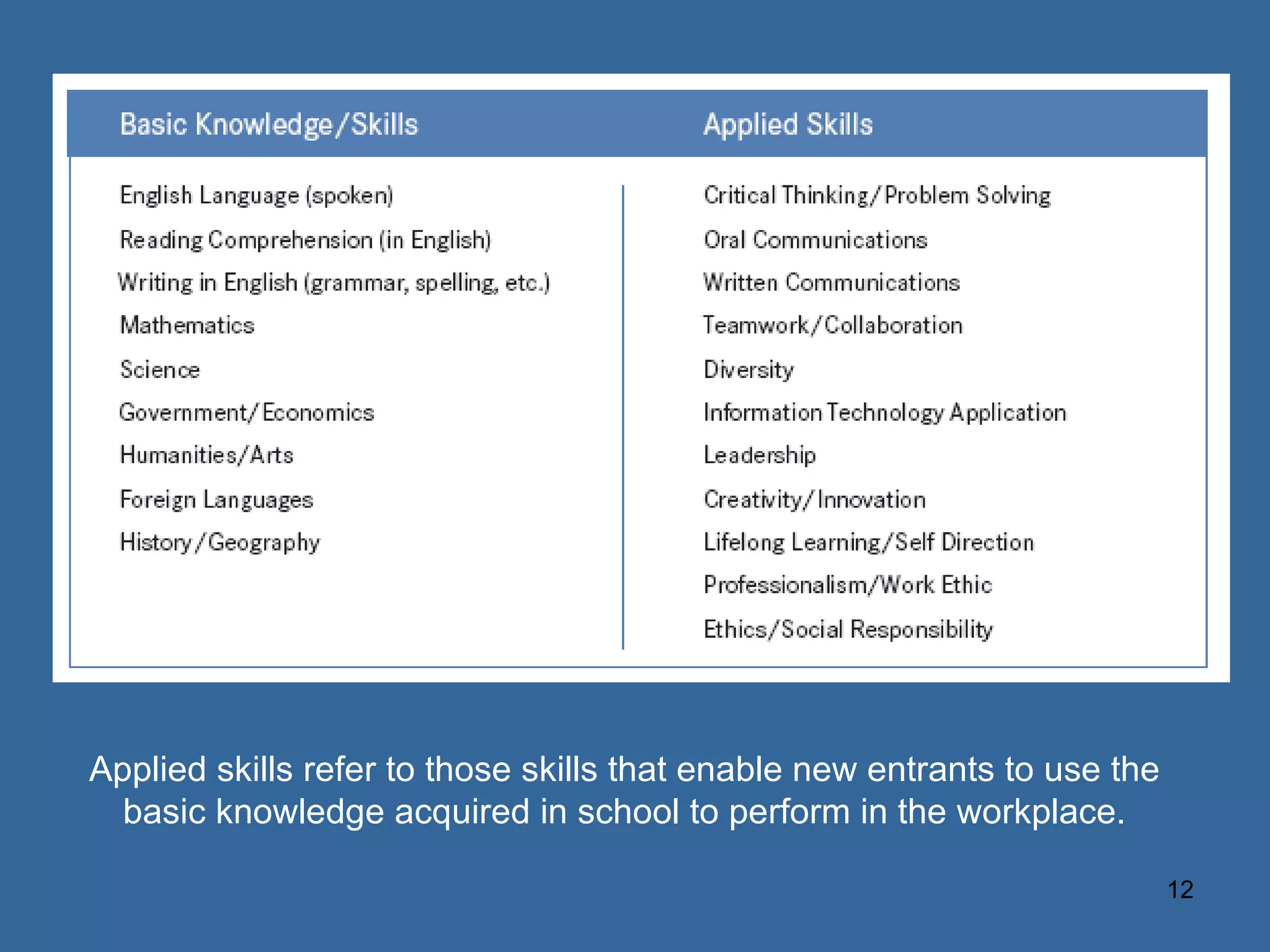
Applied skills refer to those skills that enable new entrants to use the basic knowledge acquired in school to perform in the workplace.
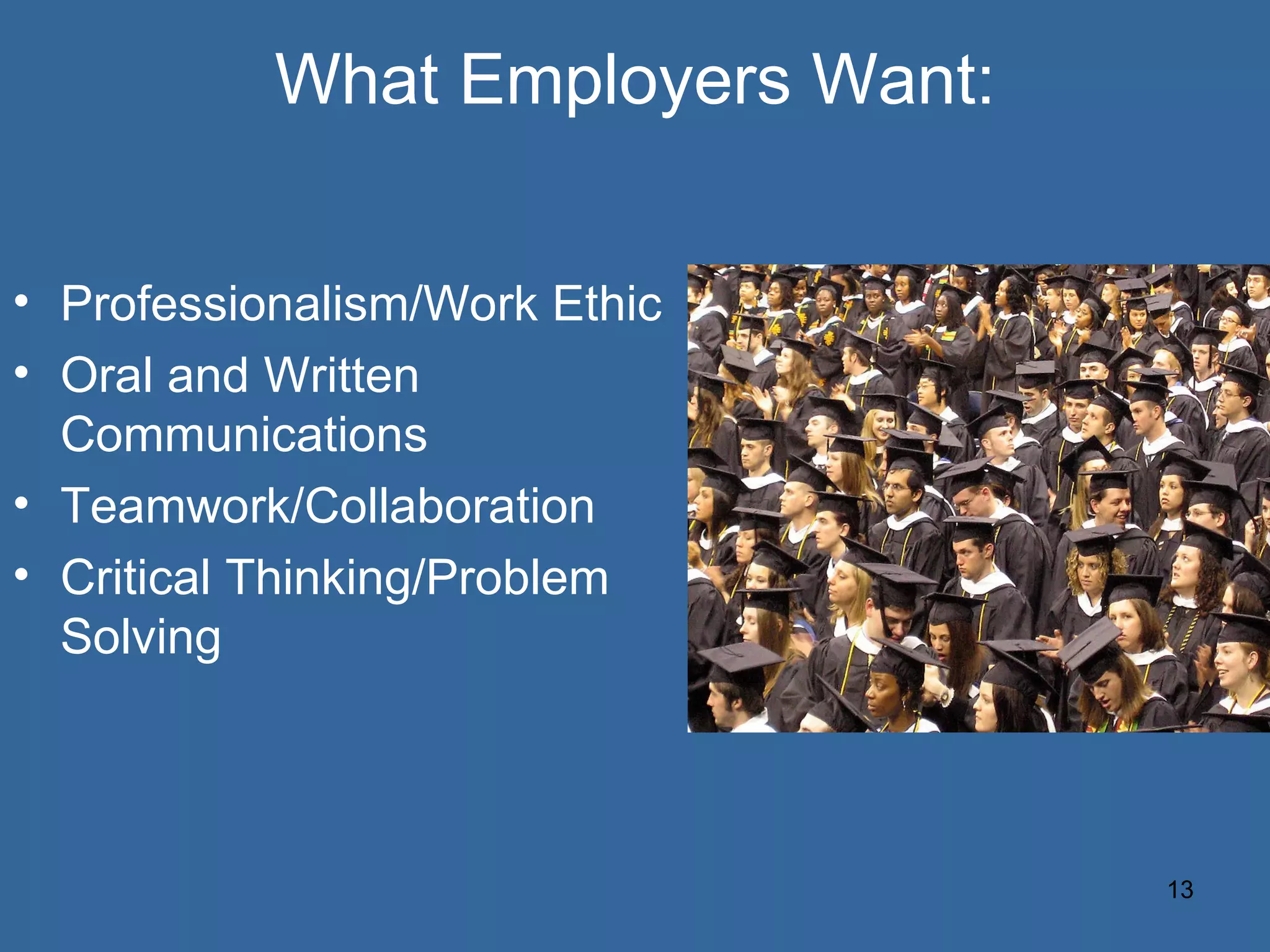
What Employers Want: Professionalism/Work Ethic Oral and Written Communications Teamwork/Collaboration  Critical Thinking/Problem Solving
•  Professionalism/Work Ethic ,  Teamwork/Collaboration  and  Oral Communications   are rated as the three “most important” applied skills needed by entrants into today’s workforce. •  Knowledge of Foreign Languages   will “increase in importance” in the next five years, more than any other basic skill, according to over 60 percent (63.3 percent) of the employer respondents. •  Making Appropriate Choices Concerning Health and Wellness   is the No. 1 emerging content area for future graduates entering the U.S. workforce as reported by three-quarters of the employer respondents (76.1 percent). •  Creativity/Innovation   is projected to “increase in importance” for future workforce entrants, according to more than 70 percent (73.6 percent) of employer respondents. Currently, however, more than half of employer respondents (54.2 percent) report new workforce entrants with a high school diploma to be “deficient” in this skill set.
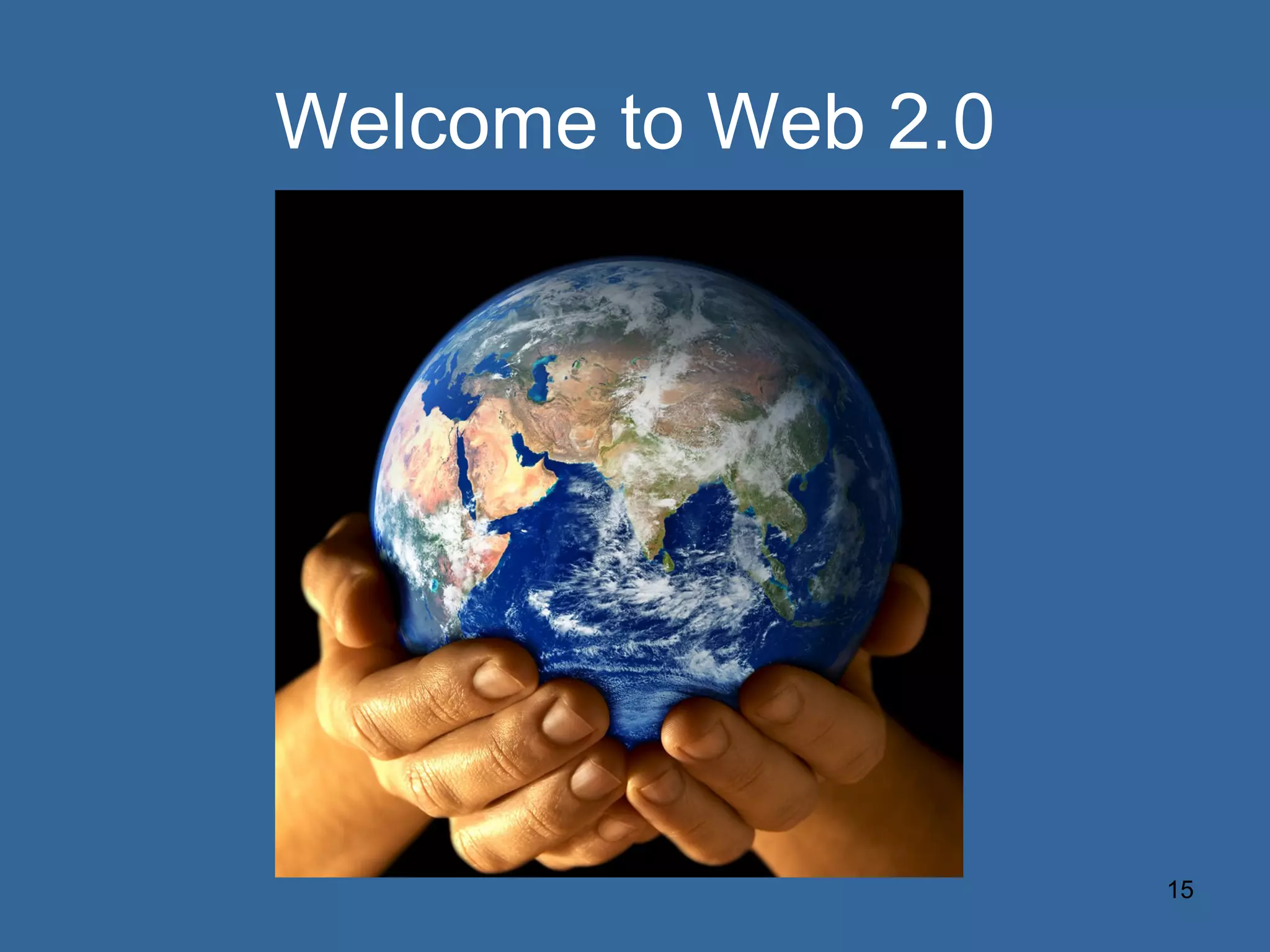
Welcome to Web 2.0
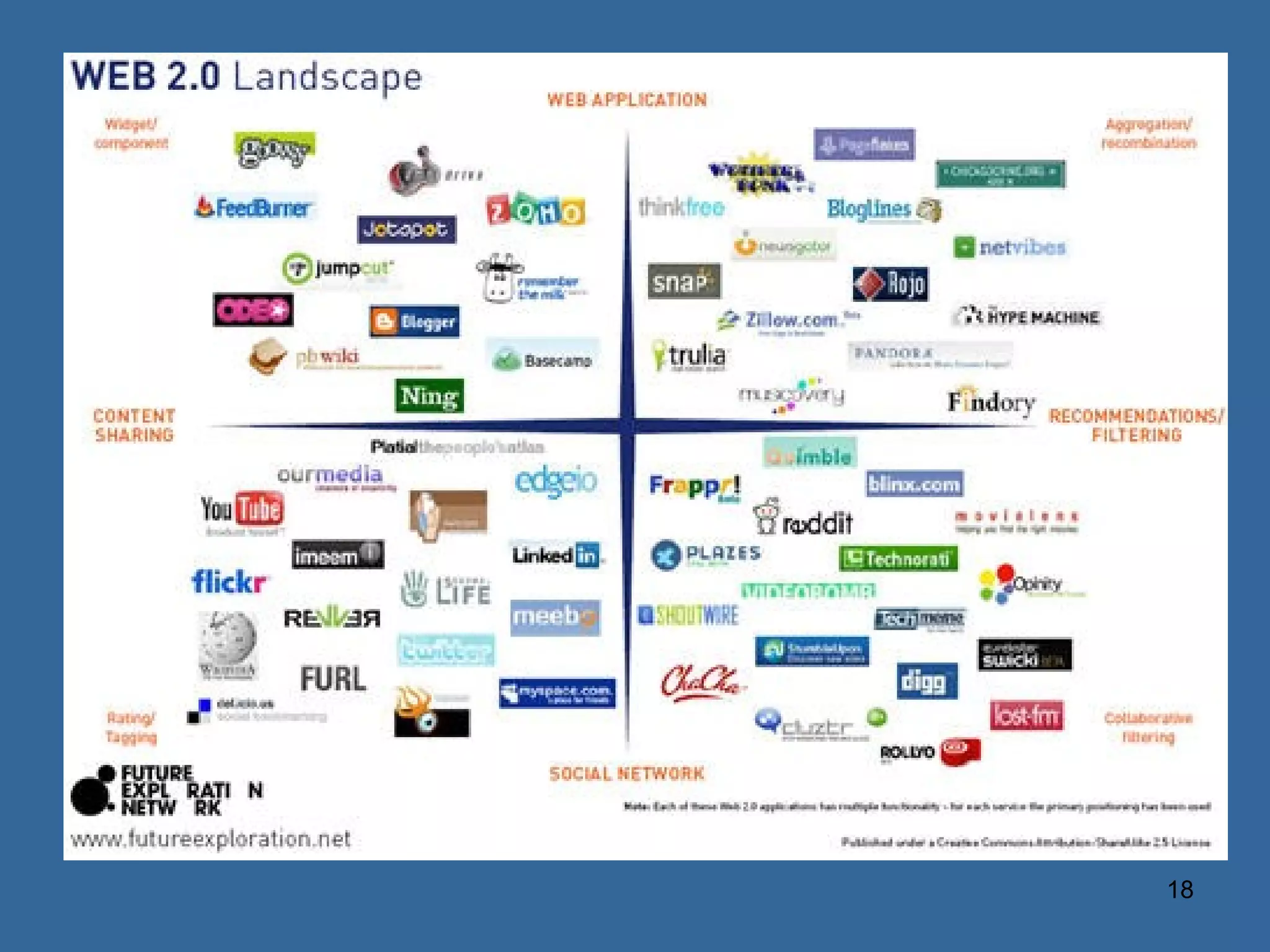
Web 2.0 Open source content and applications Sites that get their value from their users Blogs/Microblogs Wikis Social Networking/Bookmarking Sites RSS Feeds Podcasting
Open Source  Content and Applications Anyone can be a publisher All open source material is free Relies on a community that encourages reusing materials Tools for commentary/free expression-text, audio, video Supports social networking
 
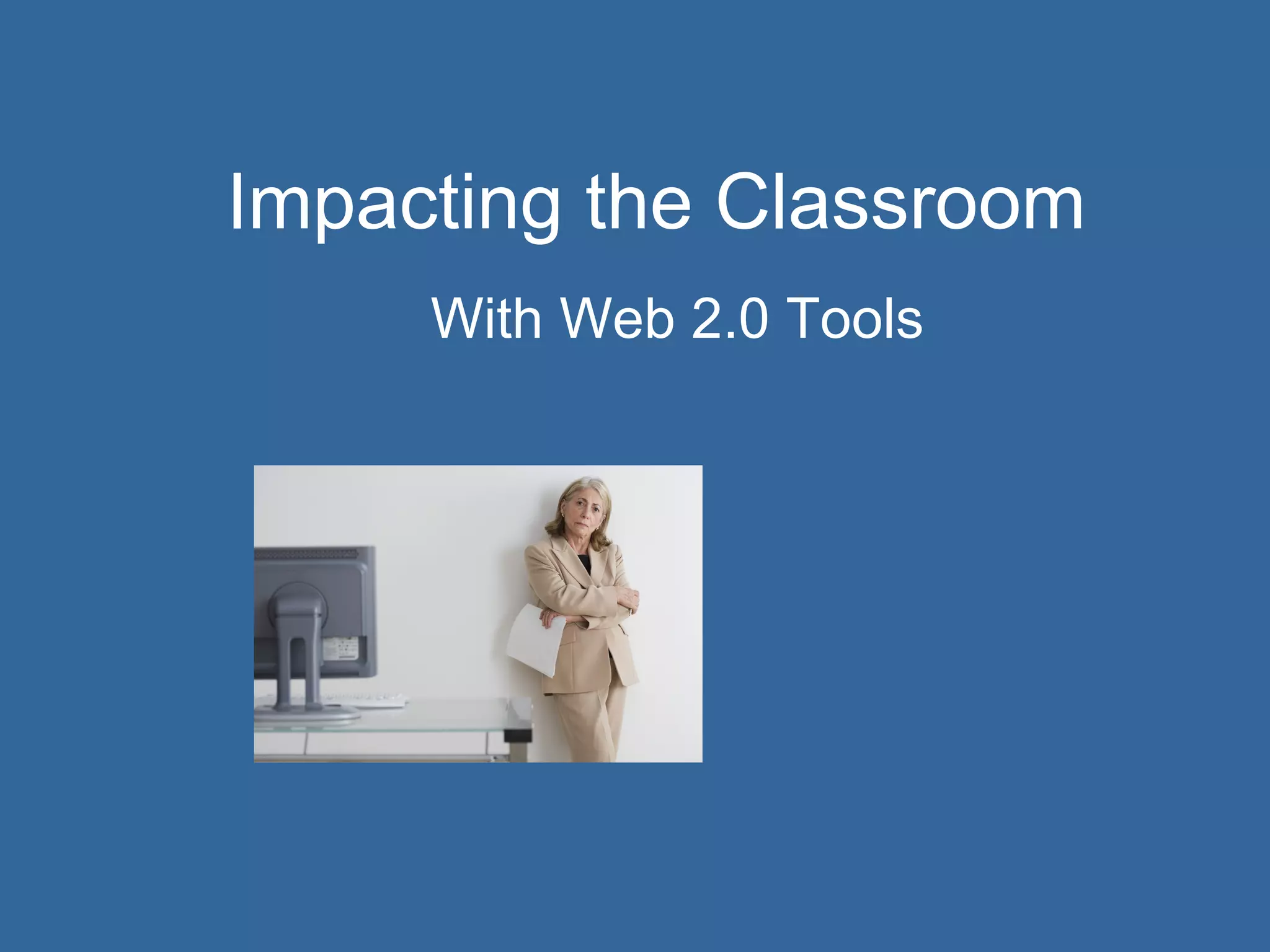
Impacting the Classroom With Web 2.0 Tools
Create your own  Personal Learning Network How can web 2.0 tools help you become a better teacher? How can you work smarter not harder? How can you feel connected to teachers with similar issues, feelings, worries, struggles? Get a Network!
Not this type of network
But a professional network
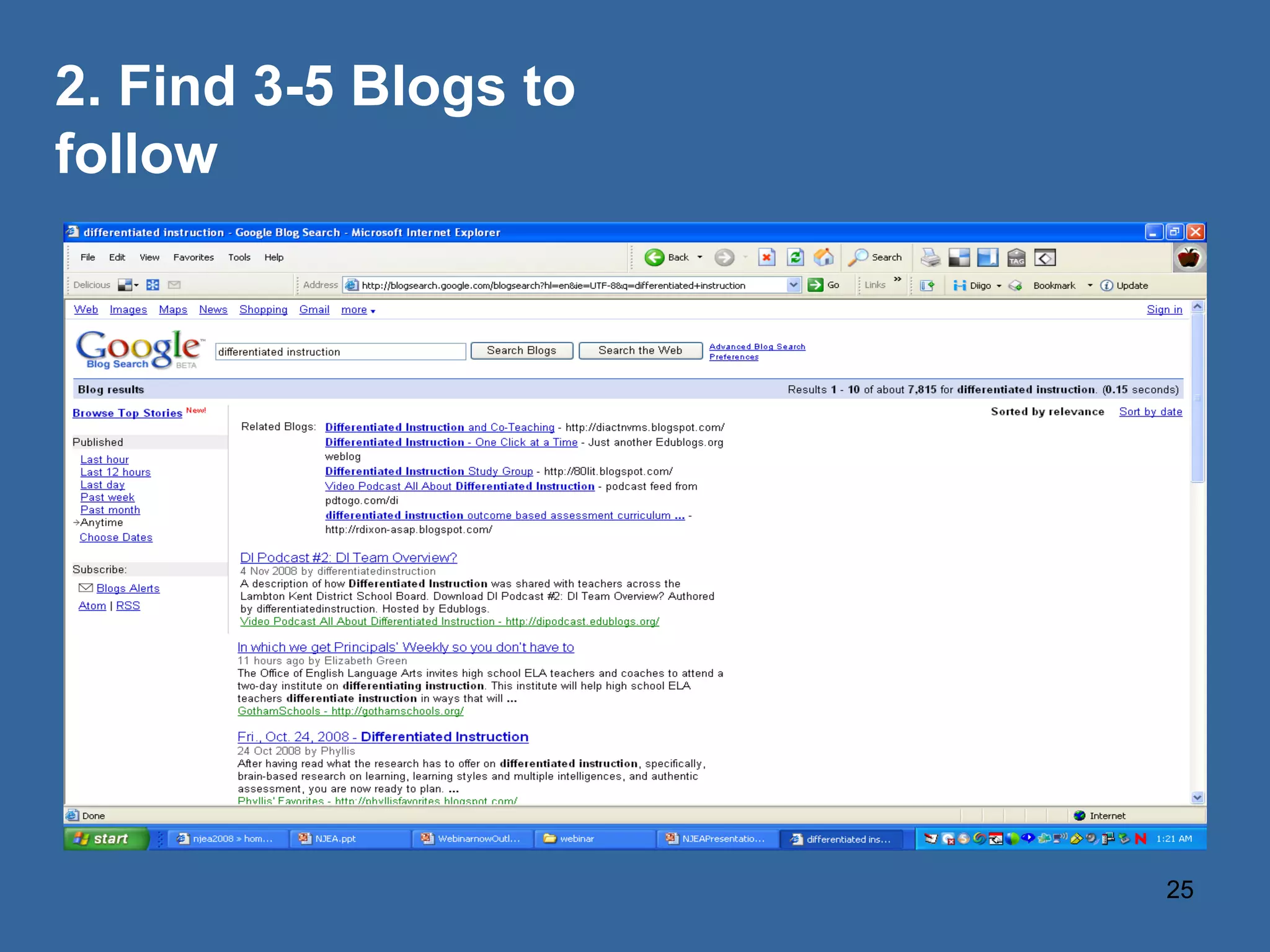
Begin building your PLN Join a professional social network. I belong to Classroom 2.0 (Ning) and the Discovery Educator’s Network (Discovery Education) (http://socialnetworksined.wikispaces.com/) Find 3-5 Blogs (Google Blogs) you like and subscribe to them using RSS feeds or Google Reader Join a microblogging network like Twitter or Plurk Lurk for awhile Participate-Become a part of the conversation
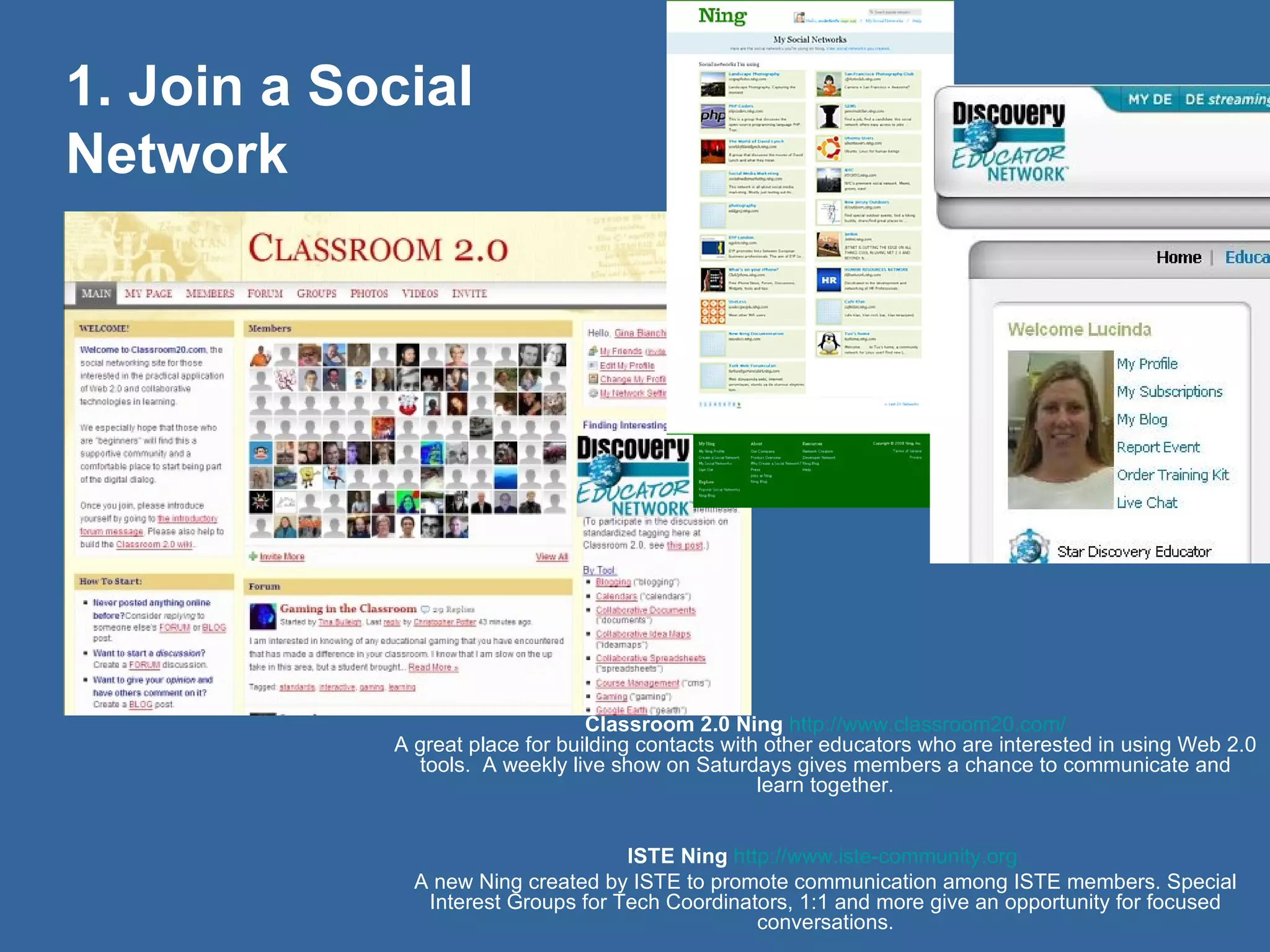
Classroom 2.0 Ning   http://www.classroom20.com/ A great place for building contacts with other educators who are interested in using Web 2.0 tools.  A weekly live show on Saturdays gives members a chance to communicate and learn together. ISTE Ning   http://www.iste-community.org   A new Ning created by ISTE to promote communication among ISTE members. Special Interest Groups for Tech Coordinators, 1:1 and more give an opportunity for focused conversations. 1. Join a Social Network
2. Find 3-5 Blogs to follow
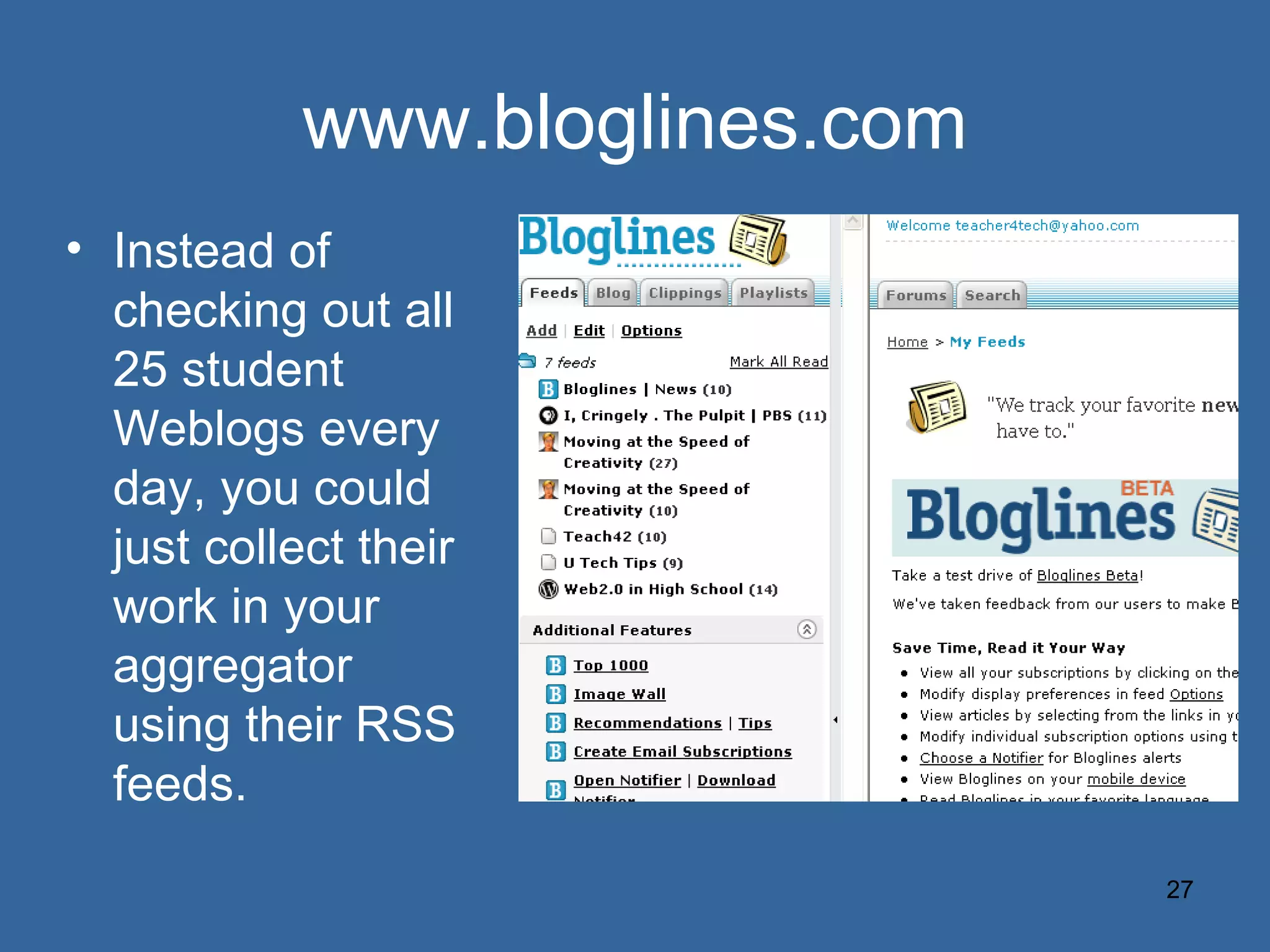
Really simple syndication, a way of aggregating web content in one place. Users subscribe to sites with RSS feeds and the aggregators collects new content and sends it to your desktop. So the content of 30 sites is visible in one place. Aggregators Bloglines.com Netvibes.com Subscribe to Blogs using RSS
www.bloglines.com Instead of checking out all 25 student Weblogs every day, you could just collect their work in your aggregator using their RSS feeds.
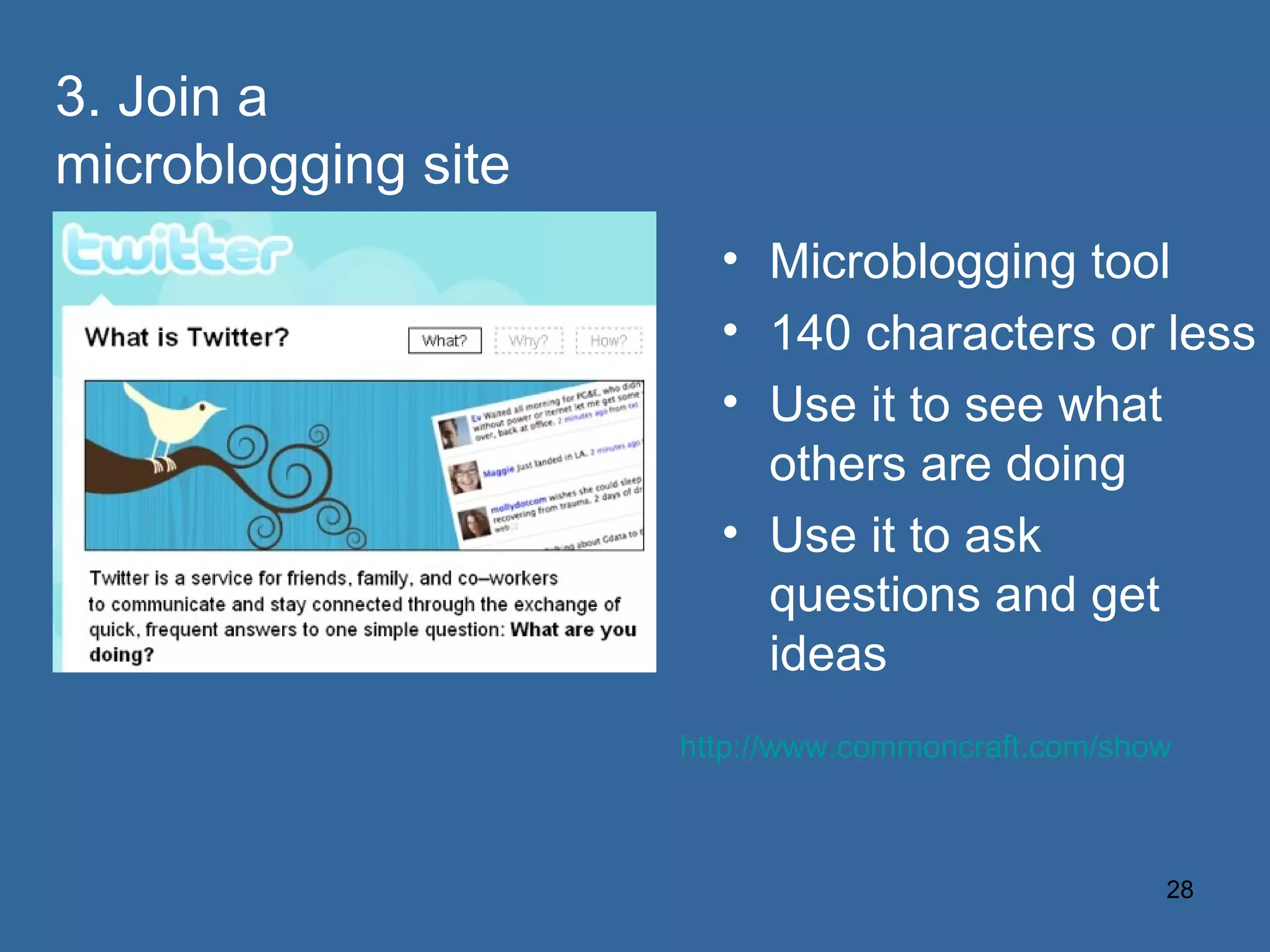
Microblogging tool 140 characters or less Use it to see what others are doing Use it to ask questions and get ideas  http://www.commoncraft.com/show 3. Join a microblogging site
Twitterator http://twitterator.org/ Use this URL to be added to STAR Discovery Educators list http://tinyurl.com/4a7mnu http://www.edutopia.org/twitter-professional-development-technology-microblogging
Impacting the Classroom With Web 2.0 Tools
Wikis www.pbwiki.com www.wikispaces.com www.wetpaint.com www.wikipedia.com
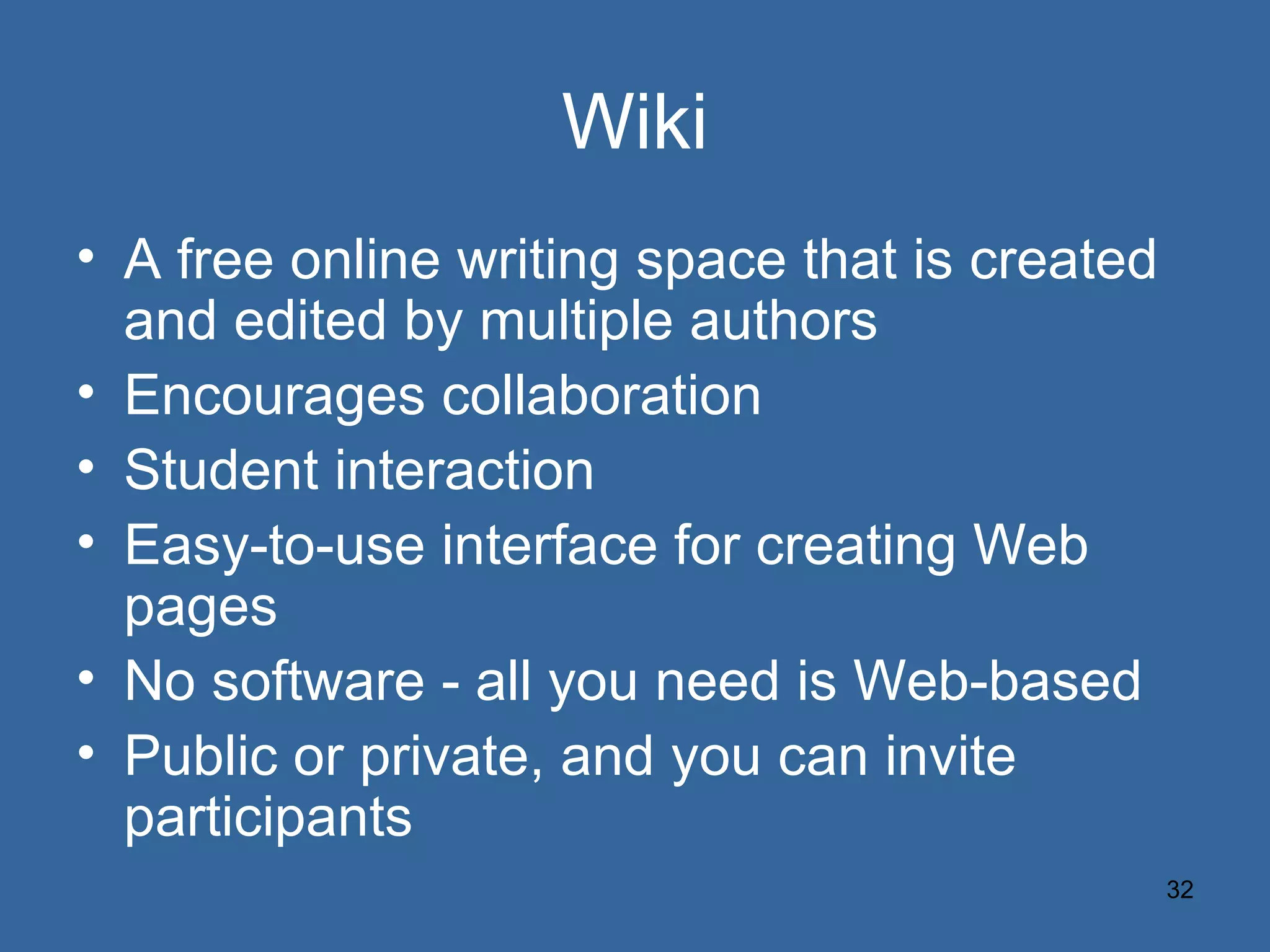
Wiki A free online writing space that is created and edited by multiple authors Encourages collaboration Student interaction Easy-to-use interface for creating Web pages No software - all you need is Web-based Public or private, and you can invite participants
What can you do with a Wiki? Build a classroom/school newspaper online Publish student projects and research Manage documents Use as a presentation tool Debate course topics, assigned readings Design a student-created “Solutions Manual” Support service learning projects (build a website about a challenge in your city)
Wikis http://whsbulldogs.wikispaces.com
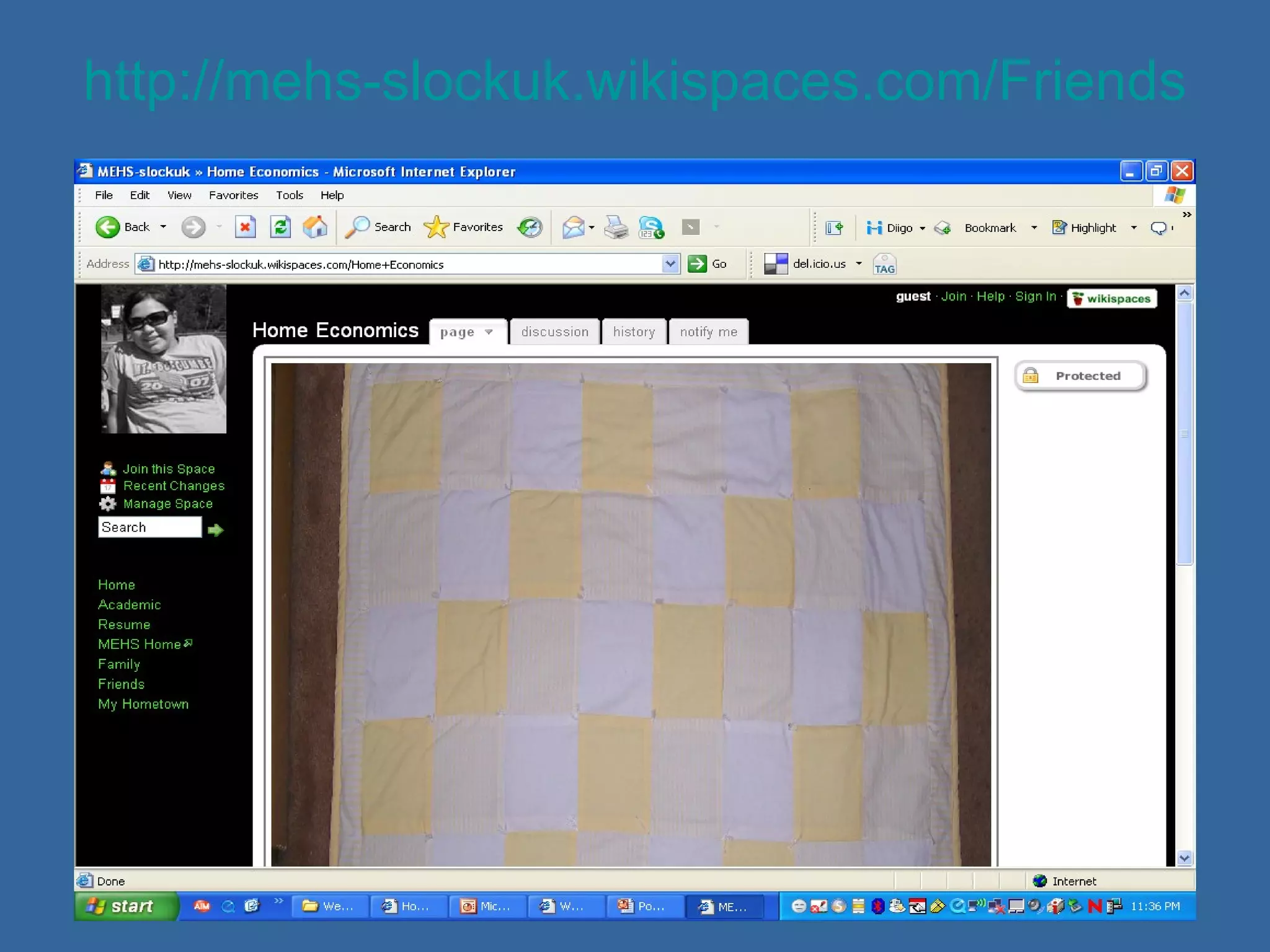
http://mehs-slockuk.wikispaces.com/Friends
Wikis http://rdsc.wikispaces.com/Economics Http://fpdm.wikispaces.com/FP+cookbook
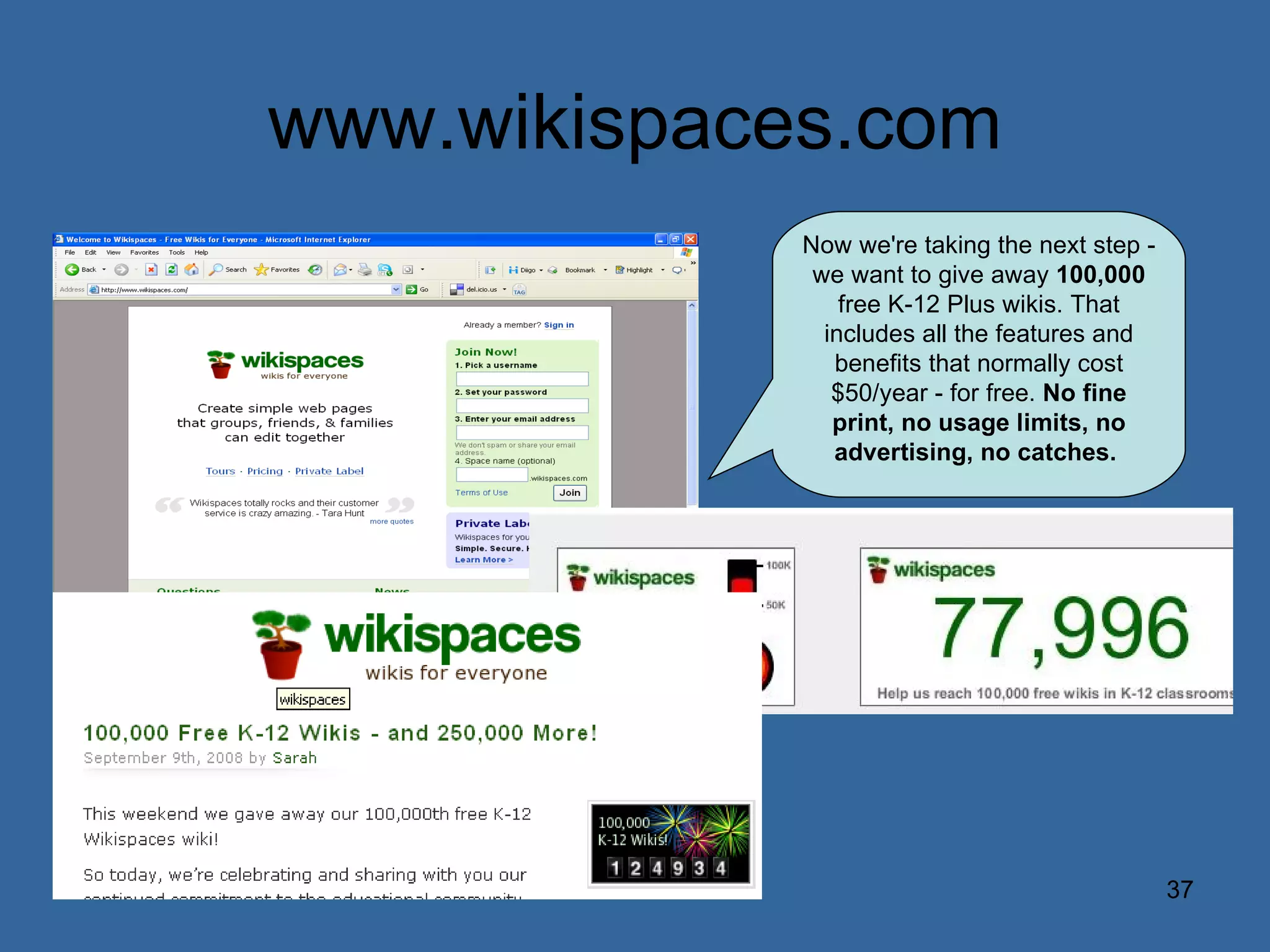
www.wikispaces.com Now we're taking the next step - we want to give away  100,000  free K-12 Plus wikis. That includes all the features and benefits that normally cost $50/year - for free.  No fine print, no usage limits, no advertising, no catches.
Social Bookmarking Web based service where shared lists of user created Internet bookmarks are displayed. Allows user to locate, classify, rank, and share Internet resources by tagging sites. Diigo.com Del.icio.us http://handouts.wesfryer.com/ohio
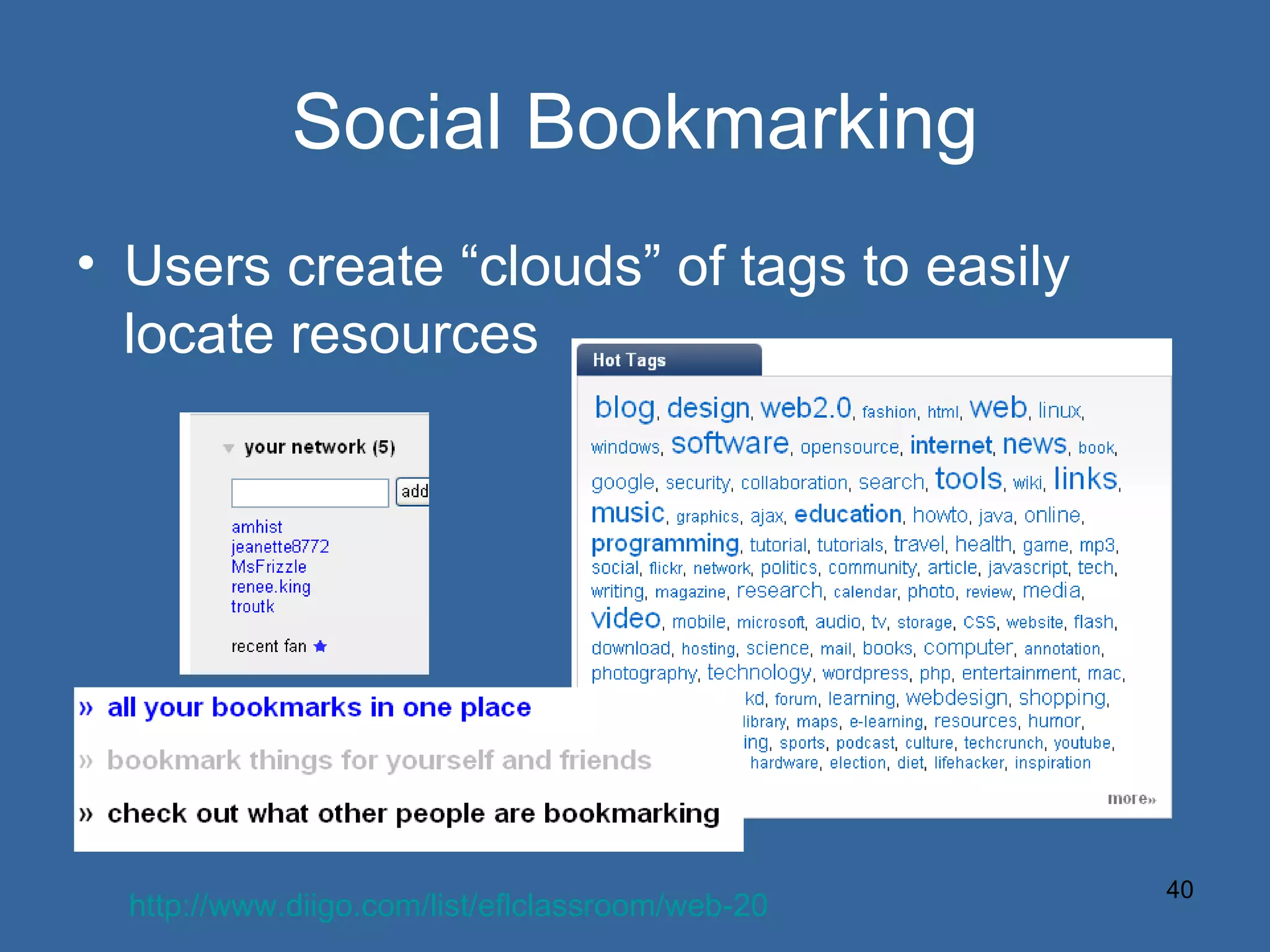
Social Bookmarking Saves links to web pages Web based so your bookmarks are available anywhere-not just on one computer in the favorites Share web page links with others Create “networks” of people with like interests and bookmarks Organize your web pages with tags
Social Bookmarking Users create “clouds” of tags to easily locate resources http://www.diigo.com/list/eflclassroom/web-20
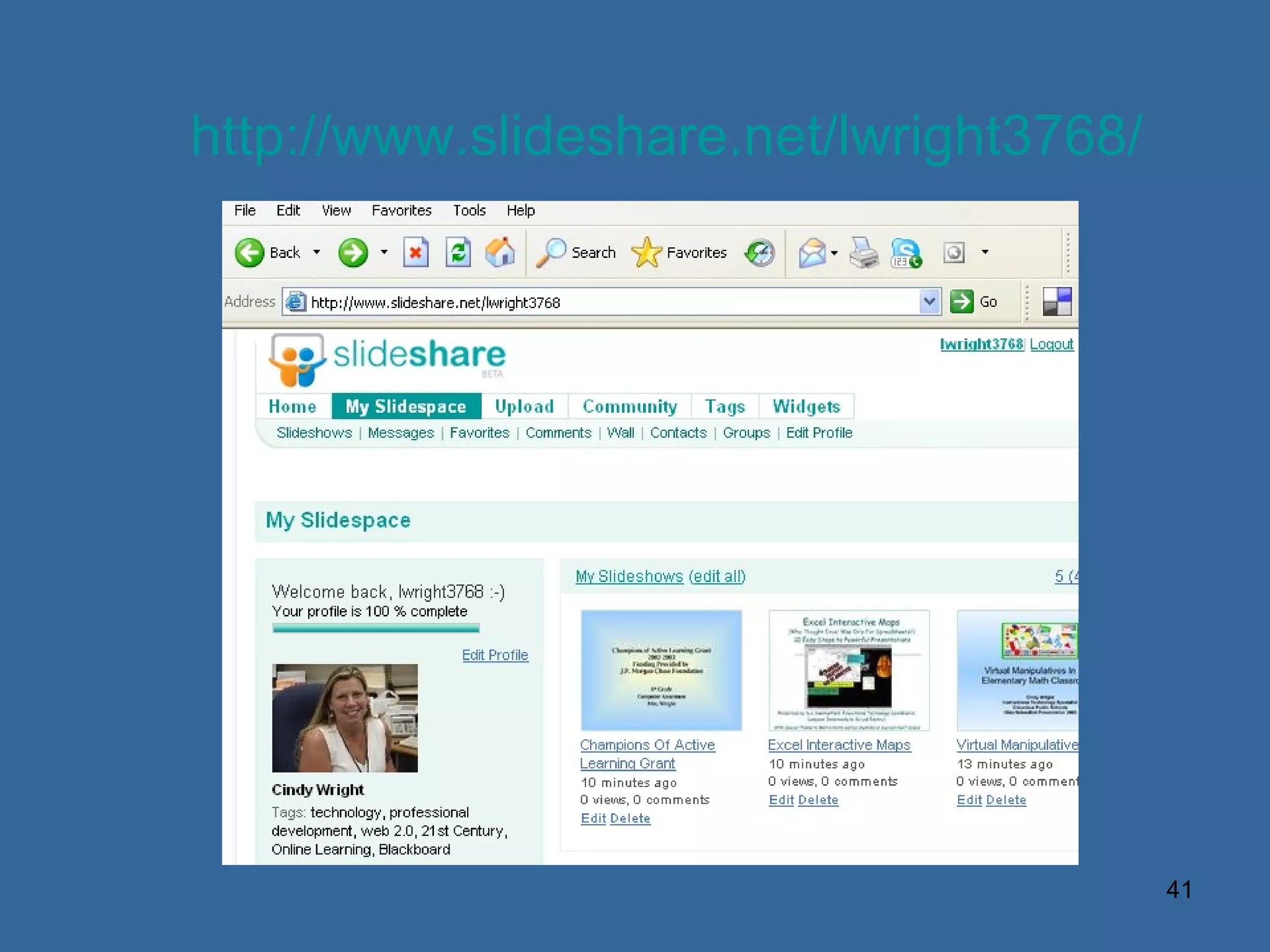
http://www.slideshare.net/lwright3768/
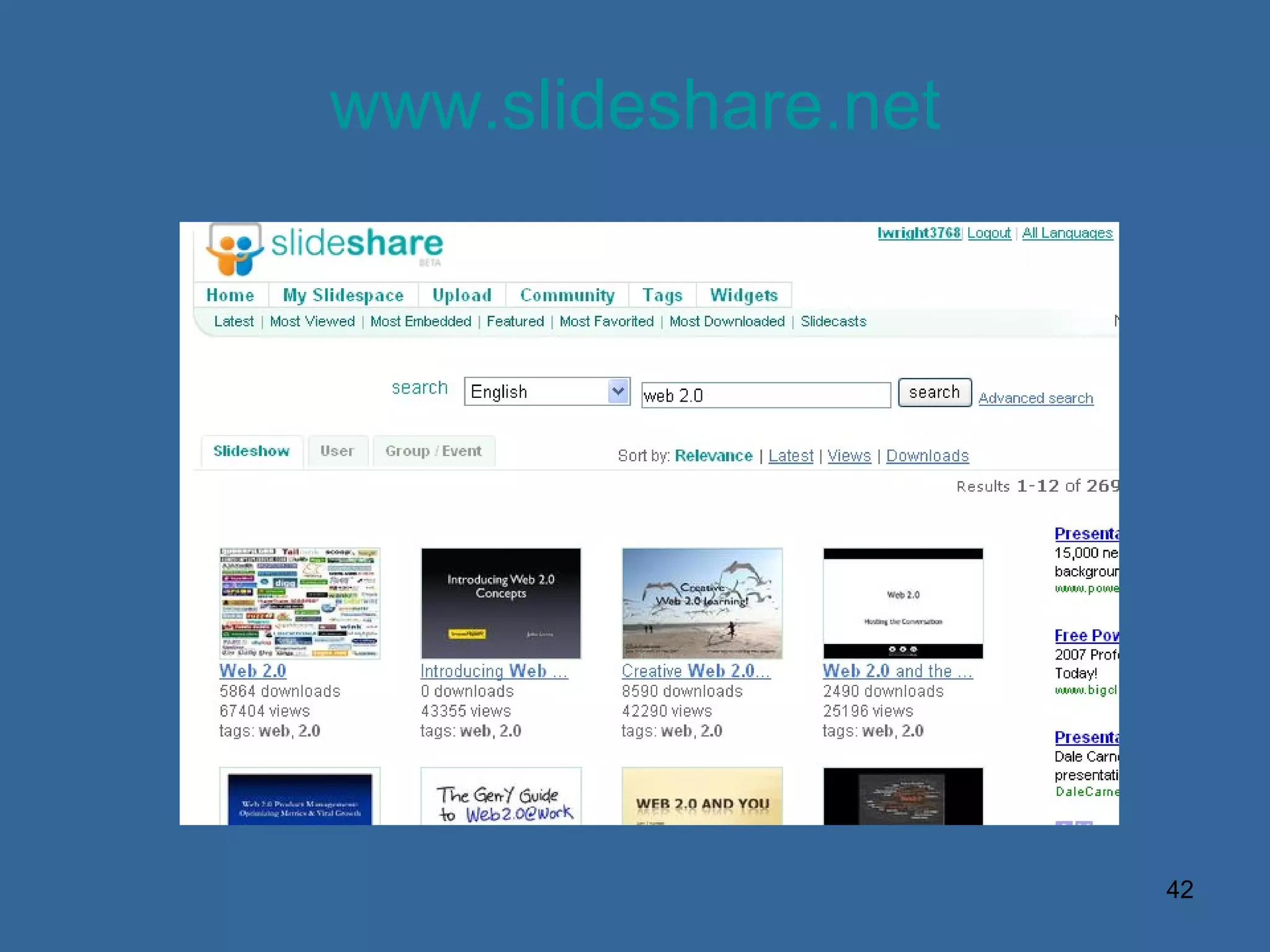
www.slideshare.net
www.slideshare.net
Digital Video www.zamzar.com
What will you do today? Build digital literacy Use the right tool for the job Use the tools to communicate more effectively Create learning networks for teachers and students Provide learning whatever, whenever, wherever Provide authentic learning experiences-engaging and contextual Provide opportunities beyond the classroom
Don’t prepare us for your world, prepare us for our world. http://www.boxoftricks.net/?page_id=29  –Box of Tricks
My contact information: Cindy Wright Columbus City Schools 737 E. Hudson St.  Columbus, OH 43211 614-365-5102 [email_address]

Changing Education with Web 2.0 Tools

  • 1.
    Changing Education withWeb 2.0 Tools By Cindy Wright Instructional Technology Specialist Columbus City Schools I believe that we cannot even begin to imagine the changes that are going to take place as the two-way nature of the Internet begins to flower, and that even those of us who have spent time imagining this future will be astounded by what happens. ~ Steve Hargadon Photocredit :http://leadinganswers.typepad.com/photos/uncategorized/2007/03/15/monarch_stages.jpg
  • 2.
    Engaging today’s studentsmeans tapping into what is important to them.
  • 3.
    We have aresponsibility to prepare them for their future, not our past.
  • 4.
    Technology allows learnersget their information When they want it How they want it Wherever they want it
  • 5.
    Today’s students are Digital Natives ( Marc Prensky ) Visual learners Multi-taskers Short attention spans Use technology to express themselves Information analysts Content producers Real-time learners - instant messages, text messages
  • 6.
    How students livewith technology Different kinds of experiences lead to different brain structures. Dr. Bruce D. Perry, Baylor College of Medicine
  • 7.
    Educators must getover the idea that technology will replace them. Any teacher that can be replaced by a computer absolutely deserves to be, because they just do not get it. Ian Jukes
  • 8.
    When I Become A Teacher
  • 9.
    Technology is changingImpossible to keep up with it Skills learned today will be irrelevant in the near future Focus less on the technology skill Focus more on the 21 st century skill
  • 10.
    Why Change? Youchange because you understand learning is dynamic and that to not change means to quit growing. ~ Sheryl Nussbaum-Beach http://21stcenturylearning.typepad.com/blog/ Photo credit :http://leadinganswers.typepad.com/photos/uncategorized/2007/03/15/monarch_stages.jpg
  • 11.
    21 st Century Skills Communication Innovation Creativity Problem-Solving Interactive Collaboration Critical Thinking
  • 12.
    Applied skills referto those skills that enable new entrants to use the basic knowledge acquired in school to perform in the workplace.
  • 13.
    What Employers Want:Professionalism/Work Ethic Oral and Written Communications Teamwork/Collaboration Critical Thinking/Problem Solving
  • 14.
    • Professionalism/WorkEthic , Teamwork/Collaboration and Oral Communications are rated as the three “most important” applied skills needed by entrants into today’s workforce. • Knowledge of Foreign Languages will “increase in importance” in the next five years, more than any other basic skill, according to over 60 percent (63.3 percent) of the employer respondents. • Making Appropriate Choices Concerning Health and Wellness is the No. 1 emerging content area for future graduates entering the U.S. workforce as reported by three-quarters of the employer respondents (76.1 percent). • Creativity/Innovation is projected to “increase in importance” for future workforce entrants, according to more than 70 percent (73.6 percent) of employer respondents. Currently, however, more than half of employer respondents (54.2 percent) report new workforce entrants with a high school diploma to be “deficient” in this skill set.
  • 15.
  • 16.
    Web 2.0 Opensource content and applications Sites that get their value from their users Blogs/Microblogs Wikis Social Networking/Bookmarking Sites RSS Feeds Podcasting
  • 17.
    Open Source Content and Applications Anyone can be a publisher All open source material is free Relies on a community that encourages reusing materials Tools for commentary/free expression-text, audio, video Supports social networking
  • 18.
  • 19.
    Impacting the ClassroomWith Web 2.0 Tools
  • 20.
    Create your own Personal Learning Network How can web 2.0 tools help you become a better teacher? How can you work smarter not harder? How can you feel connected to teachers with similar issues, feelings, worries, struggles? Get a Network!
  • 21.
    Not this typeof network
  • 22.
  • 23.
    Begin building yourPLN Join a professional social network. I belong to Classroom 2.0 (Ning) and the Discovery Educator’s Network (Discovery Education) (http://socialnetworksined.wikispaces.com/) Find 3-5 Blogs (Google Blogs) you like and subscribe to them using RSS feeds or Google Reader Join a microblogging network like Twitter or Plurk Lurk for awhile Participate-Become a part of the conversation
  • 24.
    Classroom 2.0 Ning  http://www.classroom20.com/ A great place for building contacts with other educators who are interested in using Web 2.0 tools.  A weekly live show on Saturdays gives members a chance to communicate and learn together. ISTE Ning   http://www.iste-community.org   A new Ning created by ISTE to promote communication among ISTE members. Special Interest Groups for Tech Coordinators, 1:1 and more give an opportunity for focused conversations. 1. Join a Social Network
  • 25.
    2. Find 3-5Blogs to follow
  • 26.
    Really simple syndication,a way of aggregating web content in one place. Users subscribe to sites with RSS feeds and the aggregators collects new content and sends it to your desktop. So the content of 30 sites is visible in one place. Aggregators Bloglines.com Netvibes.com Subscribe to Blogs using RSS
  • 27.
    www.bloglines.com Instead ofchecking out all 25 student Weblogs every day, you could just collect their work in your aggregator using their RSS feeds.
  • 28.
    Microblogging tool 140characters or less Use it to see what others are doing Use it to ask questions and get ideas http://www.commoncraft.com/show 3. Join a microblogging site
  • 29.
    Twitterator http://twitterator.org/ Usethis URL to be added to STAR Discovery Educators list http://tinyurl.com/4a7mnu http://www.edutopia.org/twitter-professional-development-technology-microblogging
  • 30.
    Impacting the ClassroomWith Web 2.0 Tools
  • 31.
    Wikis www.pbwiki.com www.wikispaces.comwww.wetpaint.com www.wikipedia.com
  • 32.
    Wiki A freeonline writing space that is created and edited by multiple authors Encourages collaboration Student interaction Easy-to-use interface for creating Web pages No software - all you need is Web-based Public or private, and you can invite participants
  • 33.
    What can youdo with a Wiki? Build a classroom/school newspaper online Publish student projects and research Manage documents Use as a presentation tool Debate course topics, assigned readings Design a student-created “Solutions Manual” Support service learning projects (build a website about a challenge in your city)
  • 34.
  • 35.
  • 36.
  • 37.
    www.wikispaces.com Now we'retaking the next step - we want to give away 100,000 free K-12 Plus wikis. That includes all the features and benefits that normally cost $50/year - for free. No fine print, no usage limits, no advertising, no catches.
  • 38.
    Social Bookmarking Webbased service where shared lists of user created Internet bookmarks are displayed. Allows user to locate, classify, rank, and share Internet resources by tagging sites. Diigo.com Del.icio.us http://handouts.wesfryer.com/ohio
  • 39.
    Social Bookmarking Saveslinks to web pages Web based so your bookmarks are available anywhere-not just on one computer in the favorites Share web page links with others Create “networks” of people with like interests and bookmarks Organize your web pages with tags
  • 40.
    Social Bookmarking Userscreate “clouds” of tags to easily locate resources http://www.diigo.com/list/eflclassroom/web-20
  • 41.
  • 42.
  • 43.
  • 44.
  • 45.
    What will youdo today? Build digital literacy Use the right tool for the job Use the tools to communicate more effectively Create learning networks for teachers and students Provide learning whatever, whenever, wherever Provide authentic learning experiences-engaging and contextual Provide opportunities beyond the classroom
  • 46.
    Don’t prepare usfor your world, prepare us for our world. http://www.boxoftricks.net/?page_id=29 –Box of Tricks
  • 47.
    My contact information:Cindy Wright Columbus City Schools 737 E. Hudson St. Columbus, OH 43211 614-365-5102 [email_address]

Editor's Notes

  • #2 Welcome everyone. My name is Cindy Wright, and I am an Instructional Technology Specialist with Columbus City Schools, in Columbus, Ohio. I’d like to share with you today some information regarding the newest Web 2.0 technologies and how they can have a positive impact in the classroom. My hope is that this presentation will encourage you to try at least one of the technologies I introduce. The presentation will be saved, and you will have access to it and my speaker notes after the session. So if I go too fast and you miss something on a screen, just keep in mind you can always view it again later at your own leisurely pace.