The Impact of BYOD*
    on Higher Ed
 *Bring   Your Own Device
     Jill Hurst-Wahl
          @jill_hw
     June 25, 2012
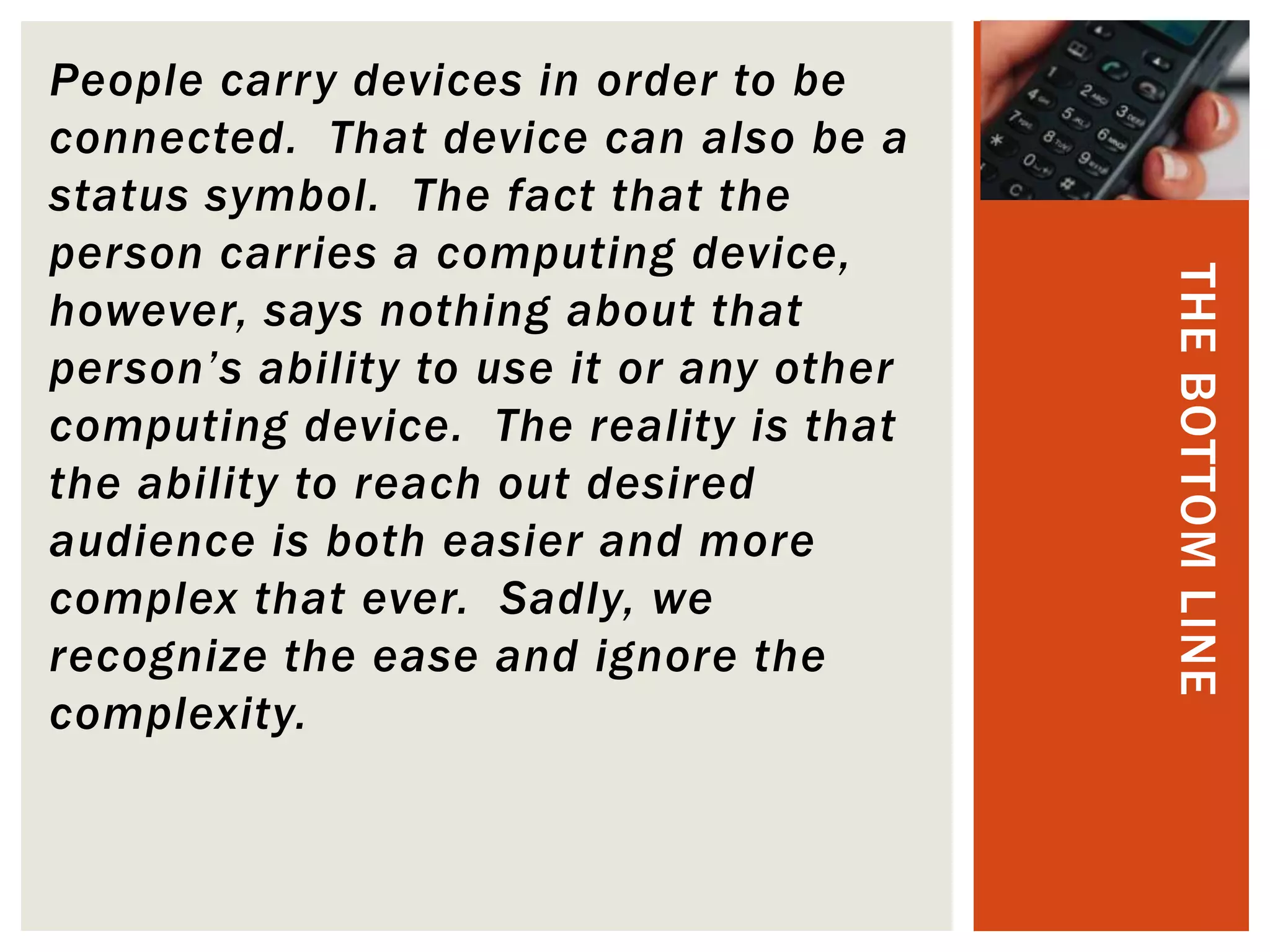
People carry devices in order to be
connected. That device can also be a
status symbol. The fact that the
person carries a computing device,


                                          THE BOTTOM LINE
however, says nothing about that
person’s ability to use it or any other
computing device. The reality is that
the ability to reach out desired
audience is both easier and more
complex that ever. Sadly, we
recognize the ease and ignore the
complexity.
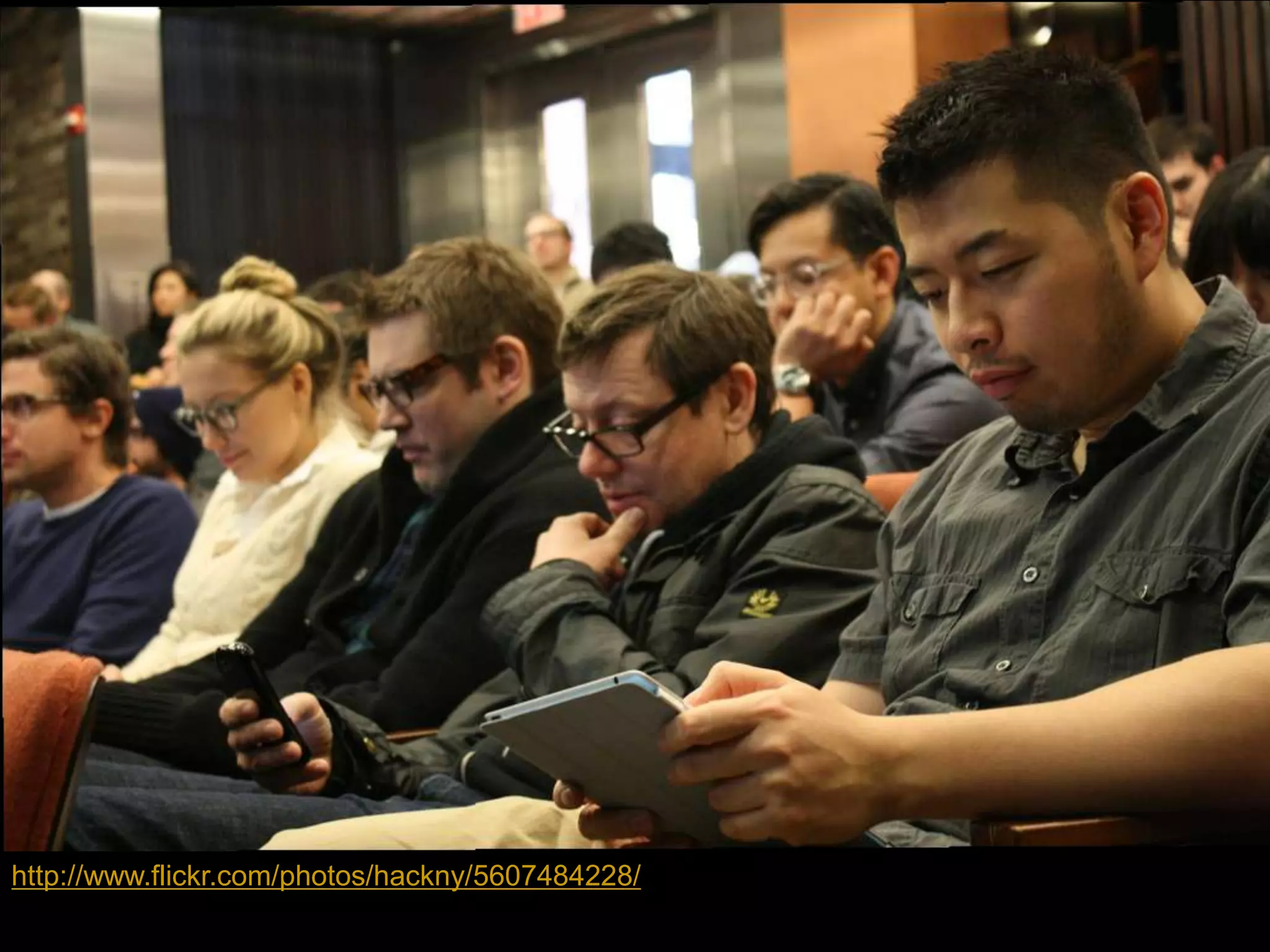
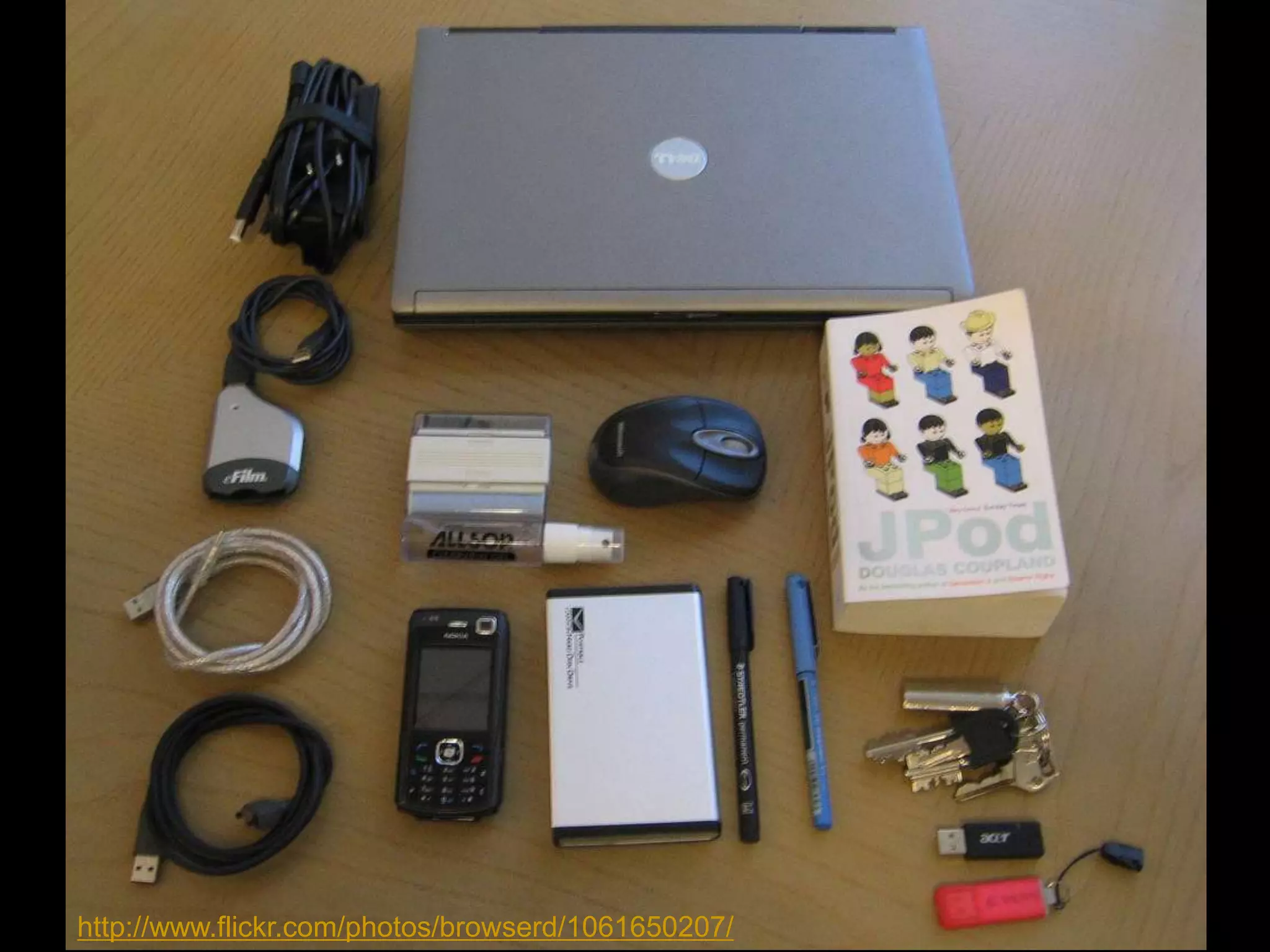
WHAT DO
                                                           YOU
                                                           ASSUME
                                                           ABOUT THE
                                                           PEOPLE
                                                           YOU
                                                           ATTRACT?


http://www.flickr.com/photos/37996605603@N01/4526610423/
http://www.flickr.com/photos/hackny/5607484228/
http://www.flickr.com/photos/browserd/1061650207/
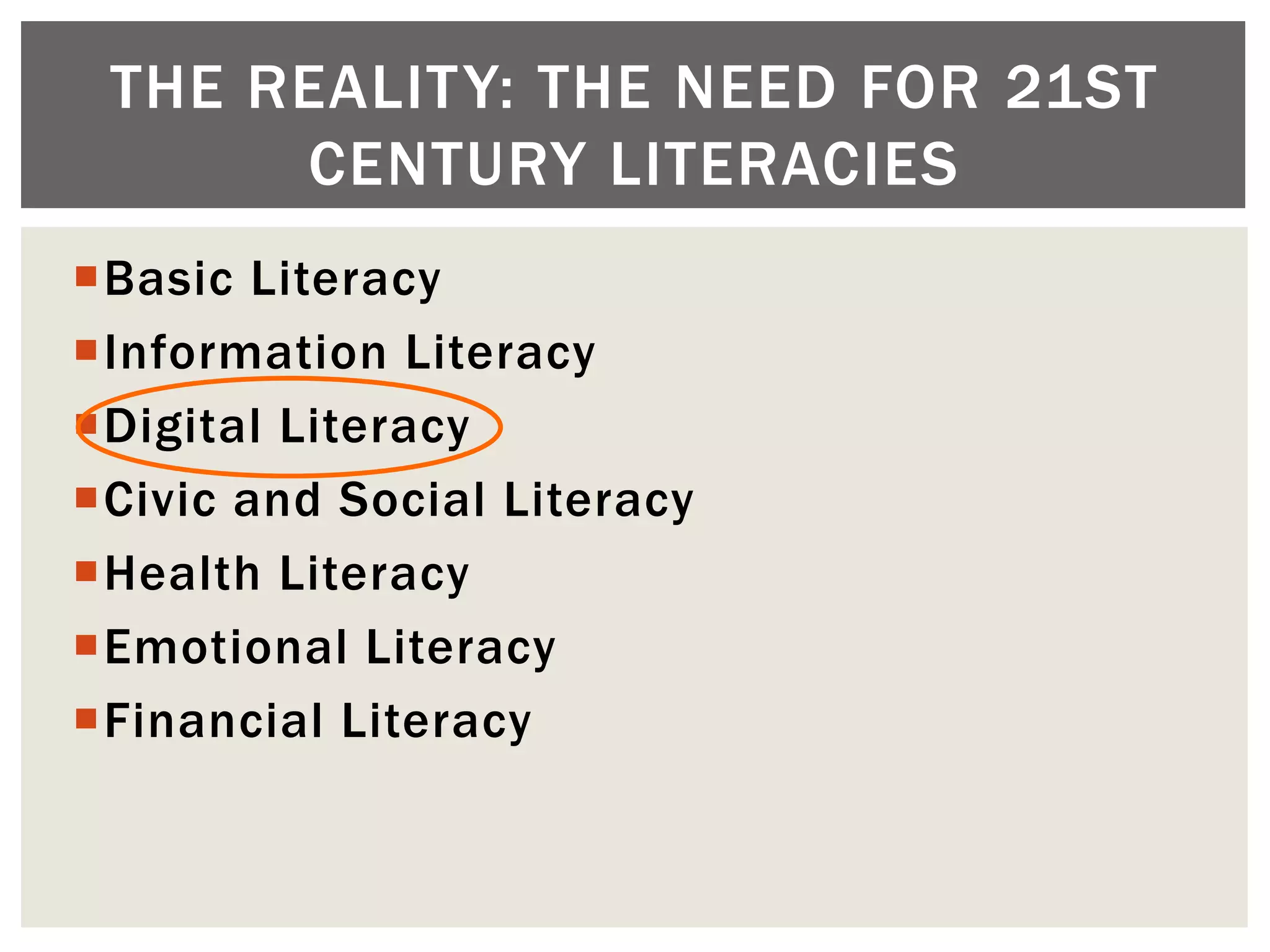
THE REALITY: THE NEED FOR 21ST
      CENTURY LITERACIES
Basic Literacy
Information Literacy
Digital Literacy
Civic and Social Literacy
Health Literacy
Emotional Literacy
Financial Literacy
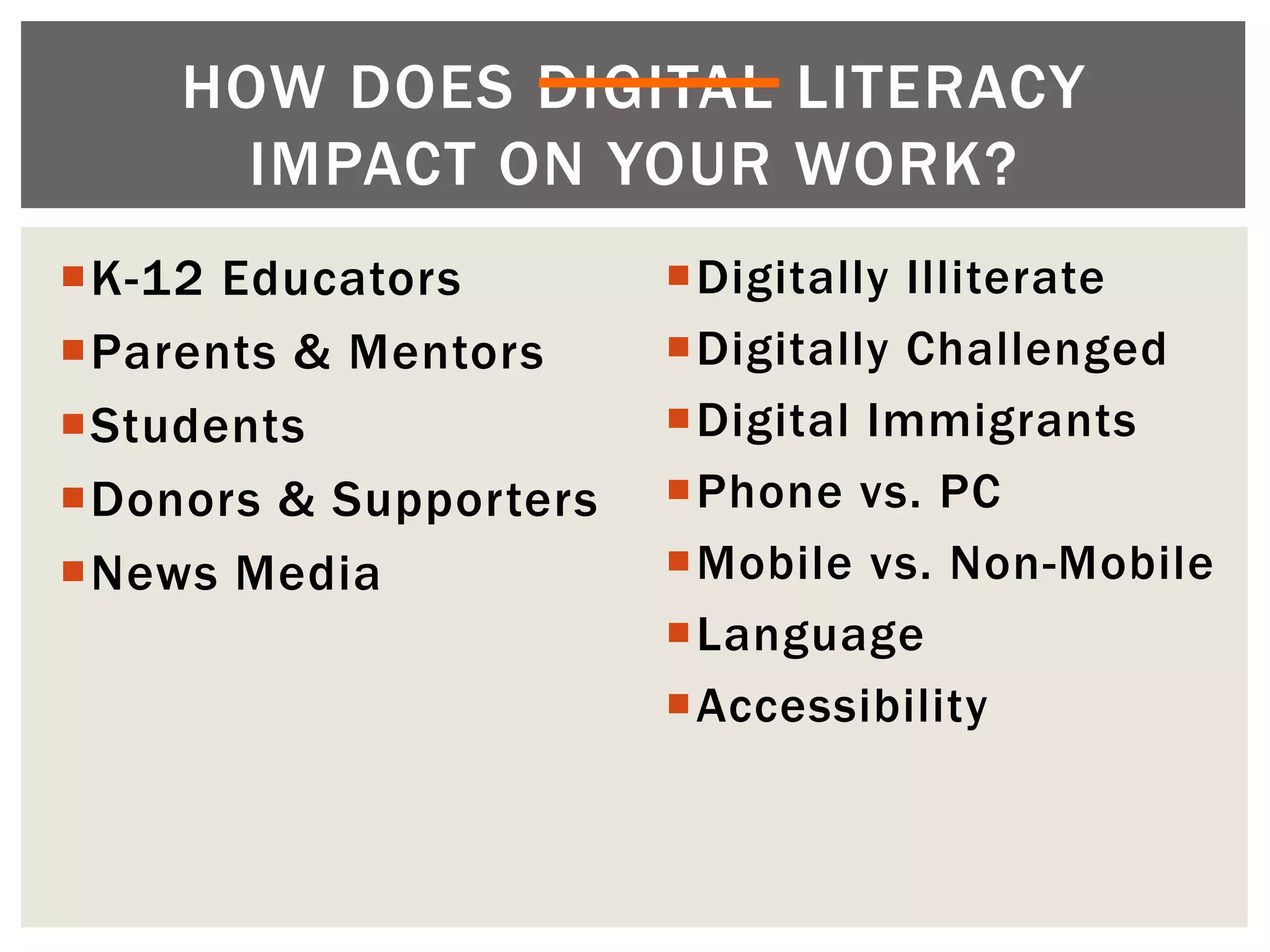
HOW DOES DIGITAL LITERACY
      IMPACT ON YOUR WORK?
K-12 Educators        Digitally Illiterate
Parents & Mentors     Digitally Challenged
Students              Digital Immigrants
Donors & Supporters   Phone vs. PC
News Media            Mobile vs. Non-Mobile
                       Language
                       Accessibility
RANDOM STATISTICS

 In New York State, almost 2.7 million households
  are not connected to the Internet. [a]
 In 2010, the US ranked 15th out of the top 31
  countries in terms of broadband penetration . [b]
 Top 40 books read by high school students are at
  a 5 th grade reading level (average). [c]
 “More than 50% of students entering two-year
  colleges & nearly 20% of those entering four-year
  universities are placed in remedial classes.” [d]
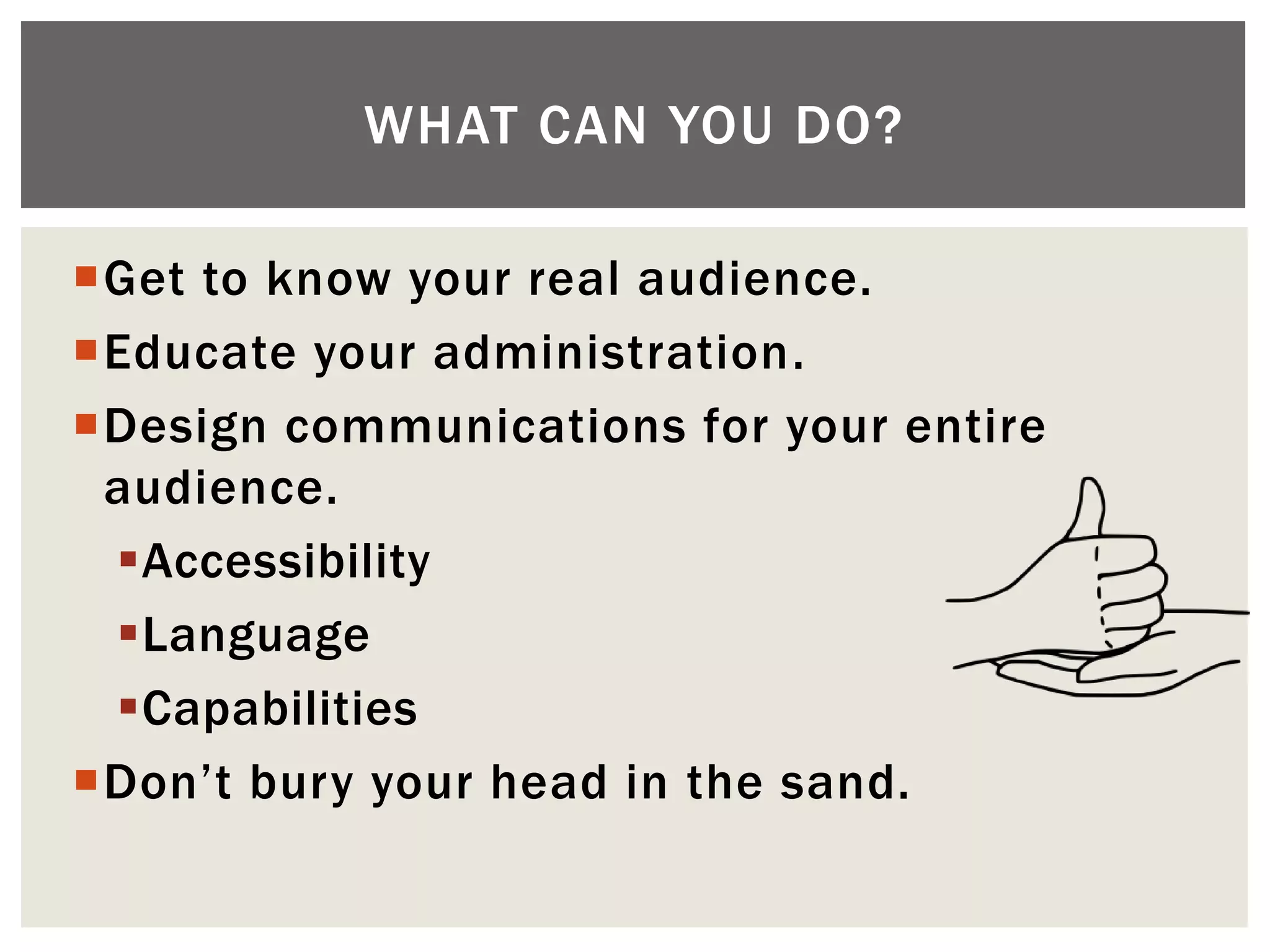
WHAT CAN YOU DO?

Get to know your real audience.
Educate your administration.
Design communications for your entire
 audience.
 Accessibility
 Language
 Capabilities
Don’t bury your head in the sand.
The Impact of BYOD (Bring Your Own Device)  on Higher Ed.

The Impact of BYOD (Bring Your Own Device) on Higher Ed.

  • 1.
    The Impact ofBYOD* on Higher Ed *Bring Your Own Device Jill Hurst-Wahl @jill_hw June 25, 2012
  • 2.
    People carry devicesin order to be connected. That device can also be a status symbol. The fact that the person carries a computing device, THE BOTTOM LINE however, says nothing about that person’s ability to use it or any other computing device. The reality is that the ability to reach out desired audience is both easier and more complex that ever. Sadly, we recognize the ease and ignore the complexity.
  • 3.
    WHAT DO YOU ASSUME ABOUT THE PEOPLE YOU ATTRACT? http://www.flickr.com/photos/37996605603@N01/4526610423/
  • 4.
  • 5.
  • 6.
    THE REALITY: THENEED FOR 21ST CENTURY LITERACIES Basic Literacy Information Literacy Digital Literacy Civic and Social Literacy Health Literacy Emotional Literacy Financial Literacy
  • 7.
    HOW DOES DIGITALLITERACY IMPACT ON YOUR WORK? K-12 Educators Digitally Illiterate Parents & Mentors Digitally Challenged Students Digital Immigrants Donors & Supporters Phone vs. PC News Media Mobile vs. Non-Mobile Language Accessibility
  • 8.
    RANDOM STATISTICS  InNew York State, almost 2.7 million households are not connected to the Internet. [a]  In 2010, the US ranked 15th out of the top 31 countries in terms of broadband penetration . [b]  Top 40 books read by high school students are at a 5 th grade reading level (average). [c]  “More than 50% of students entering two-year colleges & nearly 20% of those entering four-year universities are placed in remedial classes.” [d]
  • 9.
    WHAT CAN YOUDO? Get to know your real audience. Educate your administration. Design communications for your entire audience. Accessibility Language Capabilities Don’t bury your head in the sand.