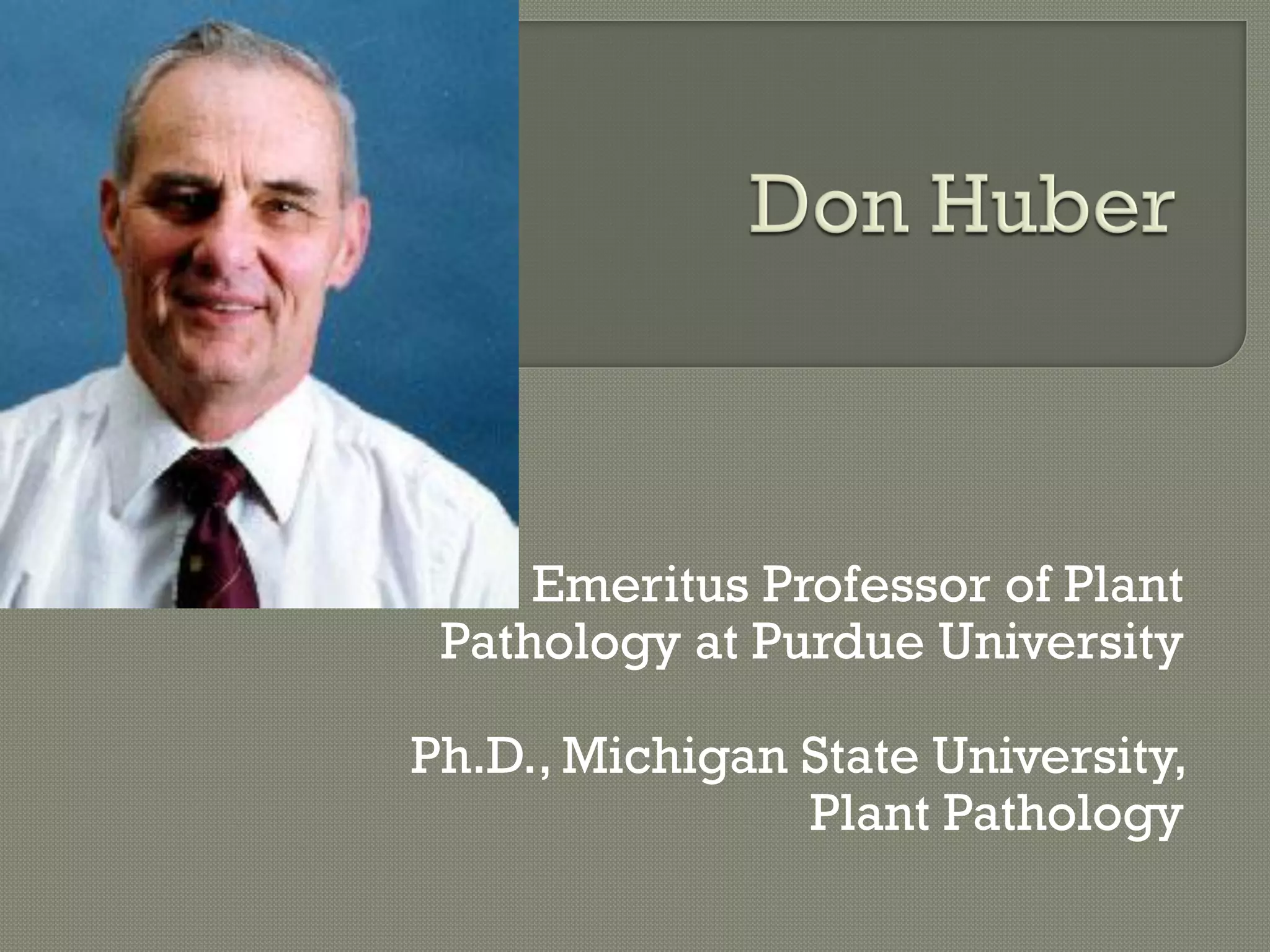
Emeritus Professor of Plant
 Pathology at Purdue University

Ph.D., Michigan State University,
                Plant Pathology
   How long have you been a research scientist and
    if applicable what are some other agriculture
    related jobs you have held in your career?

   Fifty one years. Plant Pathologist, International
    agriculture consultant on cultural and biological
    disease control (new lands development and
    cultivation), civil defense response to nuclear
    attack, agricultural bioterrorism consultant,
    biological warfare specialist (COLONEL
    (Retired) US Army).
 Did   you grow up on a farm?
 Grew up on dairy, grain, cotton, and citrus
 farms. College was stimulated by a Union
 Pacific Railroad scholarship ($50.00 = two
 semesters tuition to supplement my digging
 graves for room and board). The need for a
 job-additional income for books, etc. landed
 me in the Plant Pathology department at the
 University of Idaho and my desire for
 graduate school and research was fostered
 from the interactions there.
   Do you feel like you spend enough time on farms
    observing real problems (and interacting with
    farmers) to do research that is well grounded in
    practicality?
   Definitely worked at problem solving. My first
    question as an undergraduate research project was
    to understand how crop sequence/rotation affected
    soilborne diseases (this question carried me through
    the next 50 years of research in one form or another-
    nutrient availability, form of nitrogen, microbial
    ecology, biological control, nutrient-disease
    glyphosate interactions, etc.).
 What are the professional responsibilities of
 your current job?
I am now retired (Sept. 2006) from Purdue,
 but very active consulting in the US,
 involved in international projects on four
 continents, and still have about 400 research
 field plots developing basipetally
 translocated micronutrients (and Ca, Mg)
 for disease control as well as to improve
 crop quality and storability (potatoes, etc.).
 Areyou optimistic about the capacity for
 world agriculture to produce enough
 food/fiber/fuel in upcoming decades
 while reducing environmental impacts?

 Noproblem if the politicians will keep
 out of it!!!!
   How serious are the current environmental impacts of
    agriculture in the US?
   The glyphosate non-target effects are very serious from a
    nutritional standpoint and the intensity is growing. This will
    have to be addressed soon and alternative approaches for
    weed control to minimize this toxic (biologically) chemicals
    impact will need to be developed. Although environmental
    stewardship is always appropriate, we also need to
    recognize the tremendous progress that has been made in
    the last few decades. A strong economy and growing
    population have permitted us to do many things not
    otherwise possible because of the ability to spread the
    burden of some environmental programs across more
    people to pick up the tab.
   How has soil fertility research (e.g., funding,
    objectives, technology) changed during your career?
   Dramatically! The virtual loss of the land grant
    formula funding has channeled most of the resource
    money into political mandates rather than having the
    problem solving research done on a dispersed basis
    by numerous researchers who could address the
    unique aspects of their environment and share a
    broad spectrum of ideas. New tools and techniques
    are especially powerful (XANES, XRD, etc. in my area
    of nutrient-disease interactions).
 What  current research related to soil
 fertility (other than your own) do you
 think is most interesting or most
 promising?

 Micronutrient efficiency, over-all nutrient
 efficiency approaches, genetic
 improvement of nutritional quality (Fe, Zn,
 protein, Cu, etc.).
 Doyou think current environmental
 regulations have an adequate scientific
 base?

 No!   Especially nitrate in water!
   How did you become interested in glyphosate effects
    on micronutrient nutrition?
   Observing the continual increase in soilborne
    diseases (take-all, Corynespora root rot, potato scab,
    Fusarium diseases) that we had established a strong
    relationship with for certain micronutrients and the
    change in environmental criteria that we used to
    consider "cardinal" conditions for disease severity
    (head scab). Glyphosate is a strong metal chelator
    and biocide in the soil from root exudates. Residual
    effects on micronutrient availability, uptake and
    translocation are now becoming well documented.
 On    what percentage of RR soybean
    acreage do you think it would be cost
    effective apply additional
    micronutrients?

    About 30 % of the current acreage;
    in five years it will be about 55 %. Also
    for corn with an increasing acreage
    of RR corn needing more K also.
   Are there any good general rules about when
    additional micronutrient management is likely to
    be cost effective for RR soybeans?

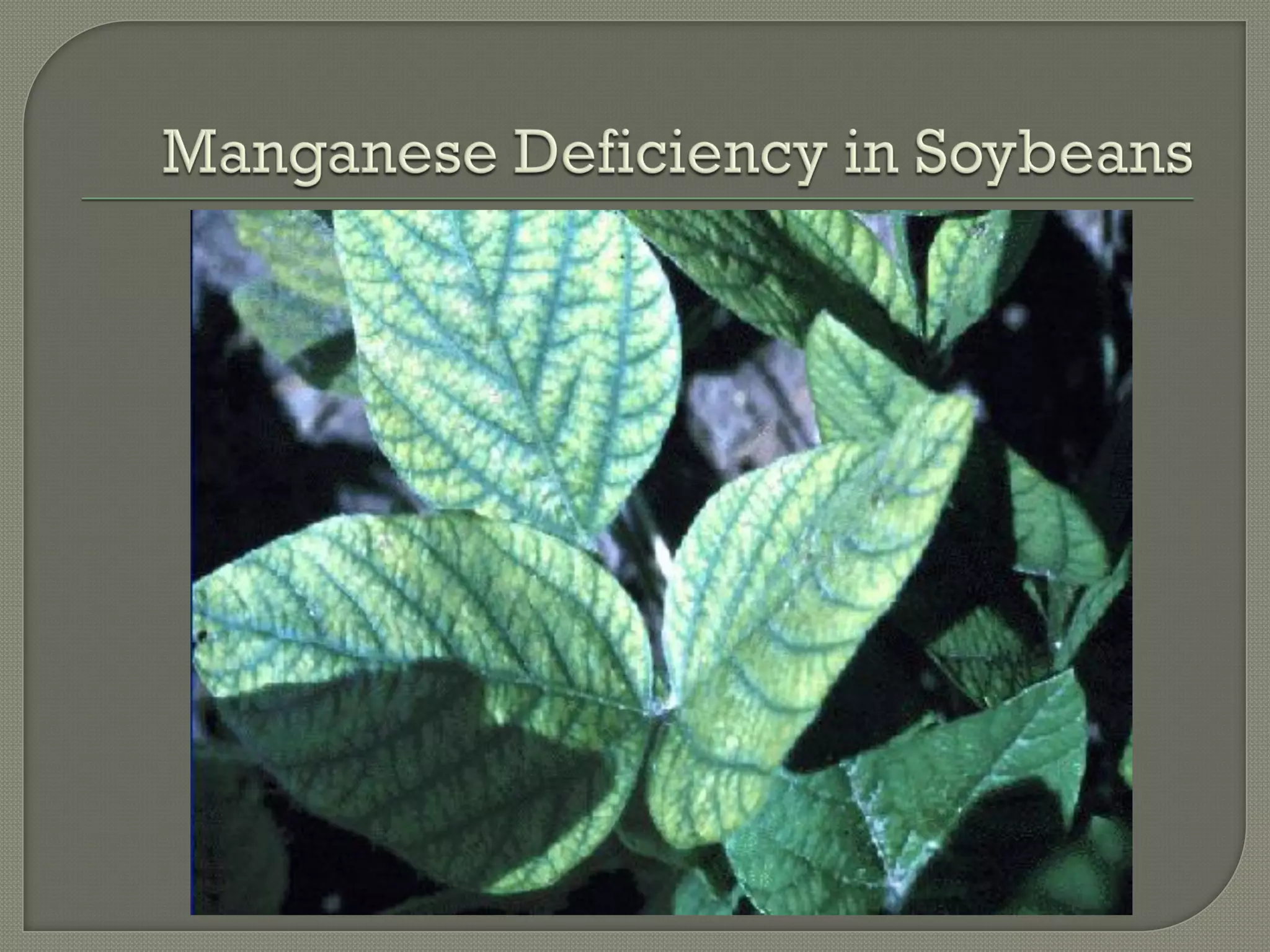
   Soybeans, unlike corn, has a fairly wide window
    (20 days) for micronutrient remediation after
    glyphosate without irreversible yield loss, but
    overall requirement for most RR crops is from 10
    to 50% higher because of compromised nutrient
    efficiency by the presence of the glyphosate-
    resistant gene. The glyphosate impact is in
    addition to this.
   How much evaluation of agrichemical effects on crop
    health and nutrition is currently done prior to
    product release?
   It is pretty good in some areas (residual chemical,
    TDN, protein) and missing in others (micronutrient
    content, etc.). RR crops are deregulated without any
    significant evaluation of overall impact of the
    glyphosate WITH the RR gene so environmental
    biocidal (Mn reducing organisms, nodulation, N-
    fixation, natural biological disease control organisms,
    pathogens, etc.) and micronutrient quality effects
    have been ignored.
 Doyou think any other herbicides or
 crop protection chemicals in major use
 today have significant side effects on
 crop nutrition and/or health?

 Sure, butthere aren't any other chemicals
 in the history of agriculture that have
 been as abused!
 Doyou think nutrient management has a
 significant role to play in combating
 soybean rust?
 Yes as part of the over-all management. We
 generally discounted the benefits of the Mn,
 Zn, or Cu in fungicides as micronutrients
 because we focused on disease control and
 thought primarily of the pathogen without
 full consideration of impact of those
 chemicals on plant resistance.

Don Huber interview

  • 1.
    Emeritus Professor ofPlant Pathology at Purdue University Ph.D., Michigan State University, Plant Pathology
  • 2.
    How long have you been a research scientist and if applicable what are some other agriculture related jobs you have held in your career?  Fifty one years. Plant Pathologist, International agriculture consultant on cultural and biological disease control (new lands development and cultivation), civil defense response to nuclear attack, agricultural bioterrorism consultant, biological warfare specialist (COLONEL (Retired) US Army).
  • 3.
     Did you grow up on a farm?  Grew up on dairy, grain, cotton, and citrus farms. College was stimulated by a Union Pacific Railroad scholarship ($50.00 = two semesters tuition to supplement my digging graves for room and board). The need for a job-additional income for books, etc. landed me in the Plant Pathology department at the University of Idaho and my desire for graduate school and research was fostered from the interactions there.
  • 4.
    Do you feel like you spend enough time on farms observing real problems (and interacting with farmers) to do research that is well grounded in practicality?  Definitely worked at problem solving. My first question as an undergraduate research project was to understand how crop sequence/rotation affected soilborne diseases (this question carried me through the next 50 years of research in one form or another- nutrient availability, form of nitrogen, microbial ecology, biological control, nutrient-disease glyphosate interactions, etc.).
  • 5.
     What arethe professional responsibilities of your current job? I am now retired (Sept. 2006) from Purdue, but very active consulting in the US, involved in international projects on four continents, and still have about 400 research field plots developing basipetally translocated micronutrients (and Ca, Mg) for disease control as well as to improve crop quality and storability (potatoes, etc.).
  • 6.
     Areyou optimisticabout the capacity for world agriculture to produce enough food/fiber/fuel in upcoming decades while reducing environmental impacts?  Noproblem if the politicians will keep out of it!!!!
  • 7.
    How serious are the current environmental impacts of agriculture in the US?  The glyphosate non-target effects are very serious from a nutritional standpoint and the intensity is growing. This will have to be addressed soon and alternative approaches for weed control to minimize this toxic (biologically) chemicals impact will need to be developed. Although environmental stewardship is always appropriate, we also need to recognize the tremendous progress that has been made in the last few decades. A strong economy and growing population have permitted us to do many things not otherwise possible because of the ability to spread the burden of some environmental programs across more people to pick up the tab.
  • 8.
    How has soil fertility research (e.g., funding, objectives, technology) changed during your career?  Dramatically! The virtual loss of the land grant formula funding has channeled most of the resource money into political mandates rather than having the problem solving research done on a dispersed basis by numerous researchers who could address the unique aspects of their environment and share a broad spectrum of ideas. New tools and techniques are especially powerful (XANES, XRD, etc. in my area of nutrient-disease interactions).
  • 9.
     What current research related to soil fertility (other than your own) do you think is most interesting or most promising?  Micronutrient efficiency, over-all nutrient efficiency approaches, genetic improvement of nutritional quality (Fe, Zn, protein, Cu, etc.).
  • 10.
     Doyou thinkcurrent environmental regulations have an adequate scientific base?  No! Especially nitrate in water!
  • 11.
    How did you become interested in glyphosate effects on micronutrient nutrition?  Observing the continual increase in soilborne diseases (take-all, Corynespora root rot, potato scab, Fusarium diseases) that we had established a strong relationship with for certain micronutrients and the change in environmental criteria that we used to consider "cardinal" conditions for disease severity (head scab). Glyphosate is a strong metal chelator and biocide in the soil from root exudates. Residual effects on micronutrient availability, uptake and translocation are now becoming well documented.
  • 13.
     On what percentage of RR soybean acreage do you think it would be cost effective apply additional micronutrients?  About 30 % of the current acreage; in five years it will be about 55 %. Also for corn with an increasing acreage of RR corn needing more K also.
  • 14.
    Are there any good general rules about when additional micronutrient management is likely to be cost effective for RR soybeans?   Soybeans, unlike corn, has a fairly wide window (20 days) for micronutrient remediation after glyphosate without irreversible yield loss, but overall requirement for most RR crops is from 10 to 50% higher because of compromised nutrient efficiency by the presence of the glyphosate- resistant gene. The glyphosate impact is in addition to this.
  • 15.
    How much evaluation of agrichemical effects on crop health and nutrition is currently done prior to product release?  It is pretty good in some areas (residual chemical, TDN, protein) and missing in others (micronutrient content, etc.). RR crops are deregulated without any significant evaluation of overall impact of the glyphosate WITH the RR gene so environmental biocidal (Mn reducing organisms, nodulation, N- fixation, natural biological disease control organisms, pathogens, etc.) and micronutrient quality effects have been ignored.
  • 16.
     Doyou thinkany other herbicides or crop protection chemicals in major use today have significant side effects on crop nutrition and/or health?  Sure, butthere aren't any other chemicals in the history of agriculture that have been as abused!
  • 17.
     Doyou thinknutrient management has a significant role to play in combating soybean rust?  Yes as part of the over-all management. We generally discounted the benefits of the Mn, Zn, or Cu in fungicides as micronutrients because we focused on disease control and thought primarily of the pathogen without full consideration of impact of those chemicals on plant resistance.