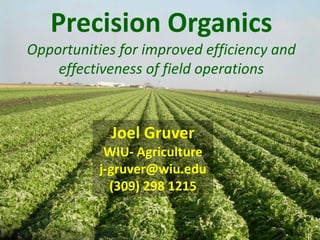
Precision Organics
Opportunities for improved efficiency and
    effectiveness of field operations


            Joel Gruver
            WIU- Agriculture
           j-gruver@wiu.edu
             (309) 298 1215
WIU/Allison Farm Field Day


I am not an ag engineer
      or a techie
PRECISION


    Currently only available upon request
         Will soon be downloadable
               from our website
http://www.wiu.edu/cbt/agriculture/farms/organic/
High tech precision & old school attention to detail
Some larger-scale organic
  grain farmers like Lynn
 Brakke are using a lot of
   precision technology
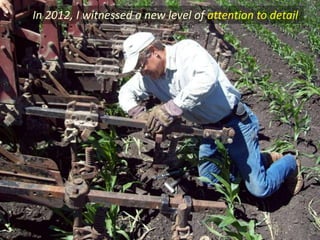
In 2012, I witnessed a new level of attention to detail
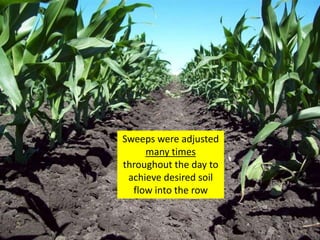
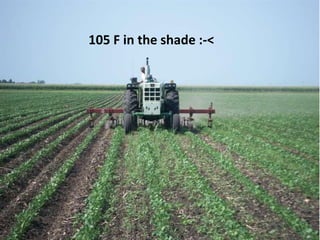
Sweeps were adjusted
     many times
throughout the day to
 achieve desired soil
  flow into the row
105 F in the shade :-<
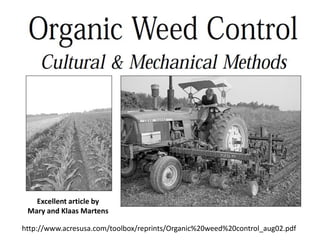
Excellent article by
 Mary and Klaas Martens

http://www.acresusa.com/toolbox/reprints/Organic%20weed%20control_aug02.pdf
Dad… just think
 what we can do
with RTK guidance
   on this farm!
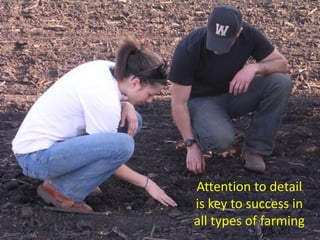
Attention to detail
is key to success in
all types of farming
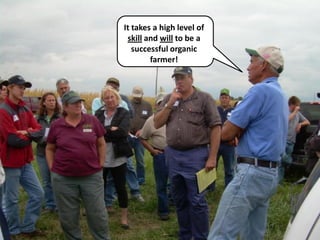
It takes a high level of
 skill and will to be a
   successful organic
        farmer!
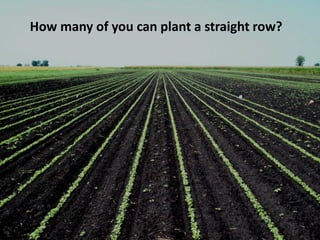
How many of you can plant a straight row?
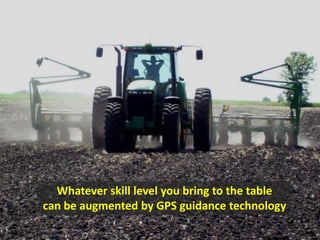
Whatever skill level you bring to the table
can be augmented by GPS guidance technology
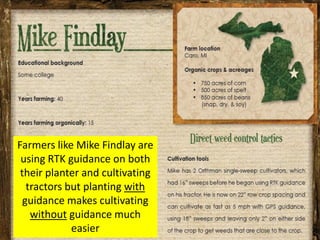
Farmers like Mike Findlay are
 using RTK guidance on both
 their planter and cultivating
   tractors but planting with
  guidance makes cultivating
    without guidance much
             easier
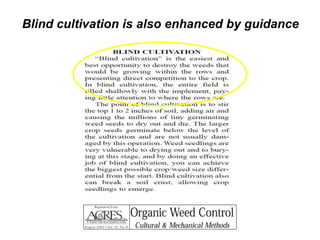
Blind cultivation is also enhanced by guidance
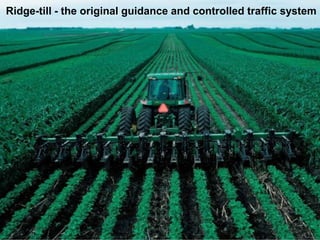
Ridge-till - the original guidance and controlled traffic system
http://www.slideshare.net/jbgruver/ridgetill-succesful-farming-jan-1986
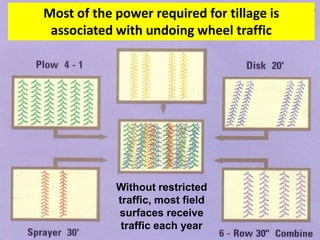
Most of the power required for tillage isAgriCanada
 associated with undoing wheel traffic


             Without restricted
             traffic, most field
             surfaces receive
              traffic each year
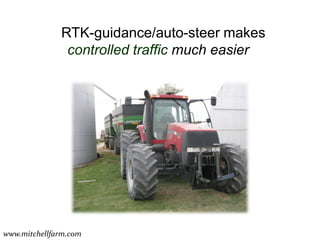
RTK-guidance/auto-steer makes
               controlled traffic much easier


www.mitchellfarm.com
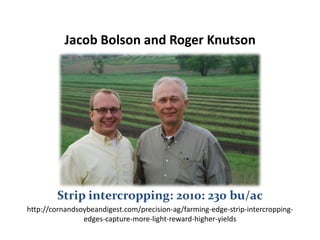
Jacob Bolson and Roger Knutson


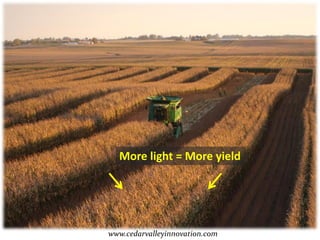
        Strip intercropping: 2010: 230 bu/ac
http://cornandsoybeandigest.com/precision-ag/farming-edge-strip-intercropping-
                edges-capture-more-light-reward-higher-yields
More light = More yield


www.cedarvalleyinnovation.com
8 ways that your equipment may get smarter

 1. Enhanced guidance and connectivity,
          implements guiding tractors
       and not the other way around
  2. Autonomous machines? Eventually
            3. Smarter telemetrics
               4. Better sensors
      5. Improve diesel fuel economy
      6. Emission regs drive change
                 7. Small is big
               8. Going electric
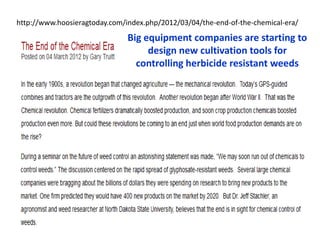
http://www.hoosieragtoday.com/index.php/2012/03/04/the-end-of-the-chemical-era/
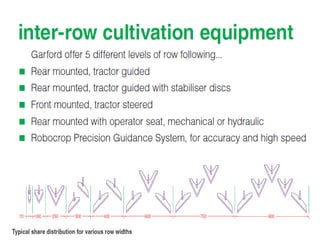
                               Big equipment companies are starting to
                                    design new cultivation tools for
                                 controlling herbicide resistant weeds
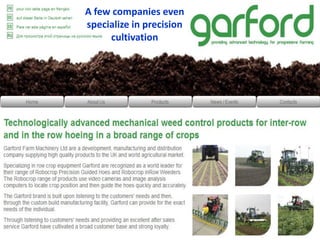
A few companies even
specialize in precision
     cultivation
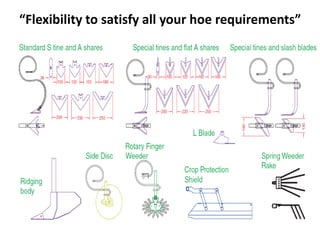
“Flexibility to satisfy all your hoe requirements”
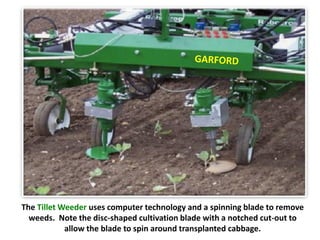
The Tillet Weeder uses computer technology and a spinning blade to remove
  weeds. Note the disc-shaped cultivation blade with a notched cut-out to
            allow the blade to spin around transplanted cabbage.
Garford dealer – Canadian company that sells into the Upper Midwest
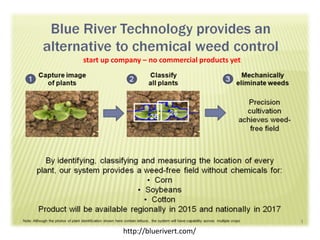
start up company – no commercial products yet


           http://bluerivert.com/
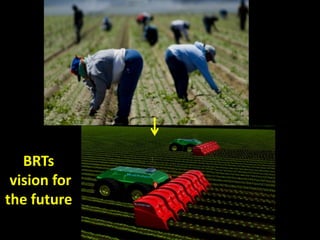
BRTs
 vision for
the future
The founding team is two brothers, one a
                              large-scale dairyman from NY State and the
                             other an engineer and environmental scientist
                              based in Minnesota. We are working closely
                             with a robotics team that has deep experience
                                 engineering high-quality products for
     start up company                agriculture and other markets.
no commercial products yet


                                      Robotic weeding 1 row at a time?????
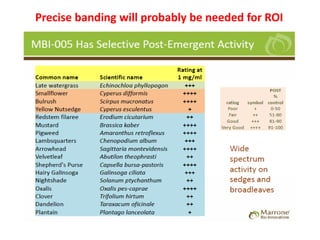
Precise banding will probably be needed for ROI
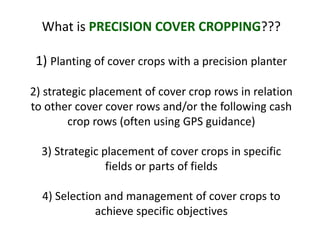
What is PRECISION COVER CROPPING???

 1) Planting of cover crops with a precision planter

2) strategic placement of cover crop rows in relation
to other cover cover rows and/or the following cash
        crop rows (often using GPS guidance)

  3) Strategic placement of cover crops in specific
                fields or parts of fields

  4) Selection and management of cover crops to
             achieve specific objectives
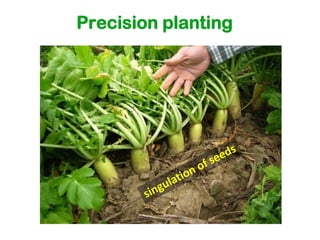
Precision planting
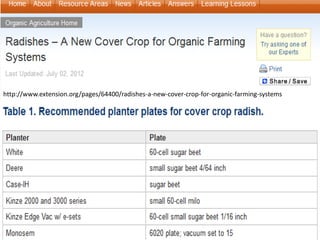
http://www.extension.org/pages/64400/radishes-a-new-cover-crop-for-organic-farming-systems
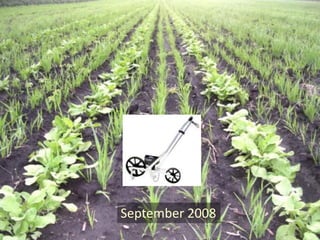
September 2008
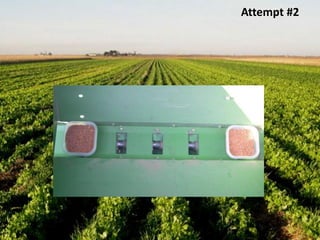
Attempt #2
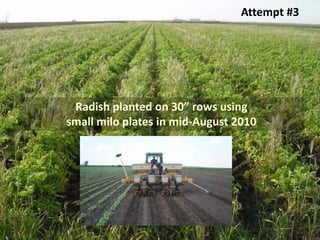
Attempt #3


 Radish planted on 30” rows using
small milo plates in mid-August 2010
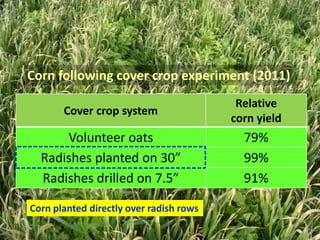
Corn following cover crop experiment (2011)
                                          Relative
       Cover crop system
                                         corn yield
      Volunteer oats                       79%
  Radishes planted on 30”                  99%
  Radishes drilled on 7.5”                 91%

Corn planted directly over radish rows
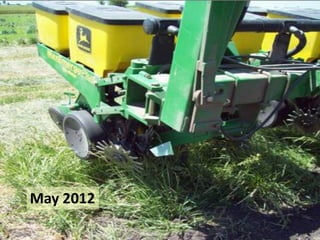
May 2012
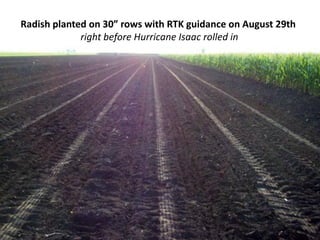
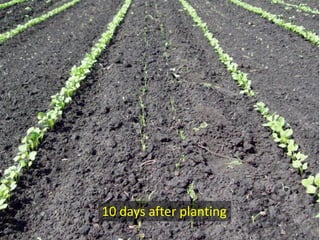
Radish planted on 30” rows with RTK guidance on August 29th
             right before Hurricane Isaac rolled in
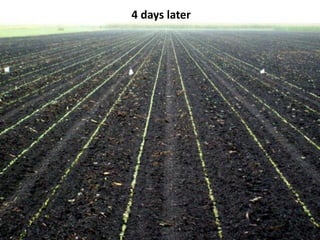
4 days later
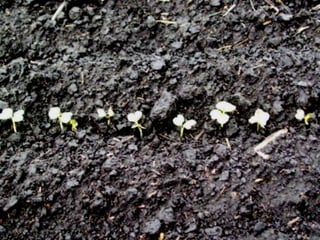
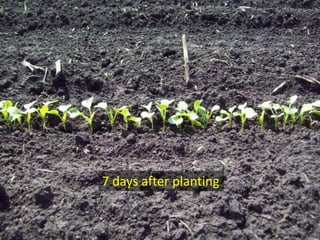
7 days after planting
10 days after planting
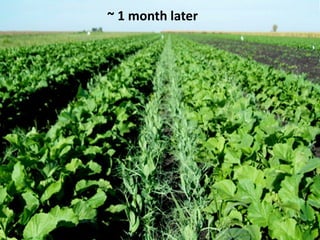
~ 1 month later
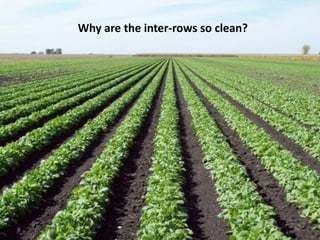
Why are the inter-rows so clean?
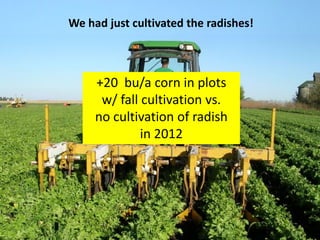
We had just cultivated the radishes!


     +20 bu/a corn in plots
      w/ fall cultivation vs.
     no cultivation of radish
              in 2012
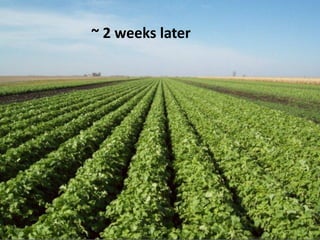
~ 2 weeks later
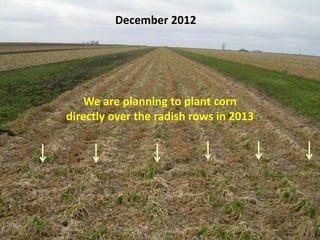
December 2012


    We are planning to plant corn
directly over the radish rows in 2013
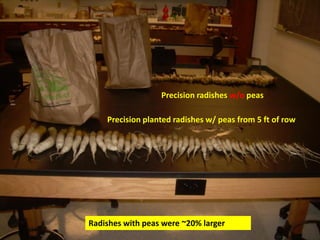
Precision radishes w/o peas

    Precision planted radishes w/ peas from 5 ft of row


Radishes with peas were ~20% larger
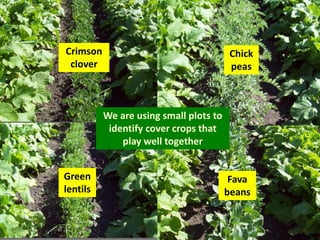
Crimson                                  Chick
 clover                                  peas


          We are using small plots to
           identify cover crops that
              play well together


Green                                    Fava
lentils                                 beans
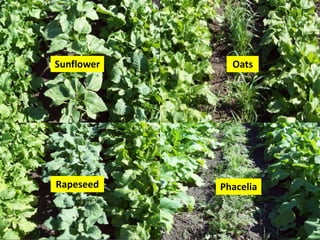
Sunflower     Oats


Rapeseed    Phacelia
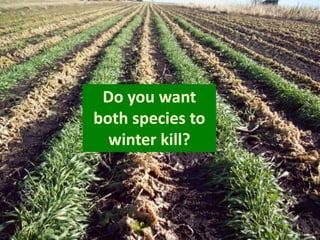
Do you want
both species to
  winter kill?
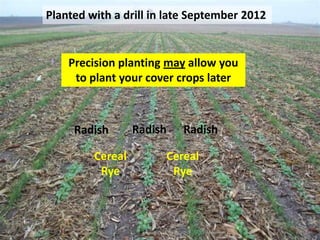
Planted with a drill in late September 2012


    Precision planting may allow you
     to plant your cover crops later


     Radish       Radish   Radish

         Cereal        Cereal
          Rye           Rye
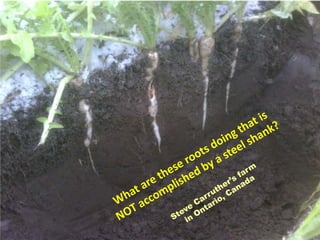
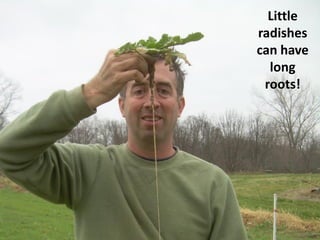
Little
radishes
can have
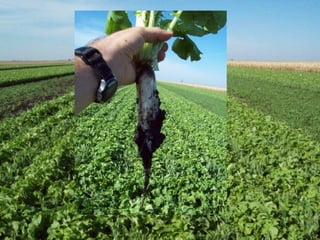
  long
 roots!
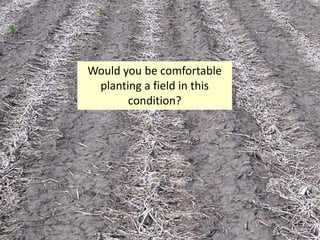
Would you be comfortable
 planting a field in this
       condition?
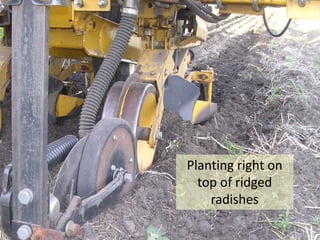
Planting right on
  top of ridged
    radishes
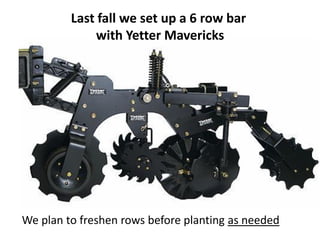
Last fall we set up a 6 row bar
             with Yetter Mavericks


We plan to freshen rows before planting as needed
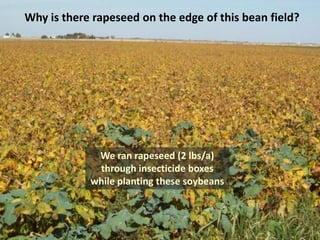
Why is there rapeseed on the edge of this bean field?


             We ran rapeseed (2 lbs/a)
             through insecticide boxes
            while planting these soybeans
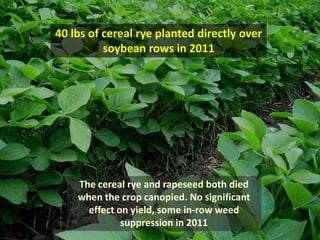
40 lbs of cereal rye planted directly over
          soybean rows in 2011


    The cereal rye and rapeseed both died
    when the crop canopied. No significant
      effect on yield, some in-row weed
              suppression in 2011
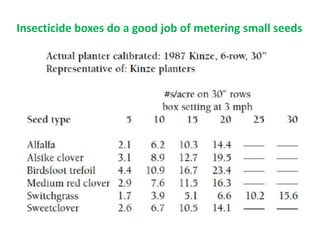
Insecticide boxes do a good job of metering small seeds
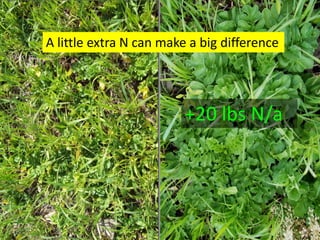
A little extra N can make a big difference


                         +20 lbs N/a
Triple S mix
Sunflowers, Soybeans & Sunnhemp
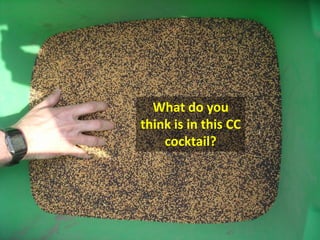
What do you
think is in this CC
    cocktail?
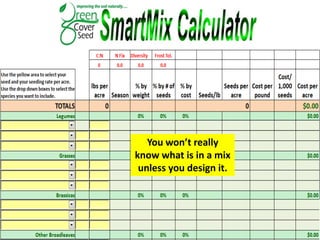
You won’t really
know what is in a mix
 unless you design it.
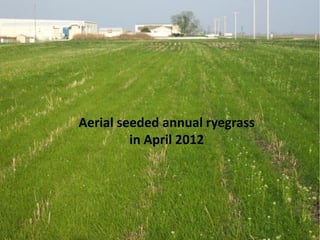
Aerial seeded annual ryegrass
         in April 2012
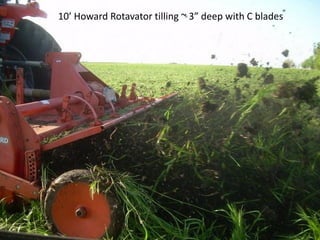
10’ Howard Rotavator tilling ~ 3” deep with C blades
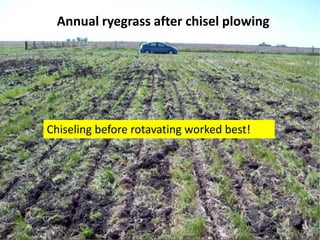
Annual ryegrass after chisel plowing


Chiseling before rotavating worked best!
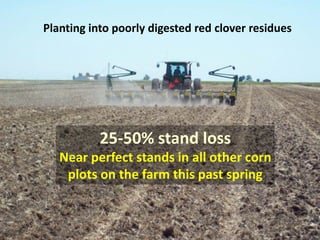
Planting into poorly digested red clover residues


           25-50% stand loss
   Near perfect stands in all other corn
    plots on the farm this past spring
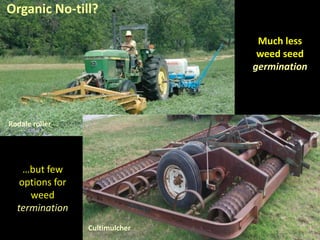
Organic No-till?

                                 Much less
                                 weed seed
                                germination


Rodale roller


    …but few
   options for
     weed
  termination
                 Cultimulcher
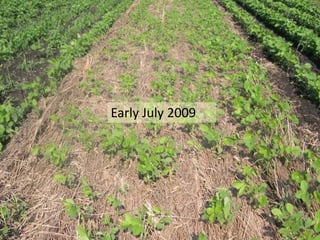
Early July 2009
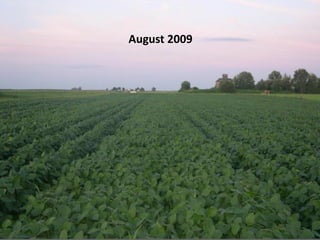
August 2009
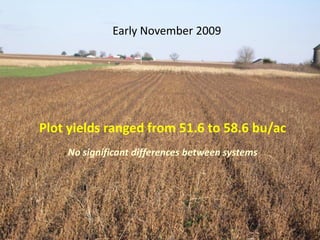
Early November 2009


Plot yields ranged from 51.6 to 58.6 bu/ac
    No significant differences between systems
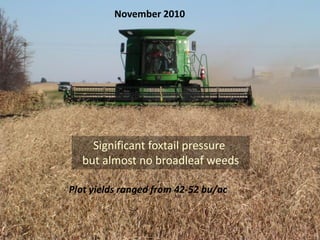
November 2010


    Significant foxtail pressure
  but almost no broadleaf weeds

Plot yields ranged from 42-52 bu/ac
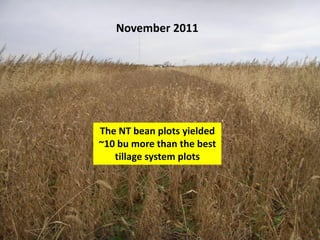
November 2011


The NT bean plots yielded
~10 bu more than the best
   tillage system plots
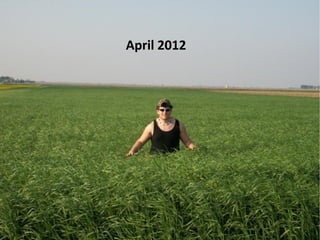
April 2012
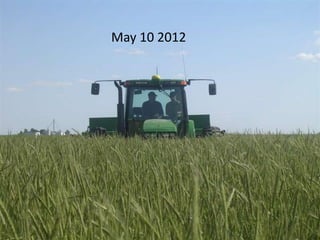
May 10 2012
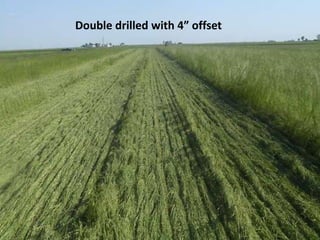
Double drilled with 4” offset
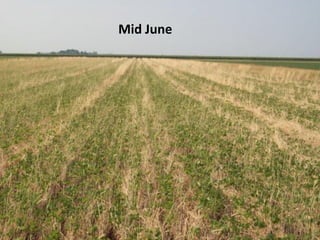
Mid June
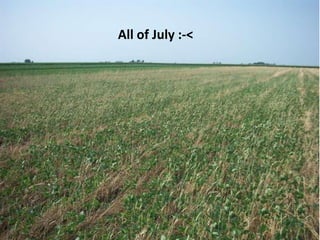
All of July :-<
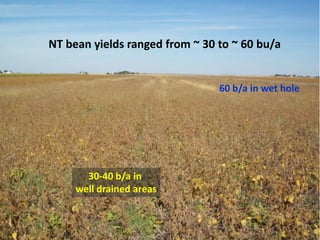
NT bean yields ranged from ~ 30 to ~ 60 bu/a


                                60 b/a in wet hole


       30-40 b/a in
     well drained areas
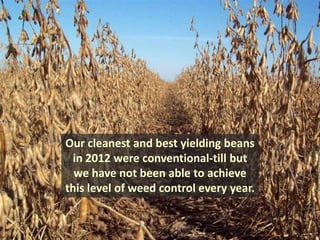
Our cleanest and best yielding beans
 in 2012 were conventional-till but
  we have not been able to achieve
this level of weed control every year.
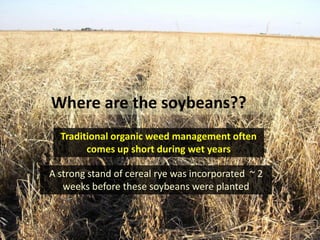
Where are the soybeans??
  Traditional organic weed management often
        comes up short during wet years

A strong stand of cereal rye was incorporated ~ 2
   weeks before these soybeans were planted
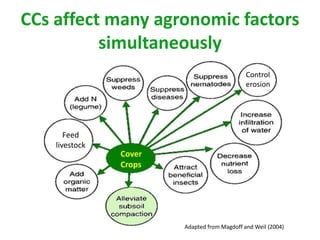
CCs affect many agronomic factors
          simultaneously
                                              Control
                                              erosion


       Feed
    livestock
                Cover
                Crops


                        Adapted from Magdoff and Weil (2004)
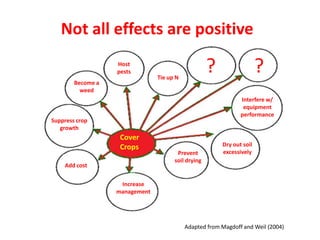
Not all effects are positive
                   Host
                   pests
                                Tie up N
                                                    ?                  ?
        Become a
          weed
                                                               Interfere w/
                                                                equipment
                                                               performance
Suppress crop
   growth
                    Cover
                    Crops                               Dry out soil
                                       Prevent          excessively
                                      soil drying
    Add cost


                    Increase
                   management


                                           Adapted from Magdoff and Weil (2004)
Greater precision in farming practices
     increases the likelihood of
         intended outcomes

  More positive and fewer negative effects
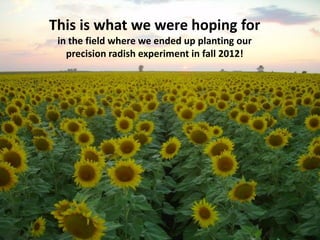
This is what we were hoping for
 in the field where we ended up planting our
   precision radish experiment in fall 2012!
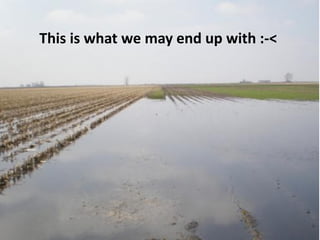
This is what we may end up with :-<

Precision Organics

  • 1.
    Precision Organics Opportunities forimproved efficiency and effectiveness of field operations Joel Gruver WIU- Agriculture j-gruver@wiu.edu (309) 298 1215
  • 2.
    WIU/Allison Farm FieldDay I am not an ag engineer or a techie
  • 3.
    PRECISION Currently only available upon request Will soon be downloadable from our website http://www.wiu.edu/cbt/agriculture/farms/organic/
  • 4.
    High tech precision& old school attention to detail
  • 5.
    Some larger-scale organic grain farmers like Lynn Brakke are using a lot of precision technology
  • 6.
    In 2012, Iwitnessed a new level of attention to detail
  • 7.
    Sweeps were adjusted many times throughout the day to achieve desired soil flow into the row
  • 9.
    105 F inthe shade :-<
  • 10.
    Excellent article by Mary and Klaas Martens http://www.acresusa.com/toolbox/reprints/Organic%20weed%20control_aug02.pdf
  • 11.
    Dad… just think what we can do with RTK guidance on this farm!
  • 12.
    Attention to detail iskey to success in all types of farming
  • 13.
    It takes ahigh level of skill and will to be a successful organic farmer!
  • 14.
    How many ofyou can plant a straight row?
  • 15.
    Whatever skill levelyou bring to the table can be augmented by GPS guidance technology
  • 16.
    Farmers like MikeFindlay are using RTK guidance on both their planter and cultivating tractors but planting with guidance makes cultivating without guidance much easier
  • 17.
    Blind cultivation isalso enhanced by guidance
  • 18.
    Ridge-till - theoriginal guidance and controlled traffic system
  • 19.
  • 20.
    Most of thepower required for tillage isAgriCanada associated with undoing wheel traffic Without restricted traffic, most field surfaces receive traffic each year
  • 21.
    RTK-guidance/auto-steer makes controlled traffic much easier www.mitchellfarm.com
  • 22.
    Jacob Bolson andRoger Knutson Strip intercropping: 2010: 230 bu/ac http://cornandsoybeandigest.com/precision-ag/farming-edge-strip-intercropping- edges-capture-more-light-reward-higher-yields
  • 23.
    More light =More yield www.cedarvalleyinnovation.com
  • 25.
    8 ways thatyour equipment may get smarter 1. Enhanced guidance and connectivity, implements guiding tractors and not the other way around 2. Autonomous machines? Eventually 3. Smarter telemetrics 4. Better sensors 5. Improve diesel fuel economy 6. Emission regs drive change 7. Small is big 8. Going electric
  • 26.
    http://www.hoosieragtoday.com/index.php/2012/03/04/the-end-of-the-chemical-era/ Big equipment companies are starting to design new cultivation tools for controlling herbicide resistant weeds
  • 27.
    A few companieseven specialize in precision cultivation
  • 28.
    “Flexibility to satisfyall your hoe requirements”
  • 30.
    The Tillet Weederuses computer technology and a spinning blade to remove weeds. Note the disc-shaped cultivation blade with a notched cut-out to allow the blade to spin around transplanted cabbage.
  • 31.
    Garford dealer –Canadian company that sells into the Upper Midwest
  • 32.
    start up company– no commercial products yet http://bluerivert.com/
  • 33.
  • 34.
    The founding teamis two brothers, one a large-scale dairyman from NY State and the other an engineer and environmental scientist based in Minnesota. We are working closely with a robotics team that has deep experience engineering high-quality products for start up company agriculture and other markets. no commercial products yet Robotic weeding 1 row at a time?????
  • 41.
    Precise banding willprobably be needed for ROI
  • 42.
    What is PRECISIONCOVER CROPPING??? 1) Planting of cover crops with a precision planter 2) strategic placement of cover crop rows in relation to other cover cover rows and/or the following cash crop rows (often using GPS guidance) 3) Strategic placement of cover crops in specific fields or parts of fields 4) Selection and management of cover crops to achieve specific objectives
  • 43.
  • 44.
  • 45.
  • 46.
  • 47.
    Attempt #3 Radishplanted on 30” rows using small milo plates in mid-August 2010
  • 48.
    Corn following covercrop experiment (2011) Relative Cover crop system corn yield Volunteer oats 79% Radishes planted on 30” 99% Radishes drilled on 7.5” 91% Corn planted directly over radish rows
  • 49.
  • 50.
    Radish planted on30” rows with RTK guidance on August 29th right before Hurricane Isaac rolled in
  • 51.
  • 53.
    7 days afterplanting
  • 54.
    10 days afterplanting
  • 55.
    ~ 1 monthlater
  • 56.
    Why are theinter-rows so clean?
  • 57.
    We had justcultivated the radishes! +20 bu/a corn in plots w/ fall cultivation vs. no cultivation of radish in 2012
  • 58.
    ~ 2 weekslater
  • 60.
    December 2012 We are planning to plant corn directly over the radish rows in 2013
  • 61.
    Precision radishes w/opeas Precision planted radishes w/ peas from 5 ft of row Radishes with peas were ~20% larger
  • 62.
    Crimson Chick clover peas We are using small plots to identify cover crops that play well together Green Fava lentils beans
  • 63.
    Sunflower Oats Rapeseed Phacelia
  • 64.
    Do you want bothspecies to winter kill?
  • 67.
    Planted with adrill in late September 2012 Precision planting may allow you to plant your cover crops later Radish Radish Radish Cereal Cereal Rye Rye
  • 68.
  • 70.
    Would you becomfortable planting a field in this condition?
  • 71.
    Planting right on top of ridged radishes
  • 72.
    Last fall weset up a 6 row bar with Yetter Mavericks We plan to freshen rows before planting as needed
  • 73.
    Why is thererapeseed on the edge of this bean field? We ran rapeseed (2 lbs/a) through insecticide boxes while planting these soybeans
  • 74.
    40 lbs ofcereal rye planted directly over soybean rows in 2011 The cereal rye and rapeseed both died when the crop canopied. No significant effect on yield, some in-row weed suppression in 2011
  • 75.
    Insecticide boxes doa good job of metering small seeds
  • 76.
    A little extraN can make a big difference +20 lbs N/a
  • 77.
    Triple S mix Sunflowers,Soybeans & Sunnhemp
  • 78.
    What do you thinkis in this CC cocktail?
  • 79.
    You won’t really knowwhat is in a mix unless you design it.
  • 80.
    Aerial seeded annualryegrass in April 2012
  • 81.
    10’ Howard Rotavatortilling ~ 3” deep with C blades
  • 82.
    Annual ryegrass afterchisel plowing Chiseling before rotavating worked best!
  • 83.
    Planting into poorlydigested red clover residues 25-50% stand loss Near perfect stands in all other corn plots on the farm this past spring
  • 84.
    Organic No-till? Much less weed seed germination Rodale roller …but few options for weed termination Cultimulcher
  • 85.
  • 86.
  • 87.
    Early November 2009 Plotyields ranged from 51.6 to 58.6 bu/ac No significant differences between systems
  • 88.
    November 2010 Significant foxtail pressure but almost no broadleaf weeds Plot yields ranged from 42-52 bu/ac
  • 89.
    November 2011 The NTbean plots yielded ~10 bu more than the best tillage system plots
  • 90.
  • 91.
  • 92.
  • 93.
  • 94.
  • 95.
    NT bean yieldsranged from ~ 30 to ~ 60 bu/a 60 b/a in wet hole 30-40 b/a in well drained areas
  • 96.
    Our cleanest andbest yielding beans in 2012 were conventional-till but we have not been able to achieve this level of weed control every year.
  • 97.
    Where are thesoybeans?? Traditional organic weed management often comes up short during wet years A strong stand of cereal rye was incorporated ~ 2 weeks before these soybeans were planted
  • 98.
    CCs affect manyagronomic factors simultaneously Control erosion Feed livestock Cover Crops Adapted from Magdoff and Weil (2004)
  • 99.
    Not all effectsare positive Host pests Tie up N ? ? Become a weed Interfere w/ equipment performance Suppress crop growth Cover Crops Dry out soil Prevent excessively soil drying Add cost Increase management Adapted from Magdoff and Weil (2004)
  • 100.
    Greater precision infarming practices increases the likelihood of intended outcomes More positive and fewer negative effects
  • 101.
    This is whatwe were hoping for in the field where we ended up planting our precision radish experiment in fall 2012!
  • 102.
    This is whatwe may end up with :-<