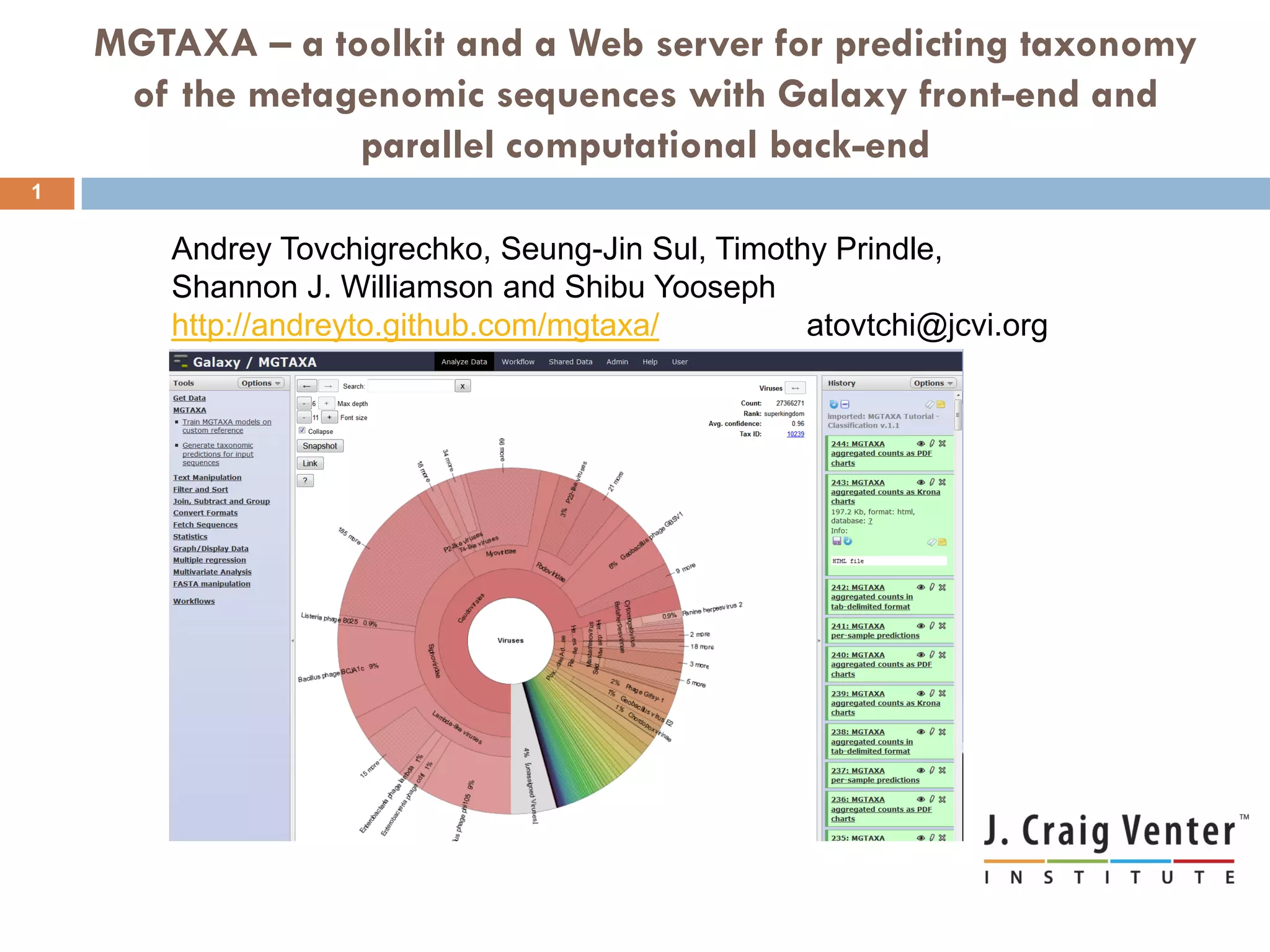
MGTAXA – a toolkit and a Web server for predicting taxonomy
     of the metagenomic sequences with Galaxy front-end and
                 parallel computational back-end
1

        Andrey Tovchigrechko, Seung-Jin Sul, Timothy Prindle,
        Shannon J. Williamson and Shibu Yooseph
        http://andreyto.github.com/mgtaxa/         atovtchi@jcvi.org
MGTAXA Components
2


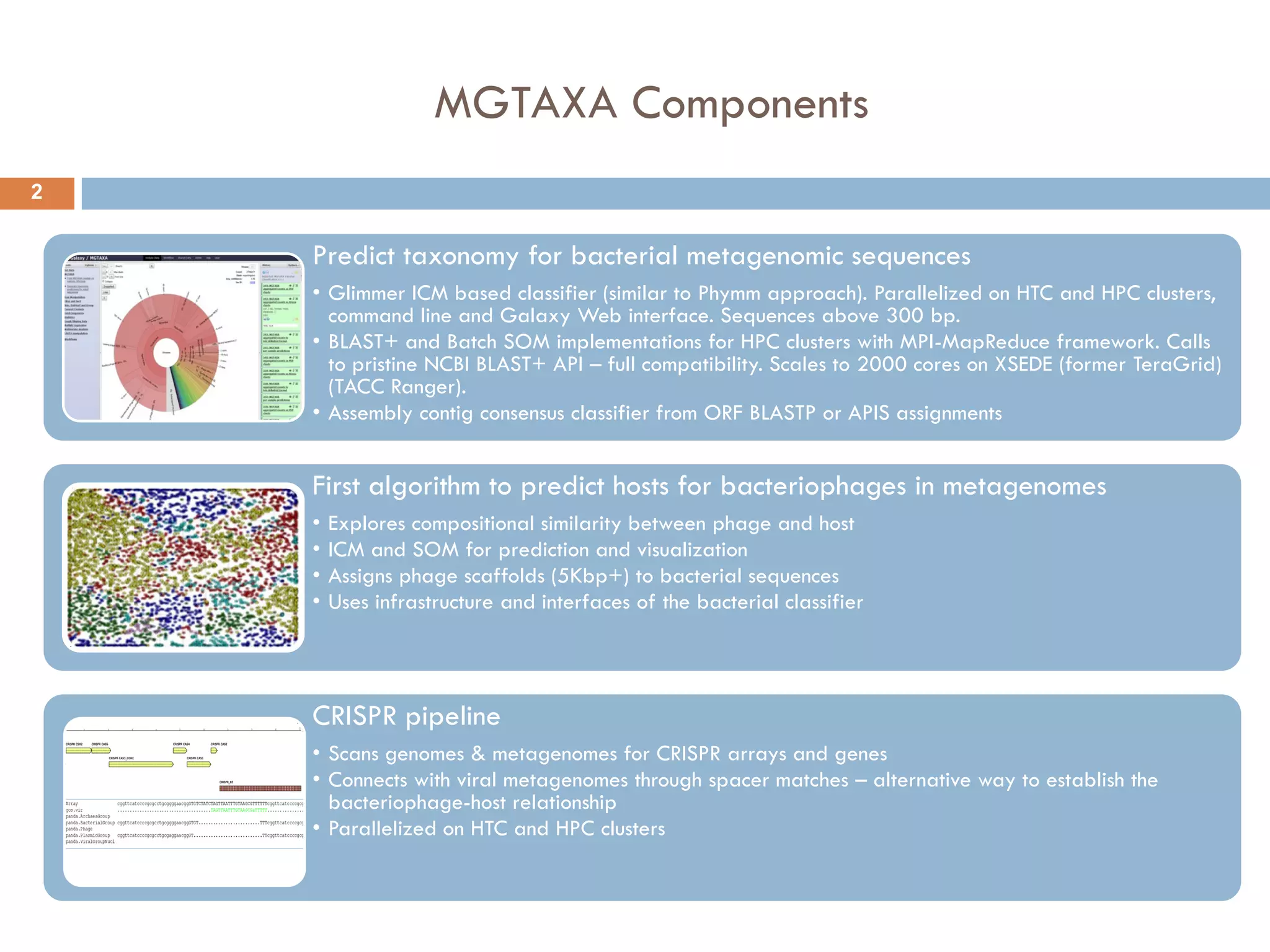
    Predict taxonomy for bacterial metagenomic sequences
    • Glimmer ICM based classifier (similar to Phymm approach). Parallelized on HTC and HPC clusters,
      command line and Galaxy Web interface. Sequences above 300 bp.
    • BLAST+ and Batch SOM implementations for HPC clusters with MPI-MapReduce framework. Calls
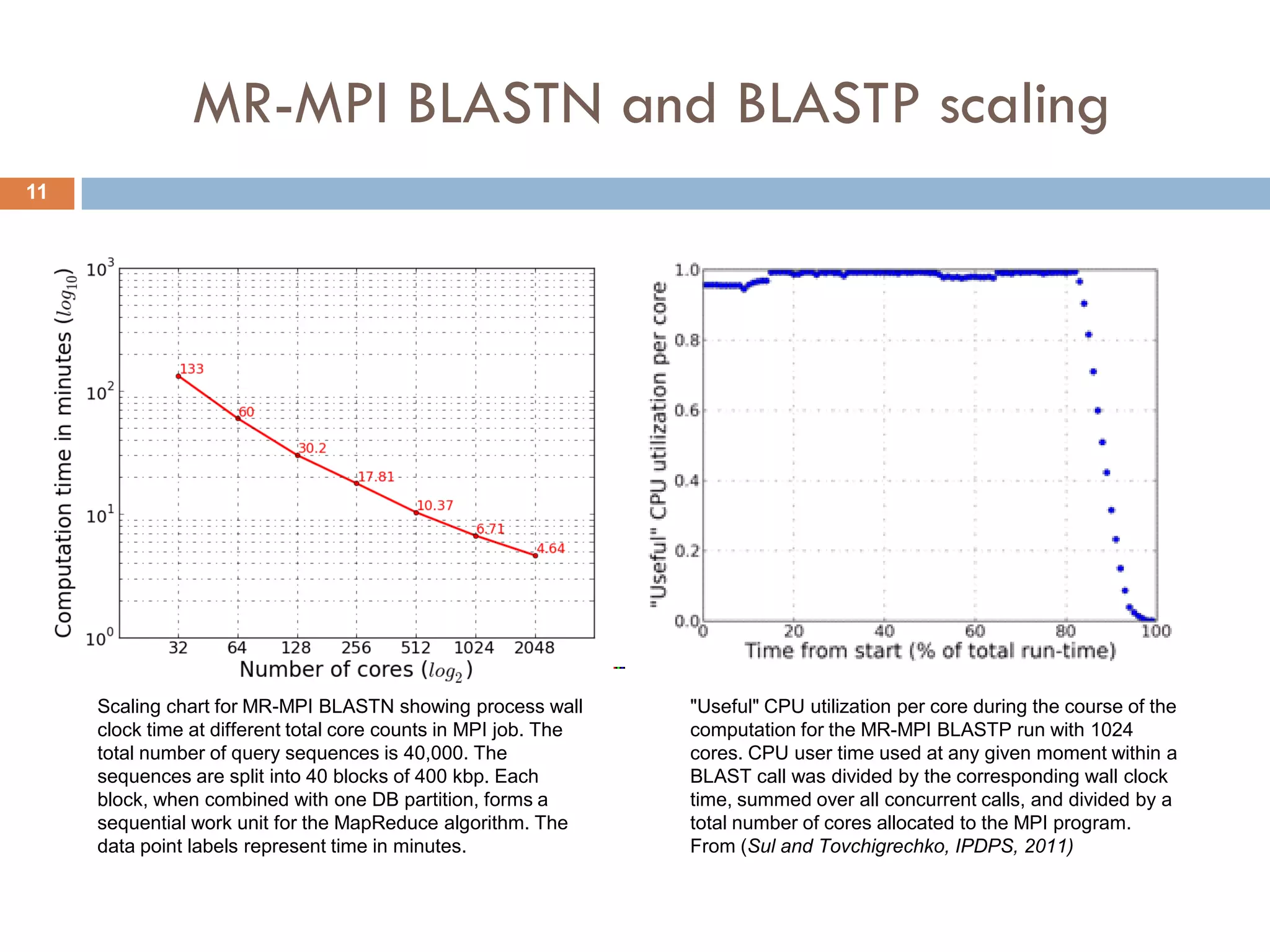
      to pristine NCBI BLAST+ API – full compatibility. Scales to 2000 cores on XSEDE (former TeraGrid)
      (TACC Ranger).
    • Assembly contig consensus classifier from ORF BLASTP or APIS assignments


    First algorithm to predict hosts for bacteriophages in metagenomes
    •   Explores compositional similarity between phage and host
    •   ICM and SOM for prediction and visualization
    •   Assigns phage scaffolds (5Kbp+) to bacterial sequences
    •   Uses infrastructure and interfaces of the bacterial classifier


    CRISPR pipeline
    • Scans genomes & metagenomes for CRISPR arrays and genes
    • Connects with viral metagenomes through spacer matches – alternative way to establish the
      bacteriophage-host relationship
    • Parallelized on HTC and HPC clusters
ICMs for more sensitive compositional models with less
    dependency on the length of training sequence
3

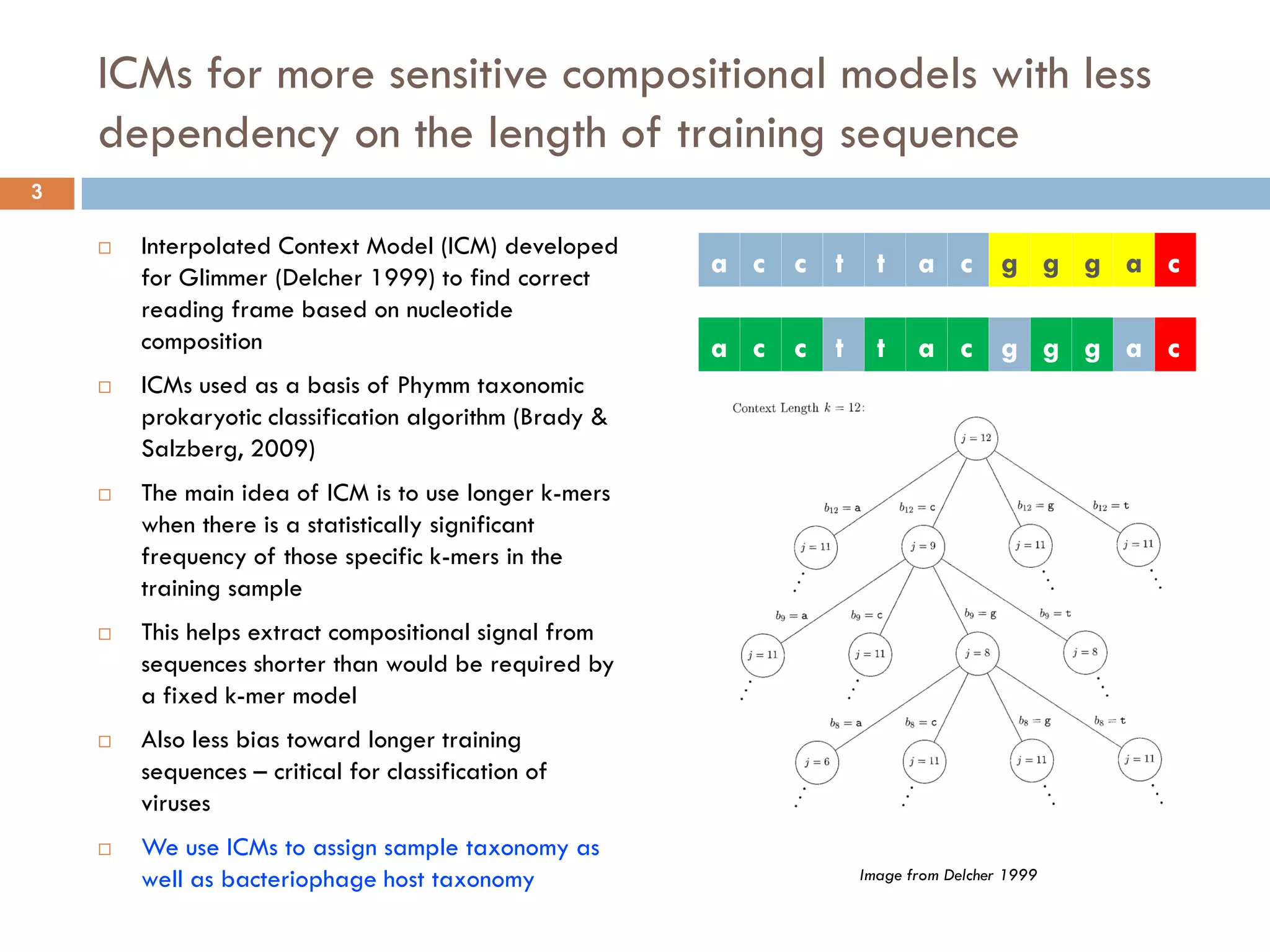
       Interpolated Context Model (ICM) developed
        for Glimmer (Delcher 1999) to find correct      a c c t     t    a c g g g a c
        reading frame based on nucleotide
        composition                                     a c c t     t    a c g g g a c
       ICMs used as a basis of Phymm taxonomic
        prokaryotic classification algorithm (Brady &
        Salzberg, 2009)
       The main idea of ICM is to use longer k-mers
        when there is a statistically significant
        frequency of those specific k-mers in the
        training sample
       This helps extract compositional signal from
        sequences shorter than would be required by
        a fixed k-mer model
       Also less bias toward longer training
        sequences – critical for classification of
        viruses
       We use ICMs to assign sample taxonomy as
        well as bacteriophage host taxonomy                       Image from Delcher 1999
How predicting the viral host taxonomy relates to
            predicting the bacterial taxonomy
4

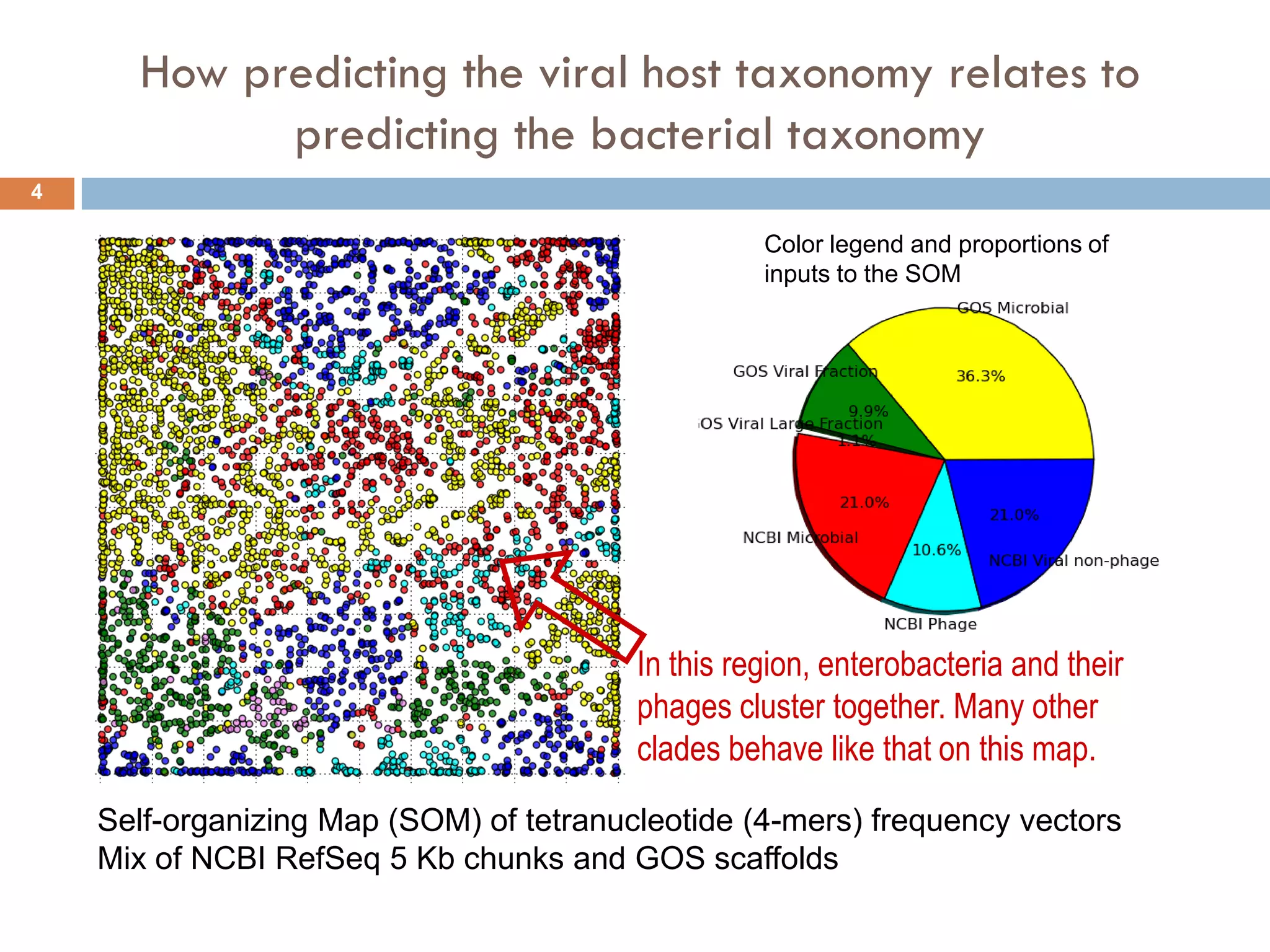
                                                   Color legend and proportions of
                                                   inputs to the SOM


                                         In this region, enterobacteria and their
                                         phages cluster together. Many other
                                         clades behave like that on this map.
    Self-organizing Map (SOM) of tetranucleotide (4-mers) frequency vectors
    Mix of NCBI RefSeq 5 Kb chunks and GOS scaffolds
Phage host prediction algorithm
5

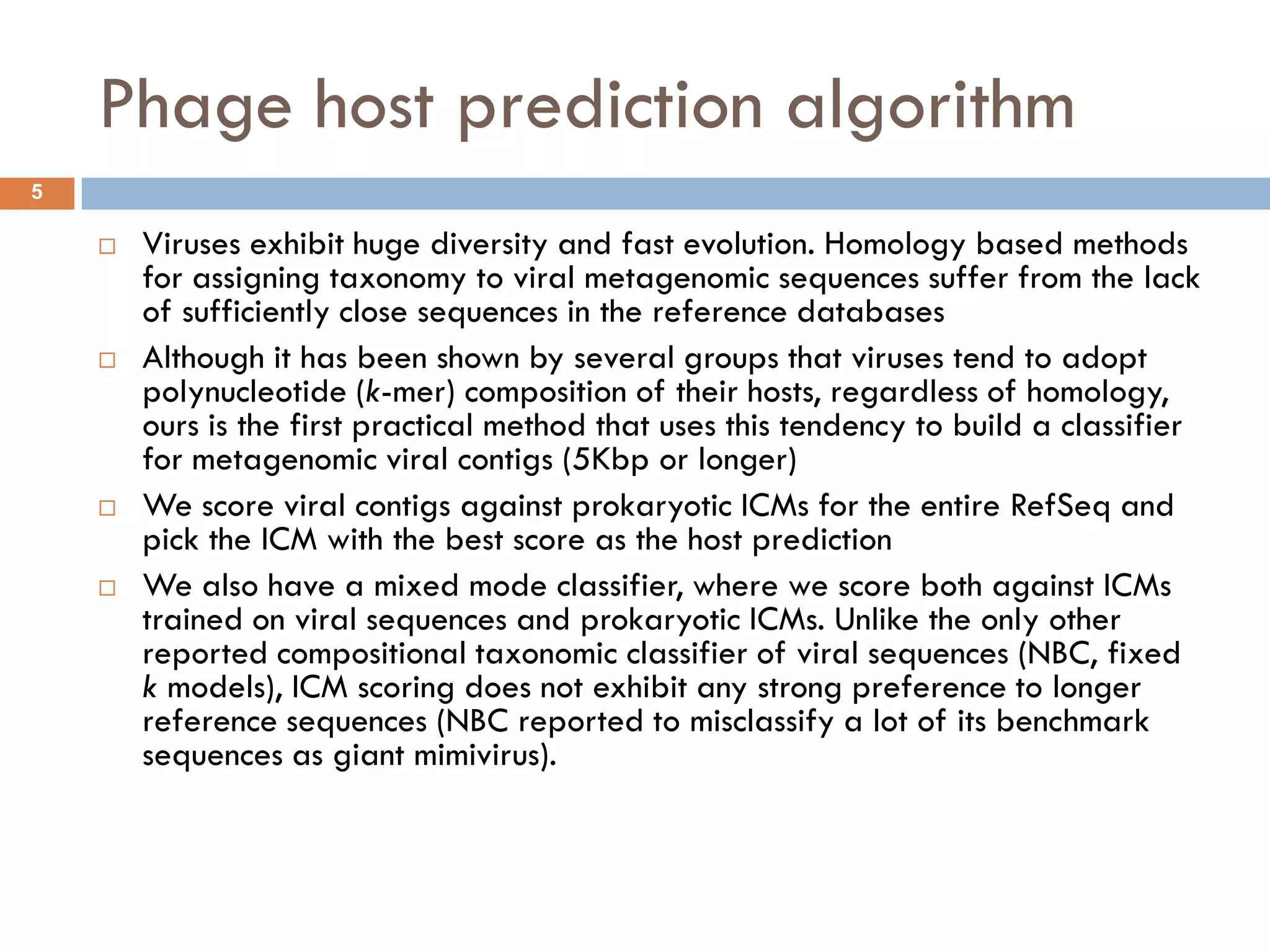
       Viruses exhibit huge diversity and fast evolution. Homology based methods
        for assigning taxonomy to viral metagenomic sequences suffer from the lack
        of sufficiently close sequences in the reference databases
       Although it has been shown by several groups that viruses tend to adopt
        polynucleotide (k-mer) composition of their hosts, regardless of homology,
        ours is the first practical method that uses this tendency to build a classifier
        for metagenomic viral contigs (5Kbp or longer)
       We score viral contigs against prokaryotic ICMs for the entire RefSeq and
        pick the ICM with the best score as the host prediction
       We also have a mixed mode classifier, where we score both against ICMs
        trained on viral sequences and prokaryotic ICMs. Unlike the only other
        reported compositional taxonomic classifier of viral sequences (NBC, fixed
        k models), ICM scoring does not exhibit any strong preference to longer
        reference sequences (NBC reported to misclassify a lot of its benchmark
        sequences as giant mimivirus).
Phage host prediction benchmarking
6
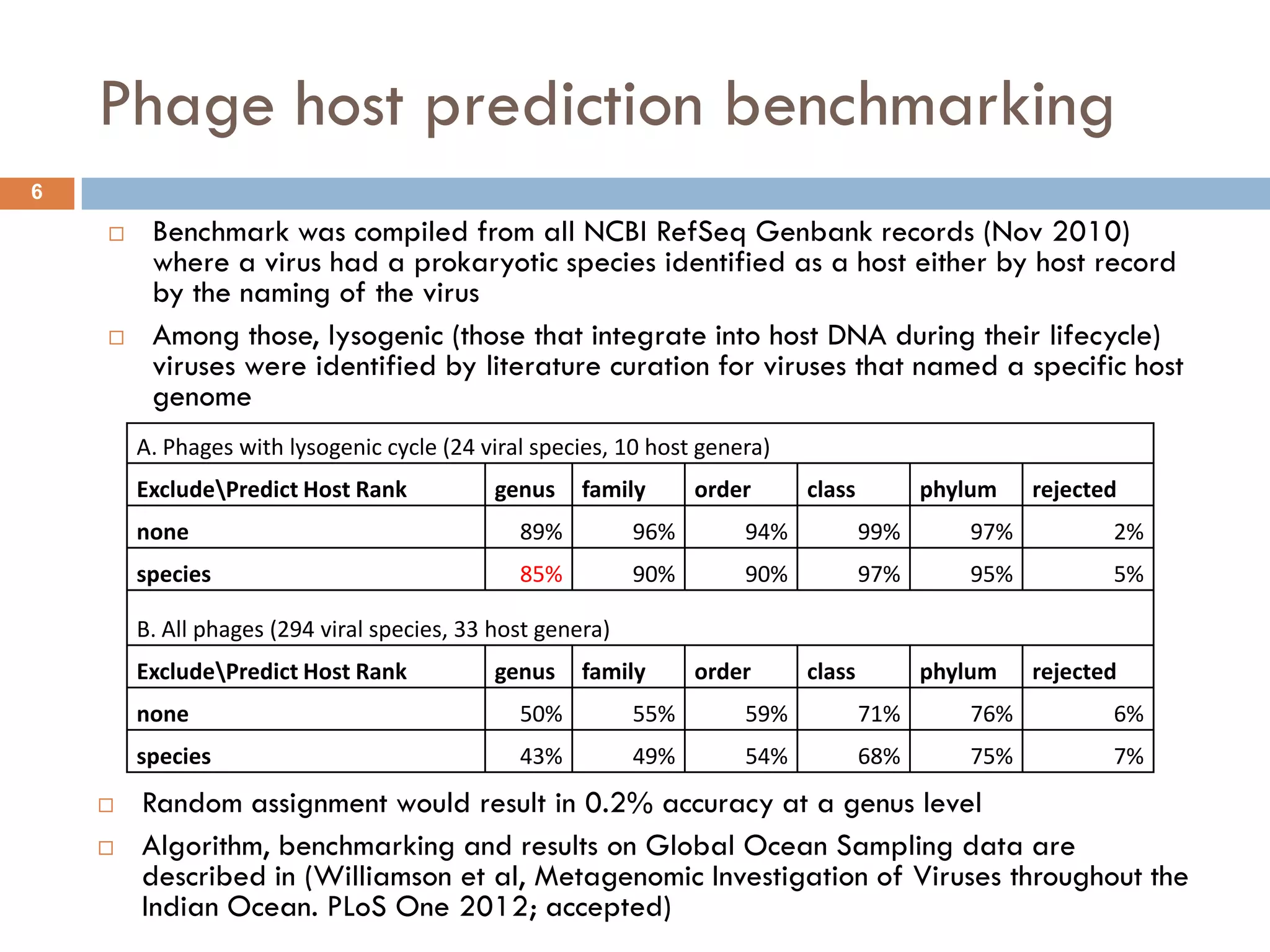
        Benchmark was compiled from all NCBI RefSeq Genbank records (Nov 2010)
         where a virus had a prokaryotic species identified as a host either by host record
         by the naming of the virus
        Among those, lysogenic (those that integrate into host DNA during their lifecycle)
         viruses were identified by literature curation for viruses that named a specific host
         genome
        A. Phages with lysogenic cycle (24 viral species, 10 host genera)
        ExcludePredict Host Rank            genus    family      order     class         phylum   rejected
        none                                   89%          96%       94%           99%      97%          2%
        species                                85%          90%       90%           97%      95%          5%

        B. All phages (294 viral species, 33 host genera)
        ExcludePredict Host Rank            genus    family      order     class         phylum   rejected
        none                                   50%          55%       59%           71%      76%          6%
        species                                43%          49%       54%           68%      75%          7%
       Random assignment would result in 0.2% accuracy at a genus level
       Algorithm, benchmarking and results on Global Ocean Sampling data are
        described in (Williamson et al, Metagenomic Investigation of Viruses throughout the
        Indian Ocean. PLoS One 2012; accepted)
Parallelization approach
7

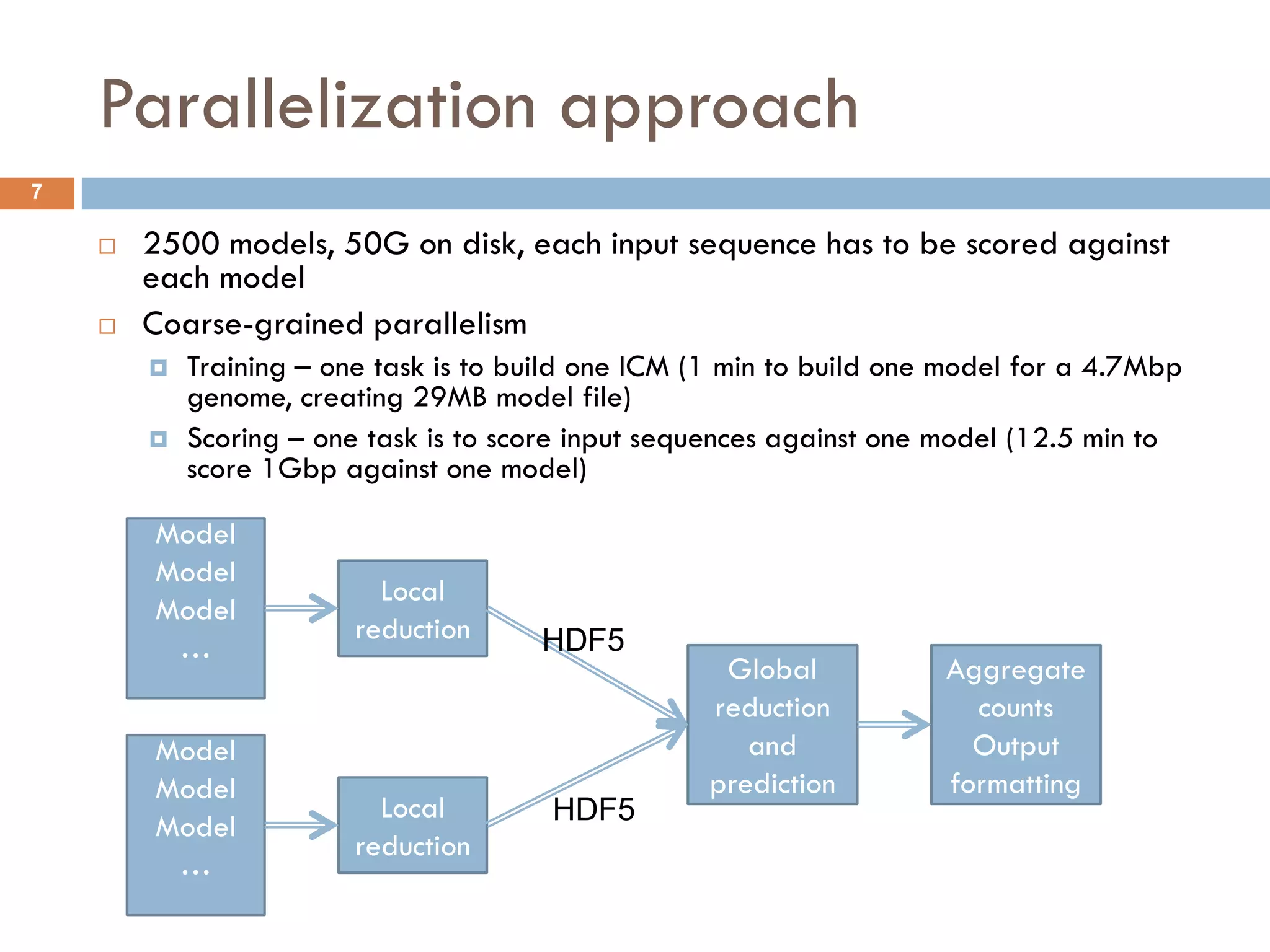
       2500 models, 50G on disk, each input sequence has to be scored against
        each model
       Coarse-grained parallelism
           Training – one task is to build one ICM (1 min to build one model for a 4.7Mbp
            genome, creating 29MB model file)
           Scoring – one task is to score input sequences against one model (12.5 min to
            score 1Gbp against one model)

        Model
        Model
                           Local
        Model
                         reduction     HDF5
         …
                                                     Global            Aggregate
                                                    reduction            counts
        Model                                          and               Output
        Model                                       prediction         formatting
                           Local        HDF5
        Model
                         reduction
         …
Backends for parallel execution
8

       How MGTAXA workflows (DAGs) will be executed is selected at run-time by a command-line
        switch: mgt-classifier –run-mode batchDep –batch-backend makeflow [ other options … ]
       Implemented choices:
           Serially in one process. No cluster or external workflow support is needed
           Submit itself as a DAG of SGE jobs using qsub job dependency option
           Generate a “make file” for the Makeflow workflow execution engine. Then run makeflow on it with a
            choice of its own back-ends:
               Parallel multi-processing on a single node (normally N processes == N cores)
               Submitting multiple SGE jobs while satisfying the dependencies defined by the DAG
               Glide-in mechanism (“dual-level scheduling”) within one or more large MPI jobs. With that,
                MGTAXA can run on large XSEDE clusters that only schedule efficiently large parallel MPI jobs
               WorkQueue with a shared file-system option. Advantage for large number of very short jobs.
               Generic LRM interface (define job submit command for the current LRM)
           Makeflow is tolerant to compute node failures, and also has restart capability (like make)
       As a general note, Makeflow seems like a great fit to design Galaxy tools that need to
        execute their own massively parallel programmatic workflows (as opposed to interactively
        user-defined Galaxy built-in workflows). Makeflow is serverless, zero-administration, and
        appears to Galaxy as a single serial job that can be submitted to SGE like any other tool.
Web server - architecture
9

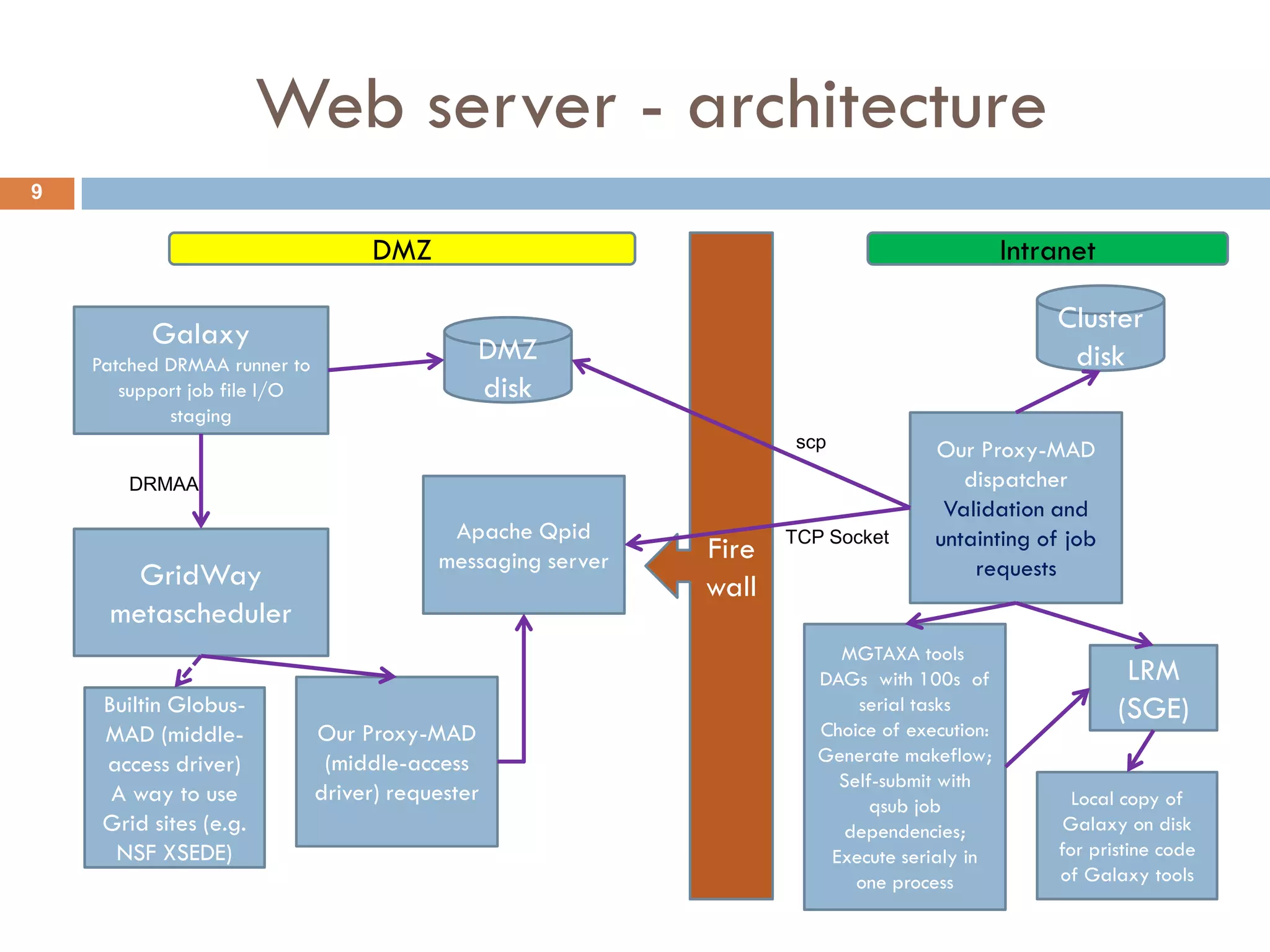
                                   DMZ                                                        Intranet

                                                                                                  Cluster
          Galaxy                              DMZ
    Patched DRMAA runner to                                                                        disk
       support job file I/O                   disk
            staging
                                                                     scp            Our Proxy-MAD
       DRMAA                                                                           dispatcher
                                                                                     Validation and
                                           Apache Qpid              TCP Socket      untainting of job
                                          messaging server   Fire
       GridWay                                                                          requests
                                                             wall
     metascheduler
                                                                         MGTAXA tools
                                                                       DAGs with 100s of                  LRM
     Builtin Globus-                                                       serial tasks                  (SGE)
     MAD (middle-             Our Proxy-MAD                            Choice of execution:
     access driver)            (middle-access                          Generate makeflow;
                                                                         Self-submit with
      A way to use            driver) requester                                                     Local copy of
                                                                             qsub job
     Grid sites (e.g.                                                     dependencies;            Galaxy on disk
      NSF XSEDE)                                                        Execute serialy in        for pristine code
                                                                           one process            of Galaxy tools
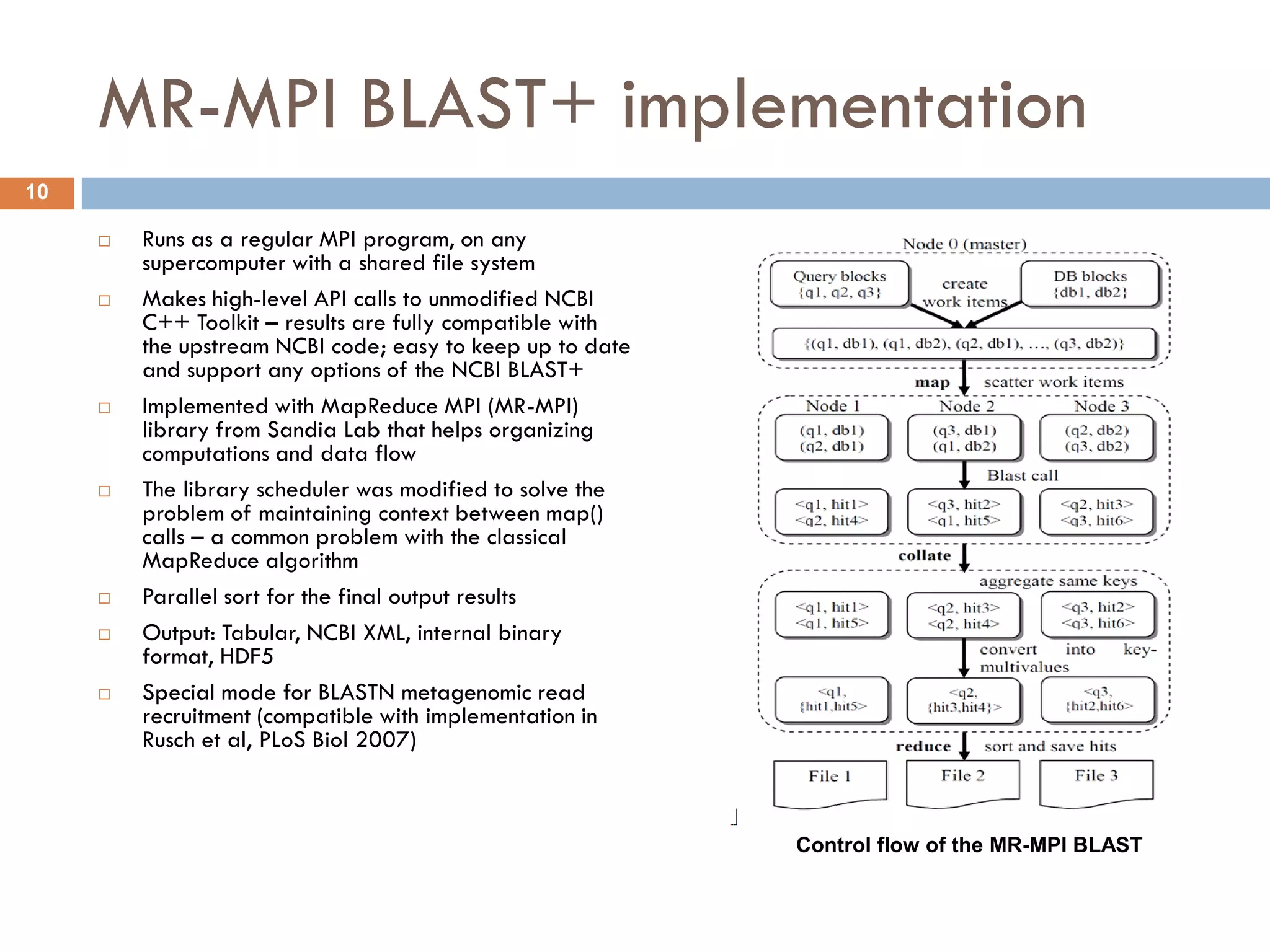
MR-MPI BLAST+ implementation
10

        Runs as a regular MPI program, on any
         supercomputer with a shared file system
        Makes high-level API calls to unmodified NCBI
         C++ Toolkit – results are fully compatible with
         the upstream NCBI code; easy to keep up to date
         and support any options of the NCBI BLAST+
        Implemented with MapReduce MPI (MR-MPI)
         library from Sandia Lab that helps organizing
         computations and data flow
        The library scheduler was modified to solve the
         problem of maintaining context between map()
         calls – a common problem with the classical
         MapReduce algorithm
        Parallel sort for the final output results
        Output: Tabular, NCBI XML, internal binary
         format, HDF5
        Special mode for BLASTN metagenomic read
         recruitment (compatible with implementation in
         Rusch et al, PLoS Biol 2007)


                                                           Control flow of the MR-MPI BLAST
MR-MPI BLASTN and BLASTP scaling
11


     Scaling chart for MR-MPI BLASTN showing process wall        "Useful" CPU utilization per core during the course of the
     clock time at different total core counts in MPI job. The   computation for the MR-MPI BLASTP run with 1024
     total number of query sequences is 40,000. The              cores. CPU user time used at any given moment within a
     sequences are split into 40 blocks of 400 kbp. Each         BLAST call was divided by the corresponding wall clock
     block, when combined with one DB partition, forms a         time, summed over all concurrent calls, and divided by a
     sequential work unit for the MapReduce algorithm. The       total number of cores allocated to the MPI program.
     data point labels represent time in minutes.                From (Sul and Tovchigrechko, IPDPS, 2011)
CRISPR Analysis Pipeline
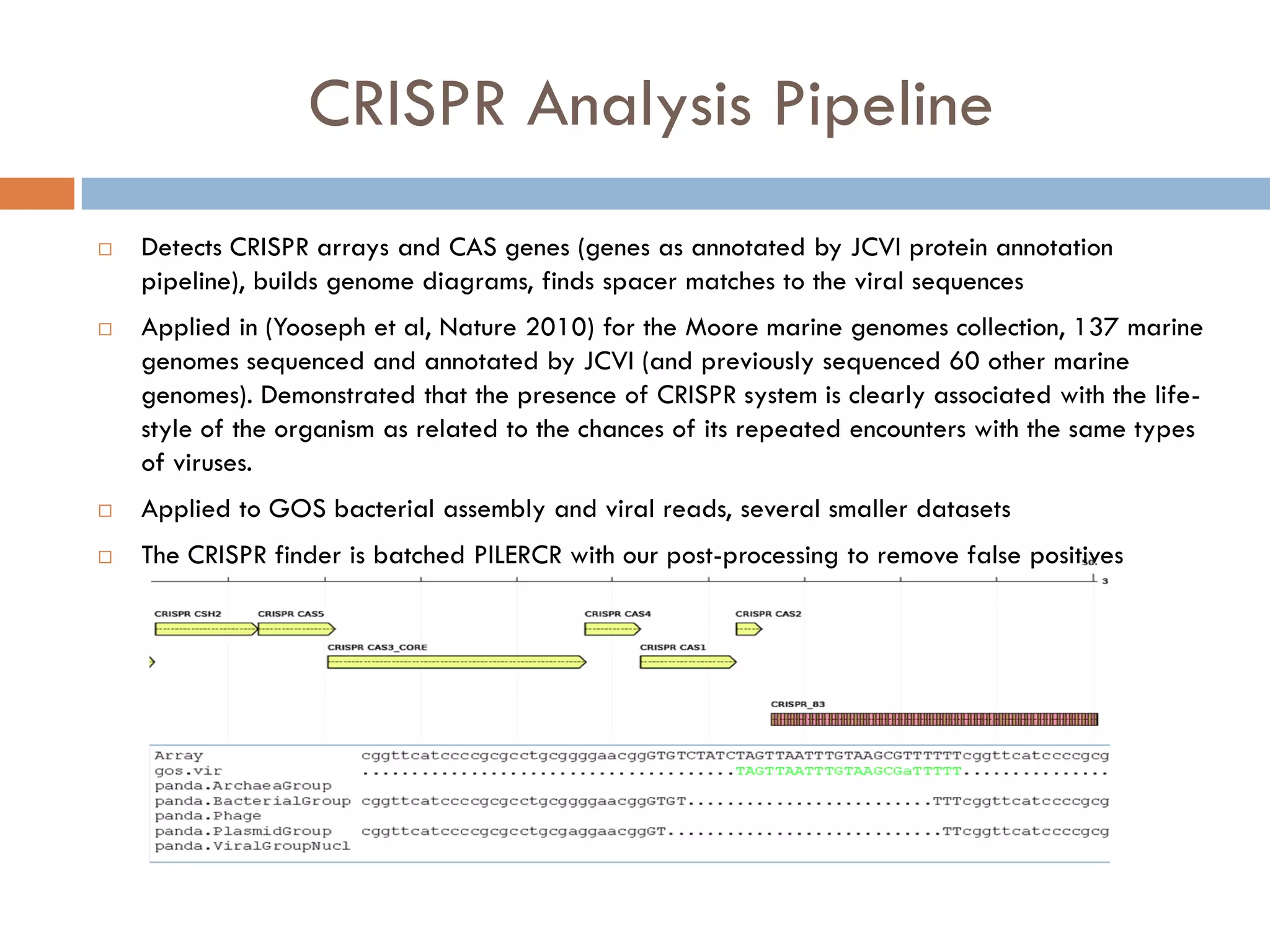
   Detects CRISPR arrays and CAS genes (genes as annotated by JCVI protein annotation
    pipeline), builds genome diagrams, finds spacer matches to the viral sequences
   Applied in (Yooseph et al, Nature 2010) for the Moore marine genomes collection, 137 marine
    genomes sequenced and annotated by JCVI (and previously sequenced 60 other marine
    genomes). Demonstrated that the presence of CRISPR system is clearly associated with the life-
    style of the organism as related to the chances of its repeated encounters with the same types
    of viruses.
   Applied to GOS bacterial assembly and viral reads, several smaller datasets
   The CRISPR finder is batched PILERCR with our post-processing to remove false positives
Assembly contig ORF consensus classifier
13

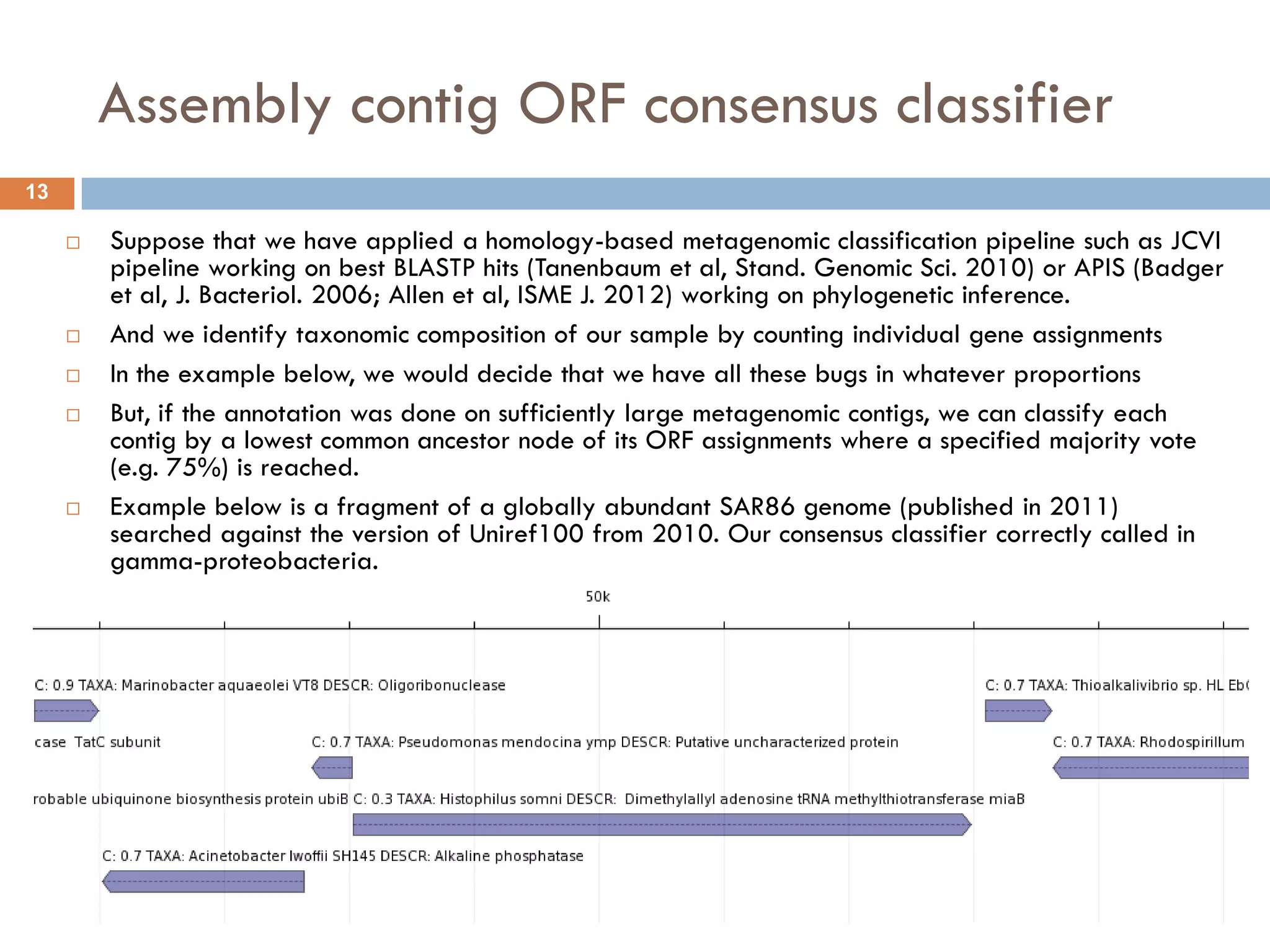
        Suppose that we have applied a homology-based metagenomic classification pipeline such as JCVI
         pipeline working on best BLASTP hits (Tanenbaum et al, Stand. Genomic Sci. 2010) or APIS (Badger
         et al, J. Bacteriol. 2006; Allen et al, ISME J. 2012) working on phylogenetic inference.
        And we identify taxonomic composition of our sample by counting individual gene assignments
        In the example below, we would decide that we have all these bugs in whatever proportions
        But, if the annotation was done on sufficiently large metagenomic contigs, we can classify each
         contig by a lowest common ancestor node of its ORF assignments where a specified majority vote
         (e.g. 75%) is reached.
        Example below is a fragment of a globally abundant SAR86 genome (published in 2011)
         searched against the version of Uniref100 from 2010. Our consensus classifier correctly called in
         gamma-proteobacteria.
Team
14


        Seung-Jin Sul (HPC tools)
        Tim Prindle (Proxy MAD)
        Shibu Yooseph (co-PI, metagenomics expertise)
        Shannon Williamson (original idea to work on
         bacteriophage-host prediction tool)

        Funding: NSF 0850256, DOE DE-FC02-02ER63453

A Tovchigrechko - MGTAXA: a toolkit and webserver for predicting taxonomy of the metagenomic sequences

  • 1.
    MGTAXA – atoolkit and a Web server for predicting taxonomy of the metagenomic sequences with Galaxy front-end and parallel computational back-end 1 Andrey Tovchigrechko, Seung-Jin Sul, Timothy Prindle, Shannon J. Williamson and Shibu Yooseph http://andreyto.github.com/mgtaxa/ atovtchi@jcvi.org
  • 2.
    MGTAXA Components 2 Predict taxonomy for bacterial metagenomic sequences • Glimmer ICM based classifier (similar to Phymm approach). Parallelized on HTC and HPC clusters, command line and Galaxy Web interface. Sequences above 300 bp. • BLAST+ and Batch SOM implementations for HPC clusters with MPI-MapReduce framework. Calls to pristine NCBI BLAST+ API – full compatibility. Scales to 2000 cores on XSEDE (former TeraGrid) (TACC Ranger). • Assembly contig consensus classifier from ORF BLASTP or APIS assignments First algorithm to predict hosts for bacteriophages in metagenomes • Explores compositional similarity between phage and host • ICM and SOM for prediction and visualization • Assigns phage scaffolds (5Kbp+) to bacterial sequences • Uses infrastructure and interfaces of the bacterial classifier CRISPR pipeline • Scans genomes & metagenomes for CRISPR arrays and genes • Connects with viral metagenomes through spacer matches – alternative way to establish the bacteriophage-host relationship • Parallelized on HTC and HPC clusters
  • 3.
    ICMs for moresensitive compositional models with less dependency on the length of training sequence 3  Interpolated Context Model (ICM) developed for Glimmer (Delcher 1999) to find correct a c c t t a c g g g a c reading frame based on nucleotide composition a c c t t a c g g g a c  ICMs used as a basis of Phymm taxonomic prokaryotic classification algorithm (Brady & Salzberg, 2009)  The main idea of ICM is to use longer k-mers when there is a statistically significant frequency of those specific k-mers in the training sample  This helps extract compositional signal from sequences shorter than would be required by a fixed k-mer model  Also less bias toward longer training sequences – critical for classification of viruses  We use ICMs to assign sample taxonomy as well as bacteriophage host taxonomy Image from Delcher 1999
  • 4.
    How predicting theviral host taxonomy relates to predicting the bacterial taxonomy 4 Color legend and proportions of inputs to the SOM In this region, enterobacteria and their phages cluster together. Many other clades behave like that on this map. Self-organizing Map (SOM) of tetranucleotide (4-mers) frequency vectors Mix of NCBI RefSeq 5 Kb chunks and GOS scaffolds
  • 5.
    Phage host predictionalgorithm 5  Viruses exhibit huge diversity and fast evolution. Homology based methods for assigning taxonomy to viral metagenomic sequences suffer from the lack of sufficiently close sequences in the reference databases  Although it has been shown by several groups that viruses tend to adopt polynucleotide (k-mer) composition of their hosts, regardless of homology, ours is the first practical method that uses this tendency to build a classifier for metagenomic viral contigs (5Kbp or longer)  We score viral contigs against prokaryotic ICMs for the entire RefSeq and pick the ICM with the best score as the host prediction  We also have a mixed mode classifier, where we score both against ICMs trained on viral sequences and prokaryotic ICMs. Unlike the only other reported compositional taxonomic classifier of viral sequences (NBC, fixed k models), ICM scoring does not exhibit any strong preference to longer reference sequences (NBC reported to misclassify a lot of its benchmark sequences as giant mimivirus).
  • 6.
    Phage host predictionbenchmarking 6  Benchmark was compiled from all NCBI RefSeq Genbank records (Nov 2010) where a virus had a prokaryotic species identified as a host either by host record by the naming of the virus  Among those, lysogenic (those that integrate into host DNA during their lifecycle) viruses were identified by literature curation for viruses that named a specific host genome A. Phages with lysogenic cycle (24 viral species, 10 host genera) ExcludePredict Host Rank genus family order class phylum rejected none 89% 96% 94% 99% 97% 2% species 85% 90% 90% 97% 95% 5% B. All phages (294 viral species, 33 host genera) ExcludePredict Host Rank genus family order class phylum rejected none 50% 55% 59% 71% 76% 6% species 43% 49% 54% 68% 75% 7%  Random assignment would result in 0.2% accuracy at a genus level  Algorithm, benchmarking and results on Global Ocean Sampling data are described in (Williamson et al, Metagenomic Investigation of Viruses throughout the Indian Ocean. PLoS One 2012; accepted)
  • 7.
    Parallelization approach 7  2500 models, 50G on disk, each input sequence has to be scored against each model  Coarse-grained parallelism  Training – one task is to build one ICM (1 min to build one model for a 4.7Mbp genome, creating 29MB model file)  Scoring – one task is to score input sequences against one model (12.5 min to score 1Gbp against one model) Model Model Local Model reduction HDF5 … Global Aggregate reduction counts Model and Output Model prediction formatting Local HDF5 Model reduction …
  • 8.
    Backends for parallelexecution 8  How MGTAXA workflows (DAGs) will be executed is selected at run-time by a command-line switch: mgt-classifier –run-mode batchDep –batch-backend makeflow [ other options … ]  Implemented choices:  Serially in one process. No cluster or external workflow support is needed  Submit itself as a DAG of SGE jobs using qsub job dependency option  Generate a “make file” for the Makeflow workflow execution engine. Then run makeflow on it with a choice of its own back-ends:  Parallel multi-processing on a single node (normally N processes == N cores)  Submitting multiple SGE jobs while satisfying the dependencies defined by the DAG  Glide-in mechanism (“dual-level scheduling”) within one or more large MPI jobs. With that, MGTAXA can run on large XSEDE clusters that only schedule efficiently large parallel MPI jobs  WorkQueue with a shared file-system option. Advantage for large number of very short jobs.  Generic LRM interface (define job submit command for the current LRM)  Makeflow is tolerant to compute node failures, and also has restart capability (like make)  As a general note, Makeflow seems like a great fit to design Galaxy tools that need to execute their own massively parallel programmatic workflows (as opposed to interactively user-defined Galaxy built-in workflows). Makeflow is serverless, zero-administration, and appears to Galaxy as a single serial job that can be submitted to SGE like any other tool.
  • 9.
    Web server -architecture 9 DMZ Intranet Cluster Galaxy DMZ Patched DRMAA runner to disk support job file I/O disk staging scp Our Proxy-MAD DRMAA dispatcher Validation and Apache Qpid TCP Socket untainting of job messaging server Fire GridWay requests wall metascheduler MGTAXA tools DAGs with 100s of LRM Builtin Globus- serial tasks (SGE) MAD (middle- Our Proxy-MAD Choice of execution: access driver) (middle-access Generate makeflow; Self-submit with A way to use driver) requester Local copy of qsub job Grid sites (e.g. dependencies; Galaxy on disk NSF XSEDE) Execute serialy in for pristine code one process of Galaxy tools
  • 10.
    MR-MPI BLAST+ implementation 10  Runs as a regular MPI program, on any supercomputer with a shared file system  Makes high-level API calls to unmodified NCBI C++ Toolkit – results are fully compatible with the upstream NCBI code; easy to keep up to date and support any options of the NCBI BLAST+  Implemented with MapReduce MPI (MR-MPI) library from Sandia Lab that helps organizing computations and data flow  The library scheduler was modified to solve the problem of maintaining context between map() calls – a common problem with the classical MapReduce algorithm  Parallel sort for the final output results  Output: Tabular, NCBI XML, internal binary format, HDF5  Special mode for BLASTN metagenomic read recruitment (compatible with implementation in Rusch et al, PLoS Biol 2007) Control flow of the MR-MPI BLAST
  • 11.
    MR-MPI BLASTN andBLASTP scaling 11 Scaling chart for MR-MPI BLASTN showing process wall "Useful" CPU utilization per core during the course of the clock time at different total core counts in MPI job. The computation for the MR-MPI BLASTP run with 1024 total number of query sequences is 40,000. The cores. CPU user time used at any given moment within a sequences are split into 40 blocks of 400 kbp. Each BLAST call was divided by the corresponding wall clock block, when combined with one DB partition, forms a time, summed over all concurrent calls, and divided by a sequential work unit for the MapReduce algorithm. The total number of cores allocated to the MPI program. data point labels represent time in minutes. From (Sul and Tovchigrechko, IPDPS, 2011)
  • 12.
    CRISPR Analysis Pipeline  Detects CRISPR arrays and CAS genes (genes as annotated by JCVI protein annotation pipeline), builds genome diagrams, finds spacer matches to the viral sequences  Applied in (Yooseph et al, Nature 2010) for the Moore marine genomes collection, 137 marine genomes sequenced and annotated by JCVI (and previously sequenced 60 other marine genomes). Demonstrated that the presence of CRISPR system is clearly associated with the life- style of the organism as related to the chances of its repeated encounters with the same types of viruses.  Applied to GOS bacterial assembly and viral reads, several smaller datasets  The CRISPR finder is batched PILERCR with our post-processing to remove false positives
  • 13.
    Assembly contig ORFconsensus classifier 13  Suppose that we have applied a homology-based metagenomic classification pipeline such as JCVI pipeline working on best BLASTP hits (Tanenbaum et al, Stand. Genomic Sci. 2010) or APIS (Badger et al, J. Bacteriol. 2006; Allen et al, ISME J. 2012) working on phylogenetic inference.  And we identify taxonomic composition of our sample by counting individual gene assignments  In the example below, we would decide that we have all these bugs in whatever proportions  But, if the annotation was done on sufficiently large metagenomic contigs, we can classify each contig by a lowest common ancestor node of its ORF assignments where a specified majority vote (e.g. 75%) is reached.  Example below is a fragment of a globally abundant SAR86 genome (published in 2011) searched against the version of Uniref100 from 2010. Our consensus classifier correctly called in gamma-proteobacteria.
  • 14.
    Team 14  Seung-Jin Sul (HPC tools)  Tim Prindle (Proxy MAD)  Shibu Yooseph (co-PI, metagenomics expertise)  Shannon Williamson (original idea to work on bacteriophage-host prediction tool)  Funding: NSF 0850256, DOE DE-FC02-02ER63453