Hierarchy of Skills
I. Kokcharov
Invent
Solve
Work
Play
Know
Self-actualization
Esteem
Love / Belonging
Safety
Physiological
morality,
creativity,
spontaneity,
problem solving,
lack of prejudice,
acceptance of failure
self-esteem,
confidence, achievement,
respect of others, respect by others
friendship, family, sexual intimacy
security of body, of employment, of resources,
of morality, of the family, of health, of property
breathing, food, water, sex, sleep, hemostasis, excretion
Maslow’s Hierarchy of Needs [1]
Abraham Maslow
Picture: source Wikipedia
Mission
Mastery
Member
Myself
Money
Creating value
for others
self-improvement,
achievement
Member of a team
Originality + performance
Earning for personal needs
Work Motivation: M5-model I. Kokcharov © 2015
Skills
Skill is an ability, coming from one’s knowledge,
practice, aptitude to do something well.
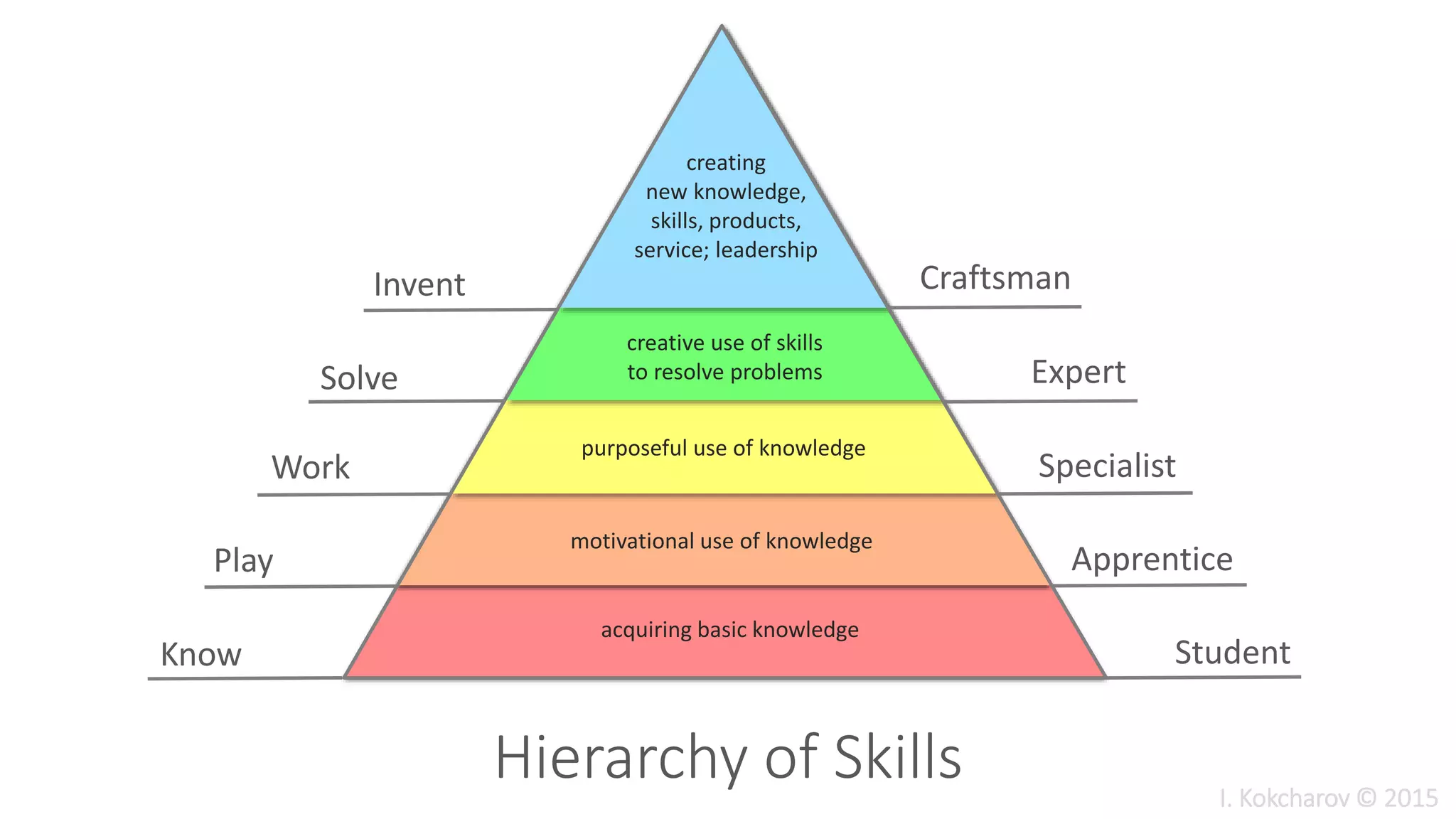
Invent
Solve
Work
Play
Know
creating
new knowledge,
skills, products,
service; leadership
creative use of skills
to resolve problems
purposeful use of knowledge
motivational use of knowledge
acquiring basic knowledge
Hierarchy of Skills I. Kokcharov © 2015
Craftsman
Expert
Specialist
Apprentice
Student
Multi-level mix
Example :
business simulations [3]
 “The craftsman represents the special human condition of being engaged.” [4]
 “By one commonly used measure, about ten thousand hours of experience are
required to produce a master carpenter or musician.” [4]
Craftsman
2%
 Maslow said only 2% of people reached the stage of self-actualization.
 The same percentage can be attributed to the highest level of the Skill Hierarchy.
Craftsman is rare species
Competence
Competence is the condition of being capable;
possession of required skill, knowledge,
qualification, or capacity.
Hierarchy of Competence Adapted from Noel Burch [5]
Unconscious
Competence Right Intuition
Right Analysis
Wrong Analysis
Wrong Intuition
Conscious
Competence
Conscious
Incompetence
Unconscious
Incompetence
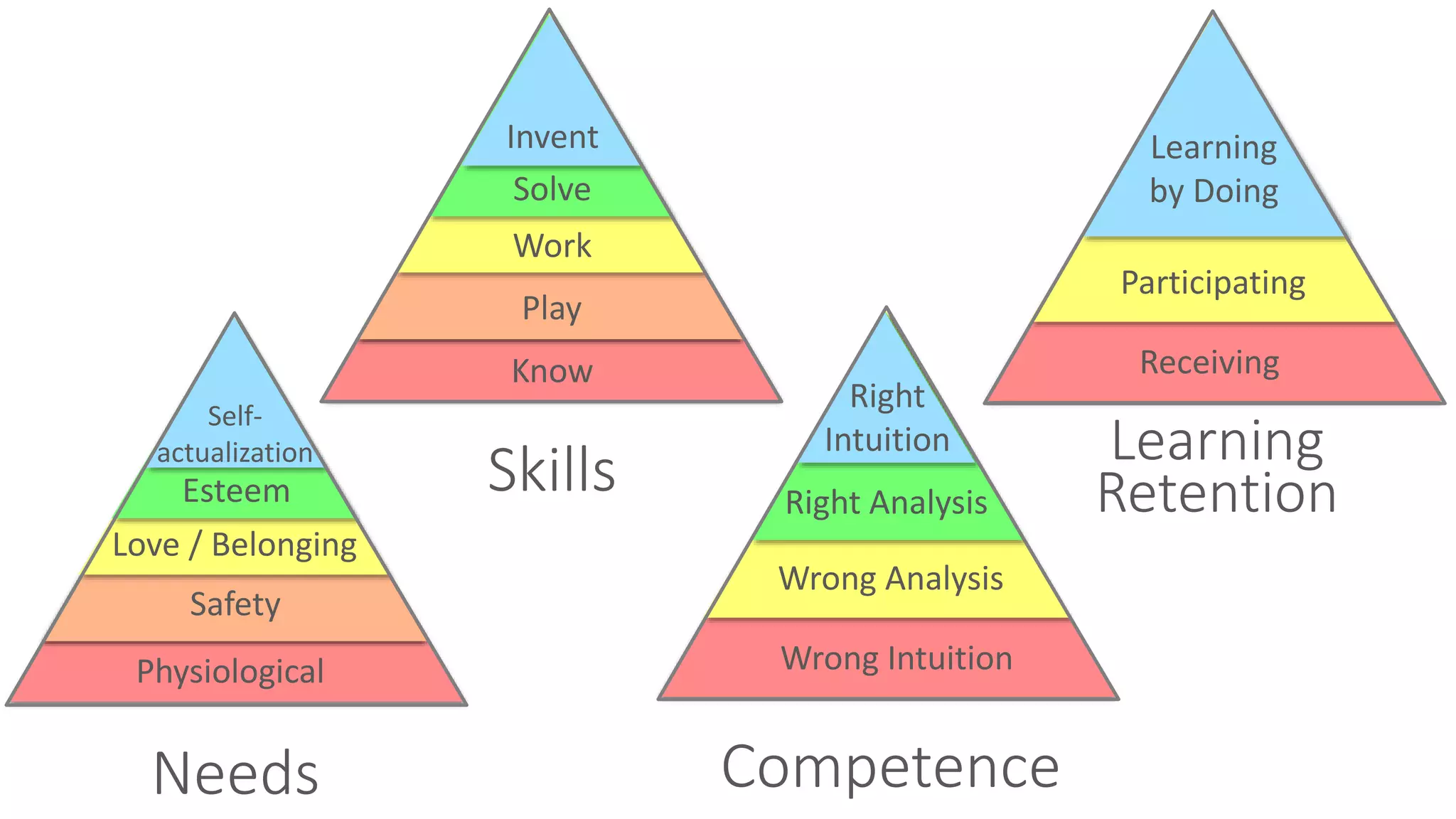
Learning by Doing
Participating
Receiving
To work
with a coach,
Immediate
practicing
Play
Exercises,
Discussion,
Demonstration
Audiovisual
Reading
Lecture
Retention of Learning I. Kokcharov © 2015
> 75%
20% - 75%
<20%
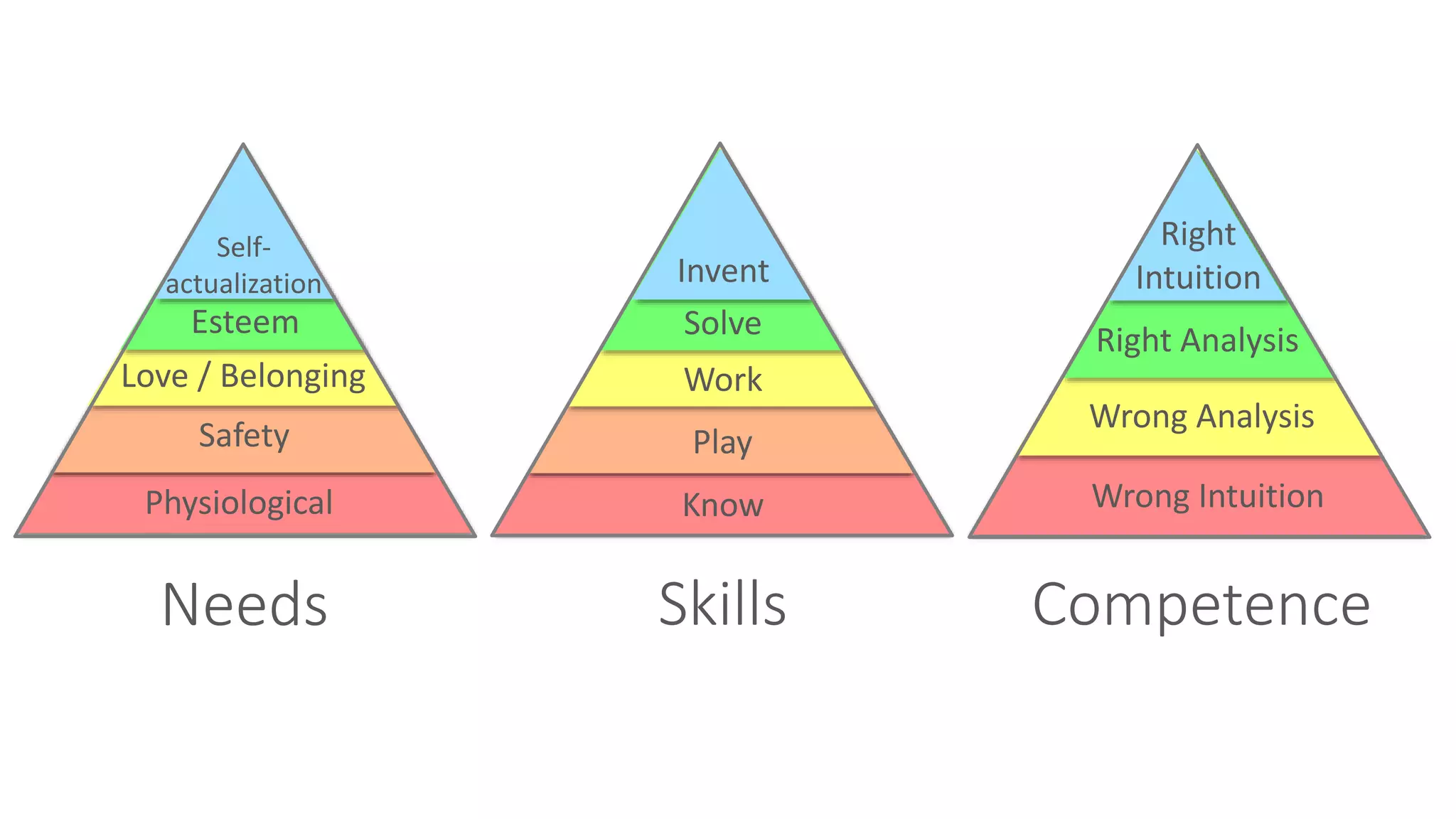
Needs
Safety
Physiological
Self-
actualization
Esteem
Love / Belonging
Work Motivation
Myself
Money
Mission
Mastery
Member
Invent
Solve
Work
Play
Know
Skills
Receiving
Participating
Learning
by Doing
Learning Retention Wrong Intuition
Wrong Analysis
Right Analysis
Right
Intuition
Competence
1. Maslow A.H. A Theory of Human Motivation http://psychclassics.yorku.ca/Maslow/motivation.htm
2. Kokcharov I. What motivates us to work hard?
https://aplusclick.wordpress.com/2013/01/06/what-motivates-us-to-work-hard/
3. Kokcharov I. Using Business Simulation to Analyze Project Management Decision Making. Proceeding of
45th International Simulation and Game Association Conference, Dornbirn, Austria, 2014, p.313-318.
ISBN: 978-3-7639-5420-9
4. Sennett R. The Craftsman. 2008. Penguin Books ISBN 978-0-141-02209-3
5. Noel Burch cited at Wikipedia «Four Stages of Competence»
http://en.wikipedia.org/wiki/Four_stages_of_competence
6. Dreyfus S.E., Dreyfus H.L. "A Five-Stage Model of the Mental Activities Involved in Directed Skill
Acquisition" 1980
Bibliography

Hierarchy of Skills

  • 1.
    Hierarchy of Skills I.Kokcharov Invent Solve Work Play Know
  • 2.
    Self-actualization Esteem Love / Belonging Safety Physiological morality, creativity, spontaneity, problemsolving, lack of prejudice, acceptance of failure self-esteem, confidence, achievement, respect of others, respect by others friendship, family, sexual intimacy security of body, of employment, of resources, of morality, of the family, of health, of property breathing, food, water, sex, sleep, hemostasis, excretion Maslow’s Hierarchy of Needs [1] Abraham Maslow Picture: source Wikipedia
  • 3.
    Mission Mastery Member Myself Money Creating value for others self-improvement, achievement Memberof a team Originality + performance Earning for personal needs Work Motivation: M5-model I. Kokcharov © 2015
  • 4.
    Skills Skill is anability, coming from one’s knowledge, practice, aptitude to do something well.
  • 5.
    Invent Solve Work Play Know creating new knowledge, skills, products, service;leadership creative use of skills to resolve problems purposeful use of knowledge motivational use of knowledge acquiring basic knowledge Hierarchy of Skills I. Kokcharov © 2015 Craftsman Expert Specialist Apprentice Student
  • 6.
  • 7.
     “The craftsmanrepresents the special human condition of being engaged.” [4]  “By one commonly used measure, about ten thousand hours of experience are required to produce a master carpenter or musician.” [4] Craftsman
  • 8.
    2%  Maslow saidonly 2% of people reached the stage of self-actualization.  The same percentage can be attributed to the highest level of the Skill Hierarchy. Craftsman is rare species
  • 9.
    Competence Competence is thecondition of being capable; possession of required skill, knowledge, qualification, or capacity.
  • 10.
    Hierarchy of CompetenceAdapted from Noel Burch [5] Unconscious Competence Right Intuition Right Analysis Wrong Analysis Wrong Intuition Conscious Competence Conscious Incompetence Unconscious Incompetence
  • 11.
    Learning by Doing Participating Receiving Towork with a coach, Immediate practicing Play Exercises, Discussion, Demonstration Audiovisual Reading Lecture Retention of Learning I. Kokcharov © 2015 > 75% 20% - 75% <20%
  • 12.
    Needs Safety Physiological Self- actualization Esteem Love / Belonging WorkMotivation Myself Money Mission Mastery Member Invent Solve Work Play Know Skills Receiving Participating Learning by Doing Learning Retention Wrong Intuition Wrong Analysis Right Analysis Right Intuition Competence
  • 13.
    1. Maslow A.H.A Theory of Human Motivation http://psychclassics.yorku.ca/Maslow/motivation.htm 2. Kokcharov I. What motivates us to work hard? https://aplusclick.wordpress.com/2013/01/06/what-motivates-us-to-work-hard/ 3. Kokcharov I. Using Business Simulation to Analyze Project Management Decision Making. Proceeding of 45th International Simulation and Game Association Conference, Dornbirn, Austria, 2014, p.313-318. ISBN: 978-3-7639-5420-9 4. Sennett R. The Craftsman. 2008. Penguin Books ISBN 978-0-141-02209-3 5. Noel Burch cited at Wikipedia «Four Stages of Competence» http://en.wikipedia.org/wiki/Four_stages_of_competence 6. Dreyfus S.E., Dreyfus H.L. "A Five-Stage Model of the Mental Activities Involved in Directed Skill Acquisition" 1980 Bibliography