„ Agile Software Engineering and Design
  Thinking: Efficiency and Innovation in
 Lean Software Product Development“


         Prof. Dr. Armin Heinzl &
         Dr. Tobias Hildenbrand
                                           1
Agenda
   Introduction and Overview
   Lean and Agile Development
   Agile Software Engineering Techniques
   Design Thinking and Innovation
   Summary and Conclusion

                                            2
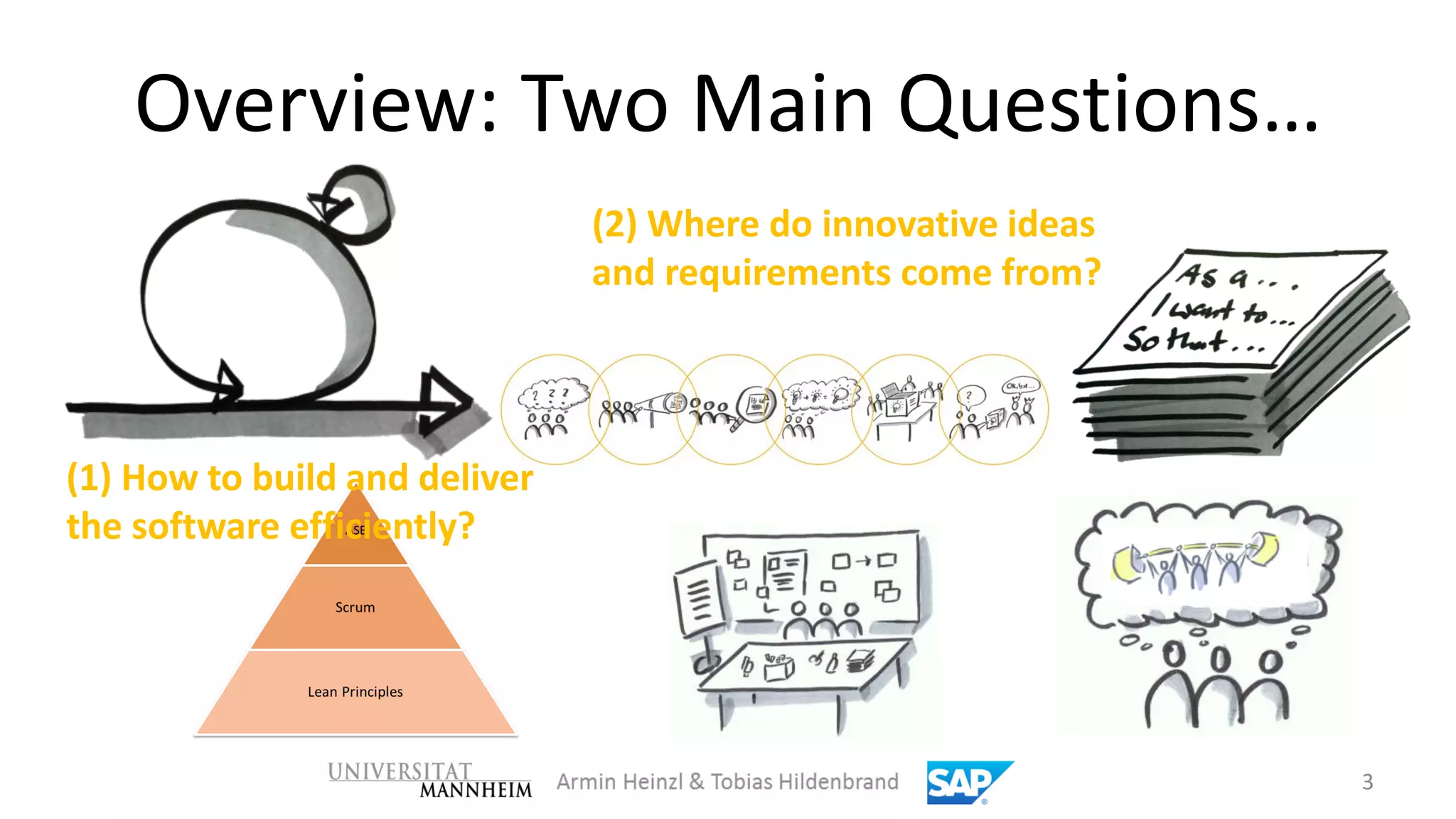
Overview: Two Main Questions…
                               (2) Where do innovative ideas
                               and requirements come from?


(1) How to build and deliver
the software efficiently?


                                                               3
Why lean and agile development at SAP?


                                         4
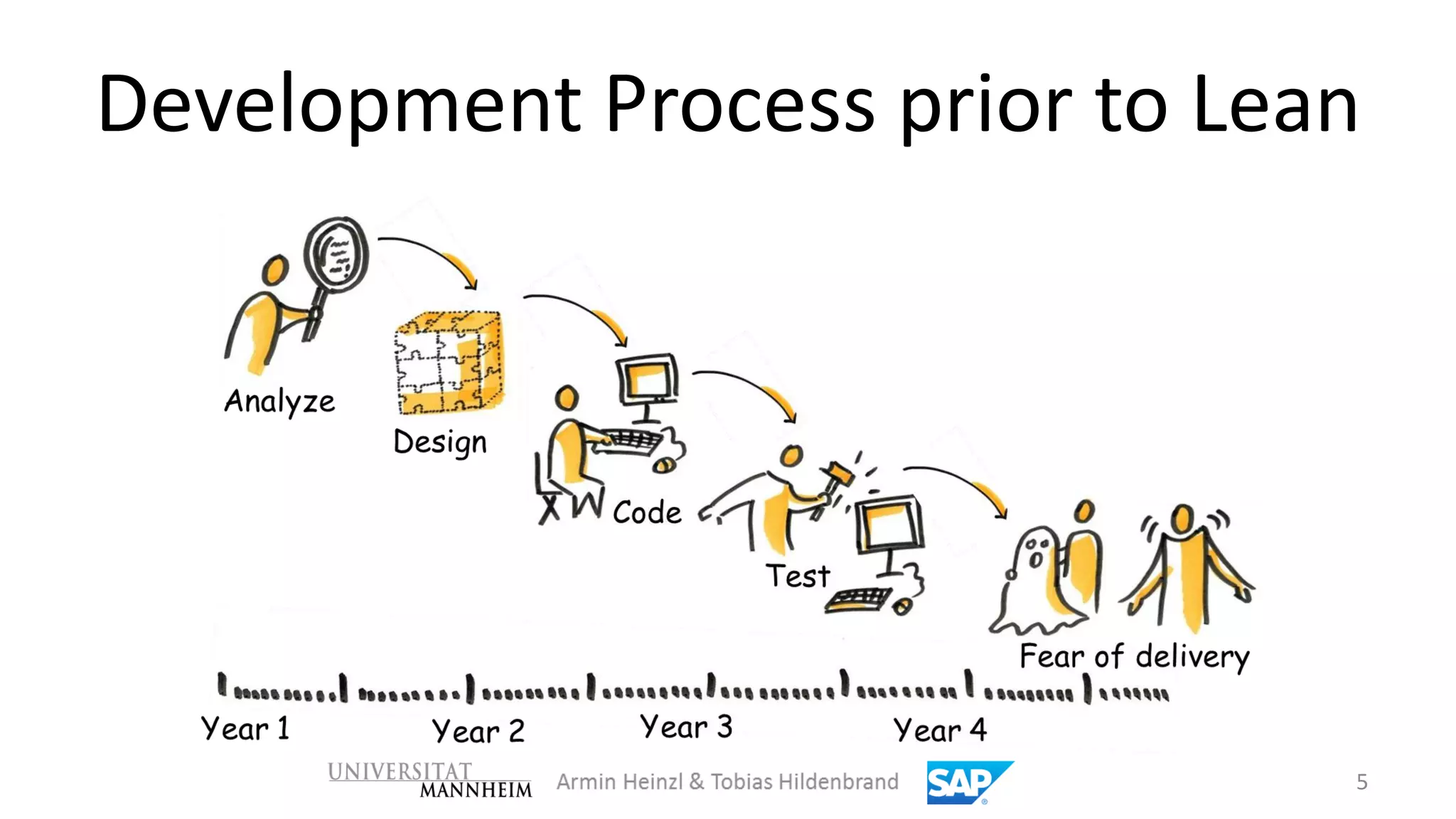
Development Process prior to Lean


                                5
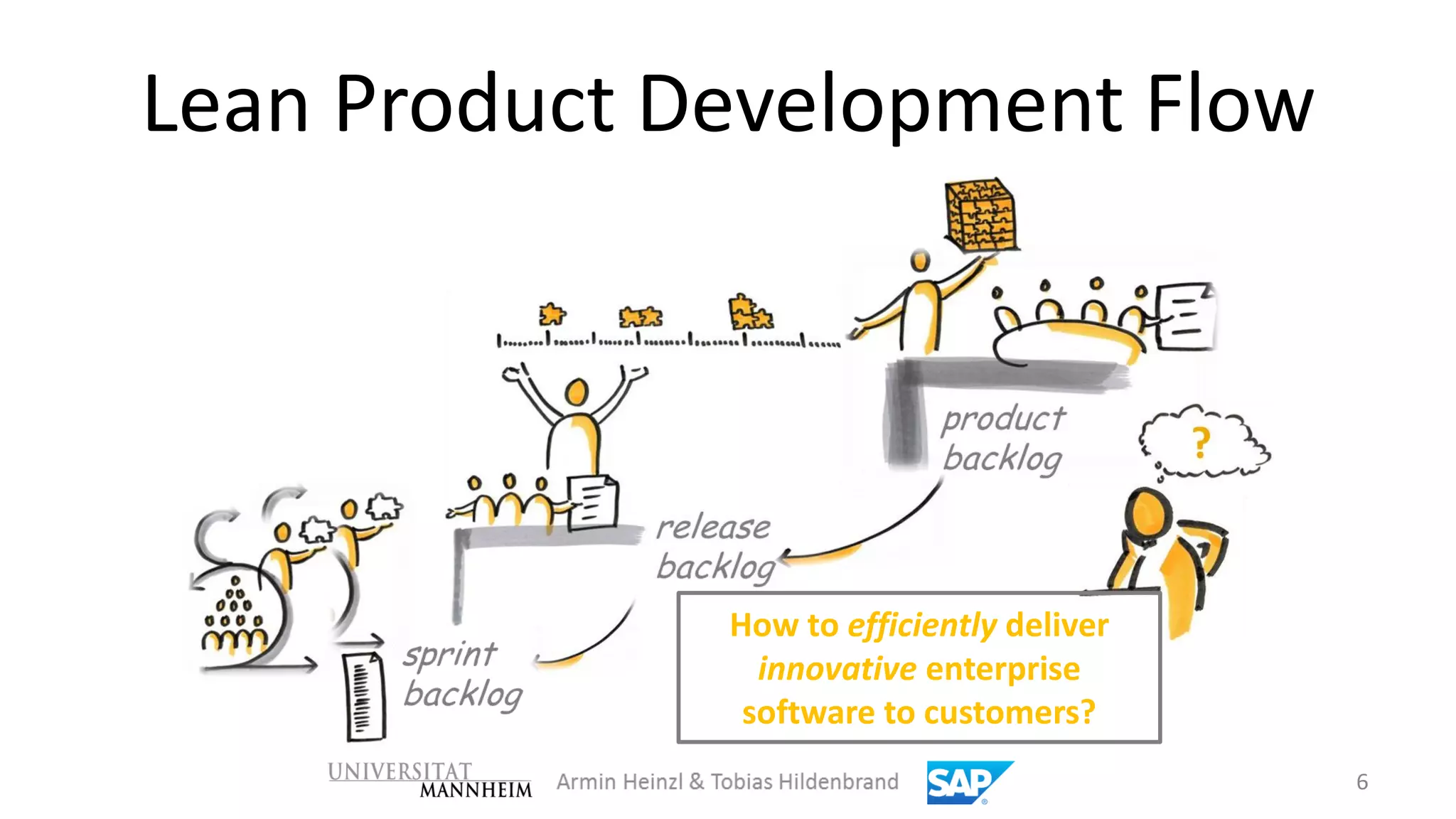
Lean Product Development Flow


              How to efficiently deliver
                innovative enterprise
               software to customers?
                                           6
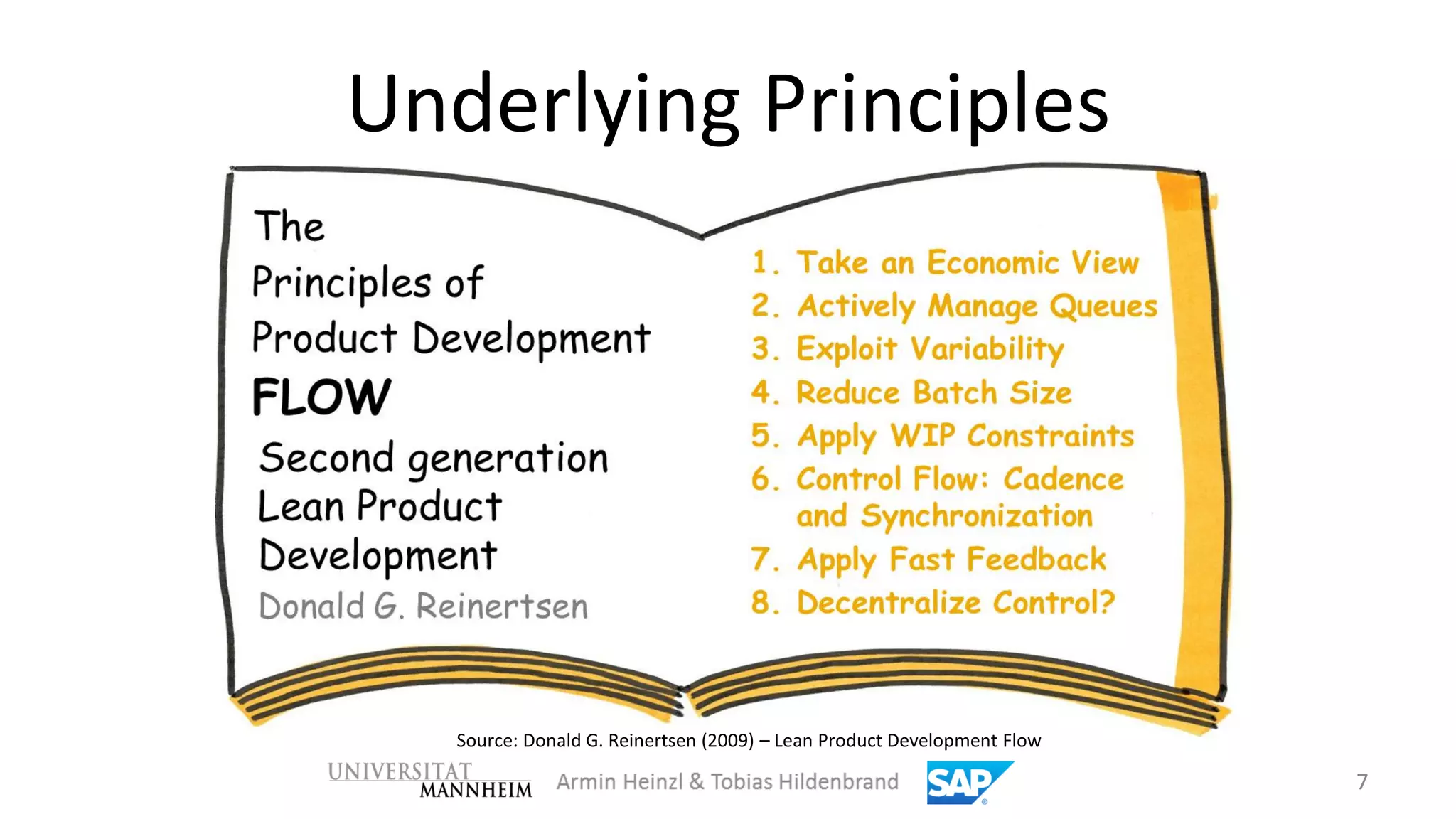
Underlying Principles


   Source: Donald G. Reinertsen (2009) – Lean Product Development Flow

                                                                         7
Why do Scrum teams adopt
agile engineering techniques?


                                8
Agile Software Engineering
                                                  Pair programming, test-driven development, continuous
                  Specific agile techniques [6]
     ASE                                                           integration, refactoring


                         Agile method             Teams with Scrum master, product owner, developers
                    as process framework [7]       and an associated manager for people development
    Scrum


                                                     Eliminate waste, build quality in, learn constantly,
                      Lean principles [8]
                                                    deliver fast, engage everyone, keep getting better

Lean Principles


                                                                                                       9
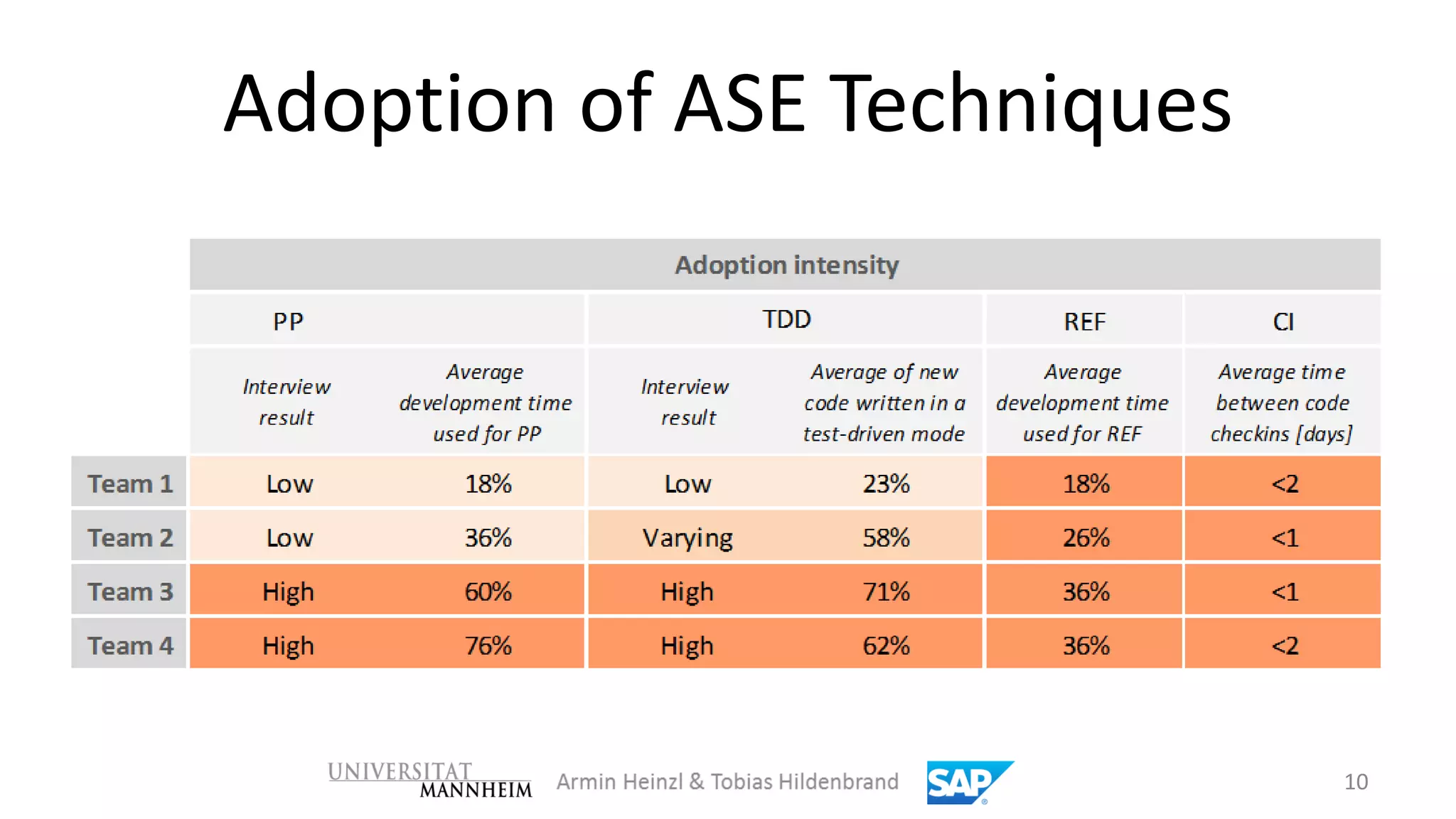
Adoption of ASE Techniques


                             10
Adoption Patterns for ASE
• Minor variations for refactoring (REF) and
  continuous integration (CI)
• Relatively low adoption rate for refactoring
• Significant variations for pair programming and
  test driven development
• Note: empirical inquiry represtens a snapshot-
  view
                                                    11
Where do the requirements come from and
     how does innovation happen?


                                     12
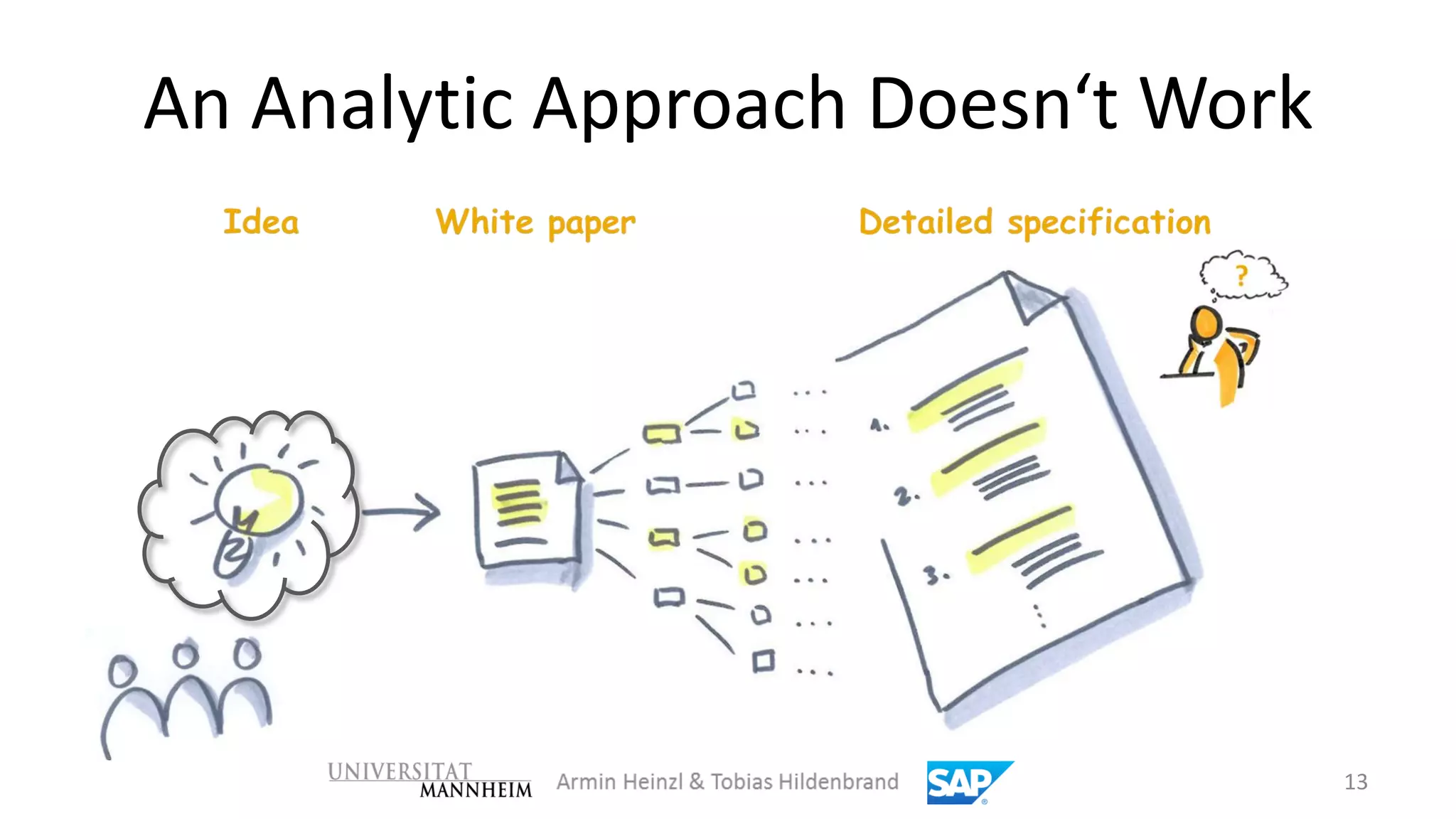
An Analytic Approach Doesn‘t Work


                                    13
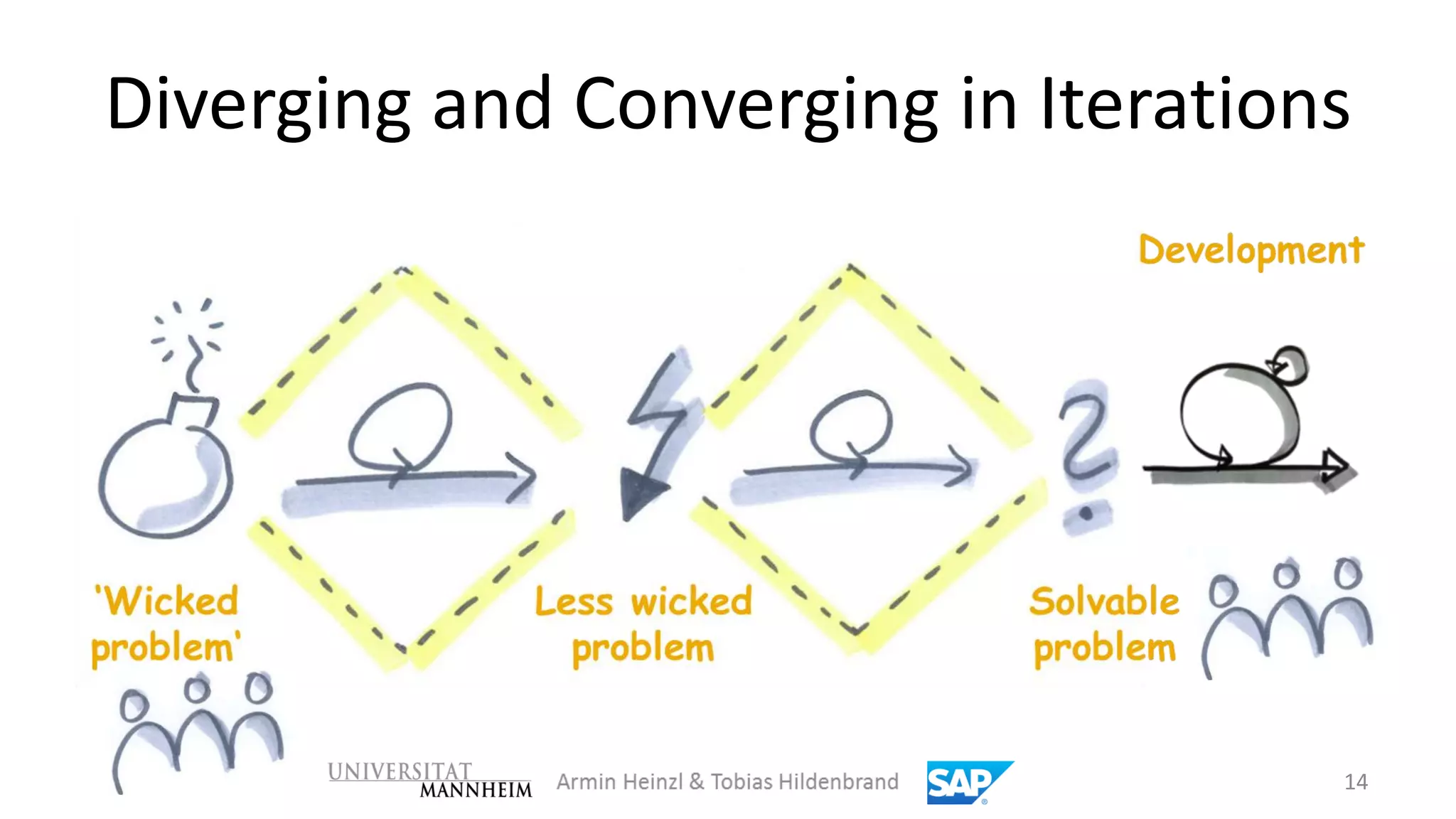
Diverging and Converging in Iterations


                                     14
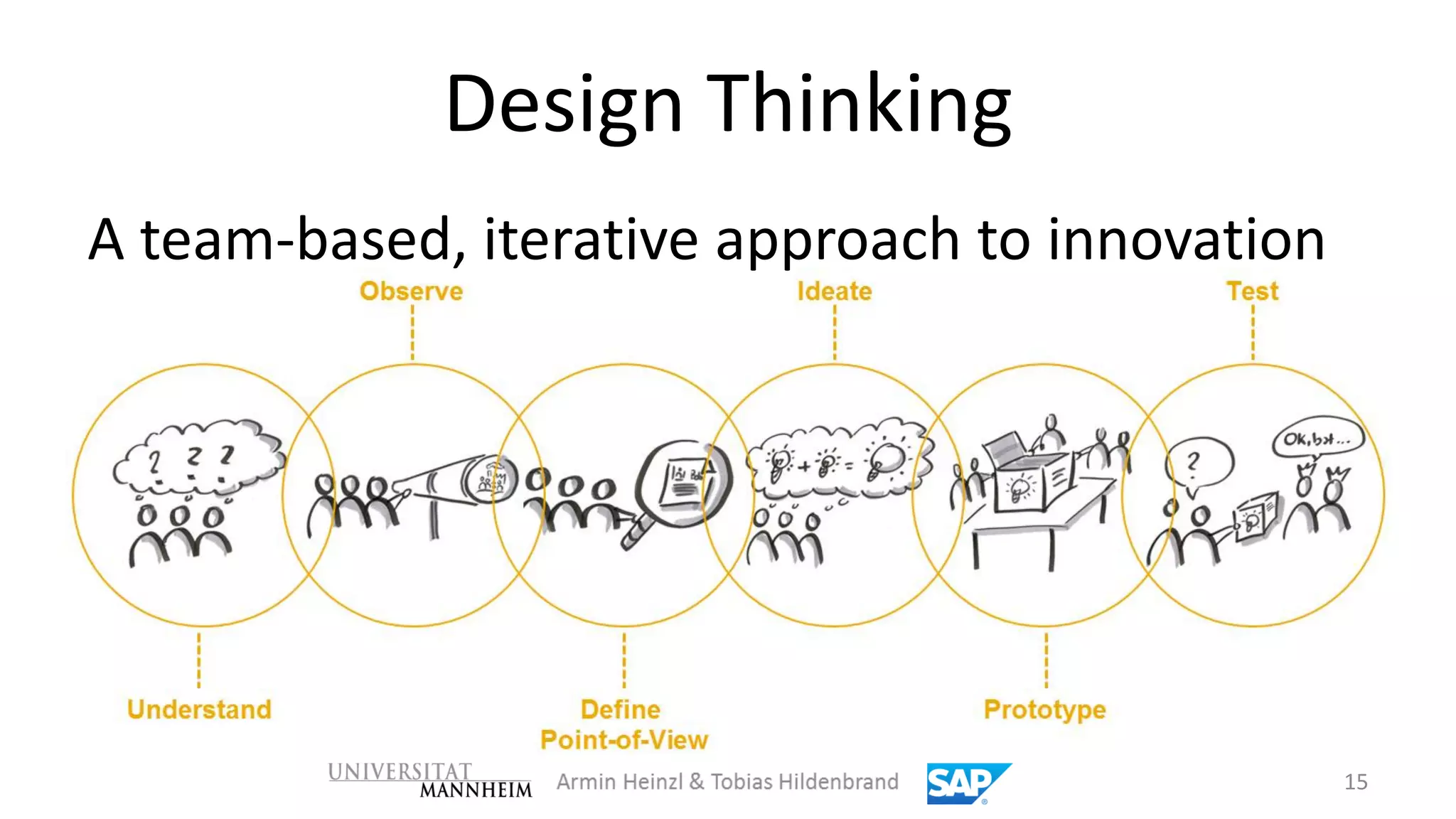
Design Thinking
A team-based, iterative approach to innovation


                                                 15
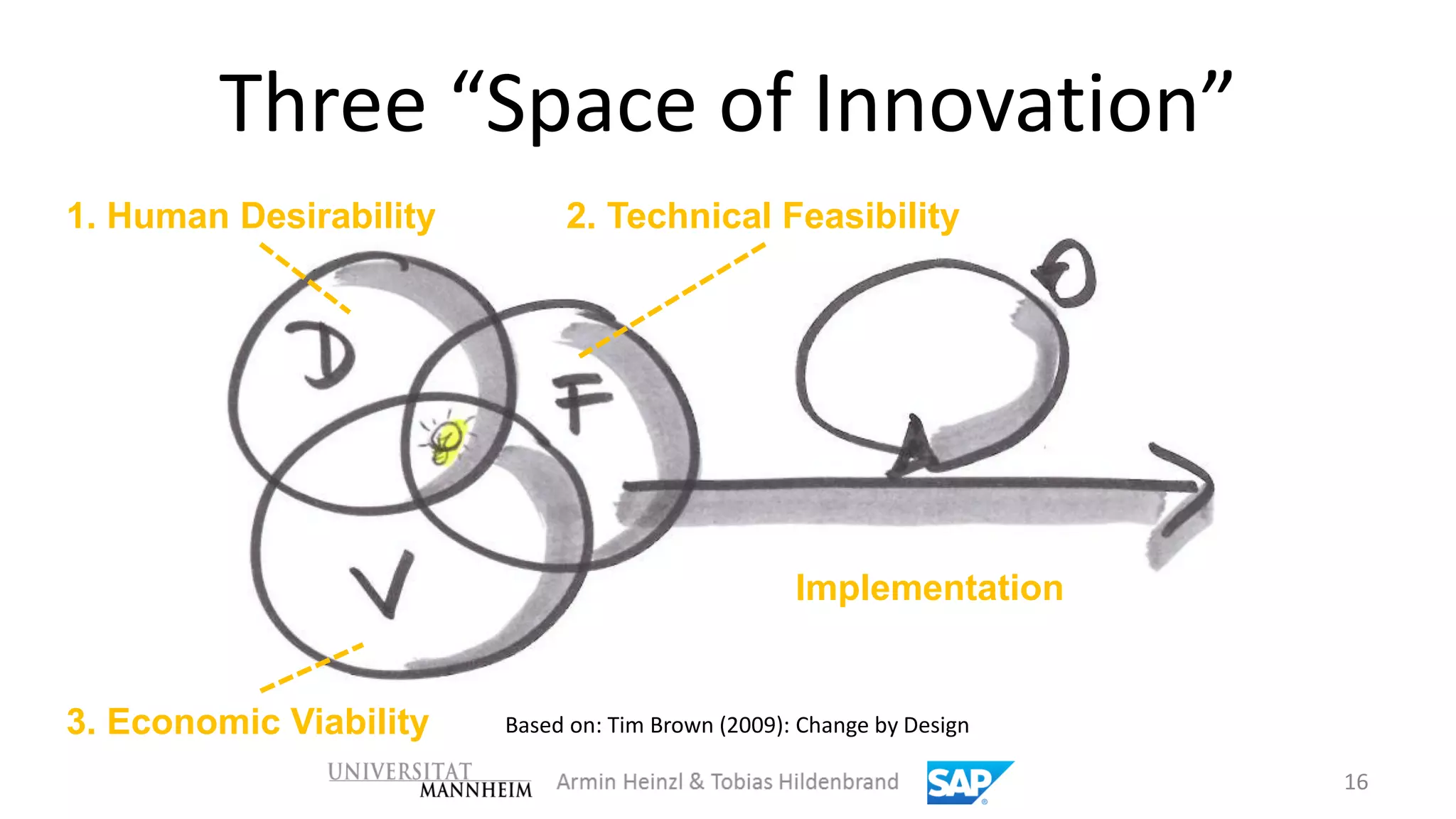
Three “Space of Innovation”
1. Human Desirability        2. Technical Feasibility


                                                   Implementation


3. Economic Viability   Based on: Tim Brown (2009): Change by Design

                                                                       16
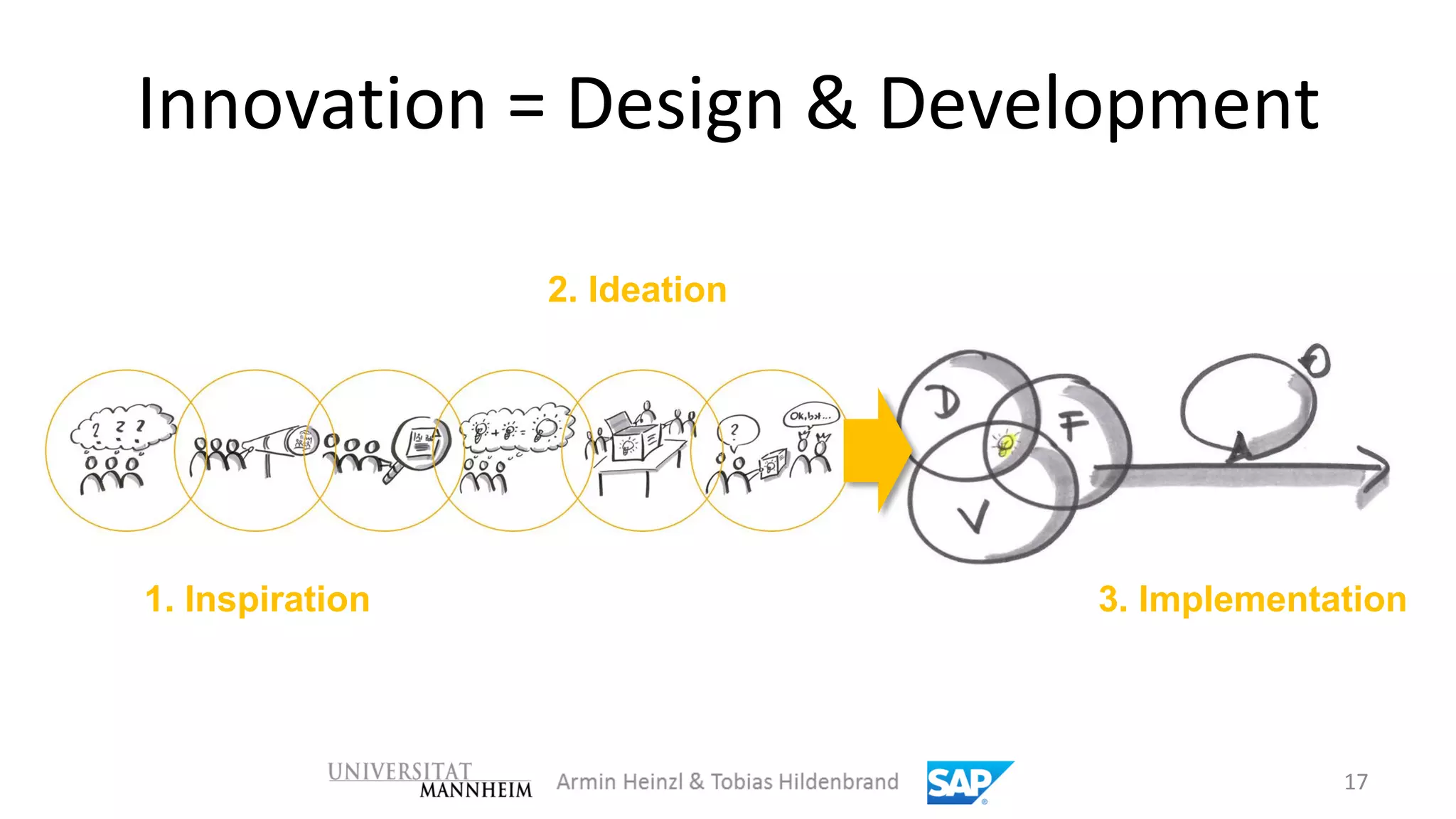
Innovation = Design & Development

                 2. Ideation


1. Inspiration                 3. Implementation


                                            17
How does innovation happen in practice?


                                      18
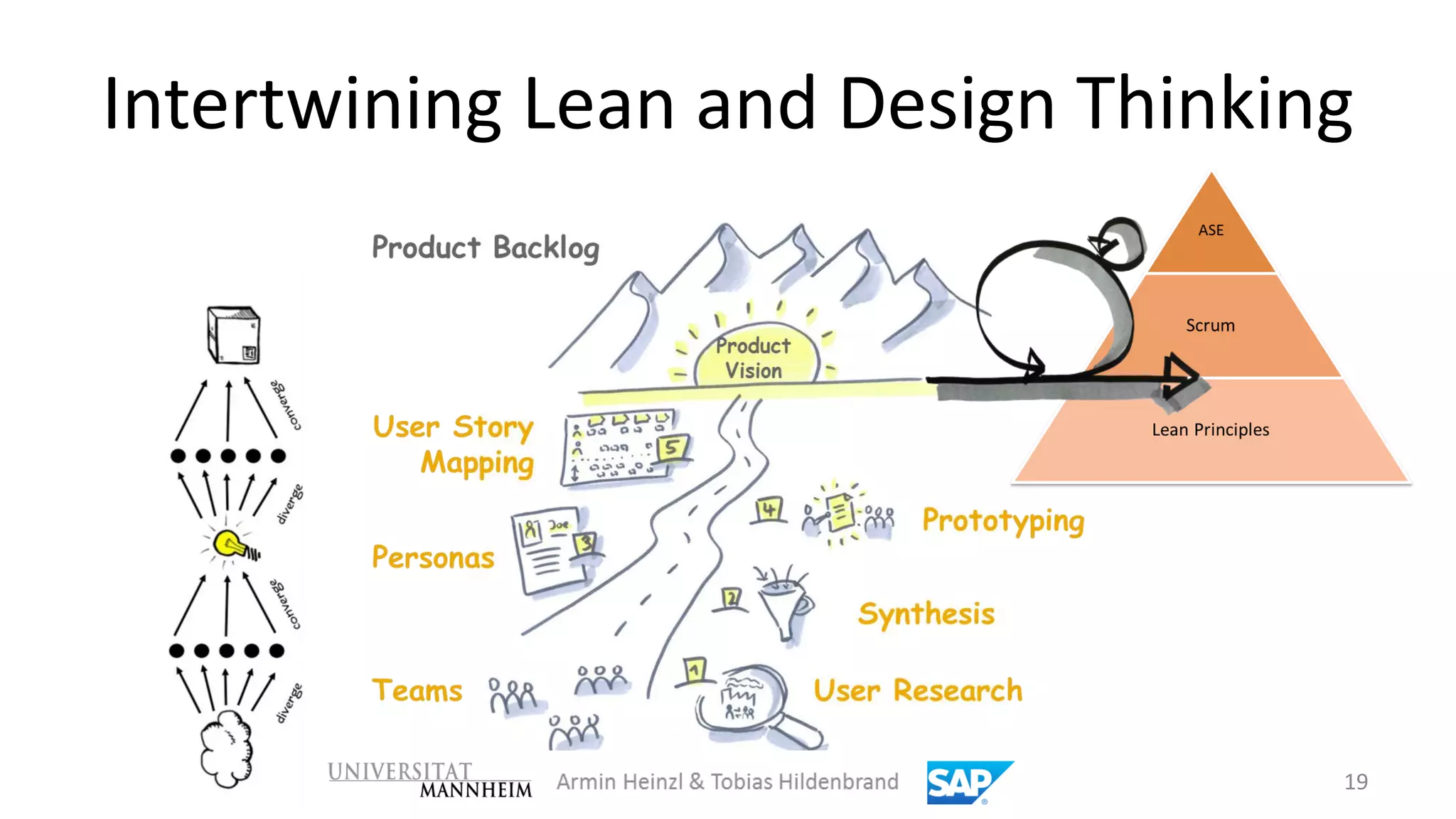
Intertwining Lean and Design Thinking


                                    19
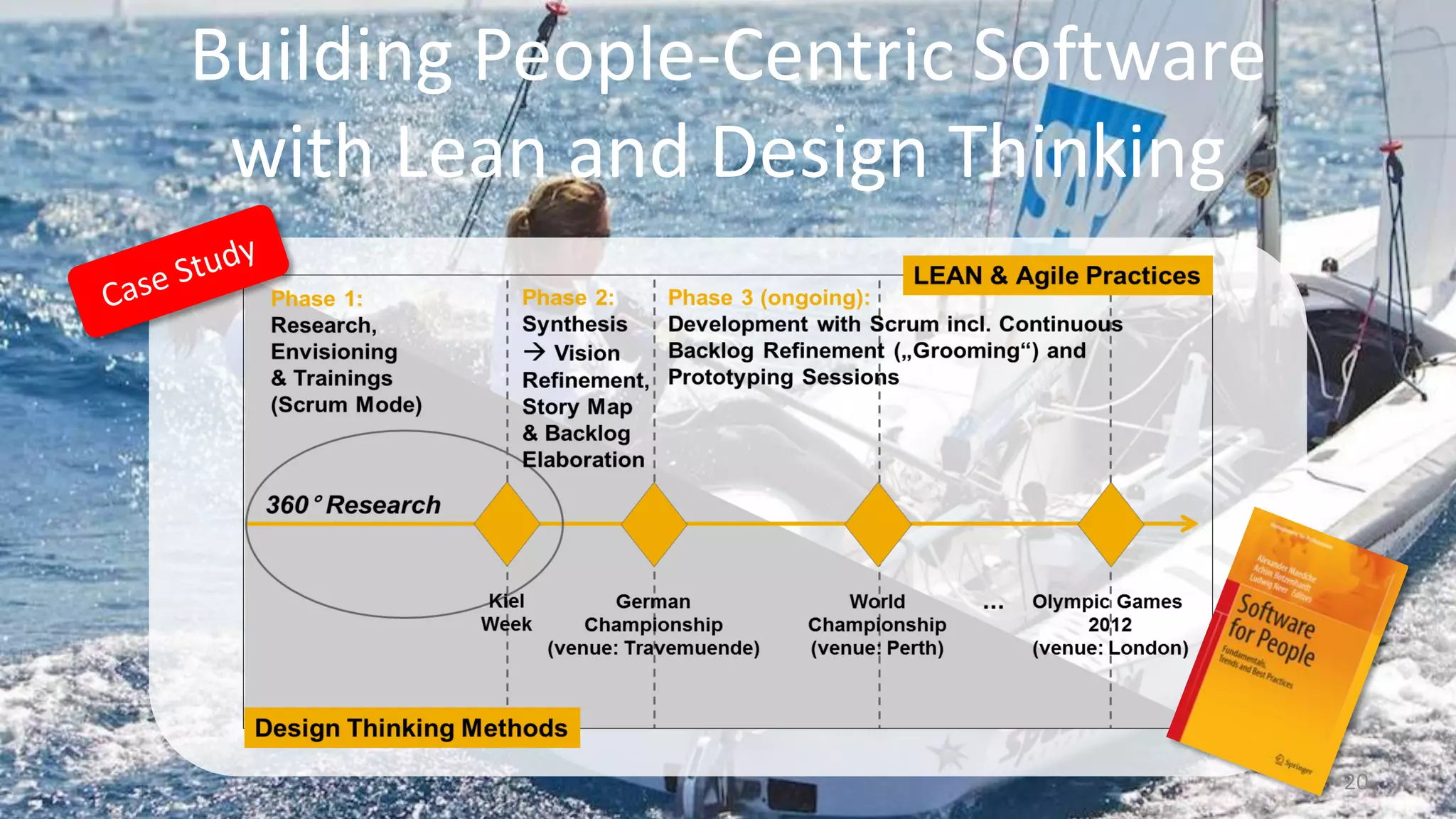
Building People-Centric Software
 with Lean and Design Thinking


                                   20
What are the three things to remember?


                                         21
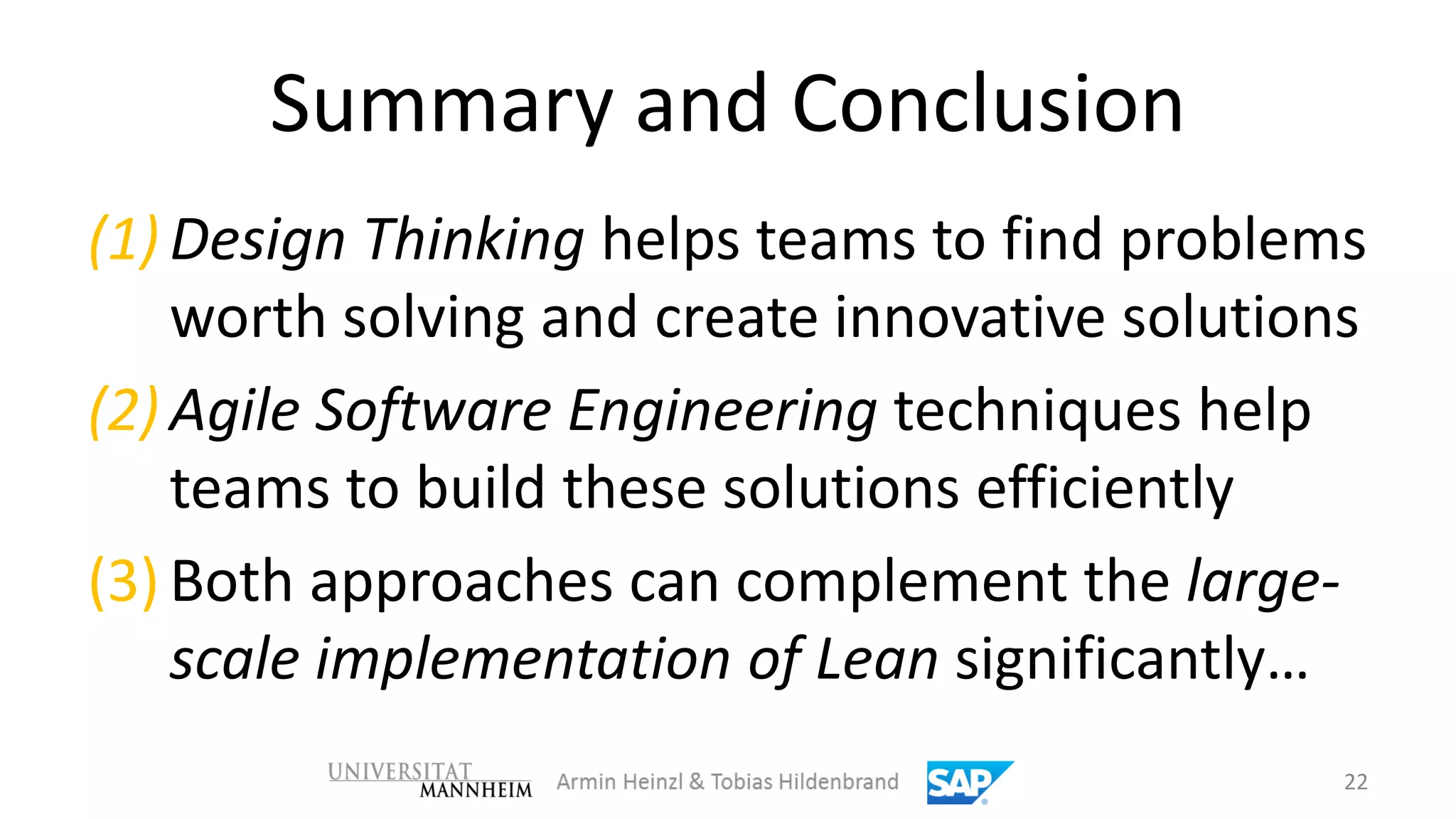
Summary and Conclusion
(1) Design Thinking helps teams to find problems
    worth solving and create innovative solutions
(2) Agile Software Engineering techniques help
    teams to build these solutions efficiently
(3) Both approaches can complement the large-
    scale implementation of Lean significantly…
                                                22
BACKUP MATERIAL

                  23
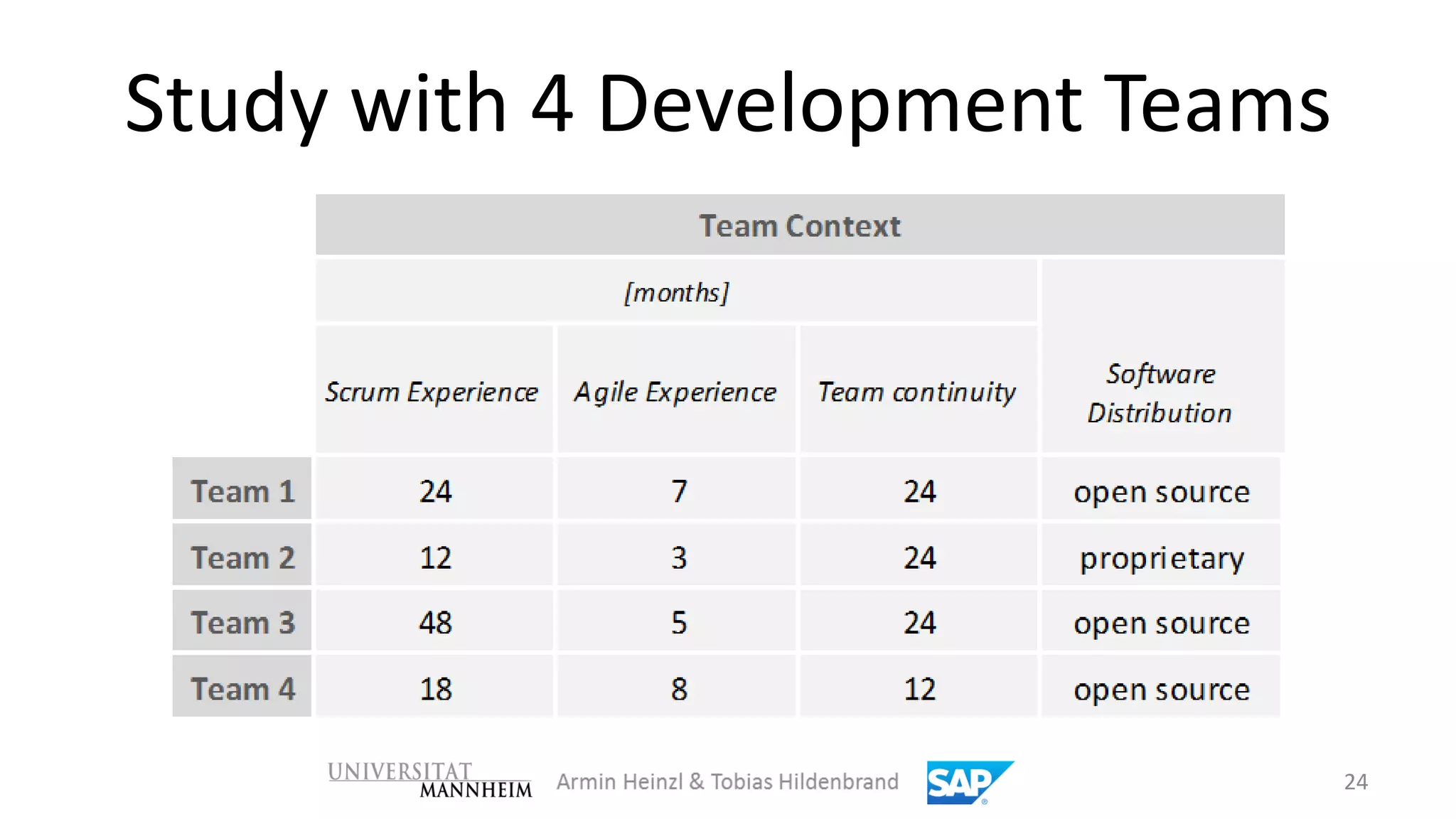
Study with 4 Development Teams


                                 24
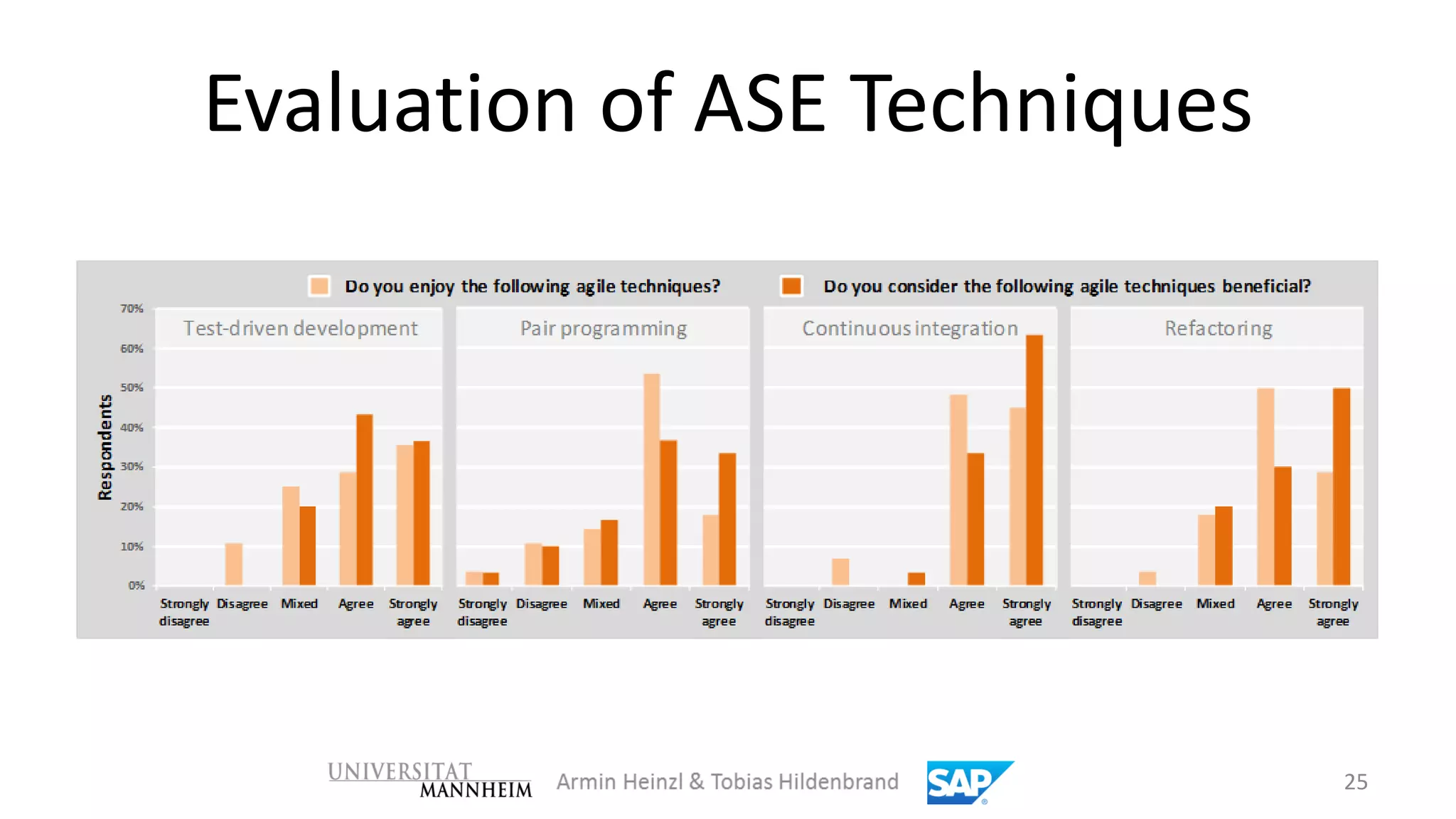
Evaluation of ASE Techniques


                               25
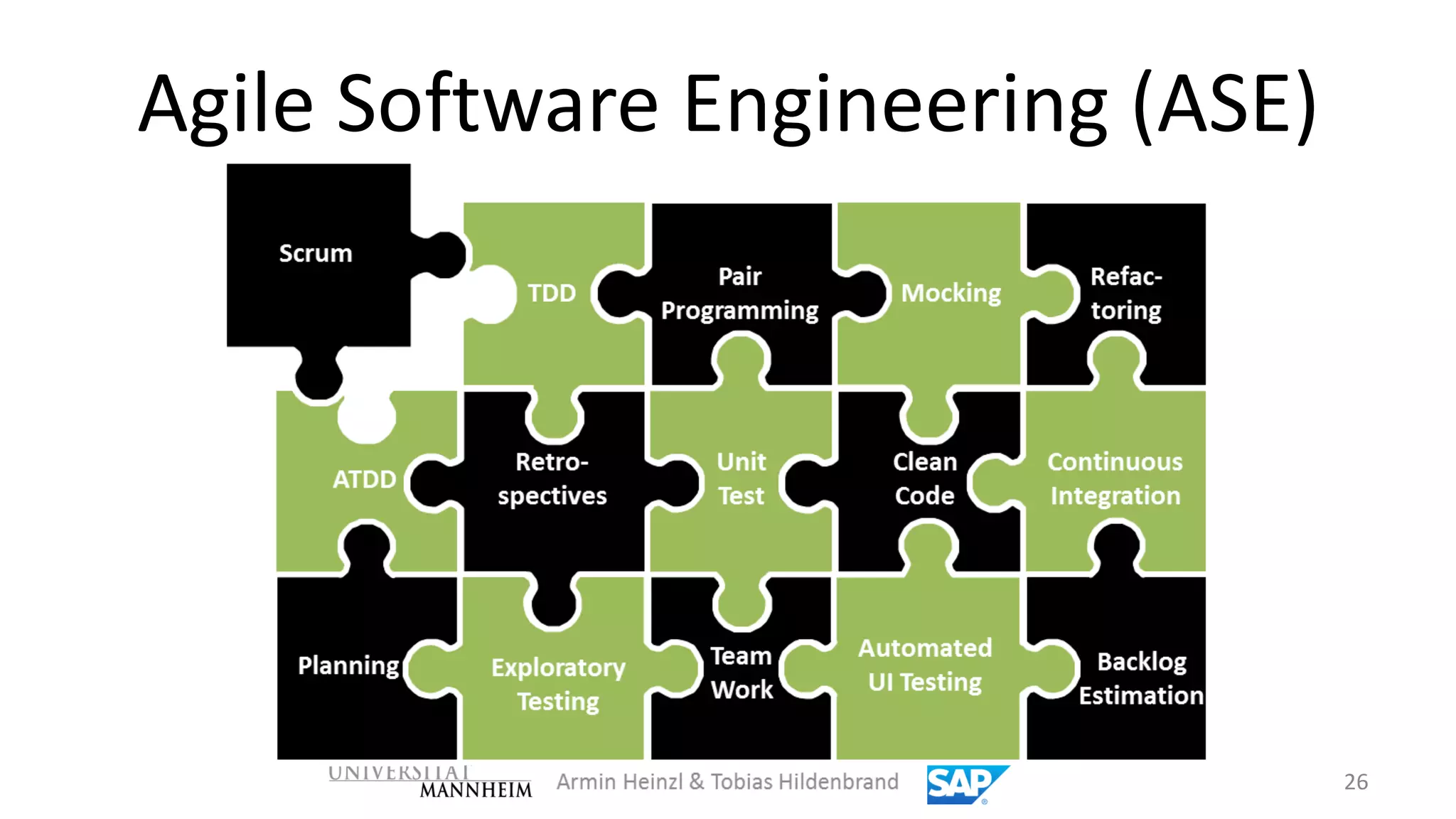
Agile Software Engineering (ASE)


                                   26

Agile Software Engineering and Design Thinking: Efficiency and Innovation in Lean Software Product Development

  • 1.
    „ Agile SoftwareEngineering and Design Thinking: Efficiency and Innovation in Lean Software Product Development“ Prof. Dr. Armin Heinzl & Dr. Tobias Hildenbrand 1
  • 2.
    Agenda  Introduction and Overview  Lean and Agile Development  Agile Software Engineering Techniques  Design Thinking and Innovation  Summary and Conclusion 2
  • 3.
    Overview: Two MainQuestions… (2) Where do innovative ideas and requirements come from? (1) How to build and deliver the software efficiently? 3
  • 4.
    Why lean andagile development at SAP? 4
  • 5.
  • 6.
    Lean Product DevelopmentFlow How to efficiently deliver innovative enterprise software to customers? 6
  • 7.
    Underlying Principles Source: Donald G. Reinertsen (2009) – Lean Product Development Flow 7
  • 8.
    Why do Scrumteams adopt agile engineering techniques? 8
  • 9.
    Agile Software Engineering Pair programming, test-driven development, continuous Specific agile techniques [6] ASE integration, refactoring Agile method Teams with Scrum master, product owner, developers as process framework [7] and an associated manager for people development Scrum Eliminate waste, build quality in, learn constantly, Lean principles [8] deliver fast, engage everyone, keep getting better Lean Principles 9
  • 10.
    Adoption of ASETechniques 10
  • 11.
    Adoption Patterns forASE • Minor variations for refactoring (REF) and continuous integration (CI) • Relatively low adoption rate for refactoring • Significant variations for pair programming and test driven development • Note: empirical inquiry represtens a snapshot- view 11
  • 12.
    Where do therequirements come from and how does innovation happen? 12
  • 13.
    An Analytic ApproachDoesn‘t Work 13
  • 14.
    Diverging and Convergingin Iterations 14
  • 15.
    Design Thinking A team-based,iterative approach to innovation 15
  • 16.
    Three “Space ofInnovation” 1. Human Desirability 2. Technical Feasibility Implementation 3. Economic Viability Based on: Tim Brown (2009): Change by Design 16
  • 17.
    Innovation = Design& Development 2. Ideation 1. Inspiration 3. Implementation 17
  • 18.
    How does innovationhappen in practice? 18
  • 19.
    Intertwining Lean andDesign Thinking 19
  • 20.
    Building People-Centric Software with Lean and Design Thinking 20
  • 21.
    What are thethree things to remember? 21
  • 22.
    Summary and Conclusion (1)Design Thinking helps teams to find problems worth solving and create innovative solutions (2) Agile Software Engineering techniques help teams to build these solutions efficiently (3) Both approaches can complement the large- scale implementation of Lean significantly… 22
  • 23.
  • 24.
    Study with 4Development Teams 24
  • 25.
    Evaluation of ASETechniques 25
  • 26.