A Taxonomy of Web 2.0 Technologies  (and the role of Twitter in Higher Education) ALT-C 2010 Guy Saward, University of Hertfordshire
What’s the point  of Twitter? Why a wiki?   Why not a blog? How do I podcast my lectures? Who Cares?
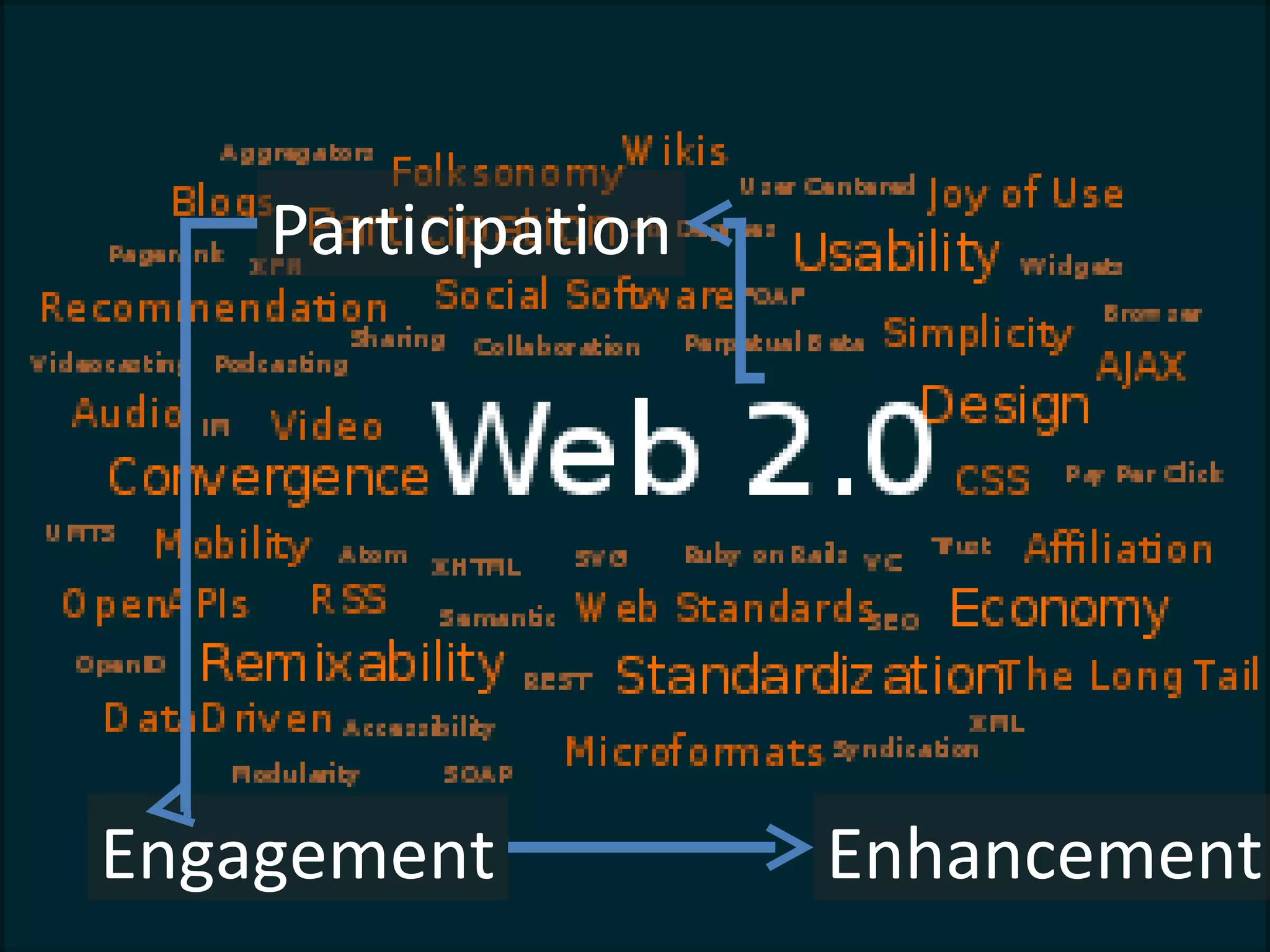
Participation Engagement Enhancement
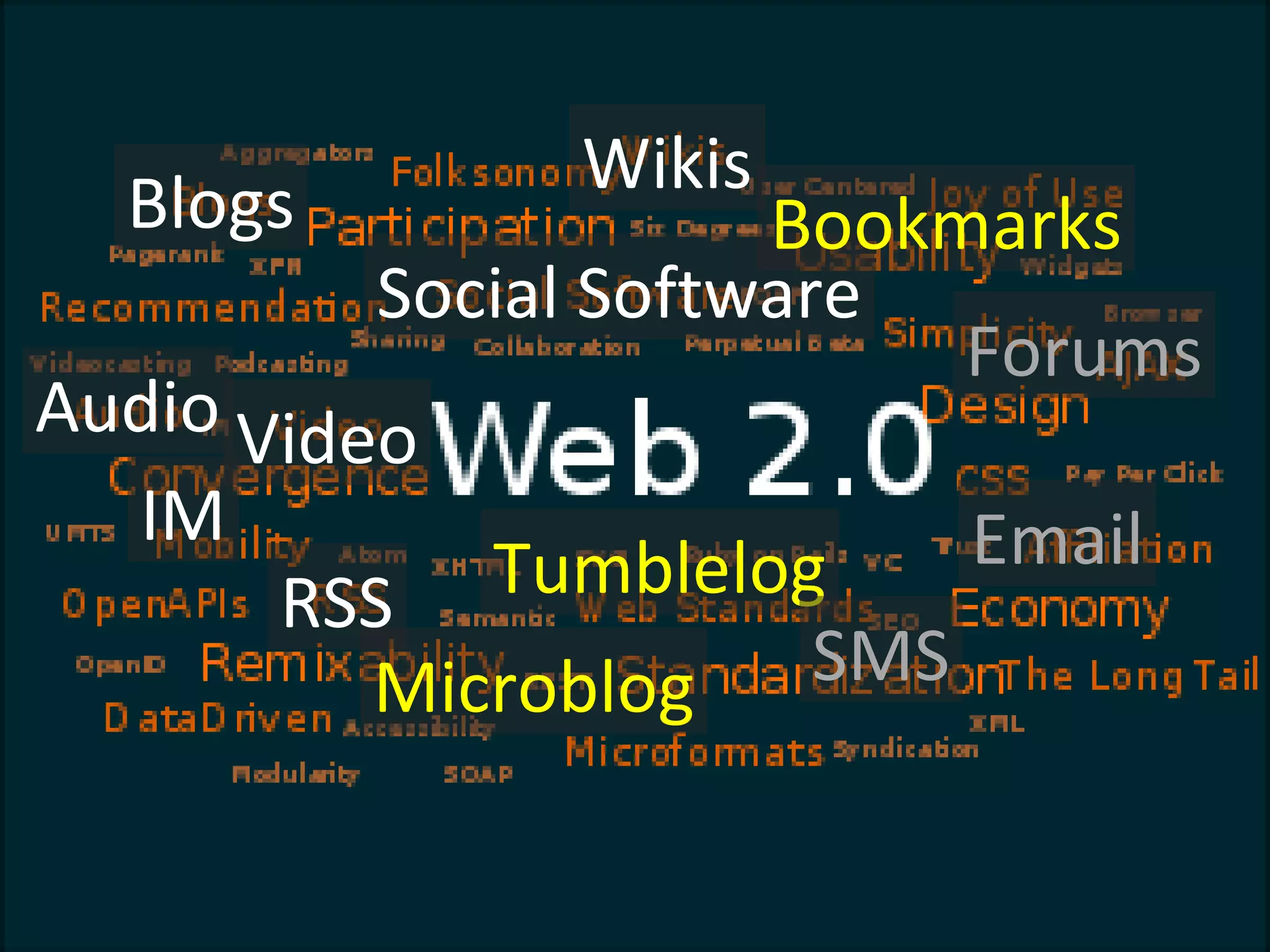
Wikis Blogs Audio Video RSS Social Software Microblog Tumblelog IM Bookmarks SMS Forums Email
Digital Literacy ≠ ICT skills “ Staff capability with ICT  is a further dimension of the digital divide …  and effective use of technology to enhance learning is as much of an issue as getting it to work”  [JISC 2009]
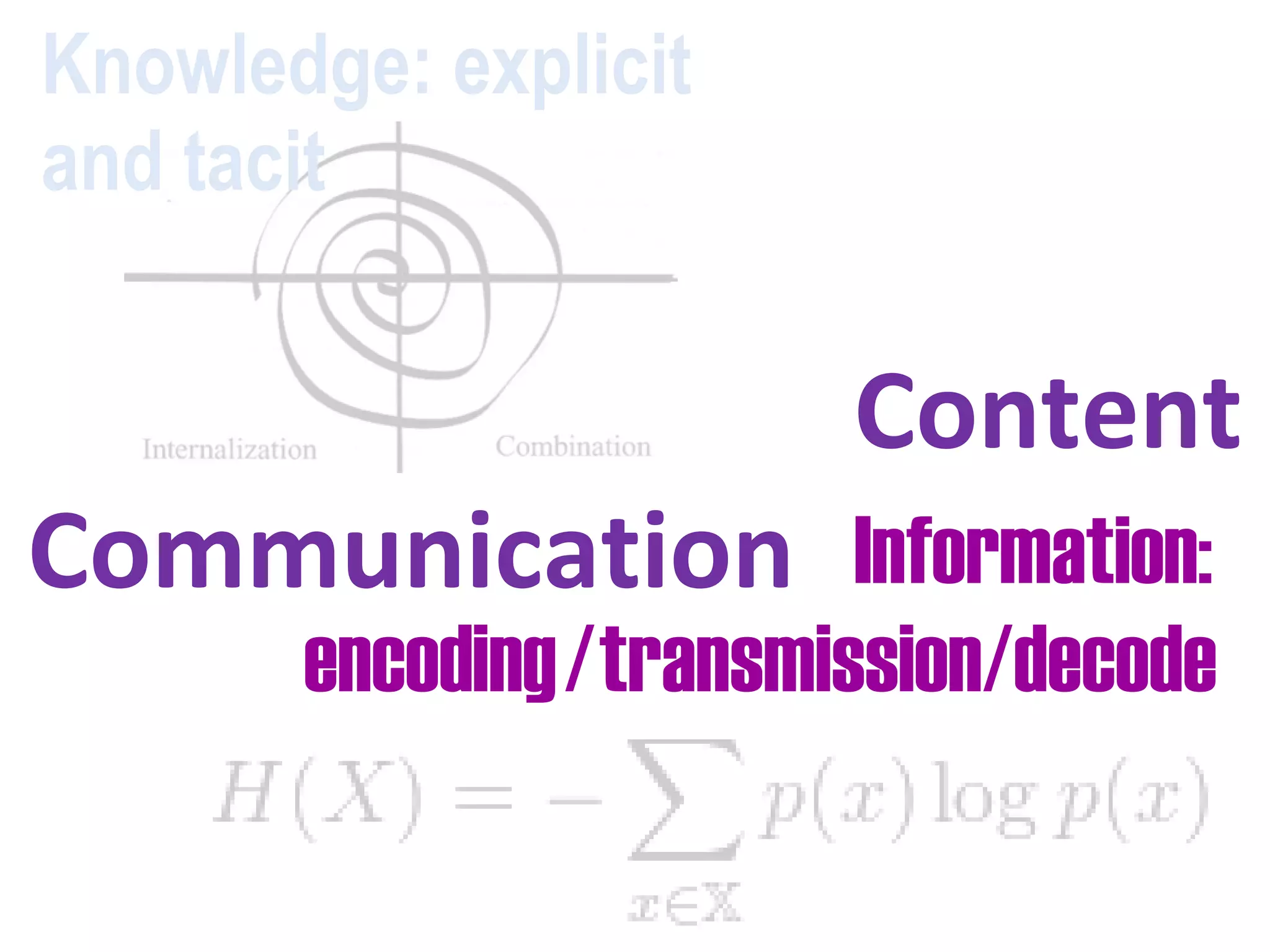
Knowledge: explicit and tacit Content Communication Information: transmission/decode encoding /
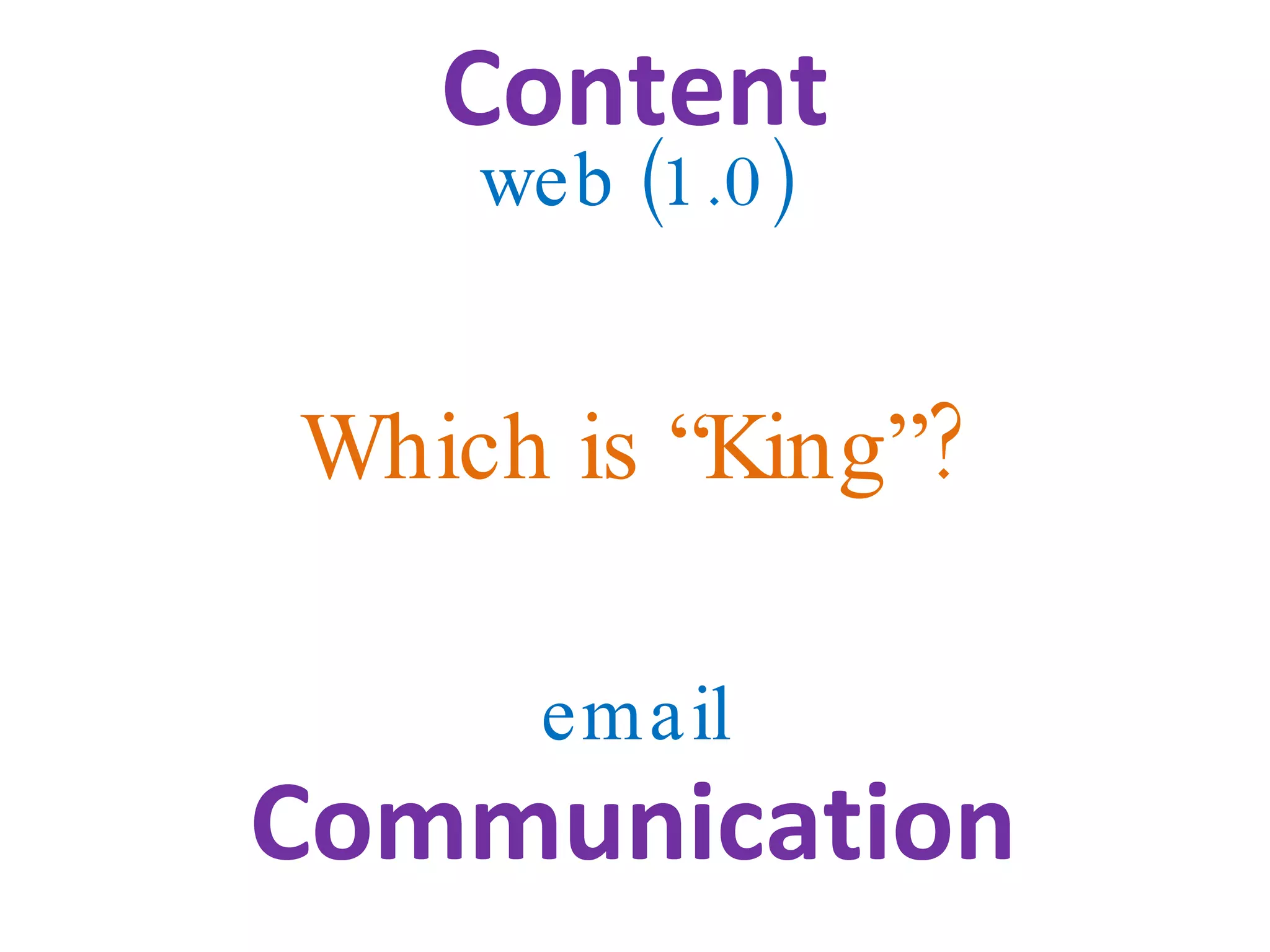
Content web (1.0) Which   is “King”? email Communication
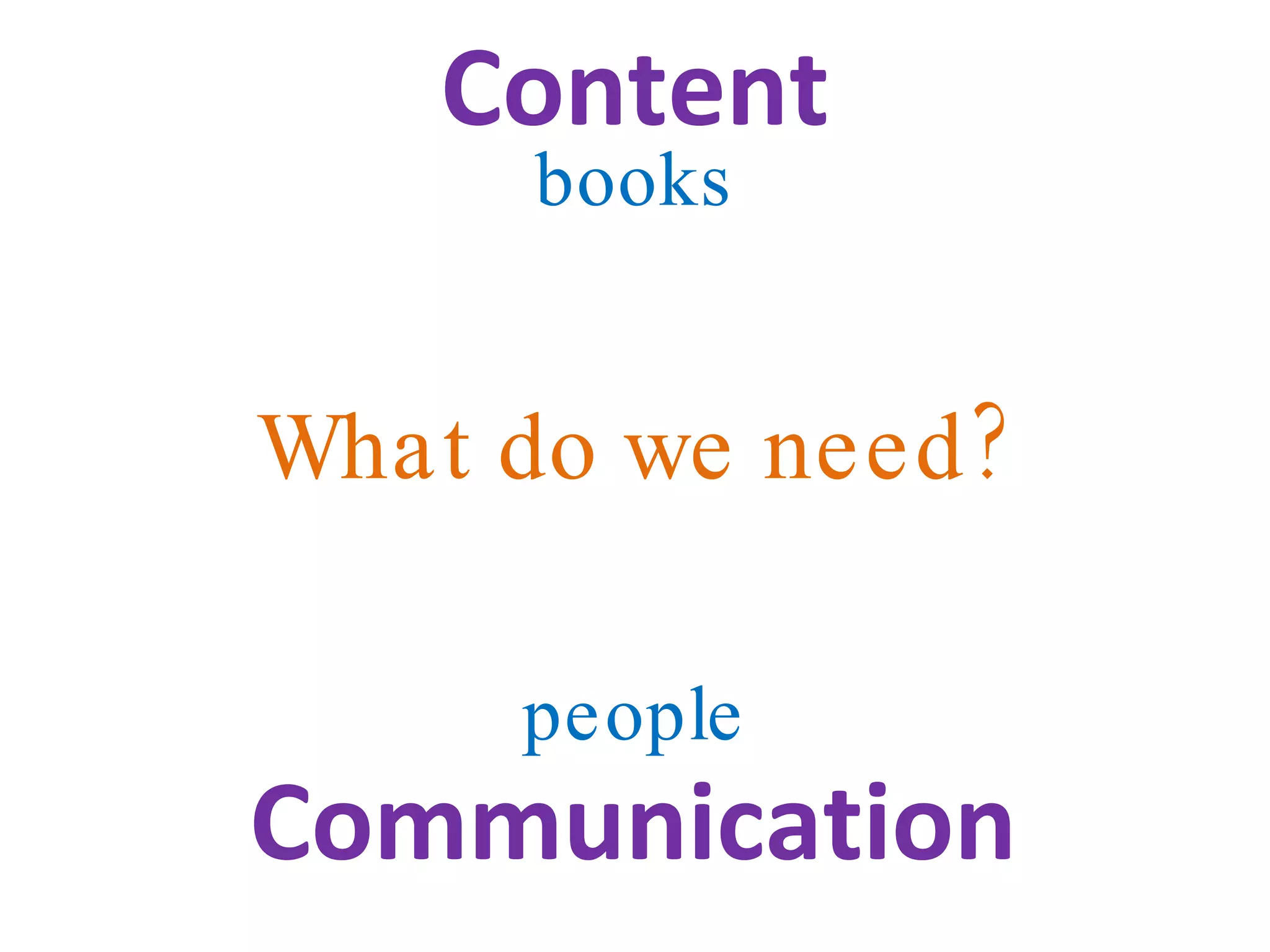
Content books What do we need? people Communication
Content What have we got? Communication
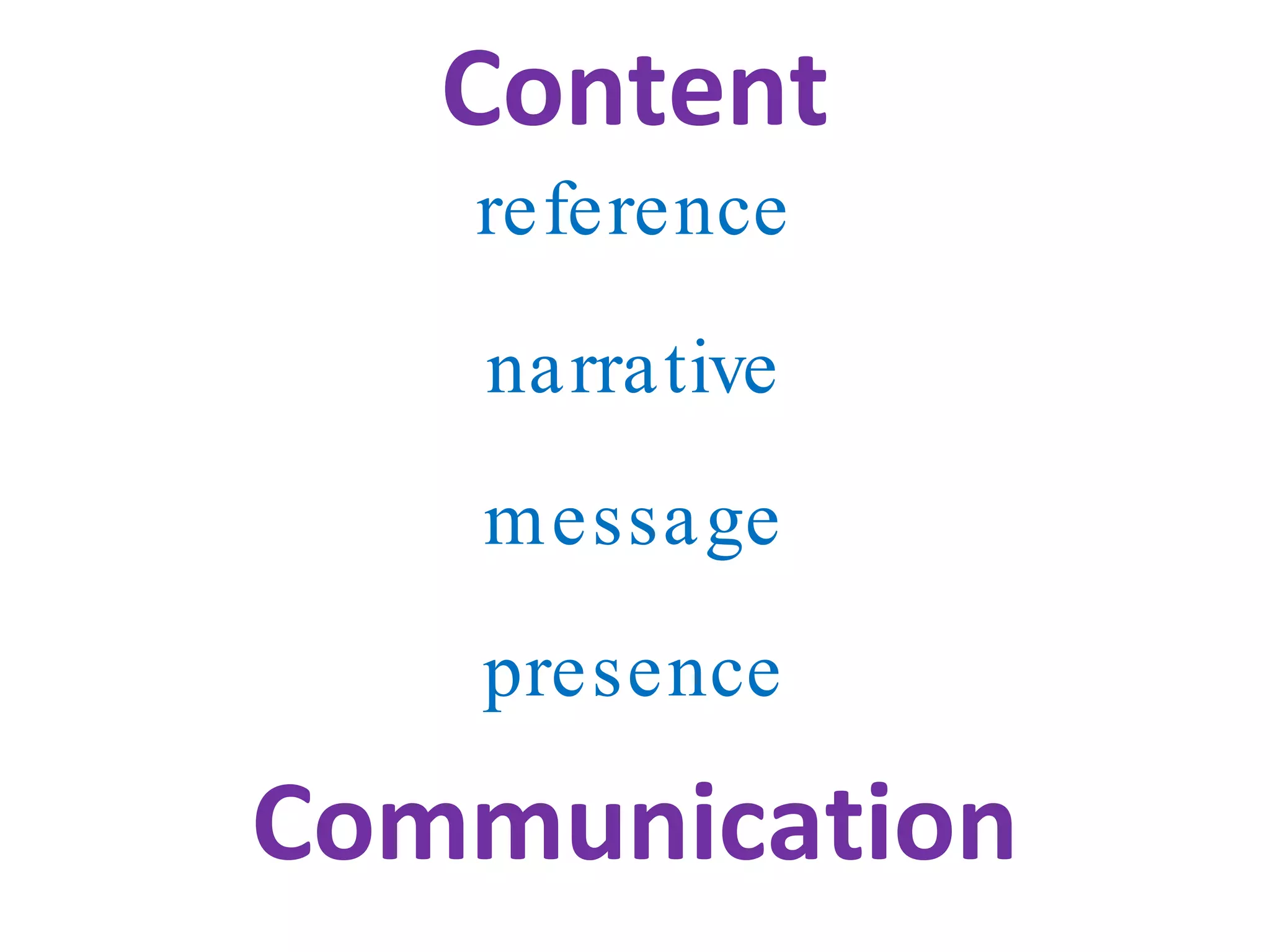
Content reference Communication narrative message presence
Content Communication reference narrative message presence
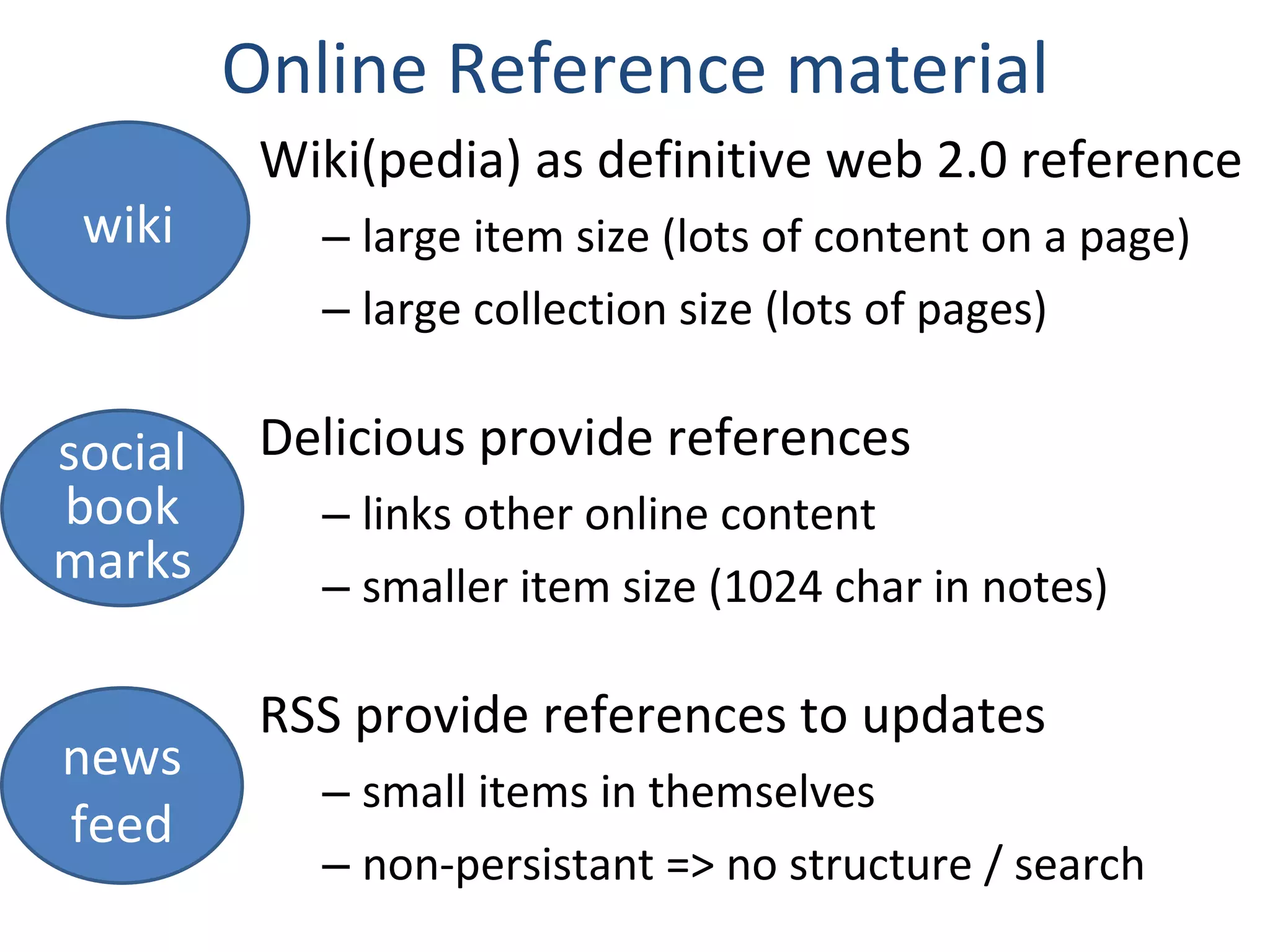
Online Reference material Wiki(pedia) as definitive web 2.0 reference large item size (lots of content on a page) large collection size (lots of pages) Delicious provide references  links other online content smaller item size (1024 char in notes) RSS provide references to updates small items in themselves non-persistant => no structure / search wiki social book marks news feed
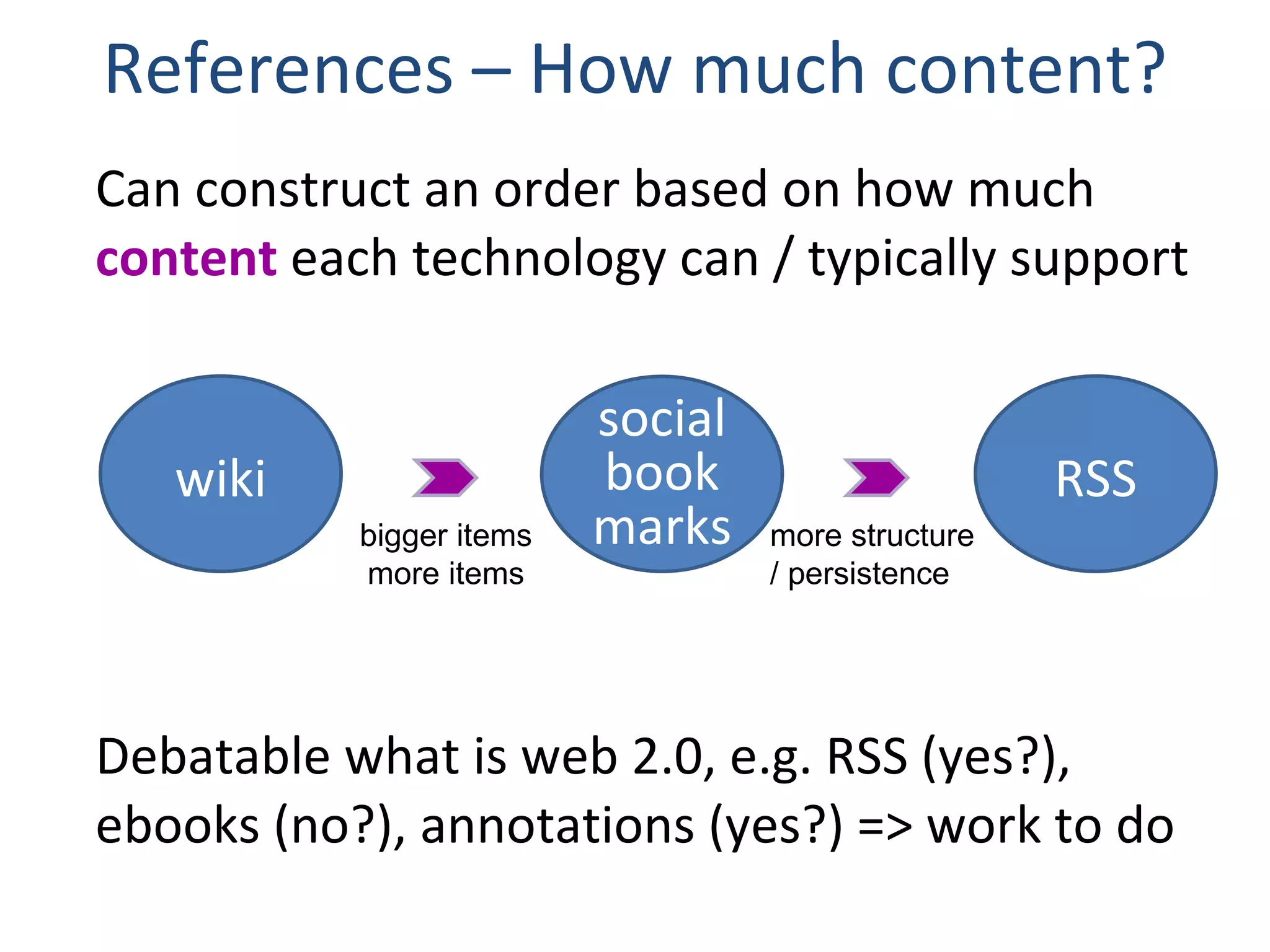
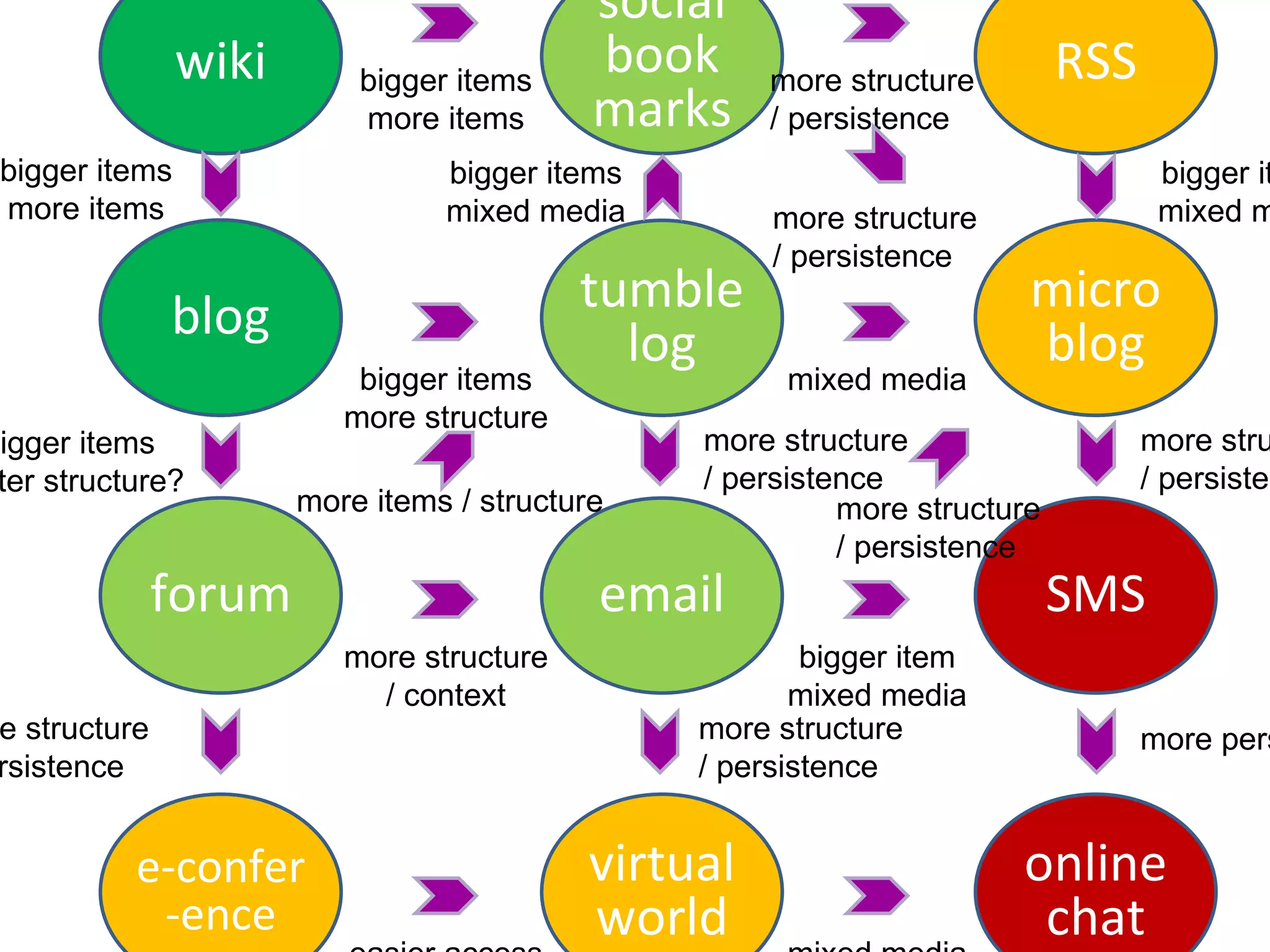
References – How much content? Can construct an order based on how much  content  each technology can / typically support Debatable what is web 2.0, e.g. RSS (yes?), ebooks (no?), annotations (yes?) => work to do wiki social book marks RSS more structure / persistence bigger items more items
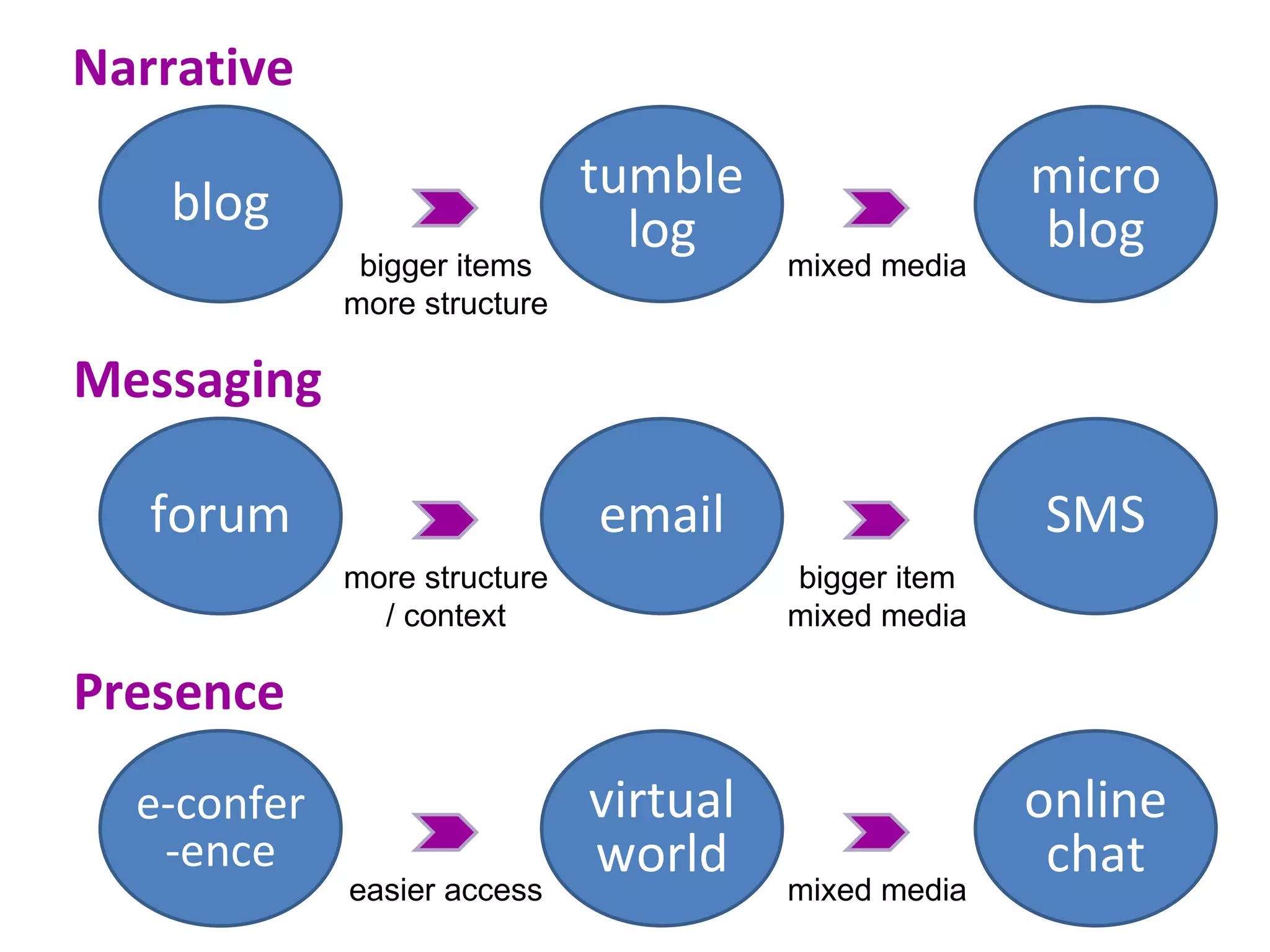
blog tumblelog micro blog mixed media bigger items more structure Narrative forum email SMS bigger item mixed media more structure / context Messaging e-confer -ence virtual world online chat mixed media easier access Presence
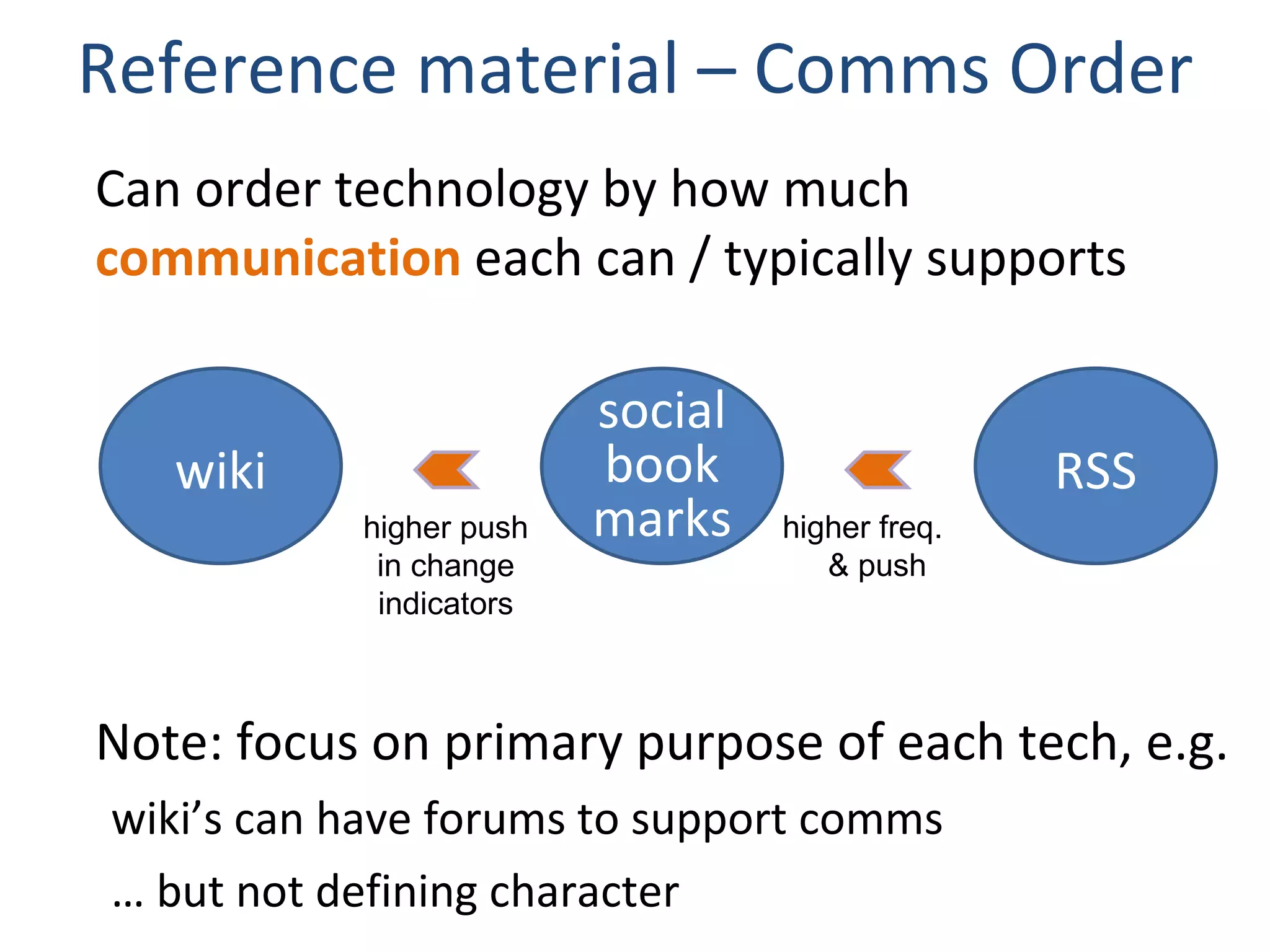
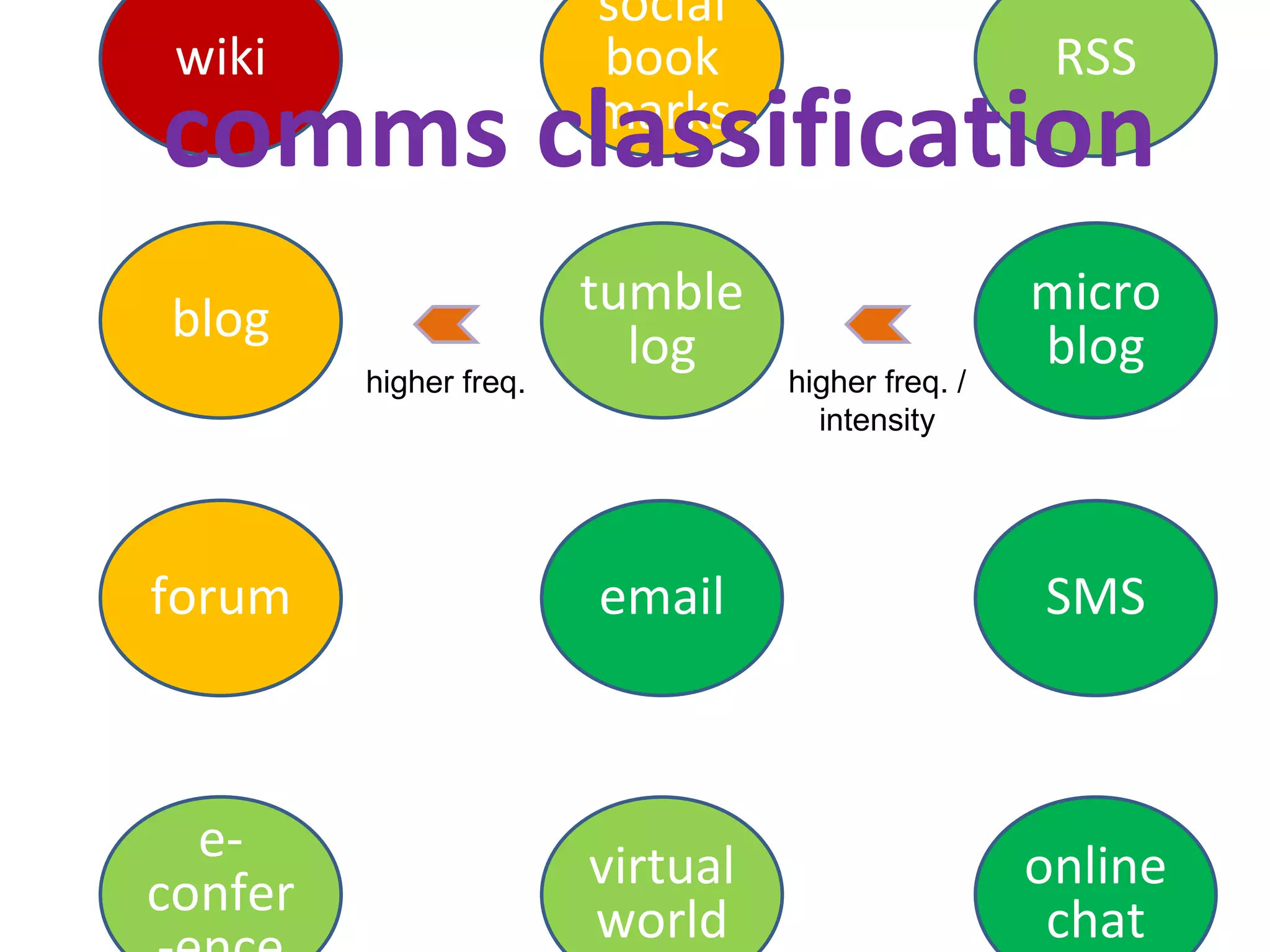
Reference material – Comms Order Can order technology by how much  communication  each can / typically supports Note: focus on primary purpose of each tech, e.g. wiki’s can have forums to support comms …  but not defining character wiki social book marks RSS higher freq. & push higher push in change indicators
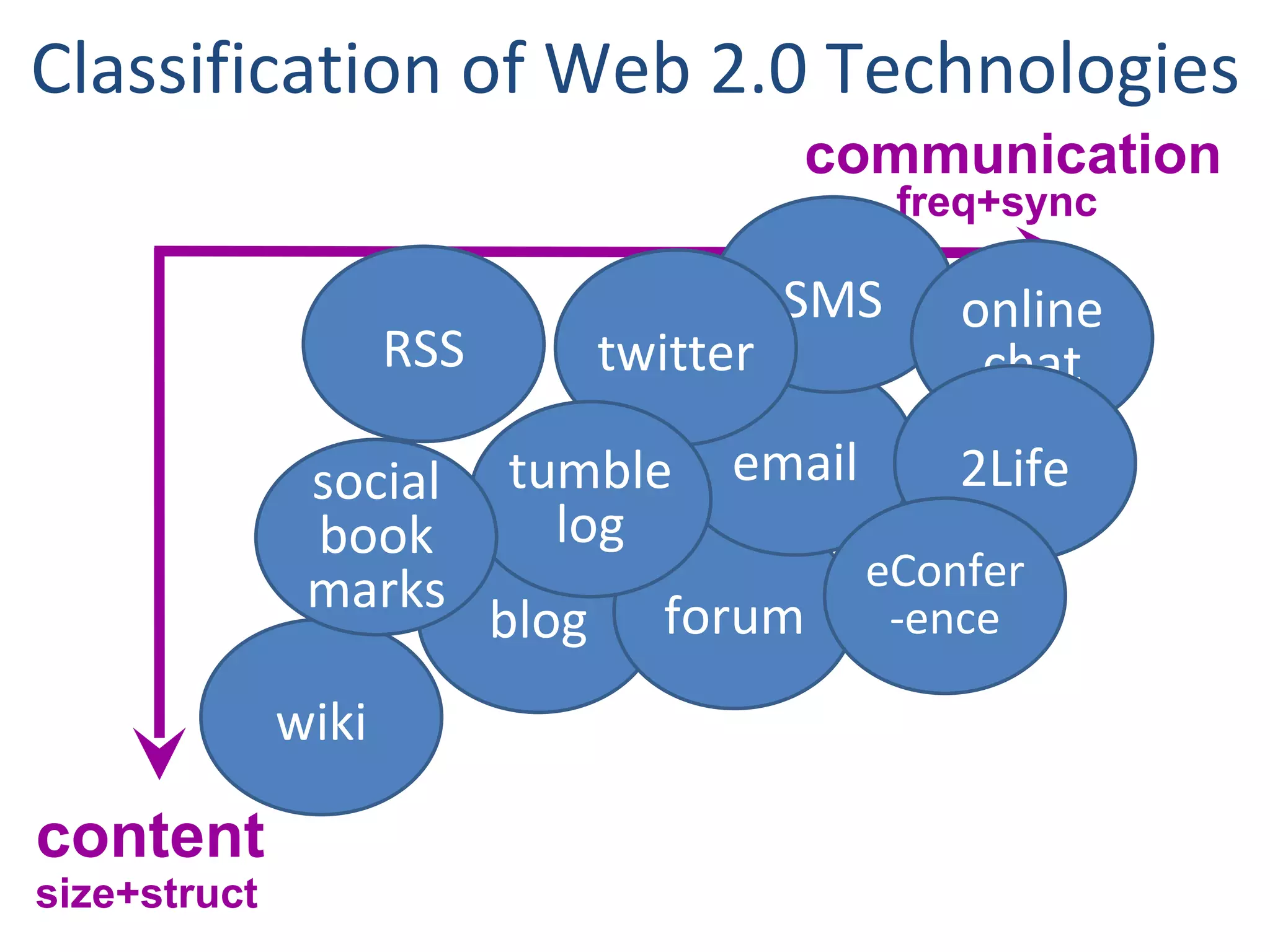
Classification of Web 2.0 Technologies communication content freq+sync size+struct wiki blog forum email SMS twitter online chat tumblelog social book marks RSS 2Life eConfer-ence
Who Cares?
What’s the point  of Twitter? Why a wiki?   Why not a blog? How do I podcast my lectures?
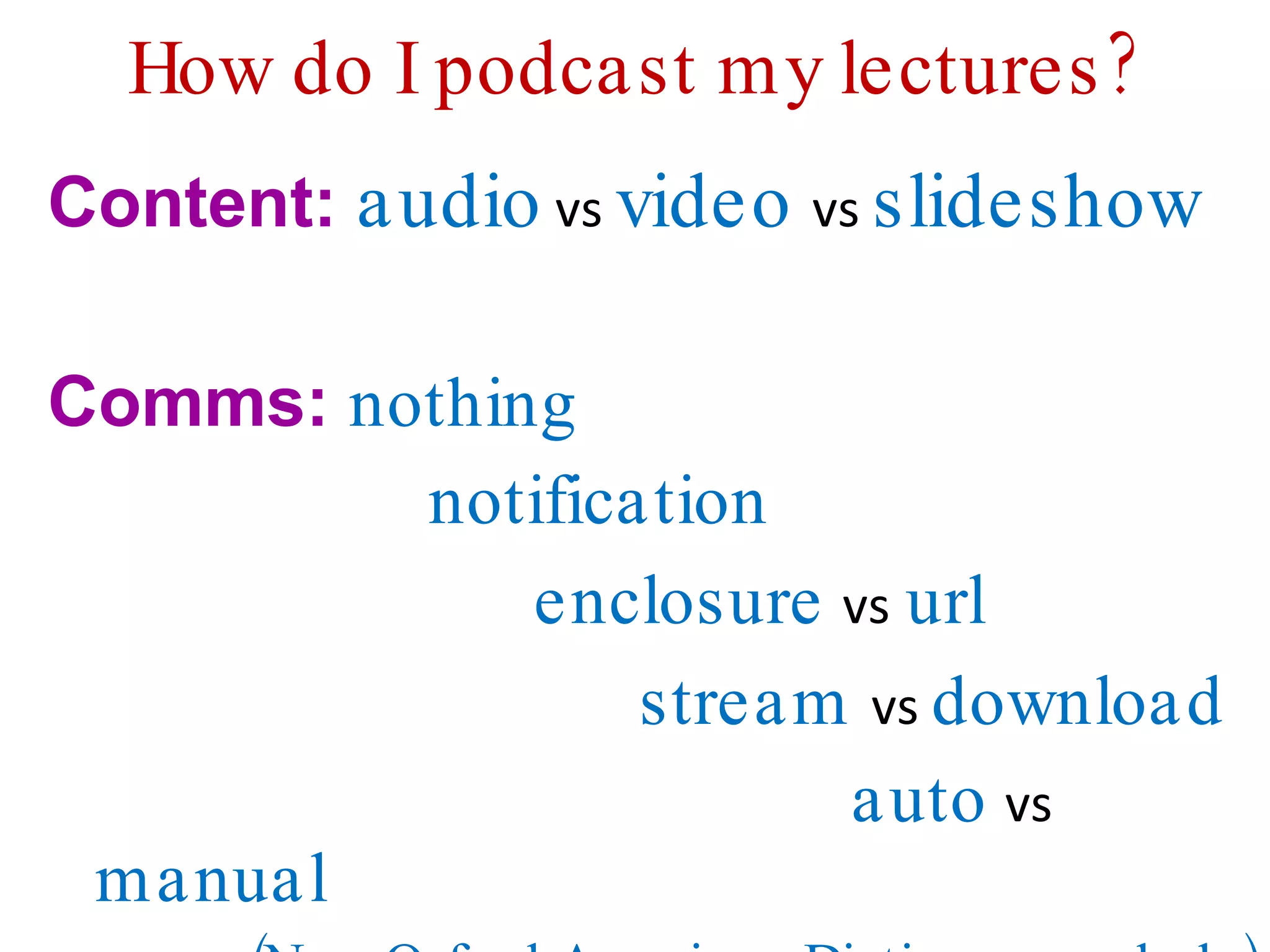
How do I podcast my lectures? Content:  audio  vs  video  vs  slideshow   Comms:  nothing notification   enclosure   vs   url    stream  vs  download   auto  vs  manual (New Oxford American Dictionary no help)
tumblelog micro blog tumblelog micro blog blog wiki blog forum email SMS e-confer -ence virtual world online chat wiki social book marks RSS mixed media bigger items more structure bigger item mixed media more structure / context mixed media easier access more structure / persistence bigger items more items bigger items more items bigger items mixed media more structure / persistence more structure / persistence bigger items better structure? bigger items mixed media more structure / persistence more structure / persistence more items / structure more structure / persistence more structure / persistence more persistence
blog tumblelog micro blog forum email SMS e-confer -ence virtual world online chat wiki social book marks RSS comms classification higher freq. / intensity higher freq.
Does it help?
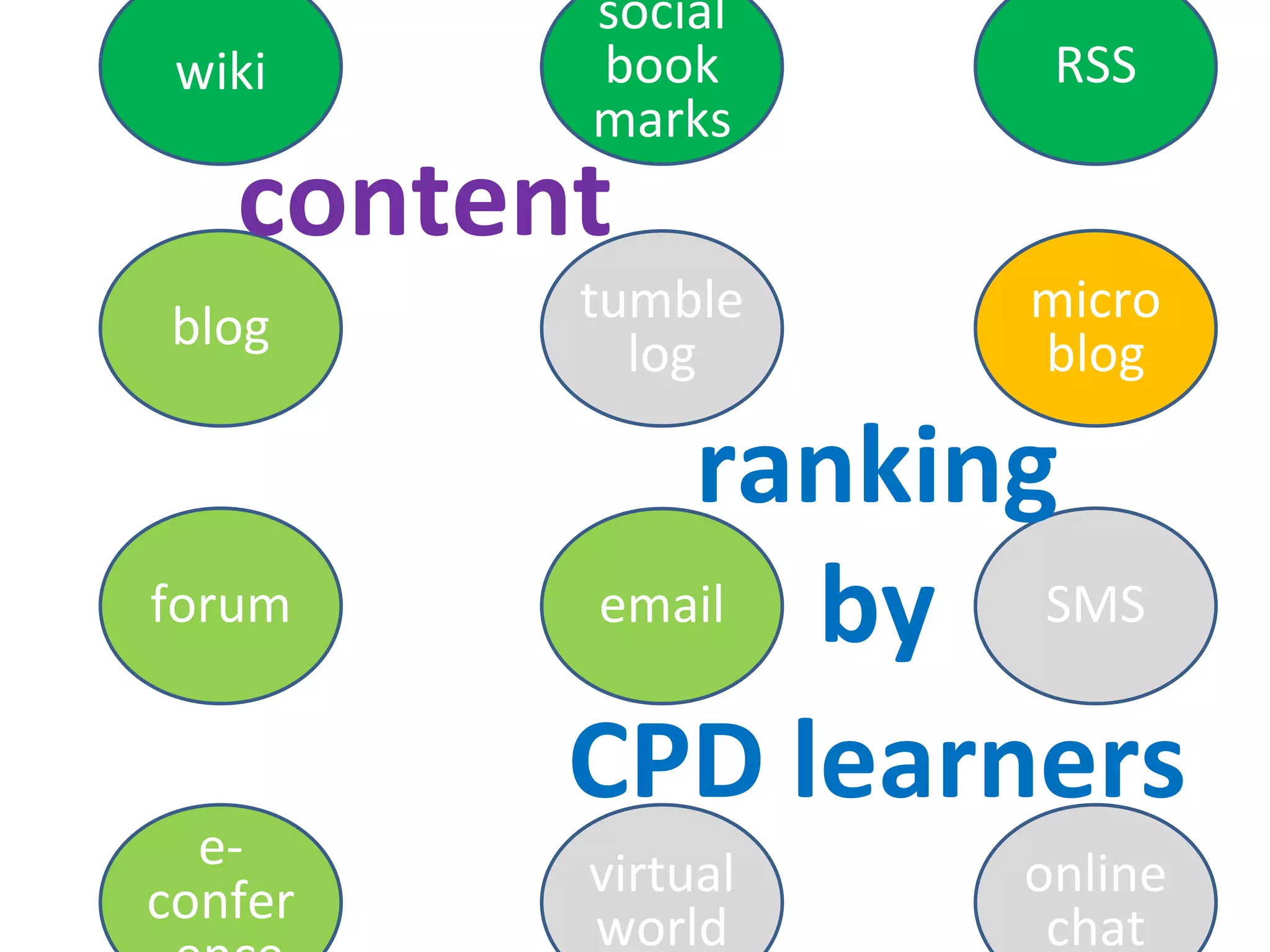
blog tumblelog micro blog forum email SMS e-confer -ence virtual world online chat wiki social book marks RSS content ranking by CPD learners
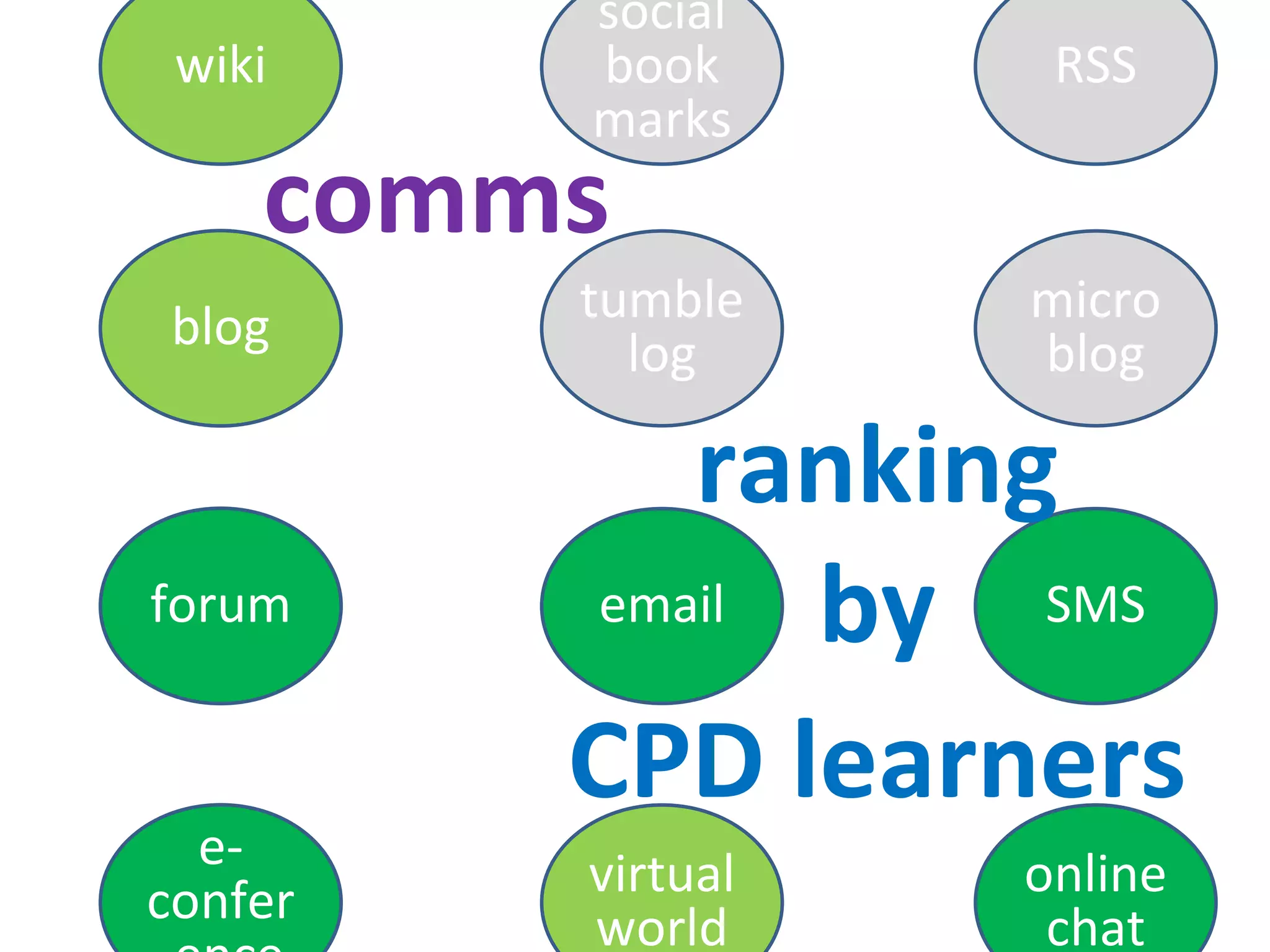
blog tumblelog micro blog forum email SMS e-confer -ence virtual world online chat wiki social book marks RSS comms ranking by CPD learners
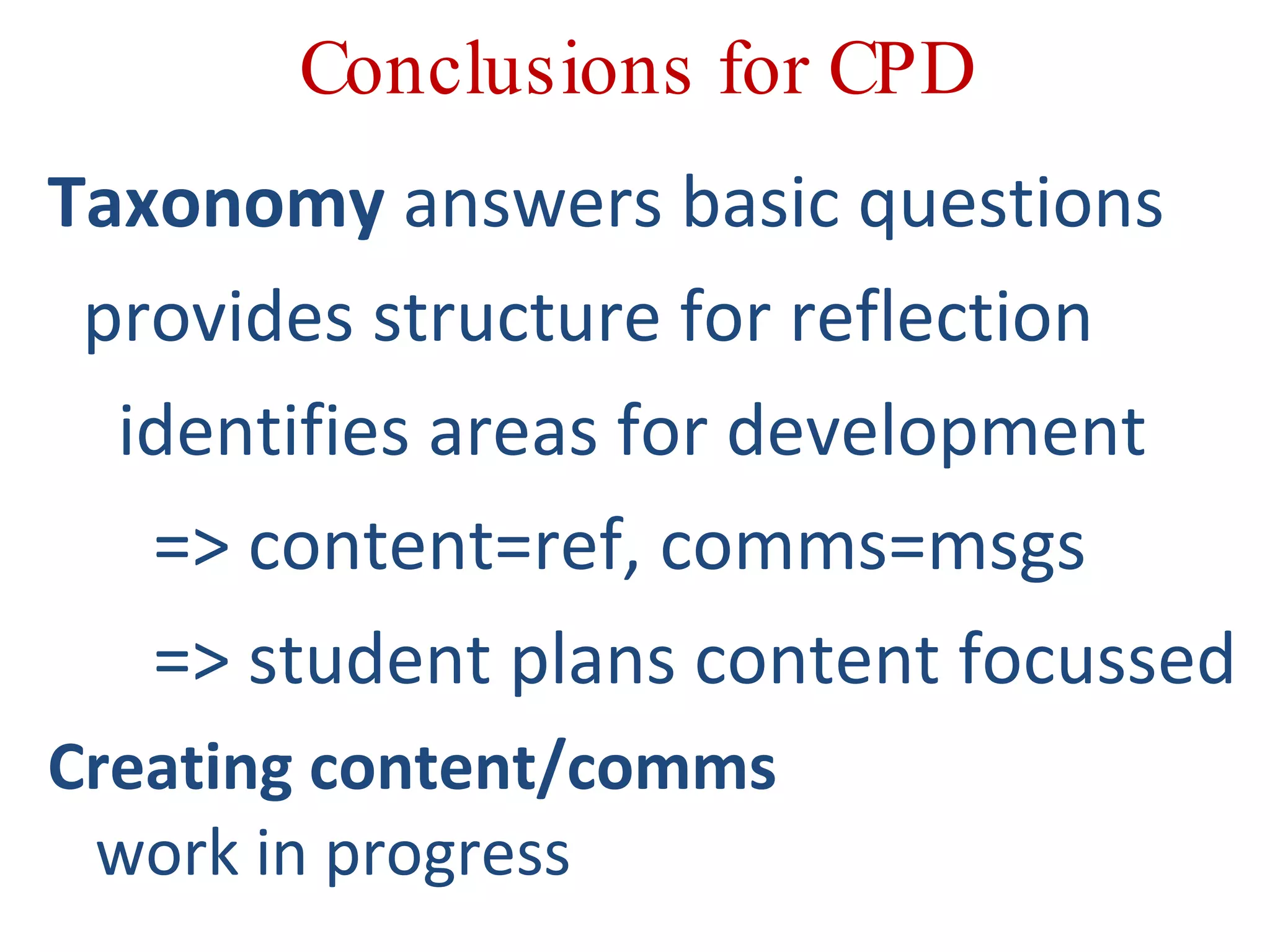
Conclusions for CPD Taxonomy  answers basic questions provides structure for reflection identifies areas for development => content=ref, comms=msgs => student plans content focussed Creating content/comms  work in progress
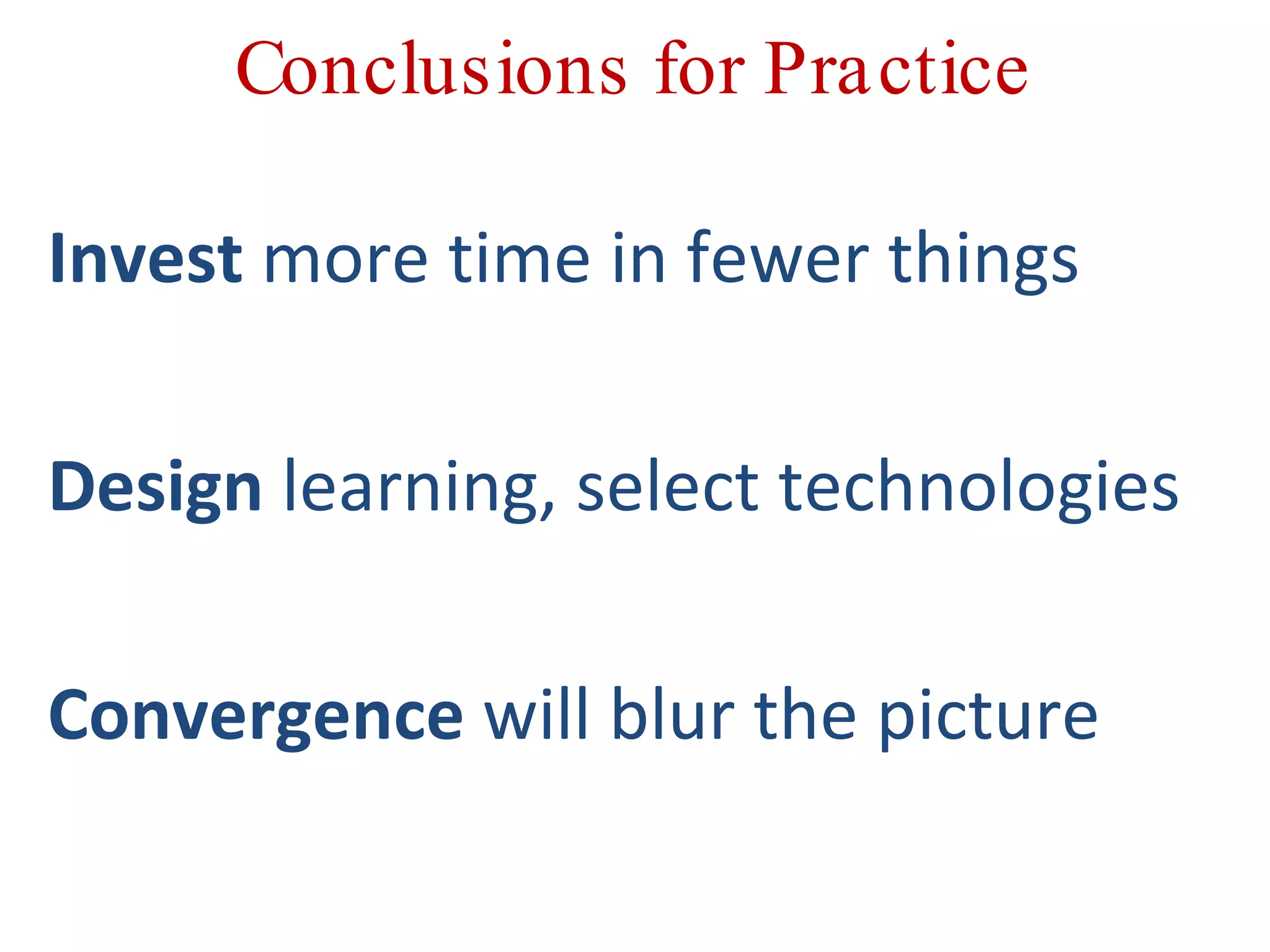
Conclusions for Practice Invest  more time in fewer things Design  learning, select technologies Convergence  will blur the picture
Does it work  for you? Links with theory >
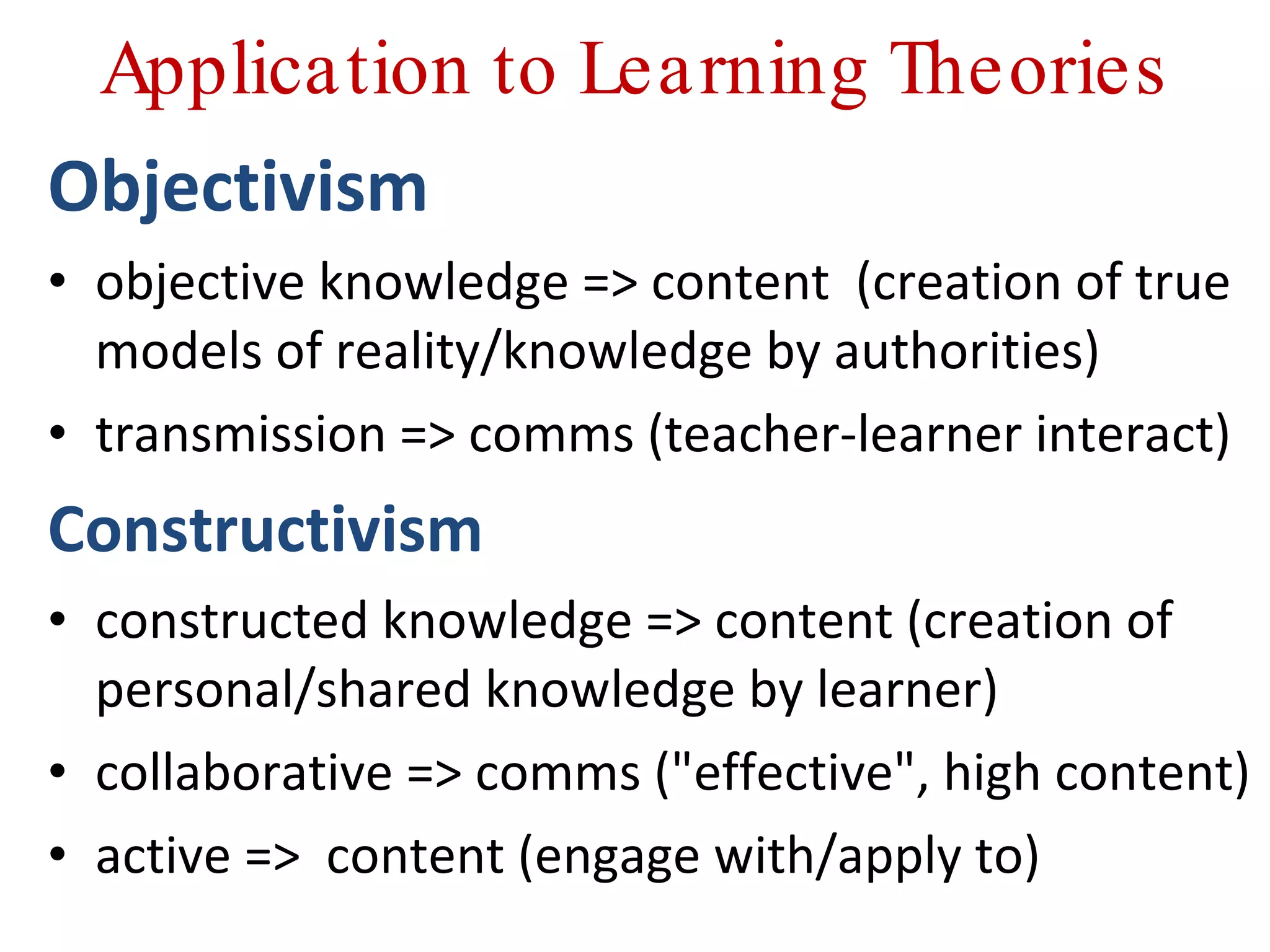
Application to Learning Theories Objectivism objective knowledge => content  (creation of true models of reality/knowledge by authorities) transmission => comms (teacher-learner interact) Constructivism constructed knowledge => content (creation of personal/shared knowledge by learner) collaborative => comms ("effective", high content) active =>  content (engage with/apply to)
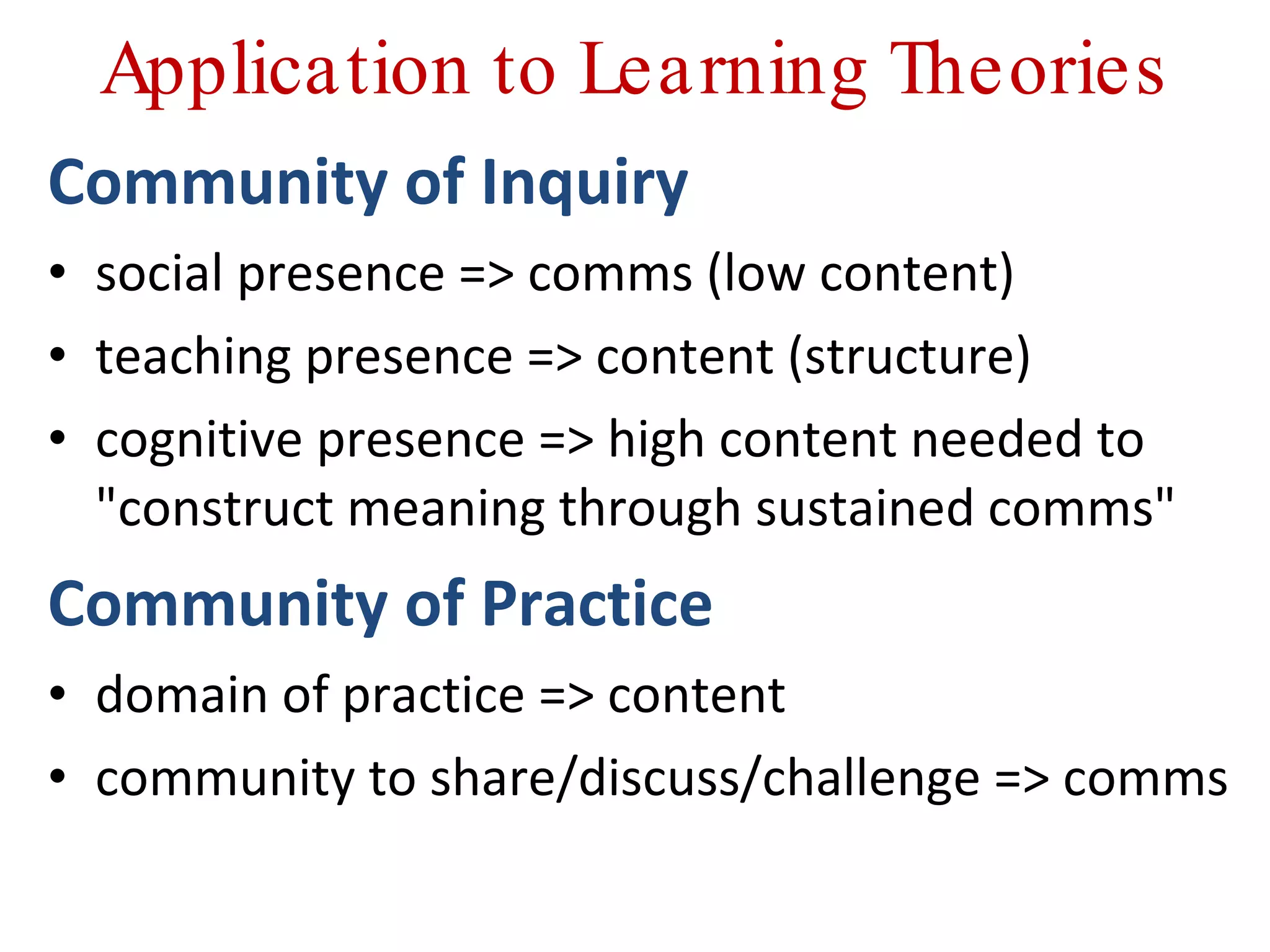
Application to Learning Theories Community of Inquiry social presence => comms (low content) teaching presence => content (structure) cognitive presence => high content needed to "construct meaning through sustained comms"  Community of Practice domain of practice => content community to share/discuss/challenge => comms
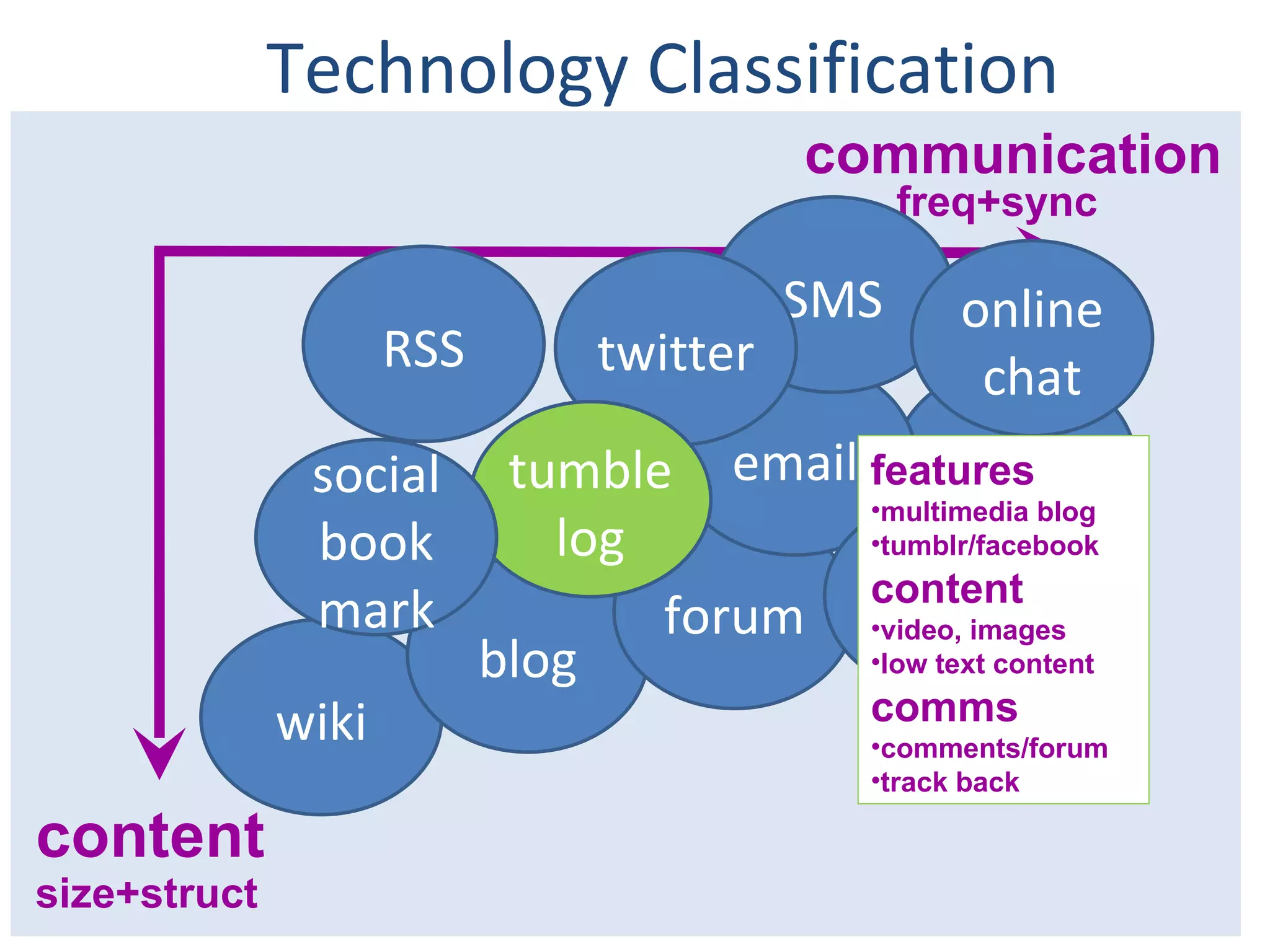
Technology Classification tumblelog communication content freq+sync size+struct wiki blog 2Life forum email SMS twitter eConference online chat tumblelog social book mark RSS features multimedia blog tumblr/facebook content video, images low text content comms comments/forum track back

Categorising Web 2.0 Apps for Education

  • 1.
    A Taxonomy ofWeb 2.0 Technologies (and the role of Twitter in Higher Education) ALT-C 2010 Guy Saward, University of Hertfordshire
  • 2.
    What’s the point of Twitter? Why a wiki? Why not a blog? How do I podcast my lectures? Who Cares?
  • 3.
  • 4.
    Wikis Blogs AudioVideo RSS Social Software Microblog Tumblelog IM Bookmarks SMS Forums Email
  • 5.
    Digital Literacy ≠ICT skills “ Staff capability with ICT is a further dimension of the digital divide … and effective use of technology to enhance learning is as much of an issue as getting it to work” [JISC 2009]
  • 6.
    Knowledge: explicit andtacit Content Communication Information: transmission/decode encoding /
  • 7.
    Content web (1.0)Which is “King”? email Communication
  • 8.
    Content books Whatdo we need? people Communication
  • 9.
    Content What havewe got? Communication
  • 10.
    Content reference Communicationnarrative message presence
  • 11.
    Content Communication referencenarrative message presence
  • 12.
    Online Reference materialWiki(pedia) as definitive web 2.0 reference large item size (lots of content on a page) large collection size (lots of pages) Delicious provide references links other online content smaller item size (1024 char in notes) RSS provide references to updates small items in themselves non-persistant => no structure / search wiki social book marks news feed
  • 13.
    References – Howmuch content? Can construct an order based on how much content each technology can / typically support Debatable what is web 2.0, e.g. RSS (yes?), ebooks (no?), annotations (yes?) => work to do wiki social book marks RSS more structure / persistence bigger items more items
  • 14.
    blog tumblelog microblog mixed media bigger items more structure Narrative forum email SMS bigger item mixed media more structure / context Messaging e-confer -ence virtual world online chat mixed media easier access Presence
  • 15.
    Reference material –Comms Order Can order technology by how much communication each can / typically supports Note: focus on primary purpose of each tech, e.g. wiki’s can have forums to support comms … but not defining character wiki social book marks RSS higher freq. & push higher push in change indicators
  • 16.
    Classification of Web2.0 Technologies communication content freq+sync size+struct wiki blog forum email SMS twitter online chat tumblelog social book marks RSS 2Life eConfer-ence
  • 17.
  • 18.
    What’s the point of Twitter? Why a wiki? Why not a blog? How do I podcast my lectures?
  • 19.
    How do Ipodcast my lectures? Content: audio vs video vs slideshow Comms: nothing notification enclosure vs url stream vs download auto vs manual (New Oxford American Dictionary no help)
  • 20.
    tumblelog micro blogtumblelog micro blog blog wiki blog forum email SMS e-confer -ence virtual world online chat wiki social book marks RSS mixed media bigger items more structure bigger item mixed media more structure / context mixed media easier access more structure / persistence bigger items more items bigger items more items bigger items mixed media more structure / persistence more structure / persistence bigger items better structure? bigger items mixed media more structure / persistence more structure / persistence more items / structure more structure / persistence more structure / persistence more persistence
  • 21.
    blog tumblelog microblog forum email SMS e-confer -ence virtual world online chat wiki social book marks RSS comms classification higher freq. / intensity higher freq.
  • 22.
  • 23.
    blog tumblelog microblog forum email SMS e-confer -ence virtual world online chat wiki social book marks RSS content ranking by CPD learners
  • 24.
    blog tumblelog microblog forum email SMS e-confer -ence virtual world online chat wiki social book marks RSS comms ranking by CPD learners
  • 25.
    Conclusions for CPDTaxonomy answers basic questions provides structure for reflection identifies areas for development => content=ref, comms=msgs => student plans content focussed Creating content/comms work in progress
  • 26.
    Conclusions for PracticeInvest more time in fewer things Design learning, select technologies Convergence will blur the picture
  • 27.
    Does it work for you? Links with theory >
  • 28.
    Application to LearningTheories Objectivism objective knowledge => content  (creation of true models of reality/knowledge by authorities) transmission => comms (teacher-learner interact) Constructivism constructed knowledge => content (creation of personal/shared knowledge by learner) collaborative => comms ("effective", high content) active =>  content (engage with/apply to)
  • 29.
    Application to LearningTheories Community of Inquiry social presence => comms (low content) teaching presence => content (structure) cognitive presence => high content needed to "construct meaning through sustained comms" Community of Practice domain of practice => content community to share/discuss/challenge => comms
  • 30.
    Technology Classification tumblelogcommunication content freq+sync size+struct wiki blog 2Life forum email SMS twitter eConference online chat tumblelog social book mark RSS features multimedia blog tumblr/facebook content video, images low text content comms comments/forum track back

Editor's Notes

  • #5 From http://en.wikipedia.org/wiki/File:Web_2.0_Map.svg, original 2006 Adaptation/simplification of http://kosmar.de/archives/2005/11/11/the-huge-cloud-lens-bubble-map-web20/
  • #20 New Oxford American Dictionary Word of the Year for 2005. Defined as "a digital recording of a radio broadcast or similar program, made available on the Internet for downloading to a personal audio player" The New Oxford American Dictionary , second edition. Ed. Erin McKean. Oxford University Press, 2005   But also defined as “podcast A portmanteau word made up from the words ‘broadcast’ and ‘iPod’. The strict definition of podcast is some file containing digital media which is stored on a central Web site and whose creation is then broadcast to users of that web site using a Web feed . The term, however, is frequently used much more loosely, for example it is often used to describe an audio file that is resident on a web site.” A Dictionary of the Internet . Darrel Ince. Oxford University Press, 2009
  • #21 GRS perspective
  • #22 GRS classification
  • #24 student perspective
  • #25 Student classification