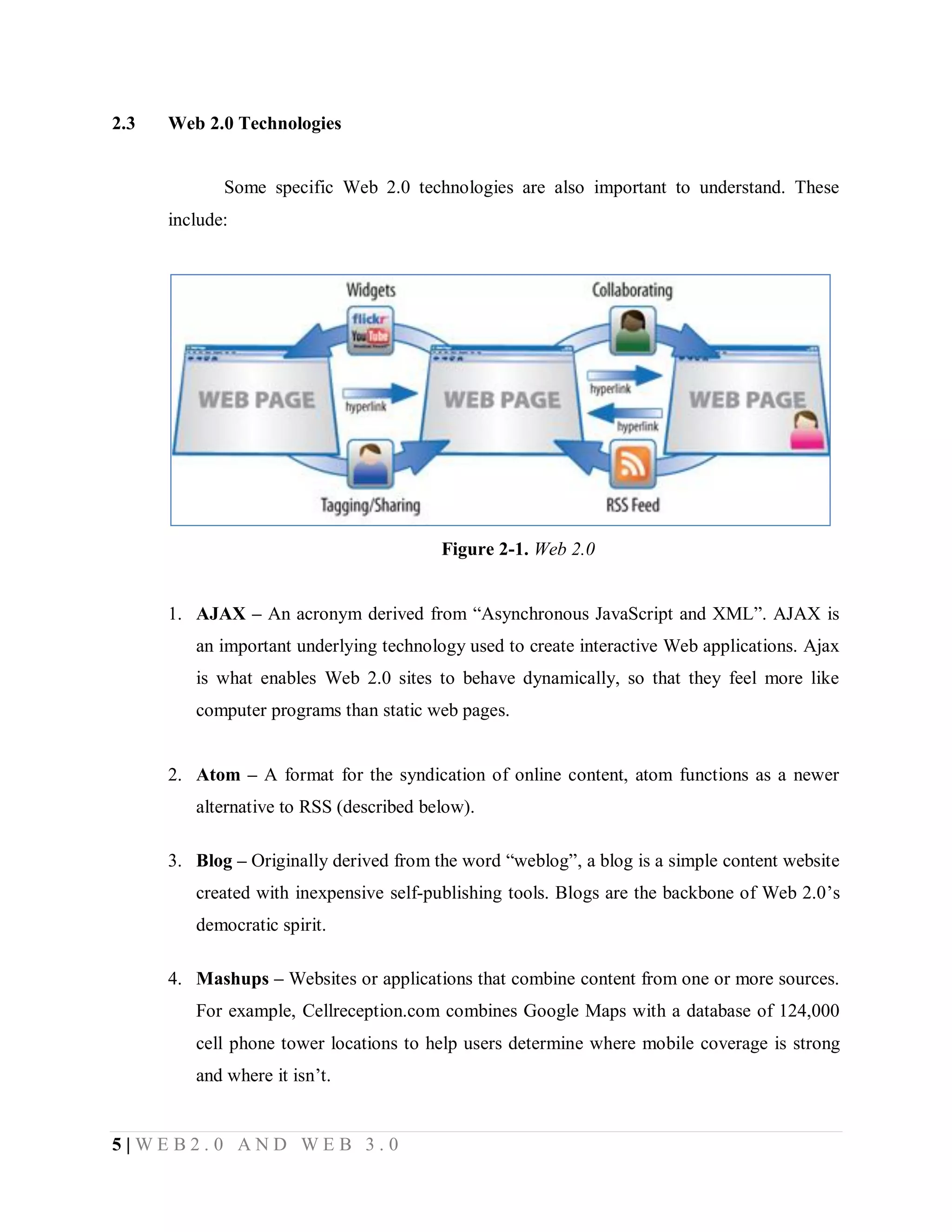
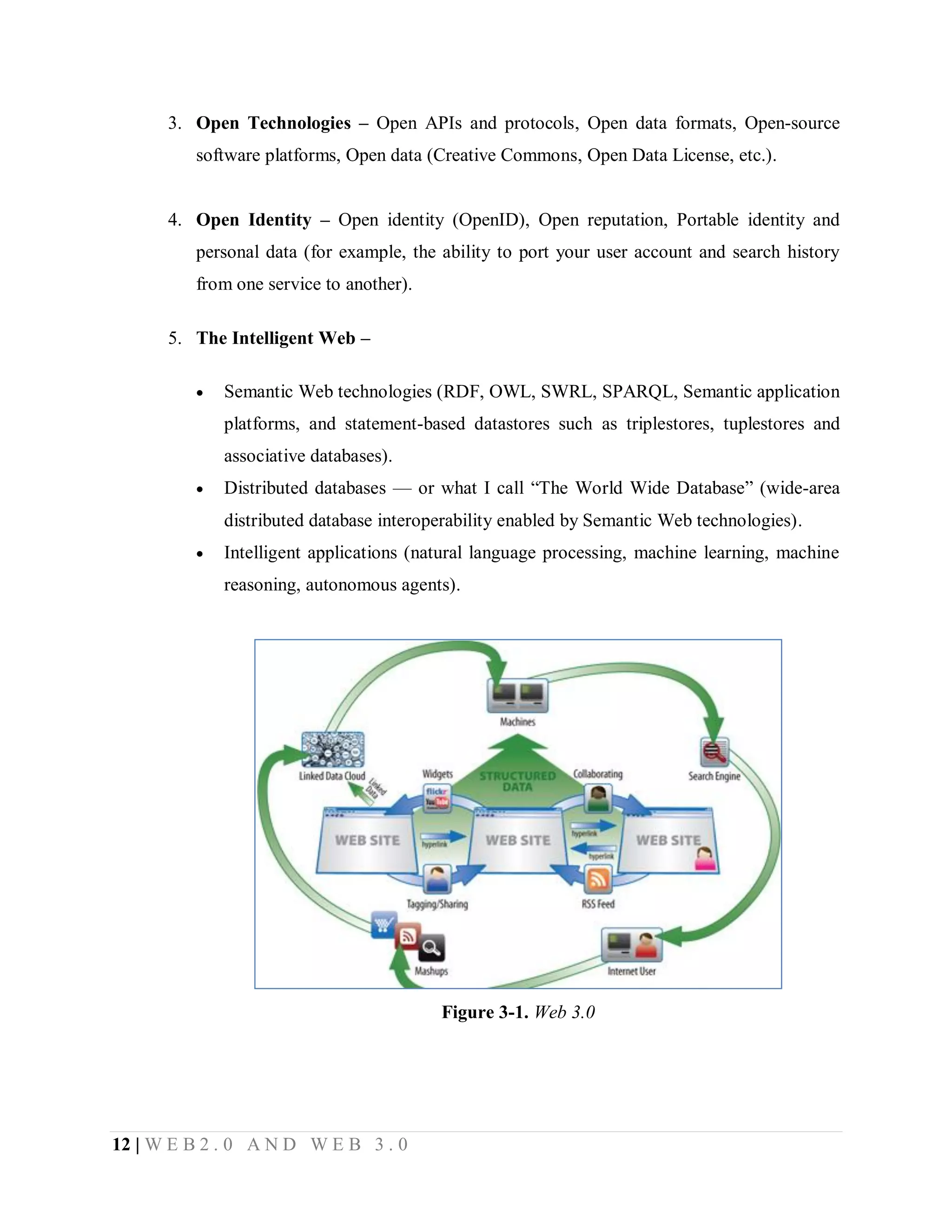
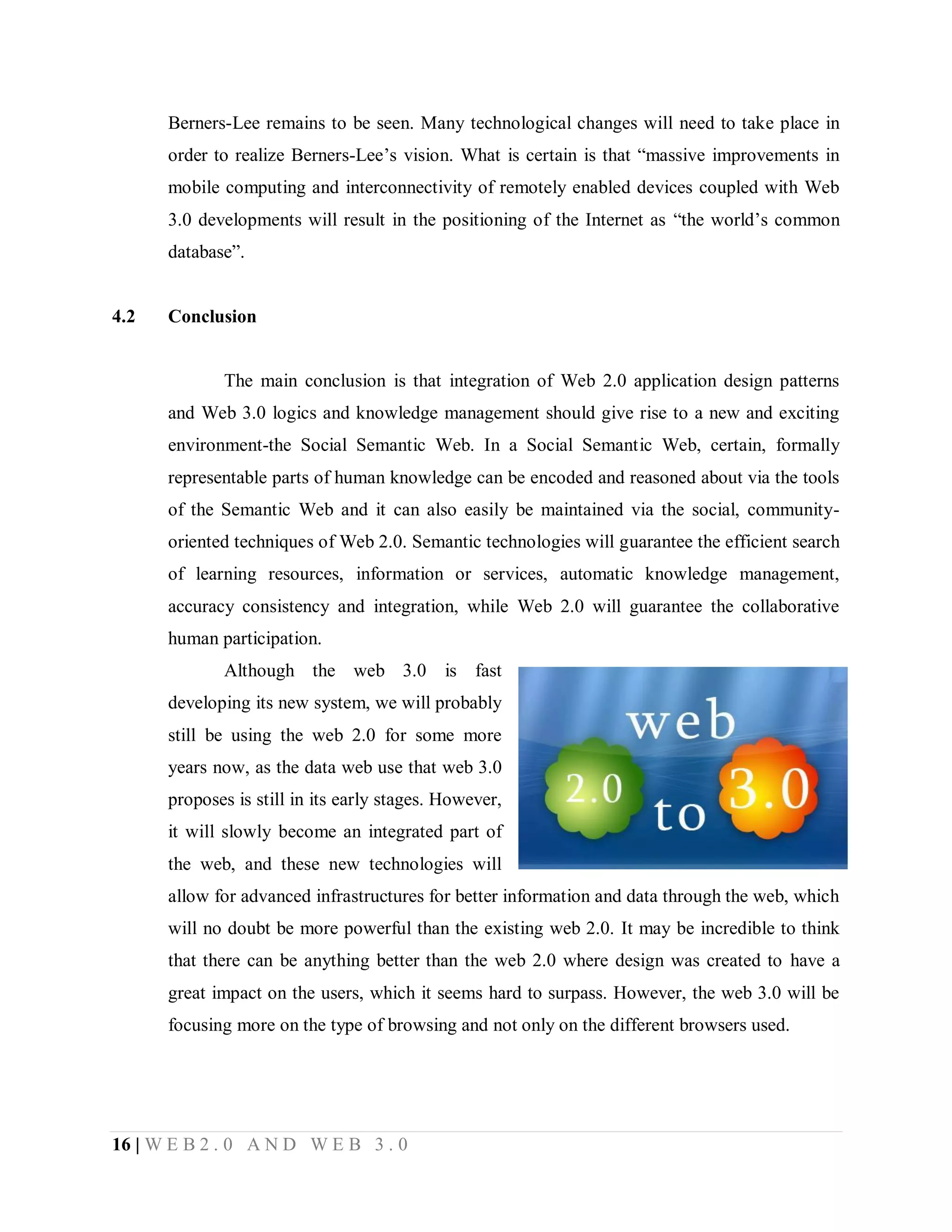

The document discusses the evolution of the World Wide Web from Web 1.0 to Web 2.0 to Web 3.0. It defines Web 2.0 as a stage where the web has become a platform for user-generated content and collaboration through technologies like blogs, wikis, social media, etc. It outlines some key characteristics and technologies of Web 2.0, provides examples of popular Web 2.0 sites, and discusses benefits and drawbacks. The document then introduces Web 3.0, also called the Semantic Web, as aiming to make web content understandable by machines through semantic markups to enable more intelligent applications and services.


