Robotics & Artificial 
Intelligence 
By 
Shanaz karim
Presentation Outline 
• What is Intelligence? 
• Artificial Intelligence 
• What is A.I. ? 
• What is a Robot? 
• How Robot works? 
• Types of Robot 
• Intelligent Robots 
• Robotics Technology 
• Components of Robot 
• APPs of Robot 
• Advantages of Robot 
• Conclusion
?What is Intelligence 
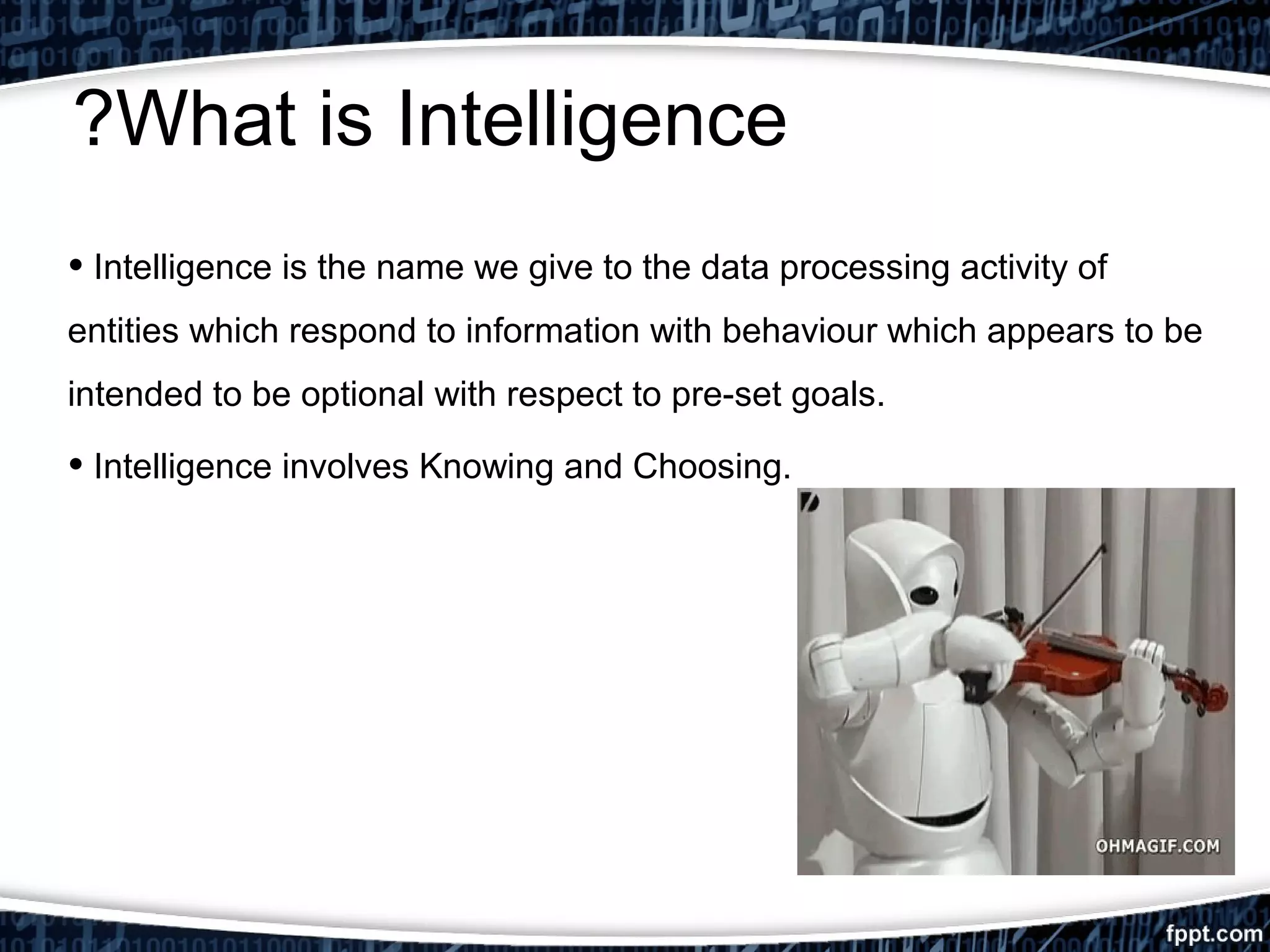
• Intelligence is the name we give to the data processing activity of 
entities which respond to information with behaviour which appears to be 
intended to be optional with respect to pre-set goals. 
• Intelligence involves Knowing and Choosing.
Artificial Intelligence 
• Artificial Intelligence is a branch of Science, which deals 
with helping machines find solutions to complex problems in 
a more human-like fashion. 
• This generally involves borrowing characteristics from 
human intelligence, and applying them as algorithms in a 
computer friendly way.
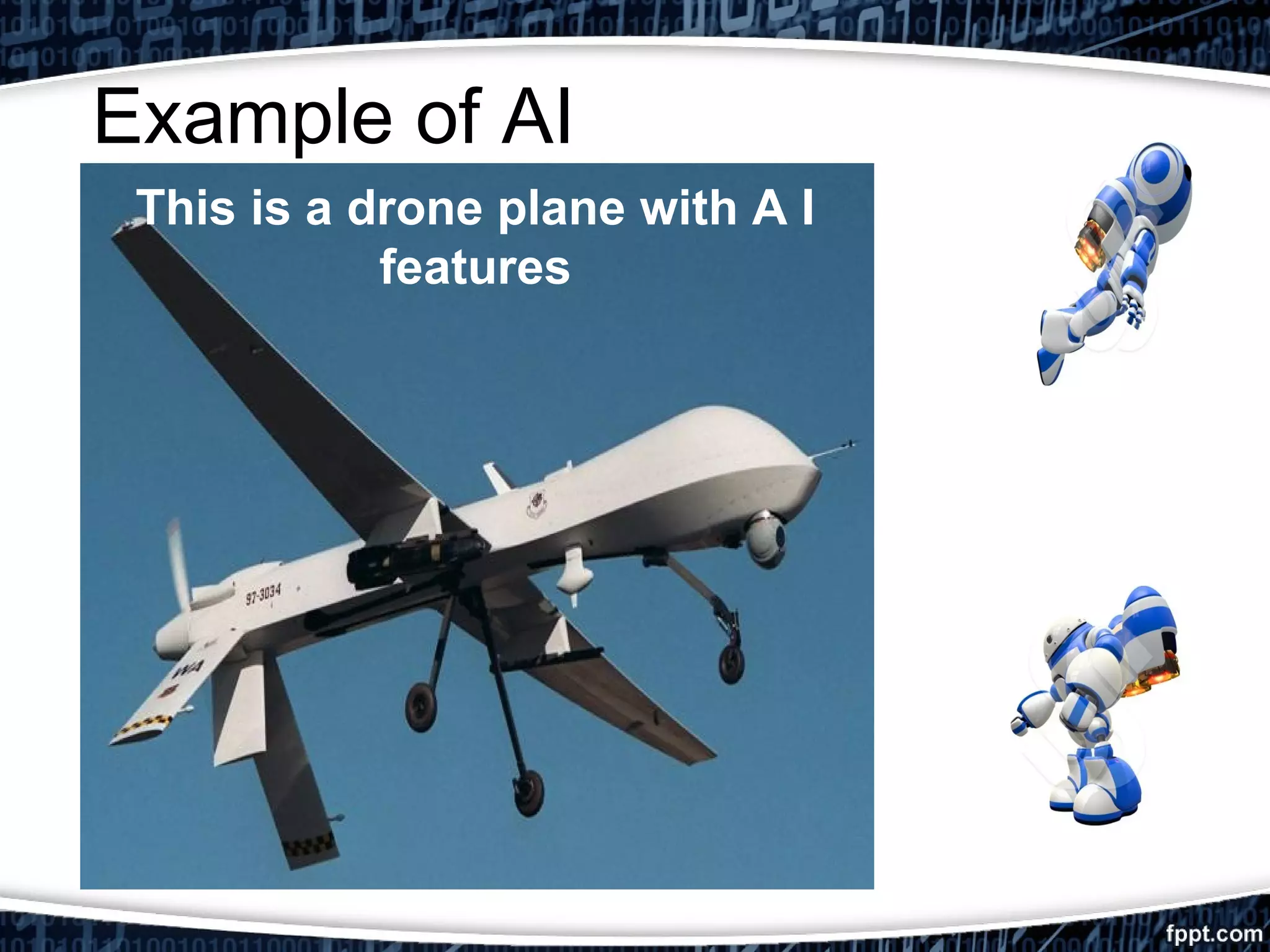
Example of AI 
This is a drone plane with A I 
features
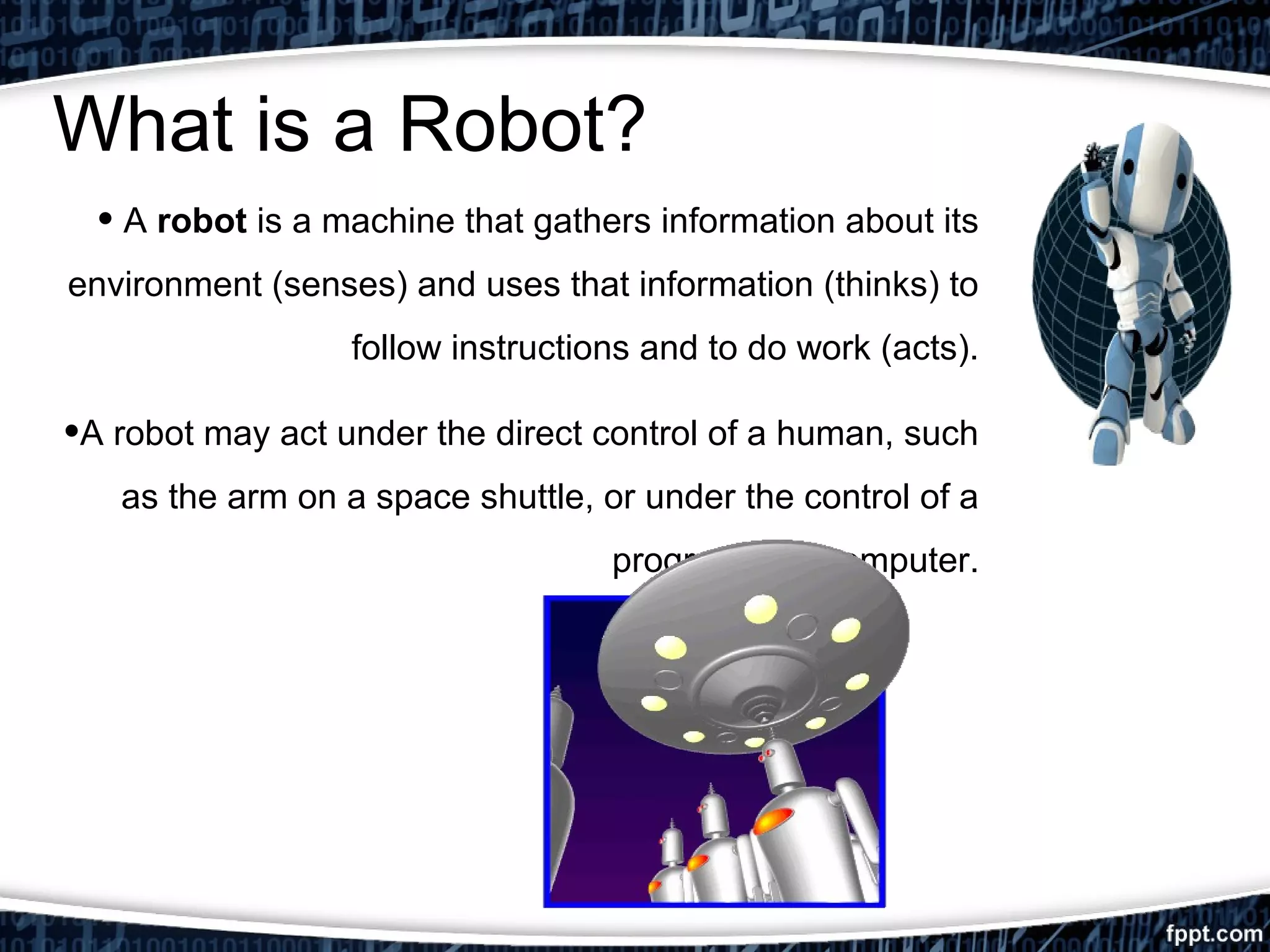
What is a Robot? 
• A robot is a machine that gathers information about its 
environment (senses) and uses that information (thinks) to 
follow instructions and to do work (acts). 
•A robot may act under the direct control of a human, such 
as the arm on a space shuttle, or under the control of a 
programmed computer.
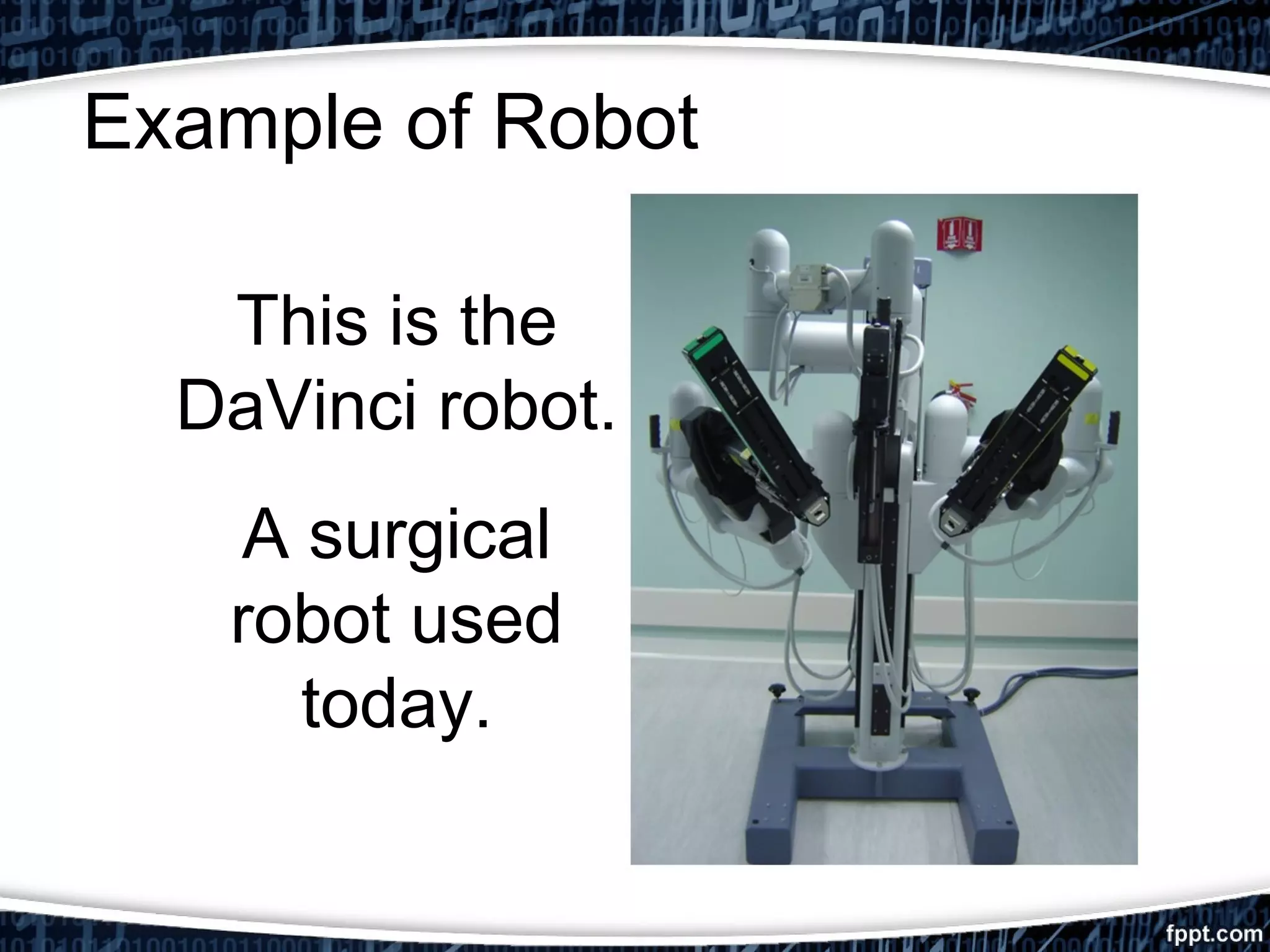
Example of Robot 
This is the 
DaVinci robot. 
A surgical 
robot used 
today.
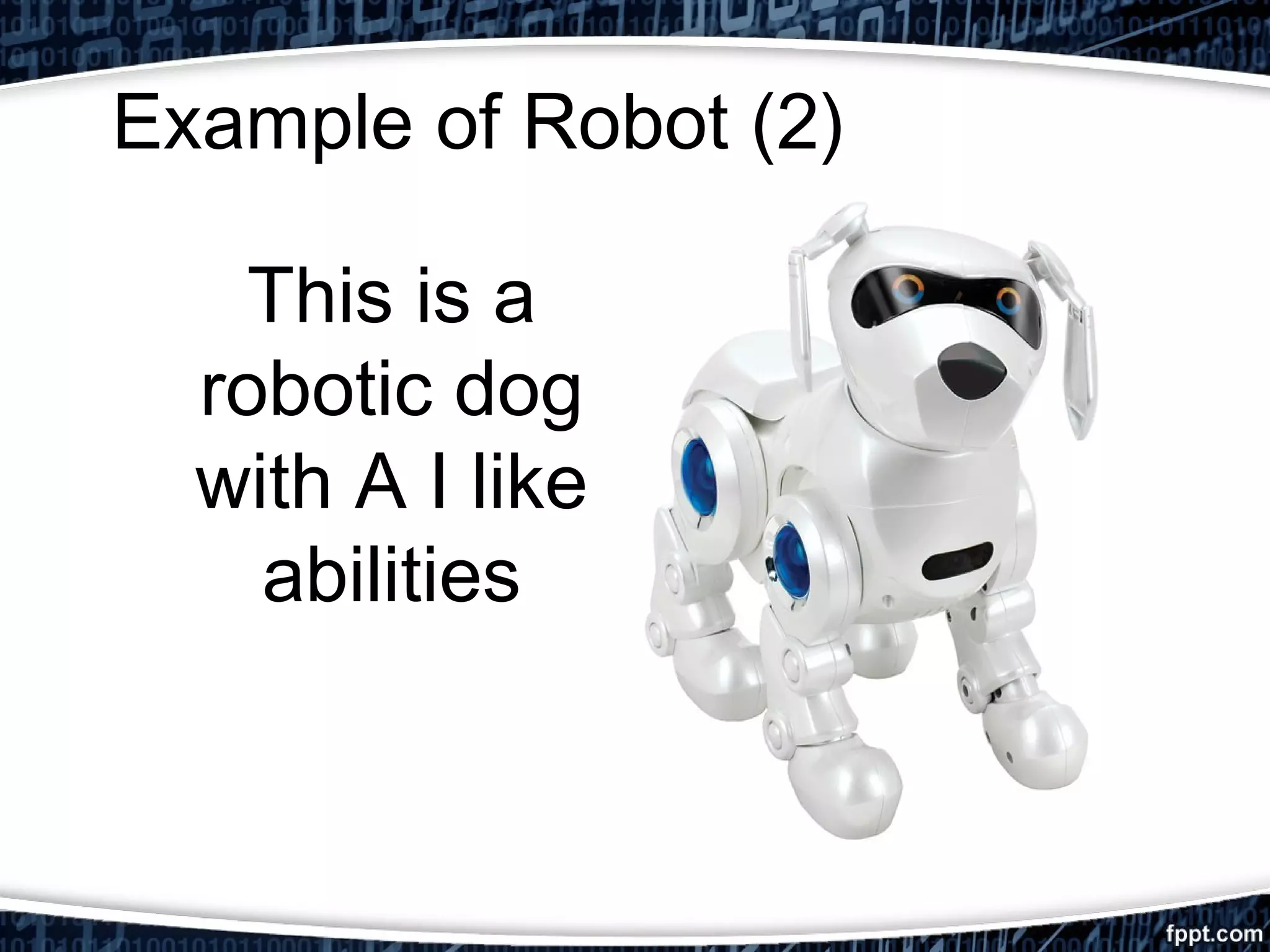
Example of Robot (2) 
This is a 
robotic dog 
with A I like 
abilities
Area of Robot’s works 
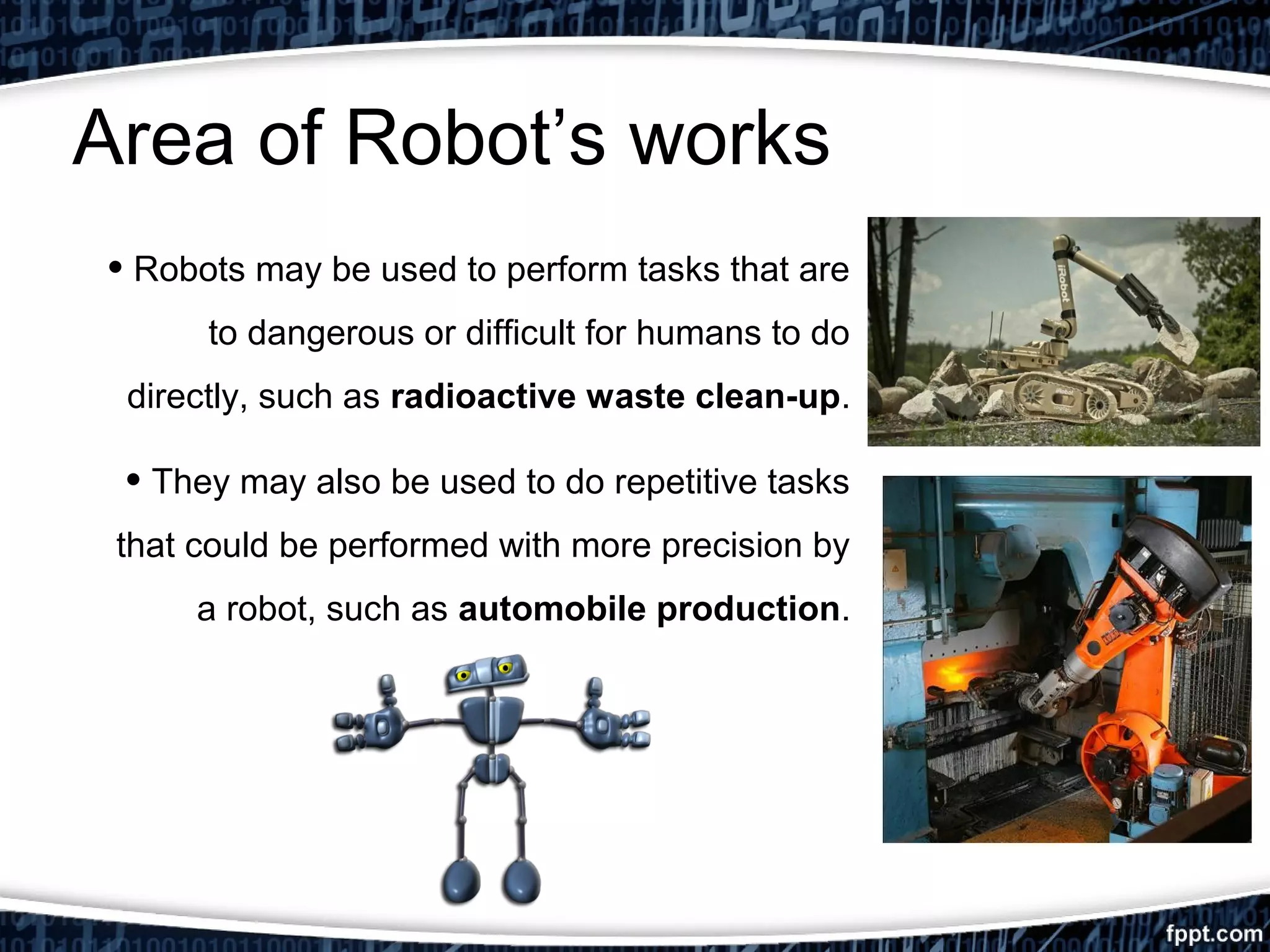
• Robots may be used to perform tasks that are 
to dangerous or difficult for humans to do 
directly, such as radioactive waste clean-up. 
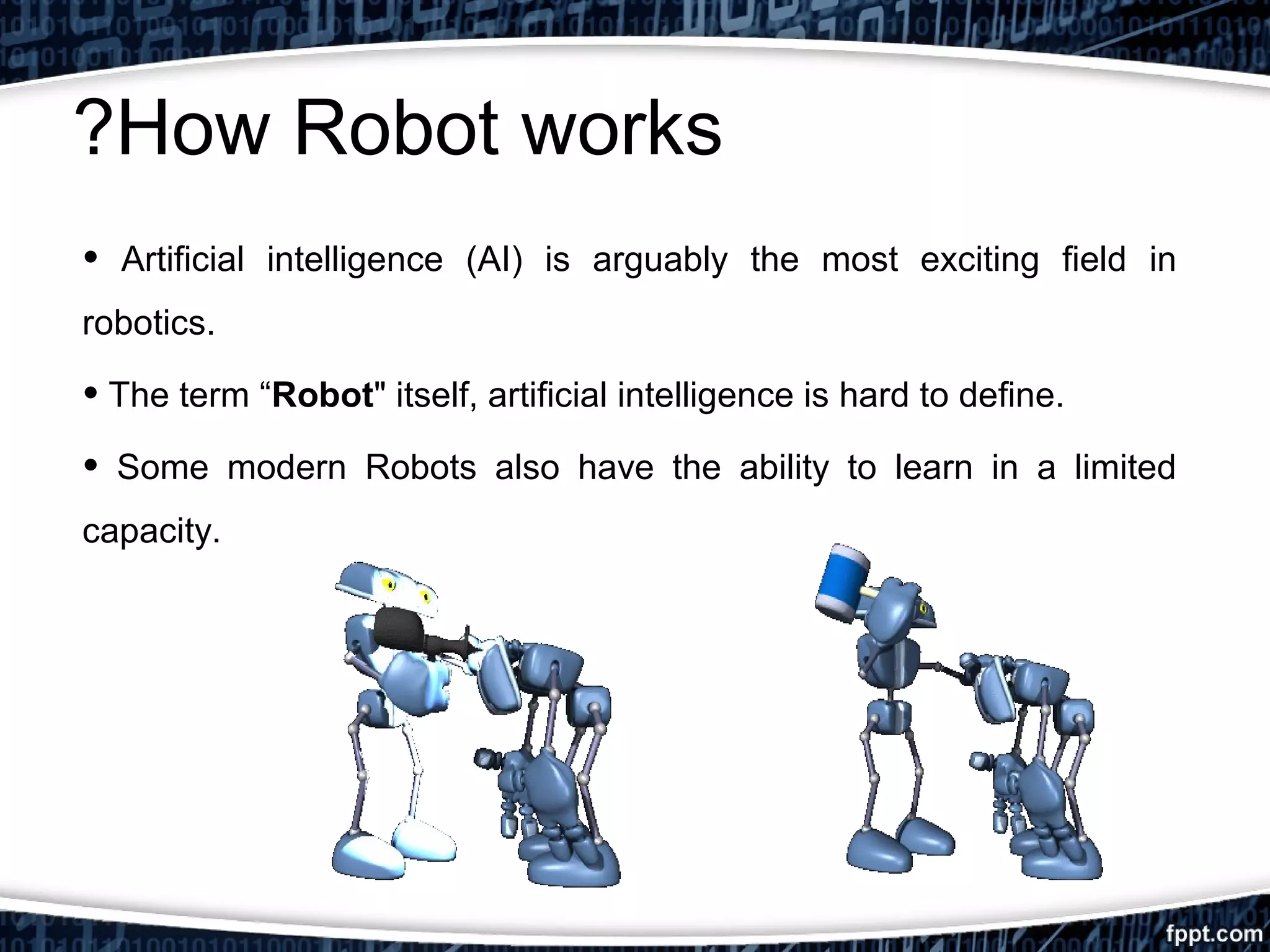
• They may also be used to do repetitive tasks 
that could be performed with more precision by 
a robot, such as automobile production.
?How Robot works 
• Artificial intelligence (AI) is arguably the most exciting field in 
robotics. 
• The term “Robot" itself, artificial intelligence is hard to define. 
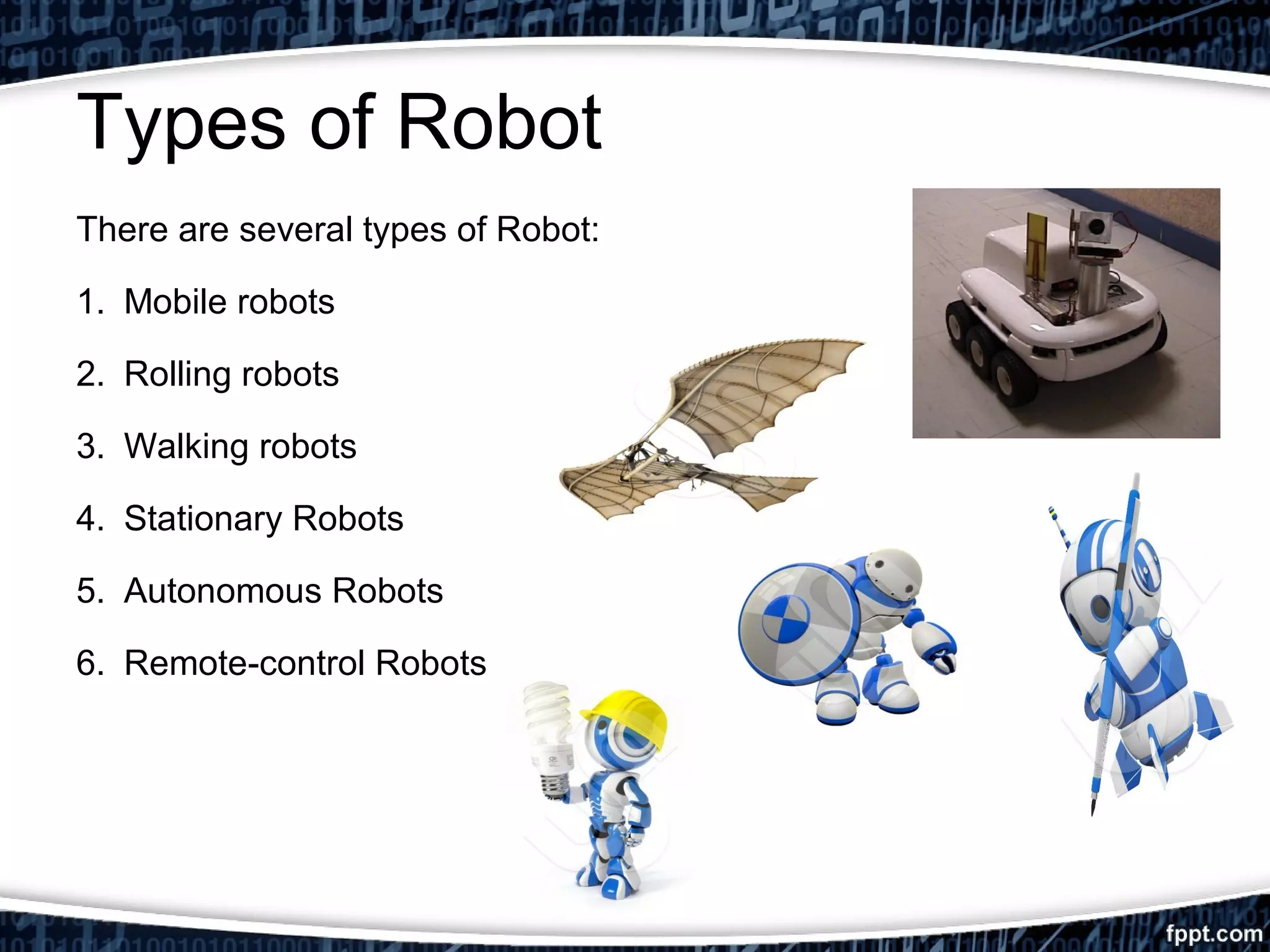
• Some modern Robots also have the ability to learn in a limited 
capacity.
Types of Robot 
There are several types of Robot: 
1. Mobile robots 
2. Rolling robots 
3. Walking robots 
4. Stationary Robots 
5. Autonomous Robots 
6. Remote-control Robots
Intelligent Robot 
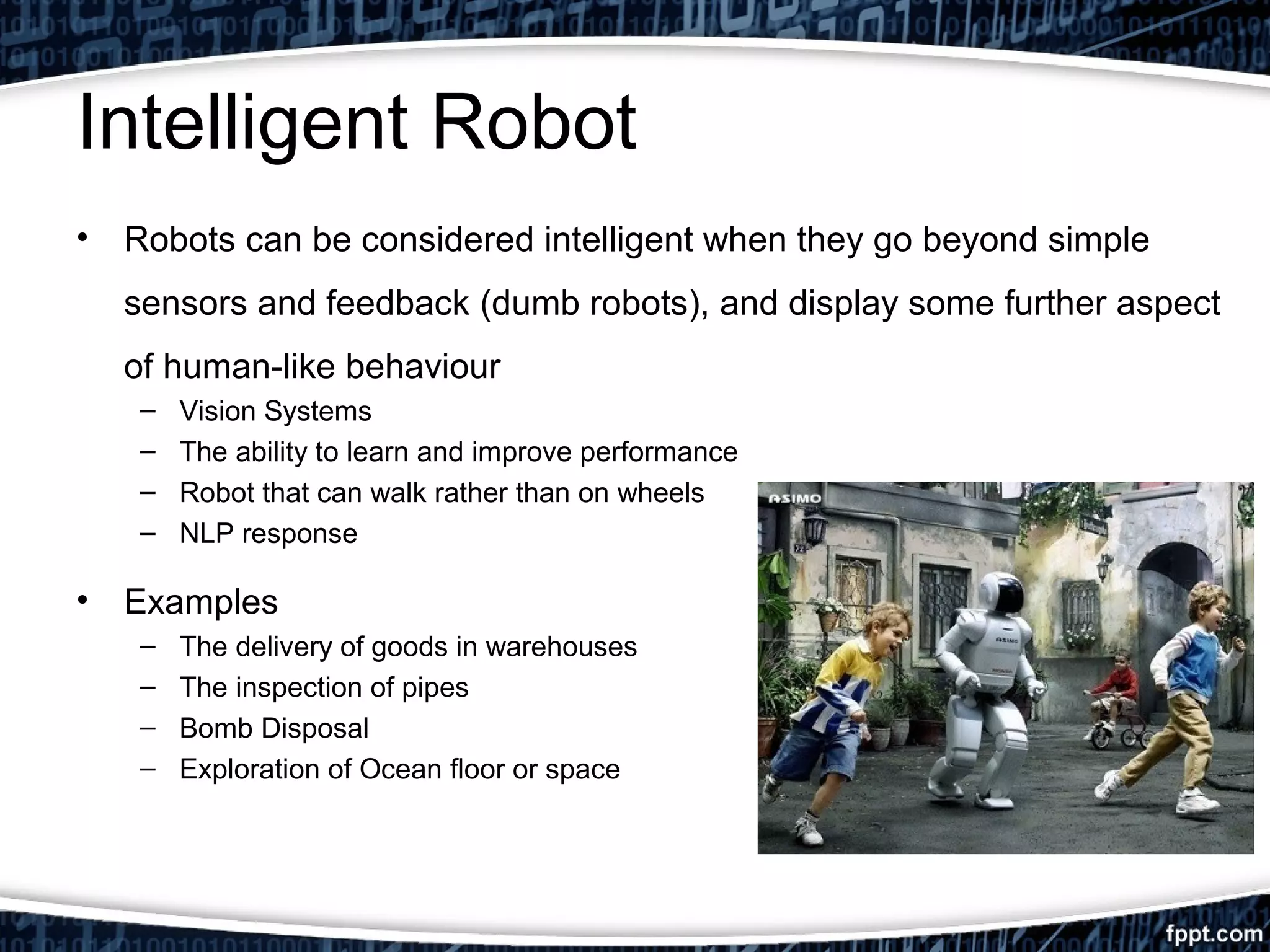
• Robots can be considered intelligent when they go beyond simple 
sensors and feedback (dumb robots), and display some further aspect 
of human-like behaviour 
– Vision Systems 
– The ability to learn and improve performance 
– Robot that can walk rather than on wheels 
– NLP response 
• Examples 
– The delivery of goods in warehouses 
– The inspection of pipes 
– Bomb Disposal 
– Exploration of Ocean floor or space
Robotics Technology 
• Most industrial robots have at least the following five parts: 
1. Sensors 
2. Effectors 
3. Actuators 
4. Controllers 
5. common efforts known as Arms 
• Many other robots also have Artificial Intelligence and 
effectors that help it achieve Mobility.
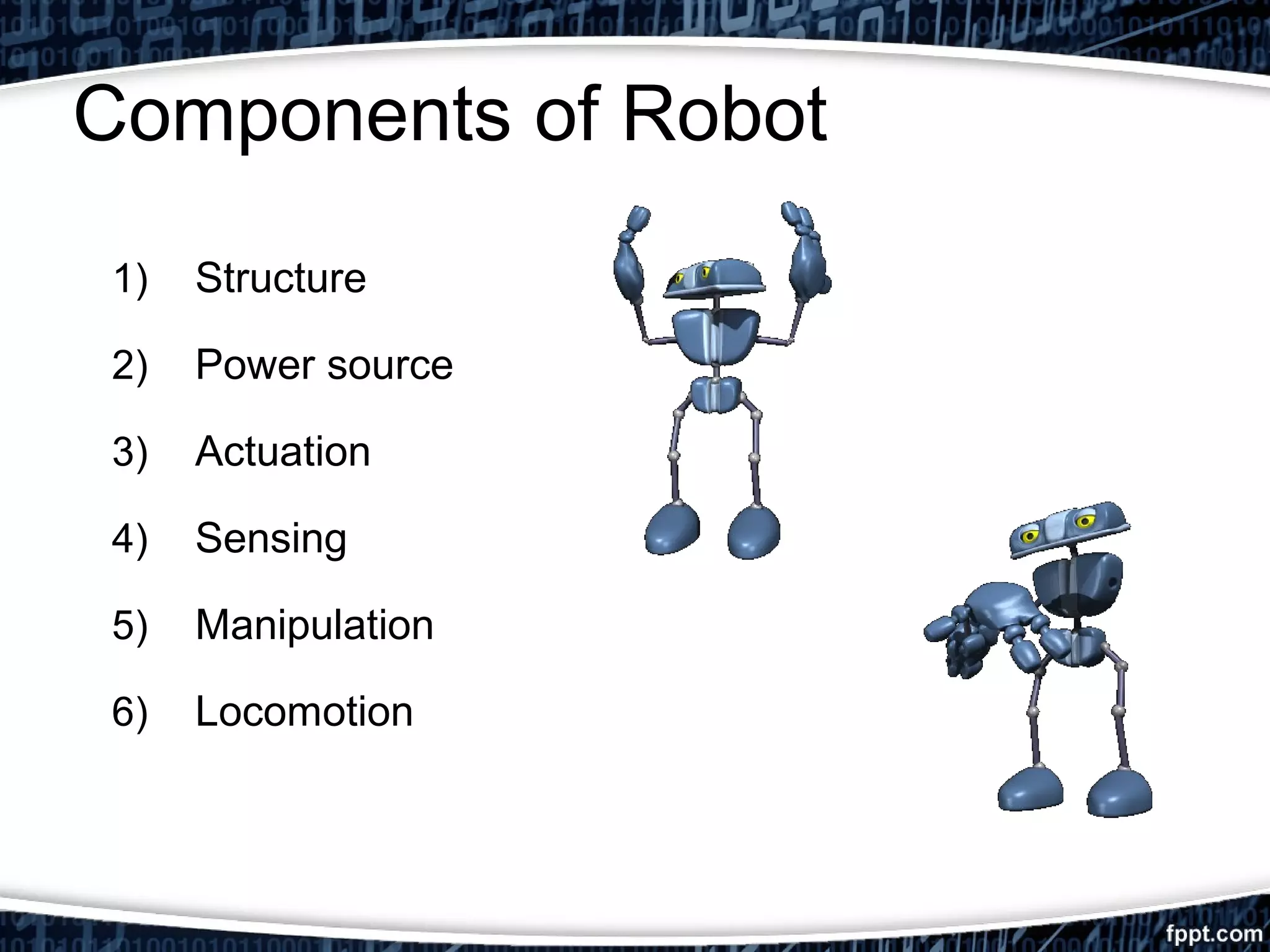
Components of Robot 
1) Structure 
2) Power source 
3) Actuation 
4) Sensing 
5) Manipulation 
6) Locomotion
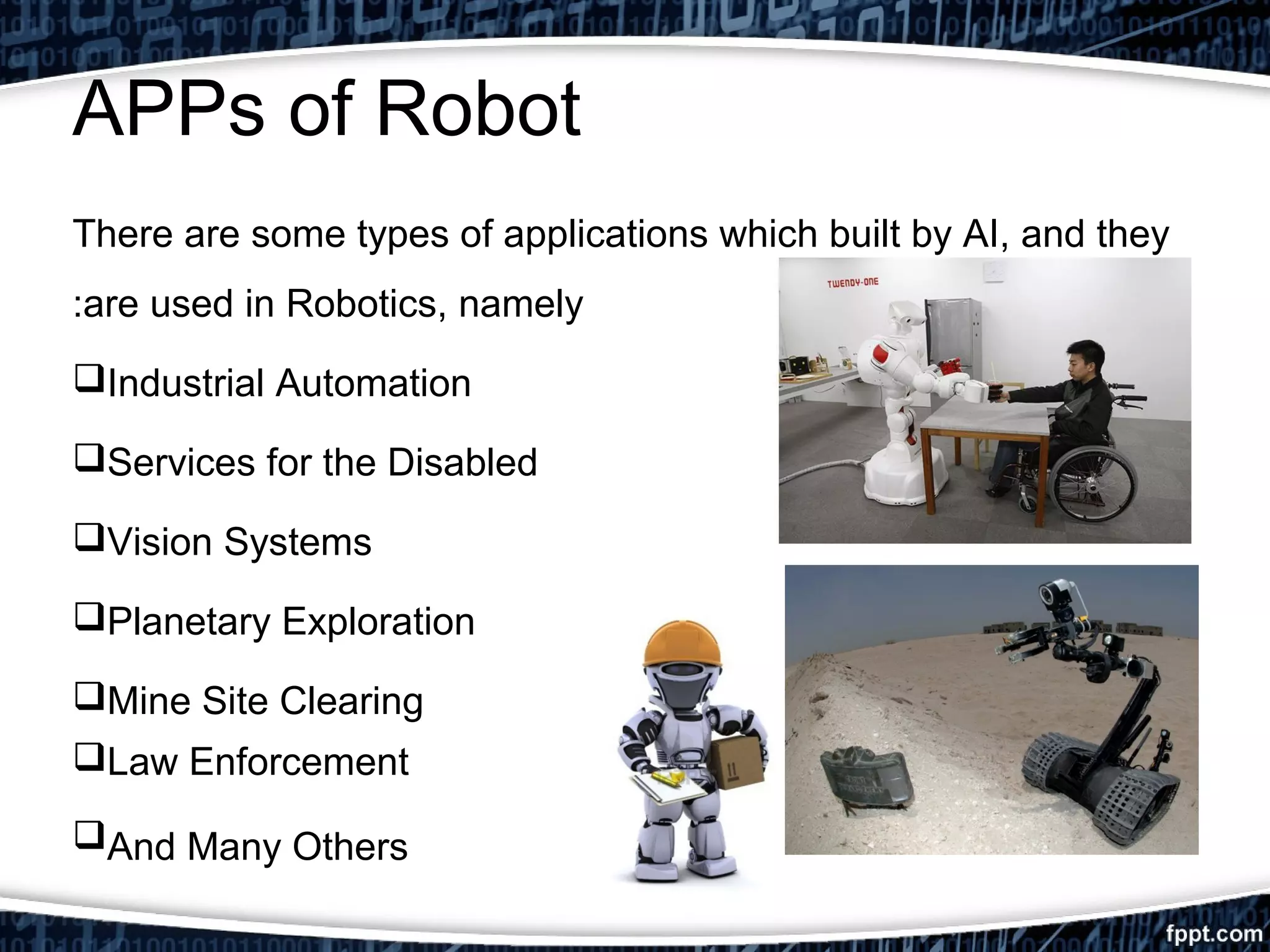
APPs of Robot 
There are some types of applications which built by AI, and they 
:are used in Robotics, namely 
Industrial Automation 
Services for the Disabled 
Vision Systems 
Planetary Exploration 
Mine Site Clearing 
Law Enforcement 
And Many Others
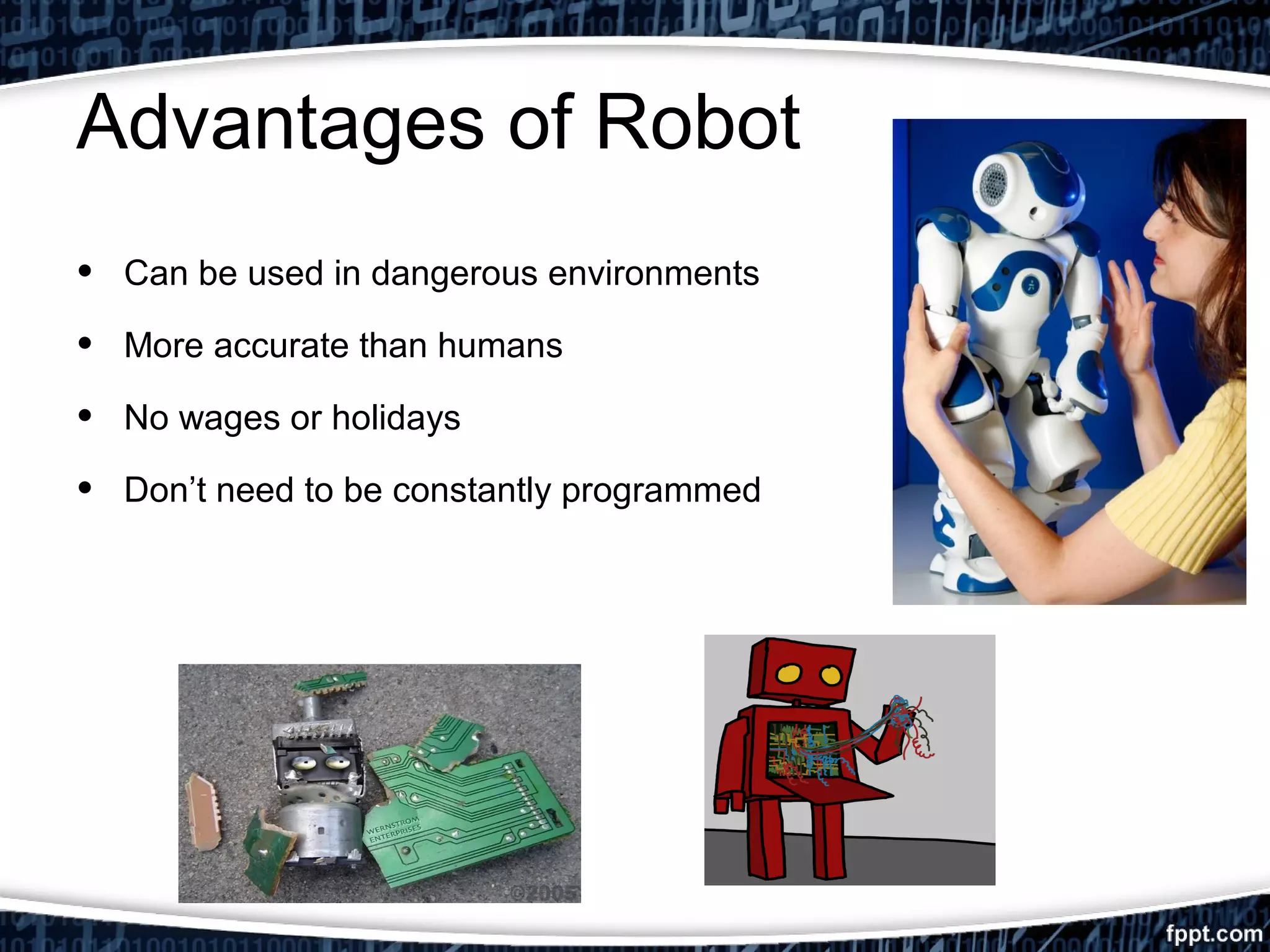
Advantages of Robot 
• Can be used in dangerous environments 
• More accurate than humans 
• No wages or holidays 
• Don’t need to be constantly programmed
Conclusion 
• It could be say tasks are more easy to do, by 
using a new technologies. 
• AI helps us to program our robot. 
• Needs to understand our robotics. 
• The ultimate goal of robotics is a super human 
system that embodies all the skills.
So What Is Next? 
The development of every new 
technology raises questions that we, 
as individuals and as a society, need 
to address.
Thank you for your Attention!!! 
Any Questions?

Robotics

  • 1.
    Robotics & Artificial Intelligence By Shanaz karim
  • 2.
    Presentation Outline •What is Intelligence? • Artificial Intelligence • What is A.I. ? • What is a Robot? • How Robot works? • Types of Robot • Intelligent Robots • Robotics Technology • Components of Robot • APPs of Robot • Advantages of Robot • Conclusion
  • 3.
    ?What is Intelligence • Intelligence is the name we give to the data processing activity of entities which respond to information with behaviour which appears to be intended to be optional with respect to pre-set goals. • Intelligence involves Knowing and Choosing.
  • 4.
    Artificial Intelligence •Artificial Intelligence is a branch of Science, which deals with helping machines find solutions to complex problems in a more human-like fashion. • This generally involves borrowing characteristics from human intelligence, and applying them as algorithms in a computer friendly way.
  • 5.
    Example of AI This is a drone plane with A I features
  • 6.
    What is aRobot? • A robot is a machine that gathers information about its environment (senses) and uses that information (thinks) to follow instructions and to do work (acts). •A robot may act under the direct control of a human, such as the arm on a space shuttle, or under the control of a programmed computer.
  • 7.
    Example of Robot This is the DaVinci robot. A surgical robot used today.
  • 8.
    Example of Robot(2) This is a robotic dog with A I like abilities
  • 9.
    Area of Robot’sworks • Robots may be used to perform tasks that are to dangerous or difficult for humans to do directly, such as radioactive waste clean-up. • They may also be used to do repetitive tasks that could be performed with more precision by a robot, such as automobile production.
  • 10.
    ?How Robot works • Artificial intelligence (AI) is arguably the most exciting field in robotics. • The term “Robot" itself, artificial intelligence is hard to define. • Some modern Robots also have the ability to learn in a limited capacity.
  • 11.
    Types of Robot There are several types of Robot: 1. Mobile robots 2. Rolling robots 3. Walking robots 4. Stationary Robots 5. Autonomous Robots 6. Remote-control Robots
  • 12.
    Intelligent Robot •Robots can be considered intelligent when they go beyond simple sensors and feedback (dumb robots), and display some further aspect of human-like behaviour – Vision Systems – The ability to learn and improve performance – Robot that can walk rather than on wheels – NLP response • Examples – The delivery of goods in warehouses – The inspection of pipes – Bomb Disposal – Exploration of Ocean floor or space
  • 13.
    Robotics Technology •Most industrial robots have at least the following five parts: 1. Sensors 2. Effectors 3. Actuators 4. Controllers 5. common efforts known as Arms • Many other robots also have Artificial Intelligence and effectors that help it achieve Mobility.
  • 14.
    Components of Robot 1) Structure 2) Power source 3) Actuation 4) Sensing 5) Manipulation 6) Locomotion
  • 15.
    APPs of Robot There are some types of applications which built by AI, and they :are used in Robotics, namely Industrial Automation Services for the Disabled Vision Systems Planetary Exploration Mine Site Clearing Law Enforcement And Many Others
  • 16.
    Advantages of Robot • Can be used in dangerous environments • More accurate than humans • No wages or holidays • Don’t need to be constantly programmed
  • 17.
    Conclusion • Itcould be say tasks are more easy to do, by using a new technologies. • AI helps us to program our robot. • Needs to understand our robotics. • The ultimate goal of robotics is a super human system that embodies all the skills.
  • 18.
    So What IsNext? The development of every new technology raises questions that we, as individuals and as a society, need to address.
  • 19.
    Thank you foryour Attention!!! Any Questions?