Learning analytics:
answering the FAQs
Rebecca Ferguson
The Open University
SCONUL: June 2014
Take a minute to write down
or tweet the three questions
that would head your list of
FAQs about learning analytics
#sconulfaqs
Who are you?
• The Open University: largest in Europe
• Making use of data for more than 40 years
• Informal learning: iTunes, YouTube…
• MOOCs on FutureLearn and OpenLearn
• Learning analytics research / events
• LACE project
What are analytics?
High-level figures
Brief overview for internal and external reports
Academic analytics
Figures on retention and success, for the institution to
assess performance
Educational data mining
Searching for patterns in the data
Learning analytics
Use of [big] data to provide actionable intelligence for
learners and teachers
Is there a precise definition?
The measurement, collection, analysis and
reporting of data about learners and their
contexts, for purposes of understanding and
optimizing learning and the environments in
which it occurs.
Why do learners use analytics?
• Monitor their own activities and interactions
• Monitor the learning process
• Compare their activity with that of others
• Increase awareness, reflect and self reflect
• Improve discussion participation
• Improve learning behaviour
• Improve performance
• Become better learners
• Learn!
Why might I use analytics?
• Monitor the learning process
• Explore student data
• Identify problems
• Discover patterns
• Find early indicators for success
• Find early indicators for poor marks or drop-out
• Assess usefulness of learning materials
• Increase awareness, reflect and self reflect
• Increase understanding of learning environments
• Intervene, advise and assist
• Improve teaching, resources and the environment
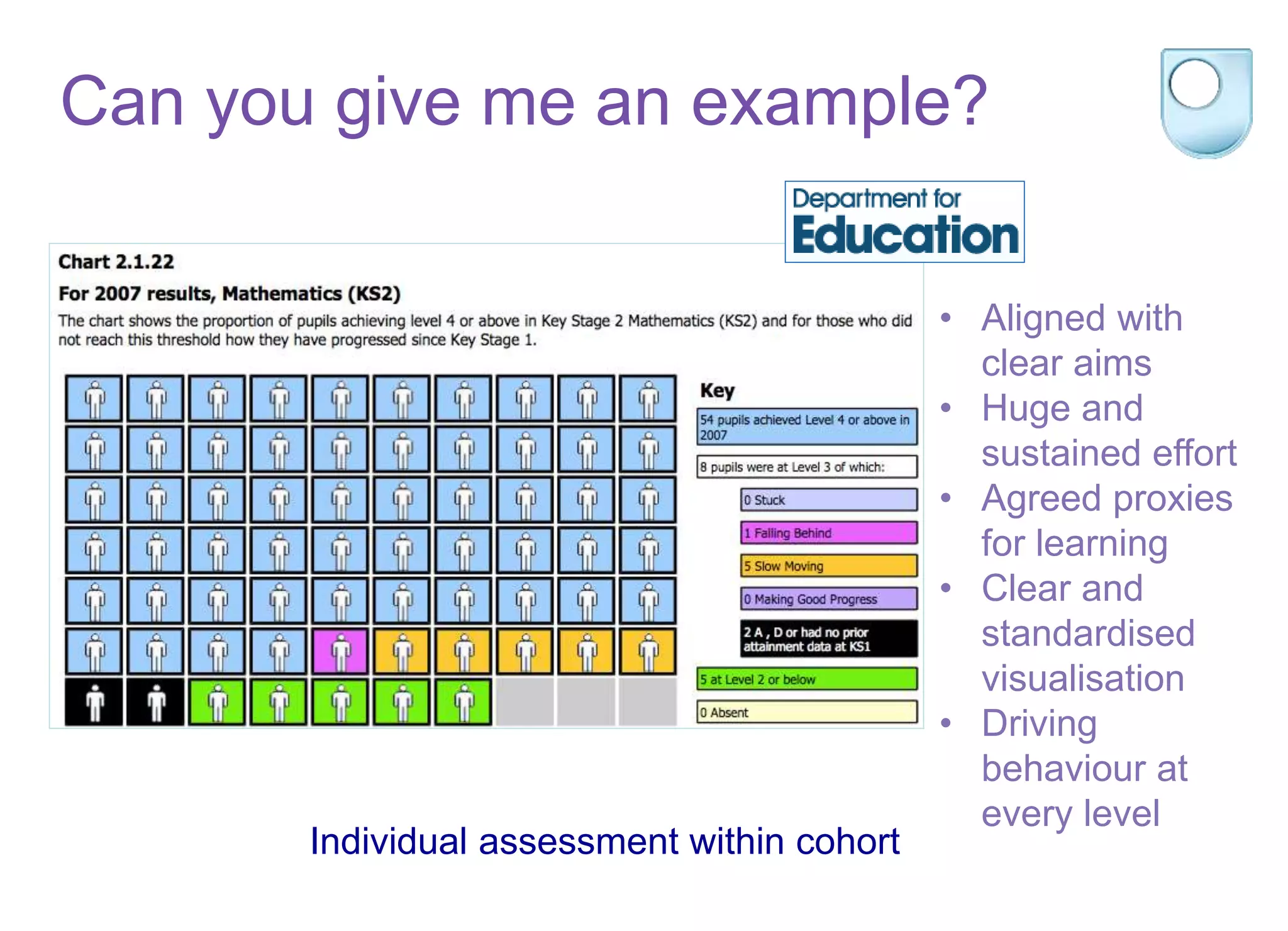
Can you give me an example?
• Aligned with
clear aims
• Huge and
sustained effort
• Agreed proxies
for learning
• Clear and
standardised
visualisation
• Driving
behaviour at
every level
Individual assessment within cohort
Is that an ideal example?
Can we achieve this?
• Aligned with clear aims
• Huge and sustained effort
• Agreed proxies for learning
• Clear and standardised visualisation
• Driving behaviour at every level
Can we avoid this?
• Instructivist approach
• Stressed, unhappy learners
• Analytics with little value for learners or teachers
• Omission of key areas, such as collaboration
Don’t start with the data –
start with the pedagogy
How do people learn?
How can I use data to facilitate that process?
Social learning analytics:
How do people learn socially & in social settings?
How can I use data to facilitate that process?
How could we achieve that?
What questions should I ask?
• Which elements are learners struggling with?
• Which sections engage them the most?
• What prompts them to ask questions?
• How are they navigating resources?
• What misconceptions have they shown?
• Are there any accessibility issues?
How can analytics be used to
achieve desired learning outcomes?
• Demographic data
• Calendar information about assignments
• VLE activity data (including forums).
• Lists of required reading
• Library resources usage data
• Library helpdesk enquiries
• Library website usage and analytics data
• Assessment results
• User survey results
• Student retention and attainment data
What data could I use?
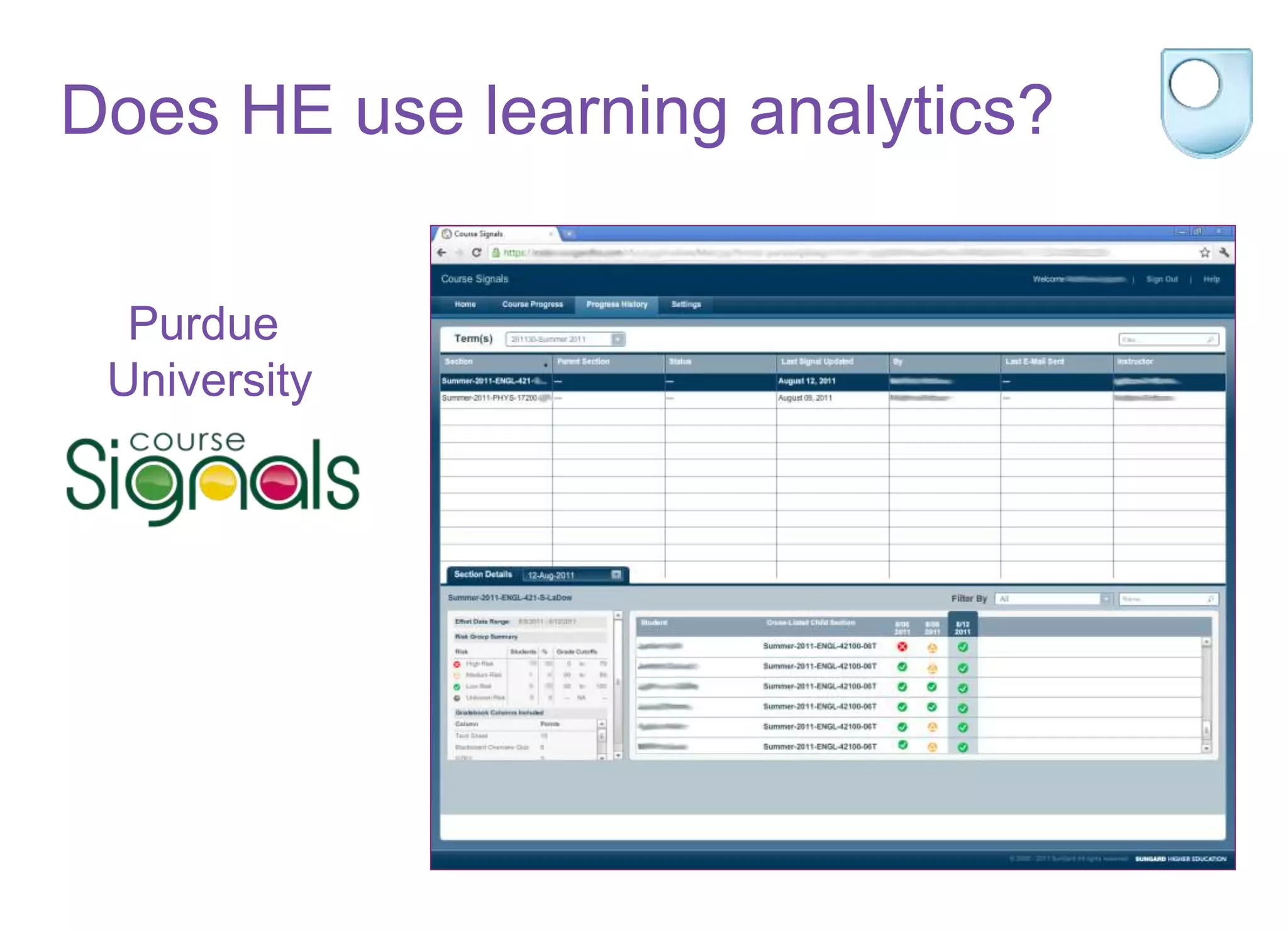
Does HE use learning analytics?
Purdue
University
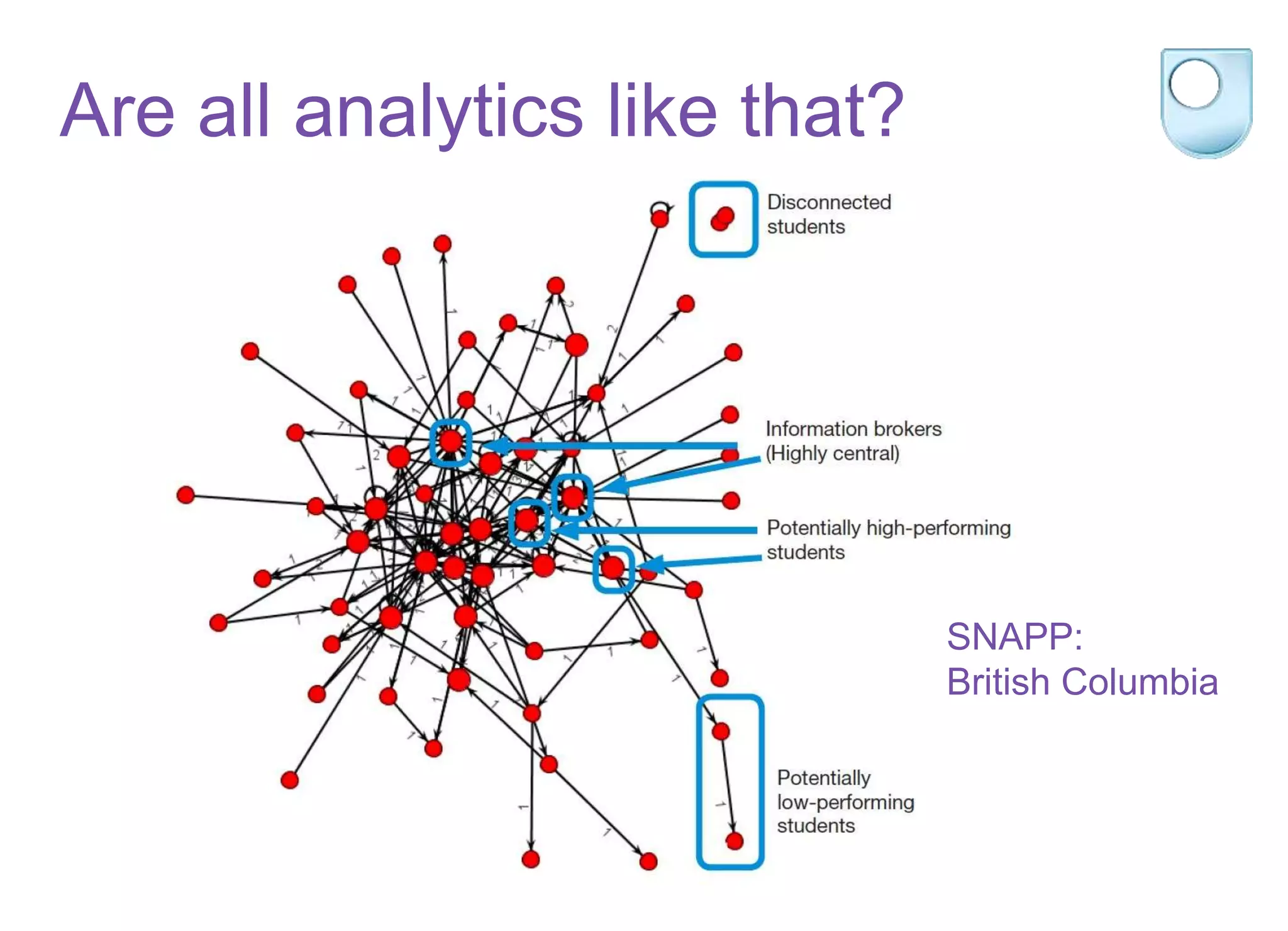
SNAPP:
British Columbia
Are all analytics like that?
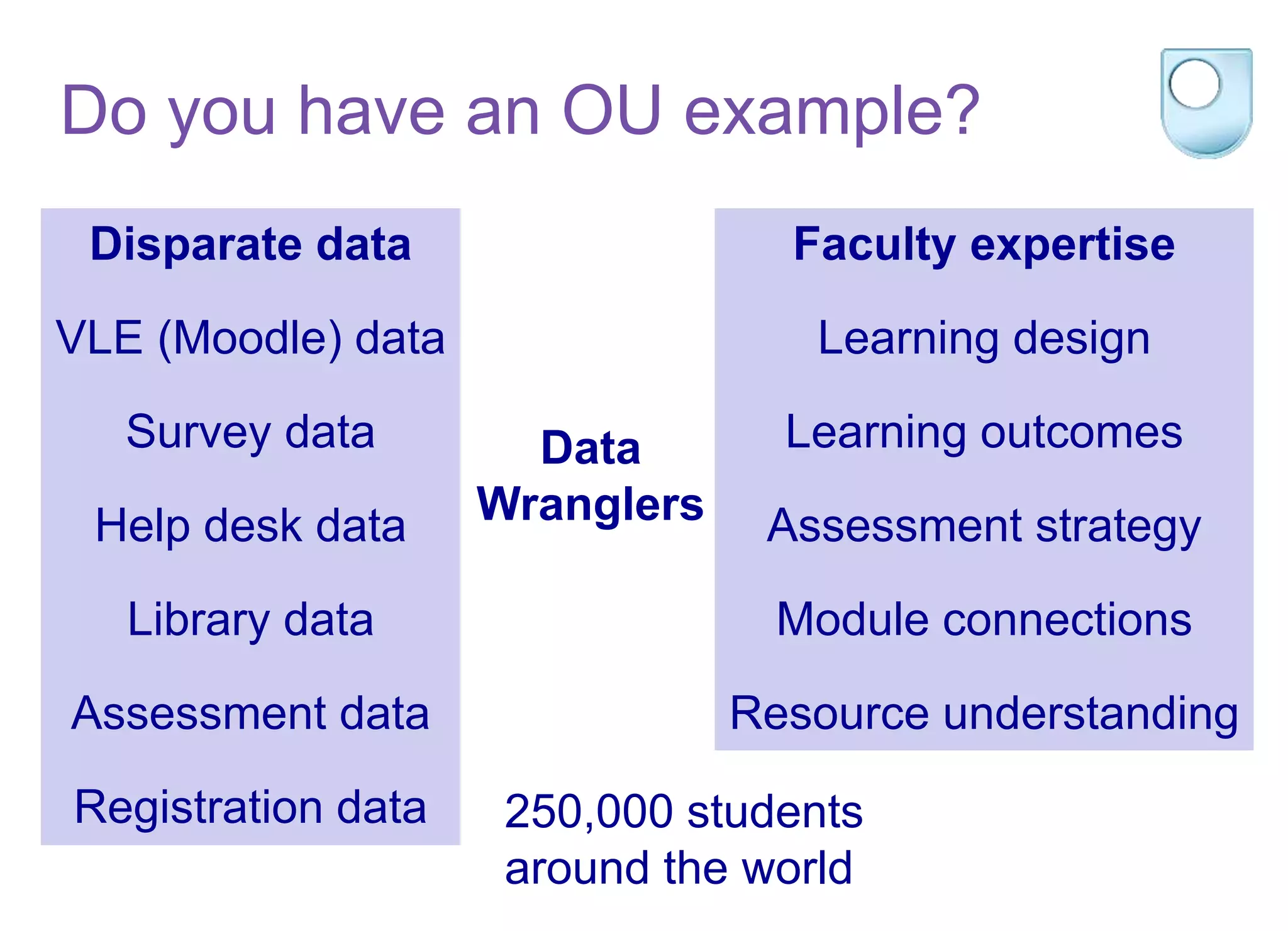
Disparate data
VLE (Moodle) data
Survey data
Help desk data
Library data
Assessment data
Registration data 250,000 students
around the world
Faculty expertise
Learning design
Learning outcomes
Assessment strategy
Module connections
Resource understanding
Data
Wranglers
Do you have an OU example?
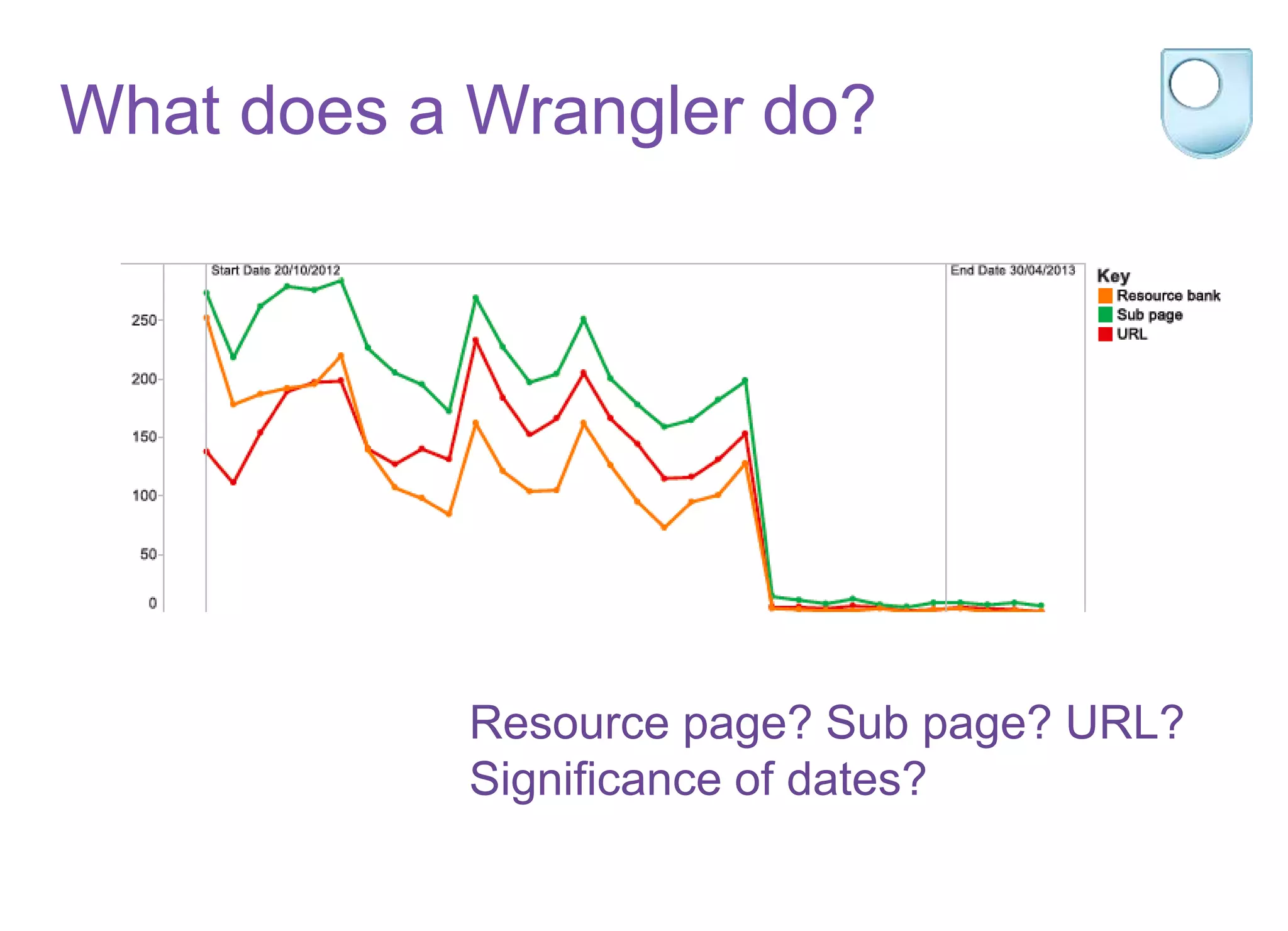
Resource page? Sub page? URL?
Significance of dates?
What does a Wrangler do?
Reach agreement on conventions
80% agreed or strongly agreed that….
Is that
80% of registered students?
80% of those who completed the survey?
80% of those who completed both survey and course?
Or is it
80% of survey respondents who completed the
course and did not select ‘not applicable’
What else do Wranglers do?
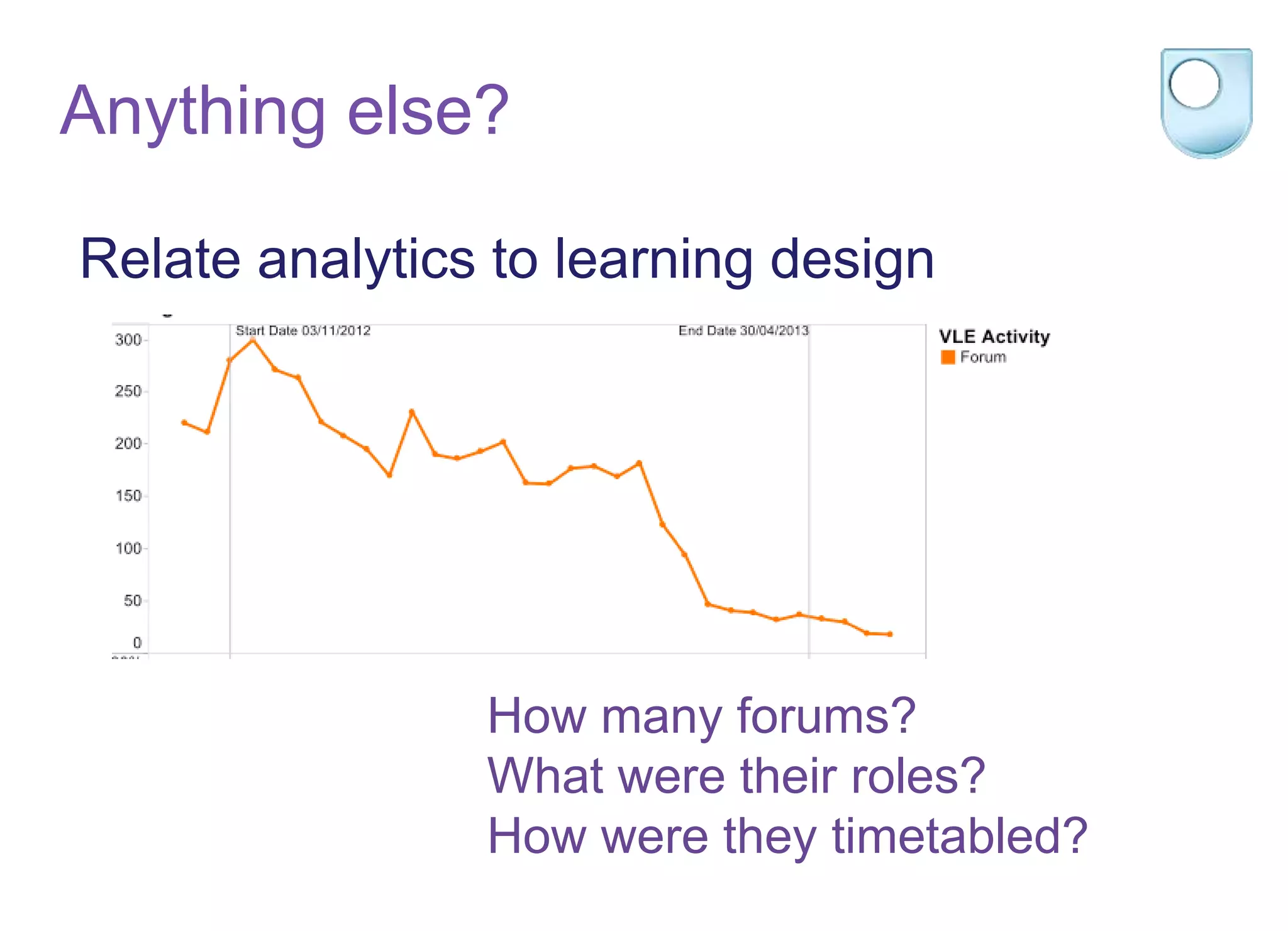
Relate analytics to learning design
How many forums?
What were their roles?
How were they timetabled?
Anything else?
Support, not surveillance
Reporting at module level, not individual level
Survey responses kept apart from activity data
Making data accessible, not overwhelming
Negotiating meaning, not dictating interpretation
Are there any ethical issues?
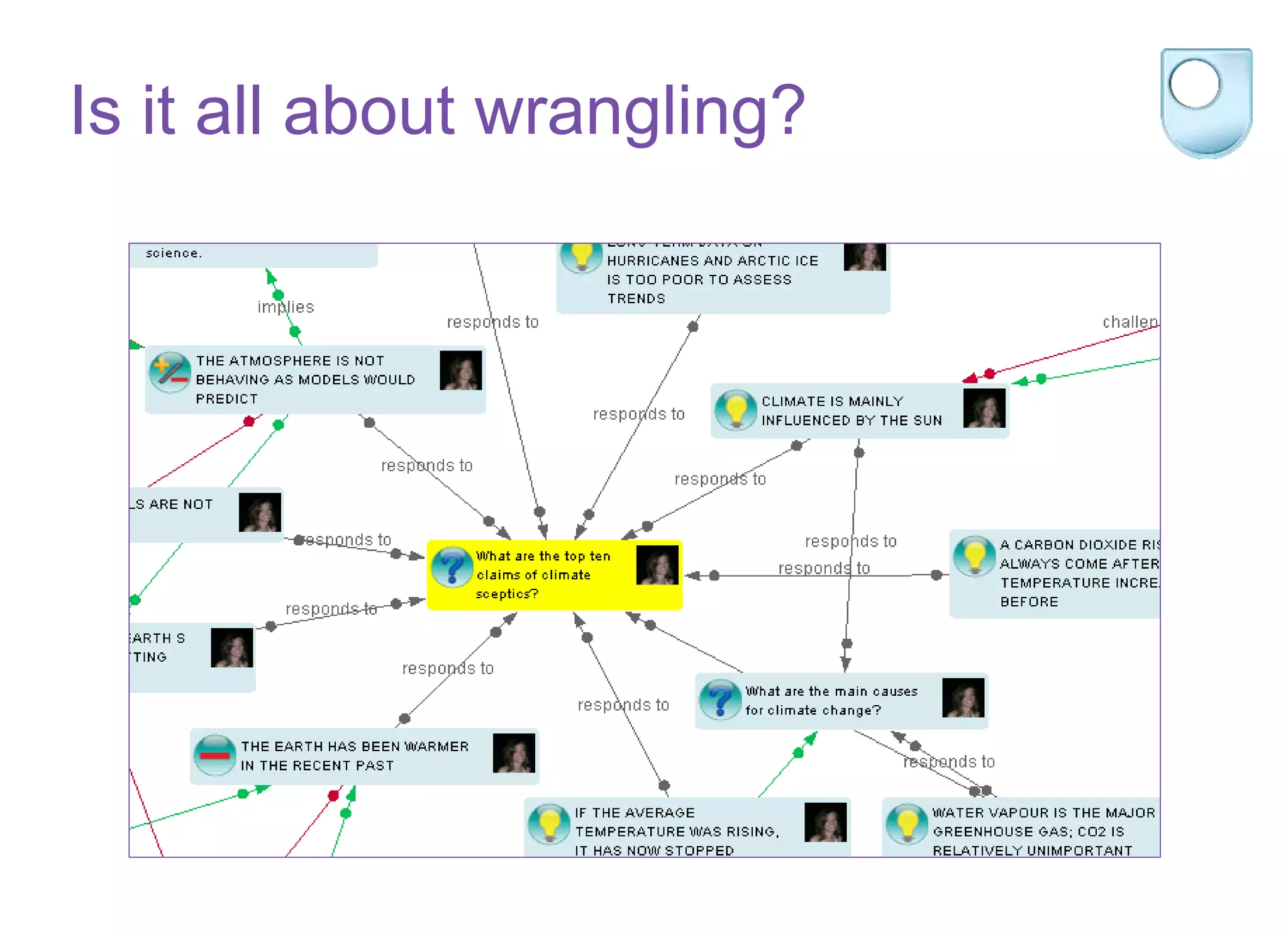
Shared knowledge building
Is it all about wrangling?
Shared knowledge building
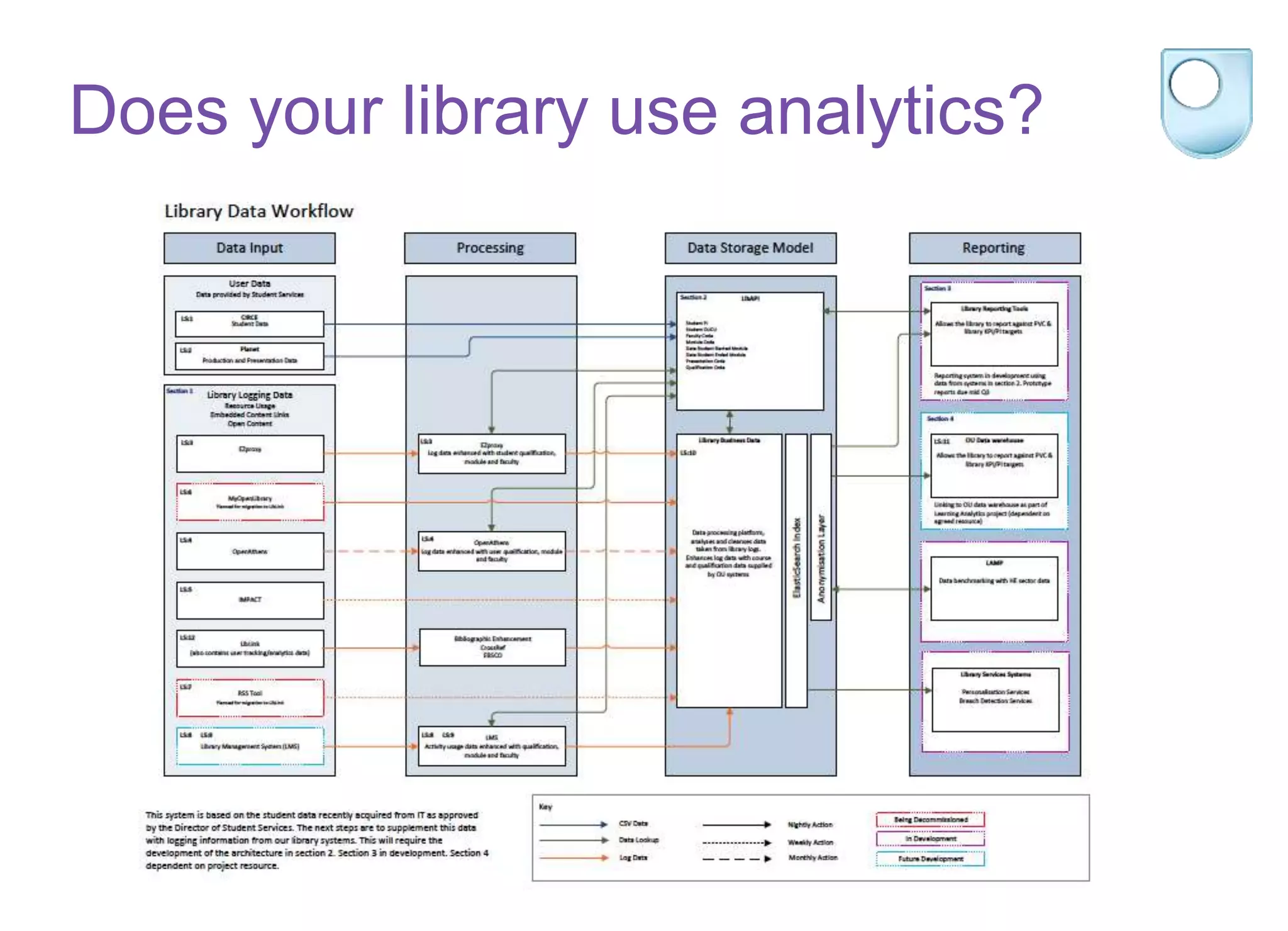
Does your library use analytics?
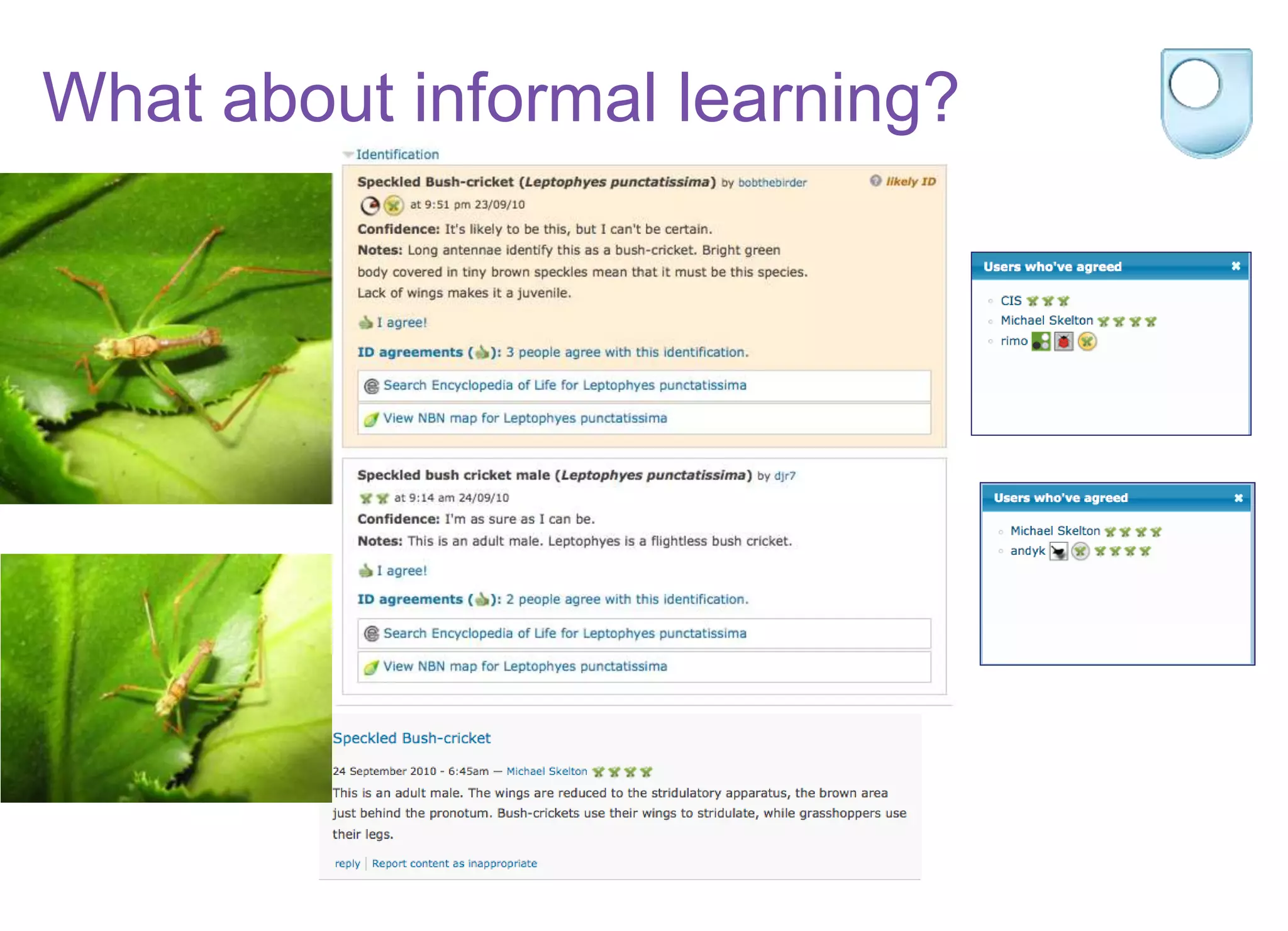
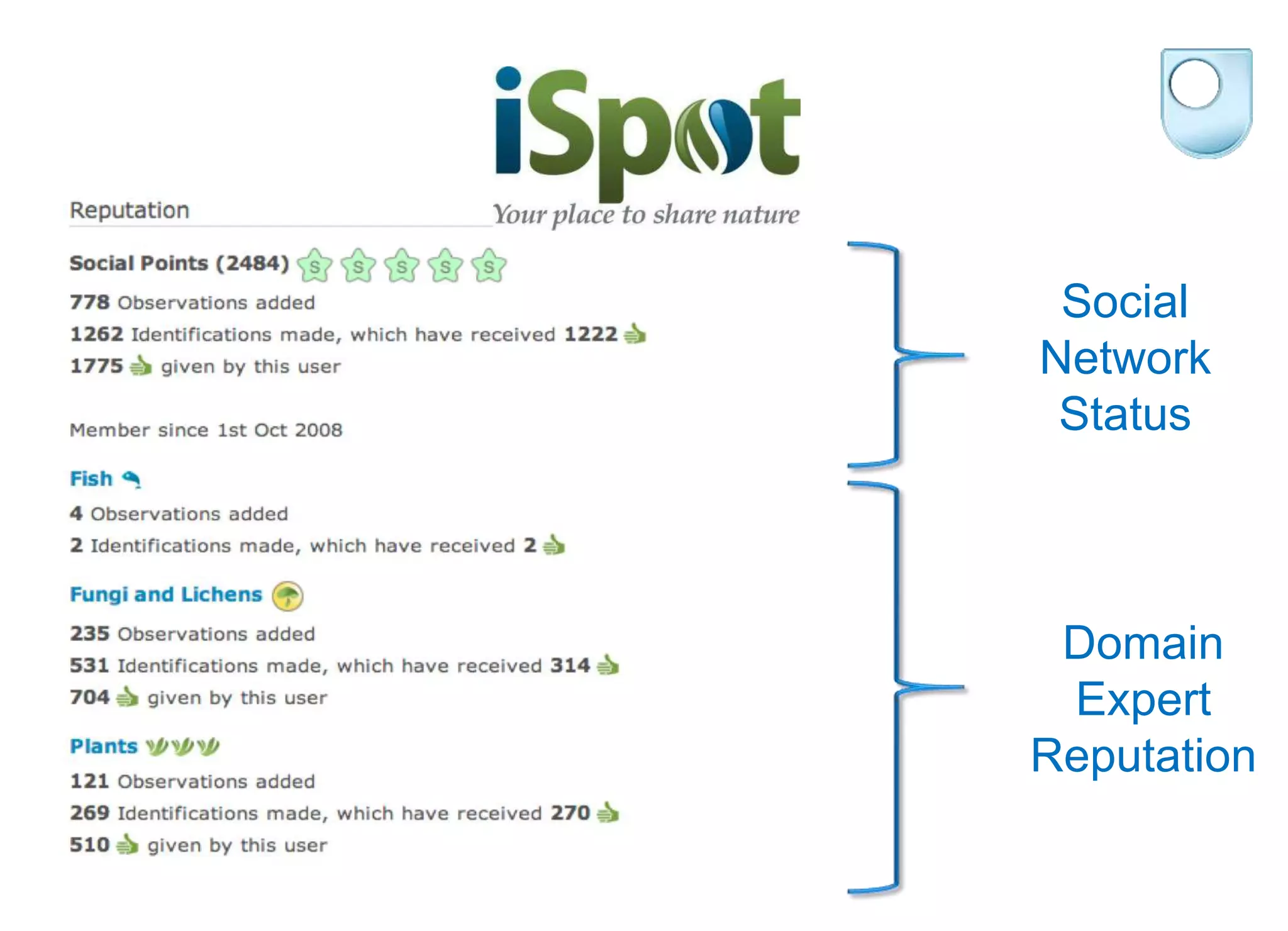
What about informal learning?
Social
Network
Status
Domain
Expert
Reputation
Massive
thousands may sign up
Open
no payment is required
Online
resources on the Internet
Courses
time-bounded cohorts
Any links with MOOCs?
(What are MOOCs?)
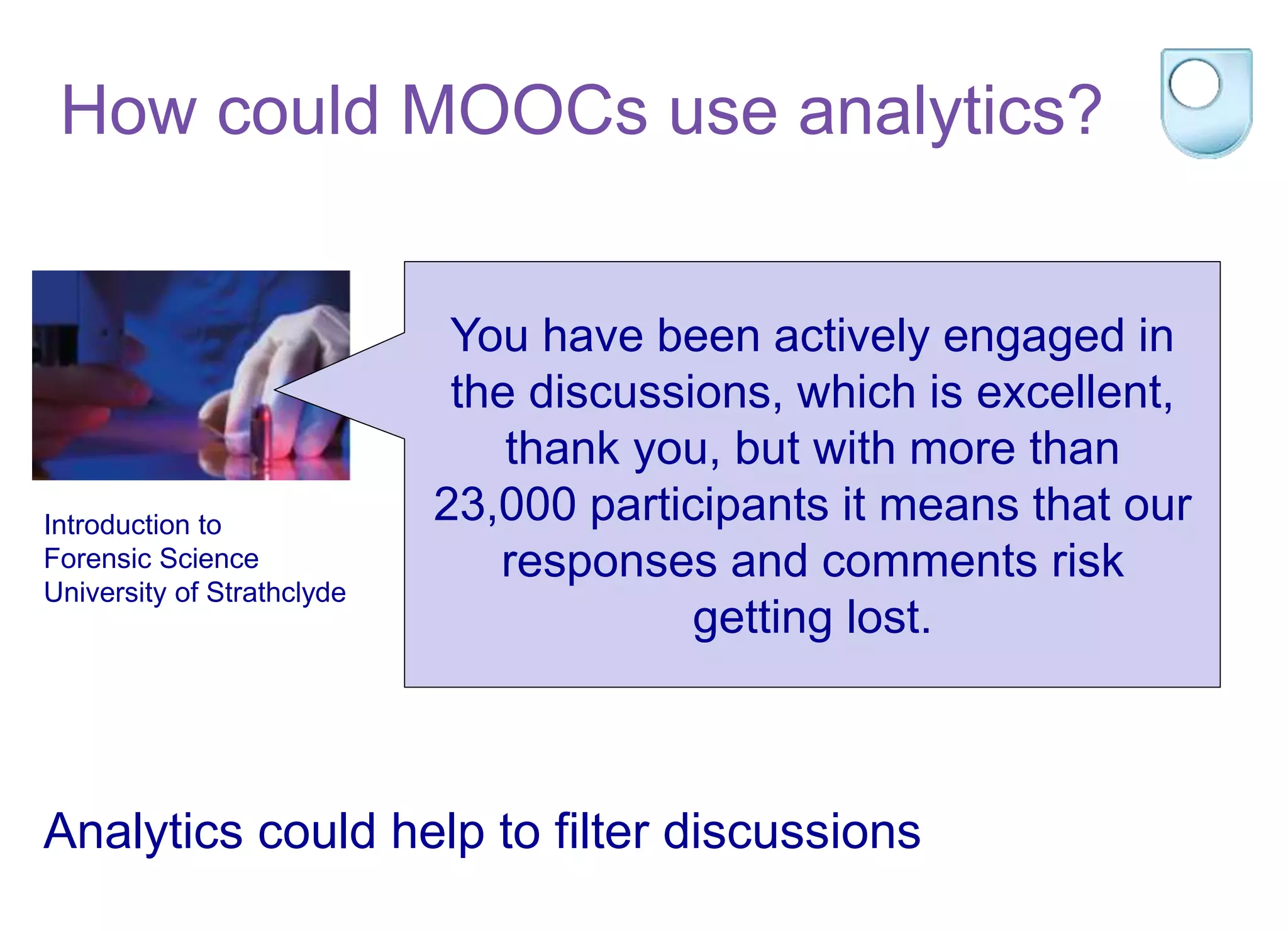
Introduction to
Forensic Science
University of Strathclyde
You have been actively engaged in
the discussions, which is excellent,
thank you, but with more than
23,000 participants it means that our
responses and comments risk
getting lost.
Analytics could help to filter discussions
How could MOOCs use analytics?
Introduction to
Forensic Science
University of Strathclyde
This will be primary school material
for some of you and exactly the
opposite for others. It is just not
possible to tailor the material to
each of you […]
How could MOOCs use analytics?
Analytics could help to group learners
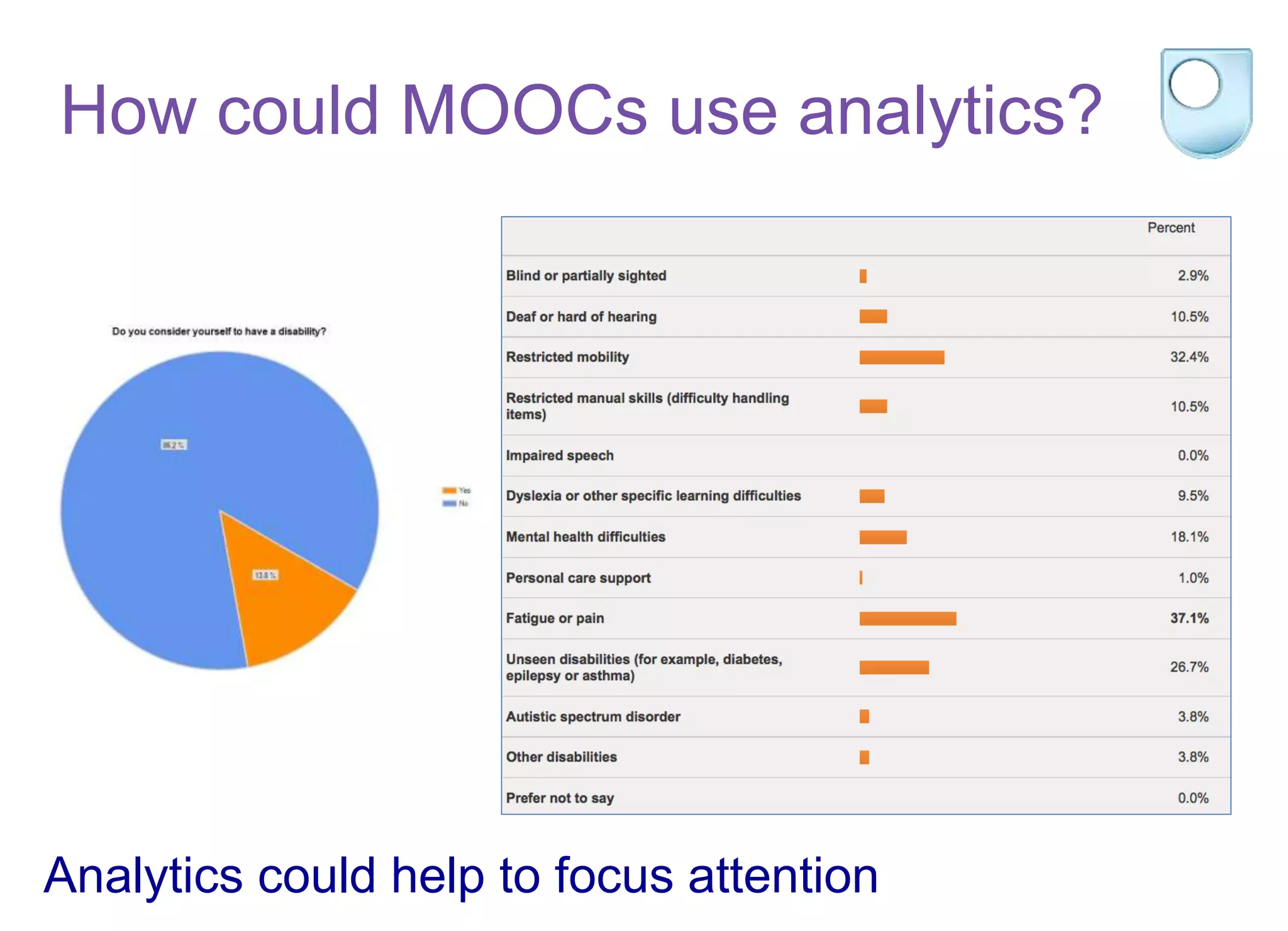
Analytics could help to focus attention
How could MOOCs use analytics?
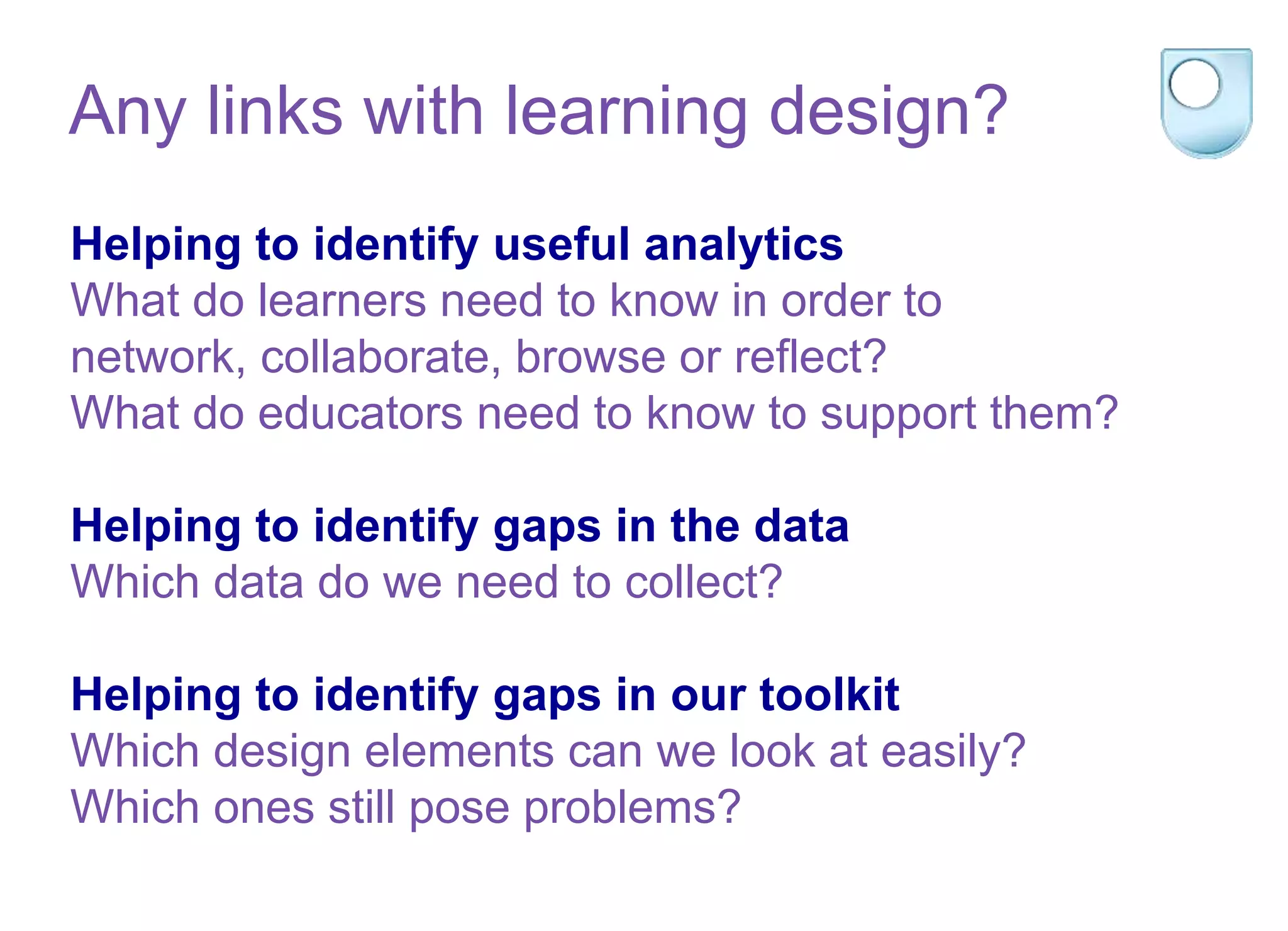
Helping to identify useful analytics
What do learners need to know in order to
network, collaborate, browse or reflect?
What do educators need to know to support them?
Helping to identify gaps in the data
Which data do we need to collect?
Helping to identify gaps in our toolkit
Which design elements can we look at easily?
Which ones still pose problems?
Any links with learning design?
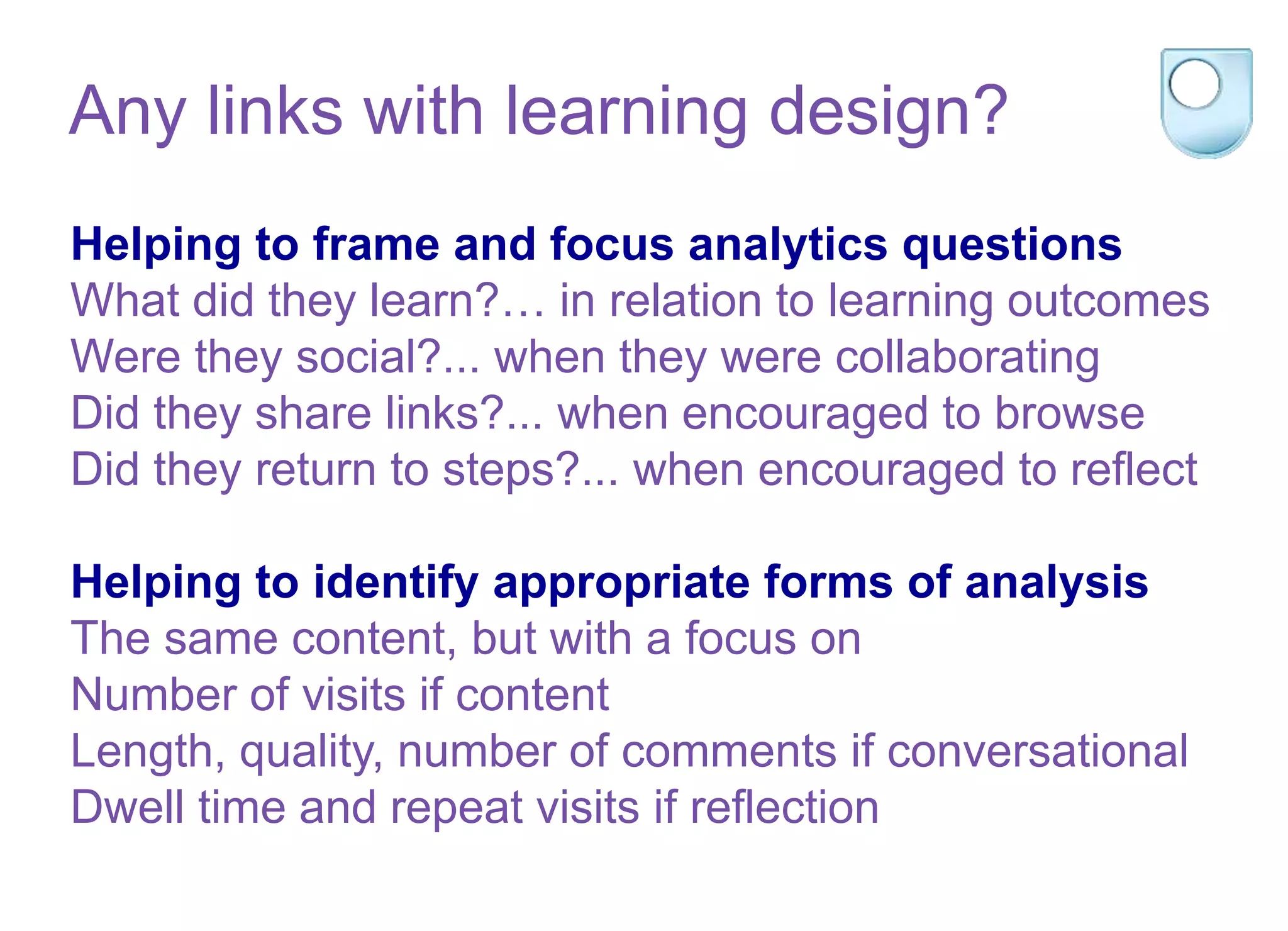
Helping to frame and focus analytics questions
What did they learn?… in relation to learning outcomes
Were they social?... when they were collaborating
Did they share links?... when encouraged to browse
Did they return to steps?... when encouraged to reflect
Helping to identify appropriate forms of analysis
The same content, but with a focus on
Number of visits if content
Length, quality, number of comments if conversational
Dwell time and repeat visits if reflection
Any links with learning design?
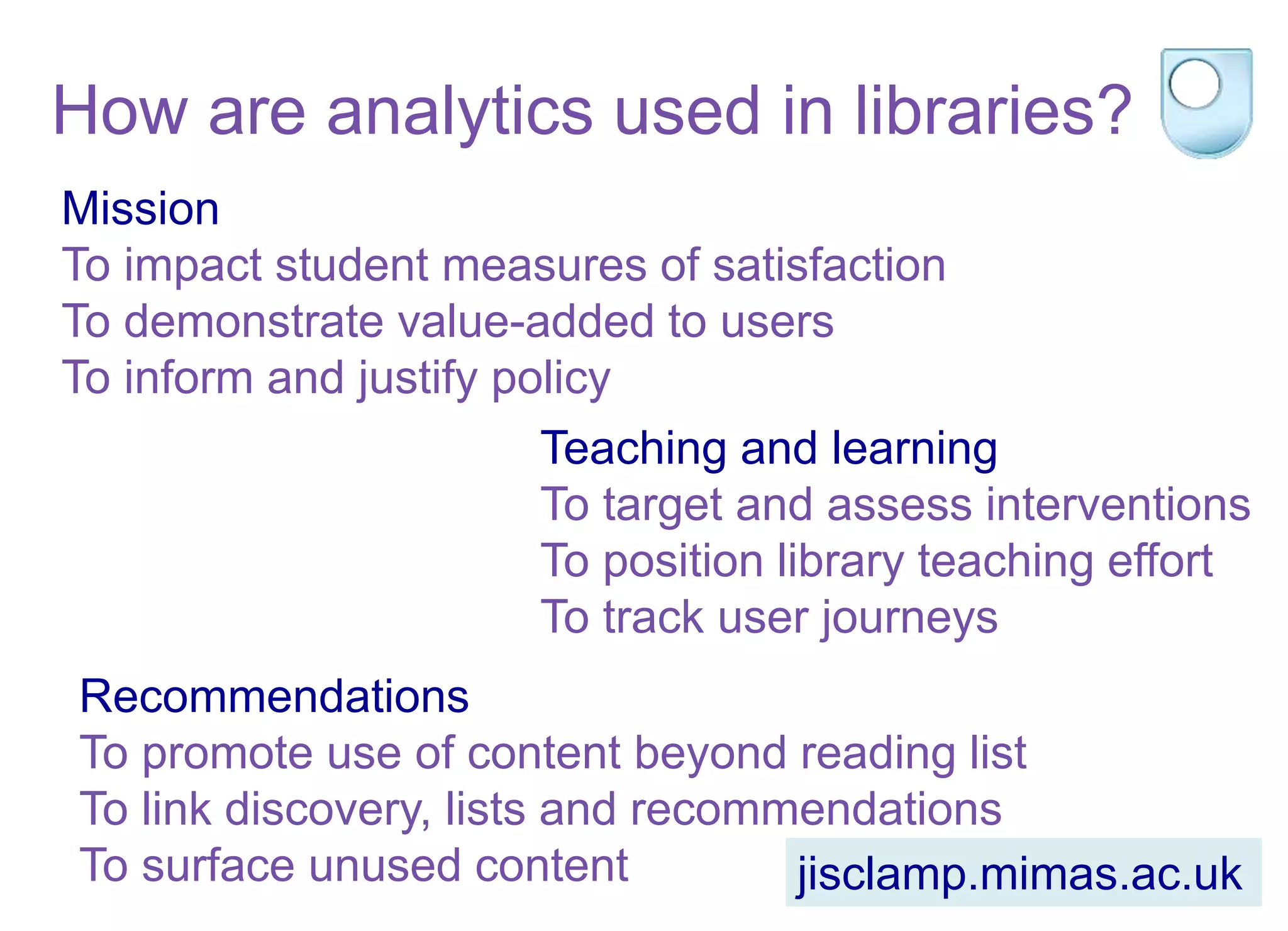
How are analytics used in libraries?
Mission
To impact student measures of satisfaction
To demonstrate value-added to users
To inform and justify policy
Teaching and learning
To target and assess interventions
To position library teaching effort
To track user journeys
Recommendations
To promote use of content beyond reading list
To link discovery, lists and recommendations
To surface unused content jisclamp.mimas.ac.uk
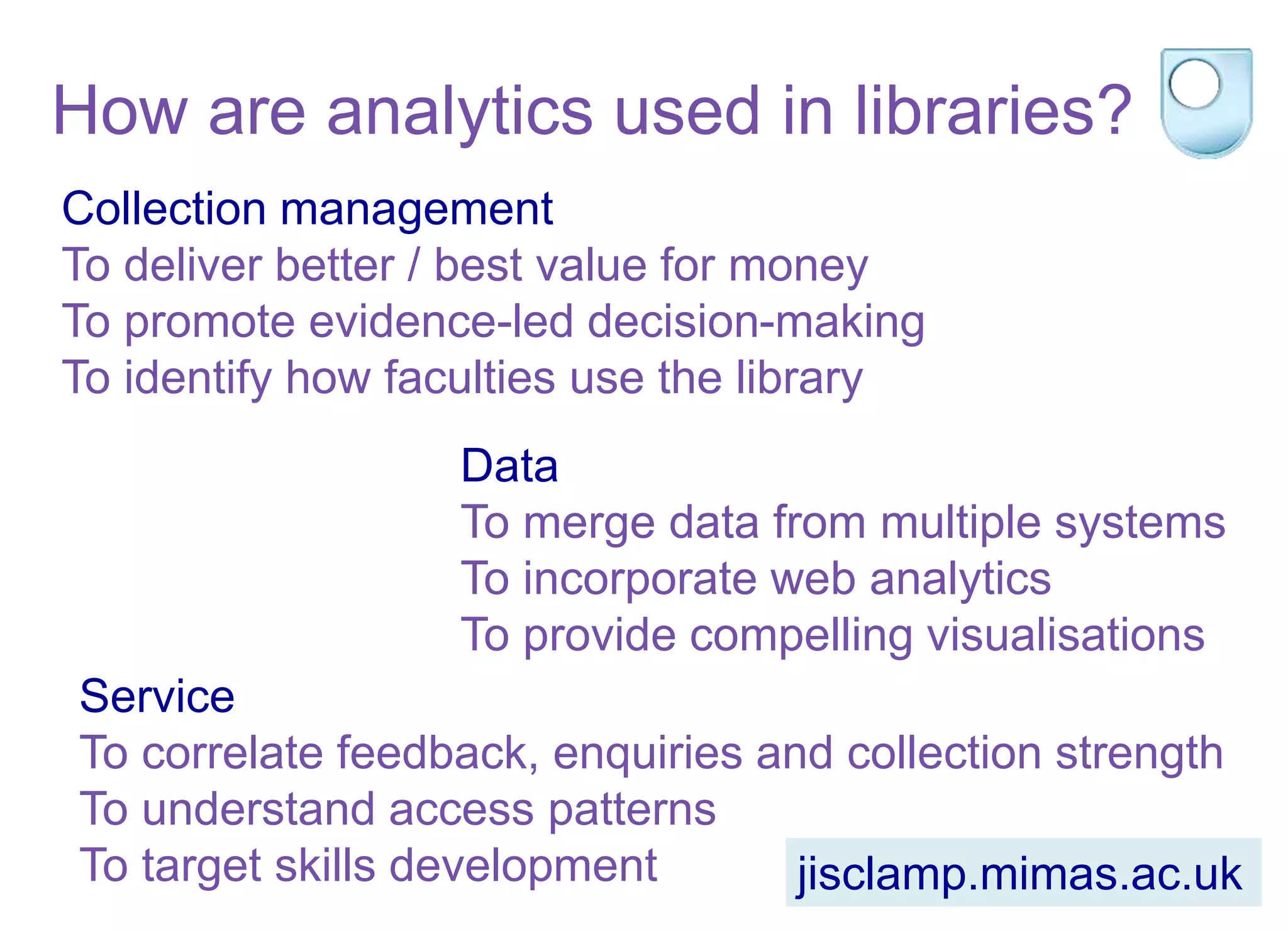
How are analytics used in libraries?
Collection management
To deliver better / best value for money
To promote evidence-led decision-making
To identify how faculties use the library
Data
To merge data from multiple systems
To incorporate web analytics
To provide compelling visualisations
Service
To correlate feedback, enquiries and collection strength
To understand access patterns
To target skills development jisclamp.mimas.ac.uk
How are you using analytics?
Collection management
Mission
Data
Teaching and learning
Recommendations
Service
jisclamp.mimas.ac.uk
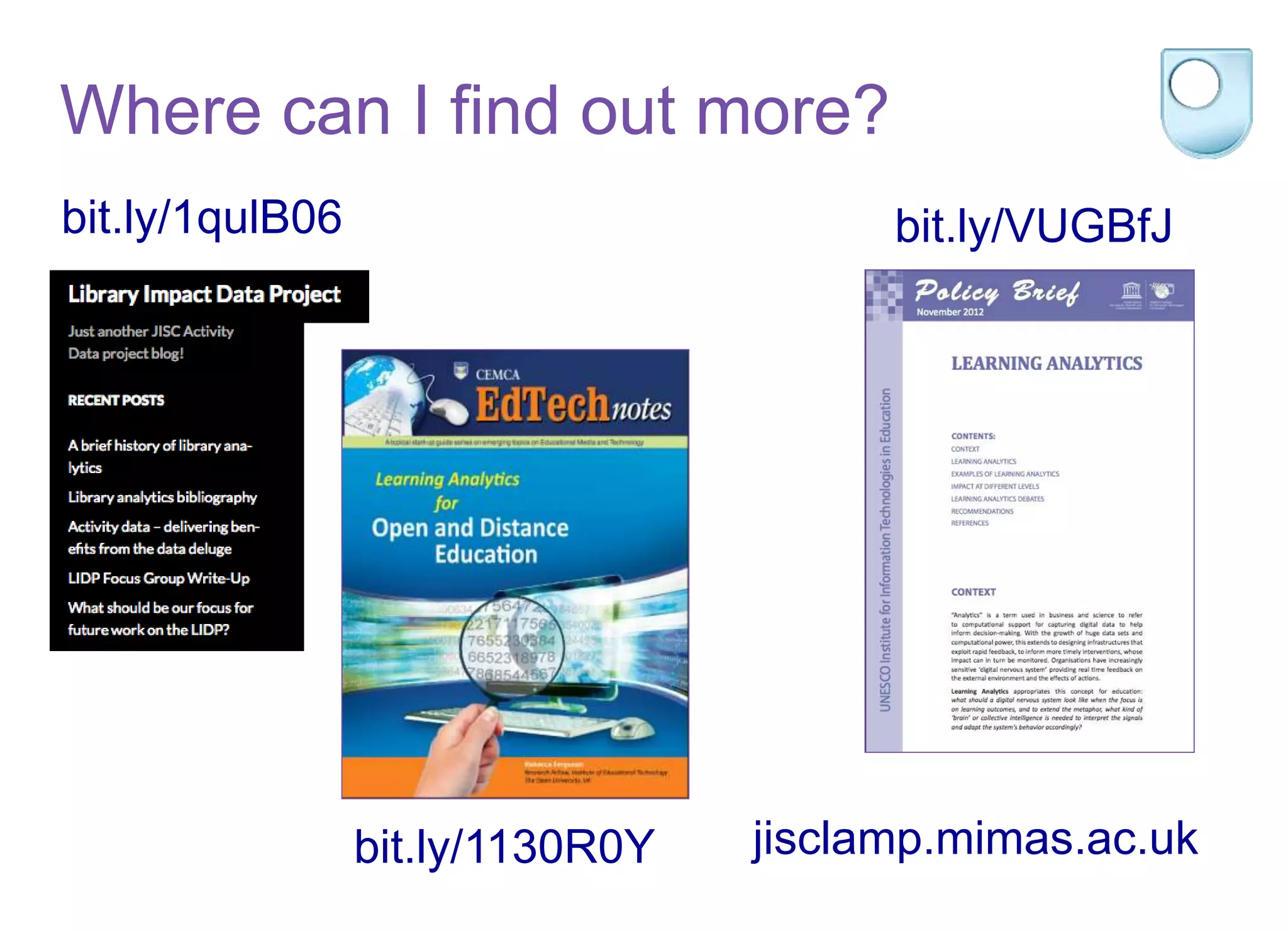
bit.ly/1130R0Y
bit.ly/VUGBfJ
Where can I find out more?
jisclamp.mimas.ac.uk
bit.ly/1qulB06
Learning analytics FAQs

Learning analytics FAQs

  • 1.
    Learning analytics: answering theFAQs Rebecca Ferguson The Open University SCONUL: June 2014
  • 2.
    Take a minuteto write down or tweet the three questions that would head your list of FAQs about learning analytics #sconulfaqs
  • 3.
    Who are you? •The Open University: largest in Europe • Making use of data for more than 40 years • Informal learning: iTunes, YouTube… • MOOCs on FutureLearn and OpenLearn • Learning analytics research / events • LACE project
  • 4.
    What are analytics? High-levelfigures Brief overview for internal and external reports Academic analytics Figures on retention and success, for the institution to assess performance Educational data mining Searching for patterns in the data Learning analytics Use of [big] data to provide actionable intelligence for learners and teachers
  • 5.
    Is there aprecise definition? The measurement, collection, analysis and reporting of data about learners and their contexts, for purposes of understanding and optimizing learning and the environments in which it occurs.
  • 6.
    Why do learnersuse analytics? • Monitor their own activities and interactions • Monitor the learning process • Compare their activity with that of others • Increase awareness, reflect and self reflect • Improve discussion participation • Improve learning behaviour • Improve performance • Become better learners • Learn!
  • 7.
    Why might Iuse analytics? • Monitor the learning process • Explore student data • Identify problems • Discover patterns • Find early indicators for success • Find early indicators for poor marks or drop-out • Assess usefulness of learning materials • Increase awareness, reflect and self reflect • Increase understanding of learning environments • Intervene, advise and assist • Improve teaching, resources and the environment
  • 8.
    Can you giveme an example? • Aligned with clear aims • Huge and sustained effort • Agreed proxies for learning • Clear and standardised visualisation • Driving behaviour at every level Individual assessment within cohort
  • 9.
    Is that anideal example? Can we achieve this? • Aligned with clear aims • Huge and sustained effort • Agreed proxies for learning • Clear and standardised visualisation • Driving behaviour at every level Can we avoid this? • Instructivist approach • Stressed, unhappy learners • Analytics with little value for learners or teachers • Omission of key areas, such as collaboration
  • 10.
    Don’t start withthe data – start with the pedagogy How do people learn? How can I use data to facilitate that process? Social learning analytics: How do people learn socially & in social settings? How can I use data to facilitate that process? How could we achieve that?
  • 11.
    What questions shouldI ask? • Which elements are learners struggling with? • Which sections engage them the most? • What prompts them to ask questions? • How are they navigating resources? • What misconceptions have they shown? • Are there any accessibility issues? How can analytics be used to achieve desired learning outcomes?
  • 12.
    • Demographic data •Calendar information about assignments • VLE activity data (including forums). • Lists of required reading • Library resources usage data • Library helpdesk enquiries • Library website usage and analytics data • Assessment results • User survey results • Student retention and attainment data What data could I use?
  • 13.
    Does HE uselearning analytics? Purdue University
  • 14.
    SNAPP: British Columbia Are allanalytics like that?
  • 15.
    Disparate data VLE (Moodle)data Survey data Help desk data Library data Assessment data Registration data 250,000 students around the world Faculty expertise Learning design Learning outcomes Assessment strategy Module connections Resource understanding Data Wranglers Do you have an OU example?
  • 16.
    Resource page? Subpage? URL? Significance of dates? What does a Wrangler do?
  • 17.
    Reach agreement onconventions 80% agreed or strongly agreed that…. Is that 80% of registered students? 80% of those who completed the survey? 80% of those who completed both survey and course? Or is it 80% of survey respondents who completed the course and did not select ‘not applicable’ What else do Wranglers do?
  • 18.
    Relate analytics tolearning design How many forums? What were their roles? How were they timetabled? Anything else?
  • 19.
    Support, not surveillance Reportingat module level, not individual level Survey responses kept apart from activity data Making data accessible, not overwhelming Negotiating meaning, not dictating interpretation Are there any ethical issues?
  • 20.
    Shared knowledge building Isit all about wrangling?
  • 21.
    Shared knowledge building Doesyour library use analytics?
  • 22.
  • 23.
  • 24.
    Massive thousands may signup Open no payment is required Online resources on the Internet Courses time-bounded cohorts Any links with MOOCs? (What are MOOCs?)
  • 25.
    Introduction to Forensic Science Universityof Strathclyde You have been actively engaged in the discussions, which is excellent, thank you, but with more than 23,000 participants it means that our responses and comments risk getting lost. Analytics could help to filter discussions How could MOOCs use analytics?
  • 26.
    Introduction to Forensic Science Universityof Strathclyde This will be primary school material for some of you and exactly the opposite for others. It is just not possible to tailor the material to each of you […] How could MOOCs use analytics? Analytics could help to group learners
  • 27.
    Analytics could helpto focus attention How could MOOCs use analytics?
  • 28.
    Helping to identifyuseful analytics What do learners need to know in order to network, collaborate, browse or reflect? What do educators need to know to support them? Helping to identify gaps in the data Which data do we need to collect? Helping to identify gaps in our toolkit Which design elements can we look at easily? Which ones still pose problems? Any links with learning design?
  • 29.
    Helping to frameand focus analytics questions What did they learn?… in relation to learning outcomes Were they social?... when they were collaborating Did they share links?... when encouraged to browse Did they return to steps?... when encouraged to reflect Helping to identify appropriate forms of analysis The same content, but with a focus on Number of visits if content Length, quality, number of comments if conversational Dwell time and repeat visits if reflection Any links with learning design?
  • 30.
    How are analyticsused in libraries? Mission To impact student measures of satisfaction To demonstrate value-added to users To inform and justify policy Teaching and learning To target and assess interventions To position library teaching effort To track user journeys Recommendations To promote use of content beyond reading list To link discovery, lists and recommendations To surface unused content jisclamp.mimas.ac.uk
  • 31.
    How are analyticsused in libraries? Collection management To deliver better / best value for money To promote evidence-led decision-making To identify how faculties use the library Data To merge data from multiple systems To incorporate web analytics To provide compelling visualisations Service To correlate feedback, enquiries and collection strength To understand access patterns To target skills development jisclamp.mimas.ac.uk
  • 32.
    How are youusing analytics? Collection management Mission Data Teaching and learning Recommendations Service jisclamp.mimas.ac.uk
  • 33.
    bit.ly/1130R0Y bit.ly/VUGBfJ Where can Ifind out more? jisclamp.mimas.ac.uk bit.ly/1qulB06