Development of aorta and
pulmonary trunk
To MBBS 1st year
By Dr. Laxman Khanal
Assistant Professor
Department of anatomy
BPKIHS
09-05-2016
Objectives
1. Should be able to list the developmental sources of arterial system.
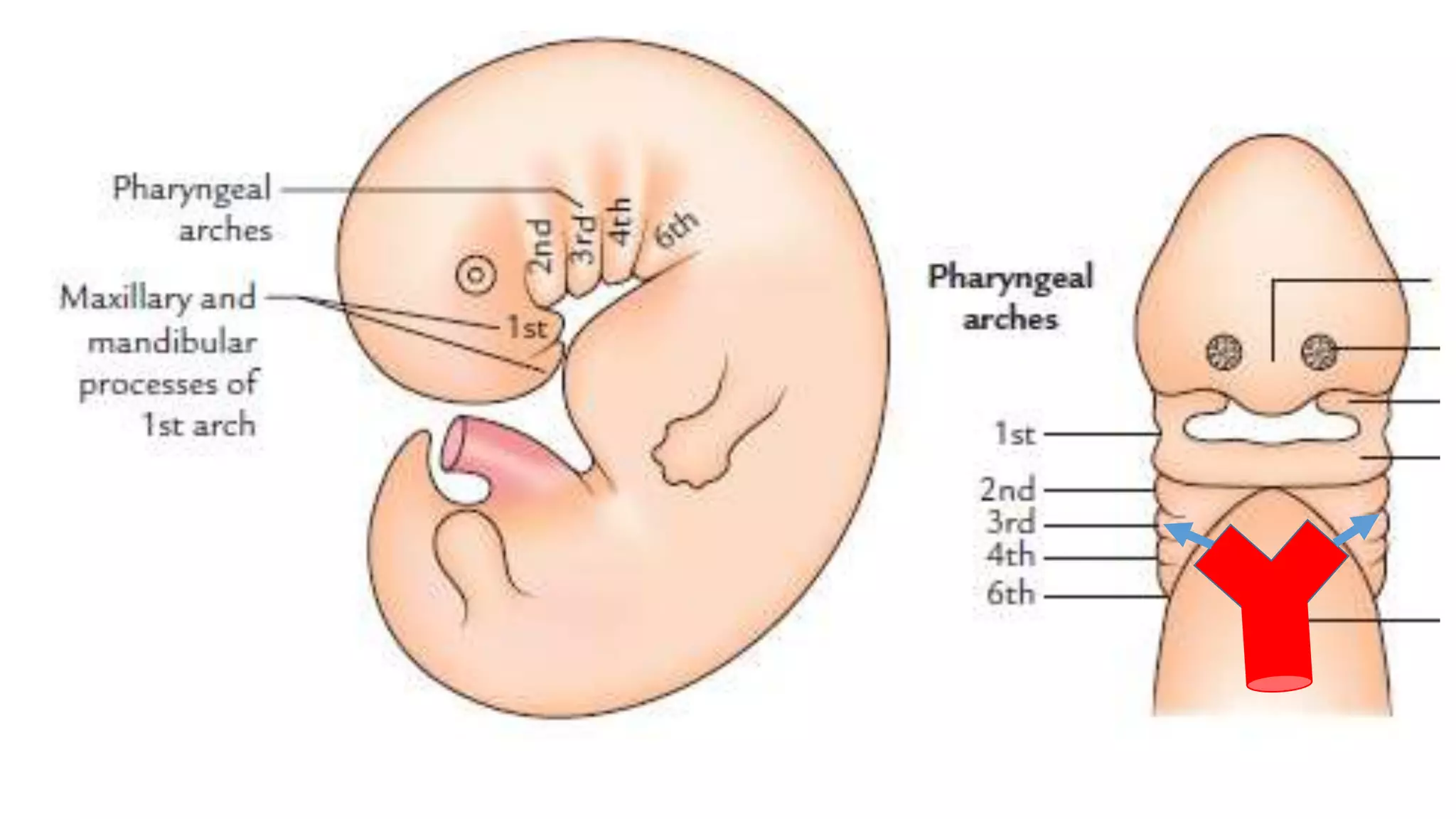
2. Should be able to understand the origin of pharyngeal arch system.
3. Should be able to list the derivatives of pharyngeal arch arteries.
4. Should be able to explain important developmental anomalies.
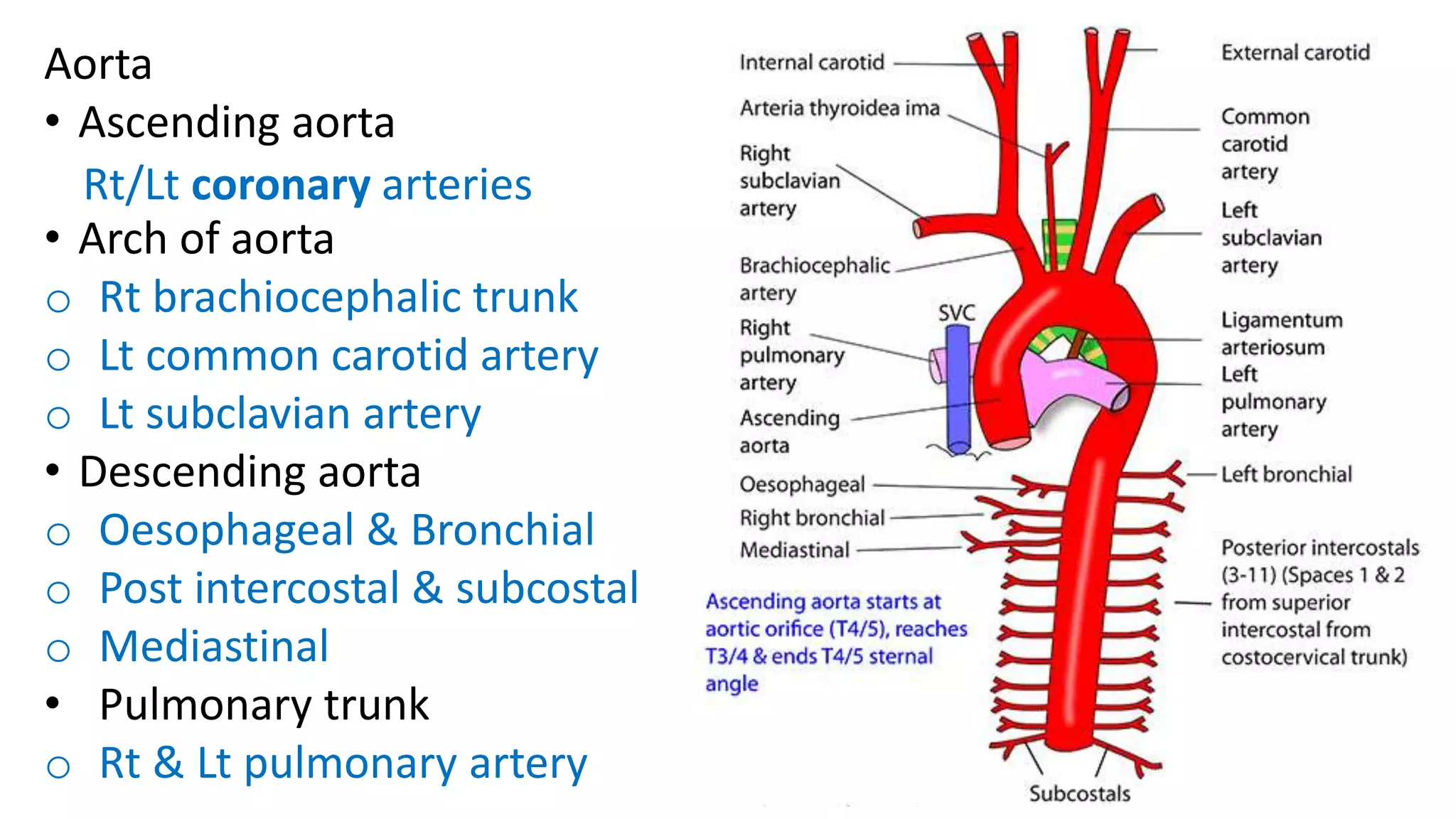
Aorta
• Ascending aorta
• Arch of aorta
o Rt brachiocephalic trunk
o Lt common carotid artery
o Lt subclavian artery
• Descending aorta
o Oesophageal & Bronchial
o Post intercostal & subcostal
o Mediastinal
• Pulmonary trunk
o Rt & Lt pulmonary artery
Rt/Lt coronary arteries
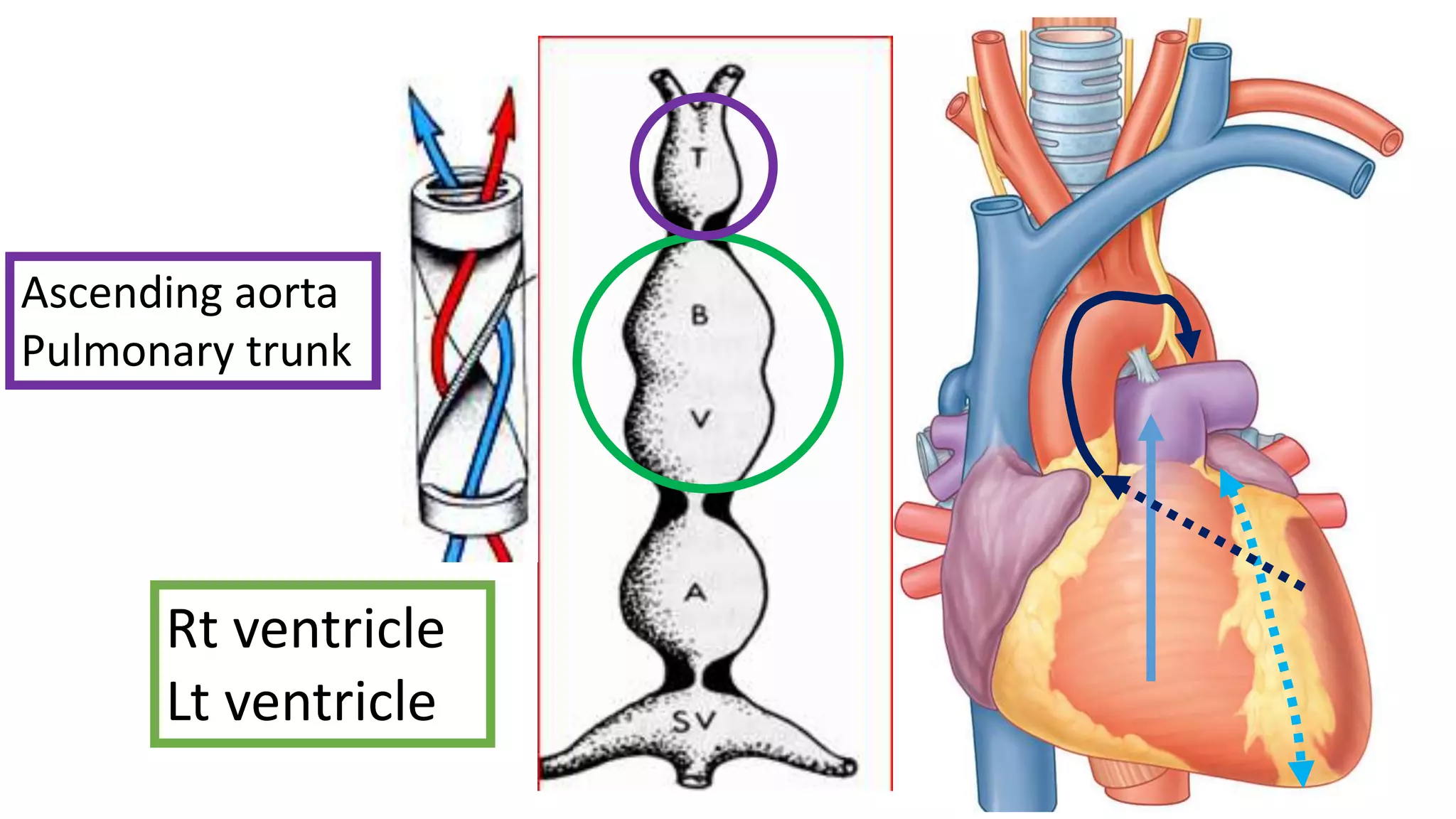
Rt ventricle
Lt ventricle
Ascending aorta
Pulmonary trunk
Development of arterial system
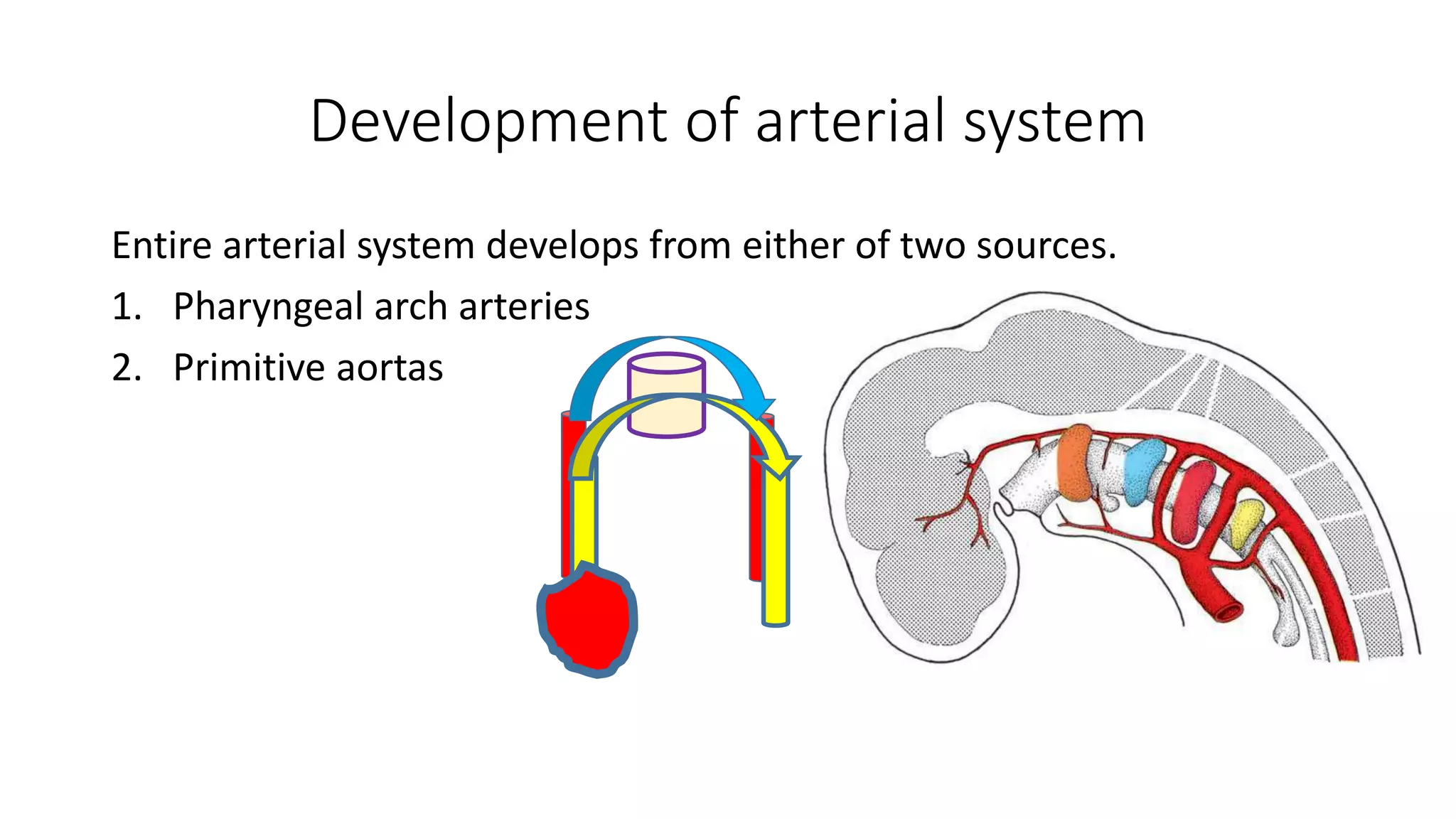
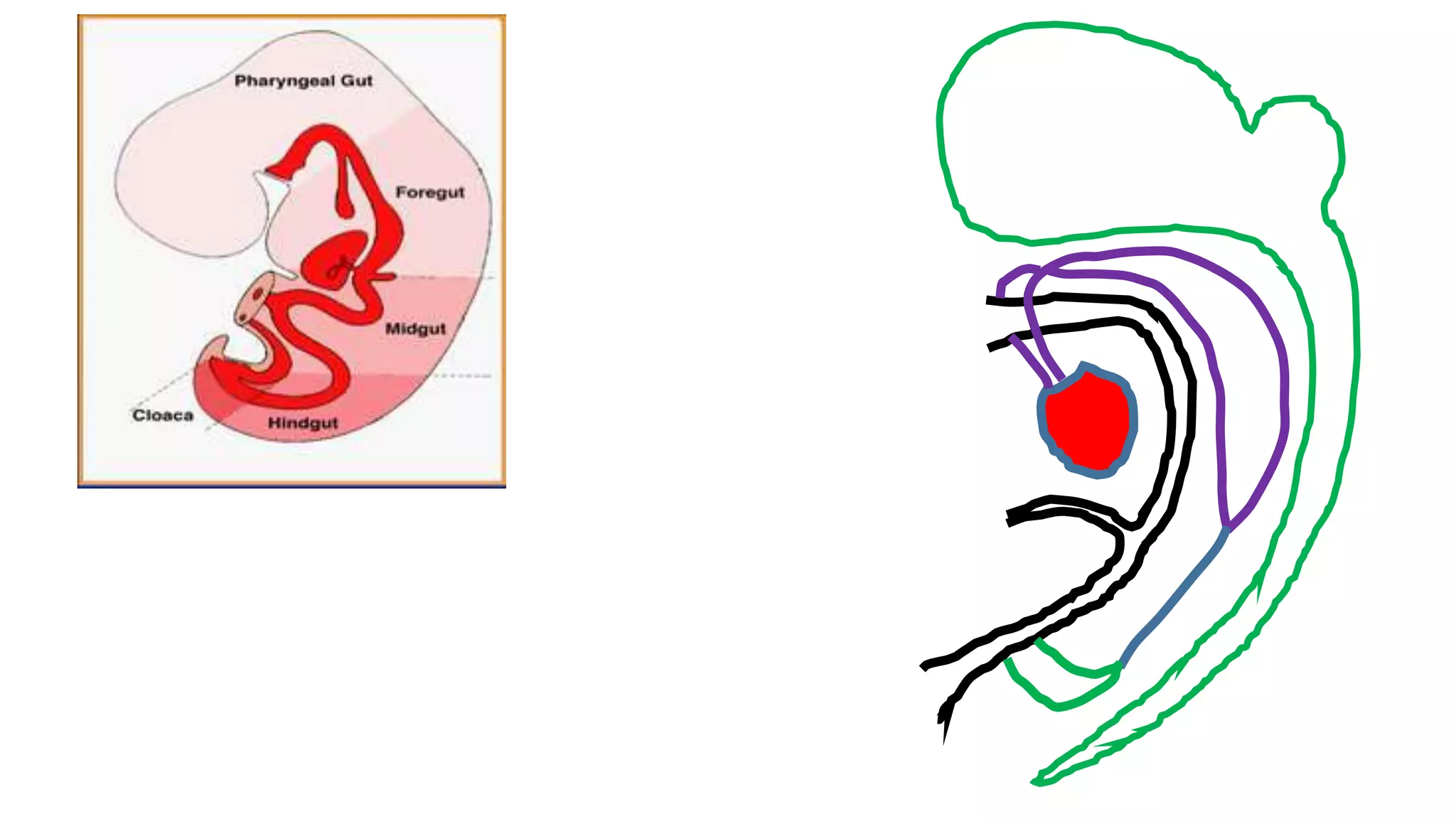
Entire arterial system develops from either of two sources.
1. Pharyngeal arch arteries
2. Primitive aortas
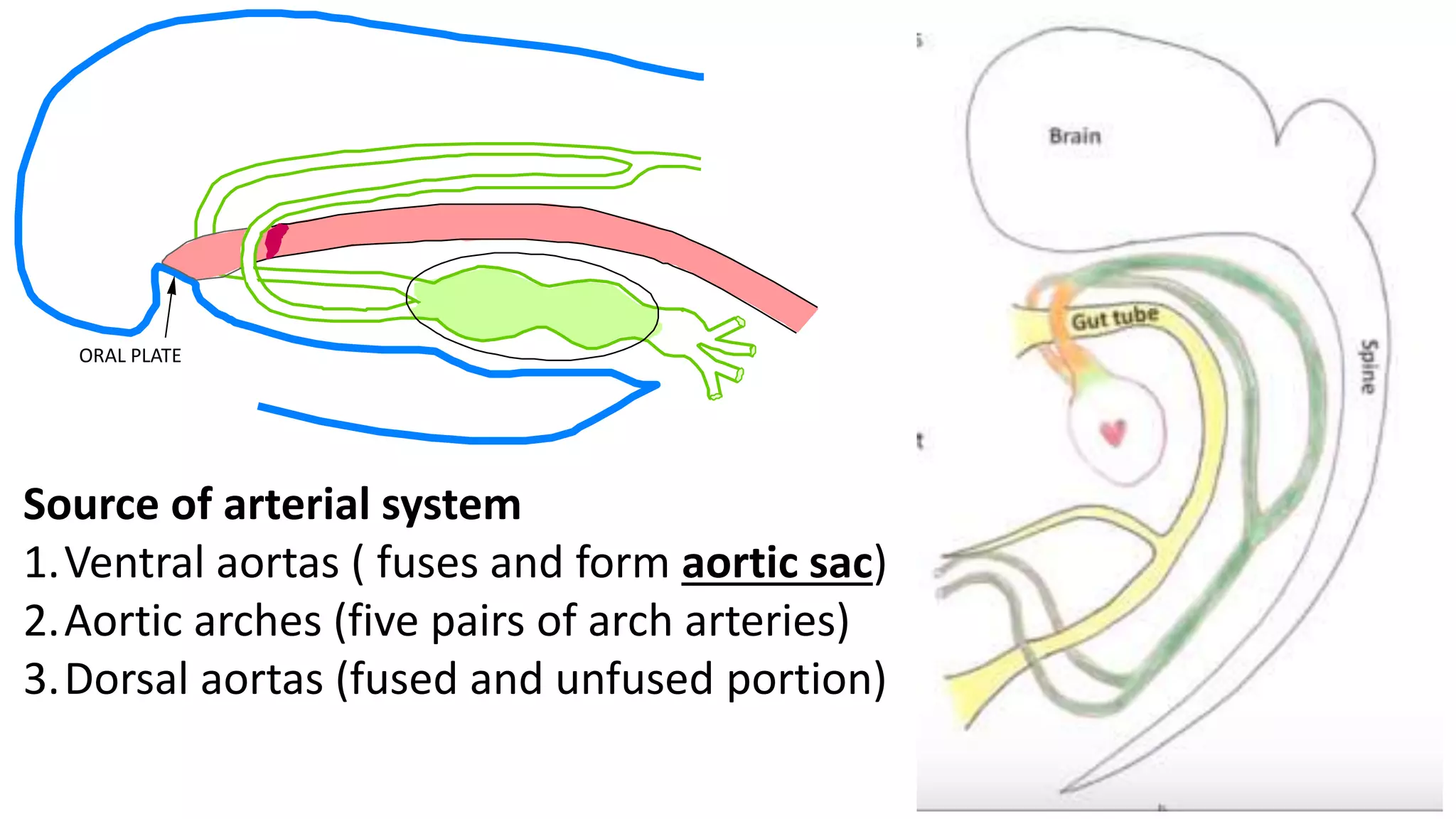
ORAL PLATE
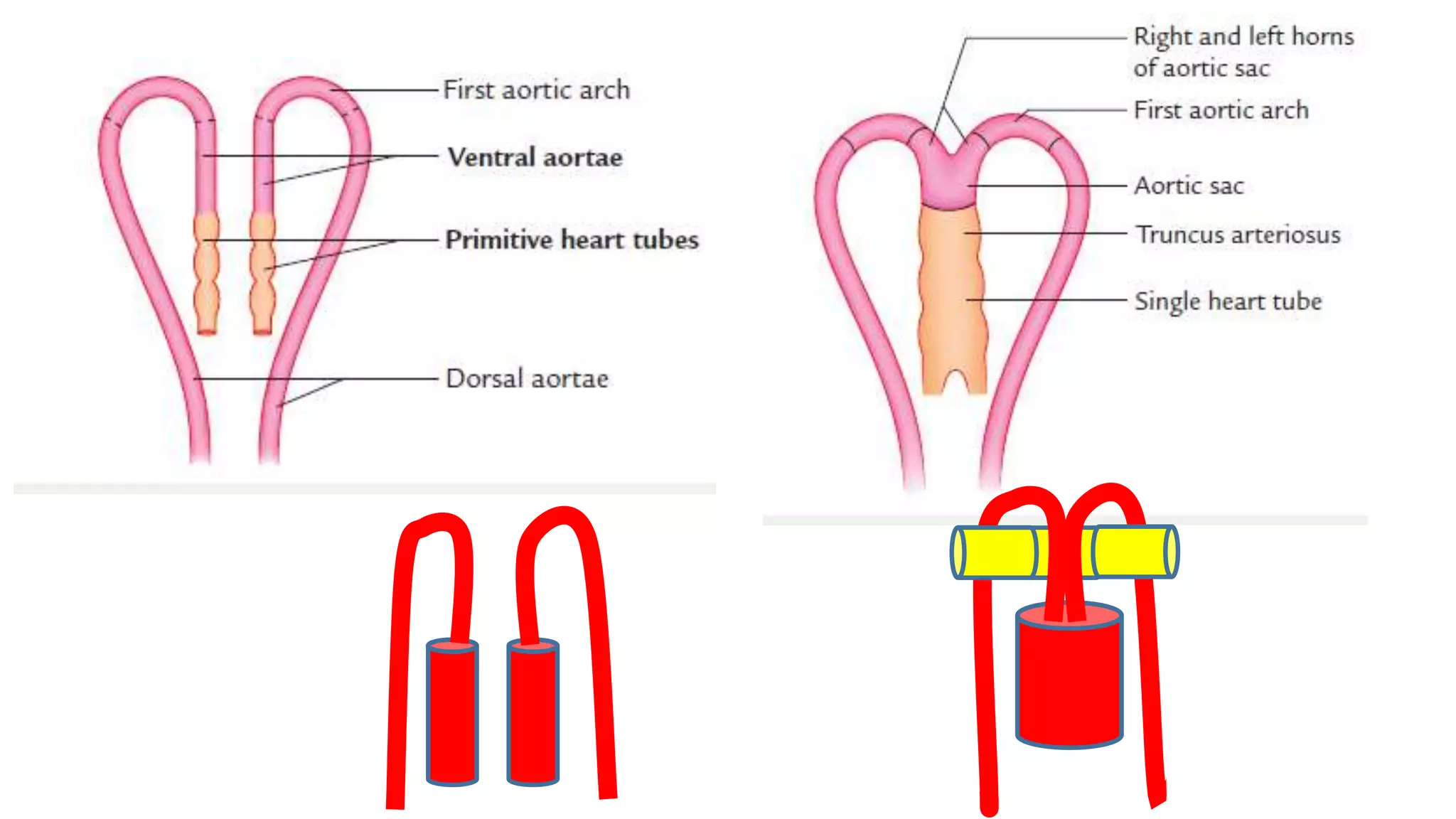
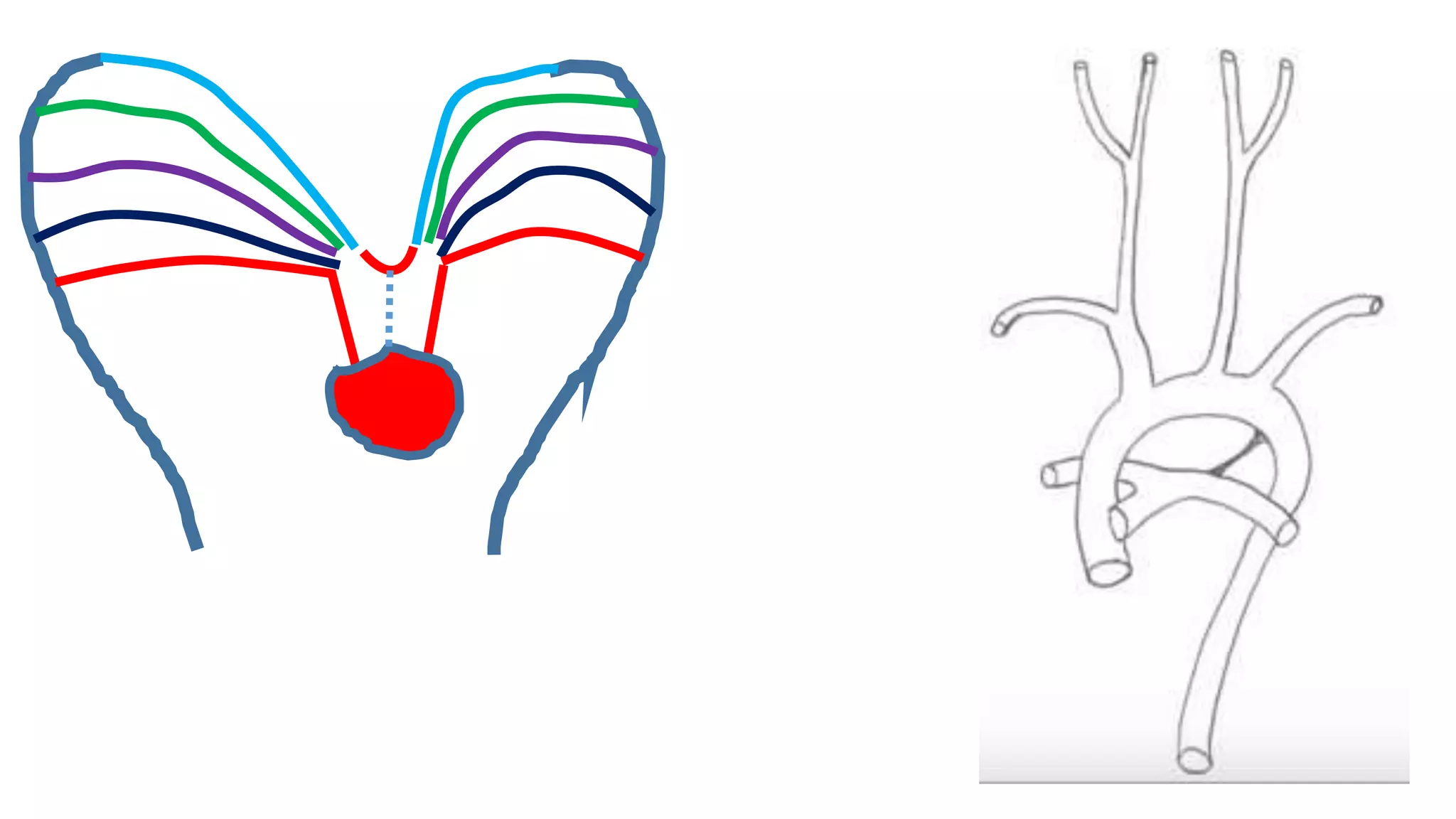
Source of arterial system
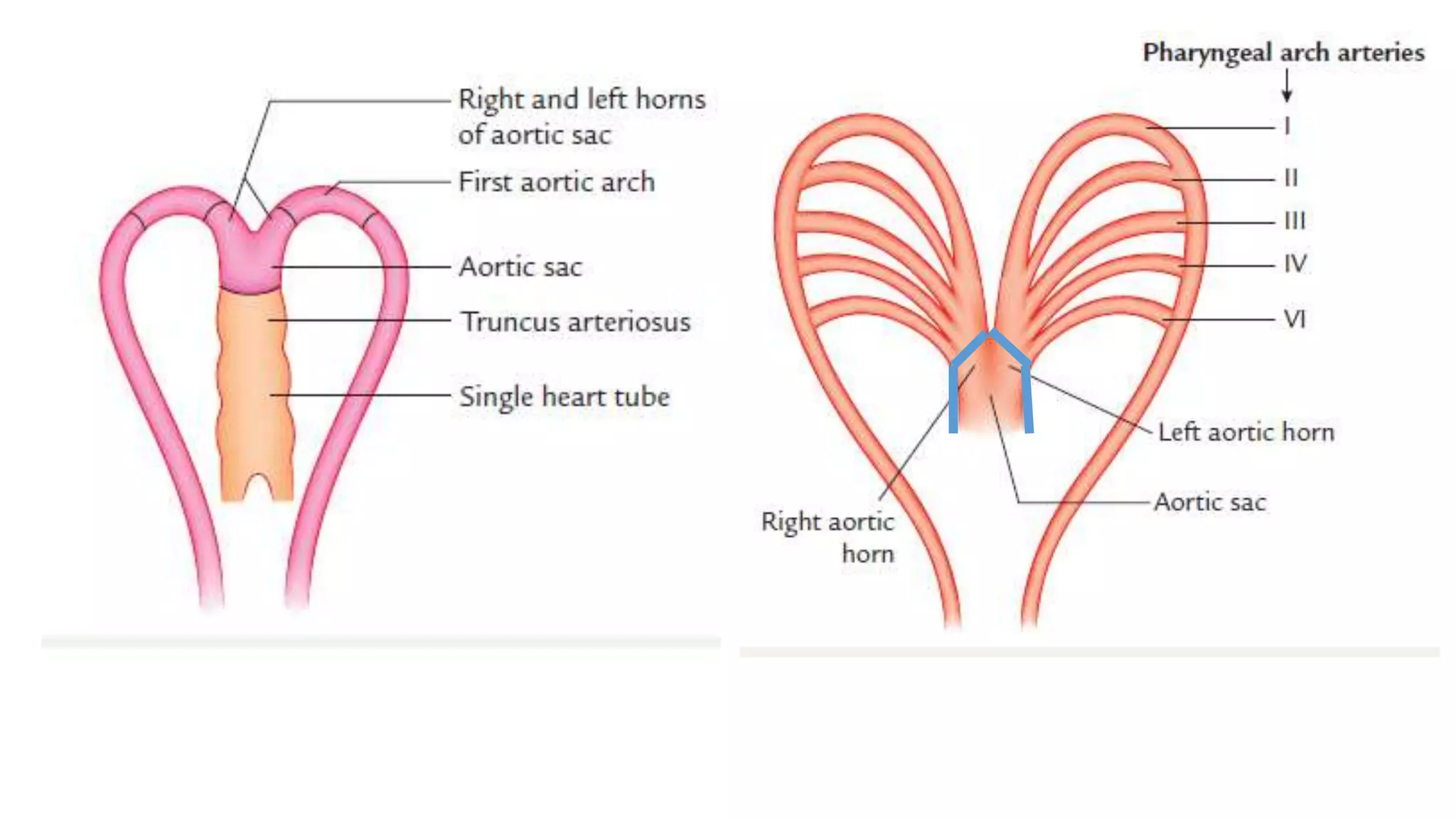
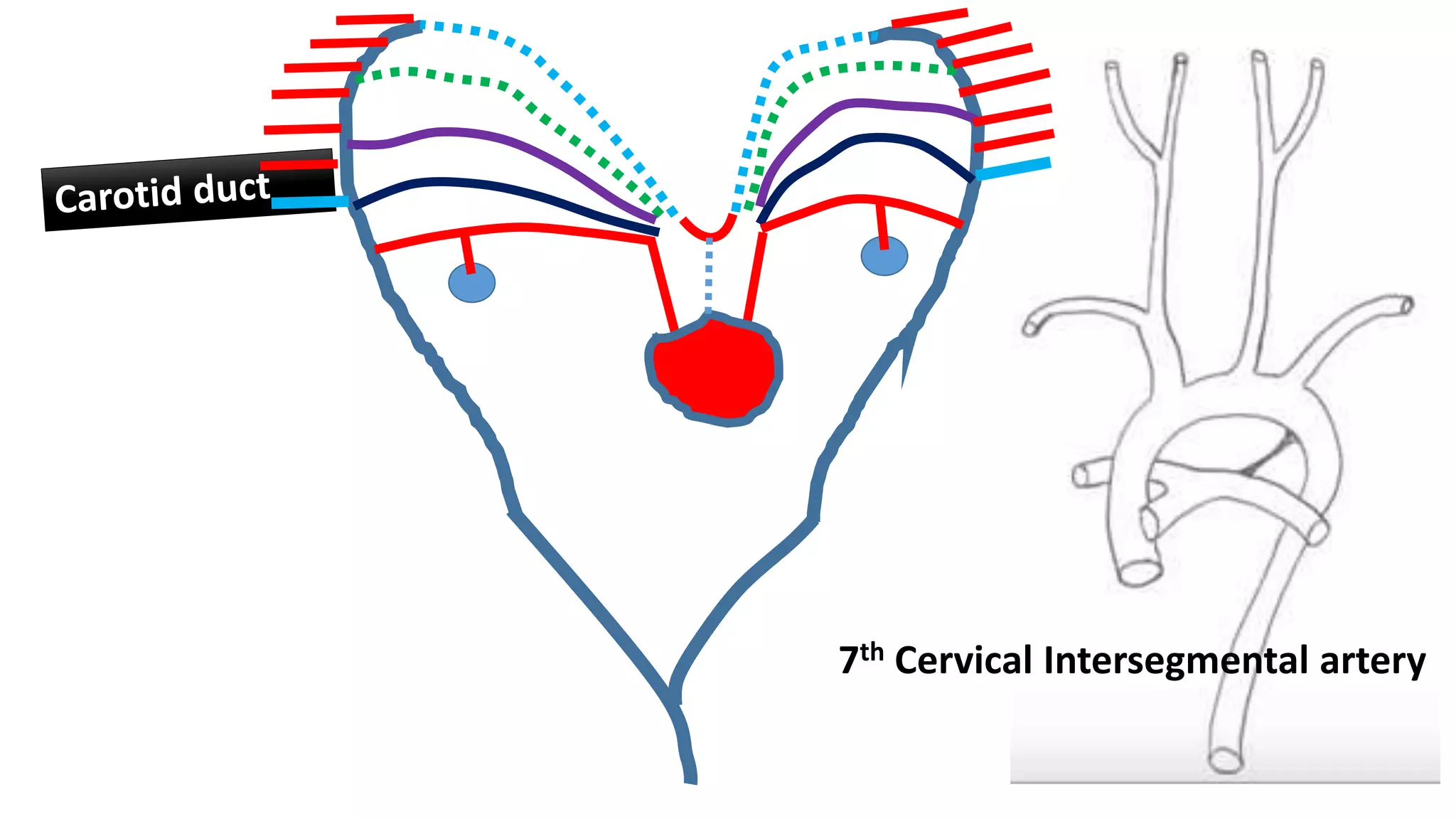
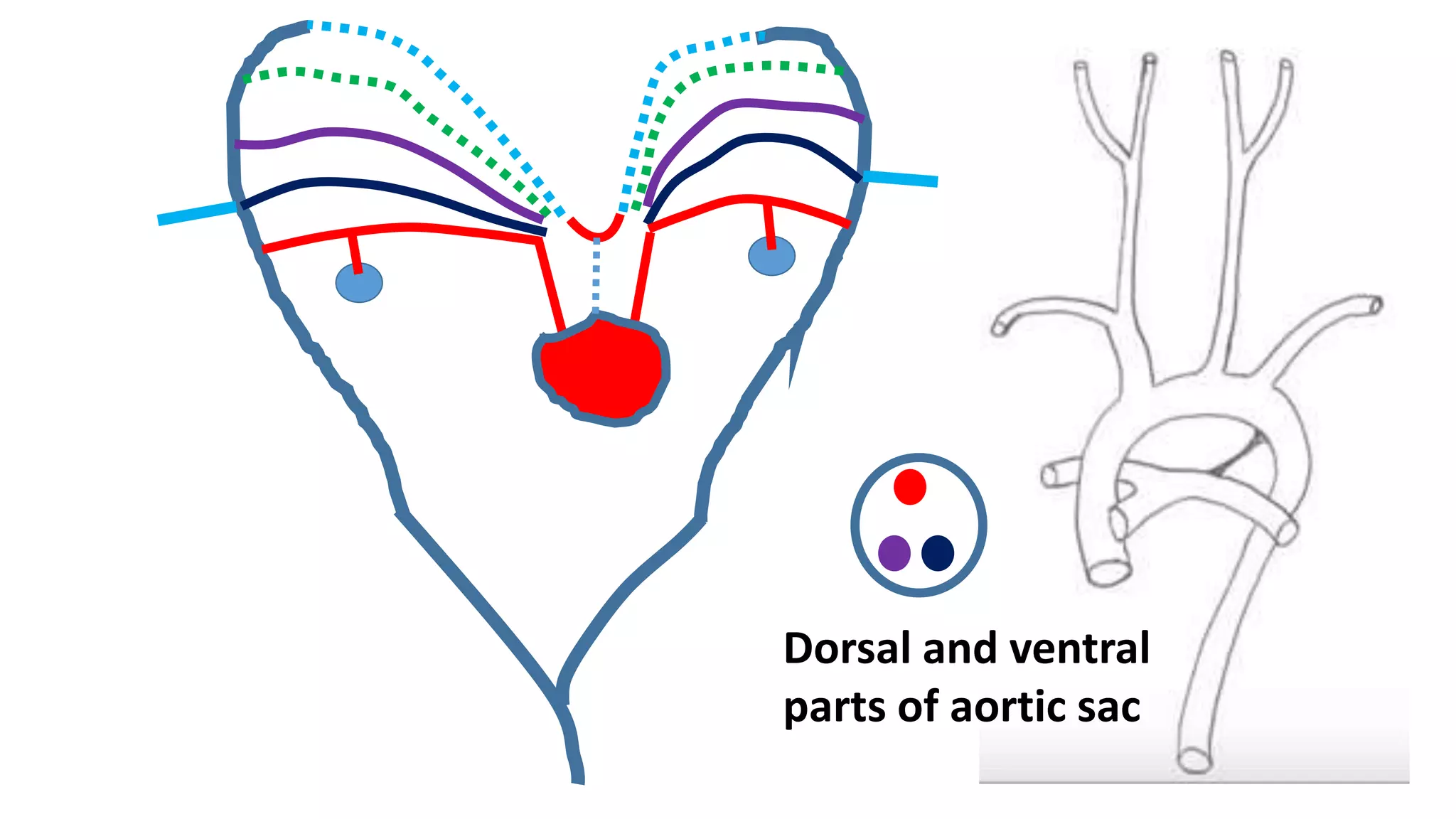
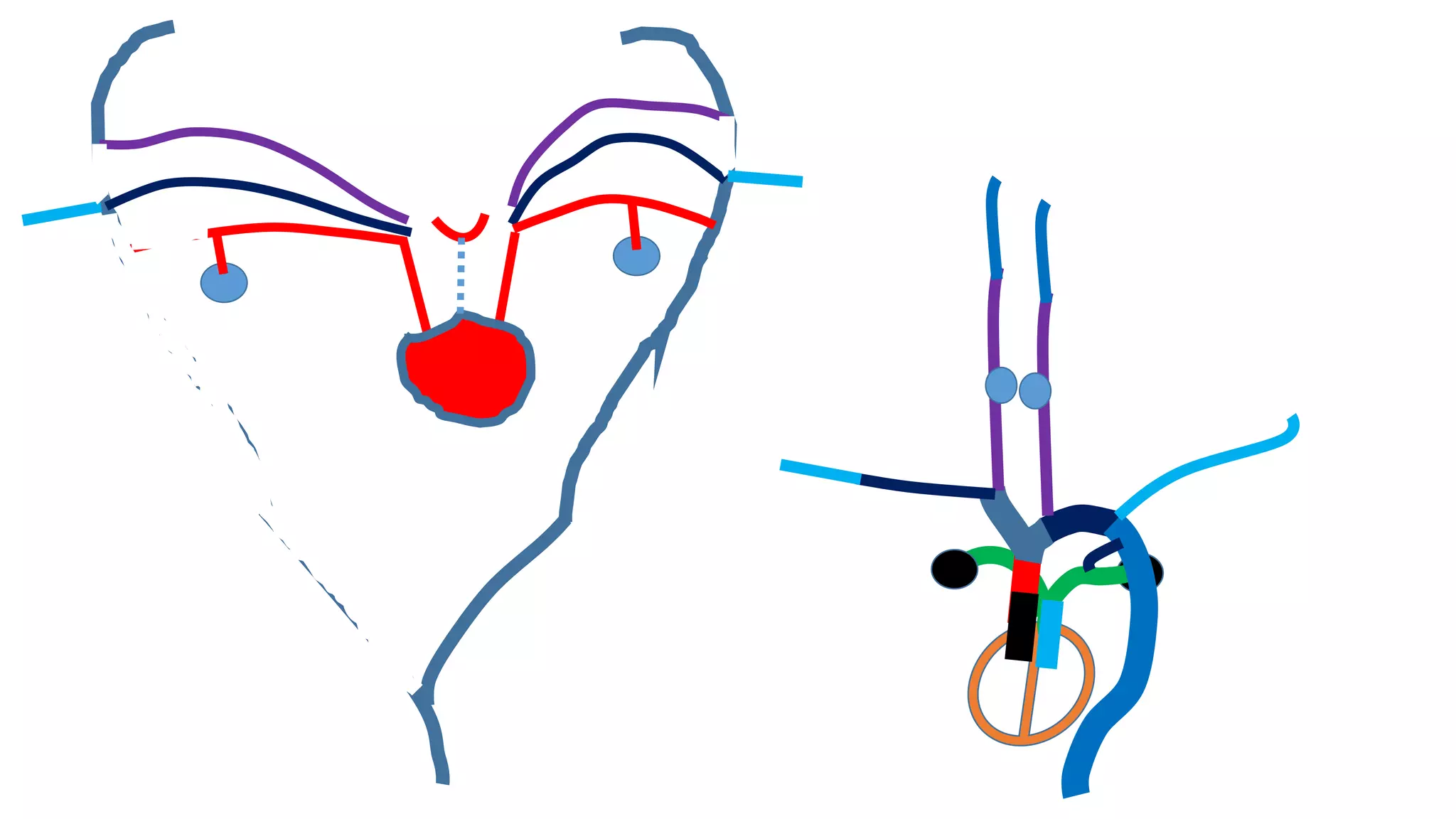
1.Ventral aortas ( fuses and form aortic sac)
2.Aortic arches (five pairs of arch arteries)
3.Dorsal aortas (fused and unfused portion)
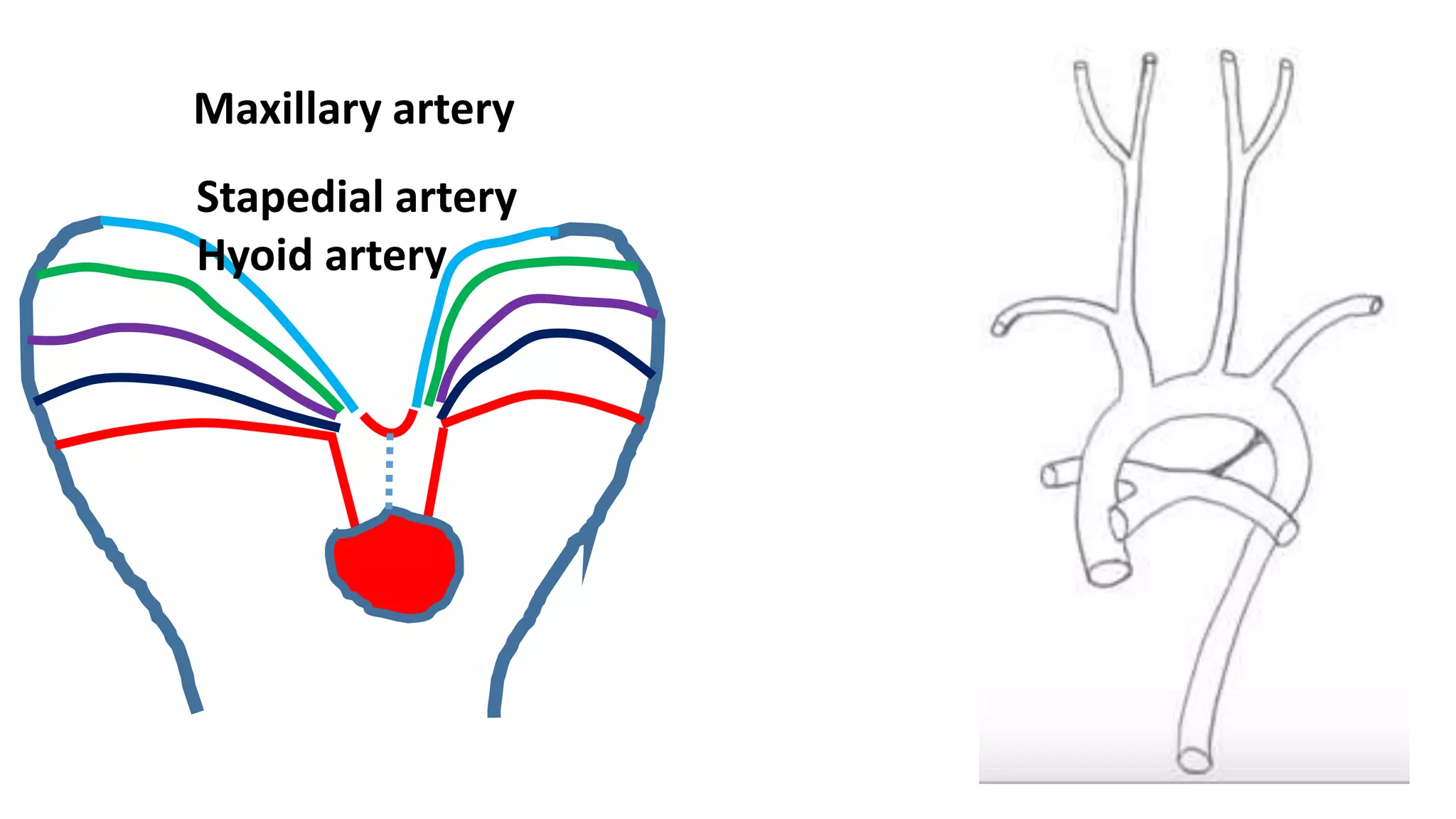
Maxillary artery
Stapedial artery
Hyoid artery
7th Cervical Intersegmental artery
Dorsal and ventral
parts of aortic sac
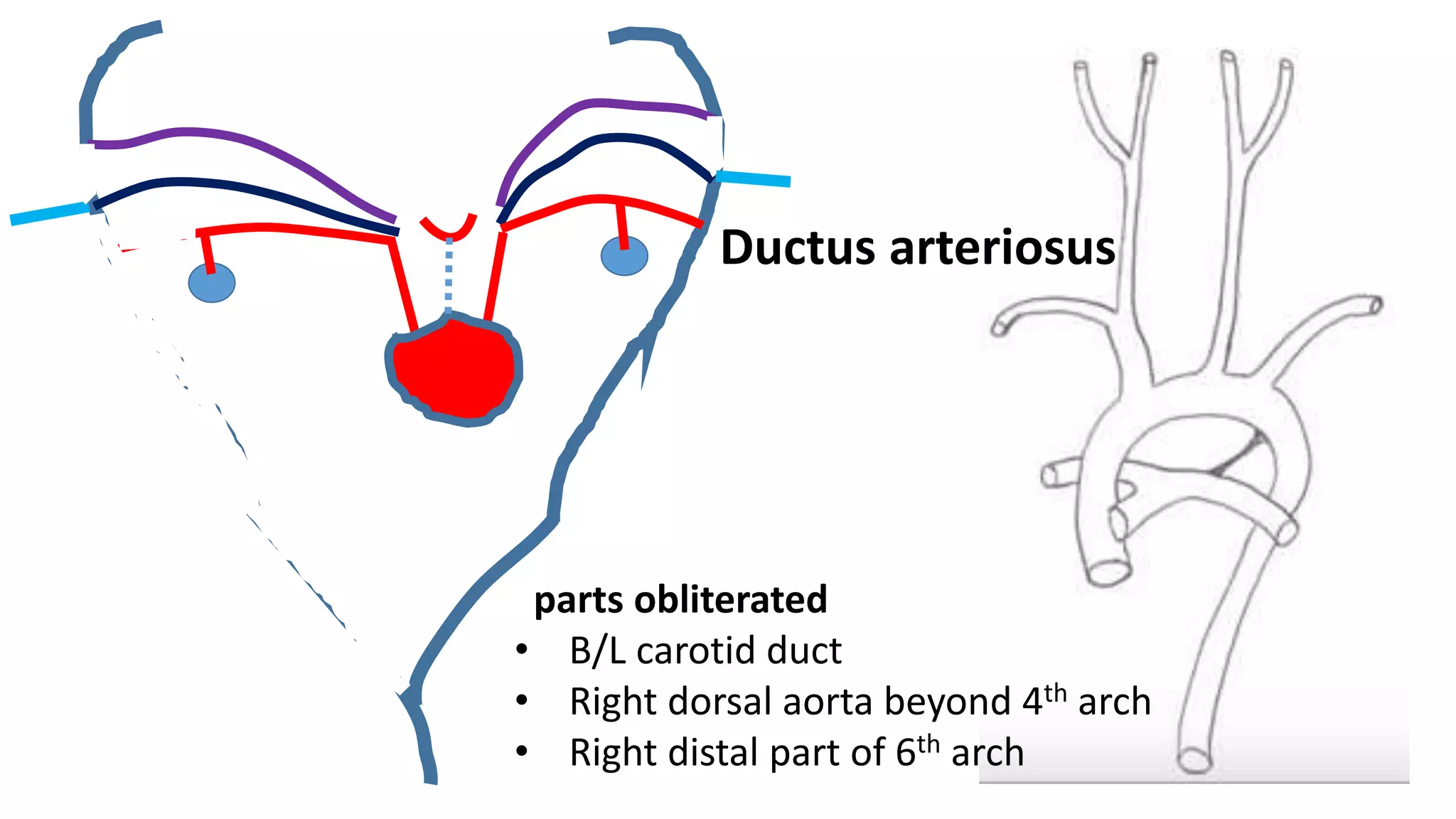
Ductus arteriosus
parts obliterated
• B/L carotid duct
• Right dorsal aorta beyond 4th arch
• Right distal part of 6th arch
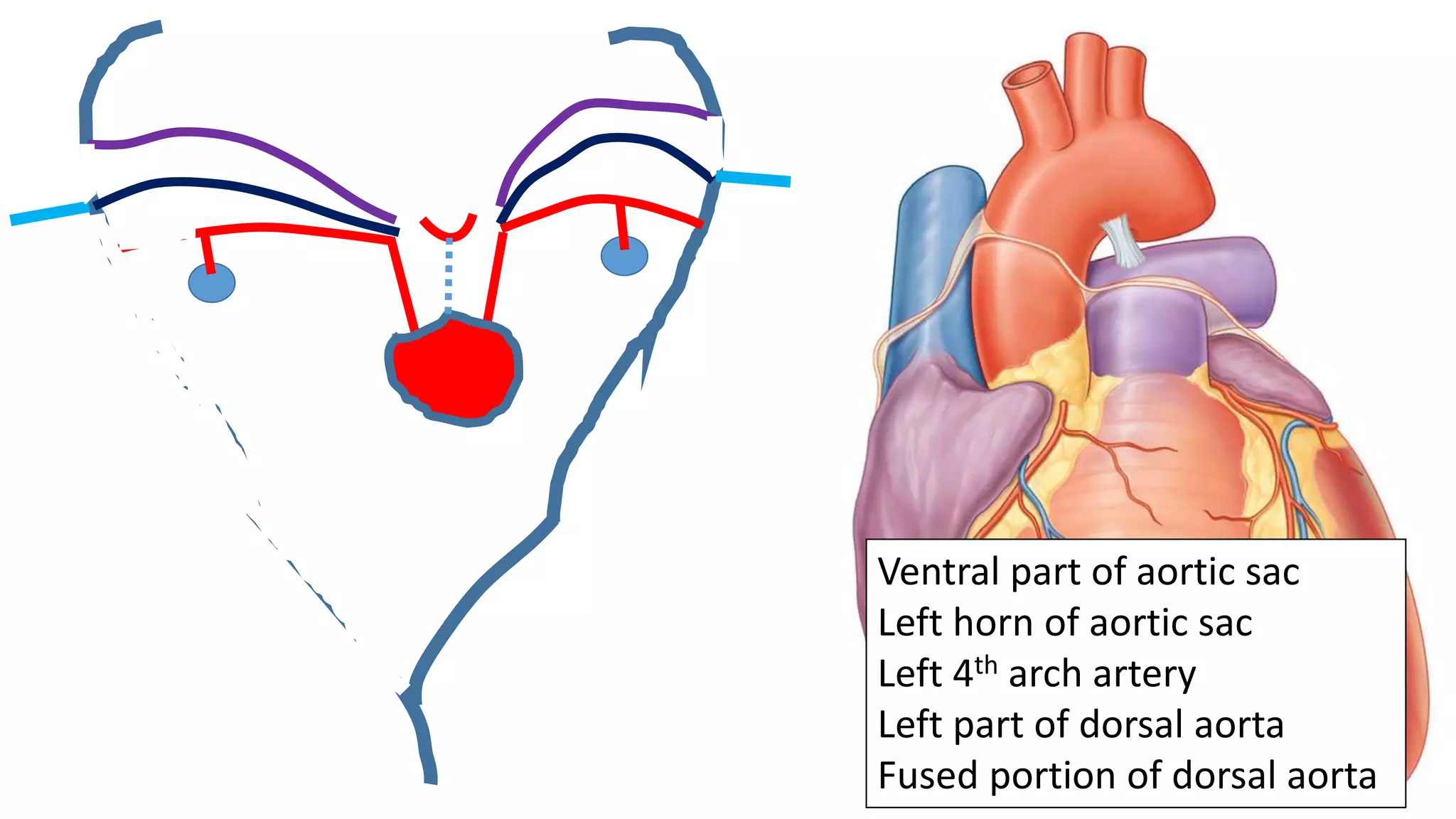
Ventral part of aortic sac
Left horn of aortic sac
Left 4th arch artery
Left part of dorsal aorta
Fused portion of dorsal aorta
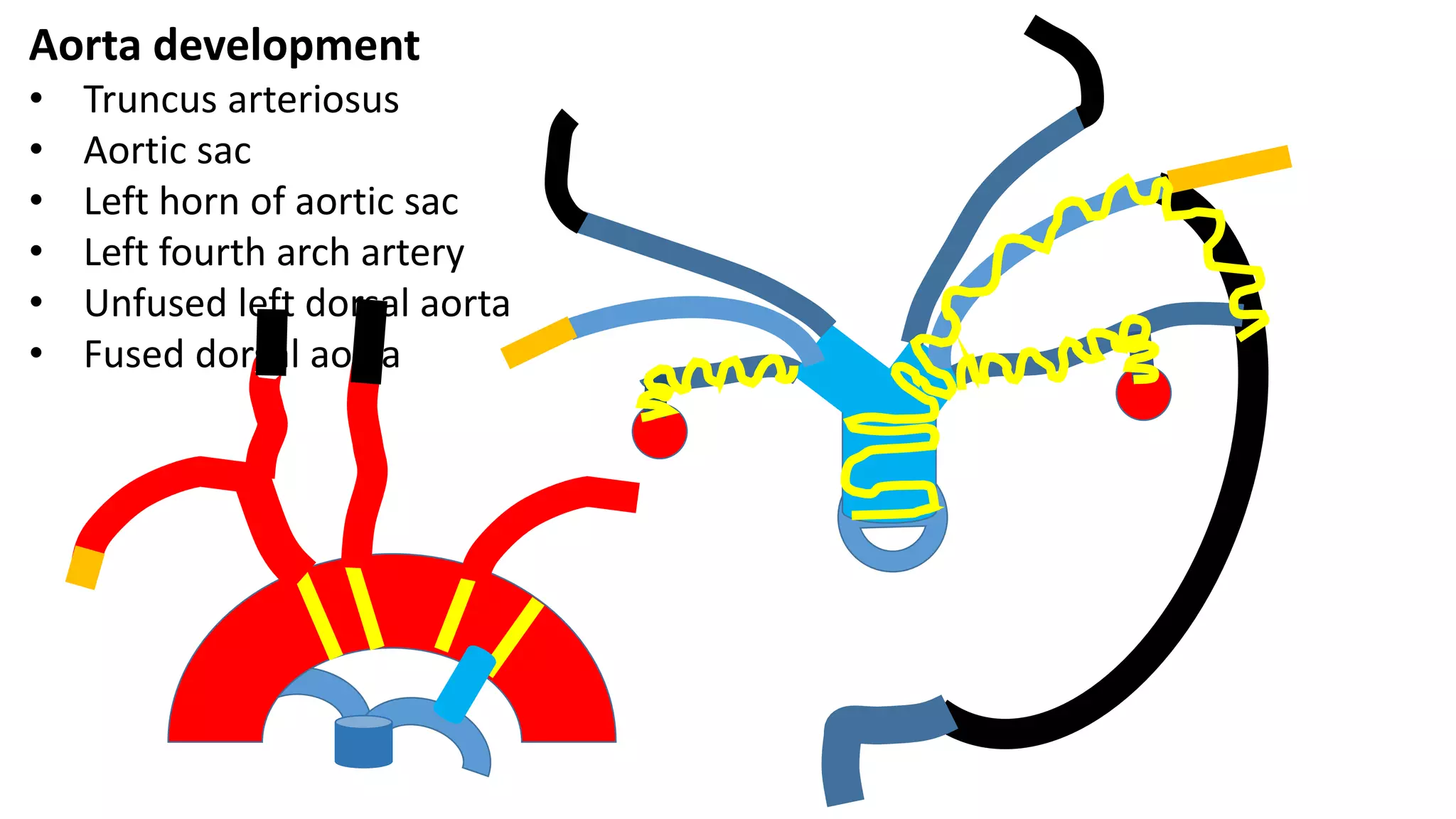
Aorta development
• Truncus arteriosus
• Aortic sac
• Left horn of aortic sac
• Left fourth arch artery
• Unfused left dorsal aorta
• Fused dorsal aorta
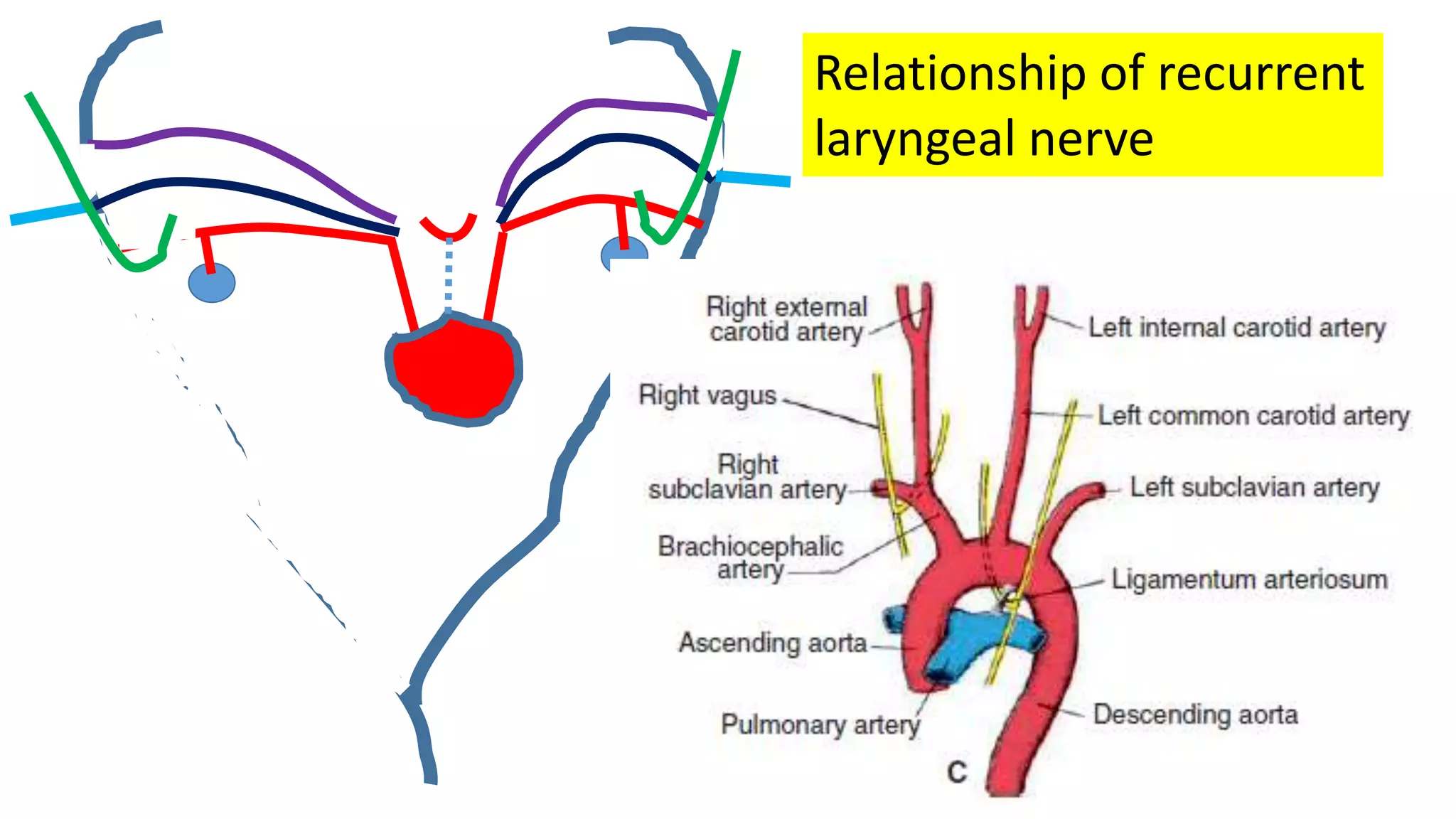
Relationship of recurrent
laryngeal nerve
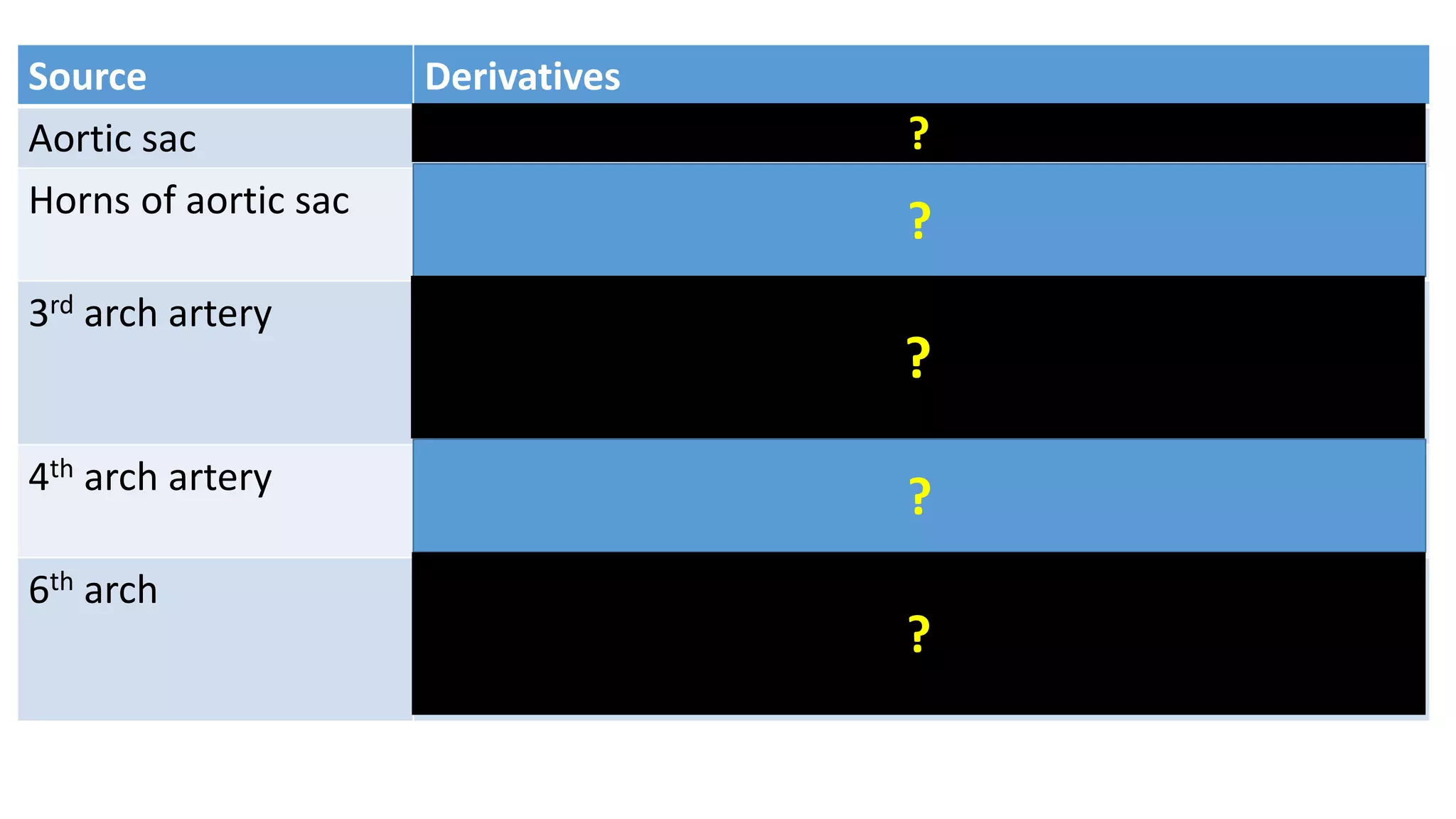
Source Derivatives
Aortic sac Proximal part of arch of aorta
Horns of aortic sac Right- right brachiocephalic trunk
Left- part of arch of aorta
3rd arch artery Common carotid artery
Internal carotid artery (+upper dorsal aorta)
External carotid artery ( from arterial bud)
4th arch artery Rt- Rt subclavian (+7th cervical intersegmental artery)
Lt- arch of aorta
6th arch Rt- Rt. pulmonary artery
Lt- Lt pulmonary artery
- Ductus arteriosus
?
?
?
?
?
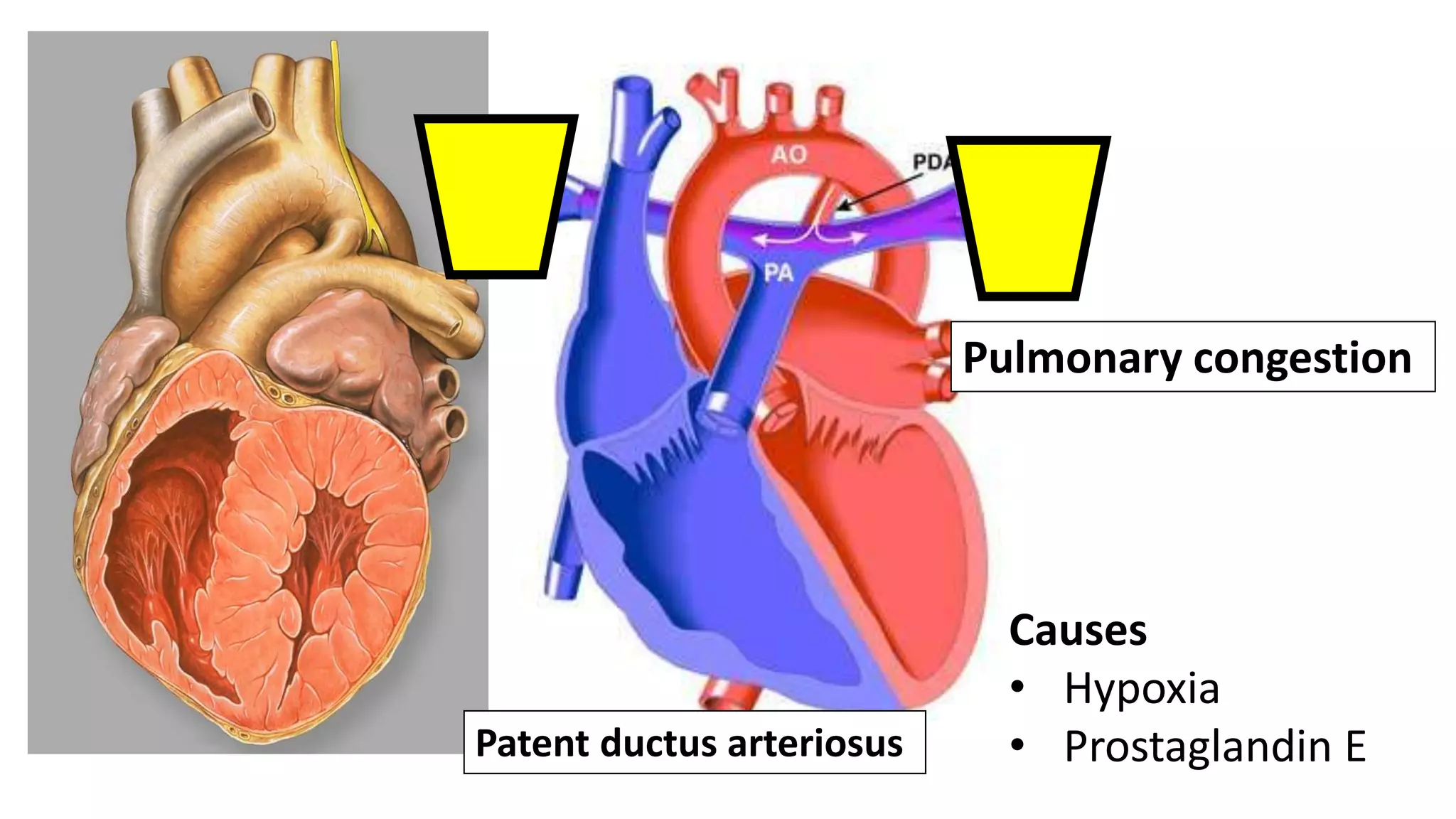
Patent ductus arteriosus
Pulmonary congestion
Causes
• Hypoxia
• Prostaglandin E
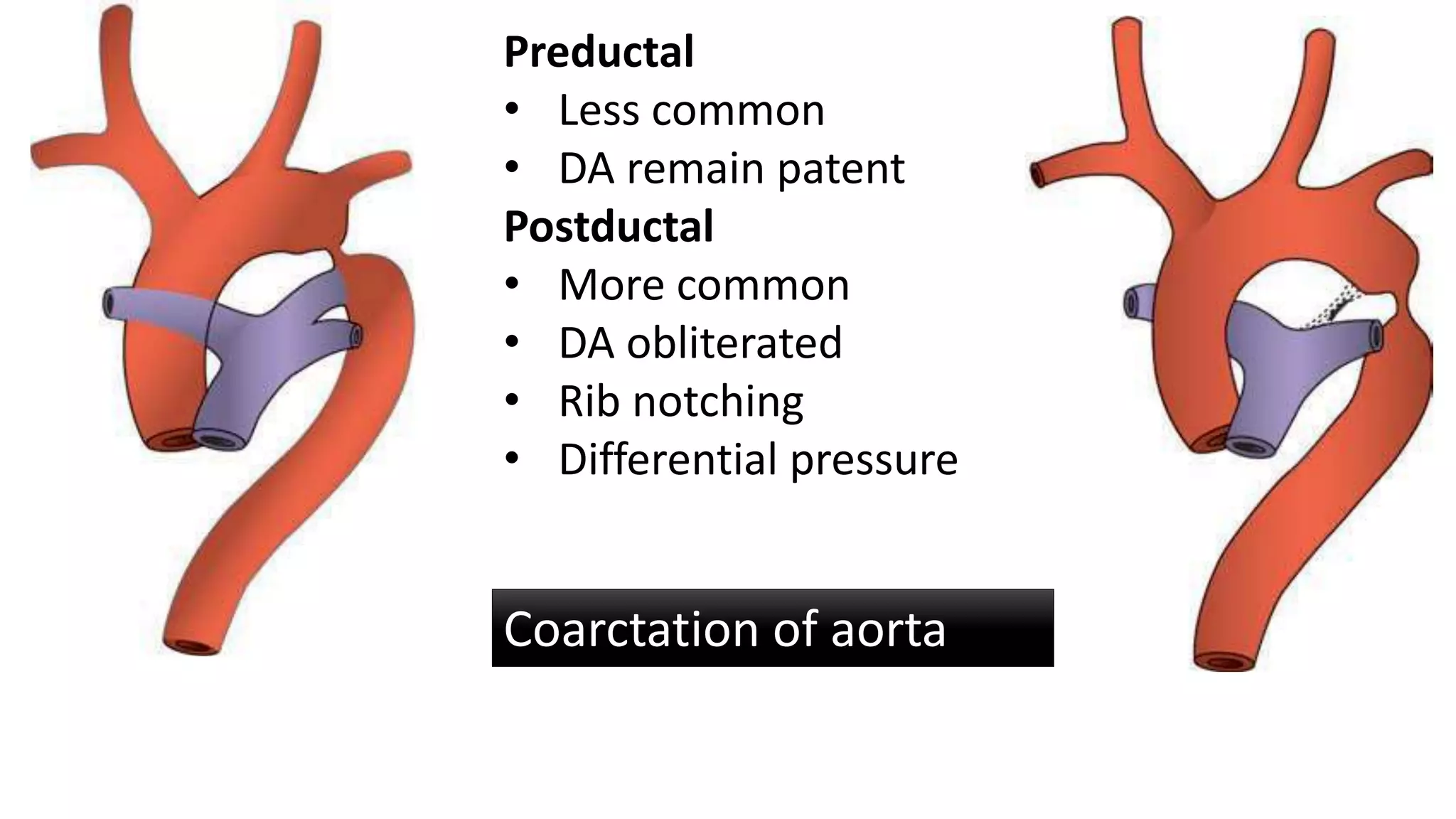
Preductal
• Less common
• DA remain patent
Postductal
• More common
• DA obliterated
• Rib notching
• Differential pressure
Coarctation of aorta
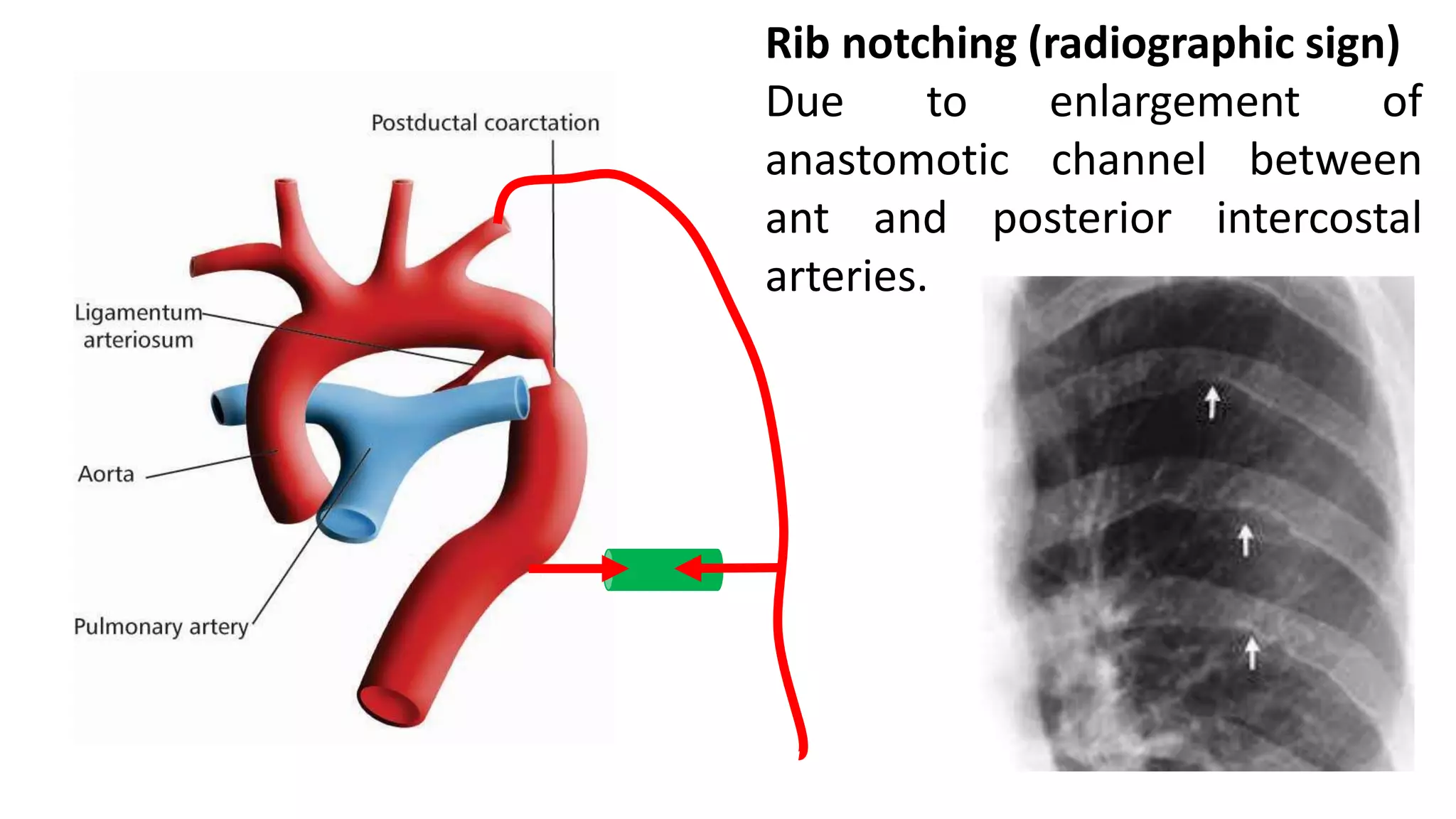
Rib notching (radiographic sign)
Due to enlargement of
anastomotic channel between
ant and posterior intercostal
arteries.
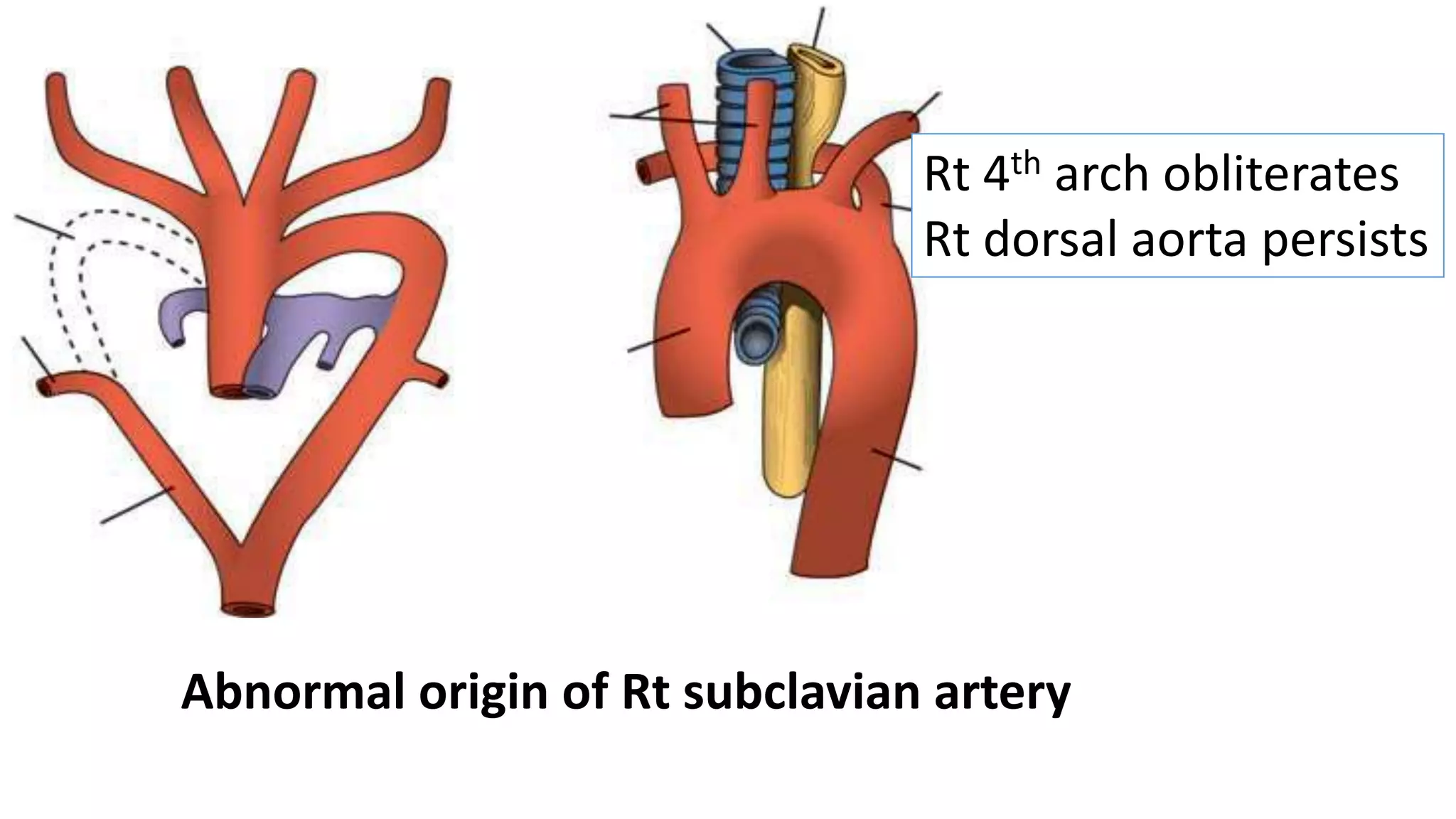
Abnormal origin of Rt subclavian artery
Rt 4th arch obliterates
Rt dorsal aorta persists
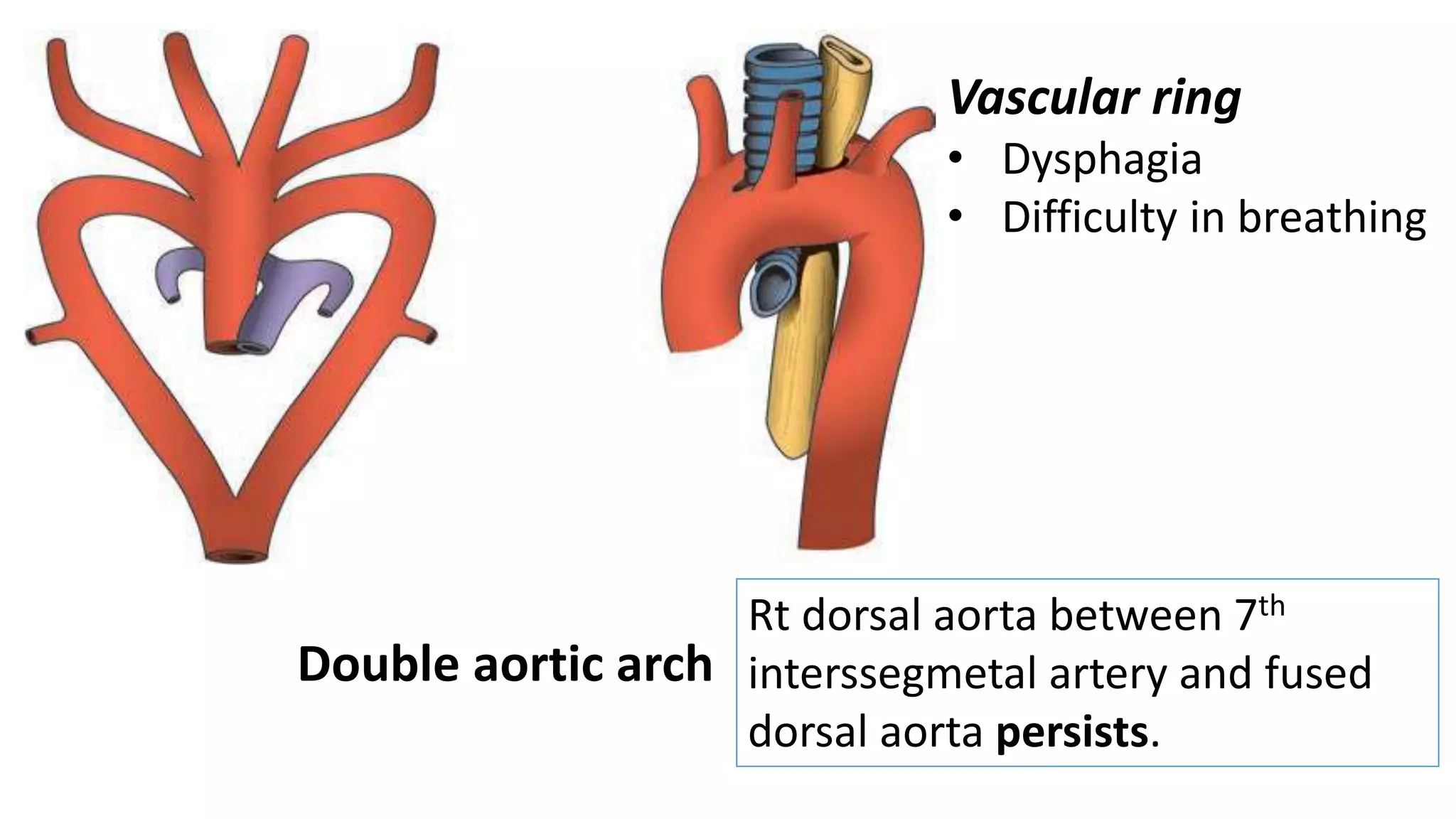
Double aortic arch
Rt dorsal aorta between 7th
interssegmetal artery and fused
dorsal aorta persists.
Vascular ring
• Dysphagia
• Difficulty in breathing
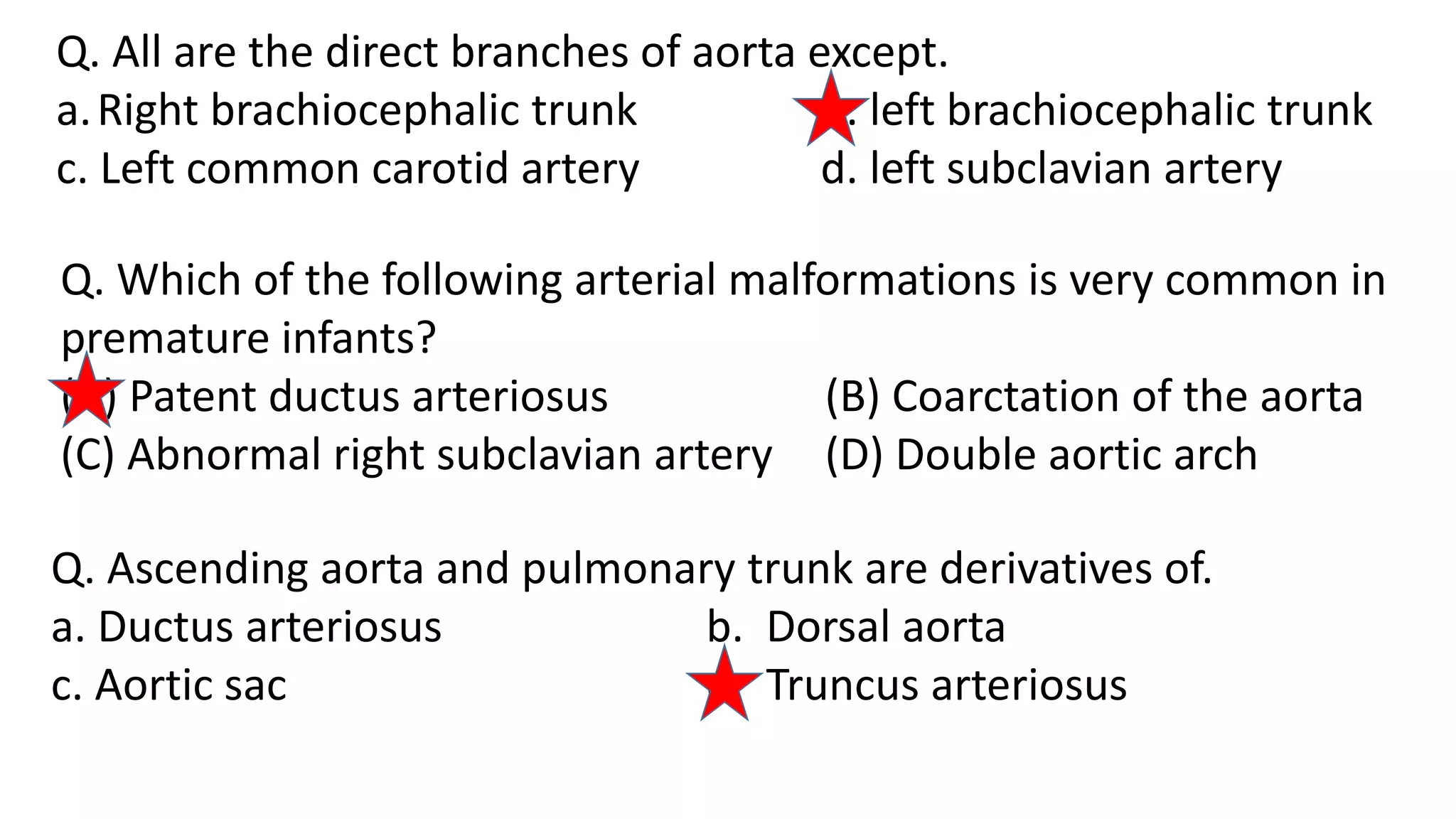
Q. All are the direct branches of aorta except.
a.Right brachiocephalic trunk b. left brachiocephalic trunk
c. Left common carotid artery d. left subclavian artery
Q. Which of the following arterial malformations is very common in
premature infants?
(A) Patent ductus arteriosus (B) Coarctation of the aorta
(C) Abnormal right subclavian artery (D) Double aortic arch
Q. Ascending aorta and pulmonary trunk are derivatives of.
a. Ductus arteriosus b. Dorsal aorta
c. Aortic sac d. Truncus arteriosus
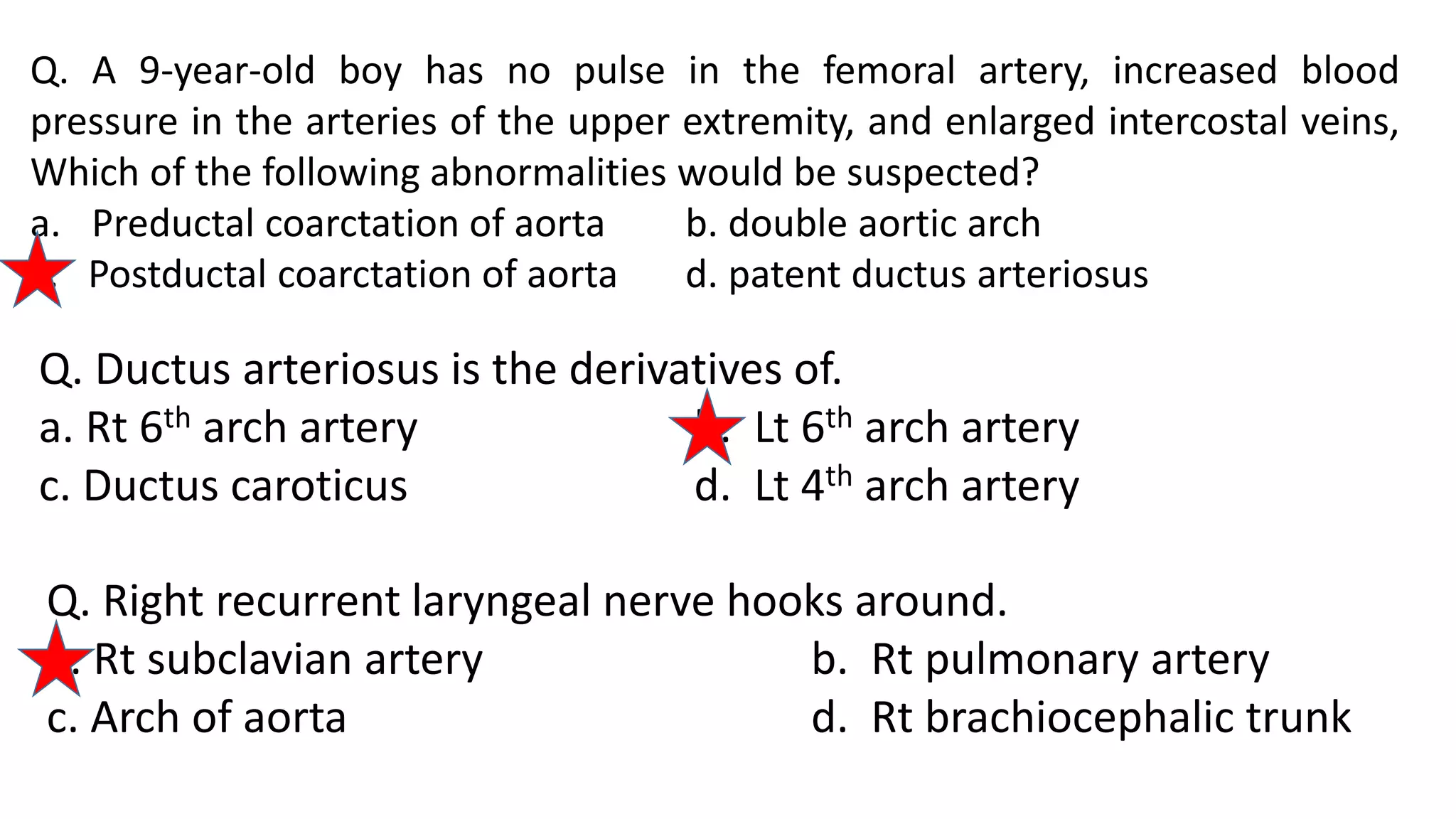
Q. A 9-year-old boy has no pulse in the femoral artery, increased blood
pressure in the arteries of the upper extremity, and enlarged intercostal veins,
Which of the following abnormalities would be suspected?
a. Preductal coarctation of aorta b. double aortic arch
c. Postductal coarctation of aorta d. patent ductus arteriosus
Q. Ductus arteriosus is the derivatives of.
a. Rt 6th arch artery b. Lt 6th arch artery
c. Ductus caroticus d. Lt 4th arch artery
Q. Right recurrent laryngeal nerve hooks around.
a. Rt subclavian artery b. Rt pulmonary artery
c. Arch of aorta d. Rt brachiocephalic trunk

Development of aorta and pulmonary trunk

  • 1.
    Development of aortaand pulmonary trunk To MBBS 1st year By Dr. Laxman Khanal Assistant Professor Department of anatomy BPKIHS 09-05-2016
  • 2.
    Objectives 1. Should beable to list the developmental sources of arterial system. 2. Should be able to understand the origin of pharyngeal arch system. 3. Should be able to list the derivatives of pharyngeal arch arteries. 4. Should be able to explain important developmental anomalies.
  • 3.
    Aorta • Ascending aorta •Arch of aorta o Rt brachiocephalic trunk o Lt common carotid artery o Lt subclavian artery • Descending aorta o Oesophageal & Bronchial o Post intercostal & subcostal o Mediastinal • Pulmonary trunk o Rt & Lt pulmonary artery Rt/Lt coronary arteries
  • 4.
  • 5.
    Development of arterialsystem Entire arterial system develops from either of two sources. 1. Pharyngeal arch arteries 2. Primitive aortas
  • 7.
    ORAL PLATE Source ofarterial system 1.Ventral aortas ( fuses and form aortic sac) 2.Aortic arches (five pairs of arch arteries) 3.Dorsal aortas (fused and unfused portion)
  • 12.
  • 13.
  • 14.
  • 15.
    Ductus arteriosus parts obliterated •B/L carotid duct • Right dorsal aorta beyond 4th arch • Right distal part of 6th arch
  • 16.
    Ventral part ofaortic sac Left horn of aortic sac Left 4th arch artery Left part of dorsal aorta Fused portion of dorsal aorta
  • 18.
    Aorta development • Truncusarteriosus • Aortic sac • Left horn of aortic sac • Left fourth arch artery • Unfused left dorsal aorta • Fused dorsal aorta
  • 19.
  • 20.
    Source Derivatives Aortic sacProximal part of arch of aorta Horns of aortic sac Right- right brachiocephalic trunk Left- part of arch of aorta 3rd arch artery Common carotid artery Internal carotid artery (+upper dorsal aorta) External carotid artery ( from arterial bud) 4th arch artery Rt- Rt subclavian (+7th cervical intersegmental artery) Lt- arch of aorta 6th arch Rt- Rt. pulmonary artery Lt- Lt pulmonary artery - Ductus arteriosus ? ? ? ? ?
  • 21.
    Patent ductus arteriosus Pulmonarycongestion Causes • Hypoxia • Prostaglandin E
  • 22.
    Preductal • Less common •DA remain patent Postductal • More common • DA obliterated • Rib notching • Differential pressure Coarctation of aorta
  • 23.
    Rib notching (radiographicsign) Due to enlargement of anastomotic channel between ant and posterior intercostal arteries.
  • 24.
    Abnormal origin ofRt subclavian artery Rt 4th arch obliterates Rt dorsal aorta persists
  • 25.
    Double aortic arch Rtdorsal aorta between 7th interssegmetal artery and fused dorsal aorta persists. Vascular ring • Dysphagia • Difficulty in breathing
  • 27.
    Q. All arethe direct branches of aorta except. a.Right brachiocephalic trunk b. left brachiocephalic trunk c. Left common carotid artery d. left subclavian artery Q. Which of the following arterial malformations is very common in premature infants? (A) Patent ductus arteriosus (B) Coarctation of the aorta (C) Abnormal right subclavian artery (D) Double aortic arch Q. Ascending aorta and pulmonary trunk are derivatives of. a. Ductus arteriosus b. Dorsal aorta c. Aortic sac d. Truncus arteriosus
  • 28.
    Q. A 9-year-oldboy has no pulse in the femoral artery, increased blood pressure in the arteries of the upper extremity, and enlarged intercostal veins, Which of the following abnormalities would be suspected? a. Preductal coarctation of aorta b. double aortic arch c. Postductal coarctation of aorta d. patent ductus arteriosus Q. Ductus arteriosus is the derivatives of. a. Rt 6th arch artery b. Lt 6th arch artery c. Ductus caroticus d. Lt 4th arch artery Q. Right recurrent laryngeal nerve hooks around. a. Rt subclavian artery b. Rt pulmonary artery c. Arch of aorta d. Rt brachiocephalic trunk