Structured Work Systems
!
Special Education District of Lake County
Jennifer Penzenik
What is a Structured Work System?
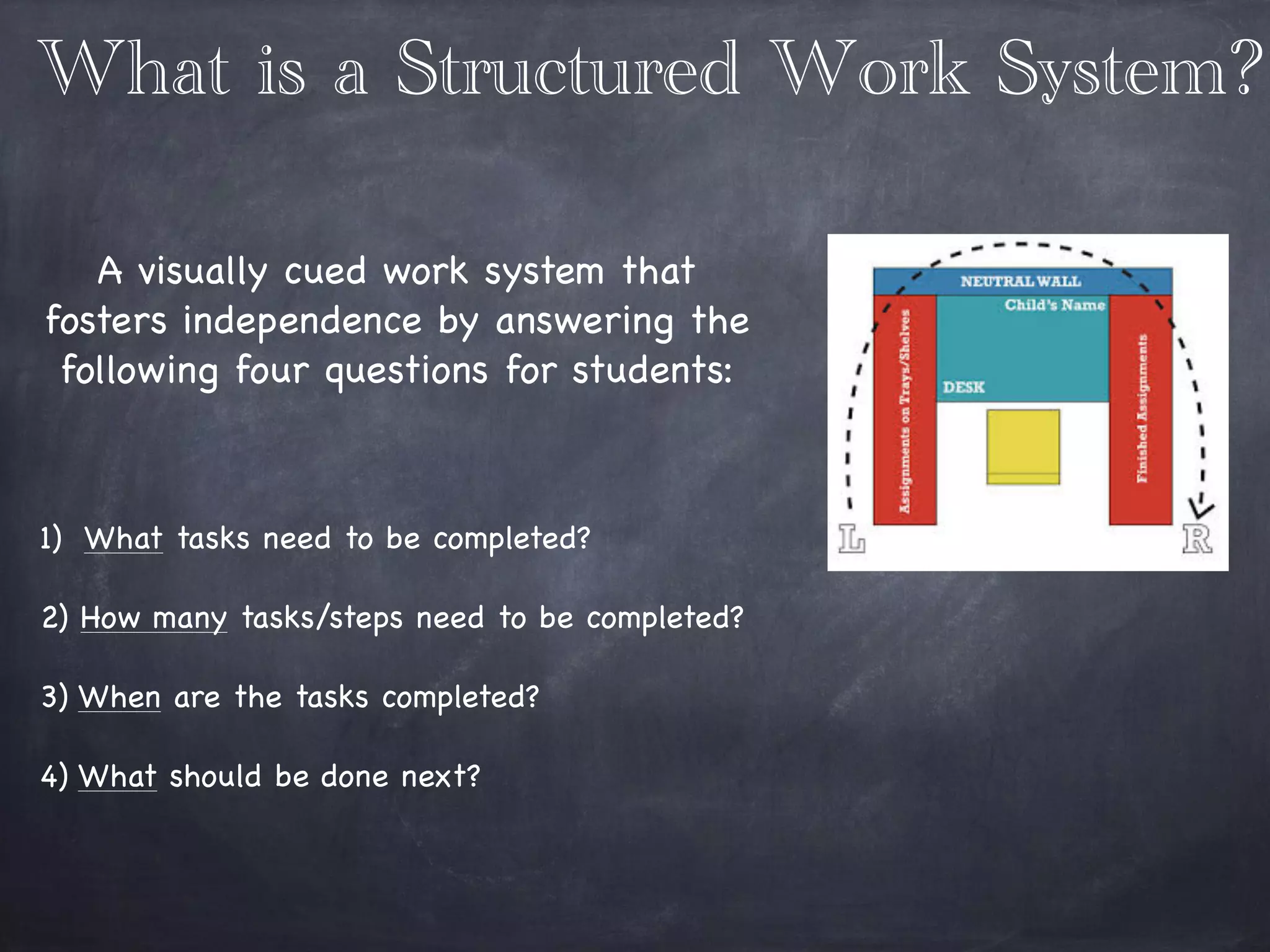
A visually cued work system that
fosters independence by answering the
following four questions for students: 

!
1) What tasks need to be completed? 

2) How many tasks/steps need to be completed? 

3) When are the tasks completed? 

4) What should be done next?
What are the benefits of SWS?
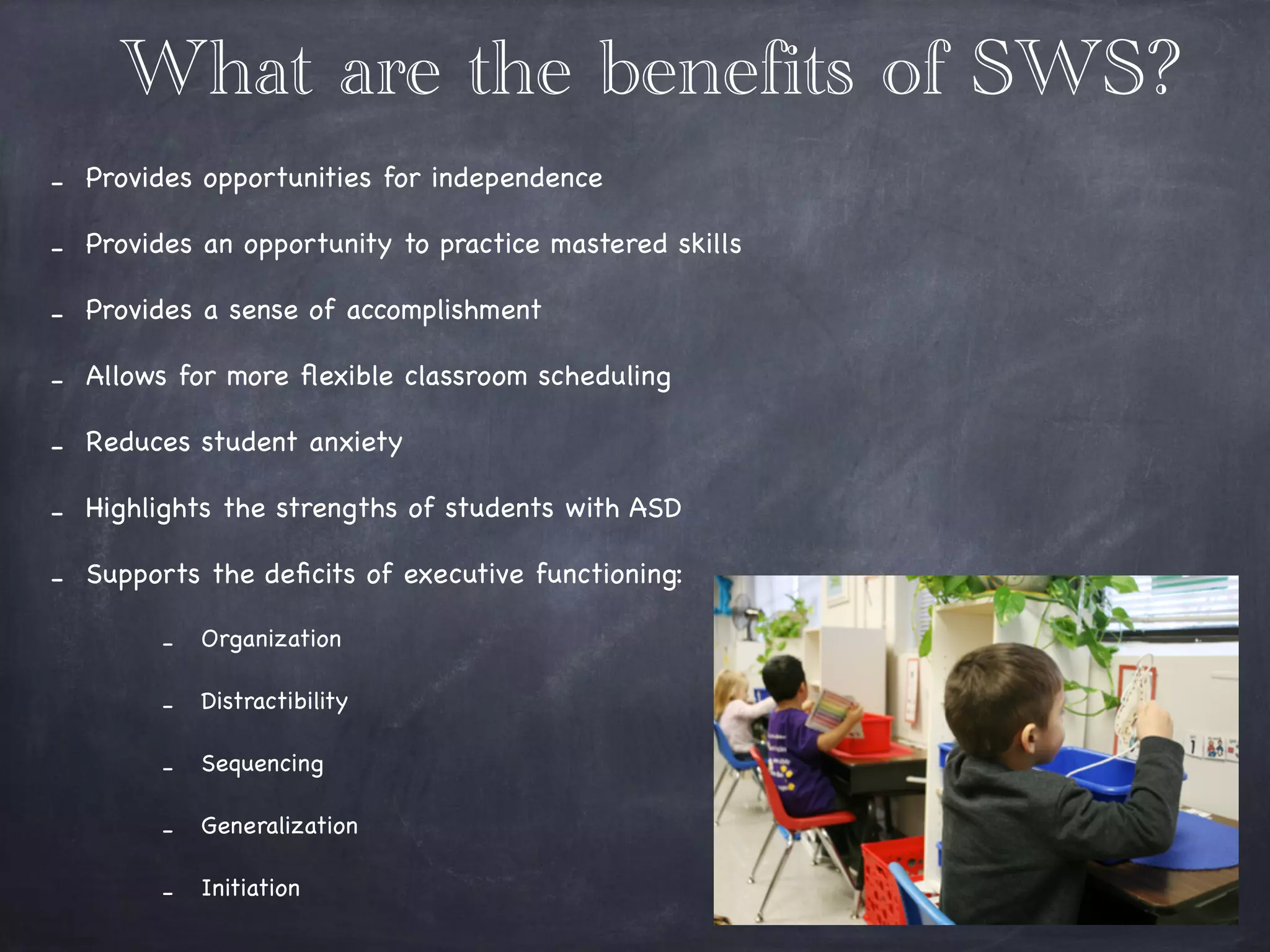
- Provides opportunities for independence

- Provides an opportunity to practice mastered skills

- Provides a sense of accomplishment 

- Allows for more flexible classroom scheduling 

- Reduces student anxiety 

- Highlights the strengths of students with ASD 

- Supports the deficits of executive functioning:

- Organization 

- Distractibility 

- Sequencing

- Generalization 

- Initiation
How to Implement Structured Work Systems
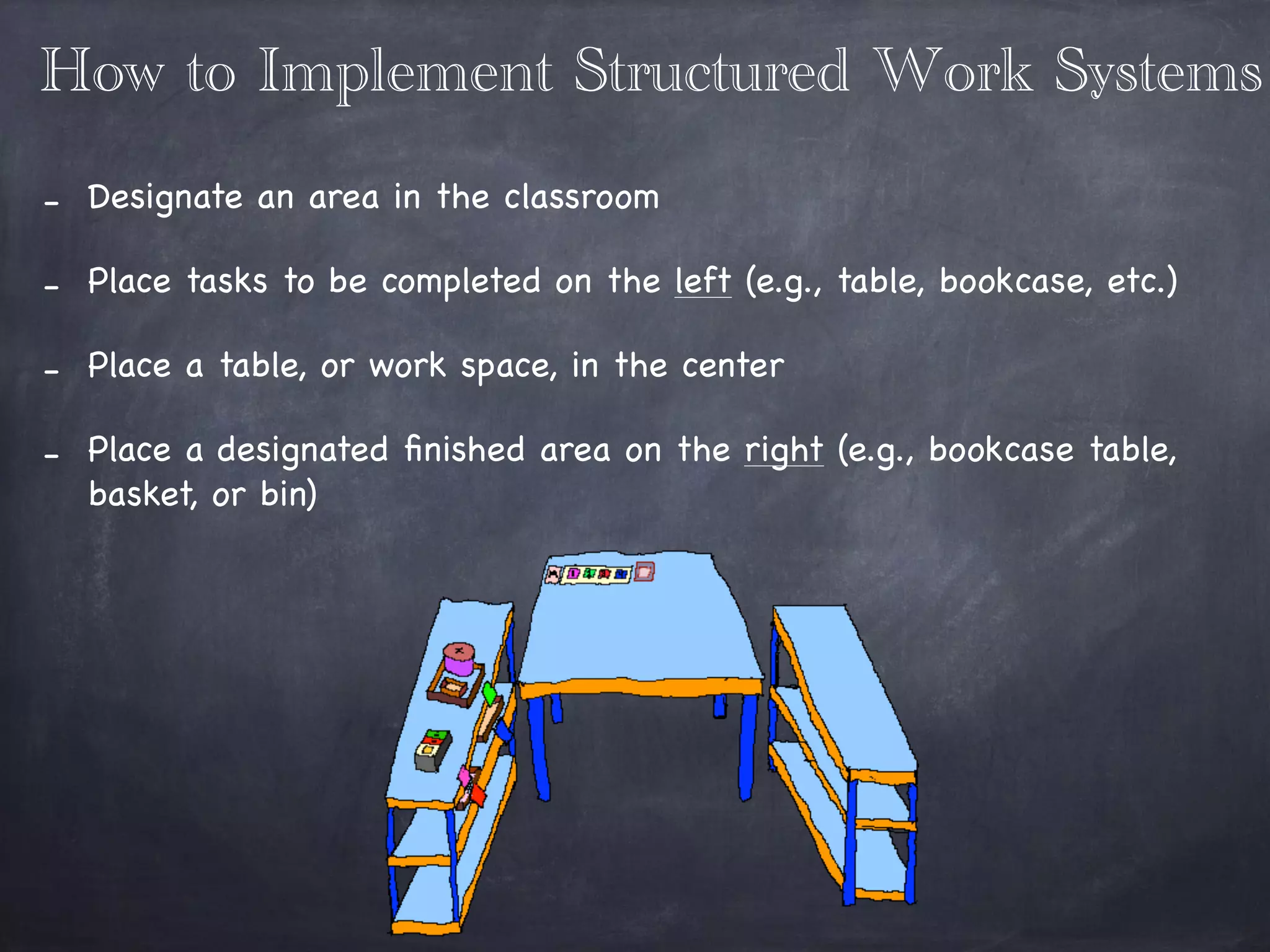
- Designate an area in the classroom

- Place tasks to be completed on the left (e.g., table, bookcase, etc.) 

- Place a table, or work space, in the center

- Place a designated finished area on the right (e.g., bookcase table,
basket, or bin)
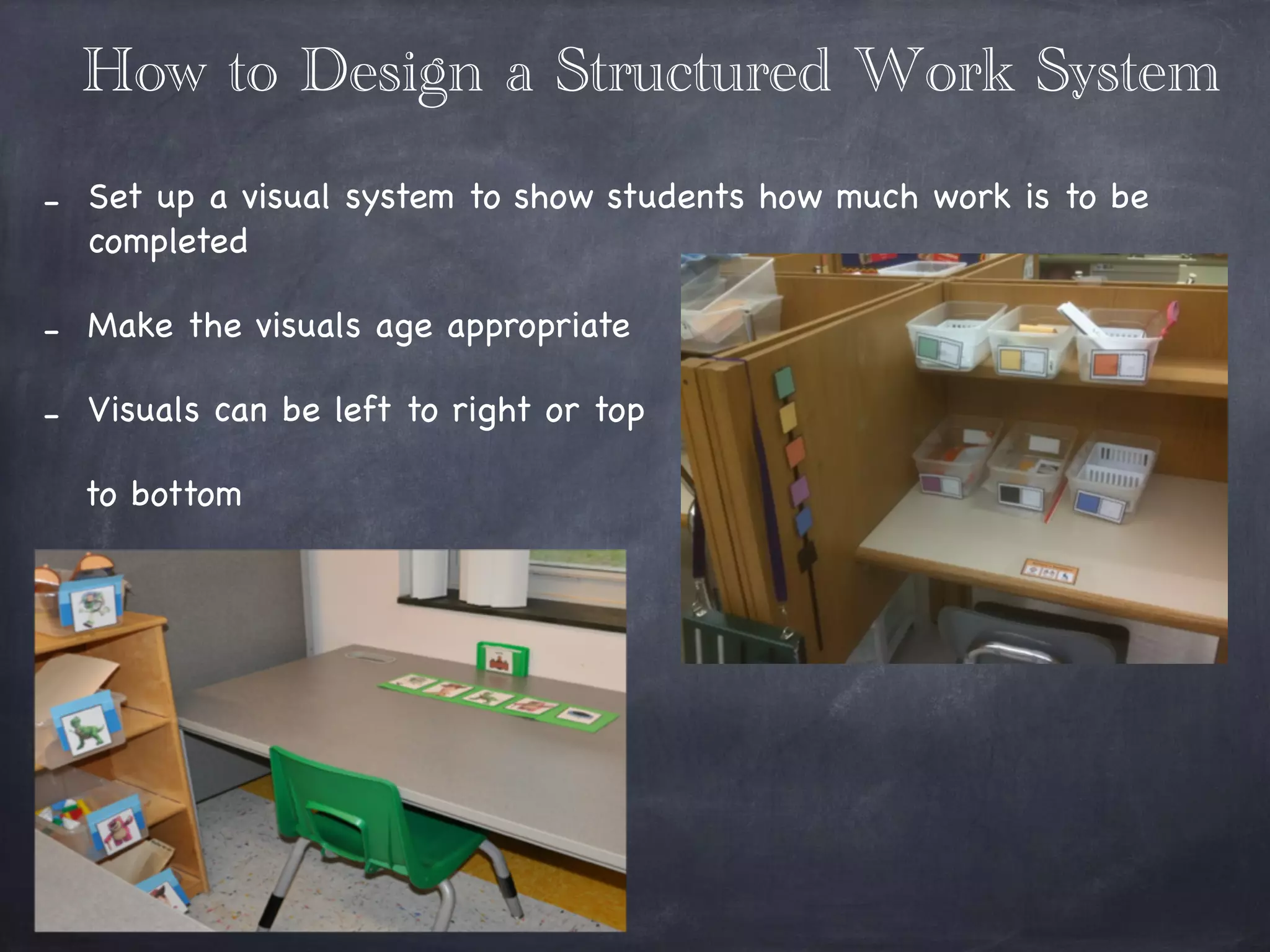
How to Design a Structured Work System
- Set up a visual system to show students how much work is to be
completed

- Make the visuals age appropriate

- Visuals can be left to right or top 

to bottom
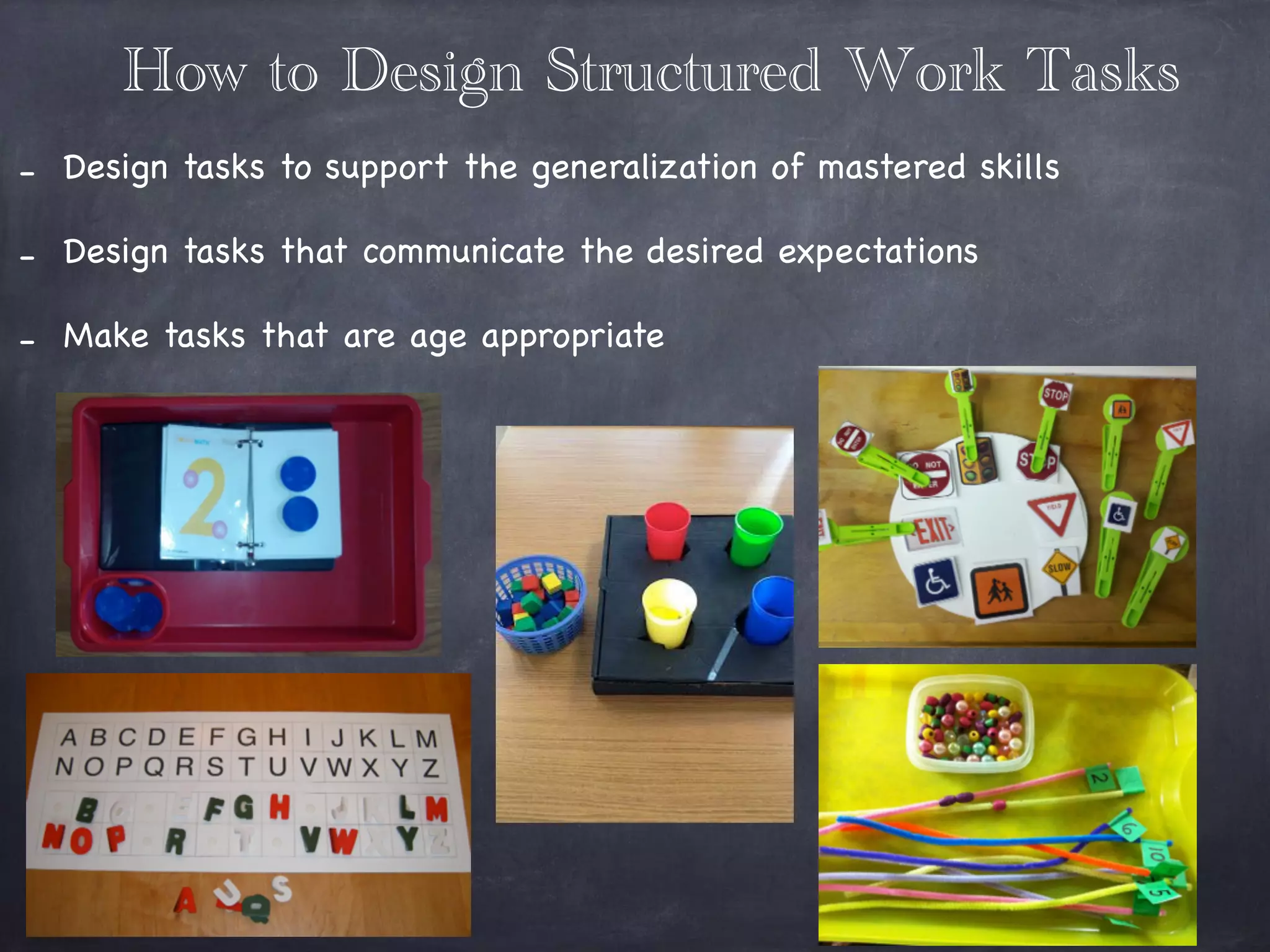
How to Design Structured Work Tasks
- Design tasks to support the generalization of mastered skills

- Design tasks that communicate the desired expectations 

- Make tasks that are age appropriate
The “Rules” of Structured Work Systems
!
- Tasks must follow a left to right or top to bottom format 

!
- To-do tasks must be taken from the left shelf 

!
- Finished tasks must be put on the right shelf 

!
- Give only the amount of tasks a student can complete in the time given 

!
- Only give a reasonable amount of work per task 

!
- Mastered tasks should ONLY be put in the SWS area

!
- Do not help a student; if they need help then it isn’t mastered and needs reteaching

!
- If initiation prompting is needed, provide it nonverbally and from behind (to decrease
dependence) 

!
- Change out tasks every week so boredom does not set in

!
- Set up the SWS for success!
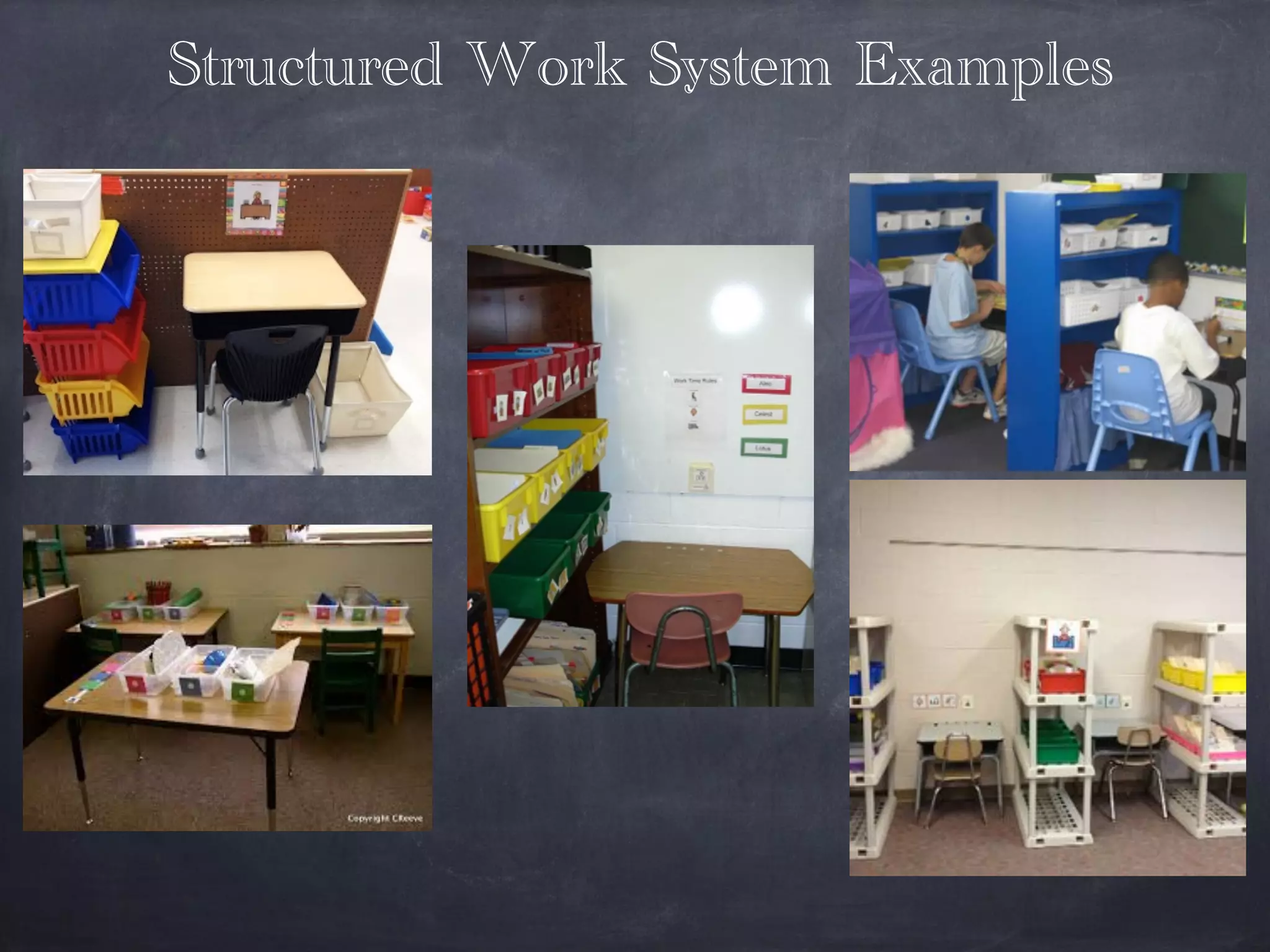
Structured Work System Examples
References
Hume, K. (n.d.) Structured Teaching Strategies: A Series. Retrieved from 

http://www.iidc.indiana.edu/?pageId=3520

!
Mesibov, G.B. & Shea, V. (2009). The TEACCH Program in the Era of Evidence-Based Practice. 

Journal of Autism and Developmental Disorders, 40, 570-579.
!
Reeve, C. (n.d.) Structured Work Systems: What are they and why use them? 

Autism Classroom News. Retrieved from 

http://www.autismclassroomnews.com/2013/01/structured-work-systemswhat-are-

they.html

!

Structured Work Systems

  • 1.
    Structured Work Systems ! SpecialEducation District of Lake County Jennifer Penzenik
  • 2.
    What is aStructured Work System? A visually cued work system that fosters independence by answering the following four questions for students: ! 1) What tasks need to be completed? 2) How many tasks/steps need to be completed? 3) When are the tasks completed? 4) What should be done next?
  • 3.
    What are thebenefits of SWS? - Provides opportunities for independence - Provides an opportunity to practice mastered skills - Provides a sense of accomplishment - Allows for more flexible classroom scheduling - Reduces student anxiety - Highlights the strengths of students with ASD - Supports the deficits of executive functioning: - Organization - Distractibility - Sequencing - Generalization - Initiation
  • 4.
    How to ImplementStructured Work Systems - Designate an area in the classroom - Place tasks to be completed on the left (e.g., table, bookcase, etc.) - Place a table, or work space, in the center - Place a designated finished area on the right (e.g., bookcase table, basket, or bin)
  • 5.
    How to Designa Structured Work System - Set up a visual system to show students how much work is to be completed - Make the visuals age appropriate - Visuals can be left to right or top to bottom
  • 6.
    How to DesignStructured Work Tasks - Design tasks to support the generalization of mastered skills - Design tasks that communicate the desired expectations - Make tasks that are age appropriate
  • 7.
    The “Rules” ofStructured Work Systems ! - Tasks must follow a left to right or top to bottom format ! - To-do tasks must be taken from the left shelf ! - Finished tasks must be put on the right shelf ! - Give only the amount of tasks a student can complete in the time given ! - Only give a reasonable amount of work per task ! - Mastered tasks should ONLY be put in the SWS area ! - Do not help a student; if they need help then it isn’t mastered and needs reteaching ! - If initiation prompting is needed, provide it nonverbally and from behind (to decrease dependence) ! - Change out tasks every week so boredom does not set in ! - Set up the SWS for success!
  • 8.
  • 9.
    References Hume, K. (n.d.)Structured Teaching Strategies: A Series. Retrieved from http://www.iidc.indiana.edu/?pageId=3520 ! Mesibov, G.B. & Shea, V. (2009). The TEACCH Program in the Era of Evidence-Based Practice. Journal of Autism and Developmental Disorders, 40, 570-579. ! Reeve, C. (n.d.) Structured Work Systems: What are they and why use them? Autism Classroom News. Retrieved from http://www.autismclassroomnews.com/2013/01/structured-work-systemswhat-are- they.html !