

DNA Microarray Analysis 
Jay Edneil C. Olivar
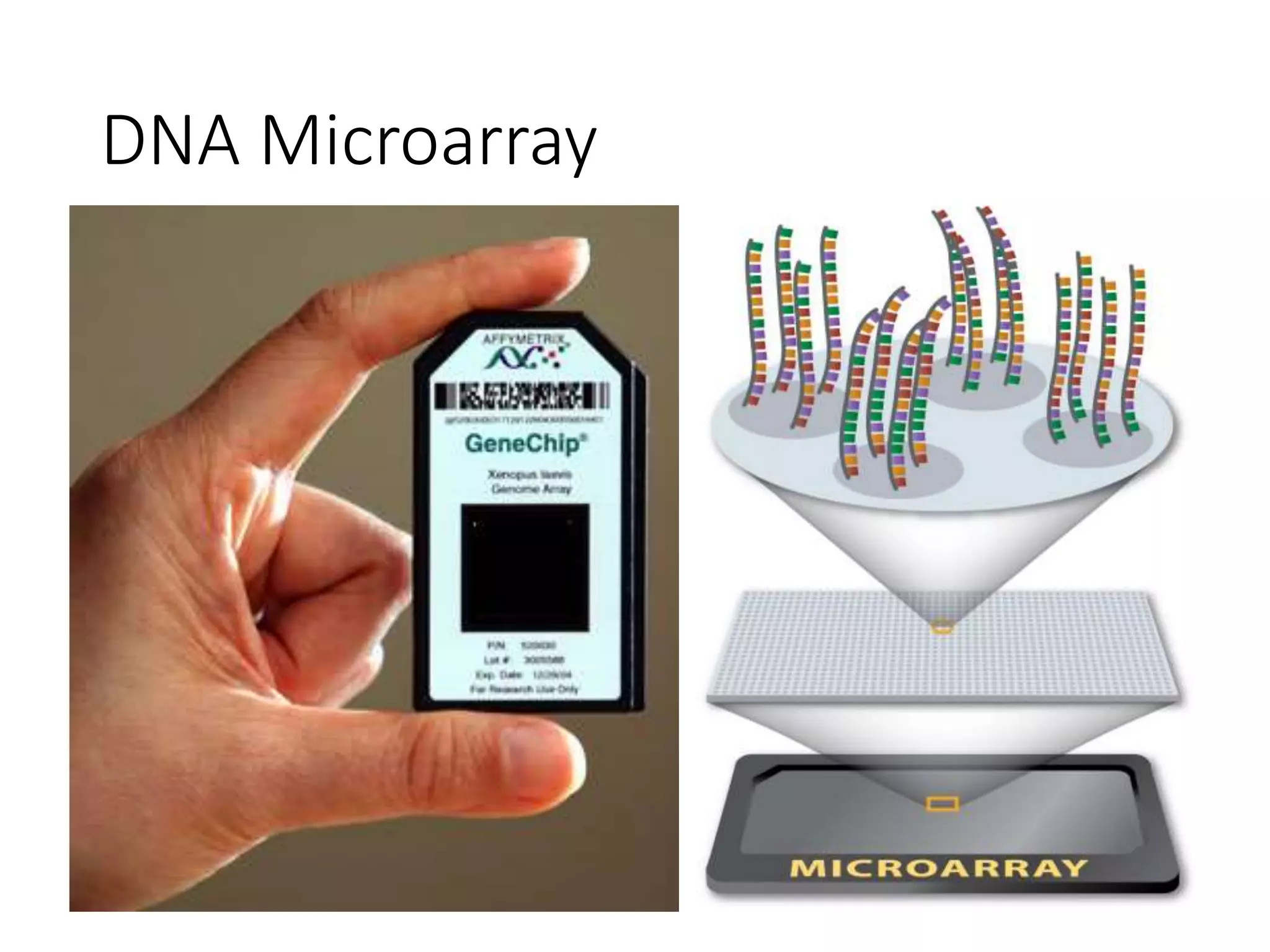
DNA Microarray
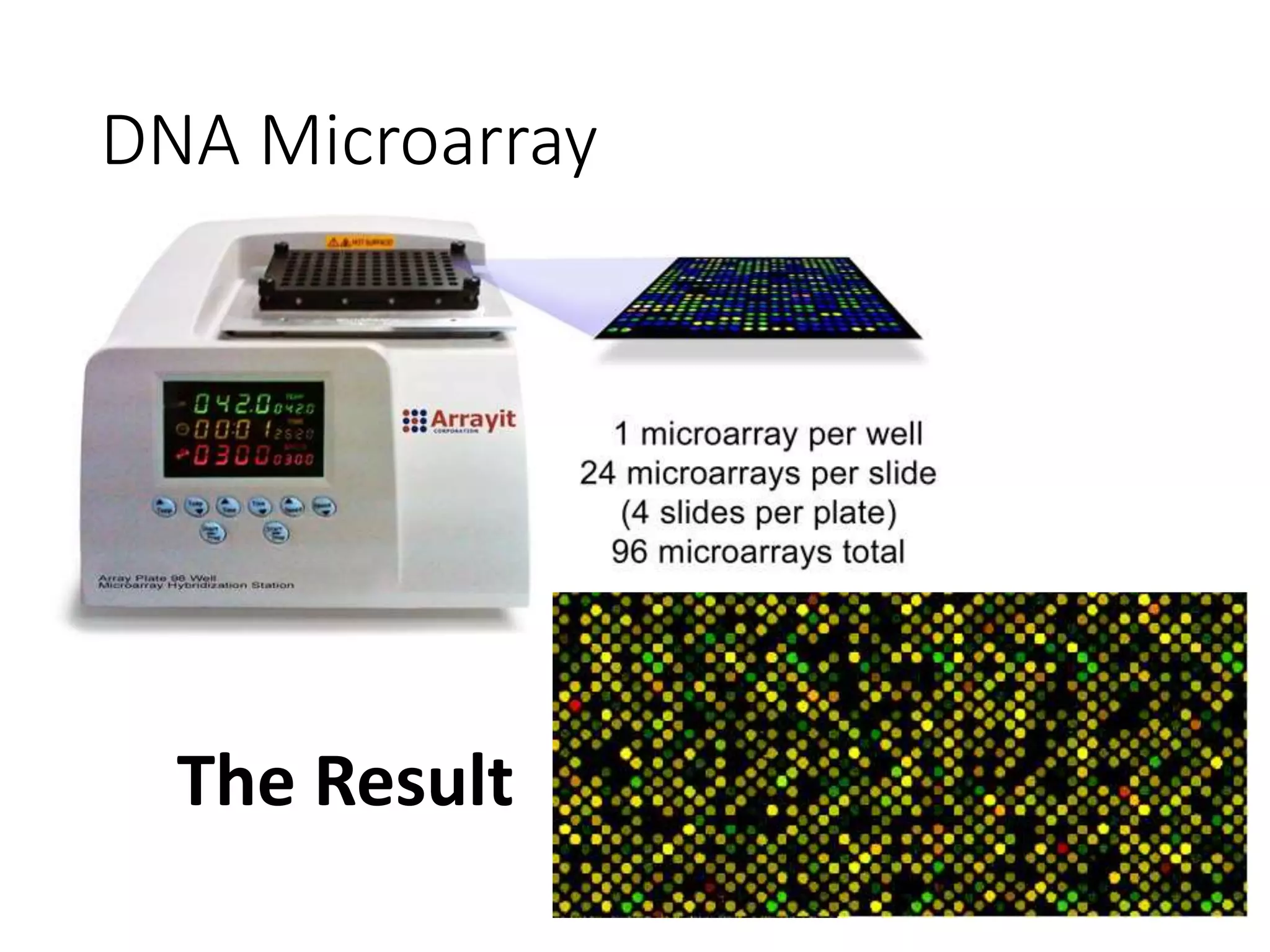
DNA Microarray 
The Result
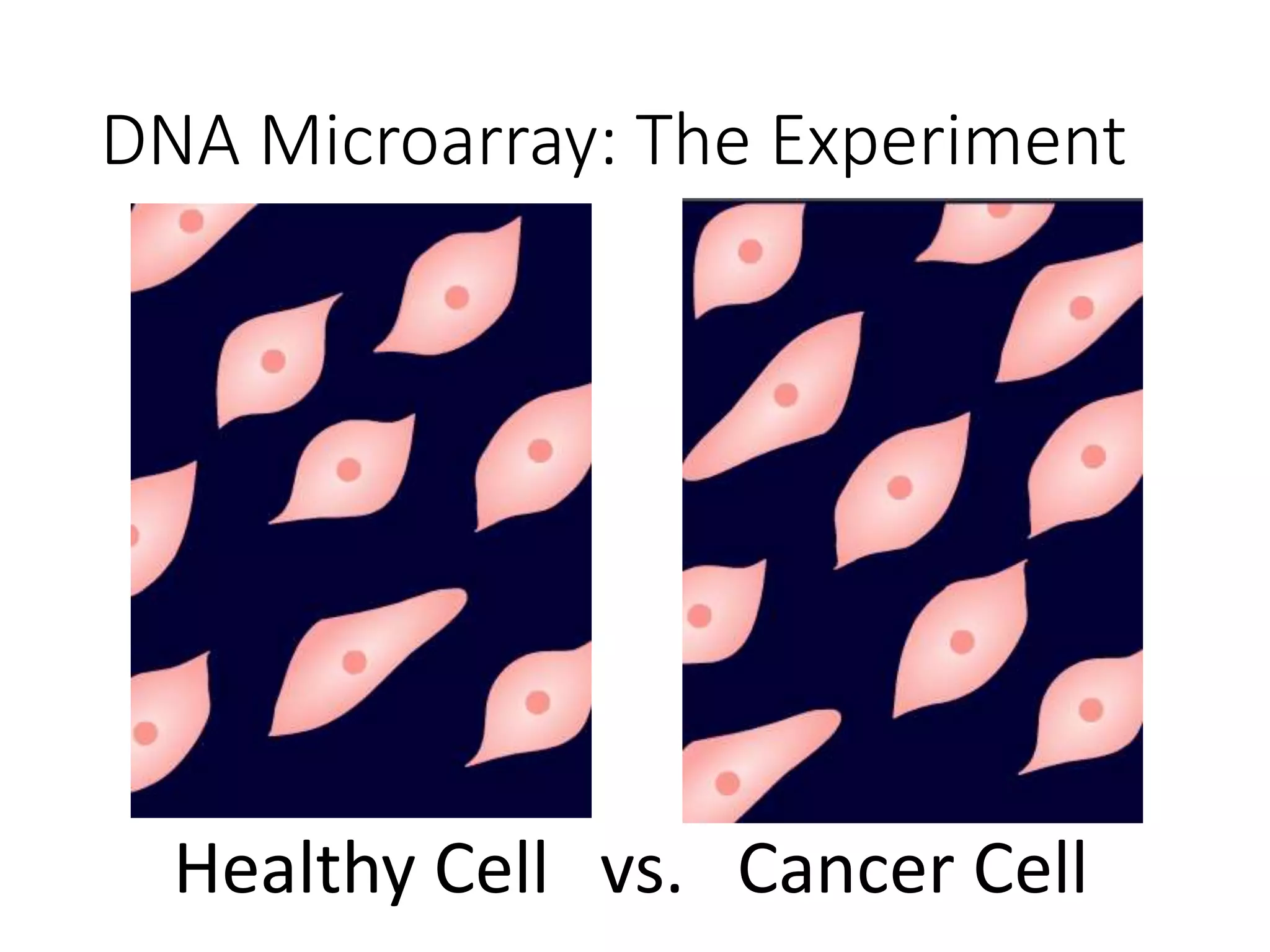
DNA Microarray: The Experiment 
Healthy Cell vs. Cancer Cell
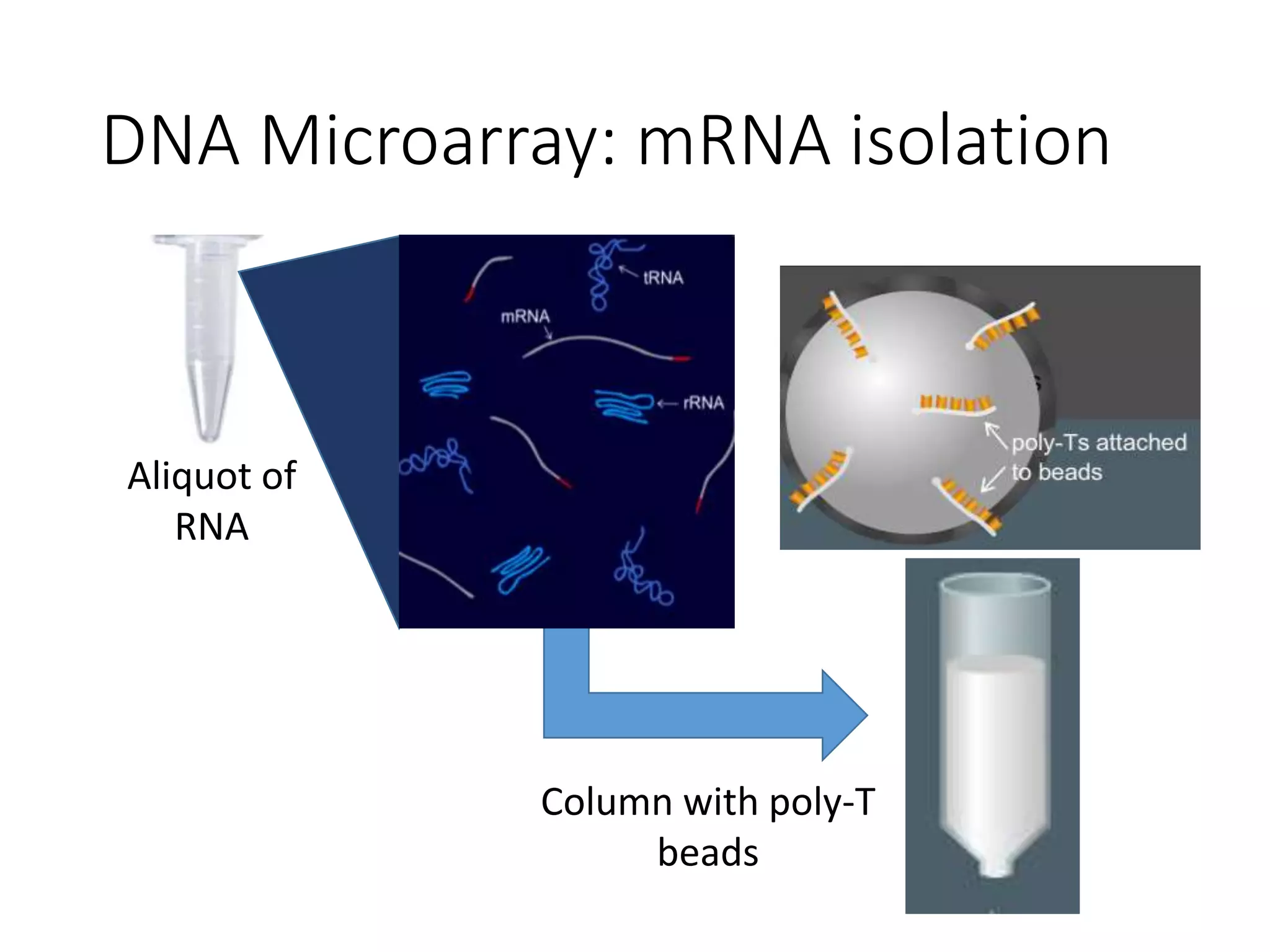
DNA Microarray: mRNA isolation 
Aliquot of 
RNA 
Column with poly-T 
beads
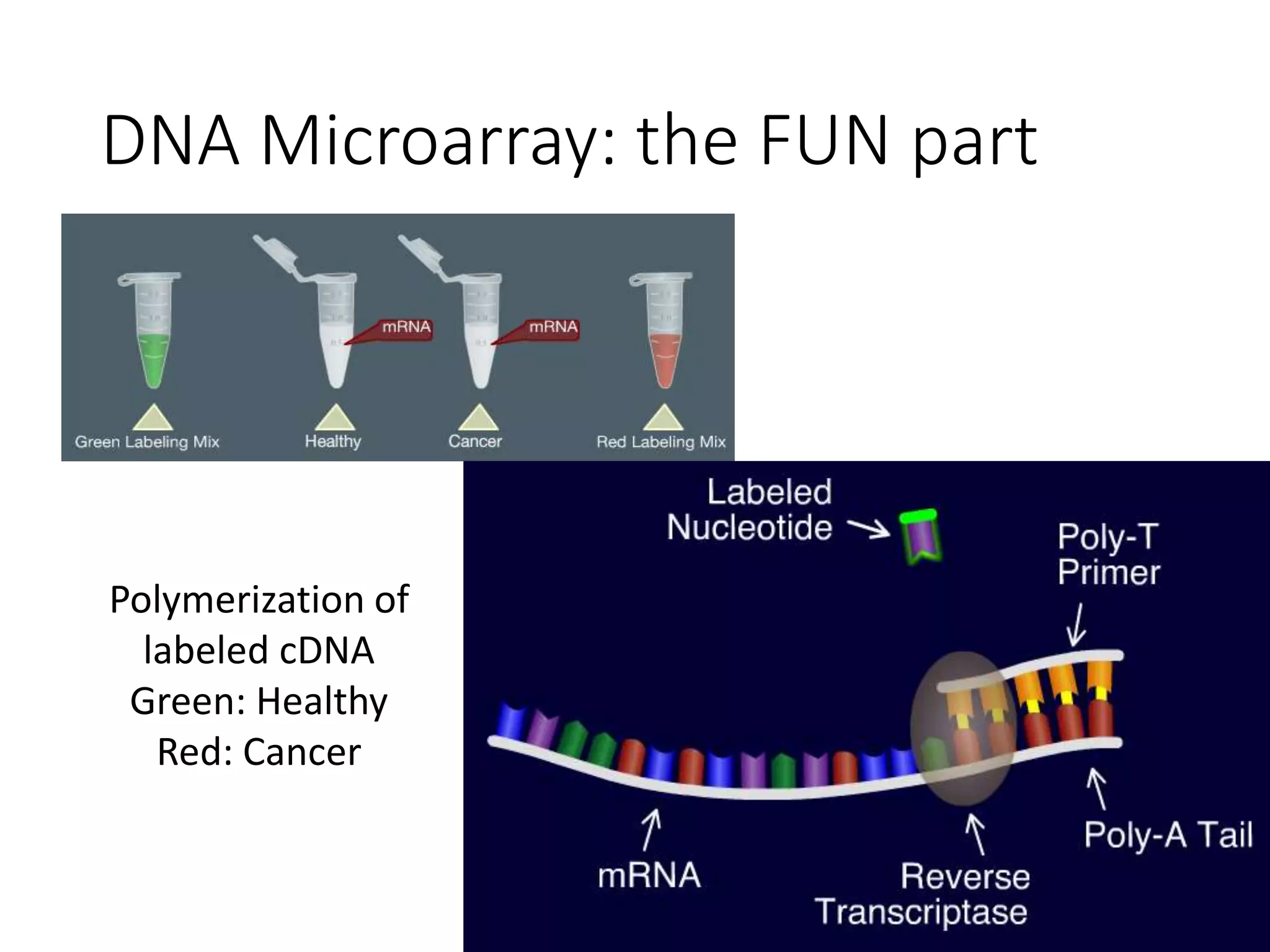
DNA Microarray: the FUN part 
Polymerization of 
labeled cDNA 
Green: Healthy 
Red: Cancer
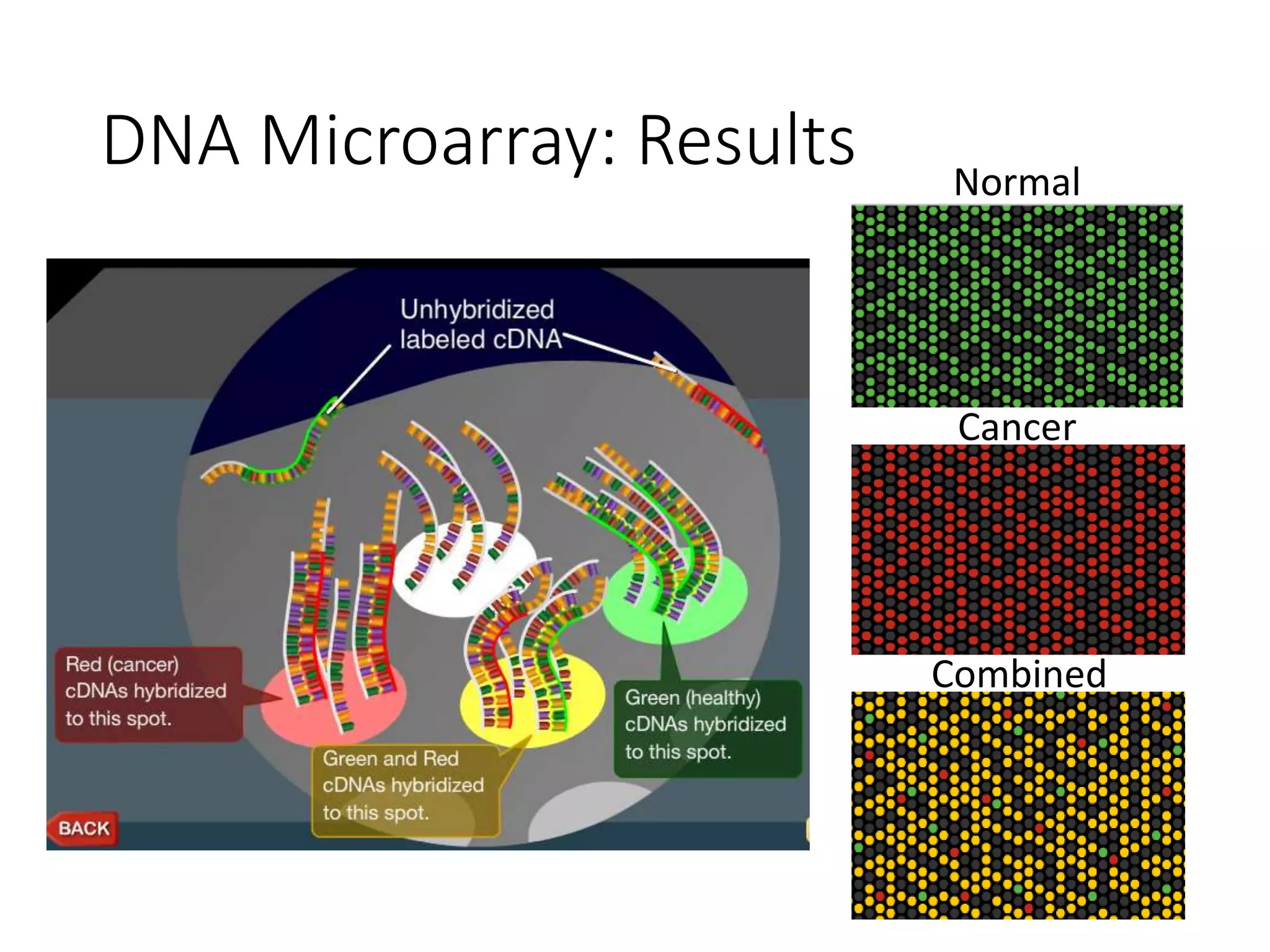
DNA Microarray: Results 
Normal 
Cancer 
Combined
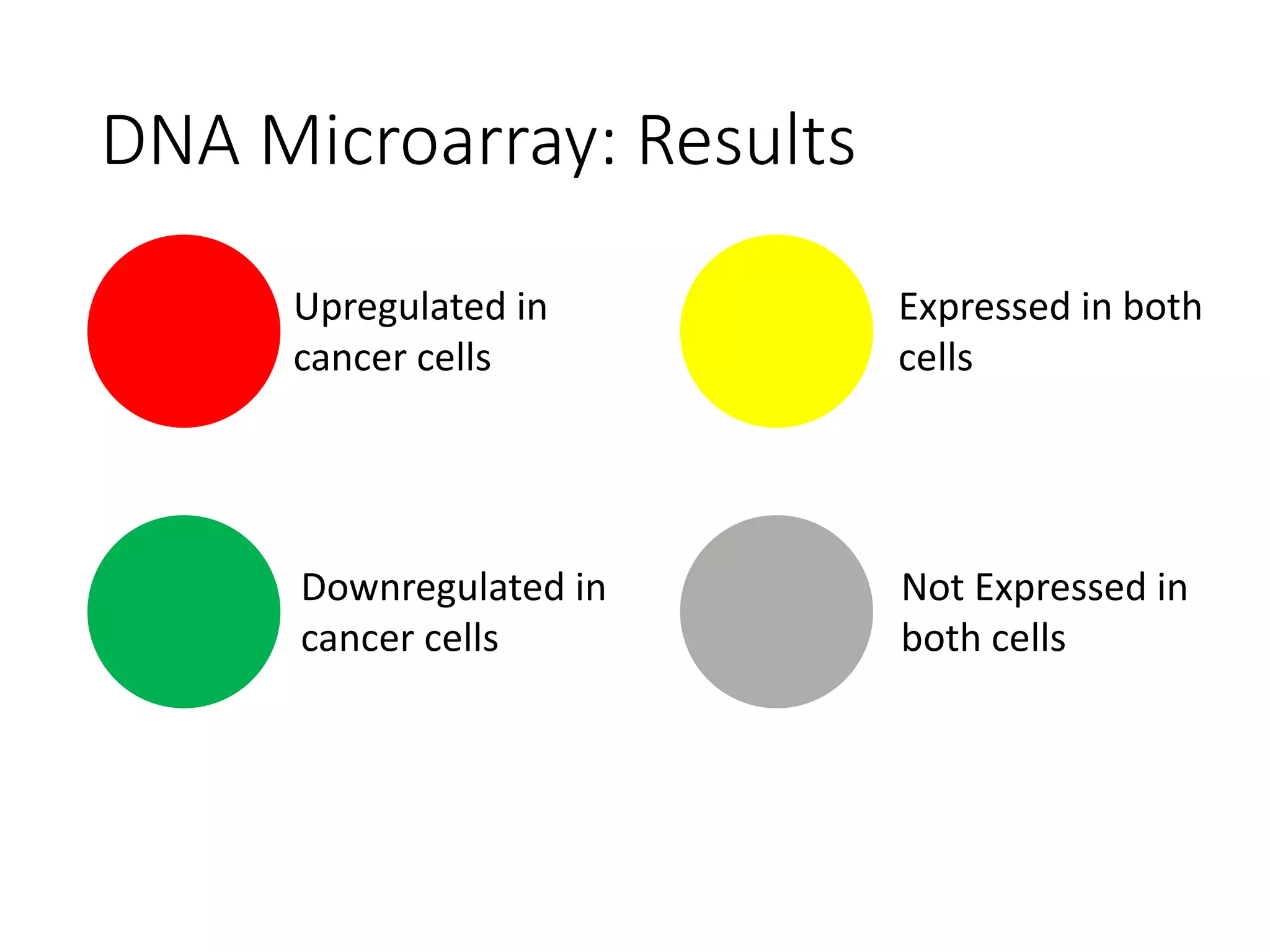
DNA Microarray: Results 
Upregulated in 
cancer cells 
Downregulated in 
cancer cells 
Expressed in both 
cells 
Not Expressed in 
both cells
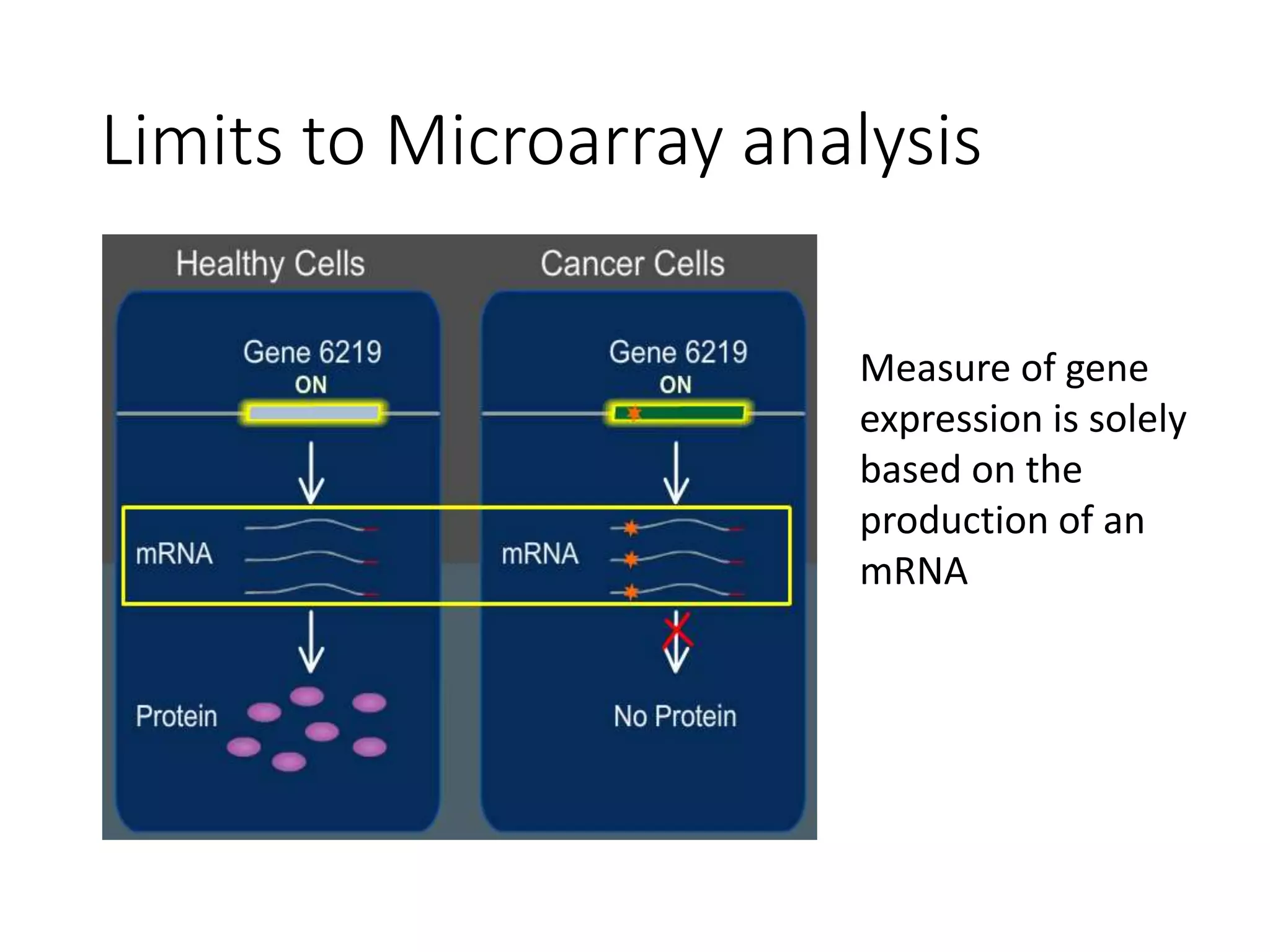
Limits to Microarray analysis 
Measure of gene 
expression is solely 
based on the 
production of an 
mRNA
For more information 
• Visit: 
http://learn.genetics.utah.edu/content/labs/micro 
array/
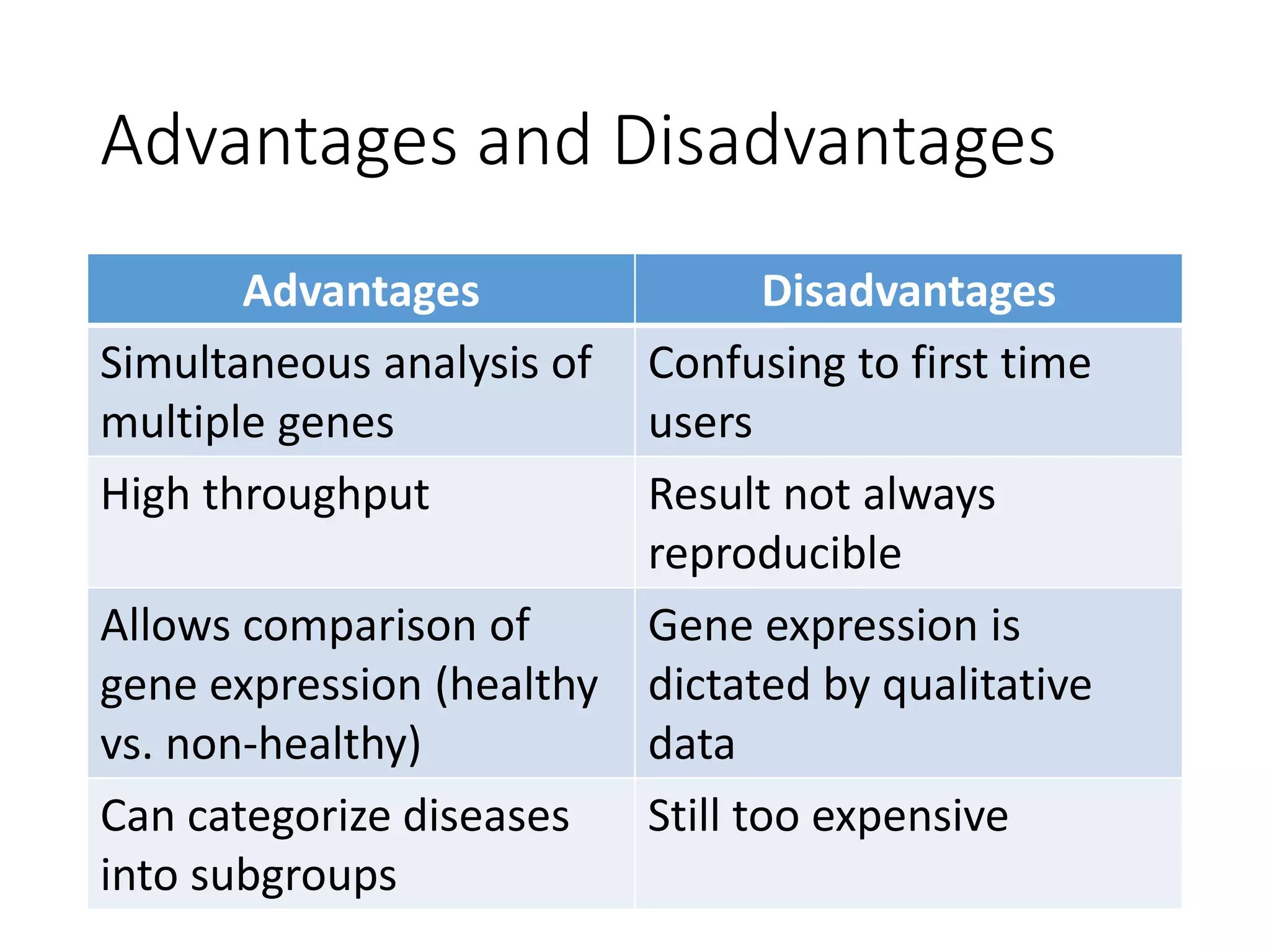
Advantages and Disadvantages 
Advantages Disadvantages 
Simultaneous analysis of 
multiple genes 
Confusing to first time 
users 
High throughput Result not always 
reproducible 
Allows comparison of 
gene expression (healthy 
vs. non-healthy) 
Gene expression is 
dictated by qualitative 
data 
Can categorize diseases 
into subgroups 
Still too expensive
Objective 
•To determine ANEUPLOIDY 
RATES and INCIDENCE OF 
MOSAICSIM in good-quality 
human preimplantation 
embryos using an array-based 
technique
Aneuploidy and Mosaicism 
•Aneuploidy 
• Condition wherein chromosome 
number is abnormal 
•Mosaicism 
• A condition wherein an individual has 
two or more cell populations with a 
different chromosomal makeup
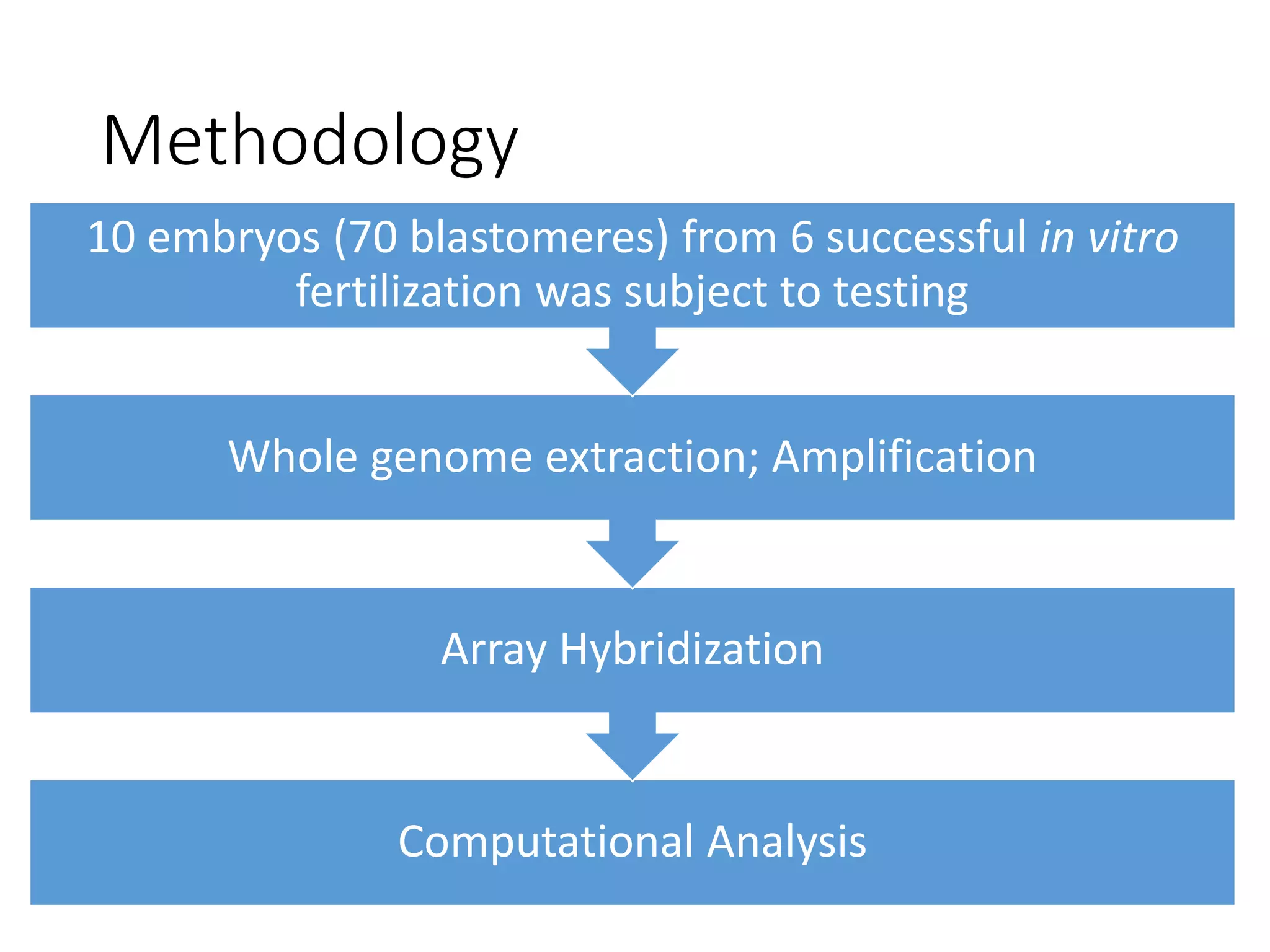
Methodology 
10 embryos (70 blastomeres) from 6 successful in vitro 
fertilization was subject to testing 
Whole genome extraction; Amplification 
Array Hybridization 
Computational Analysis
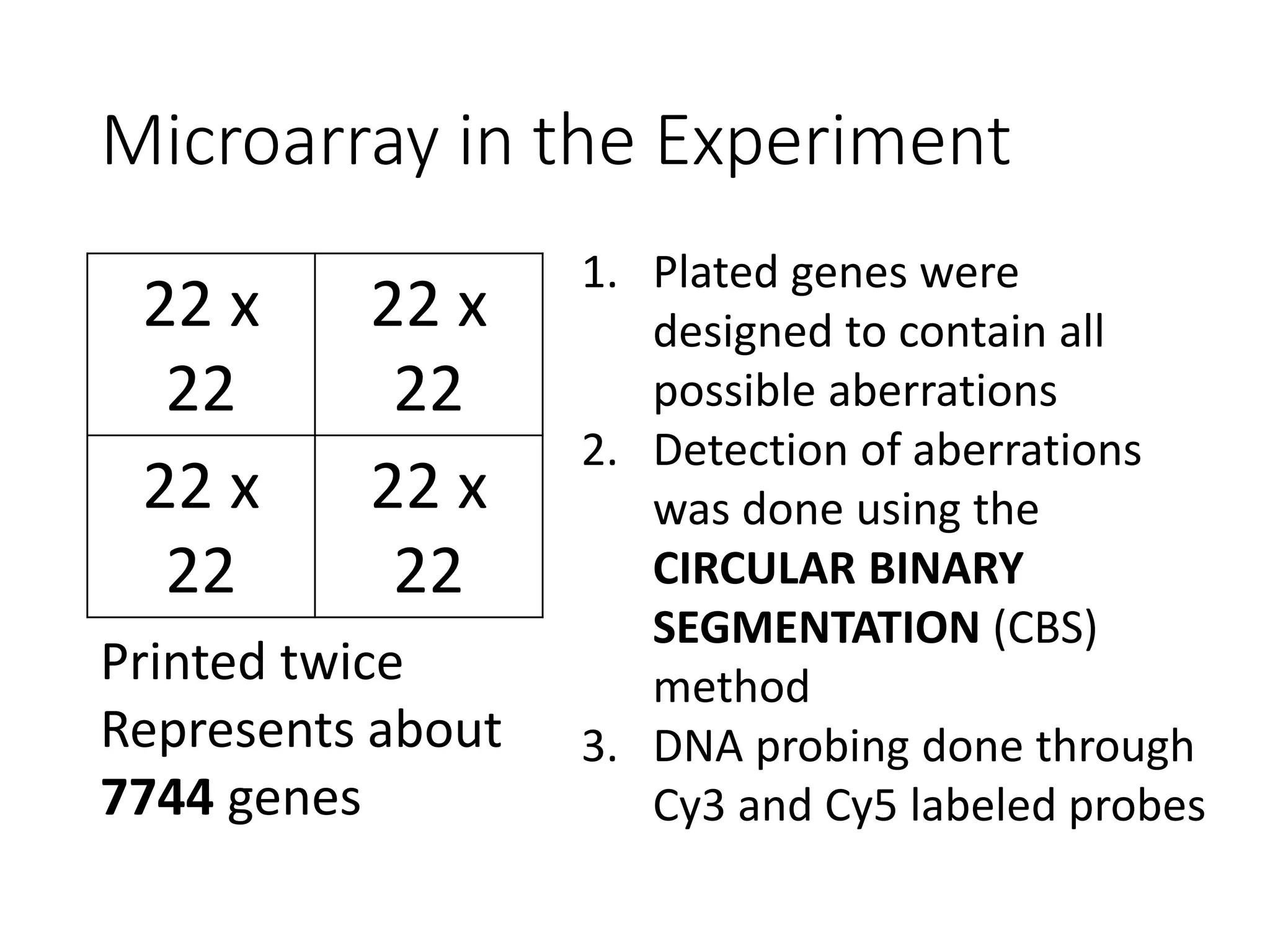
Microarray in the Experiment 
22 x 
22 
22 x 
22 
22 x 
22 
22 x 
22 
Printed twice 
Represents about 
7744 genes 
1. Plated genes were 
designed to contain all 
possible aberrations 
2. Detection of aberrations 
was done using the 
CIRCULAR BINARY 
SEGMENTATION (CBS) 
method 
3. DNA probing done through 
Cy3 and Cy5 labeled probes
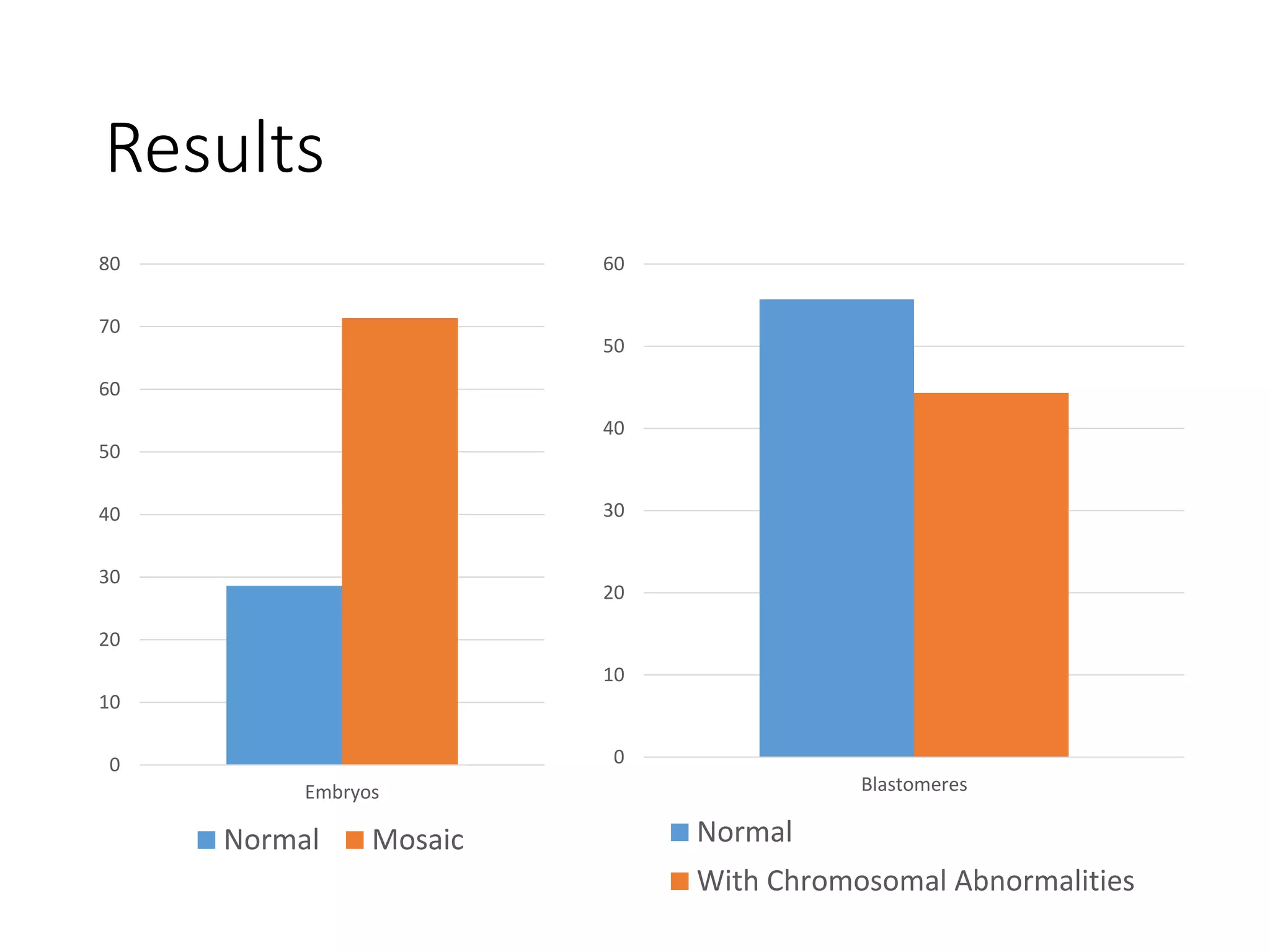
Results 
80 
70 
60 
50 
40 
30 
20 
10 
0 
Embryos 
Normal Mosaic 
60 
50 
40 
30 
20 
10 
0 
Blastomeres 
Normal 
With Chromosomal Abnormalities
Conclusion and Implication 
•High rate of aneuploidy and 
mosaicism in excellent quality 
embryos from cycles with a high 
implantation rate WARRANTS 
FURTHER RESEARCH on the origin 
and significance of chromosomal 
abnormalities in human 
preimplantation embryos.

Microarray

  • 1.
    DNA Microarray Analysis Jay Edneil C. Olivar
  • 2.
  • 3.
  • 4.
    DNA Microarray: TheExperiment Healthy Cell vs. Cancer Cell
  • 5.
    DNA Microarray: mRNAisolation Aliquot of RNA Column with poly-T beads
  • 6.
    DNA Microarray: theFUN part Polymerization of labeled cDNA Green: Healthy Red: Cancer
  • 7.
    DNA Microarray: Results Normal Cancer Combined
  • 8.
    DNA Microarray: Results Upregulated in cancer cells Downregulated in cancer cells Expressed in both cells Not Expressed in both cells
  • 9.
    Limits to Microarrayanalysis Measure of gene expression is solely based on the production of an mRNA
  • 10.
    For more information • Visit: http://learn.genetics.utah.edu/content/labs/micro array/
  • 11.
    Advantages and Disadvantages Advantages Disadvantages Simultaneous analysis of multiple genes Confusing to first time users High throughput Result not always reproducible Allows comparison of gene expression (healthy vs. non-healthy) Gene expression is dictated by qualitative data Can categorize diseases into subgroups Still too expensive
  • 13.
    Objective •To determineANEUPLOIDY RATES and INCIDENCE OF MOSAICSIM in good-quality human preimplantation embryos using an array-based technique
  • 14.
    Aneuploidy and Mosaicism •Aneuploidy • Condition wherein chromosome number is abnormal •Mosaicism • A condition wherein an individual has two or more cell populations with a different chromosomal makeup
  • 15.
    Methodology 10 embryos(70 blastomeres) from 6 successful in vitro fertilization was subject to testing Whole genome extraction; Amplification Array Hybridization Computational Analysis
  • 16.
    Microarray in theExperiment 22 x 22 22 x 22 22 x 22 22 x 22 Printed twice Represents about 7744 genes 1. Plated genes were designed to contain all possible aberrations 2. Detection of aberrations was done using the CIRCULAR BINARY SEGMENTATION (CBS) method 3. DNA probing done through Cy3 and Cy5 labeled probes
  • 17.
    Results 80 70 60 50 40 30 20 10 0 Embryos Normal Mosaic 60 50 40 30 20 10 0 Blastomeres Normal With Chromosomal Abnormalities
  • 18.
    Conclusion and Implication •High rate of aneuploidy and mosaicism in excellent quality embryos from cycles with a high implantation rate WARRANTS FURTHER RESEARCH on the origin and significance of chromosomal abnormalities in human preimplantation embryos.