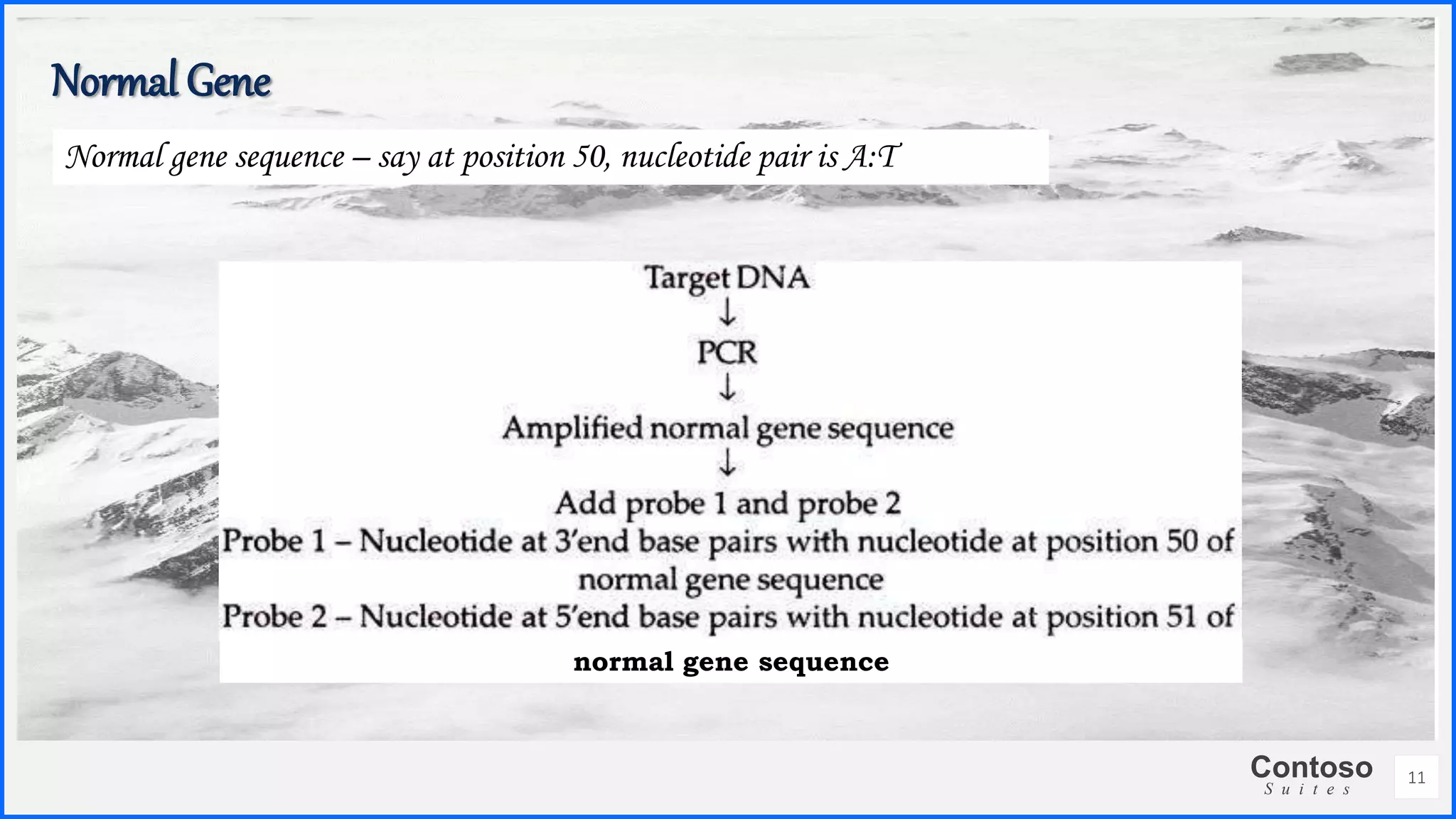
PCR-OLA is a technique that combines polymerase chain reaction with oligonucleotide ligation assay to detect single nucleotide polymorphisms by distinguishing between ligation and non-ligation of oligonucleotides. It involves two phases - a multiplex PCR amplification to amplify the target DNA, followed by a multiplex oligonucleotide ligation assay where detection probes hybridize adjacent to each other and are ligated if complementary, which can identify normal vs. mutant genotypes. Ligation is regulated by the specificity of oligonucleotide hybridization, the need for adjacent hybridization of probes, and perfect complementarity of two bases.