Proprioception and Spatial
Orientation
Baldeo, Biendima, Go, Olivar, Soriano
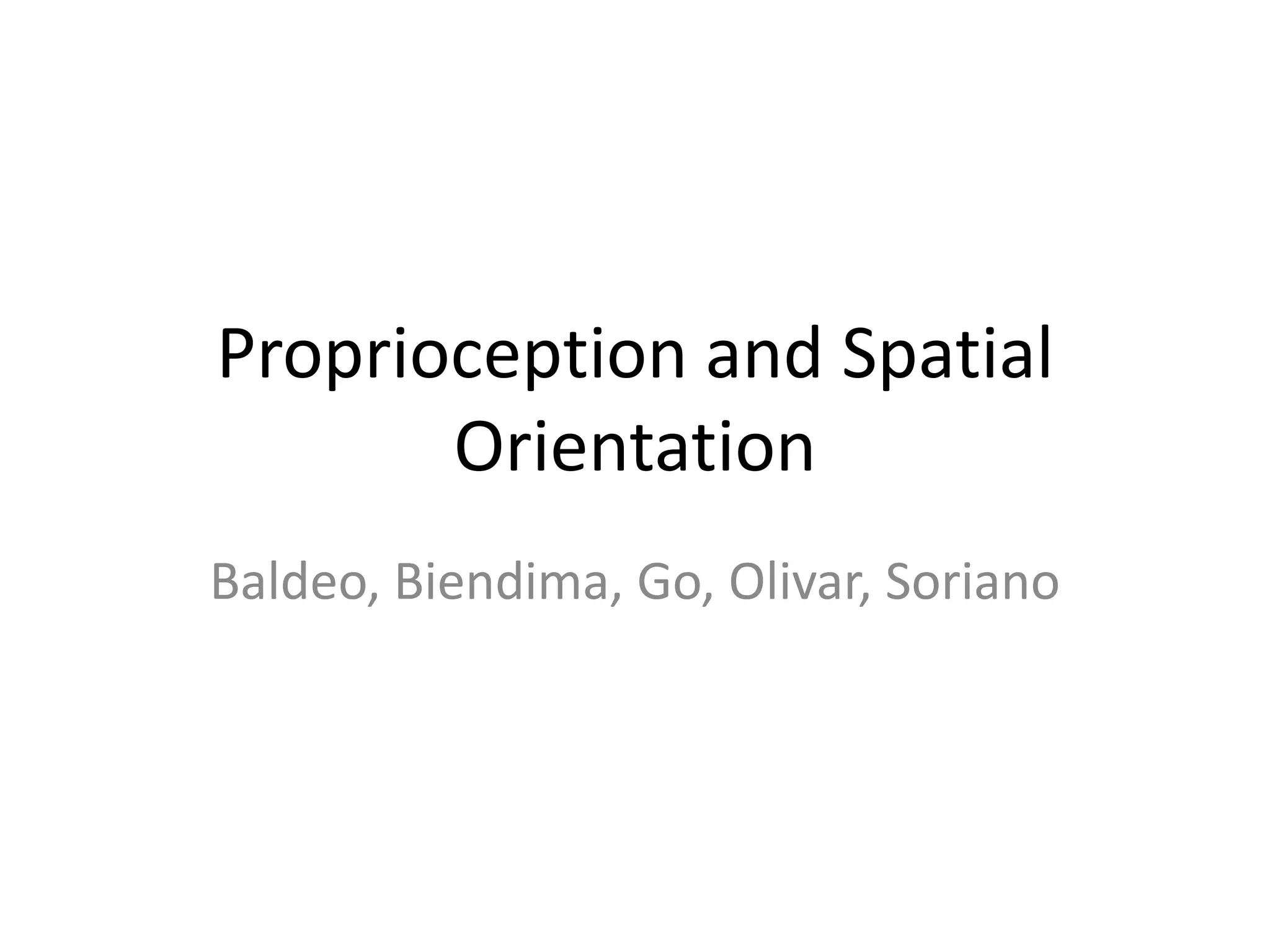
Methodology
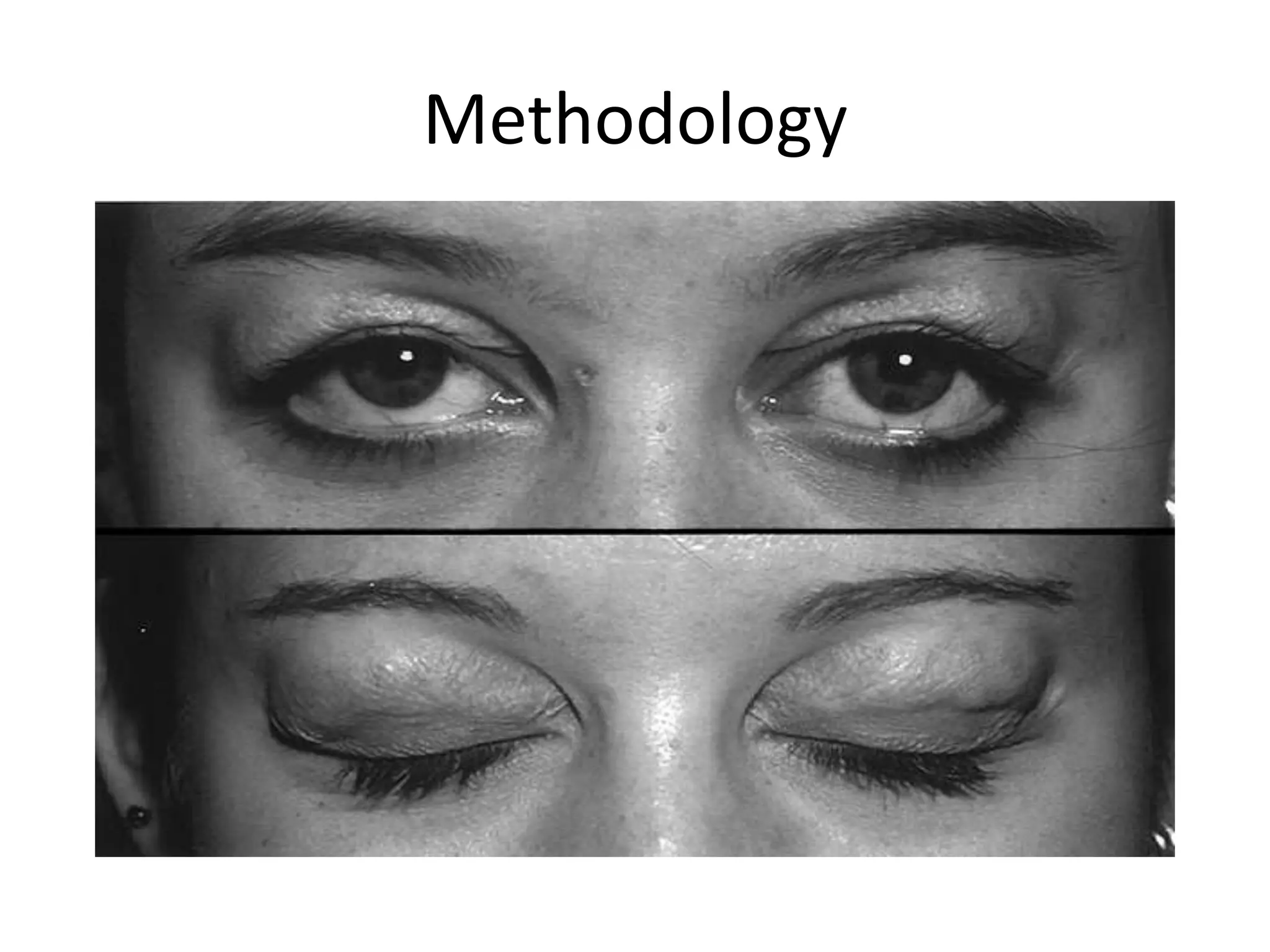
Condition I
In a single
rapid try
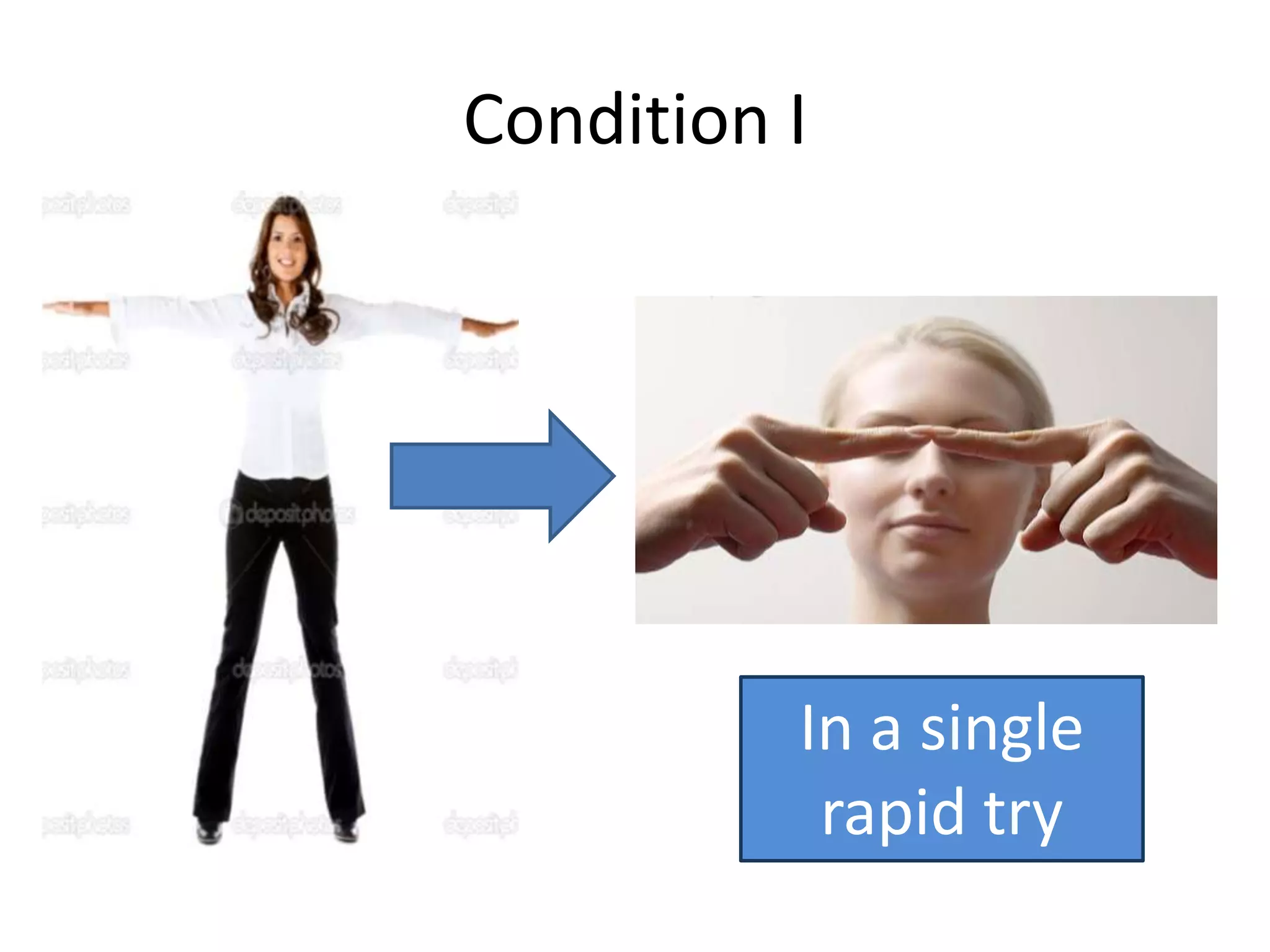
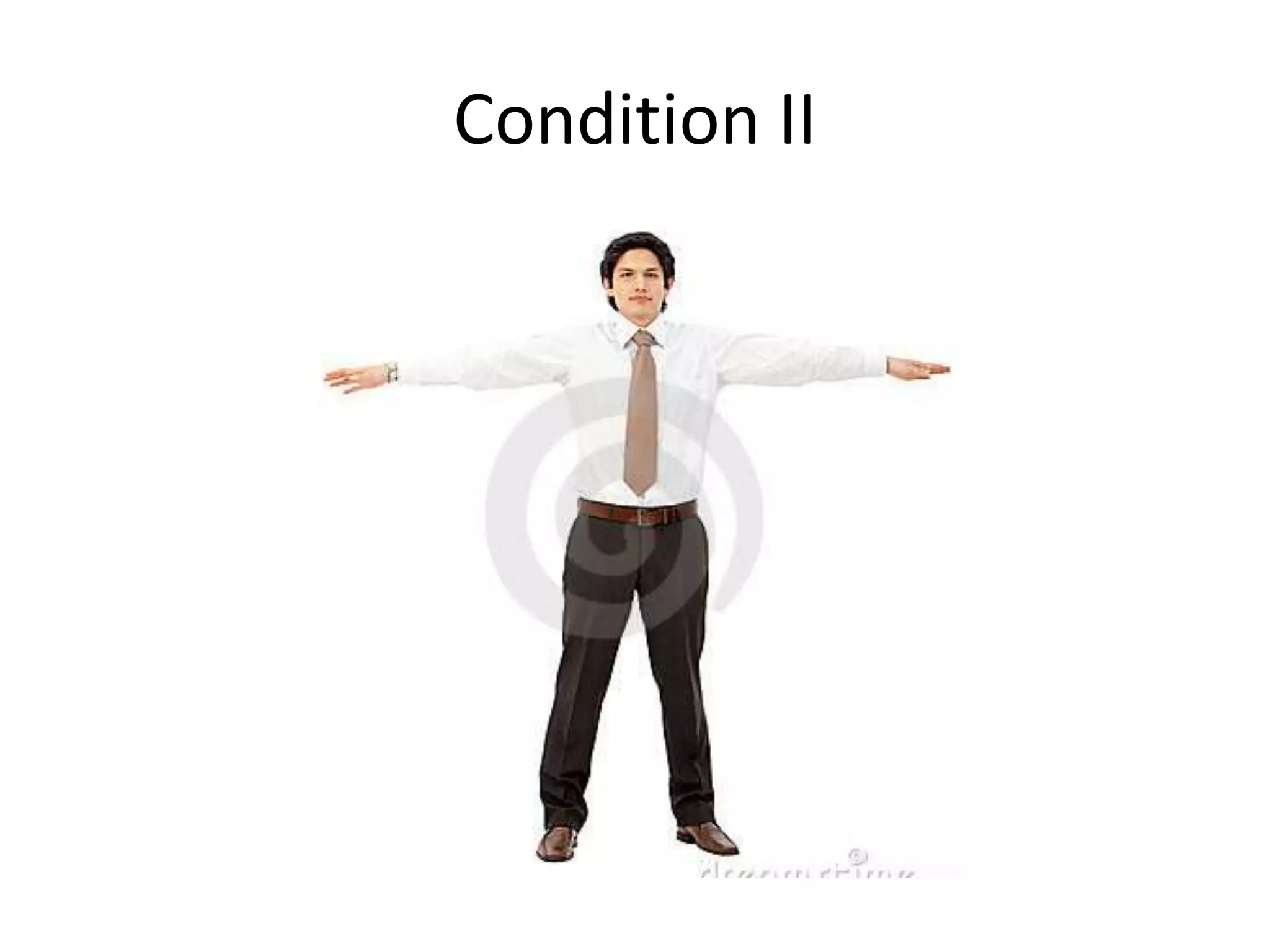
Condition II
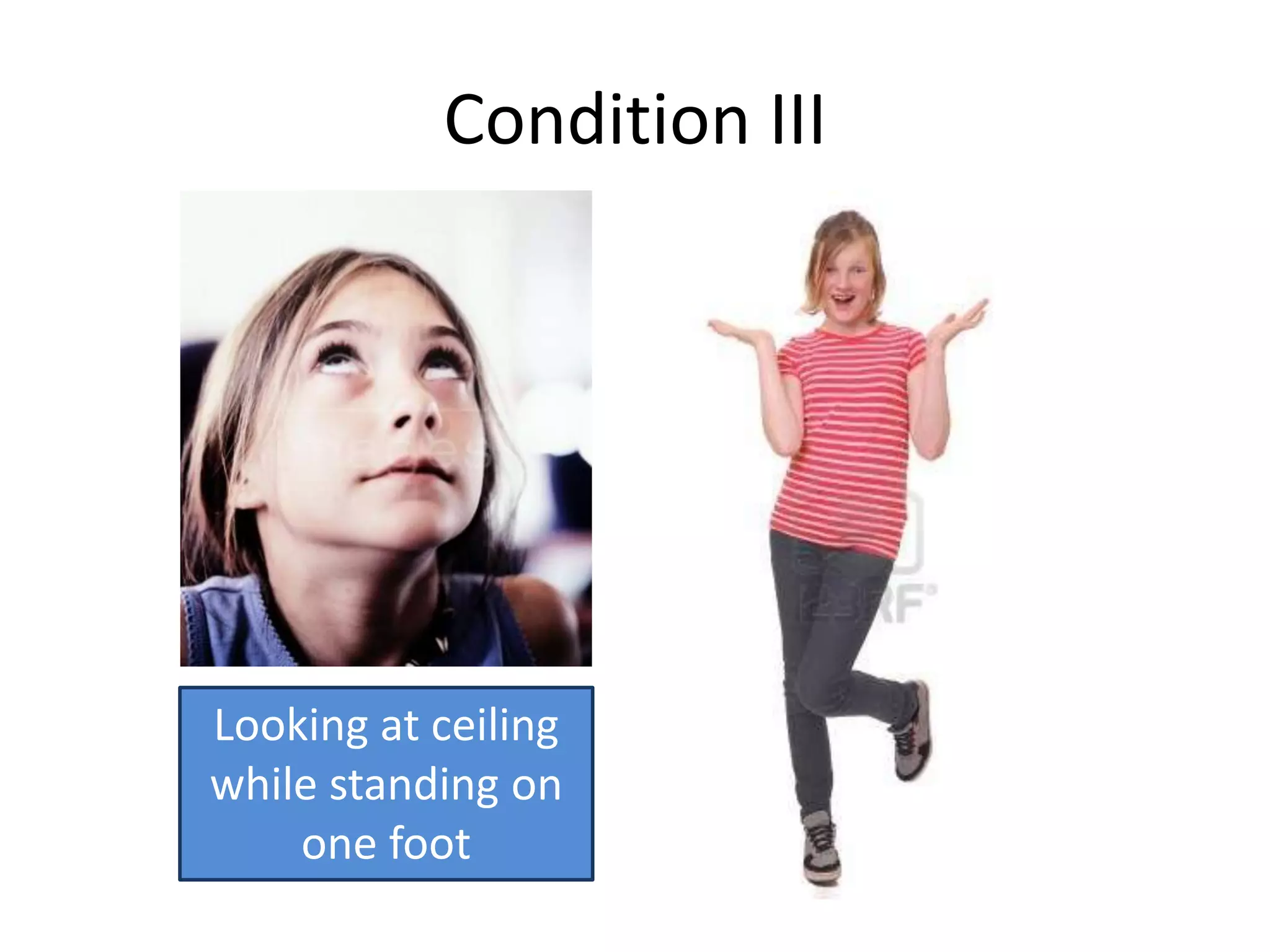
Condition III
Looking at ceiling
while standing on
one foot
Results I
Subject 1 Subject 2
Eyes Opened Missed Touched
Eyes Closed Missed Missed
Results III
Subject 1 Subject 2
Eyes Opened Able to maintain balance
Wobbled a bit
Arms wobbled
Legs swayed a bit
Eyes Closed Body shaking
Feet wobbled
uncontrollably
Stable
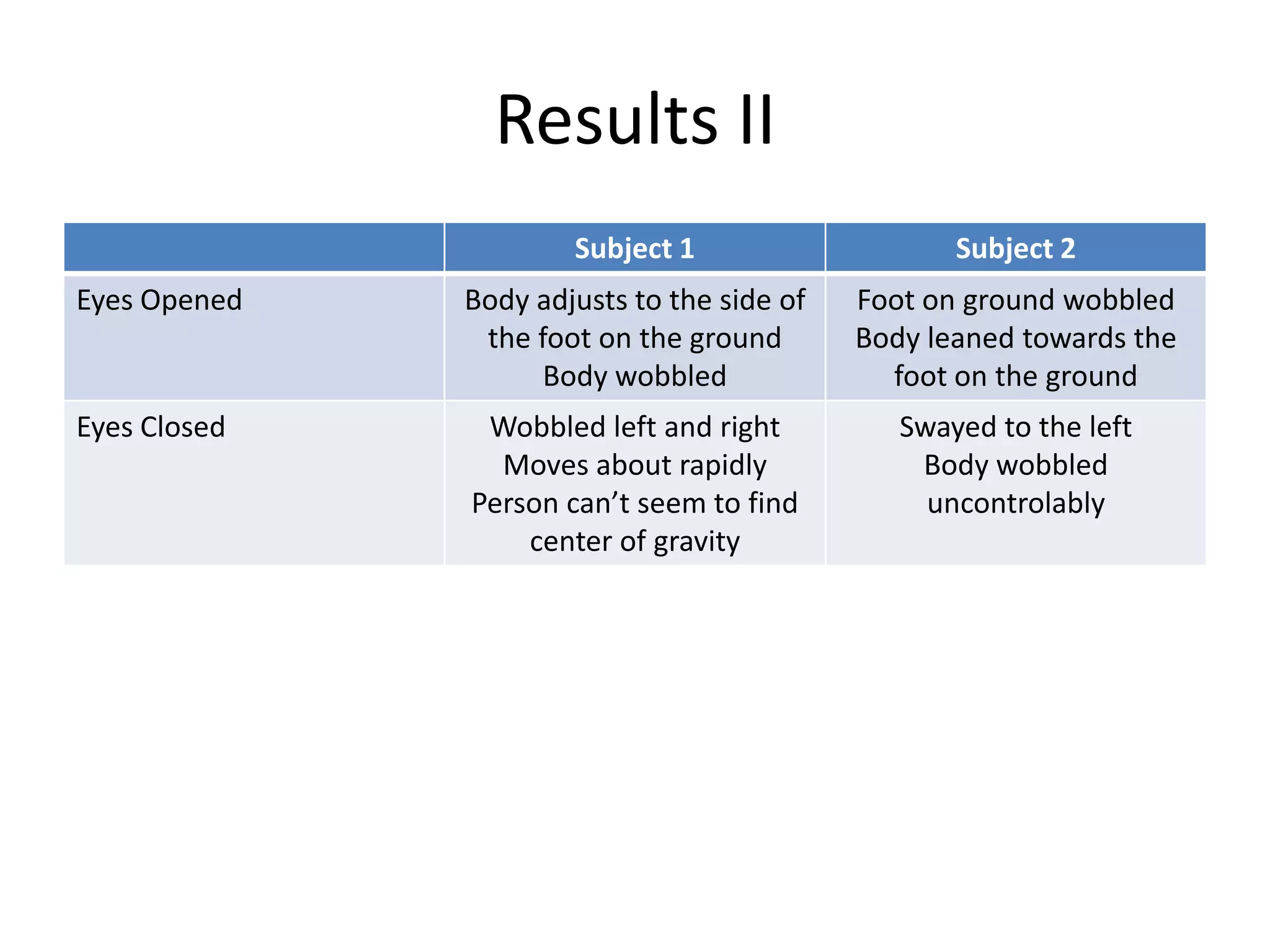
Results II
Subject 1 Subject 2
Eyes Opened Body adjusts to the side of
the foot on the ground
Body wobbled
Foot on ground wobbled
Body leaned towards the
foot on the ground
Eyes Closed Wobbled left and right
Moves about rapidly
Person can’t seem to find
center of gravity
Swayed to the left
Body wobbled
uncontrolably
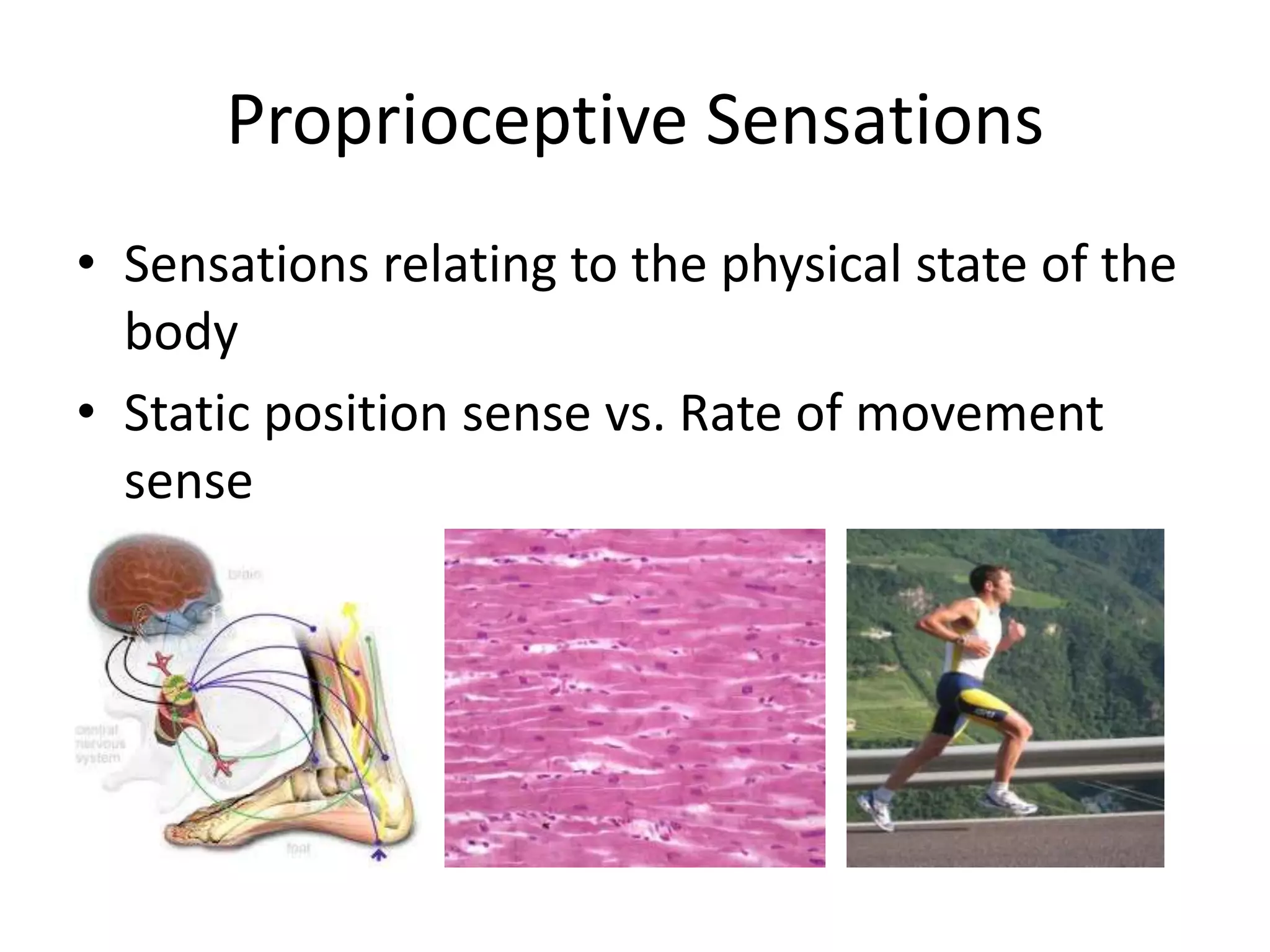
Proprioceptive Sensations
• Sensations relating to the physical state of the
body
• Static position sense vs. Rate of movement
sense
Cues Important in Spatial Orientation
• Visual Cues
– Slight linear or rotational movement of the
body, instantaneously shifts the visual images of
the retina, and this information is relayed to the
equilibrium center
Cues Important in Spatial Orientation
• Vestibular cues
– Proper orientation of our head, limbs, and entire
body is achieved by reflex signals originating
from the vestibular apparatus.
Cues Important in Spatial Orientation
• Kinesthetic cues
– Joint receptors of the neck
– Pressure sensations from footpads (Baroreceptors)
– Muscle spindles
Cues Important in Spatial Orientation
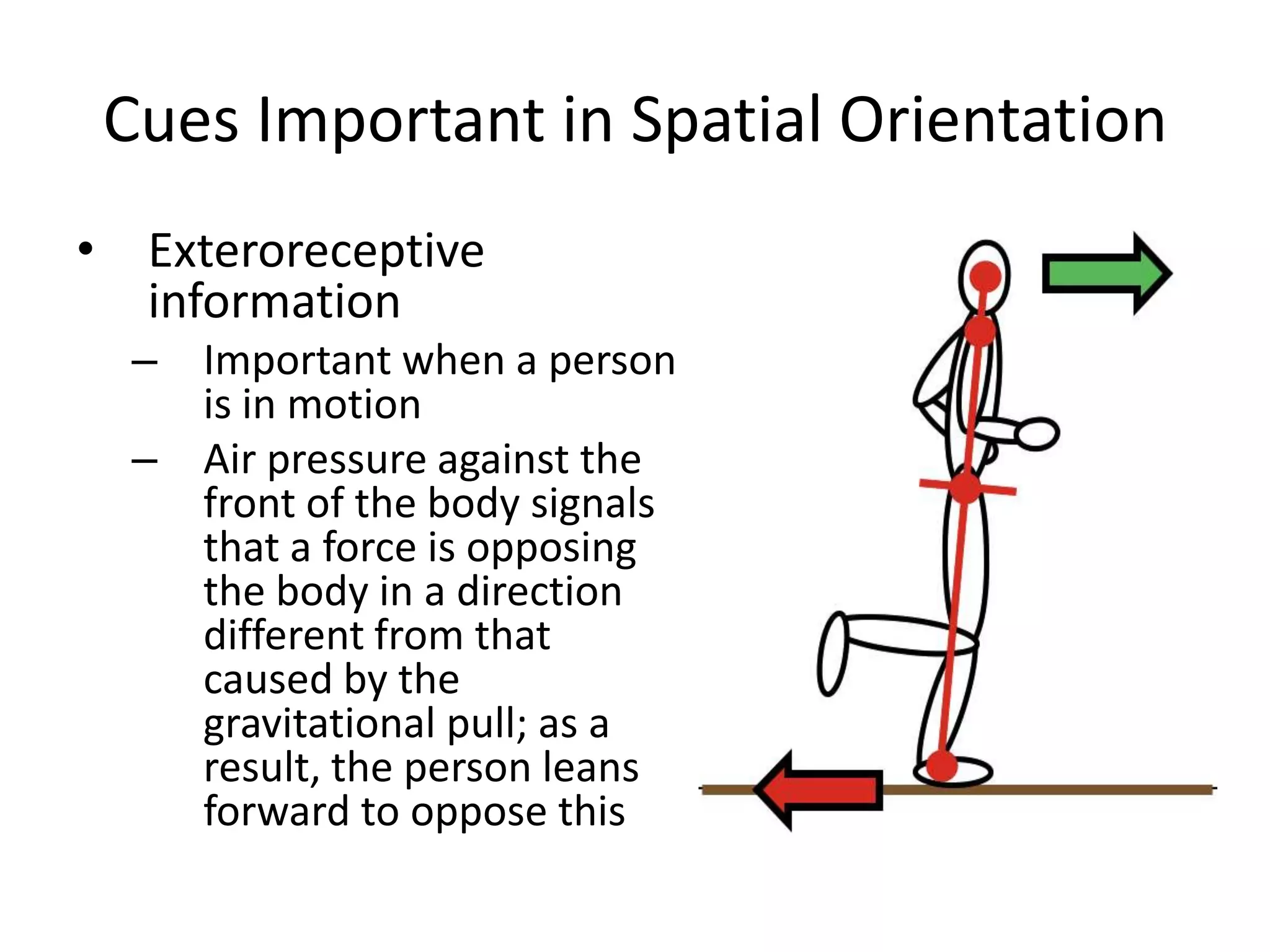
• Exteroreceptive
information
– Important when a person
is in motion
– Air pressure against the
front of the body signals
that a force is opposing
the body in a direction
different from that
caused by the
gravitational pull; as a
result, the person leans
forward to oppose this
Corrective motions for balance
The body moves to a position
such that its center of gravity
falls on the same longitudinal
axis as that of its foundation

Proprioception and spatial orientation

  • 1.
  • 2.
  • 3.
    Condition I In asingle rapid try
  • 4.
  • 5.
    Condition III Looking atceiling while standing on one foot
  • 6.
    Results I Subject 1Subject 2 Eyes Opened Missed Touched Eyes Closed Missed Missed
  • 7.
    Results III Subject 1Subject 2 Eyes Opened Able to maintain balance Wobbled a bit Arms wobbled Legs swayed a bit Eyes Closed Body shaking Feet wobbled uncontrollably Stable
  • 8.
    Results II Subject 1Subject 2 Eyes Opened Body adjusts to the side of the foot on the ground Body wobbled Foot on ground wobbled Body leaned towards the foot on the ground Eyes Closed Wobbled left and right Moves about rapidly Person can’t seem to find center of gravity Swayed to the left Body wobbled uncontrolably
  • 9.
    Proprioceptive Sensations • Sensationsrelating to the physical state of the body • Static position sense vs. Rate of movement sense
  • 10.
    Cues Important inSpatial Orientation • Visual Cues – Slight linear or rotational movement of the body, instantaneously shifts the visual images of the retina, and this information is relayed to the equilibrium center
  • 11.
    Cues Important inSpatial Orientation • Vestibular cues – Proper orientation of our head, limbs, and entire body is achieved by reflex signals originating from the vestibular apparatus.
  • 12.
    Cues Important inSpatial Orientation • Kinesthetic cues – Joint receptors of the neck – Pressure sensations from footpads (Baroreceptors) – Muscle spindles
  • 13.
    Cues Important inSpatial Orientation • Exteroreceptive information – Important when a person is in motion – Air pressure against the front of the body signals that a force is opposing the body in a direction different from that caused by the gravitational pull; as a result, the person leans forward to oppose this
  • 14.
    Corrective motions forbalance The body moves to a position such that its center of gravity falls on the same longitudinal axis as that of its foundation