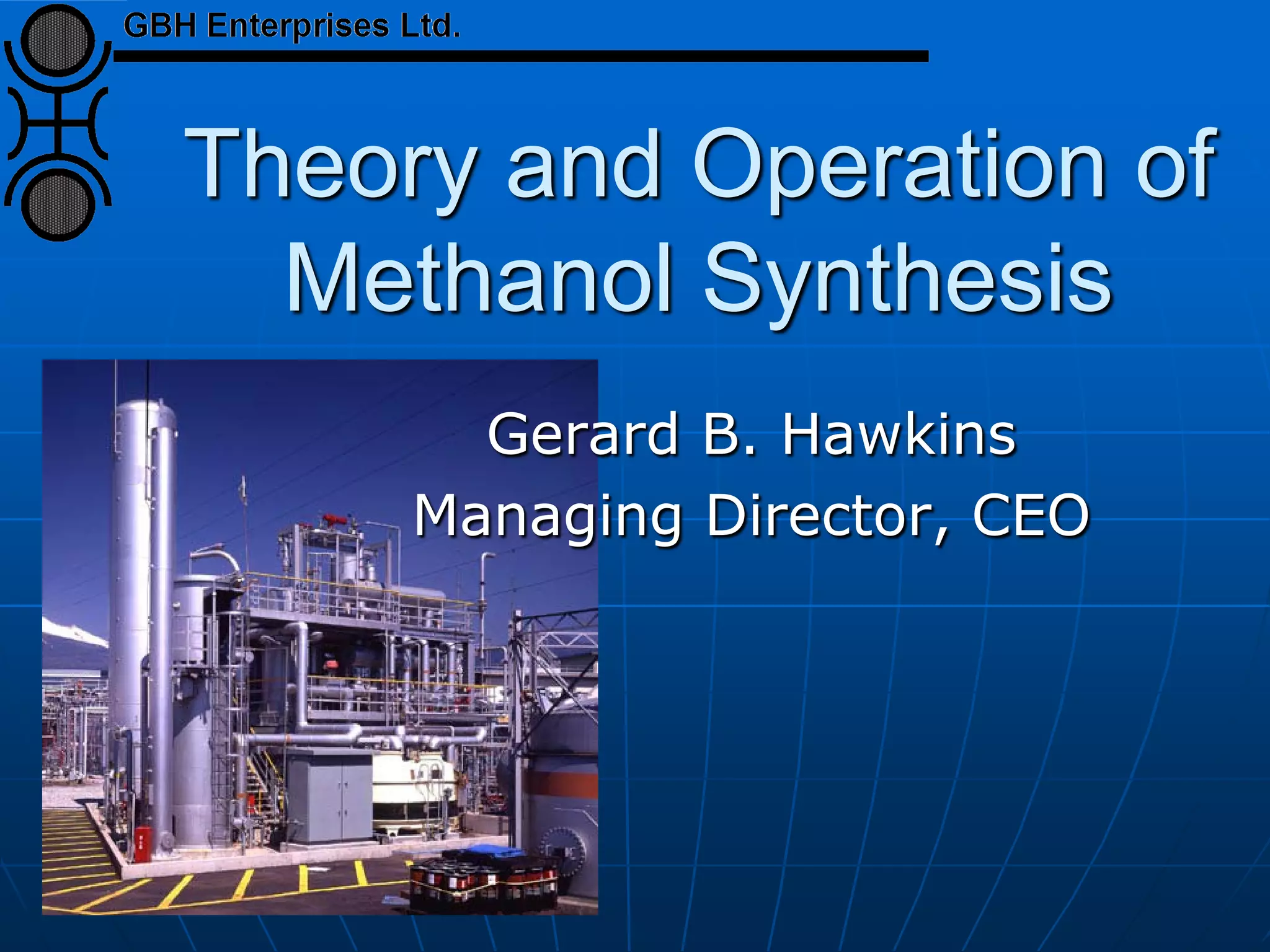
Theory and Operation of
Methanol Synthesis
Gerard B. Hawkins
Managing Director, CEO
Introduction
 Flowsheets
 Catalysts
 Catalyst Deactivation
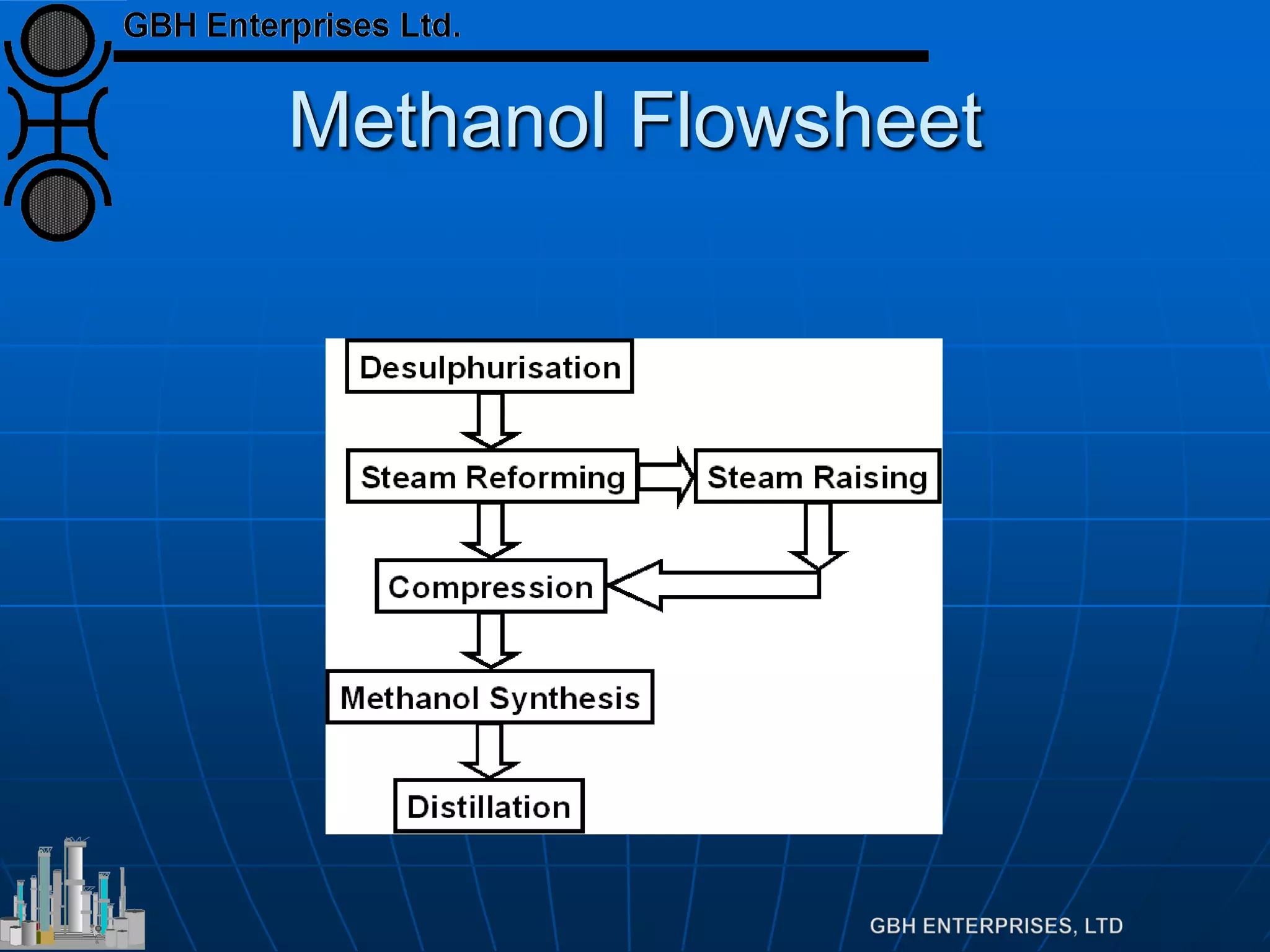
Methanol Flowsheet
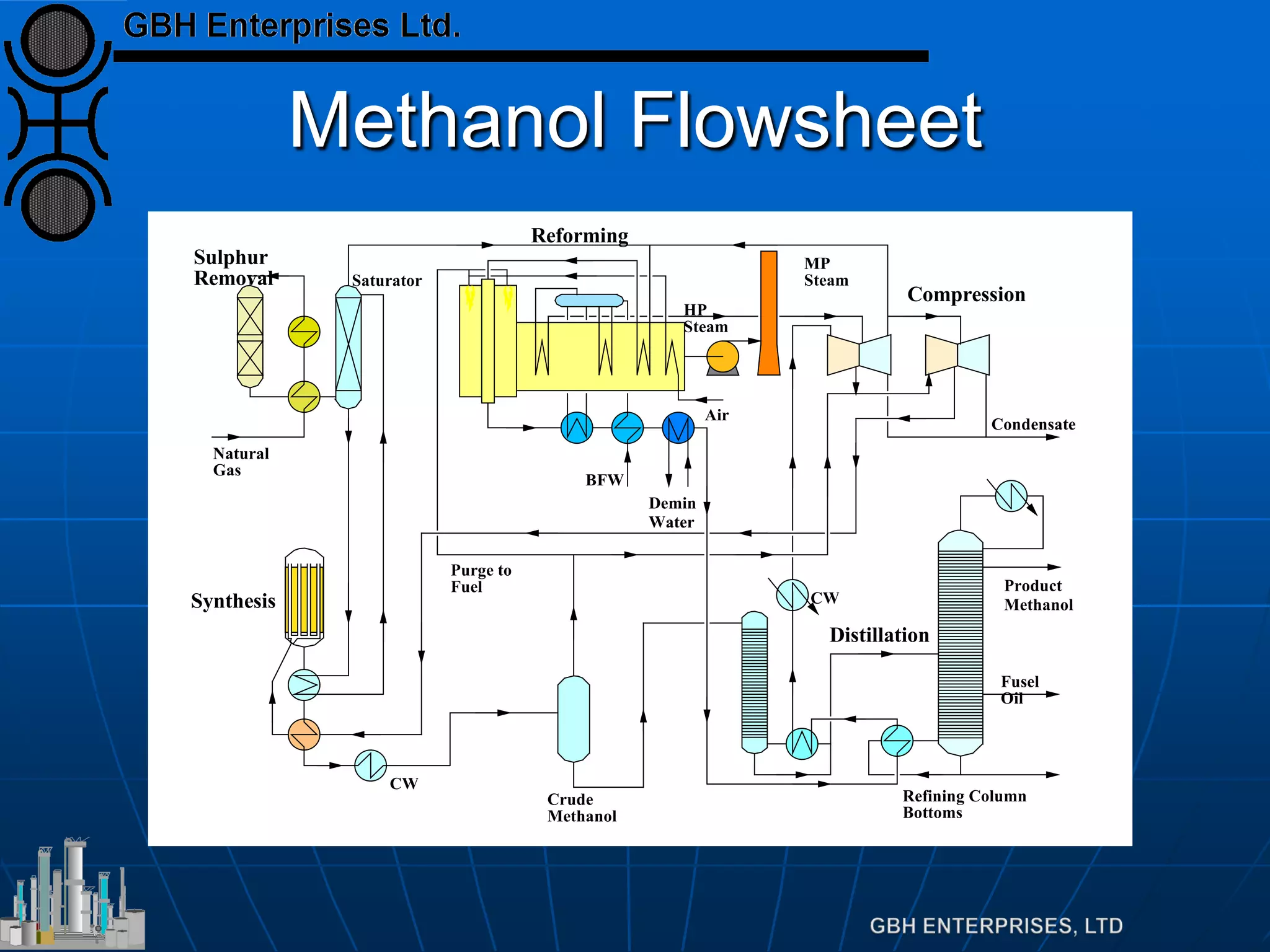
Methanol Flowsheet
Natural
Gas
Sulphur
Removal Saturator
Reforming
Air
Condensate
Compression
BFW
Demin
Water
CW
CW
Synthesis
Distillation
MP
Steam
Purge to
Fuel
Crude
Methanol
Product
Methanol
Fusel
Oil
Refining Column
Bottoms
HP
Steam
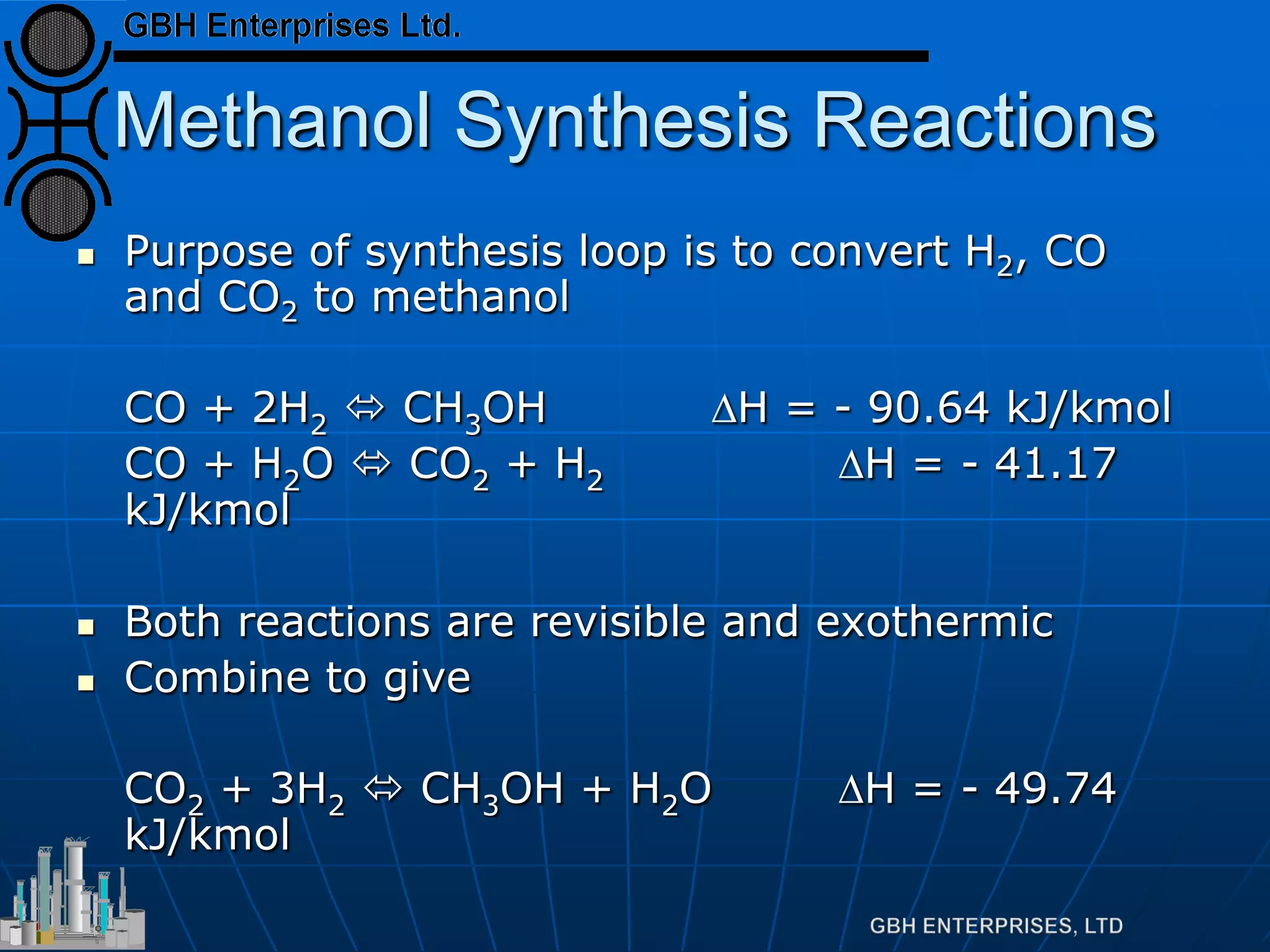
Methanol Synthesis Reactions
 Purpose of synthesis loop is to convert H2, CO
and CO2 to methanol
CO + 2H2  CH3OH ∆H = - 90.64 kJ/kmol
CO + H2O  CO2 + H2 ∆H = - 41.17
kJ/kmol
 Both reactions are revisible and exothermic
 Combine to give
CO2 + 3H2  CH3OH + H2O ∆H = - 49.74
kJ/kmol
Methanol Synthesis Reactions
 Methanol is produced from CO2
 Proven by use of radioactive C14
 CO is shifted to CO2 and then to
methanol
 Rate of reaction is given by
5.0
2
2]./[3
][
][
.exp.
OHP
COP
Activity
dt
OHdCH TRE∆−
∝
Equilibrium
 Equilibrium defined by
 Which can be rearranged to
 Which is far more useful
[ ] [ ]
[ ] [ ]3
22
23
.
.
HPCOP
OHPOHCHP
Kp =
[ ]
[ ] [ ]3
22
2
3
.
][.
HPCOP
OHPKp
OHCHP =
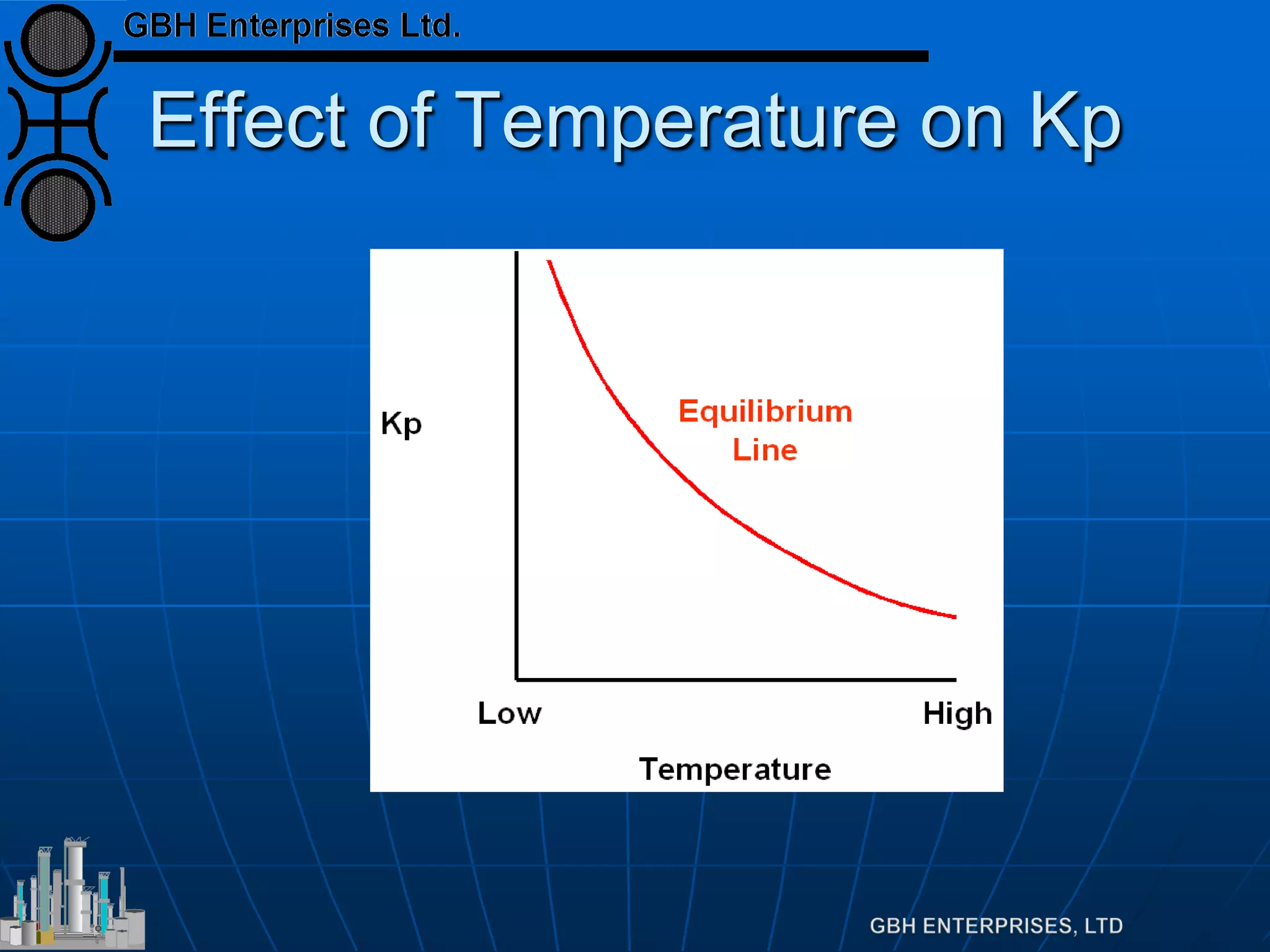
Effect of Temperature on Kp
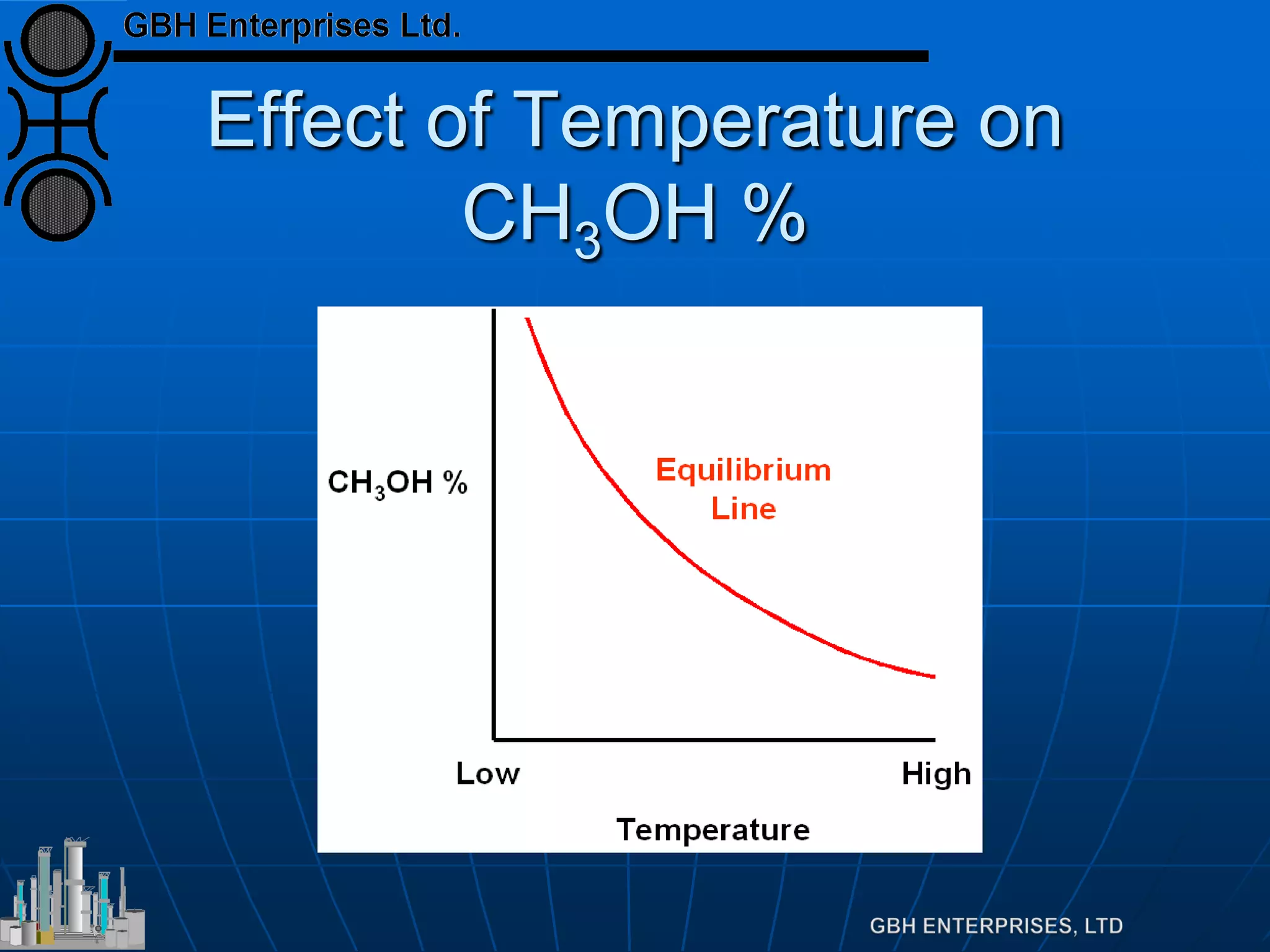
Effect of Temperature on
CH3OH %
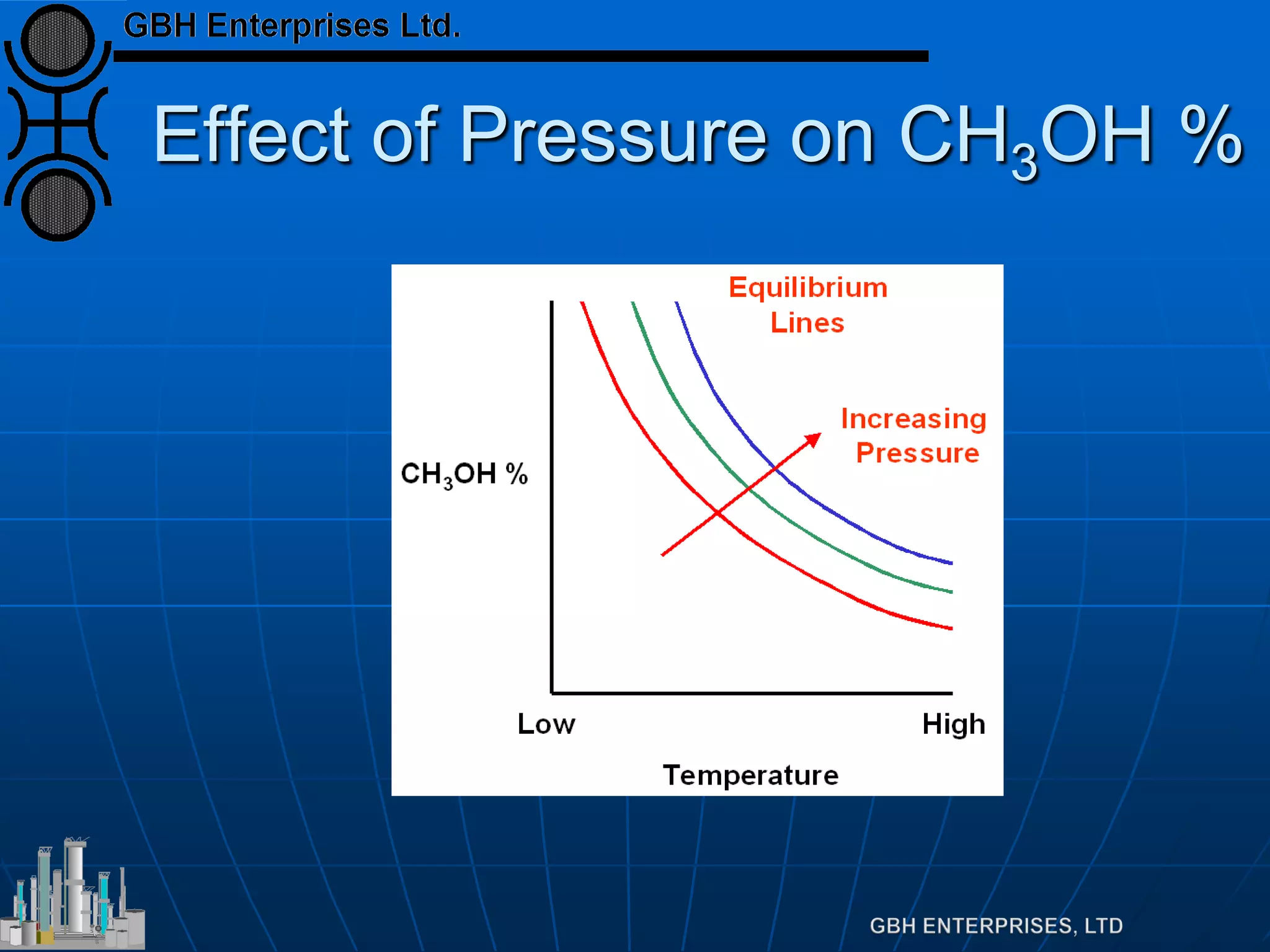
Effect of Pressure on CH3OH %
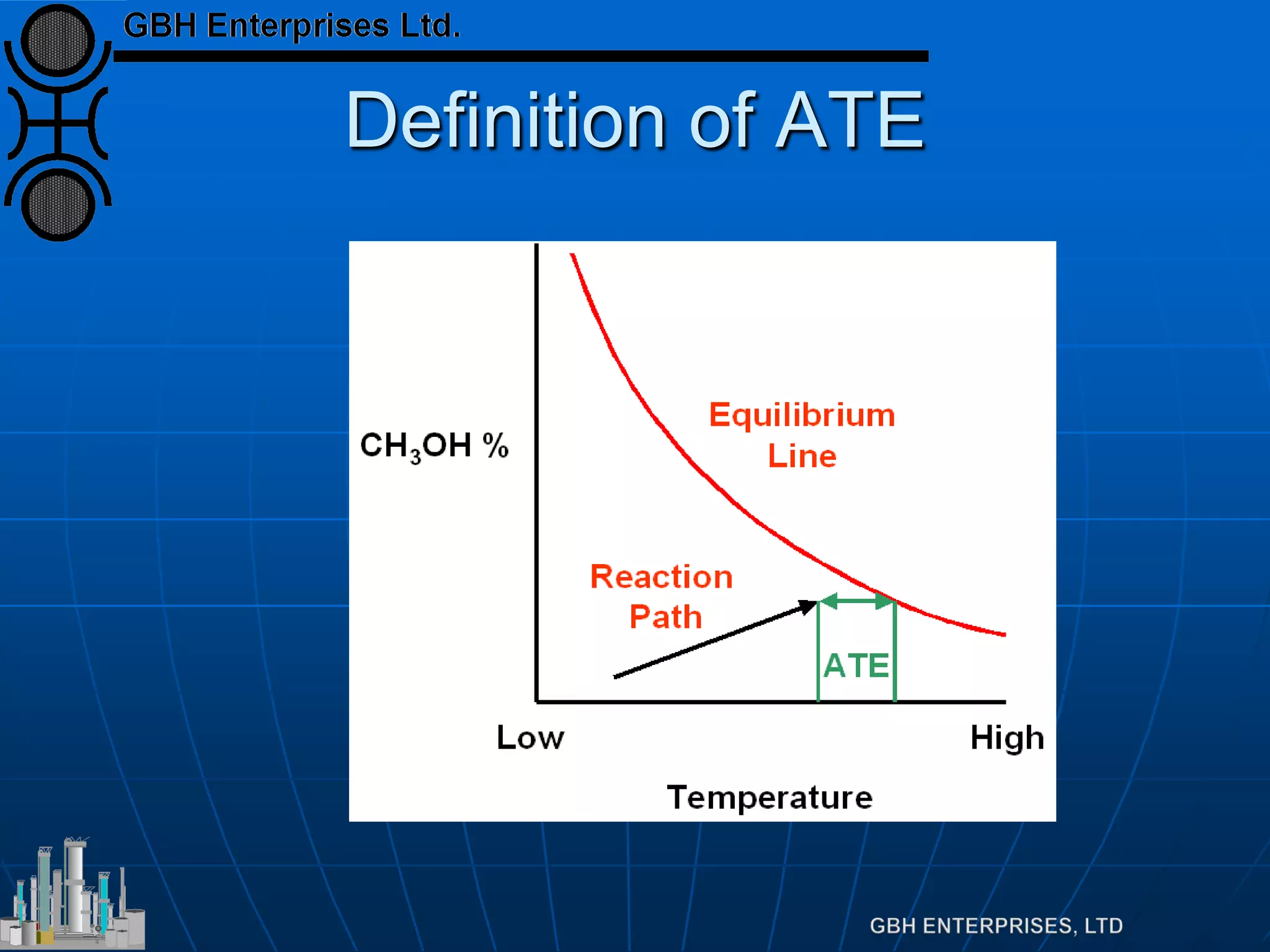
Definition of ATE
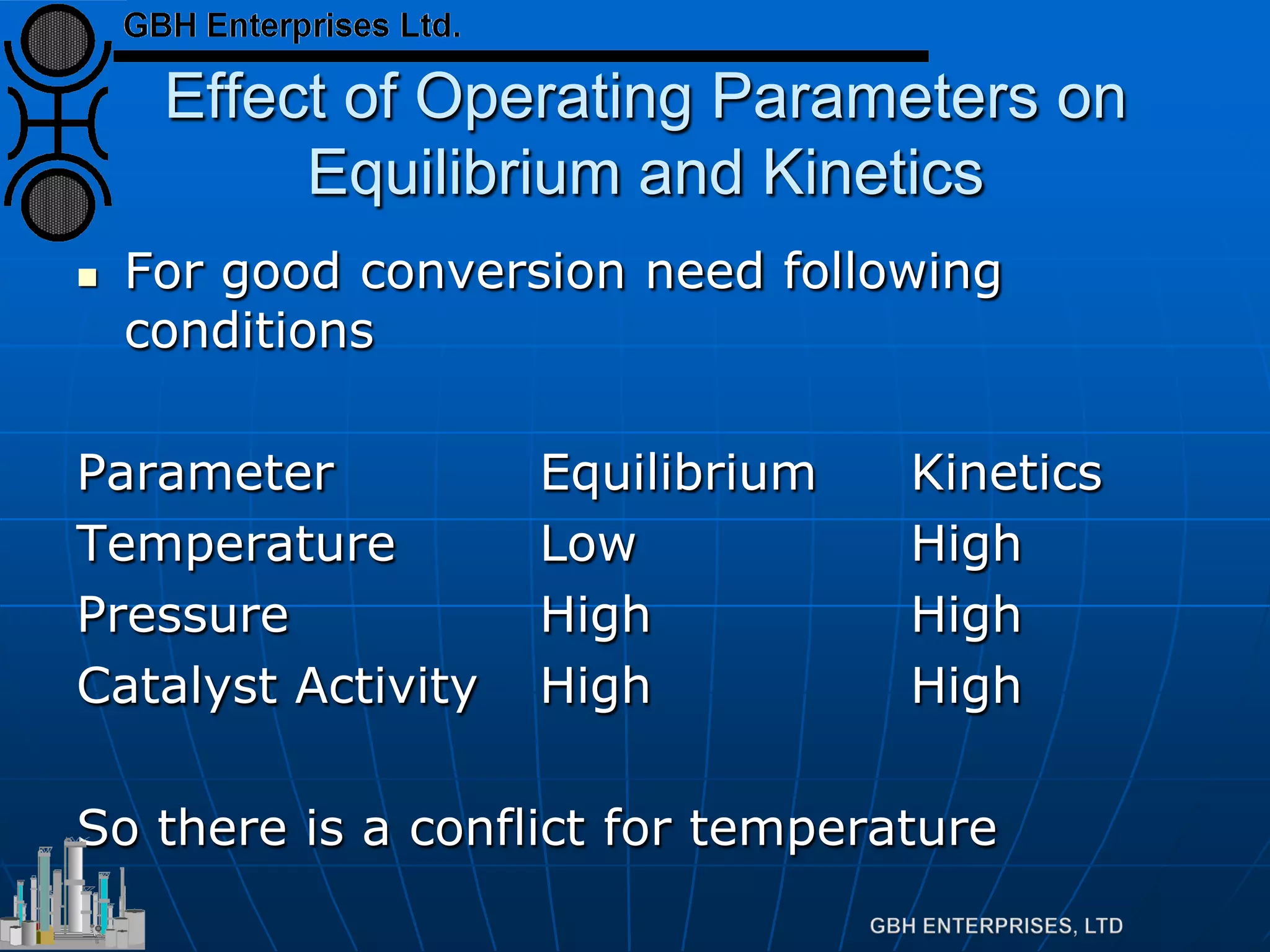
Effect of Operating Parameters on
Equilibrium and Kinetics
 For good conversion need following
conditions
Parameter Equilibrium Kinetics
Temperature Low High
Pressure High High
Catalyst Activity High High
So there is a conflict for temperature
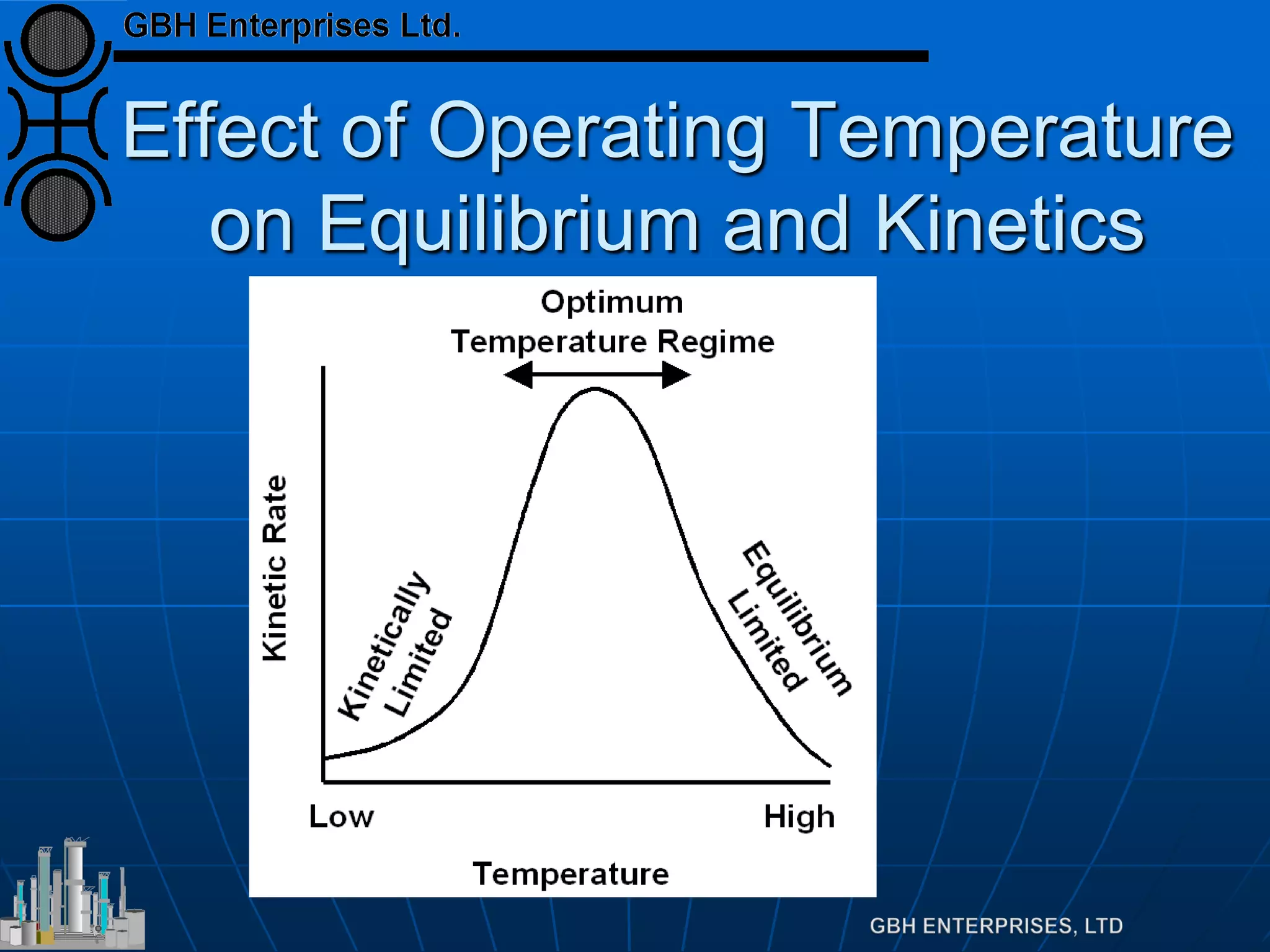
Effect of Operating Temperature
on Equilibrium and Kinetics
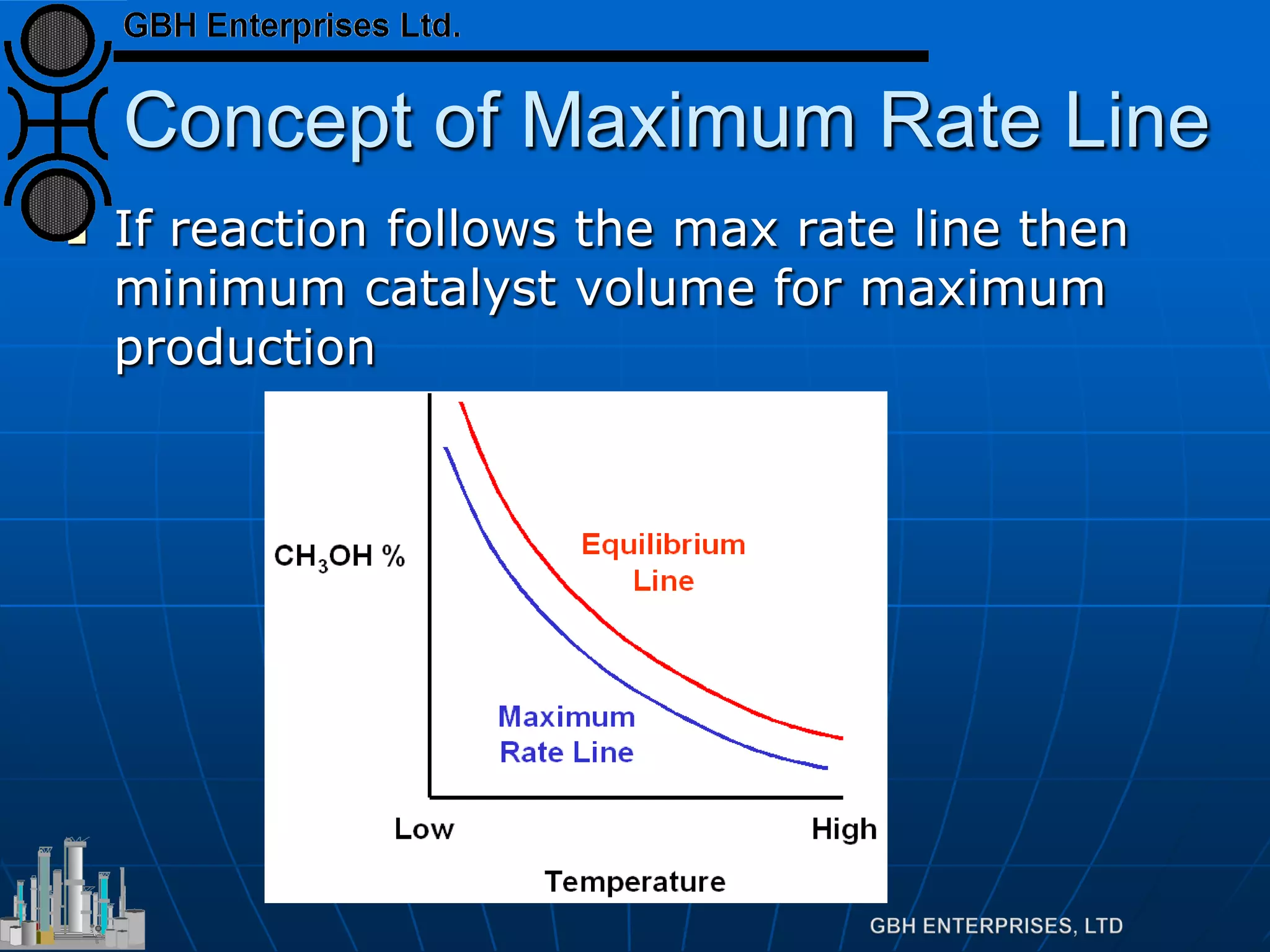
Concept of Maximum Rate Line
 If reaction follows the max rate line then
minimum catalyst volume for maximum
production
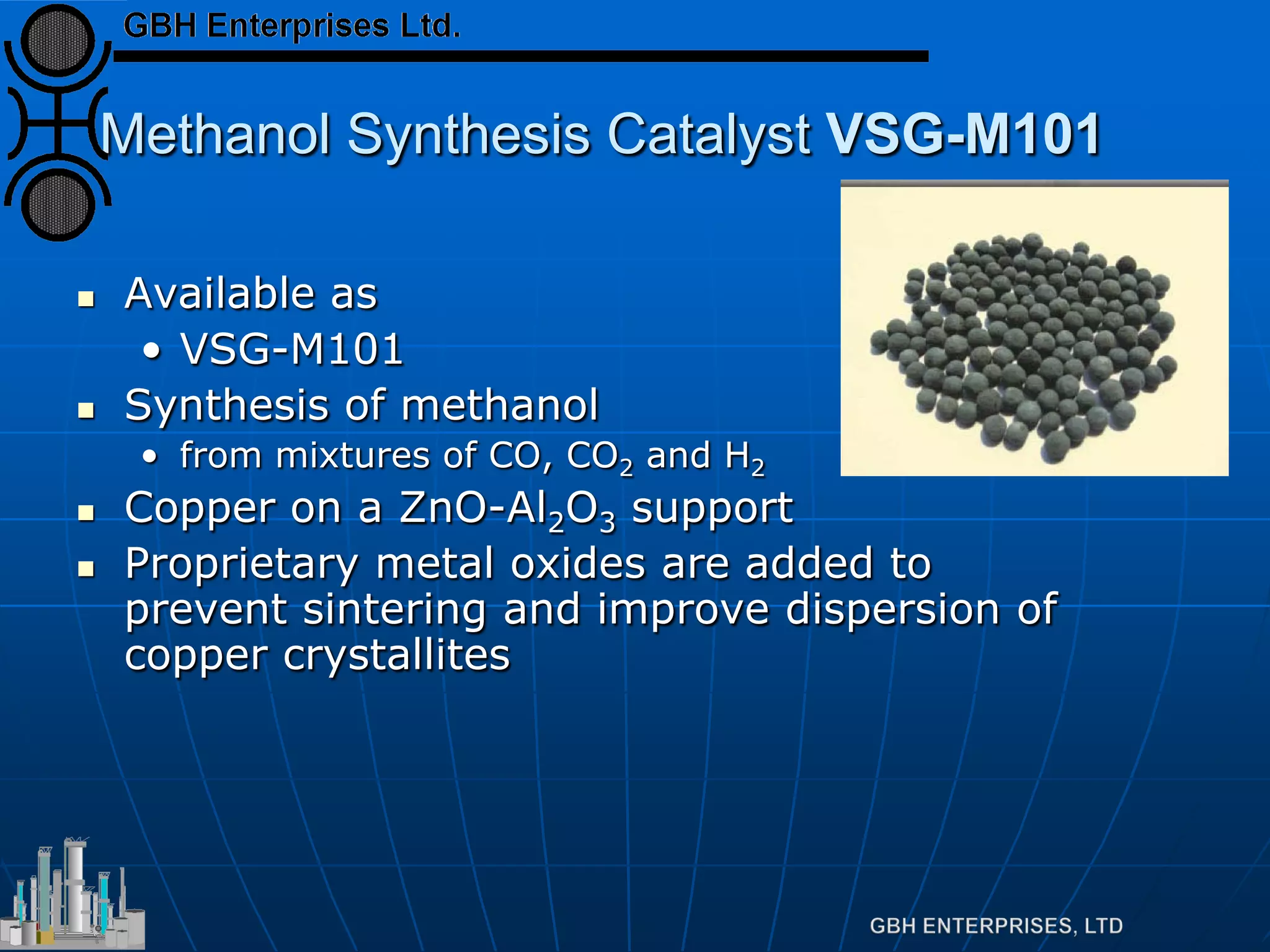
Methanol Synthesis Catalyst VSG-M101
 Available as
• VSG-M101
 Synthesis of methanol
• from mixtures of CO, CO2 and H2
 Copper on a ZnO-Al2O3 support
 Proprietary metal oxides are added to
prevent sintering and improve dispersion of
copper crystallites
Methanol Synthesis Catalyst
History
 Over 30 years manufacturing
experience
 45,000+ m³ of methanol synthesis
catalyst made
 4,000 m³ of VSG-M101series
catalyst currently installed in PRC
Methanol Synthesis Catalyst
Properties
 Effect Property
 Activity - Copper surface area
 Life - Microstructure
 Strength - Macrostructure
 Selectivity - Formulation
Methanol Synthesis Catalyst
Properties
 Typical composition for VSG-M101
• CuO 64 wt%
• Al2O3 10 wt%
• ZnO 24 wt%
Methanol Synthesis Catalyst
Properties
 Spherical Pellet
• Diameter 5 mm
• Height 4 - 5 mm
 Bulk density 1,400 - 1,600 kg/m³
 Radial crush strength >205N/m
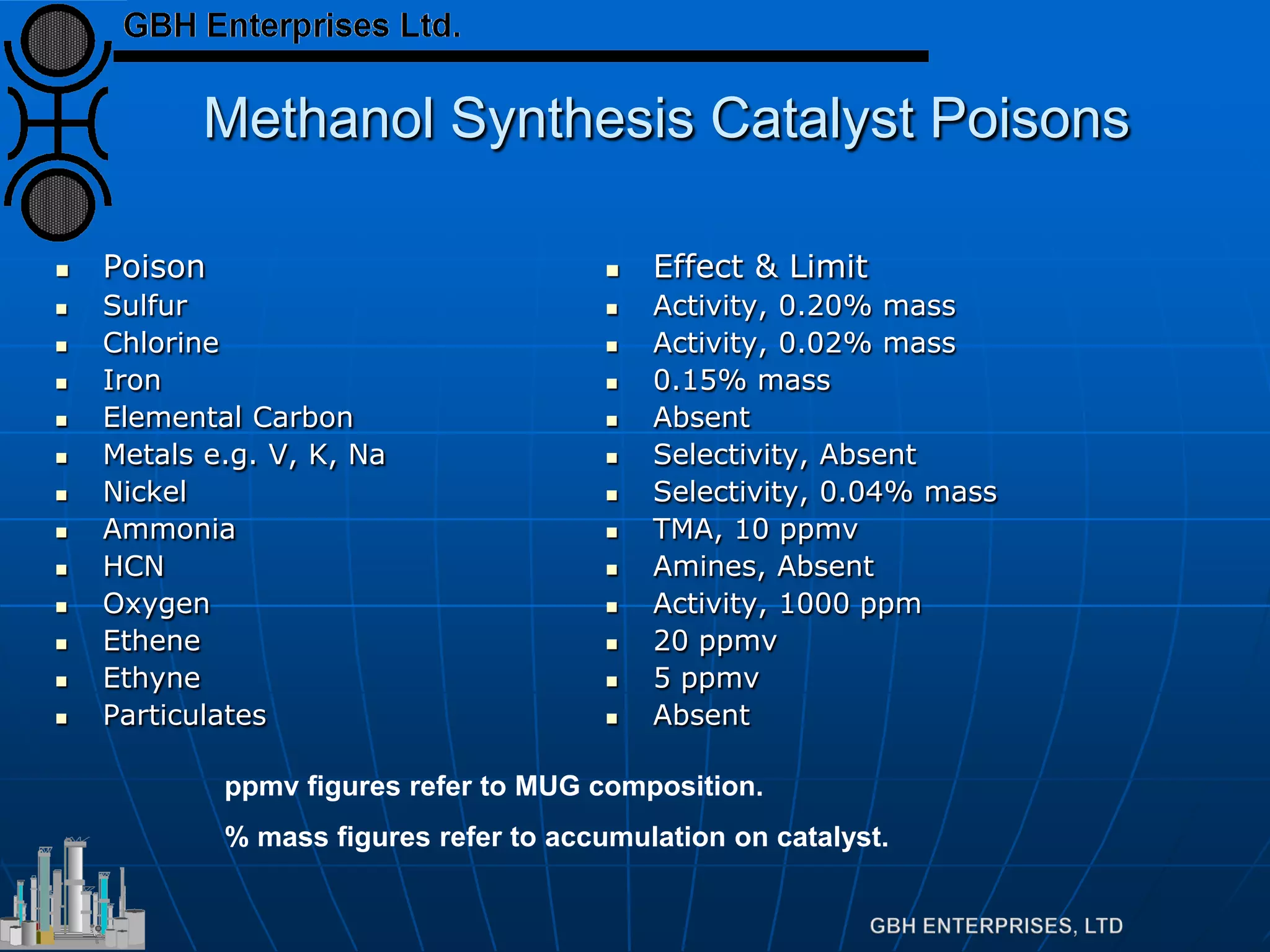
Methanol Synthesis Catalyst Poisons
 Poison
 Sulfur
 Chlorine
 Iron
 Elemental Carbon
 Metals e.g. V, K, Na
 Nickel
 Ammonia
 HCN
 Oxygen
 Ethene
 Ethyne
 Particulates
 Effect & Limit
 Activity, 0.20% mass
 Activity, 0.02% mass
 0.15% mass
 Absent
 Selectivity, Absent
 Selectivity, 0.04% mass
 TMA, 10 ppmv
 Amines, Absent
 Activity, 1000 ppm
 20 ppmv
 5 ppmv
 Absent
ppmv figures refer to MUG composition.
% mass figures refer to accumulation on catalyst.
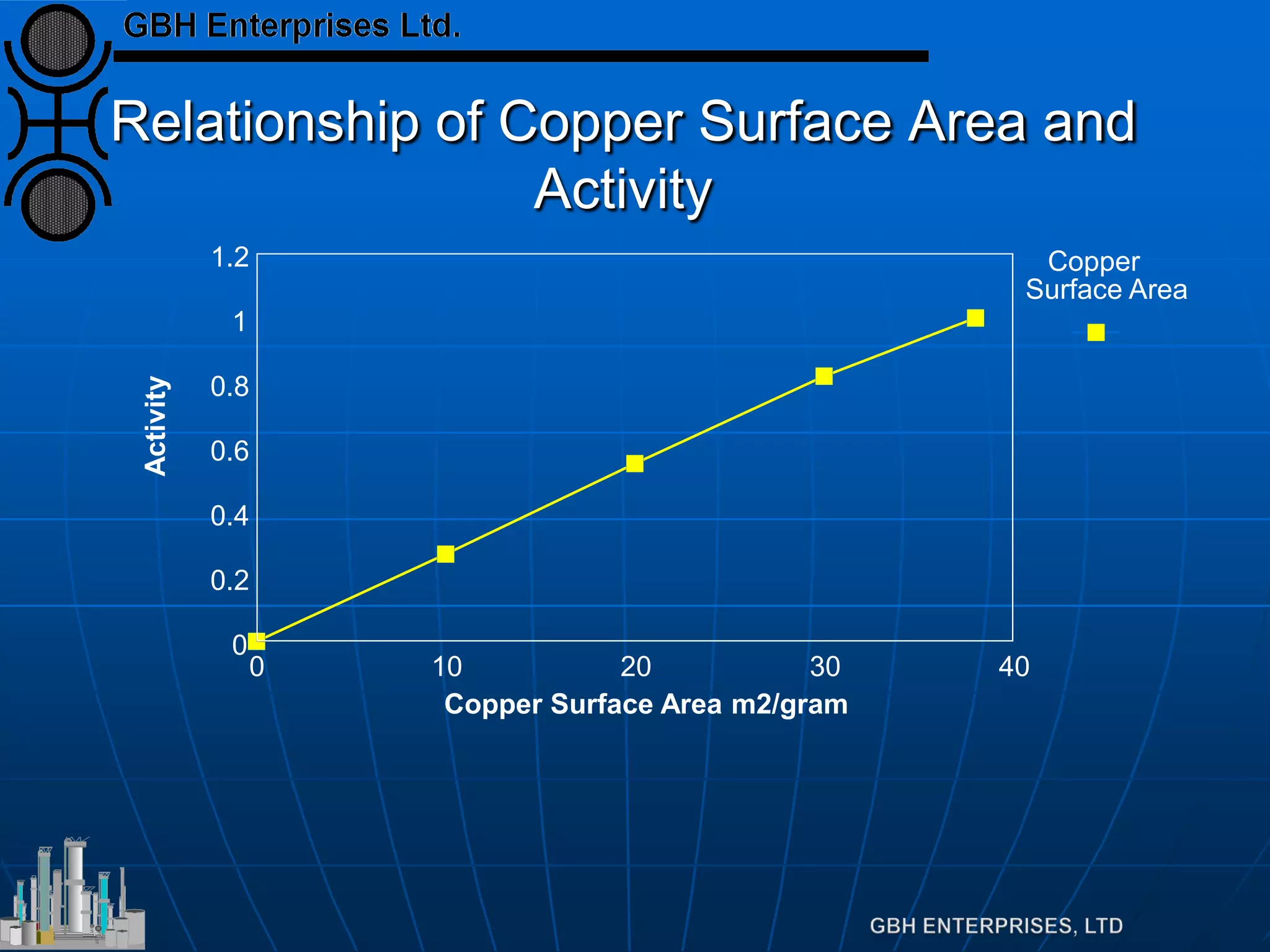
Relationship of Copper Surface Area and
Activity
0 10 20 30 40
0
0.2
0.4
0.6
0.8
1
1.2
Copper Surface Area m2/gram
Activity
Copper
Surface Area
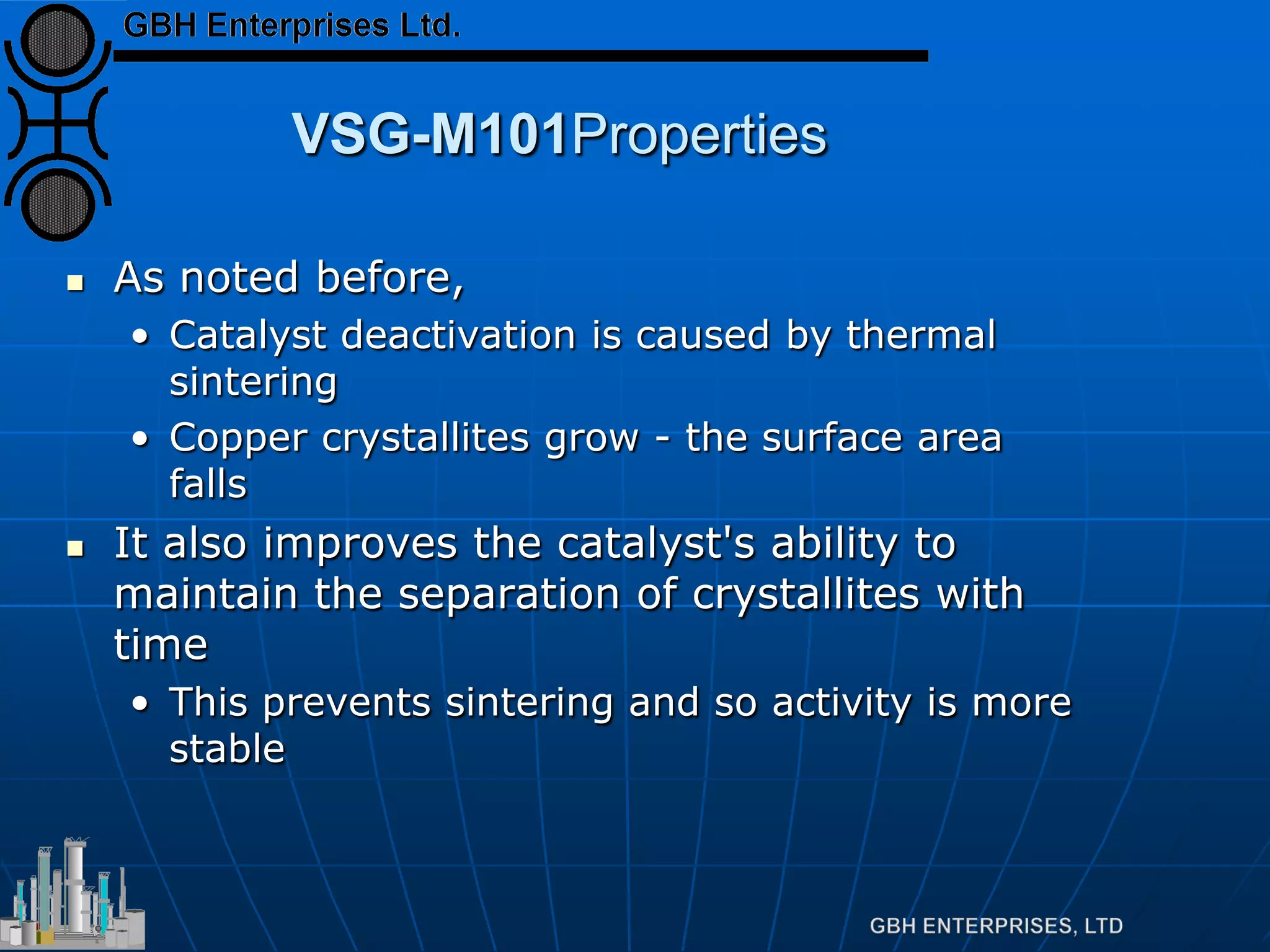
VSG-M101Properties
 As noted before,
• Catalyst deactivation is caused by thermal
sintering
• Copper crystallites grow - the surface area
falls
 It also improves the catalyst's ability to
maintain the separation of crystallites with
time
• This prevents sintering and so activity is more
stable
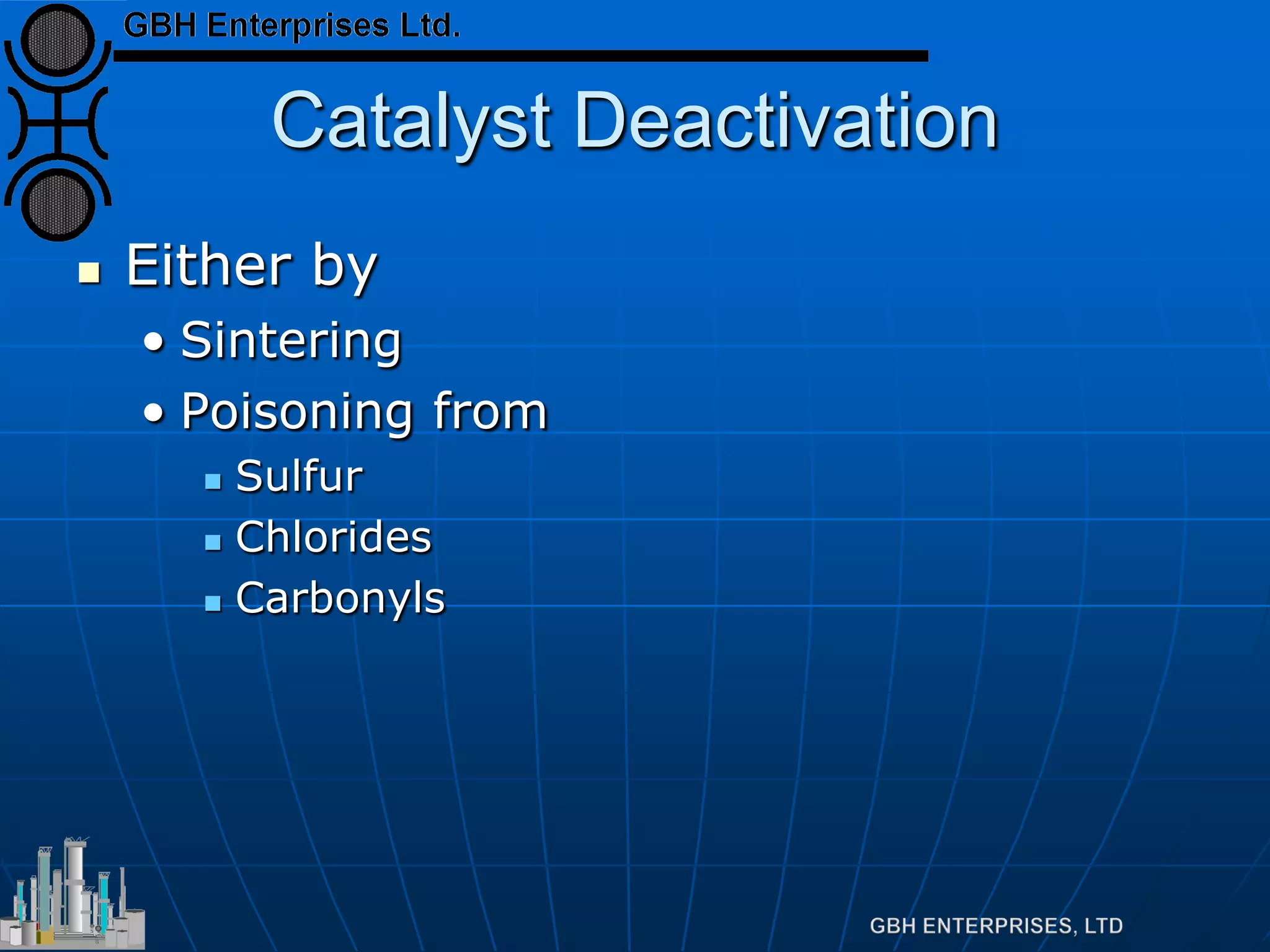
Catalyst Deactivation
 Either by
• Sintering
• Poisoning from
 Sulfur
 Chlorides
 Carbonyls
Thermal Sintering
 Historically always believed to be due to
thermal sintering
 But also reactant and carbonyl poisoning
 Thermal sintering of copper catalysts is
unavoidable
 Rate is critically dependent on temperature
• Therefore the hotter the catalyst the faster the rate
of deactivation
• Operation at low temperatures reduces activity loss
due to sintering
 Rate of sintering slows as the catalyst ages
What Causes Thermal Sintering
?
 Hence activity rules reflected this by
defining activities by temperature bands
 Also defined activities by converter type
• This does include a temperature effect
• Also effect of gas mal distribution
• For example cold cores in Quench
Lozenge converters
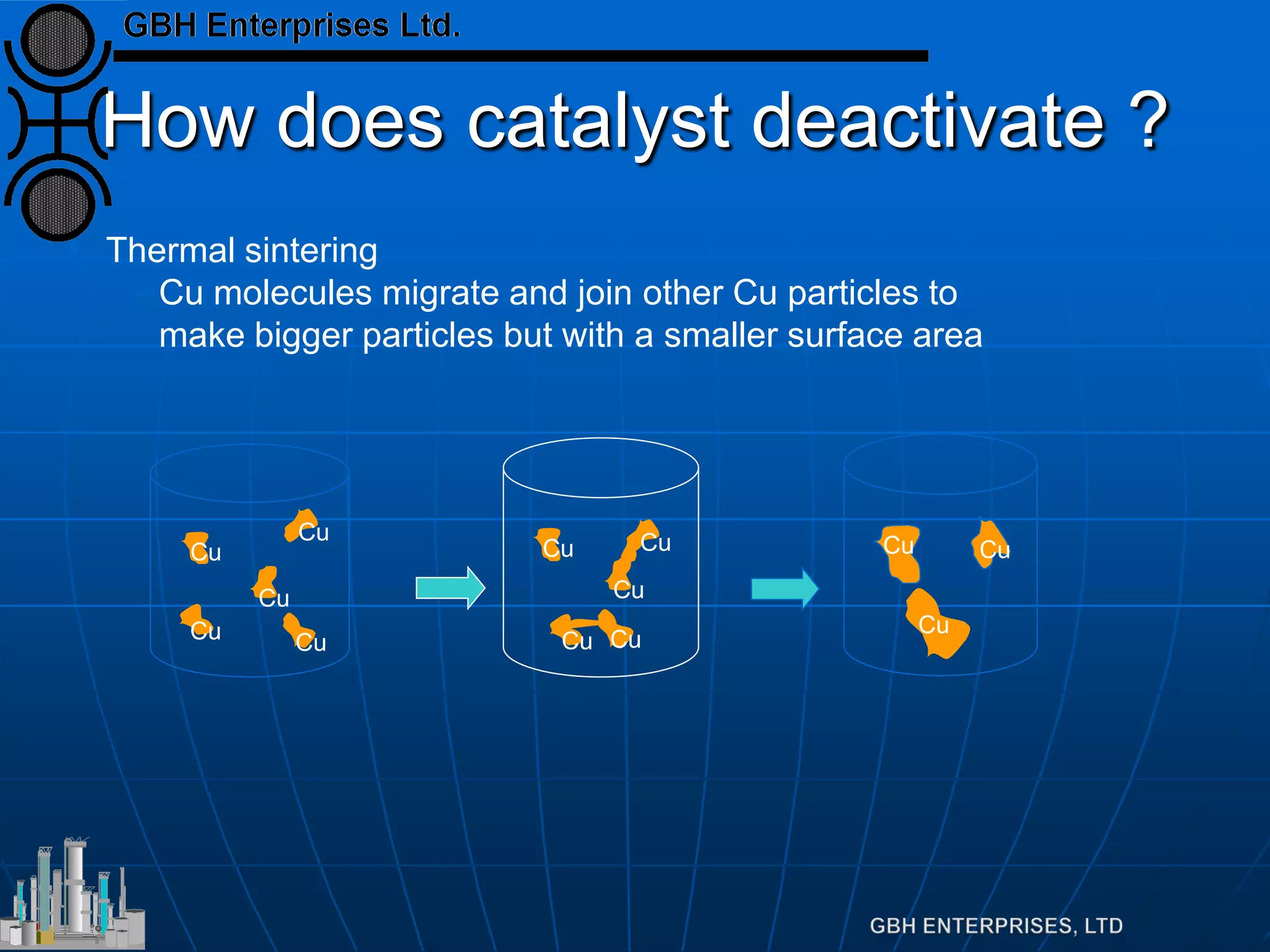
How does catalyst deactivate ?
CuCu
Cu
Cu
Cu
CuCu
Cu
Cu
Cu
Cu
Cu Cu
• Thermal sintering
–Cu molecules migrate and join other Cu particles to
make bigger particles but with a smaller surface area
Sulfur Poisoning
 Sulfur is a powerful poison for Cu/Zn catalysts
 The ZnO component provides a sink for sulfur
by formation of ZnS
 An effective catalyst requires an intimate
mixture of Cu and ZnO and a high free ZnO
surface area
Chloride Poisoning
 Chloride reacts with copper to form CuCl
(mp = 430oC)
 CuCl provides a mechanism for loss of
activity by sintering
 Catalyst requires well dispersed and
stabilized copper to minimize the effects
of chloride poisoning
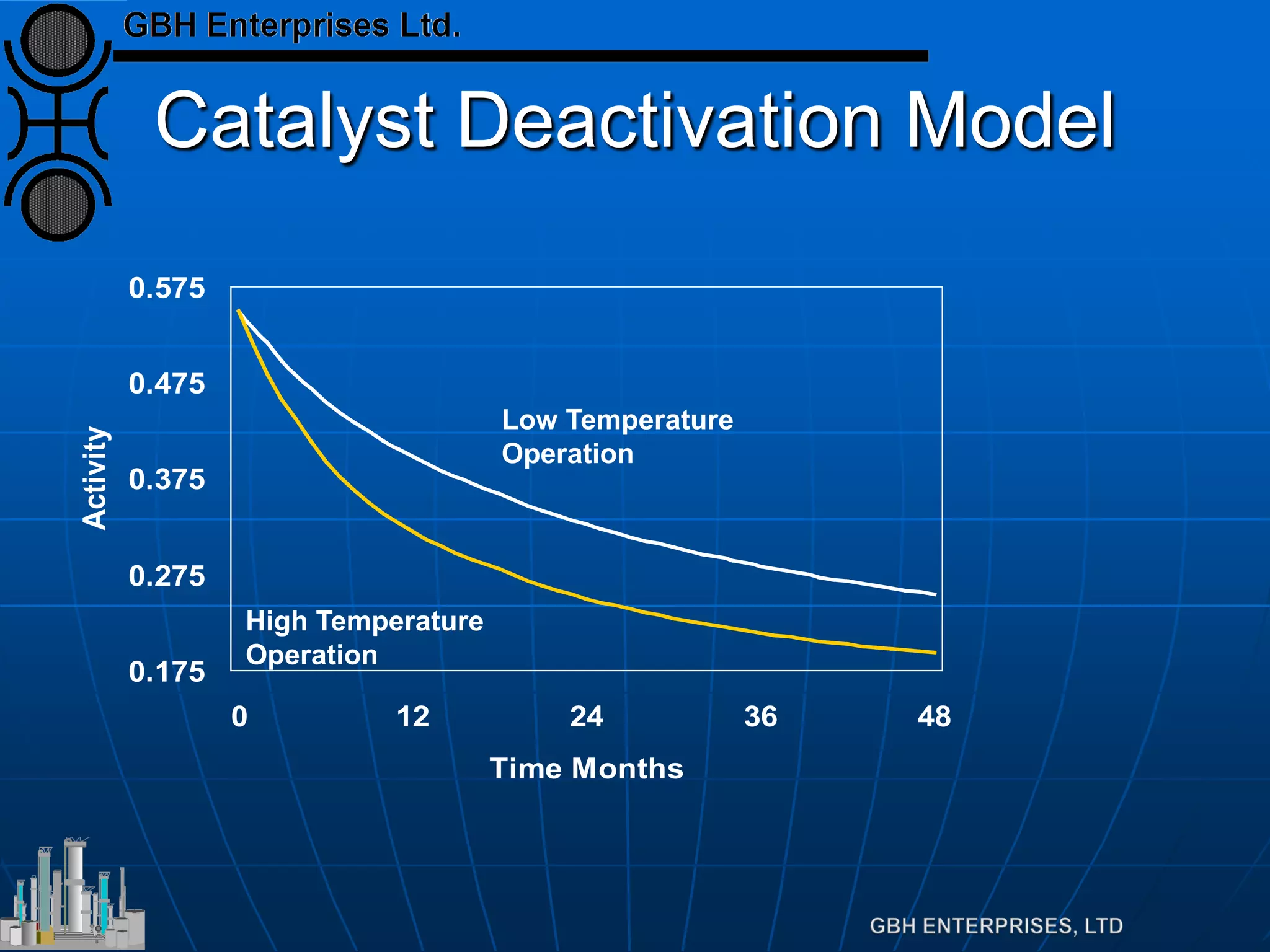
Catalyst Deactivation Model
0.175
0.275
0.375
0.475
0.575
0 12 24 36 48
Time Months
Activity
High Temperature
Operation
Low Temperature
Operation
What Causes Deactivation ?
 Now looking at the effect of Iron and
Nickel Carbonyls
 Seen some high levels 5,000 ppm on
discharged catalyst samples
 Looking at the most effective guard
beds
 Could be worth 10 % extra on activity
 Consider the above to be confidential
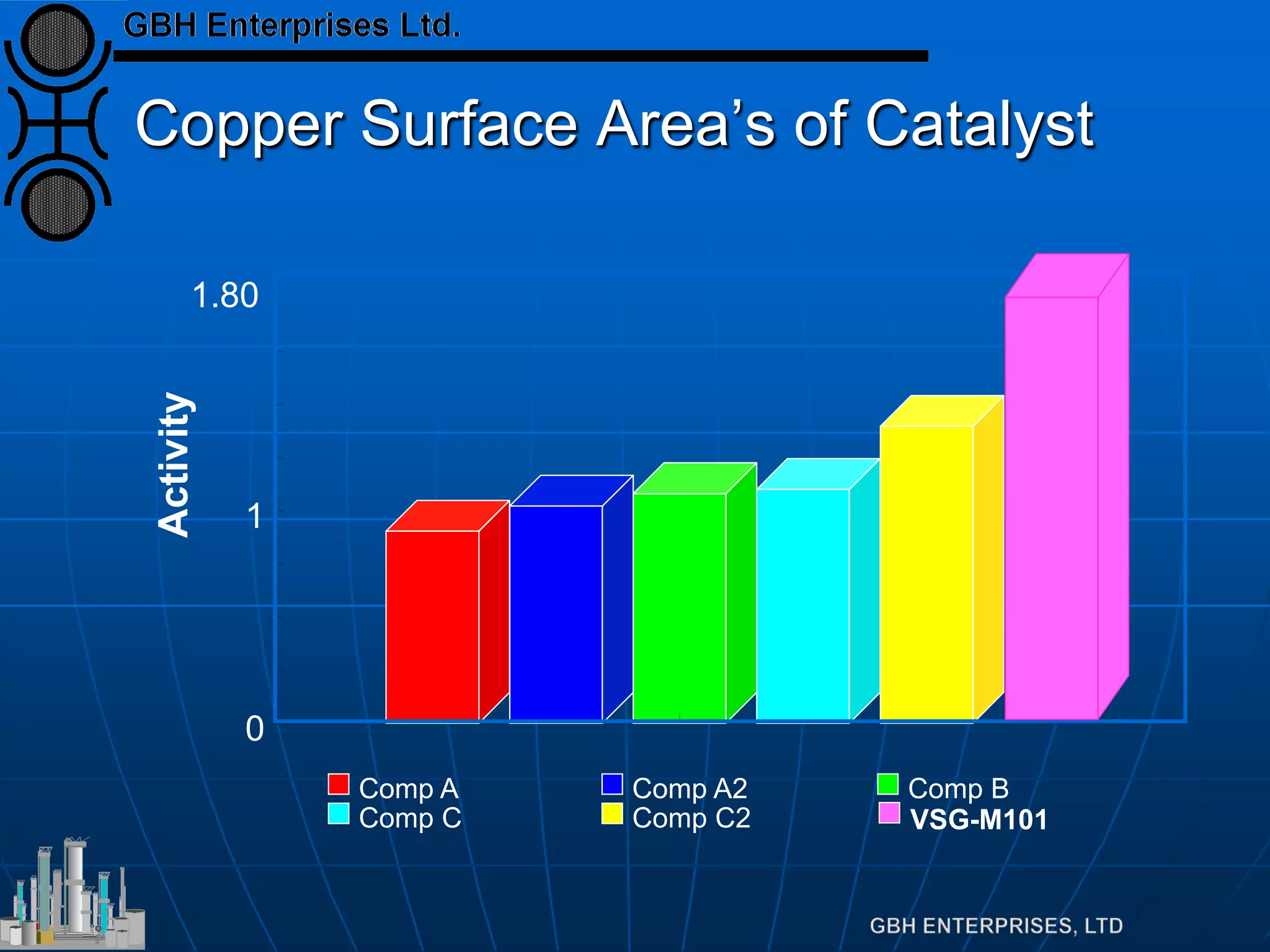
Copper Surface Area’s of Catalyst
0
1
Activity
Comp A Comp A2 Comp B
Comp C Comp C2 VSG-M101
1.80
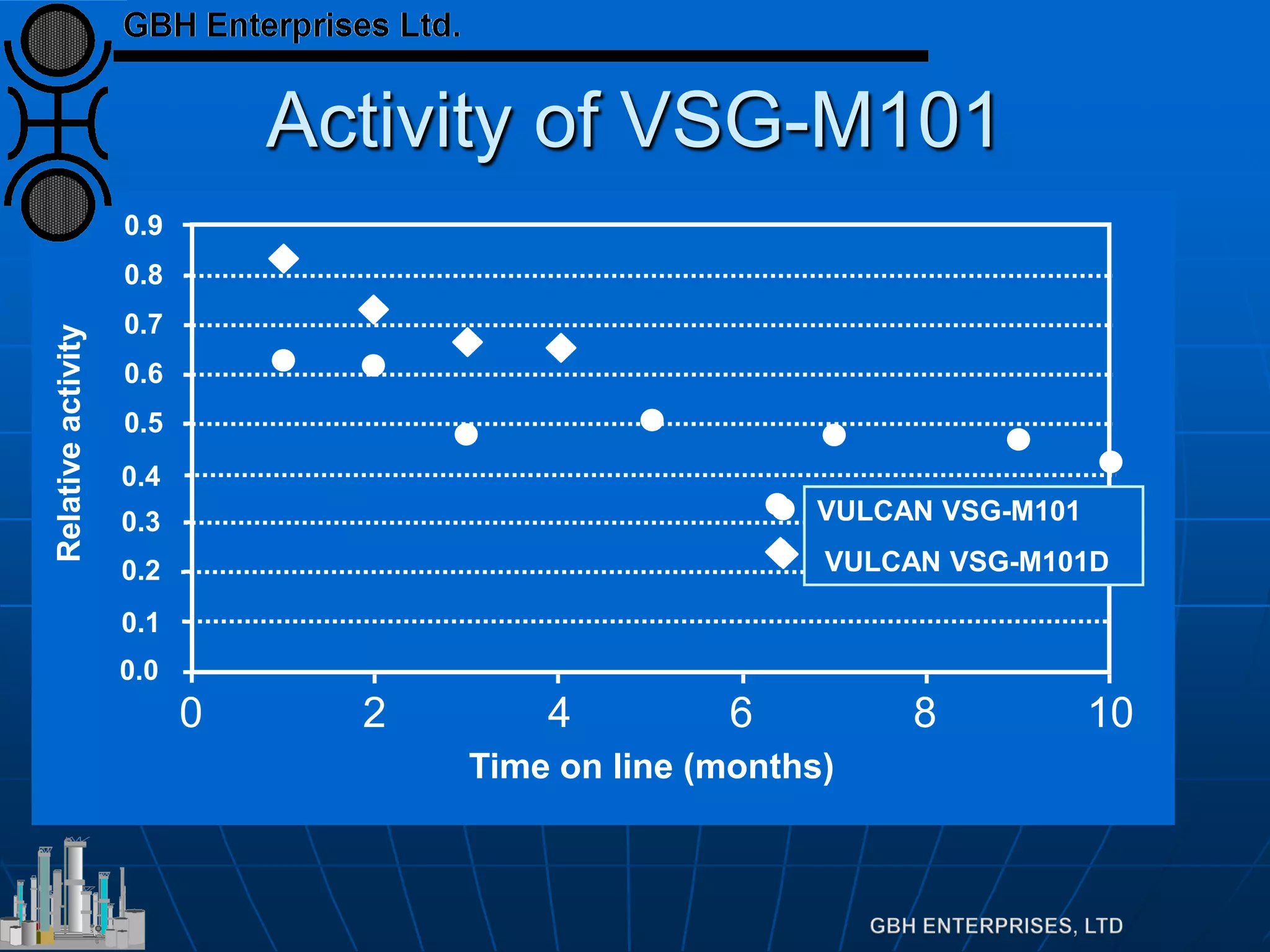
Activity of VSG-M101
Time on line (months)
0 2 4 6 8 10
0.0
0.1
0.2
0.3
0.4
Relativeactivity
0.5
VULCAN VSG-M101
VULCAN VSG-M101D
0.6
0.7
0.8
0.9
Converter Types
 Many different converter types
• Tube Cooled
• Quench Lozenge; ARC and CMD
• Steam raising
 Aim is the same
• Keep process gas cool
• Contain the catalyst
• Maximize reaction rate
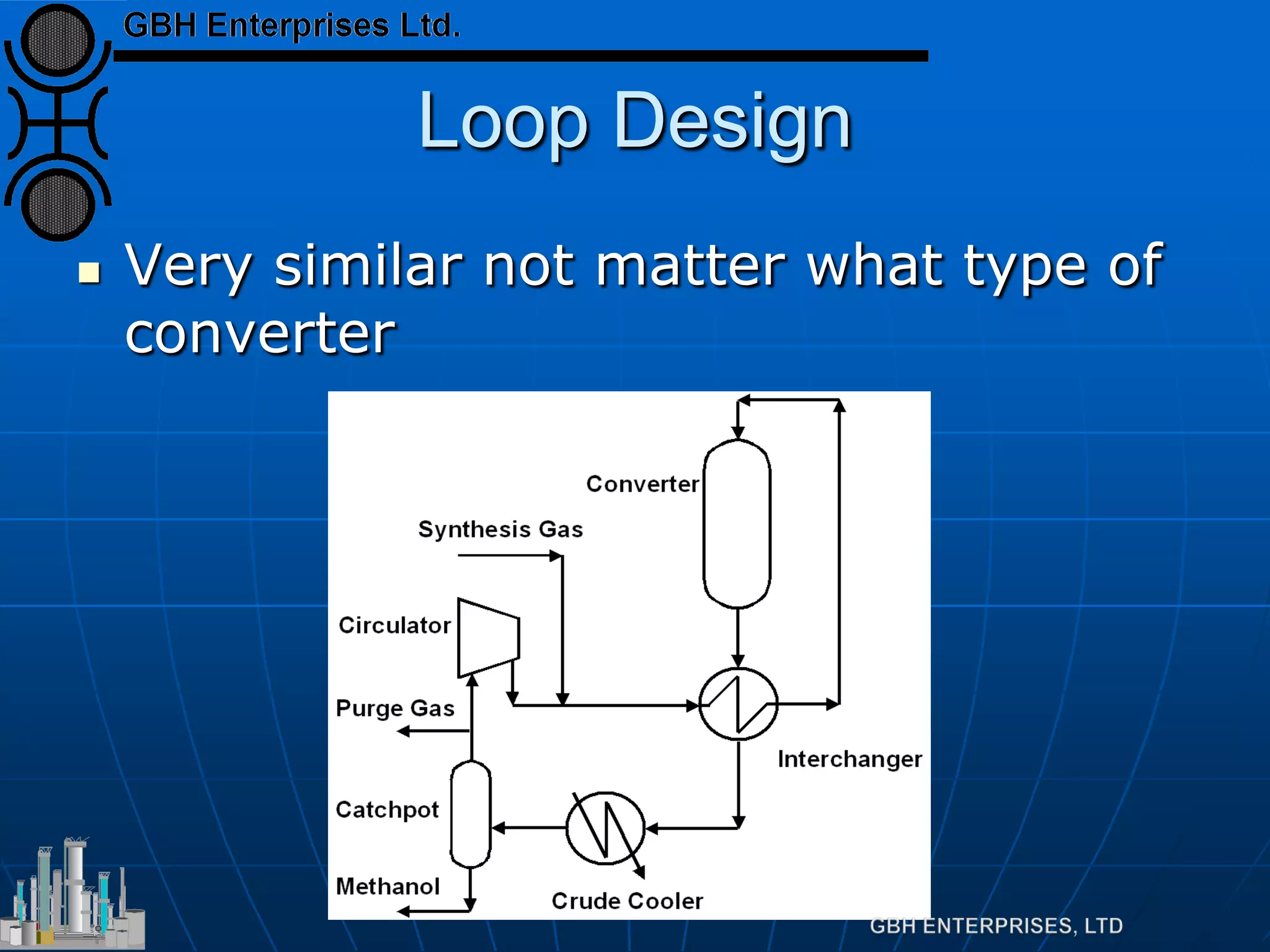
Loop Design
 Very similar not matter what type of
converter
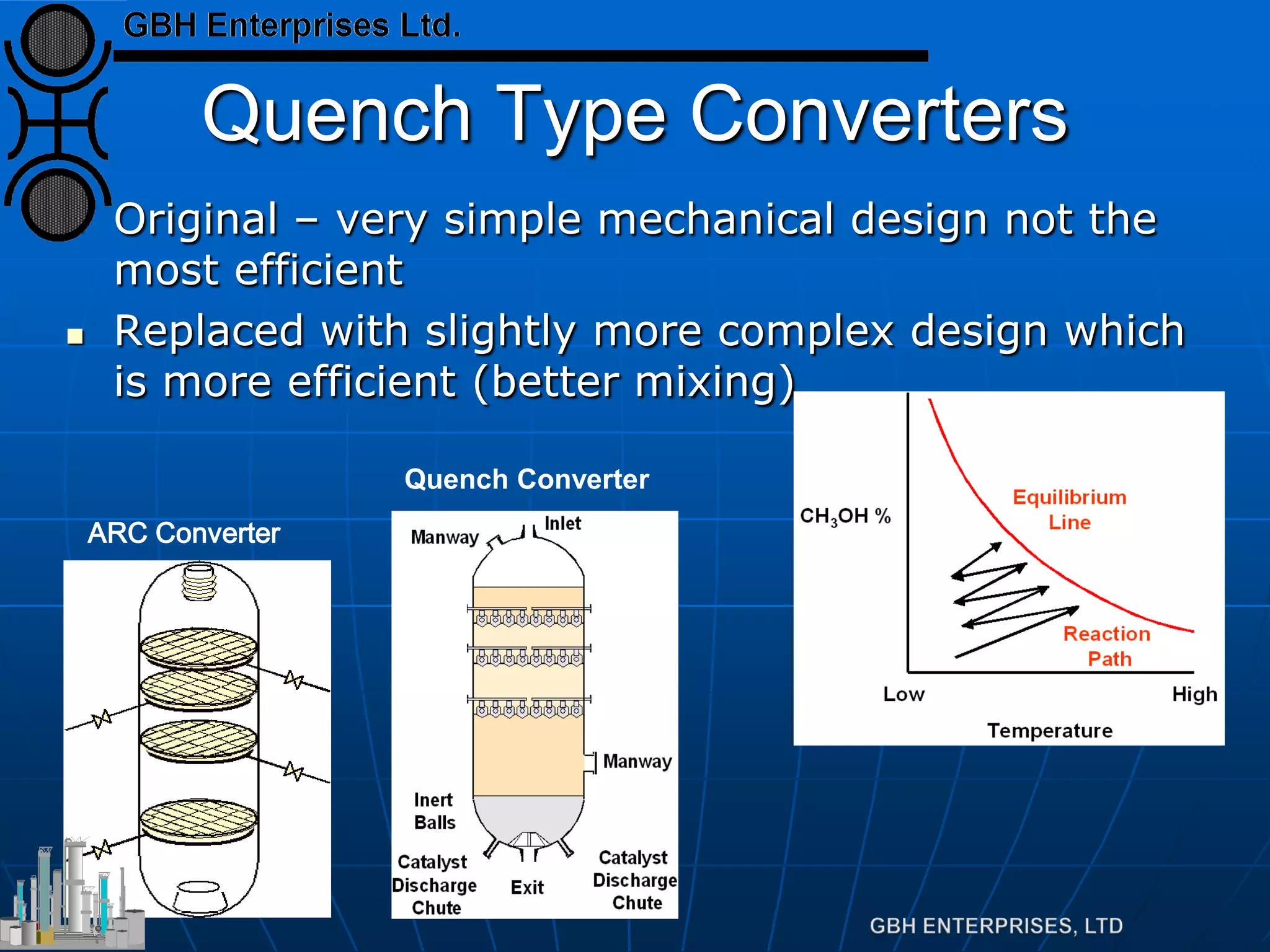
Quench Type Converters
 Original – very simple mechanical design not the
most efficient
 Replaced with slightly more complex design which
is more efficient (better mixing)
ARC Converter
Quench Converter
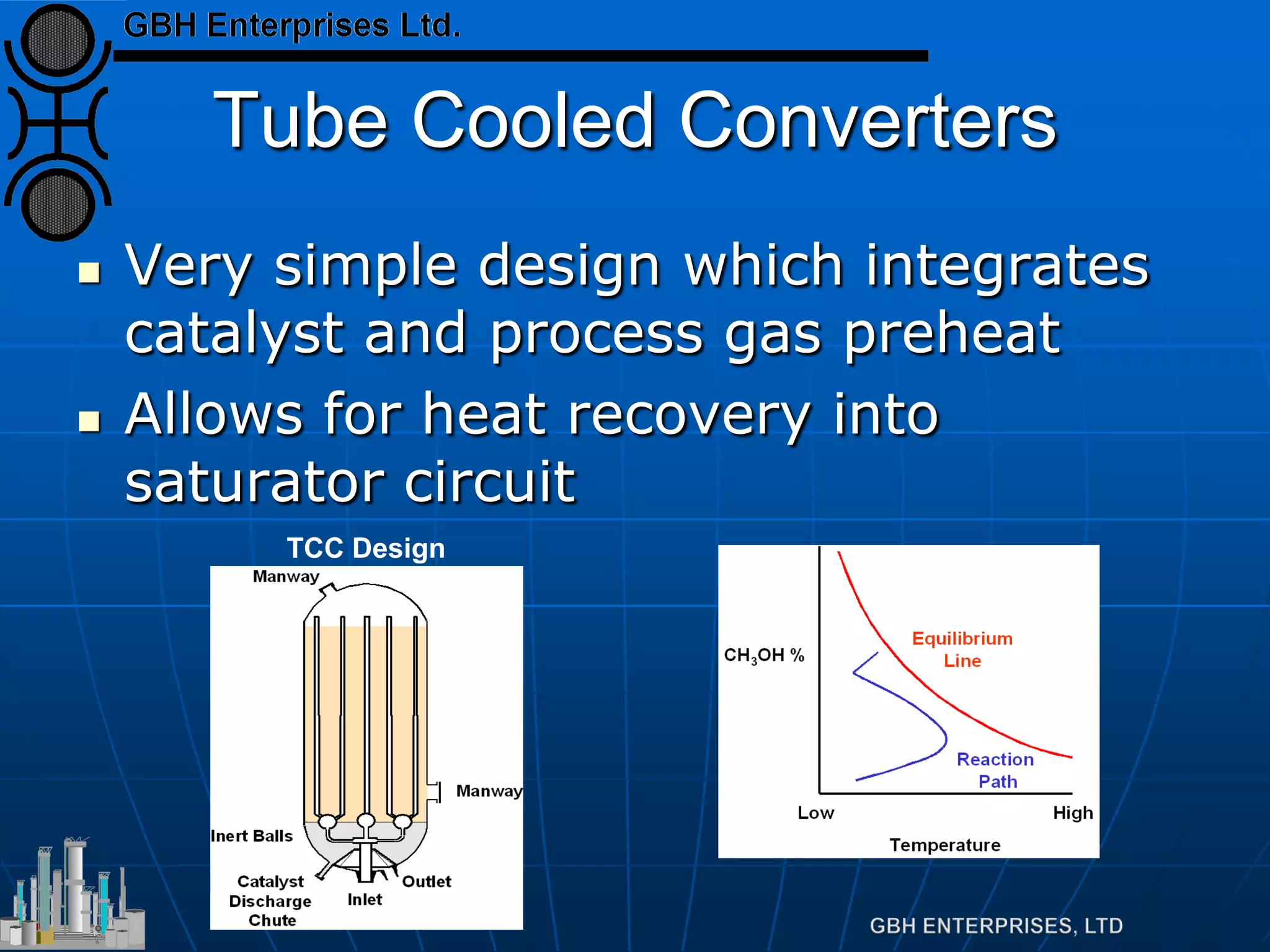
Tube Cooled Converters
 Very simple design which integrates
catalyst and process gas preheat
 Allows for heat recovery into
saturator circuit
TCC Design
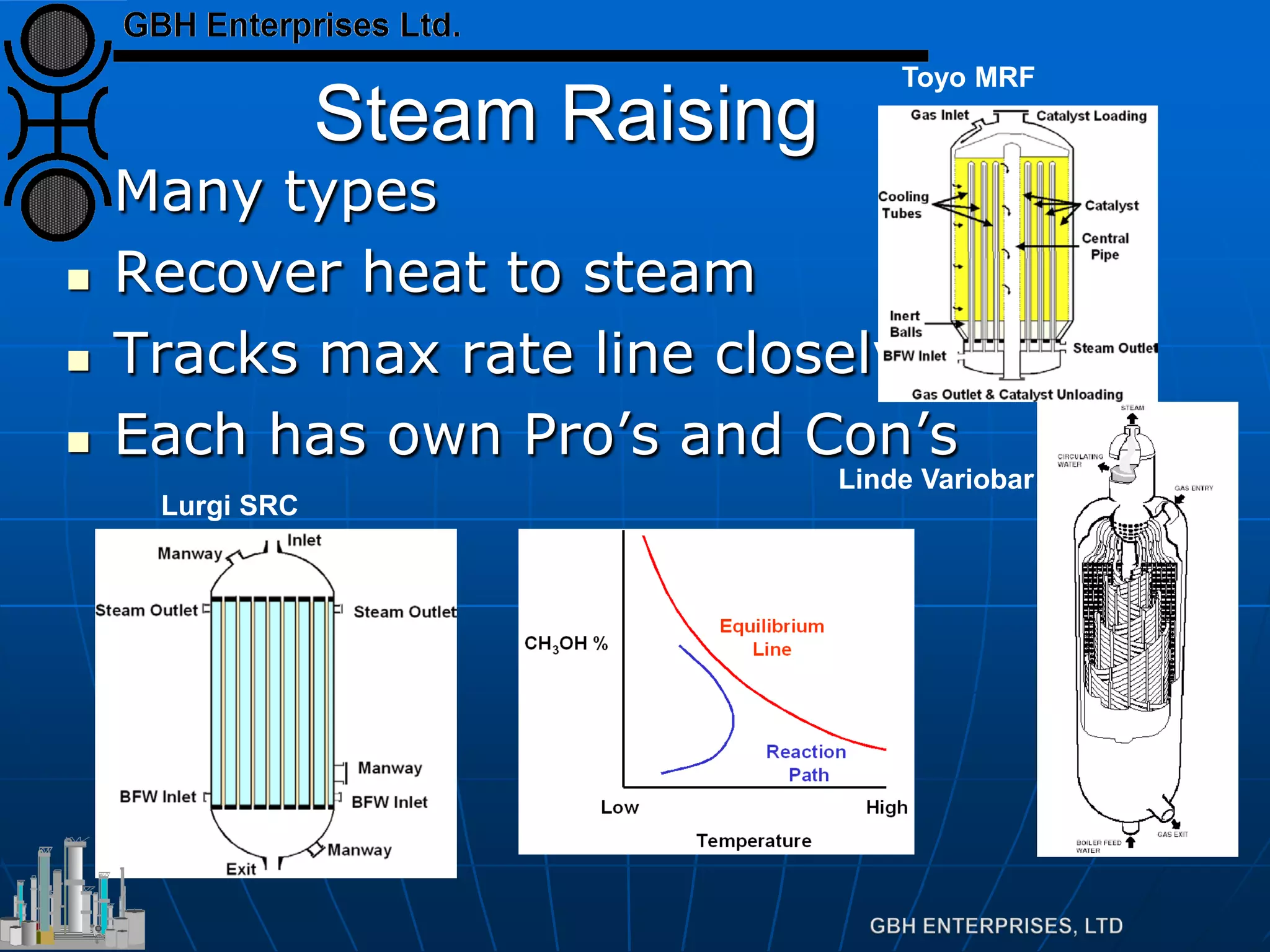
Steam Raising
 Many types
 Recover heat to steam
 Tracks max rate line closely
 Each has own Pro’s and Con’s
Linde Variobar
Toyo MRF
Lurgi SRC
Process Information Disclaimer
Information contained in this publication or as otherwise
supplied to Users is believed to be accurate and correct
at time of going to press, and is given in good faith, but it
is for the User to satisfy itself of the suitability of the
Product for its own particular purpose. GBHE gives no
warranty as to the fitness of the Product for any
particular purpose and any implied warranty or condition
(statutory or otherwise) is excluded except to the extent
that exclusion is prevented by law. GBHE accepts no
liability for loss or damage resulting from reliance on this
information. Freedom under Patent, Copyright and
Designs cannot be assumed.
Methanol Synthesis - Theory and Operation

Methanol Synthesis - Theory and Operation

  • 1.
    Theory and Operationof Methanol Synthesis Gerard B. Hawkins Managing Director, CEO
  • 2.
  • 3.
  • 4.
  • 5.
    Methanol Synthesis Reactions Purpose of synthesis loop is to convert H2, CO and CO2 to methanol CO + 2H2  CH3OH ∆H = - 90.64 kJ/kmol CO + H2O  CO2 + H2 ∆H = - 41.17 kJ/kmol  Both reactions are revisible and exothermic  Combine to give CO2 + 3H2  CH3OH + H2O ∆H = - 49.74 kJ/kmol
  • 6.
    Methanol Synthesis Reactions Methanol is produced from CO2  Proven by use of radioactive C14  CO is shifted to CO2 and then to methanol  Rate of reaction is given by 5.0 2 2]./[3 ][ ][ .exp. OHP COP Activity dt OHdCH TRE∆− ∝
  • 7.
    Equilibrium  Equilibrium definedby  Which can be rearranged to  Which is far more useful [ ] [ ] [ ] [ ]3 22 23 . . HPCOP OHPOHCHP Kp = [ ] [ ] [ ]3 22 2 3 . ][. HPCOP OHPKp OHCHP =
  • 8.
  • 9.
  • 10.
  • 11.
  • 12.
    Effect of OperatingParameters on Equilibrium and Kinetics  For good conversion need following conditions Parameter Equilibrium Kinetics Temperature Low High Pressure High High Catalyst Activity High High So there is a conflict for temperature
  • 13.
    Effect of OperatingTemperature on Equilibrium and Kinetics
  • 14.
    Concept of MaximumRate Line  If reaction follows the max rate line then minimum catalyst volume for maximum production
  • 15.
    Methanol Synthesis CatalystVSG-M101  Available as • VSG-M101  Synthesis of methanol • from mixtures of CO, CO2 and H2  Copper on a ZnO-Al2O3 support  Proprietary metal oxides are added to prevent sintering and improve dispersion of copper crystallites
  • 16.
    Methanol Synthesis Catalyst History Over 30 years manufacturing experience  45,000+ m³ of methanol synthesis catalyst made  4,000 m³ of VSG-M101series catalyst currently installed in PRC
  • 17.
    Methanol Synthesis Catalyst Properties Effect Property  Activity - Copper surface area  Life - Microstructure  Strength - Macrostructure  Selectivity - Formulation
  • 18.
    Methanol Synthesis Catalyst Properties Typical composition for VSG-M101 • CuO 64 wt% • Al2O3 10 wt% • ZnO 24 wt%
  • 19.
    Methanol Synthesis Catalyst Properties Spherical Pellet • Diameter 5 mm • Height 4 - 5 mm  Bulk density 1,400 - 1,600 kg/m³  Radial crush strength >205N/m
  • 20.
    Methanol Synthesis CatalystPoisons  Poison  Sulfur  Chlorine  Iron  Elemental Carbon  Metals e.g. V, K, Na  Nickel  Ammonia  HCN  Oxygen  Ethene  Ethyne  Particulates  Effect & Limit  Activity, 0.20% mass  Activity, 0.02% mass  0.15% mass  Absent  Selectivity, Absent  Selectivity, 0.04% mass  TMA, 10 ppmv  Amines, Absent  Activity, 1000 ppm  20 ppmv  5 ppmv  Absent ppmv figures refer to MUG composition. % mass figures refer to accumulation on catalyst.
  • 21.
    Relationship of CopperSurface Area and Activity 0 10 20 30 40 0 0.2 0.4 0.6 0.8 1 1.2 Copper Surface Area m2/gram Activity Copper Surface Area
  • 22.
    VSG-M101Properties  As notedbefore, • Catalyst deactivation is caused by thermal sintering • Copper crystallites grow - the surface area falls  It also improves the catalyst's ability to maintain the separation of crystallites with time • This prevents sintering and so activity is more stable
  • 23.
    Catalyst Deactivation  Eitherby • Sintering • Poisoning from  Sulfur  Chlorides  Carbonyls
  • 24.
    Thermal Sintering  Historicallyalways believed to be due to thermal sintering  But also reactant and carbonyl poisoning  Thermal sintering of copper catalysts is unavoidable  Rate is critically dependent on temperature • Therefore the hotter the catalyst the faster the rate of deactivation • Operation at low temperatures reduces activity loss due to sintering  Rate of sintering slows as the catalyst ages
  • 25.
    What Causes ThermalSintering ?  Hence activity rules reflected this by defining activities by temperature bands  Also defined activities by converter type • This does include a temperature effect • Also effect of gas mal distribution • For example cold cores in Quench Lozenge converters
  • 26.
    How does catalystdeactivate ? CuCu Cu Cu Cu CuCu Cu Cu Cu Cu Cu Cu • Thermal sintering –Cu molecules migrate and join other Cu particles to make bigger particles but with a smaller surface area
  • 27.
    Sulfur Poisoning  Sulfuris a powerful poison for Cu/Zn catalysts  The ZnO component provides a sink for sulfur by formation of ZnS  An effective catalyst requires an intimate mixture of Cu and ZnO and a high free ZnO surface area
  • 28.
    Chloride Poisoning  Chloridereacts with copper to form CuCl (mp = 430oC)  CuCl provides a mechanism for loss of activity by sintering  Catalyst requires well dispersed and stabilized copper to minimize the effects of chloride poisoning
  • 29.
    Catalyst Deactivation Model 0.175 0.275 0.375 0.475 0.575 012 24 36 48 Time Months Activity High Temperature Operation Low Temperature Operation
  • 30.
    What Causes Deactivation?  Now looking at the effect of Iron and Nickel Carbonyls  Seen some high levels 5,000 ppm on discharged catalyst samples  Looking at the most effective guard beds  Could be worth 10 % extra on activity  Consider the above to be confidential
  • 31.
    Copper Surface Area’sof Catalyst 0 1 Activity Comp A Comp A2 Comp B Comp C Comp C2 VSG-M101 1.80
  • 32.
    Activity of VSG-M101 Timeon line (months) 0 2 4 6 8 10 0.0 0.1 0.2 0.3 0.4 Relativeactivity 0.5 VULCAN VSG-M101 VULCAN VSG-M101D 0.6 0.7 0.8 0.9
  • 33.
    Converter Types  Manydifferent converter types • Tube Cooled • Quench Lozenge; ARC and CMD • Steam raising  Aim is the same • Keep process gas cool • Contain the catalyst • Maximize reaction rate
  • 34.
    Loop Design  Verysimilar not matter what type of converter
  • 35.
    Quench Type Converters Original – very simple mechanical design not the most efficient  Replaced with slightly more complex design which is more efficient (better mixing) ARC Converter Quench Converter
  • 36.
    Tube Cooled Converters Very simple design which integrates catalyst and process gas preheat  Allows for heat recovery into saturator circuit TCC Design
  • 37.
    Steam Raising  Manytypes  Recover heat to steam  Tracks max rate line closely  Each has own Pro’s and Con’s Linde Variobar Toyo MRF Lurgi SRC
  • 38.
    Process Information Disclaimer Informationcontained in this publication or as otherwise supplied to Users is believed to be accurate and correct at time of going to press, and is given in good faith, but it is for the User to satisfy itself of the suitability of the Product for its own particular purpose. GBHE gives no warranty as to the fitness of the Product for any particular purpose and any implied warranty or condition (statutory or otherwise) is excluded except to the extent that exclusion is prevented by law. GBHE accepts no liability for loss or damage resulting from reliance on this information. Freedom under Patent, Copyright and Designs cannot be assumed.