BY- AAYUSHI NANDA 
VIT UNIVERSITY, VELLORE
Oxygen sensor is located on the exhaust line 
; one before catalytic converter (upstream 
/precat sensor) and one after catalytic 
converter( downstream/ postcat sensor). 
Upstream sensor is used for regulating the 
fuel supply. 
While downstream sensor monitors the 
efficiency of the catalytic converter.
High pressure and temperature exhaust gases 
leaving the engine cylinder during the exhaust 
stroke travel through the exhaust manifold 
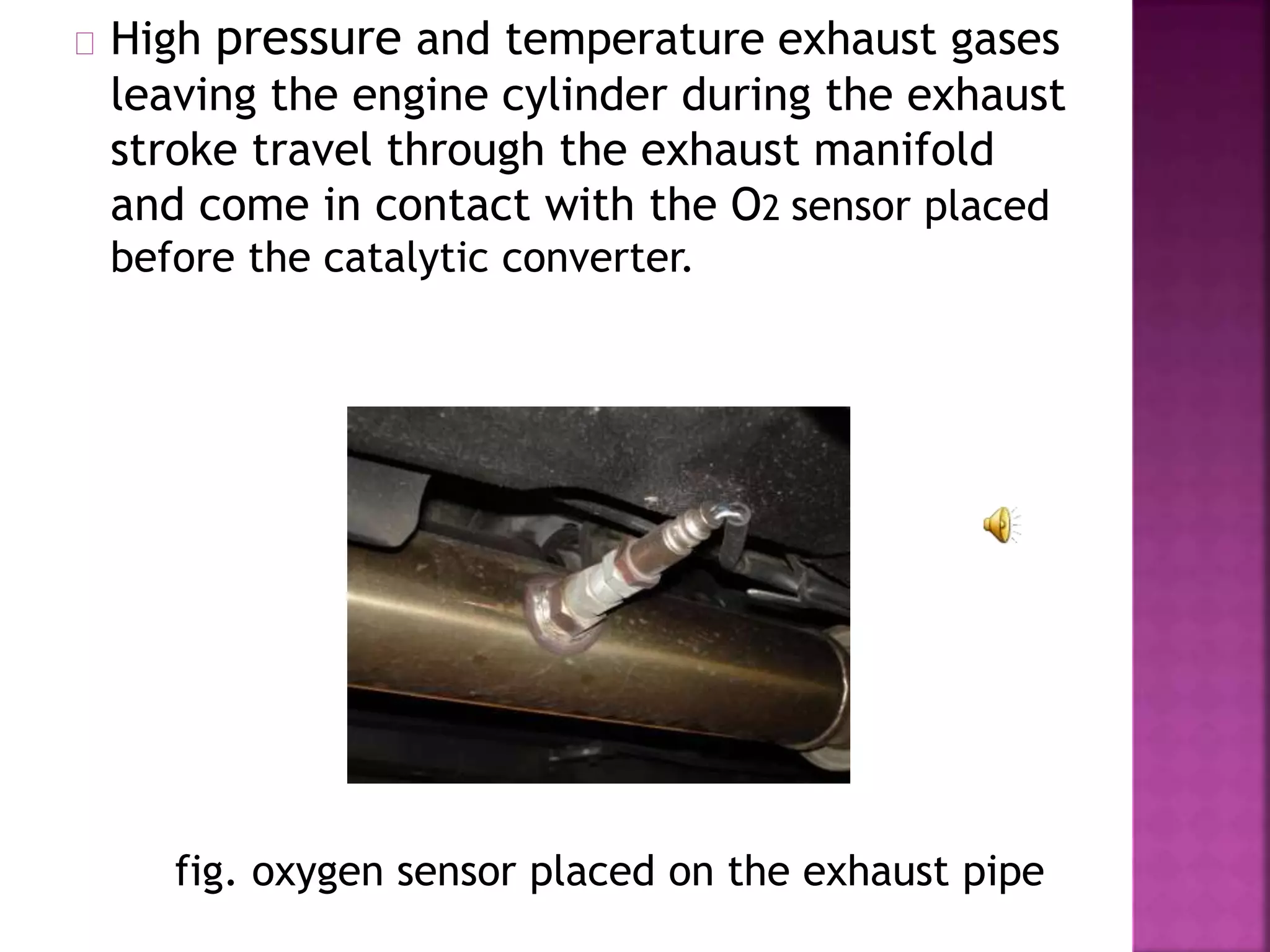
and come in contact with the O2 sensor placed 
before the catalytic converter. 
fig. oxygen sensor placed on the exhaust pipe
The oxygen sensor plays a critical role in 
providing optimum engine performance with 
minimal emissions. 
There are three basic types of oxygen 
sensors. They are the: 
• Zirconia 
•Titania 
• Air Fuel
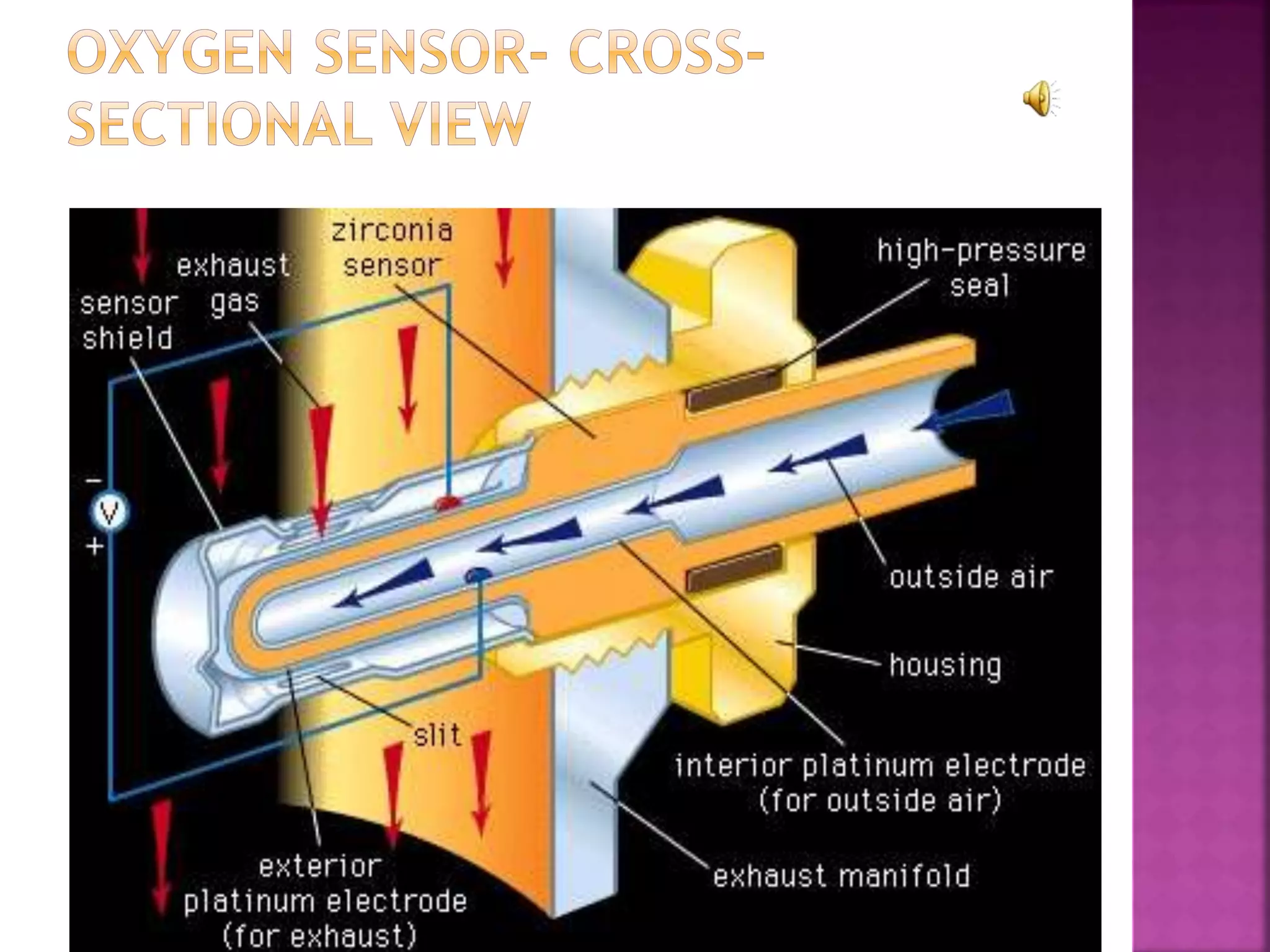
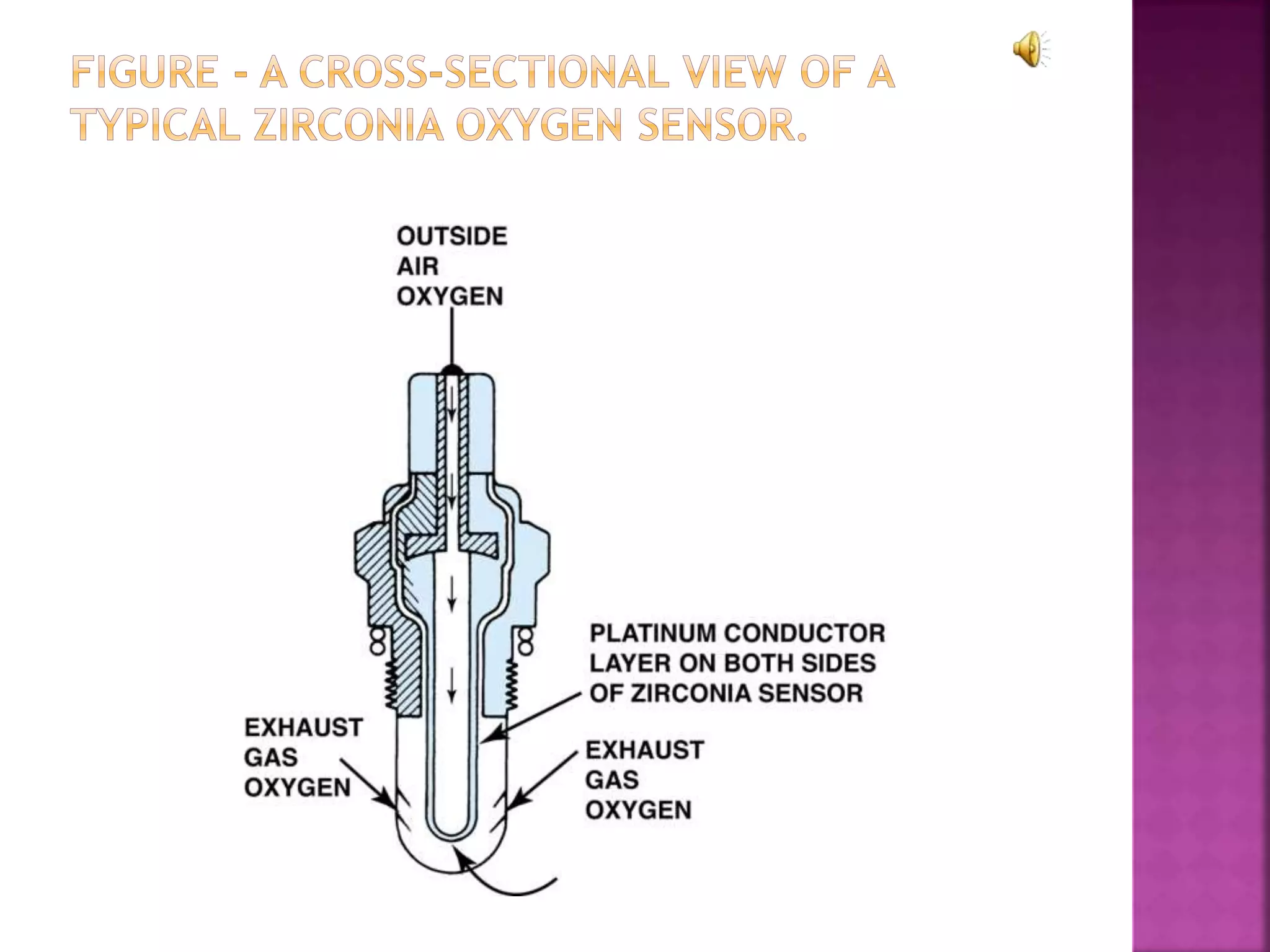
The sensing element at the front of the 
sensor consists of a zirconium dioxide sensing 
element enclosed within a steel shell. 
The sensing element is further connected to 
platinum electrodes and wire leads down the 
line.
Exhaust gas consisting of oxygen molecules 
contacts the sensing element after flowing 
through the slots or holes on the steel shell. 
Outside air is made to flow through the gaps 
between the connecting cables . This air is then 
heated to enable the ions to produce voltage. 
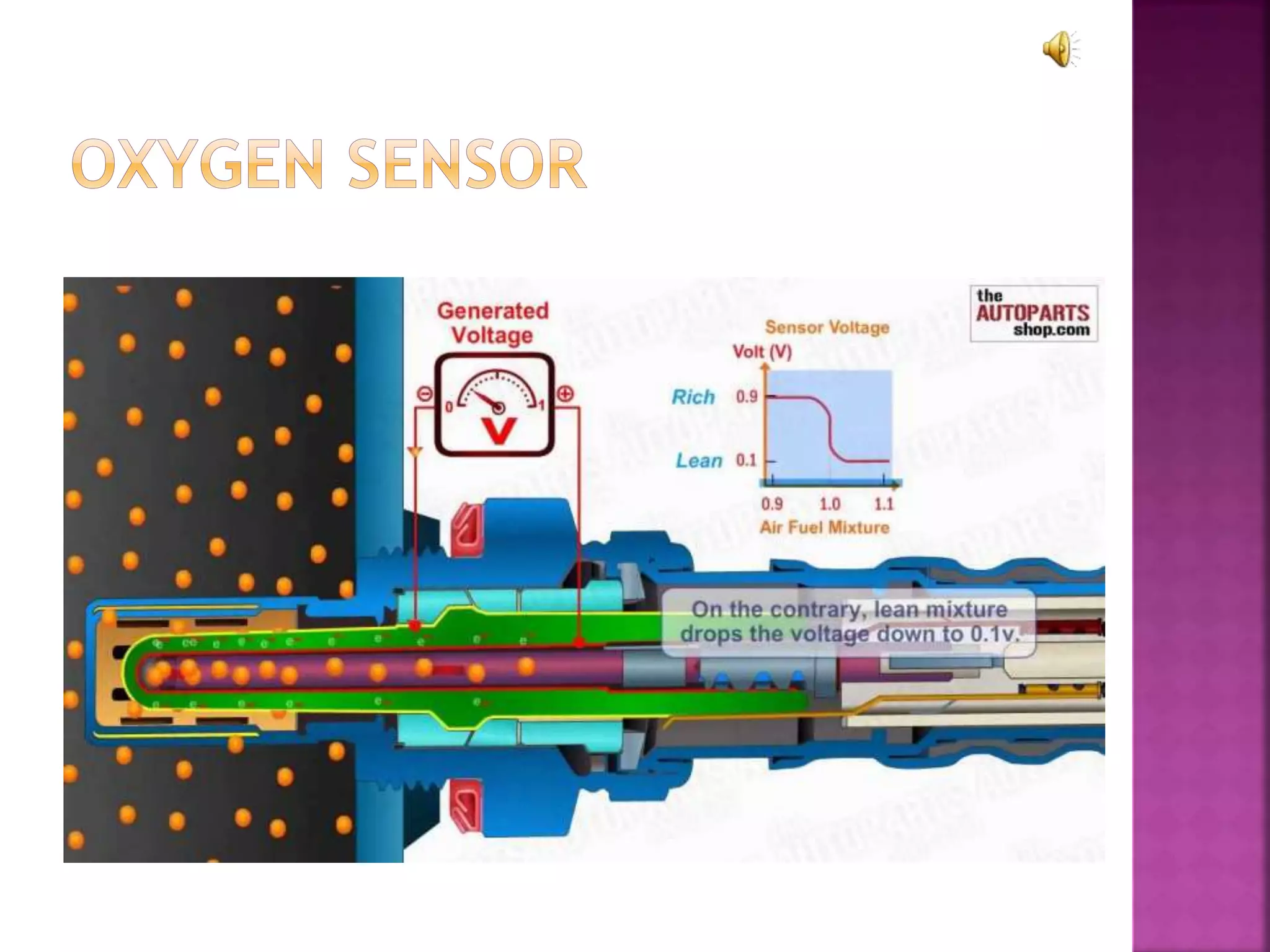
The difference in concentration of the oxygen 
molecules in the exhaust gas and the ambient air 
drives the oxygen ions from higher conc. To 
lower concentration.
Due to the movement of oxygen ions from one 
platinum layer to the other, a potential 
difference is generated. 
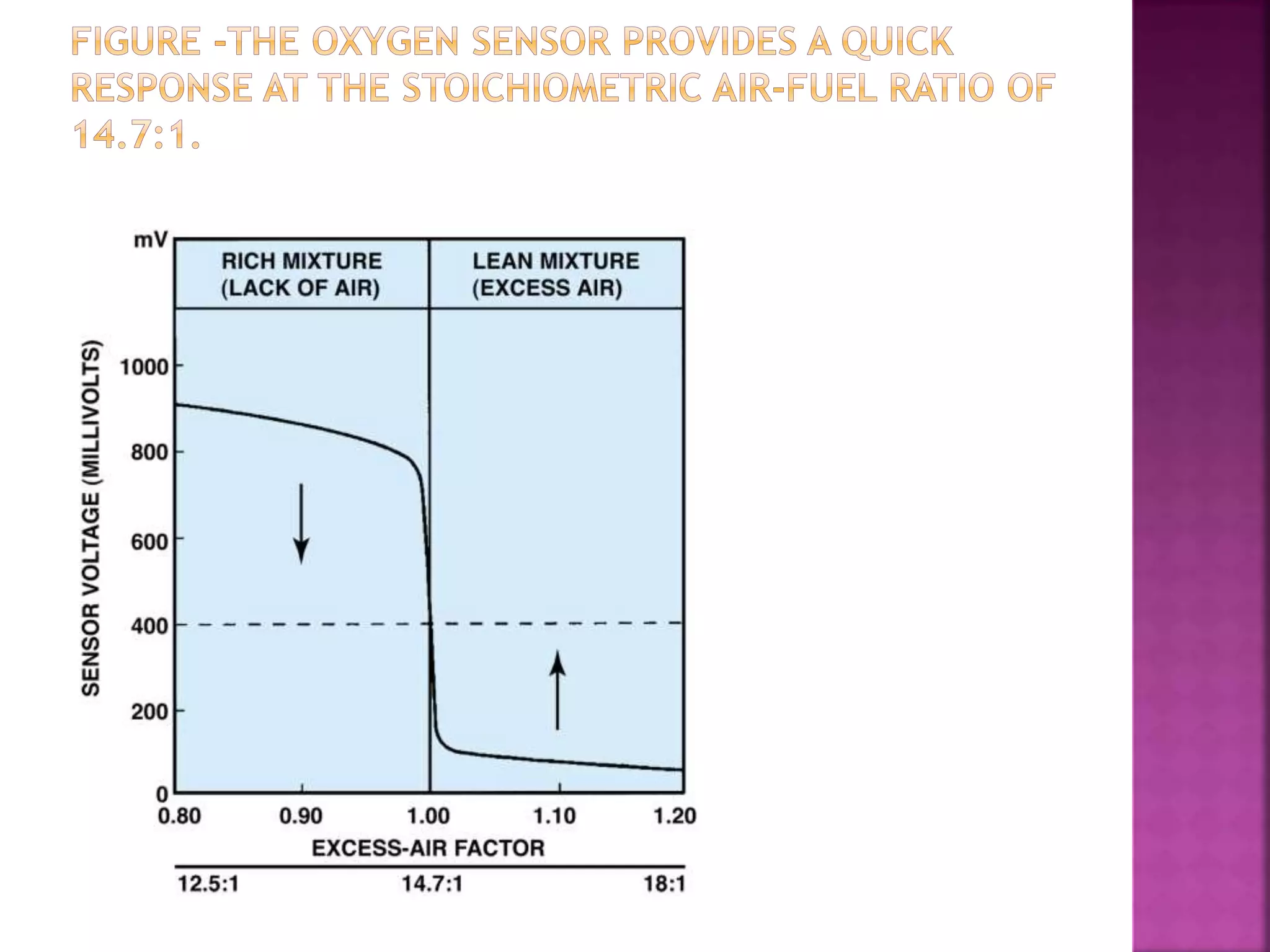
A rich mixture surges the voltage up to 0.9V. 
Lean mixture drops the voltage down to 0.1 V. 
These voltage signals are then fed to the ECU. 
The ECU then compares it with the pre stored 
standard data to decide whether the mixture is 
rich or lean. And these calculations manipulate 
the air/fuel mixture during the subsequent 
stroke.
Thankyou

How an oxygen sensor works in an automobile??

  • 1.
    BY- AAYUSHI NANDA VIT UNIVERSITY, VELLORE
  • 2.
    Oxygen sensor islocated on the exhaust line ; one before catalytic converter (upstream /precat sensor) and one after catalytic converter( downstream/ postcat sensor). Upstream sensor is used for regulating the fuel supply. While downstream sensor monitors the efficiency of the catalytic converter.
  • 3.
    High pressure andtemperature exhaust gases leaving the engine cylinder during the exhaust stroke travel through the exhaust manifold and come in contact with the O2 sensor placed before the catalytic converter. fig. oxygen sensor placed on the exhaust pipe
  • 6.
    The oxygen sensorplays a critical role in providing optimum engine performance with minimal emissions. There are three basic types of oxygen sensors. They are the: • Zirconia •Titania • Air Fuel
  • 7.
    The sensing elementat the front of the sensor consists of a zirconium dioxide sensing element enclosed within a steel shell. The sensing element is further connected to platinum electrodes and wire leads down the line.
  • 9.
    Exhaust gas consistingof oxygen molecules contacts the sensing element after flowing through the slots or holes on the steel shell. Outside air is made to flow through the gaps between the connecting cables . This air is then heated to enable the ions to produce voltage. The difference in concentration of the oxygen molecules in the exhaust gas and the ambient air drives the oxygen ions from higher conc. To lower concentration.
  • 10.
    Due to themovement of oxygen ions from one platinum layer to the other, a potential difference is generated. A rich mixture surges the voltage up to 0.9V. Lean mixture drops the voltage down to 0.1 V. These voltage signals are then fed to the ECU. The ECU then compares it with the pre stored standard data to decide whether the mixture is rich or lean. And these calculations manipulate the air/fuel mixture during the subsequent stroke.
  • 12.