Learning Objective: 
To understand and explore 
the term ‘mise-en-scene’.
Definition: Mise En Scene 
• A French term meaning what is put into a scene or 
frame 
• Visual information in front of the camera 
• Communicates essential information to the audience 
• Made up of 5 elements: Can you guess what they are?
The 5 Elements of Mise en Scene 
• Settings & Props 
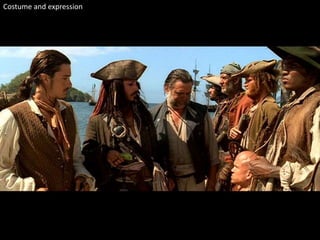
• Costume, Hair & Make Up 
Each aspect of mise-en-scene 
within a film and sends 
signals to the audience 
about how we are supposed 
to feel at a certain point 
• Facial Expressions & Body Language 
• Lighting & Colour 
has hidden meanings 
• Positioning of characters/objects within the frame
1. Settings & Props 
• Settings & Locations play an important part in film-making 
and are not just ‘backgrounds’ 
• Sets are either built from scratch or a great deal of time is 
spent to find a setting which already exists 
• Settings can manipulate an audience by building certain 
expectations and then taking a different turn 
• What settings and props you would find in: 
1. A Science Fiction Film 
2. A Romantic Comedy 
3. A Horror Film
2. Costume, Hair & Make Up 
• Costume, Hair & Make Up act as an instant 
indicator to us of a character’s personality, status & 
job 
• It tells us immediately whether the film is set in the 
present and what society/or culture it will centre 
around 
• Certain costumes can signify certain individuals (i.e. 
black cloak of a vampire, Spidey’s Spiderman suit)
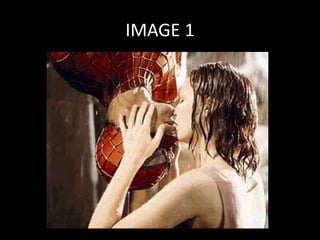
3. Facial Expressions & Body Language 
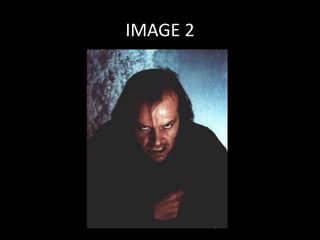
• Facial Expressions provide a clear indicator of how someone 
is feeling 
• If someone is smiling broadly, we assume they are happy but 
we may get a different feeling if this is accompanied by scary 
music 
• Body Language may also indicate how a character feels 
towards another character or may reflect the state of their 
relationship 
• TASK: What meanings/emotions do the following images 
convey:
IMAGE 1
IMAGE 2
4. Positioning of Characters & Objects 
within a frame 
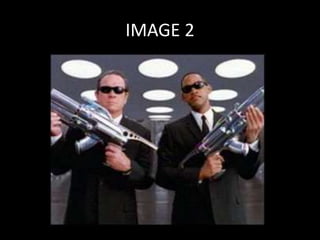
• Positioning within a frame can draw our 
attention to an important character/object 
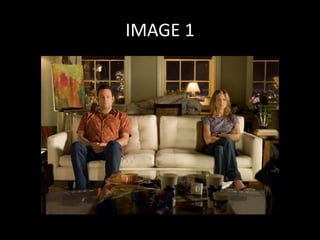
• A film-maker can use positioning to indicate 
relationships between people 
• What does the positioning in the following 
images reveal about the characters/film:
IMAGE 1
IMAGE 2
5. Lighting & Colour 
Lighting & Colour can be used to achieve a variety of effects: 
• To highlight important characters or objects 
within the frame 
• To make characters look mysterious by 
shading sections of the face & body 
• To reflect a characters mental state/hidden 
emotions (i.e. bright = happy, dark = disturbed, 
strobe effect = confused
Types of Lighting 
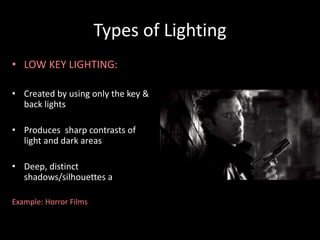
• LOW KEY LIGHTING: 
• Created by using only the key & 
back lights 
• Produces sharp contrasts of 
light and dark areas 
• Deep, distinct 
shadows/silhouettes are formed 
Example: Horror Films
Types of Lighting 
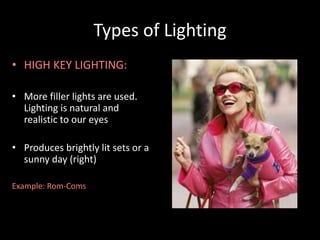
• HIGH KEY LIGHTING: 
• More filler lights are used. 
Lighting is natural and 
realistic to our eyes 
• Produces brightly lit sets or a 
sunny day (right) 
Example: Rom-Coms
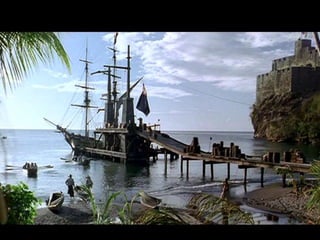
Look at the next screen shot: an 
establishing shot. 
What does the mise-en-scene tell you 
about the location? 
Think about: 
• Lighting 
• Location 
• Colour 
• Props
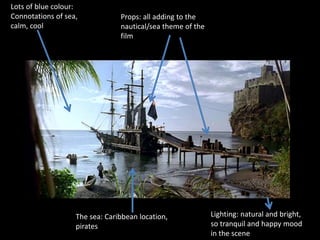
Lots of blue colour: 
Connotations of sea, 
calm, cool 
Props: all adding to the 
nautical/sea theme of the 
film 
The sea: Caribbean location, 
pirates 
Lighting: natural and bright, 
so tranquil and happy mood 
in the scene
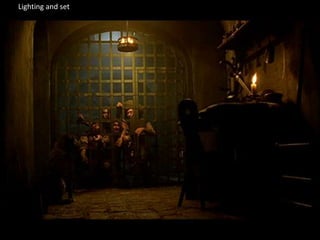
Lighting and set
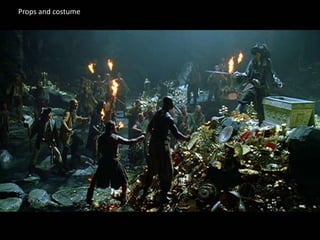
Props and costume
Costume and expression

Mise en-scene

  • 1.
    Learning Objective: Tounderstand and explore the term ‘mise-en-scene’.
  • 2.
    Definition: Mise EnScene • A French term meaning what is put into a scene or frame • Visual information in front of the camera • Communicates essential information to the audience • Made up of 5 elements: Can you guess what they are?
  • 3.
    The 5 Elementsof Mise en Scene • Settings & Props • Costume, Hair & Make Up Each aspect of mise-en-scene within a film and sends signals to the audience about how we are supposed to feel at a certain point • Facial Expressions & Body Language • Lighting & Colour has hidden meanings • Positioning of characters/objects within the frame
  • 4.
    1. Settings &Props • Settings & Locations play an important part in film-making and are not just ‘backgrounds’ • Sets are either built from scratch or a great deal of time is spent to find a setting which already exists • Settings can manipulate an audience by building certain expectations and then taking a different turn • What settings and props you would find in: 1. A Science Fiction Film 2. A Romantic Comedy 3. A Horror Film
  • 5.
    2. Costume, Hair& Make Up • Costume, Hair & Make Up act as an instant indicator to us of a character’s personality, status & job • It tells us immediately whether the film is set in the present and what society/or culture it will centre around • Certain costumes can signify certain individuals (i.e. black cloak of a vampire, Spidey’s Spiderman suit)
  • 6.
    3. Facial Expressions& Body Language • Facial Expressions provide a clear indicator of how someone is feeling • If someone is smiling broadly, we assume they are happy but we may get a different feeling if this is accompanied by scary music • Body Language may also indicate how a character feels towards another character or may reflect the state of their relationship • TASK: What meanings/emotions do the following images convey:
  • 7.
  • 8.
  • 9.
    4. Positioning ofCharacters & Objects within a frame • Positioning within a frame can draw our attention to an important character/object • A film-maker can use positioning to indicate relationships between people • What does the positioning in the following images reveal about the characters/film:
  • 10.
  • 11.
  • 12.
    5. Lighting &Colour Lighting & Colour can be used to achieve a variety of effects: • To highlight important characters or objects within the frame • To make characters look mysterious by shading sections of the face & body • To reflect a characters mental state/hidden emotions (i.e. bright = happy, dark = disturbed, strobe effect = confused
  • 13.
    Types of Lighting • LOW KEY LIGHTING: • Created by using only the key & back lights • Produces sharp contrasts of light and dark areas • Deep, distinct shadows/silhouettes are formed Example: Horror Films
  • 14.
    Types of Lighting • HIGH KEY LIGHTING: • More filler lights are used. Lighting is natural and realistic to our eyes • Produces brightly lit sets or a sunny day (right) Example: Rom-Coms
  • 15.
    Look at thenext screen shot: an establishing shot. What does the mise-en-scene tell you about the location? Think about: • Lighting • Location • Colour • Props
  • 17.
    Lots of bluecolour: Connotations of sea, calm, cool Props: all adding to the nautical/sea theme of the film The sea: Caribbean location, pirates Lighting: natural and bright, so tranquil and happy mood in the scene
  • 18.
  • 19.
  • 20.