Tirunelveli Medical CollegeDepartment of Anatomy
The Anatomy OfRectumPresentation byK Hari KrishnanI Year MBBS (2008-’09)Tirunelveli Medical CollegeTirunelveli, Tamilnadu, India
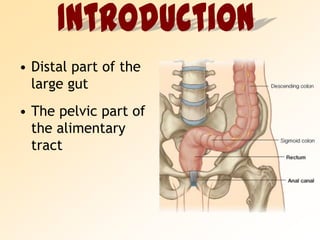
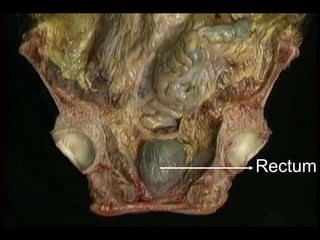
Distal part of the large gutThe pelvic part of the alimentary tractIntroduction
Rectum
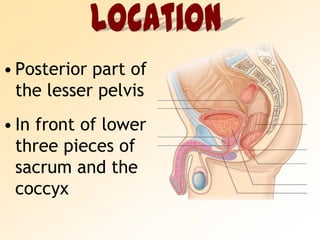
LocationPosterior part of the lesser pelvisIn front of lower three pieces of sacrum and the coccyx
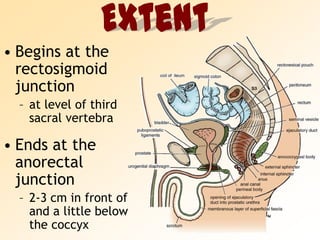
ExtentBegins at the rectosigmoid junctionat level of third sacral vertebraEnds at the anorectal junction2-3 cm in front of and a little below the coccyx
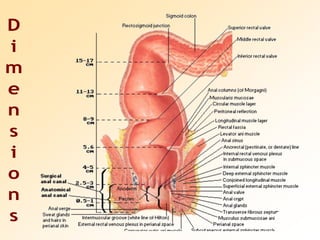
Length13 cm (5 in.)Diameter4 cm (in the upper part)Dilated (in the lower part)Dimensions
Dimensions
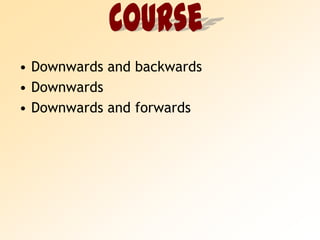
Downwards and backwardsDownwardsDownwards and forwardsCourse
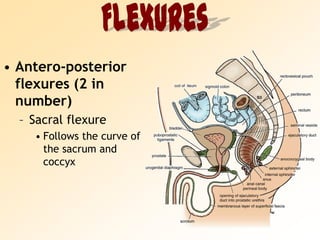
FlexuresAntero-posterior flexures (2 in number)Sacral flexureFollows the curve of the sacrum and coccyx
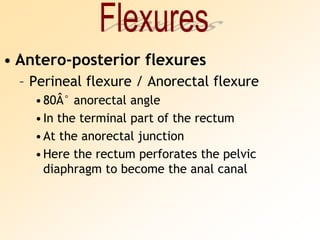
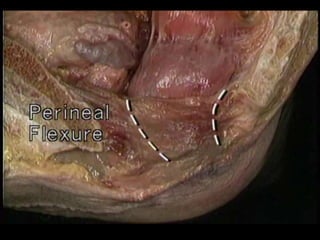
FlexuresAntero-posterior flexuresPerineal flexure / Anorectal flexure80° anorectal angleIn the terminal part of the rectumAt the anorectal junctionHere the rectum perforates the pelvic diaphragm to become the anal canal
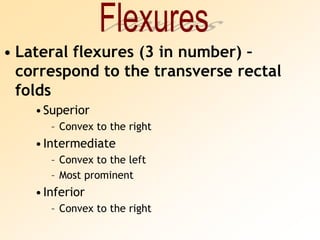
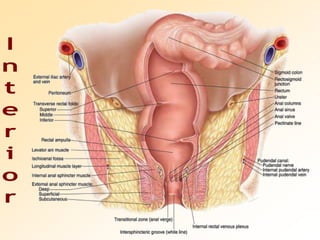
FlexuresLateral flexures (3 in number) – correspond to the transverse rectal foldsSuperiorConvex to the rightIntermediateConvex to the leftMost prominentInferiorConvex to the right
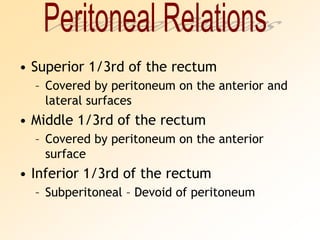
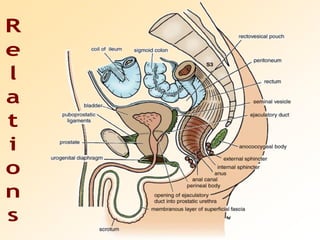
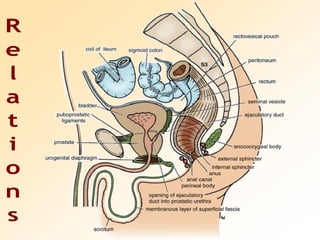
Superior 1/3rd of the rectumCovered by peritoneum on the anterior and lateral surfacesMiddle 1/3rd of the rectumCovered by peritoneum on the anterior surfaceInferior 1/3rd of the rectumSubperitoneal – Devoid of peritoneumPeritoneal Relations
Relations
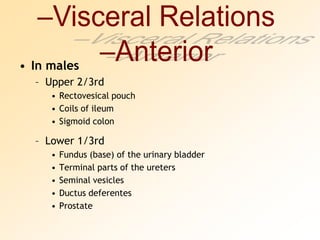
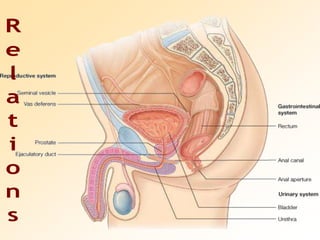
In malesUpper 2/3rdRectovesical pouchCoils of ileumSigmoid colonLower 1/3rdFundus (base) of the urinary bladderTerminal parts of the uretersSeminal vesiclesDuctus deferentesProstateVisceral RelationsAnterior
Relations
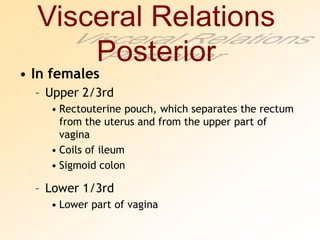
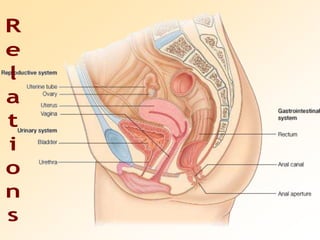
Visceral RelationsPosteriorIn femalesUpper 2/3rdRectouterine pouch, which separates the rectum from the uterus and from the upper part of vaginaCoils of ileumSigmoid colonLower 1/3rdLower part of vagina
Relations
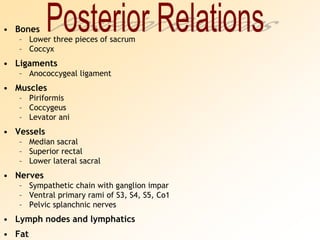
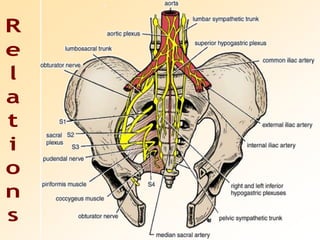
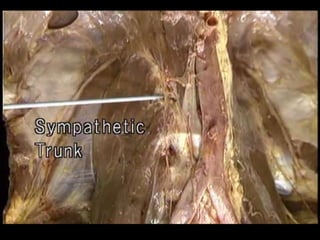
Posterior RelationsBonesLower three pieces of sacrumCoccyxLigamentsAnococcygeal ligamentMusclesPiriformisCoccygeusLevator aniVesselsMedian sacralSuperior rectalLower lateral sacralNervesSympathetic chain with ganglion imparVentral primary rami of S3, S4, S5, Co1Pelvic splanchnic nervesLymph nodes and lymphaticsFat
Relations
Relations
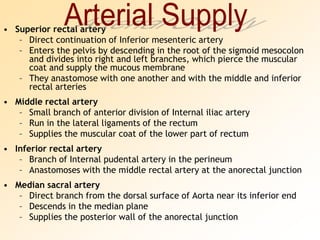
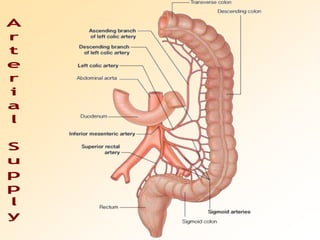
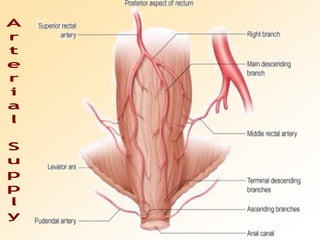
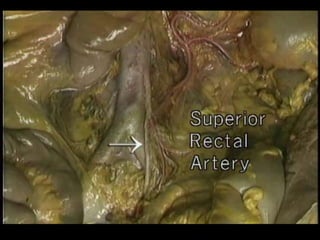
Arterial SupplySuperior rectal arteryDirect continuation of Inferior mesenteric arteryEnters the pelvis by descending in the root of the sigmoid mesocolon and divides into right and left branches, which pierce the muscular coat and supply the mucous membraneThey anastomose with one another and with the middle and inferior rectal arteriesMiddle rectal arterySmall branch of anterior division of Internal iliac arteryRun in the lateral ligaments of the rectumSupplies the muscular coat of the lower part of rectumInferior rectal arteryBranch of Internal pudental artery in the perineumAnastomoses with the middle rectal artery at the anorectal junctionMedian sacral arteryDirect branch from the dorsal surface of Aorta near its inferior endDescends in the median planeSupplies the posterior wall of the anorectal junction
Arterial Supply
Arterial Supply
Venous Drainage
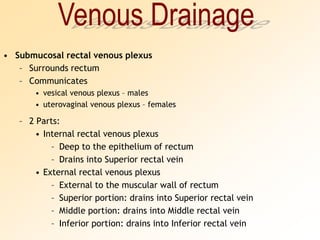
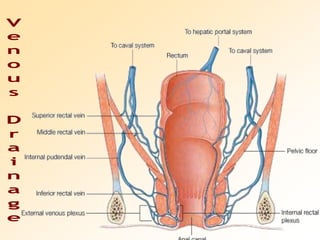
Venous DrainageSubmucosal rectal venous plexusSurrounds rectumCommunicatesvesical venous plexus – malesuterovaginal venous plexus – females2 Parts:Internal rectal venous plexusDeep to the epithelium of rectumDrains into Superior rectal veinExternal rectal venous plexusExternal to the muscular wall of rectumSuperior portion: drains into Superior rectal veinMiddle portion: drains into Middle rectal veinInferior portion: drains into Inferior rectal vein
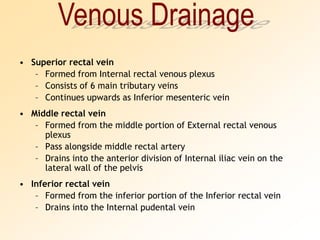
Superior rectal veinFormed from Internal rectal venous plexusConsists of 6 main tributary veinsContinues upwards as Inferior mesenteric veinMiddle rectal veinFormed from the middle portion of External rectal venous plexusPass alongside middle rectal arteryDrains into the anterior division of Internal iliac vein on the lateral wall of the pelvisInferior rectal veinFormed from the inferior portion of the Inferior rectal veinDrains into the Internal pudental veinVenous Drainage
Venous Drainage
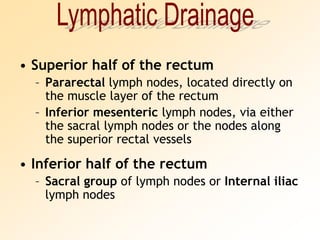
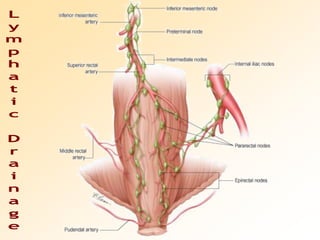
Superior half of the rectumPararectal lymph nodes, located directly on the muscle layer of the rectumInferior mesenteric lymph nodes, via either the sacral lymph nodes or the nodes along the superior rectal vesselsInferior half of the rectumSacral group of lymph nodes or Internal iliac lymph nodesLymphatic Drainage
Lymphatic Drainage
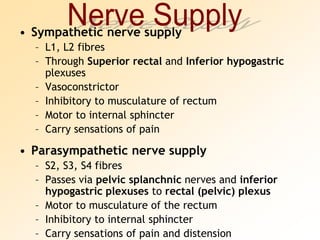
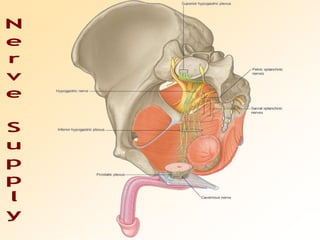
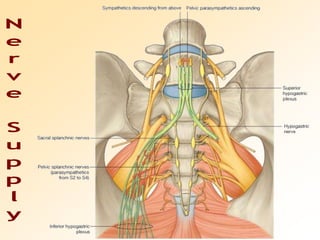
Nerve SupplySympathetic nerve supplyL1, L2 fibresThrough Superior rectal and Inferior hypogastric plexusesVasoconstrictorInhibitory to musculature of rectumMotor to internal sphincterCarry sensations of painParasympathetic nerve supplyS2, S3, S4 fibresPasses via pelvic splanchnic nerves and inferior hypogastric plexuses to rectal (pelvic) plexusMotor to musculature of the rectumInhibitory to internal sphincterCarry sensations of pain and distension
Nerve Supply
Nerve Supply
Interior
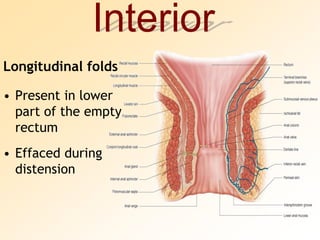
InteriorLongitudinal foldsPresent in lower part of the empty rectumEffaced during distension
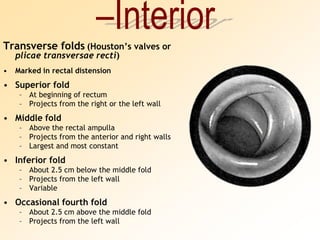
InteriorTransverse folds(Houston’s valves or plicae transversae recti)Marked in rectal distensionSuperior foldAt beginning of rectumProjects from the right or the left wallMiddle foldAbove the rectal ampullaProjects from the anterior and right wallsLargest and most constantInferior foldAbout 2.5 cm below the middle foldProjects from the left wallVariableOccasional fourth foldAbout 2.5 cm above the middle foldProjects from the left wall
Interior
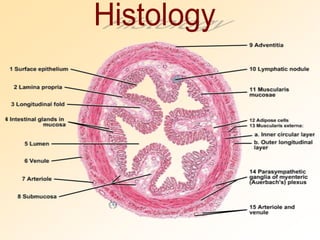
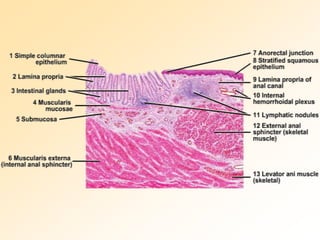
Histology
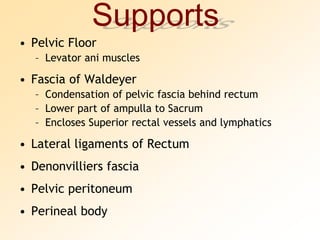
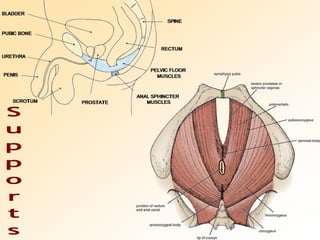
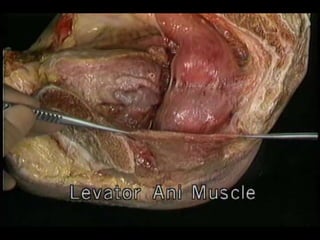
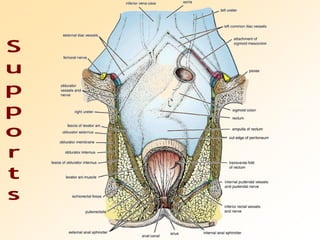
SupportsPelvic FloorLevator ani musclesFascia of WaldeyerCondensation of pelvic fascia behind rectumLower part of ampulla to SacrumEncloses Superior rectal vessels and lymphaticsLateral ligaments of RectumDenonvilliers fasciaPelvic peritoneumPerineal body
Supports
Supports
ClinicalAspects
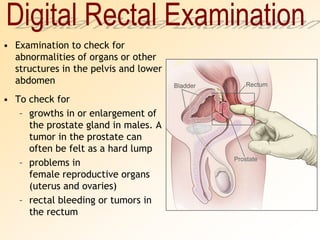
Digital Rectal ExaminationExamination to check for abnormalities of organs or other structures in the pelvis and lower abdomenTo check forgrowths in or enlargement of the prostate gland in males. A tumor in the prostate can often be felt as a hard lumpproblems in female reproductive organs (uterus and ovaries)rectal bleeding or tumors in the rectum
ProctoscopyProctoscopy - Visual examination of the rectum and anusVisualizing the interior of the rectum and anal canalHelps in revealing ulcers, abnormal growths and diverticula
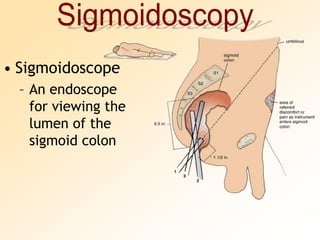
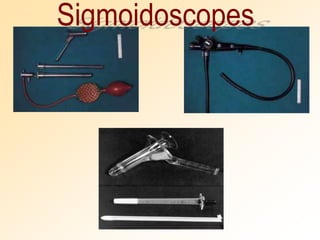
SigmoidoscopySigmoidoscopeAn endoscope for viewing the lumen of the sigmoid colon
Sigmoidoscopes
Rectal ProlapseRectocoeleProtrusion of the mucous membrane and submucosa of the rectum outside the anus for approximately 1–4 cmCommon inChildren: 1 – 3 yearsElderly peopleMiddle-aged women
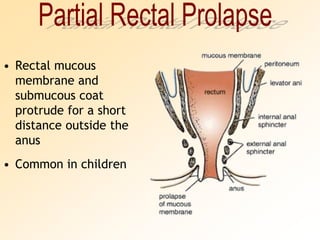
Partial Rectal ProlapseRectal mucous membrane and submucous coat protrude for a short distance outside the anusCommon in children
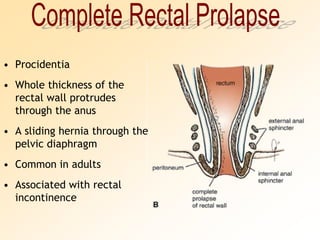
Complete Rectal ProlapseProcidentiaWhole thickness of the rectal wall protrudes through the anusA sliding hernia through the pelvic diaphragmCommon in adultsAssociated with rectal incontinence
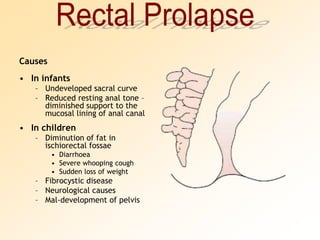
CausesIn infantsUndeveloped sacral curveReduced resting anal tone – diminished support to the mucosal lining of anal canalIn childrenDiminution of fat in ischiorectal fossaeDiarrhoeaSevere whooping coughSudden loss of weightFibrocystic diseaseNeurological causesMal-development of pelvisRectal Prolapse
CausesIn adultsHaemorrhoidsTorn perineumStraining from urethral obstructionFollowing operation for fistula in anoIn the elderlyAtony of sphincter mechanismRectal Prolapse
TreatmentSubmucous injectionsExcision of the prolapsed mucosaSurgeryRectal Prolapse
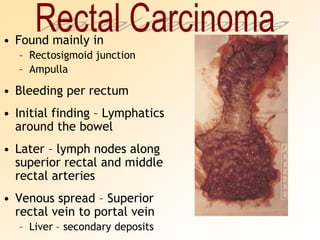
Rectal CarcinomaFound mainly inRectosigmoid junctionAmpullaBleeding per rectumInitial finding – Lymphatics around the bowelLater – lymph nodes along superior rectal and middle rectal arteriesVenous spread – Superior rectal vein to portal veinLiver – secondary deposits
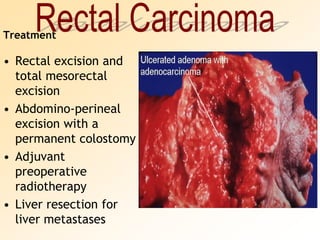
Rectal CarcinomaTreatmentRectal excision and total mesorectal excisionAbdomino-perineal excision with a permanent colostomyAdjuvant preoperative radiotherapyLiver resection for liver metastases
Gray’s Anatomy: The Anatomical Basis of Clinical MedicineGray’s Anatomy for StudentsRichard S. Snell – Clinical Anatomy by RegionsKeith L. Moore – Essential Clinical AnatomyLast’s Anatomy - Regional and AppliedFrank H. Netter – Atlas of Human AnatomyBailey and Love’s Short Practice of SurgerySources
Thank You!

Anatomy of Rectum

  • 1.
  • 2.
    The Anatomy OfRectumPresentationbyK Hari KrishnanI Year MBBS (2008-’09)Tirunelveli Medical CollegeTirunelveli, Tamilnadu, India
  • 3.
    Distal part ofthe large gutThe pelvic part of the alimentary tractIntroduction
  • 4.
  • 5.
    LocationPosterior part ofthe lesser pelvisIn front of lower three pieces of sacrum and the coccyx
  • 6.
    ExtentBegins at therectosigmoid junctionat level of third sacral vertebraEnds at the anorectal junction2-3 cm in front of and a little below the coccyx
  • 7.
    Length13 cm (5in.)Diameter4 cm (in the upper part)Dilated (in the lower part)Dimensions
  • 8.
  • 9.
  • 10.
    FlexuresAntero-posterior flexures (2in number)Sacral flexureFollows the curve of the sacrum and coccyx
  • 11.
    FlexuresAntero-posterior flexuresPerineal flexure/ Anorectal flexure80° anorectal angleIn the terminal part of the rectumAt the anorectal junctionHere the rectum perforates the pelvic diaphragm to become the anal canal
  • 13.
    FlexuresLateral flexures (3in number) – correspond to the transverse rectal foldsSuperiorConvex to the rightIntermediateConvex to the leftMost prominentInferiorConvex to the right
  • 14.
    Superior 1/3rd ofthe rectumCovered by peritoneum on the anterior and lateral surfacesMiddle 1/3rd of the rectumCovered by peritoneum on the anterior surfaceInferior 1/3rd of the rectumSubperitoneal – Devoid of peritoneumPeritoneal Relations
  • 15.
  • 16.
    In malesUpper 2/3rdRectovesicalpouchCoils of ileumSigmoid colonLower 1/3rdFundus (base) of the urinary bladderTerminal parts of the uretersSeminal vesiclesDuctus deferentesProstateVisceral RelationsAnterior
  • 17.
  • 18.
    Visceral RelationsPosteriorIn femalesUpper2/3rdRectouterine pouch, which separates the rectum from the uterus and from the upper part of vaginaCoils of ileumSigmoid colonLower 1/3rdLower part of vagina
  • 19.
  • 20.
    Posterior RelationsBonesLower threepieces of sacrumCoccyxLigamentsAnococcygeal ligamentMusclesPiriformisCoccygeusLevator aniVesselsMedian sacralSuperior rectalLower lateral sacralNervesSympathetic chain with ganglion imparVentral primary rami of S3, S4, S5, Co1Pelvic splanchnic nervesLymph nodes and lymphaticsFat
  • 21.
  • 22.
  • 24.
    Arterial SupplySuperior rectalarteryDirect continuation of Inferior mesenteric arteryEnters the pelvis by descending in the root of the sigmoid mesocolon and divides into right and left branches, which pierce the muscular coat and supply the mucous membraneThey anastomose with one another and with the middle and inferior rectal arteriesMiddle rectal arterySmall branch of anterior division of Internal iliac arteryRun in the lateral ligaments of the rectumSupplies the muscular coat of the lower part of rectumInferior rectal arteryBranch of Internal pudental artery in the perineumAnastomoses with the middle rectal artery at the anorectal junctionMedian sacral arteryDirect branch from the dorsal surface of Aorta near its inferior endDescends in the median planeSupplies the posterior wall of the anorectal junction
  • 25.
  • 26.
  • 28.
  • 29.
    Venous DrainageSubmucosal rectalvenous plexusSurrounds rectumCommunicatesvesical venous plexus – malesuterovaginal venous plexus – females2 Parts:Internal rectal venous plexusDeep to the epithelium of rectumDrains into Superior rectal veinExternal rectal venous plexusExternal to the muscular wall of rectumSuperior portion: drains into Superior rectal veinMiddle portion: drains into Middle rectal veinInferior portion: drains into Inferior rectal vein
  • 30.
    Superior rectal veinFormedfrom Internal rectal venous plexusConsists of 6 main tributary veinsContinues upwards as Inferior mesenteric veinMiddle rectal veinFormed from the middle portion of External rectal venous plexusPass alongside middle rectal arteryDrains into the anterior division of Internal iliac vein on the lateral wall of the pelvisInferior rectal veinFormed from the inferior portion of the Inferior rectal veinDrains into the Internal pudental veinVenous Drainage
  • 31.
  • 32.
    Superior half ofthe rectumPararectal lymph nodes, located directly on the muscle layer of the rectumInferior mesenteric lymph nodes, via either the sacral lymph nodes or the nodes along the superior rectal vesselsInferior half of the rectumSacral group of lymph nodes or Internal iliac lymph nodesLymphatic Drainage
  • 33.
  • 34.
    Nerve SupplySympathetic nervesupplyL1, L2 fibresThrough Superior rectal and Inferior hypogastric plexusesVasoconstrictorInhibitory to musculature of rectumMotor to internal sphincterCarry sensations of painParasympathetic nerve supplyS2, S3, S4 fibresPasses via pelvic splanchnic nerves and inferior hypogastric plexuses to rectal (pelvic) plexusMotor to musculature of the rectumInhibitory to internal sphincterCarry sensations of pain and distension
  • 35.
  • 36.
  • 38.
  • 39.
    InteriorLongitudinal foldsPresent inlower part of the empty rectumEffaced during distension
  • 40.
    InteriorTransverse folds(Houston’s valvesor plicae transversae recti)Marked in rectal distensionSuperior foldAt beginning of rectumProjects from the right or the left wallMiddle foldAbove the rectal ampullaProjects from the anterior and right wallsLargest and most constantInferior foldAbout 2.5 cm below the middle foldProjects from the left wallVariableOccasional fourth foldAbout 2.5 cm above the middle foldProjects from the left wall
  • 41.
  • 42.
  • 44.
    SupportsPelvic FloorLevator animusclesFascia of WaldeyerCondensation of pelvic fascia behind rectumLower part of ampulla to SacrumEncloses Superior rectal vessels and lymphaticsLateral ligaments of RectumDenonvilliers fasciaPelvic peritoneumPerineal body
  • 45.
  • 47.
  • 48.
  • 49.
    Digital Rectal ExaminationExaminationto check for abnormalities of organs or other structures in the pelvis and lower abdomenTo check forgrowths in or enlargement of the prostate gland in males. A tumor in the prostate can often be felt as a hard lumpproblems in female reproductive organs (uterus and ovaries)rectal bleeding or tumors in the rectum
  • 50.
    ProctoscopyProctoscopy - Visualexamination of the rectum and anusVisualizing the interior of the rectum and anal canalHelps in revealing ulcers, abnormal growths and diverticula
  • 51.
    SigmoidoscopySigmoidoscopeAn endoscope forviewing the lumen of the sigmoid colon
  • 52.
  • 53.
    Rectal ProlapseRectocoeleProtrusion ofthe mucous membrane and submucosa of the rectum outside the anus for approximately 1–4 cmCommon inChildren: 1 – 3 yearsElderly peopleMiddle-aged women
  • 54.
    Partial Rectal ProlapseRectalmucous membrane and submucous coat protrude for a short distance outside the anusCommon in children
  • 55.
    Complete Rectal ProlapseProcidentiaWholethickness of the rectal wall protrudes through the anusA sliding hernia through the pelvic diaphragmCommon in adultsAssociated with rectal incontinence
  • 56.
    CausesIn infantsUndeveloped sacralcurveReduced resting anal tone – diminished support to the mucosal lining of anal canalIn childrenDiminution of fat in ischiorectal fossaeDiarrhoeaSevere whooping coughSudden loss of weightFibrocystic diseaseNeurological causesMal-development of pelvisRectal Prolapse
  • 57.
    CausesIn adultsHaemorrhoidsTorn perineumStrainingfrom urethral obstructionFollowing operation for fistula in anoIn the elderlyAtony of sphincter mechanismRectal Prolapse
  • 58.
    TreatmentSubmucous injectionsExcision ofthe prolapsed mucosaSurgeryRectal Prolapse
  • 59.
    Rectal CarcinomaFound mainlyinRectosigmoid junctionAmpullaBleeding per rectumInitial finding – Lymphatics around the bowelLater – lymph nodes along superior rectal and middle rectal arteriesVenous spread – Superior rectal vein to portal veinLiver – secondary deposits
  • 60.
    Rectal CarcinomaTreatmentRectal excisionand total mesorectal excisionAbdomino-perineal excision with a permanent colostomyAdjuvant preoperative radiotherapyLiver resection for liver metastases
  • 61.
    Gray’s Anatomy: TheAnatomical Basis of Clinical MedicineGray’s Anatomy for StudentsRichard S. Snell – Clinical Anatomy by RegionsKeith L. Moore – Essential Clinical AnatomyLast’s Anatomy - Regional and AppliedFrank H. Netter – Atlas of Human AnatomyBailey and Love’s Short Practice of SurgerySources
  • 62.