Jinnee Yoo & Rachel Becke
ADLT 610 – October 25, 2010
 Distinguish Diagnosis and Discovery
 Distinguish Research and Action orientations
◦ Competencies for Action approach
 Block’s Discovery Model
◦ Presenting Problem
◦ Practice separating the technical problem from the
managerial problem
 Data Collection – “How To”
 The Interview
◦ Peeling back the layers
It is comforting and what the client wants but
diagnosis…
◦ Implies that there is a pill or treatment
◦ Reinforces that an engineering approach
to a living system is appropriate
◦ Is about Research not Action
Research Approach Action Approach
 Interest in EVERY and ALL
factors impacting the
problem
 Comprehensiveness is
essential
 Organization does not need
to be involved
 Emphasis on objectivity and
hard data to reduce bias
 Neutral on whether
organization approves
outcomes
 Interest in factors that the
client controls
 Comprehensiveness is not
necessary
 Client’s involvement at
every step is essential
 Bias is what is paid for:
listen to gut and
perceptions
 Deep concern for how the
client will react to
recommendations
1. Focus on what the client can do next
2. K.I.S.S.
3. Nurture the client relationship
4. Remember that data about how the
organization is currently functioning is
valid and relevant
Goal: To help the clients help themselves.
 Mobilize action
 Redefine the problem
 Identify both sides of the coin
◦ Technical problem AND Human problem
 Why we are hired
 It is the pain point
◦ What you hear about when the client first describes the
challenge or what isn’t working
 It is the mystery we are asked to solve
 It is only one side of the coin
 The flawless consultant’s role is to find a different
explanation for the pain and what is causing it.
 You must “go there”
◦ Be willing to get into the dirt and the personalities and the
politics
◦ Be willing to listen to what is talked about at the water
cooler or in the restrooms
 (Remember to nurture the relationship though at
the same time!)
 What was Mr. Kellogg’s presenting problem?
 Could Susan and Jim have redefined the
problem?
 Break it down:
◦ Technical/Business Problem
◦ How the Problem was being Managed
 Team into pairs or triads.
 Pick a functional area or profession that you are
familiar with, e.g. training & development, pharmacists,
counselors.
 Discuss technical problems that you’ve observed in
this profession or area.
 Pick one or two and then “think out loud” about what
the accompanying managerial problems might have
been.
 Share.
 Schein
◦ Active Inquiry nurtures the client - to ensure the full story is
revealed
◦ Shift focus to issues other than what the client first reports (Type
II - Exploratory Diagnostic Inquiry)
 Cooperrider
◦ Problem focus metaphor encourages deficit terms
◦ Shift from adaptive learning to generative learning
 Block
◦ Shift from research to action, from machine to biological models,
from technical to human capacities
 Collecting information.
 Assessing the organizational and managerial
climate.
 Dealing with the resistance.
 Interviews.
 Reducing the data
 Analyzing data
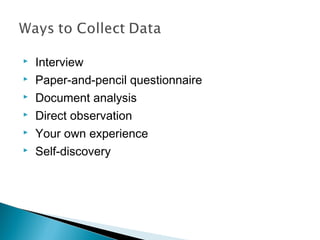
 Interview
 Paper-and-pencil questionnaire
 Document analysis
 Direct observation
 Your own experience
 Self-discovery
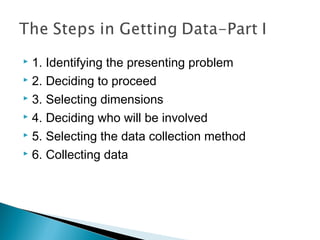
 1. Identifying the presenting problem
 2. Deciding to proceed
 3. Selecting dimensions
 4. Deciding who will be involved
 5. Selecting the data collection method
 6. Collecting data
 7. Funneling the data
 8. Summarizing data
 9. Analyzing data
 10. Giving feedback
 11. Giving recommendation
 12. Making a decision
 13. Implementation
 It is OK to predefine the problem based on your
background but keep listening…
 Looking for data on organizational dimensions will help
reveal the human problem
◦ Objectives
◦ Subgroups
◦ Support
◦ Evaluation
◦ Authority and Power
◦ Norms for Individual Behavior
◦ Management Information
 The interview as a Joint Learning Event
 Responses to use in the interview
1. Restatement
2. Statement of your experience
3. Open-ended question
4. Hypothesis about the next layer
Top Layer: The presenting problem.
Second Layer: The person’s perceptions about
how others are contributing to the problem.
Third Layer: How a person sees his/her own way
of contributing to the problem.
* Note on the third layer
 Top Layer
◦ What is the technical or business problem you are
experiencing?
 Second Layer
◦ What are others doing to cause or maintain the problem
at this current level of severity?
 Third Layer
◦ What is your role? What are you doing to contribute to
the problem?
 Goal: Get to “Enlightening and Actionable”
 Observe how you are being managed
 Are you feeling…
◦ Controlled?
◦ Supported?
◦ Railroaded?
◦ Respected?
 Be the change you wish to see
◦ Encourage collaborative vs. one-way interactions

Discovery & data gathering 102310

  • 1.
    Jinnee Yoo &Rachel Becke ADLT 610 – October 25, 2010
  • 2.
     Distinguish Diagnosisand Discovery  Distinguish Research and Action orientations ◦ Competencies for Action approach  Block’s Discovery Model ◦ Presenting Problem ◦ Practice separating the technical problem from the managerial problem  Data Collection – “How To”  The Interview ◦ Peeling back the layers
  • 3.
    It is comfortingand what the client wants but diagnosis… ◦ Implies that there is a pill or treatment ◦ Reinforces that an engineering approach to a living system is appropriate ◦ Is about Research not Action
  • 4.
    Research Approach ActionApproach  Interest in EVERY and ALL factors impacting the problem  Comprehensiveness is essential  Organization does not need to be involved  Emphasis on objectivity and hard data to reduce bias  Neutral on whether organization approves outcomes  Interest in factors that the client controls  Comprehensiveness is not necessary  Client’s involvement at every step is essential  Bias is what is paid for: listen to gut and perceptions  Deep concern for how the client will react to recommendations
  • 5.
    1. Focus onwhat the client can do next 2. K.I.S.S. 3. Nurture the client relationship 4. Remember that data about how the organization is currently functioning is valid and relevant
  • 6.
    Goal: To helpthe clients help themselves.  Mobilize action  Redefine the problem  Identify both sides of the coin ◦ Technical problem AND Human problem
  • 8.
     Why weare hired  It is the pain point ◦ What you hear about when the client first describes the challenge or what isn’t working  It is the mystery we are asked to solve  It is only one side of the coin  The flawless consultant’s role is to find a different explanation for the pain and what is causing it.
  • 9.
     You must“go there” ◦ Be willing to get into the dirt and the personalities and the politics ◦ Be willing to listen to what is talked about at the water cooler or in the restrooms  (Remember to nurture the relationship though at the same time!)
  • 10.
     What wasMr. Kellogg’s presenting problem?  Could Susan and Jim have redefined the problem?  Break it down: ◦ Technical/Business Problem ◦ How the Problem was being Managed
  • 11.
     Team intopairs or triads.  Pick a functional area or profession that you are familiar with, e.g. training & development, pharmacists, counselors.  Discuss technical problems that you’ve observed in this profession or area.  Pick one or two and then “think out loud” about what the accompanying managerial problems might have been.  Share.
  • 12.
     Schein ◦ ActiveInquiry nurtures the client - to ensure the full story is revealed ◦ Shift focus to issues other than what the client first reports (Type II - Exploratory Diagnostic Inquiry)  Cooperrider ◦ Problem focus metaphor encourages deficit terms ◦ Shift from adaptive learning to generative learning  Block ◦ Shift from research to action, from machine to biological models, from technical to human capacities
  • 13.
     Collecting information. Assessing the organizational and managerial climate.  Dealing with the resistance.  Interviews.  Reducing the data  Analyzing data
  • 14.
     Interview  Paper-and-pencilquestionnaire  Document analysis  Direct observation  Your own experience  Self-discovery
  • 15.
     1. Identifyingthe presenting problem  2. Deciding to proceed  3. Selecting dimensions  4. Deciding who will be involved  5. Selecting the data collection method  6. Collecting data
  • 16.
     7. Funnelingthe data  8. Summarizing data  9. Analyzing data  10. Giving feedback  11. Giving recommendation  12. Making a decision  13. Implementation
  • 17.
     It isOK to predefine the problem based on your background but keep listening…  Looking for data on organizational dimensions will help reveal the human problem ◦ Objectives ◦ Subgroups ◦ Support ◦ Evaluation ◦ Authority and Power ◦ Norms for Individual Behavior ◦ Management Information
  • 18.
     The interviewas a Joint Learning Event  Responses to use in the interview 1. Restatement 2. Statement of your experience 3. Open-ended question 4. Hypothesis about the next layer
  • 19.
    Top Layer: Thepresenting problem. Second Layer: The person’s perceptions about how others are contributing to the problem. Third Layer: How a person sees his/her own way of contributing to the problem. * Note on the third layer
  • 20.
     Top Layer ◦What is the technical or business problem you are experiencing?  Second Layer ◦ What are others doing to cause or maintain the problem at this current level of severity?  Third Layer ◦ What is your role? What are you doing to contribute to the problem?  Goal: Get to “Enlightening and Actionable”
  • 21.
     Observe howyou are being managed  Are you feeling… ◦ Controlled? ◦ Supported? ◦ Railroaded? ◦ Respected?  Be the change you wish to see ◦ Encourage collaborative vs. one-way interactions

Editor's Notes

  • #4 Schein and Block both discuss the disservice of providing a turnkey, expert solution