The Reality of Antibiotics 2 million U.S. nosocomial infections/year 70% of these infections are resistant to at least one drug 90,000 die from these infections (up from 13,300 in 1992 – nearly 600% increase) MRSA kills more Americans than AIDS (18,000/year) and is 10 th  leading cause of death in U.S. Worldwide antibiotic sales expected to increase from $22 to $26 billion by 2011 Resistance costs the U.S. healthcare system $6 billion/year Factors making this problem worse: Antibiotic misuse and overuse Lax antibiotic restrictions in some countries 50% antibiotics made in the U.S. are used on livestock in a prophylactic manner Dense populations Sports & locker rooms (see St. Louis Rams, Cleveland Browns, Washington Redskins) Bioterrorism International travel Source: Infectious Diseases Society of America (IDSA.org) and U.S. Center for Disease Control (cdc.gov)
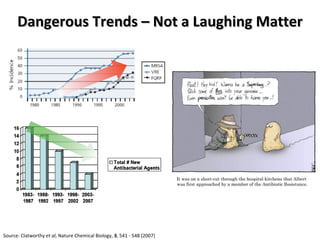
Dangerous Trends – Not a Laughing Matter Source: Clatworthy  et al , Nature Chemical Biology,  3 , 541 - 548 (2007)
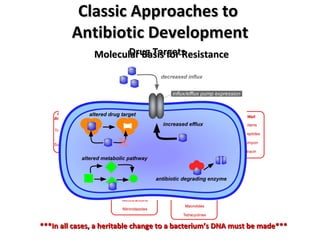
Classic Approaches to  Antibiotic Development ***In all cases, a heritable change to a bacterium’s DNA must be made*** Molecular Basis for Resistance Drug Targets
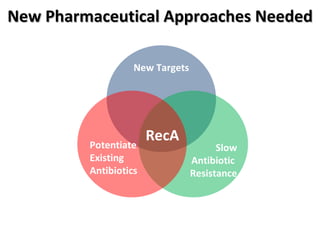
New Pharmaceutical Approaches Needed New Targets Slow Antibiotic  Resistance Potentiate Existing  Antibiotics RecA
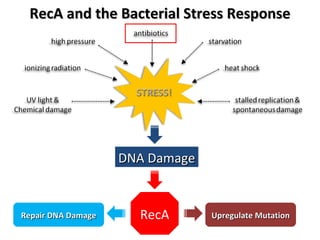
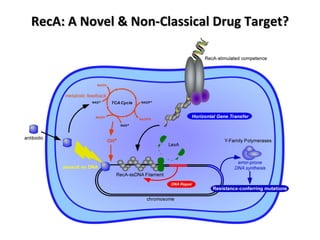
RecA and the Bacterial Stress Response DNA Damage RecA Repair DNA Damage Upregulate Mutation
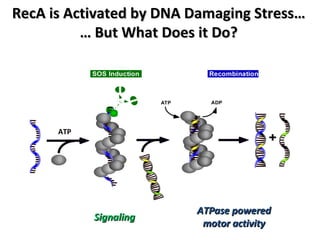
RecA is Activated by DNA Damaging Stress… … But What Does it Do? ATP Signaling ATPase powered motor activity
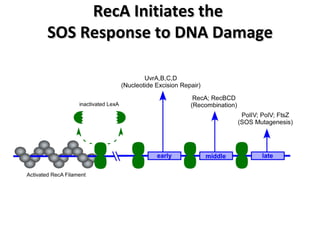
RecA Initiates the  SOS Response to DNA Damage
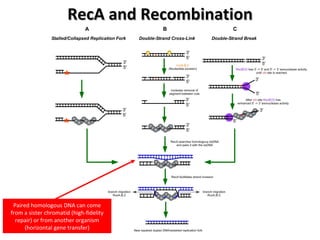
RecA and Recombination Paired homologous DNA can come from a sister chromatid (high-fidelity repair) or from another organism (horizontal gene transfer)
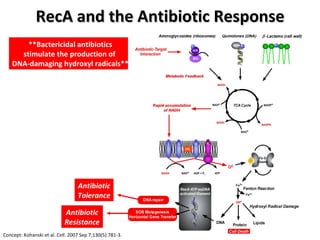
RecA and the Antibiotic Response Antibiotic Tolerance Antibiotic Resistance **Bactericidal antibiotics stimulate the production of  DNA-damaging hydroxyl radicals** Concept: Kohanski et al.  Cell . 2007 Sep 7;130(5):781-3.
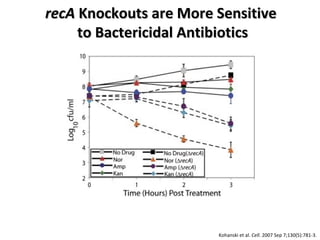
recA  Knockouts are More Sensitive  to Bactericidal Antibiotics Kohanski et al.  Cell . 2007 Sep 7;130(5):781-3.
RecA: A Novel & Non-Classical Drug Target?
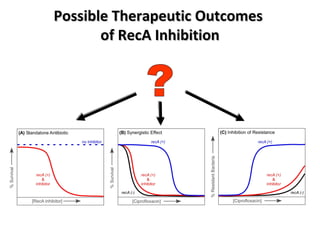
Possible Therapeutic Outcomes  of RecA Inhibition ?
 
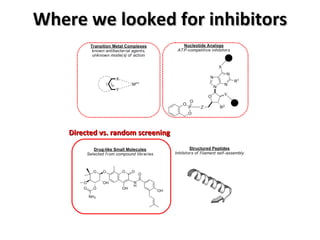
Where we looked for inhibitors Directed vs. random screening
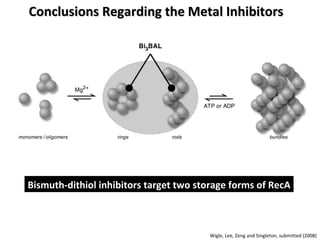
Conclusions Regarding the Metal Inhibitors Bismuth-dithiol inhibitors target two storage forms of RecA Wigle, Lee, Zeng and Singleton, submitted (2008)
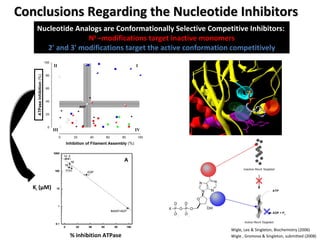
Conclusions Regarding the Nucleotide Inhibitors Nucleotide Analogs are Conformationally Selective Competitive Inhibitors:  N 6  –modifications target inactive monomers 2' and 3' modifications target the active conformation competitively Wigle , Gromova & Singleton, submitted (2008) Wigle, Lee & Singleton, Biochemistry (2006) K i  ( μ M) % inhibition ATPase
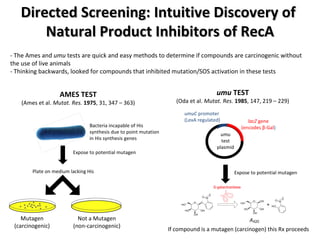
Directed Screening: Intuitive Discovery of  Natural Product Inhibitors of RecA - The Ames and  umu  tests are quick and easy methods to determine if compounds are carcinogenic without the use of live animals - Thinking backwards, looked for compounds that inhibited mutation/SOS activation in these tests AMES TEST (Ames et al.  Mutat. Res.  1975 , 31, 347 – 363) Bacteria incapable of His synthesis due to point mutation in His synthesis genes Expose to potential mutagen Plate on medium lacking His Mutagen (carcinogenic) Not a Mutagen (non-carcinogenic) umu  TEST (Oda et al.  Mutat. Res.  1985 , 147, 219 – 229) umuC  promoter (LexA regulated) lacZ  gene (encodes  β -Gal ) umu  test plasmid Expose to potential mutagen If compound is a mutagen (carcinogen) this Rx proceeds
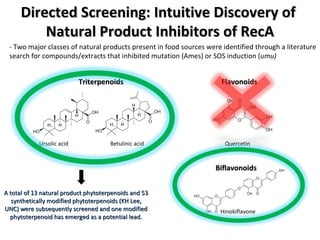
Directed Screening: Intuitive Discovery of  Natural Product Inhibitors of RecA - Two major classes of natural products present in food sources were identified through a literature search for compounds/extracts that inhibited mutation (Ames) or SOS induction ( umu) Flavonoids Triterpenoids Quercetin Ursolic acid Betulinic acid Biflavonoids Hinokiflavone A total of 13 natural product phytoterpenoids and 53 synthetically modified phytoterpenoids (KH Lee, UNC) were subsequently screened and one modified phytoterpenoid has emerged as a potential lead.
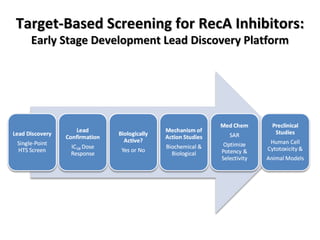
Target-Based Screening for RecA Inhibitors: Early Stage Development Lead Discovery Platform
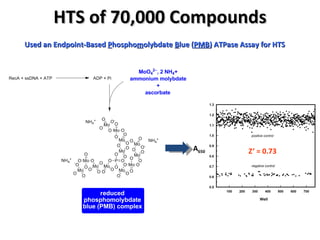
HTS of 70,000 Compounds Used an Endpoint-Based  P hospho m olybdate  B lue ( PMB ) ATPase Assay for HTS A 650 Z′ = 0.73
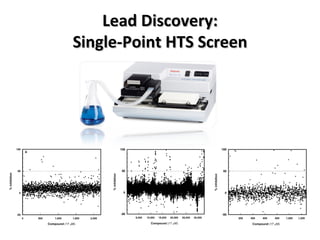
Lead Discovery: Single-Point HTS Screen
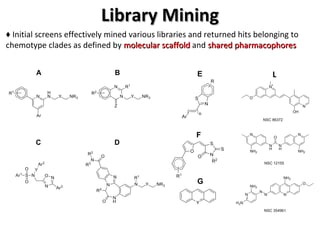
Library Mining ♦   Initial screens effectively mined various libraries and returned hits belonging to chemotype clades as defined by  molecular scaffold  and  shared pharmacophores L
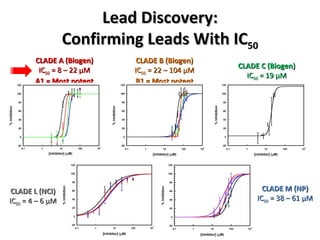
Lead Discovery: Confirming Leads With IC 50 CLADE A (Biogen) IC 50  = 8 – 22  μ M A1 = Most potent CLADE B (Biogen) IC 50  = 22 – 104  μ M B1 = Most potent CLADE C (Biogen) IC 50  = 19  μ M CLADE L (NCI) IC 50  = 4 – 6  μ M CLADE M (NP) IC 50  = 38 – 61  μ M
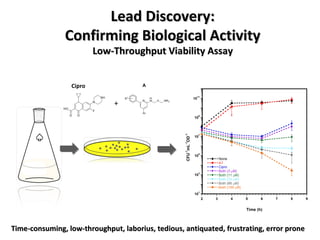
Time-consuming, low-throughput, laborius, tedious, antiquated, frustrating, error prone + Cipro Lead Discovery: Confirming Biological Activity Low-Throughput Viability Assay
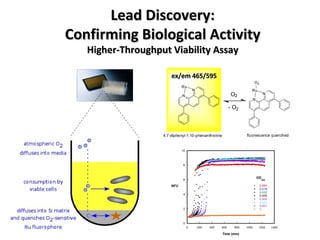
Lead Discovery: Confirming Biological Activity Higher-Throughput Viability Assay ex/em 465/595
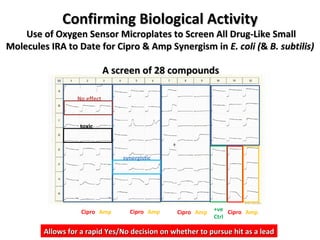
Confirming Biological Activity  Use of Oxygen Sensor Microplates to Screen All Drug-Like Small Molecules IRA to Date for Cipro & Amp Synergism in  E. coli ( &  B. subtilis) synergistic toxic No effect Allows for a rapid Yes/No decision on whether to pursue hit as a lead A screen of 28 compounds +ve Ctrl Cipro Amp Cipro Amp Cipro Amp Cipro Amp
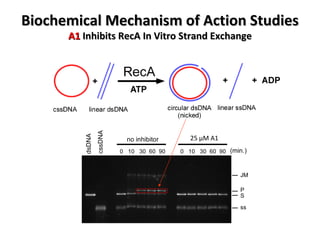
Biochemical Mechanism of Action Studies A1  Inhibits RecA In Vitro Strand Exchange 25  μ M A1
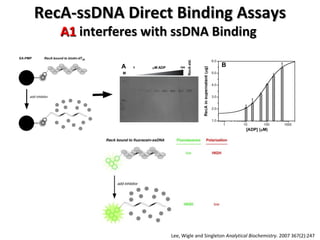
RecA-ssDNA Direct Binding Assays A1  interferes with ssDNA Binding  Lee, Wigle and Singleton  Analytical Biochemistry . 2007 367(2):247
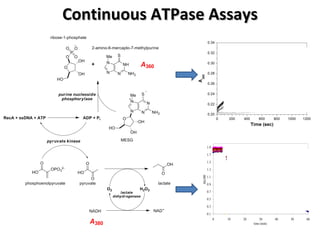
Continuous ATPase Assays
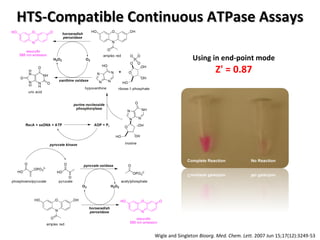
HTS-Compatible Continuous ATPase Assays Wigle and Singleton  Bioorg. Med. Chem. Lett . 2007 Jun 15;17(12):3249-53  Using in end-point mode Z' = 0.87
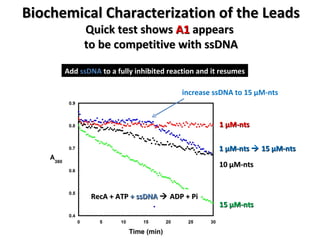
15  μ M-nts 1  μ M-nts 10  μ M-nts 1  μ M-nts    15  μ M-nts increase ssDNA to 15  μ M-nts Biochemical Characterization of the Leads Quick test shows  A1  appears  to be competitive with ssDNA Add  ssDNA  to a fully inhibited reaction and it resumes RecA + ATP  + ssDNA    ADP + Pi
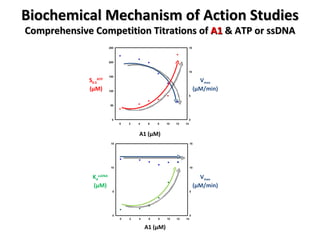
Biochemical Mechanism of Action Studies Comprehensive Competition Titrations of  A1  & ATP or ssDNA Michaelis-Menten Kinetics modified for cooperativity R = [RecA] S 0.5  ≈ K m R = [RecA] n   = DNA/RecA stoichiometry (nts/monomer) D = [DNA] in nts K d  = RecA-DNA binding dissociation constant
Biochemical Mechanism of Action Studies Comprehensive Competition Titrations of  A1  & ATP or ssDNA S 0.5 ATP ( μ M) K d ssDNA ( μ M) V max ( μ M/min) V max ( μ M/min) A1 ( μ M) A1 ( μ M)
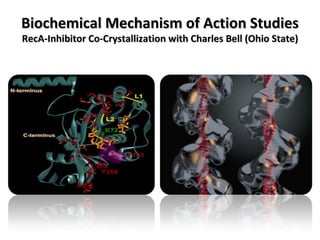
Biochemical Mechanism of Action Studies RecA-Inhibitor Co-Crystallization with Charles Bell (Ohio State)
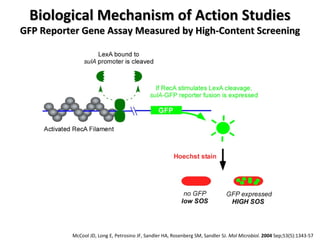
Biological Mechanism of Action Studies GFP Reporter Gene Assay Measured by High-Content Screening McCool JD, Long E, Petrosino JF, Sandler HA, Rosenberg SM, Sandler SJ.  Mol Microbiol .  2004  Sep;53(5):1343-57
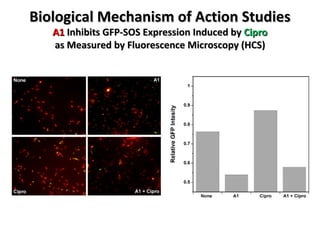
Biological Mechanism of Action Studies A1  Inhibits GFP-SOS Expression Induced by  Cipro as Measured by Fluorescence Microscopy (HCS)
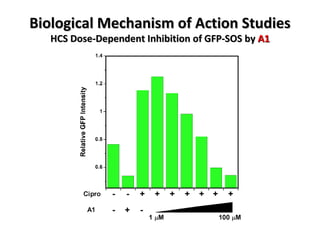
Biological Mechanism of Action Studies HCS Dose-Dependent Inhibition of GFP-SOS by  A1
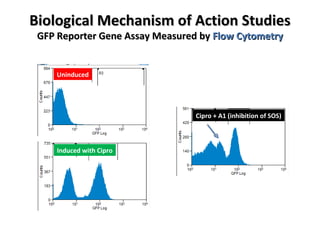
Biological Mechanism of Action Studies GFP Reporter Gene Assay Measured by  Flow Cytometry Induced with Cipro Uninduced Cipro + A1 (inhibition of SOS)
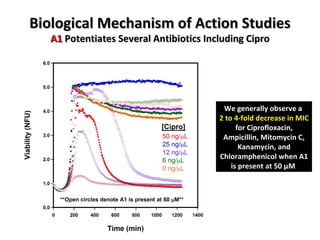
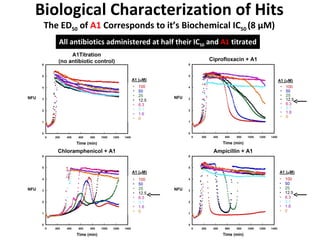
Biological Mechanism of Action Studies A1  Potentiates Several Antibiotics Including Cipro We generally observe a  2 to 4-fold decrease in MIC  for Ciprofloxacin, Ampicillin, Mitomycin C, Kanamycin, and Chloramphenicol when A1 is present at 50  μ M
Biological Characterization of Hits The ED 50  of  A1  Corresponds to it’s Biochemical IC 50  (8  μ M) All antibiotics administered at half their IC 50  and  A1  titrated
Biological Mechanism of Action Studies A1  Slows Antibiotic Resistance Development
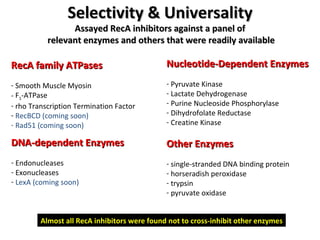
Selectivity & Universality Assayed RecA inhibitors against a panel of  relevant enzymes and others that were readily available RecA family ATPases Smooth Muscle Myosin F 1 -ATPase rho Transcription Termination Factor RecBCD (coming soon) Rad51 (coming soon) Nucleotide-Dependent Enzymes Pyruvate Kinase Lactate Dehydrogenase Purine Nucleoside Phosphorylase Dihydrofolate Reductase Creatine Kinase Other Enzymes single-stranded DNA binding protein horseradish peroxidase trypsin pyruvate oxidase DNA-dependent Enzymes Endonucleases Exonucleases LexA (coming soon) Almost all RecA inhibitors were found not to cross-inhibit other enzymes
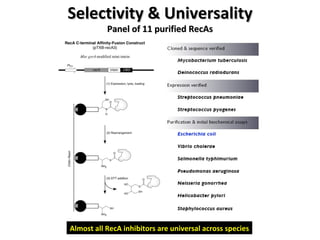
Selectivity & Universality Panel of 11 purified RecAs Almost all RecA inhibitors are universal across species
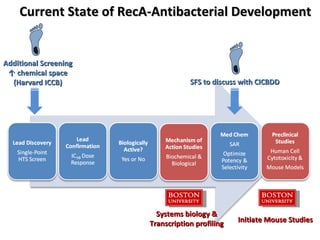
Current State of RecA-Antibacterial Development SFS to discuss with CICBDD Systems biology & Transcription profiling Additional Screening ↑  chemical space (Harvard ICCB) Initiate Mouse Studies
Howard Hughes Medical Institute (Boston University) Dr. James Collins Collins Lab Members University of Massachussets Dr. Steven Sandler Ohio State University - Dr. Charles Bell

RecA foscused antibacterial screening

  • 1.
  • 2.
    The Reality ofAntibiotics 2 million U.S. nosocomial infections/year 70% of these infections are resistant to at least one drug 90,000 die from these infections (up from 13,300 in 1992 – nearly 600% increase) MRSA kills more Americans than AIDS (18,000/year) and is 10 th leading cause of death in U.S. Worldwide antibiotic sales expected to increase from $22 to $26 billion by 2011 Resistance costs the U.S. healthcare system $6 billion/year Factors making this problem worse: Antibiotic misuse and overuse Lax antibiotic restrictions in some countries 50% antibiotics made in the U.S. are used on livestock in a prophylactic manner Dense populations Sports & locker rooms (see St. Louis Rams, Cleveland Browns, Washington Redskins) Bioterrorism International travel Source: Infectious Diseases Society of America (IDSA.org) and U.S. Center for Disease Control (cdc.gov)
  • 3.
    Dangerous Trends –Not a Laughing Matter Source: Clatworthy et al , Nature Chemical Biology, 3 , 541 - 548 (2007)
  • 4.
    Classic Approaches to Antibiotic Development ***In all cases, a heritable change to a bacterium’s DNA must be made*** Molecular Basis for Resistance Drug Targets
  • 5.
    New Pharmaceutical ApproachesNeeded New Targets Slow Antibiotic Resistance Potentiate Existing Antibiotics RecA
  • 6.
    RecA and theBacterial Stress Response DNA Damage RecA Repair DNA Damage Upregulate Mutation
  • 7.
    RecA is Activatedby DNA Damaging Stress… … But What Does it Do? ATP Signaling ATPase powered motor activity
  • 8.
    RecA Initiates the SOS Response to DNA Damage
  • 9.
    RecA and RecombinationPaired homologous DNA can come from a sister chromatid (high-fidelity repair) or from another organism (horizontal gene transfer)
  • 10.
    RecA and theAntibiotic Response Antibiotic Tolerance Antibiotic Resistance **Bactericidal antibiotics stimulate the production of DNA-damaging hydroxyl radicals** Concept: Kohanski et al. Cell . 2007 Sep 7;130(5):781-3.
  • 11.
    recA Knockoutsare More Sensitive to Bactericidal Antibiotics Kohanski et al. Cell . 2007 Sep 7;130(5):781-3.
  • 12.
    RecA: A Novel& Non-Classical Drug Target?
  • 13.
    Possible Therapeutic Outcomes of RecA Inhibition ?
  • 14.
  • 15.
    Where we lookedfor inhibitors Directed vs. random screening
  • 16.
    Conclusions Regarding theMetal Inhibitors Bismuth-dithiol inhibitors target two storage forms of RecA Wigle, Lee, Zeng and Singleton, submitted (2008)
  • 17.
    Conclusions Regarding theNucleotide Inhibitors Nucleotide Analogs are Conformationally Selective Competitive Inhibitors: N 6 –modifications target inactive monomers 2' and 3' modifications target the active conformation competitively Wigle , Gromova & Singleton, submitted (2008) Wigle, Lee & Singleton, Biochemistry (2006) K i ( μ M) % inhibition ATPase
  • 18.
    Directed Screening: IntuitiveDiscovery of Natural Product Inhibitors of RecA - The Ames and umu tests are quick and easy methods to determine if compounds are carcinogenic without the use of live animals - Thinking backwards, looked for compounds that inhibited mutation/SOS activation in these tests AMES TEST (Ames et al. Mutat. Res. 1975 , 31, 347 – 363) Bacteria incapable of His synthesis due to point mutation in His synthesis genes Expose to potential mutagen Plate on medium lacking His Mutagen (carcinogenic) Not a Mutagen (non-carcinogenic) umu TEST (Oda et al. Mutat. Res. 1985 , 147, 219 – 229) umuC promoter (LexA regulated) lacZ gene (encodes β -Gal ) umu test plasmid Expose to potential mutagen If compound is a mutagen (carcinogen) this Rx proceeds
  • 19.
    Directed Screening: IntuitiveDiscovery of Natural Product Inhibitors of RecA - Two major classes of natural products present in food sources were identified through a literature search for compounds/extracts that inhibited mutation (Ames) or SOS induction ( umu) Flavonoids Triterpenoids Quercetin Ursolic acid Betulinic acid Biflavonoids Hinokiflavone A total of 13 natural product phytoterpenoids and 53 synthetically modified phytoterpenoids (KH Lee, UNC) were subsequently screened and one modified phytoterpenoid has emerged as a potential lead.
  • 20.
    Target-Based Screening forRecA Inhibitors: Early Stage Development Lead Discovery Platform
  • 21.
    HTS of 70,000Compounds Used an Endpoint-Based P hospho m olybdate B lue ( PMB ) ATPase Assay for HTS A 650 Z′ = 0.73
  • 22.
  • 23.
    Library Mining ♦ Initial screens effectively mined various libraries and returned hits belonging to chemotype clades as defined by molecular scaffold and shared pharmacophores L
  • 24.
    Lead Discovery: ConfirmingLeads With IC 50 CLADE A (Biogen) IC 50 = 8 – 22 μ M A1 = Most potent CLADE B (Biogen) IC 50 = 22 – 104 μ M B1 = Most potent CLADE C (Biogen) IC 50 = 19 μ M CLADE L (NCI) IC 50 = 4 – 6 μ M CLADE M (NP) IC 50 = 38 – 61 μ M
  • 25.
    Time-consuming, low-throughput, laborius,tedious, antiquated, frustrating, error prone + Cipro Lead Discovery: Confirming Biological Activity Low-Throughput Viability Assay
  • 26.
    Lead Discovery: ConfirmingBiological Activity Higher-Throughput Viability Assay ex/em 465/595
  • 27.
    Confirming Biological Activity Use of Oxygen Sensor Microplates to Screen All Drug-Like Small Molecules IRA to Date for Cipro & Amp Synergism in E. coli ( & B. subtilis) synergistic toxic No effect Allows for a rapid Yes/No decision on whether to pursue hit as a lead A screen of 28 compounds +ve Ctrl Cipro Amp Cipro Amp Cipro Amp Cipro Amp
  • 28.
    Biochemical Mechanism ofAction Studies A1 Inhibits RecA In Vitro Strand Exchange 25 μ M A1
  • 29.
    RecA-ssDNA Direct BindingAssays A1 interferes with ssDNA Binding Lee, Wigle and Singleton Analytical Biochemistry . 2007 367(2):247
  • 30.
  • 31.
    HTS-Compatible Continuous ATPaseAssays Wigle and Singleton Bioorg. Med. Chem. Lett . 2007 Jun 15;17(12):3249-53 Using in end-point mode Z' = 0.87
  • 32.
    15 μM-nts 1 μ M-nts 10 μ M-nts 1 μ M-nts  15 μ M-nts increase ssDNA to 15 μ M-nts Biochemical Characterization of the Leads Quick test shows A1 appears to be competitive with ssDNA Add ssDNA to a fully inhibited reaction and it resumes RecA + ATP + ssDNA  ADP + Pi
  • 33.
    Biochemical Mechanism ofAction Studies Comprehensive Competition Titrations of A1 & ATP or ssDNA Michaelis-Menten Kinetics modified for cooperativity R = [RecA] S 0.5 ≈ K m R = [RecA] n = DNA/RecA stoichiometry (nts/monomer) D = [DNA] in nts K d = RecA-DNA binding dissociation constant
  • 34.
    Biochemical Mechanism ofAction Studies Comprehensive Competition Titrations of A1 & ATP or ssDNA S 0.5 ATP ( μ M) K d ssDNA ( μ M) V max ( μ M/min) V max ( μ M/min) A1 ( μ M) A1 ( μ M)
  • 35.
    Biochemical Mechanism ofAction Studies RecA-Inhibitor Co-Crystallization with Charles Bell (Ohio State)
  • 36.
    Biological Mechanism ofAction Studies GFP Reporter Gene Assay Measured by High-Content Screening McCool JD, Long E, Petrosino JF, Sandler HA, Rosenberg SM, Sandler SJ. Mol Microbiol . 2004 Sep;53(5):1343-57
  • 37.
    Biological Mechanism ofAction Studies A1 Inhibits GFP-SOS Expression Induced by Cipro as Measured by Fluorescence Microscopy (HCS)
  • 38.
    Biological Mechanism ofAction Studies HCS Dose-Dependent Inhibition of GFP-SOS by A1
  • 39.
    Biological Mechanism ofAction Studies GFP Reporter Gene Assay Measured by Flow Cytometry Induced with Cipro Uninduced Cipro + A1 (inhibition of SOS)
  • 40.
    Biological Mechanism ofAction Studies A1 Potentiates Several Antibiotics Including Cipro We generally observe a 2 to 4-fold decrease in MIC for Ciprofloxacin, Ampicillin, Mitomycin C, Kanamycin, and Chloramphenicol when A1 is present at 50 μ M
  • 41.
    Biological Characterization ofHits The ED 50 of A1 Corresponds to it’s Biochemical IC 50 (8 μ M) All antibiotics administered at half their IC 50 and A1 titrated
  • 42.
    Biological Mechanism ofAction Studies A1 Slows Antibiotic Resistance Development
  • 43.
    Selectivity & UniversalityAssayed RecA inhibitors against a panel of relevant enzymes and others that were readily available RecA family ATPases Smooth Muscle Myosin F 1 -ATPase rho Transcription Termination Factor RecBCD (coming soon) Rad51 (coming soon) Nucleotide-Dependent Enzymes Pyruvate Kinase Lactate Dehydrogenase Purine Nucleoside Phosphorylase Dihydrofolate Reductase Creatine Kinase Other Enzymes single-stranded DNA binding protein horseradish peroxidase trypsin pyruvate oxidase DNA-dependent Enzymes Endonucleases Exonucleases LexA (coming soon) Almost all RecA inhibitors were found not to cross-inhibit other enzymes
  • 44.
    Selectivity & UniversalityPanel of 11 purified RecAs Almost all RecA inhibitors are universal across species
  • 45.
    Current State ofRecA-Antibacterial Development SFS to discuss with CICBDD Systems biology & Transcription profiling Additional Screening ↑ chemical space (Harvard ICCB) Initiate Mouse Studies
  • 46.
    Howard Hughes MedicalInstitute (Boston University) Dr. James Collins Collins Lab Members University of Massachussets Dr. Steven Sandler Ohio State University - Dr. Charles Bell