Telemonitoring for Heart Failure Evidence & Practice Professor John G.F. Cleland Department of Cardiology, Hull Y o rk Medical School University of Hull Kingston-upon-Hull UK Conflict of Interest:  I have received honoraria and/or research support from Philips, Bosch, GE, Alere and St Jude
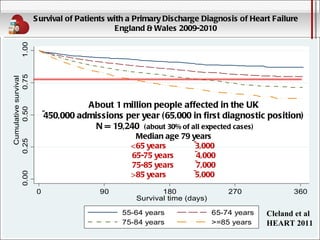
Audit Survival of Patients with a Primary Discharge Diagnosis of Heart Failure England & Wales 2009-2010 About 1 million people affected in the UK ~450,000 admissions per year (65,000 in first diagnostic position) N = 19,240  (about 30% of all expected cases) Median age 79 years <65 years  ~3,000  65-75 years  ~4,000 75-85 years  ~7,000 >85 years  ~5,000  Cleland et al HEART 2011
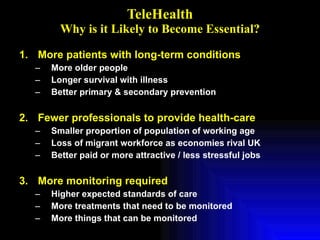
TeleHealth Why is it Likely to Become Essential? More patients with long-term conditions More older people Longer survival with illness Better primary & secondary prevention Fewer professionals to provide health-care Smaller proportion of population of working age Loss of migrant workforce as economies rival UK Better paid or more attractive / less stressful jobs More monitoring required Higher expected standards of care More treatments that need to be monitored More things that can be monitored
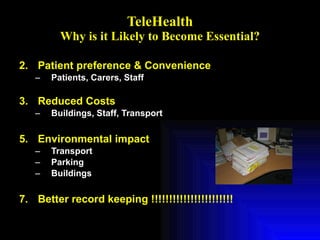
TeleHealth Why is it Likely to Become Essential? Patient preference & Convenience Patients, Carers, Staff Reduced Costs Buildings, Staff, Transport Environmental impact Transport Parking Buildings Better record keeping !!!!!!!!!!!!!!!!!!!!!!!
The Opportunity of Chronic Illness Most patients soon learn routines Or have relatives / friends that do Most patients are interested in maintaining or improving their health Patients are an ‘inexpensive’ but neglected health-care provider opportunity Invest in patients Education Active Partnership Empowerment
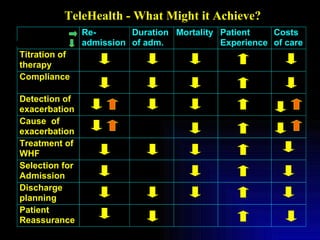
TeleHealth - What Might it Achieve? Ultimate Intermediate
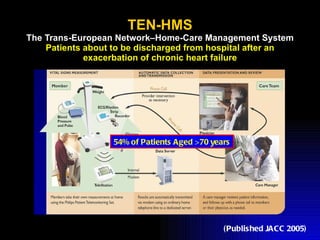
TEN-HMS The Trans-European Network–Home-Care Management System Patients about to be discharged from hospital after an exacerbation of chronic heart failure (Published JACC 2005) 54% of Patients Aged >70 years
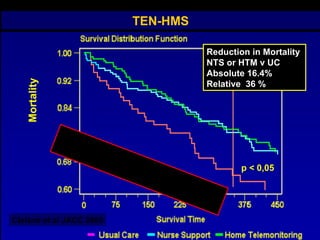
p < 0,05 Mortality Cleland et al JACC 2005 TEN-HMS Reduction in Mortality NTS or HTM v UC Absolute 16.4% Relative  36 % No reduction in hospitalisation Shortening of hospital stay with HTM
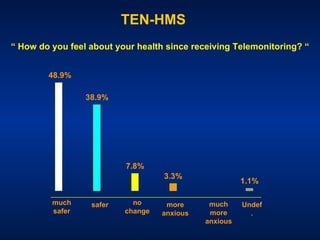
TEN-HMS much safer safer no change more anxious much more anxious “  How do you feel about your health since receiving Telemonitoring? “ Undef.
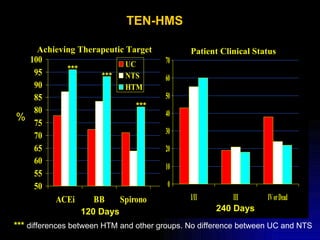
TEN-HMS 120 Days 240 Days % *** *** *** ***  differences between HTM and other groups. No difference between UC and NTS Achieving Therapeutic Target 240 Days Patient Clinical Status
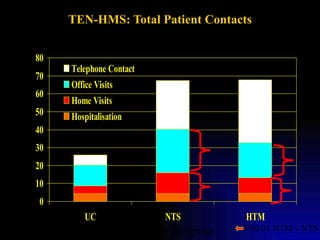
TEN-HMS: Total Patient Contacts Contacts Per 1,000 Days Alive and Out of Hospital # # under-reporting of events likely in this group P<0.01 HTM v NTS
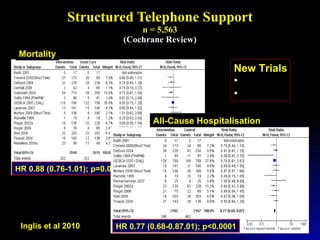
Structured Telephone Support n = 5,563 (Cochrane Review) Mortality Inglis et al 2010  HR 0.88 (0.76-1.01); p=0.08 New Trials Tele-HF TEHAF All-Cause Hospitalisation HR 0.77 (0.68-0.87.01); p<0.0001
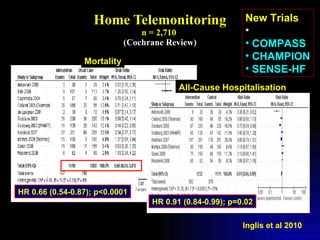
Home Telemonitoring n = 2,710   (Cochrane Review) Inglis et al 2010   Mortality HR 0.66 (0.54-0.87); p<0.0001 New Trials TIM-HF COMPASS CHAMPION SENSE-HF All-Cause Hospitalisation HR 0.91 (0.84-0.99); p=0.02
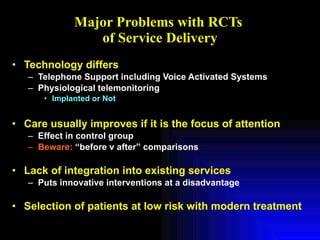
Major Problems with RCTs  of Service Delivery Technology differs Telephone Support including Voice Activated Systems Physiological telemonitoring Implanted or Not Care usually improves if it is the focus of attention Effect in control group Beware:  “before v after” comparisons Lack of integration into existing services Puts innovative interventions at a disadvantage Selection of patients at low risk with modern treatment
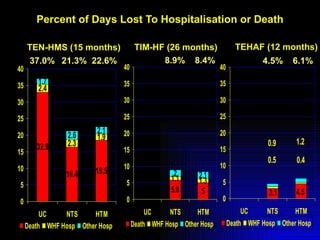
Percent of Days Lost To Hospitalisation or Death 8.9%  8.4% 37.0% 21.3%  22.6% TEN-HMS (15 months) TIM-HF (26 months) TEHAF (12 months) 4.5%  6.1%
What Have We Done for TeleHealth in Hull? Established  International reference site (LifeLab) for HF epidemiology & research International reputation for research excellence in telehealth A model telehealth service Grants TEN-HMS Four FP7 grants relating to telehealth & heart failure EDRF Industry Partnerships Philips, GE, Bosch, Cardiomems, St Jude + others Publications >500 PubMed citations in related fields TEN-HMS, Concept Papers, Editorials Systematic Reviews (EJHF, BMJ & Cochrane) Inventions Dynamic risk analysis Complex management algorithms
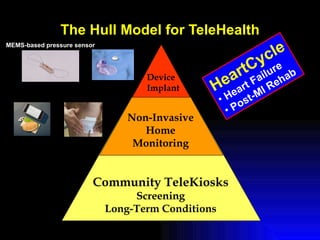
The Hull Model for TeleHealth Non-Invasive Home Monitoring Community TeleKiosks Screening Long-Term Conditions Device Implant HeartCycle Heart Failure Post-MI Rehab MEMS-based pressure sensor
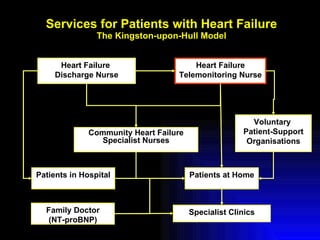
Services for Patients with Heart Failure The Kingston-upon-Hull Model Heart Failure  Discharge Nurse Heart Failure Telemonitoring Nurse Community Heart Failure Specialist Nurses Patients in Hospital Patients at Home Voluntary  Patient-Support Organisations Specialist Clinics Family Doctor (NT-proBNP)
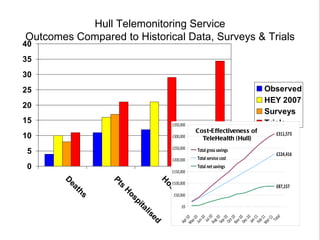
Cost-Effectiveness of  TeleHealth (Hull)
Where Next? Interactive TV New monitoring technologies Implanted devices More intelligent use of the patient data Investing in patients as health-care providers Centre for Telehealth
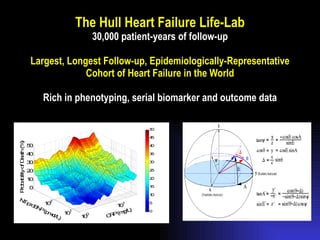
The Hull Heart Failure Life-Lab 30,000 patient-years of follow-up Largest, Longest Follow-up, Epidemiologically-Representative Cohort of Heart Failure in the World Rich in phenotyping, serial biomarker and outcome data
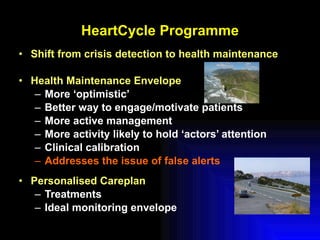
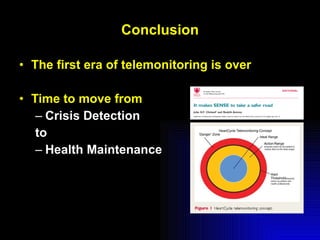
Shift from crisis detection to health maintenance Health Maintenance Envelope More ‘optimistic’ Better way to engage/motivate patients More active management More activity likely to hold ‘actors’ attention Clinical calibration Addresses the issue of false alerts Personalised Careplan Treatments Ideal monitoring envelope HeartCycle Programme
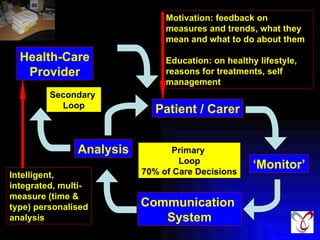
Patient / Carer Communication  System ‘ Monitor’ Analysis Health-Care Provider Secondary  Loop Primary  Loop 70% of Care Decisions Motivation: feedback on measures and trends, what they mean and what to do about them Education: on healthy lifestyle, reasons for treatments, self management Intelligent, integrated, multi-measure (time & type) personalised analysis
Opportunities for TeleHealth Change in Philosophy Investment in patients (rather than experts) Patients as first and possibly main tier of healthcare Communication  Patient, community health & social services, specialists Common health record  Checked (at least in part) by the patient themselves Decision support analysis Patient & professional support Research potential +++ Healthcare innovation   Pharmaceutical industry especially Route to faster (ethical) adoption Convenience & Preference Patient, Carer, Health Professional Environmental impact
Conclusion The first era of telemonitoring is over Time to move from  Crisis Detection  to  Health Maintenance
 

Wsdanjohncleland

  • 1.
    Telemonitoring for HeartFailure Evidence & Practice Professor John G.F. Cleland Department of Cardiology, Hull Y o rk Medical School University of Hull Kingston-upon-Hull UK Conflict of Interest: I have received honoraria and/or research support from Philips, Bosch, GE, Alere and St Jude
  • 2.
    Audit Survival ofPatients with a Primary Discharge Diagnosis of Heart Failure England & Wales 2009-2010 About 1 million people affected in the UK ~450,000 admissions per year (65,000 in first diagnostic position) N = 19,240 (about 30% of all expected cases) Median age 79 years <65 years ~3,000 65-75 years ~4,000 75-85 years ~7,000 >85 years ~5,000 Cleland et al HEART 2011
  • 3.
    TeleHealth Why isit Likely to Become Essential? More patients with long-term conditions More older people Longer survival with illness Better primary & secondary prevention Fewer professionals to provide health-care Smaller proportion of population of working age Loss of migrant workforce as economies rival UK Better paid or more attractive / less stressful jobs More monitoring required Higher expected standards of care More treatments that need to be monitored More things that can be monitored
  • 4.
    TeleHealth Why isit Likely to Become Essential? Patient preference & Convenience Patients, Carers, Staff Reduced Costs Buildings, Staff, Transport Environmental impact Transport Parking Buildings Better record keeping !!!!!!!!!!!!!!!!!!!!!!!
  • 5.
    The Opportunity ofChronic Illness Most patients soon learn routines Or have relatives / friends that do Most patients are interested in maintaining or improving their health Patients are an ‘inexpensive’ but neglected health-care provider opportunity Invest in patients Education Active Partnership Empowerment
  • 6.
    TeleHealth - WhatMight it Achieve? Ultimate Intermediate
  • 7.
    TEN-HMS The Trans-EuropeanNetwork–Home-Care Management System Patients about to be discharged from hospital after an exacerbation of chronic heart failure (Published JACC 2005) 54% of Patients Aged >70 years
  • 8.
    p < 0,05Mortality Cleland et al JACC 2005 TEN-HMS Reduction in Mortality NTS or HTM v UC Absolute 16.4% Relative 36 % No reduction in hospitalisation Shortening of hospital stay with HTM
  • 9.
    TEN-HMS much safersafer no change more anxious much more anxious “ How do you feel about your health since receiving Telemonitoring? “ Undef.
  • 10.
    TEN-HMS 120 Days240 Days % *** *** *** *** differences between HTM and other groups. No difference between UC and NTS Achieving Therapeutic Target 240 Days Patient Clinical Status
  • 11.
    TEN-HMS: Total PatientContacts Contacts Per 1,000 Days Alive and Out of Hospital # # under-reporting of events likely in this group P<0.01 HTM v NTS
  • 12.
    Structured Telephone Supportn = 5,563 (Cochrane Review) Mortality Inglis et al 2010 HR 0.88 (0.76-1.01); p=0.08 New Trials Tele-HF TEHAF All-Cause Hospitalisation HR 0.77 (0.68-0.87.01); p<0.0001
  • 13.
    Home Telemonitoring n= 2,710 (Cochrane Review) Inglis et al 2010 Mortality HR 0.66 (0.54-0.87); p<0.0001 New Trials TIM-HF COMPASS CHAMPION SENSE-HF All-Cause Hospitalisation HR 0.91 (0.84-0.99); p=0.02
  • 14.
    Major Problems withRCTs of Service Delivery Technology differs Telephone Support including Voice Activated Systems Physiological telemonitoring Implanted or Not Care usually improves if it is the focus of attention Effect in control group Beware: “before v after” comparisons Lack of integration into existing services Puts innovative interventions at a disadvantage Selection of patients at low risk with modern treatment
  • 15.
    Percent of DaysLost To Hospitalisation or Death 8.9% 8.4% 37.0% 21.3% 22.6% TEN-HMS (15 months) TIM-HF (26 months) TEHAF (12 months) 4.5% 6.1%
  • 16.
    What Have WeDone for TeleHealth in Hull? Established International reference site (LifeLab) for HF epidemiology & research International reputation for research excellence in telehealth A model telehealth service Grants TEN-HMS Four FP7 grants relating to telehealth & heart failure EDRF Industry Partnerships Philips, GE, Bosch, Cardiomems, St Jude + others Publications >500 PubMed citations in related fields TEN-HMS, Concept Papers, Editorials Systematic Reviews (EJHF, BMJ & Cochrane) Inventions Dynamic risk analysis Complex management algorithms
  • 17.
    The Hull Modelfor TeleHealth Non-Invasive Home Monitoring Community TeleKiosks Screening Long-Term Conditions Device Implant HeartCycle Heart Failure Post-MI Rehab MEMS-based pressure sensor
  • 18.
    Services for Patientswith Heart Failure The Kingston-upon-Hull Model Heart Failure Discharge Nurse Heart Failure Telemonitoring Nurse Community Heart Failure Specialist Nurses Patients in Hospital Patients at Home Voluntary Patient-Support Organisations Specialist Clinics Family Doctor (NT-proBNP)
  • 19.
    Cost-Effectiveness of TeleHealth (Hull)
  • 20.
    Where Next? InteractiveTV New monitoring technologies Implanted devices More intelligent use of the patient data Investing in patients as health-care providers Centre for Telehealth
  • 21.
    The Hull HeartFailure Life-Lab 30,000 patient-years of follow-up Largest, Longest Follow-up, Epidemiologically-Representative Cohort of Heart Failure in the World Rich in phenotyping, serial biomarker and outcome data
  • 22.
    Shift from crisisdetection to health maintenance Health Maintenance Envelope More ‘optimistic’ Better way to engage/motivate patients More active management More activity likely to hold ‘actors’ attention Clinical calibration Addresses the issue of false alerts Personalised Careplan Treatments Ideal monitoring envelope HeartCycle Programme
  • 23.
    Patient / CarerCommunication System ‘ Monitor’ Analysis Health-Care Provider Secondary Loop Primary Loop 70% of Care Decisions Motivation: feedback on measures and trends, what they mean and what to do about them Education: on healthy lifestyle, reasons for treatments, self management Intelligent, integrated, multi-measure (time & type) personalised analysis
  • 24.
    Opportunities for TeleHealthChange in Philosophy Investment in patients (rather than experts) Patients as first and possibly main tier of healthcare Communication Patient, community health & social services, specialists Common health record Checked (at least in part) by the patient themselves Decision support analysis Patient & professional support Research potential +++ Healthcare innovation Pharmaceutical industry especially Route to faster (ethical) adoption Convenience & Preference Patient, Carer, Health Professional Environmental impact
  • 25.
    Conclusion The firstera of telemonitoring is over Time to move from Crisis Detection to Health Maintenance
  • 26.