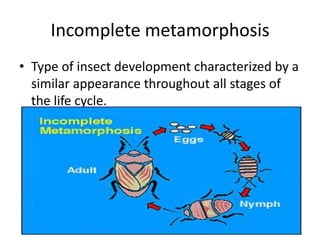
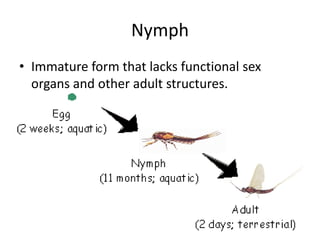
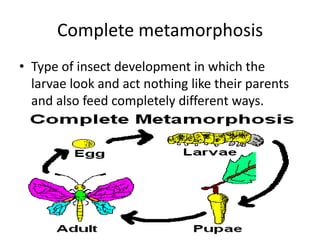
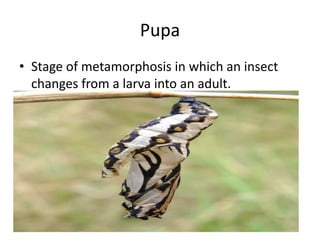
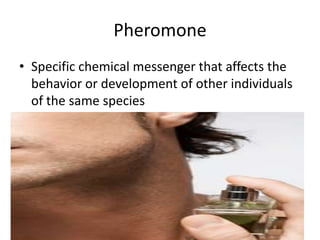
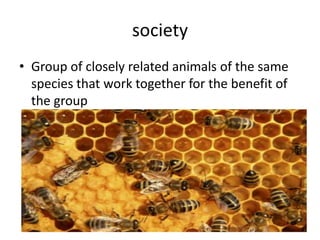
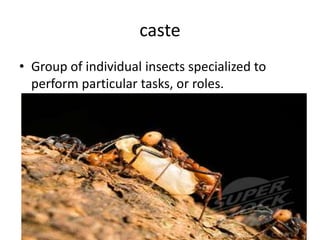
The document discusses insect development, summarizing that insects either undergo incomplete metamorphosis, where nymphs resemble adults, or complete metamorphosis, where larvae and adults differ. It notes pupae are the stage between larvae and adulthood. Societies are formed by ants, bees and termites through castes that each perform specific tasks, and pheromones affect behavior within a species. Key concepts are that insects have three body parts and undergo metamorphosis, either incomplete or complete.


![3._Classification_of__Arthropods_035051[1].pptx](https://cdn.slidesharecdn.com/ss_thumbnails/3-251218105131-36d381f8-thumbnail.jpg?width=640&height=640&fit=bounds)


