Brain Development in   Children   Genes vs. Environment
Development   of the human brain is   crucial   in the   first 2 years   of a person’s life.  Genes  +  Environment  = Full  development
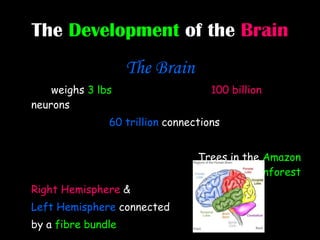
The  Development  of the  Brain The Brain weighs  3 lbs 100 billion  neurons 60 trillion  connections  Trees in the  Amazon Rainforest Right Hemisphere  &  Left Hemisphere  connected  by a  fibre bundle
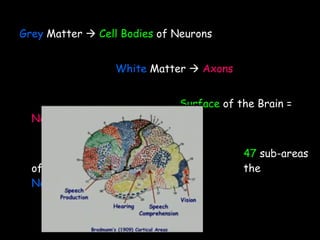
Grey   Matter     Cell Bodies  of Neurons White  Matter     Axons Surface  of the Brain =  Neocortex 47   sub-areas of  the  Neocortex
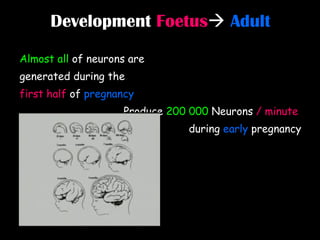
Development  Foetus    Adult Almost all  of neurons are  generated during the  first half  of  pregnancy Produce  200 000  Neurons  / minute   during  early  pregnancy
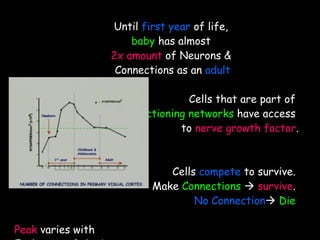
Until   first year   of life,   baby   has almost   2x amount   of Neurons &   Connections as   an   adult Cells that are part of  functioning networks  have access  to  nerve growth factor . Cells  compete  to survive.  Make  Connections      survive .  No Connection   Die   Peak  varies with  Each  area  of the brain,  but same  pattern
Nature   vs.   Nurture Fight between  Nature vs. Nurture . Actually,  Nature  +  Nurture Nature   Interaction    Nurture Brain :   -Plan  governed  by  genetic  expression - Influenced  by  experience  of the organism
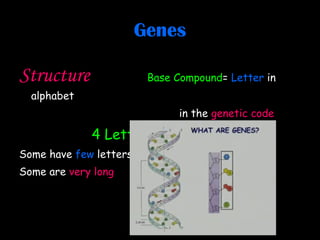
Genes Structure Base Compound =  Letter  in alphabet  in the  genetic code   4 Letters  (A,C,G,U) Some have   few   letters.  Some are  very long
Function Genes  Contribute  to talent,  language, eye color, disease, etc. Very rare  that a gene is  solely responsible  for a  particular  structure or function
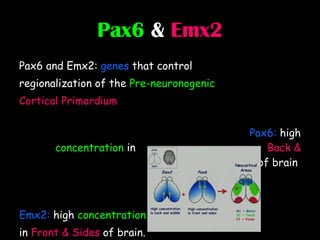
Pax6  &  Emx2 Pax6 and Emx2:  genes  that control  regionalization of the  Pre-neuronogenic   Cortical Primordium   Pax6:  high  concentration  in  Back & Middle  of brain  Emx2:  high  concentration   in  Front & Sides  of brain.
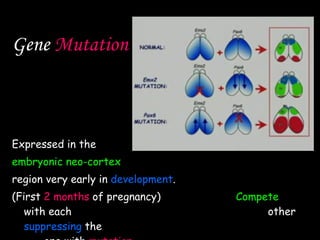
Gene  Mutation Expressed in the  embryonic neo-cortex   region very early in  development .  (First  2 months  of pregnancy)   Compete   with each  other  suppressing   the  one   with  mutation
Environment Plays an essential  role   in determining which  cells  & connections  are  lost   or stabilized . Big  effect  on the brain’s  development
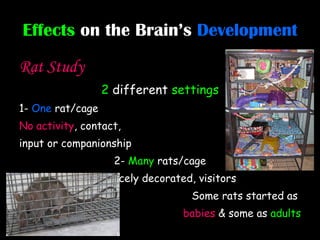
Effects   on the Brain’s   Development Rat Study 2  different  settings 1-  One  rat/cage No   activity , contact,  input or companionship 2-  Many  rats/cage Toys , nicely decorated, visitors  Some rats started as  babies  & some as  adults
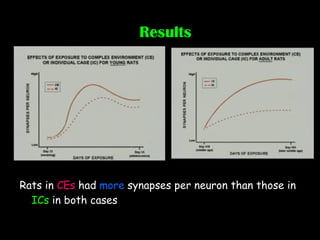
Results Rats in  CEs  had  more  synapses per neuron than those in  ICs  in both cases
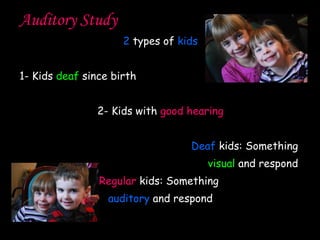
Auditory Study 2  types of  kids 1- Kids  deaf  since birth 2- Kids with  good hearing Deaf  kids: Something  visual  and respond  Regular  kids: Something  auditory  and respond
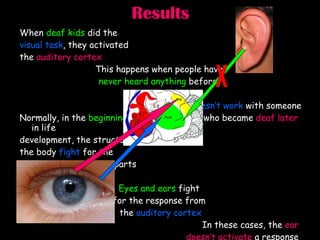
Results When  deaf kids  did the  visual task , they activated  the  auditory cortex This happens when people have  never heard anything  before.    Doesn’t work  with someone Normally, in the  beginning  of    who became  deaf later  in life development, the structures of  the body  fight  for the  response  from certain parts  of the brain.  Eyes and ears  fight  for the response from  the  auditory cortex In these cases, the  ear  doesn’t activate  a response  because no sound is heard,  so the  eyes take over  the  function of this area X

Brain development in children

  • 1.
    Brain Development in Children Genes vs. Environment
  • 2.
    Development of the human brain is crucial in the first 2 years of a person’s life. Genes + Environment = Full development
  • 3.
    The Development of the Brain The Brain weighs 3 lbs 100 billion neurons 60 trillion connections Trees in the Amazon Rainforest Right Hemisphere & Left Hemisphere connected by a fibre bundle
  • 4.
    Grey Matter  Cell Bodies of Neurons White Matter  Axons Surface of the Brain = Neocortex 47 sub-areas of the Neocortex
  • 5.
    Development Foetus Adult Almost all of neurons are generated during the first half of pregnancy Produce 200 000 Neurons / minute during early pregnancy
  • 6.
    Until first year of life, baby has almost 2x amount of Neurons & Connections as an adult Cells that are part of functioning networks have access to nerve growth factor . Cells compete to survive. Make Connections  survive . No Connection  Die Peak varies with Each area of the brain, but same pattern
  • 7.
    Nature vs. Nurture Fight between Nature vs. Nurture . Actually, Nature + Nurture Nature  Interaction  Nurture Brain : -Plan governed by genetic expression - Influenced by experience of the organism
  • 8.
    Genes Structure BaseCompound = Letter in alphabet in the genetic code 4 Letters (A,C,G,U) Some have few letters. Some are very long
  • 9.
    Function Genes Contribute to talent, language, eye color, disease, etc. Very rare that a gene is solely responsible for a particular structure or function
  • 10.
    Pax6 & Emx2 Pax6 and Emx2: genes that control regionalization of the Pre-neuronogenic Cortical Primordium Pax6: high concentration in Back & Middle of brain Emx2: high concentration in Front & Sides of brain.
  • 11.
    Gene MutationExpressed in the embryonic neo-cortex region very early in development . (First 2 months of pregnancy) Compete with each other suppressing the one with mutation
  • 12.
    Environment Plays anessential role in determining which cells & connections are lost or stabilized . Big effect on the brain’s development
  • 13.
    Effects on the Brain’s Development Rat Study 2 different settings 1- One rat/cage No activity , contact, input or companionship 2- Many rats/cage Toys , nicely decorated, visitors Some rats started as babies & some as adults
  • 14.
    Results Rats in CEs had more synapses per neuron than those in ICs in both cases
  • 15.
    Auditory Study 2 types of kids 1- Kids deaf since birth 2- Kids with good hearing Deaf kids: Something visual and respond Regular kids: Something auditory and respond
  • 16.
    Results When deaf kids did the visual task , they activated the auditory cortex This happens when people have never heard anything before. Doesn’t work with someone Normally, in the beginning of who became deaf later in life development, the structures of the body fight for the response from certain parts of the brain. Eyes and ears fight for the response from the auditory cortex In these cases, the ear doesn’t activate a response because no sound is heard, so the eyes take over the function of this area X