 Introduction of Water Pollution.
 What is Water Pollution?
 What are the main Types of Water Pollution?
 How do we know when Water is Polluted?
 What are the causes of water Pollution?
 What are the effects of water pollution?
 How can we stop water pollution?
 Our clean future.
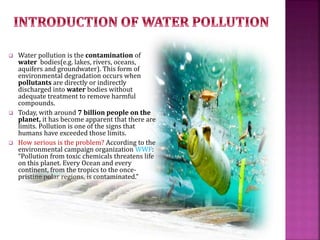
 Water pollution is the contamination of
water bodies(e.g. lakes, rivers, oceans,
aquifers and groundwater). This form of
environmental degradation occurs when
pollutants are directly or indirectly
discharged into water bodies without
adequate treatment to remove harmful
compounds.
 Today, with around 7 billion people on the
planet, it has become apparent that there are
limits. Pollution is one of the signs that
humans have exceeded those limits.
 How serious is the problem? According to the
environmental campaign organization WWF:
“Pollution from toxic chemicals threatens life
on this planet. Every Ocean and every
continent, from the tropics to the once-
pristine polar regions, is contaminated.”
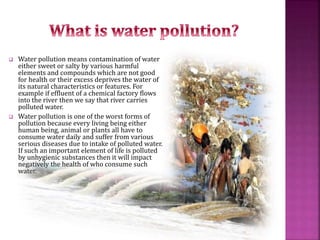
 Water pollution means contamination of water
either sweet or salty by various harmful
elements and compounds which are not good
for health or their excess deprives the water of
its natural characteristics or features. For
example if effluent of a chemical factory flows
into the river then we say that river carries
polluted water.
 Water pollution is one of the worst forms of
pollution because every living being either
human being, animal or plants all have to
consume water daily and suffer from various
serious diseases due to intake of polluted water.
If such an important element of life is polluted
by unhygienic substances then it will impact
negatively the health of who consume such
water.
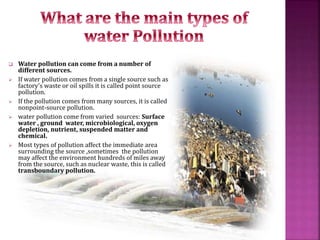
 Water pollution can come from a number of
different sources.
 If water pollution comes from a single source such as
factory’s waste or oil spills it is called point source
pollution.
 If the pollution comes from many sources, it is called
nonpoint-source pollution.
 water pollution come from varied sources: Surface
water , ground water, microbiological, oxygen
depletion, nutrient, suspended matter and
chemical.
 Most types of pollution affect the immediate area
surrounding the source ,sometimes the pollution
may affect the environment hundreds of miles away
from the source, such as nuclear waste, this is called
transboundary pollution.
 There are two main ways of measuring the quality
of water.
 One is to take samples of the water and measure the
concentrations of different chemicals that it contains.
If the chemicals are dangerous or the concentrations
are too great, we can regard the water as polluted.
Measurements like this are known as chemical
indicators of water quality.
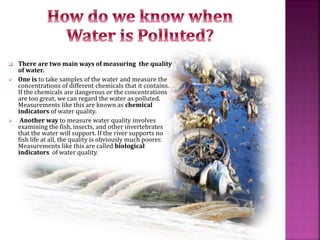
 Another way to measure water quality involves
examining the fish, insects, and other invertebrates
that the water will support. If the river supports no
fish life at all, the quality is obviously much poorer.
Measurements like this are called biological
indicators of water quality.
 Water pollution has many different causes.
 Sewage
• Around half of all ocean pollution is caused by
sewage and waste water. Each year, the world
generates perhaps 5-10 billion tons of industrial
waste, much of which is pumped untreated into
rivers, oceans, and other waterways.
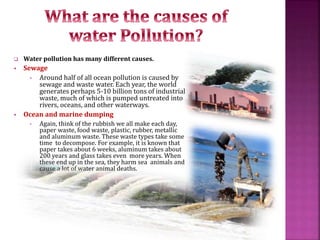
 Ocean and marine dumping
• Again, think of the rubbish we all make each day,
paper waste, food waste, plastic, rubber, metallic
and aluminum waste. These waste types take some
time to decompose. For example, it is known that
paper takes about 6 weeks, aluminum takes about
200 years and glass takes even more years. When
these end up in the sea, they harm sea animals and
cause a lot of water animal deaths.
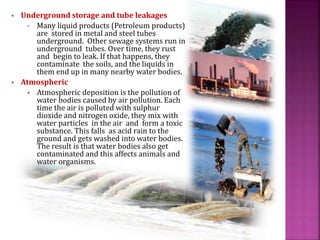
 Underground storage and tube leakages
• Many liquid products (Petroleum products)
are stored in metal and steel tubes
underground. Other sewage systems run in
underground tubes. Over time, they rust
and begin to leak. If that happens, they
contaminate the soils, and the liquids in
them end up in many nearby water bodies.
 Atmospheric
 Atmospheric deposition is the pollution of
water bodies caused by air pollution. Each
time the air is polluted with sulphur
dioxide and nitrogen oxide, they mix with
water particles in the air and form a toxic
substance. This falls as acid rain to the
ground and gets washed into water bodies.
The result is that water bodies also get
contaminated and this affects animals and
water organisms.
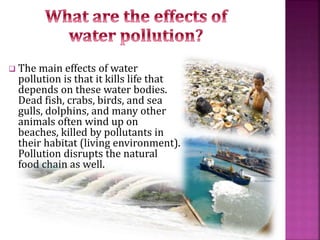
 The main effects of water
pollution is that it kills life that
depends on these water bodies.
Dead fish, crabs, birds, and sea
gulls, dolphins, and many other
animals often wind up on
beaches, killed by pollutants in
their habitat (living environment).
Pollution disrupts the natural
food chain as well.
?
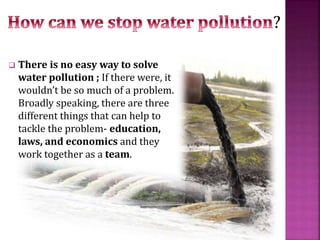
 There is no easy way to solve
water pollution ; If there were, it
wouldn’t be so much of a problem.
Broadly speaking, there are three
different things that can help to
tackle the problem- education,
laws, and economics and they
work together as a team.
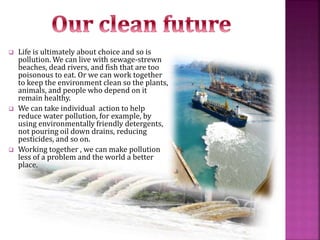
 Life is ultimately about choice and so is
pollution. We can live with sewage-strewn
beaches, dead rivers, and fish that are too
poisonous to eat. Or we can work together
to keep the environment clean so the plants,
animals, and people who depend on it
remain healthy.
 We can take individual action to help
reduce water pollution, for example, by
using environmentally friendly detergents,
not pouring oil down drains, reducing
pesticides, and so on.
 Working together , we can make pollution
less of a problem and the world a better
place.
Water pollution

Water pollution

  • 3.
     Introduction ofWater Pollution.  What is Water Pollution?  What are the main Types of Water Pollution?  How do we know when Water is Polluted?  What are the causes of water Pollution?  What are the effects of water pollution?  How can we stop water pollution?  Our clean future.
  • 4.
     Water pollutionis the contamination of water bodies(e.g. lakes, rivers, oceans, aquifers and groundwater). This form of environmental degradation occurs when pollutants are directly or indirectly discharged into water bodies without adequate treatment to remove harmful compounds.  Today, with around 7 billion people on the planet, it has become apparent that there are limits. Pollution is one of the signs that humans have exceeded those limits.  How serious is the problem? According to the environmental campaign organization WWF: “Pollution from toxic chemicals threatens life on this planet. Every Ocean and every continent, from the tropics to the once- pristine polar regions, is contaminated.”
  • 5.
     Water pollutionmeans contamination of water either sweet or salty by various harmful elements and compounds which are not good for health or their excess deprives the water of its natural characteristics or features. For example if effluent of a chemical factory flows into the river then we say that river carries polluted water.  Water pollution is one of the worst forms of pollution because every living being either human being, animal or plants all have to consume water daily and suffer from various serious diseases due to intake of polluted water. If such an important element of life is polluted by unhygienic substances then it will impact negatively the health of who consume such water.
  • 6.
     Water pollutioncan come from a number of different sources.  If water pollution comes from a single source such as factory’s waste or oil spills it is called point source pollution.  If the pollution comes from many sources, it is called nonpoint-source pollution.  water pollution come from varied sources: Surface water , ground water, microbiological, oxygen depletion, nutrient, suspended matter and chemical.  Most types of pollution affect the immediate area surrounding the source ,sometimes the pollution may affect the environment hundreds of miles away from the source, such as nuclear waste, this is called transboundary pollution.
  • 7.
     There aretwo main ways of measuring the quality of water.  One is to take samples of the water and measure the concentrations of different chemicals that it contains. If the chemicals are dangerous or the concentrations are too great, we can regard the water as polluted. Measurements like this are known as chemical indicators of water quality.  Another way to measure water quality involves examining the fish, insects, and other invertebrates that the water will support. If the river supports no fish life at all, the quality is obviously much poorer. Measurements like this are called biological indicators of water quality.
  • 8.
     Water pollutionhas many different causes.  Sewage • Around half of all ocean pollution is caused by sewage and waste water. Each year, the world generates perhaps 5-10 billion tons of industrial waste, much of which is pumped untreated into rivers, oceans, and other waterways.  Ocean and marine dumping • Again, think of the rubbish we all make each day, paper waste, food waste, plastic, rubber, metallic and aluminum waste. These waste types take some time to decompose. For example, it is known that paper takes about 6 weeks, aluminum takes about 200 years and glass takes even more years. When these end up in the sea, they harm sea animals and cause a lot of water animal deaths.
  • 9.
     Underground storageand tube leakages • Many liquid products (Petroleum products) are stored in metal and steel tubes underground. Other sewage systems run in underground tubes. Over time, they rust and begin to leak. If that happens, they contaminate the soils, and the liquids in them end up in many nearby water bodies.  Atmospheric  Atmospheric deposition is the pollution of water bodies caused by air pollution. Each time the air is polluted with sulphur dioxide and nitrogen oxide, they mix with water particles in the air and form a toxic substance. This falls as acid rain to the ground and gets washed into water bodies. The result is that water bodies also get contaminated and this affects animals and water organisms.
  • 10.
     The maineffects of water pollution is that it kills life that depends on these water bodies. Dead fish, crabs, birds, and sea gulls, dolphins, and many other animals often wind up on beaches, killed by pollutants in their habitat (living environment). Pollution disrupts the natural food chain as well.
  • 11.
    ?  There isno easy way to solve water pollution ; If there were, it wouldn’t be so much of a problem. Broadly speaking, there are three different things that can help to tackle the problem- education, laws, and economics and they work together as a team.
  • 12.
     Life isultimately about choice and so is pollution. We can live with sewage-strewn beaches, dead rivers, and fish that are too poisonous to eat. Or we can work together to keep the environment clean so the plants, animals, and people who depend on it remain healthy.  We can take individual action to help reduce water pollution, for example, by using environmentally friendly detergents, not pouring oil down drains, reducing pesticides, and so on.  Working together , we can make pollution less of a problem and the world a better place.