Occupational Health & Safety in the Office Hazardous Substances It is very important to know what is dangerous In the photocopying room if you don’t take good care of the chemical & ink
Storage Maintain clear separation of storage of hazardous substances from non-hazardous substances.  Ensure that all hazardous substances are kept in undamaged containers with secure caps or lids.
Handling Employees should obtain and read instructions for use, and know safe handling precautions to take before working with a hazardous substance.  It is very important to handle the hazardous substance in care.
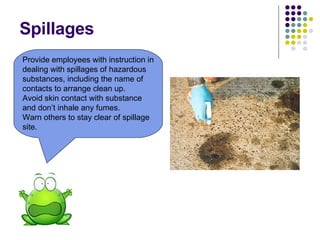
Spillages Provide employees with instruction in dealing with spillages of hazardous substances, including the name of contacts to arrange clean up.  Avoid skin contact with substance and don’t inhale any fumes.  Warn others to stay clear of spillage site.
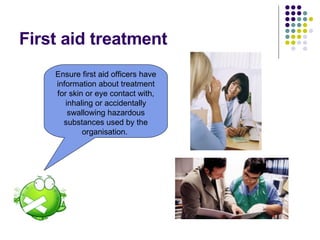
First aid treatment Ensure first aid officers have information about treatment for skin or eye contact with, inhaling or accidentally swallowing hazardous substances used by the organisation.
Other Hazardous Substances Polluted river Toxic Chemical Chemical Explosion
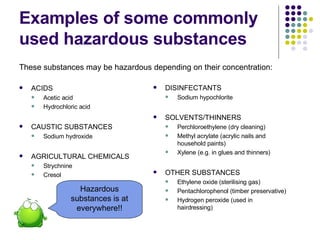
Examples of some commonly used hazardous substances These substances may be hazardous depending on their concentration: ACIDS Acetic acid Hydrochloric acid CAUSTIC SUBSTANCES Sodium hydroxide AGRICULTURAL CHEMICALS Strychnine Cresol DISINFECTANTS Sodium hypochlorite SOLVENTS/THINNERS Perchloroethylene (dry cleaning) Methyl acrylate (acrylic nails and household paints) Xylene (e.g. in glues and thinners) OTHER SUBSTANCES Ethylene oxide (sterilising gas) Pentachlorophenol (timber preservative) Hydrogen peroxide (used in hairdressing) Hazardous substances is at everywhere!!
For further information about Occupational Health & Safety in the Office please visit: www.worksafe.gov.au www.comcare.gov.au Knowledge is the way to Safety!! Thank you for watching!

Hazardous substances

  • 1.
    Occupational Health &Safety in the Office Hazardous Substances It is very important to know what is dangerous In the photocopying room if you don’t take good care of the chemical & ink
  • 2.
    Storage Maintain clearseparation of storage of hazardous substances from non-hazardous substances. Ensure that all hazardous substances are kept in undamaged containers with secure caps or lids.
  • 3.
    Handling Employees shouldobtain and read instructions for use, and know safe handling precautions to take before working with a hazardous substance. It is very important to handle the hazardous substance in care.
  • 4.
    Spillages Provide employeeswith instruction in dealing with spillages of hazardous substances, including the name of contacts to arrange clean up. Avoid skin contact with substance and don’t inhale any fumes. Warn others to stay clear of spillage site.
  • 5.
    First aid treatmentEnsure first aid officers have information about treatment for skin or eye contact with, inhaling or accidentally swallowing hazardous substances used by the organisation.
  • 6.
    Other Hazardous SubstancesPolluted river Toxic Chemical Chemical Explosion
  • 7.
    Examples of somecommonly used hazardous substances These substances may be hazardous depending on their concentration: ACIDS Acetic acid Hydrochloric acid CAUSTIC SUBSTANCES Sodium hydroxide AGRICULTURAL CHEMICALS Strychnine Cresol DISINFECTANTS Sodium hypochlorite SOLVENTS/THINNERS Perchloroethylene (dry cleaning) Methyl acrylate (acrylic nails and household paints) Xylene (e.g. in glues and thinners) OTHER SUBSTANCES Ethylene oxide (sterilising gas) Pentachlorophenol (timber preservative) Hydrogen peroxide (used in hairdressing) Hazardous substances is at everywhere!!
  • 8.
    For further informationabout Occupational Health & Safety in the Office please visit: www.worksafe.gov.au www.comcare.gov.au Knowledge is the way to Safety!! Thank you for watching!