Generations of Computer 
• The history of computer 
development is often referred to 
in reference to the different 
generations of computing devices. 
A generation refers to the state 
of improvement in the product 
development process. This term is 
also used in the different 
advancements of new computer 
technology. With each new
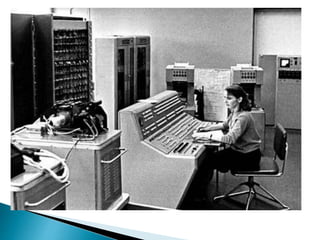
Main Features 
•Major Innovation - Vacuum Tubes 
•Main Memory - Punched Cards 
•Input Output Devices - Punched cards and papers 
•Languages - Low level machine language 
Operating System 
No operating system, human operators to set 
switches 
Size - Main frame for example ENIAC, EDVAC, 
UNIVAC
Advantages of First Generation 
1. Vacuum tubes were used as electronic component. 
2. Electronic digital computers were developed for the first 
time. 
3. These computers were the fastest calculating devices of 
that time. 
4. Computations were performed in millisecond. 
Disadvantages of First Generation 
1. Too large in size. 
2. They were unreliable. 
3. Induce a large amount of heat due to the vacuum tubes. 
5. Non portable. 
6. Limited commercial use.
Main Features 
•Major Innovation - Transistors as main component. 
•Main Memory - RAM and ROM. 
•External Storage - Magnetic tapes and Magnetic Disk. 
•Input Output Devices - Magnetic tapes and Magnetic Disk. 
•Languages - Assembly language, some high level 
languages for Example Basic, 
Cobol, Fortran. 
•Operating System - Human handles punched card. 
•Size - Main frame for example IBM-1401, NCR-300, IBM- 
600 etc.
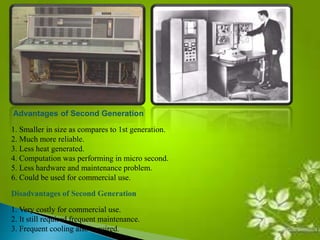
Advantages of Second Generation 
1. Smaller in size as compares to 1st generation. 
2. Much more reliable. 
3. Less heat generated. 
4. Computation was performing in micro second. 
5. Less hardware and maintenance problem. 
6. Could be used for commercial use. 
Disadvantages of Second Generation 
1. Very costly for commercial use. 
2. It still required frequent maintenance. 
3. Frequent cooling also required.
Main Features 
•Major Innovation - Integrated circuit (ICs) as 
basic electronic component. 
•Main Memory - PROM and DRAM. 
•External Storage - Improve disk (Floppy Disk) 
•Input and Output Devices - Keyboard for input, 
monitor for output. 
•Languages - More high level languages. 
•Operating System - Complete operating systems 
were introduced. 
•Size - Mini, for example: IBM SYSTEM / 360, 
ICH-360, HONEY WELL-316 etc.
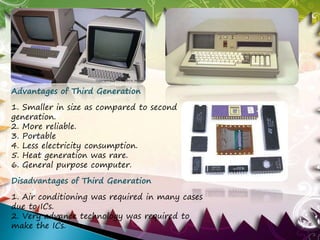
Advantages of Third Generation 
1. Smaller in size as compared to second 
generation. 
2. More reliable. 
3. Portable 
4. Less electricity consumption. 
5. Heat generation was rare. 
6. General purpose computer. 
Disadvantages of Third Generation 
1. Air conditioning was required in many cases 
due to ICs. 
2. Very advance technology was required to 
make the ICs.
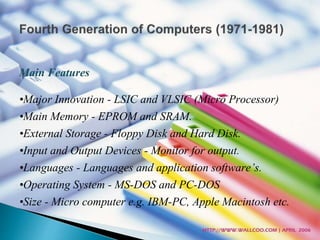
Main Features 
•Major Innovation - LSIC and VLSIC (Micro Processor) 
•Main Memory - EPROM and SRAM. 
•External Storage - Floppy Disk and Hard Disk. 
•Input and Output Devices - Monitor for output. 
•Languages - Languages and application software’s. 
•Operating System - MS-DOS and PC-DOS 
•Size - Micro computer e.g. IBM-PC, Apple Macintosh etc.
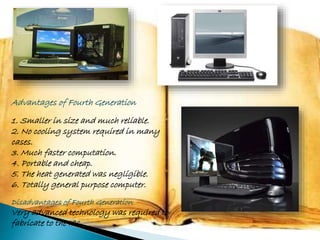
Advantages of Fourth Generation 
1. Smaller in size and much reliable. 
2. No cooling system required in many 
cases. 
3. Much faster computation. 
4. Portable and cheap. 
5. The heat generated was negligible. 
6. Totally general purpose computer. 
Disadvantages of Fourth Generation 
Very advanced technology was required to 
fabricate to the ICs.
Main Features 
•Major Innovations - ULSIC (Ultra large scale integrated 
circuit) 
•Main Memory - EEPROM, SIMM and DIMM. 
•External Storage - Modified magnetic and Optical disks. 
•Input/output Devices - Keyboard, Pointing Device, Scanner 
as input and Monitor as main output. 
•Languages - AI (Artificial Intelligence) Expert systems. 
•Operating System - GUI based e.g. Windows 95, Windows 
NT. 
•Size - Very small in size example: Laptop, Note book, Digital 
Diary, Palm top and Pocket PC.
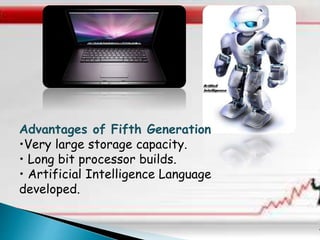
Advantages of Fifth Generation 
•Very large storage capacity. 
• Long bit processor builds. 
• Artificial Intelligence Language 
developed.

Generations of computer

  • 2.
    Generations of Computer • The history of computer development is often referred to in reference to the different generations of computing devices. A generation refers to the state of improvement in the product development process. This term is also used in the different advancements of new computer technology. With each new
  • 3.
    Main Features •MajorInnovation - Vacuum Tubes •Main Memory - Punched Cards •Input Output Devices - Punched cards and papers •Languages - Low level machine language Operating System No operating system, human operators to set switches Size - Main frame for example ENIAC, EDVAC, UNIVAC
  • 5.
    Advantages of FirstGeneration 1. Vacuum tubes were used as electronic component. 2. Electronic digital computers were developed for the first time. 3. These computers were the fastest calculating devices of that time. 4. Computations were performed in millisecond. Disadvantages of First Generation 1. Too large in size. 2. They were unreliable. 3. Induce a large amount of heat due to the vacuum tubes. 5. Non portable. 6. Limited commercial use.
  • 6.
    Main Features •MajorInnovation - Transistors as main component. •Main Memory - RAM and ROM. •External Storage - Magnetic tapes and Magnetic Disk. •Input Output Devices - Magnetic tapes and Magnetic Disk. •Languages - Assembly language, some high level languages for Example Basic, Cobol, Fortran. •Operating System - Human handles punched card. •Size - Main frame for example IBM-1401, NCR-300, IBM- 600 etc.
  • 7.
    Advantages of SecondGeneration 1. Smaller in size as compares to 1st generation. 2. Much more reliable. 3. Less heat generated. 4. Computation was performing in micro second. 5. Less hardware and maintenance problem. 6. Could be used for commercial use. Disadvantages of Second Generation 1. Very costly for commercial use. 2. It still required frequent maintenance. 3. Frequent cooling also required.
  • 8.
    Main Features •MajorInnovation - Integrated circuit (ICs) as basic electronic component. •Main Memory - PROM and DRAM. •External Storage - Improve disk (Floppy Disk) •Input and Output Devices - Keyboard for input, monitor for output. •Languages - More high level languages. •Operating System - Complete operating systems were introduced. •Size - Mini, for example: IBM SYSTEM / 360, ICH-360, HONEY WELL-316 etc.
  • 9.
    Advantages of ThirdGeneration 1. Smaller in size as compared to second generation. 2. More reliable. 3. Portable 4. Less electricity consumption. 5. Heat generation was rare. 6. General purpose computer. Disadvantages of Third Generation 1. Air conditioning was required in many cases due to ICs. 2. Very advance technology was required to make the ICs.
  • 10.
    Main Features •MajorInnovation - LSIC and VLSIC (Micro Processor) •Main Memory - EPROM and SRAM. •External Storage - Floppy Disk and Hard Disk. •Input and Output Devices - Monitor for output. •Languages - Languages and application software’s. •Operating System - MS-DOS and PC-DOS •Size - Micro computer e.g. IBM-PC, Apple Macintosh etc.
  • 11.
    Advantages of FourthGeneration 1. Smaller in size and much reliable. 2. No cooling system required in many cases. 3. Much faster computation. 4. Portable and cheap. 5. The heat generated was negligible. 6. Totally general purpose computer. Disadvantages of Fourth Generation Very advanced technology was required to fabricate to the ICs.
  • 12.
    Main Features •MajorInnovations - ULSIC (Ultra large scale integrated circuit) •Main Memory - EEPROM, SIMM and DIMM. •External Storage - Modified magnetic and Optical disks. •Input/output Devices - Keyboard, Pointing Device, Scanner as input and Monitor as main output. •Languages - AI (Artificial Intelligence) Expert systems. •Operating System - GUI based e.g. Windows 95, Windows NT. •Size - Very small in size example: Laptop, Note book, Digital Diary, Palm top and Pocket PC.
  • 13.
    Advantages of FifthGeneration •Very large storage capacity. • Long bit processor builds. • Artificial Intelligence Language developed.