Bangladesh Army University
of Engineering & Technology
PRESENTED BY
MD. MAHBUB HASAN
ID: 151012
Department: EEE
PRESENTED TO
Md. Abu Shaid Sujon
Lecturer of ME
BAUET
Presentation on
Space Robotics
OUTLINES
 What is Space Robotics.
 Space Research.
 Why Space Robots.
 Issues in Space Robotics
 How Robots work in Space.
 New generation Space Robots.
 Technologies used in Space Robots.
 Types of Space Robots.
 Recent Missions.
 Future Missions.
 Space Robots From Fiction.
WHAT IS SPACE ROBOTICS?
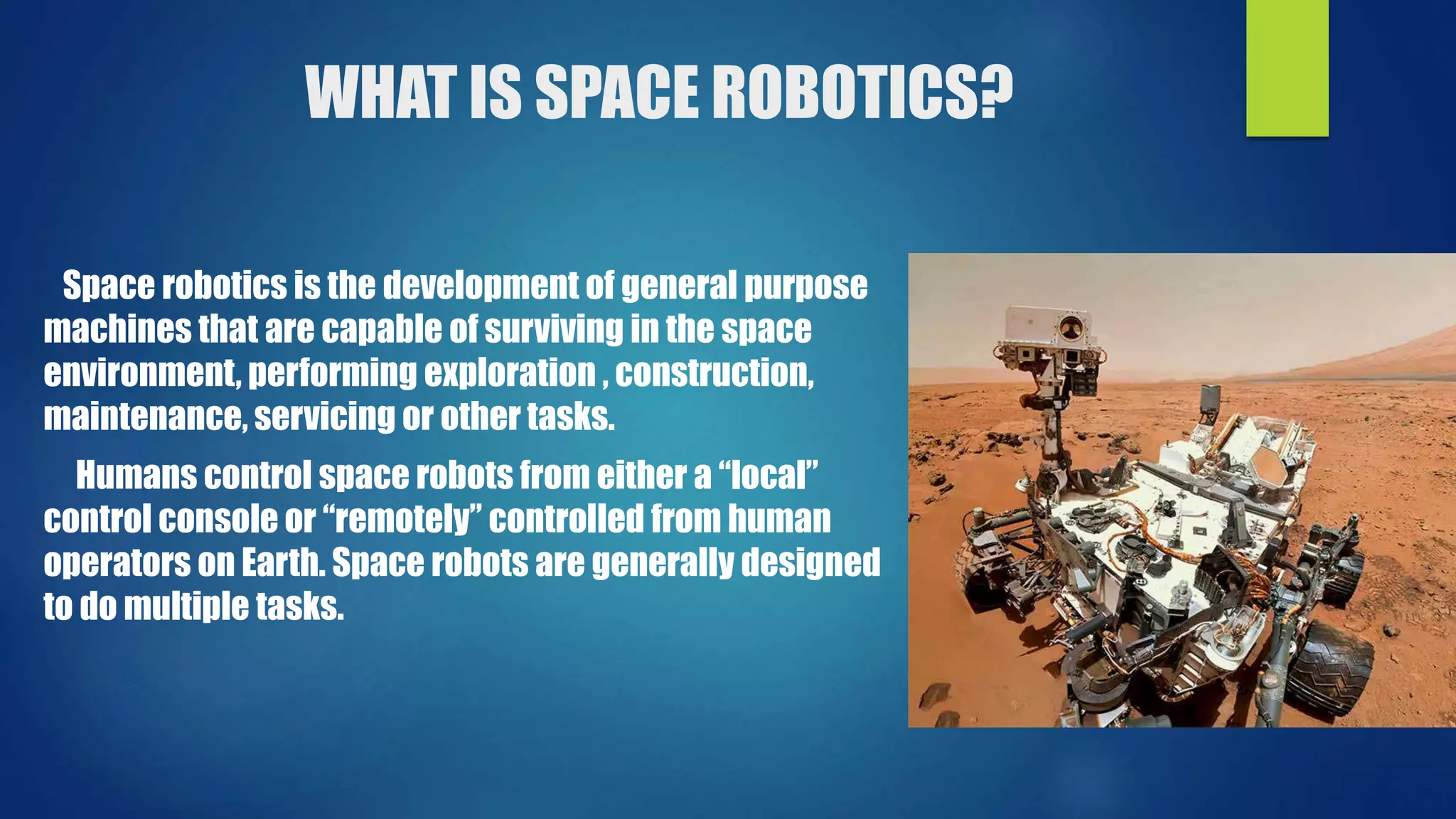
Space robotics is the development of general purpose
machines that are capable of surviving in the space
environment, performing exploration , construction,
maintenance, servicing or other tasks.
Humans control space robots from either a “local”
control console or “remotely” controlled from human
operators on Earth. Space robots are generally designed
to do multiple tasks.
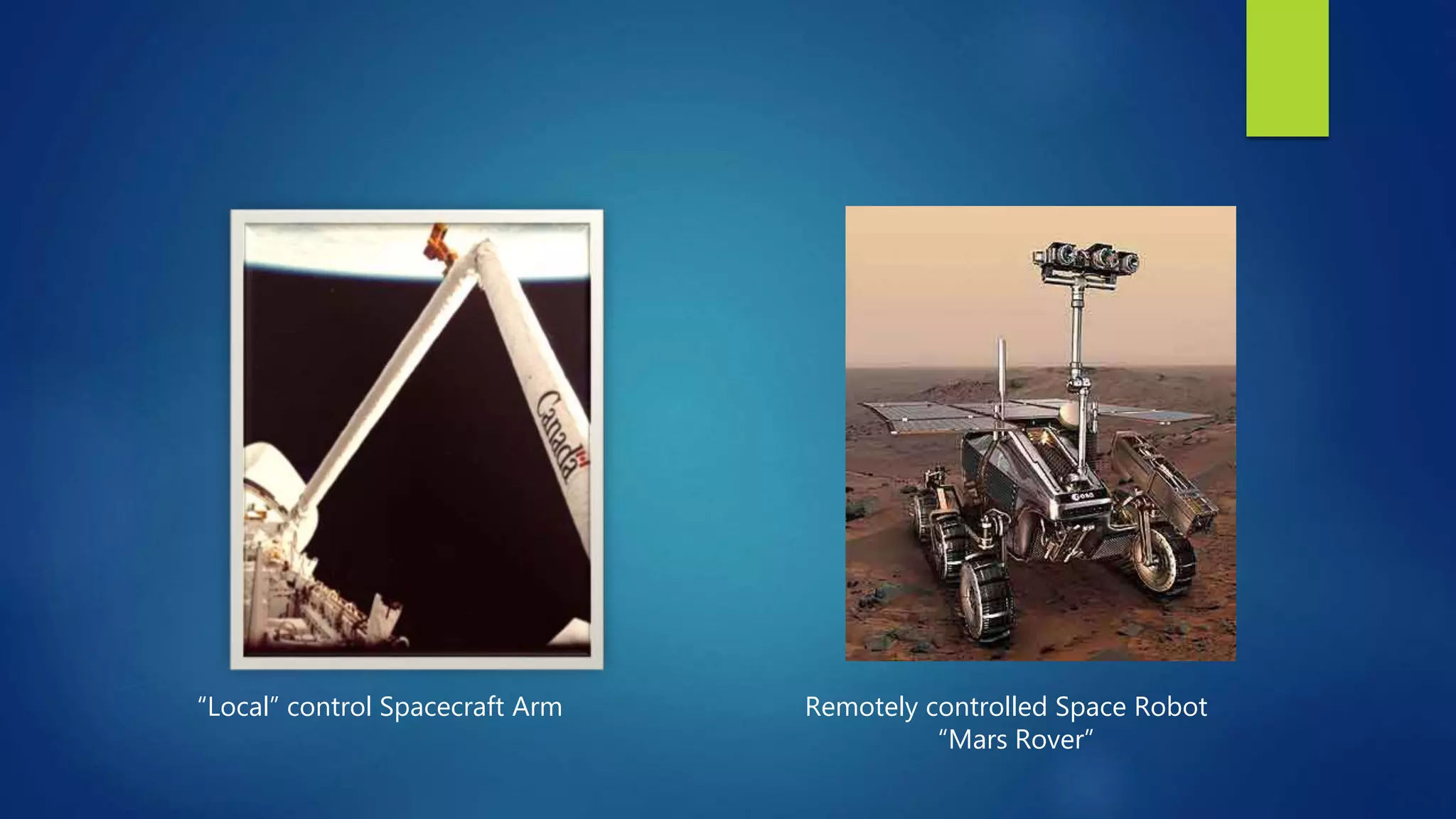
“Local” control Spacecraft Arm Remotely controlled Space Robot
“Mars Rover”
Space Research
 “SPACE”, the word itself signifies something
infinite.
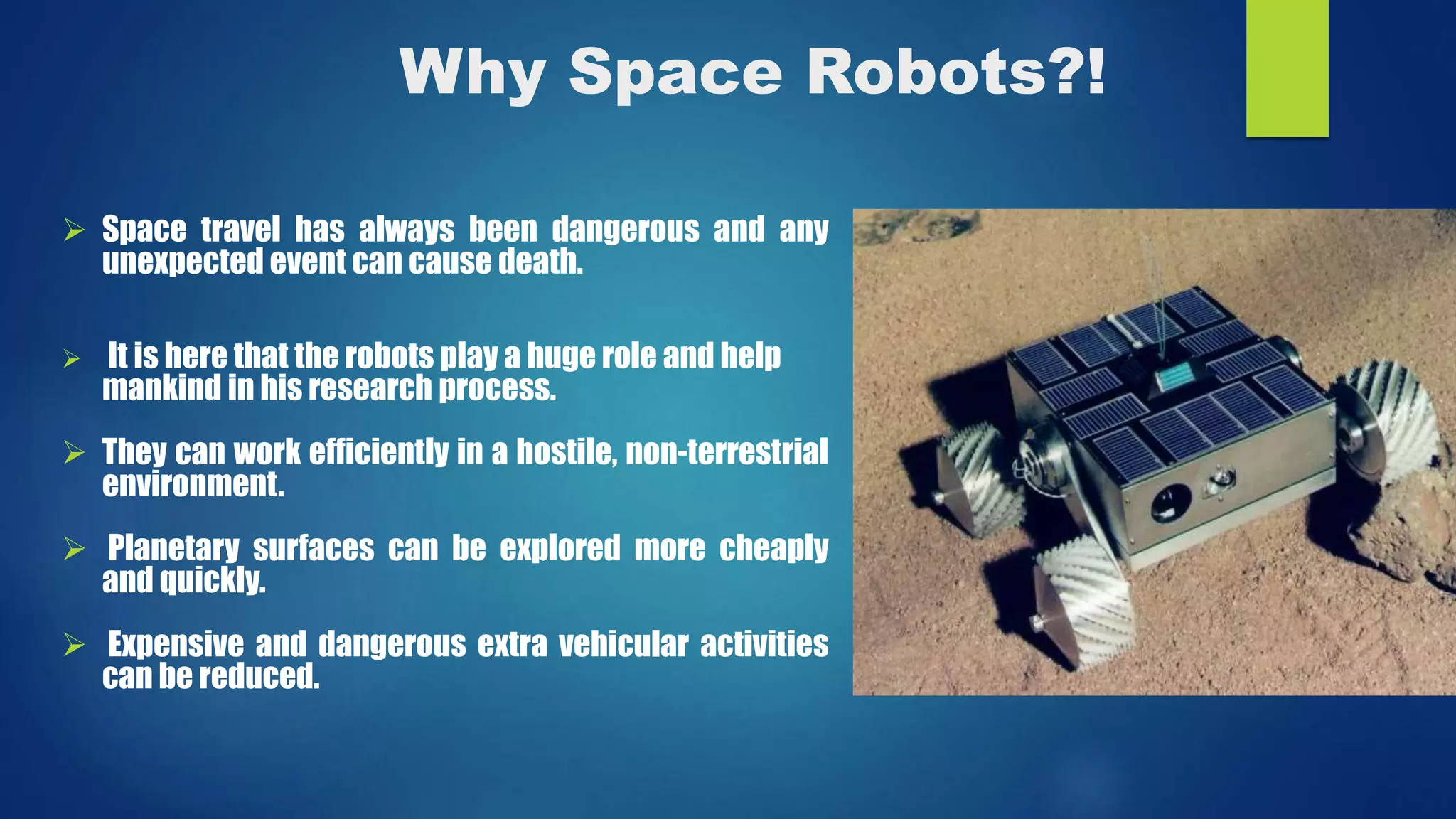
 Space travel has always been dangerous and any
unexpected event can cause death.
 It is here that the robots play a huge role and help
mankind in his research process.
Why Space Robots?!
 Space travel has always been dangerous and any
unexpected event can cause death.
 It is here that the robots play a huge role and help
mankind in his research process.
 They can work efficiently in a hostile, non-terrestrial
environment.
 Planetary surfaces can be explored more cheaply
and quickly.
 Expensive and dangerous extra vehicular activities
can be reduced.
ISSUES IN SPACE ROBOTICS
There are four key issues in Space Robotics. These are:
 Mobility—moving quickly and accurately between two points
without putting the robots, astronauts at risk.
 Manipulation—using arms and hands to contact worksite
elements safely, quickly, and accurately’
 Time Delay—allowing a distant human to effectively command
the robot to do useful work.
 Extreme Environments—operating despite intense heat or
cold, ionizing radiation, hard vacuum etc
How Robots Work in Space
 Working principle of Space robots are based on the SPA
algorithm. SPA stands for sense, plan and action. It is
used in built world modules to match and worked
accordingly.
 FLOW CHART: SENSING
WORLD MODELLING
PLANNING
CONTROL
EXECUTION
New Generation Space Robots
 The new generation of system is called as
probabilistic robots , which are under development
and research.
 The Main Working Principle of new generation robots
are very simple & quick. Some bots have AI(artificial
intelligence). These types of bots can make their own
decision when needed.
Technologies Used
 Mapping and navigation
One of the basic functions of a space robot is to navigate its way cleverly
through all obstacles that come in its way. Mapping and navigation comprise
of three more technologies
 Obstacle avoidance
 Mapping
 Path planning
 Planning: It is a feature by which a robot understands
the situation and decides a strategy to tackle it.
 Sequencing: Selection of a particular skill set which
would result in perfect execution of a plan.
 Control: Performing the selected skill set to perfection.
Types of Space Robots
 There are 4 basic types of robots in space and all
the robots sent to space come under these types
only.
 Planetary Rovers:
It is the most advanced form of robotics technology
used in space research. They are the robots, which
explore, navigate and research themselves with the
least human intervention; they analyze the data
collected and send the results back to earth.
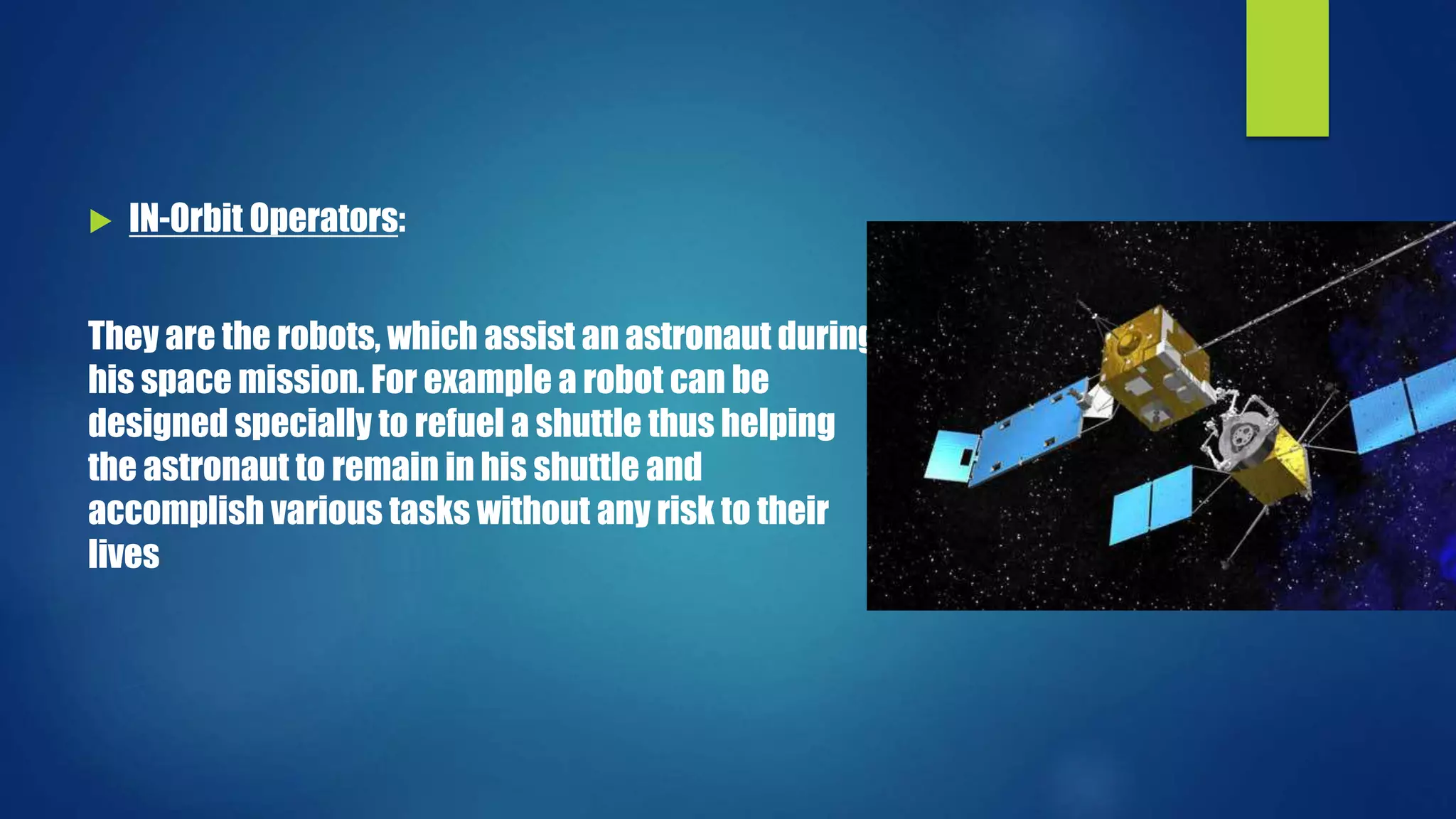
 IN-Orbit Operators:
They are the robots, which assist an astronaut during
his space mission. For example a robot can be
designed specially to refuel a shuttle thus helping
the astronaut to remain in his shuttle and
accomplish various tasks without any risk to their
lives
 Probes
A similar class of robots explores the
system without actually physically landing
anywhere. These typically use cameras and
variety of instruments to measure
other planets, moons, and the sun from
distance. Most of these use solar cells to
their instruments.
 Astronaut Assistance
Besides acting as explorers, space robots
can also assist astronauts in manned
spaceflight. One of the most notable
a device known as the Canadarm.
with funding from the Canadian Space
the Candarm became a permanent fixture
many American space shuttles and the
international space station
Recent Missions
 Voyager 1
Launched on 5 September 1977. Jupiter and
Saturn flybys. It escaped from the solar system
and is still transmitting useful data.
 Mars express
Launched on 7th June 2003 and reached Mars on
25 December 2003
Future Missions
Exomars
 Due to be launched in 2015. It will characterize the
biological environment on mars, using a descent module
and rover, in preparation for subsequent robotic and
human exploration.
Robonaut
 Robonaut is an "astronaut-equivalent“ ,highly dexterous
robot under development that will use all the same
tools, handholds, and other equipment that astronauts
in space suits can use.
 It can be perform as an assistant in collaboration with
suited astronauts.
Space Robots From Fiction
C-3PO R2-D2
From “STAR WARS”
TARS
From “INTERSTELLAR”
REFERENCES
WEBSITES
 www.nasa.gov/audience/foreducators/robotics/
 www.learnaboutrobots.com/space.htm
 www.spectrum.ieee.org/robotics/space-robots
 https://en.wikipedia.org/wiki/robotis_spacecraft
 www.google.com/images
BOOKS
1.SPACE ROBOTICS
Brian Wilcox, Robert Ambrose, Vijay Kumar
2.Achievements in Space Robotics
KAZUYA YOSHIDA
Any Query!?
THANK YOU!

Space Robotics

  • 1.
    Bangladesh Army University ofEngineering & Technology PRESENTED BY MD. MAHBUB HASAN ID: 151012 Department: EEE PRESENTED TO Md. Abu Shaid Sujon Lecturer of ME BAUET
  • 2.
  • 3.
    OUTLINES  What isSpace Robotics.  Space Research.  Why Space Robots.  Issues in Space Robotics  How Robots work in Space.  New generation Space Robots.  Technologies used in Space Robots.  Types of Space Robots.  Recent Missions.  Future Missions.  Space Robots From Fiction.
  • 4.
    WHAT IS SPACEROBOTICS? Space robotics is the development of general purpose machines that are capable of surviving in the space environment, performing exploration , construction, maintenance, servicing or other tasks. Humans control space robots from either a “local” control console or “remotely” controlled from human operators on Earth. Space robots are generally designed to do multiple tasks.
  • 5.
    “Local” control SpacecraftArm Remotely controlled Space Robot “Mars Rover”
  • 6.
    Space Research  “SPACE”,the word itself signifies something infinite.  Space travel has always been dangerous and any unexpected event can cause death.  It is here that the robots play a huge role and help mankind in his research process.
  • 7.
    Why Space Robots?! Space travel has always been dangerous and any unexpected event can cause death.  It is here that the robots play a huge role and help mankind in his research process.  They can work efficiently in a hostile, non-terrestrial environment.  Planetary surfaces can be explored more cheaply and quickly.  Expensive and dangerous extra vehicular activities can be reduced.
  • 8.
    ISSUES IN SPACEROBOTICS There are four key issues in Space Robotics. These are:  Mobility—moving quickly and accurately between two points without putting the robots, astronauts at risk.  Manipulation—using arms and hands to contact worksite elements safely, quickly, and accurately’  Time Delay—allowing a distant human to effectively command the robot to do useful work.  Extreme Environments—operating despite intense heat or cold, ionizing radiation, hard vacuum etc
  • 9.
    How Robots Workin Space  Working principle of Space robots are based on the SPA algorithm. SPA stands for sense, plan and action. It is used in built world modules to match and worked accordingly.  FLOW CHART: SENSING WORLD MODELLING PLANNING CONTROL EXECUTION
  • 10.
    New Generation SpaceRobots  The new generation of system is called as probabilistic robots , which are under development and research.  The Main Working Principle of new generation robots are very simple & quick. Some bots have AI(artificial intelligence). These types of bots can make their own decision when needed.
  • 11.
    Technologies Used  Mappingand navigation One of the basic functions of a space robot is to navigate its way cleverly through all obstacles that come in its way. Mapping and navigation comprise of three more technologies  Obstacle avoidance  Mapping  Path planning
  • 12.
     Planning: Itis a feature by which a robot understands the situation and decides a strategy to tackle it.  Sequencing: Selection of a particular skill set which would result in perfect execution of a plan.  Control: Performing the selected skill set to perfection.
  • 13.
    Types of SpaceRobots  There are 4 basic types of robots in space and all the robots sent to space come under these types only.  Planetary Rovers: It is the most advanced form of robotics technology used in space research. They are the robots, which explore, navigate and research themselves with the least human intervention; they analyze the data collected and send the results back to earth.
  • 14.
     IN-Orbit Operators: Theyare the robots, which assist an astronaut during his space mission. For example a robot can be designed specially to refuel a shuttle thus helping the astronaut to remain in his shuttle and accomplish various tasks without any risk to their lives
  • 15.
     Probes A similarclass of robots explores the system without actually physically landing anywhere. These typically use cameras and variety of instruments to measure other planets, moons, and the sun from distance. Most of these use solar cells to their instruments.
  • 16.
     Astronaut Assistance Besidesacting as explorers, space robots can also assist astronauts in manned spaceflight. One of the most notable a device known as the Canadarm. with funding from the Canadian Space the Candarm became a permanent fixture many American space shuttles and the international space station
  • 17.
    Recent Missions  Voyager1 Launched on 5 September 1977. Jupiter and Saturn flybys. It escaped from the solar system and is still transmitting useful data.  Mars express Launched on 7th June 2003 and reached Mars on 25 December 2003
  • 18.
    Future Missions Exomars  Dueto be launched in 2015. It will characterize the biological environment on mars, using a descent module and rover, in preparation for subsequent robotic and human exploration. Robonaut  Robonaut is an "astronaut-equivalent“ ,highly dexterous robot under development that will use all the same tools, handholds, and other equipment that astronauts in space suits can use.  It can be perform as an assistant in collaboration with suited astronauts.
  • 19.
    Space Robots FromFiction C-3PO R2-D2 From “STAR WARS” TARS From “INTERSTELLAR”
  • 20.
    REFERENCES WEBSITES  www.nasa.gov/audience/foreducators/robotics/  www.learnaboutrobots.com/space.htm www.spectrum.ieee.org/robotics/space-robots  https://en.wikipedia.org/wiki/robotis_spacecraft  www.google.com/images BOOKS 1.SPACE ROBOTICS Brian Wilcox, Robert Ambrose, Vijay Kumar 2.Achievements in Space Robotics KAZUYA YOSHIDA
  • 21.
  • 22.