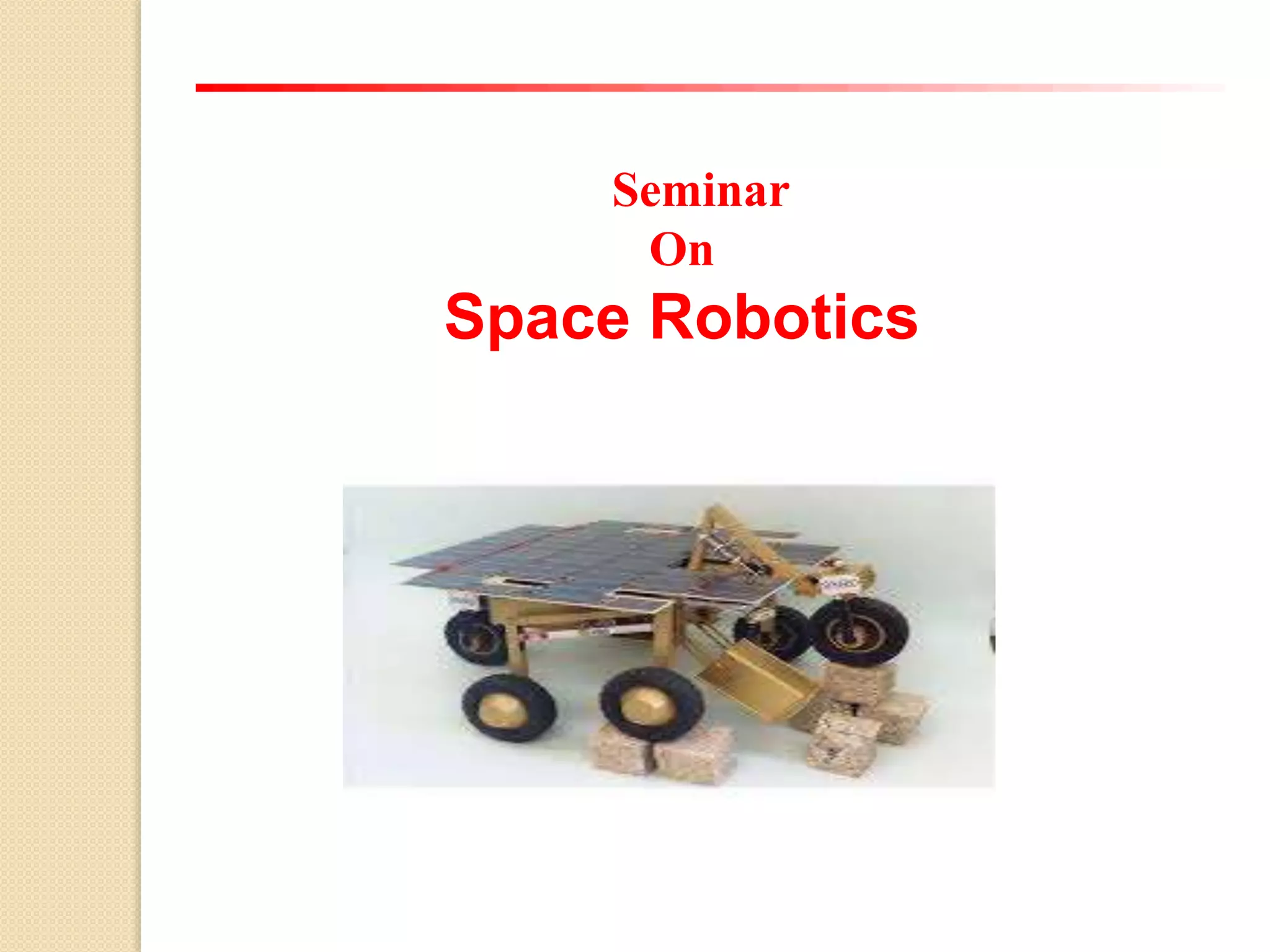
Seminar
On
Space Robotics
CONTENTS
 Introduction
 What is Space Robotics?
 Space Robot-Challenges in Design and
Testing
 Structure of Space Robots
 Operation
 Conclusion
Introduction
 Robot is a system with a mechanical body, using
computer as its brain. Integrating the sensors and
actuators built into the mechanical body, the motions are
realised with the computer software to execute the
desired task.
 Robots are more flexible in terms of ability to perform
new tasks or to carry out complex sequence of motion
than other categories of automated manufacturing
equipment.
What is Space Robotics?
• Development of machines for the space
environment.
• Usually controlled by humans.
AREAS OF APPLICATION
 In orbit positioning and assembly
 Operation
 Maintenance
 Resupply
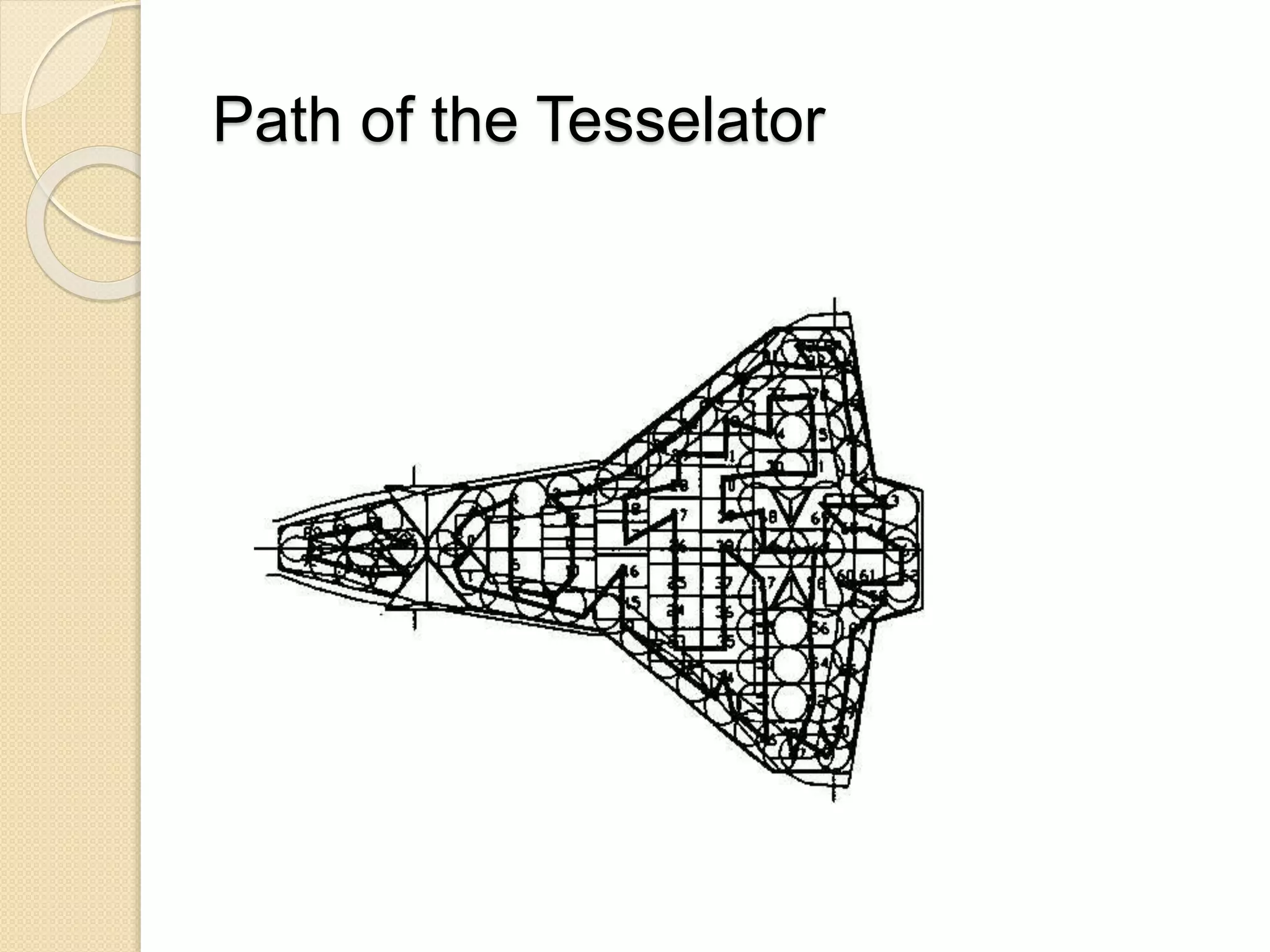
Path of the Tesselator
CHALLENGES IN DESIGN AND
TESTING
 zero gravity - physical action and
mechanism performance
 The vacuum and thermal conditions of
space - material and sensor performance
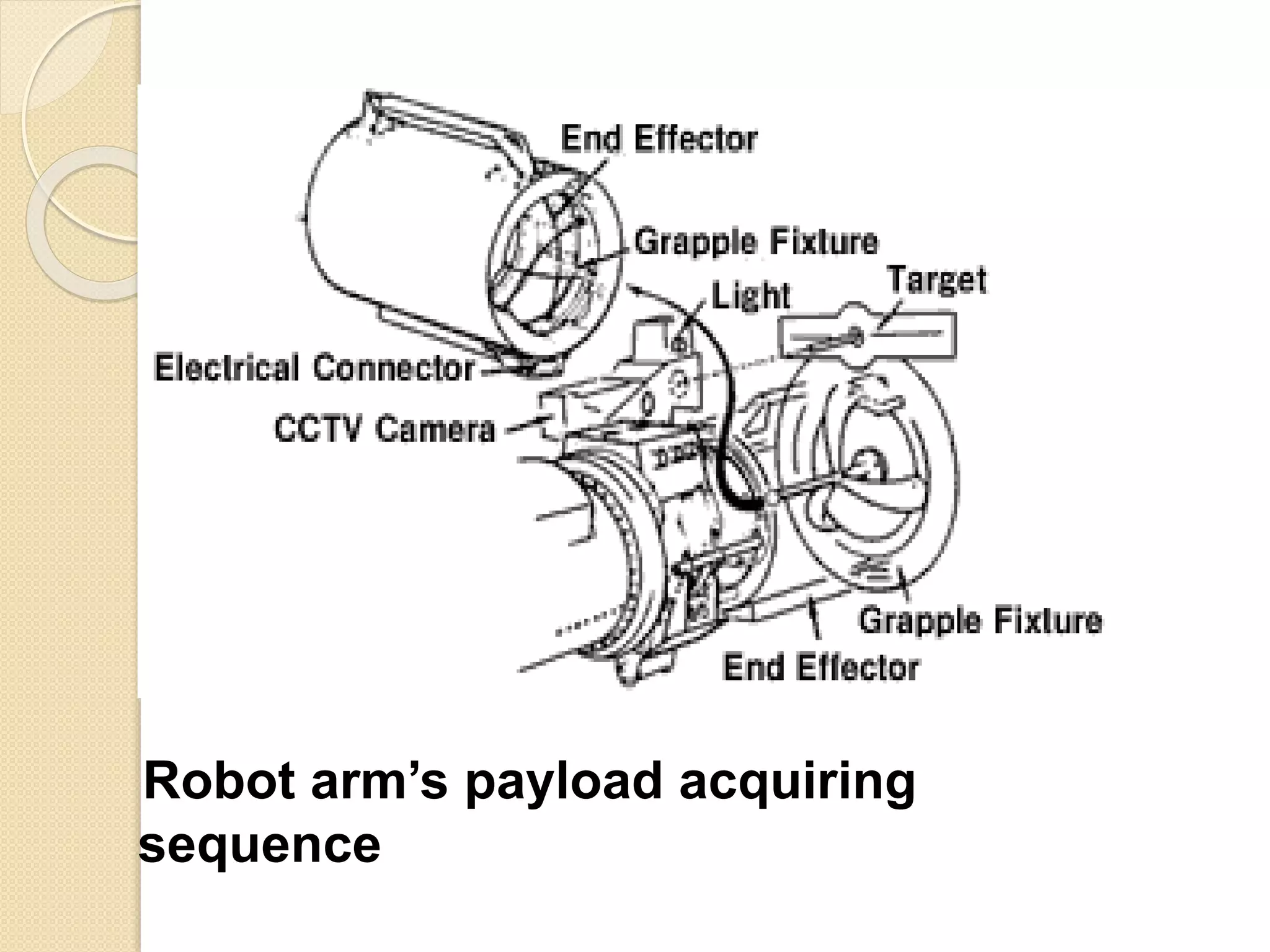
Robot arm’s payload acquiring
sequence
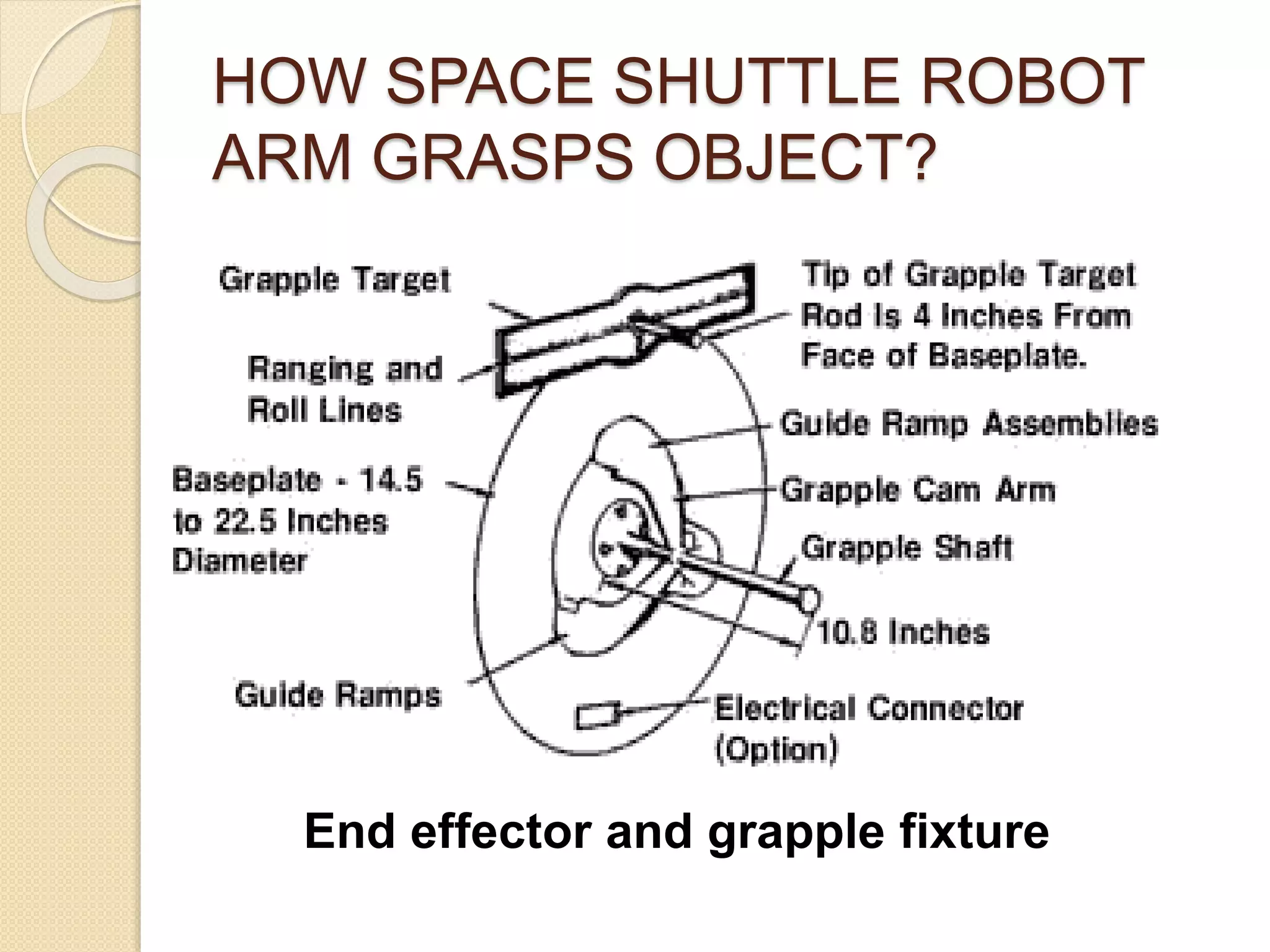
HOW SPACE SHUTTLE ROBOT
ARM GRASPS OBJECT?
End effector and grapple fixture
FREE FLYING SPACE
ROBOTS
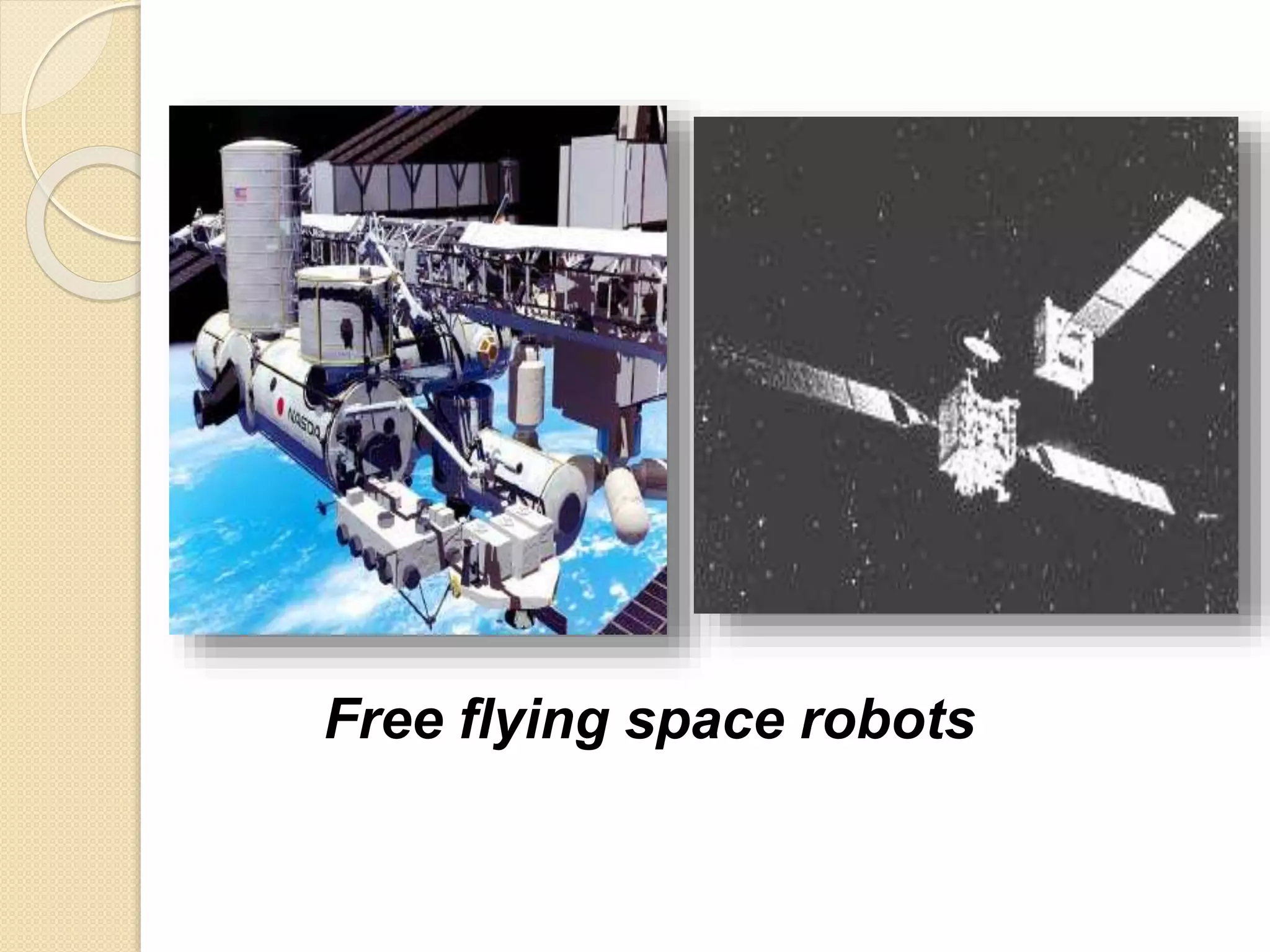
 In a free flying space robot a robot arm is
attached to the satellite base
 The satellite may start rotating in an
uncontrollable way.
 The antenna communication link may be
interrupted
Free flying space robots
STRUCTURE OF SPACE ROBOTS
 6 degrees of freedom (DOF).
 The main subsystems in the development of
the manipulator arm are
 Joints
 Arm
 Wrist
 Gripper
OPERATION
SPACE SHUTTLE ROBOT ARM
Use
 Survey the outside of the Space Shuttle
 Transport an EVA crew member at the end of
the arm
 Satellite deployment and retrieval
 Construction of International Space Station
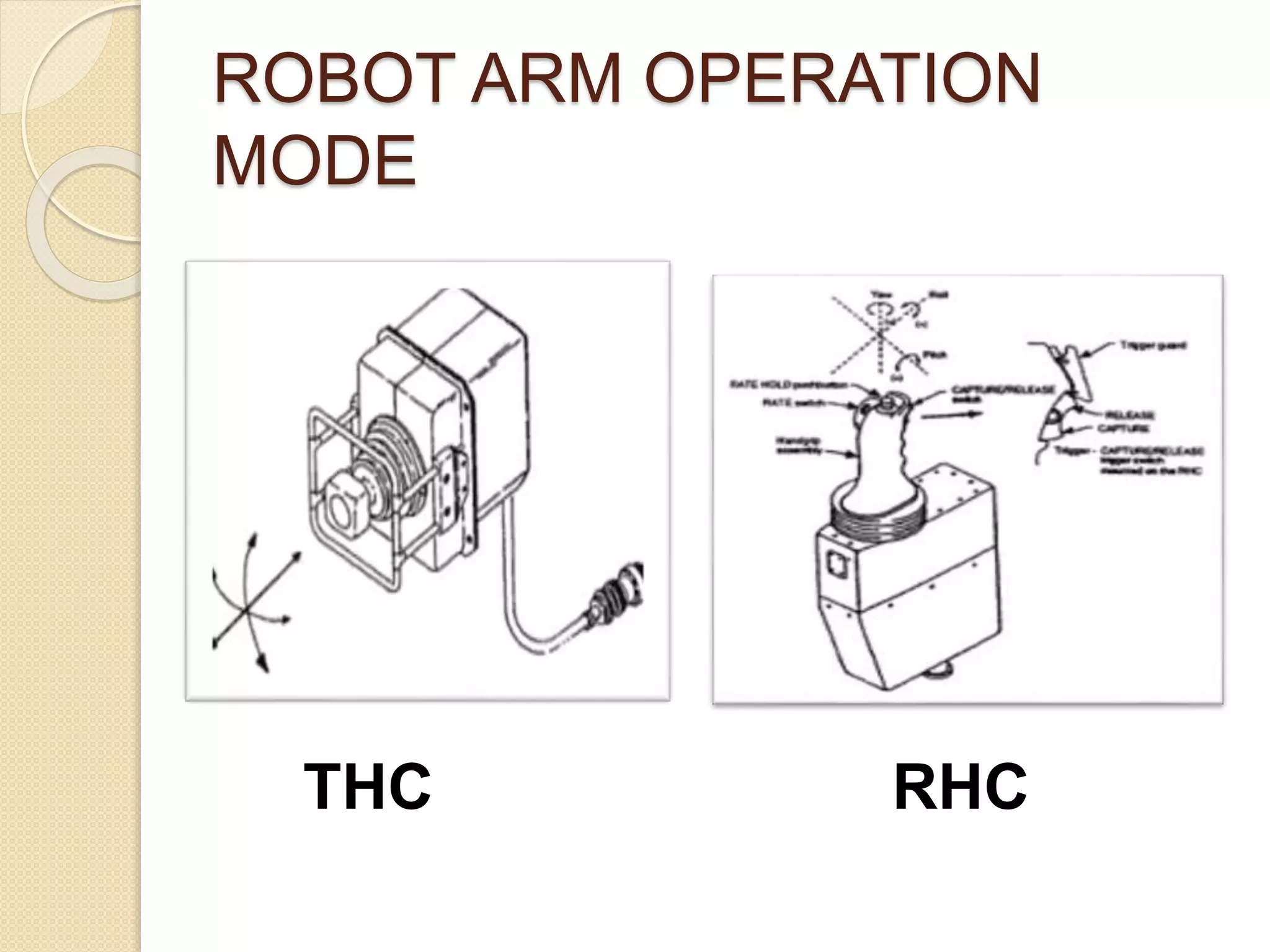
ROBOT ARM OPERATION
MODE
THC RHC
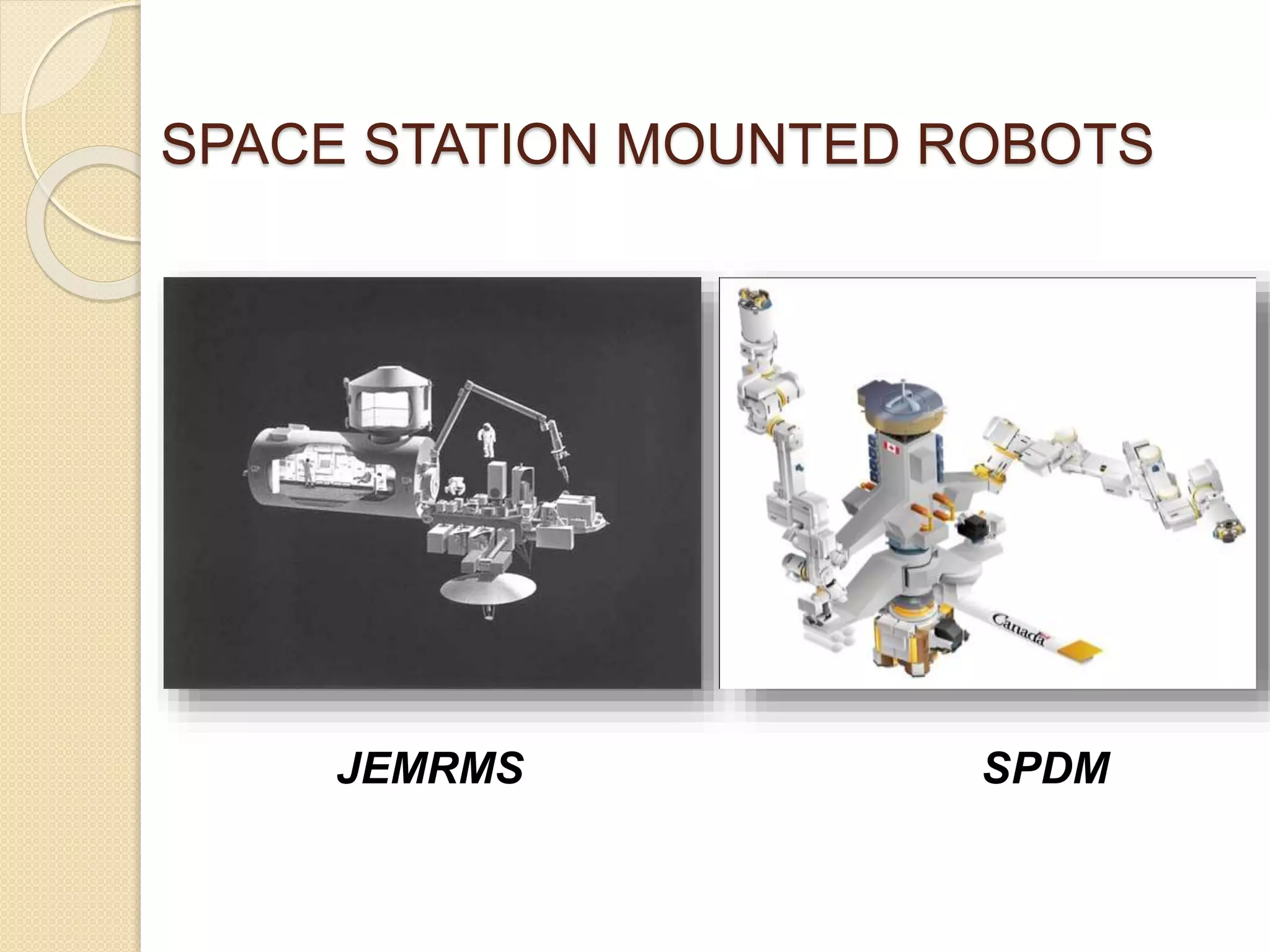
SPACE STATION MOUNTED ROBOTS
JEMRMS SPDM
CONCLUSION
 In the future, robotics will makes it possible for
billions of people to have lives of leisure
instead of the current preoccupation with
material needs.
 There are hundreds of millions who are now
fascinated by space but do not have the means
to explore it.
 For them space robotics will throw open the
door to explore and experience the universe.
Thanks

Space Robotics ppt.pptx

  • 1.
  • 2.
    CONTENTS  Introduction  Whatis Space Robotics?  Space Robot-Challenges in Design and Testing  Structure of Space Robots  Operation  Conclusion
  • 3.
    Introduction  Robot isa system with a mechanical body, using computer as its brain. Integrating the sensors and actuators built into the mechanical body, the motions are realised with the computer software to execute the desired task.  Robots are more flexible in terms of ability to perform new tasks or to carry out complex sequence of motion than other categories of automated manufacturing equipment.
  • 4.
    What is SpaceRobotics? • Development of machines for the space environment. • Usually controlled by humans.
  • 5.
    AREAS OF APPLICATION In orbit positioning and assembly  Operation  Maintenance  Resupply
  • 6.
    Path of theTesselator
  • 7.
    CHALLENGES IN DESIGNAND TESTING  zero gravity - physical action and mechanism performance  The vacuum and thermal conditions of space - material and sensor performance
  • 8.
    Robot arm’s payloadacquiring sequence
  • 9.
    HOW SPACE SHUTTLEROBOT ARM GRASPS OBJECT? End effector and grapple fixture
  • 10.
    FREE FLYING SPACE ROBOTS In a free flying space robot a robot arm is attached to the satellite base  The satellite may start rotating in an uncontrollable way.  The antenna communication link may be interrupted
  • 11.
  • 12.
    STRUCTURE OF SPACEROBOTS  6 degrees of freedom (DOF).  The main subsystems in the development of the manipulator arm are  Joints  Arm  Wrist  Gripper
  • 13.
    OPERATION SPACE SHUTTLE ROBOTARM Use  Survey the outside of the Space Shuttle  Transport an EVA crew member at the end of the arm  Satellite deployment and retrieval  Construction of International Space Station
  • 14.
  • 15.
    SPACE STATION MOUNTEDROBOTS JEMRMS SPDM
  • 16.
    CONCLUSION  In thefuture, robotics will makes it possible for billions of people to have lives of leisure instead of the current preoccupation with material needs.  There are hundreds of millions who are now fascinated by space but do not have the means to explore it.  For them space robotics will throw open the door to explore and experience the universe.
  • 17.

Editor's Notes