Robots In
Space
Exploration
#1
What are robots?
Table Of Contents
Firstly, we will get a short
but clear idea of
Robots
Secondly we will know
about robots used in
Space Exploration
Thirdly, we will see some
statistics about
Space Launch
Robots in space Statistics
01 02 03
#2
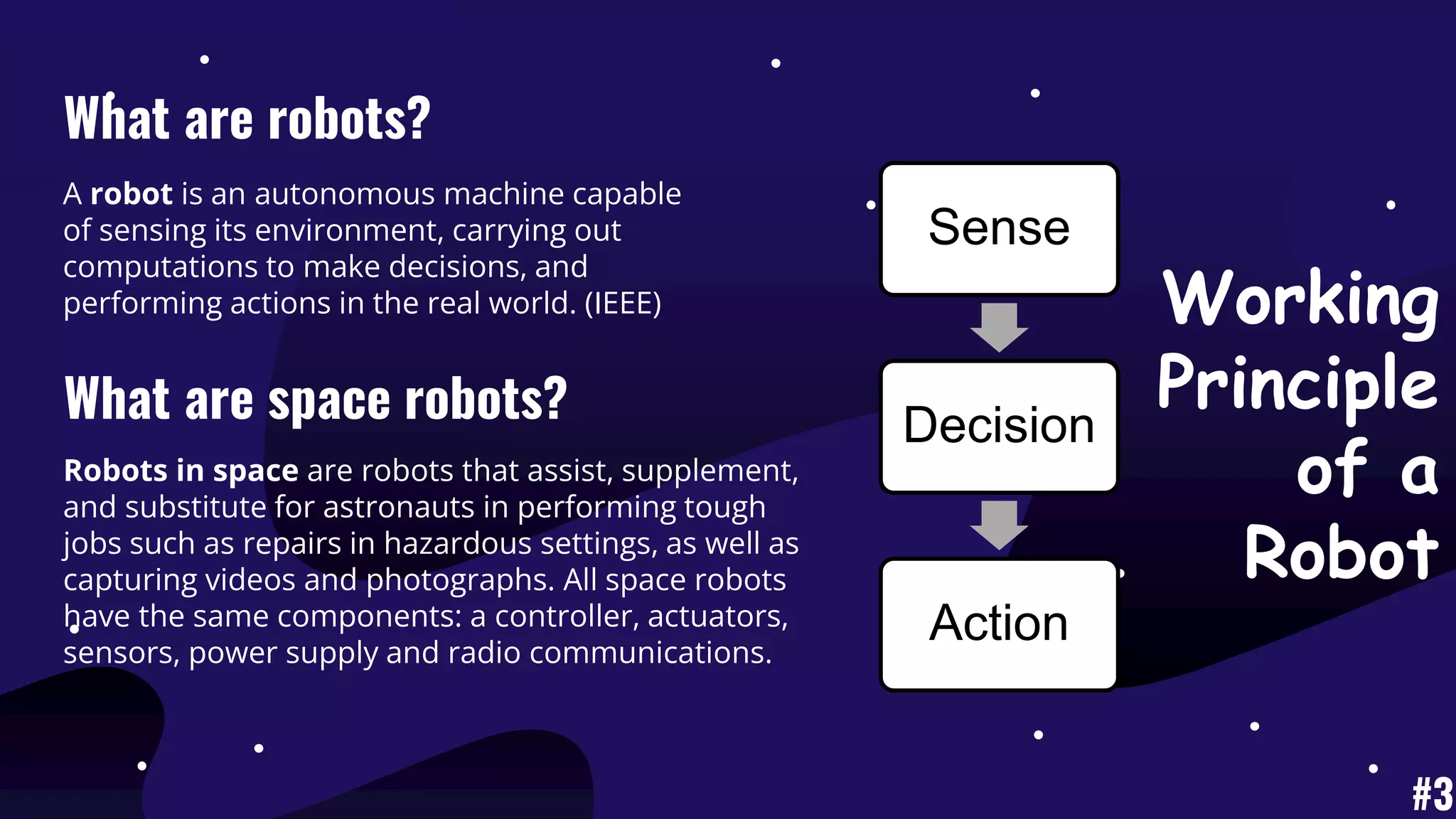
A robot is an autonomous machine capable
of sensing its environment, carrying out
computations to make decisions, and
performing actions in the real world. (IEEE)
What are robots?
What are space robots?
Robots in space are robots that assist, supplement,
and substitute for astronauts in performing tough
jobs such as repairs in hazardous settings, as well as
capturing videos and photographs. All space robots
have the same components: a controller, actuators,
sensors, power supply and radio communications.
Sense
Decision
Action
Working
Principle
of a
Robot
#3
Why Use
Robots in
Space?
1. As robots can survive in the harsh environmental conditions
of space, so it is more acceptable to send a robot and
control it remotely from earth.
2. Space research is a field which needs implementation of
robotics for exploration and data collection purposes.
3. As robots only rely in electricity instead of oxygen, food and
water like humans, they are more likely to survive in harsh
conditions and are economical.
#4
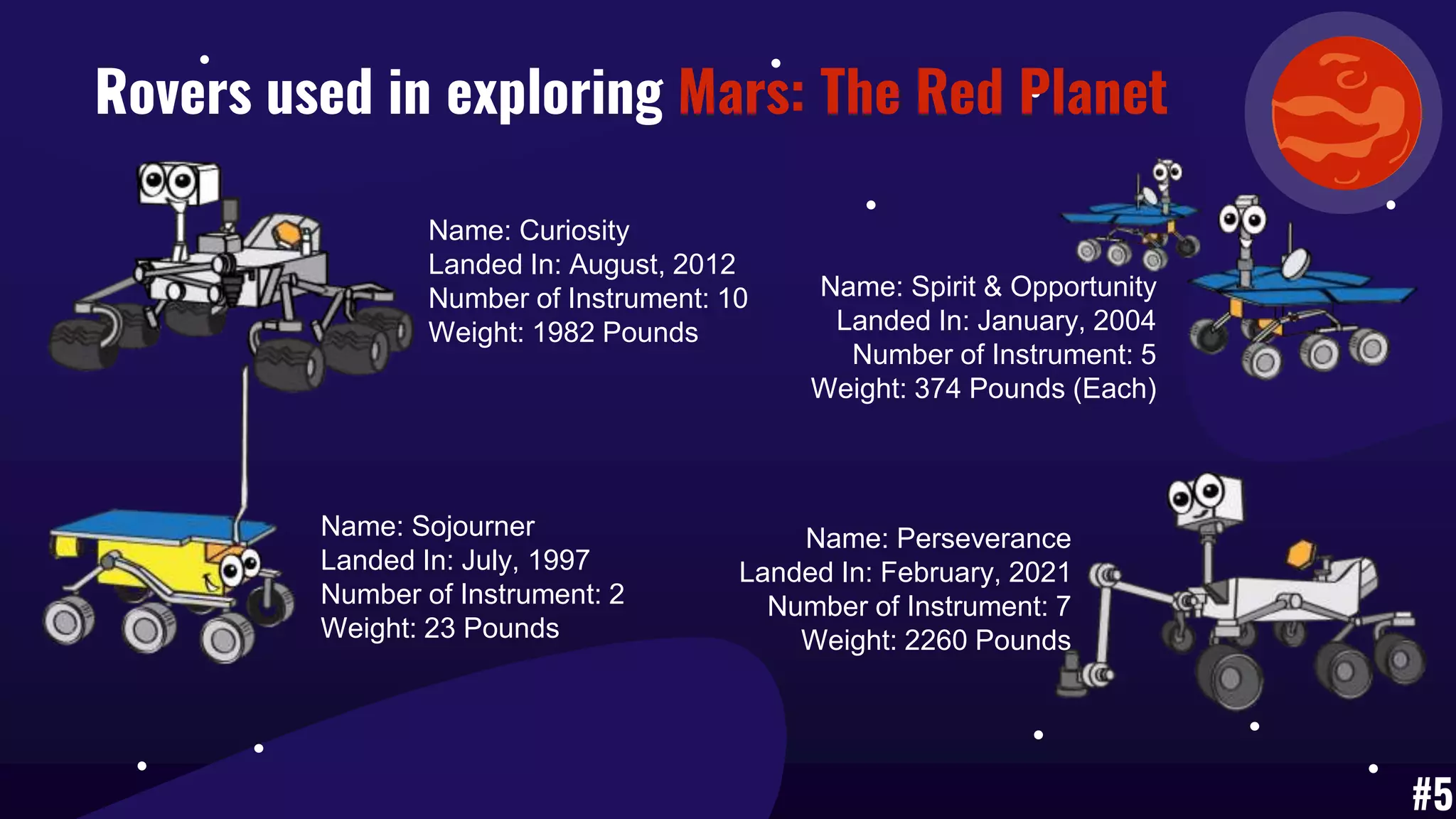
Rovers used in exploring Mars: The Red Planet
Name: Curiosity
Landed In: August, 2012
Number of Instrument: 10
Weight: 1982 Pounds
Name: Sojourner
Landed In: July, 1997
Number of Instrument: 2
Weight: 23 Pounds
Name: Perseverance
Landed In: February, 2021
Number of Instrument: 7
Weight: 2260 Pounds
Name: Spirit & Opportunity
Landed In: January, 2004
Number of Instrument: 5
Weight: 374 Pounds (Each)
#5
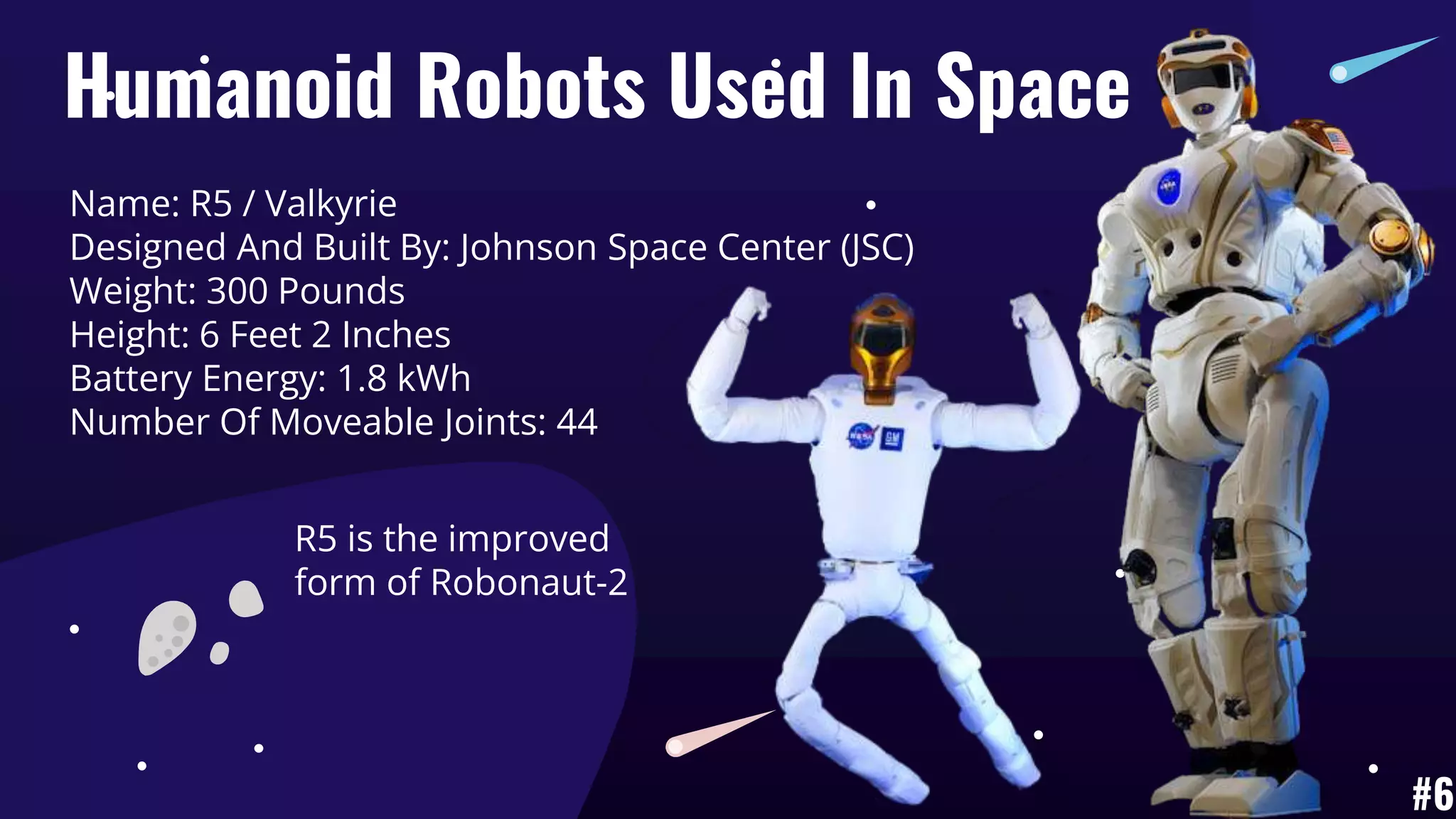
Humanoid Robots Used In Space
Name: R5 / Valkyrie
Designed And Built By: Johnson Space Center (JSC)
Weight: 300 Pounds
Height: 6 Feet 2 Inches
Battery Energy: 1.8 kWh
Number Of Moveable Joints: 44
R5 is the improved
form of Robonaut-2
#6
— Robert C. Jacobson
“Space has the ability to produce a triple
bottom line, or ROIII: Return on
Investment, Innovation, and Inspiration.”
#7
USD 5.70 BILLION
Forecasted Space Robotics Market Size In 2027
11,139
Total Number Of Satellites Launched In Space (Upto 2021)
250
Number Of Robotic Spacecrafts Launched
#8
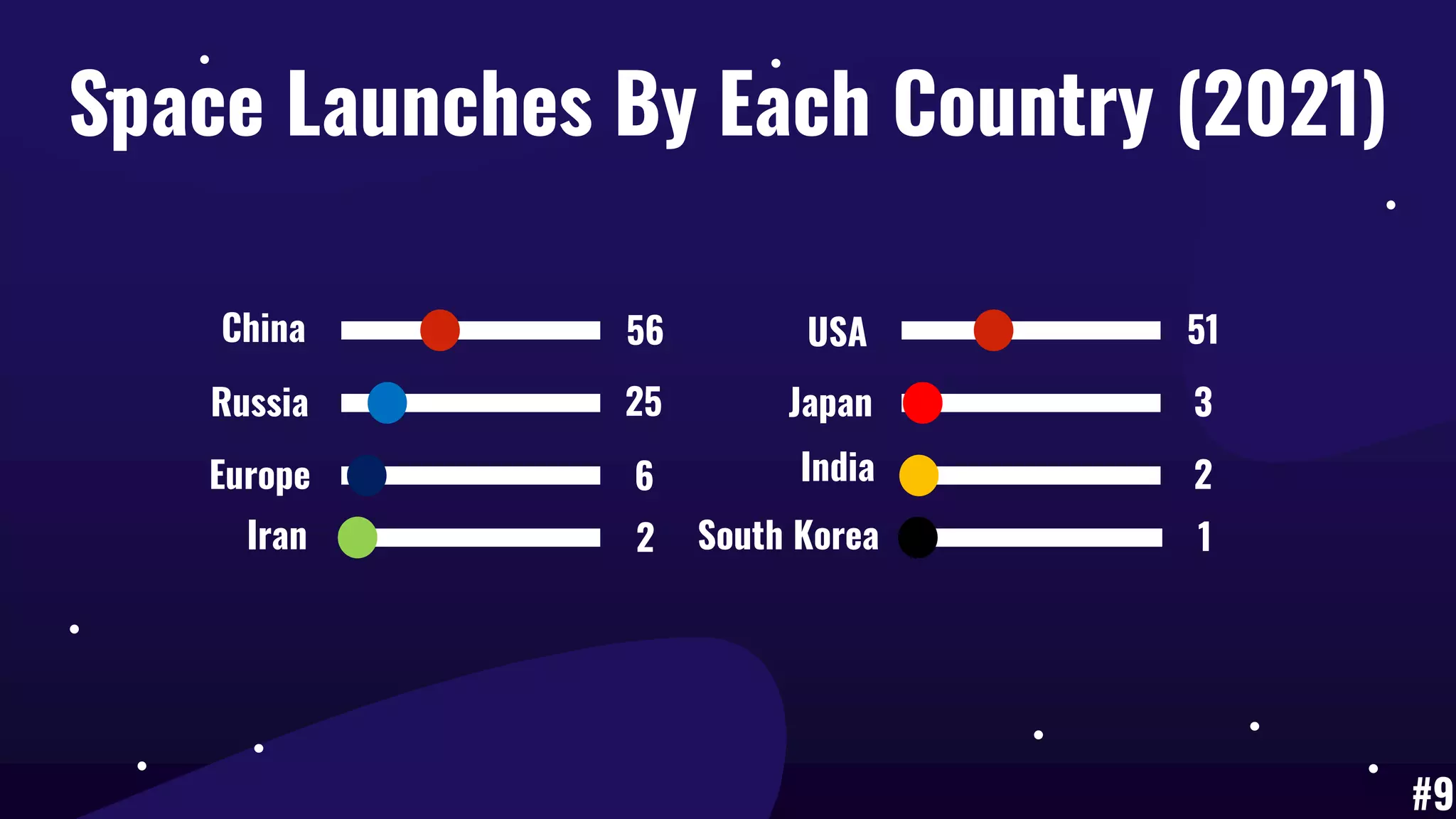
Space Launches By Each Country (2021)
China
Russia
Europe
56 USA
Japan
51
3
2
25
6 India
Iran 2 South Korea 1
#9
Robots are playing an unimaginable part in
making the unknown universe known to us.
#10
Sources Of Information
● www.nasa.gov
● www.grandviewresearch.com
● en.wikipedia.org
● bing.com
● Template: freepik & slidesgo
#11
Thank You!
#12

Robots In Space Exploration.pptx

  • 1.
  • 2.
    What are robots? TableOf Contents Firstly, we will get a short but clear idea of Robots Secondly we will know about robots used in Space Exploration Thirdly, we will see some statistics about Space Launch Robots in space Statistics 01 02 03 #2
  • 3.
    A robot isan autonomous machine capable of sensing its environment, carrying out computations to make decisions, and performing actions in the real world. (IEEE) What are robots? What are space robots? Robots in space are robots that assist, supplement, and substitute for astronauts in performing tough jobs such as repairs in hazardous settings, as well as capturing videos and photographs. All space robots have the same components: a controller, actuators, sensors, power supply and radio communications. Sense Decision Action Working Principle of a Robot #3
  • 4.
    Why Use Robots in Space? 1.As robots can survive in the harsh environmental conditions of space, so it is more acceptable to send a robot and control it remotely from earth. 2. Space research is a field which needs implementation of robotics for exploration and data collection purposes. 3. As robots only rely in electricity instead of oxygen, food and water like humans, they are more likely to survive in harsh conditions and are economical. #4
  • 5.
    Rovers used inexploring Mars: The Red Planet Name: Curiosity Landed In: August, 2012 Number of Instrument: 10 Weight: 1982 Pounds Name: Sojourner Landed In: July, 1997 Number of Instrument: 2 Weight: 23 Pounds Name: Perseverance Landed In: February, 2021 Number of Instrument: 7 Weight: 2260 Pounds Name: Spirit & Opportunity Landed In: January, 2004 Number of Instrument: 5 Weight: 374 Pounds (Each) #5
  • 6.
    Humanoid Robots UsedIn Space Name: R5 / Valkyrie Designed And Built By: Johnson Space Center (JSC) Weight: 300 Pounds Height: 6 Feet 2 Inches Battery Energy: 1.8 kWh Number Of Moveable Joints: 44 R5 is the improved form of Robonaut-2 #6
  • 7.
    — Robert C.Jacobson “Space has the ability to produce a triple bottom line, or ROIII: Return on Investment, Innovation, and Inspiration.” #7
  • 8.
    USD 5.70 BILLION ForecastedSpace Robotics Market Size In 2027 11,139 Total Number Of Satellites Launched In Space (Upto 2021) 250 Number Of Robotic Spacecrafts Launched #8
  • 9.
    Space Launches ByEach Country (2021) China Russia Europe 56 USA Japan 51 3 2 25 6 India Iran 2 South Korea 1 #9
  • 10.
    Robots are playingan unimaginable part in making the unknown universe known to us. #10
  • 11.
    Sources Of Information ●www.nasa.gov ● www.grandviewresearch.com ● en.wikipedia.org ● bing.com ● Template: freepik & slidesgo #11
  • 12.