Cognitive Approach
Main Ideas


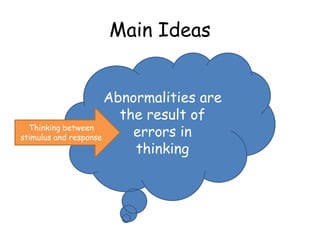
                      Abnormalities are
                        the result of
  Thinking between
stimulus and response     errors in
                          thinking
Cognitive Approach contd...
• Errors in thinking

• Heavily influenced by the behavioural
  approach

• Thinking between the stimulus and the
  response

• Mental disorders are linked directly to
  distortions in the thinking process
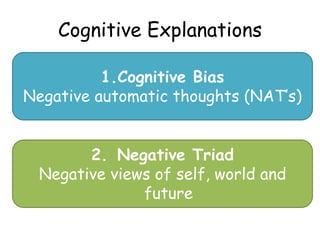
Cognitive Explanations

          1.Cognitive Bias
Negative automatic thoughts (NAT’s)


       2. Negative Triad
 Negative views of self, world and
              future
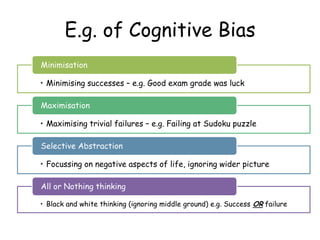
E.g. of Cognitive Bias
Minimisation

• Minimising successes – e.g. Good exam grade was luck

Maximisation

• Maximising trivial failures – e.g. Failing at Sudoku puzzle

Selective Abstraction

• Focussing on negative aspects of life, ignoring wider picture

All or Nothing thinking

• Black and white thinking (ignoring middle ground) e.g. Success OR failure
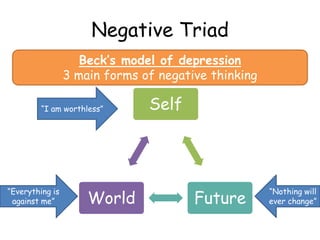
Negative Triad
                    Beck’s model of depression
                 3 main forms of negative thinking

         “I am worthless”      Self


                     World             Future
“Everything is                                       “Nothing will
 against me”                                         ever change”
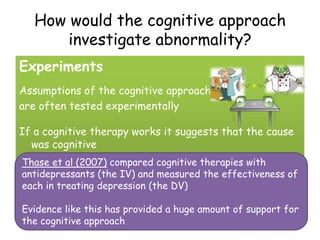
How would the cognitive approach
       investigate abnormality?
Experiments
Assumptions of the cognitive approach
are often tested experimentally

If a cognitive therapy works it suggests that the cause
  was cognitive
Thase et al (2007) compared cognitive therapies with
antidepressants (the IV) and measured the effectiveness of
each in treating depression (the DV)

Evidence like this has provided a huge amount of support for
the cognitive approach
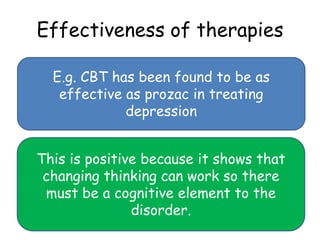
Effectiveness of therapies

  E.g. CBT has been found to be as
   effective as prozac in treating
             depression


This is positive because it shows that
 changing thinking can work so there
 must be a cognitive element to the
               disorder.
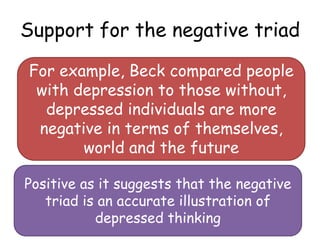
Support for the negative triad

For example, Beck compared people
 with depression to those without,
  depressed individuals are more
 negative in terms of themselves,
       world and the future

Positive as it suggests that the negative
   triad is an accurate illustration of
           depressed thinking
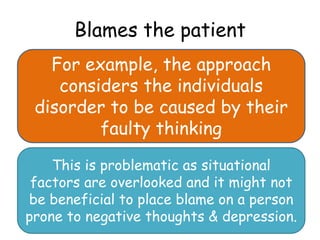
Blames the patient
   For example, the approach
    considers the individuals
 disorder to be caused by their
         faulty thinking

    This is problematic as situational
 factors are overlooked and it might not
be beneficial to place blame on a person
prone to negative thoughts & depression.
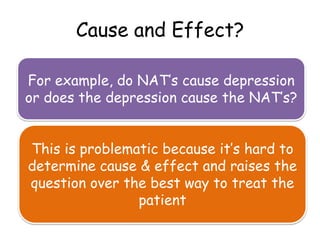
Cause and Effect?

For example, do NAT’s cause depression
or does the depression cause the NAT’s?


This is problematic because it’s hard to
determine cause & effect and raises the
question over the best way to treat the
                patient
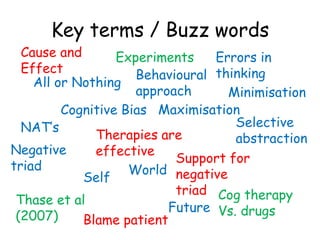
Key terms / Buzz words
  Cause and       Experiments    Errors in
  Effect             Behavioural thinking
    All or Nothing
                     approach      Minimisation
         Cognitive Bias Maximisation
  NAT’s                             Selective
              Therapies are         abstraction
Negative      effective
                           Support for
triad               World negative
            Self
                           triad Cog therapy
 Thase et al
                          Future Vs. drugs
 (2007)     Blame patient

Cognitive approach

  • 1.
  • 2.
    Main Ideas Abnormalities are the result of Thinking between stimulus and response errors in thinking
  • 3.
    Cognitive Approach contd... •Errors in thinking • Heavily influenced by the behavioural approach • Thinking between the stimulus and the response • Mental disorders are linked directly to distortions in the thinking process
  • 4.
    Cognitive Explanations 1.Cognitive Bias Negative automatic thoughts (NAT’s) 2. Negative Triad Negative views of self, world and future
  • 5.
    E.g. of CognitiveBias Minimisation • Minimising successes – e.g. Good exam grade was luck Maximisation • Maximising trivial failures – e.g. Failing at Sudoku puzzle Selective Abstraction • Focussing on negative aspects of life, ignoring wider picture All or Nothing thinking • Black and white thinking (ignoring middle ground) e.g. Success OR failure
  • 6.
    Negative Triad Beck’s model of depression 3 main forms of negative thinking “I am worthless” Self World Future “Everything is “Nothing will against me” ever change”
  • 7.
    How would thecognitive approach investigate abnormality? Experiments Assumptions of the cognitive approach are often tested experimentally If a cognitive therapy works it suggests that the cause was cognitive Thase et al (2007) compared cognitive therapies with antidepressants (the IV) and measured the effectiveness of each in treating depression (the DV) Evidence like this has provided a huge amount of support for the cognitive approach
  • 8.
    Effectiveness of therapies E.g. CBT has been found to be as effective as prozac in treating depression This is positive because it shows that changing thinking can work so there must be a cognitive element to the disorder.
  • 9.
    Support for thenegative triad For example, Beck compared people with depression to those without, depressed individuals are more negative in terms of themselves, world and the future Positive as it suggests that the negative triad is an accurate illustration of depressed thinking
  • 10.
    Blames the patient For example, the approach considers the individuals disorder to be caused by their faulty thinking This is problematic as situational factors are overlooked and it might not be beneficial to place blame on a person prone to negative thoughts & depression.
  • 11.
    Cause and Effect? Forexample, do NAT’s cause depression or does the depression cause the NAT’s? This is problematic because it’s hard to determine cause & effect and raises the question over the best way to treat the patient
  • 12.
    Key terms /Buzz words Cause and Experiments Errors in Effect Behavioural thinking All or Nothing approach Minimisation Cognitive Bias Maximisation NAT’s Selective Therapies are abstraction Negative effective Support for triad World negative Self triad Cog therapy Thase et al Future Vs. drugs (2007) Blame patient