Introduction to Computer
Er. Sohan Grover
IT-Trainer
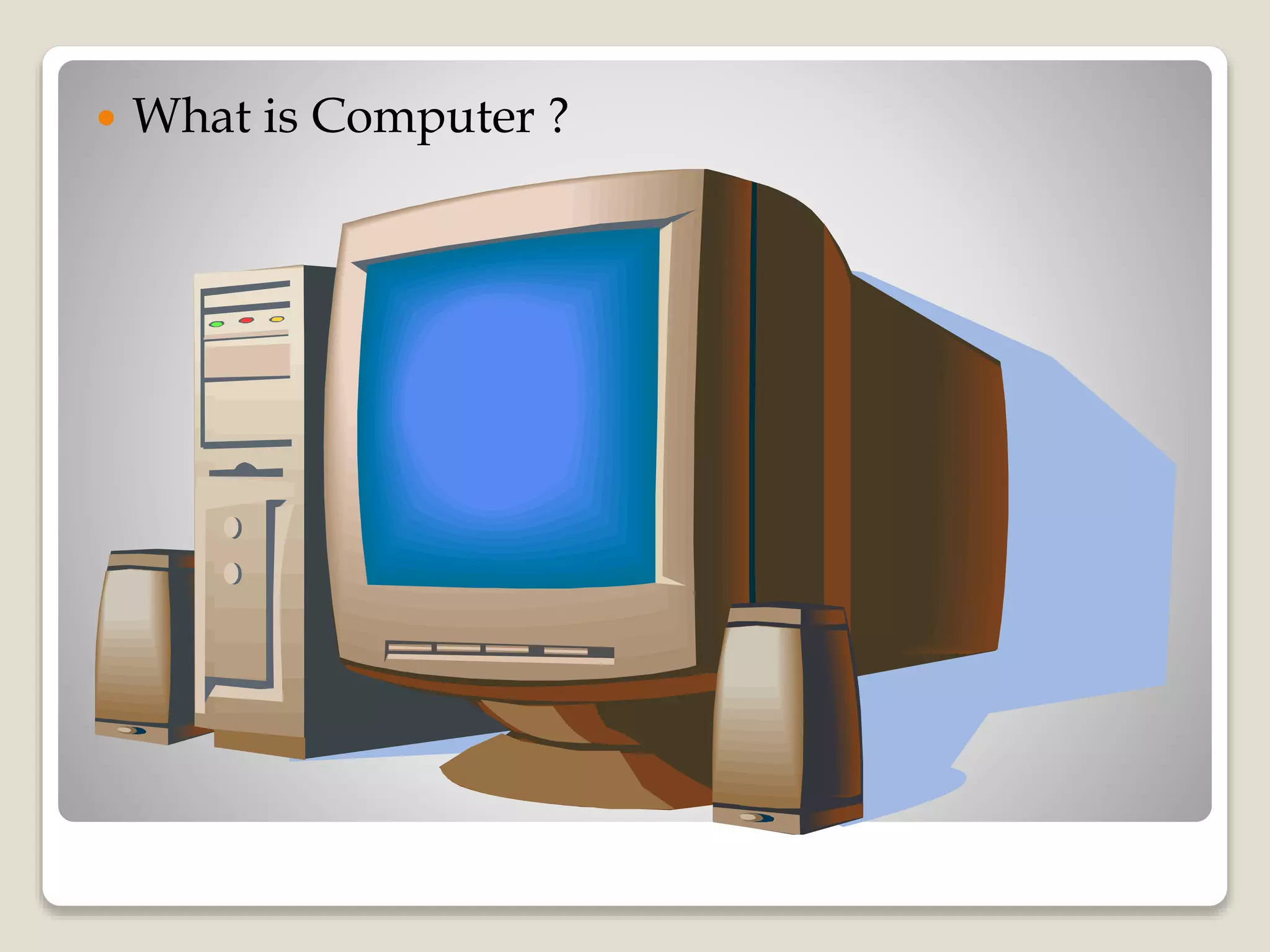
 What is Computer ?
 Computer is an Electronic Machine that Receive
the instruction to the Existing user and process
it and finally give the output according to the
user need.
 Computer is an electronic device that process,
stores and outputs data at high speeds.
 What is electronics machine???
 What is electrical machine???
What is the difference between electronics
and electrical machine????
Basic advantage of a computer
1. Speed
2. Multitask
3. Save time
4. Accuracy
Disadvantages of a Computer ??
1. Decision
2. Validation
3. Maintenance
4. Misuse
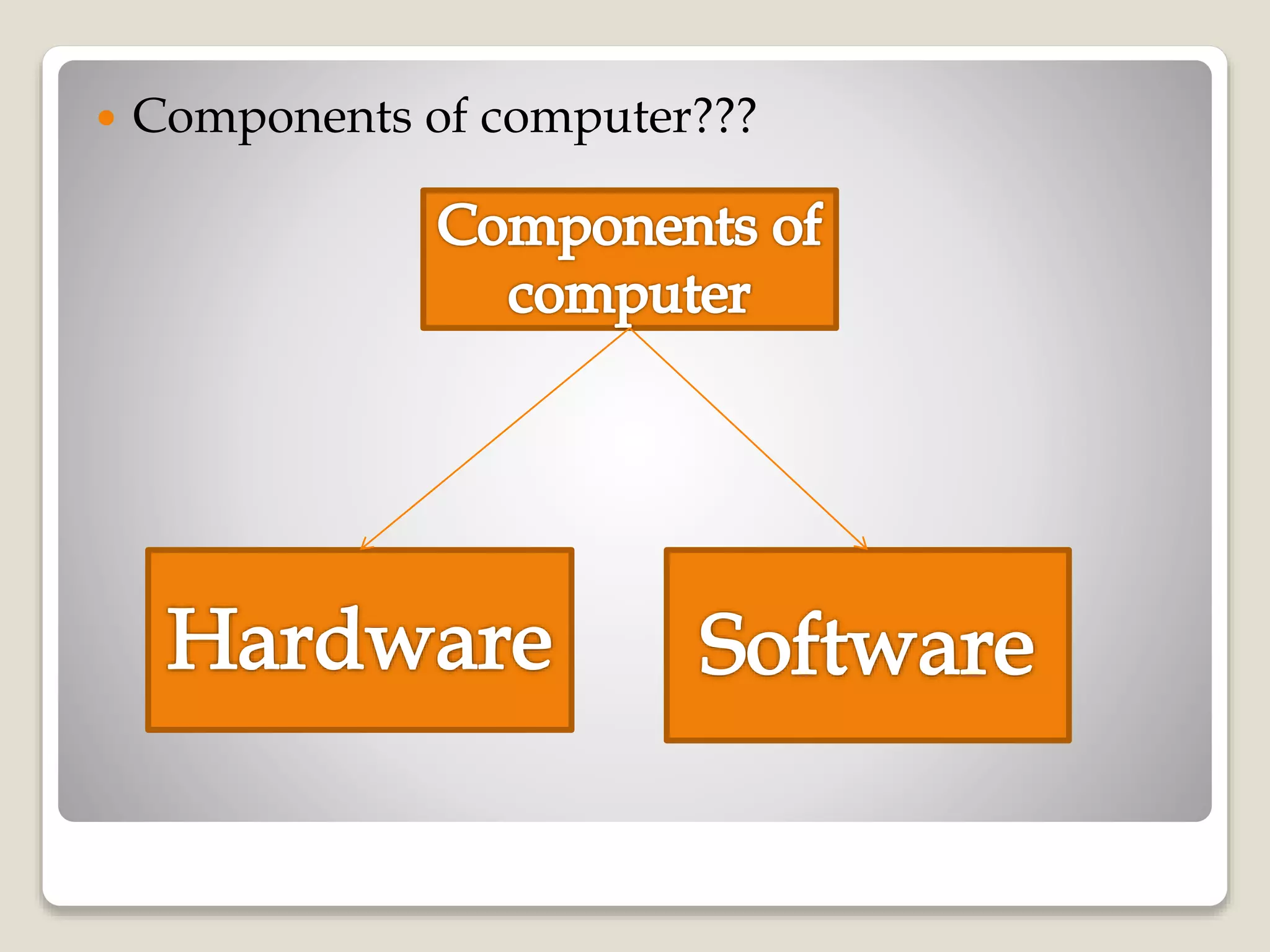
 Components of computer???
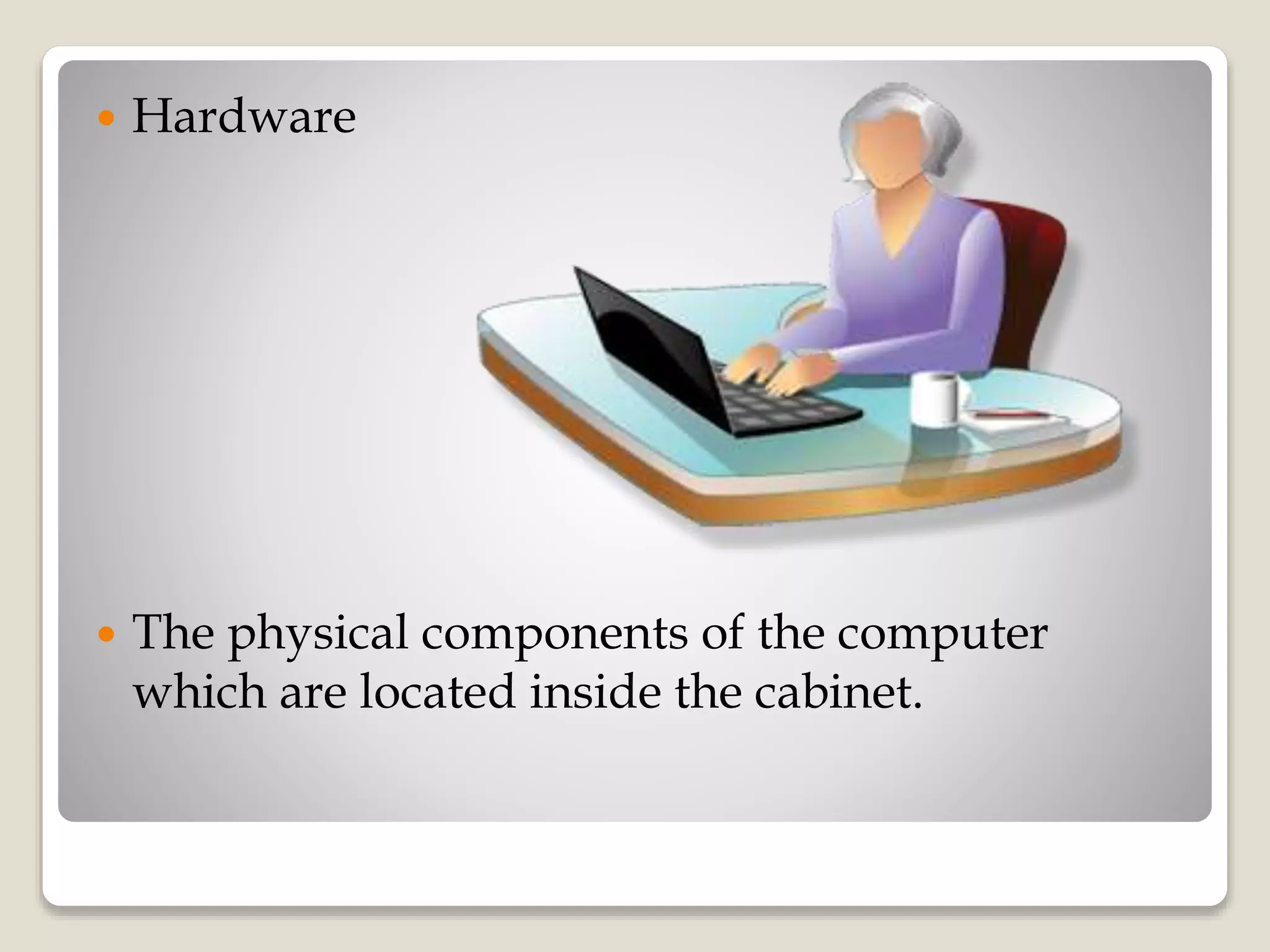
 Hardware
 The physical components of the computer
which are located inside the cabinet.
Major Components of computer Hardware :
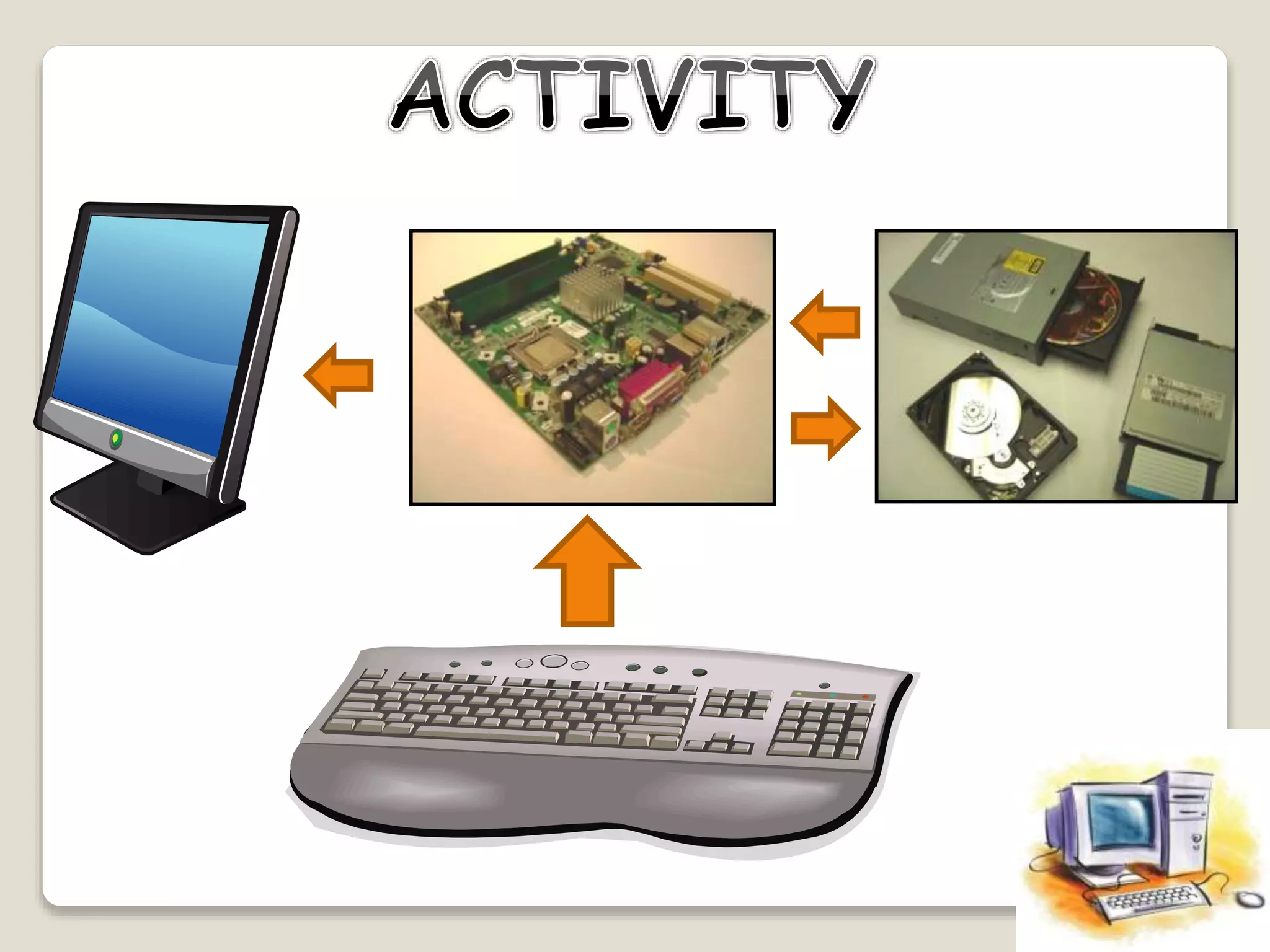
1. Input Devices
2. Output Devices
3. Processing Unit
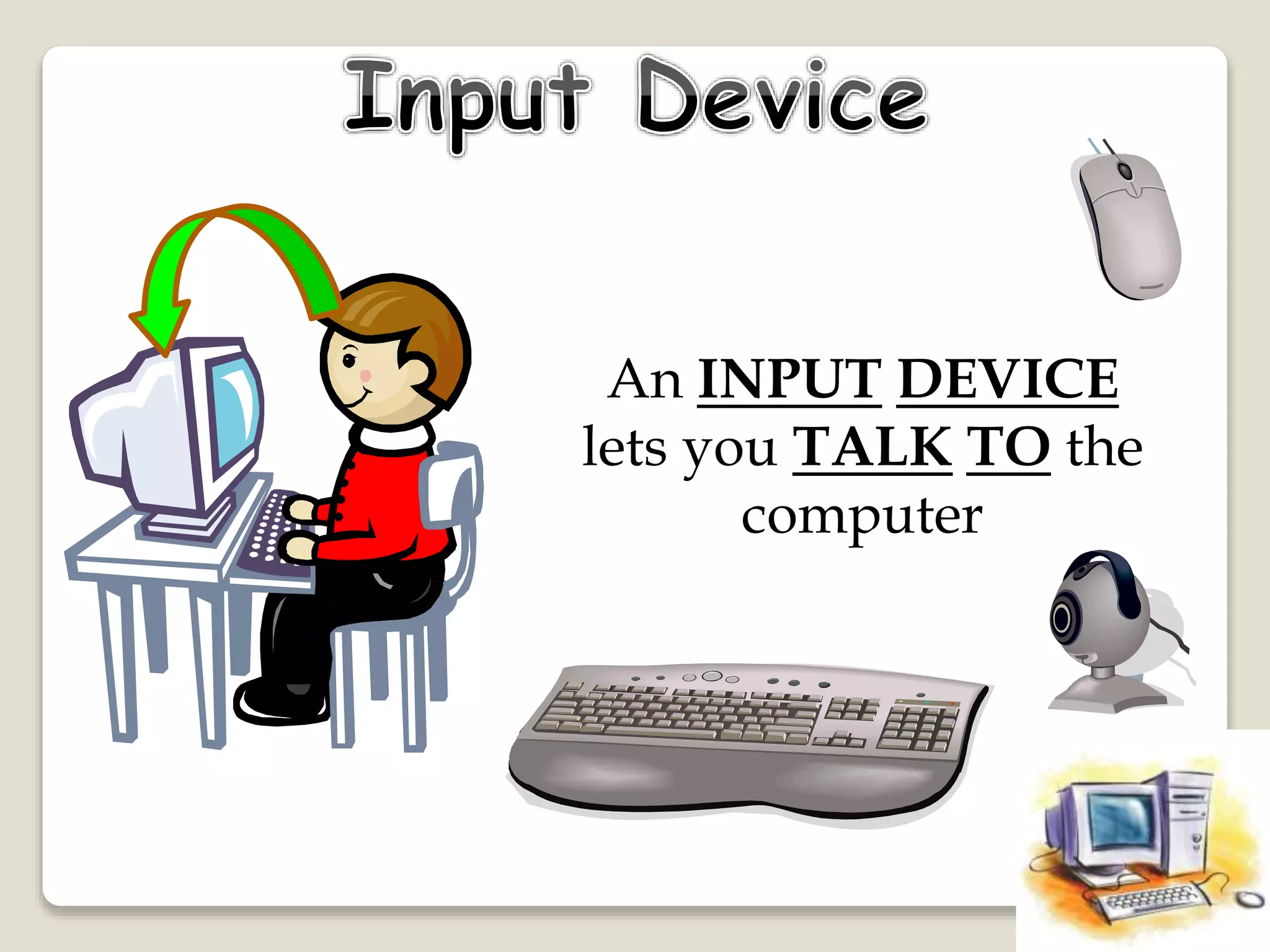
An INPUT DEVICE
lets you TALK TO the
computer
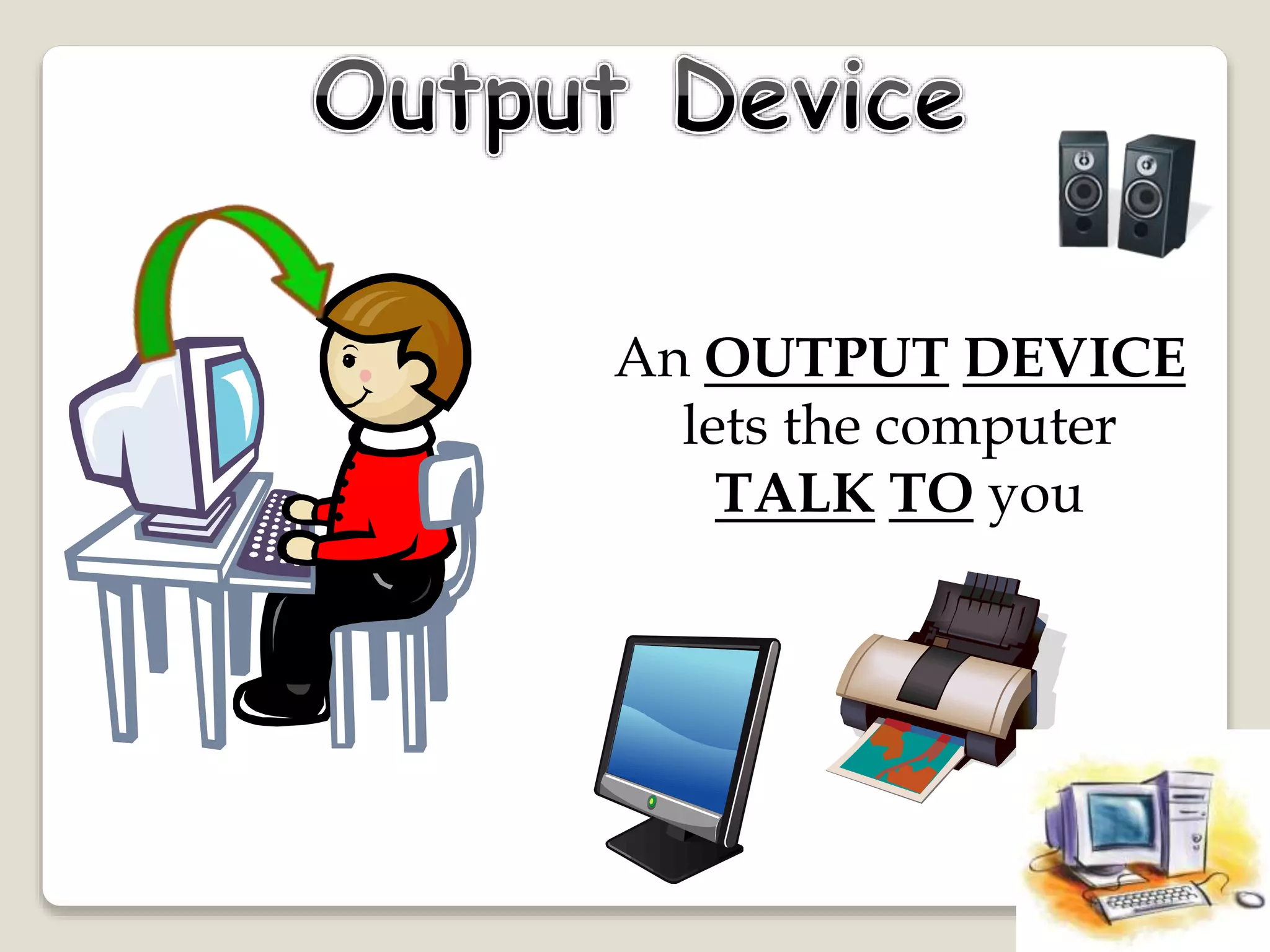
An OUTPUT DEVICE
lets the computer
TALK TO you
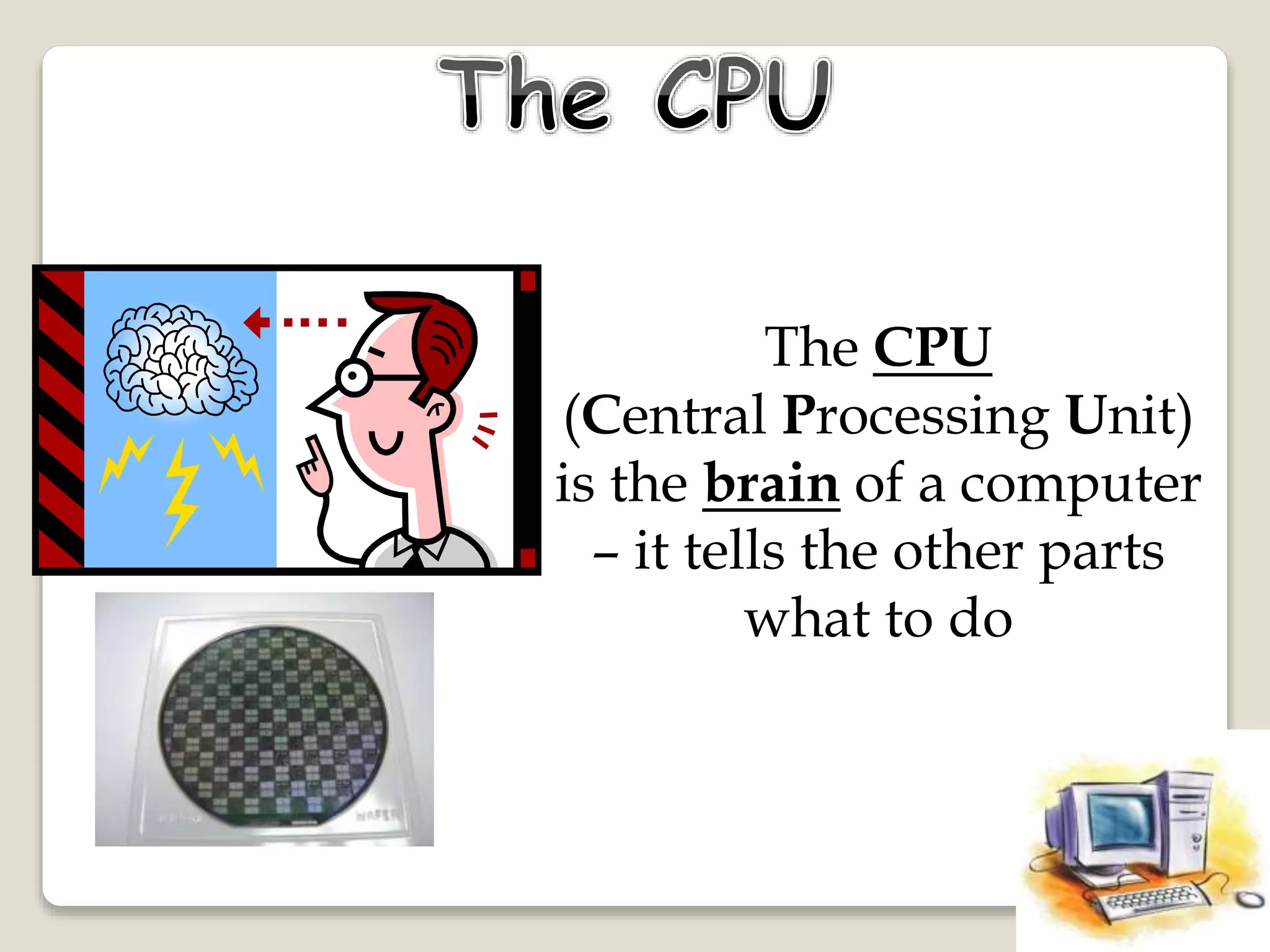
The CPU
(Central Processing Unit)
is the brain of a computer
– it tells the other parts
what to do
The CPU Stand for the..
Central Processing Unit
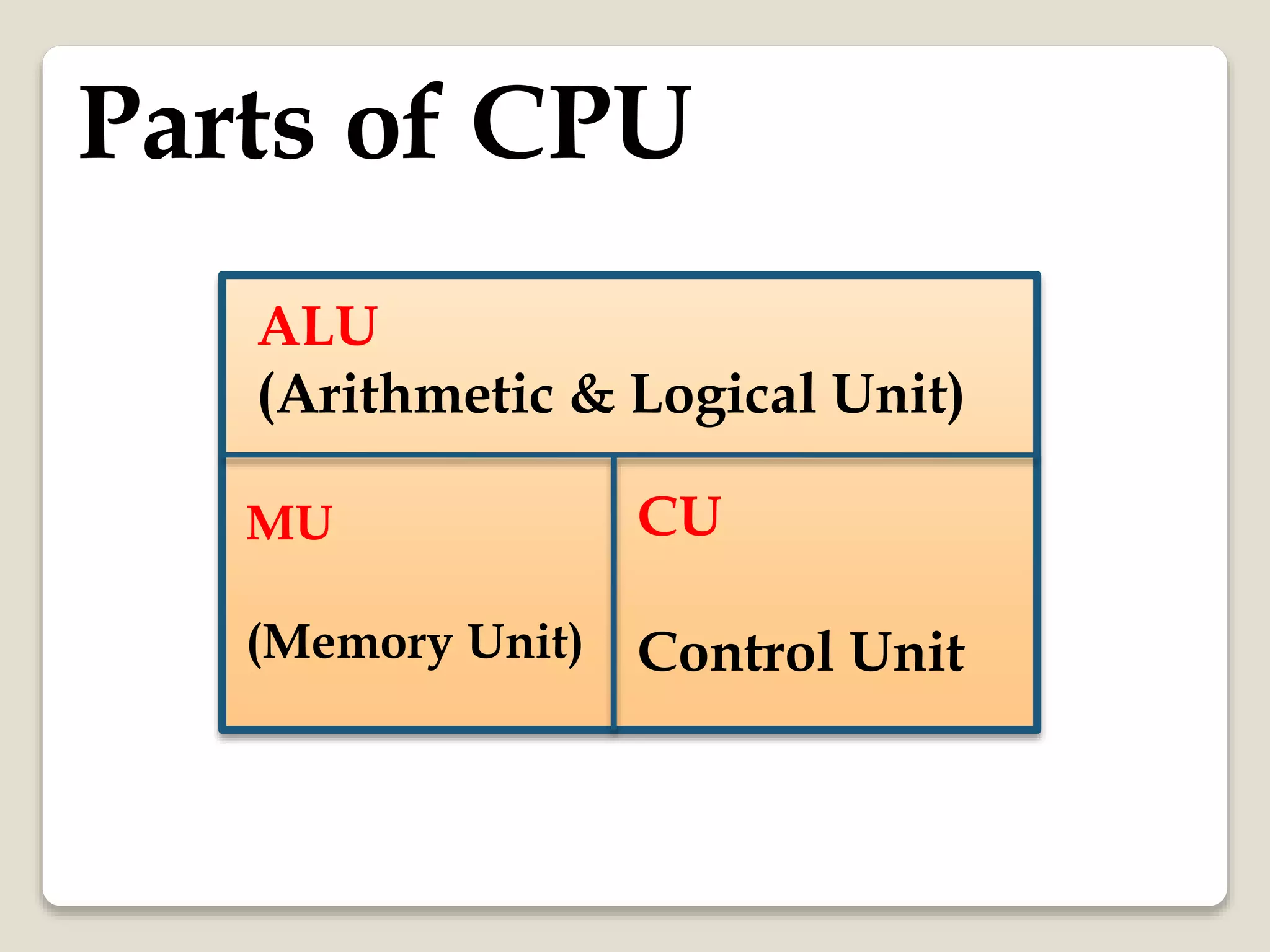
ALU
(Arithmetic & Logical Unit)
MU
(Memory Unit)
CU
Control Unit
Parts of CPU
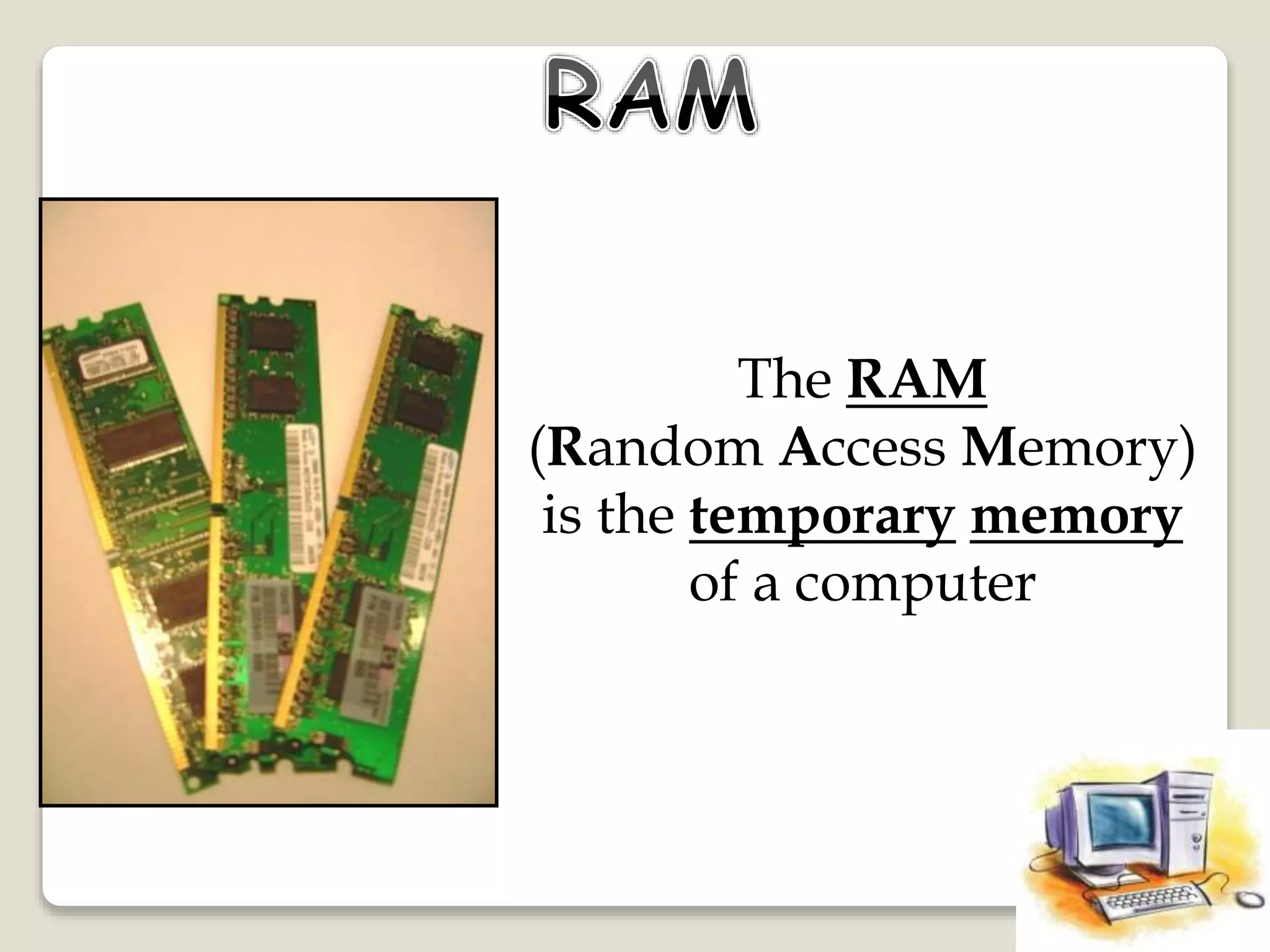
The RAM
(Random Access Memory)
is the temporary memory
of a computer
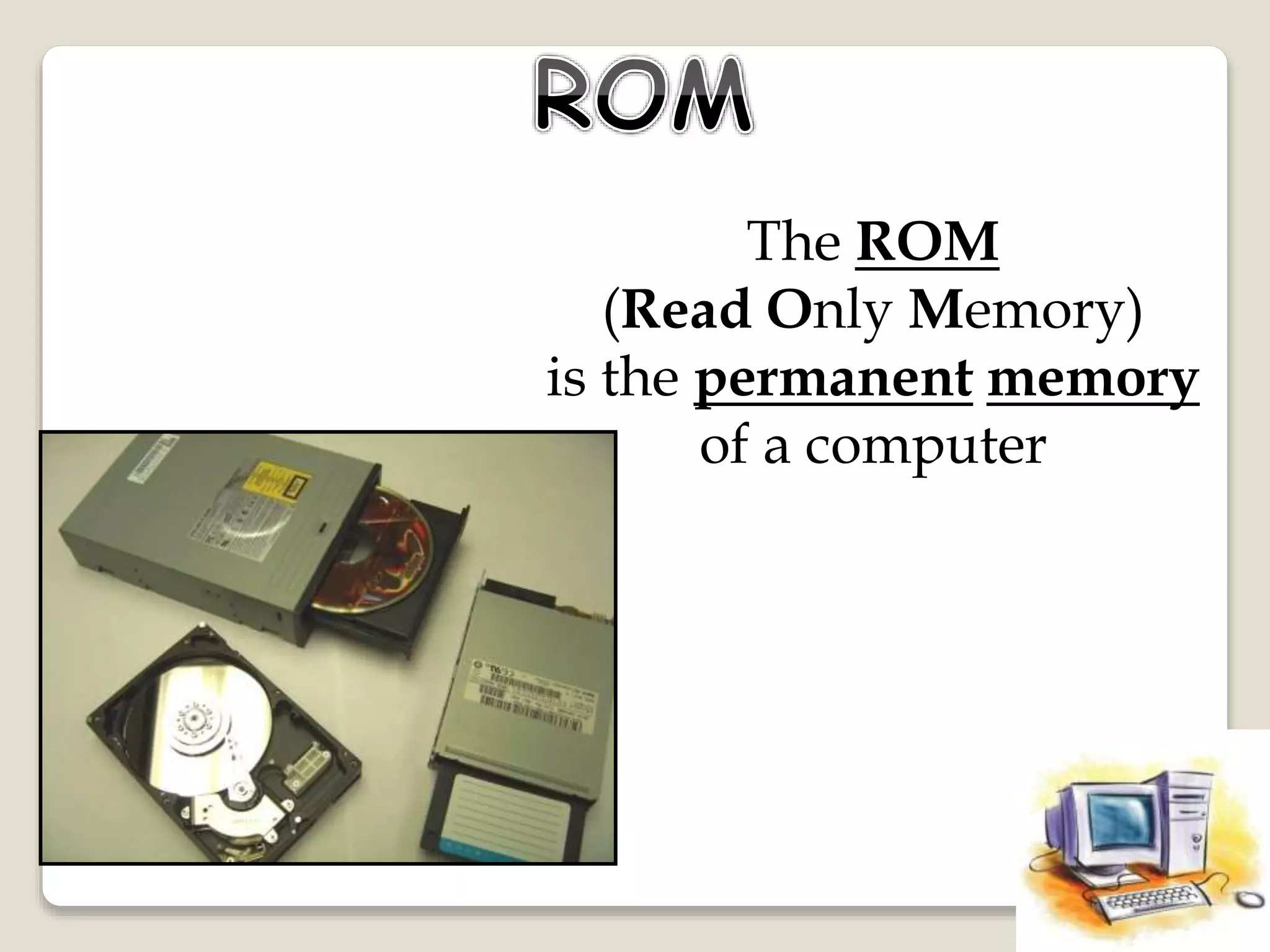
The ROM
(Read Only Memory)
is the permanent memory
of a computer
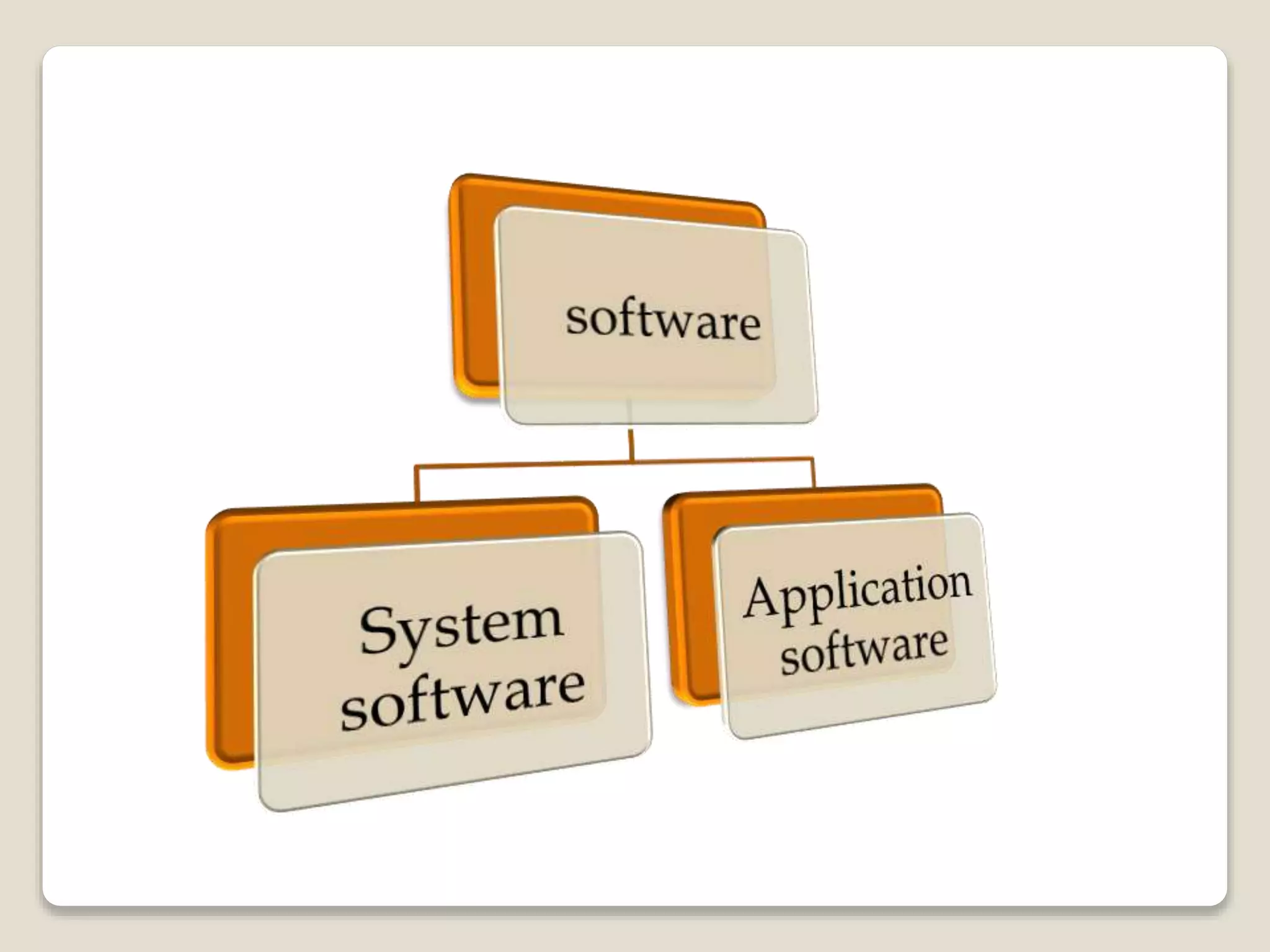
What is Computer Software?
Software is the combination of different types
of instruction that made for perform a specific
task .
Computer Software are programs that tell the
computer what to do.
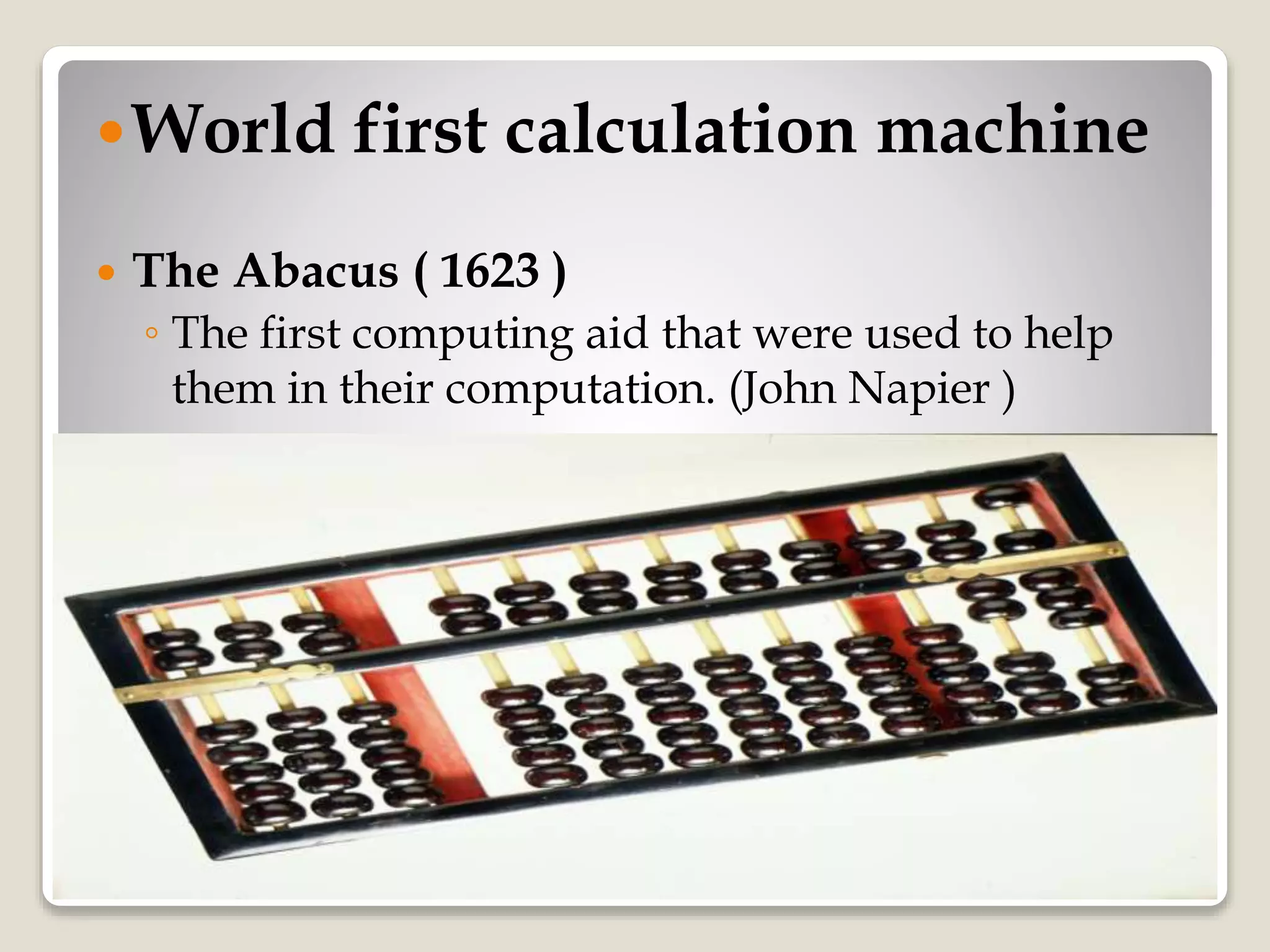
World first calculation machine
World first calculation machine
 The Abacus ( 1623 )
◦ The first computing aid that were used to help
them in their computation. (John Napier )
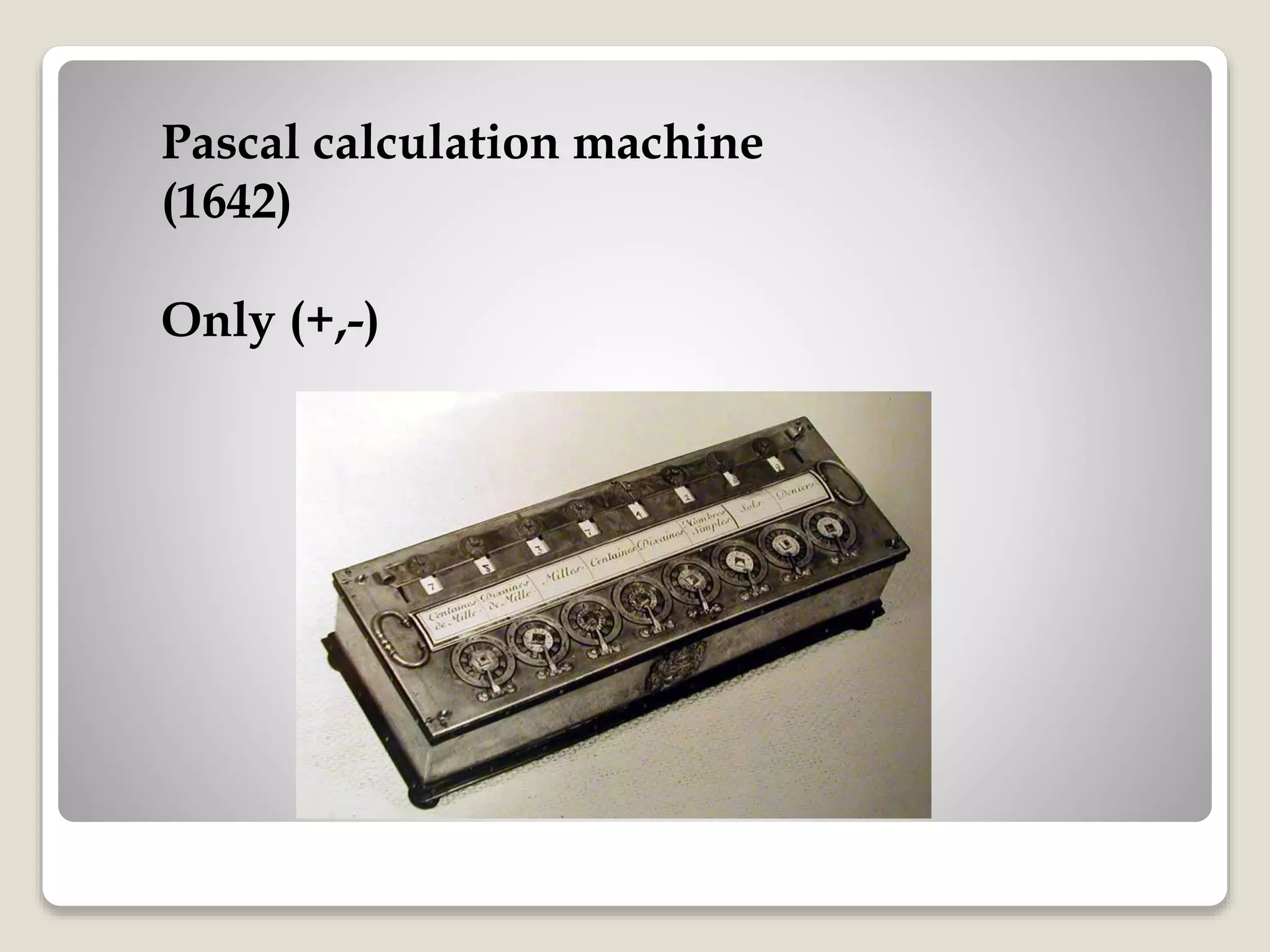
Pascal calculation machine
(1642)
Only (+,-)
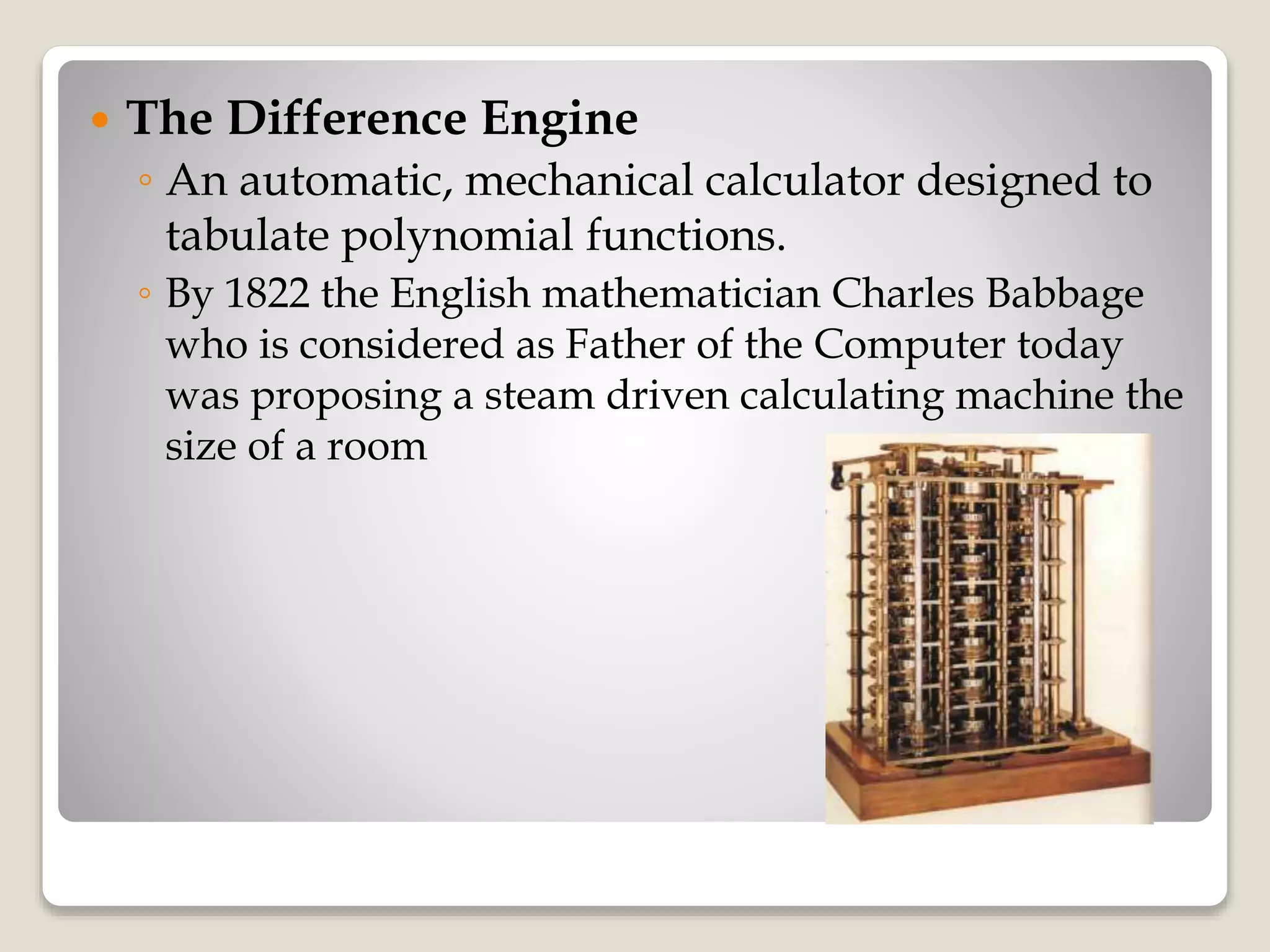
 The Difference Engine
◦ An automatic, mechanical calculator designed to
tabulate polynomial functions.
◦ By 1822 the English mathematician Charles Babbage
who is considered as Father of the Computer today
was proposing a steam driven calculating machine the
size of a room
 Ada Agusta (first worlds programmer)
 Embedded at Difference Engine
 1890 America scientist Harman hollyrath
 Create a machine those are used in america
people calculation.
 1939 atanasof and berry made first world
electronic digital computer (ABC computer )
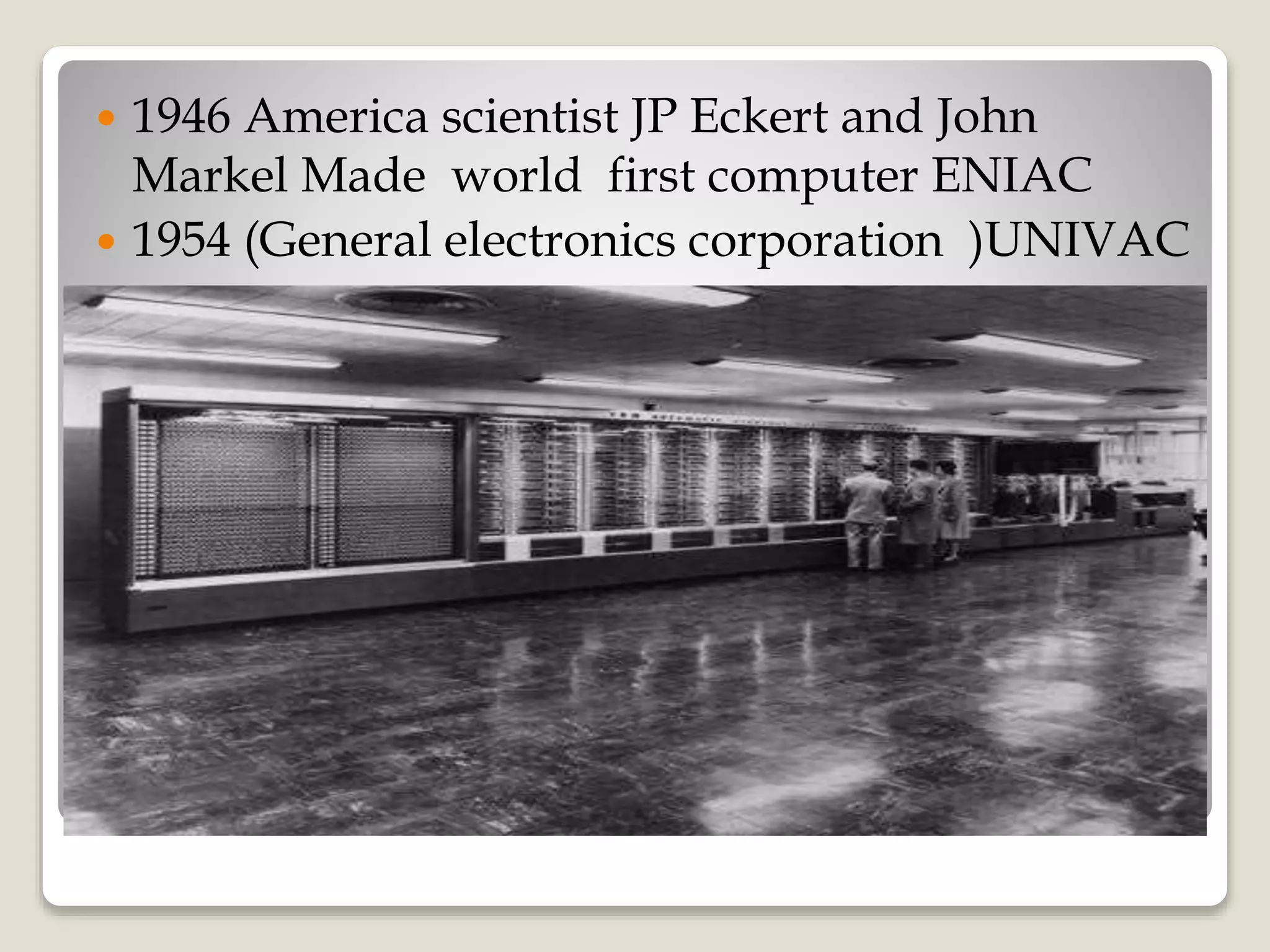
 1946 America scientist JP Eckert and John
Markel Made world first computer ENIAC
 1954 (General electronics corporation )UNIVAC
EVOLUTION OF COMPUTERS
GENERATION 1 GENERATION 2 GENERATION 3
GENERATION 4 GENERATION 5
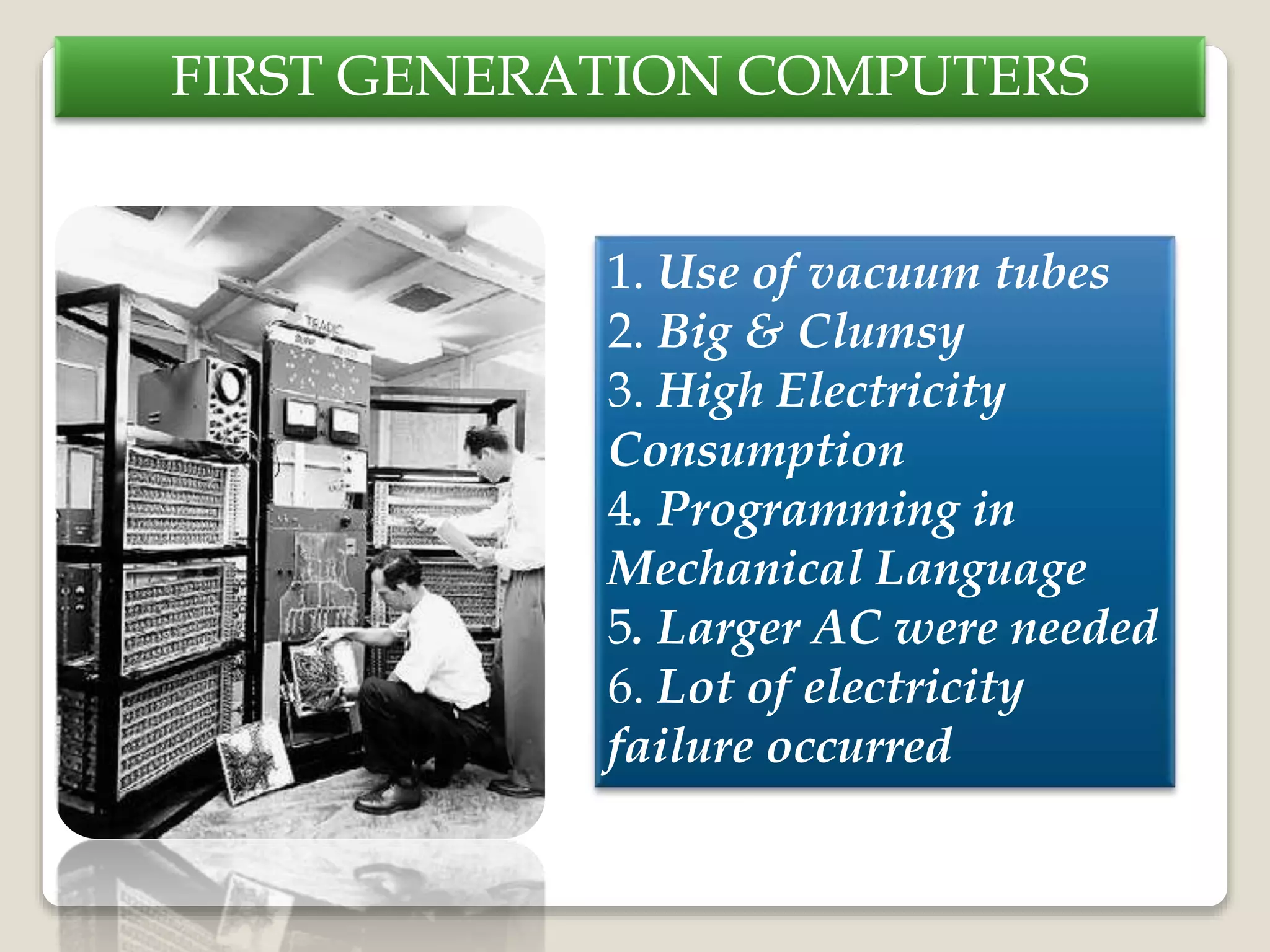
FIRST GENERATION COMPUTERS
1. Use of vacuum tubes
2. Big & Clumsy
3. High Electricity
Consumption
4. Programming in
Mechanical Language
5. Larger AC were needed
6. Lot of electricity
failure occurred
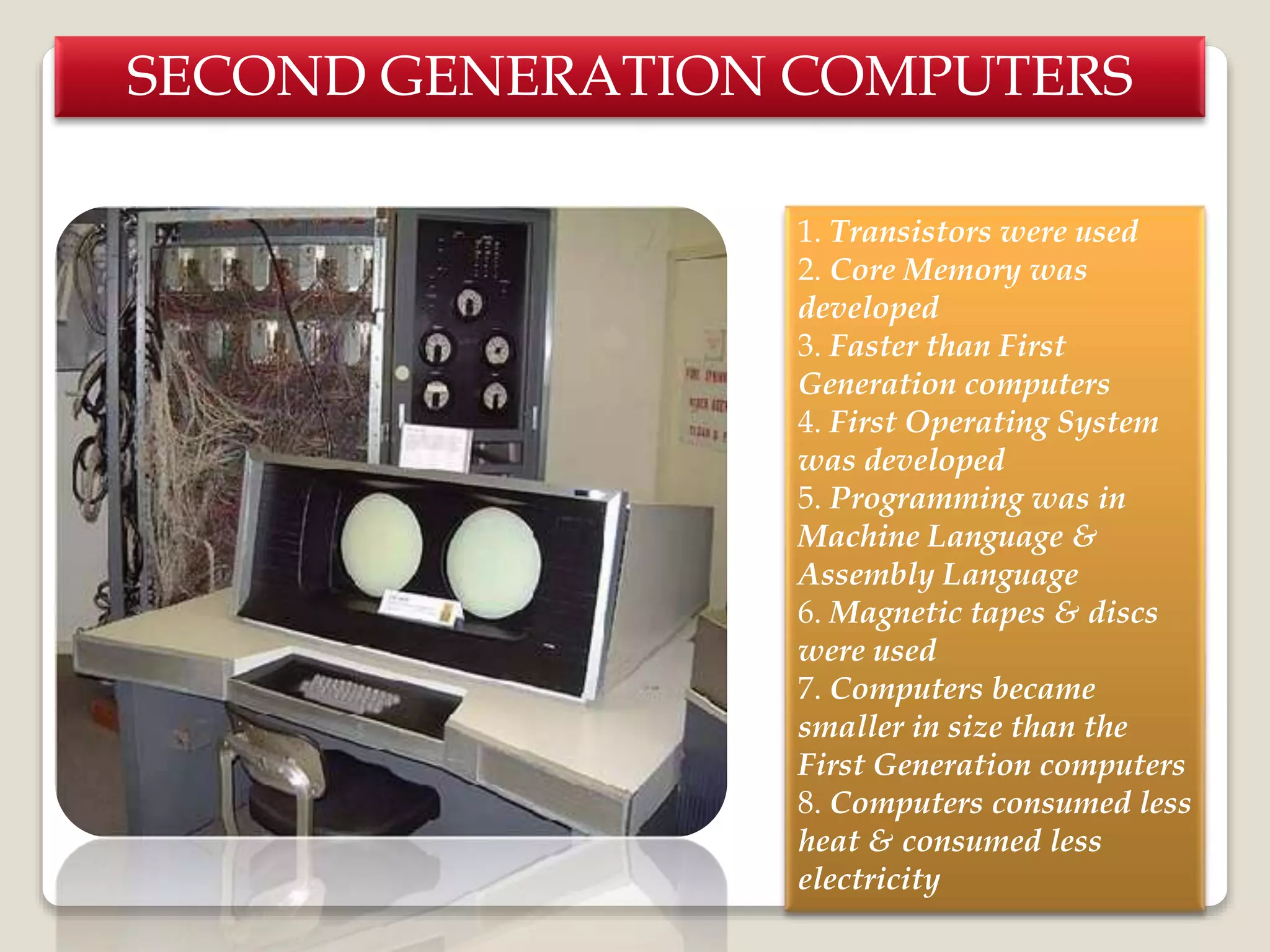
SECOND GENERATION COMPUTERS
1. Transistors were used
2. Core Memory was
developed
3. Faster than First
Generation computers
4. First Operating System
was developed
5. Programming was in
Machine Language &
Assembly Language
6. Magnetic tapes & discs
were used
7. Computers became
smaller in size than the
First Generation computers
8. Computers consumed less
heat & consumed less
electricity
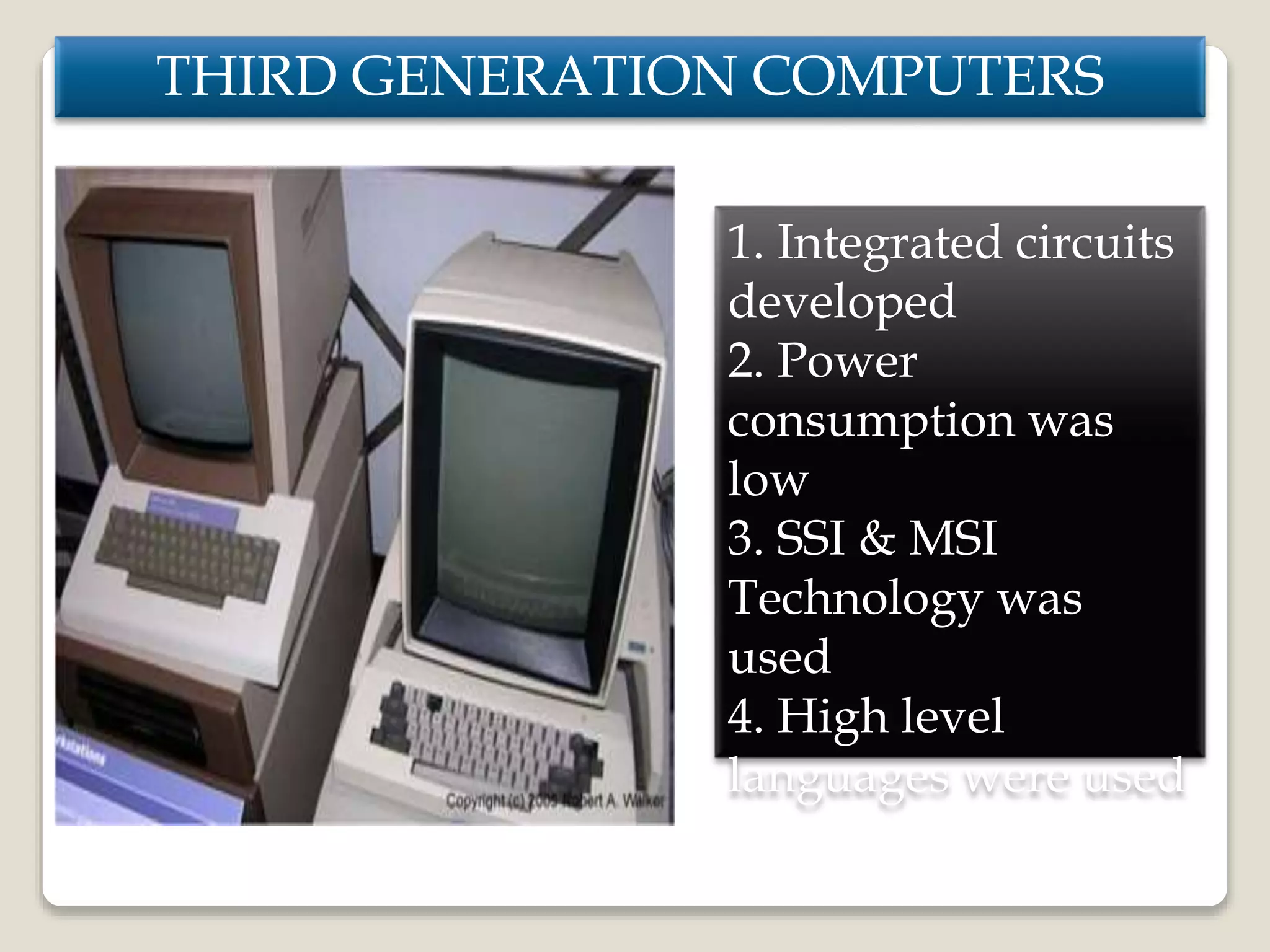
THIRD GENERATION COMPUTERS
1. Integrated circuits
developed
2. Power
consumption was
low
3. SSI & MSI
Technology was
used
4. High level
languages were used
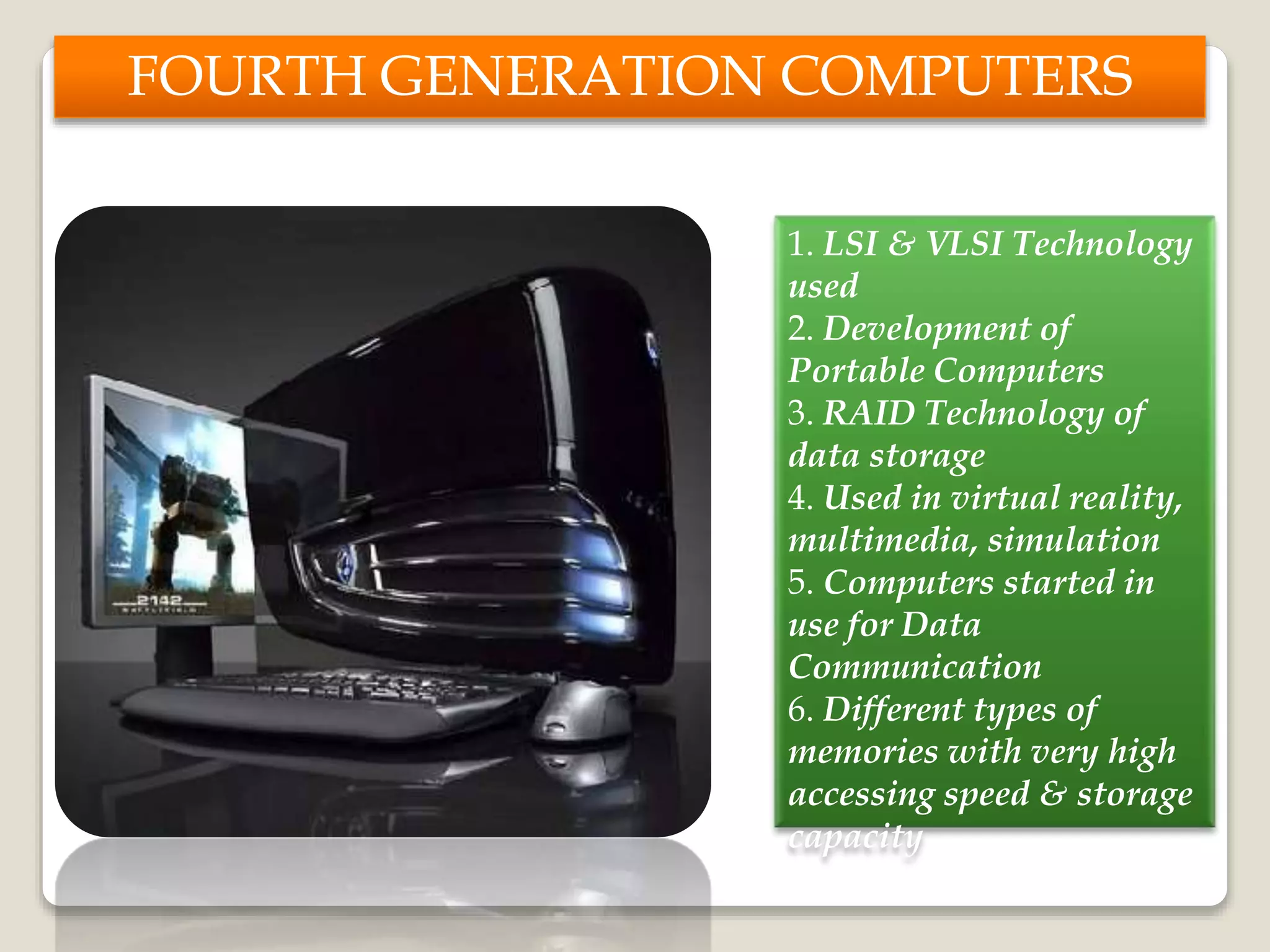
FOURTH GENERATION COMPUTERS
1. LSI & VLSI Technology
used
2. Development of
Portable Computers
3. RAID Technology of
data storage
4. Used in virtual reality,
multimedia, simulation
5. Computers started in
use for Data
Communication
6. Different types of
memories with very high
accessing speed & storage
capacity
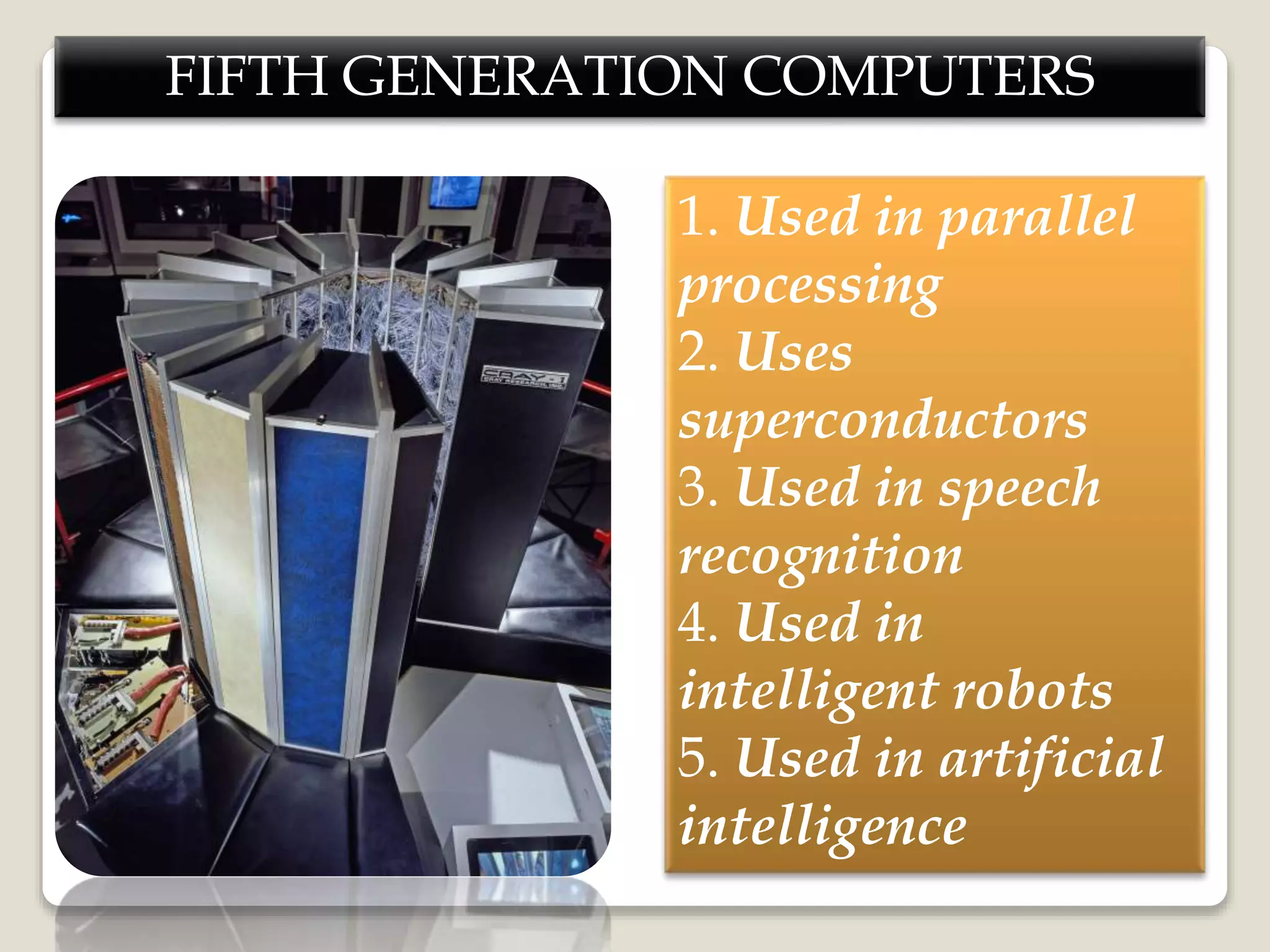
FIFTH GENERATION COMPUTERS
1. Used in parallel
processing
2. Uses
superconductors
3. Used in speech
recognition
4. Used in
intelligent robots
5. Used in artificial
intelligence
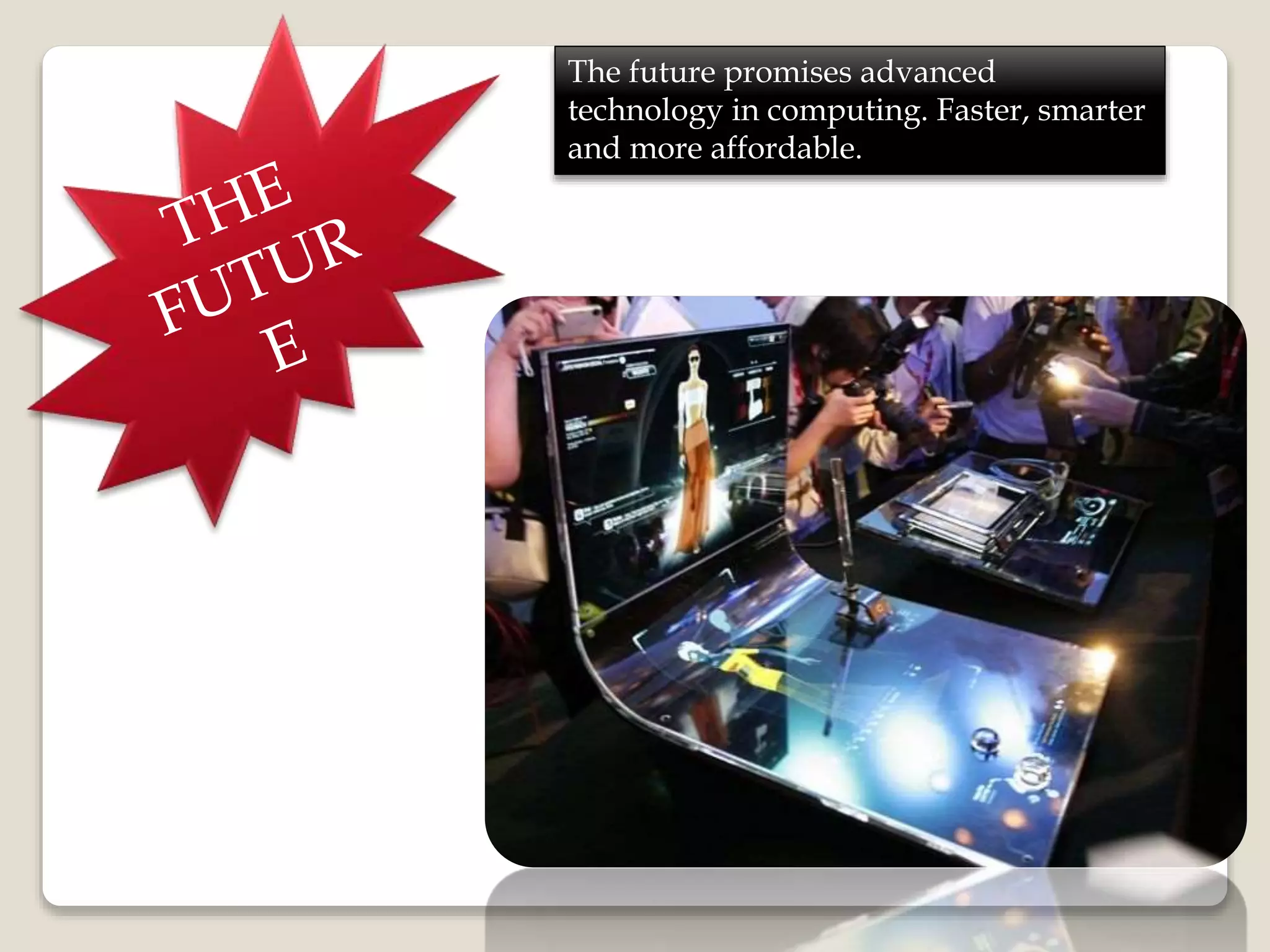
The future promises advanced
technology in computing. Faster, smarter
and more affordable.
THE END
ER. SOHAN SINGH GROVER
IT - TRAINER
Thank you
dear
students

Basic of Computer fundamental

  • 1.
    Introduction to Computer Er.Sohan Grover IT-Trainer
  • 2.
     What isComputer ?
  • 3.
     Computer isan Electronic Machine that Receive the instruction to the Existing user and process it and finally give the output according to the user need.  Computer is an electronic device that process, stores and outputs data at high speeds.
  • 4.
     What iselectronics machine???  What is electrical machine??? What is the difference between electronics and electrical machine????
  • 5.
    Basic advantage ofa computer 1. Speed 2. Multitask 3. Save time 4. Accuracy
  • 6.
    Disadvantages of aComputer ?? 1. Decision 2. Validation 3. Maintenance 4. Misuse
  • 7.
     Components ofcomputer???
  • 8.
     Hardware  Thephysical components of the computer which are located inside the cabinet.
  • 9.
    Major Components ofcomputer Hardware : 1. Input Devices 2. Output Devices 3. Processing Unit
  • 10.
    An INPUT DEVICE letsyou TALK TO the computer
  • 11.
    An OUTPUT DEVICE letsthe computer TALK TO you
  • 12.
    The CPU (Central ProcessingUnit) is the brain of a computer – it tells the other parts what to do
  • 13.
    The CPU Standfor the.. Central Processing Unit
  • 15.
    ALU (Arithmetic & LogicalUnit) MU (Memory Unit) CU Control Unit Parts of CPU
  • 17.
    The RAM (Random AccessMemory) is the temporary memory of a computer
  • 18.
    The ROM (Read OnlyMemory) is the permanent memory of a computer
  • 19.
    What is ComputerSoftware? Software is the combination of different types of instruction that made for perform a specific task . Computer Software are programs that tell the computer what to do.
  • 22.
    World first calculationmachine World first calculation machine  The Abacus ( 1623 ) ◦ The first computing aid that were used to help them in their computation. (John Napier )
  • 23.
  • 24.
     The DifferenceEngine ◦ An automatic, mechanical calculator designed to tabulate polynomial functions. ◦ By 1822 the English mathematician Charles Babbage who is considered as Father of the Computer today was proposing a steam driven calculating machine the size of a room
  • 25.
     Ada Agusta(first worlds programmer)  Embedded at Difference Engine  1890 America scientist Harman hollyrath  Create a machine those are used in america people calculation.  1939 atanasof and berry made first world electronic digital computer (ABC computer )
  • 26.
     1946 Americascientist JP Eckert and John Markel Made world first computer ENIAC  1954 (General electronics corporation )UNIVAC
  • 27.
    EVOLUTION OF COMPUTERS GENERATION1 GENERATION 2 GENERATION 3 GENERATION 4 GENERATION 5
  • 28.
    FIRST GENERATION COMPUTERS 1.Use of vacuum tubes 2. Big & Clumsy 3. High Electricity Consumption 4. Programming in Mechanical Language 5. Larger AC were needed 6. Lot of electricity failure occurred
  • 29.
    SECOND GENERATION COMPUTERS 1.Transistors were used 2. Core Memory was developed 3. Faster than First Generation computers 4. First Operating System was developed 5. Programming was in Machine Language & Assembly Language 6. Magnetic tapes & discs were used 7. Computers became smaller in size than the First Generation computers 8. Computers consumed less heat & consumed less electricity
  • 30.
    THIRD GENERATION COMPUTERS 1.Integrated circuits developed 2. Power consumption was low 3. SSI & MSI Technology was used 4. High level languages were used
  • 31.
    FOURTH GENERATION COMPUTERS 1.LSI & VLSI Technology used 2. Development of Portable Computers 3. RAID Technology of data storage 4. Used in virtual reality, multimedia, simulation 5. Computers started in use for Data Communication 6. Different types of memories with very high accessing speed & storage capacity
  • 32.
    FIFTH GENERATION COMPUTERS 1.Used in parallel processing 2. Uses superconductors 3. Used in speech recognition 4. Used in intelligent robots 5. Used in artificial intelligence
  • 33.
    The future promisesadvanced technology in computing. Faster, smarter and more affordable.
  • 34.
    THE END ER. SOHANSINGH GROVER IT - TRAINER Thank you dear students