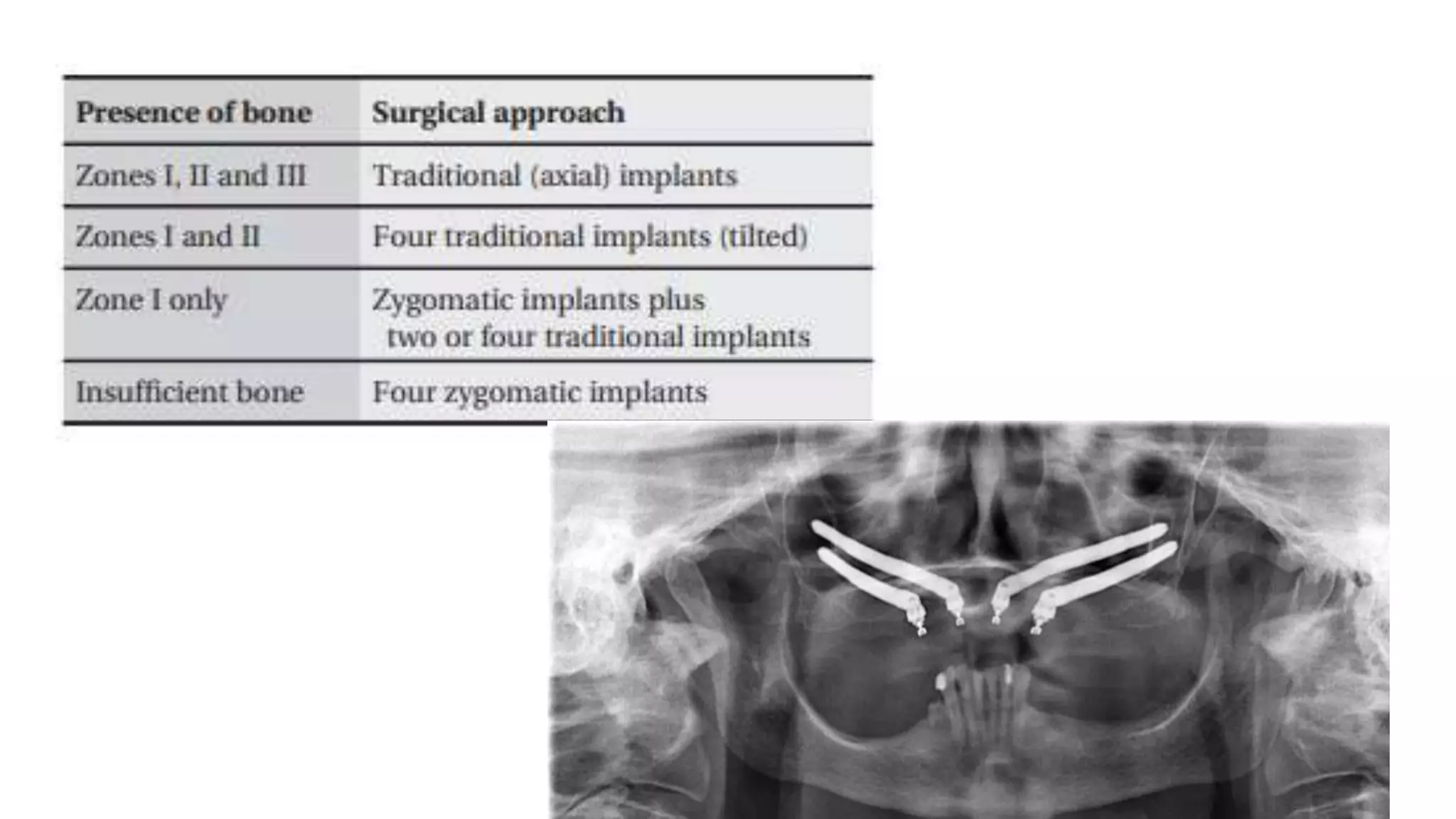
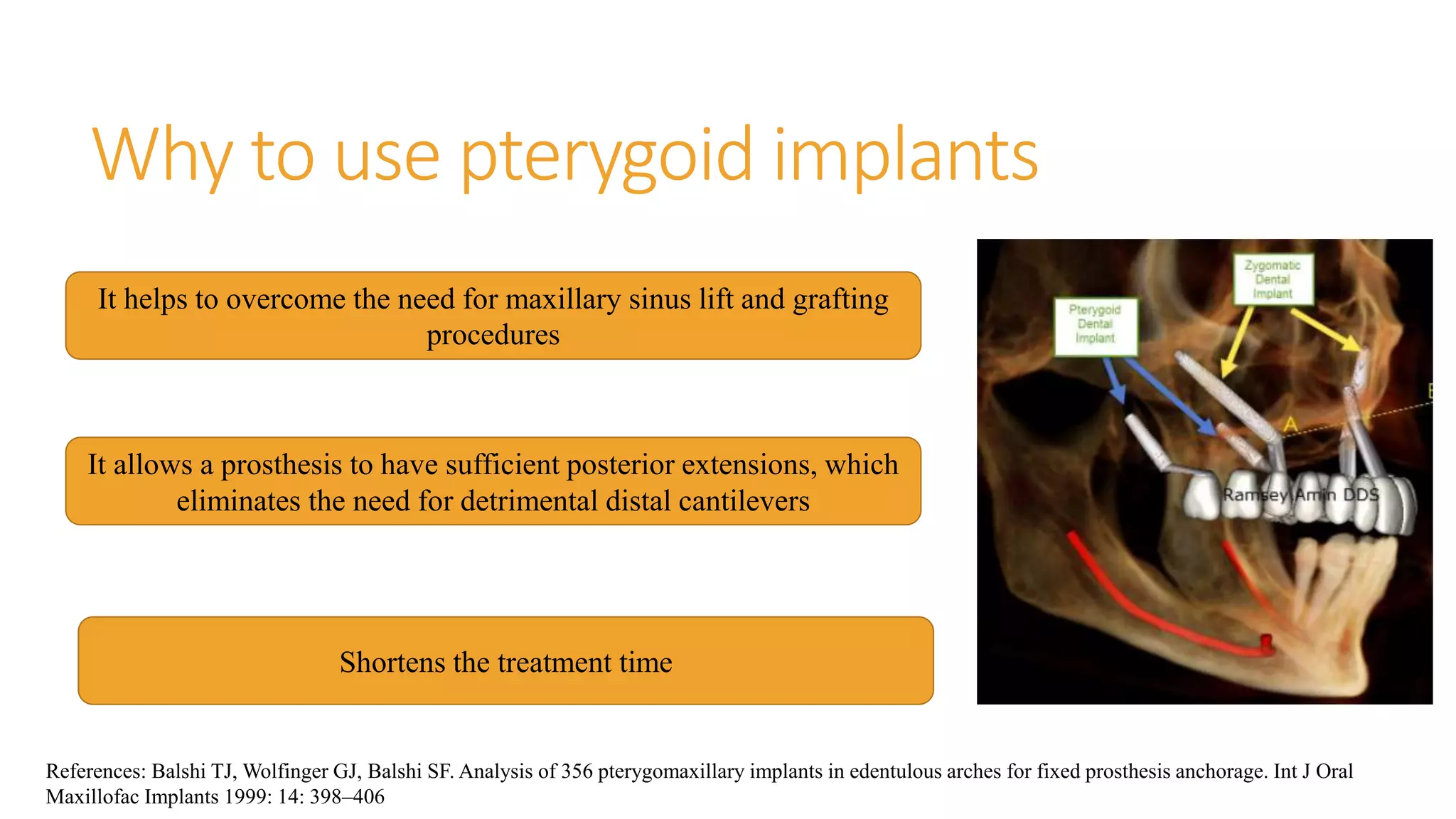
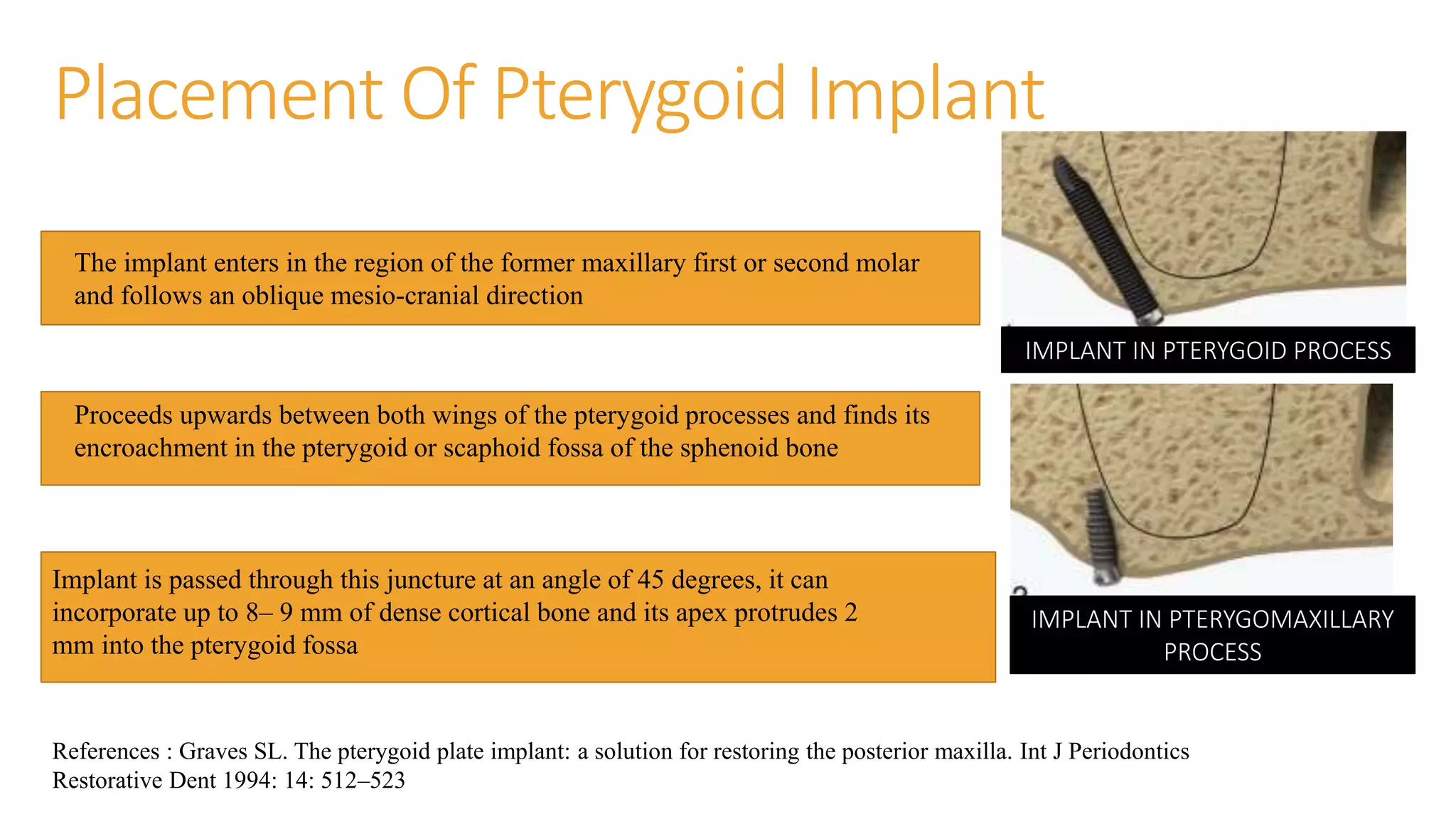
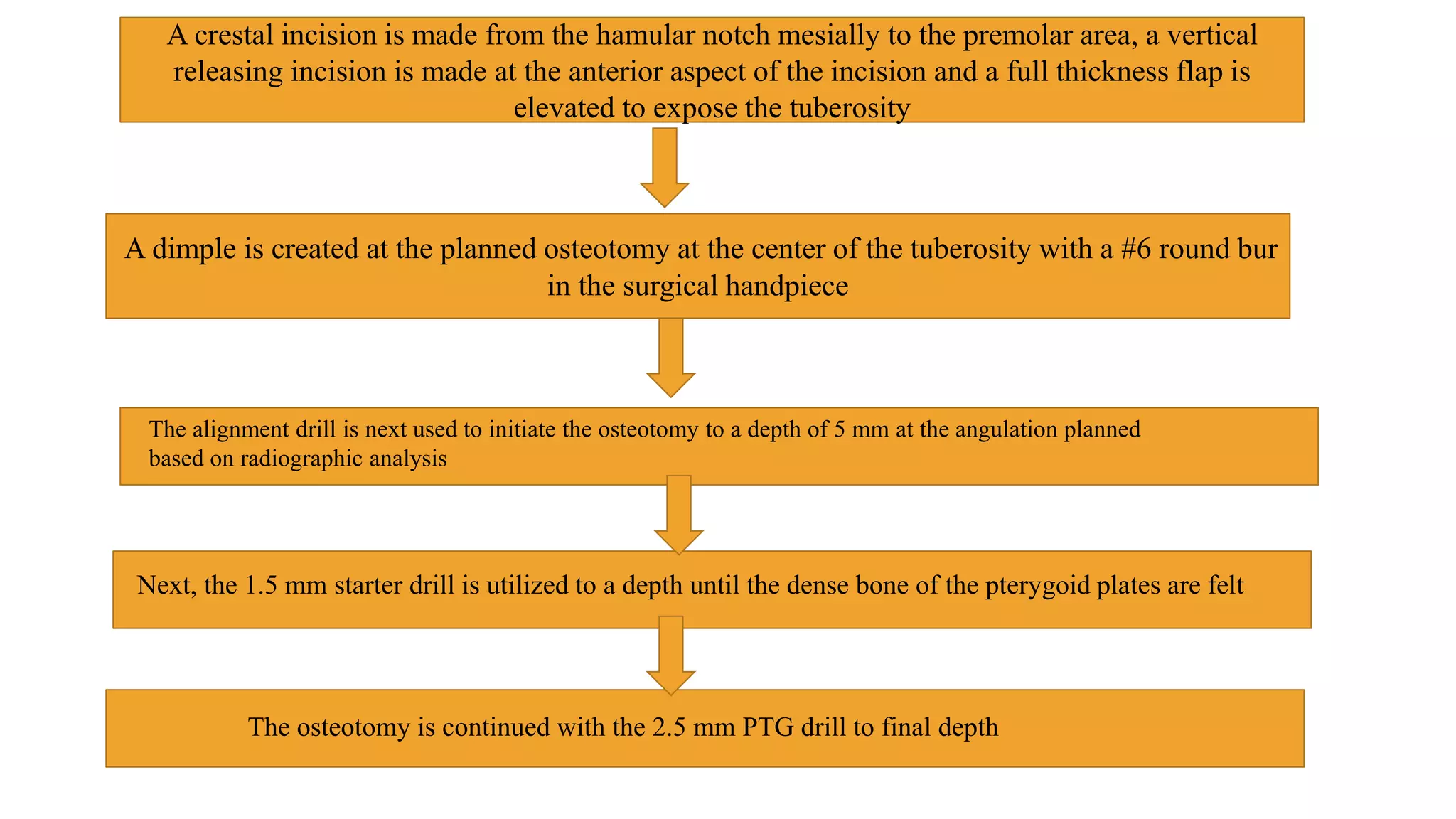
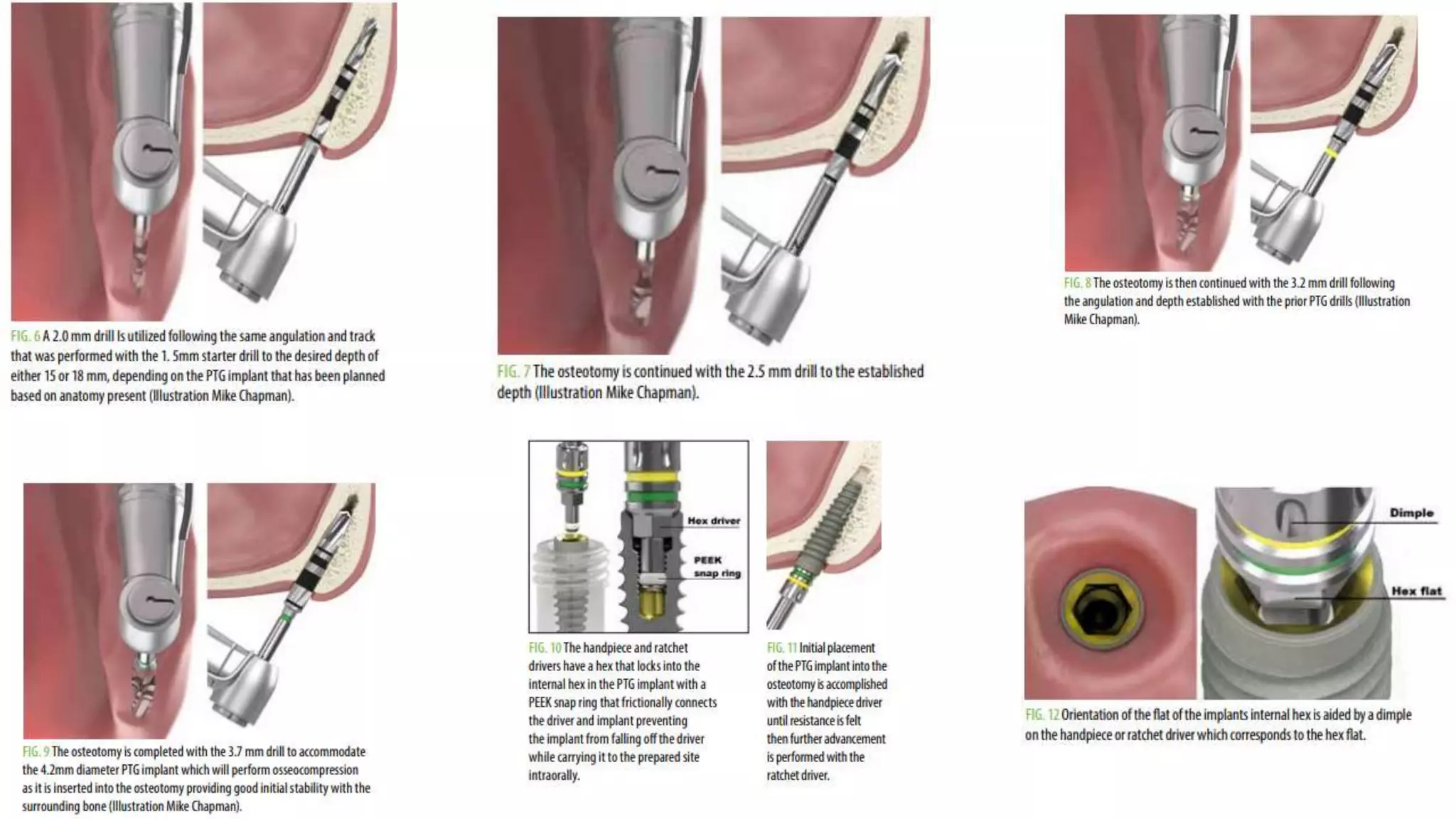
This document discusses zygomatic and pterygoid implants for treating atrophic maxillas. Zygomatic implants are placed through the zygomatic bone to provide support when maxillary bone is insufficient. They reduce the need for grafts and shorten treatment time. Pterygoid implants are placed through the pterygoid plates when posterior maxilla is lacking. Both have high success rates but risks include nerve damage, bleeding and implant failure. Together these implant techniques provide stable prosthetic support without the need for extensive grafts in advanced maxillary resorption cases.