The value of measuring the health of our rivers


          Prof Stuart Bunn 斯图亚特·巴恩 教授
          Director, Australian Rivers Institute 澳大利亚河流学会 会长
          Griffith University 格里菲斯大学
Outline 概述
What is river ecosystem ‘health’?
什么是河流的’健康’?

Threats to rivers – two perspectives:
河流面临的威胁主要来自两方面:
• humans and nature
• 人类与自然

Why monitor?
需要监测的原因 ?

Guiding principles
指导准则
What is river ecosystem ‘health’?
什么是河流的’健康’?
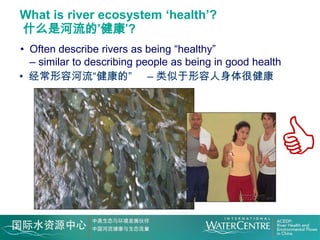
• Often describe rivers as being “healthy”
  – similar to describing people as being in good health
• 经常形容河流“健康的” – 类似于形容人身体很健康


                                                       
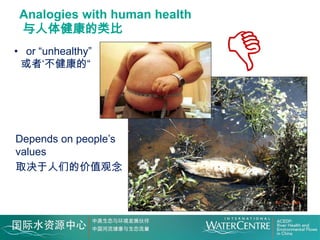
Analogies with human health


                               
 与人体健康的类比
• or “unhealthy”
 或者‘不健康的“


Depends on people’s
values
取决于人们的价值观念
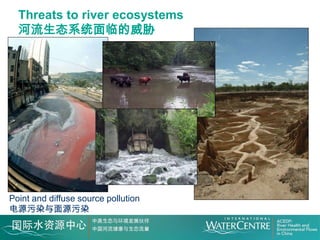
Threats to river ecosystems
  河流生态系统面临的威胁


Point and diffuse source pollution
电源污染与面源污染
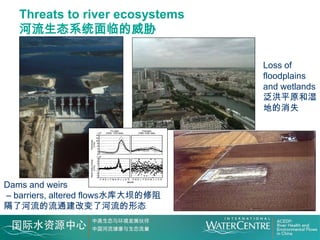
Threats to river ecosystems
   河流生态系统面临的威胁

                                   Loss of
                                   floodplains
                                   and wetlands
                                   泛洪平原和湿
                                   地的消失


Dams and weirs
– barriers, altered flows水库大坝的修阻
隔了河流的流通建改变了河流的形态
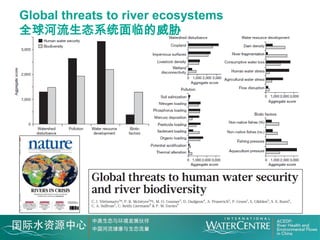
Global threats to river ecosystems
全球河流生态系统面临的威胁
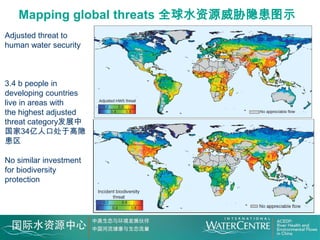
Mapping global threats 全球水资源威胁隐患图示
Adjusted threat to
human water security


3.4 b people in
developing countries
live in areas with
the highest adjusted
threat category发展中
国家34亿人口处于高隐
患区

No similar investment
for biodiversity
protection
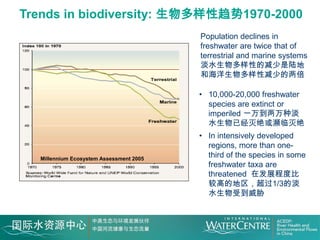
Trends in biodiversity: 生物多样性趋势1970-2000
                                         Population declines in
                                         freshwater are twice that of
                                         terrestrial and marine systems
                                         淡水生物多样性的减少是陆地
                                         和海洋生物多样性减少的两倍

                                         • 10,000-20,000 freshwater
                                           species are extinct or
                                           imperiled 一万到两万种淡
                                           水生物已经灭绝或濒临灭绝
                                         • In intensively developed
                                           regions, more than one-
  Millennium Ecosystem Assessment 2005
                                           third of the species in some
                                           freshwater taxa are
                                           threatened 在发展程度比
                                           较高的地区,超过1/3的淡
                                           水生物受到威胁
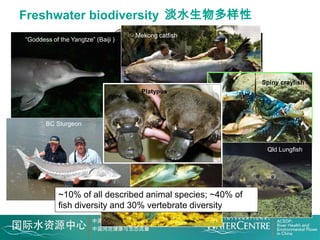
Freshwater biodiversity 淡水生物多样性
                                    Mekong catfish
“Goddess of the Yangtze” (Baiji )


                                                                   Spiny crayfish
                                      Platypus


       BC Sturgeon


                                                                    Qld Lungfish
                                                 Pig-nose turtle


            ~10% of all described animal species; ~40% of
                           Aquatic invertebrates
            fish diversity and 30% vertebrate diversity
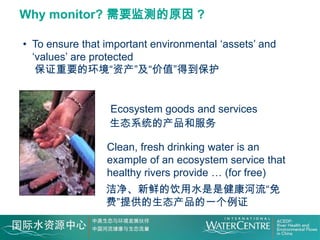
Why monitor? 需要监测的原因 ?

• To ensure that important environmental ‘assets’ and
  ‘values’ are protected
   保证重要的环境“资产”及“价值”得到保护


                  Ecosystem goods and services
                  生态系统的产品和服务

                 Clean, fresh drinking water is an
                 example of an ecosystem service that
                 healthy rivers provide … (for free)
                 洁净、新鲜的饮用水是是健康河流“免
                 费”提供的生态产品的一个例证
Other examples of ‘assets’ 其它例证
                                      Recreation
                                        娱乐


Fishing - protein 捕鱼 - 蛋白质     Freshwater biodiversity
                               淡水生物多样性


Aesthetics 美的享受
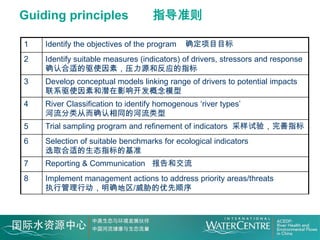
Guiding principles                 指导准则

1   Identify the objectives of the program   确定项目目标
2   Identify suitable measures (indicators) of drivers, stressors and response
    确认合适的驱使因素,压力源和反应的指标
3   Develop conceptual models linking range of drivers to potential impacts
    联系驱使因素和潜在影响开发概念模型
4   River Classification to identify homogenous ‘river types’
    河流分类从而确认相同的河流类型
5   Trial sampling program and refinement of indicators 采样试验,完善指标
6   Selection of suitable benchmarks for ecological indicators
    选取合适的生态指标的基准
7   Reporting & Communication 报告和交流
8   Implement management actions to address priority areas/threats
    执行管理行动,明确地区/威胁的优先顺序
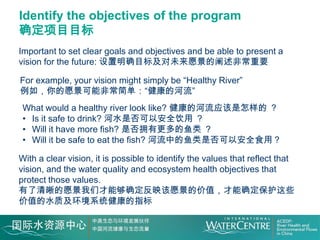
Identify the objectives of the program
确定项目目标
Important to set clear goals and objectives and be able to present a
vision for the future: 设置明确目标及对未来愿景的阐述非常重要

For example, your vision might simply be “Healthy River”
例如,你的愿景可能非常简单:“健康的河流”
 What would a healthy river look like? 健康的河流应该是怎样的 ?
 • Is it safe to drink? 河水是否可以安全饮用 ?
 • Will it have more fish? 是否拥有更多的鱼类 ?
 • Will it be safe to eat the fish? 河流中的鱼类是否可以安全食用?

With a clear vision, it is possible to identify the values that reflect that
vision, and the water quality and ecosystem health objectives that
protect those values.
有了清晰的愿景我们才能够确定反映该愿景的价值,才能确定保护这些
价值的水质及环境系统健康的指标
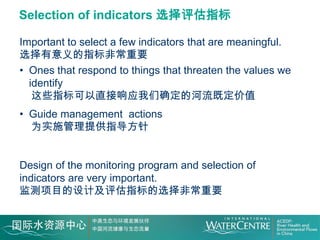
Selection of indicators 选择评估指标

Important to select a few indicators that are meaningful.
选择有意义的指标非常重要
• Ones that respond to things that threaten the values we
  identify
   这些指标可以直接响应我们确定的河流既定价值
• Guide management actions
  为实施管理提供指导方针


Design of the monitoring program and selection of
indicators are very important.
监测项目的设计及评估指标的选择非常重要
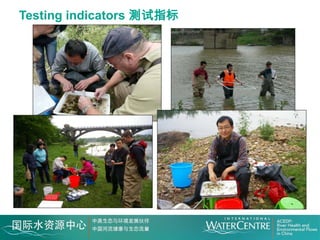
Testing indicators 测试指标
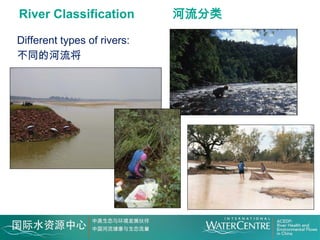
River Classification         河流分类

Different types of rivers:
不同的河流将
Classifying rivers into different types
将河流进行系统分类
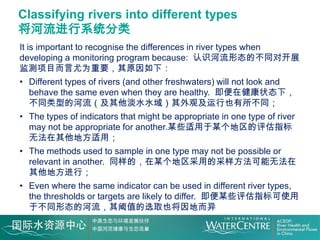
It is important to recognise the differences in river types when
developing a monitoring program because: 认识河流形态的不同对开展
监测项目而言尤为重要,其原因如下:
• Different types of rivers (and other freshwaters) will not look and
  behave the same even when they are healthy. 即便在健康状态下,
  不同类型的河流(及其他淡水水域)其外观及运行也有所不同;
• The types of indicators that might be appropriate in one type of river
  may not be appropriate for another.某些适用于某个地区的评估指标
  无法在其他地方适用;
• The methods used to sample in one type may not be possible or
  relevant in another. 同样的,在某个地区采用的采样方法可能无法在
  其他地方进行;
• Even where the same indicator can be used in different river types,
  the thresholds or targets are likely to differ. 即便某些评估指标可使用
  于不同形态的河流,其阈值的选取也将因地而异
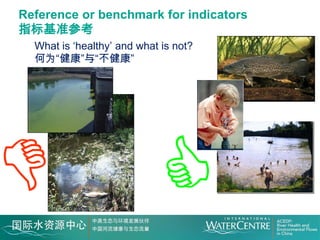
Reference or benchmark for indicators
指标基准参考
  What is ‘healthy’ and what is not?
  何为“健康”与“不健康”


                           
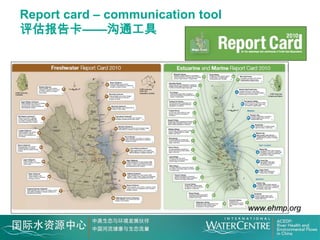
Report card – communication tool
评估报告卡——沟通工具


                                   www.ehmp.org
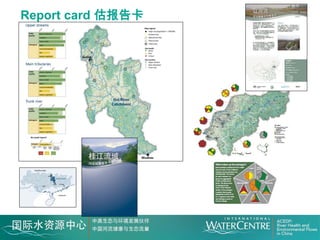
Report card 估报告卡
Why monitor? 需要监测的原因 ?
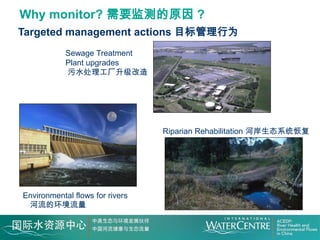
Targeted management actions 目标管理行为
            Sewage Treatment
            Plant upgrades
            污水处理工厂升级改造


                                 Riparian Rehabilitation 河岸生态系统恢复


Environmental flows for rivers
 河流的环境流量
Summary 总结
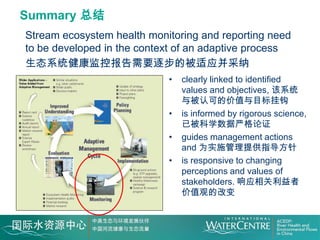
Stream ecosystem health monitoring and reporting need
to be developed in the context of an adaptive process
生态系统健康监控报告需要逐步的被适应并采纳
                            •   clearly linked to identified
                                values and objectives, 该系统
                                与被认可的价值与目标挂钩
                            •   is informed by rigorous science,
                                已被科学数据严格论证
                            •   guides management actions
                                and 为实施管理提供指导方针
                            •   is responsive to changing
                                perceptions and values of
                                stakeholders. 响应相关利益者
                                价值观的改变
Thankyou 谢谢


Science for rivers, coasts and catchments   www.rivers.edu.au

The Value of Measuring the Health of Our Rivers

  • 1.
    The value ofmeasuring the health of our rivers Prof Stuart Bunn 斯图亚特·巴恩 教授 Director, Australian Rivers Institute 澳大利亚河流学会 会长 Griffith University 格里菲斯大学
  • 2.
    Outline 概述 What isriver ecosystem ‘health’? 什么是河流的’健康’? Threats to rivers – two perspectives: 河流面临的威胁主要来自两方面: • humans and nature • 人类与自然 Why monitor? 需要监测的原因 ? Guiding principles 指导准则
  • 3.
    What is riverecosystem ‘health’? 什么是河流的’健康’? • Often describe rivers as being “healthy” – similar to describing people as being in good health • 经常形容河流“健康的” – 类似于形容人身体很健康 
  • 4.
    Analogies with humanhealth  与人体健康的类比 • or “unhealthy” 或者‘不健康的“ Depends on people’s values 取决于人们的价值观念
  • 5.
    Threats to riverecosystems 河流生态系统面临的威胁 Point and diffuse source pollution 电源污染与面源污染
  • 6.
    Threats to riverecosystems 河流生态系统面临的威胁 Loss of floodplains and wetlands 泛洪平原和湿 地的消失 Dams and weirs – barriers, altered flows水库大坝的修阻 隔了河流的流通建改变了河流的形态
  • 7.
    Global threats toriver ecosystems 全球河流生态系统面临的威胁
  • 8.
    Mapping global threats全球水资源威胁隐患图示 Adjusted threat to human water security 3.4 b people in developing countries live in areas with the highest adjusted threat category发展中 国家34亿人口处于高隐 患区 No similar investment for biodiversity protection
  • 9.
    Trends in biodiversity:生物多样性趋势1970-2000 Population declines in freshwater are twice that of terrestrial and marine systems 淡水生物多样性的减少是陆地 和海洋生物多样性减少的两倍 • 10,000-20,000 freshwater species are extinct or imperiled 一万到两万种淡 水生物已经灭绝或濒临灭绝 • In intensively developed regions, more than one- Millennium Ecosystem Assessment 2005 third of the species in some freshwater taxa are threatened 在发展程度比 较高的地区,超过1/3的淡 水生物受到威胁
  • 10.
    Freshwater biodiversity 淡水生物多样性 Mekong catfish “Goddess of the Yangtze” (Baiji ) Spiny crayfish Platypus BC Sturgeon Qld Lungfish Pig-nose turtle ~10% of all described animal species; ~40% of Aquatic invertebrates fish diversity and 30% vertebrate diversity
  • 11.
    Why monitor? 需要监测的原因? • To ensure that important environmental ‘assets’ and ‘values’ are protected 保证重要的环境“资产”及“价值”得到保护 Ecosystem goods and services 生态系统的产品和服务 Clean, fresh drinking water is an example of an ecosystem service that healthy rivers provide … (for free) 洁净、新鲜的饮用水是是健康河流“免 费”提供的生态产品的一个例证
  • 12.
    Other examples of‘assets’ 其它例证 Recreation 娱乐 Fishing - protein 捕鱼 - 蛋白质 Freshwater biodiversity 淡水生物多样性 Aesthetics 美的享受
  • 13.
    Guiding principles 指导准则 1 Identify the objectives of the program 确定项目目标 2 Identify suitable measures (indicators) of drivers, stressors and response 确认合适的驱使因素,压力源和反应的指标 3 Develop conceptual models linking range of drivers to potential impacts 联系驱使因素和潜在影响开发概念模型 4 River Classification to identify homogenous ‘river types’ 河流分类从而确认相同的河流类型 5 Trial sampling program and refinement of indicators 采样试验,完善指标 6 Selection of suitable benchmarks for ecological indicators 选取合适的生态指标的基准 7 Reporting & Communication 报告和交流 8 Implement management actions to address priority areas/threats 执行管理行动,明确地区/威胁的优先顺序
  • 14.
    Identify the objectivesof the program 确定项目目标 Important to set clear goals and objectives and be able to present a vision for the future: 设置明确目标及对未来愿景的阐述非常重要 For example, your vision might simply be “Healthy River” 例如,你的愿景可能非常简单:“健康的河流” What would a healthy river look like? 健康的河流应该是怎样的 ? • Is it safe to drink? 河水是否可以安全饮用 ? • Will it have more fish? 是否拥有更多的鱼类 ? • Will it be safe to eat the fish? 河流中的鱼类是否可以安全食用? With a clear vision, it is possible to identify the values that reflect that vision, and the water quality and ecosystem health objectives that protect those values. 有了清晰的愿景我们才能够确定反映该愿景的价值,才能确定保护这些 价值的水质及环境系统健康的指标
  • 15.
    Selection of indicators选择评估指标 Important to select a few indicators that are meaningful. 选择有意义的指标非常重要 • Ones that respond to things that threaten the values we identify 这些指标可以直接响应我们确定的河流既定价值 • Guide management actions 为实施管理提供指导方针 Design of the monitoring program and selection of indicators are very important. 监测项目的设计及评估指标的选择非常重要
  • 16.
  • 17.
    River Classification 河流分类 Different types of rivers: 不同的河流将
  • 18.
    Classifying rivers intodifferent types 将河流进行系统分类 It is important to recognise the differences in river types when developing a monitoring program because: 认识河流形态的不同对开展 监测项目而言尤为重要,其原因如下: • Different types of rivers (and other freshwaters) will not look and behave the same even when they are healthy. 即便在健康状态下, 不同类型的河流(及其他淡水水域)其外观及运行也有所不同; • The types of indicators that might be appropriate in one type of river may not be appropriate for another.某些适用于某个地区的评估指标 无法在其他地方适用; • The methods used to sample in one type may not be possible or relevant in another. 同样的,在某个地区采用的采样方法可能无法在 其他地方进行; • Even where the same indicator can be used in different river types, the thresholds or targets are likely to differ. 即便某些评估指标可使用 于不同形态的河流,其阈值的选取也将因地而异
  • 19.
    Reference or benchmarkfor indicators 指标基准参考 What is ‘healthy’ and what is not? 何为“健康”与“不健康”  
  • 20.
    Report card –communication tool 评估报告卡——沟通工具 www.ehmp.org
  • 21.
  • 22.
    Why monitor? 需要监测的原因? Targeted management actions 目标管理行为 Sewage Treatment Plant upgrades 污水处理工厂升级改造 Riparian Rehabilitation 河岸生态系统恢复 Environmental flows for rivers 河流的环境流量
  • 23.
    Summary 总结 Stream ecosystemhealth monitoring and reporting need to be developed in the context of an adaptive process 生态系统健康监控报告需要逐步的被适应并采纳 • clearly linked to identified values and objectives, 该系统 与被认可的价值与目标挂钩 • is informed by rigorous science, 已被科学数据严格论证 • guides management actions and 为实施管理提供指导方针 • is responsive to changing perceptions and values of stakeholders. 响应相关利益者 价值观的改变
  • 24.
    Thankyou 谢谢 Science forrivers, coasts and catchments www.rivers.edu.au