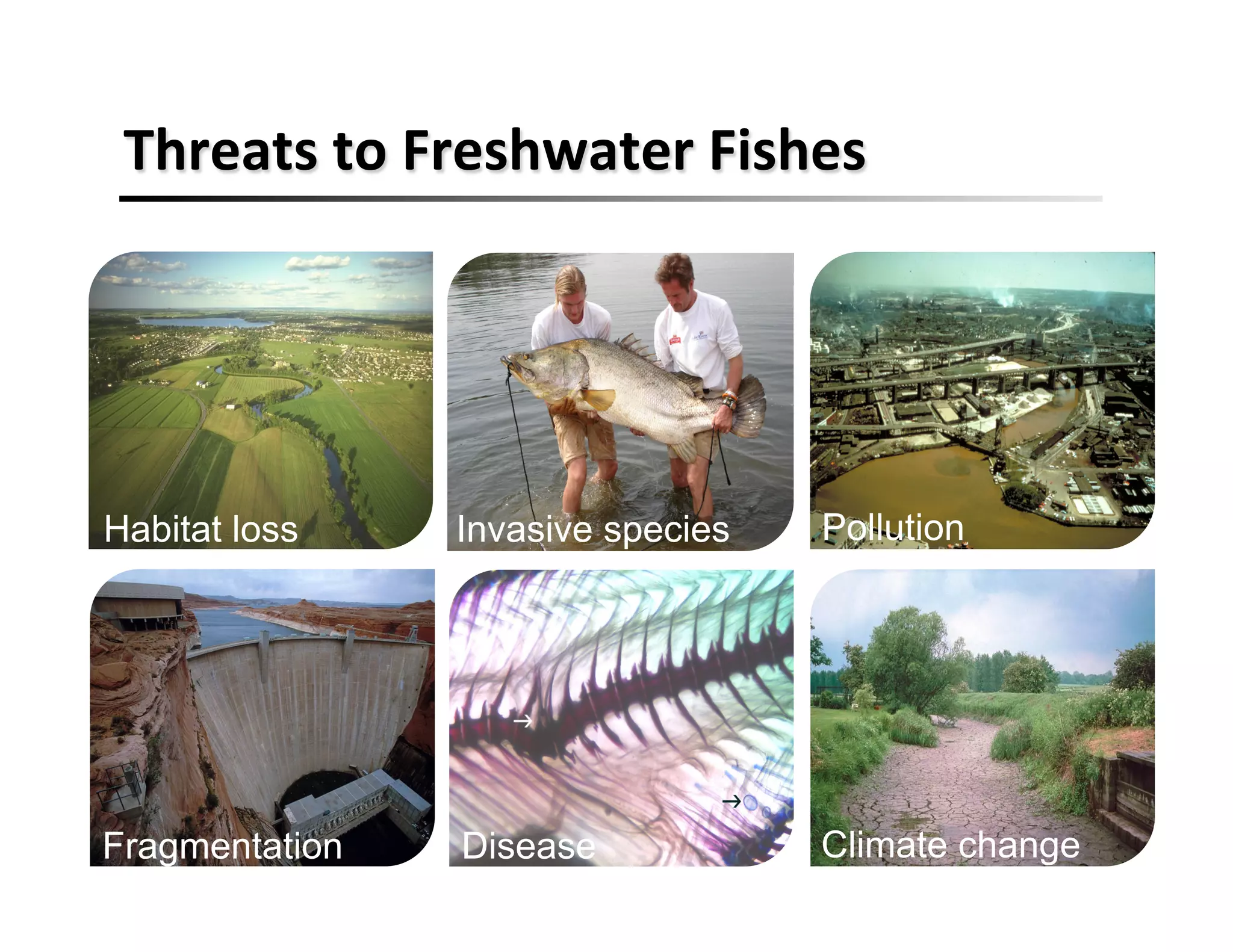
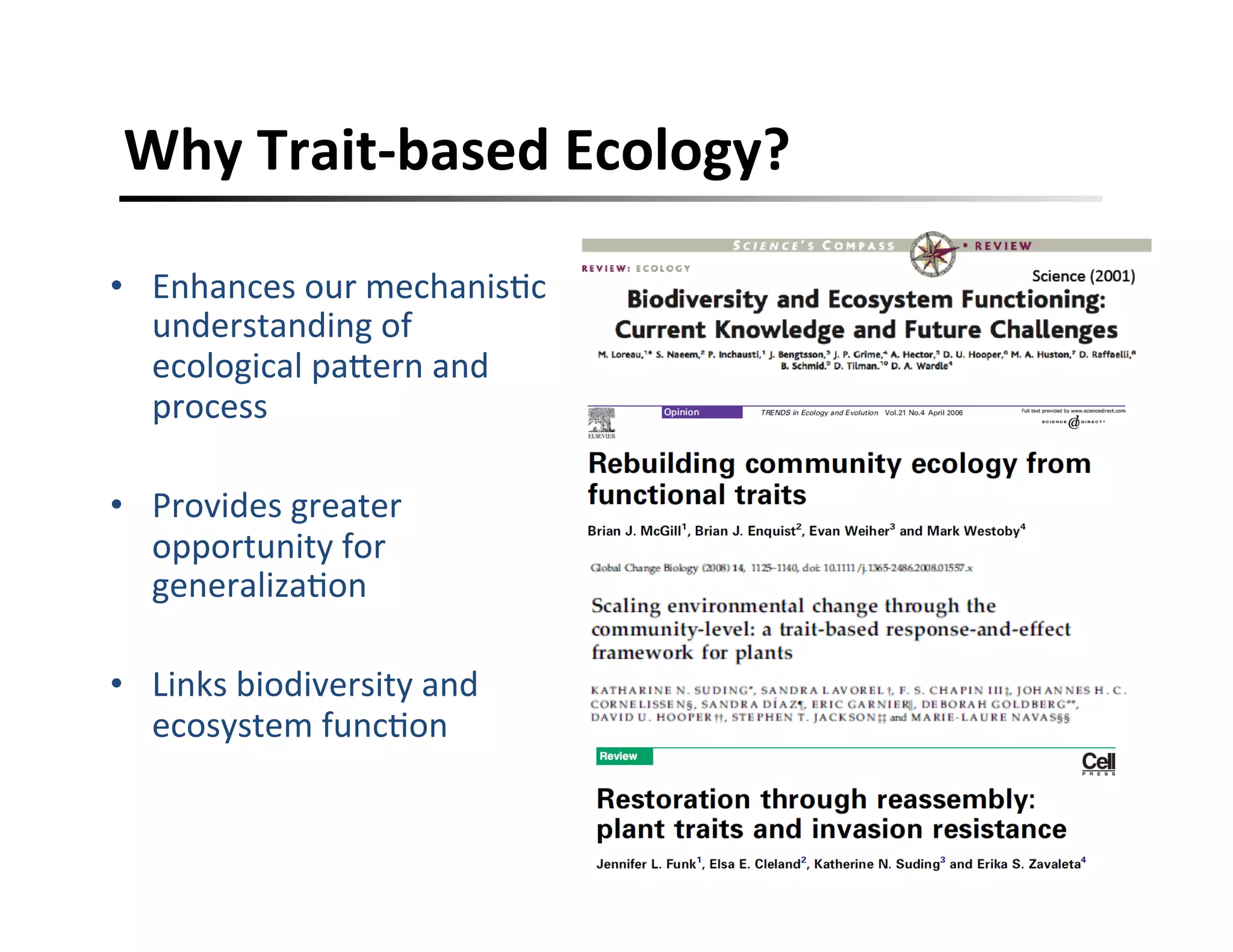
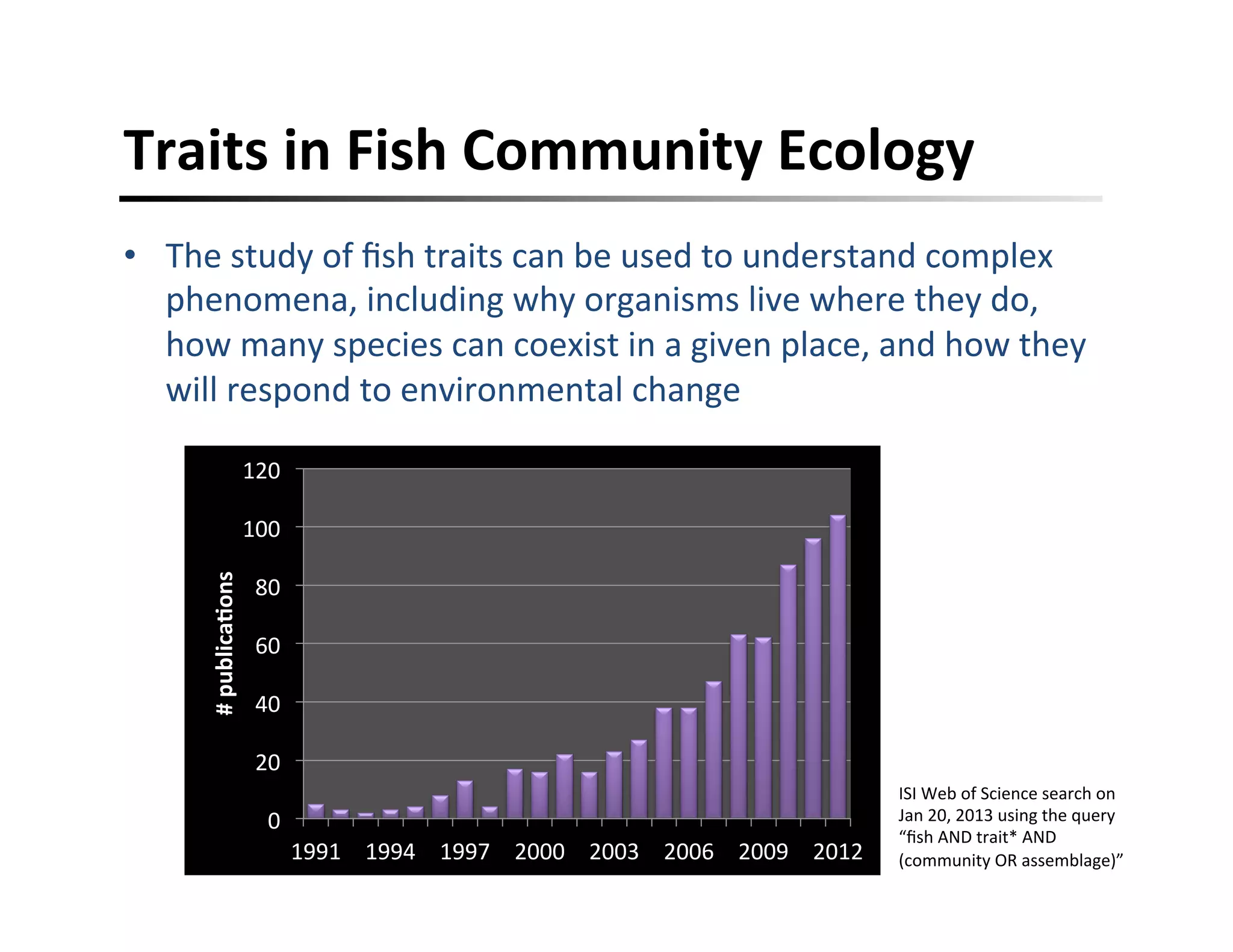
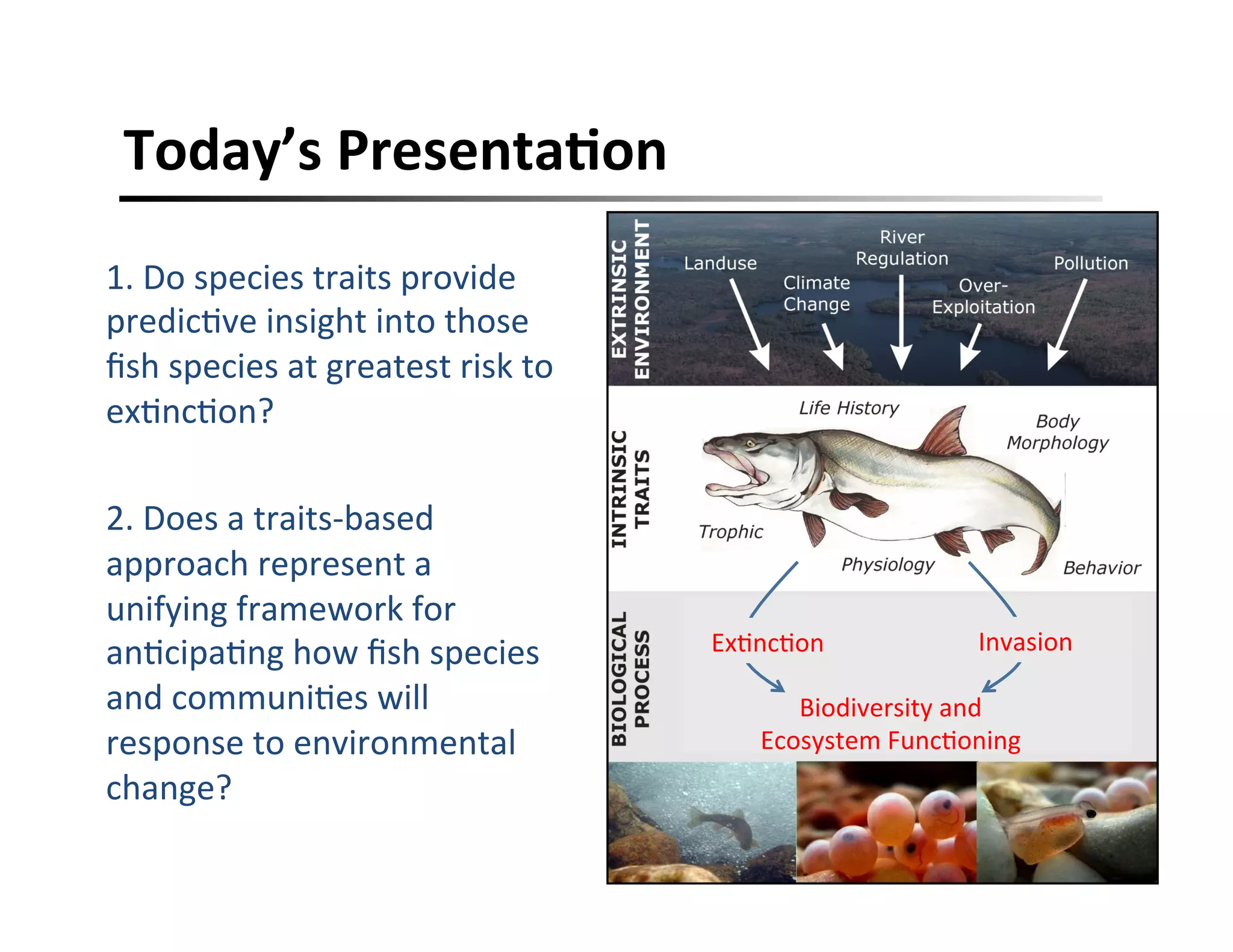
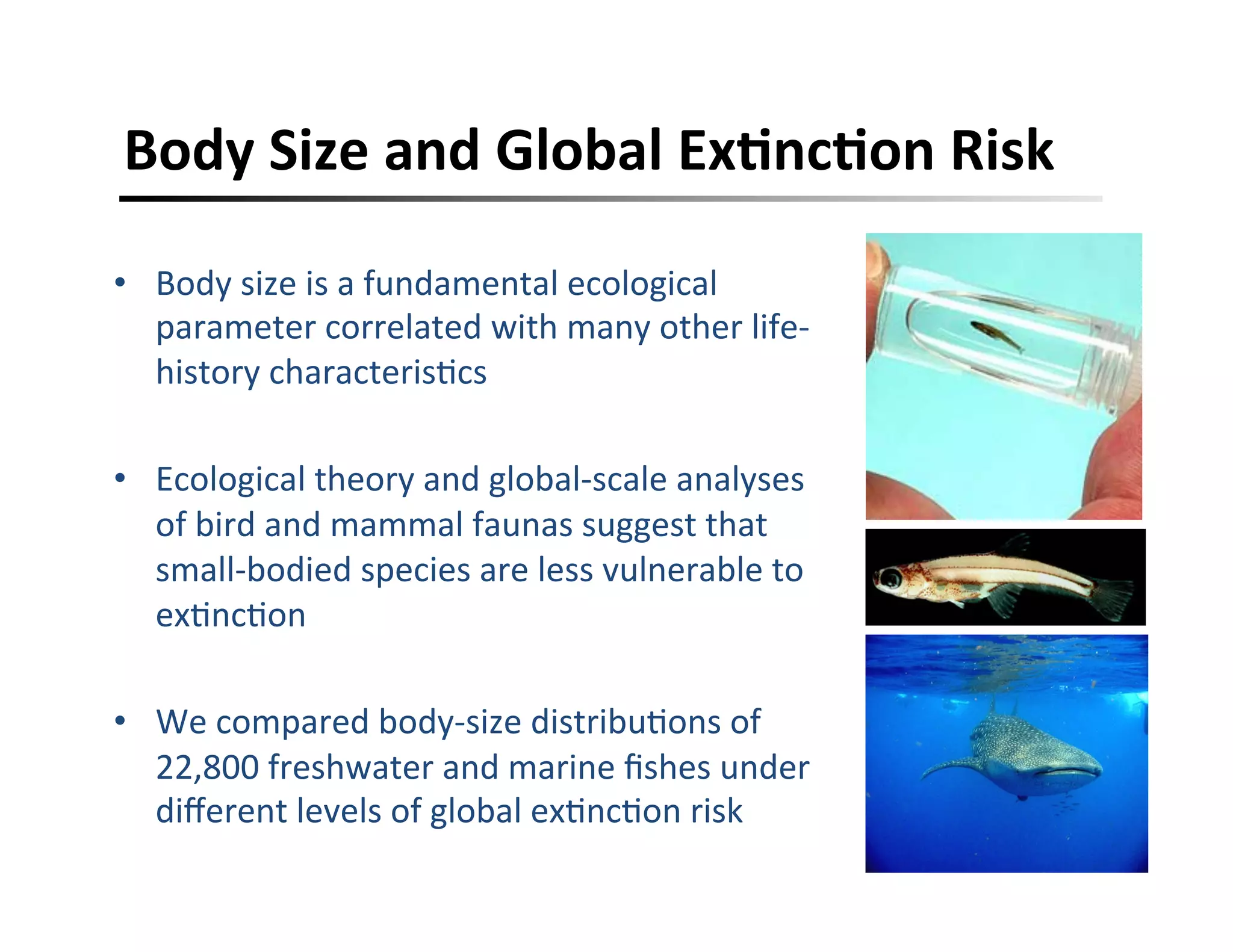
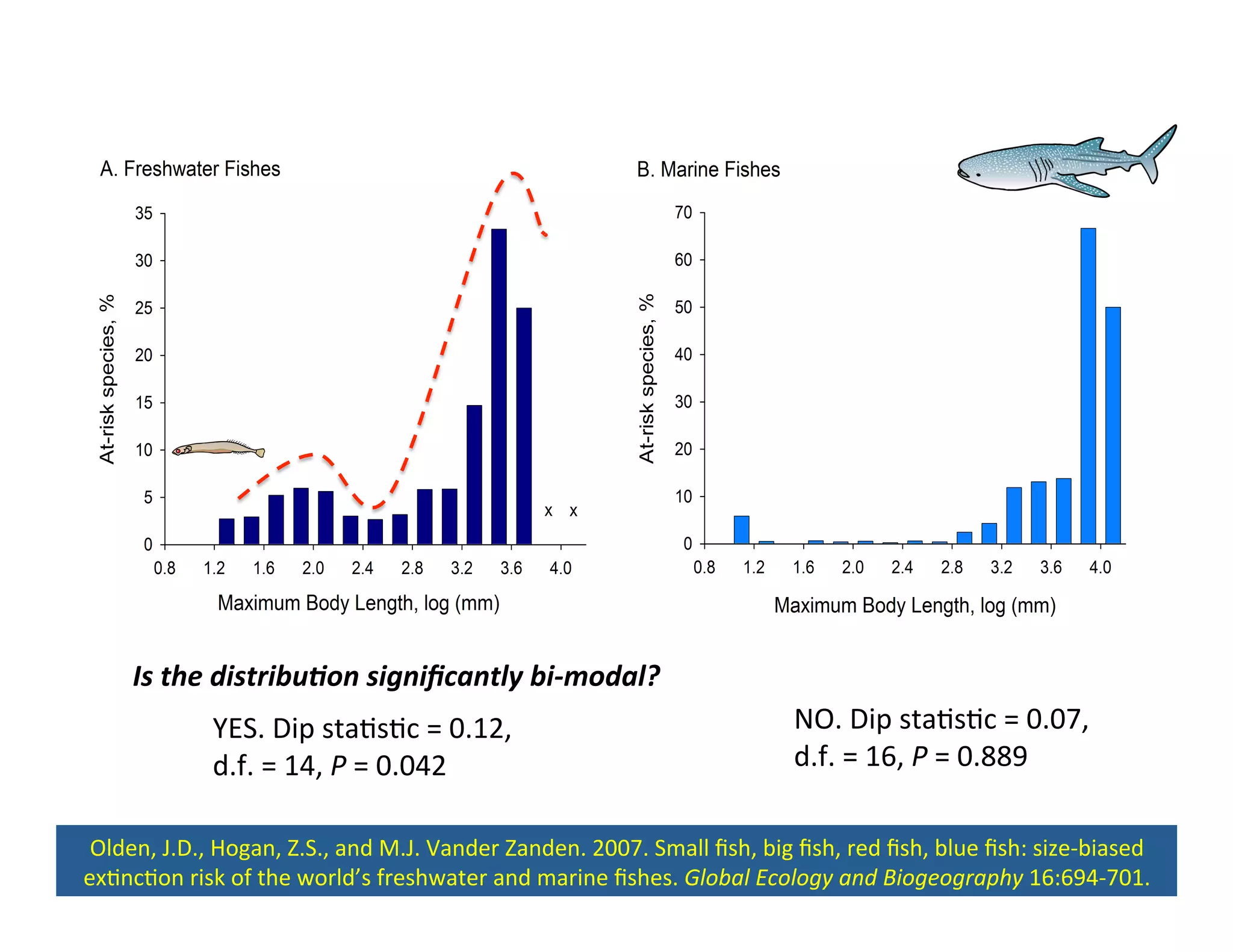
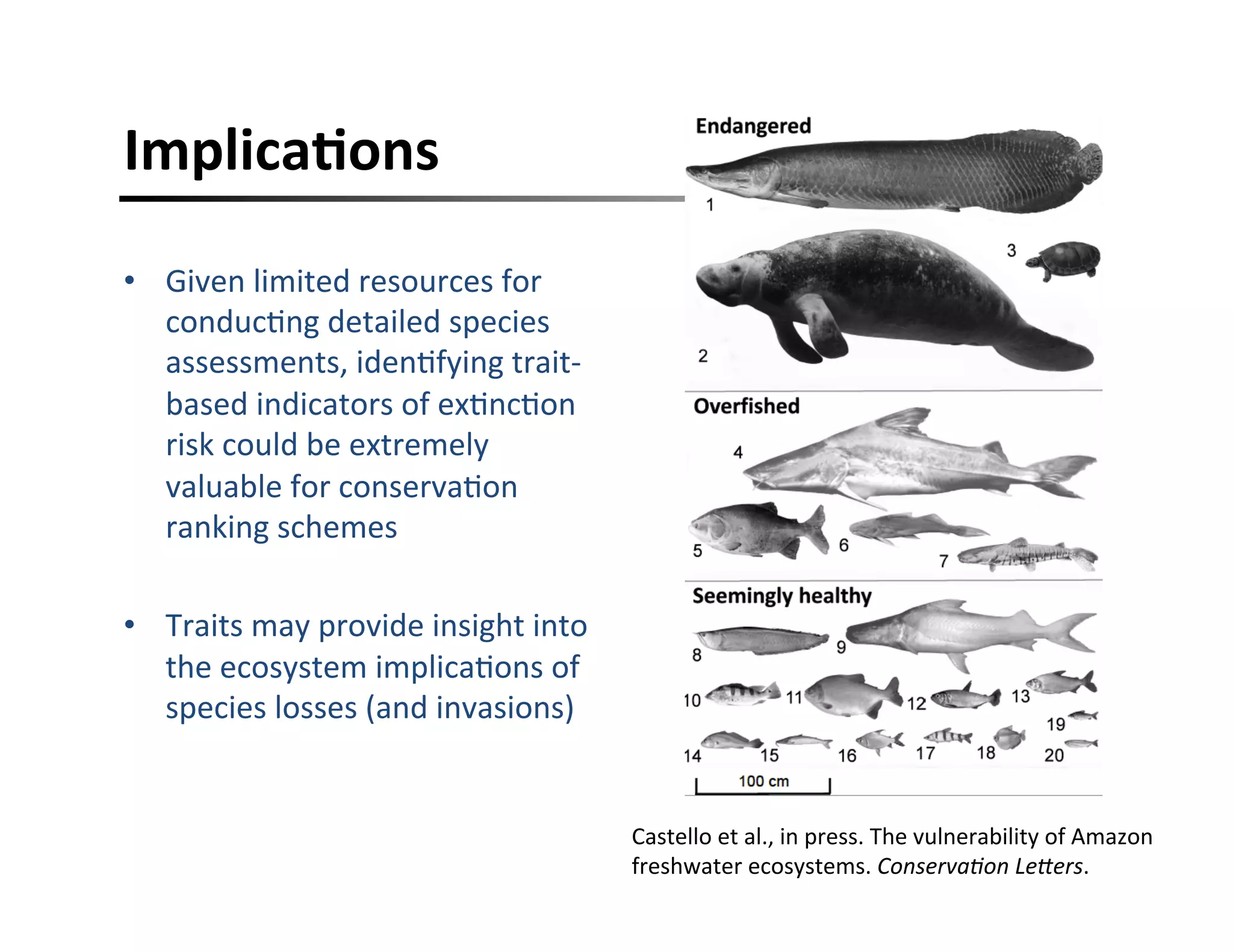
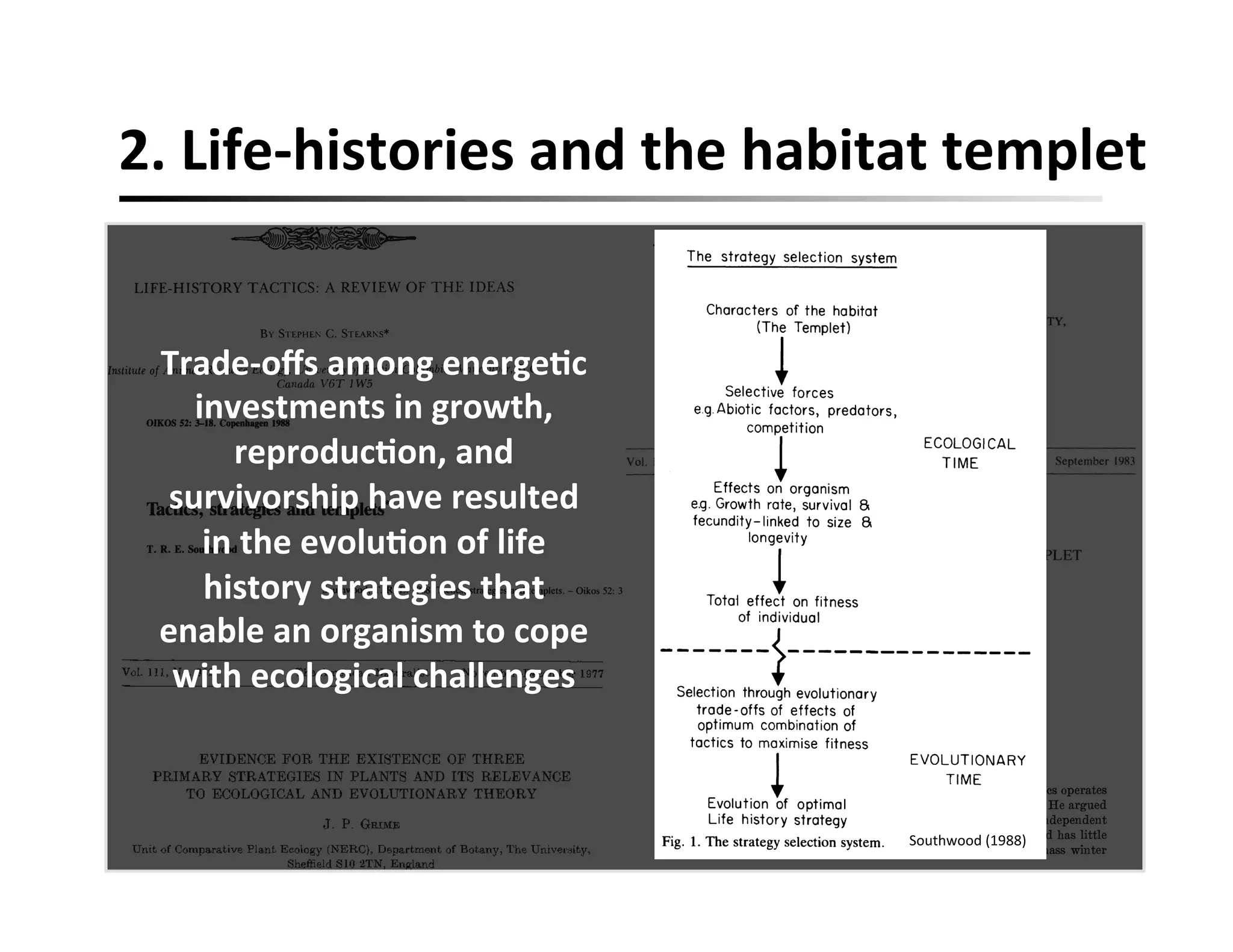
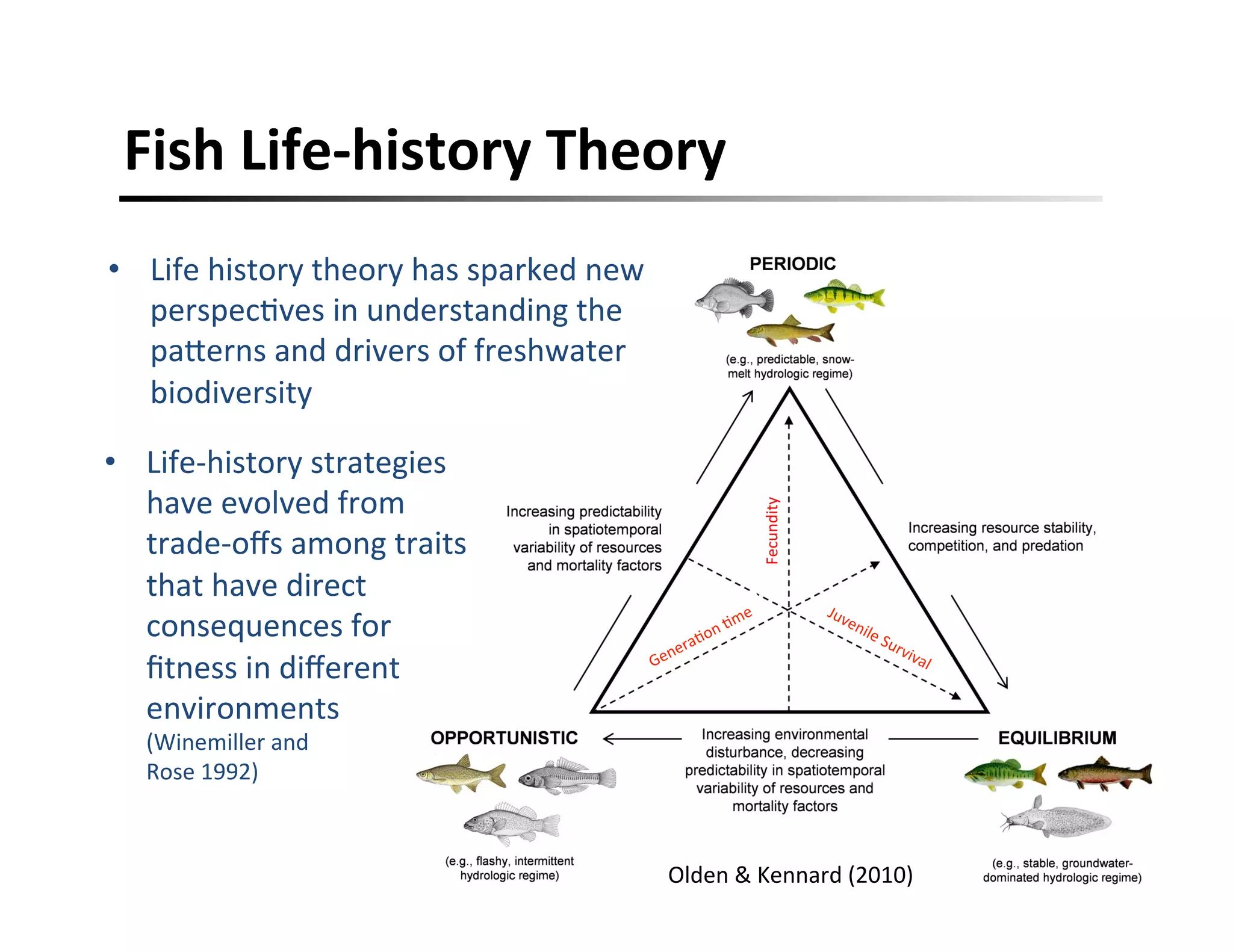
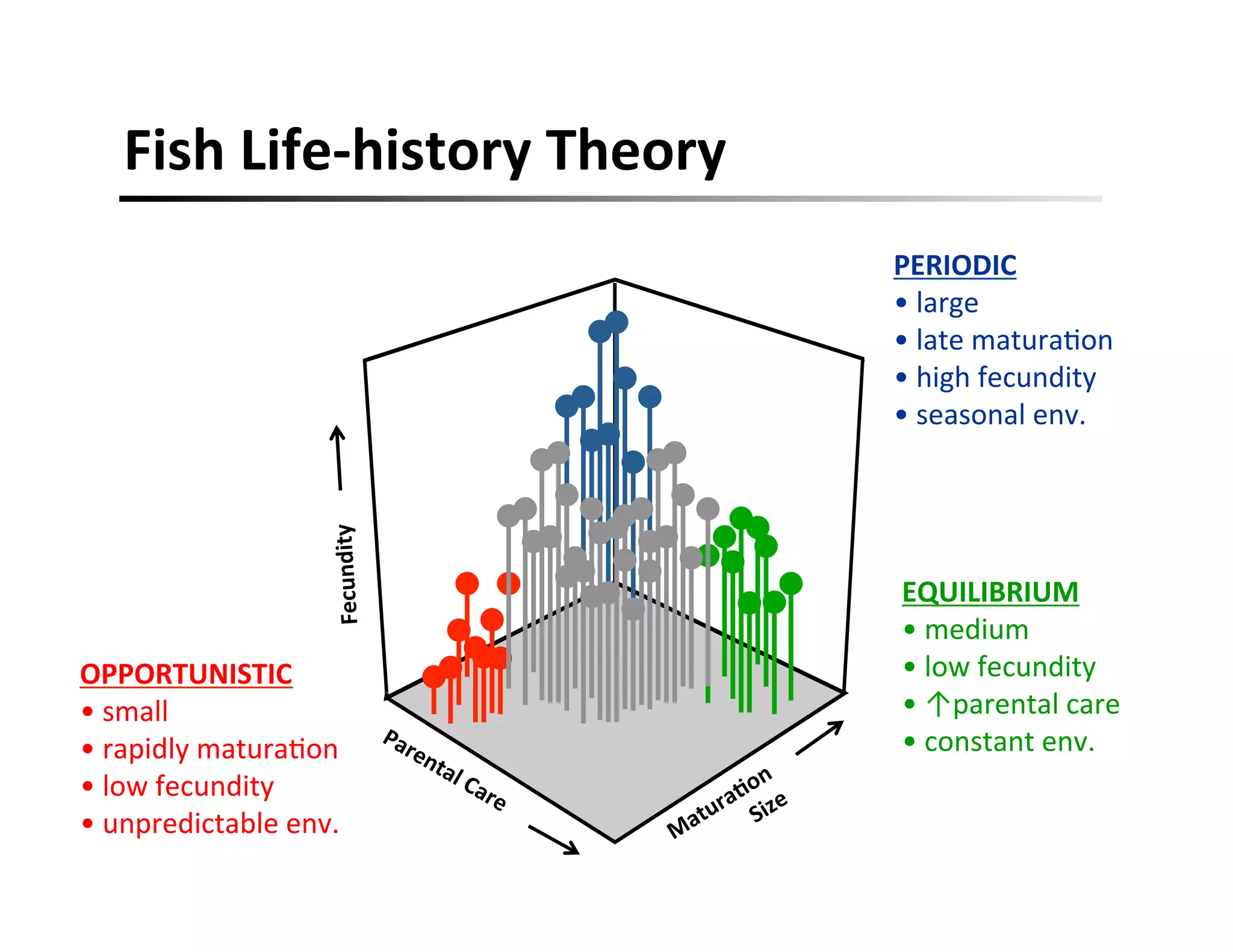
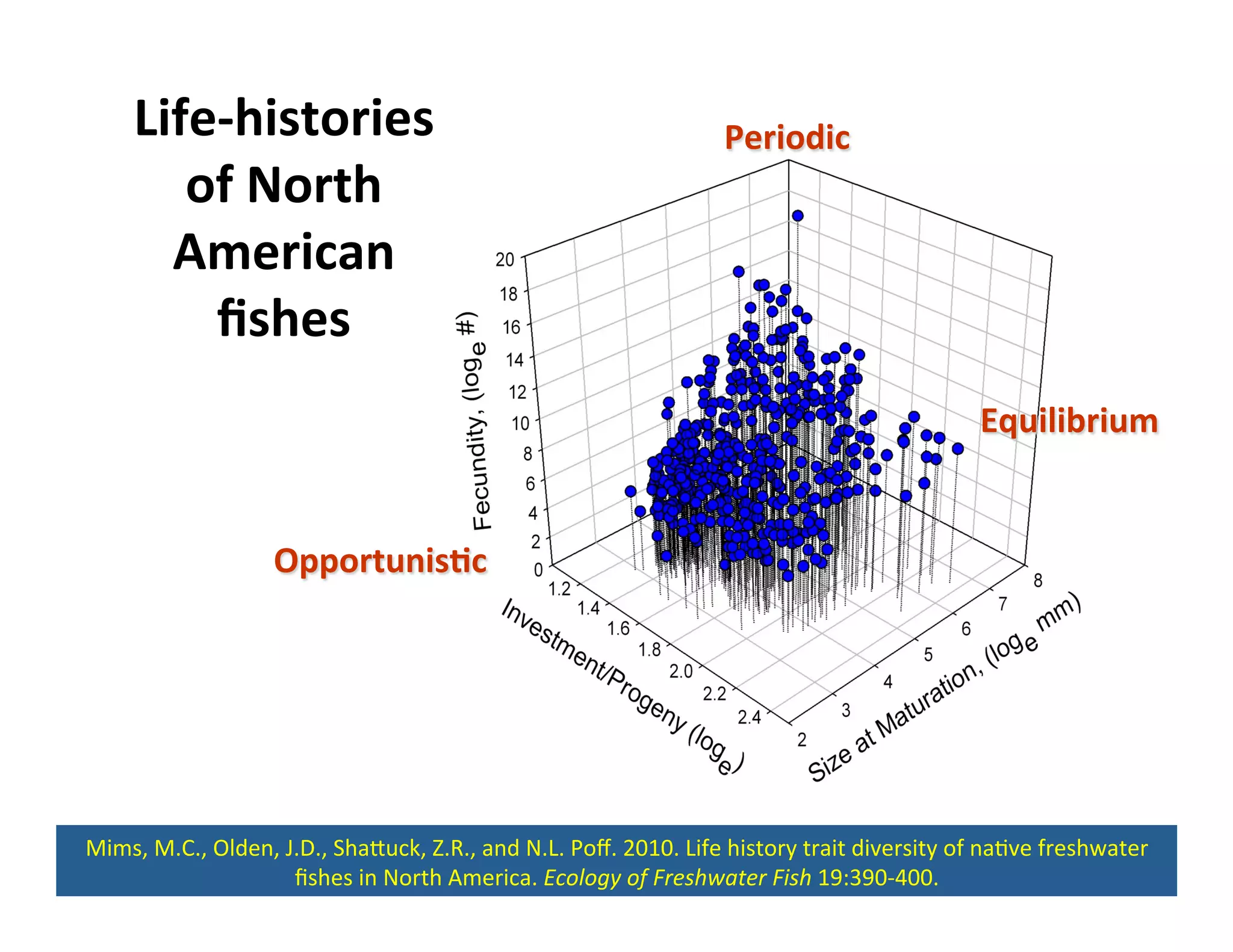
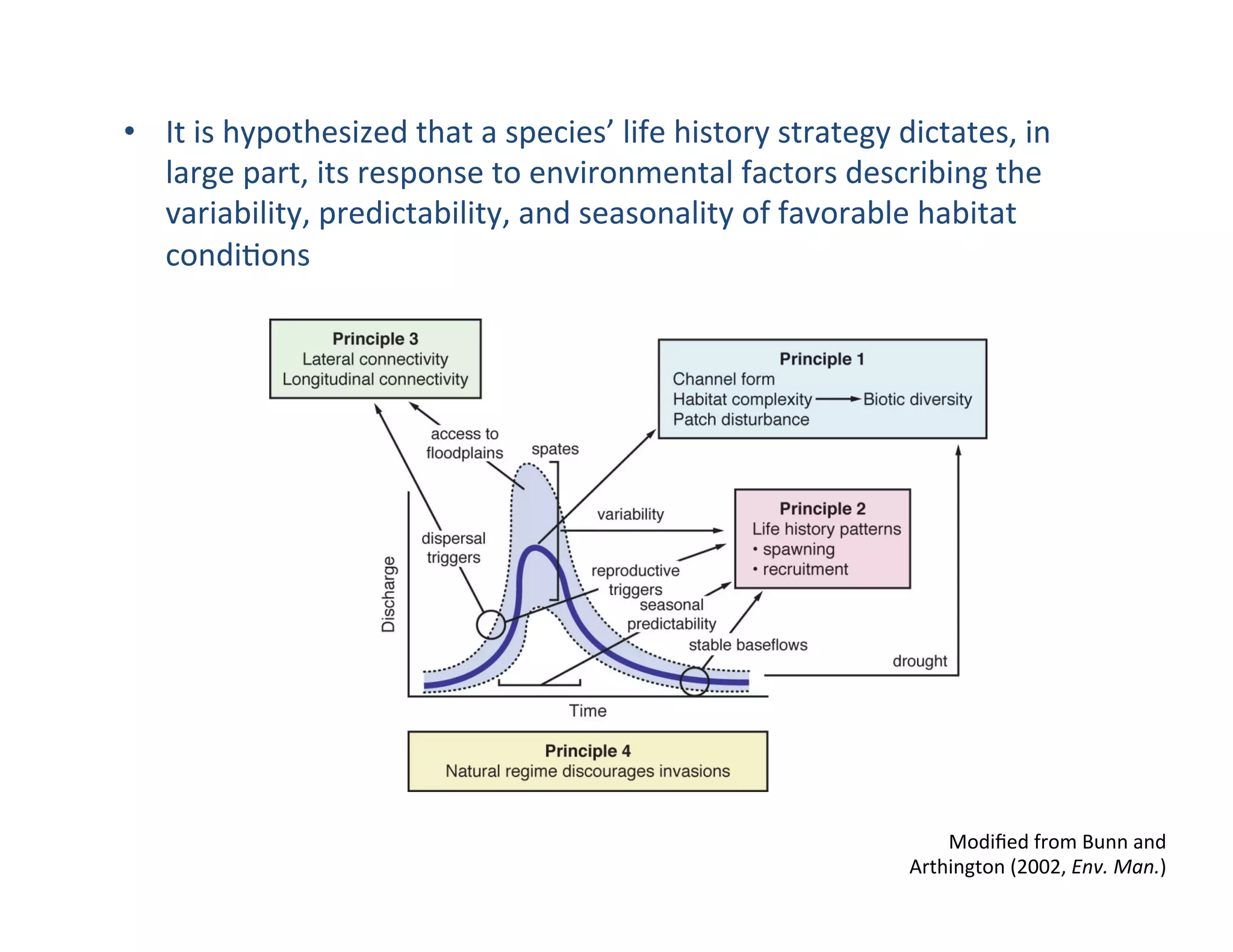


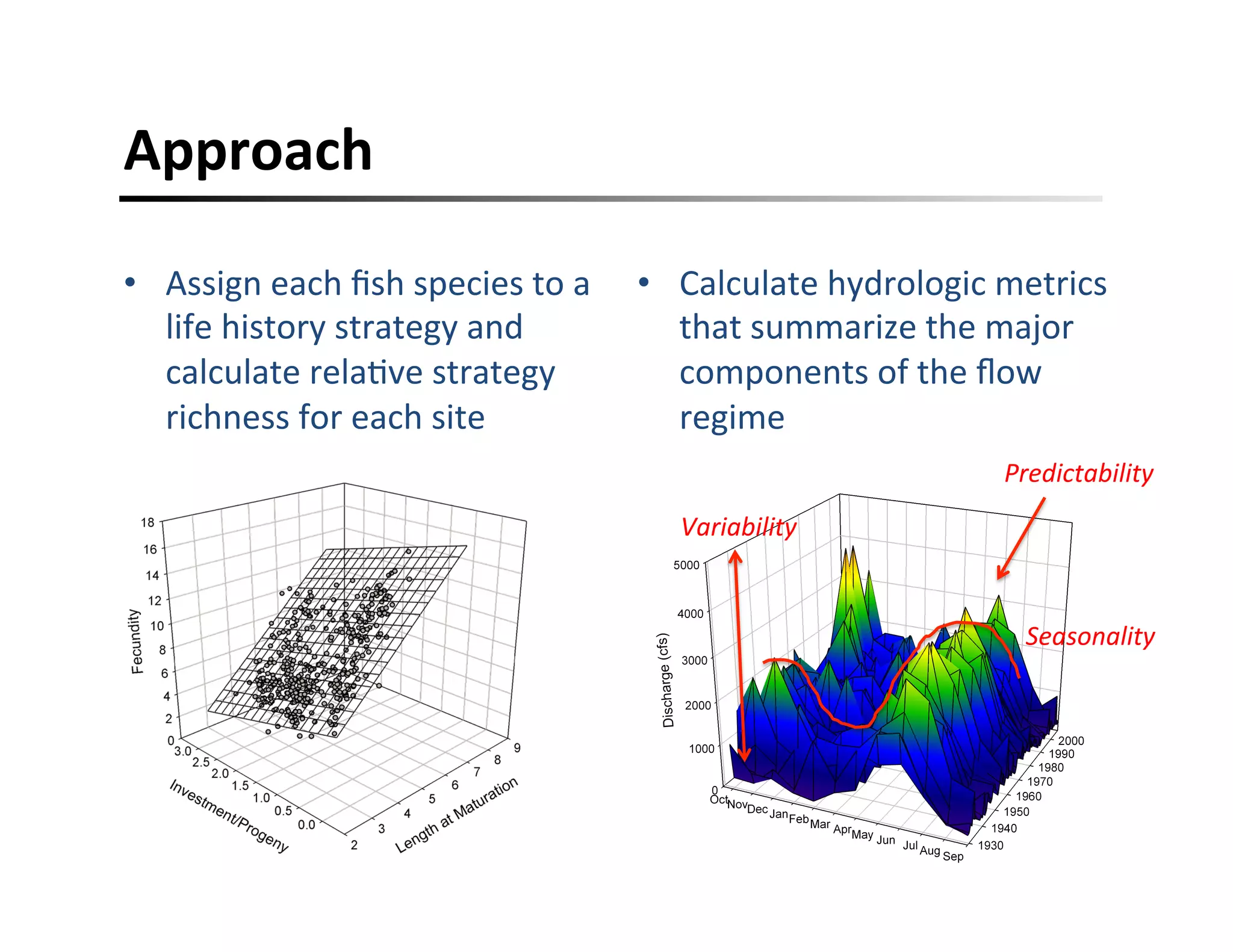
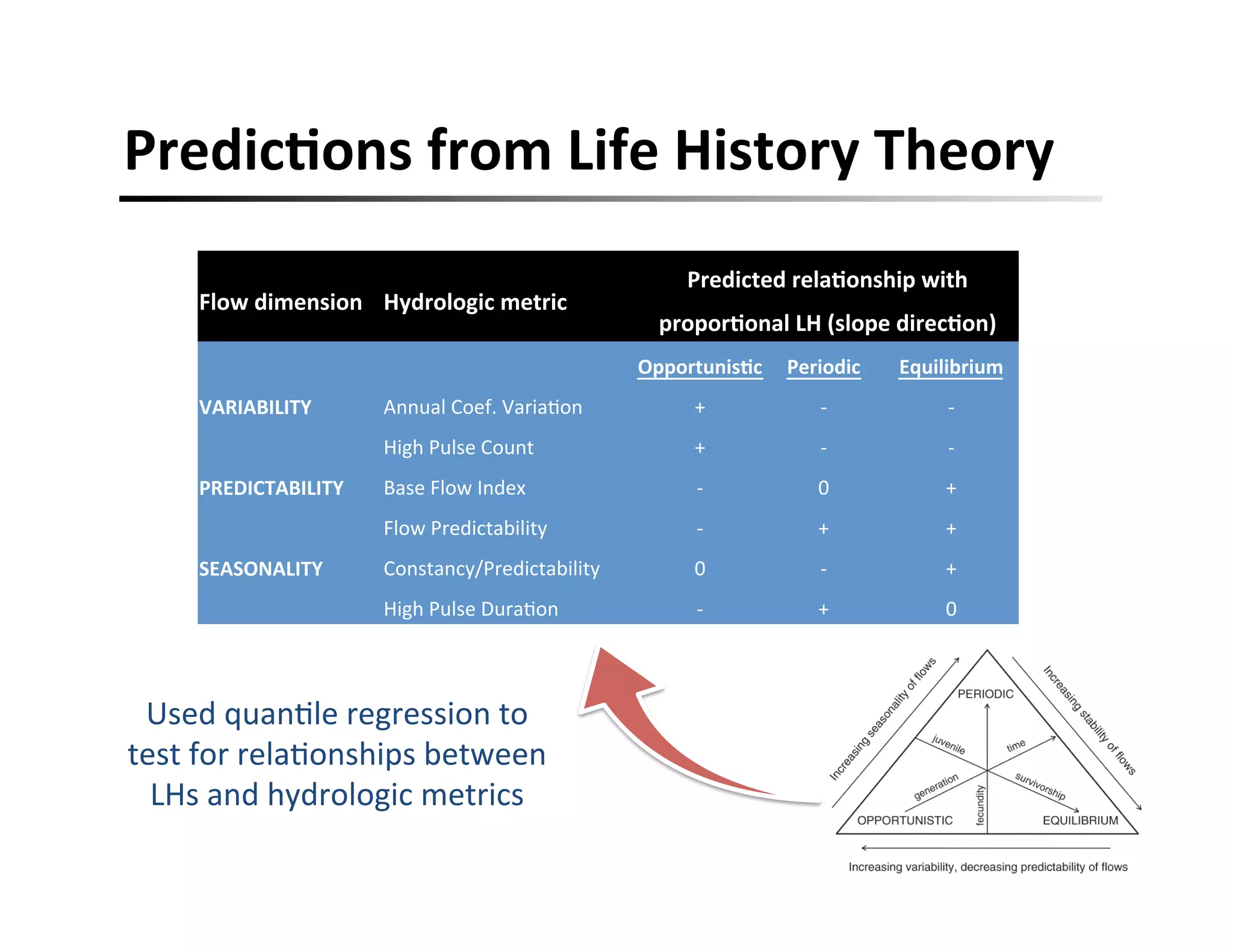
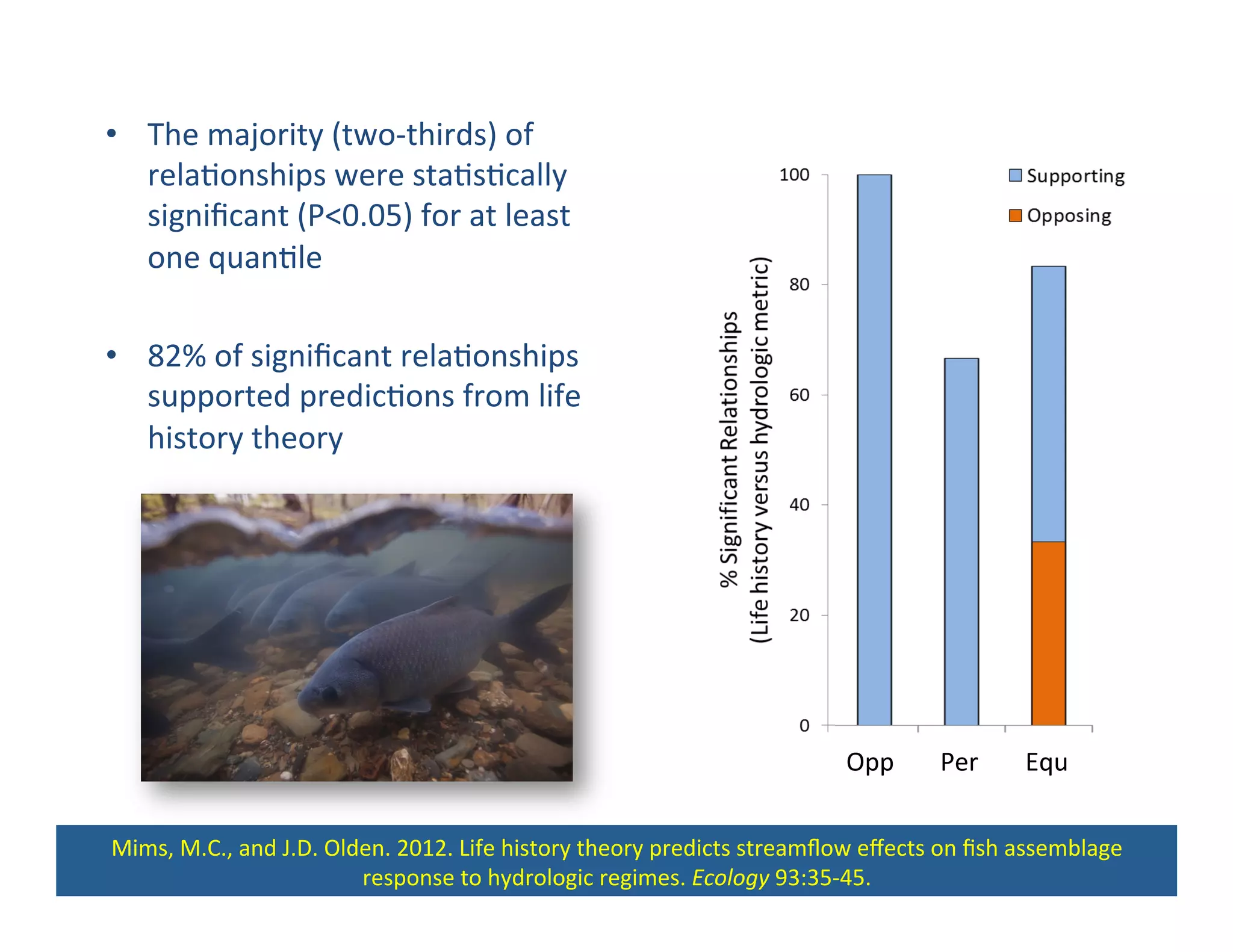
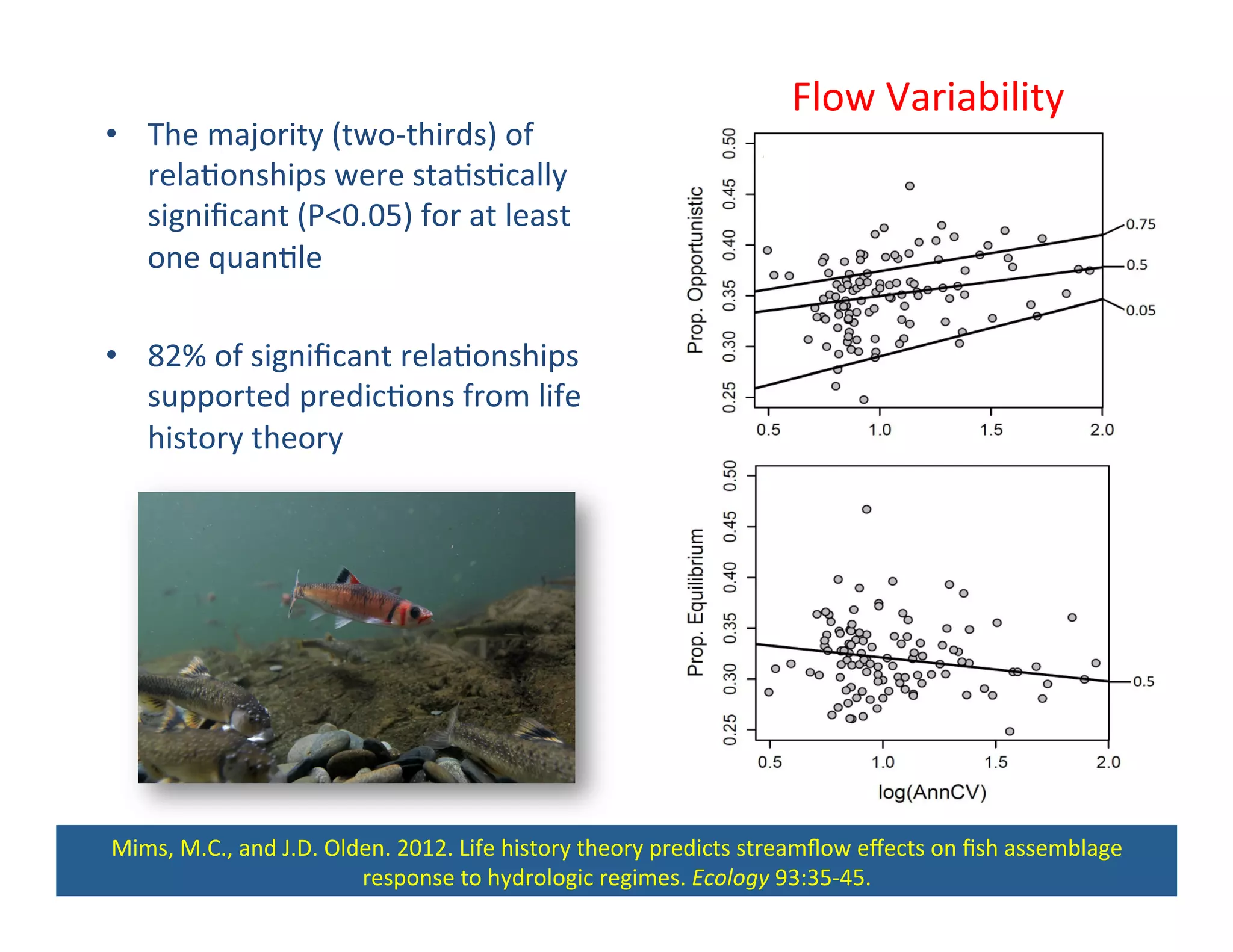
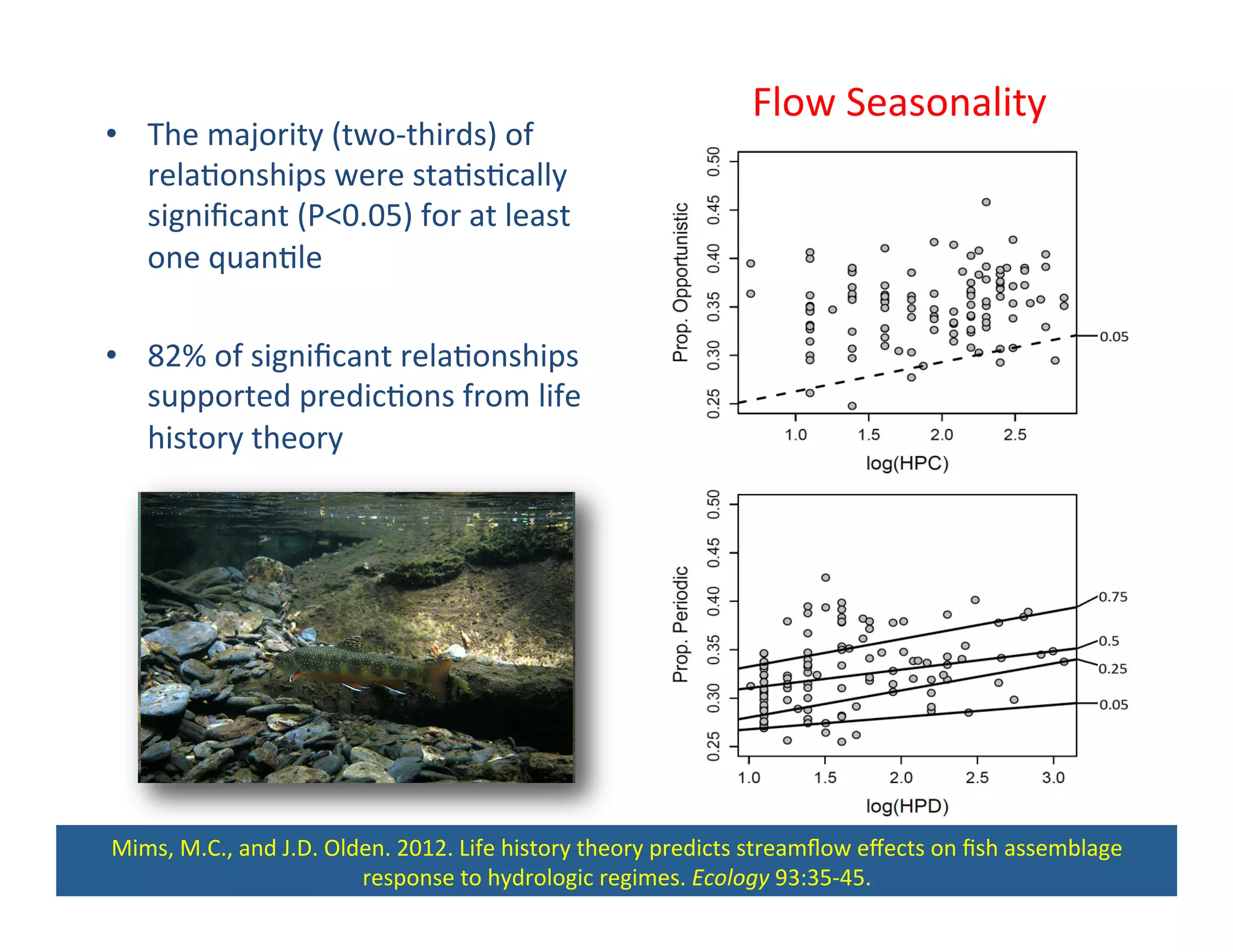
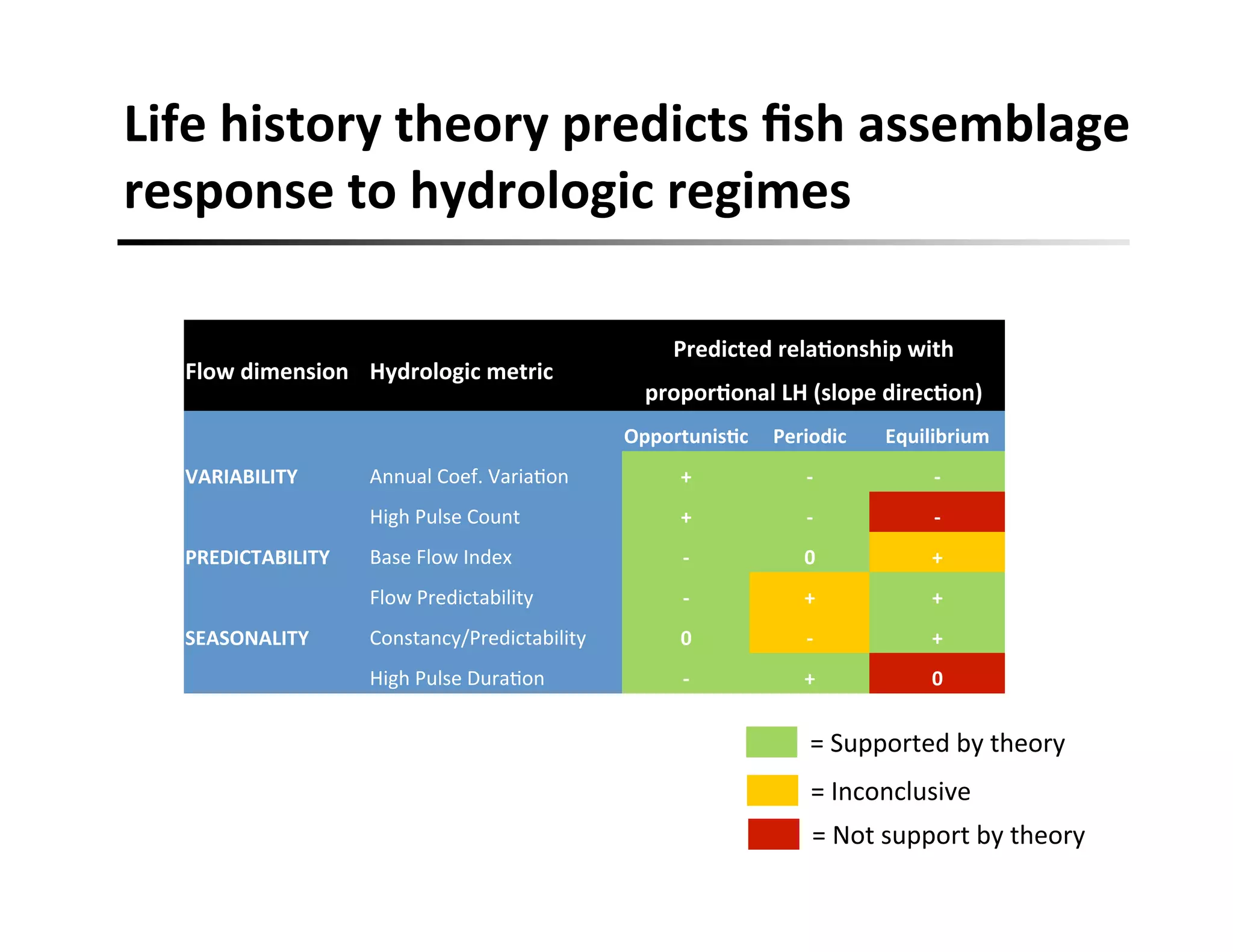
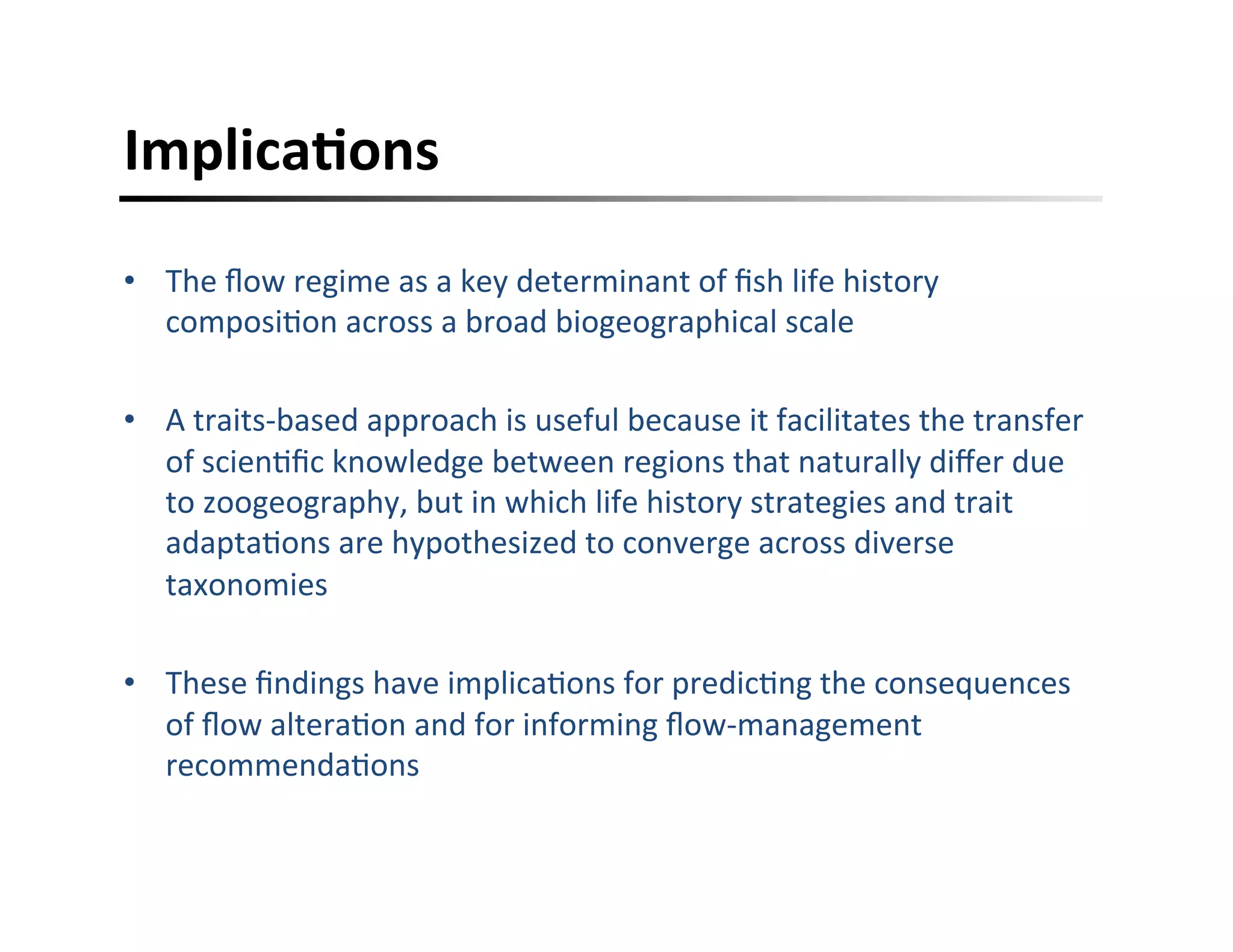

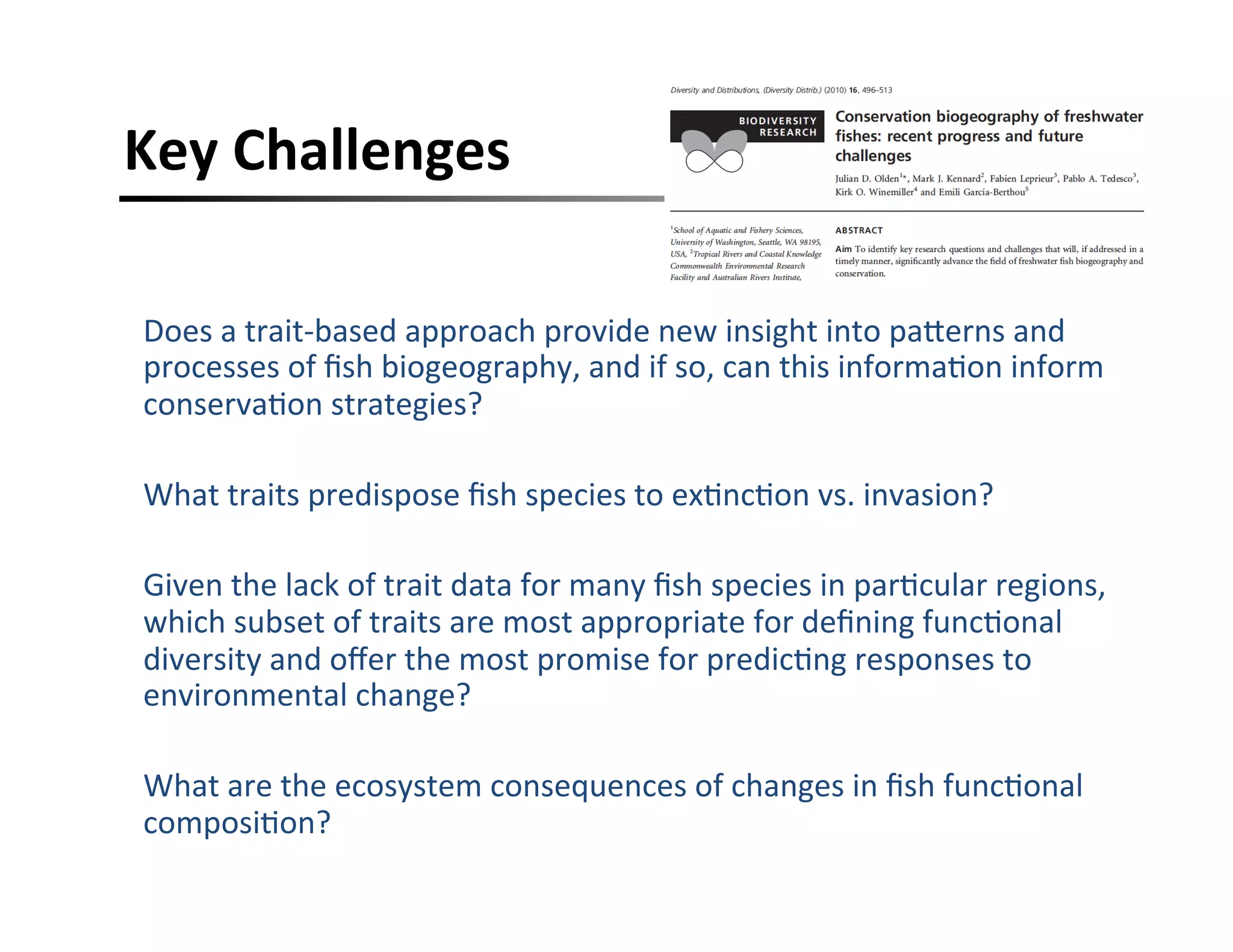
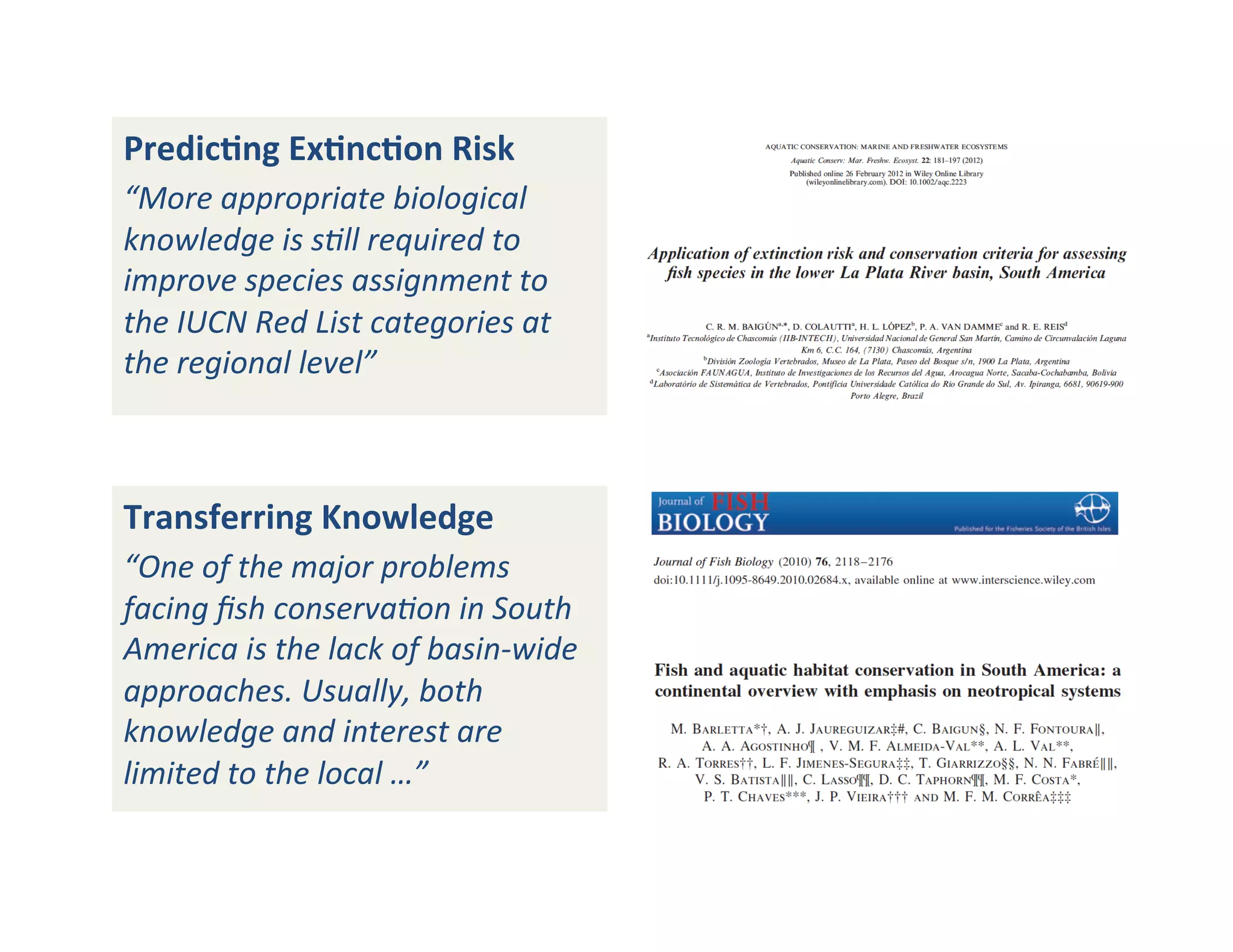

This document discusses using traits-based approaches to understand fish community ecology. It begins by outlining threats to freshwater fishes like habitat loss and pollution. The author argues that traits-based ecology enhances understanding of ecological patterns and processes, provides opportunities for generalization, and links biodiversity and ecosystem function. Research on fish traits can explain where species live, how many coexist in an area, and how they respond to environmental change. The author presents on using traits to predict extinction risk of fishes and anticipate how communities will respond to environmental change. Body size correlates with extinction risk, with smaller-bodied fishes less vulnerable. Life histories have evolved trade-offs that enable coping with ecological challenges. Traits may indicate ecosystem implications


![Genetics for fish_resource_conservation_new_krik[1]](https://cdn.slidesharecdn.com/ss_thumbnails/geneticsforfishresourceconservationnewkrik1-190808162558-thumbnail.jpg?width=640&height=640&fit=bounds)


