General Information And Slideshow
                  Presentation
          for Chinese Delegation from
   Australia China Environment Development
                  Partnership
                 December 2009

               Presented By : B4C
Bulimba Creek Catchment Coordinating Committee
Who Are We?
 B4C
• Non profit environment group
• Formed in 1997
• Grass roots group in Brisbane Queensland
• Working to protect and enhance the urban
  environment.
• Funding from Ecosystems Services Unit, special
   purpose grants, sponsorship

South East Queensland
• is the fastest growing region in Australia
• is one of the most biodiversity rich areas of
Australia


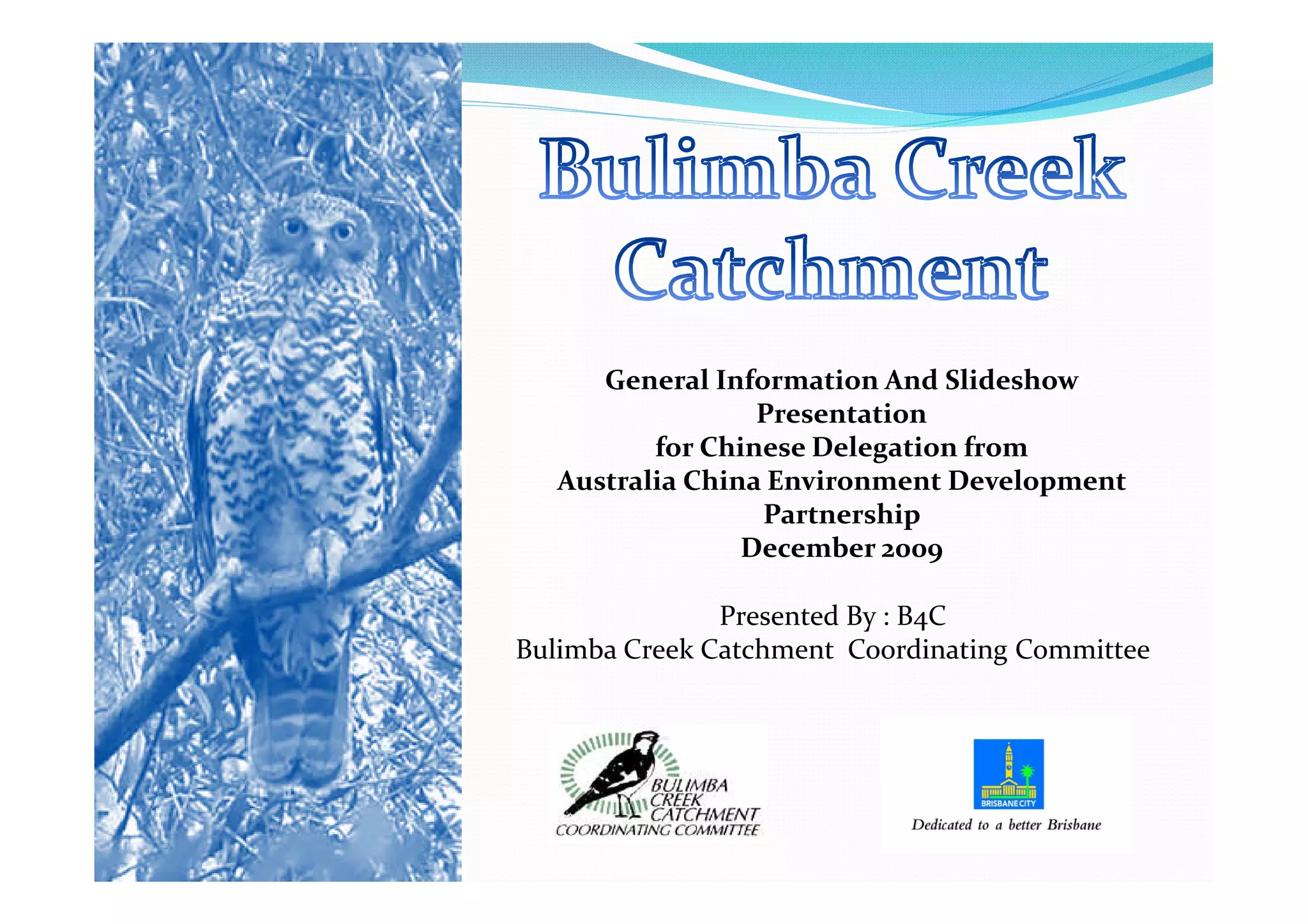
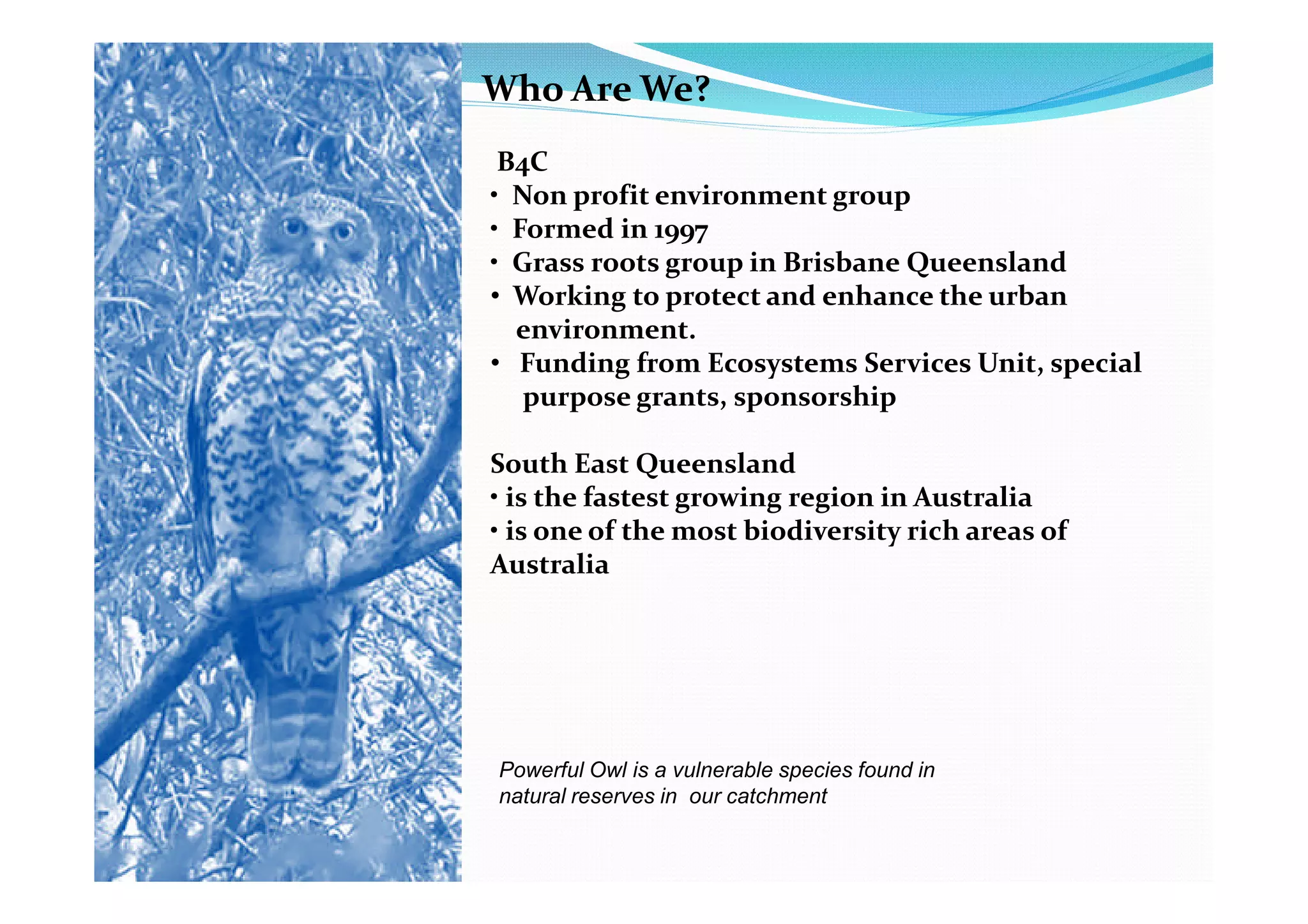
Powerful Owl is a vulnerable species found in
natural reserves in our catchment
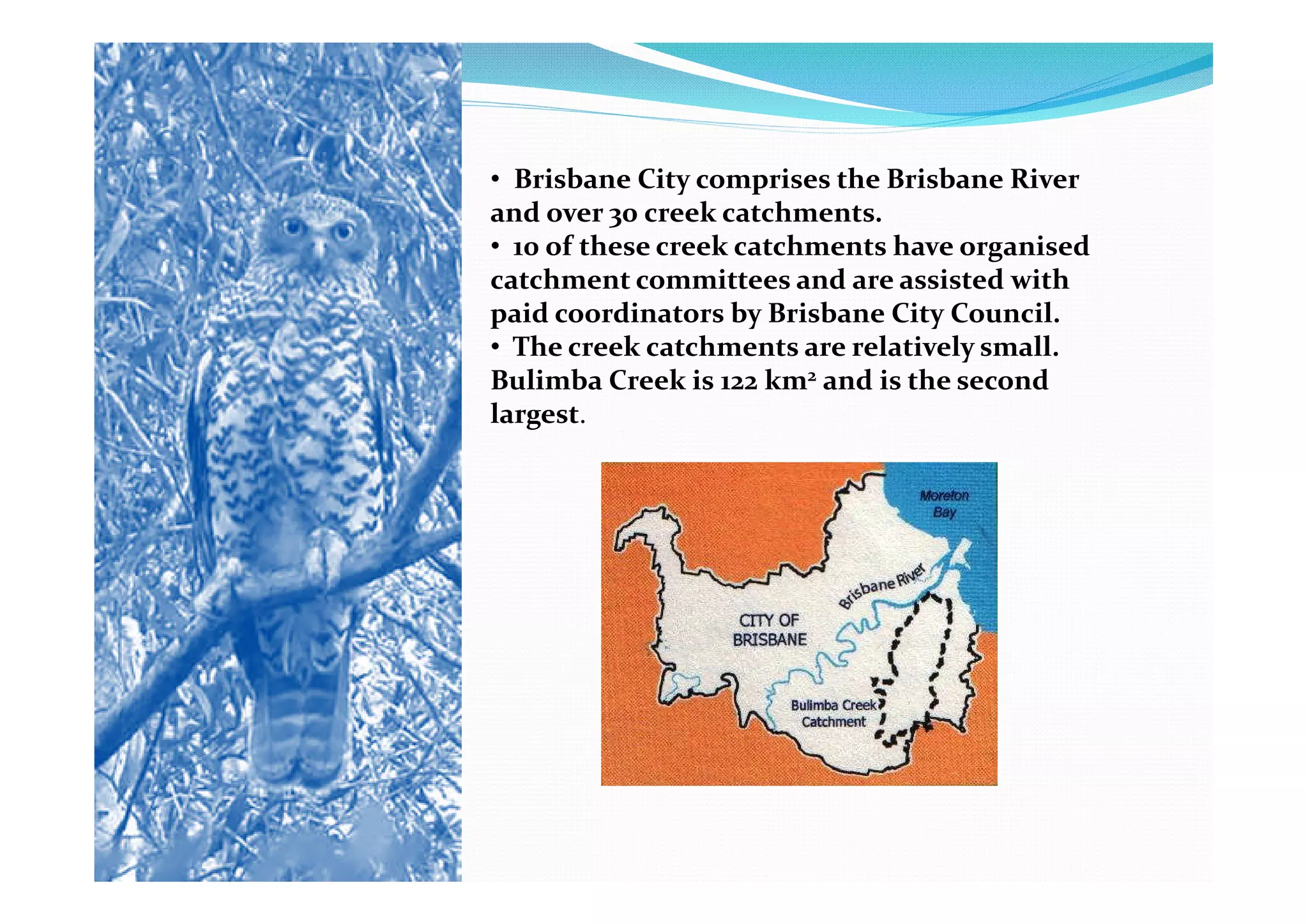
• Brisbane City comprises the Brisbane River
and over 30 creek catchments.
• 10 of these creek catchments have organised
catchment committees and are assisted with
paid coordinators by Brisbane City Council.
• The creek catchments are relatively small.
Bulimba Creek is 122 km2 and is the second
largest.
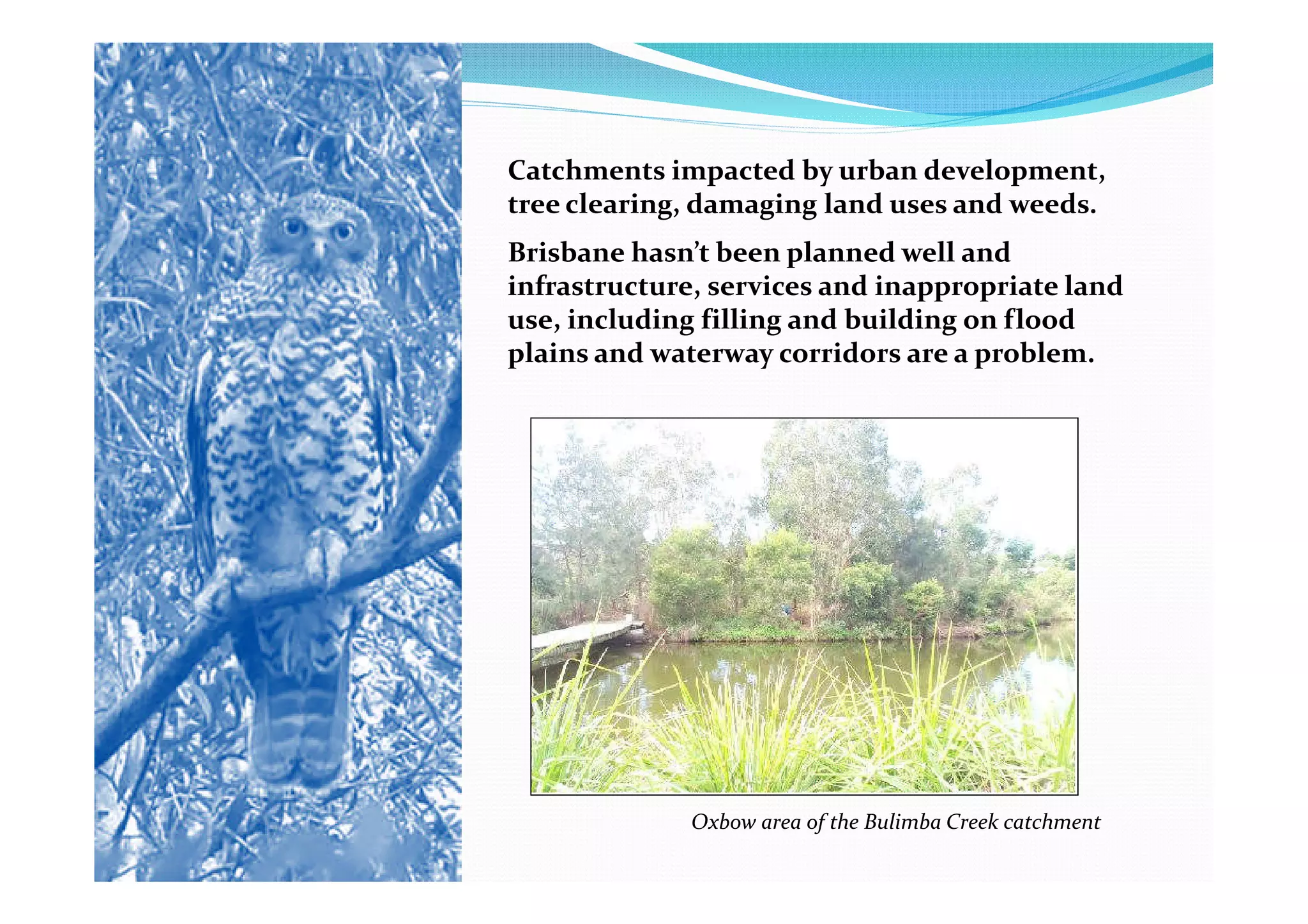
Catchments impacted by urban development,
tree clearing, damaging land uses and weeds.
Brisbane hasn’t been planned well and
infrastructure, services and inappropriate land
use, including filling and building on flood
plains and waterway corridors are a problem.


              Oxbow area of the Bulimba Creek catchment
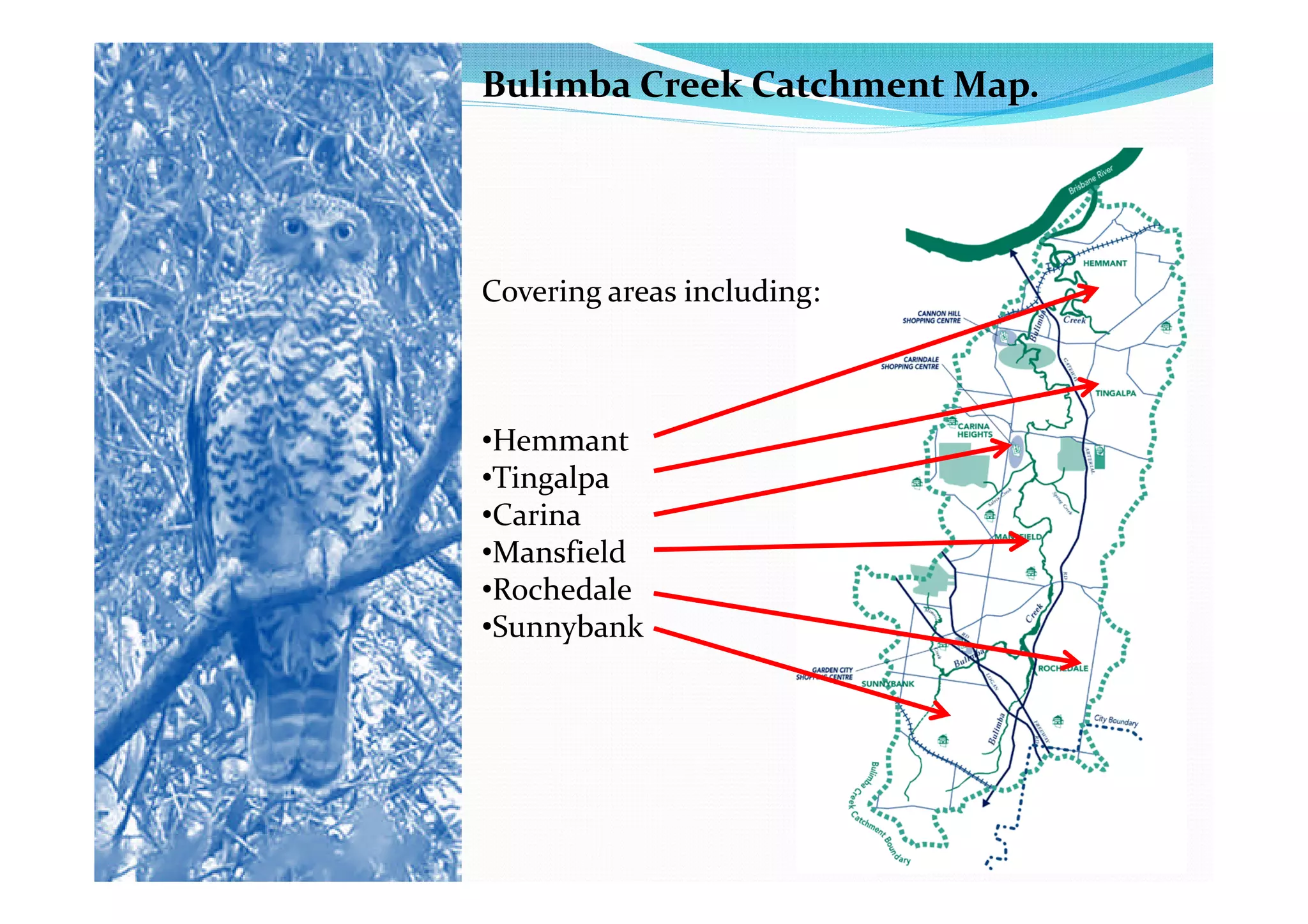
Bulimba Creek Catchment Map.


Covering areas including:


•Hemmant
•Tingalpa
•Carina
•Mansfield
•Rochedale
•Sunnybank
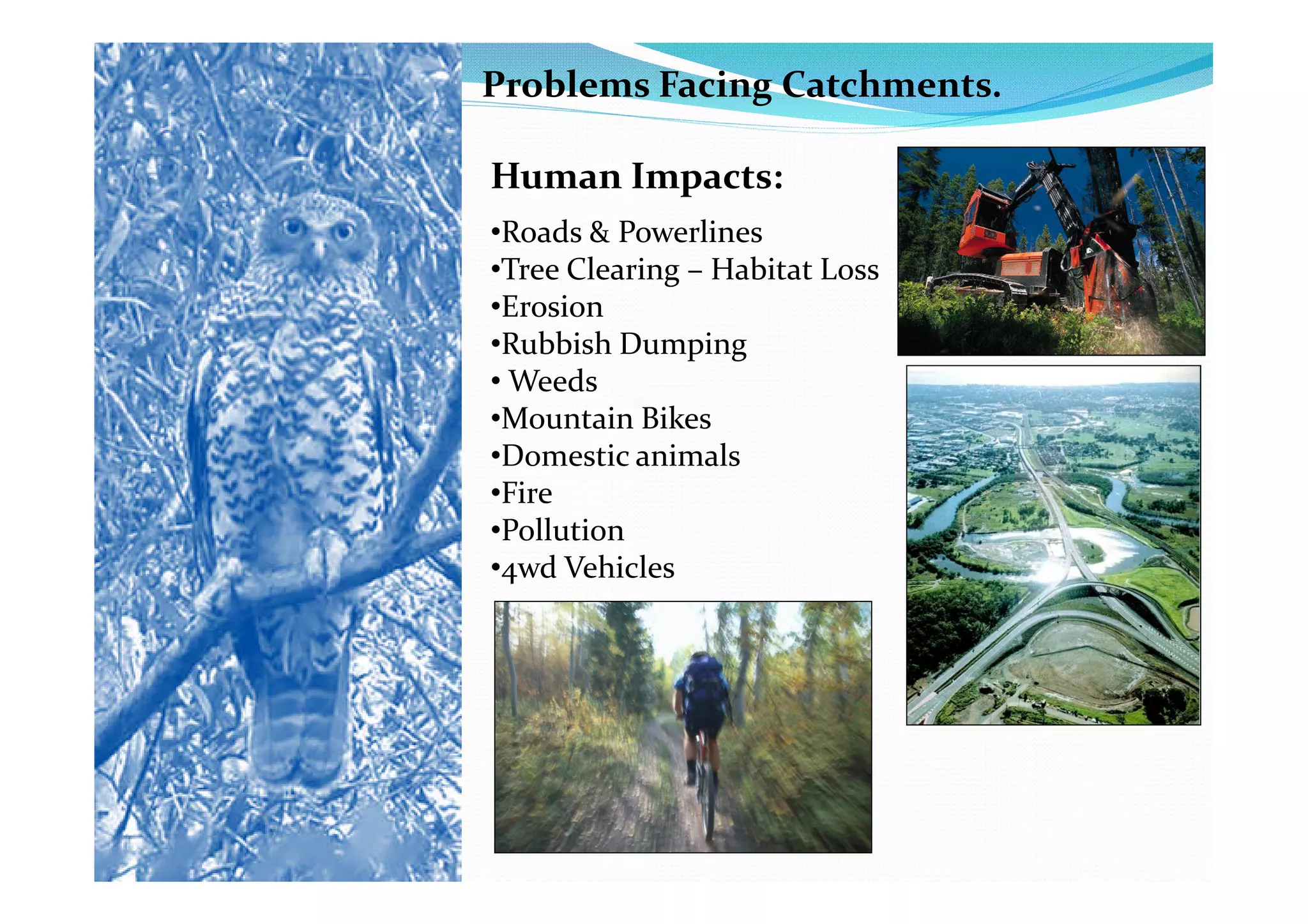
Problems Facing Catchments.

Human Impacts:
•Roads & Powerlines
•Tree Clearing – Habitat Loss
•Erosion
•Rubbish Dumping
• Weeds
•Mountain Bikes
•Domestic animals
•Fire
•Pollution
•4wd Vehicles
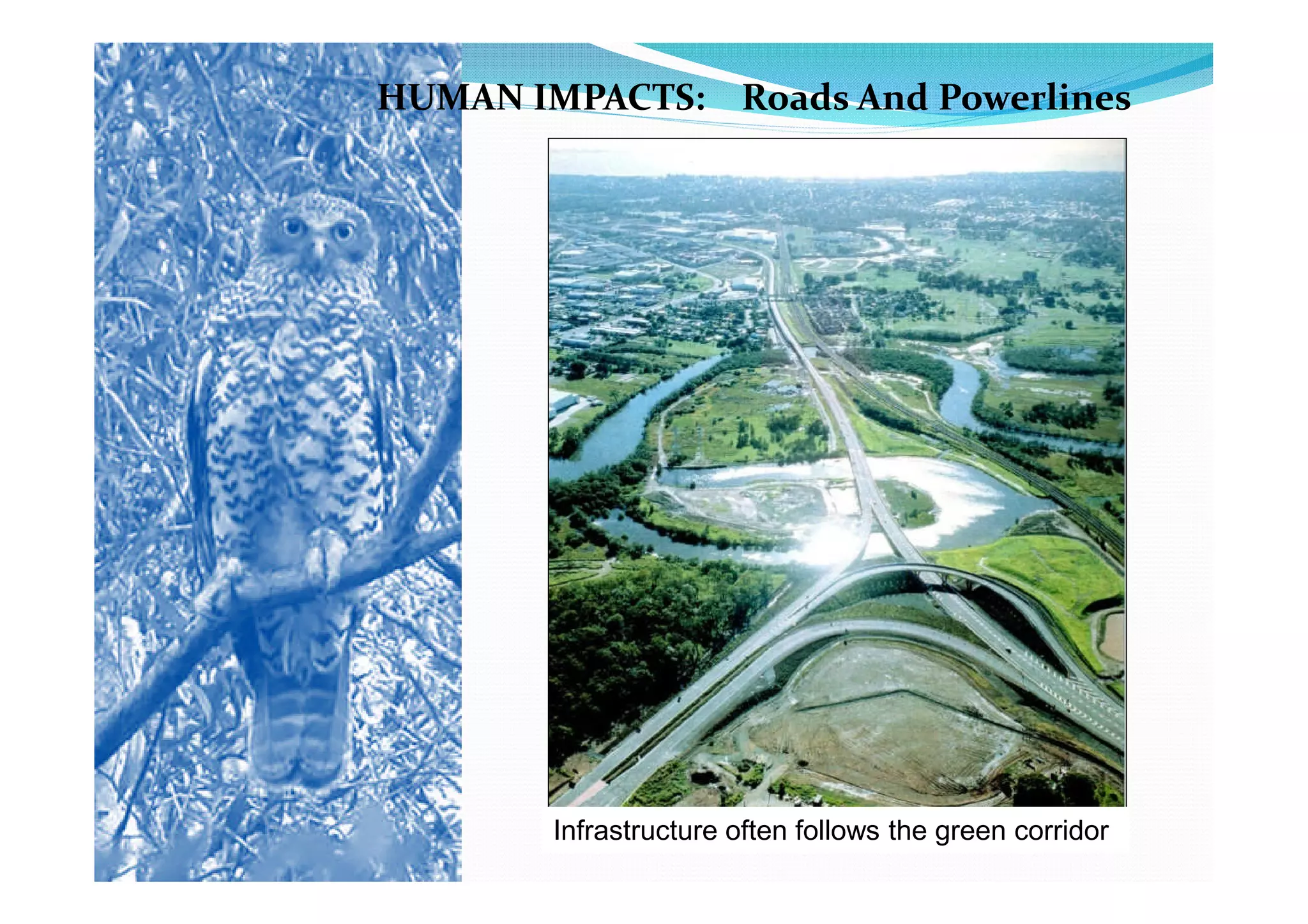
HUMAN IMPACTS: Roads And Powerlines


        Infrastructure often follows the green corridor
2007-9 Infrastructure Developments
   in Bulimba Creek Catchment


Port of Brisbane Motorway Stage 2
Gateway Motorway Upgrade
Eastern Busway
Scrub Road extension
Western Corridor Recycled Pipeline
Brisbane Aquifer Project
Salisbury to Kuraby Rail extension
Powerlink upgrade in middle & lower catchment
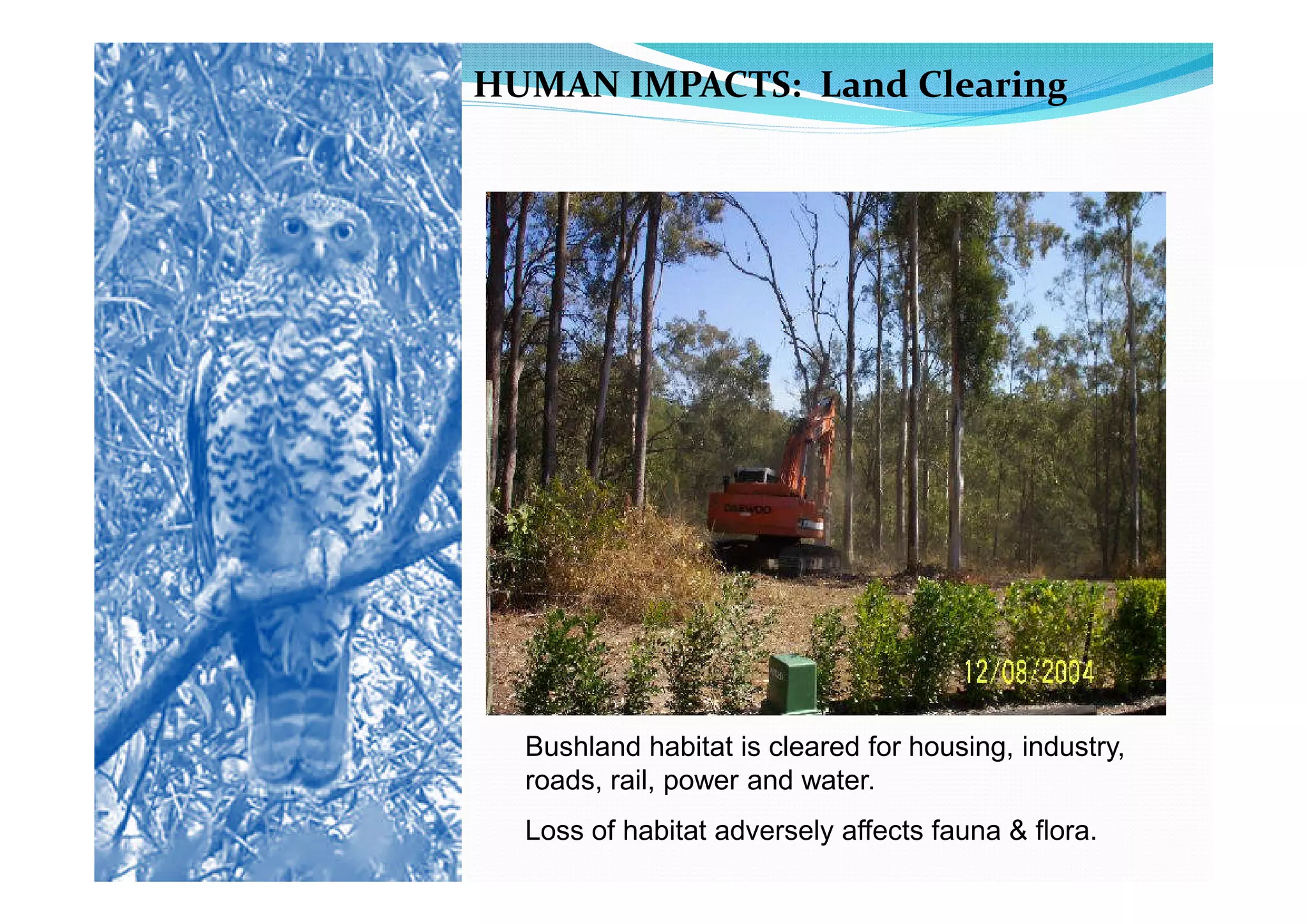
HUMAN IMPACTS: Land Clearing


  Bushland habitat is cleared for housing, industry,
  roads, rail, power and water.
  Loss of habitat adversely affects fauna & flora.
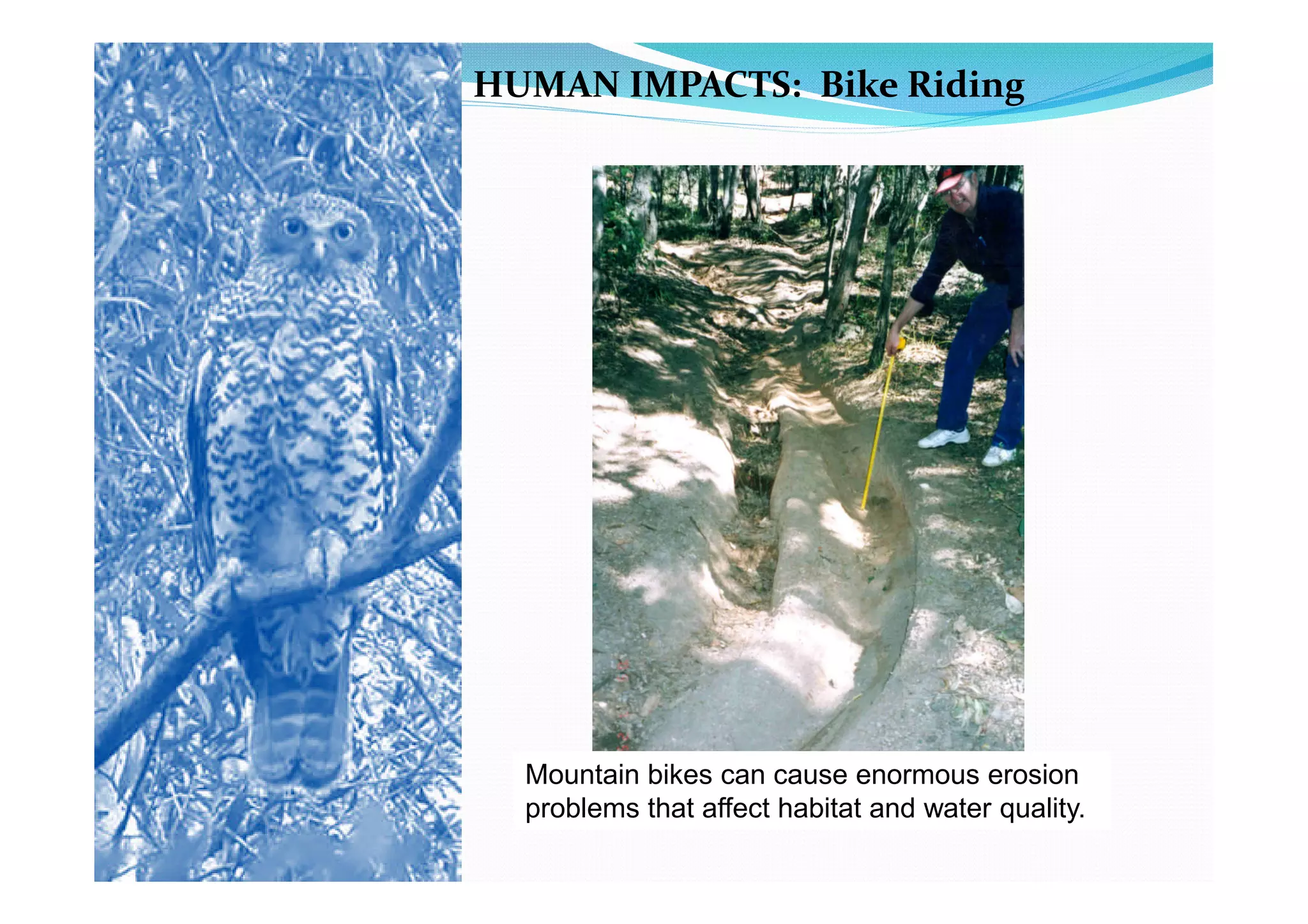
HUMAN IMPACTS: Bike Riding


  Mountain bikes can cause enormous erosion
  problems that affect habitat and water quality.
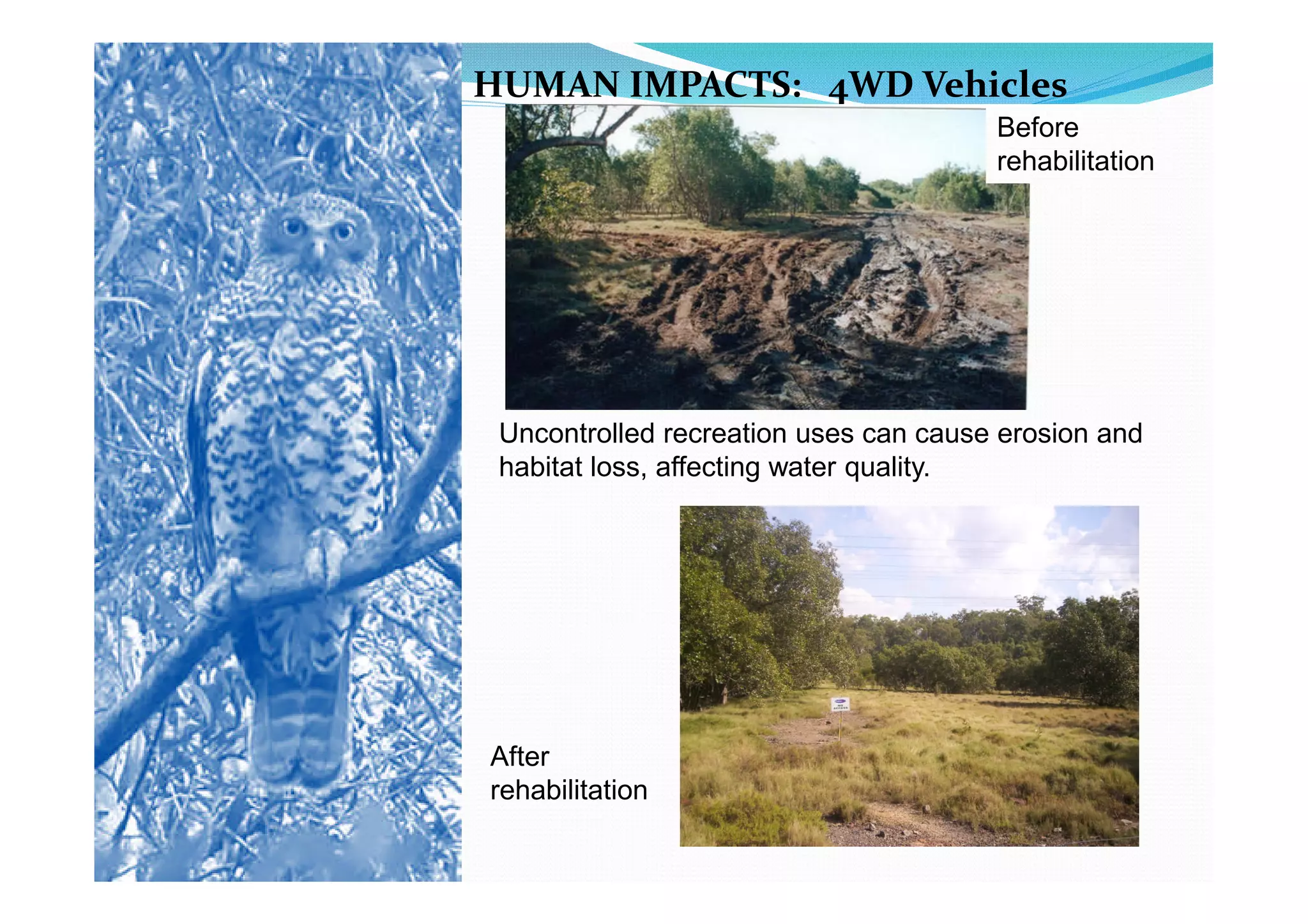
HUMAN IMPACTS: 4WD Vehicles
                                       Before
                                       rehabilitation


 Uncontrolled recreation uses can cause erosion and
 habitat loss, affecting water quality.


After
rehabilitation
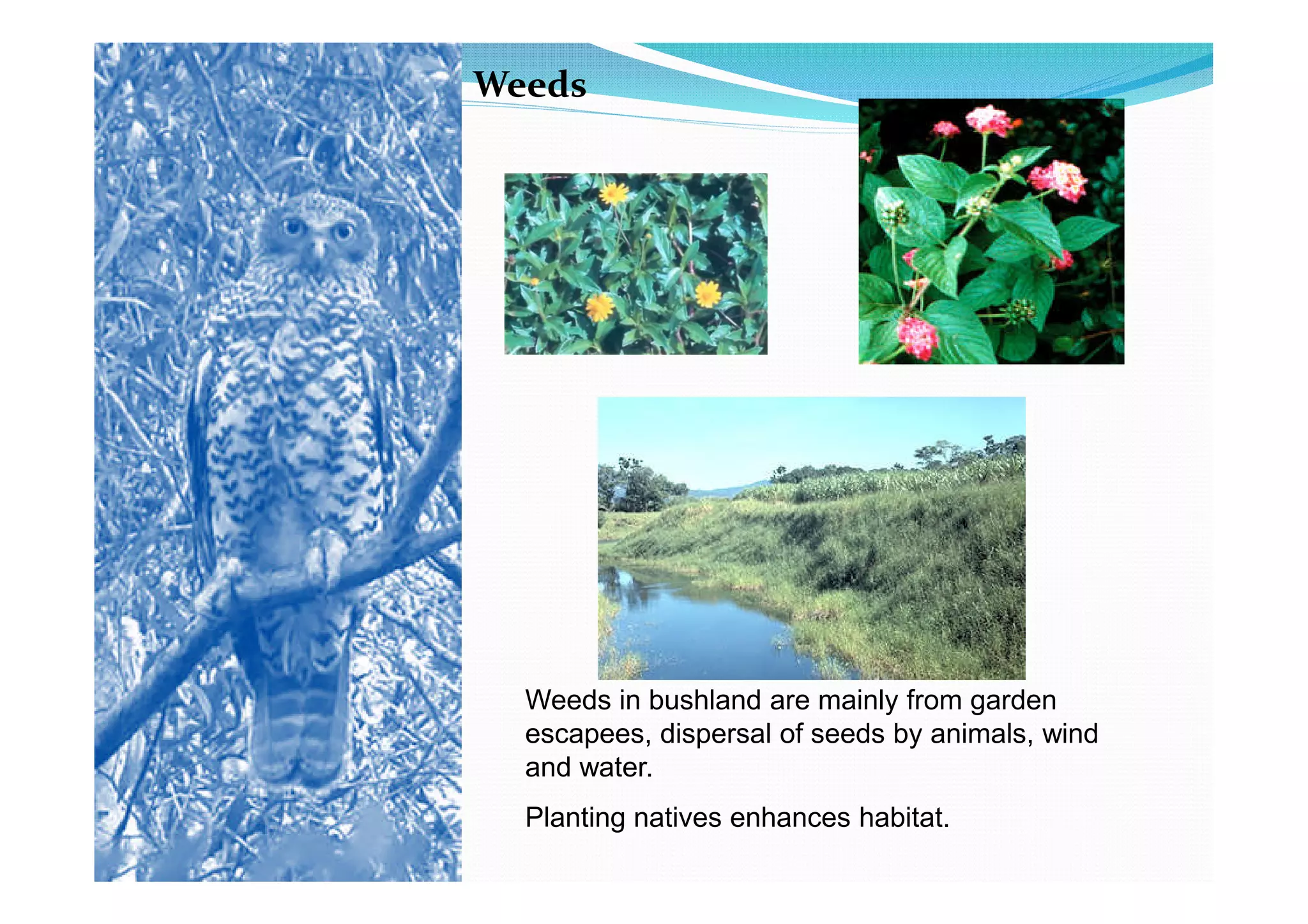
Weeds


  Weeds in bushland are mainly from garden
  escapees, dispersal of seeds by animals, wind
  and water.
  Planting natives enhances habitat.
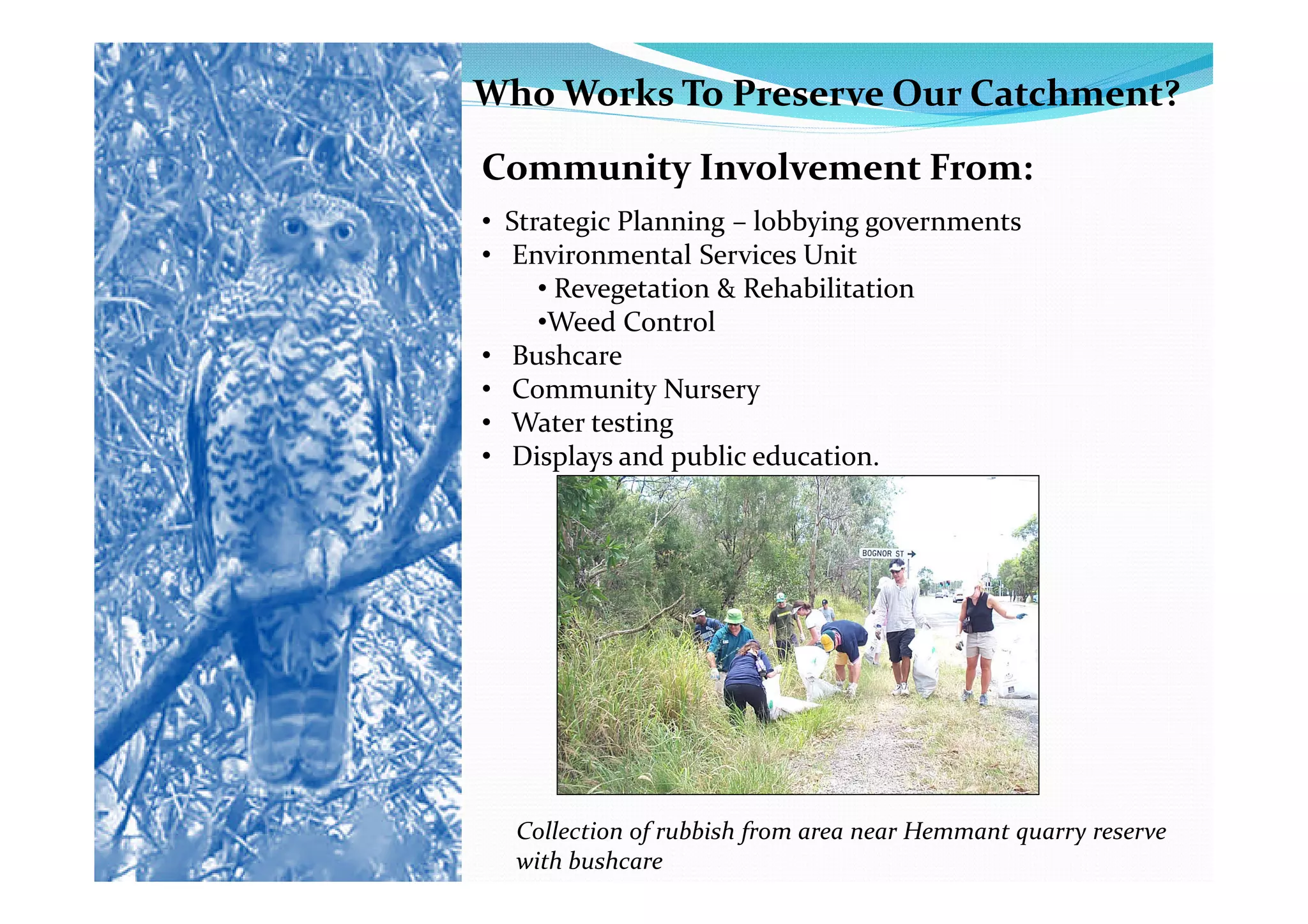
Who Works To Preserve Our Catchment?
Community Involvement From:
• Strategic Planning – lobbying governments
• Environmental Services Unit
     • Revegetation & Rehabilitation
     •Weed Control
• Bushcare
• Community Nursery
• Water testing
• Displays and public education.


  Collection of rubbish from area near Hemmant quarry reserve
  with bushcare
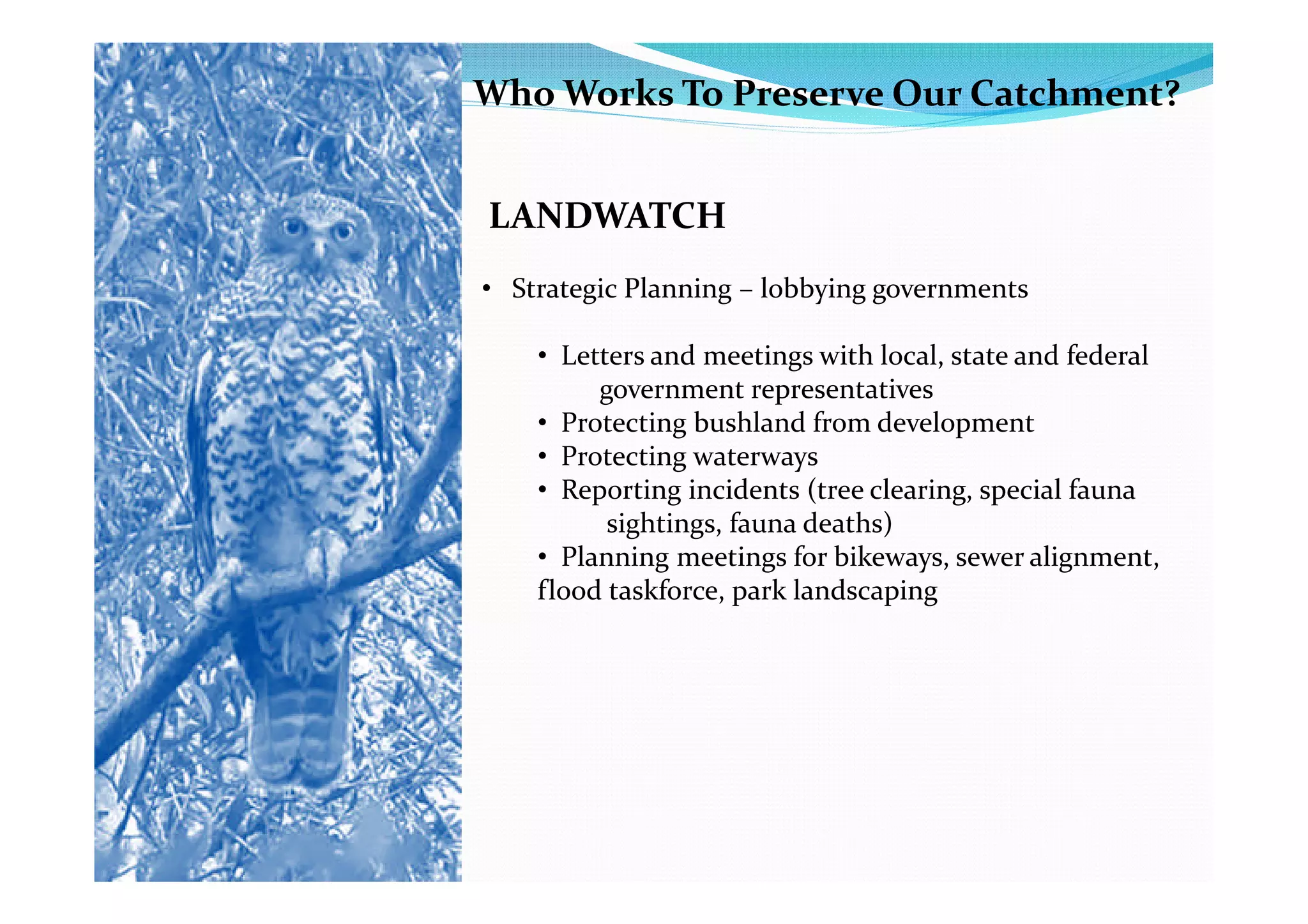
Who Works To Preserve Our Catchment?


LANDWATCH
• Strategic Planning – lobbying governments

    • Letters and meetings with local, state and federal
         government representatives
    • Protecting bushland from development
    • Protecting waterways
    • Reporting incidents (tree clearing, special fauna
          sightings, fauna deaths)
    • Planning meetings for bikeways, sewer alignment,
    flood taskforce, park landscaping
Who Works To Preserve Our Catchment?
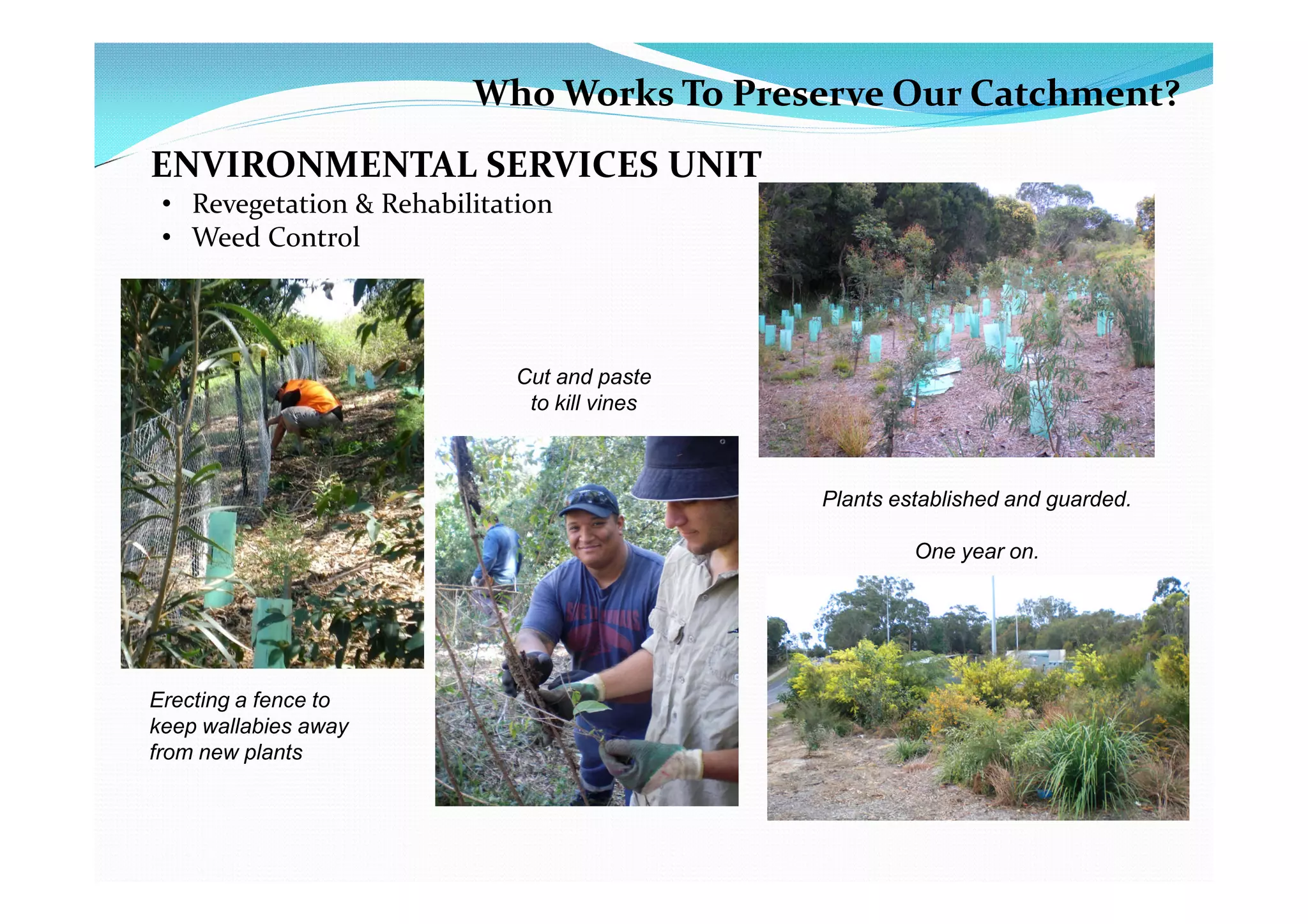
ENVIRONMENTAL SERVICES UNIT
 • Revegetation & Rehabilitation
 • Weed Control


                             Cut and paste
                              to kill vines


                                              Plants established and guarded.

                                                       One year on.


Erecting a fence to
keep wallabies away
from new plants
Who Works To Preserve Our Catchment?
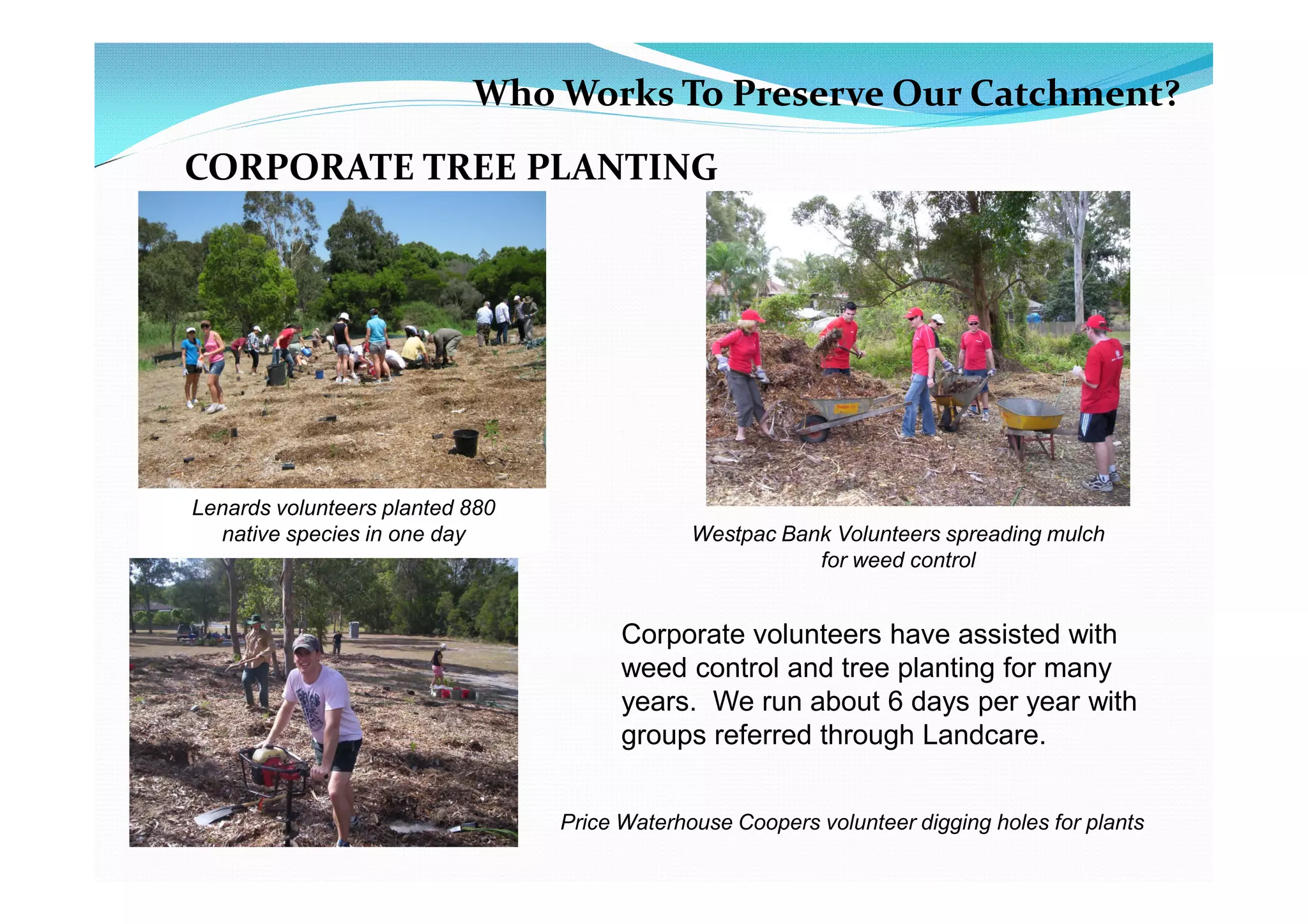
CORPORATE TREE PLANTING


Lenards volunteers planted 880
  native species in one day                   Westpac Bank Volunteers spreading mulch
                                                         for weed control


                                       Corporate volunteers have assisted with
                                       weed control and tree planting for many
                                       years. We run about 6 days per year with
                                       groups referred through Landcare.


                                 Price Waterhouse Coopers volunteer digging holes for plants
Who Works To Preserve Our Catchment?
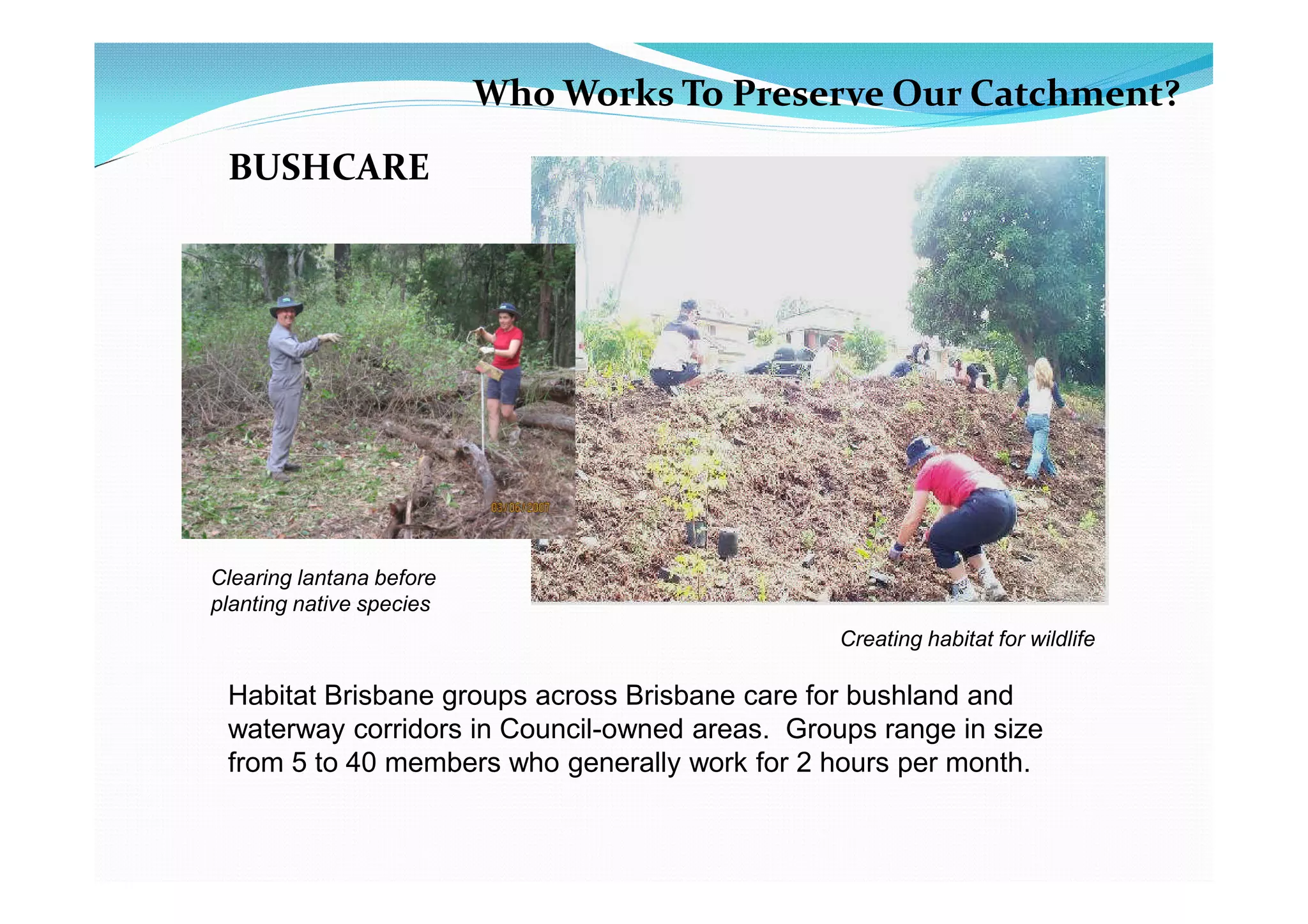
 BUSHCARE


Clearing lantana before
planting native species
                                                Creating habitat for wildlife

 Habitat Brisbane groups across Brisbane care for bushland and
 waterway corridors in Council-owned areas. Groups range in size
 from 5 to 40 members who generally work for 2 hours per month.
Who Works To Preserve Our Catchment?

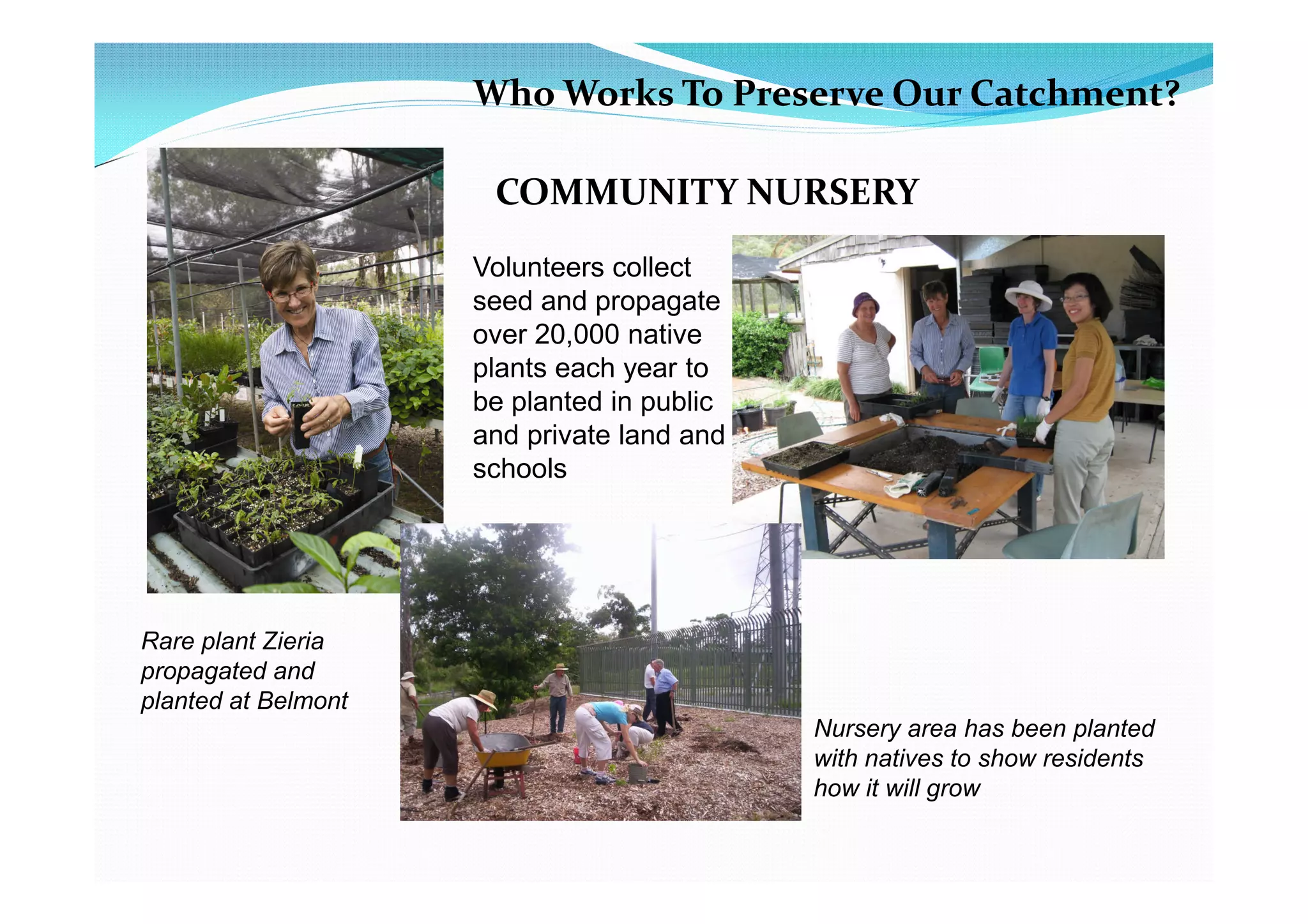
                      COMMUNITY NURSERY
                     Volunteers collect
                     seed and propagate
                     over 20,000 native
                     plants each year to
                     be planted in public
                     and private land and
                     schools


Rare plant Zieria
propagated and
planted at Belmont
                                            Nursery area has been planted
                                            with natives to show residents
                                            how it will grow
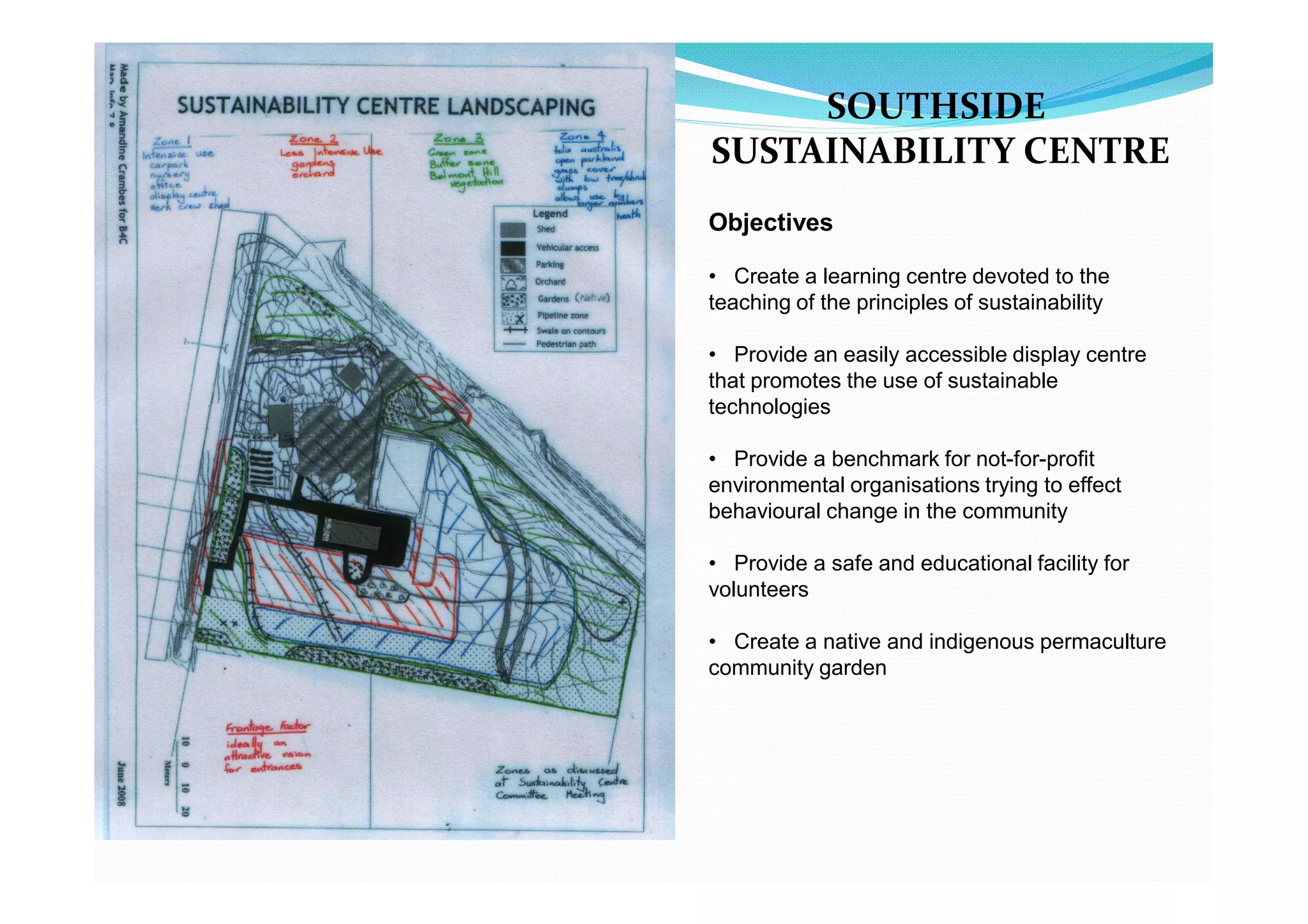
SOUTHSIDE
SUSTAINABILITY CENTRE
Objectives

• Create a learning centre devoted to the
teaching of the principles of sustainability

• Provide an easily accessible display centre
that promotes the use of sustainable
technologies

• Provide a benchmark for not-for-profit
environmental organisations trying to effect
behavioural change in the community

• Provide a safe and educational facility for
volunteers

• Create a native and indigenous permaculture
community garden
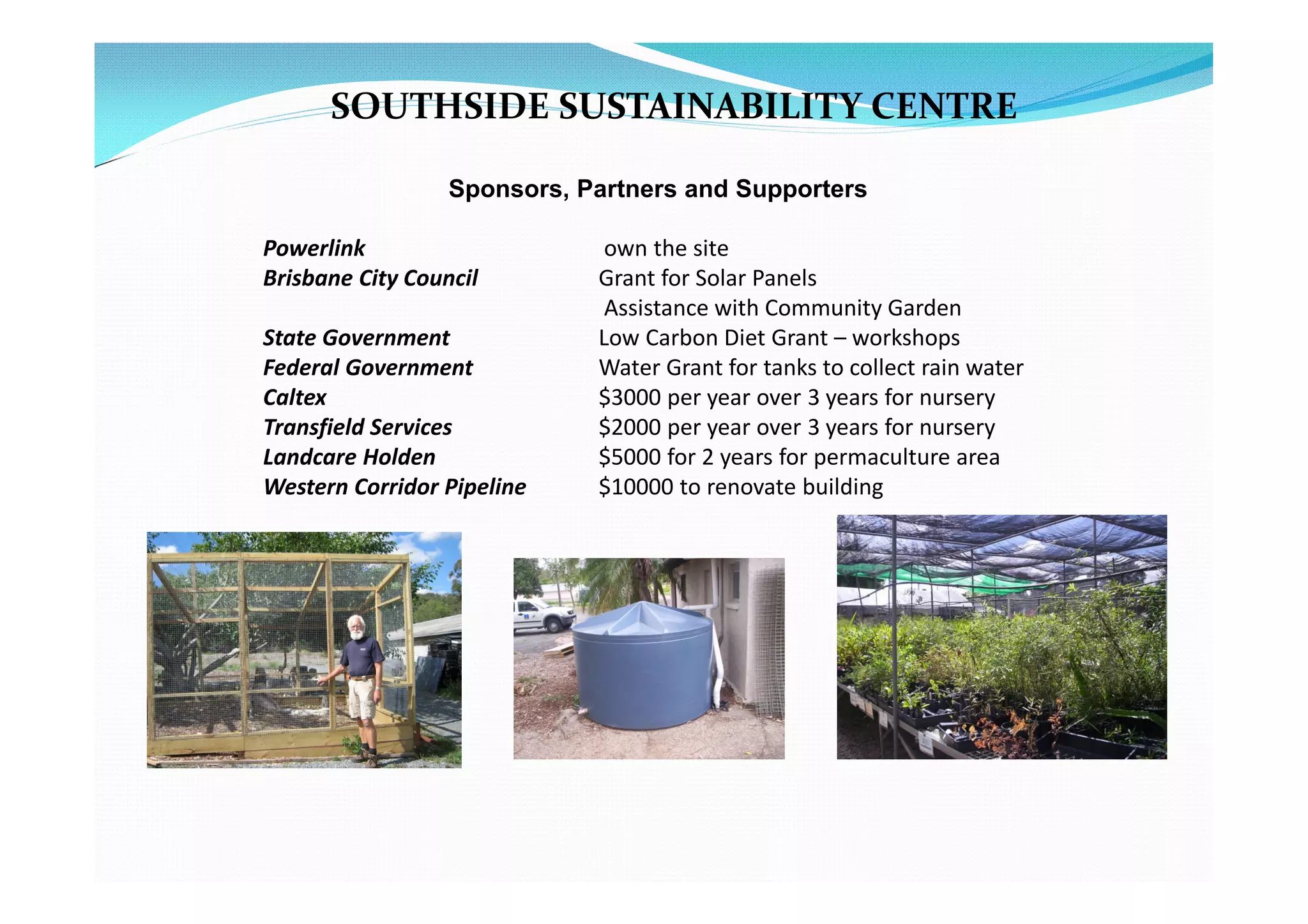
SOUTHSIDE SUSTAINABILITY CENTRE

                  Sponsors, Partners and Supporters

Powerlink                     own the site
Brisbane City Council        Grant for Solar Panels
                              Assistance with Community Garden
State Government             Low Carbon Diet Grant – workshops
Federal Government           Water Grant for tanks to collect rain water
Caltex                       $3000 per year over 3 years for nursery
Transfield Services          $2000 per year over 3 years for nursery
Landcare Holden              $5000 for 2 years for permaculture area
Western Corridor Pipeline    $10000 to renovate building
Who Works To Preserve Our Catchment?

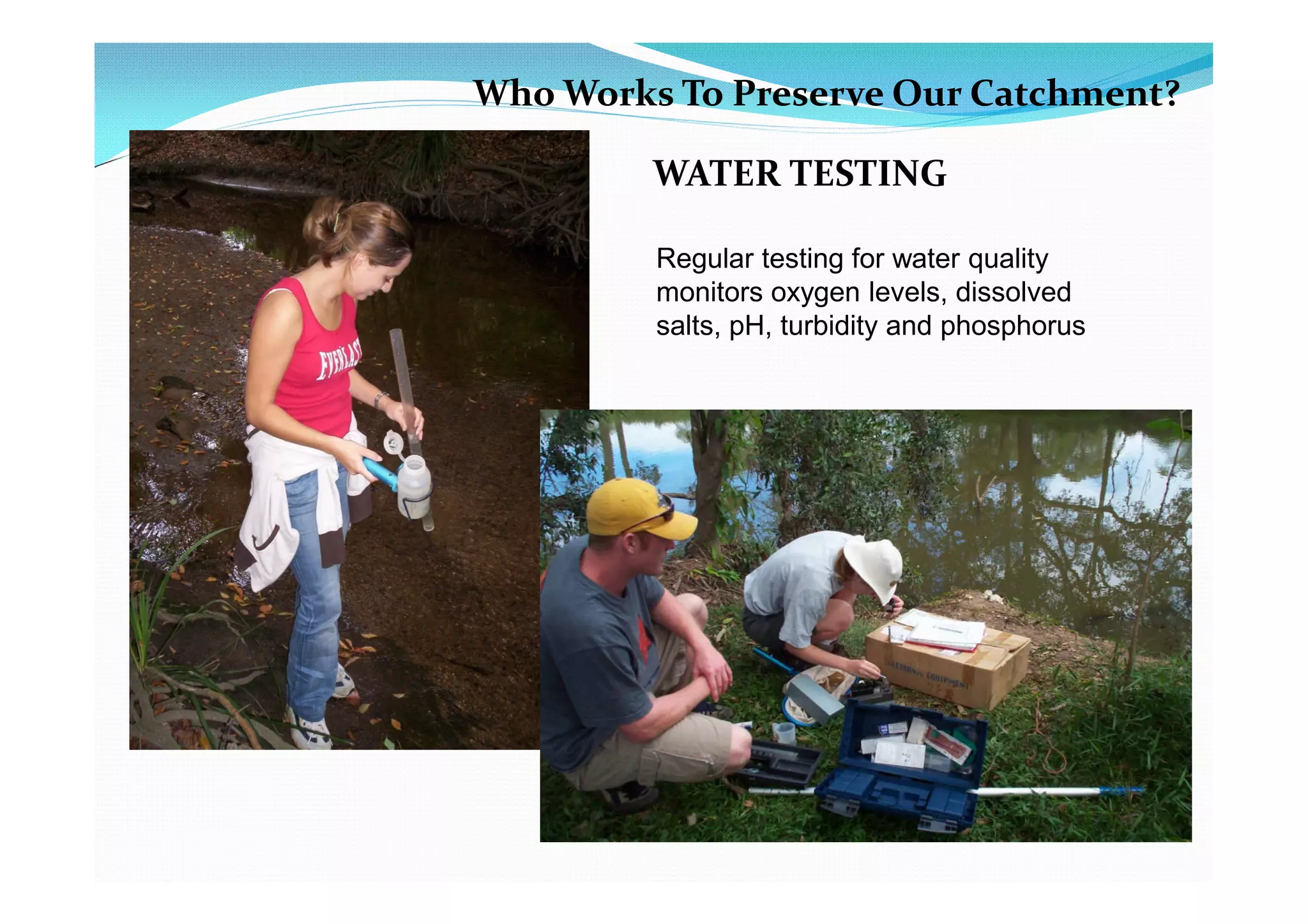
         WATER TESTING

         Regular testing for water quality
         monitors oxygen levels, dissolved
         salts, pH, turbidity and phosphorus
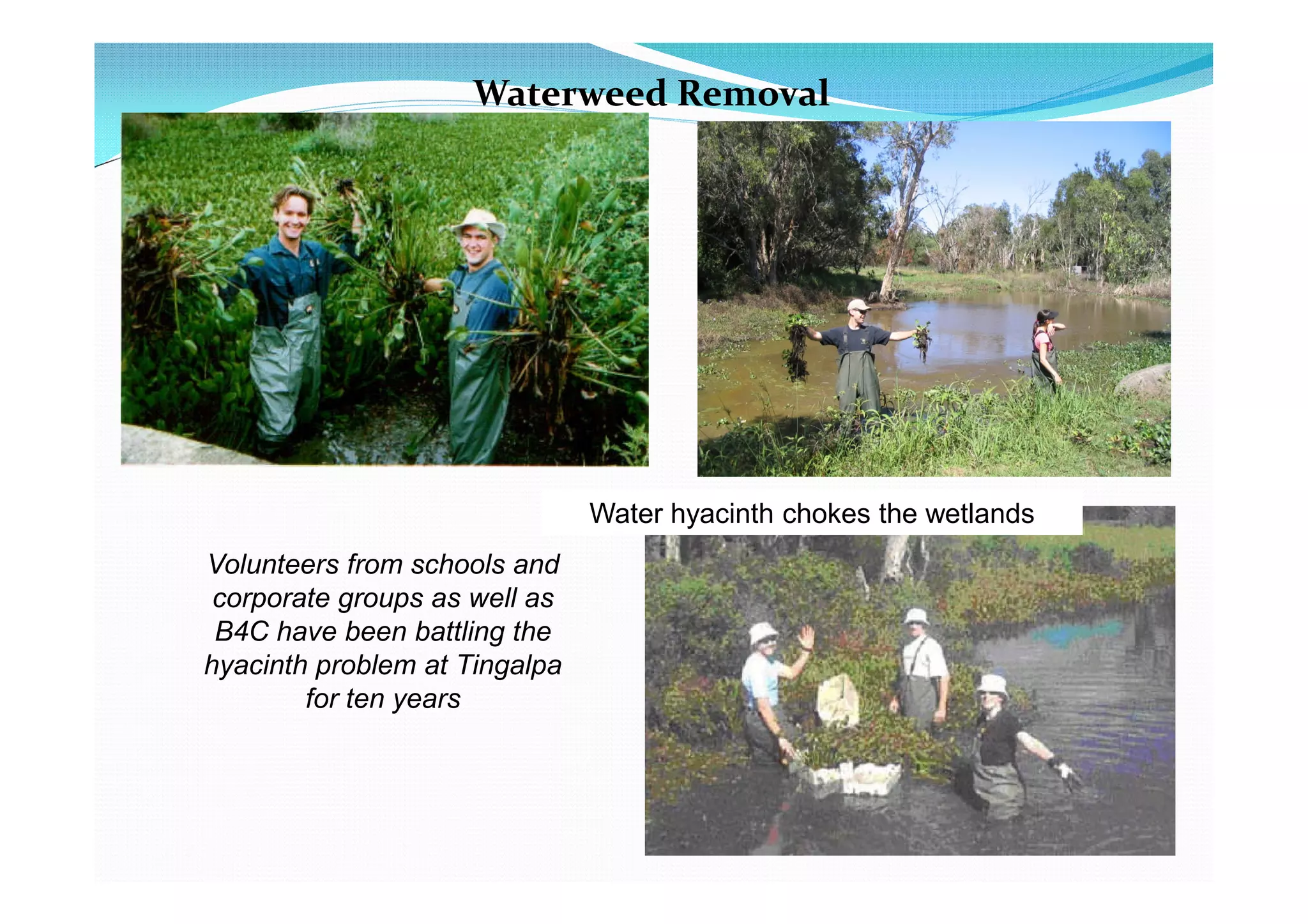
Waterweed Removal


                               Water hyacinth chokes the wetlands
Volunteers from schools and
 corporate groups as well as
 B4C have been battling the
hyacinth problem at Tingalpa
        for ten years
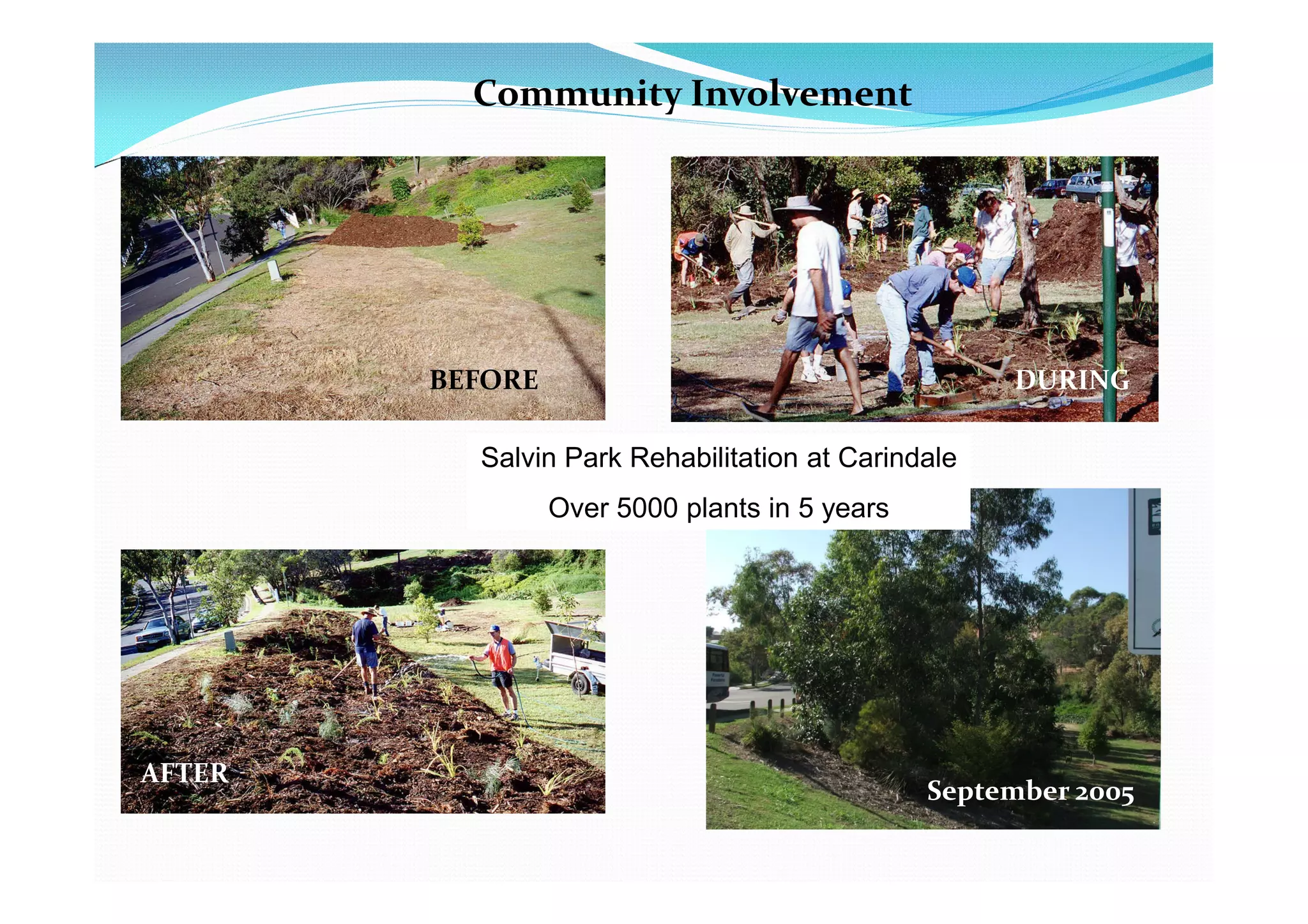
Community Involvement


        BEFORE                                      DURING

          Salvin Park Rehabilitation at Carindale
                 Over 5000 plants in 5 years


AFTER
                                               September 2005
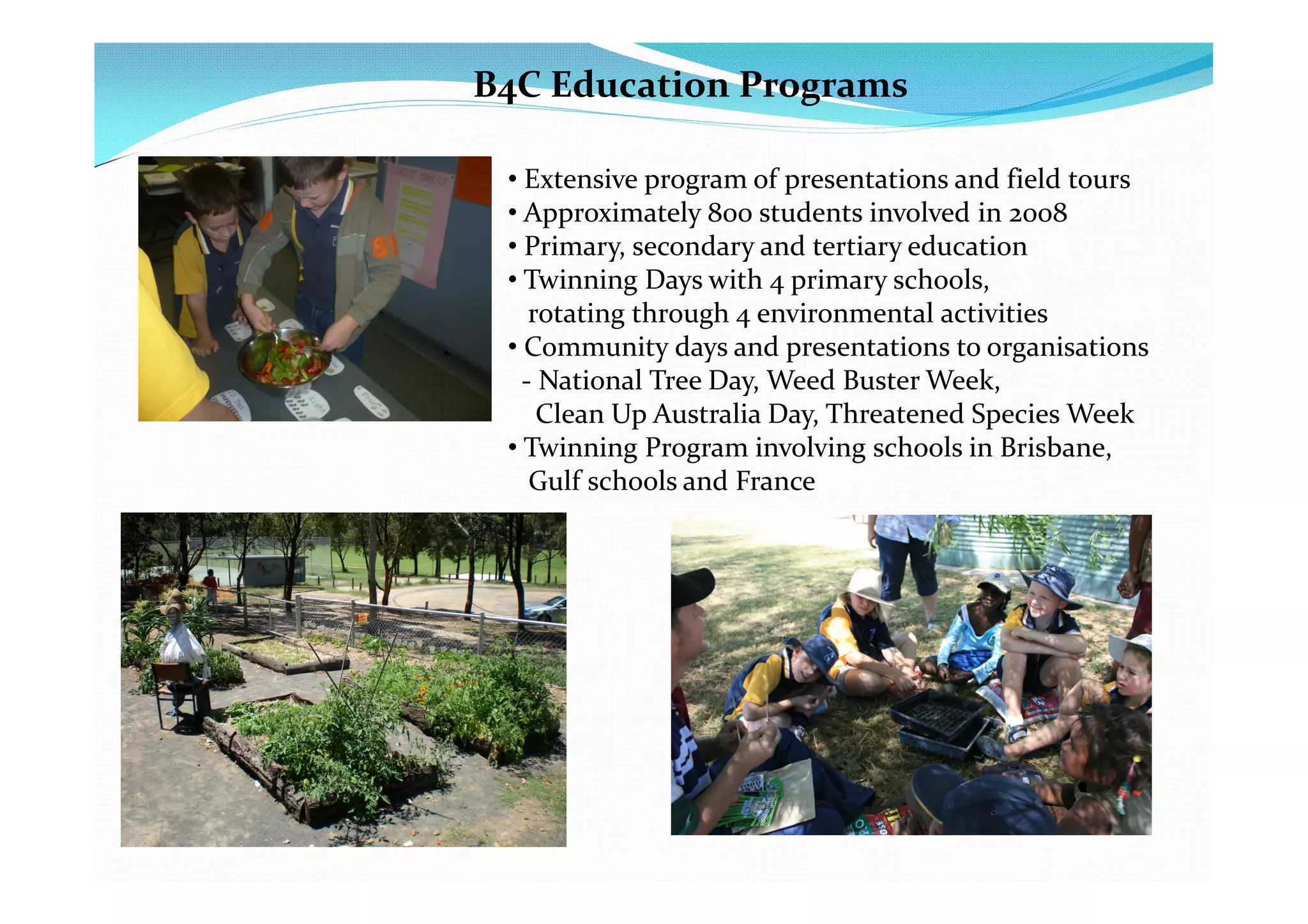
B4C Education Programs

 • Extensive program of presentations and field tours
 • Approximately 800 students involved in 2008
 • Primary, secondary and tertiary education
 • Twinning Days with 4 primary schools,
    rotating through 4 environmental activities
 • Community days and presentations to organisations
   - National Tree Day, Weed Buster Week,
     Clean Up Australia Day, Threatened Species Week
 • Twinning Program involving schools in Brisbane,
    Gulf schools and France
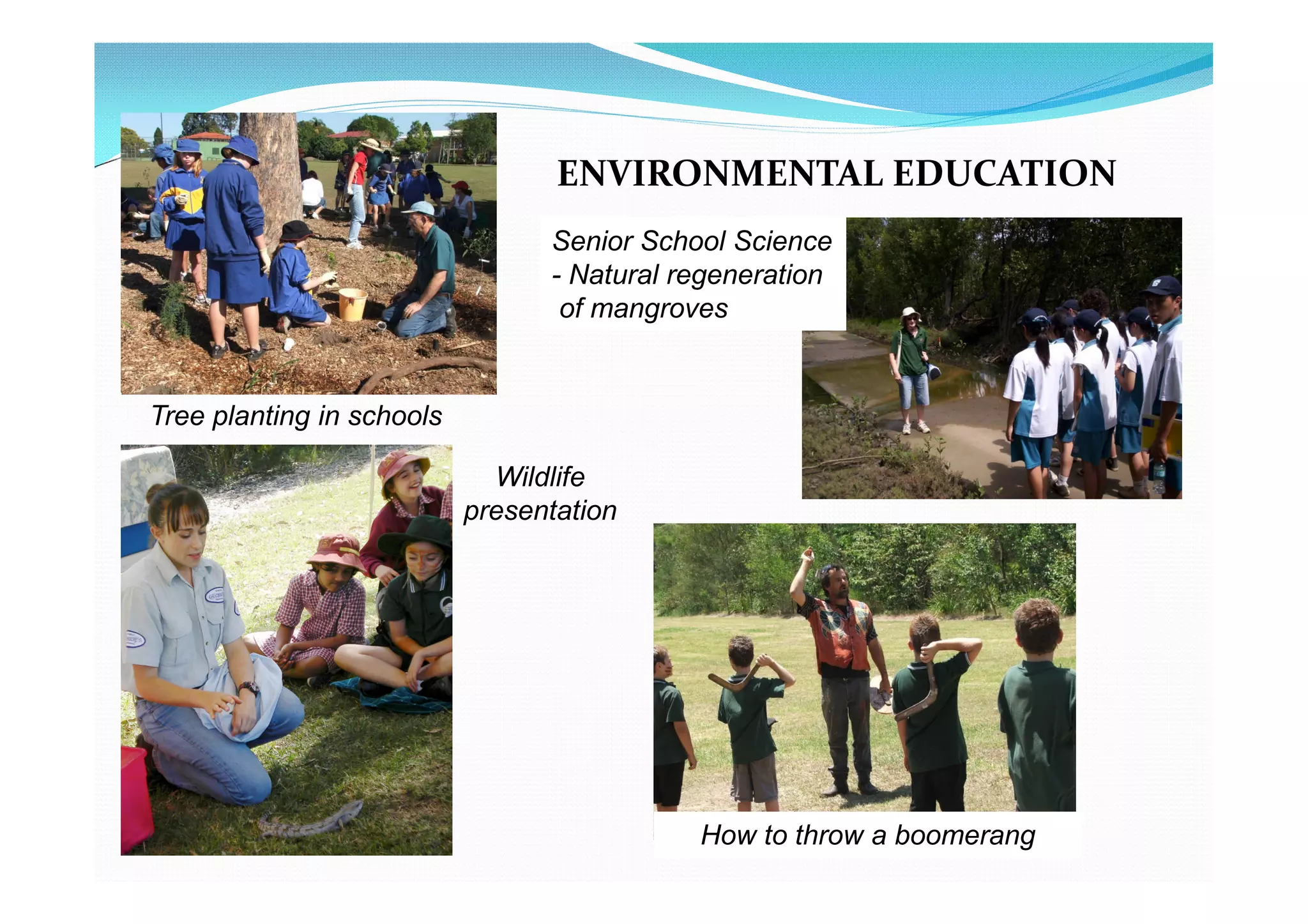
ENVIRONMENTAL EDUCATION
                                 Senior School Science
                                 - Natural regeneration
                                  of mangroves


Tree planting in schools

                             Wildlife
                           presentation


                                            How to throw a boomerang
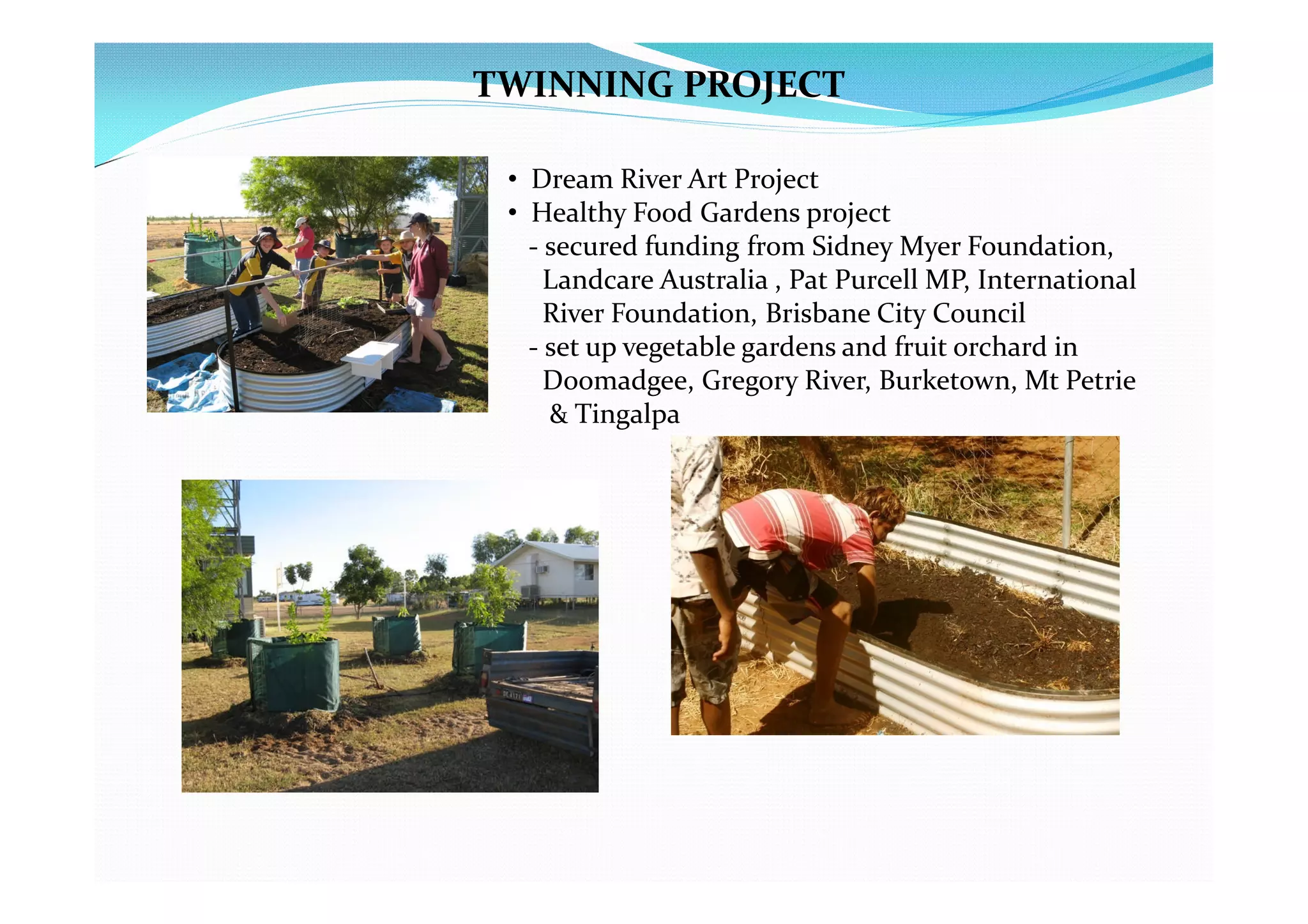
TWINNING PROJECT

 • Dream River Art Project
 • Healthy Food Gardens project
   - secured funding from Sidney Myer Foundation,
     Landcare Australia , Pat Purcell MP, International
     River Foundation, Brisbane City Council
   - set up vegetable gardens and fruit orchard in
     Doomadgee, Gregory River, Burketown, Mt Petrie
     & Tingalpa
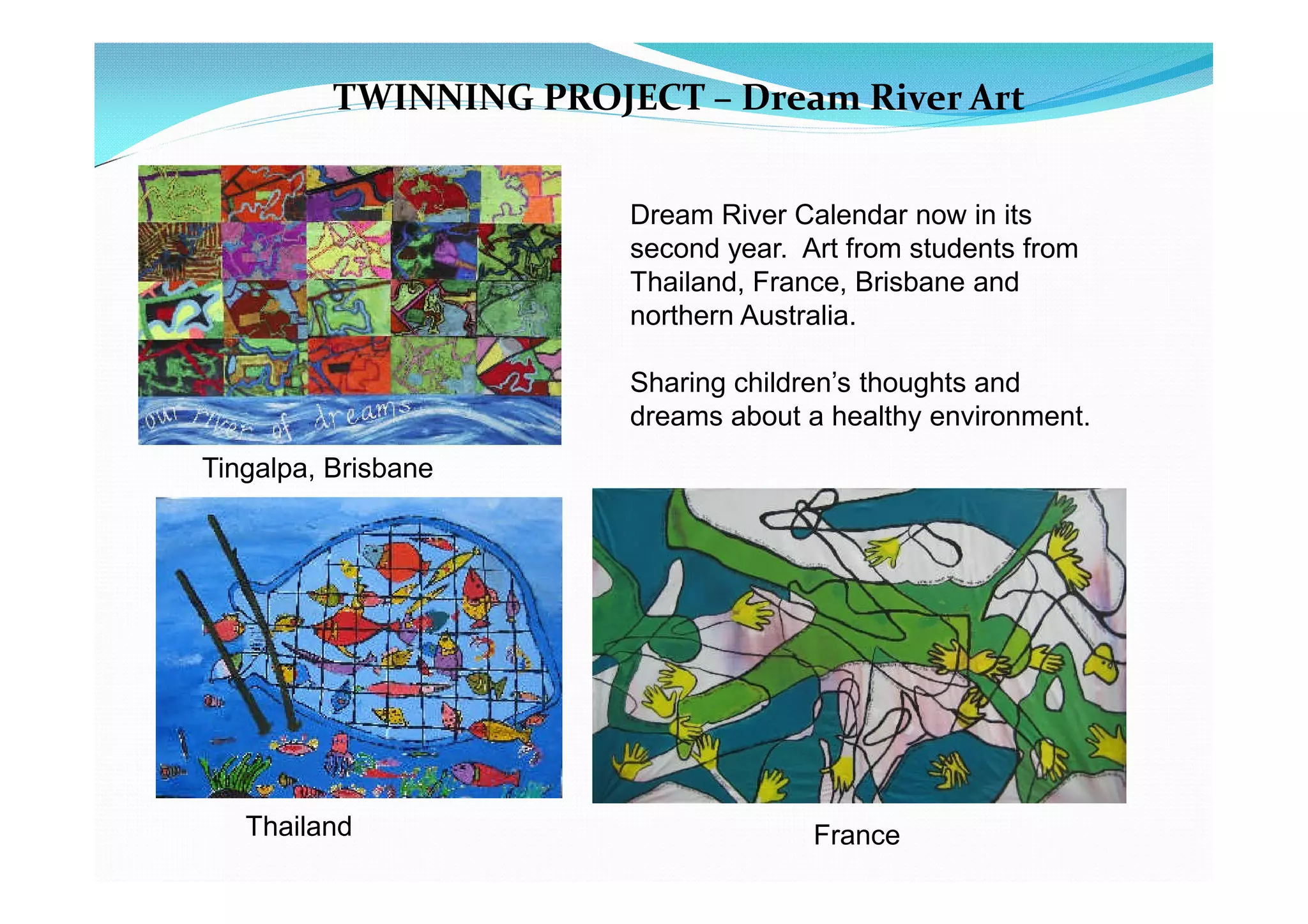
TWINNING PROJECT – Dream River Art


                        Dream River Calendar now in its
                        second year. Art from students from
                        Thailand, France, Brisbane and
                        northern Australia.

                        Sharing children’s thoughts and
                        dreams about a healthy environment.
Tingalpa, Brisbane


   Thailand                           France
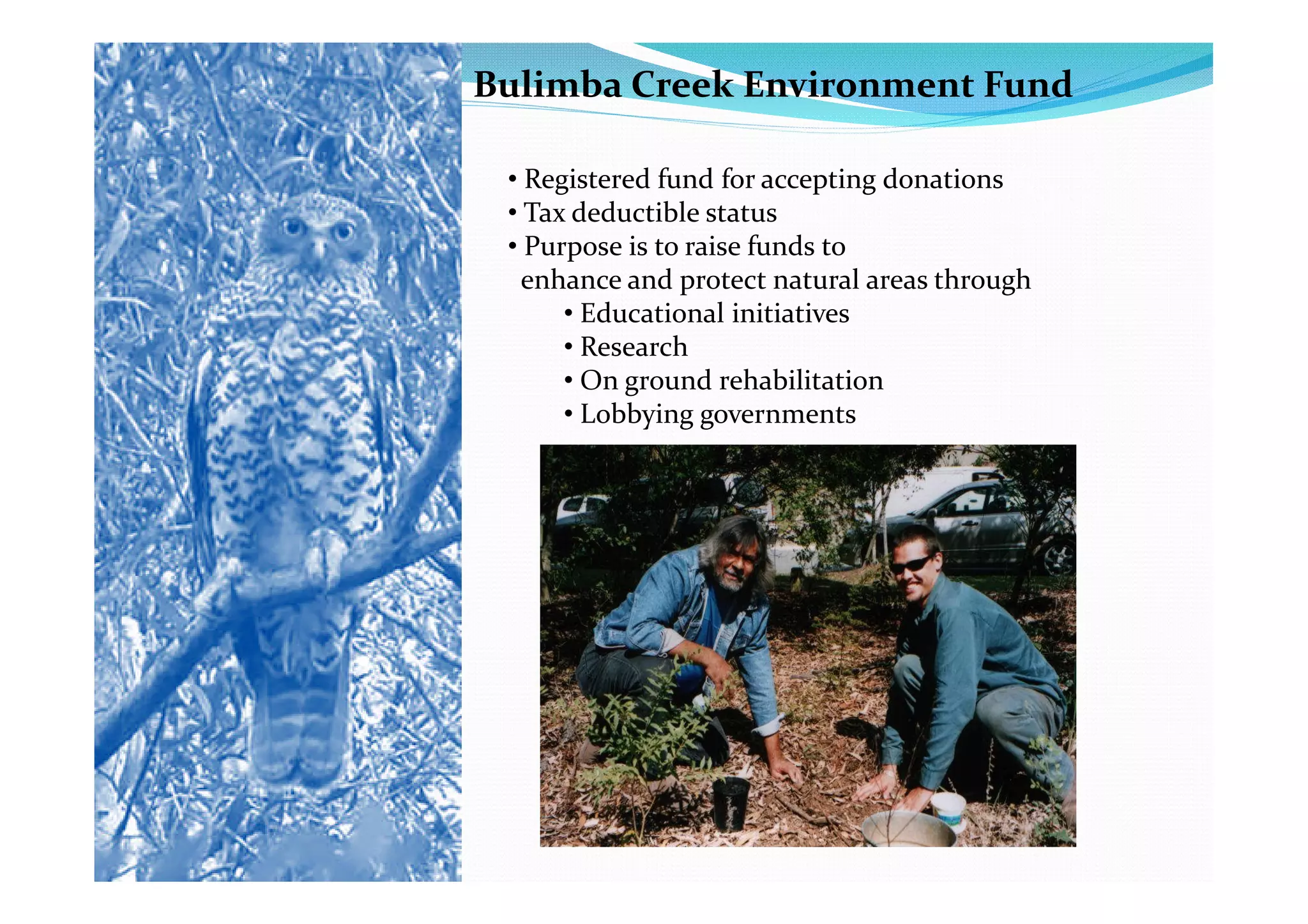
Bulimba Creek Environment Fund

 • Registered fund for accepting donations
 • Tax deductible status
 • Purpose is to raise funds to
   enhance and protect natural areas through
      • Educational initiatives
      • Research
      • On ground rehabilitation
      • Lobbying governments
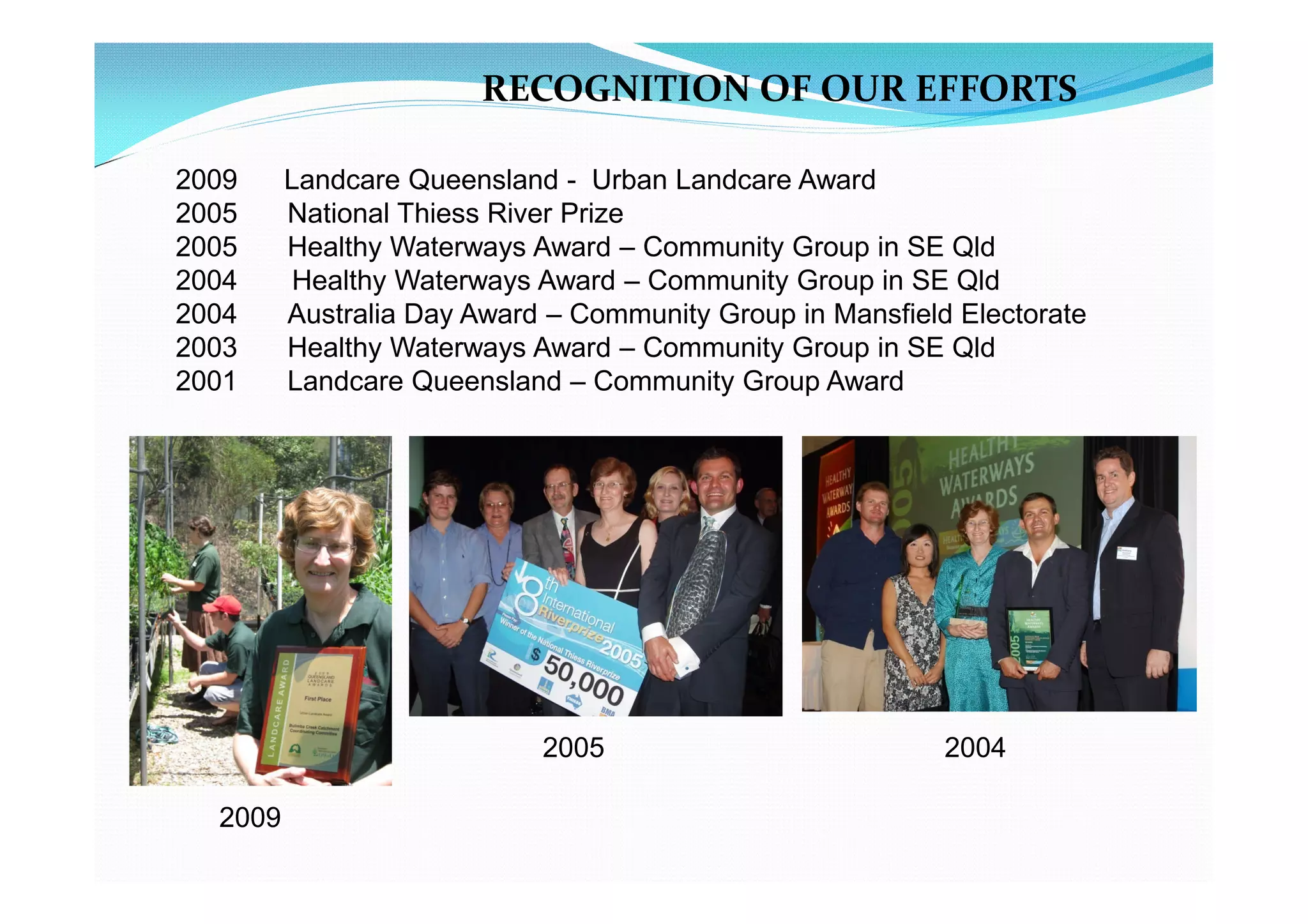
RECOGNITION OF OUR EFFORTS

2009     Landcare Queensland - Urban Landcare Award
2005     National Thiess River Prize
2005     Healthy Waterways Award – Community Group in SE Qld
2004      Healthy Waterways Award – Community Group in SE Qld
2004     Australia Day Award – Community Group in Mansfield Electorate
2003     Healthy Waterways Award – Community Group in SE Qld
2001     Landcare Queensland – Community Group Award


                            2005                           2004

  2009
From:


 Your Presenter Will Now
Answer Any Questions You
        May Have!

 www.bulimbacreek.org.au
 b4c@bulimbacreek.org.au

B4 c catchment present chinese delegation dec 09

  • 1.
    General Information AndSlideshow Presentation for Chinese Delegation from Australia China Environment Development Partnership December 2009 Presented By : B4C Bulimba Creek Catchment Coordinating Committee
  • 2.
    Who Are We? B4C • Non profit environment group • Formed in 1997 • Grass roots group in Brisbane Queensland • Working to protect and enhance the urban environment. • Funding from Ecosystems Services Unit, special purpose grants, sponsorship South East Queensland • is the fastest growing region in Australia • is one of the most biodiversity rich areas of Australia Powerful Owl is a vulnerable species found in natural reserves in our catchment
  • 3.
    • Brisbane Citycomprises the Brisbane River and over 30 creek catchments. • 10 of these creek catchments have organised catchment committees and are assisted with paid coordinators by Brisbane City Council. • The creek catchments are relatively small. Bulimba Creek is 122 km2 and is the second largest.
  • 4.
    Catchments impacted byurban development, tree clearing, damaging land uses and weeds. Brisbane hasn’t been planned well and infrastructure, services and inappropriate land use, including filling and building on flood plains and waterway corridors are a problem. Oxbow area of the Bulimba Creek catchment
  • 5.
    Bulimba Creek CatchmentMap. Covering areas including: •Hemmant •Tingalpa •Carina •Mansfield •Rochedale •Sunnybank
  • 6.
    Problems Facing Catchments. HumanImpacts: •Roads & Powerlines •Tree Clearing – Habitat Loss •Erosion •Rubbish Dumping • Weeds •Mountain Bikes •Domestic animals •Fire •Pollution •4wd Vehicles
  • 7.
    HUMAN IMPACTS: RoadsAnd Powerlines Infrastructure often follows the green corridor
  • 8.
    2007-9 Infrastructure Developments in Bulimba Creek Catchment Port of Brisbane Motorway Stage 2 Gateway Motorway Upgrade Eastern Busway Scrub Road extension Western Corridor Recycled Pipeline Brisbane Aquifer Project Salisbury to Kuraby Rail extension Powerlink upgrade in middle & lower catchment
  • 9.
    HUMAN IMPACTS: LandClearing Bushland habitat is cleared for housing, industry, roads, rail, power and water. Loss of habitat adversely affects fauna & flora.
  • 10.
    HUMAN IMPACTS: BikeRiding Mountain bikes can cause enormous erosion problems that affect habitat and water quality.
  • 11.
    HUMAN IMPACTS: 4WDVehicles Before rehabilitation Uncontrolled recreation uses can cause erosion and habitat loss, affecting water quality. After rehabilitation
  • 12.
    Weeds Weedsin bushland are mainly from garden escapees, dispersal of seeds by animals, wind and water. Planting natives enhances habitat.
  • 13.
    Who Works ToPreserve Our Catchment? Community Involvement From: • Strategic Planning – lobbying governments • Environmental Services Unit • Revegetation & Rehabilitation •Weed Control • Bushcare • Community Nursery • Water testing • Displays and public education. Collection of rubbish from area near Hemmant quarry reserve with bushcare
  • 14.
    Who Works ToPreserve Our Catchment? LANDWATCH • Strategic Planning – lobbying governments • Letters and meetings with local, state and federal government representatives • Protecting bushland from development • Protecting waterways • Reporting incidents (tree clearing, special fauna sightings, fauna deaths) • Planning meetings for bikeways, sewer alignment, flood taskforce, park landscaping
  • 15.
    Who Works ToPreserve Our Catchment? ENVIRONMENTAL SERVICES UNIT • Revegetation & Rehabilitation • Weed Control Cut and paste to kill vines Plants established and guarded. One year on. Erecting a fence to keep wallabies away from new plants
  • 16.
    Who Works ToPreserve Our Catchment? CORPORATE TREE PLANTING Lenards volunteers planted 880 native species in one day Westpac Bank Volunteers spreading mulch for weed control Corporate volunteers have assisted with weed control and tree planting for many years. We run about 6 days per year with groups referred through Landcare. Price Waterhouse Coopers volunteer digging holes for plants
  • 17.
    Who Works ToPreserve Our Catchment? BUSHCARE Clearing lantana before planting native species Creating habitat for wildlife Habitat Brisbane groups across Brisbane care for bushland and waterway corridors in Council-owned areas. Groups range in size from 5 to 40 members who generally work for 2 hours per month.
  • 18.
    Who Works ToPreserve Our Catchment? COMMUNITY NURSERY Volunteers collect seed and propagate over 20,000 native plants each year to be planted in public and private land and schools Rare plant Zieria propagated and planted at Belmont Nursery area has been planted with natives to show residents how it will grow
  • 19.
    SOUTHSIDE SUSTAINABILITY CENTRE Objectives • Createa learning centre devoted to the teaching of the principles of sustainability • Provide an easily accessible display centre that promotes the use of sustainable technologies • Provide a benchmark for not-for-profit environmental organisations trying to effect behavioural change in the community • Provide a safe and educational facility for volunteers • Create a native and indigenous permaculture community garden
  • 20.
    SOUTHSIDE SUSTAINABILITY CENTRE Sponsors, Partners and Supporters Powerlink own the site Brisbane City Council Grant for Solar Panels Assistance with Community Garden State Government Low Carbon Diet Grant – workshops Federal Government Water Grant for tanks to collect rain water Caltex $3000 per year over 3 years for nursery Transfield Services $2000 per year over 3 years for nursery Landcare Holden $5000 for 2 years for permaculture area Western Corridor Pipeline $10000 to renovate building
  • 21.
    Who Works ToPreserve Our Catchment? WATER TESTING Regular testing for water quality monitors oxygen levels, dissolved salts, pH, turbidity and phosphorus
  • 22.
    Waterweed Removal Water hyacinth chokes the wetlands Volunteers from schools and corporate groups as well as B4C have been battling the hyacinth problem at Tingalpa for ten years
  • 23.
    Community Involvement BEFORE DURING Salvin Park Rehabilitation at Carindale Over 5000 plants in 5 years AFTER September 2005
  • 24.
    B4C Education Programs • Extensive program of presentations and field tours • Approximately 800 students involved in 2008 • Primary, secondary and tertiary education • Twinning Days with 4 primary schools, rotating through 4 environmental activities • Community days and presentations to organisations - National Tree Day, Weed Buster Week, Clean Up Australia Day, Threatened Species Week • Twinning Program involving schools in Brisbane, Gulf schools and France
  • 25.
    ENVIRONMENTAL EDUCATION Senior School Science - Natural regeneration of mangroves Tree planting in schools Wildlife presentation How to throw a boomerang
  • 26.
    TWINNING PROJECT •Dream River Art Project • Healthy Food Gardens project - secured funding from Sidney Myer Foundation, Landcare Australia , Pat Purcell MP, International River Foundation, Brisbane City Council - set up vegetable gardens and fruit orchard in Doomadgee, Gregory River, Burketown, Mt Petrie & Tingalpa
  • 27.
    TWINNING PROJECT –Dream River Art Dream River Calendar now in its second year. Art from students from Thailand, France, Brisbane and northern Australia. Sharing children’s thoughts and dreams about a healthy environment. Tingalpa, Brisbane Thailand France
  • 28.
    Bulimba Creek EnvironmentFund • Registered fund for accepting donations • Tax deductible status • Purpose is to raise funds to enhance and protect natural areas through • Educational initiatives • Research • On ground rehabilitation • Lobbying governments
  • 29.
    RECOGNITION OF OUREFFORTS 2009 Landcare Queensland - Urban Landcare Award 2005 National Thiess River Prize 2005 Healthy Waterways Award – Community Group in SE Qld 2004 Healthy Waterways Award – Community Group in SE Qld 2004 Australia Day Award – Community Group in Mansfield Electorate 2003 Healthy Waterways Award – Community Group in SE Qld 2001 Landcare Queensland – Community Group Award 2005 2004 2009
  • 30.
    From: Your PresenterWill Now Answer Any Questions You May Have! www.bulimbacreek.org.au b4c@bulimbacreek.org.au