MARKETING &
ACQUIRING NEW
CUSTOMERS
Jacqui Malpass
Jacquimalpass.com
THE PROBLEM?
How can you find a more cost efficient way to
acquire more profitable customers / maximise on
social return?
• [S]ituation Analysis (where

are we now?)

• [O]bjectives (where do we
want to go?)
• [S]trategy (how do we get
there?)
• [T]actics (the details of
your strategy)
• [A]ction (the daily and
weekly activities)
• [C]ontrol (what you need to
watch and when)
WHAT’S THE GOAL?
The journey begins from where you are now . . .
Where do you want to be?
•
•
•
•

12 months?
Three years?
What about five years?
Now imagine yourself
five years on, having
achieved what you want
and looking back on
yourself today; ask
yourself this important
question:
• What were the most

important things you did
that enabled you to get
where you wanted to be?
WHAT IS MARKETING?
Marketing is everything that you do to communicate your
business to both your existing and potential customers.
Most people use a combination that works best for their
particular business.
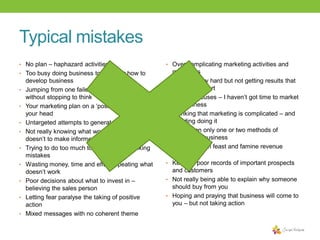
Typical mistakes
• No plan – haphazard activities

• Over complicating marketing activities and

• Too busy doing business to consider how to
•
•
•
•
•
•
•
•
•

develop business
Jumping from one failed idea to another
without stopping to think
Your marketing plan on a ‘post it ’ note or in
your head
Untargeted attempts to generate sales
Not really knowing what works and what
doesn’t to make informed decisions
Trying to do too much too quickly and making
mistakes
Wasting money, time and effort repeating what
doesn’t work
Poor decisions about what to invest in –
believing the sales person
Letting fear paralyse the taking of positive
action
Mixed messages with no coherent theme

•
•
•
•

•
•
•

•

messages
Working very hard but not getting results that
match the effort
Making excuses – I haven’t got time to market
my business
Thinking that marketing is complicated – and
avoiding doing it
Relying on only one or two methods of
generating business
Suffering from feast and famine revenue
cycles
Keeping poor records of important prospects
and customers
Not really being able to explain why someone
should buy from you
Hoping and praying that business will come to
you – but not taking action
What is effective Marketing?
“No matter what your product is, you are ultimately in the
education business. Your customers need to be
constantly educated about the many advantages of doing
business with you and trained to use your products more
effectively”
Robert G Allen
YOUR CHALLENGE
Find the blocks to sales & marketing success
Ask what it isn’t working.
Ask what is working.
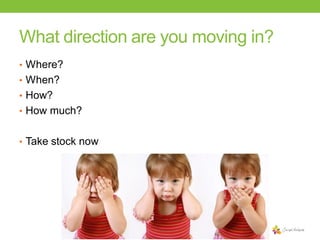
What direction are you moving in?
• Where?

• When?
• How?
• How much?
• Take stock now
UNDERSTANDING YOUR
CUSTOMER
Finding out about your target customer
Understanding what people buy
Understanding your customer
• Who are the right potential customers?

• New business opportunity profile
• Best, most enjoyable and profitable?
• Problems, needs and wants?
• Niches, segments and sectors
• Oh where art thou perfect customer?

• I buy like this!
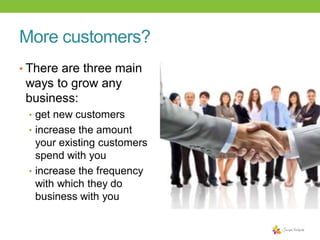
More customers?
• There are three main

ways to grow any
business:
• get new customers
• increase the amount

your existing customers
spend with you
• increase the frequency
with which they do
business with you
Creating your value proposition
• What do you do for

them?
• Key elements?
• Solving clients
problems?
• Benefits?
• What is unique about
it?
Defining pain
• Pain points
• Diagnose before you

prescribe
WHAT ARE YOU SELLING?
Products
Services
Solutions
Products
Anything that satisfies a customer need.
‘The right product, in the right place, at the right time, and
at the right price’
Adcock et al
What are you selling?
“The most simple analysis will tell you that
Coke is only a fizzy drink with a massive
marketing budget, and that simplicity makes
the market vulnerable." Richard Branson
Find out what your customers value
Think like a customer
And
Ask them for feedback
DEVELOPING YOUR
MARKETING MESSAGE
Deciding on your niche
Getting clear about what you are selling
Clarifying your value proposition
Creating and communicating a brand identity
Developing a strap-line slogan for your
business
Branding
• Branding involves decisions that establish an identity for a

product with the goal of distinguishing it from competitors’
offerings. Kotler
• The word branding began simply to tell one persons cattle
from another’s by the means of a hot iron stamp
• Personal branding is the process whereby people and
their careers are marked as brands and marketed as such
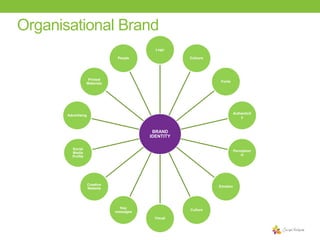
Organisational Brand
Logo
People

Colours

Printed
Materials

Fonts

Authenticit
y

Advertising

BRAND
IDENTITY
Social
Media
Profile

Perception
s|

Creative
Website

Emotion

Key
messages

Culture
Visual
Not of these organisations treat their brand
as an afterthought, and nor should you
24

Developing your brand statement
• What 3 things would you want someone to remember about

you
• What 2 things are you known for today?
• What 2 things will you be known for this time next year?
• What do you do
• How do you do it
• Why do you do it
• Abbey – more ideas for your money

• Honda – the power of dreams
• PC World – the best of both worlds
• KwikFit – keeping tyre and exhaust prices down
• Panasonic – ideas for life
• Tesco – every little helps

• Dulux – we know the colours that go
• Shredded Wheat – put all your heart into life
• Typhoo tea – you only get an OO with Typhoo

• Why
COMPETITORS
Sun-Tzu identified and compared his differentiators (the
enemy's strengths and weaknesses), writing,
“Carefully compare the opposing army with your own, so that
you may know where strength is superabundant and where it
is deficient.”
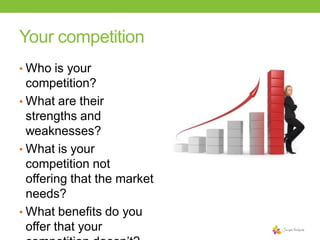
Your competition
• Who is your

competition?
• What are their
strengths and
weaknesses?
• What is your
competition not
offering that the market
needs?
• What benefits do you
offer that your
YOU NEED A PLAN
Failure to plan is planning to fail
Marketing plan – tip
• Create a plan

• Plan on 1 side of A4
• Update frequently
• Stand back and look at the opportunities
• Which opportunities are you following or choosing not to follow and
why?
• Do you have a consistent message throughout your

marketing?
• How much time do you have to create a synchronised
approach?
• Should you consider seeking support?
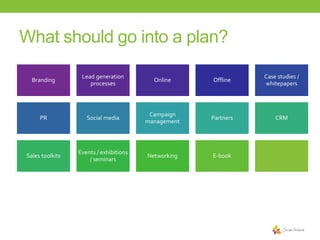
What should go into a plan?
Branding

Lead generation
processes

Online

Offline

Case studies /
whitepapers

PR

Social media

Campaign
management

Partners

CRM

Sales toolkits

Events / exhibitions
/ seminars

Networking

E-book
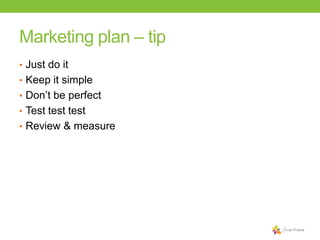
Marketing plan – tip
• Just do it

• Keep it simple
• Don’t be perfect
• Test test test
• Review & measure
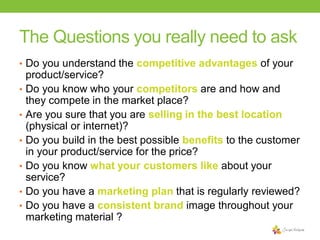
The Questions you really need to ask
• Do you understand the competitive advantages of your
•
•
•
•
•

•

product/service?
Do you know who your competitors are and how and
they compete in the market place?
Are you sure that you are selling in the best location
(physical or internet)?
Do you build in the best possible benefits to the customer
in your product/service for the price?
Do you know what your customers like about your
service?
Do you have a marketing plan that is regularly reviewed?
Do you have a consistent brand image throughout your
marketing material ?
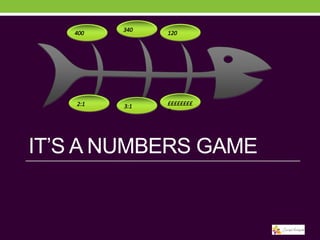
400

2:1

340

3:1

120

££££££££
£

IT’S A NUMBERS GAME
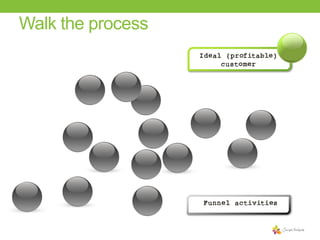
Walk the process
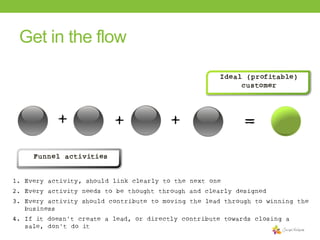
Get in the flow
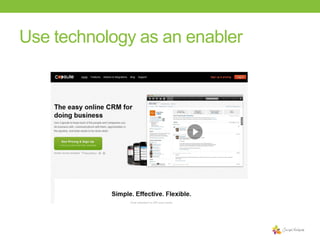
Use technology as an enabler
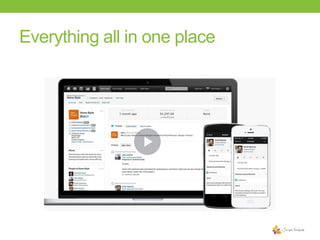
Everything all in one place
Blend traditional with social & digital
Email marketing
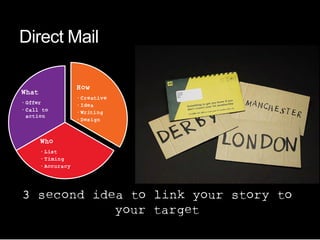
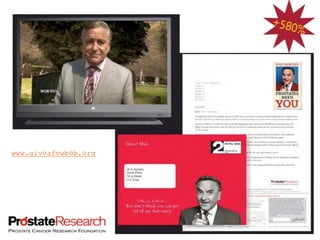
Direct Mail
Keep your eyes and ears peeled the media
are always looking for good stories
If you do one thing blog
• share your expertise

(articles, videos,
interviews, case
studies), a place to
announce your news,
proffer your views, build
your credibility and raise
your brand profile
• SEO (search engine

optimisation)
• Quality content
Think about what a user is going to type Matt Cutts - Google
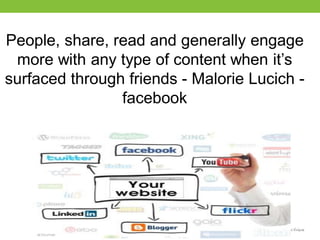
People, share, read and generally engage
more with any type of content when it’s
surfaced through friends - Malorie Lucich facebook
Create a community
(e.g. Google+, Facebook or LinkedIn)
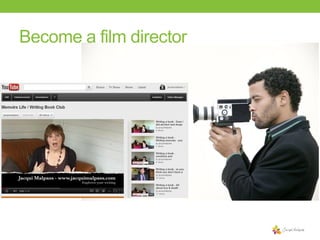
Become a film director
Write a book
Either write something worth reading
about or do something worth writing
about – Benjamnin Franklin
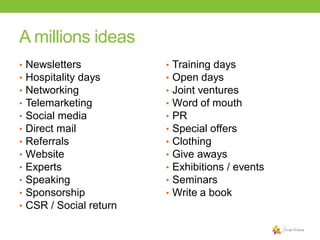
A millions ideas
•
•
•
•
•
•
•
•
•
•
•
•

Newsletters
Hospitality days
Networking
Telemarketing
Social media
Direct mail
Referrals
Website
Experts
Speaking
Sponsorship
CSR / Social return

•
•
•
•
•
•
•
•
•
•
•

Training days
Open days
Joint ventures
Word of mouth
PR
Special offers
Clothing
Give aways
Exhibitions / events
Seminars
Write a book
Who am I?
Jacqui Malpass
Personal Brand Strategist,
Author, Speaker, Blogger
www. jacquimalpass.com

Your Marketing Funnel

  • 1.
  • 2.
    THE PROBLEM? How canyou find a more cost efficient way to acquire more profitable customers / maximise on social return?
  • 3.
    • [S]ituation Analysis(where are we now?) • [O]bjectives (where do we want to go?) • [S]trategy (how do we get there?) • [T]actics (the details of your strategy) • [A]ction (the daily and weekly activities) • [C]ontrol (what you need to watch and when)
  • 4.
    WHAT’S THE GOAL? Thejourney begins from where you are now . . .
  • 5.
    Where do youwant to be? • • • • 12 months? Three years? What about five years? Now imagine yourself five years on, having achieved what you want and looking back on yourself today; ask yourself this important question: • What were the most important things you did that enabled you to get where you wanted to be?
  • 6.
    WHAT IS MARKETING? Marketingis everything that you do to communicate your business to both your existing and potential customers. Most people use a combination that works best for their particular business.
  • 7.
    Typical mistakes • Noplan – haphazard activities • Over complicating marketing activities and • Too busy doing business to consider how to • • • • • • • • • develop business Jumping from one failed idea to another without stopping to think Your marketing plan on a ‘post it ’ note or in your head Untargeted attempts to generate sales Not really knowing what works and what doesn’t to make informed decisions Trying to do too much too quickly and making mistakes Wasting money, time and effort repeating what doesn’t work Poor decisions about what to invest in – believing the sales person Letting fear paralyse the taking of positive action Mixed messages with no coherent theme • • • • • • • • messages Working very hard but not getting results that match the effort Making excuses – I haven’t got time to market my business Thinking that marketing is complicated – and avoiding doing it Relying on only one or two methods of generating business Suffering from feast and famine revenue cycles Keeping poor records of important prospects and customers Not really being able to explain why someone should buy from you Hoping and praying that business will come to you – but not taking action
  • 8.
    What is effectiveMarketing? “No matter what your product is, you are ultimately in the education business. Your customers need to be constantly educated about the many advantages of doing business with you and trained to use your products more effectively” Robert G Allen
  • 9.
    YOUR CHALLENGE Find theblocks to sales & marketing success Ask what it isn’t working. Ask what is working.
  • 10.
    What direction areyou moving in? • Where? • When? • How? • How much? • Take stock now
  • 11.
    UNDERSTANDING YOUR CUSTOMER Finding outabout your target customer Understanding what people buy
  • 12.
    Understanding your customer •Who are the right potential customers? • New business opportunity profile • Best, most enjoyable and profitable? • Problems, needs and wants? • Niches, segments and sectors • Oh where art thou perfect customer? • I buy like this!
  • 13.
    More customers? • Thereare three main ways to grow any business: • get new customers • increase the amount your existing customers spend with you • increase the frequency with which they do business with you
  • 14.
    Creating your valueproposition • What do you do for them? • Key elements? • Solving clients problems? • Benefits? • What is unique about it?
  • 15.
    Defining pain • Painpoints • Diagnose before you prescribe
  • 16.
    WHAT ARE YOUSELLING? Products Services Solutions
  • 17.
    Products Anything that satisfiesa customer need. ‘The right product, in the right place, at the right time, and at the right price’ Adcock et al
  • 18.
    What are youselling? “The most simple analysis will tell you that Coke is only a fizzy drink with a massive marketing budget, and that simplicity makes the market vulnerable." Richard Branson
  • 19.
    Find out whatyour customers value Think like a customer And Ask them for feedback
  • 20.
    DEVELOPING YOUR MARKETING MESSAGE Decidingon your niche Getting clear about what you are selling Clarifying your value proposition Creating and communicating a brand identity Developing a strap-line slogan for your business
  • 21.
    Branding • Branding involvesdecisions that establish an identity for a product with the goal of distinguishing it from competitors’ offerings. Kotler • The word branding began simply to tell one persons cattle from another’s by the means of a hot iron stamp • Personal branding is the process whereby people and their careers are marked as brands and marketed as such
  • 22.
  • 23.
    Not of theseorganisations treat their brand as an afterthought, and nor should you
  • 24.
    24 Developing your brandstatement • What 3 things would you want someone to remember about you • What 2 things are you known for today? • What 2 things will you be known for this time next year? • What do you do • How do you do it • Why do you do it
  • 25.
    • Abbey –more ideas for your money • Honda – the power of dreams • PC World – the best of both worlds • KwikFit – keeping tyre and exhaust prices down • Panasonic – ideas for life • Tesco – every little helps • Dulux – we know the colours that go • Shredded Wheat – put all your heart into life • Typhoo tea – you only get an OO with Typhoo • Why
  • 26.
    COMPETITORS Sun-Tzu identified andcompared his differentiators (the enemy's strengths and weaknesses), writing, “Carefully compare the opposing army with your own, so that you may know where strength is superabundant and where it is deficient.”
  • 27.
    Your competition • Whois your competition? • What are their strengths and weaknesses? • What is your competition not offering that the market needs? • What benefits do you offer that your
  • 28.
    YOU NEED APLAN Failure to plan is planning to fail
  • 29.
    Marketing plan –tip • Create a plan • Plan on 1 side of A4 • Update frequently • Stand back and look at the opportunities • Which opportunities are you following or choosing not to follow and why? • Do you have a consistent message throughout your marketing? • How much time do you have to create a synchronised approach? • Should you consider seeking support?
  • 30.
    What should gointo a plan? Branding Lead generation processes Online Offline Case studies / whitepapers PR Social media Campaign management Partners CRM Sales toolkits Events / exhibitions / seminars Networking E-book
  • 31.
    Marketing plan –tip • Just do it • Keep it simple • Don’t be perfect • Test test test • Review & measure
  • 32.
    The Questions youreally need to ask • Do you understand the competitive advantages of your • • • • • • product/service? Do you know who your competitors are and how and they compete in the market place? Are you sure that you are selling in the best location (physical or internet)? Do you build in the best possible benefits to the customer in your product/service for the price? Do you know what your customers like about your service? Do you have a marketing plan that is regularly reviewed? Do you have a consistent brand image throughout your marketing material ?
  • 33.
  • 34.
  • 35.
  • 36.
  • 37.
  • 38.
    Blend traditional withsocial & digital
  • 39.
  • 40.
  • 42.
    Keep your eyesand ears peeled the media are always looking for good stories
  • 43.
    If you doone thing blog • share your expertise (articles, videos, interviews, case studies), a place to announce your news, proffer your views, build your credibility and raise your brand profile • SEO (search engine optimisation) • Quality content
  • 44.
    Think about whata user is going to type Matt Cutts - Google
  • 45.
    People, share, readand generally engage more with any type of content when it’s surfaced through friends - Malorie Lucich facebook
  • 46.
    Create a community (e.g.Google+, Facebook or LinkedIn)
  • 47.
    Become a filmdirector
  • 48.
    Write a book Eitherwrite something worth reading about or do something worth writing about – Benjamnin Franklin
  • 49.
    A millions ideas • • • • • • • • • • • • Newsletters Hospitalitydays Networking Telemarketing Social media Direct mail Referrals Website Experts Speaking Sponsorship CSR / Social return • • • • • • • • • • • Training days Open days Joint ventures Word of mouth PR Special offers Clothing Give aways Exhibitions / events Seminars Write a book
  • 50.
    Who am I? JacquiMalpass Personal Brand Strategist, Author, Speaker, Blogger www. jacquimalpass.com