Marketing for Growth

     Wayne Brass
     Art Mahoney
     Rob Duncan
Marketing is…
• the combination of
  varying methods and
  strategies to get your
  product or service
  into the minds and
  hands of prospective
  buyers.
Define Your Target Market
• What potential customers have specific needs
  that can be addressed by the product/service?
• How might potential customers choose to access
  the product/service?
• How much are potential customers willing to pay
  and how?
• Who are the competitors?
Define Your Target Market
            Segmentation Strategies
•   Behavior
•   Benefit
•   Demographic
•   Geographic
•   Psychographic
Competitive Analysis
• Where are people currently filling this need?
• Who are your competitors? Direct & Indirect
• Why do people buy from them?
• What are their products/services?
• What are their USPs (Unique Selling
  Propositions) and Benefits?
• How do they market? Is it working?
Defining the Product / Service
• What do you offer that your competitors don’t?
• Are you selling Features? or Benefits?
  – Benefits are the problem it solves.
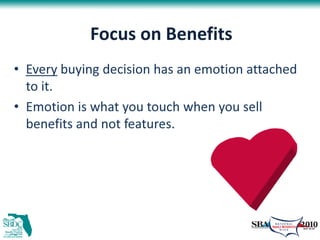
Focus on Benefits
• Every buying decision has an emotion attached
  to it.
• Emotion is what you touch when you sell
  benefits and not features.
Why Market a Product / Service?
• If you don’t, who will?
• How will your customers know to find you?
• How do you know you are reaching your
  potential customers?
Outbound Marketing Includes
•   Sales
•   Advertising and Promotions
•   Public Relations
•   Networking
•   Internet Marketing
•   Customer Service
•   Customer Satisfaction
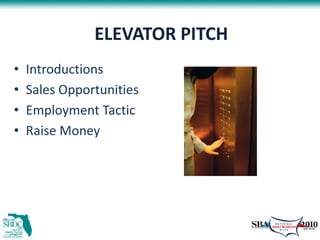
ELEVATOR PITCH
•   Introductions
•   Sales Opportunities
•   Employment Tactic
•   Raise Money
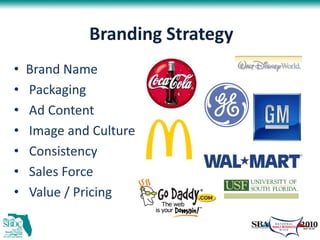
Branding Strategy
•   Brand Name
•   Packaging
•   Ad Content
•   Image and Culture
•   Consistency
•   Sales Force
•   Value / Pricing
Your Marketing Plan
• Include:
  – Descriptions of type of marketing
  – A marketing timeline
  – Probable reach or coverage
  – Estimated cost
  – Number of uses
  – Short explanation of thought process
  – Expected result (ROI)
Your Marketing Plan
• Determine which Marketing Tactics you will use
  to get your message to your audience.
• Write it all down.
• Keep good records – so you can evaluate later!!
Marketing Tactics Include…
• Advertising
  – Media – radio, television, infomercials
  – Print – newspaper, magazine, classified, yellow pages
  – Mini-Media – business cards, stationary, brochures,
    flyers, banners, signs, posters, newsletters, coupons,
    door hangers, gift certificates, direct mail, catalogs,
    etc
  – Other/Extreme - outdoor boards, bus wraps,
    sponsorships
Marketing Tactics Include…
• Sales
  – Personal sales, Telemarketing
• Public Relations
  – Publicity & Press Releases
• Promotions and Premiums
  – Contests and Sweepstakes
  – Events
  – Frequent Buyer Programs
  – Loyalty Programs
Marketing Tactics Include…
• Networking
  – Everyone you know, Everyone you meet
  – Community Involvement
  – Trade and Professional Associations
• Internet Marketing / Web Site
  – Can be advertising
  – Can be a distribution channel
  – Can be your location
You Must Have a Plan!
• Random or one-shot marketing and advertising
  efforts almost NEVER work!
Referrals and Repeat Customers
• 90% will take a referral over a sales person
• Need to see your name up to 9 times through
  advertising efforts to achieve awareness!
• Easier & cheaper to retain an existing customer
  than to find a new one

  Any given company loses between 20 and 40
      percent of their customers annually!
Importance of Customer Service
• Customers return and purchase again
• Customers try new products
• Customers tell others about our business,
  products or services
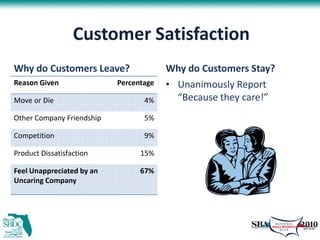
Customer Satisfaction
Why do Customers Leave?                 Why do Customers Stay?
Reason Given               Percentage   • Unanimously Report
Move or Die                       4%      “Because they care!”
Other Company Friendship          5%

Competition                       9%

Product Dissatisfaction          15%

Feel Unappreciated by an         67%
Uncaring Company
Plan Ahead
• Do an annual S.W.O.T. Analysis
    – Strengths, Weaknesses, Opportunities, and Threats
•   Run with a strategy at least 3-6 months
•   Monitor and measure the results.
•   Be flexible and adaptable
•   Remember main keys - Benefits & Frequency.
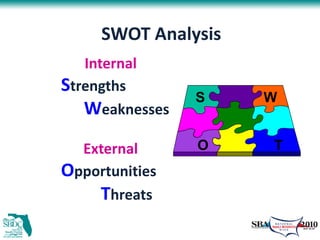
SWOT Analysis
   Internal
Strengths
                S    W
   Weaknesses

  External      O    T
Opportunities
    Threats
Questions?
Thank you!!

www.sbdctampabay.com
    813-905-
    813-905-5800

Marketing for Growth

  • 1.
    Marketing for Growth Wayne Brass Art Mahoney Rob Duncan
  • 2.
    Marketing is… • thecombination of varying methods and strategies to get your product or service into the minds and hands of prospective buyers.
  • 3.
    Define Your TargetMarket • What potential customers have specific needs that can be addressed by the product/service? • How might potential customers choose to access the product/service? • How much are potential customers willing to pay and how? • Who are the competitors?
  • 4.
    Define Your TargetMarket Segmentation Strategies • Behavior • Benefit • Demographic • Geographic • Psychographic
  • 5.
    Competitive Analysis • Whereare people currently filling this need? • Who are your competitors? Direct & Indirect • Why do people buy from them? • What are their products/services? • What are their USPs (Unique Selling Propositions) and Benefits? • How do they market? Is it working?
  • 6.
    Defining the Product/ Service • What do you offer that your competitors don’t? • Are you selling Features? or Benefits? – Benefits are the problem it solves.
  • 7.
    Focus on Benefits •Every buying decision has an emotion attached to it. • Emotion is what you touch when you sell benefits and not features.
  • 8.
    Why Market aProduct / Service? • If you don’t, who will? • How will your customers know to find you? • How do you know you are reaching your potential customers?
  • 9.
    Outbound Marketing Includes • Sales • Advertising and Promotions • Public Relations • Networking • Internet Marketing • Customer Service • Customer Satisfaction
  • 10.
    ELEVATOR PITCH • Introductions • Sales Opportunities • Employment Tactic • Raise Money
  • 11.
    Branding Strategy • Brand Name • Packaging • Ad Content • Image and Culture • Consistency • Sales Force • Value / Pricing
  • 12.
    Your Marketing Plan •Include: – Descriptions of type of marketing – A marketing timeline – Probable reach or coverage – Estimated cost – Number of uses – Short explanation of thought process – Expected result (ROI)
  • 13.
    Your Marketing Plan •Determine which Marketing Tactics you will use to get your message to your audience. • Write it all down. • Keep good records – so you can evaluate later!!
  • 14.
    Marketing Tactics Include… •Advertising – Media – radio, television, infomercials – Print – newspaper, magazine, classified, yellow pages – Mini-Media – business cards, stationary, brochures, flyers, banners, signs, posters, newsletters, coupons, door hangers, gift certificates, direct mail, catalogs, etc – Other/Extreme - outdoor boards, bus wraps, sponsorships
  • 15.
    Marketing Tactics Include… •Sales – Personal sales, Telemarketing • Public Relations – Publicity & Press Releases • Promotions and Premiums – Contests and Sweepstakes – Events – Frequent Buyer Programs – Loyalty Programs
  • 16.
    Marketing Tactics Include… •Networking – Everyone you know, Everyone you meet – Community Involvement – Trade and Professional Associations • Internet Marketing / Web Site – Can be advertising – Can be a distribution channel – Can be your location
  • 17.
    You Must Havea Plan! • Random or one-shot marketing and advertising efforts almost NEVER work!
  • 18.
    Referrals and RepeatCustomers • 90% will take a referral over a sales person • Need to see your name up to 9 times through advertising efforts to achieve awareness! • Easier & cheaper to retain an existing customer than to find a new one Any given company loses between 20 and 40 percent of their customers annually!
  • 19.
    Importance of CustomerService • Customers return and purchase again • Customers try new products • Customers tell others about our business, products or services
  • 20.
    Customer Satisfaction Why doCustomers Leave? Why do Customers Stay? Reason Given Percentage • Unanimously Report Move or Die 4% “Because they care!” Other Company Friendship 5% Competition 9% Product Dissatisfaction 15% Feel Unappreciated by an 67% Uncaring Company
  • 21.
    Plan Ahead • Doan annual S.W.O.T. Analysis – Strengths, Weaknesses, Opportunities, and Threats • Run with a strategy at least 3-6 months • Monitor and measure the results. • Be flexible and adaptable • Remember main keys - Benefits & Frequency.
  • 22.
    SWOT Analysis Internal Strengths S W Weaknesses External O T Opportunities Threats
  • 23.
  • 24.
    Thank you!! www.sbdctampabay.com 813-905- 813-905-5800