



Young people, millennials and Generation Yby Toronto Training and HR September 2011
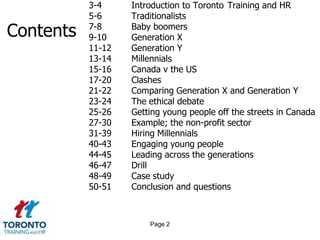
	3-4 Introduction to Toronto 	Training and HR	5-6	Traditionalists7-8	Baby boomers9-10	Generation X11-12	Generation Y13-14	Millennials15-16	Canada v the US17-20	Clashes21-22	Comparing Generation X and Generation Y23-24	The ethical debate25-26	Getting young people off the streets in Canada27-30	Example; the non-profit sector31-39	Hiring Millennials40-43	Engaging young people44-45	Leading across the generations46-47	Drill48-49	Case study50-51	Conclusion and questionsContentsPage 2
Page 3Introduction
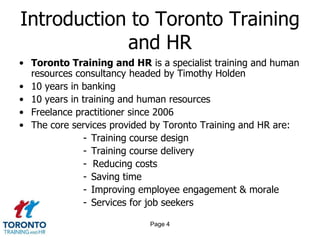
Page 4Introduction to Toronto Training and HRToronto Training and HRis a specialist training and human resources consultancy headed by Timothy Holden 10 years in banking10 years in training and human resourcesFreelance practitioner since 2006The core services provided by Toronto Training and HR are:Training course design
Training course delivery-  Reducing costsSaving time
Improving employee engagement & morale
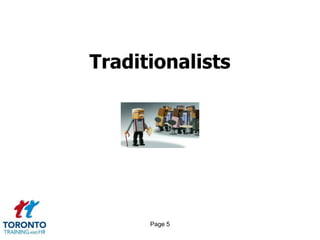
Services for job seekersPage 5Traditionalists
Page 6TraditionalistsDefinitionSometimes known as the Matures or The Silent GenerationTraditionalists at workHow to motivate themImplications and recommendations for managers
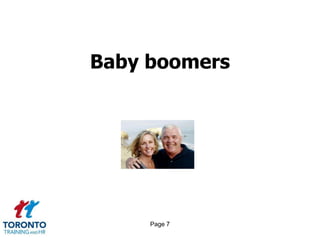
Page 7Baby boomers
Page 8Baby boomersDefinitionBaby boomers at workHow to motivate themImplications and recommendations for managers
Page 9Generation X
Page 10Generation XDefinitionGeneration X at workHow to motivate themImplications and recommendations for managers
Page 11Generation Y
Page 12Generation YDefinitionGeneration Y at workHow to motivate themImplications and recommendations for managers
Page 13Millennials
Page 14MillennialsDefinitionMillennials at workHow to motivate themImplications and recommendations for managers
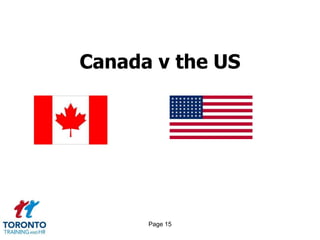
Page 15Canada v the US
Page 16Canada v the USStressWorking hours and work-life balanceMethods of relaxing after workHealthReward and recognitionCulture
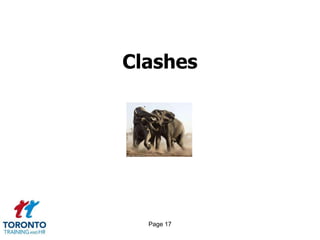
Page 17Clashes
Page 18Clashes 1 of 3Baby Boomers tend to…Generation Y individuals tend to…
Page 19Clashes 2 of 3POINTS OF COMMON FRICTIONRespectDecision-makingCareer perspective FeedbackWork-life balancePerformance management Dress code
Page 20Clashes 3 of 3POINTS OF COMMON FRICTIONMeetingsFun at workWork ethicCommunicationPoliciesLoyalty
Page 21Comparing Generation X and Generation Y
Page 22Comparing Generation X and Generation YHow many people?Spending time with familiesWork-life balanceFlexible work arrangementsLoyalty to employersSociety’s perceptions of women at workRole of women at workChanges for menWorking hours
Page 23The ethical debate
Page 24The ethical debateRetaliationObserving misconductReporting misconductPositive or negative view of culturePositive or negative view of ethicsLength of tenure
Page 25Getting young people off the streets in Canada
Page 26Getting young people off the streets in CanadaThe exiting processThe disengagement process
Page 27Example; the non-profit sector
Page 28Example; the non-profit sector 1 of 3MILLENNIALSIssues facing the sectorRecruitment and retention difficultiesInterests, values, attitudes and behavioursWhat motivates?What do they want from the work environment?Who influences their career decisions?What do their career paths look like?What do they think of the non-profit sector?How do they feel about volunteering?
Page 29Example; the non-profit sector 2 of 3MILLENNIALSExperiences in the sectorWork efficiency challengesAgeismPoor work-life balanceLack of career developmentMBAs need not applyInattention to new hires
Page 30Example; the non-profit sector 3 of 3What advantages does the sector have over other sectors?Initiatives
Page 31Hiring Millennials
Page 32Hiring Millennials 1 of 8TALKING ABOUT MILLENNIALSWhen Millennials take over the worldMillennial myth-bustingMake way for MillennialsMillennials and ITHelping Millennials communicate more effectivelyTraits displayed and exhibited by Millennials
Page 33Hiring Millennials 2 of 8WHAT DO THEY WANT?From a boss…From an employer…To learn…Mentoring
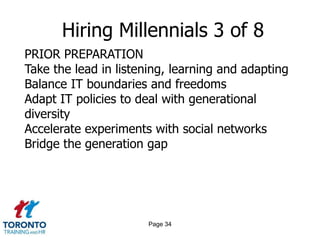
Page 34Hiring Millennials 3 of 8PRIOR PREPARATION Take the lead in listening, learning and adaptingBalance IT boundaries and freedomsAdapt IT policies to deal with generational diversityAccelerate experiments with social networksBridge the generation gap
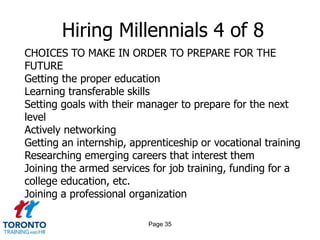
Page 35Hiring Millennials 4 of 8CHOICES TO MAKE IN ORDER TO PREPARE FOR THE FUTUREGetting the proper education Learning transferable skills Setting goals with their manager to prepare for the next level Actively networking Getting an internship, apprenticeship or vocational training Researching emerging careers that interest them Joining the armed services for job training, funding for a college education, etc. Joining a professional organization
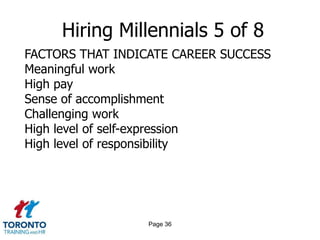
Page 36Hiring Millennials 5 of 8FACTORS THAT INDICATE CAREER SUCCESSMeaningful workHigh paySense of accomplishmentChallenging workHigh level of self-expressionHigh level of responsibility
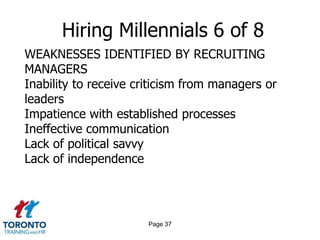
Page 37Hiring Millennials 6 of 8WEAKNESSES IDENTIFIED BY RECRUITING MANAGERSInability to receive criticism from managers or leaders Impatience with established processes Ineffective communication Lack of political savvy Lack of independence
Page 38Hiring Millennials 7 of 8WAYS TO OVERCOME WEAKNESSES Seek mentorship from senior leadership to ask for adviceSet goals with my manager to address my weaknessesParticipate in company sponsored training opportunitiesRead books, journals and blogs which offer career adviceHire a life or career coach
Page 39Hiring Millennials 8 of 8GETTING THE VERY BEST TALENTTreat them like VIPsCo-recruit the parentsFind them earlyLook after themOffer structure and teach them the basicsProvide tight cycles of feedbackDon’t offer low-status, high-turnover jobsMake them part of the groupBe active in the communityTake an interest in their success
Page 40Engaging young people
Page 41Engaging young people 1 of 3Don’t manage; mentorDon’t assign; explainDon’t dictate; solicitDon’t ignore; respondDon’t conceal; communicateOther dos and don’ts
Page 42Engaging young people 2 of 3QUESTIONS TO ASKWhy are you communicating with young people?What messages do you want them to take away? How can you craft your messages in a way that’s meaningful?
Page 43Engaging young people 3 of 3SOCIAL MEDIAFacebookTwitterYouTubeBlogsGoogle
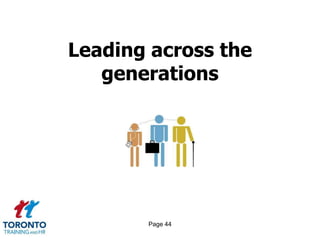
Page 44Leading across the generations
Page 45Leading across the generationsAcknowledgeAppreciateFlexResolveLeverage
Page 46Drill
Page 47Drill
Page 48Case study
Page 49Case study

Young people, millennials and Generation Y September 2011

  • 1.
    Young people, millennialsand Generation Yby Toronto Training and HR September 2011
  • 2.
    3-4 Introduction toToronto Training and HR 5-6 Traditionalists7-8 Baby boomers9-10 Generation X11-12 Generation Y13-14 Millennials15-16 Canada v the US17-20 Clashes21-22 Comparing Generation X and Generation Y23-24 The ethical debate25-26 Getting young people off the streets in Canada27-30 Example; the non-profit sector31-39 Hiring Millennials40-43 Engaging young people44-45 Leading across the generations46-47 Drill48-49 Case study50-51 Conclusion and questionsContentsPage 2
  • 3.
  • 4.
    Page 4Introduction toToronto Training and HRToronto Training and HRis a specialist training and human resources consultancy headed by Timothy Holden 10 years in banking10 years in training and human resourcesFreelance practitioner since 2006The core services provided by Toronto Training and HR are:Training course design
  • 5.
    Training course delivery- Reducing costsSaving time
  • 6.
  • 7.
    Services for jobseekersPage 5Traditionalists
  • 8.
    Page 6TraditionalistsDefinitionSometimes knownas the Matures or The Silent GenerationTraditionalists at workHow to motivate themImplications and recommendations for managers
  • 9.
  • 10.
    Page 8Baby boomersDefinitionBabyboomers at workHow to motivate themImplications and recommendations for managers
  • 11.
  • 12.
    Page 10Generation XDefinitionGenerationX at workHow to motivate themImplications and recommendations for managers
  • 13.
  • 14.
    Page 12Generation YDefinitionGenerationY at workHow to motivate themImplications and recommendations for managers
  • 15.
  • 16.
    Page 14MillennialsDefinitionMillennials atworkHow to motivate themImplications and recommendations for managers
  • 17.
  • 18.
    Page 16Canada vthe USStressWorking hours and work-life balanceMethods of relaxing after workHealthReward and recognitionCulture
  • 19.
  • 20.
    Page 18Clashes 1of 3Baby Boomers tend to…Generation Y individuals tend to…
  • 21.
    Page 19Clashes 2of 3POINTS OF COMMON FRICTIONRespectDecision-makingCareer perspective FeedbackWork-life balancePerformance management Dress code
  • 22.
    Page 20Clashes 3of 3POINTS OF COMMON FRICTIONMeetingsFun at workWork ethicCommunicationPoliciesLoyalty
  • 23.
    Page 21Comparing GenerationX and Generation Y
  • 24.
    Page 22Comparing GenerationX and Generation YHow many people?Spending time with familiesWork-life balanceFlexible work arrangementsLoyalty to employersSociety’s perceptions of women at workRole of women at workChanges for menWorking hours
  • 25.
  • 26.
    Page 24The ethicaldebateRetaliationObserving misconductReporting misconductPositive or negative view of culturePositive or negative view of ethicsLength of tenure
  • 27.
    Page 25Getting youngpeople off the streets in Canada
  • 28.
    Page 26Getting youngpeople off the streets in CanadaThe exiting processThe disengagement process
  • 29.
    Page 27Example; thenon-profit sector
  • 30.
    Page 28Example; thenon-profit sector 1 of 3MILLENNIALSIssues facing the sectorRecruitment and retention difficultiesInterests, values, attitudes and behavioursWhat motivates?What do they want from the work environment?Who influences their career decisions?What do their career paths look like?What do they think of the non-profit sector?How do they feel about volunteering?
  • 31.
    Page 29Example; thenon-profit sector 2 of 3MILLENNIALSExperiences in the sectorWork efficiency challengesAgeismPoor work-life balanceLack of career developmentMBAs need not applyInattention to new hires
  • 32.
    Page 30Example; thenon-profit sector 3 of 3What advantages does the sector have over other sectors?Initiatives
  • 33.
  • 34.
    Page 32Hiring Millennials1 of 8TALKING ABOUT MILLENNIALSWhen Millennials take over the worldMillennial myth-bustingMake way for MillennialsMillennials and ITHelping Millennials communicate more effectivelyTraits displayed and exhibited by Millennials
  • 35.
    Page 33Hiring Millennials2 of 8WHAT DO THEY WANT?From a boss…From an employer…To learn…Mentoring
  • 36.
    Page 34Hiring Millennials3 of 8PRIOR PREPARATION Take the lead in listening, learning and adaptingBalance IT boundaries and freedomsAdapt IT policies to deal with generational diversityAccelerate experiments with social networksBridge the generation gap
  • 37.
    Page 35Hiring Millennials4 of 8CHOICES TO MAKE IN ORDER TO PREPARE FOR THE FUTUREGetting the proper education Learning transferable skills Setting goals with their manager to prepare for the next level Actively networking Getting an internship, apprenticeship or vocational training Researching emerging careers that interest them Joining the armed services for job training, funding for a college education, etc. Joining a professional organization
  • 38.
    Page 36Hiring Millennials5 of 8FACTORS THAT INDICATE CAREER SUCCESSMeaningful workHigh paySense of accomplishmentChallenging workHigh level of self-expressionHigh level of responsibility
  • 39.
    Page 37Hiring Millennials6 of 8WEAKNESSES IDENTIFIED BY RECRUITING MANAGERSInability to receive criticism from managers or leaders Impatience with established processes Ineffective communication Lack of political savvy Lack of independence
  • 40.
    Page 38Hiring Millennials7 of 8WAYS TO OVERCOME WEAKNESSES Seek mentorship from senior leadership to ask for adviceSet goals with my manager to address my weaknessesParticipate in company sponsored training opportunitiesRead books, journals and blogs which offer career adviceHire a life or career coach
  • 41.
    Page 39Hiring Millennials8 of 8GETTING THE VERY BEST TALENTTreat them like VIPsCo-recruit the parentsFind them earlyLook after themOffer structure and teach them the basicsProvide tight cycles of feedbackDon’t offer low-status, high-turnover jobsMake them part of the groupBe active in the communityTake an interest in their success
  • 42.
  • 43.
    Page 41Engaging youngpeople 1 of 3Don’t manage; mentorDon’t assign; explainDon’t dictate; solicitDon’t ignore; respondDon’t conceal; communicateOther dos and don’ts
  • 44.
    Page 42Engaging youngpeople 2 of 3QUESTIONS TO ASKWhy are you communicating with young people?What messages do you want them to take away? How can you craft your messages in a way that’s meaningful?
  • 45.
    Page 43Engaging youngpeople 3 of 3SOCIAL MEDIAFacebookTwitterYouTubeBlogsGoogle
  • 46.
    Page 44Leading acrossthe generations
  • 47.
    Page 45Leading acrossthe generationsAcknowledgeAppreciateFlexResolveLeverage
  • 48.
  • 49.
  • 50.
  • 51.