Hosted by National MI
How to Manage Generational
Differences in the Workplace
By: Kristin Messerli, Cultural Outreach
kristin@culturaloutreach.net
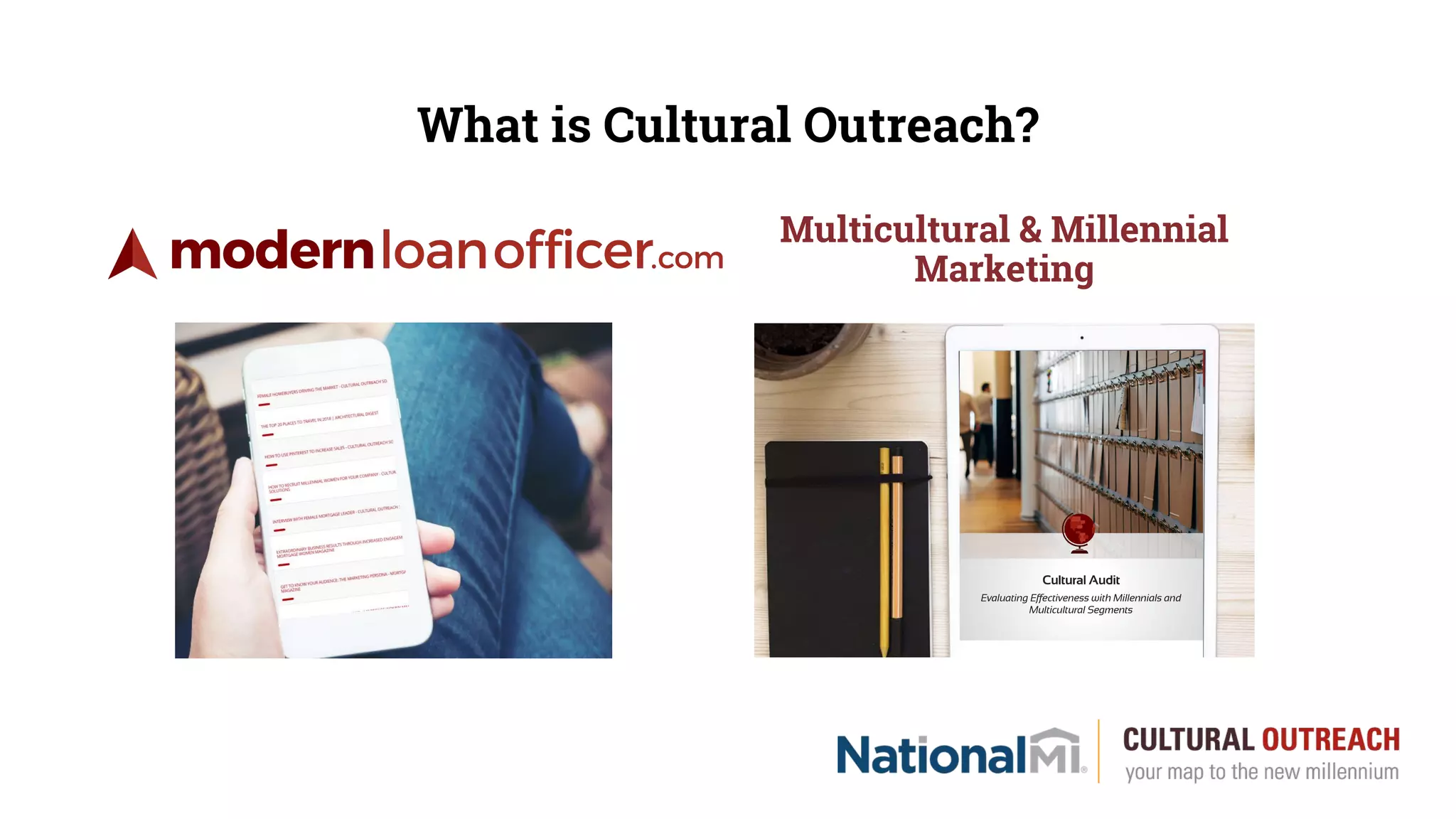
What is Cultural Outreach?
Multicultural & Millennial
Marketing
Coming Soon...
Interview with Jeremy Potter
(General Counsel on Social Media & Compliance)
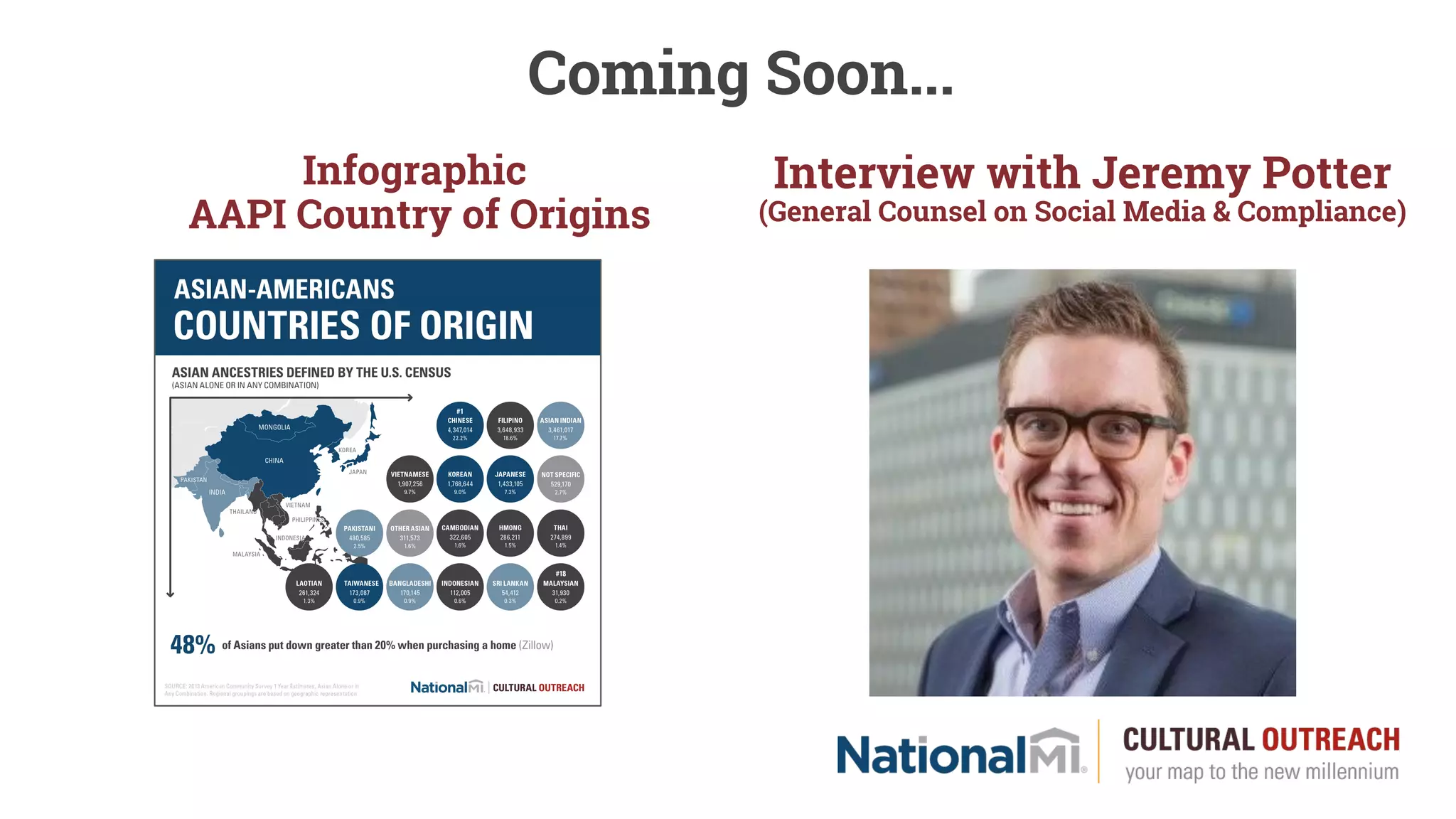
Infographic
AAPI Country of Origins
TABLE
OF
CONTENTS
Demographics
Values, Work Styles,
Communication
Strategies to Create
a Culture Shift
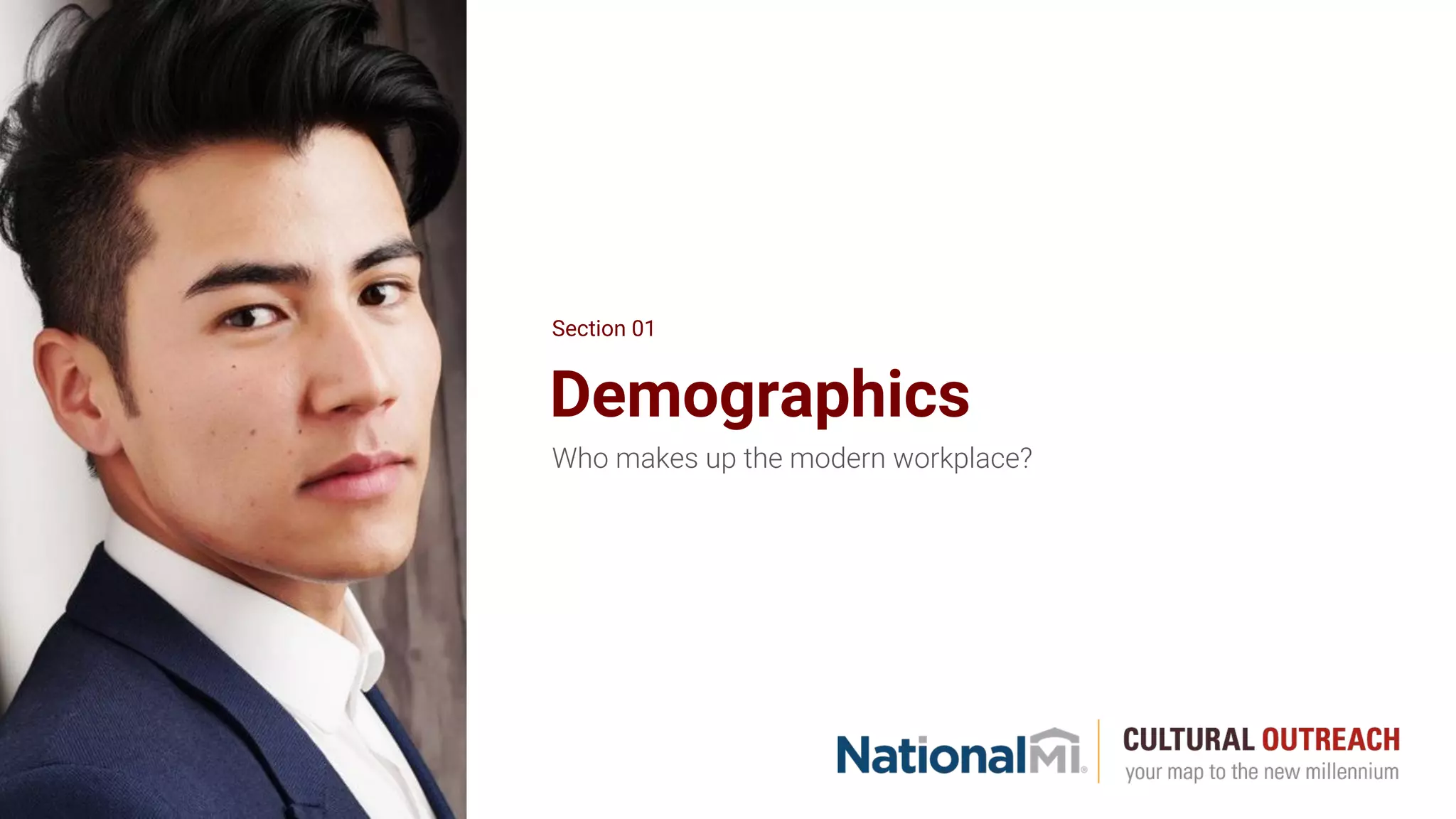
Demographics
Who makes up the modern workplace?
Section 01
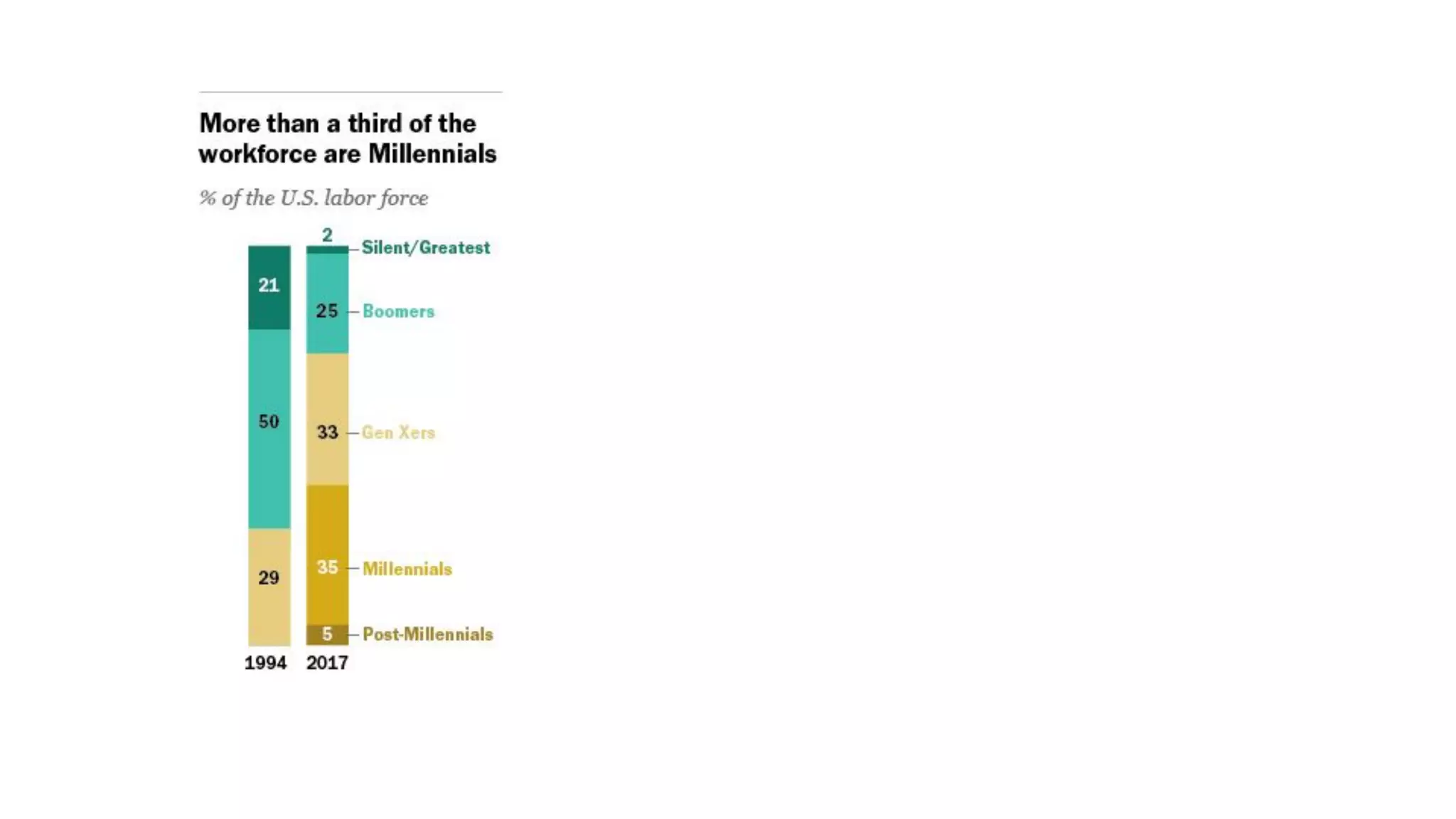
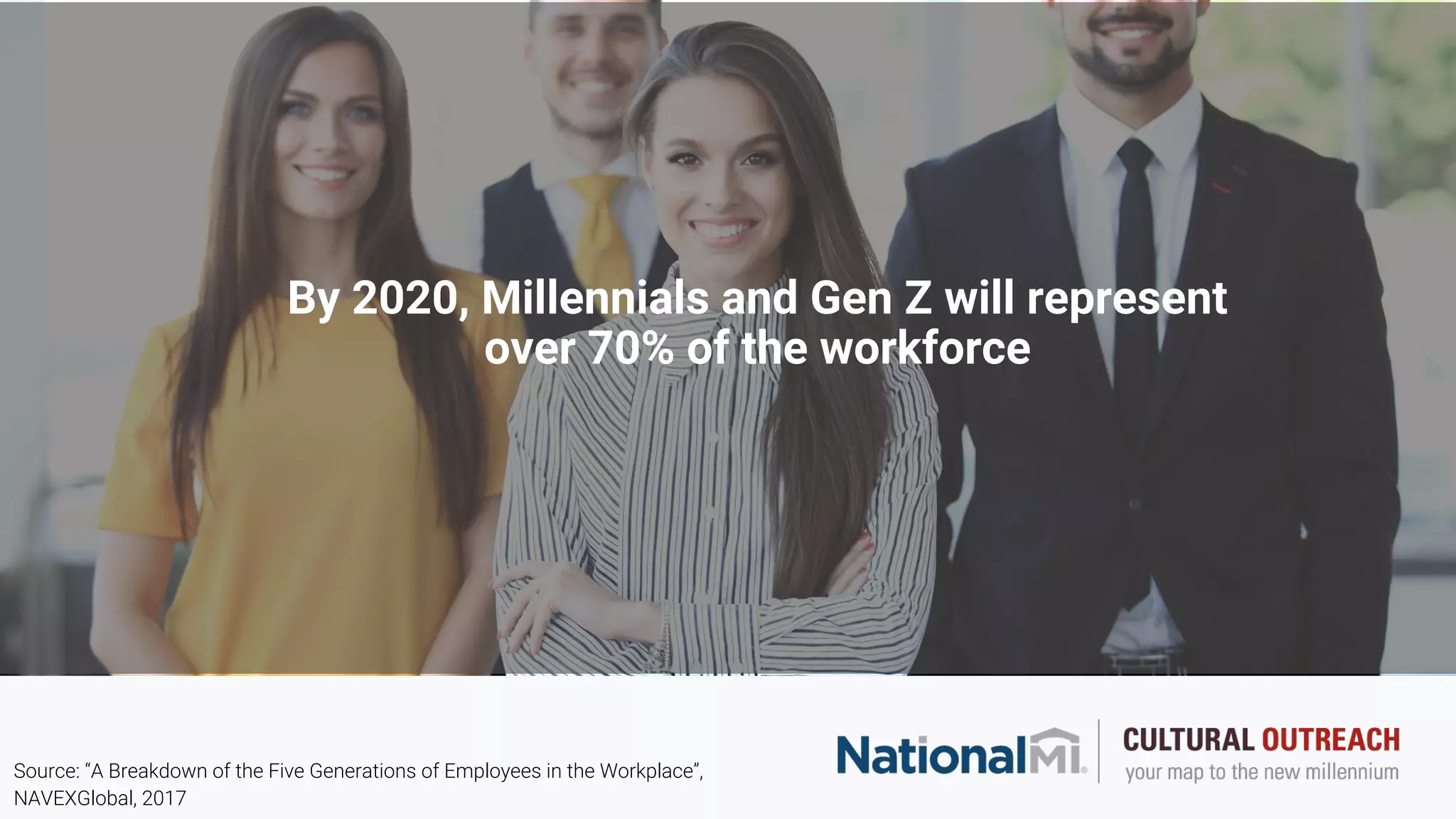
By 2020, Millennials and Gen Z will represent
over 70% of the workforce
Source: “A Breakdown of the Five Generations of Employees in the Workplace”,
NAVEXGlobal, 2017
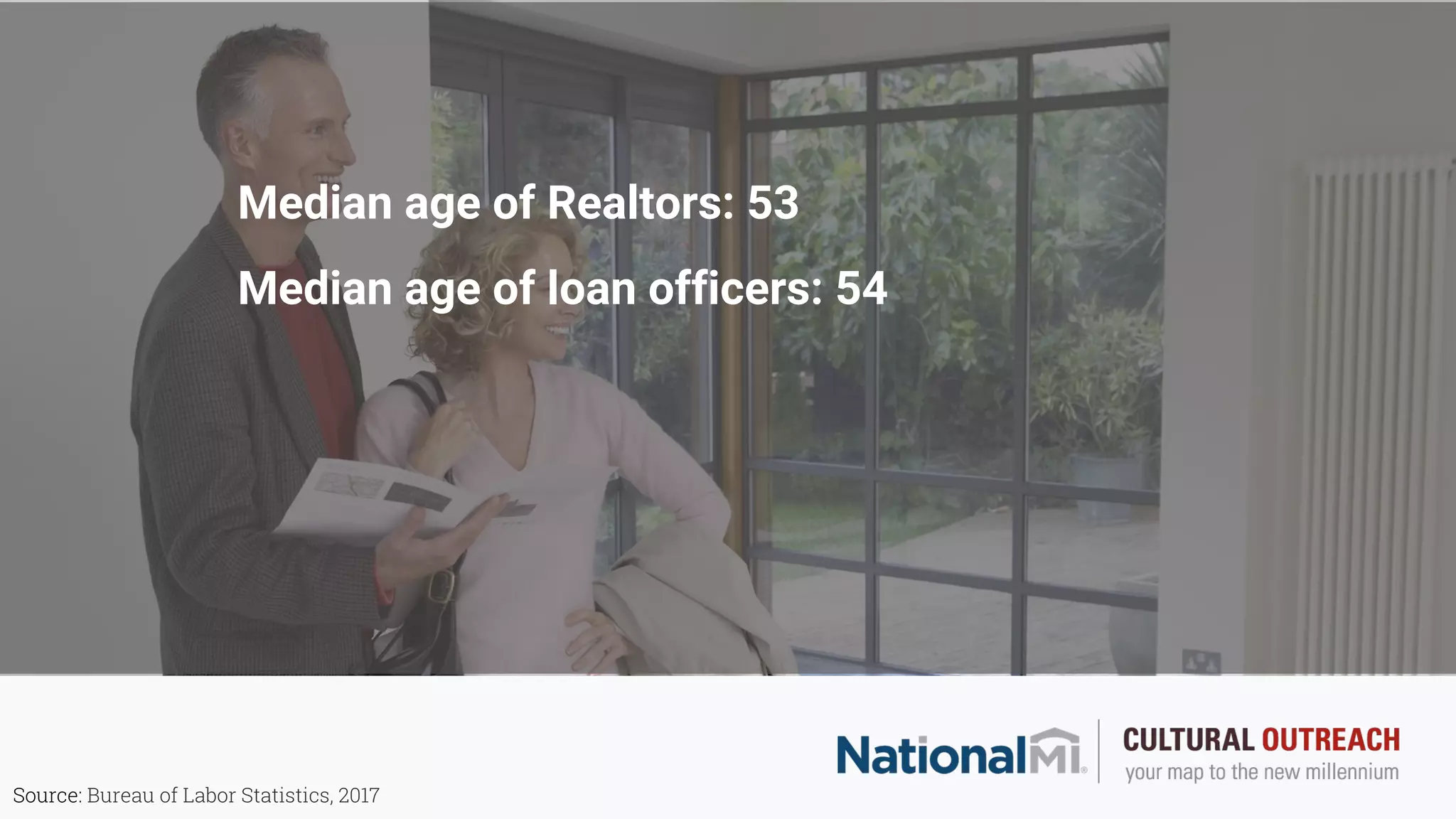
Median age of Realtors: 53
Source: Bureau of Labor Statistics, 2017
Median age of loan officers: 54
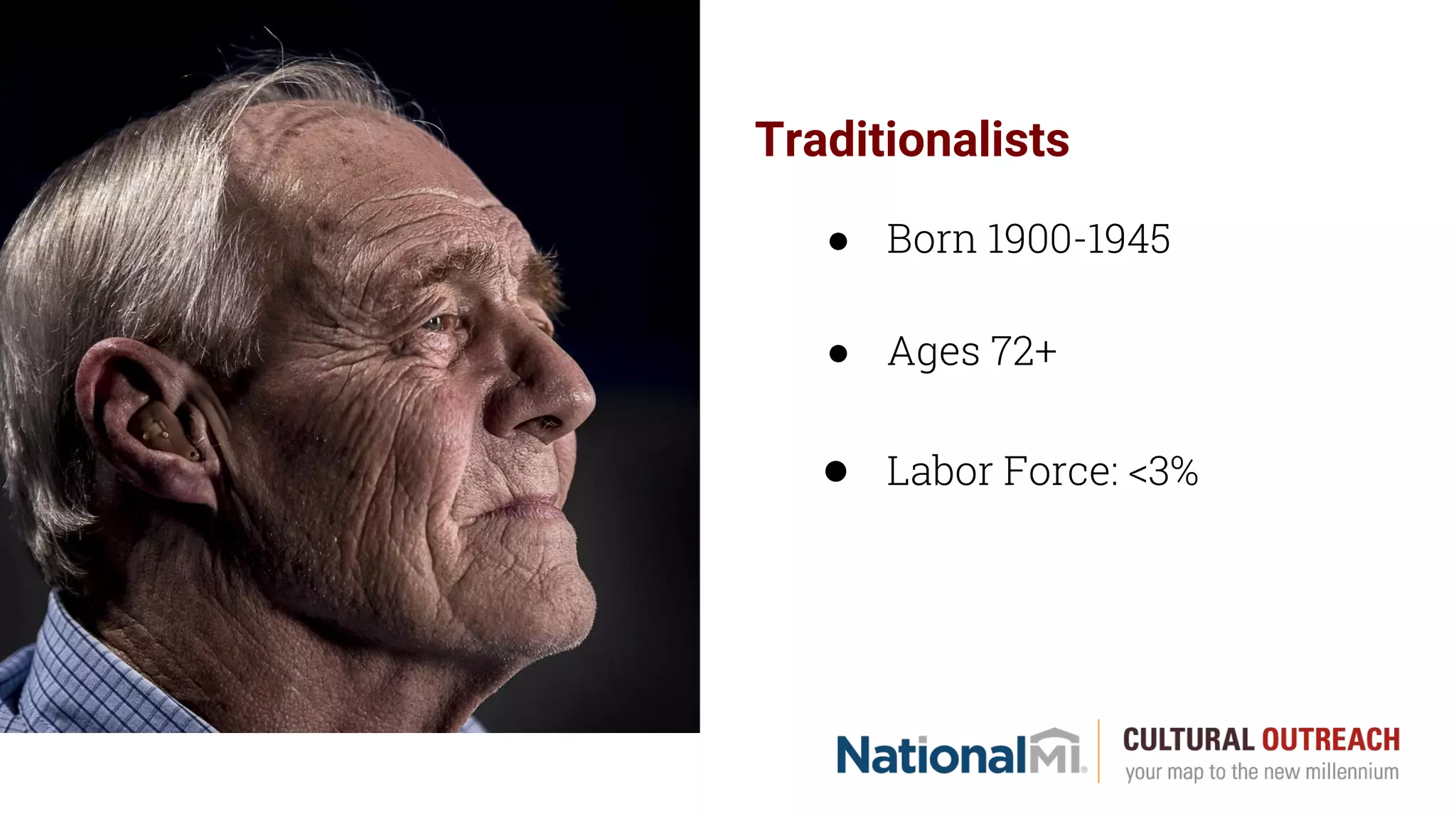
Traditionalists
● Born 1900-1945
● Ages 72+
● Labor Force: <3%
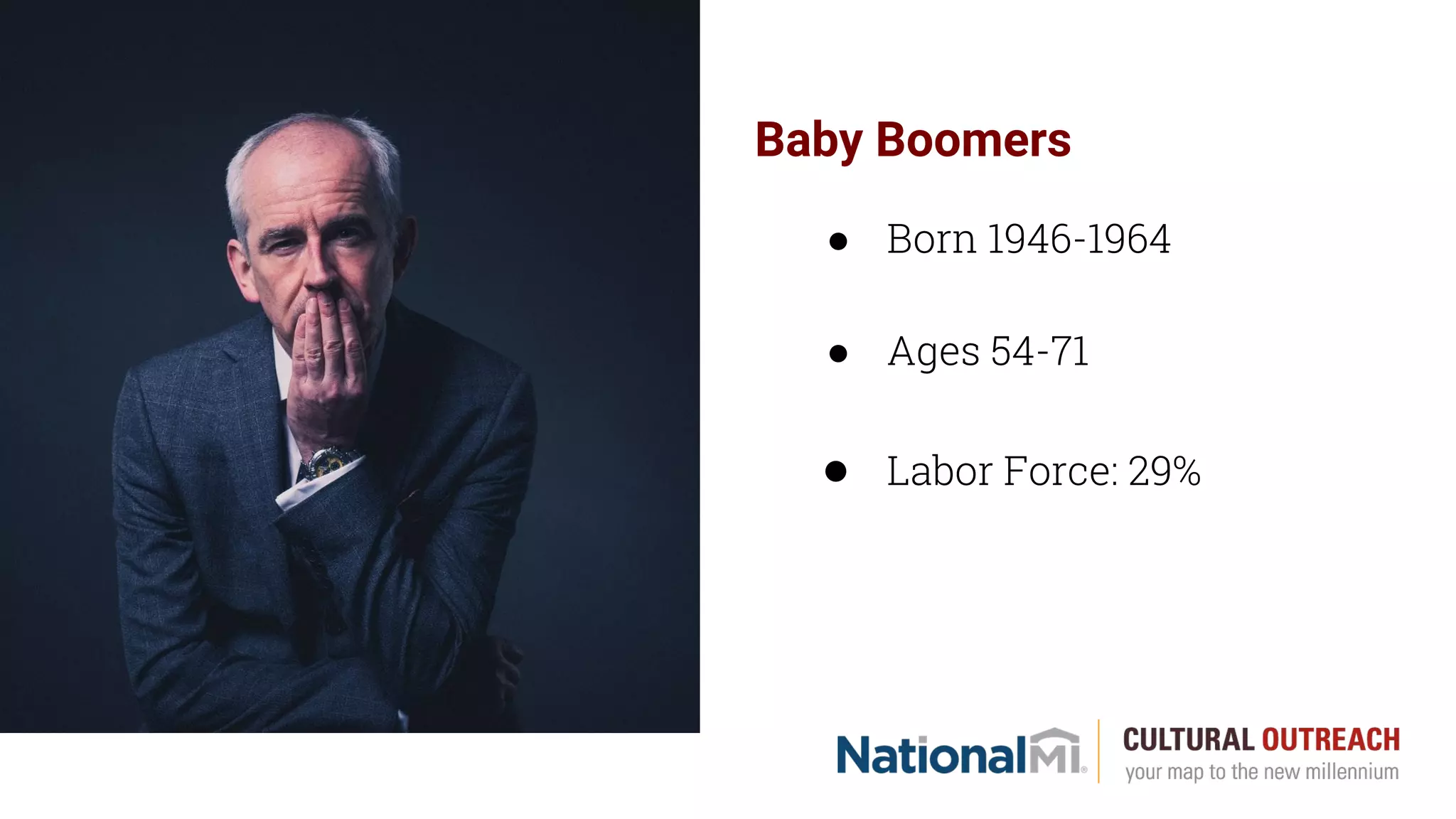
Baby Boomers
● Born 1946-1964
● Ages 54-71
● Labor Force: 29%
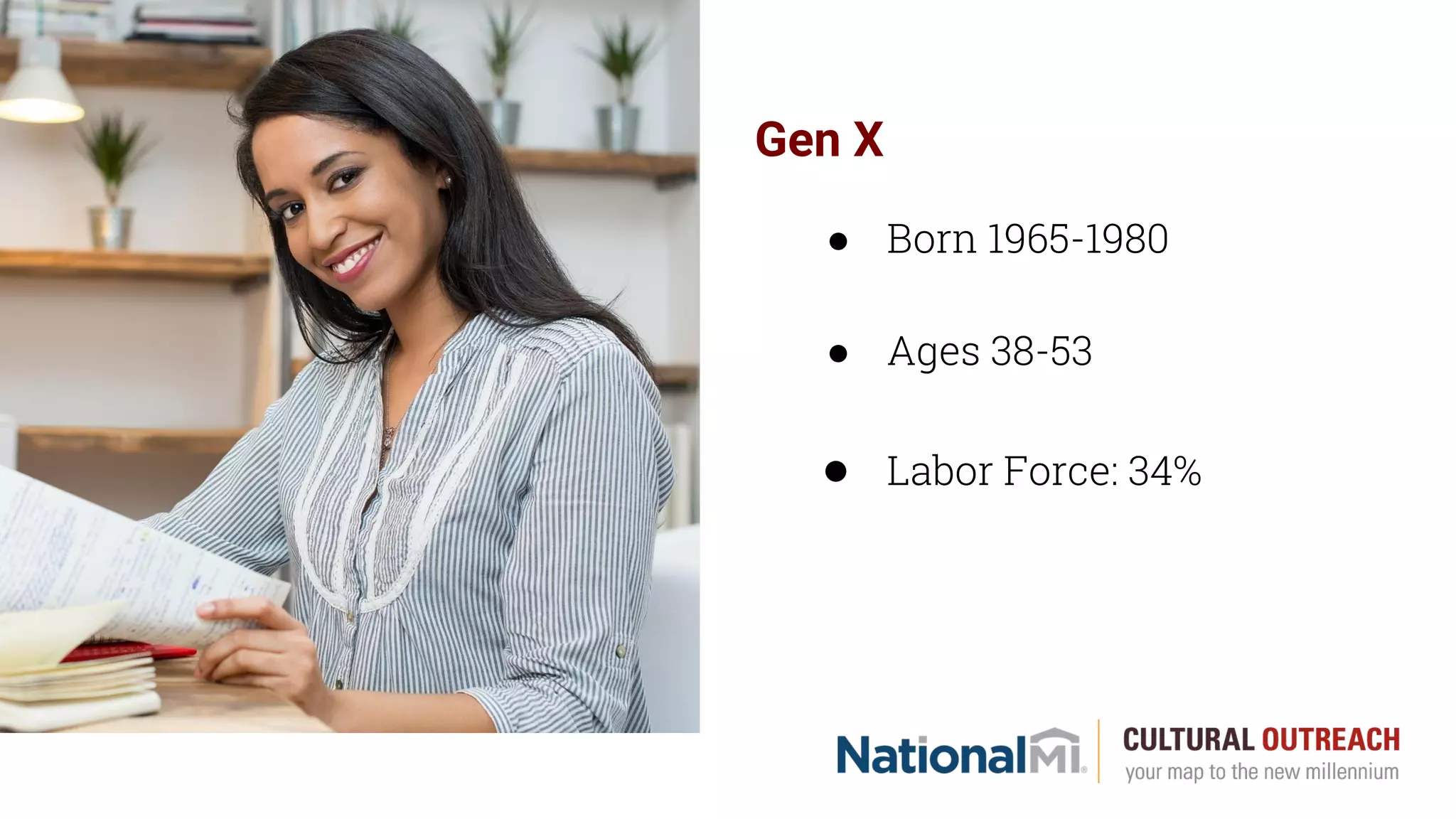
Gen X
● Born 1965-1980
● Ages 38-53
● Labor Force: 34%
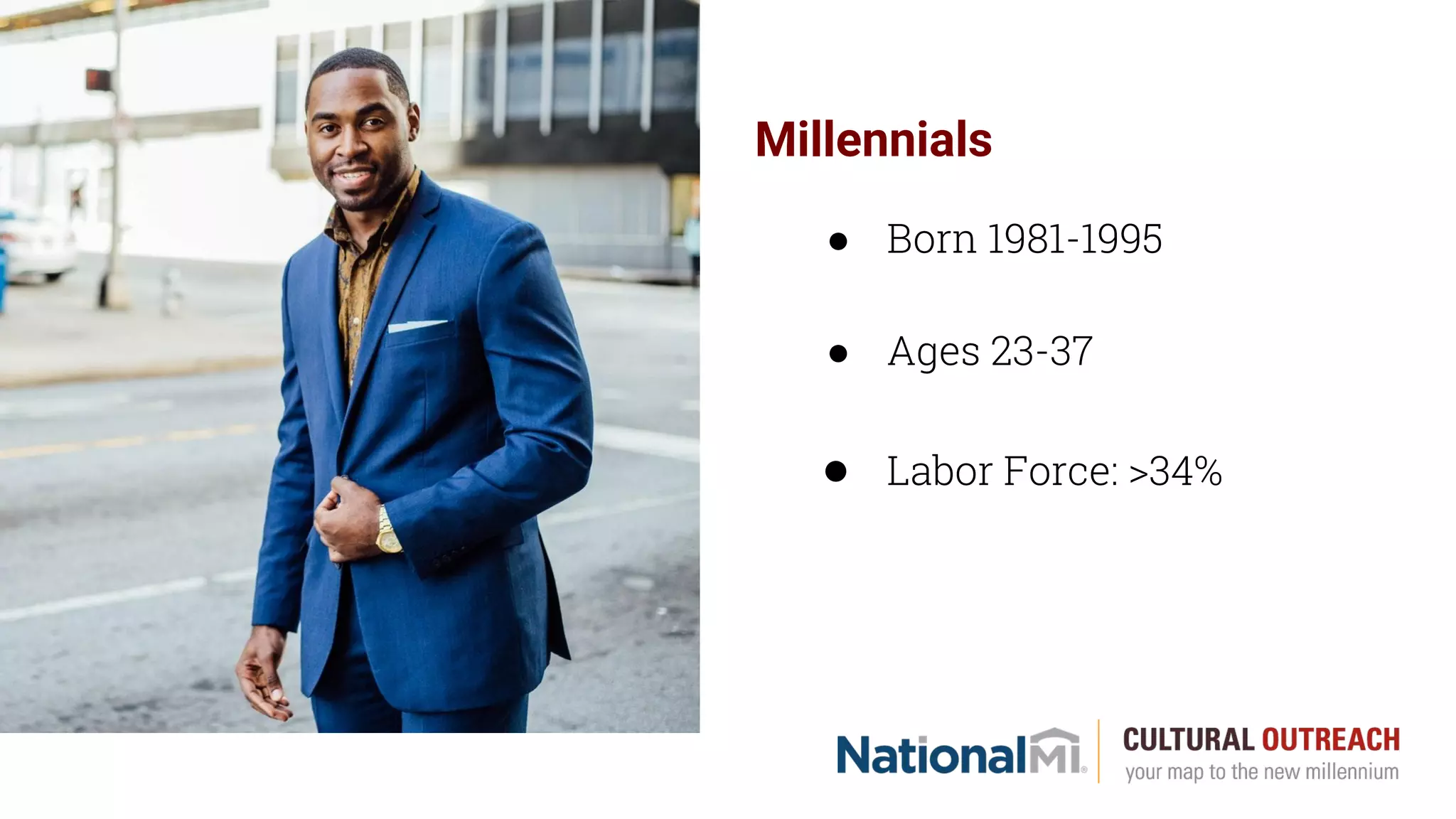
Millennials
● Born 1981-1995
● Ages 23-37
● Labor Force: >34%
Gen Z
● Born 1996-2010
● Ages 8-22
● Labor Force: 1%
Values in the Workplace
Understand why each generation follows specific behavior trends
Section 02
Traditionalists / Boomers
Live to Work
1
Traditionalists/Boomers
Loyalty to Company
2
Traditionalists/Boomers
Strong Sense of Integrity
3
Traditionalists/Boomers
Competitive - Goal is to Win
4
Traditionalists/Boomers
Hierarchical Structure
5
Traditionalists/Boomers
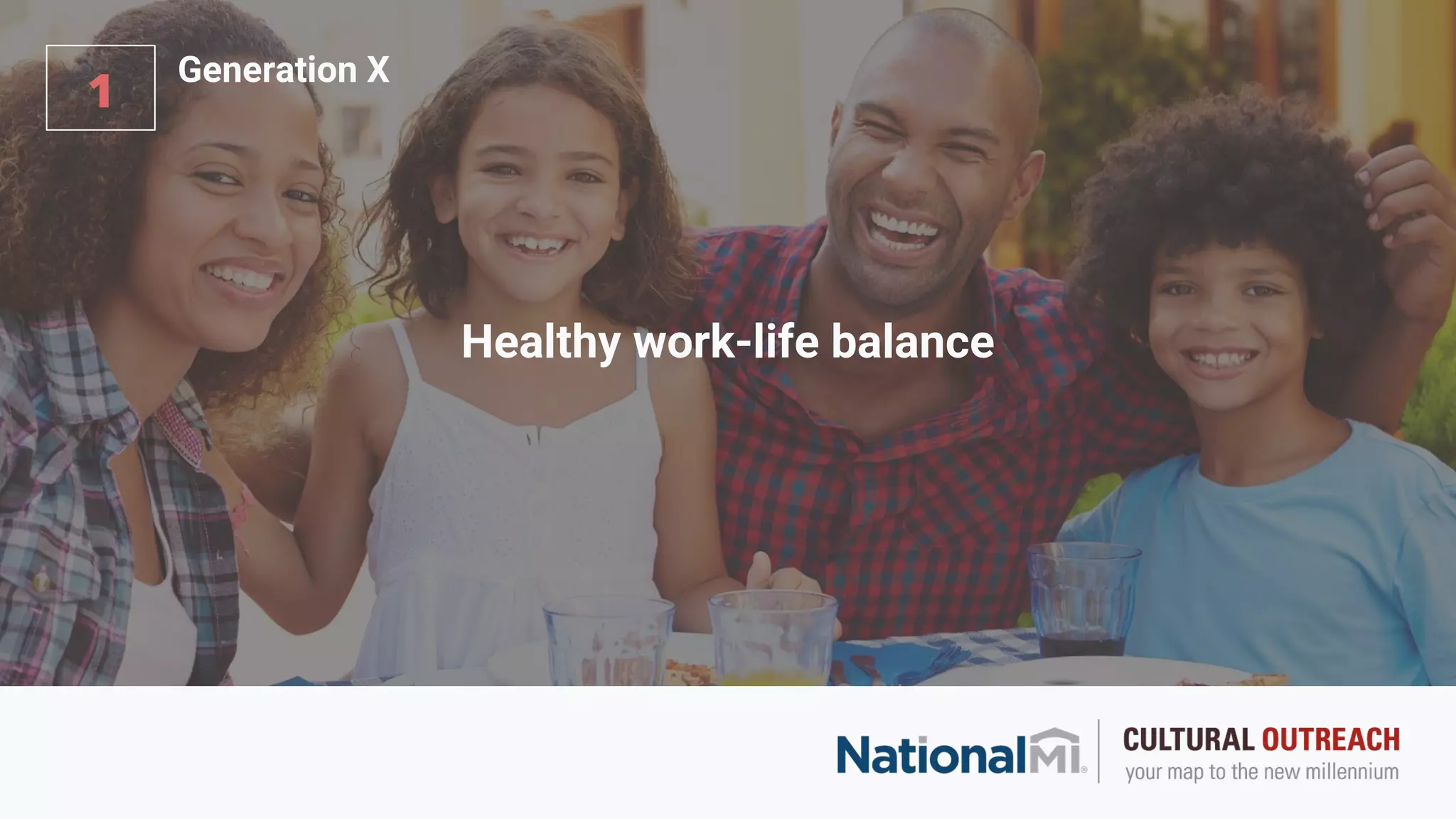
Generation X
Healthy work-life balance
1
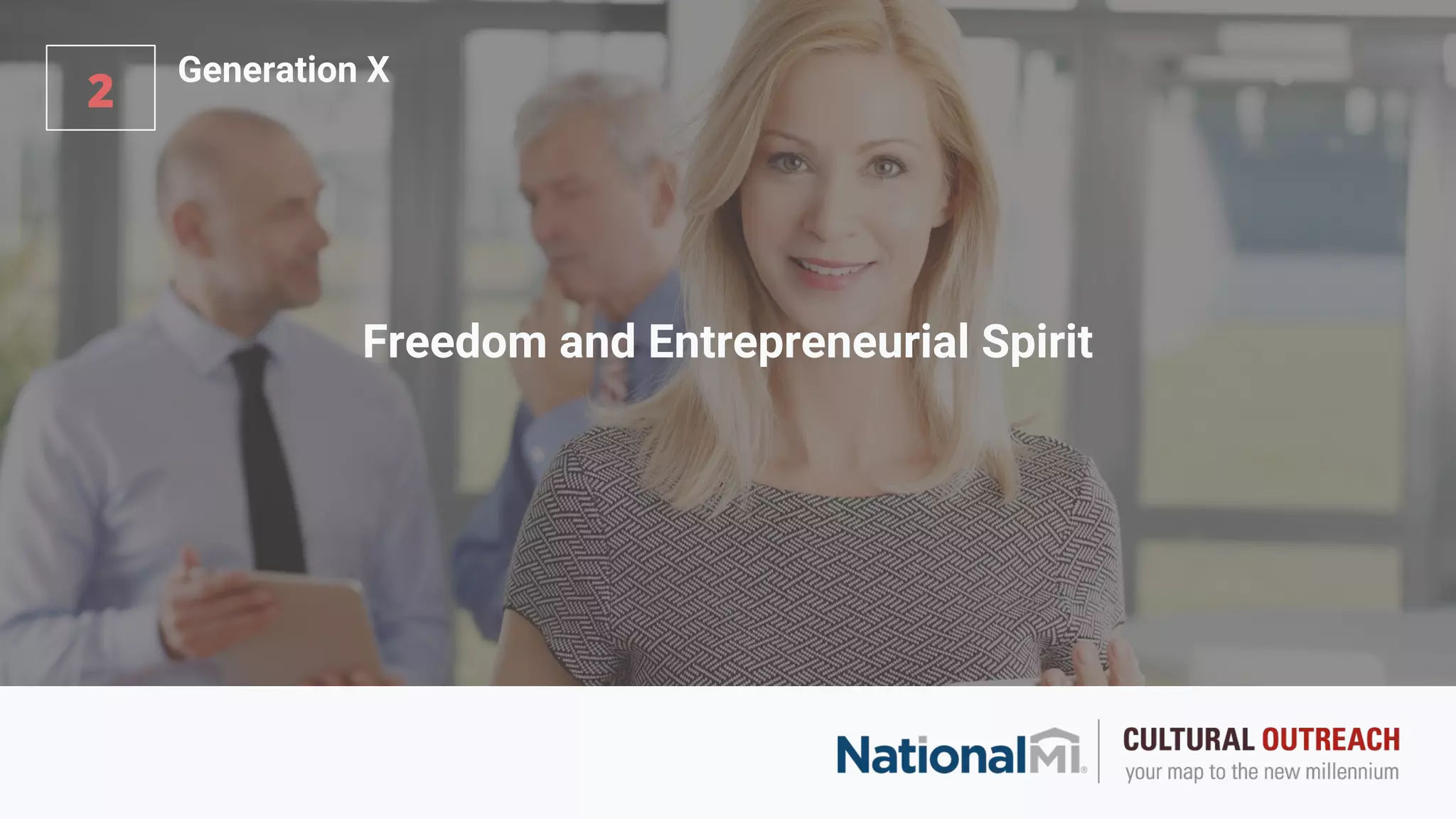
Generation X
Freedom and Entrepreneurial Spirit
2
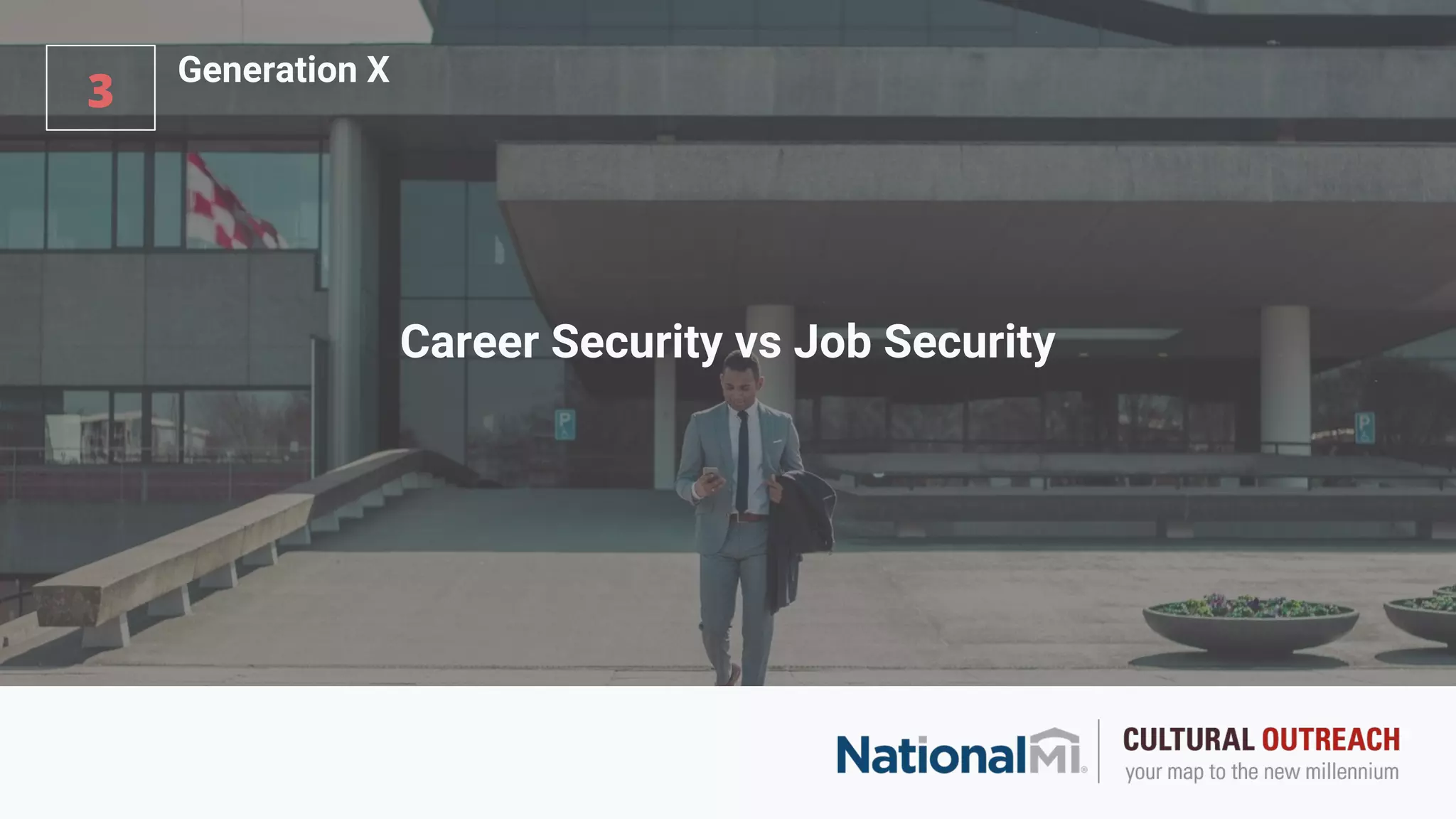
Generation X
Career Security vs Job Security
3
Generation X
Problem-solving & Results Driven
4
Generation X
Millennials / Gen Z
Opportunists
1
Millennials
Personal Happiness
2
Millennials
Utilization of Skills & Ongoing Training
3
Millennials
Autonomy Mixed with Collaboration
4
Millennials
Mission-Oriented
5
Millennials / Gen Z
Company Culture
6
Millennials / Gen Z
Diversity & Inclusion
7
Millennials / Gen Z
Sense of Security
8
Gen Z
Work Styles
How each generation prefers to work based on values
Section 03
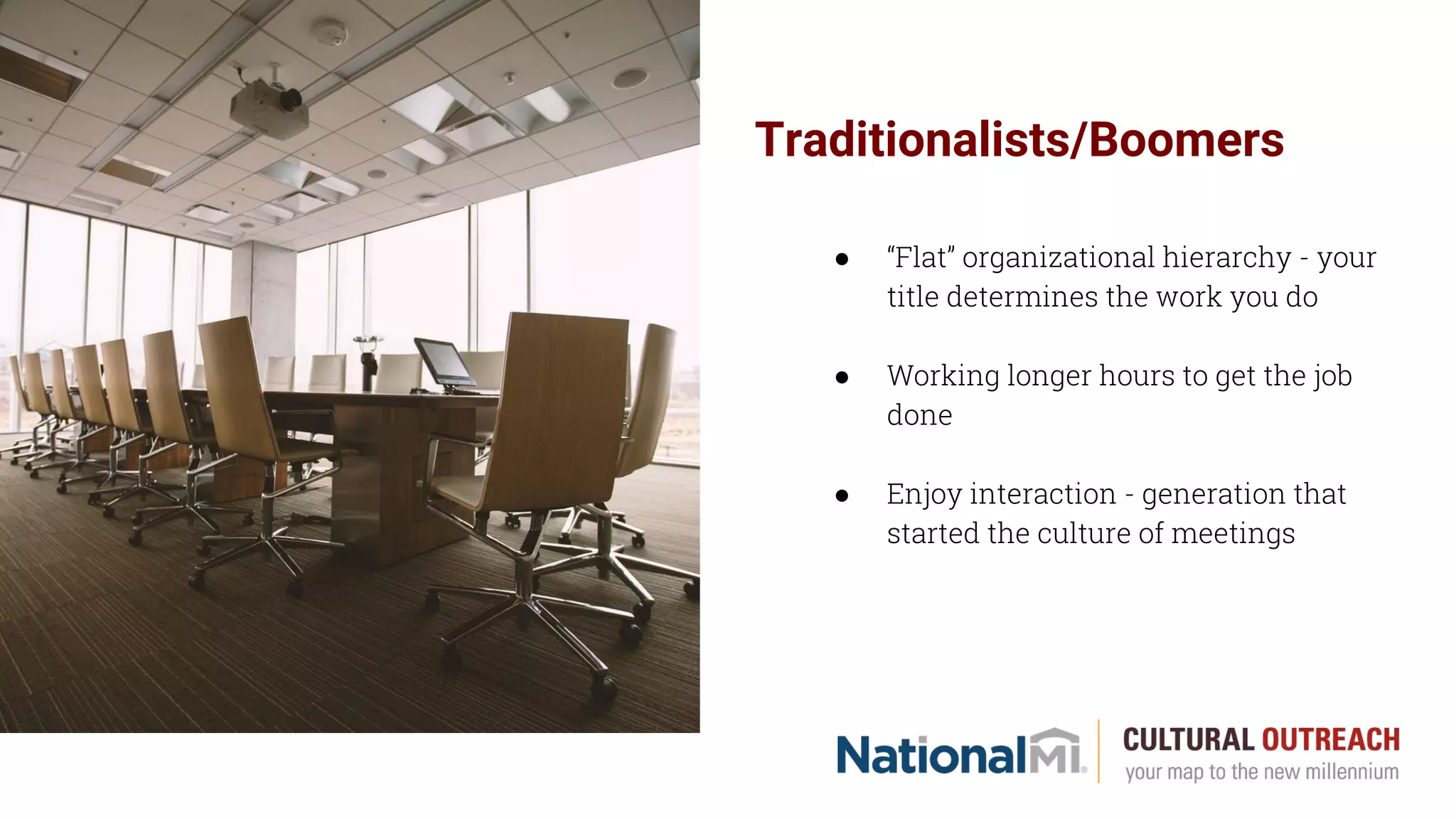
Traditionalists/Boomers
● “Flat” organizational hierarchy - your
title determines the work you do
● Working longer hours to get the job
done
● Enjoy interaction - generation that
started the culture of meetings
Generation X
● Casual work environment
● Easy access to leadership and those
they manage
● Project-oriented and prefer working
independently
Millennials
● Flexible work schedule - ability to work
remote
● Do enjoy collaboration
● Multi-tasking - comes naturally as
digital natives
Gen Z
● Independent
● Competitive
● Multi-tasking - comes naturally as
digital natives
Communication Methods
How to best utilize different mediums and platforms effectively
Section 03
Email
● Millennials use email but view it as
less urgent form of communication
● Allows for more detailed information
and longer messaging
● Not going anywhere but meant for less
immediate responses
Text
● Favored for quick responses
● Easier to respond without disrupting
current activities unlike a phone call
In-person
● Important for building connections
given how much work is now digital
● Millennials have made in-person
interaction and conversation more
casual in the workplace
● Gen Z is prone to pop into office
without a scheduled time to talk
Phone call
● Favored by older generations
● Seen as disruptive by younger
generations for quick
question/answers that could be
answered via text or IM
Collaborative Tools
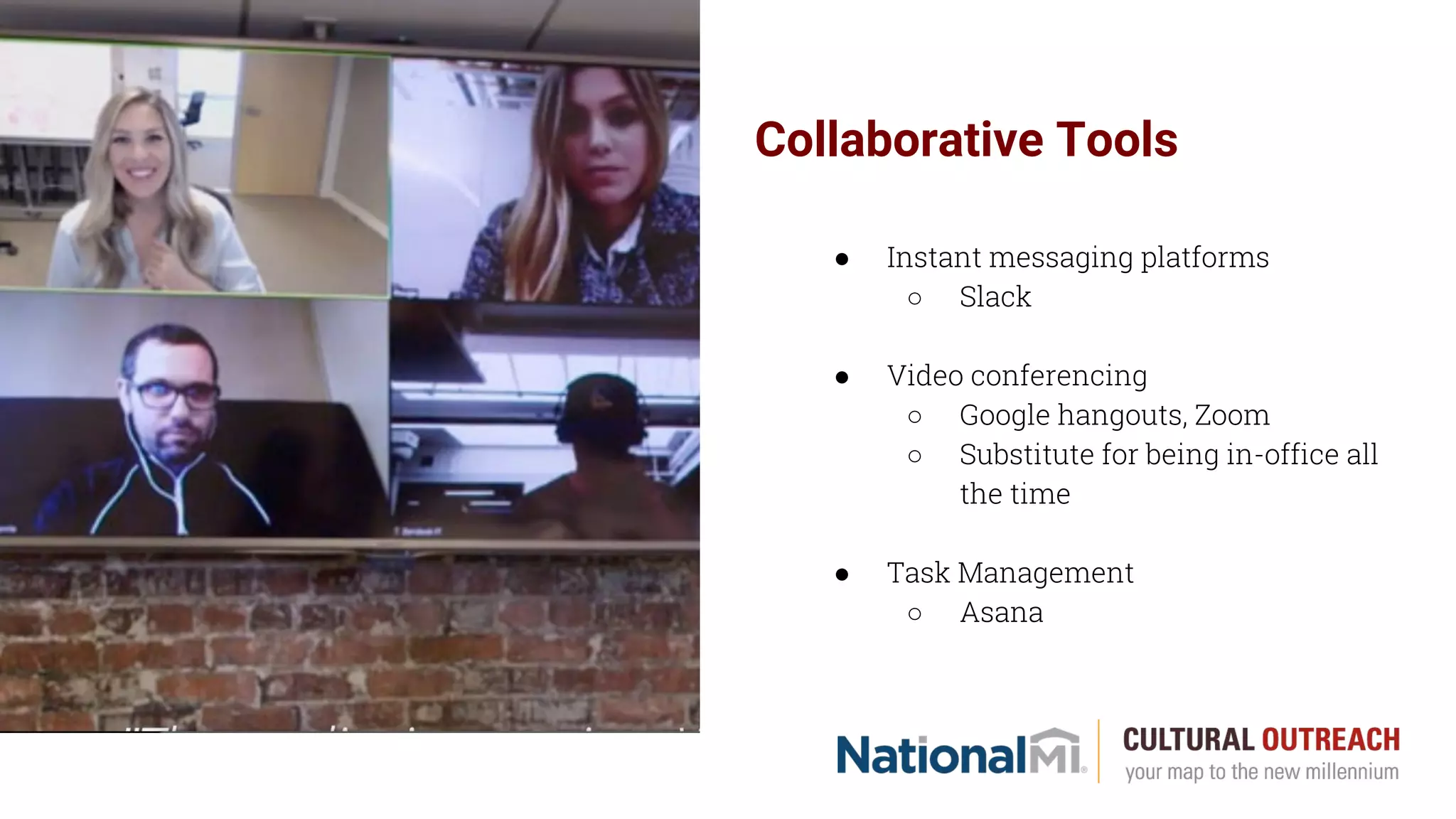
● Instant messaging platforms
○ Slack
● Video conferencing
○ Google hangouts, Zoom
○ Substitute for being in-office all
the time
● Task Management
○ Asana
Performance Reviews
Preferences:
● Boomers: formal approach of using
annual review
● Gen X: frequent reviews based on
accomplishments
● Millennial/Gen Z: ongoing and regular
feedback regardless of progress and
results
○ “Check-in” to stay connected
Strategies to Create a Culture Shift
Ways to avoid conflict and engage employees of all ages
Section 04
Average tenure of an employee in all generations
and industries is 4.2 years
Source: Bureau of Labor Statistics, 2017
How Can You Keep Employees Engaged On
All Levels?
Invest in your company culture and brand
1
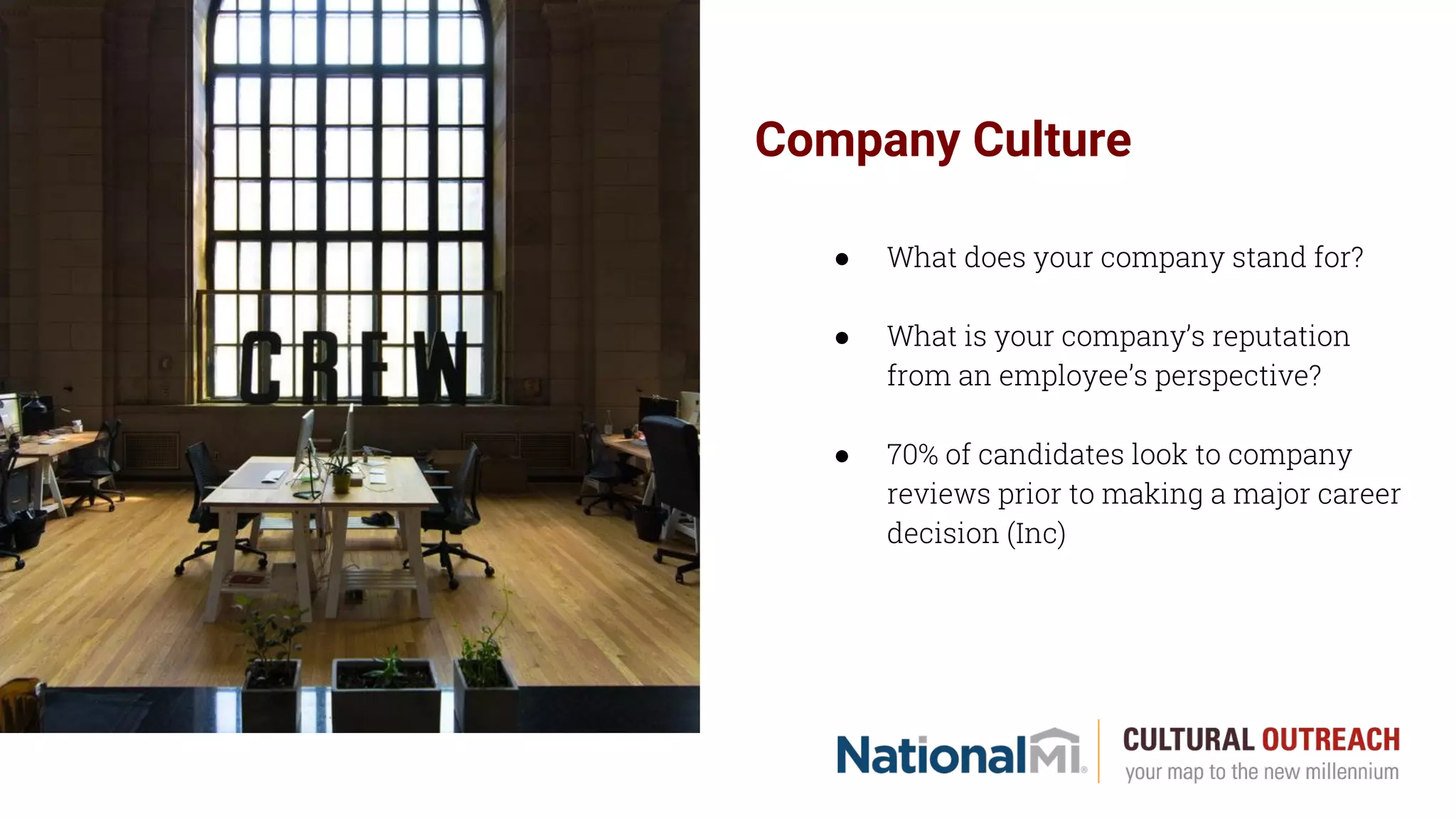
Company Culture
● What does your company stand for?
● What is your company’s reputation
from an employee’s perspective?
● 70% of candidates look to company
reviews prior to making a major career
decision (Inc)
Incorporate social causes, contributions and
volunteer opportunities for employees
2
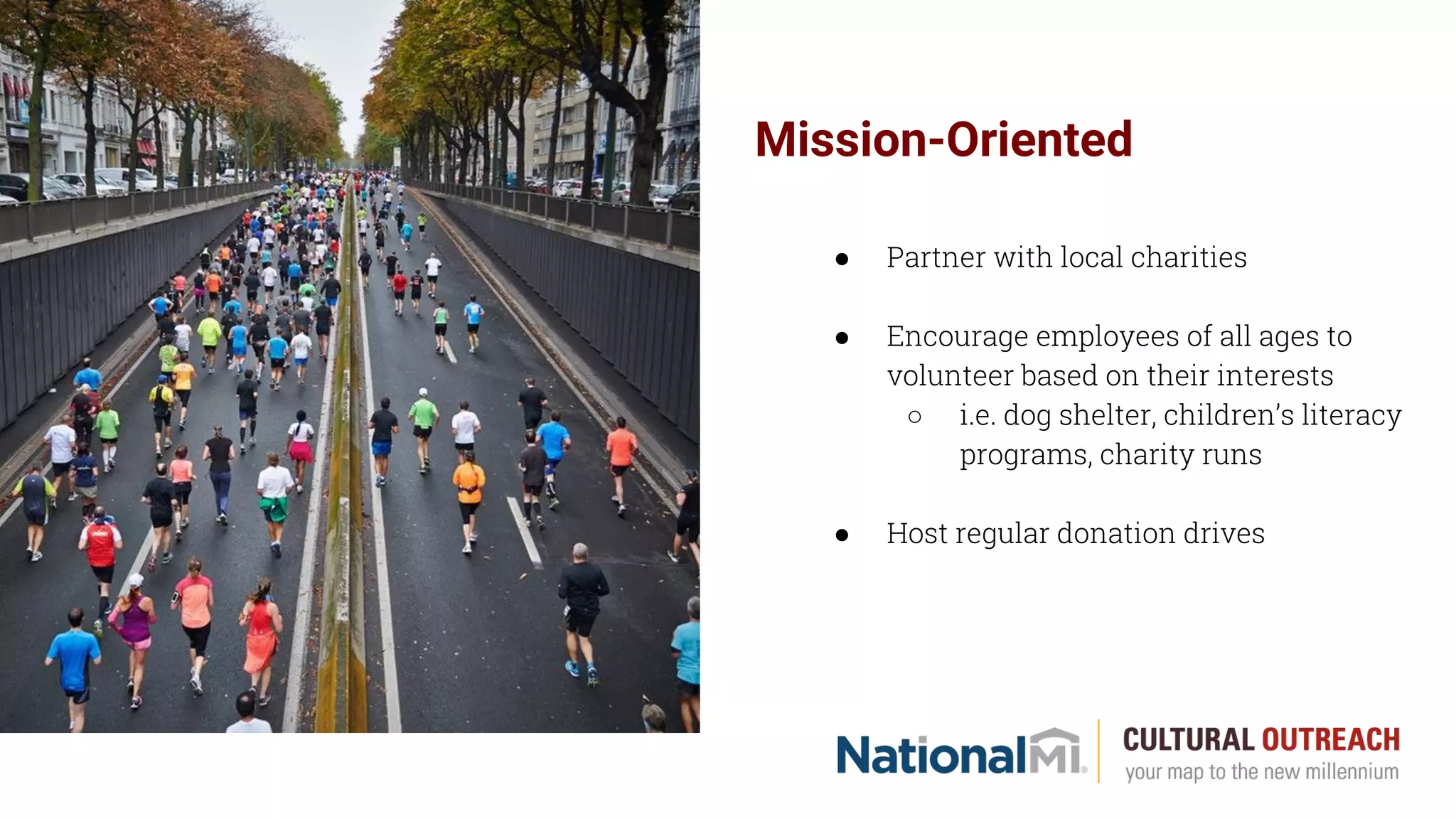
Mission-Oriented
● Partner with local charities
● Encourage employees of all ages to
volunteer based on their interests
○ i.e. dog shelter, children’s literacy
programs, charity runs
● Host regular donation drives
Offer flexible schedules
3
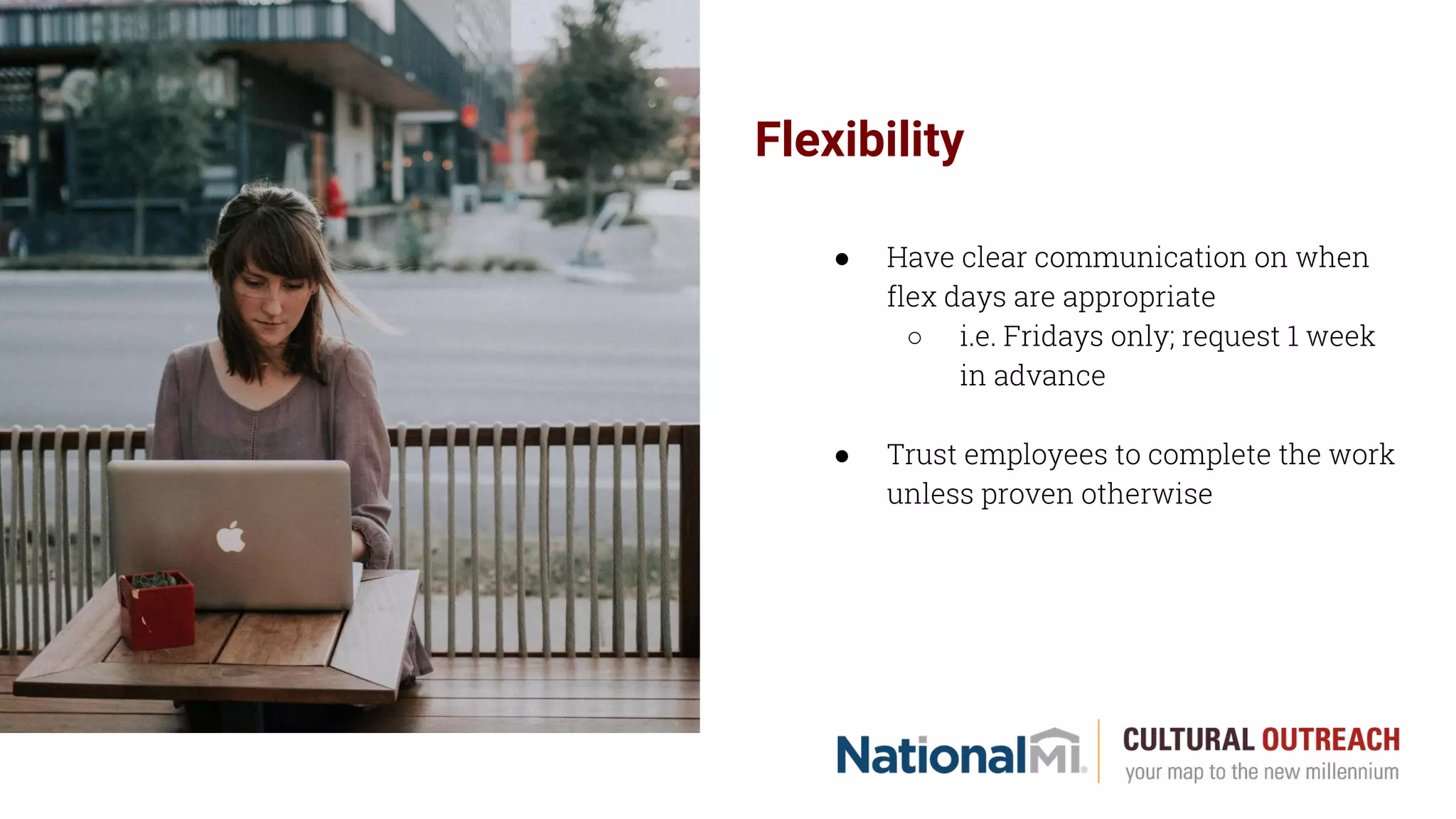
Flexibility
● Have clear communication on when
flex days are appropriate
○ i.e. Fridays only; request 1 week
in advance
● Trust employees to complete the work
unless proven otherwise
Allow space for innovation and change
4
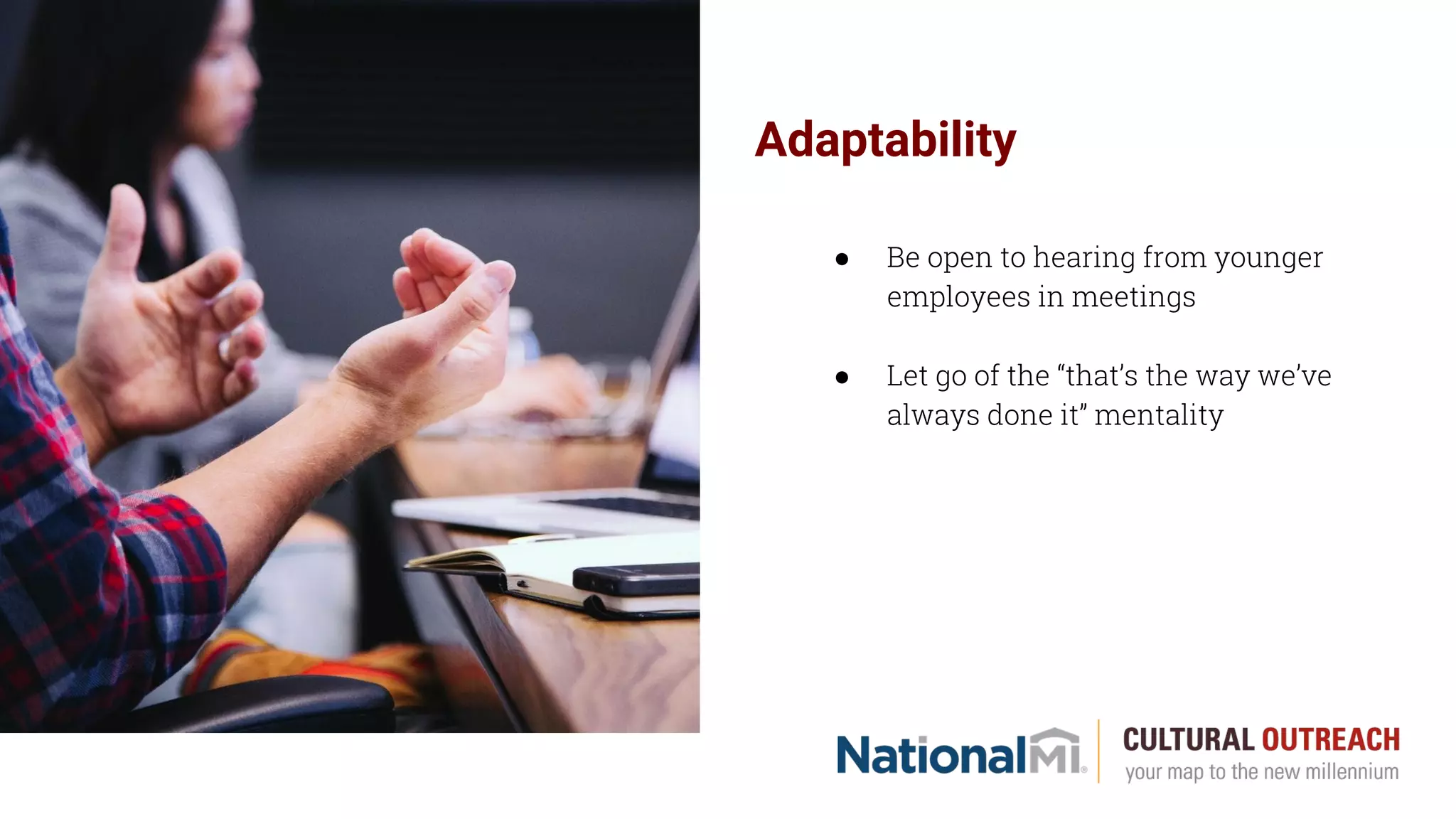
Adaptability
● Be open to hearing from younger
employees in meetings
● Let go of the “that’s the way we’ve
always done it” mentality
Encourage Mentorship
5
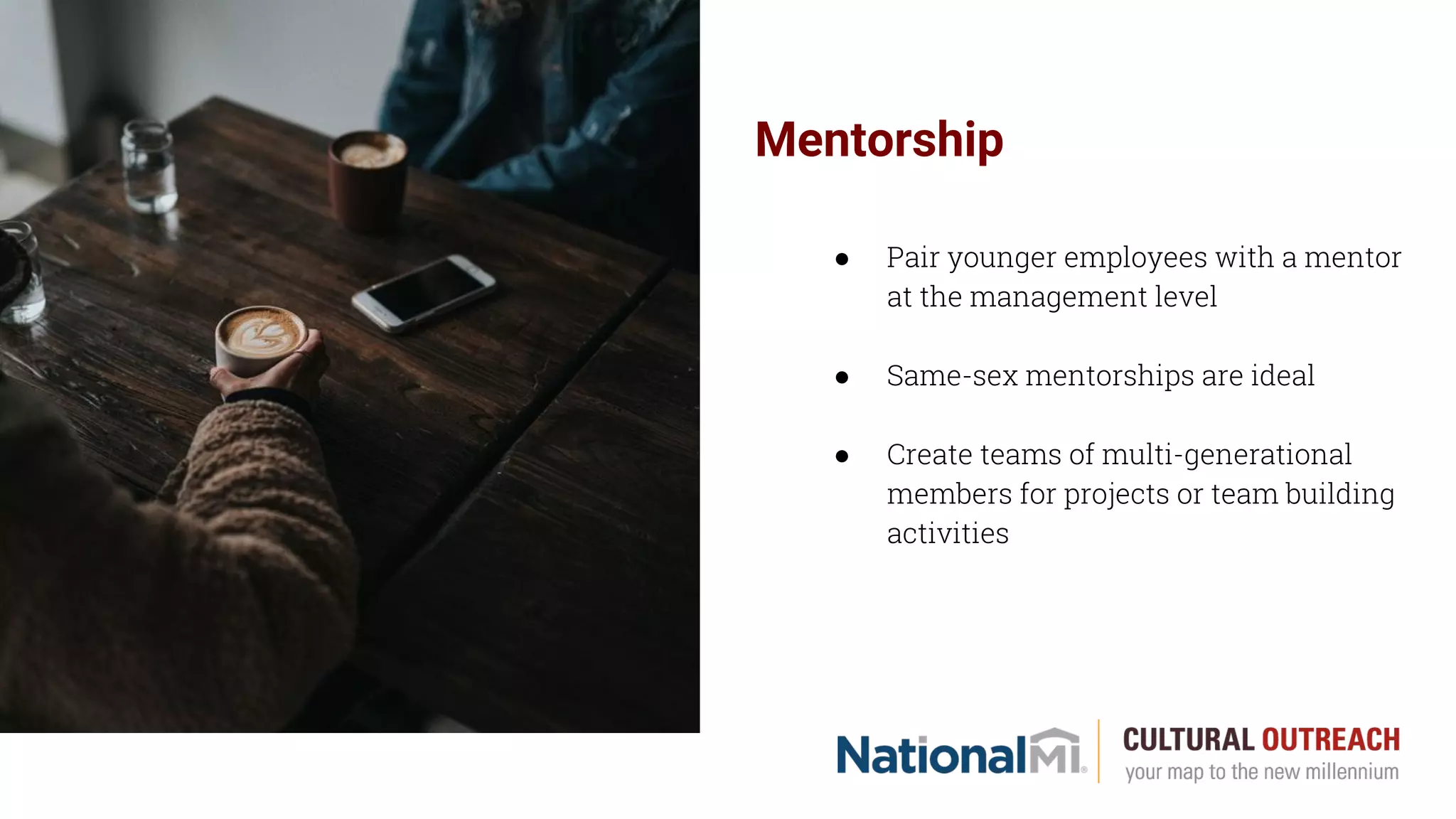
Mentorship
● Pair younger employees with a mentor
at the management level
● Same-sex mentorships are ideal
● Create teams of multi-generational
members for projects or team building
activities
Update Performance Feedback Cycles
6
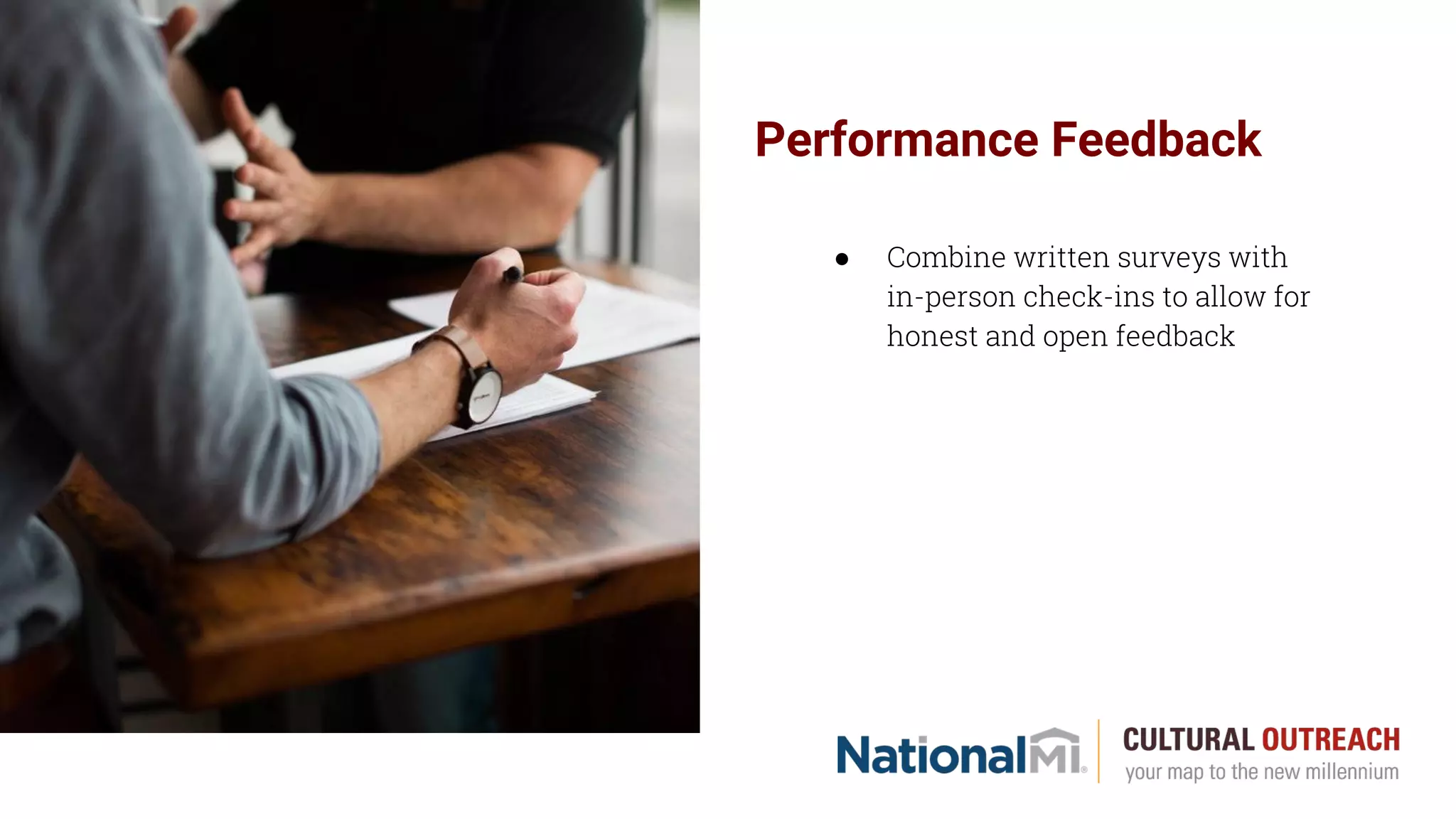
Performance Feedback
● Combine written surveys with
in-person check-ins to allow for
honest and open feedback
Create well-defined goals and expectations
for everyone
7
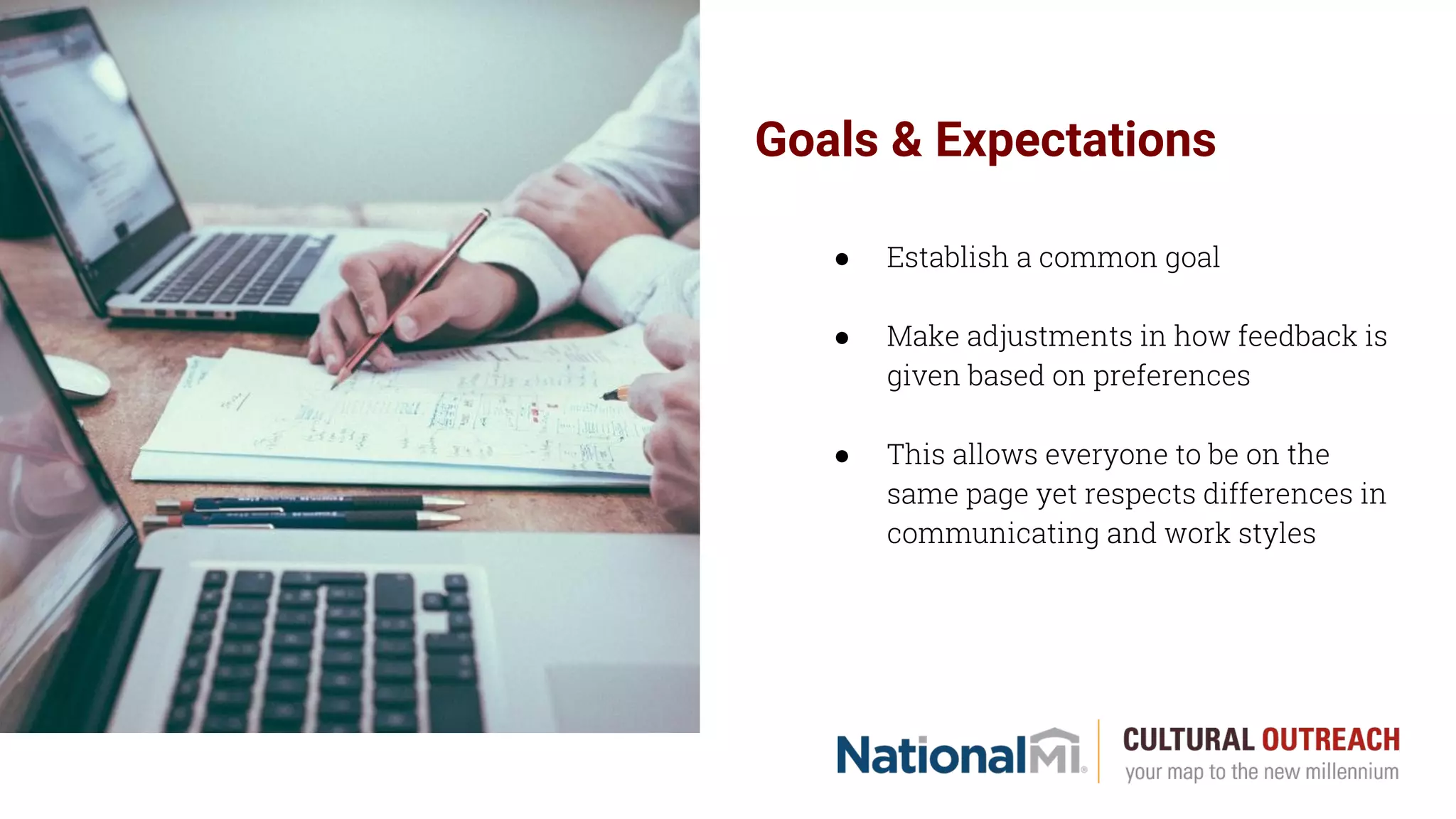
Goals & Expectations
● Establish a common goal
● Make adjustments in how feedback is
given based on preferences
● This allows everyone to be on the
same page yet respects differences in
communicating and work styles
Provide perks and rewards
8
Perks & Rewards
● Access to online training & further
education
● Deals on fitness classes, gym
memberships, etc.
● Host office happy hours
Questions?
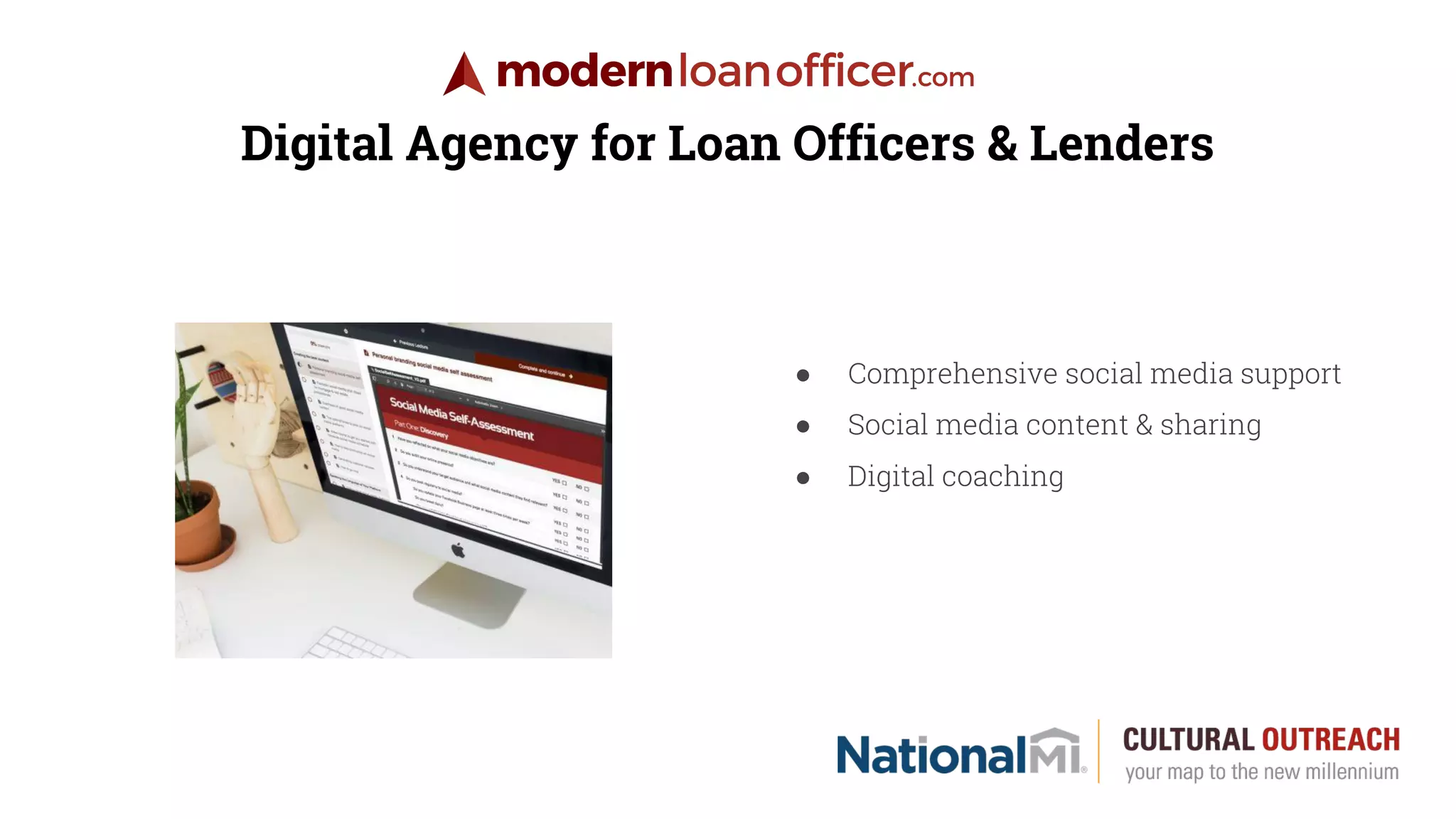
Digital Agency for Loan Officers & Lenders
● Comprehensive social media support
● Social media content & sharing
● Digital coaching
culturaloutreach.net
kristin@culturaloutreach.net

How to Manage Generational Differences in the Workplace