Presented To : Dr. Amber 
Presented By: Maryam Shakeel
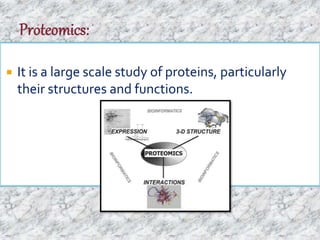
 It is a large scale study of proteins, particularly 
their structures and functions.
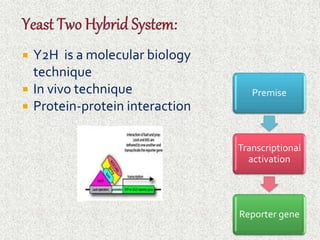
 Y2H is a molecular biology 
technique 
 In vivo technique 
 Protein-protein interaction 
Premise 
Transcriptional 
activation 
Reporter gene
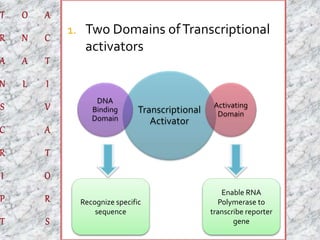
1. Two Domains of Transcriptional 
activators 
Transcriptional 
Activator 
DNA 
Binding 
Domain 
Activating 
Domain 
Recognize specific 
sequence 
Enable RNA 
Polymerase to 
transcribe reporter 
gene
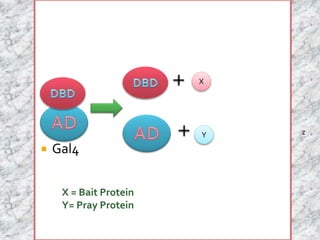
 Gal4 
X 
Y z 
X = Bait Protein 
Y= Pray Protein
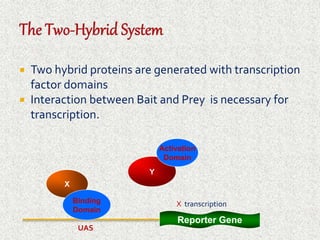
 Two hybrid proteins are generated with transcription 
factor domains 
 Interaction between Bait and Prey is necessary for 
transcription. 
Reporter Gene 
X 
Binding 
Domain 
Y 
Activation 
Domain 
UAS 
X transcription
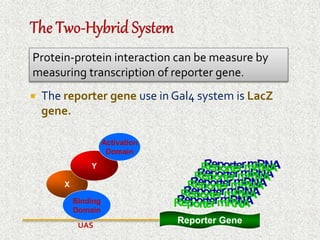
Protein-protein interaction can be measure by 
measuring transcription of reporter gene. 
 The reporter gene use in Gal4 system is LacZ 
gene. 
Reporter Gene 
X 
Y 
Binding 
Domain 
Activation 
Domain 
UAS
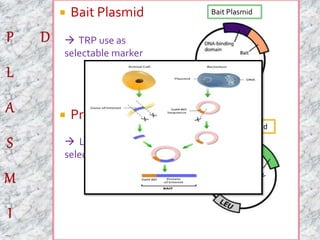
 Bait Plasmid 
 TRP use as 
selectable marker 
 Prey Plasmid 
 Leu used as 
selectable marker 
Bait Plasmid 
Prey Plasmid
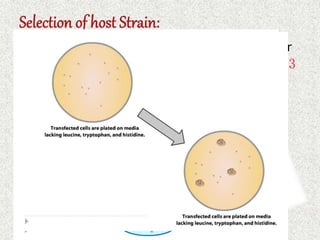
 Strain carry mutations in different genes for 
A.A biosynthesis such as TRP1, LEU2, HIS3 
and URA3. 
 Grow in growth medium lack these A.A 
 Only hybrid plasmid carrying transformant 
yeast grow.
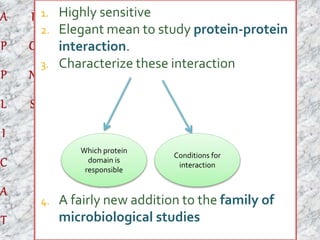
1. Highly sensitive 
2. Elegant mean to study protein-protein 
interaction. 
3. Characterize these interaction 
Which protein 
domain is 
responsible 
Conditions for 
interaction 
4. A fairly new addition to the family of 
microbiological studies
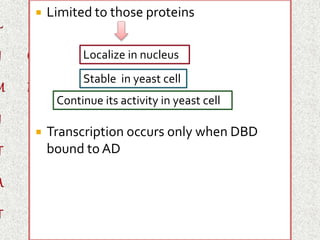
 Limited to those proteins 
Localize in nucleus 
Stable in yeast cell 
Continue its activity in yeast cell 
 Transcription occurs only when DBD 
bound to AD
 Protein-Protein Interactions: Methods 
and Applications 
edited by Haian Fu 
 The Yeast Two-hybrid System 
edited by Paul L. Bartel, Stanley Fields 
 http://labrat.fieldofscience.com/2010/01/e 
xploring-protein-interactions-yeast.html 
 http://www.hybrigenics-services. 
com/contents/resources/yeast-two- 
hybrid-principle
Yeast two hybrid system / protein-protein interaction

Yeast two hybrid system / protein-protein interaction

  • 1.
    Presented To :Dr. Amber Presented By: Maryam Shakeel
  • 2.
     It isa large scale study of proteins, particularly their structures and functions.
  • 3.
     Y2H isa molecular biology technique  In vivo technique  Protein-protein interaction Premise Transcriptional activation Reporter gene
  • 4.
    1. Two Domainsof Transcriptional activators Transcriptional Activator DNA Binding Domain Activating Domain Recognize specific sequence Enable RNA Polymerase to transcribe reporter gene
  • 5.
     Gal4 X Y z X = Bait Protein Y= Pray Protein
  • 6.
     Two hybridproteins are generated with transcription factor domains  Interaction between Bait and Prey is necessary for transcription. Reporter Gene X Binding Domain Y Activation Domain UAS X transcription
  • 7.
    Protein-protein interaction canbe measure by measuring transcription of reporter gene.  The reporter gene use in Gal4 system is LacZ gene. Reporter Gene X Y Binding Domain Activation Domain UAS
  • 8.
     Bait Plasmid  TRP use as selectable marker  Prey Plasmid  Leu used as selectable marker Bait Plasmid Prey Plasmid
  • 9.
     Strain carrymutations in different genes for A.A biosynthesis such as TRP1, LEU2, HIS3 and URA3.  Grow in growth medium lack these A.A  Only hybrid plasmid carrying transformant yeast grow.
  • 10.
    1. Highly sensitive 2. Elegant mean to study protein-protein interaction. 3. Characterize these interaction Which protein domain is responsible Conditions for interaction 4. A fairly new addition to the family of microbiological studies
  • 11.
     Limited tothose proteins Localize in nucleus Stable in yeast cell Continue its activity in yeast cell  Transcription occurs only when DBD bound to AD
  • 12.
     Protein-Protein Interactions:Methods and Applications edited by Haian Fu  The Yeast Two-hybrid System edited by Paul L. Bartel, Stanley Fields  http://labrat.fieldofscience.com/2010/01/e xploring-protein-interactions-yeast.html  http://www.hybrigenics-services. com/contents/resources/yeast-two- hybrid-principle