Resolving Resistance
    to Change

Rachel Davies


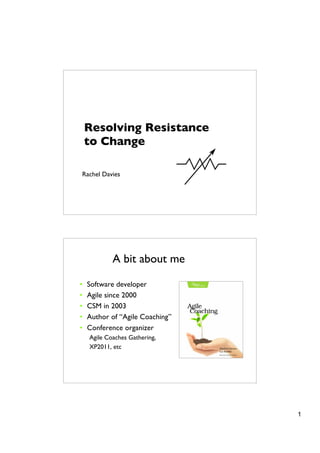
            A bit about me

•   Software developer
•   Agile since 2000
•   CSM in 2003
•   Author of “Agile Coaching”
•   Conference organizer
    Agile Coaches Gathering,
    XP2011, etc


                                 1
Agile Coach

helps teams grow strong in Agile practice


     A coach supports team
  rather than setting direction


                    Agile Coach


                                            2
Coaching is about Change


     To improve we must change!


         Change Across
              Teams


Individuals           Organization


                                     3
Expect Resistance to Change


          Satir Change Curve


Why do people resist Change?


         This team is using old tools
    How can you influence them to change?


                                           4
No time to improve!


Demonstrate Another Way?


                           5
Author: J. Richard Hackman


                               Many books about
                               Coaching are about
                               coaching individuals.
                               Hackman’s book covers
                               coaching teams.


           Hackman Explains
Three kinds of coaching intervention:

   • Motivational - improves effort by minimizing
     free riding and building shared commitment

   • Consultative - improves process by reducing
     thoughtless habits and fostering invention based
     on situation

   • Educational - improves knowledge and skill
              You can combine these!


                                                        6
Consider Resistance as a
              Resource
               Article: Dale Emery
http://dhemery.com/articles/resistance_as_a_resource/


                 Dig Deeper


                                                        7
Listening


                 Listening


     Why must a coach listen?

•   Show respect
•   Gather data
•   Learn feelings/opinions
•   Encourage
•   …?


                                8
Big Picture Focus


Step up to see big picture


   Force Field Analysis

Desired change from current state


                                    9
Force Field Analysis


   Remove barriers and amplify forces for change


        Prepare the Ground

Create an
environment for
the team to grow
their own agile
practice.


                                                   10
What do we really want?


Being Agile is not usually the real goal


       Share the Vision


                                           11
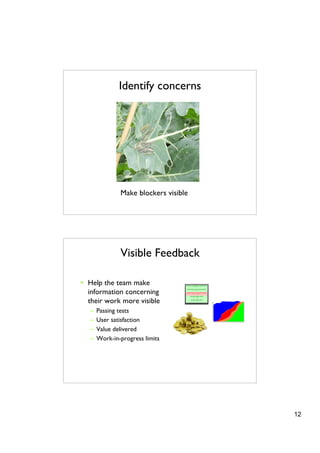
Identify concerns


               Make blockers visible


               Visible Feedback

• Help the team make
  information concerning
  their work more visible
   –   Passing tests
   –   User satisfaction
   –   Value delivered
   –   Work-in-progress limits


                                       12
Reduce Work-In-Progress Limits


     Example of Kanban board (at BBCW)


          Be an Example


                Show how


                                         13
Ask for Help


Encourage experiments


      Try it out


                        14
Encourage Ideas

Ask the team how
 they would solve
 the problems

Consider more than
 one solution!

                                      29


  Go with the energy of the team


      What do the team want to try?


                                           15
Working Agreements
Start the project with a workshop to agree how
  the team wants to work together.
• Make agreements
• Keep them
• Review when they are broken


                         Build Trust

      T = (C + R + I ) / S
      Where:

      T = Trust
      C = Credibility
      R = Reliability
      I = Intimacy
      S = Self-orientation
      Book: “The Trusted Advisor” by Maister, Green, & Galford


                                                                 16
Be Patient


                    Change takes time


                     Further Reading
• “Agile Coaching” by Rachel Davies & Liz Sedley
• “Resistance as a Resource” by Dale Emery
    http://dhemery.com/articles/resistance_as_a_resource/
• Virginia Satir talks about Status Quo
    http://web.me.com/sbuckbee1/Satirs_Process_of_Change/Status_Quo.html
•   “Succeeding with Agile” by Mike Cohn
•   “The Trusted Advisor” by David Maister
•   “Managing Transitions” by William Bridges
•   “Fearless Change” by Linda Rising and Mary Lynn Manns
•   “Leading Teams” by Richard Hackman


                                                                           17
Contact Me


Email: rachel@agilexp.com
Twitter: rachelcdavies
Blog: http://agilecoach.typepad.com/


                                       18

Xpde keynote

  • 1.
    Resolving Resistance to Change Rachel Davies A bit about me • Software developer • Agile since 2000 • CSM in 2003 • Author of “Agile Coaching” • Conference organizer Agile Coaches Gathering, XP2011, etc 1
  • 2.
    Agile Coach helps teamsgrow strong in Agile practice A coach supports team rather than setting direction Agile Coach 2
  • 3.
    Coaching is aboutChange To improve we must change! Change Across Teams Individuals Organization 3
  • 4.
    Expect Resistance toChange Satir Change Curve Why do people resist Change? This team is using old tools How can you influence them to change? 4
  • 5.
    No time toimprove! Demonstrate Another Way? 5
  • 6.
    Author: J. RichardHackman Many books about Coaching are about coaching individuals. Hackman’s book covers coaching teams. Hackman Explains Three kinds of coaching intervention: • Motivational - improves effort by minimizing free riding and building shared commitment • Consultative - improves process by reducing thoughtless habits and fostering invention based on situation • Educational - improves knowledge and skill You can combine these! 6
  • 7.
    Consider Resistance asa Resource Article: Dale Emery http://dhemery.com/articles/resistance_as_a_resource/ Dig Deeper 7
  • 8.
    Listening Listening Why must a coach listen? • Show respect • Gather data • Learn feelings/opinions • Encourage • …? 8
  • 9.
    Big Picture Focus Stepup to see big picture Force Field Analysis Desired change from current state 9
  • 10.
    Force Field Analysis Remove barriers and amplify forces for change Prepare the Ground Create an environment for the team to grow their own agile practice. 10
  • 11.
    What do wereally want? Being Agile is not usually the real goal Share the Vision 11
  • 12.
    Identify concerns Make blockers visible Visible Feedback • Help the team make information concerning their work more visible – Passing tests – User satisfaction – Value delivered – Work-in-progress limits 12
  • 13.
    Reduce Work-In-Progress Limits Example of Kanban board (at BBCW) Be an Example Show how 13
  • 14.
    Ask for Help Encourageexperiments Try it out 14
  • 15.
    Encourage Ideas Ask theteam how they would solve the problems Consider more than one solution! 29 Go with the energy of the team What do the team want to try? 15
  • 16.
    Working Agreements Start theproject with a workshop to agree how the team wants to work together. • Make agreements • Keep them • Review when they are broken Build Trust T = (C + R + I ) / S Where: T = Trust C = Credibility R = Reliability I = Intimacy S = Self-orientation Book: “The Trusted Advisor” by Maister, Green, & Galford 16
  • 17.
    Be Patient Change takes time Further Reading • “Agile Coaching” by Rachel Davies & Liz Sedley • “Resistance as a Resource” by Dale Emery http://dhemery.com/articles/resistance_as_a_resource/ • Virginia Satir talks about Status Quo http://web.me.com/sbuckbee1/Satirs_Process_of_Change/Status_Quo.html • “Succeeding with Agile” by Mike Cohn • “The Trusted Advisor” by David Maister • “Managing Transitions” by William Bridges • “Fearless Change” by Linda Rising and Mary Lynn Manns • “Leading Teams” by Richard Hackman 17
  • 18.
    Contact Me Email: rachel@agilexp.com Twitter:rachelcdavies Blog: http://agilecoach.typepad.com/ 18