Using Lean to Create
High-Velocity Teams
Christina Wodtke
Author of Radical Focus and Pencil Me In
Lecturer at Stanford University
Enso:
A single hand in a
single stroke, made
many times until it is
what it needs to be.
Brush mediation.
It symbolizes
perfection and
imperfection, oneness,
unity.
Nest:
Many straight twigs
still make a circle.
How can this be?
Can a team also learn
unity, oneness?
What do we
know about
teams and
teamwork?
Erin
Meyer’s
Culture
Map
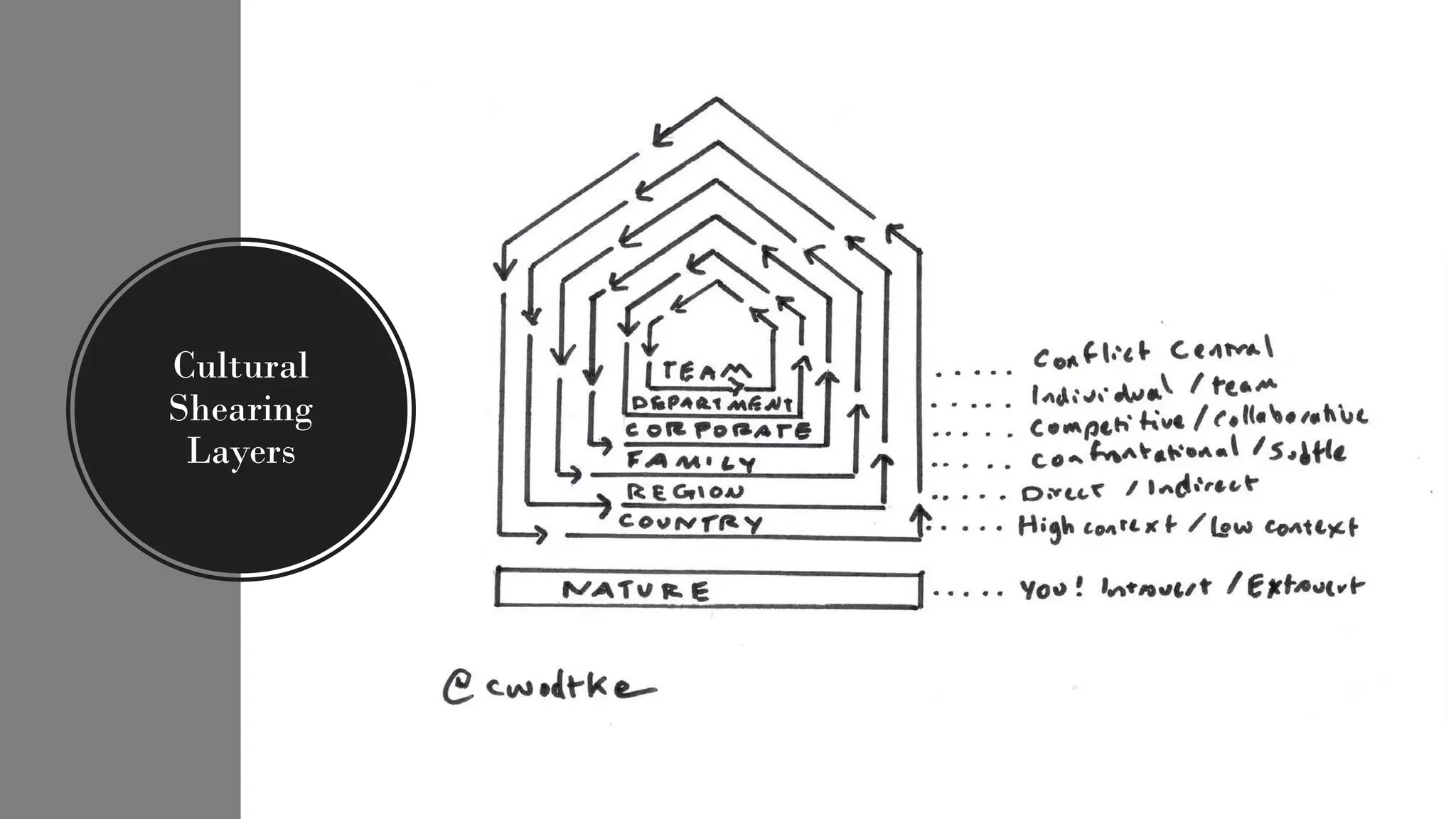
Cultural
Shearing
Layers
“The problem is that we tend to
assume that our framing represents
the truth, rather than merely
presenting a subjective “map.” In
truth, however, each frame offers its
own image of reality.”
Edmondson, Amy C. Teaming: How Organizations Learn, Innovate, and
Compete in the Knowledge Economy
ASSUMPTIONS!
What is a team?
1. Common PURPOSE
2. Performance GOALS
3. Complimentary SKILLS
4. Mutual ACCOUNTABILITY
The Wisdom of Teams
Jon R. Katzenbach and Douglas K.
Smith
Set Objectives
and Key
Results
1. Common Purpose
2. Performance Goals
OKRs
O: Qualitative
goal (common
purpose)
KR: Success
criteria
(performance
goals)
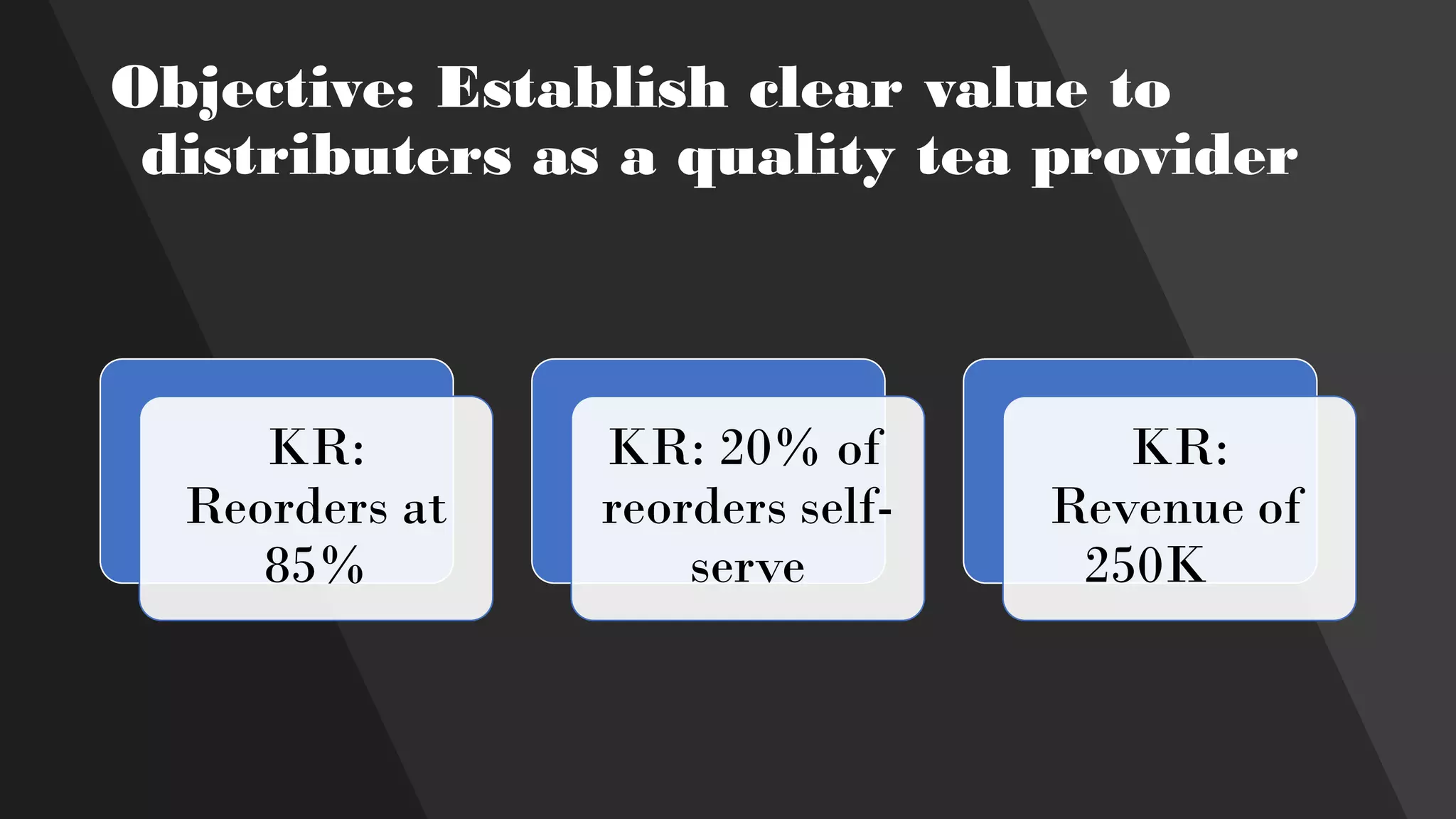
Objective: Establish clear value to
distributers as a quality tea provider
KR:
Reorders at
85%
KR: 20% of
reorders self-
serve
KR:
Revenue of
250K
3.
Complimentary
skills
4. Mutual
Accountability
Objective: Establish clear value to
distributers as a quality tea provider
KR: Reorders at 85% 5/10
KR: 20% of reorders self-serve 5/10
KR: Revenue of 250K 5/10
Key Risk Factors: Need new self-serve
system up in first month
Priorities this week
Next 4 weeks - Projects
OKR Confidence
Team Health:
Distributor satisfaction Health:
Org Health
Yellow
P1
P1
P1
Green
Close deal with TLM Foods
Team struggling with direction
change
# solid sales canidates in for
interview
Passive reorder notifications
New self serve flow for distributors
Metrics for distributors on tea sales
Hire Customer service head
New Order flow
Weekly
OKR
Check-ins
Learning
Team
Or Lean Team
Improves over time
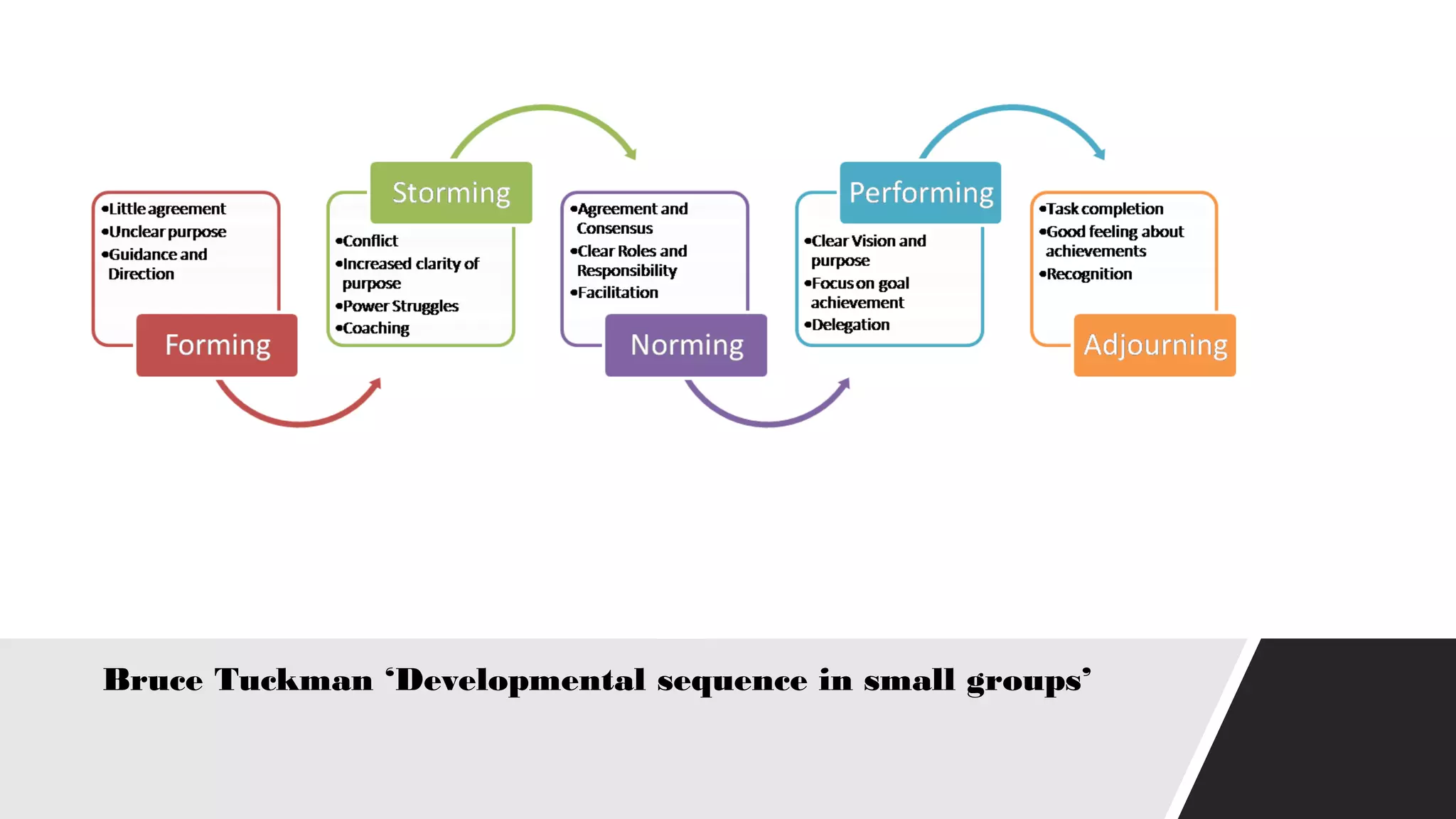
Bruce Tuckman ‘Developmental sequence in small groups’
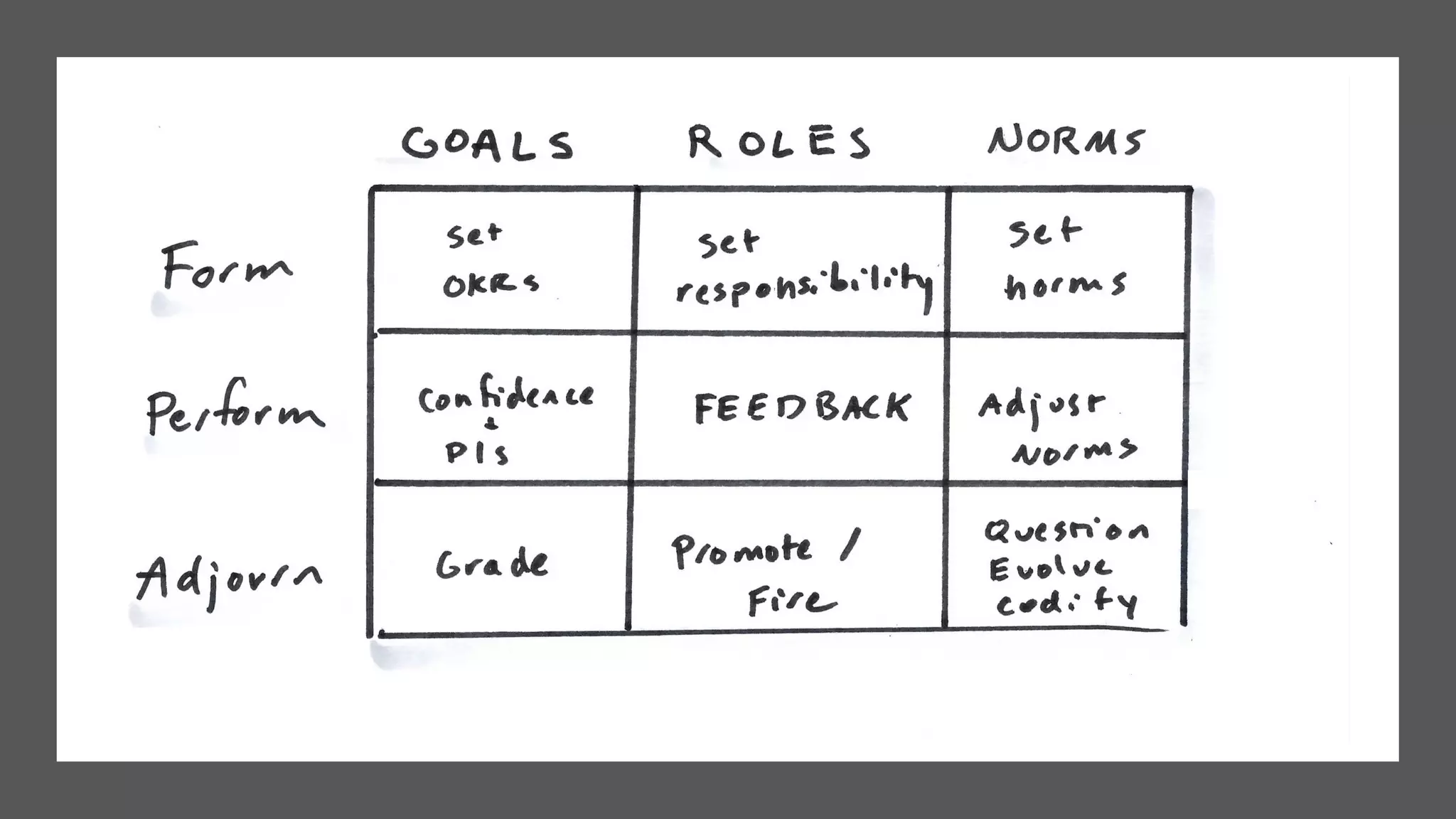
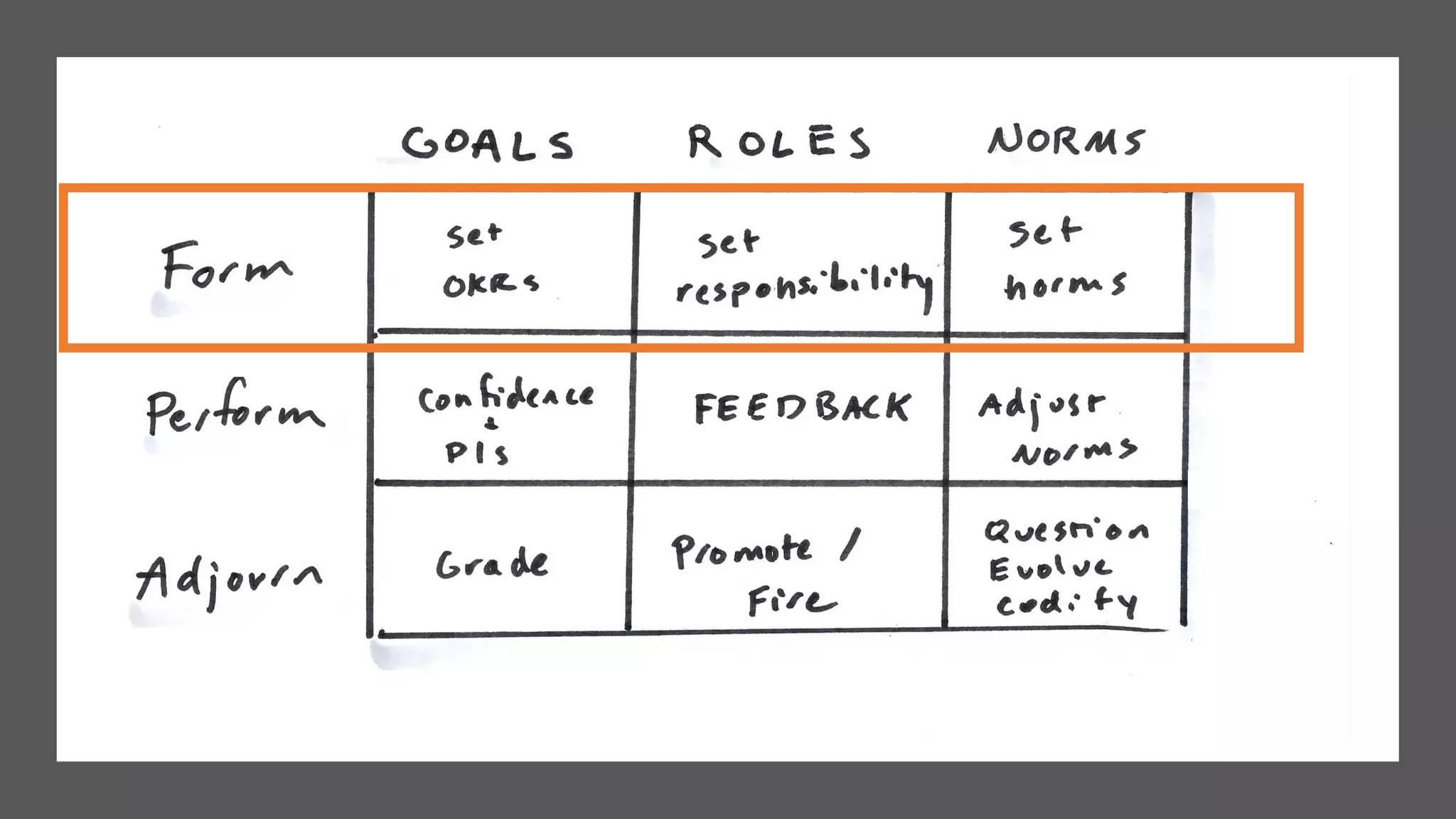
Forming a
Learning
Team
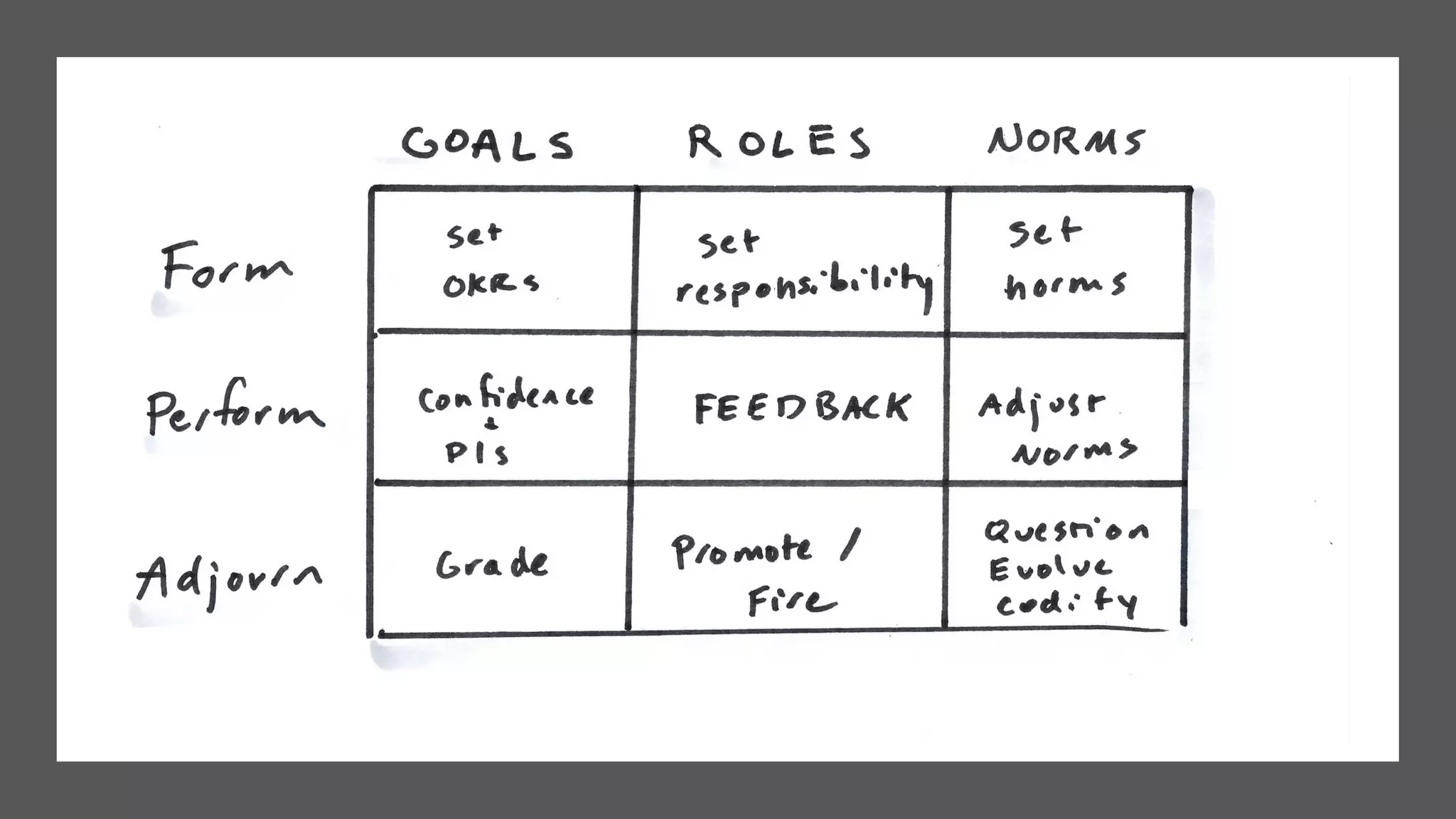
1.
Set Expertise Roles
Set Informal Roles
• Facilitator
• Tie-Breaker
• Spokesperson
• Schedule Keeper
• Office Housework
Design Norms
If you don’t design, you make assumptions. Assumptions lead to
errors. Errors lead to fights.
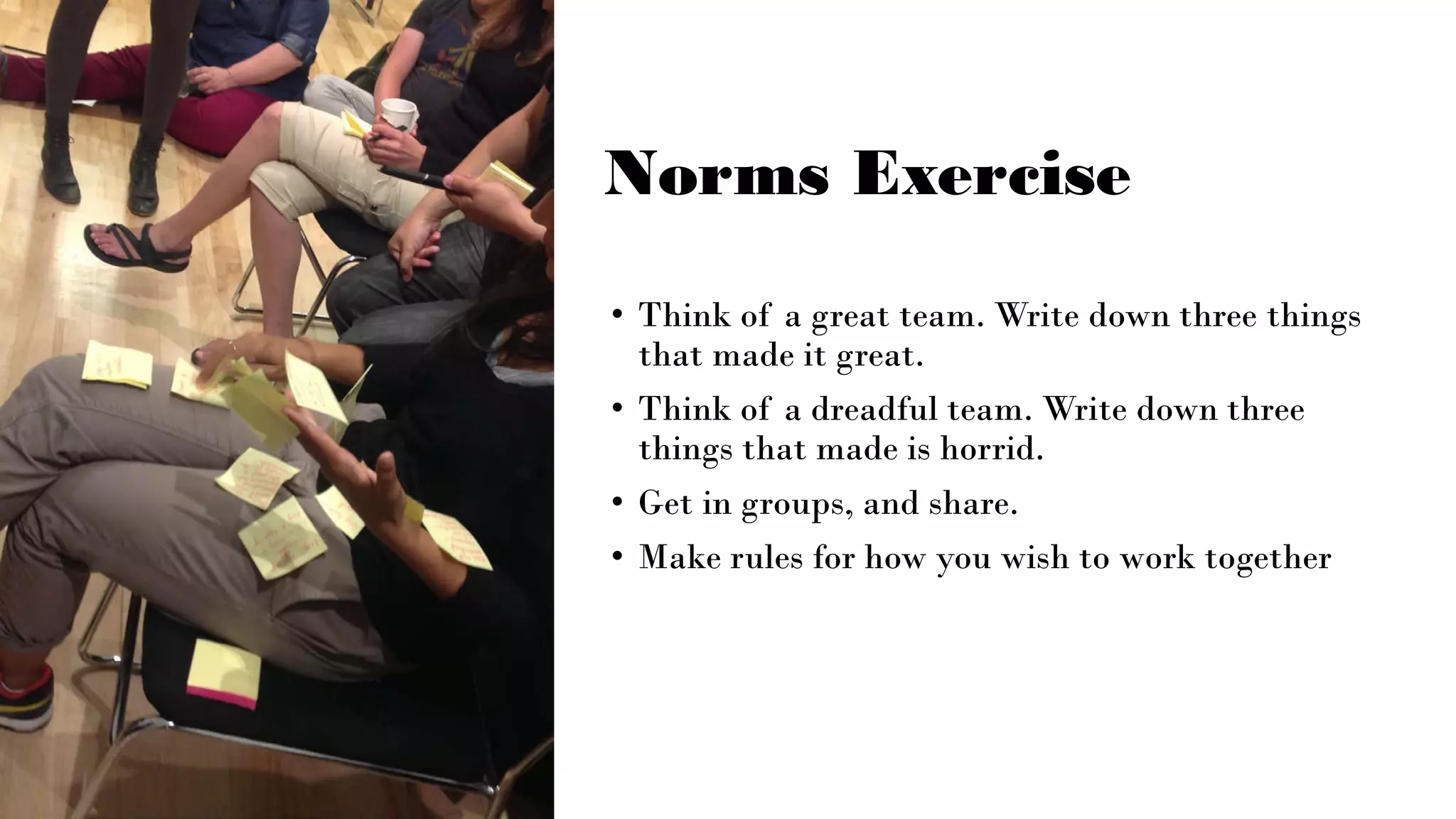
Norms Exercise
• Think of a great team. Write down three things
that made it great.
• Think of a dreadful team. Write down three
things that made is horrid.
• Get in groups, and share.
• Make rules for how you wish to work together
Performing in
a Learning
Team
2.
Feedback
“Shorten your time through the Feedback Loop.”
teIam
Mindful team take care of the us
AND the I.
Two kinds of feedback
Individual Team
Fast Feedback
But not too fast
Short Cycles
Reduce
quantity of
information
Reduce gap
between action
and evaluation
Reduce stakes
Actionable
Memorable
Iterative
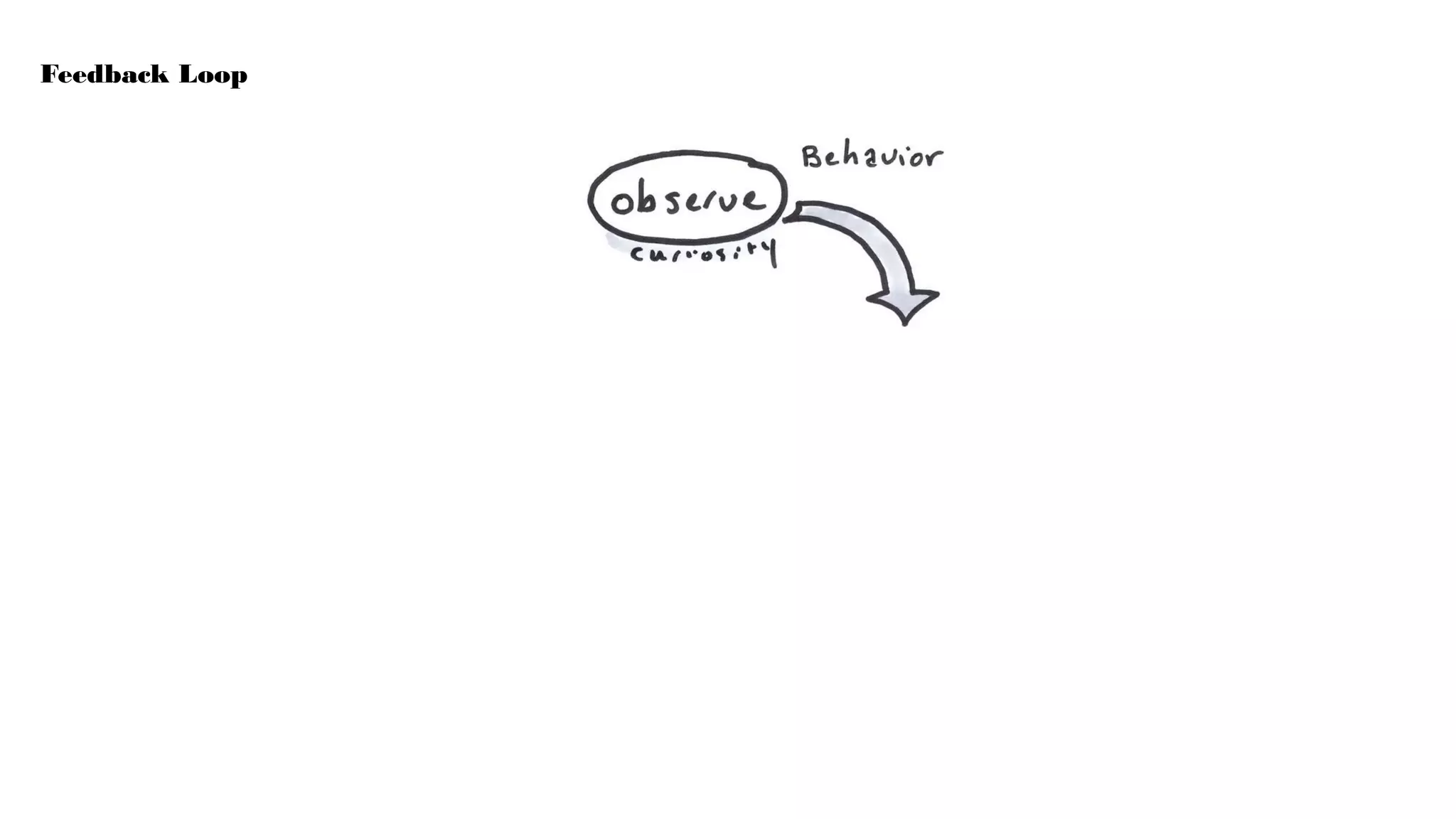
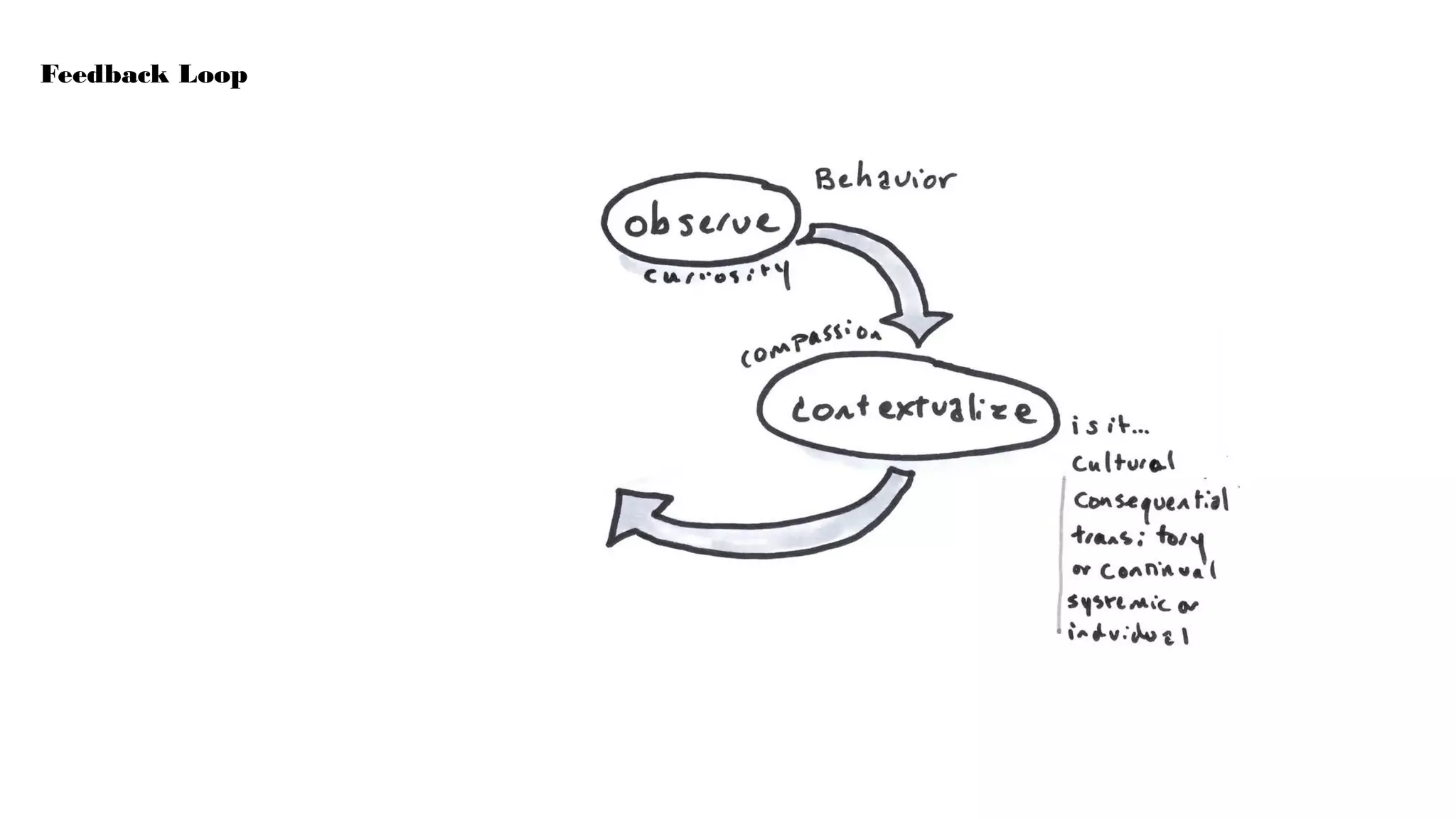
Feedback Loop
Feedback Loop
When you
behavior I
reaction and it
consequences.
What can we do about
this?
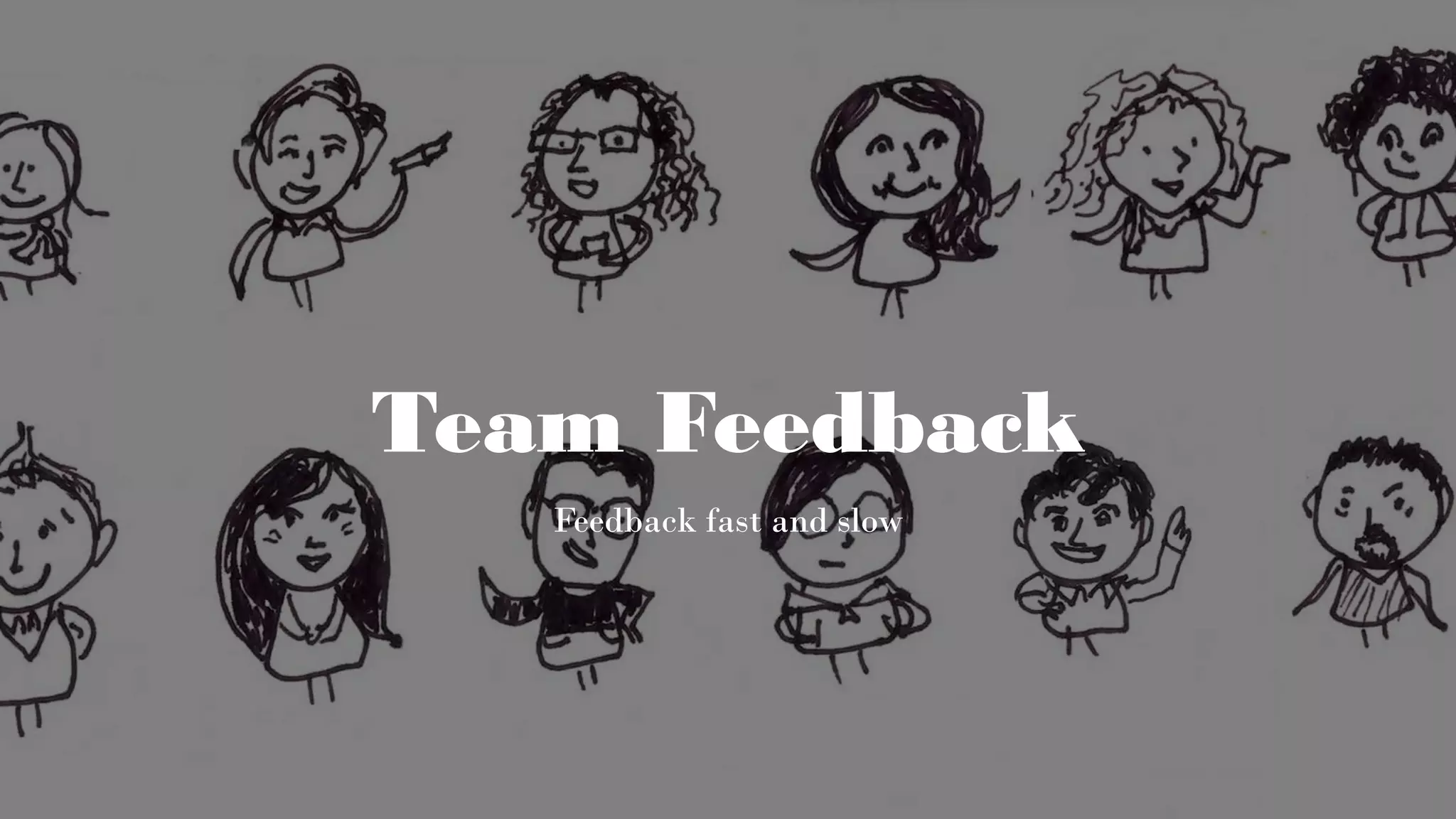
Team Feedback
Feedback fast and slow
Weekly: Retrospective
Fast and frequent allows for iteration and growth
Adjourning
in a Mindful
Team
3.
Formal Feedback
“Shorten your time through the Feedback Loop.”
Team Feedback
Feedback fast and slow
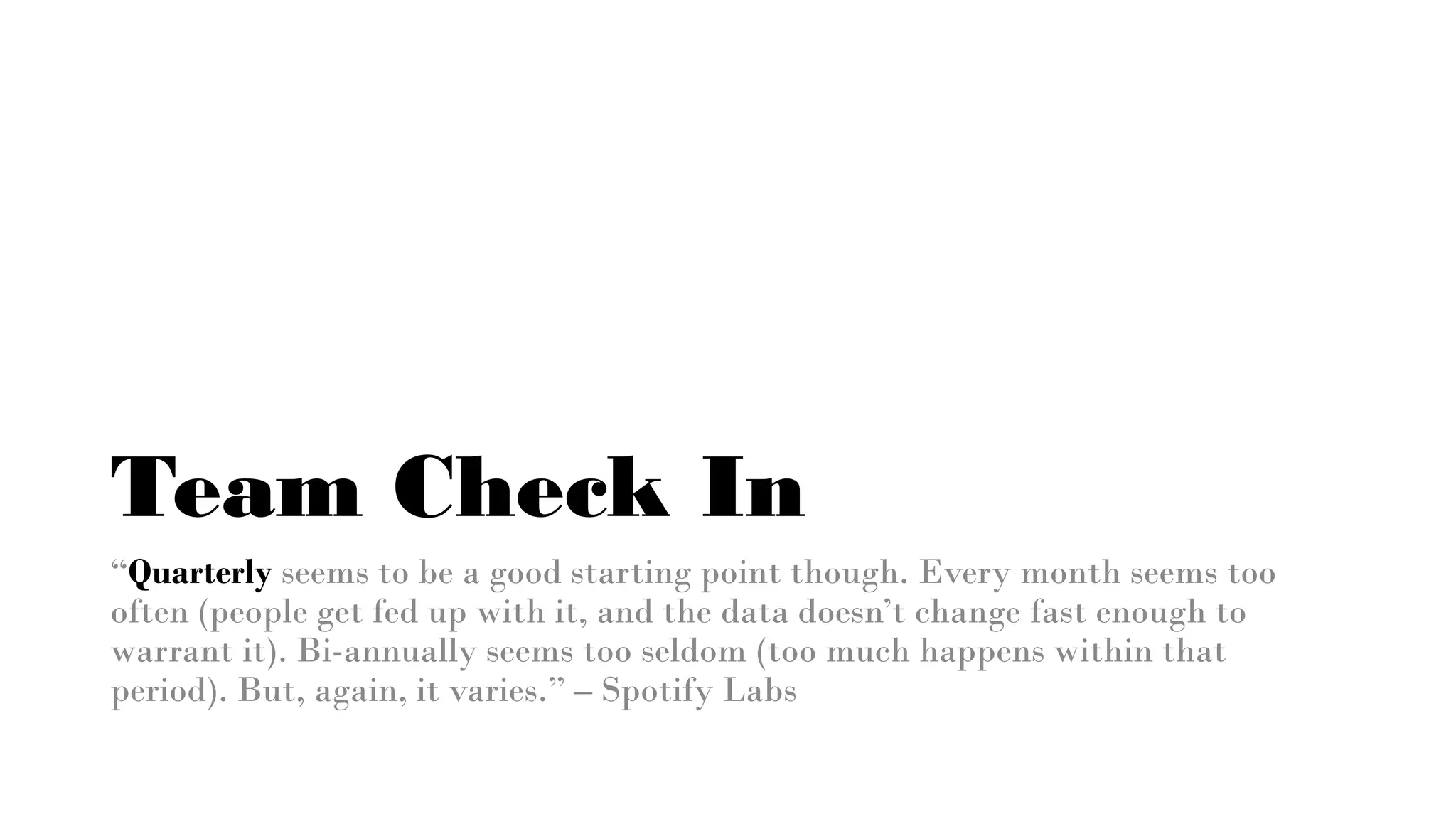
Team Check In
“Quarterly seems to be a good starting point though. Every month seems too
often (people get fed up with it, and the data doesn’t change fast enough to
warrant it). Bi-annually seems too seldom (too much happens within that
period). But, again, it varies.” – Spotify Labs
Empathy
Warm-up
• Sometimes I pretend
• Sometimes I’m afraid
• Sometimes I wonder
• Sometimes I try
Carbon
Five
Dartboard
http://blog.carbonfive.com/2015/
07/29/the-product-dartboard/
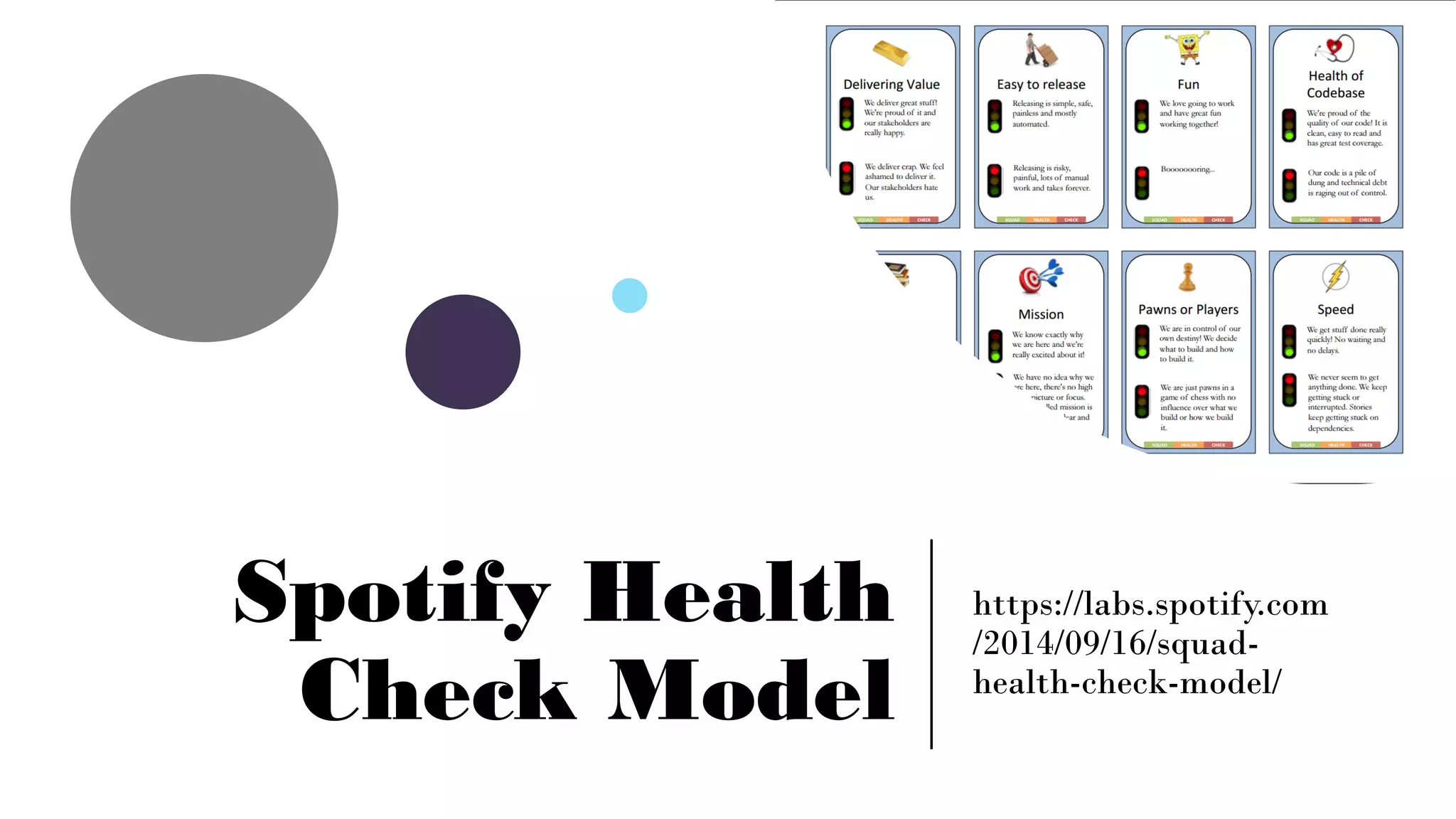
Spotify Health
Check Model
https://labs.spotify.com
/2014/09/16/squad-
health-check-model/
Formal Team Member
Feedback
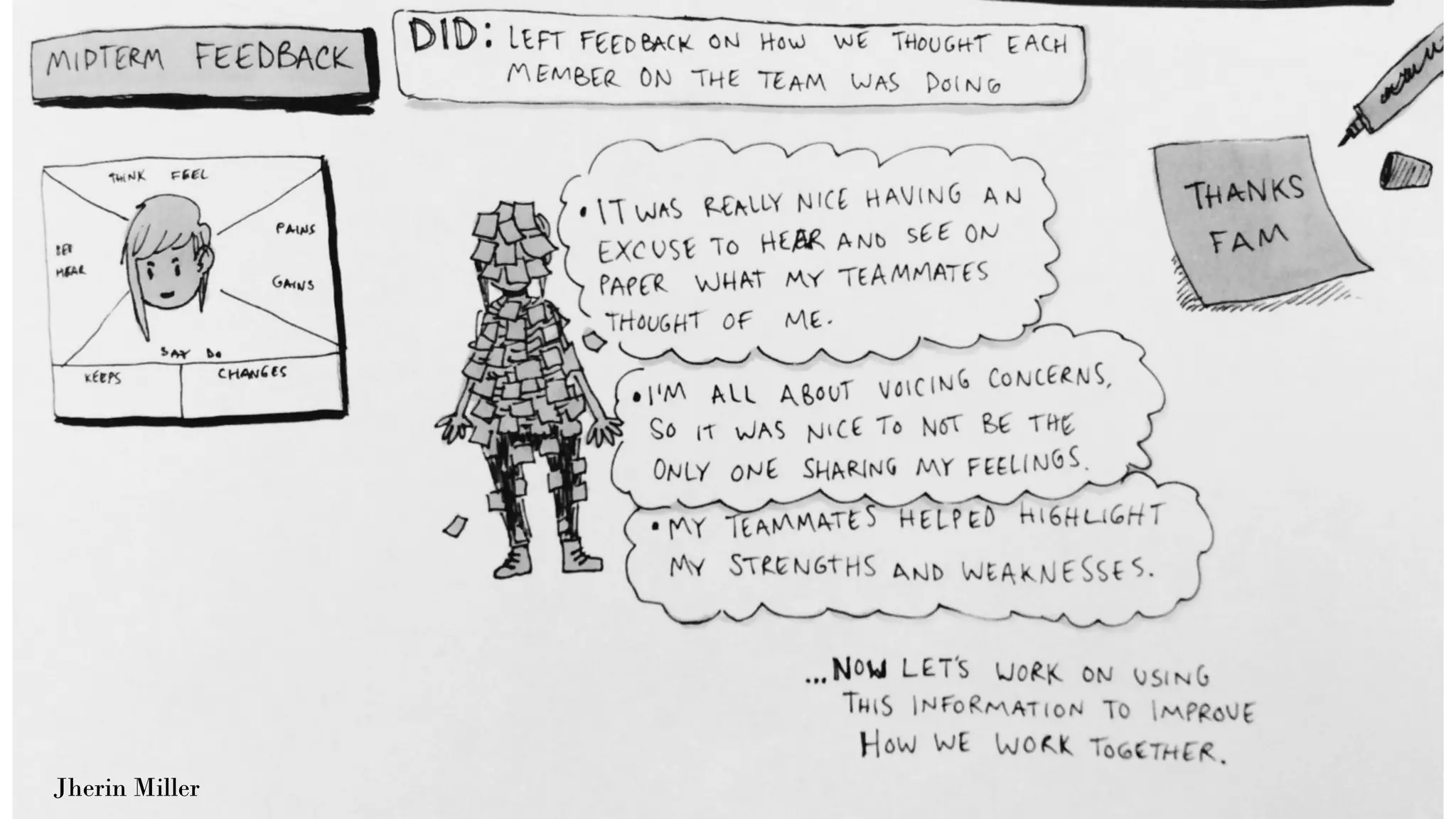
Empathic
Feedback
Canvas
Jherin Miller
The Models
Thank
You
@cwodtke | me@cwodtke.com
www.cwodtke.com
CHRISTINA WODTKE

Lean Teams are Learning Teams