Chapter 27 
AMERICA AND THE WORLD, 
1921–1945 
America Past and Present 
Eighth Edition 
Divine  Breen  Fredrickson  Williams  Gross  Brand 
Copyright 2007, Pearson Education, Inc., publishing as Longman
Retreat, Reversal, and 
Rivalry 
1920s: American diplomacy permeated 
by a sense of disillusionment 
U.S. refused to be bound by any 
agreement to preserve international 
peace
Retreat in Europe 
U.S. quarreled with former allies over 
repayment of $10 billion in wartime 
loans 
U.S. never joined the League of Nations 
U.S. refused recognition of Soviet Union
Cooperation in Latin 
America 
Coolidge, Hoover, FDR substituted 
cooperation for military coercion 
FDR’s "Good Neighbor" policy 
renounced past imperialism 
U.S. continued political, economic 
domination of Latin America
Rivalry in Asia 
1920: Japanese occupied Korea, parts 
of Manchuria 
U.S. Open Door policy blocked 
Japanese dominance of China
Rivalry in Asia: 
Washington Conference of 
1921 
England agreed to U.S. naval equality 
Japan accepted as third largest naval 
power 
All nations agreed to limit naval 
construction 
Nine-Power Treaty: Open Door Policy 
reaffirmed 
Four-Power Treaty: Established alliance 
among U.S., Great Britain, Japan, France
Isolationism 
Depression shifted focus to domestic 
affairs 
Rise of militaristic regimes threatened 
war 
– Germany 
– Italy 
– Japan
The Lure of Pacifism and 
Neutrality 
Most Americans resolved against 
another meaningless war 
1935: Senator Gerald Nye led passage 
of neutrality legislation 
– U.S. trade with nations at war prohibited 
– U.S. loans to nations at war prohibited 
1937--Japan invaded China 
FDR permitted sale of arms to China
War in Europe 
FDR approved appeasement of Hitler 
1938: Hitler seized Czechoslovakia 
FDR attempted to revise the neutrality 
acts, to give edge to England, France 
July, 1939: FDR attacked neutrality acts 
September, 1939: W.W.II began, 
Roosevelt declared the acts in force
The Road to War 
U.S. remained at peace 1939–1941 
Popular sympathy for Allies, distaste for 
Germany and Japan 
Roosevelt openly expressed favor for 
Allies, moved cautiously to avoid outcry 
from isolationists
From Neutrality to 
Undeclared War 
1939–1941: FDR sought help for 
England without actually entering the 
war 
November, 1939: Belligerents may buy 
U.S. goods on "cash and carry" basis 
1940: German occupation of France 
America First forms to protest drift 
toward war 
White Committee wanted to aid Britain
From Neutrality to 
Undeclared War: Increased 
Aid to England 
U.S. greatly increased military spending 
and began a first-ever peacetime draft 
U.S. ships transported war supplies 
Eventual consensus that a Nazi victory in 
Europe would threaten western civilization 
Lend Lease 
U.S. Navy told to shoot submarines on 
sight
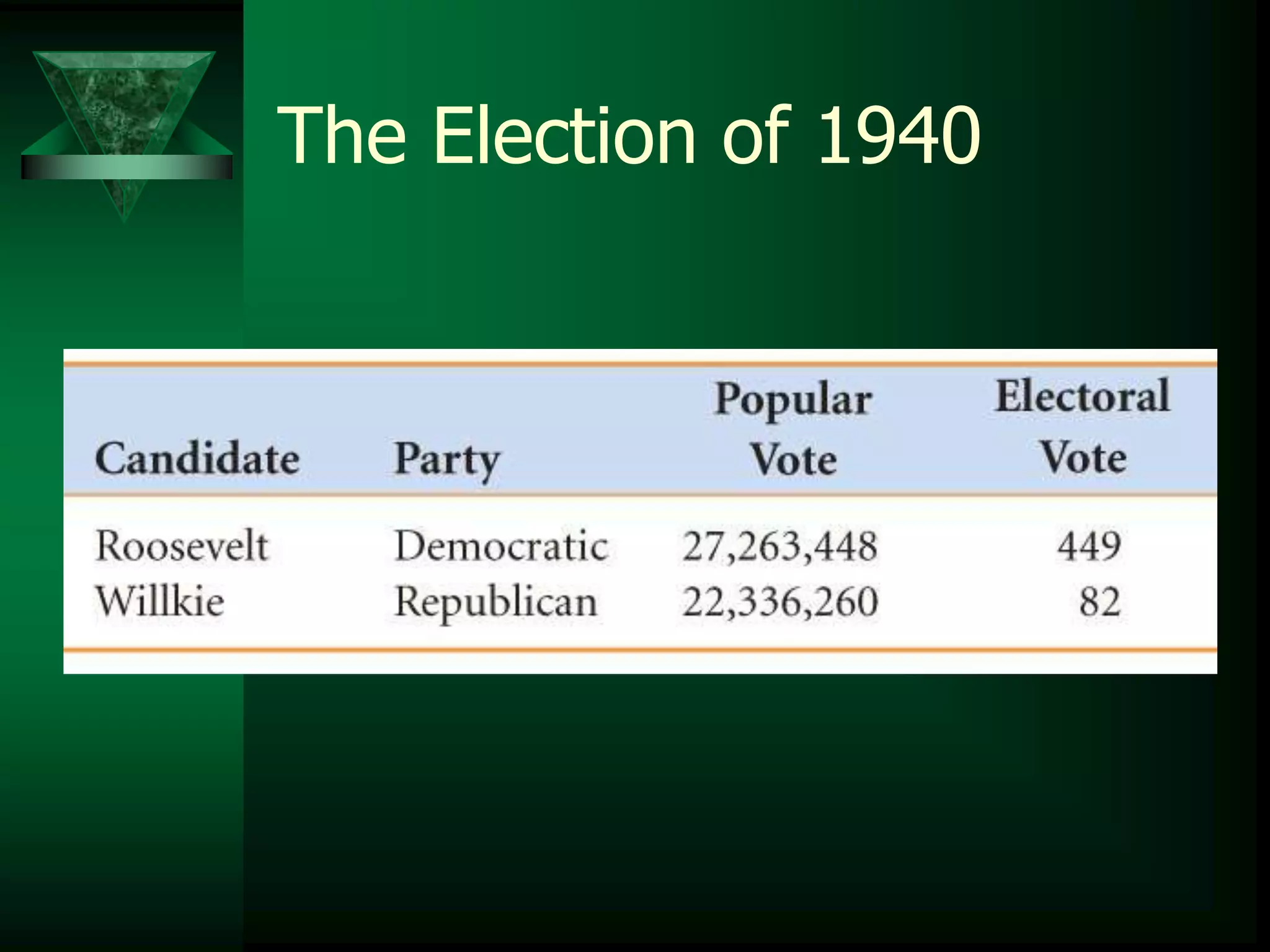
The Election of 1940
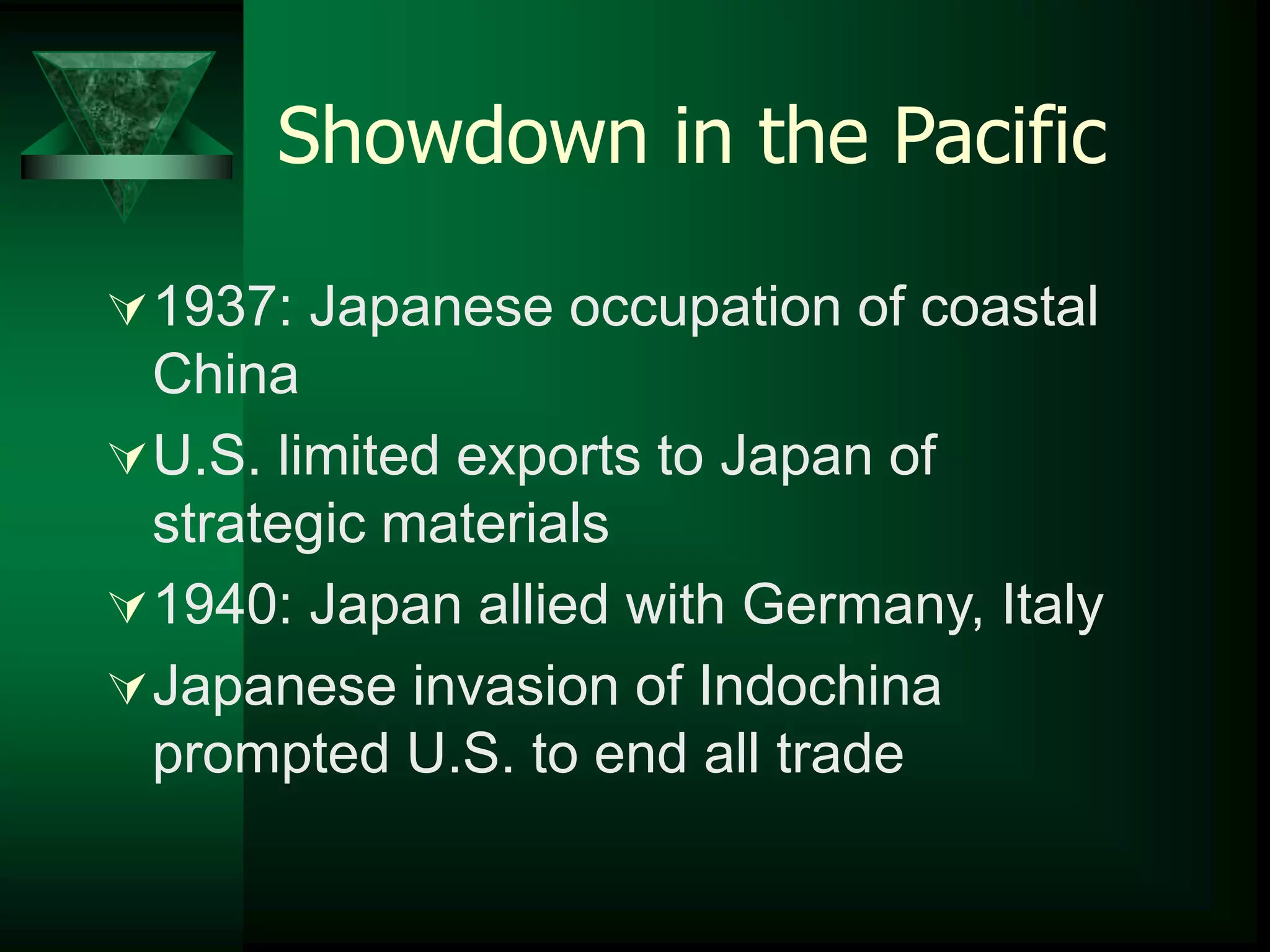
Showdown in the Pacific 
1937: Japanese occupation of coastal 
China 
U.S. limited exports to Japan of 
strategic materials 
1940: Japan allied with Germany, Italy 
Japanese invasion of Indochina 
prompted U.S. to end all trade
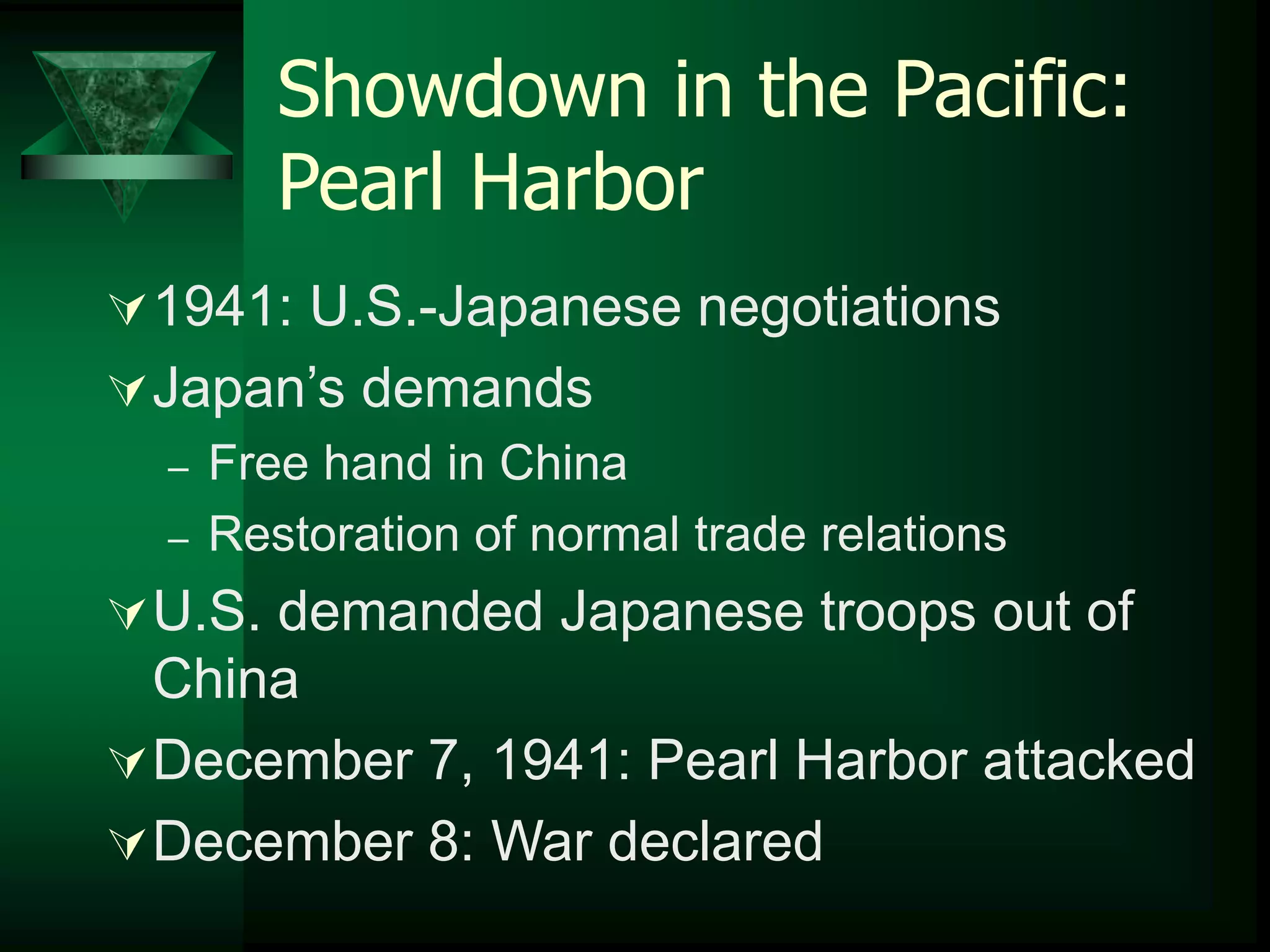
Showdown in the Pacific: 
Pearl Harbor 
1941: U.S.-Japanese negotiations 
Japan’s demands 
– Free hand in China 
– Restoration of normal trade relations 
U.S. demanded Japanese troops out of 
China 
December 7, 1941: Pearl Harbor attacked 
December 8: War declared
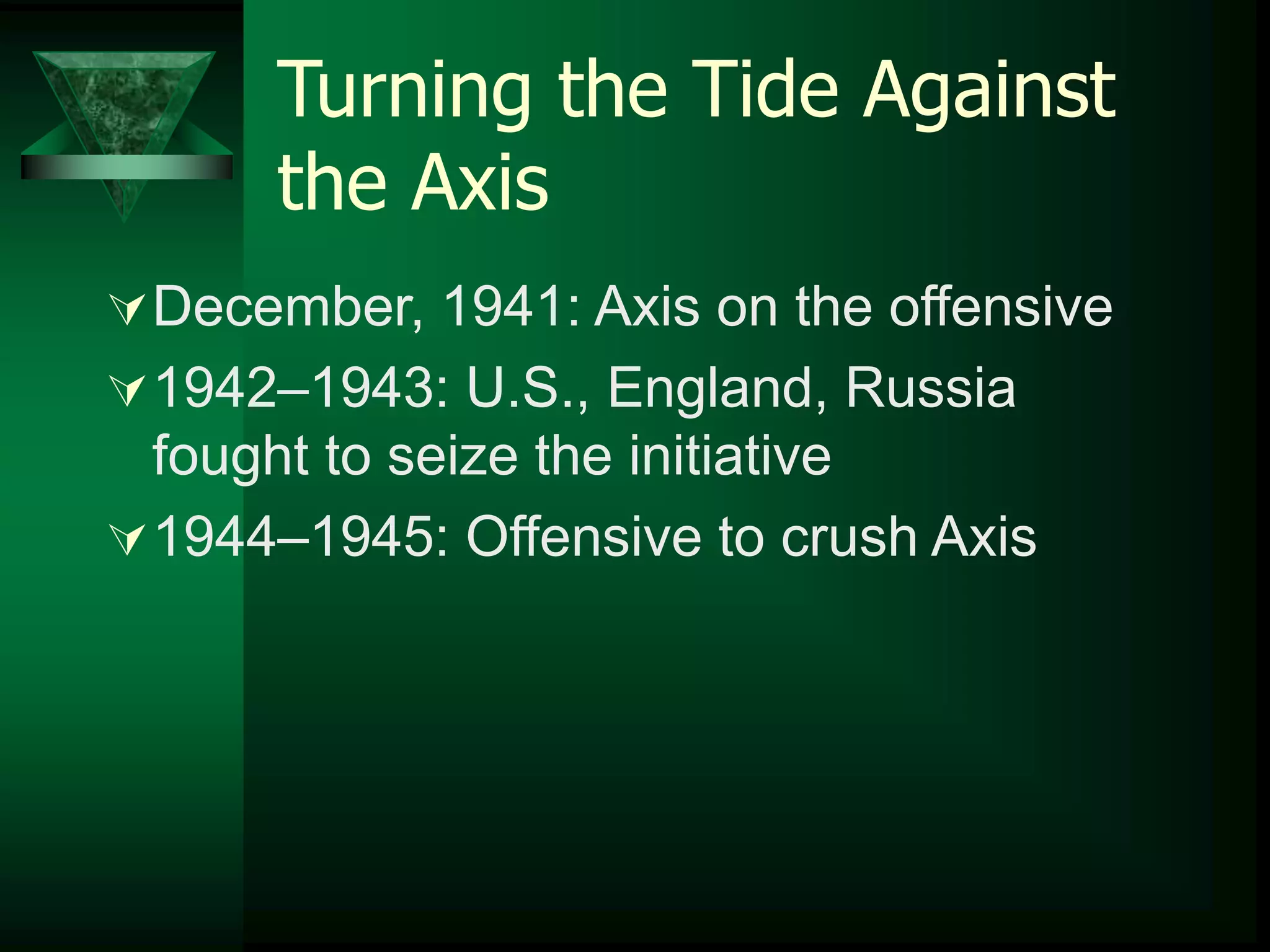
Turning the Tide Against 
the Axis 
December, 1941: Axis on the offensive 
1942–1943: U.S., England, Russia 
fought to seize the initiative 
1944–1945: Offensive to crush Axis
Wartime Partnerships 
U.S.-English alliance cemented by 
personal friendship between FDR and 
Churchill 
Soviet Union unsatisfied with alliance 
Soviet Union often perceives itself alone 
in conflict 
Wartime tensions persist after victory
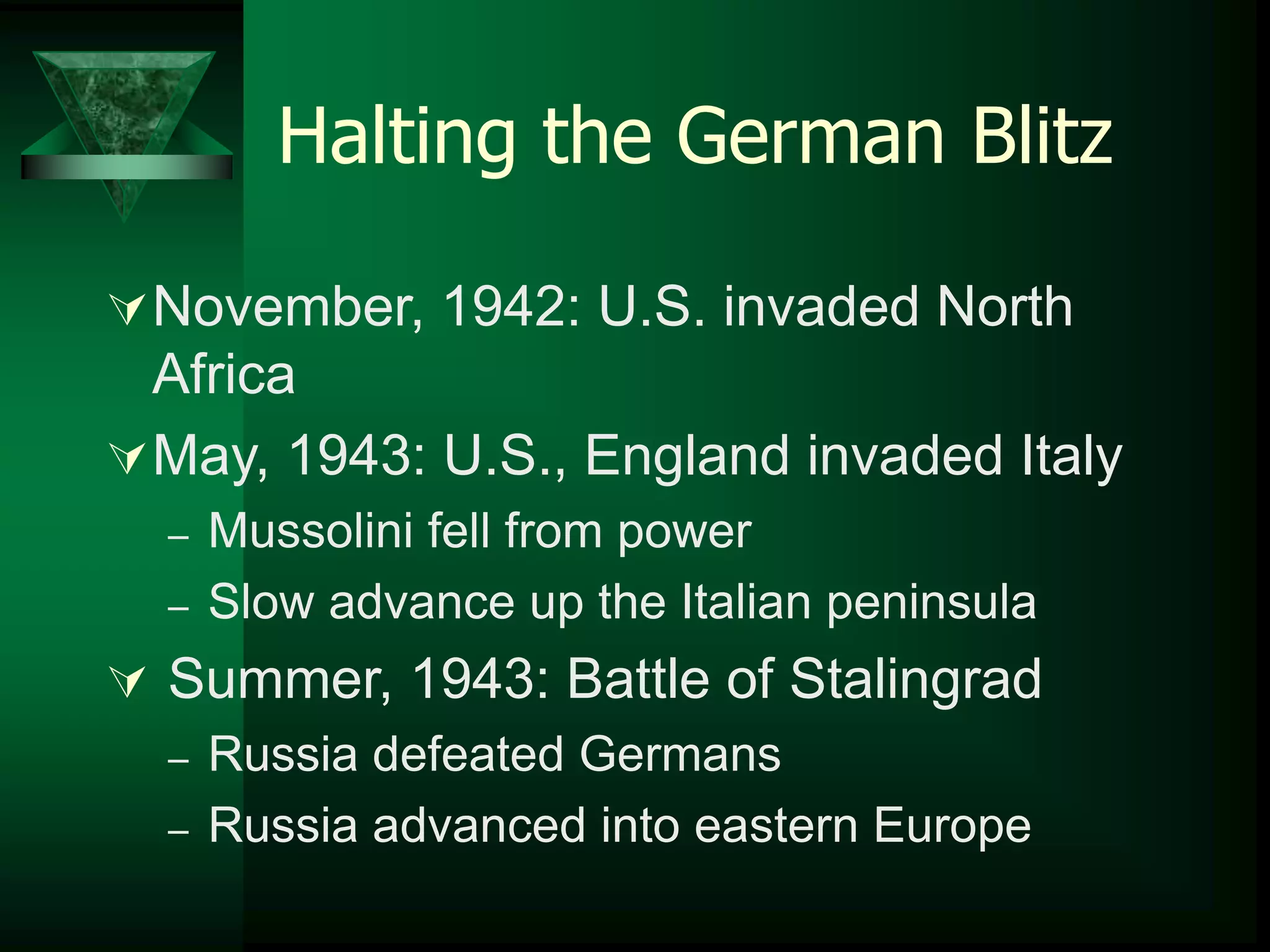
Halting the German Blitz 
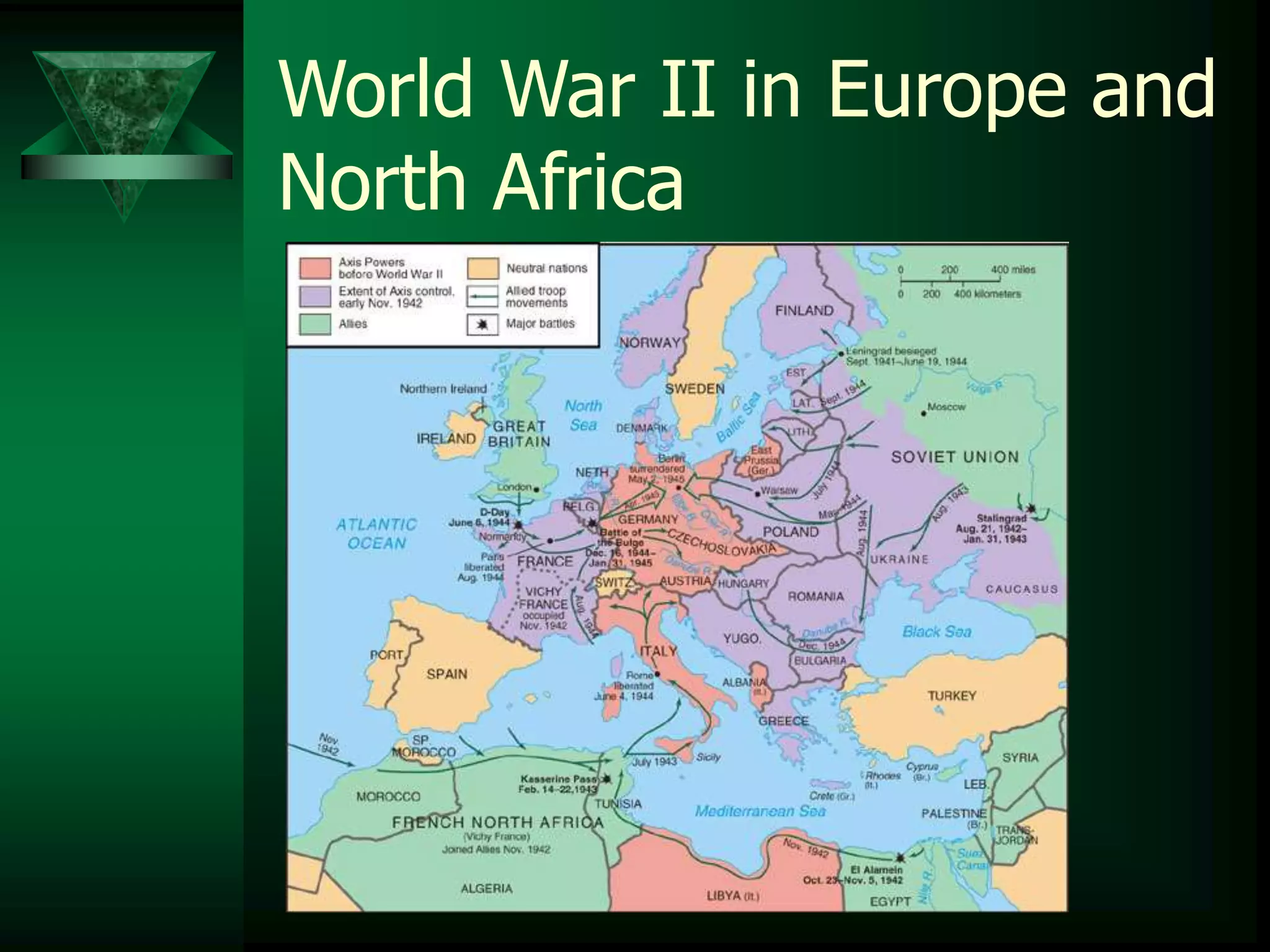
November, 1942: U.S. invaded North 
Africa 
May, 1943: U.S., England invaded Italy 
– Mussolini fell from power 
– Slow advance up the Italian peninsula 
 Summer, 1943: Battle of Stalingrad 
– Russia defeated Germans 
– Russia advanced into eastern Europe
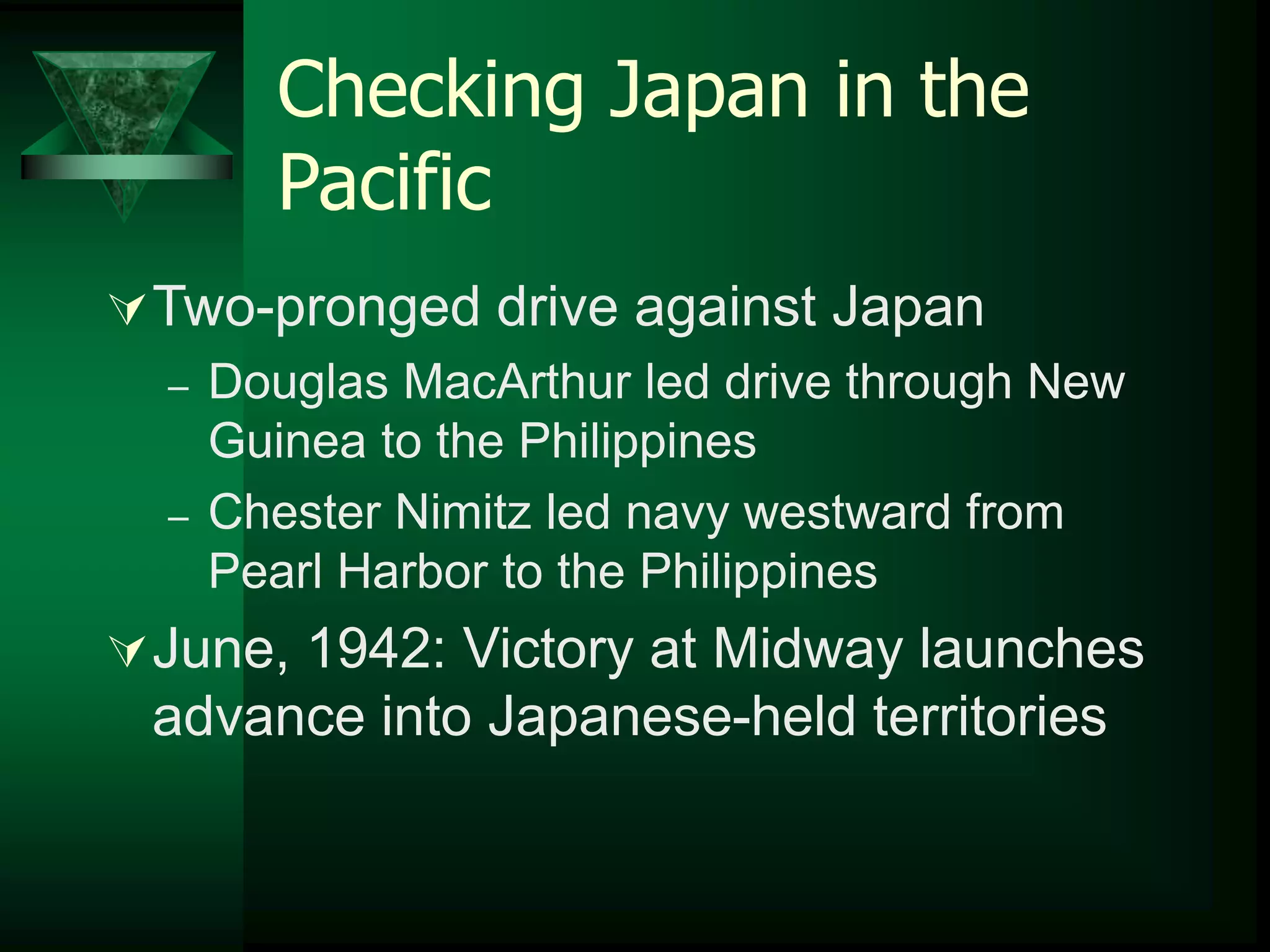
Checking Japan in the 
Pacific 
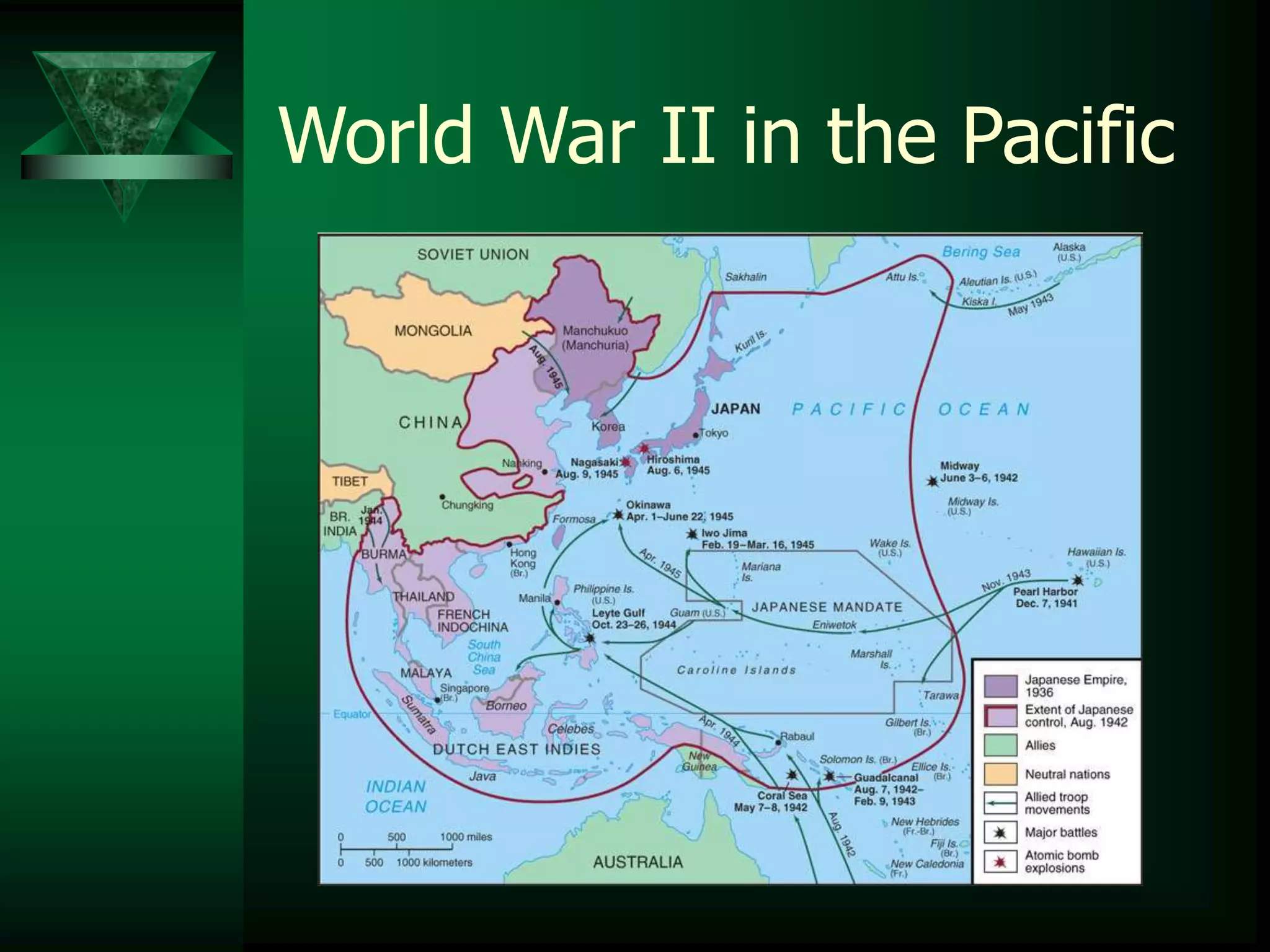
Two-pronged drive against Japan 
– Douglas MacArthur led drive through New 
Guinea to the Philippines 
– Chester Nimitz led navy westward from 
Pearl Harbor to the Philippines 
June, 1942: Victory at Midway launches 
advance into Japanese-held territories
World War II in the Pacific
The Home Front 
War ended depression 
Economy geared for military output 
Automobile factories converted to tank 
and airplane production 
Women moved into the workplace 
Demographic shifted
The Arsenal of Democracy 
American factories turned out twice as 
many goods as German and Japanese 
factories 
Scarce goods rationed 
Income of lowest-paid laborers 
increased faster than the rich 
Income taxes started to affect many 
more people and system of payroll 
deduction occurred 
High-savings rate laid basis for postwar 
prosperity
A Nation on the Move 
Wartime migration South and West 
Early marriages, increased birth rates 
Family-related social problems 
– Housing shortages 
– More divorces 
– Neglected children
A Nation on the Move: 
Improving Conditions 
 Women’s income increased 50% 
 African Americans 
– Fair Employment Practices Commission to insure 
equal opportunities in war-related industry 
– Surging migration from the rural South 
– Segregation and discrimination were still problems 
– Wartime experience laid groundwork for postwar 
Civil Rights Movement 
Mexican Americans took urban factory jobs
A Nation on the Move: 
Japanese Internment 
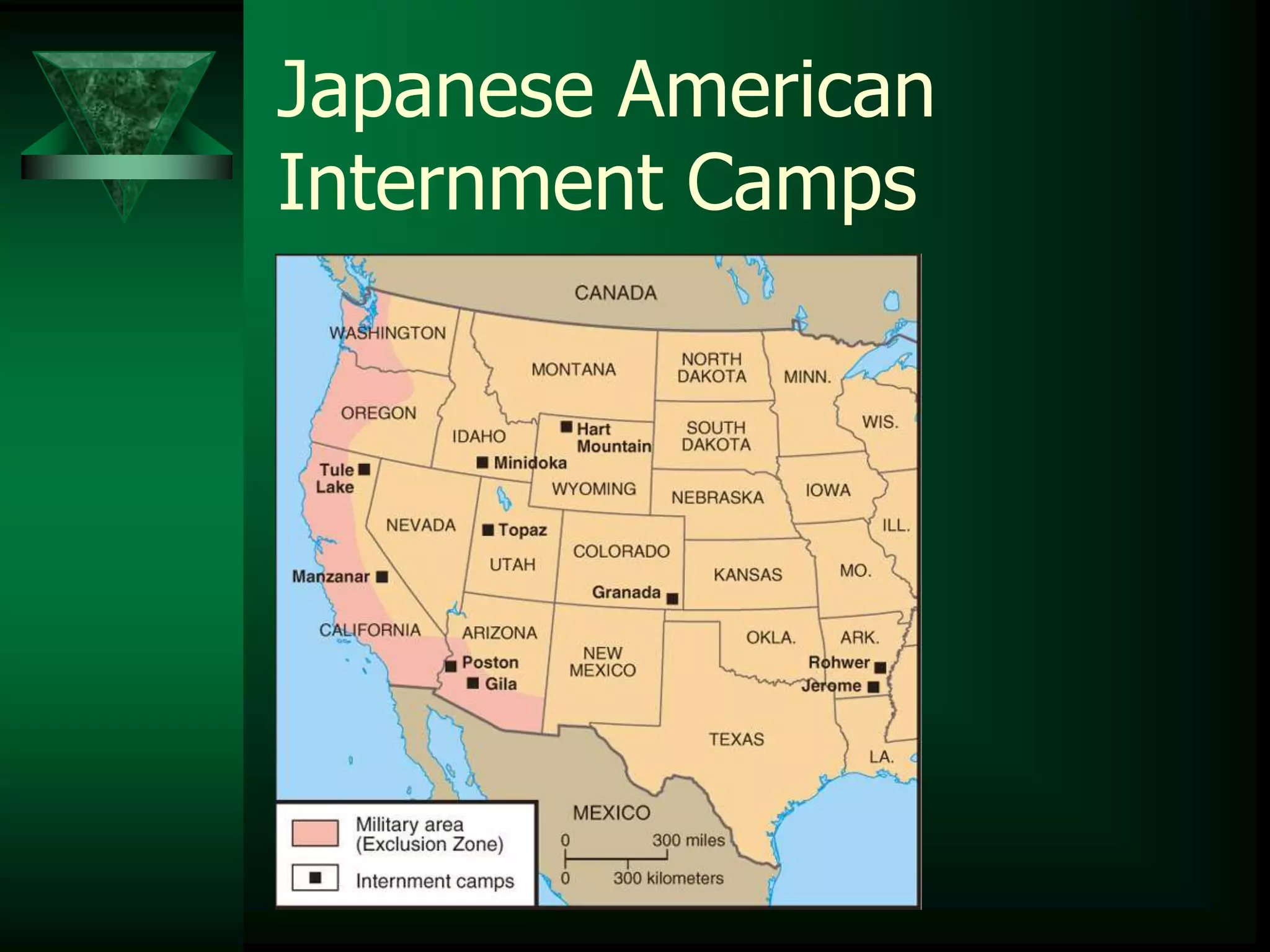
120,000 Japanese moved from the 
West Coast to detention camps 
1944: Supreme Court rejected appeal 
for release 
1988: Congress voted indemnity of $1.2 
billion for survivors
Japanese American 
Internment Camps
Win-the-War Politics 
Dr. New Deal became Dr. Win-the-War 
1942: Republican-Southern Democrat 
coalition controled Congress 
1944 election 
– FDR dumped VP Henry Wallace because 
of criticism that he was too radical 
– Truman was made VP to attract moderate 
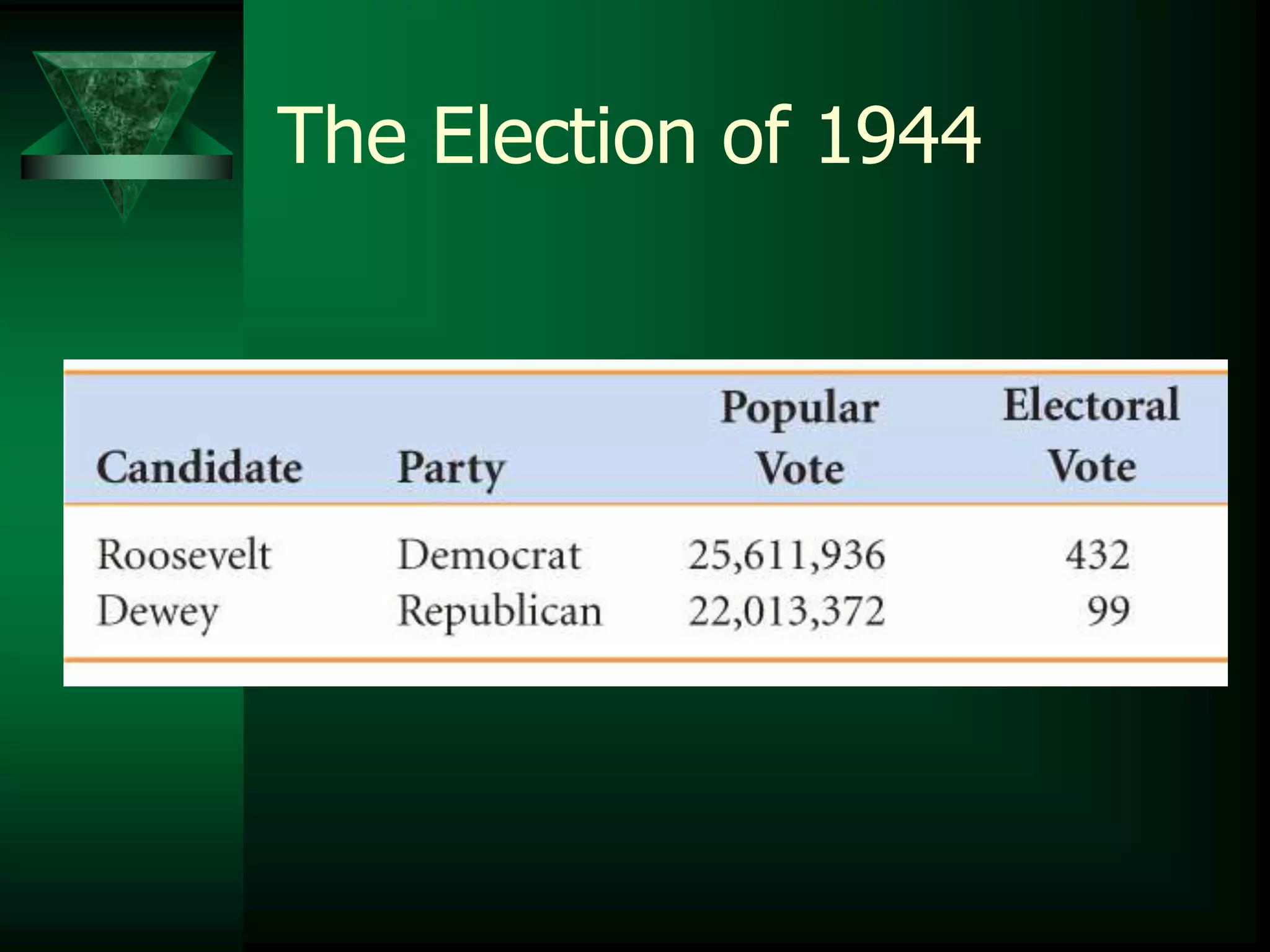
– FDR won fourth term 
– Wallace made Secretary of Commerce
The Election of 1944
Victory 
June 6, 1944: Normandy Invasion 
April 25, 1945: U.S., Russian 
forces met at Torgau 
May 7, 1945: Unconditional 
German surrender
War Aims and Wartime 
Diplomacy 
 Soviets did bulk of fighting against Germany 
– 300 SU divisions, only 58 U.S. and British 
 Soviets decided to control Eastern Europe to 
prevent another German attack 
 U.S. sought collective security arrangement 
including the United Nations 
Yalta Conference February 1945 
– Agreement let Soviets control elections in Eastern 
Europe 
– Soviets agreed to enter war against Japan 3 
months after Germany surrendered 
 April 12, 1945: death of FDR
World War II in Europe and 
North Africa
Triumph and Tragedy in the 
Pacific 
June 21, 1945: U.S. captured Okinawa, 
complete control of Pacific, defeat of 
Japan only a matter of time 
May–August: Intense air attacks on Japan 
Manhattan Project offered way to crush 
Japan without invasion 
– August 6: Atom bomb destroyed Hiroshima 
– August 9: Atom bomb destroyed Nagasaki 
August 14: Japan surrenders
The Transforming Power of 
War 
U.S. the most powerful nation on earth 
Unprecedented economic prosperity 
Federal government a permanent force 
in daily life

Ap2 ch 27 ppt notes - Martin APUSH

  • 1.
    Chapter 27 AMERICAAND THE WORLD, 1921–1945 America Past and Present Eighth Edition Divine  Breen  Fredrickson  Williams  Gross  Brand Copyright 2007, Pearson Education, Inc., publishing as Longman
  • 2.
    Retreat, Reversal, and Rivalry 1920s: American diplomacy permeated by a sense of disillusionment U.S. refused to be bound by any agreement to preserve international peace
  • 3.
    Retreat in Europe U.S. quarreled with former allies over repayment of $10 billion in wartime loans U.S. never joined the League of Nations U.S. refused recognition of Soviet Union
  • 4.
    Cooperation in Latin America Coolidge, Hoover, FDR substituted cooperation for military coercion FDR’s "Good Neighbor" policy renounced past imperialism U.S. continued political, economic domination of Latin America
  • 5.
    Rivalry in Asia 1920: Japanese occupied Korea, parts of Manchuria U.S. Open Door policy blocked Japanese dominance of China
  • 6.
    Rivalry in Asia: Washington Conference of 1921 England agreed to U.S. naval equality Japan accepted as third largest naval power All nations agreed to limit naval construction Nine-Power Treaty: Open Door Policy reaffirmed Four-Power Treaty: Established alliance among U.S., Great Britain, Japan, France
  • 7.
    Isolationism Depression shiftedfocus to domestic affairs Rise of militaristic regimes threatened war – Germany – Italy – Japan
  • 8.
    The Lure ofPacifism and Neutrality Most Americans resolved against another meaningless war 1935: Senator Gerald Nye led passage of neutrality legislation – U.S. trade with nations at war prohibited – U.S. loans to nations at war prohibited 1937--Japan invaded China FDR permitted sale of arms to China
  • 9.
    War in Europe FDR approved appeasement of Hitler 1938: Hitler seized Czechoslovakia FDR attempted to revise the neutrality acts, to give edge to England, France July, 1939: FDR attacked neutrality acts September, 1939: W.W.II began, Roosevelt declared the acts in force
  • 10.
    The Road toWar U.S. remained at peace 1939–1941 Popular sympathy for Allies, distaste for Germany and Japan Roosevelt openly expressed favor for Allies, moved cautiously to avoid outcry from isolationists
  • 11.
    From Neutrality to Undeclared War 1939–1941: FDR sought help for England without actually entering the war November, 1939: Belligerents may buy U.S. goods on "cash and carry" basis 1940: German occupation of France America First forms to protest drift toward war White Committee wanted to aid Britain
  • 12.
    From Neutrality to Undeclared War: Increased Aid to England U.S. greatly increased military spending and began a first-ever peacetime draft U.S. ships transported war supplies Eventual consensus that a Nazi victory in Europe would threaten western civilization Lend Lease U.S. Navy told to shoot submarines on sight
  • 13.
  • 14.
    Showdown in thePacific 1937: Japanese occupation of coastal China U.S. limited exports to Japan of strategic materials 1940: Japan allied with Germany, Italy Japanese invasion of Indochina prompted U.S. to end all trade
  • 15.
    Showdown in thePacific: Pearl Harbor 1941: U.S.-Japanese negotiations Japan’s demands – Free hand in China – Restoration of normal trade relations U.S. demanded Japanese troops out of China December 7, 1941: Pearl Harbor attacked December 8: War declared
  • 16.
    Turning the TideAgainst the Axis December, 1941: Axis on the offensive 1942–1943: U.S., England, Russia fought to seize the initiative 1944–1945: Offensive to crush Axis
  • 17.
    Wartime Partnerships U.S.-Englishalliance cemented by personal friendship between FDR and Churchill Soviet Union unsatisfied with alliance Soviet Union often perceives itself alone in conflict Wartime tensions persist after victory
  • 18.
    Halting the GermanBlitz November, 1942: U.S. invaded North Africa May, 1943: U.S., England invaded Italy – Mussolini fell from power – Slow advance up the Italian peninsula  Summer, 1943: Battle of Stalingrad – Russia defeated Germans – Russia advanced into eastern Europe
  • 19.
    Checking Japan inthe Pacific Two-pronged drive against Japan – Douglas MacArthur led drive through New Guinea to the Philippines – Chester Nimitz led navy westward from Pearl Harbor to the Philippines June, 1942: Victory at Midway launches advance into Japanese-held territories
  • 20.
    World War IIin the Pacific
  • 21.
    The Home Front War ended depression Economy geared for military output Automobile factories converted to tank and airplane production Women moved into the workplace Demographic shifted
  • 22.
    The Arsenal ofDemocracy American factories turned out twice as many goods as German and Japanese factories Scarce goods rationed Income of lowest-paid laborers increased faster than the rich Income taxes started to affect many more people and system of payroll deduction occurred High-savings rate laid basis for postwar prosperity
  • 23.
    A Nation onthe Move Wartime migration South and West Early marriages, increased birth rates Family-related social problems – Housing shortages – More divorces – Neglected children
  • 24.
    A Nation onthe Move: Improving Conditions  Women’s income increased 50%  African Americans – Fair Employment Practices Commission to insure equal opportunities in war-related industry – Surging migration from the rural South – Segregation and discrimination were still problems – Wartime experience laid groundwork for postwar Civil Rights Movement Mexican Americans took urban factory jobs
  • 25.
    A Nation onthe Move: Japanese Internment 120,000 Japanese moved from the West Coast to detention camps 1944: Supreme Court rejected appeal for release 1988: Congress voted indemnity of $1.2 billion for survivors
  • 26.
  • 27.
    Win-the-War Politics Dr.New Deal became Dr. Win-the-War 1942: Republican-Southern Democrat coalition controled Congress 1944 election – FDR dumped VP Henry Wallace because of criticism that he was too radical – Truman was made VP to attract moderate – FDR won fourth term – Wallace made Secretary of Commerce
  • 28.
  • 29.
    Victory June 6,1944: Normandy Invasion April 25, 1945: U.S., Russian forces met at Torgau May 7, 1945: Unconditional German surrender
  • 30.
    War Aims andWartime Diplomacy  Soviets did bulk of fighting against Germany – 300 SU divisions, only 58 U.S. and British  Soviets decided to control Eastern Europe to prevent another German attack  U.S. sought collective security arrangement including the United Nations Yalta Conference February 1945 – Agreement let Soviets control elections in Eastern Europe – Soviets agreed to enter war against Japan 3 months after Germany surrendered  April 12, 1945: death of FDR
  • 31.
    World War IIin Europe and North Africa
  • 32.
    Triumph and Tragedyin the Pacific June 21, 1945: U.S. captured Okinawa, complete control of Pacific, defeat of Japan only a matter of time May–August: Intense air attacks on Japan Manhattan Project offered way to crush Japan without invasion – August 6: Atom bomb destroyed Hiroshima – August 9: Atom bomb destroyed Nagasaki August 14: Japan surrenders
  • 33.
    The Transforming Powerof War U.S. the most powerful nation on earth Unprecedented economic prosperity Federal government a permanent force in daily life